- Physics Lab Equipment
- Chemistry Lab Equipment
- Biology Lab Equipment
- Anatomical Lab Equipment
- Learning
- Educational Lab Equipment
- Magnets
- Agriculture
- Astronomy
- Earth Science
- Geography Lab Equipment
- Safety Lab Coat
- Laboratory
- Meteorological
- Electricity & Magnetism
- Heat
- School Lab Equipment
- Lab Glassware
- Science Lab Equipment
- Tvet Lab Equipment
- Robotics Kits Supplier and Manufacturer for Schools India
- Math Lab Equipment Manufacturers and Exporters in Ambala
- STEM Kits Manufacturers and Supplier India
- Engineering Lab Equipment
- Hospital Lab Equipment
- Water, Sanitation & Hygiene Supplies
- Cold Chain, Solar & Communication Equipment
- Nutrition

Water Monitoring Kit, Microscience
Water Monitoring Kit, Microscience (Product Code: SLE/CH/180) gives students a simple way to carry out basic water quality tests, with enough equipment for most of the chemical tests on ten different water samples. Its written material is aimed at surface water from rivers and dams, and it helps learners decide whether a source is in good, fair or bad condition and what could be done to improve it. A hands-on environmental science kit for schools and part of our chemistry lab equipment in India, it is manufactured by Jain Scientific Equipments Pvt Ltd (ScienceLab), Ambala.
Specifications
| Parameter | Detail |
|---|---|
| Type | Microscience basic water quality testing kit |
| Sample capacity | Equipment for most of the chemical tests on ten different water samples |
| Written material | Applies to surface water from rivers and dams; some tests can also be done on ground water |
| Residual chlorine test | Applies to treated water only |
| Outcome | Classifies the water tested as good, fair or bad condition |
| Nature of results | Rough qualitative guide for educational purposes only; samples require confirmatory testing at a recognised reference centre |
Typical Use
The kit works best as a project that takes students out of the classroom. Groups collect samples from a nearby river, pond, dam or borewell, label each one with the place, date and time, and bring them back to run the chemical tests using the microscale equipment. Because the kit covers ten different samples, a class can compare upstream and downstream points, or a natural source against treated tap water, where the residual chlorine test becomes meaningful.
Once the results are recorded, students rate each source as good, fair or bad and suggest practical actions, from reducing waste dumping to improving local treatment, which links chemistry to the lives of the people who depend on that water. Teachers should stress that the kit gives a rough qualitative guide only and that any real concern must be confirmed by a recognised reference centre. Wear gloves when handling untreated water, keep samples cool and covered until testing, and wash hands afterwards.
Manufacturer
Jain Scientific Equipments Private Limited makes this kit in Ambala, Haryana, under the ScienceLab name, as part of its range of microscale and environmental science equipment for schools and colleges. The company profile explains who we are and how we support institutions.
Related Chemistry Lab Equipment
Pair the kit with these items for sampling, follow-up study and further analysis:
- Water Sampler — collects samples from below the surface of a river or dam.
- Bottle, Polyethylene, Widemouthed — convenient containers for carrying samples back to school.
- Environmental Chemistry: Water Treatment & Filtration — lets students try improving the water they have tested.
- Titration Kit, Student, Microscience — adds quantitative microscale analysis to the project.
More options are available in our Chemistry Lab Equipment category.
Frequently Asked Questions
How many water samples can be tested with one kit?
There is enough equipment to conduct most of the chemical tests on ten different water samples.
Which types of water is it suitable for?
The written material applies to surface water from rivers and dams, and some tests can also be done on ground water. The residual chlorine test applies to treated water only.
Can the results be used to declare water safe to drink?
No. Results are a rough qualitative guide for educational purposes only, and samples require confirmatory testing at a recognised reference centre.
Which individual tests does the kit cover?
Apart from residual chlorine, the individual tests are not itemised in our product details. Please ask through our contact page for the full test list.
Can consumables be replenished after ten samples?
Tell us what has been used up and we will advise on replacement items and quantities.
Do you supply schools outside India?
Yes. We supply institutions in India and international markets; include the delivery country and number of kits in your enquiry.
Request a Quote
To request pricing for the Water Monitoring Kit, Microscience, use our contact page or add it to the enquiry cart with sampling bottles and other field-work items.
Last updated: 16 November 2026

Water Bath Kit for Hotplates
Water Bath Kit for Hotplates (Product Code: SLE/WB/06) is a spare water bath kit for the Nanoheat hotplate, used to turn that hotplate into a water bath for gentle, even heating of samples in teaching and research laboratories. It suits labs that already own a Nanoheat hotplate and need a replacement or additional bath, as the hotplate itself is not supplied with this kit. It is supplied by Jain Scientific Equipments Pvt Ltd (ScienceLab), Ambala, India.
Key Details
| Parameter | Detail |
|---|---|
| Item | Spare water bath kit |
| For use with | Nanoheat hotplate |
| Hotplate | Not supplied with this kit |
| Product image | Representative of the range |
| Product code | SLE/WB/06 |
| Supplied by | Jain Scientific Equipments Pvt Ltd (ScienceLab), Ambala, India |
What Is the Water Bath Kit for Hotplates Used For?
A hotplate on its own heats whatever sits on it from the bottom, which can scorch or crack a vessel and gives uneven temperatures. Adding a water bath between the hotplate and the samples spreads the heat through the water, so tubes, flasks and small beakers warm evenly and cannot rise above the temperature of the bath. That is useful for warming reagents, melting low-melting solids, thawing samples or keeping tubes at a steady temperature during a practical.
This kit is listed as a spare for the Nanoheat hotplate, so it is mainly a replacement or an extra bath for laboratories already using that hotplate, and a practical addition to hot plate lab set-ups in India. Always fill the bath with water before switching the hotplate on, and check the water temperature with a thermometer rather than relying on the hotplate dial alone.
What to Specify When Ordering
- The model of Nanoheat hotplate you use, so the kit can be matched to it.
- The number of spare kits needed.
- Whether you also need a thermometer for checking the bath temperature.
Supplier
Jain Scientific Equipments Private Limited, trading as ScienceLab, supplies the Water Bath Kit for Hotplates from Ambala, Haryana, India. Because the product image is representative of the range, contact us before ordering and we will confirm the exact kit contents and its match to your hotplate.
Export shipments are handled under Importer-Exporter Code AAECJ8618A (DGFT), and the supplying company’s GSTIN is 06AAECJ8618A1ZT. More on the ScienceLab profile.
Related Laboratory Equipment
Other ways to heat samples in water, plus a useful check:
- Electric Water Bath — a standalone bath with its own heater, if you do not have a hotplate.
- Digital Unstirred Water Bath — a self-contained bath with digital temperature control.
- Immersion Thermometer — for measuring the water temperature in the bath.
Compare options in the Water Bath category.
Frequently Asked Questions
Is a hotplate included with the Water Bath Kit for Hotplates?
No. The Water Bath Kit for Hotplates SLE/WB/06 is supplied without a hotplate. It is a spare water bath kit intended for use with a Nanoheat hotplate that you already have in your laboratory.
Which hotplate does the Water Bath Kit for Hotplates fit?
The Water Bath Kit for Hotplates is listed as a spare water bath kit for the Nanoheat hotplate. Tell us the model of your hotplate when you enquire, and we will confirm that the kit matches it before you order.
Does the photo show the exact kit?
The image of the Water Bath Kit for Hotplates is representative of the range, so the kit you receive may differ in appearance. Ask us through the contact page if you need the exact contents or dimensions confirmed.
What is the capacity of the Water Bath Kit for Hotplates?
The listing for the Water Bath Kit for Hotplates SLE/WB/06 does not state its capacity or dimensions. Please ask us for these details through the contact page, together with your hotplate model, before placing an order.
Who supplies the Water Bath Kit for Hotplates?
The Water Bath Kit for Hotplates SLE/WB/06 is supplied by Jain Scientific Equipments Pvt Ltd (ScienceLab), Ambala, Haryana, India, to laboratories, institutions, dealers and importers in India and international markets.
Request a Quote
To order the Water Bath Kit for Hotplates (SLE/WB/06), send the quantity and your hotplate model through the contact page, or add it to the enquiry cart.
Last updated: 24 September 2026
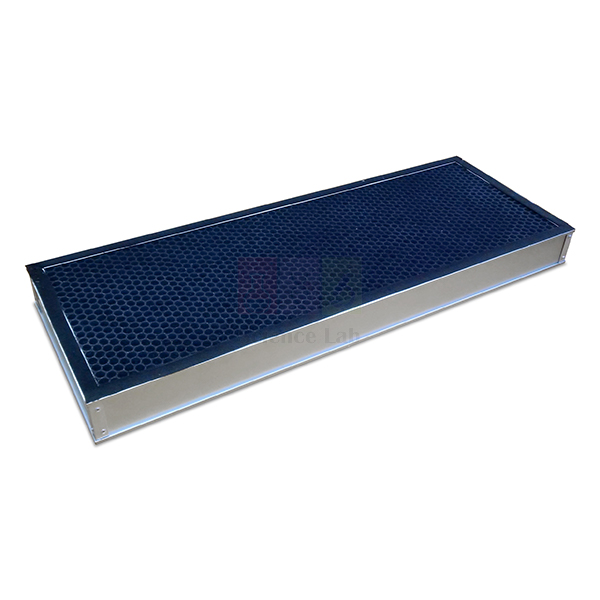
Acid Filter for Inverted Mobile Fume Hood
Acid Filter for Inverted Mobile Fume Hood (Product Code: SLE/LI/08) is a replacement filter used to renew the acid-fume filtration of an inverted mobile fume hood in school, college and research laboratories. Laboratory technicians order it when the acid filter already in the hood is due for change, so the unit stays ready for work with acids and acid vapours. This lab equipment spare part is supplied by Jain Scientific Equipments Pvt Ltd (ScienceLab), Ambala, India.
Key Details
| Parameter | Detail |
|---|---|
| Item | Replacement acid filter |
| For use with | Inverted Mobile Fume Hood |
| Purpose | Replaces a used acid filter in the hood |
| Product code | SLE/LI/08 |
| Supplied by | Jain Scientific Equipments Pvt Ltd (ScienceLab), Ambala, India |
What Is the Acid Filter Used For?
A mobile fume hood that works by filtration depends on its filter to trap fumes before air is released back into the room. The acid filter is the part that deals with acid vapours, so it matters in chemistry practicals and preparation rooms where acids are poured, diluted or warmed inside the hood. Fitting a fresh filter restores the hood's ability to take on acid work.
Plan filter changes around how often the hood runs and which acids are handled, and follow the hood's own indicator or maintenance schedule where it has one. Wear gloves and eye protection when taking out a used filter, bag it for disposal under your laboratory's chemical-waste procedure, and keep a spare on the shelf so practical classes are not interrupted.
What to Specify When Ordering
- The make and model (or a photograph) of your inverted mobile fume hood, so the filter fit can be confirmed.
- How many replacement filters you need per hood.
- The delivery city or country.
Supplier
ScienceLab is the trading name of Jain Scientific Equipments Private Limited, which supplies this replacement acid filter from Ambala, Haryana. Laboratories that bought a mobile fume cabinet from ScienceLab can re-order filters from the same supplier, which keeps routine maintenance straightforward. Company details are on our company profile.
Related Laboratory Instruments
Items that go with fume-hood maintenance and safe acid handling:
- Polypropylene Inverted Mobile Fume Cabinet — the mobile fume cabinet in our range; confirm filter fit when ordering.
- Thermo-Anemometer — for checking air velocity at the hood opening after a filter change.
- Safety Goggles — eye protection while handling acids and used filters.
- Acid Proof Aprons, Lab Coat, Pants, Shoe Covers and Sleeves — protective clothing for acid work.
More bench equipment is listed under Laboratory Instruments.
Frequently Asked Questions
What is the Acid Filter for Inverted Mobile Fume Hood?
The Acid Filter for Inverted Mobile Fume Hood is a replacement filter for the Inverted Mobile Fume Hood. It is fitted in place of a used acid filter so the hood can continue to be used for practical work involving acids and acid fumes.
How often should the acid filter be replaced?
Replacement frequency for the Acid Filter for Inverted Mobile Fume Hood depends on how often the hood runs and which acids are handled. Follow the hood's filter indicator or maintenance schedule, and contact us for guidance on the particular unit your laboratory uses.
Will this acid filter fit my fume hood?
The Acid Filter for Inverted Mobile Fume Hood is listed as a replacement for the Inverted Mobile Fume Hood. Share the make, model or a photograph of your hood through our contact page so we can confirm the fit before you order.
Who supplies the Acid Filter for Inverted Mobile Fume Hood?
The Acid Filter for Inverted Mobile Fume Hood is supplied by Jain Scientific Equipments Pvt Ltd (ScienceLab), Ambala, Haryana, India, to schools, colleges, laboratories, dealers and importers in India and international markets.
Can several acid filters be ordered at once?
Yes. The Acid Filter for Inverted Mobile Fume Hood can be quoted in the quantity your laboratory needs, for example a spare for each hood. State the number of hoods and filters required and your delivery location when you request a quotation.
How should a used acid filter be handled?
Remove a used Acid Filter for Inverted Mobile Fume Hood while wearing gloves and eye protection, seal it in a bag and dispose of it under your institution's chemical-waste rules, because it may hold acid residues from earlier work.
Request a Quote
To price replacement acid filters, send the hood details and quantity through our contact page, or place the Acid Filter for Inverted Mobile Fume Hood in the enquiry cart with any other laboratory items you need.
Last updated: 24 September 2026
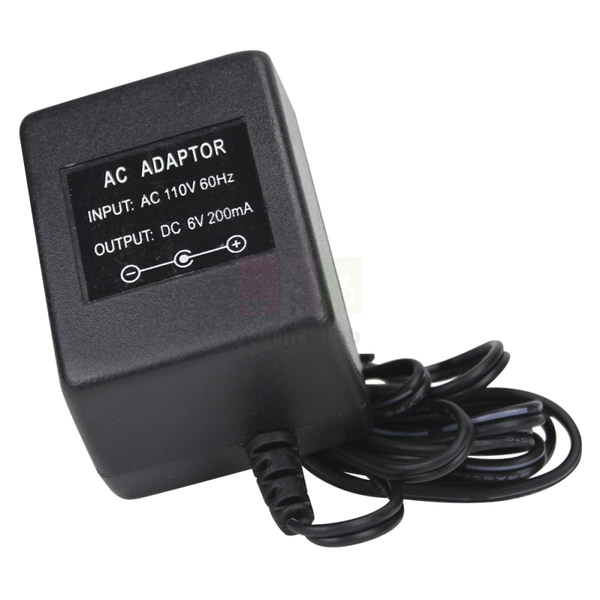
Power Adapter, 6V DC
Power Adapter, 6V DC (Product Code: SLE/LI/09) is a plug-in mains adapter used to power small laboratory and classroom devices that need a 6 V DC supply in schools, colleges and workshops. It takes 110 V AC at 60 Hz and delivers 6 V DC at up to 200 mA, which makes it a fit for sites on 110 V mains. The adapter is supplied by Jain Scientific Equipments Pvt Ltd (ScienceLab), Ambala, a laboratory equipment supplier in India.
Specifications
| Parameter | Detail |
|---|---|
| Power input | 110 V AC, 60 Hz |
| Power output | 6 V DC, 200 mA |
| Output type | Direct current (DC) |
| Product code | SLE/LI/09 |
| Supplied by | Jain Scientific Equipments Pvt Ltd (ScienceLab), Ambala, India |
What Is the 6V DC Power Adapter Used For?
A 6 V DC adapter takes the place of batteries or a bench power supply unit in the lab when a small device needs a steady low-voltage feed for long periods, for example during a demonstration or a long recording session. Because the output is limited to 200 mA, it suits low-current electronics rather than heaters, motors or other loads that draw more than that.
Before connecting, check that the device is rated for 6 V DC, that its current demand stays within 200 mA, and that the plug and polarity match the device socket. Confirm the mains supply as well: this adapter is listed for a 110 V AC, 60 Hz input, so sites on a different mains voltage should tell us before ordering. Unplug it when the equipment is idle.
What to Specify When Ordering
- Your mains supply — this listing is for a 110 V AC, 60 Hz input.
- The device it will power, with its voltage and current rating, so the 6 V DC, 200 mA output can be checked against it.
- The connector type and polarity your device needs.
- The number of adapters required.
Supplier
Jain Scientific Equipments Private Limited, known by its trading name ScienceLab, supplies this 6 V DC adapter from Ambala, Haryana. Small electrical accessories like this one can be added to an order for laboratory instruments or classroom apparatus, so an institution receives everything in one consignment. Background on the company is on our company profile.
Related Laboratory Instruments
Alternatives and test equipment for low-voltage work:
- Precision Variable Power Supply — an adjustable bench supply when voltages other than 6 V are needed.
- Switched Power Supply — a bench unit for class experiments that need more flexibility than a fixed adapter.
- Standard Digital Multimeter — to check the adapter's output voltage before a device is connected.
Browse the Laboratory Instruments category for related items.
Frequently Asked Questions
What output does the Power Adapter, 6V DC provide?
The Power Adapter, 6V DC provides a 6 V direct-current output at up to 200 mA. It suits low-current devices designed for a 6 V DC supply; check that your device's current demand stays within 200 mA before connecting it.
What mains input does the 6V DC power adapter need?
The Power Adapter, 6V DC is listed for a 110 V AC, 60 Hz mains input. If your laboratory uses a different mains voltage or frequency, tell us before ordering so we can advise on a suitable option for your site.
Which devices can the 6V DC adapter power?
The Power Adapter, 6V DC can power devices rated for 6 V DC that draw no more than 200 mA. Share the device name, its socket type and the polarity it needs so we can confirm compatibility before you place an order.
Who supplies the Power Adapter, 6V DC?
The Power Adapter, 6V DC is supplied by Jain Scientific Equipments Pvt Ltd (ScienceLab), Ambala, Haryana, India, which supplies laboratory accessories to schools, colleges, dealers and importers in India and international markets.
Can the 6V DC adapter be ordered for a whole class?
Yes. The Power Adapter, 6V DC can be quoted in class-set or institutional quantities. Include the number of adapters, the devices they will power and your delivery location in the request you send through our contact page.
How should the adapter be used safely?
Use the Power Adapter, 6V DC only with devices rated for 6 V DC, keep it dry, avoid loading it beyond 200 mA and unplug it from the mains when it is not in use. Stop using the adapter if its cable or casing is damaged.
Request a Quote
Send the quantity, your mains supply and the device details through our contact page for a quotation on the Power Adapter, 6V DC, or add it to the enquiry cart along with other items for your laboratory.
Last updated: 24 September 2026
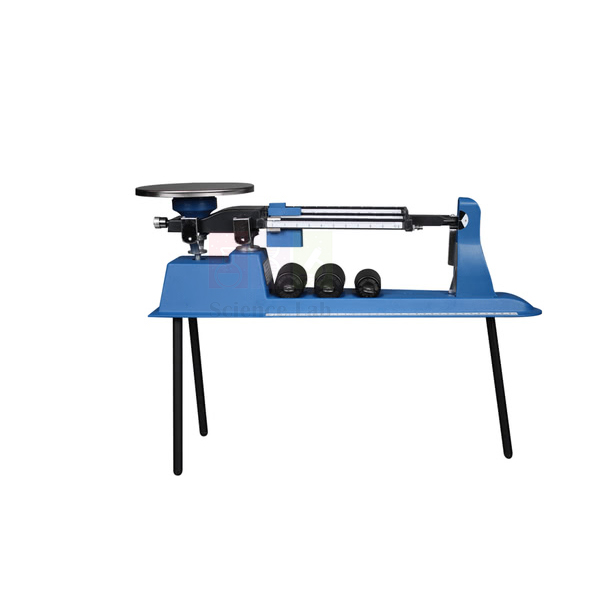
Triple-Beam Balance
The Triple-Beam Balance measures mass up to 2610 g with 0.1 g readability, using three notched, graduated beams and no power supply. A die-cast aluminium body, a 152 mm grade 304 stainless steel pan and magnetic damping suit daily class use, and a 225 g tare takes up the mass of a container.
Triple-Beam Balance specifications
| Parameter | Detail |
|---|---|
| Capacity | 2610 g |
| Readability | 0.1 g |
| Repeatability and linearity | 0.2 g each |
| Tare range | 225 g |
| Calibration | External; zero adjustment |
| Construction | Die-cast aluminium; metal housing |
| Pan | 152 mm diameter, grade 304 stainless steel |
| Beams and damping | Notched, tiered and graduated beams with centre reading; magnetic damping |
| Accessories | Tripod legs for density measurement; weigh-below hook (optional); storage for additional weights; slot for an optional Kensington-type lock |
| Size and net weight | 550 x 110 x 160 mm (W x D x H); 2.7 kg |
| Minimum order | 10 units |
| Dispatch | Usually within 7 to 10 working days |
| Supplied by | ScienceLab (Jain Scientific Equipments Pvt Ltd), Ambala, India |
Chemistry and physics weighings on the triple-beam balance
Density of a stone by suspension. Stand the balance on its tripod legs, fit the optional weigh-below hook and hang a stone from it on cotton thread. Weigh the stone in air, then again fully under water in a glass beaker that it does not touch. The loss in mass equals the stone's volume in cubic centimetres; divide the mass in air by it for the density.
Conservation of mass. Put a little dilute acid and a small tube of calcium carbonate granules inside a polypropylene conical flask with screw cap and weigh it closed. Tip the flask to mix them, and the reading stays the same. Loosen the cap and the mass falls as carbon dioxide escapes.
Density of a liquid. Weigh an empty polypropylene measuring cylinder, pour in a measured volume of tap water and weigh again. Divide the mass of liquid by its volume, then repeat with a salt solution and compare the two densities.
Frequently Asked Questions About the Triple-Beam Balance
In what order should the poises be moved?
Begin with the beam that has the biggest steps. Move its poise one notch at a time until the pointer drops below the centre mark, then step it back one notch. Do the same on the next beam, and finish by sliding the front poise smoothly until the pointer settles on centre.
Why must each notched poise sit fully in its notch?
The notches fix the rear poises at exact values. A poise resting between two notches can still let the pointer balance, but the value read off the beam no longer matches where the poise really is, so the total comes out wrong. Check each one has dropped into place before reading.
Why does the beam stick or stop swinging freely?
Look first for dirt, lint or metal filings caught in the gap of the magnetic damper, and for anything touching the beam or pan. Clear the gap gently with a soft brush or a piece of card. If a part has been bent by a knock, adjust it only as the supplied instructions describe.
How should students carry the balance between benches?
Slide all poises back to zero and take any load off the pan first. Then lift the balance with both hands under its die-cast base, keeping fingers away from the beam end and the damper. Carrying it by the beam or the pan can bend parts and upset its readings.
How is the 225 g tare used with a container?
With every poise at zero, put the empty container on the pan and set the tare until the pointer rests on the centre mark again. A container of up to 225 g is then balanced out, so the beams read only the sample added to it.
Mechanical balances and weighing accessories for class use
- Balance Single Pan
- Double Beam Balance
- Physical Balance
- Lever Balance Dual Scale
- Metric Attachment Weight Set
- Plastic Weighing Boats
To request a quotation, send the product name, code and quantity through our contact page or add the item to your enquiry cart.
Last updated: 15 November 2026
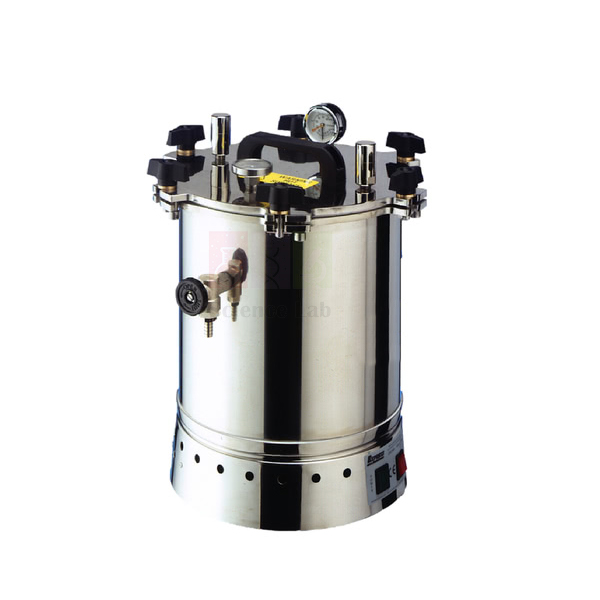
Autoclave, Stainless Steel, 15 Litre
This benchtop autoclave is built in Stainless Steel 316, with a 15 litre chamber heated by a 2.0 kW internal element under electronic thermostatic control. It works at 121°C and suits instruments, glassware, media and waste, including destructive sterilisation of spent cultures. The lid lifts off completely and locks with six wing nuts, and a condensing vacuum after the sterilising period helps loads dry.
15 litre SS 316 autoclave specifications
| Parameter | Detail |
|---|---|
| Capacity and chamber | 15 litres; internal 280 mm (D) × 245 mm (H) |
| Material | Stainless Steel 316, polished exterior for easier cleaning |
| Overall size and weight | 370 × 390 × 485 mm; net weight 19 kg |
| Heating | Internal electric element with electronic thermostatic control, 230 V, 2.0 kW |
| Pressure | Design and S W pressure 1.3 bar (18 psi); H T pressure 2.0 bar (30 psi) |
| Temperature | Design 0–125°C; standard and maximum working temperature 121°C |
| Lid | Removable for full-width access; six wing nuts and six locking lugs hold it shut while the vessel is under pressure |
| Supplied with | Inner liner for holding items to be sterilised |
| Drying | Condensing vacuum drawn after the sterilising period |
| Product code | SLE/LA/05 |
| Minimum order | 10 units |
| Dispatch | Usually within 7 to 10 working days |
| Supplied by | ScienceLab (Jain Scientific Equipments Pvt Ltd), Ambala, India |
Sterilising routines with the 15 litre autoclave
Destructive sterilisation of spent cultures. At the end of a practical, students drop used triple-vent Petri dishes into an autoclave bag that stands in the inner liner. The bag goes through a full 121°C cycle before any of the waste leaves the laboratory.
Dressings and drapes for a nursing skills room. Wrap each pack loosely, mark it with autoclave tape and stand the packs on edge in the liner so steam passes between them. The condensing vacuum drawn after the sterilising period helps the packs come out dry enough to store.
Reusable glass plates. Wash glass Petri dishes with lids, wrap them in paper in small stacks and run them through a cycle. Leave them to dry and cool in their wrapping, so they stay covered until agar is poured.
Frequently Asked Questions About the Autoclave, Stainless Steel, 15 Litre
What is the condensing vacuum at the end of the cycle for?
It helps the load dry. After the sterilising period, the vessel draws a condensing vacuum that pulls moisture out of porous items. Wrapped packs, dressings and drapes would otherwise stay damp after a steam cycle and could not be stored.
How should a bag of waste be loaded for destructive sterilisation?
Stand the bag upright in the inner liner and close its neck loosely so steam can get in. Fill it no more than about three-quarters. Dense or tightly packed waste heats slowly in the middle, so give large loads a longer time at temperature than a light load.
Which items should never go into the autoclave?
Sealed or tightly capped containers, which can burst as pressure builds. Also keep out flammable solvents, bleach and other chlorine-based or corrosive chemicals, which can give off fumes or attack the stainless steel. Check that plastics are marked as autoclavable before loading them.
What water should be used in the chamber?
Distilled or deionised water, where it is available. Hard tap water leaves scale on the internal element and chamber walls, and scale slows heating. Drain the water after the day's last cycle and refill with fresh water before the next session.
How are the wing nuts tightened and released?
Close the lid, then tighten the six wing nuts by hand in opposite pairs, so the lid seats evenly on all six lugs. After the cycle, switch off and leave the vessel to cool until all pressure has gone before loosening any nut.
How should the chamber and the outer body be cleaned?
Empty and wipe the chamber after use with water and a mild detergent, then rinse and dry it. Avoid bleach and chloride cleaners, which can pit stainless steel. The polished SS 316 exterior only needs a damp cloth.
Autoclaves and sterilising consumables
- Classic Standard Autoclave
- Electric Autoclave
- Autoclave Stainless Steel
- Autoclave Bag
- Autoclave Tape
- Autoclave Basket
To request a quotation, send the product name, code and quantity through our contact page or add the item to your enquiry cart.
Last updated: 14 November 2026
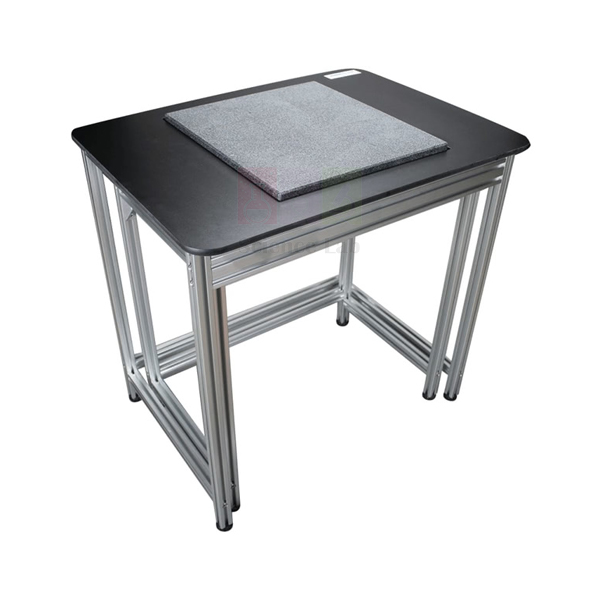
Balance Anti-Vibration Table
The Balance Anti-Vibration Table gives a sensitive balance its own steady base. The balance stands on a scratch-resistant dark granite slab carried on shock-absorbing rubber mounts, while a separate black laminated top around it holds samples and notes without touching the slab. The internal working surface measures 400 x 450 mm.
Anti-vibration weighing table specifications
| Parameter | Detail |
|---|---|
| Type | Anti-vibration weighing table, two-table construction |
| Weighing slab | Large, scratch-resistant dark granite; polished finish, easy to clean |
| Slab mounting | Shock-absorbing rubber mounts |
| Internal working surface | 400 x 450 mm |
| Surrounding work top | Black laminated, for resting samples or documents |
| Frame and feet | Lightweight tubular aluminium frame; adjustable levelling feet for uneven surfaces |
| Overall dimensions | 800 x 600 x 782 mm (W x D x H) |
| Net weight | 55 kg (table and work surface) |
| Assembly | Easy to assemble; all necessary tools supplied |
| Product code | SLE/LB/17 |
| Minimum order | 10 units |
| Dispatch | Usually within 7 to 10 working days |
| Supplied by | ScienceLab (Jain Scientific Equipments Pvt Ltd), Ambala, India |
Setting up and using a weighing station
Installing the station. Assemble the frame with the tools supplied and stand it in its final place before levelling. Turn the levelling feet until a spirit level laid on the granite reads level in both directions. Centre a balance such as the four-decimal analytical balance on the slab, level the balance itself, let it warm up and calibrate it there.
Bench against table. Put a balance on an ordinary bench with a sample in a plastic weighing boat and note how far the last digit wanders while someone walks past or closes a door. Repeat the same test on the granite slab. Students compare the spread of readings and explain where the vibration was absorbed.
Daily routine. Keep the vacuum desiccator, a Chattaway spatula and the notebook on the laminated surround, never on the granite. Wipe spills from the slab at once with a damp cloth and dry it, and recheck the level whenever the table has been moved or cleaned underneath.
Frequently Asked Questions About the Balance Anti-Vibration Table
Why is the weighing slab made of granite?
A heavy stone slab is stiff and has a lot of mass, so small knocks barely move it and it does not flex under the balance. Granite also resists scratches, and its polished surface wipes clean easily after a spill.
Why does the table have a separate surrounding top?
The granite rests on rubber mounts on its own, apart from the laminated top around it. Leaning on that top, writing notes or setting a sample down there does not reach the balance. Keep the gap between the two clear, because anything bridging it passes vibration straight to the slab.
Where in the room should the table stand?
Choose a quiet corner away from doors, windows, air-conditioning outlets and walkways, and away from centrifuges, shakers or pumps. A ground-floor room or a spot beside a solid wall moves less than the middle of an upper floor. Keep it out of direct sunlight so the balance does not warm unevenly.
Why can a reading still drift on the anti-vibration table?
The table damps vibration from the floor, but drift also comes from air currents, a sample warmer or colder than the room, static charge on plastic containers and moisture uptake. Close the balance's draught shield if it has one, let samples reach room temperature and give the balance time to warm up.
How is the table levelled on an uneven floor?
Set the table in its final position first, then turn the adjustable feet until it stands firm without rocking and a spirit level on the granite reads level. Only then level the balance with its own feet, because moving the table later undoes both adjustments.
Balances and accessories for a vibration-damped weighing station
To request a quotation, send the product name, code and quantity through our contact page or add the item to your enquiry cart.
Last updated: 14 November 2026

Balance, Analytical
The Balance, Analytical is a four-decimal electronic balance that weighs up to 220 g with a resolution of 0.0001 g. It uses an electromagnetic force restoration weighing system with internal calibration, and a large glass draught shield with 3 sliding doors encloses the 80 mm pan. A backlit LCD, RS232 interface and a menu of application functions complete it.
Four-decimal analytical balance specifications
| Parameter | Detail |
|---|---|
| Capacity | 220 g |
| Resolution | 0.0001 g |
| Weighing system and calibration | Electromagnetic force restoration; internal calibration |
| Draught shield | Large glass shield with 3 sliding doors |
| Pan size | Ø 80 mm |
| Display and interface | LCD with backlight; RS232 |
| Housing | Double case structure; ergonomic keypad; plastic protection cover |
| Units of measure | Grams, milligrams, carats, ounces, pounds, pennyweights, ounce troy, grain, pieces |
| Application functions | Selectable filter level; selectable units; piece counting; density; peak hold; under hook; checkweighing; percentage weighing; add weighing; animal weighing |
| Product code | SLE/LB/18 |
| Minimum order | 10 units |
| Dispatch | Usually within 7 to 10 working days |
| Supplied by | ScienceLab (Jain Scientific Equipments Pvt Ltd), Ambala, India |
Analytical work on the four-decimal balance
Primary standard for acid titration. Dry sodium carbonate, cool it in a vacuum desiccator and keep it in a stoppered bottle. Place the bottle on the pan, tare, remove a portion with a Chattaway spatula into a titration flask and read the negative value, which is the mass taken. Titrate it against dilute hydrochloric acid to find the acid's exact concentration.
Uniformity of tablet mass. Weigh a batch of tablets together and work out the mean mass, then weigh each one alone and record it. Students work out how far each tablet differs from the mean, and send the readings through the RS232 interface to a printer or computer so the record matches the balance display.
Routine performance check. Place a reference mass from the analytical balance mass set at the centre of the pan and then towards the front, back and sides, and compare the readings. Repeat one mass ten times for repeatability. Stand the balance on a balance anti-vibration table if readings wander with movement in the room.
Frequently Asked Questions About the Balance, Analytical
Should the balance stay switched on between sessions?
In daily use, yes. The weighing cell and electronics give the steadiest readings once they have settled at a stable temperature, so leave the balance connected to the mains. After a cold start, allow the warm-up time the operating instructions give before calibrating or weighing.
What is the difference between taring and internal calibration?
Taring sets the display to zero with the container on the pan, so only the sample is shown. Internal calibration uses the built-in reference to correct the balance across its range. Tare before every weighing, and run the internal calibration after installation, after a move and after a large temperature change.
When is a reading ready to record?
Wait until the last digit stops changing with all doors closed. The filter level setting decides how strongly the balance smooths disturbances: a higher level steadies the display in a busy room but responds more slowly. Record the value straight away and do not round it.
How can static charge be kept from upsetting a weighing?
Plastic containers and dry powders pick up charge, especially in dry air, and the reading then drifts or jumps. Use glass or metal containers where possible, touch the container to an earthed metal surface before weighing and keep the room from becoming very dry.
Why must the draught-shield doors be closed before reading?
At 0.0001 g resolution, air moving through an open door presses on the pan enough to change the last digit. Open only the door needed to load the sample, close it again and wait for the display to settle. Close all 3 sliding doors after use as well.
Does a resolution of 0.0001 g mean results are correct to that figure?
No. Resolution is the smallest step the display shows. Real accuracy also depends on calibration, repeatability, the room and how the sample is handled. A very small sample carries a large relative error, so weigh enough material that the last digit matters little.
Accessories for four-decimal weighing
- Balance Anti-Vibration Table
- Weighing Paper
- Spatula, Chattaway
- Vacuum Desiccator
- Analytical Balance Mass Set
To request a quotation, send the product name, code and quantity through our contact page or add the item to your enquiry cart.
Last updated: 14 November 2026