- Physics Lab Equipment
- Chemistry Lab Equipment
- Biology Lab Equipment
- Anatomical Lab Equipment
- Learning
- Educational Lab Equipment
- Magnets
- Agriculture
- Astronomy
- Earth Science
- Geography Lab Equipment
- Safety Lab Coat
- Laboratory
- Meteorological
- Electricity & Magnetism
- Heat
- School Lab Equipment
- Lab Glassware
- Science Lab Equipment
- Tvet Lab Equipment
- Robotics Kits Supplier and Manufacturer for Schools India
- Math Lab Equipment Manufacturers and Exporters in Ambala
- STEM Kits Manufacturers and Supplier India
- Engineering Lab Equipment
- Hospital Lab Equipment
- Water, Sanitation & Hygiene Supplies
- Cold Chain, Solar & Communication Equipment
- Nutrition
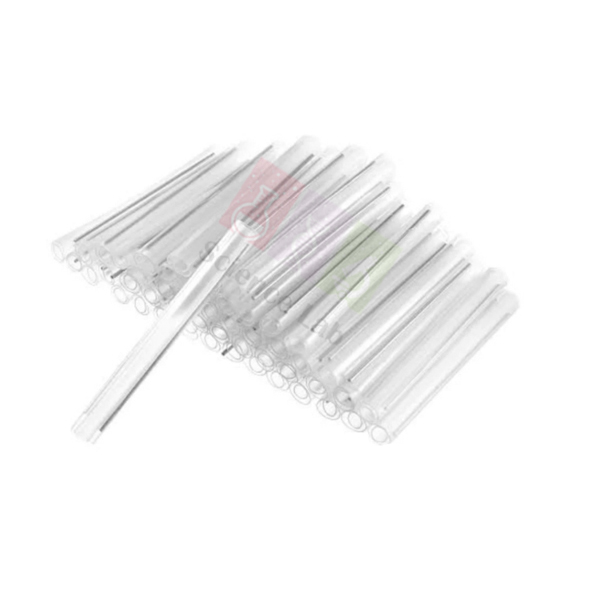
Fusion Tube
Fusion Tube (Product Code: MSRC1066) is a short, rimless tube of heat-proof borosilicate glass 3.3, 75 mm long, used for strongly heating very small amounts of a substance. In organic chemistry practicals it is the standard vessel for the sodium fusion (Lassaigne’s) test and, paired with a capillary, for boiling point determination of small liquid samples. Senior school, college and university chemistry labs buy it in quantity, and it is supplied by Jain Scientific Equipments Pvt Ltd (ScienceLab), Ambala, India, a chemistry consumables supplier in India that also provides the burners and holders used with it.
Specifications
| Parameter | Detail |
|---|---|
| Model | SCL166 |
| Material | Heat-proof borosilicate glass 3.3 |
| Mouth | Without rim |
| Outer diameter | 8 mm |
| Length | 75 mm |
| Colour | Clear |
| Properties | Heat proof, chemical resistant |
| Application | Laboratory use |
Typical Use
For the Lassaigne’s test, a small piece of sodium and a little of the organic compound are heated in the fusion tube until it glows red, and the hot tube is then plunged into distilled water in a dish so that it cracks and releases the fused mass. The filtered extract is tested for nitrogen, sulphur and halogens. Because the tube is deliberately broken, each determination uses a fresh one, so labs normally keep a good stock on hand. This step involves reactive sodium and must be done under teacher supervision with eye protection.
For boiling point work, a few drops of the liquid are placed in the fusion tube, a capillary sealed at one end is dropped in open end down, and the assembly is tied to a thermometer and heated in a Thiele tube or melting point apparatus. The small bore keeps sample use low and gives even heating. Many labs order these tubes from the same lab glassware supplier in India as their test tubes and capillaries, so the sizes are consistent from batch to batch.
Supplier
Fusion tubes are part of the glass consumables that Jain Scientific Equipments Private Limited supplies under its ScienceLab trading name from Ambala, Haryana. Ordering them together with burners, holders and thermometers from one source keeps a practical kit complete. Company details are on the ScienceLab profile page.
Related Chemistry Lab Equipment
These items are used alongside fusion tubes in sodium fusion and boiling point experiments:
- Capillary Tube — sealed at one end and inverted in the fusion tube for boiling point readings.
- Thiele Tube — gives even heating of the fusion tube and thermometer assembly.
- Bunsen Burner — supplies the strong flame needed for sodium fusion.
- Test Tube Holder, Metal — holds the small tube securely while it is red hot.
- Test Tube — used for the follow-up tests on the sodium fusion extract.
Browse all Chemistry Lab Equipment for further glassware and heating apparatus.
Frequently Asked Questions
What size is the fusion tube?
It is 75 mm long with an 8 mm outer diameter and has no rim at the mouth.
What glass is it made from?
Heat-proof borosilicate glass 3.3, which tolerates direct flame heating and is chemical resistant. The glass is clear, so the contents stay visible while heating.
Can the tubes be reused?
In the sodium fusion test the tube is broken on purpose, so it is single use. Tubes used for boiling point work can be cleaned and reused if they are intact and free from residue.
Is this the same as a capillary tube?
No. The fusion tube holds the sample; a much narrower capillary tube is placed inside it for boiling point determination. Both are listed separately.
How many tubes come in a pack?
Pack quantities are confirmed with each quotation. Please state the number of tubes you need through our contact page.
Do you ship to institutions outside India?
Yes. Fusion tubes are supplied to buyers in India and international markets; mention your destination so packing for fragile glassware can be arranged.
Request a Quote
To buy Fusion Tubes for your practical sessions, send the quantity through the contact page or add them to the enquiry cart with capillaries, holders and other items.
Last updated: 24 September 2026
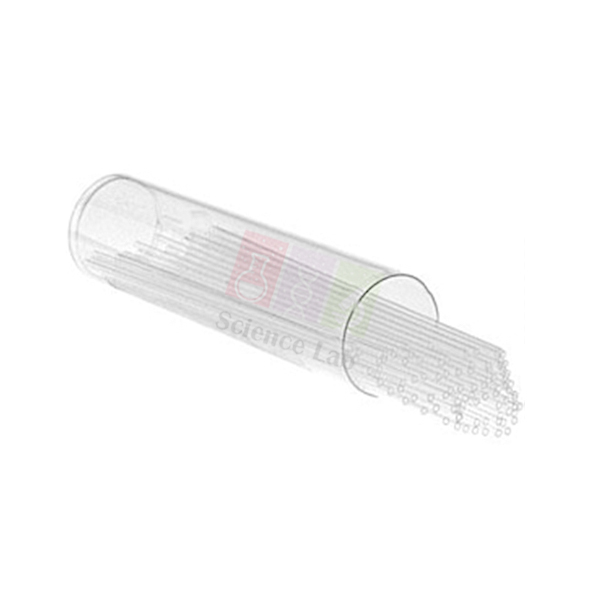
Capillary Tube
Capillary Tube (Product Code: MSRC1073) is a fine-bore glass tube, 100 mm long with a diameter of 1.3-1.6 mm, used where only a tiny quantity of sample is needed. Its main job in teaching and quality-control labs is melting point determination of solid organic compounds, and it is also used for boiling point checks and for spotting samples in chromatography. Chemistry departments, pharmacy colleges and testing labs order it in bulk from Jain Scientific Equipments Pvt Ltd (ScienceLab), Ambala, India, which supplies it as a chemistry lab instruments supplier alongside the matching melting point apparatus.
Specifications
| Parameter | Detail |
|---|---|
| Model | SCL173 |
| Material | Glass |
| Length | 100 mm |
| Diameter | 1.3-1.6 mm |
| Colour | Clear |
| Properties | Heat resistant, chemical resistant |
| Application | Laboratory use |
Typical Use
To find a melting point, one end of the capillary is sealed in a small flame if it is open, the dry powdered sample is tapped into the tube to a short, compact column, and the tube is placed in a melting point apparatus or tied beside the bulb of a thermometer in a Thiele tube. The clear glass lets the student see the exact moment the solid starts to liquefy and when it has fully melted, which is how purity is judged in organic preparations. Keep the sample column short and well packed for a sharp reading.
The same tubes are handy for applying small, tight spots of solution in a paper chromatography kit for school practicals, and a capillary sealed at one end sits inside a fusion tube for boiling point work. Because the sample usually stays fused inside after a melting point run, capillaries are treated as consumables and replaced after each determination; store unused tubes in a closed container so dust does not enter the bore.
Supplier
Jain Scientific Equipments Private Limited, which trades as ScienceLab from Ambala in Haryana, supplies these capillaries as part of its glass consumables range for teaching and testing labs. Buyers can combine them in one order with melting point apparatus and thermometers. Visit the company profile to learn more about ScienceLab.
Related Chemistry Lab Equipment
These products are used with capillary tubes for melting and boiling point determination:
- Apparatus Melting Point — heats the filled capillary for melting point readings.
- Digital Melting Point Apparatus — an electrically heated option with a digital temperature display.
- Thiele Tube — the traditional oil-bath method using a thermometer and capillary.
- Fusion Tube — holds the liquid sample when a capillary is used for boiling point work.
- Capillary Tube Set — an alternative listing for labs that need a set of capillaries.
For more glassware and consumables, see the Chemistry Lab Equipment category.
Frequently Asked Questions
What are the length and bore of these capillaries?
Each tube is 100 mm long with a diameter of 1.3-1.6 mm, in clear glass.
Are they open at both ends or sealed at one end?
Please confirm the end finish you need when you enquire. A tube that is open at both ends can easily be sealed at one end in a small burner flame before filling.
Will they fit my melting point apparatus?
Most apparatus state the capillary diameter they accept. Compare it with the 1.3-1.6 mm size here, or send us the model details through the contact page and we will check.
Can a capillary be reused?
For melting points, no — the sample remains fused in the tube, so use a fresh capillary for each reading. This is why labs buy them in larger quantities.
Are they suitable for heating and chemical contact?
Yes. The glass is heat resistant and chemical resistant for normal melting point, boiling point and spotting work.
Can you supply bulk or export orders?
Yes. ScienceLab supplies institutions in India and international markets. Share the quantity and destination for a quotation.
Request a Quote
Send your Capillary Tube requirement through the contact page, or add it to the enquiry cart with a melting point apparatus or other items for a combined quotation.
Last updated: 24 September 2026
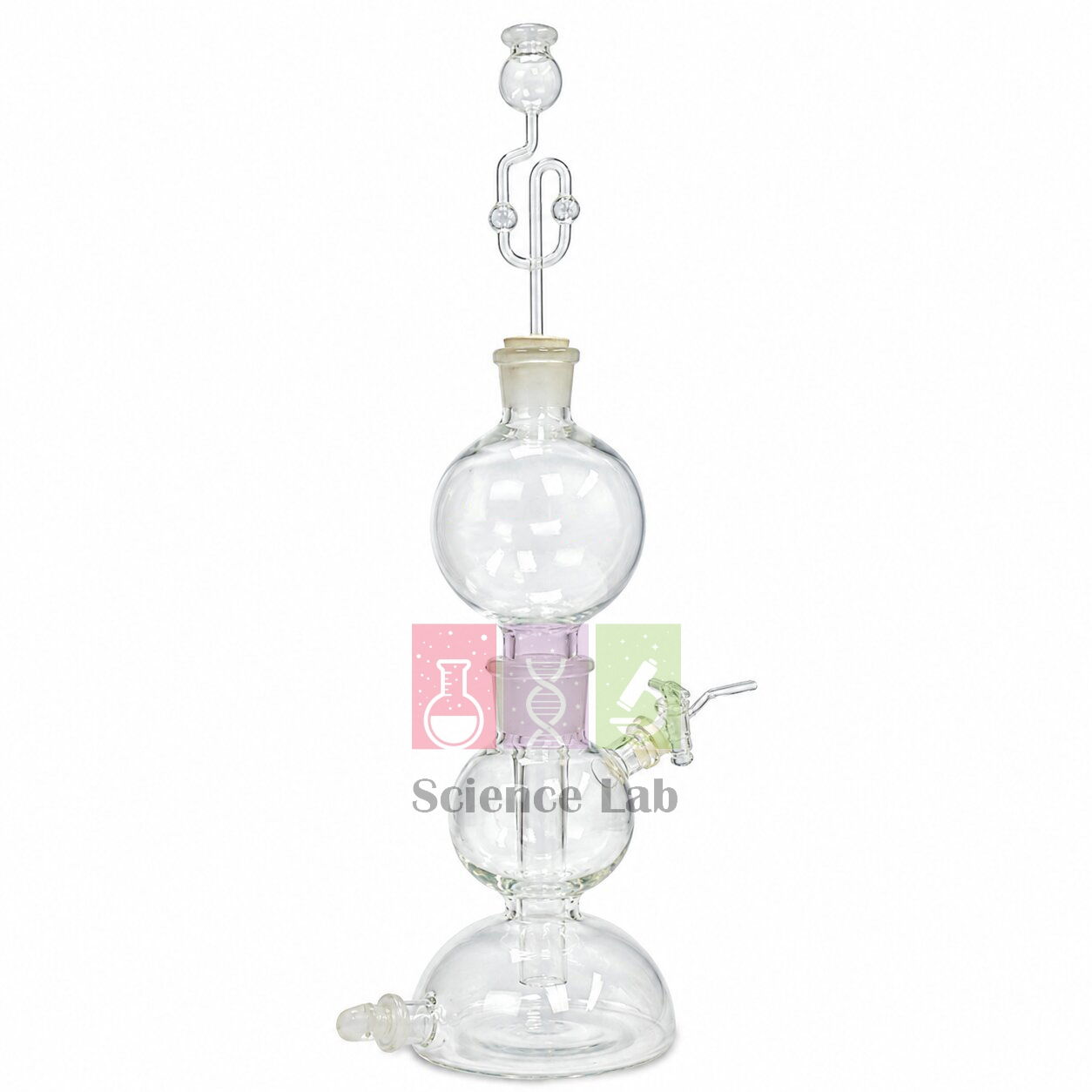
Kipps Apparatus
Kipps Apparatus (Product Code: 102/My-26) is a classic-type Kipp gas generator that produces gases such as carbon dioxide, hydrogen sulphide and hydrogen by the action of an acid, mainly hydrochloric acid, on a solid, without any heating. It lets a chemistry teacher or lab assistant draw gas on demand for a whole practical session and stop the reaction simply by closing the outlet. Schools and colleges setting up a Kipp generator in their India lab or abroad can source this 250 ml apparatus made by Jain Scientific Equipments Pvt Ltd (ScienceLab), Ambala, India.
Specifications
| Parameter | Detail |
|---|---|
| Type | Kipp’s apparatus, classic type |
| Construction | Two main parts: an upper glass pot ending in the shape of a funnel, and a lower part made of two joined glass flasks |
| Volume | 250 ml |
| Device height | 300 to 350 mm |
| Gases produced | Carbon dioxide (CO2), hydrogen sulphide (H2S), hydrogen (H2) and similar gases |
| Reagents used | An acid (mainly hydrochloric acid, HCl) acting on a solid such as granular calcium carbonate (CaCO3), iron sulphide (FeS) or granular zinc (Zn) |
| Heating | Not required |
Typical Use
The solid reagent is placed in the upper of the two joined flasks and acid is poured in through the funnel of the top pot, from where it fills the lowest flask and rises to meet the solid. Gas forms as soon as the two are in contact. When the outlet is closed, the gas pressure pushes the acid back down and away from the solid, so the reaction stops by itself; opening the outlet again restarts it. This makes the apparatus ideal for demonstrations such as preparing carbon dioxide from marble chips, hydrogen from zinc, or hydrogen sulphide for qualitative salt analysis.
The outlet is usually connected through rubber tubing to a delivery tube and gas jar, the standard gas collection apparatus in India’s school and college labs. Use granular or lump solids rather than powder so they stay in place, add acid slowly, and run hydrogen sulphide preparation only in a fume cupboard because the gas is toxic. Keep flames away when generating hydrogen. After the session, drain the spent acid safely, rinse all parts with water and let the glassware dry before storage.
Manufacturer
This generator is part of the chemistry apparatus range of Jain Scientific Equipments Private Limited, which operates as ScienceLab from Ambala, Haryana, and makes equipment for school, college and university laboratories. For background on the company, its facilities and its range, see the ScienceLab company profile.
Related Chemistry Lab Equipment
Pair the Kipps Apparatus with these items to generate, clean and collect gas in one set-up:
- Simple Kipps Appliances — a small-scale version that students can operate at their own bench.
- Gas Jar, Glass — collects the gas for tests on its properties.
- Delivery Tube — carries gas from the generator outlet to the collecting vessel.
- Gas Washing Bottle — washes or dries the gas before it is collected.
- Rubber Tubing — flexible connection between the outlet and the rest of the train.
The full Chemistry Lab Equipment category lists more gas preparation and glassware items.
Frequently Asked Questions
Which gases can this apparatus produce?
Gases formed by an acid reacting with a solid without heat, such as carbon dioxide from calcium carbonate, hydrogen from zinc and hydrogen sulphide from iron sulphide, usually with hydrochloric acid.
What is its size?
The apparatus has a volume of 250 ml and a height of 300 to 350 mm, which suits a demonstration bench or fume cupboard.
Does it need a burner or hot plate?
No. The reaction runs at room temperature, so no heating is needed.
Are the acid and solid reagents included?
This listing covers the glass apparatus. If you also need chemicals, list them in your enquiry on the contact page and we will advise.
Is it suitable for school students?
It is best run by a teacher or trained assistant as a demonstration. For hands-on student work, the smaller Simple Kipps Appliances uses much less material.
How should it be cleaned after use?
Drain the acid into a suitable waste container, remove leftover solid, rinse all parts thoroughly with water and let them dry before reassembly or storage.
Can you quote for several units or for export?
Yes. ScienceLab supplies institutions in India and international markets; include the number of units and the delivery location in your request.
Request a Quote
To order the Kipps Apparatus, contact us through the contact page or add it to the enquiry cart along with gas jars, tubing and other items.
Last updated: 24 September 2026
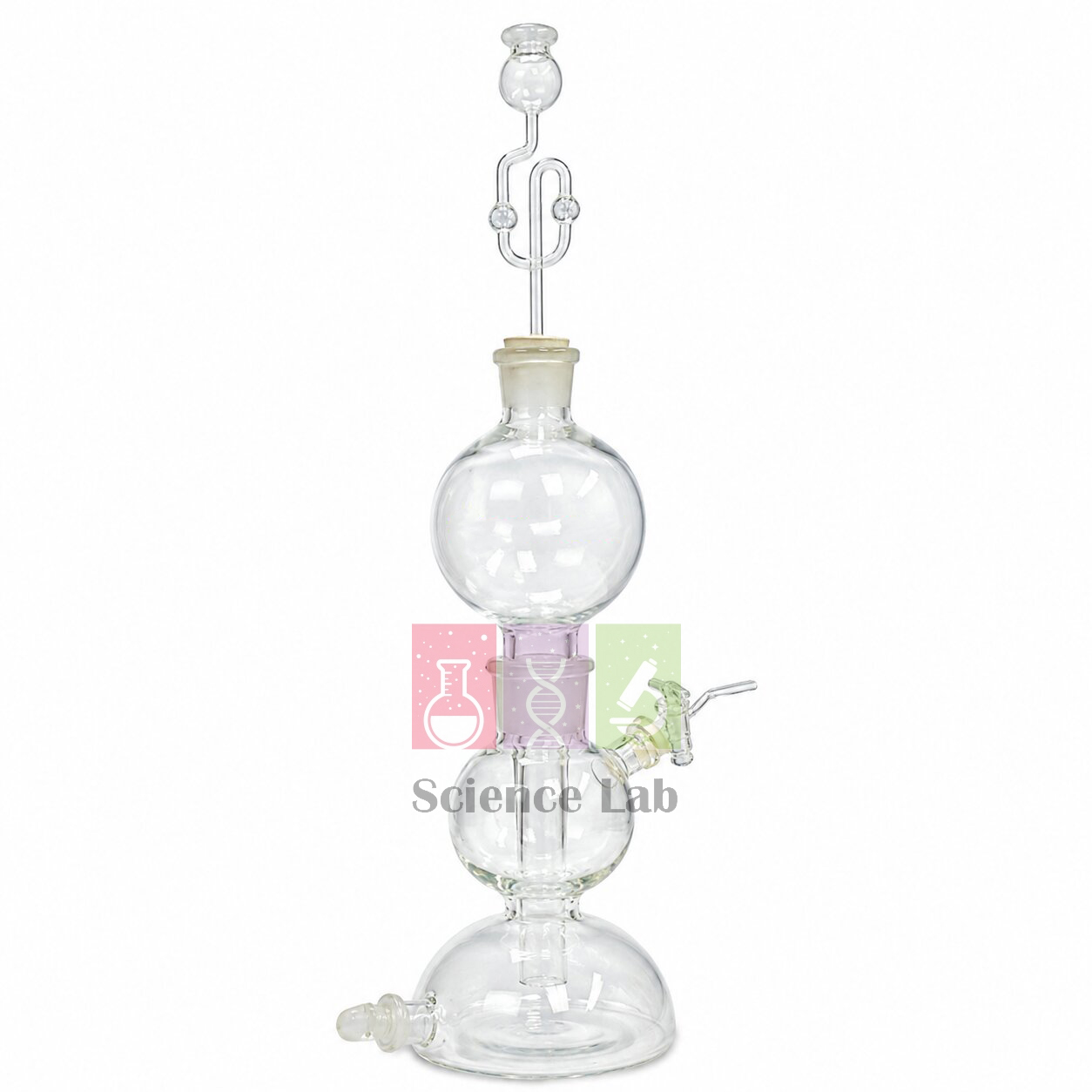
Simple Kipps Appliances
Simple Kipps Appliances (Product Code: 105/My-26) is a compact, 6 ml gas generator built on the same working principle as the classic Kipp’s apparatus, scaled down so that students can prepare a gas at their own bench. It runs on very small amounts of reagents, which keeps each experiment economical, and its simple construction is designed to keep risk as low as possible. It is a practical addition to a chemistry teaching kit for India’s secondary schools and junior colleges, made by Jain Scientific Equipments Pvt Ltd (ScienceLab), Ambala, India.
Specifications
| Parameter | Detail |
|---|---|
| Type | Simple Kipp’s apparatus, based on the principles of the classic Kipp apparatus |
| Volume | 6 ml |
| Components | Test tube with a side tube and tapered body; simple safety tube; glass tube; Hoffman screw clamp |
| Handling | Size and shape allow convenient, simple and manoeuvrable use |
| Safety | Construction designed to avoid risk in use as far as possible |
| Suitable for | Teachers and students |
| Operation | Works with small amounts of substances, making it economical |
Typical Use
A small quantity of the solid reagent goes into the tapered side-tube test tube, the safety tube and glass tube are fitted, and a little dilute acid is added so that gas is released through the side tube. The Hoffman screw clamp on the outlet controls the flow: tightening it stops the gas leaving, the pressure builds and pushes the liquid away from the solid so the reaction slows and stops, and loosening it starts the flow again. Students can therefore see the self-regulating Kipp principle in their own hands rather than only in a teacher demonstration.
Because it uses only a few millilitres of acid, the apparatus suits class practicals where many groups work at once, and it reduces the volume of spent solution to dispose of. As useful chemistry lab equipment for schools in India, it works well for simple gas tests such as bubbling the gas through a test reagent or holding a glowing or burning splint at the outlet. Students should wear eye protection, add acid slowly, and rinse all parts with water after each session.
Manufacturer
Simple Kipps Appliances is produced under the ScienceLab name by Jain Scientific Equipments Private Limited of Ambala, Haryana. The company is a registered MSME whose major activity is manufacturing (Udyam UDYAM-HR-01-0003714), and its export shipments are handled under Importer-Exporter Code AAECJ8618A issued by the DGFT. Read more on the company profile.
Related Chemistry Lab Equipment
These items support the same small-scale gas preparation practical:
- Kipps Apparatus — the full-size classic generator for teacher demonstrations.
- Screw Pipe Clamp (Hoffman Clamp) — a spare clamp for controlling the gas outlet.
- Simple Gas Preparation Kit — extends the lesson to other gas preparation methods.
- Test Tube Racks — hold the side-tube test tube steady during the experiment.
- Safety Goggles — eye protection for students handling acid.
Explore more items in Chemistry Lab Equipment.
Frequently Asked Questions
What parts make up the apparatus?
A test tube with a side tube and tapered body, a simple safety tube, a glass tube and a Hoffman screw clamp.
What is its capacity?
It is a 6 ml apparatus, so each run needs only small amounts of acid and solid.
How is it different from the classic Kipps Apparatus?
It follows the same self-regulating principle but is much smaller and simpler to handle, so students as well as teachers can use it.
Which gases can students prepare with it?
Gases that form when a dilute acid reacts with a solid at room temperature. Choose reagents according to your syllabus and carry out any toxic gas preparation in a fume cupboard.
Are chemicals supplied with it?
The listing describes the apparatus only. If you need reagents as well, mention them in your enquiry through the contact page.
Can we order class sets?
Yes. Tell us the number of sets and delivery location; ScienceLab supplies schools in India and international markets.
Request a Quote
For a quotation on Simple Kipps Appliances, use the contact page or add the item to the enquiry cart with any accessories you need.
Last updated: 24 September 2026
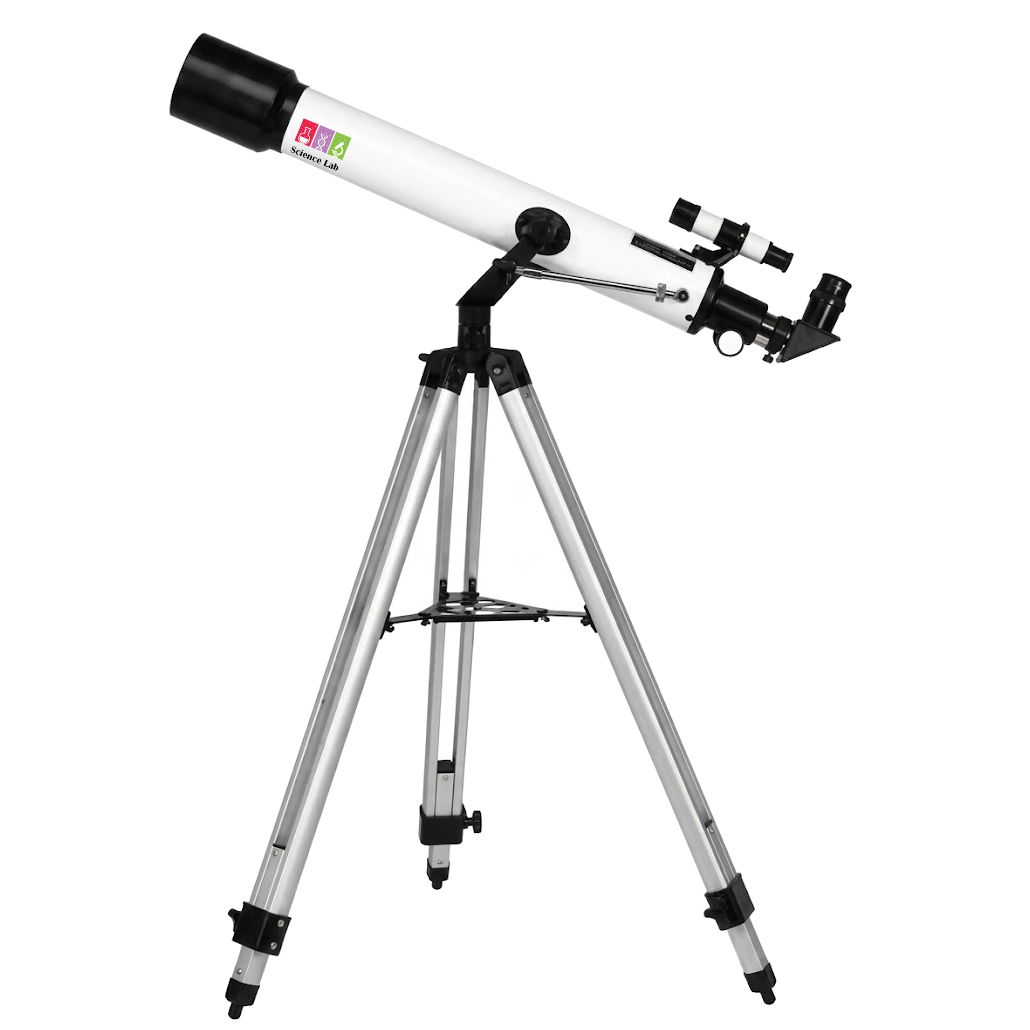
Astronomical Telescope
Astronomical Telescope (Product Code: SCL/AG26-102) is a tripod-mounted optical telescope used to observe the Moon, planets and brighter star fields in school, college and astronomy-club teaching. It has a 114mm aperture, a 5 x 24 finder scope and a set of standard 0.965" eyepieces with a 3X Barlow lens, on an extendable aluminium tripod with slow-motion vertical adjustment, a useful addition to optics lab equipment. It is supplied by Jain Scientific Equipments Pvt Ltd (ScienceLab), Ambala, India.
Specifications
| Parameter | Detail |
|---|---|
| Aperture | 114mm |
| Objective focal length | 700mm, 600mm (as listed) |
| Optical tube | White metal tube, primary objective lens at the front, diagonal eyepiece setup at the rear |
| Finder scope | 5 x 24, small auxiliary sighting scope mounted on top |
| Diagonal | Hybrid diagonal |
| Eyepieces (0.965") | SR4mm, H12.5mm, H20mm |
| Other accessories (0.965") | 3X Barlow lens; 1.5x erector |
| Mount and tripod | Lightweight, extendable aluminium three-legged stand with central accessory brace, manual alt-azimuth elevation rod and slow-motion control rod for vertical micro adjustment |
| Maximum height | 125cm |
| Accessory tray | Included |
| Product code | SCL/AG26-102 |
| Supplied by | Jain Scientific Equipments Pvt Ltd (ScienceLab), Ambala, India |
What Is the Astronomical Telescope Used For?
The 114mm aperture gathers enough light to show craters and mountains on the Moon, the phases of Venus, the four bright moons of Jupiter, the rings of Saturn and many star clusters. Students first line up a target with the small finder scope, then centre it in the main tube with the low-power H20mm eyepiece before moving to the H12.5mm or SR4mm eyepieces, or adding the 3X Barlow lens, for more magnification.
The 1.5x erector gives an upright image, so the same instrument can be used by day for distant landscapes and birds. The slow-motion rod lets you follow an object smoothly as the Earth turns. Never point the telescope or finder at the Sun without a proper solar filter, and let the tube adjust to outdoor temperature before a viewing session.
What to Specify When Ordering
- Which objective focal length you require, as the listing shows both 700mm and 600mm.
- Number of telescopes, for example one per observing group or one for the school.
- Any charts or models you want quoted with it for classroom astronomy lessons.
Supplier
Jain Scientific Equipments Private Limited, which does business as ScienceLab from Ambala, Haryana, India, supplies the Astronomical Telescope to schools, colleges, science centres, dealers and importers. We source the telescope with its finder, eyepieces, Barlow lens, erector and tripod, and can include it in larger physics and geography orders for India and international markets. You can read about the company on our company profile.
Related Physics Lab Equipment
Teaching aids that work well with the Astronomical Telescope:
- Telescope Refractor — another telescope option for comparing designs.
- Celestial Star Globe — helps students find constellations before observing.
- Solar System Model — explains planet positions seen through the eyepiece.
- Convex Lens — for bench experiments on how telescope lenses form images.
Explore more optics apparatus in Physics Lab Equipment.
Frequently Asked Questions
What aperture does the Astronomical Telescope have?
The Astronomical Telescope has a 114mm aperture. Aperture decides how much light the telescope collects, and this size is well suited to observing the Moon, the brighter planets and star clusters from a school or college observing site.
Which eyepieces come with the Astronomical Telescope?
The Astronomical Telescope comes with standard 0.965" accessories: SR4mm, H12.5mm and H20mm eyepieces, a 3X Barlow lens and a 1.5x erector. The finder is a 5 x 24 sighting scope, and an accessory tray keeps the parts together on the tripod.
How tall is the Astronomical Telescope tripod?
The Astronomical Telescope stands on a lightweight, extendable aluminium three-legged tripod with a maximum height of 125cm. It has a manual alt-azimuth elevation rod and a slow-motion control rod for fine vertical adjustment while tracking an object.
Can the Astronomical Telescope be used for daytime viewing?
Yes. With the supplied 1.5x erector, the Astronomical Telescope gives an upright image suitable for distant land objects in daylight. It must never be pointed at or near the Sun unless a proper solar filter is fitted over the front.
Who supplies the Astronomical Telescope?
The Astronomical Telescope is supplied by Jain Scientific Equipments Pvt Ltd (ScienceLab), Ambala, Haryana, India, to schools, colleges, science centres, dealers and importers. It can be combined with other physics and geography items in one order for India and international markets.
What focal length is the Astronomical Telescope?
The Astronomical Telescope listing gives the objective focal length as 700mm and 600mm. Please state which you need when requesting a quotation through the contact page, and we will confirm the exact configuration before you order.
Request a Quote
Request a quotation for the Astronomical Telescope on our contact page, giving the focal length, quantity and delivery location, or add it to the enquiry cart with other astronomy teaching aids.
Last updated: 24 September 2026
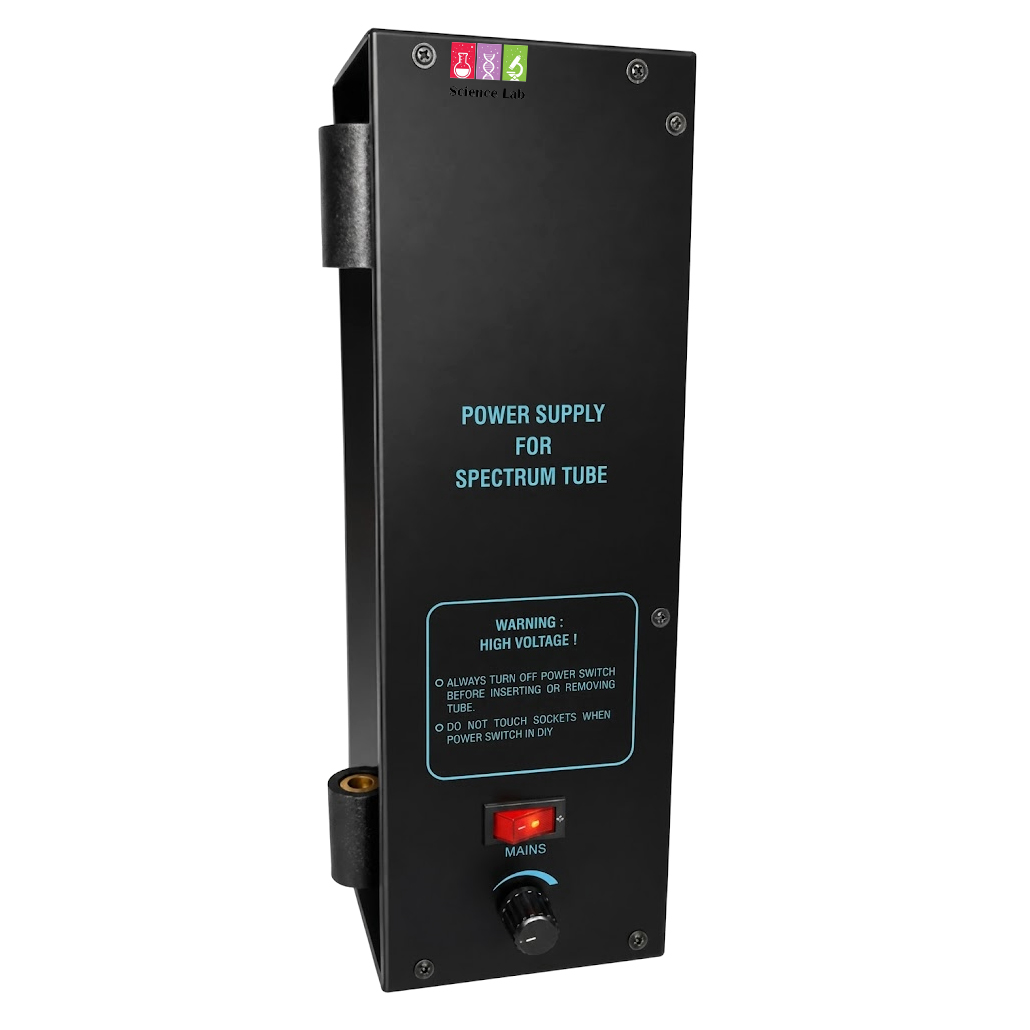
Hydrogen Spectrum Set
Hydrogen Spectrum Set (Product Code: SCL/AG26-108) is a three-unit set of a hydrogen-filled discharge tube, its power supply unit and a support rod assembly, used to produce the line spectrum of hydrogen for study in college and senior school physics laboratories. The self-contained power unit delivers 3kV at 3mA, and the tube’s metal end cap is fully hidden to protect users from accidental contact. It is supplied by Jain Scientific Equipments Pvt Ltd (ScienceLab), Ambala, India.
Specifications
| Parameter | Detail |
|---|---|
| Set composition | Three units: discharge tube, power supply unit, rod assembly |
| Discharge tube | Straight pattern, filled with hydrogen, capillary length 50mm |
| Tube connections | 4mm plug at each end; metal end cap completely hidden to avoid shocks from touch |
| Power unit output | 3kV and 3mA, rms, 50 Hz |
| Power unit top (metal) | ON/OFF switch, pilot lamp, 1A fuse, rod assembly and recessed rubber socket that takes the tube and makes contact with the live side of the circuit |
| Rod assembly | Screw-in support rod, 260mm long, with a horizontal rod at its upper end secured and adjusted by a lock-screw, and a 4mm aperture for tube connection |
| Power unit housing | Plastic box, 168mm x 92mm x 85mm (length, height, width), on four plastic feet |
| Also included | Tommy-bar that screws into the power unit top |
| Product code | SCL/AG26-108 |
| Supplied by | Jain Scientific Equipments Pvt Ltd (ScienceLab), Ambala, India |
What Is the Hydrogen Spectrum Set Used For?
When the power unit is switched on, the high voltage makes the hydrogen in the capillary glow. Viewed through a direct-vision spectroscope, diffraction grating or prism spectrometer, the light splits into a few sharp coloured lines, red, blue-green and violet, instead of a continuous rainbow. This line spectrum is the classic evidence that electrons in atoms occupy fixed energy levels, and it leads directly to the Balmer series and the Rydberg equation.
Set the tube upright in the rubber socket, clamp its top in the horizontal rod, and line the glowing capillary up with the slit of your spectrometer to measure line positions. Always switch off before inserting or removing a tube, let the tube cool after use, and keep the session under teacher supervision because the unit works at 3kV.
What to Specify When Ordering
- Your mains supply, as the input voltage is not stated in the listing; we will confirm it before quoting.
- Whether spare hydrogen discharge tubes should be quoted with the set.
- Any spectroscope or spectrometer needed to view and measure the lines.
Supplier
The Hydrogen Spectrum Set is supplied by Jain Scientific Equipments Private Limited, known as ScienceLab, from Ambala, Haryana, India. We source the complete three-unit set for colleges, schools, universities, dealers and importers, and can group it with spectrometers, spectroscopes and other optics apparatus in a single order for India and international markets. Find out more on our company profile.
Related Physics Lab Equipment
Instruments and light sources used alongside the Hydrogen Spectrum Set:
- Spectroscope, Direct Vision — quick hand-held viewing of the hydrogen lines.
- Spectrometer — for measuring line positions and working out wavelengths.
- Sodium Spectral Lamp — a second line source for comparing spectra.
- Spectrum Tube Power Supply — an alternative supply for running spectrum tubes.
- Spectral Tube Set with Voltage Source (for high school) — a multi-gas option for comparing elements.
See the complete Physics Lab Equipment range for further optics and atomic physics apparatus.
Frequently Asked Questions
What is included in the Hydrogen Spectrum Set?
The Hydrogen Spectrum Set has three units: a straight-pattern hydrogen discharge tube with 50mm capillary and 4mm plugs, a self-contained power supply unit in a 168mm x 92mm x 85mm plastic box, and a rod assembly with a 260mm support rod. A tommy-bar is also included.
What is the output of the Hydrogen Spectrum Set power unit?
The power unit of the Hydrogen Spectrum Set gives 3kV and 3mA, rms, at 50 Hz. Its metal top carries an ON/OFF switch, pilot lamp and 1A fuse, plus the recessed rubber socket that holds the discharge tube.
How does the Hydrogen Spectrum Set protect users from shock?
In the Hydrogen Spectrum Set, the metal end cap of the discharge tube is completely hidden so it cannot be touched, and the tube sits in a recessed rubber socket. Even so, users should switch off before handling the tube, as the unit operates at 3kV.
What else is needed to study spectra with the Hydrogen Spectrum Set?
To study spectra with the Hydrogen Spectrum Set you also need a way to split the light, such as a direct-vision spectroscope, a diffraction grating or a spectrometer. These are not part of the set but can be quoted together with it.
Who supplies the Hydrogen Spectrum Set?
The Hydrogen Spectrum Set is supplied by Jain Scientific Equipments Pvt Ltd (ScienceLab), Ambala, Haryana, India, to colleges, schools, universities, dealers and importers. It can be shipped with other optics and atomic physics items to buyers in India and international markets.
What details are needed for a Hydrogen Spectrum Set quotation?
For a Hydrogen Spectrum Set quotation, send the number of sets, your mains voltage, whether spare tubes or a spectrometer should be added, and the delivery location. Use the contact page and we will reply with a quotation.
Request a Quote
To request a quotation for the Hydrogen Spectrum Set, contact us through the contact page or add the set to the enquiry cart together with the spectroscope or spectrometer you plan to use.
Last updated: 24 September 2026
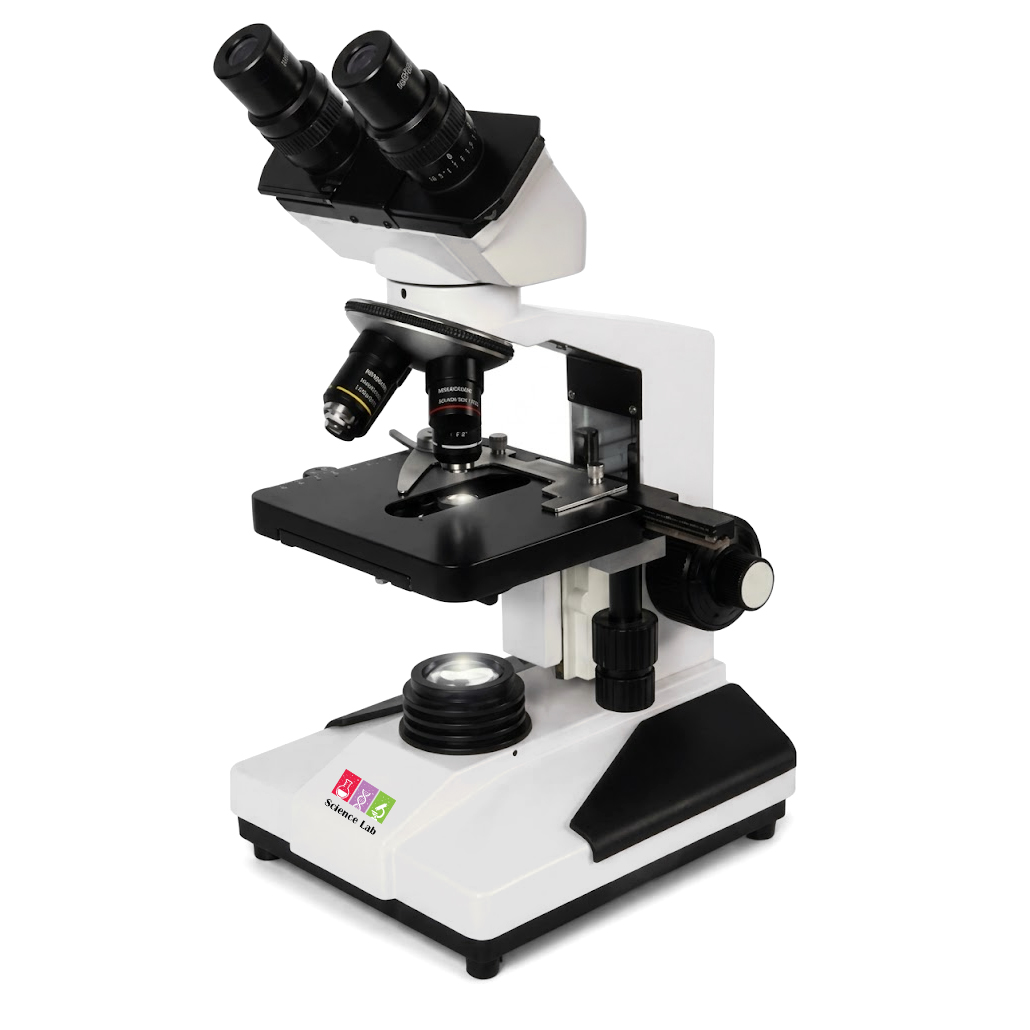
Microscope Compound 1000
Microscope Compound 1000 (Product Code: SCL/AG26-111) is a compound light microscope with a magnification range of 50 to 1000, used for educational and training work in schools, colleges and basic clinical teaching laboratories. It comes with three objectives, two eyepieces, a condenser with iris diaphragm and a plano-concave mirror for illumination, and is delivered in a cabinet with lock and key, which makes it a practical compound microscope for schools in India and abroad. It is supplied by Jain Scientific Equipments Pvt Ltd (ScienceLab), Ambala, India.
Specifications
| Parameter | Detail |
|---|---|
| Magnification | 50 to 1000 |
| Objectives | 3 |
| Eyepieces | 2 |
| Focusing | Separate coarse and fine adjustment knobs |
| Condenser | With iris diaphragm |
| Illumination | Plano-concave reflecting mirror directing external light through the specimen stage |
| Storage | Cabinet with lock and key |
| Typical users | Schools, colleges and basic clinical laboratories, for education and training |
| Product code | SCL/AG26-111 |
| Supplied by | Jain Scientific Equipments Pvt Ltd (ScienceLab), Ambala, India |
What Is the Compound Microscope 1000 Used For?
Students use it to study plant and animal cells, tissues, pond water organisms and prepared slides, working up from low power to the top of its 50 to 1000 range. Because light comes from a plano-concave mirror rather than a built-in lamp, it can be used with daylight from a window or with a separate bench lamp, which suits classrooms and field centres where power is not always to hand.
Tilt the mirror to send an even circle of light up through the condenser, use the flat side with a strong light source and the concave side with weaker light, and adjust the iris diaphragm for contrast. Focus first with the coarse knob at low power, then refine with the fine knob. After the lesson, lock the microscope in its cabinet to keep dust off the optics.
What to Specify When Ordering
- The powers of the three objectives and two eyepieces you need, which we will confirm with the quotation.
- Number of microscopes for your laboratory or training room.
- Slides, cover glasses or a bench lamp to be quoted with the microscopes.
Supplier
Jain Scientific Equipments Private Limited, trading as ScienceLab from Ambala, Haryana, India, supplies the Microscope Compound 1000 to schools, colleges, training institutes, dealers and importers. We source each microscope complete with its objectives, eyepieces and lockable cabinet, and can ship it together with slides and other biology apparatus to India and international markets. For company details, visit our company profile.
Related Laboratory Equipment
Useful companions for the Microscope Compound 1000:
- Basic Botany Slide (Set of 25) — prepared plant specimens for class practicals.
- Cover Glasses — for students’ own wet-mount preparations.
- Lens Tissue — safe cleaning of eyepieces, objectives and the mirror.
- Monocular Biological Microscope 400x — a lower-power option for junior classes.
- Binocular Microscope, 1000x, LED — a binocular model with built-in LED lighting.
Browse our Microscope range, or the wider Physics Lab Equipment category where this model is listed.
Frequently Asked Questions
What magnification does the Microscope Compound 1000 offer?
The Microscope Compound 1000 offers magnification from 50 to 1000, using its three objectives and two eyepieces in combination. The exact objective and eyepiece powers can be confirmed with your quotation if your syllabus specifies them.
Does the Microscope Compound 1000 need electricity?
No mains connection is listed for the Microscope Compound 1000. It uses a plano-concave reflecting mirror to direct external light, such as daylight or a separate lamp, up through the specimen stage, so it can be used where power is not available.
What comes with the Microscope Compound 1000?
The Microscope Compound 1000 comes with three objectives, two eyepieces, a condenser with iris diaphragm, separate coarse and fine focusing knobs, a plano-concave mirror and a cabinet with lock and key for secure storage between lessons.
How should the Microscope Compound 1000 be looked after?
Keep the Microscope Compound 1000 locked in its cabinet when not in use, clean lenses only with lens tissue, and carry it with one hand under the base. Lower the stage before changing objectives so that lenses and slides are not damaged.
Who supplies the Microscope Compound 1000?
Jain Scientific Equipments Pvt Ltd (ScienceLab), Ambala, Haryana, India, supplies the Microscope Compound 1000 to schools, colleges, training institutes, dealers and importers, and can include slides and accessories in the same shipment for India and international markets.
Request a Quote
For a quotation on the Microscope Compound 1000, send the quantity, preferred objective powers and delivery location through our contact page, or add it to the enquiry cart with slides and accessories.
Last updated: 24 September 2026
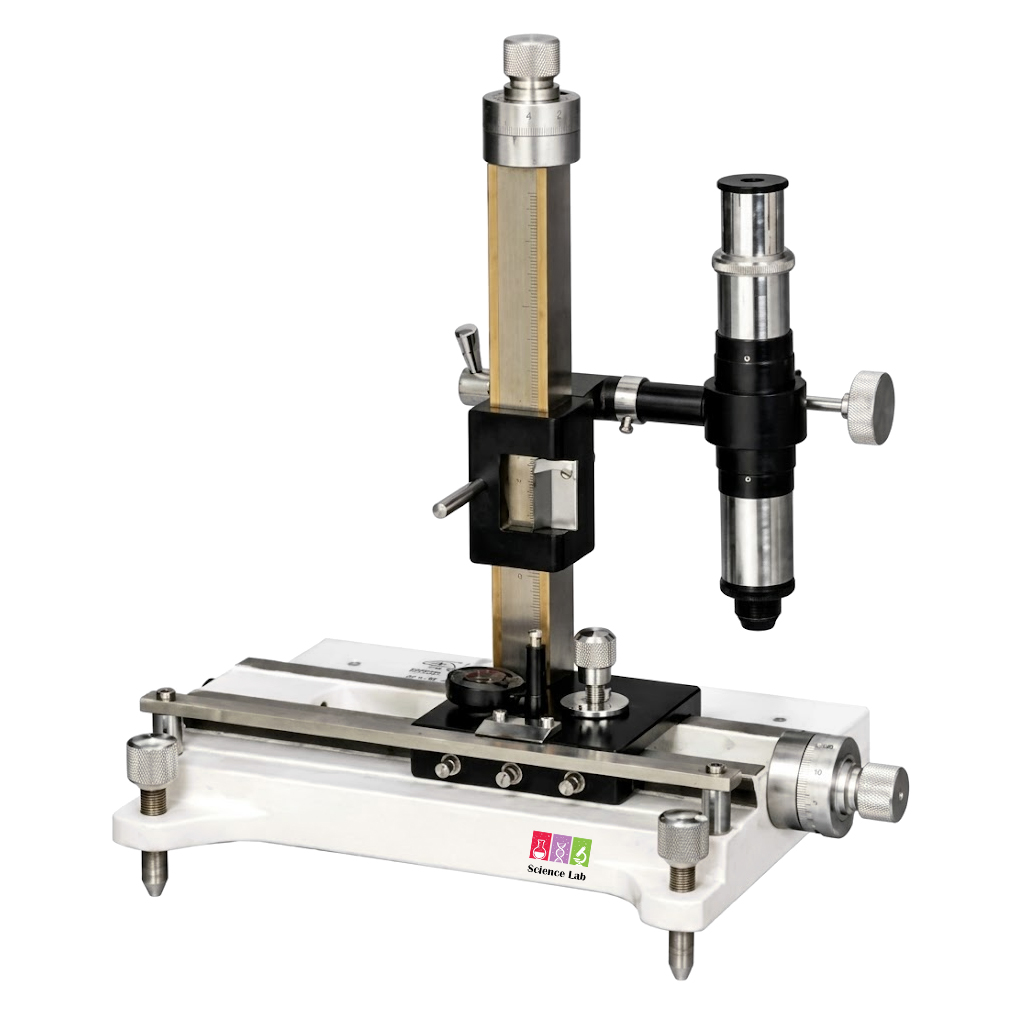
Microscope Travelling (Vernier)
Microscope Travelling (Vernier) (Product Code: SCL/AG26-113) is a vernier travelling microscope used to measure small distances accurately on two axes, horizontal and vertical, in college and senior school physics practicals. A x10 eyepiece and x3 objective ride on brass electroplated main and vernier scales reading 0-165mm horizontally and 0-120mm vertically, over a heavy cast iron base with three levelling screws. It is made by Jain Scientific Equipments Pvt Ltd (ScienceLab), an OEM manufacturer, at its own factory in Ambala, India.
Specifications
| Parameter | Detail |
|---|---|
| Measurement | Two axes (horizontal and vertical scales) |
| Vertical scale | 0-120mm, with vernier |
| Horizontal scale | 0-165mm, with vernier |
| Scale material | Main and vernier scales of brass, electroplated |
| Optics | Eyepiece x10, objective x3 |
| Focal length | 50mm |
| Slides | Vertical slide fitted on the horizontal carriage, operating in a similar way |
| Base | Heavy cast iron base fitted with three levelling screws |
| Levelling and height | Spirit level; height adjustable legs |
| Supplied with | Sturdy protective case and instruction/maintenance manual |
| Product code | SCL/AG26-113 |
| Manufacturer | Jain Scientific Equipments Pvt Ltd (ScienceLab) — OEM |
| Country of origin | India (made in Ambala, Haryana) |
What Is the Vernier Travelling Microscope Used For?
A travelling microscope measures distances too small or too delicate for a ruler or calliper, without touching the object. Typical physics practical equipment tasks include measuring the diameters of Newton’s rings, the bore of a capillary tube for surface tension and viscosity experiments, the real and apparent depth of a glass block to find its refractive index, and the thickness of thin wires or cover slips.
Level the instrument first with the spirit level and levelling screws, then focus on the object and set the cross-wire on one edge. Take the scale and vernier reading, move the carriage to the opposite edge and read again; the difference is the distance. Always approach each edge from the same direction to avoid backlash, and return the microscope to its protective case after use.
What to Specify When Ordering
- Confirm the scale ranges (0-120mm vertical, 0-165mm horizontal) suit your experiments.
- Ask us to confirm the vernier least count if your practical manual specifies one.
- Number of instruments, and any Newton’s rings or capillary apparatus to be quoted with them.
OEM Manufacturer
The Microscope Travelling (Vernier) is manufactured by Jain Scientific Equipments Private Limited, trading as ScienceLab, as the original equipment manufacturer. It is built at the company’s own licensed factory at Saha, Ambala, Haryana, India, and sold factory-direct to colleges, schools, universities, dealers and importers, so quotations and service questions go straight to the maker. Tender and institutional buyers registering a new vendor can use GSTIN 06AAECJ8618A1ZT and LEI 3358004HRD1JIVXKYX49. See our company profile for more.
Related Physics Lab Equipment
Apparatus commonly used with the Microscope Travelling (Vernier):
- Apparatus Newton’s Ring — the ring diameters are read with the travelling microscope.
- Sodium Spectral Lamp — monochromatic light source for Newton’s rings.
- Vernier Travelling Microscope — another travelling microscope model in our range.
- Caliper Vernier (Metal) — for larger dimensions that do not need a microscope.
Browse all Physics Lab Equipment for more optics and measurement apparatus.
Frequently Asked Questions
What can the Microscope Travelling (Vernier) measure?
The Microscope Travelling (Vernier) measures small distances on two axes, horizontally up to 0-165mm and vertically up to 0-120mm. It is used for Newton’s rings diameters, capillary bores, real and apparent depth, and other fine measurements in physics practicals.
What optics does the Microscope Travelling (Vernier) have?
The Microscope Travelling (Vernier) has a x10 optical eyepiece and a x3 objective, with a focal length of 50mm. This gives a clear, magnified view of the edge being measured while leaving working space between the objective and the specimen.
How is the Microscope Travelling (Vernier) levelled?
The Microscope Travelling (Vernier) stands on a heavy cast iron base fitted with three levelling screws and has a spirit level for checking. Height adjustable legs help set it at the right working height before measurements begin.
What is the least count of the Microscope Travelling (Vernier)?
Both scales of the Microscope Travelling (Vernier) carry a vernier for fine readings. If your practical manual requires a specific least count, please ask through the contact page and we will confirm it before you order.
Who manufactures the Microscope Travelling (Vernier)?
Jain Scientific Equipments Pvt Ltd (ScienceLab) manufactures the Microscope Travelling (Vernier) as the OEM at its own licensed factory at Saha, Ambala, Haryana, India. It is supplied factory-direct with a protective case and instruction/maintenance manual to buyers in India and international markets.
Can a calibration certificate be supplied with the Microscope Travelling (Vernier)?
Calibration documentation is not part of the Microscope Travelling (Vernier) listing. If your laboratory needs a calibration certificate, please discuss it with us through the contact page before ordering so we can confirm what is possible.
Request a Quote
Request a quotation for the Microscope Travelling (Vernier) through our contact page, or add it to the enquiry cart with related optics apparatus. Quotations come directly from the manufacturer in Ambala for single colleges and bulk orders.
Last updated: 24 September 2026