- Physics Lab Equipment
- Chemistry Lab Equipment
- Biology Lab Equipment
- Anatomical Lab Equipment
- Learning
- Educational Lab Equipment
- Magnets
- Agriculture
- Astronomy
- Earth Science
- Geography Lab Equipment
- Safety Lab Coat
- Laboratory
- Meteorological
- Electricity & Magnetism
- Heat
- School Lab Equipment
- Lab Glassware
- Science Lab Equipment
- Tvet Lab Equipment
- Robotics Kits Supplier and Manufacturer for Schools India
- Math Lab Equipment Manufacturers and Exporters in Ambala
- STEM Kits Manufacturers and Supplier India
- Engineering Lab Equipment
- Hospital Lab Equipment
- Water, Sanitation & Hygiene Supplies
- Cold Chain, Solar & Communication Equipment
- Nutrition
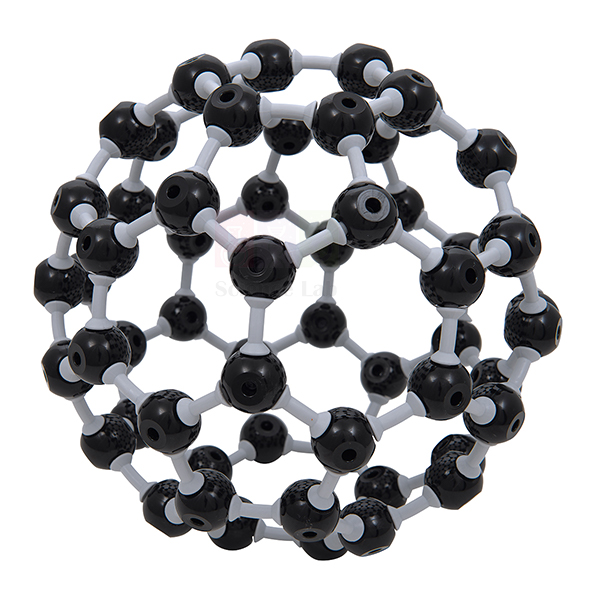
Molecular Model, Buckminsterfullerene
Molecular Model, Buckminsterfullerene (Product Code: SLE/Mo/35) is a 60 atom self-assembly kit used to build the C60 carbon cage and teach carbon allotropes in chemistry and materials science lessons. Students assemble it themselves, which makes the pattern of pentagons and hexagons in this football-shaped molecule easy to understand, so it works well as a 3D science model kit. It is made by Jain Scientific Equipments Pvt Ltd (ScienceLab), an OEM manufacturer, at its own factory in Ambala, India.
Specifications
| Parameter | Detail |
|---|---|
| Molecule | Buckminsterfullerene (C60) |
| Number of atoms | 60 |
| Format | Self-assembly kit |
| Product code | SLE/Mo/35 |
| Manufacturer | Jain Scientific Equipments Pvt Ltd (ScienceLab) — OEM |
| Country of origin | India (made in Ambala, Haryana) |
What Is the Buckminsterfullerene Model Used For?
Buckminsterfullerene is a form of pure carbon in which 60 atoms join into a hollow, closed cage of pentagonal and hexagonal rings. Building the model lets students compare it with diamond and graphite, discuss why each carbon bonds to three neighbours, and see how the discovery of fullerenes opened research into nanotubes and nanomaterials.
Because it is a self-assembly kit, construction itself becomes the activity: small groups can build the cage in a lesson and discover that every carbon sits where a pentagon meets two hexagons. The finished model can then be displayed in the chemistry room as a reference during later lessons on structure and bonding.
OEM Manufacturer
ScienceLab is the trading name of Jain Scientific Equipments Private Limited, the OEM that makes this Buckminsterfullerene kit at its licensed factory in Saha, Ambala, Haryana, India. Buying direct means schools, science centres, dealers and importers get quotations from the manufacturer itself rather than a reseller, and repeat orders for extra kits are handled by the same team. Find out more on our company profile.
Related Molecule Products
Models that connect with fullerene and carbon bonding lessons:
- Molecular Model Set – Benzene C6H6, Hybridized — the sp2 carbon ring behind the hexagons of the fullerene cage.
- Molecular And Orbital Model Set – Organic Structures — carbon bonding from single bonds to aromatic rings.
- Orbital Model of Sp2 Hybridization — the orbital arrangement adopted by each carbon in the cage.
- Professional Chemistry Molecular Structure Model — for building the other molecular structures in the course.
Explore the full Molecule range.
Frequently Asked Questions
How many atoms does the Molecular Model, Buckminsterfullerene have?
The Molecular Model, Buckminsterfullerene is a 60 atom self-assembly kit, matching the 60 carbon atoms of the C60 molecule, so the finished model represents the complete closed carbon cage.
Does the Buckminsterfullerene model come assembled?
No. The Molecular Model, Buckminsterfullerene is a self-assembly kit, so students or teachers build the carbon cage themselves, which turns the construction into a lesson on how pentagons and hexagons join to close the sphere.
Which topics does the model support?
The Molecular Model, Buckminsterfullerene supports lessons on carbon allotropes, covalent bonding, molecular structure and introductory nanoscience, helping students compare fullerene with diamond and graphite and discuss how the cage shape affects its properties.
Who manufactures the Molecular Model, Buckminsterfullerene?
Jain Scientific Equipments Pvt Ltd (ScienceLab) manufactures the Molecular Model, Buckminsterfullerene as the OEM at its own factory in Saha, Ambala, Haryana, India, and supplies it factory-direct to schools, colleges and distributors.
Can the model be kept on display after assembly?
Yes. Once assembled, the Molecular Model, Buckminsterfullerene can be kept on display in a chemistry laboratory or classroom as a reference for carbon allotropes; handle it gently and keep it away from heat and direct sunlight.
How do I get a quote?
To get a quote for the Molecular Model, Buckminsterfullerene, send the product code SLE/Mo/35, the quantity and your delivery location through the contact page or add the kit to the enquiry cart.
Request a Quote
Order enquiries for the Molecular Model, Buckminsterfullerene can be sent through the contact page or the enquiry cart. ScienceLab replies with a quotation as the manufacturer.
Last updated: 24 September 2026
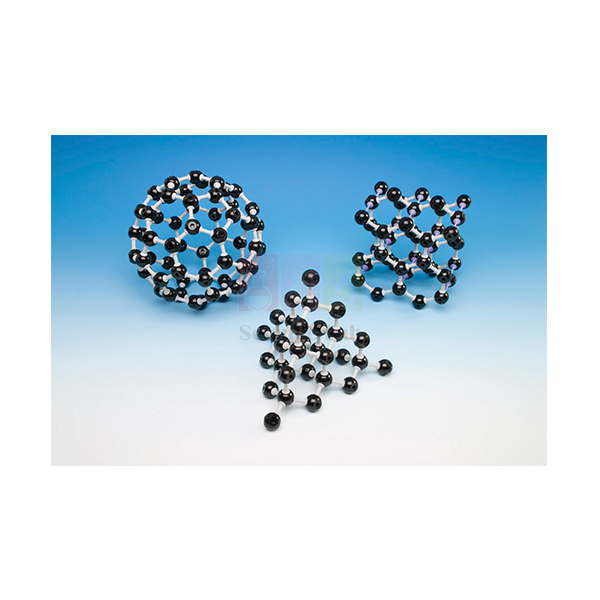
Molecular Model, Diamond
Molecular Model, Diamond (Product Code: SLE/Mo/36) is a self-assembly kit used to build the three-dimensional carbon network of diamond in school and college chemistry lessons. Teachers and students use it to see why diamond is so hard, and the kit provides 30 atoms for the build. It is made by Jain Scientific Equipments Pvt Ltd (ScienceLab), an OEM manufacturer, at its own factory in Ambala, India, as part of its molecular model chemistry range for India and international markets.
Specifications
| Parameter | Detail |
|---|---|
| Structure modelled | Diamond (a giant covalent form of carbon) |
| Kit type | Self-assembly kit |
| Number of atoms | 30 |
| Product code | SLE/Mo/36 |
| Manufacturer | Jain Scientific Equipments Pvt Ltd (ScienceLab) — OEM |
| Country of origin | India (made in Ambala, Haryana) |
What Is the Diamond Molecular Model Used For?
In diamond, every carbon atom is covalently bonded to four neighbours in a tetrahedral arrangement, and that pattern repeats in every direction to form one continuous network. Building the 30-atom model lets a class see that there are no weak planes for the structure to slide or split along. That is the structural reason for diamond's hardness, very high melting point and poor electrical conductivity. The kit suits lessons on allotropes, covalent bonding and the link between structure and properties.
A practical approach is to let small groups assemble the network step by step, counting the bonds on each atom as they go, and then place the finished model beside a graphite model for comparison. Keep all parts together after each lesson so the full set of 30 atoms is ready for the next class.
OEM Manufacturer
The Diamond Molecular Model is an original product of Jain Scientific Equipments Private Limited, which trades as ScienceLab. As the OEM, the company makes the kit at its own licensed factory at Saha, Ambala, Haryana, India, so schools, colleges, dealers and importers buy it factory-direct rather than through a trader. ScienceLab is the trading name of a registered MSME manufacturer (Udyam UDYAM-HR-01-0003714), and export shipments are handled under Importer-Exporter Code AAECJ8618A (DGFT).
Need replacement atoms or repeat kits for more benches later? Ask us, and your request goes straight to the manufacturer. Read more about the company on the ScienceLab company profile.
Related Molecular Models
These items help extend a lesson on carbon allotropes and crystal structures:
- Molecular Model, Graphite — the layered form of carbon to compare with diamond's rigid network.
- Molecular Model, Buckminsterfullerene — a third carbon allotrope, built as a closed cage molecule.
- Set for Demonstration of Crystal Lattices — for moving on from covalent networks to other lattice types.
- New Improved Organic And Inorganic Molecular Set — a general set for the other molecules in the same unit.
Browse the full Molecule category for more molecular and orbital models.
Frequently Asked Questions
What is included in the Molecular Model, Diamond kit?
The Molecular Model, Diamond is a self-assembly kit with 30 atoms for building the diamond carbon network. Students put it together themselves. For the full parts list and packing details of the current batch, contact ScienceLab before you order.
Does the diamond model come ready-built?
No. The Molecular Model, Diamond comes as a self-assembly kit, so students or the teacher build the 30-atom network themselves. Assembly is part of the learning, because each bond placed shows how carbon links tetrahedrally to its neighbours.
Which topics can the Diamond Molecular Model support?
The Molecular Model, Diamond supports lessons on carbon allotropes, covalent bonding, giant covalent structures and how structure explains properties such as hardness and a high melting point. It pairs well with a graphite model when comparing two forms of the same element.
Who manufactures the Molecular Model, Diamond?
The Molecular Model, Diamond is manufactured by Jain Scientific Equipments Pvt Ltd (ScienceLab) as the OEM, at its own licensed factory at Saha, Ambala, Haryana, India. Orders, repeat kits and spare-part requests are handled directly by the manufacturer.
Can ScienceLab supply the diamond model in class quantities or for export?
Yes. The Molecular Model, Diamond can be quoted in multiple kits for schools, colleges, dealers and importers in India and international markets. State the number of kits and the delivery destination so the quotation covers packing and shipping.
What should I include when requesting a quote for the diamond model?
For the Molecular Model, Diamond, include the product code SLE/Mo/36, the number of kits, any companion models such as graphite, and your delivery location. Send these through the contact page or add the item to the enquiry cart.
Request a Quote
To order the Molecular Model, Diamond, send your requirement through the contact page or add it to the enquiry cart. Quotations come directly from the manufacturer, ScienceLab, Ambala.
Last updated: 24 September 2026
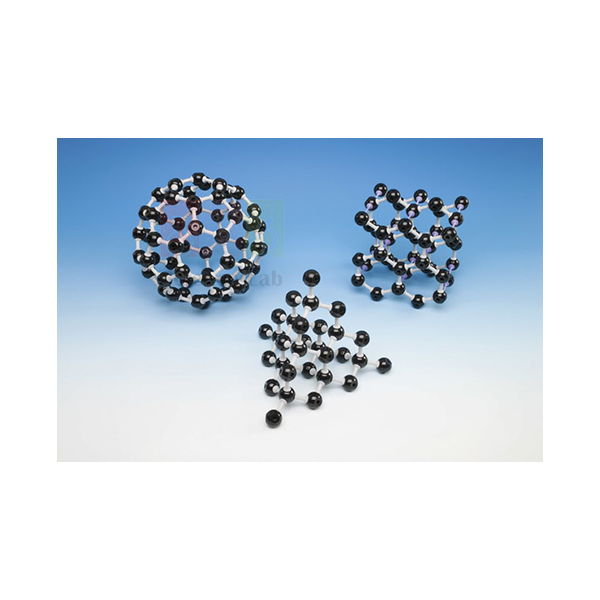
Molecular Model, Graphite
Molecular Model, Graphite (Product Code: SLE/Mo/37) is a self-assembly kit used to construct the layered structure of graphite for chemistry teaching in schools, colleges and laboratories. The kit provides 45 atoms, which students join into flat sheets of hexagonal carbon rings stacked one above another. It is produced by Jain Scientific Equipments Pvt Ltd (ScienceLab), an OEM manufacturer, at its own factory in Ambala, India, and fits naturally into a 3D science model kit collection for any chemistry department.
Specifications
| Parameter | Detail |
|---|---|
| Structure modelled | Graphite (layered form of carbon) |
| Kit type | Self-assembly kit |
| Number of atoms | 45 |
| Product code | SLE/Mo/37 |
| Manufacturer | Jain Scientific Equipments Pvt Ltd (ScienceLab) — OEM |
| Country of origin | India (made in Ambala, Haryana) |
What Is the Graphite Molecular Model Used For?
In graphite, each carbon atom bonds to three others within a flat sheet of hexagonal rings. The remaining outer electron of each atom is delocalised across the sheet, and neighbouring sheets are held together only by weak forces. Once the model is built, students can point to the gaps between layers and explain why graphite feels soft and slippery, why it works in pencils and as a dry lubricant, and why it conducts electricity along its layers.
A useful classroom routine is to build the sheets with the layer spacing clearly visible, then show how one layer could slide over the next. Senior classes can go further and connect the flat, three-bond geometry of each carbon to sp2 hybridisation. Placing the finished graphite model next to a diamond model turns one lesson into a clear comparison of two allotropes.
OEM Manufacturer
ScienceLab, the trading name of Jain Scientific Equipments Private Limited, produces the Graphite Molecular Model as original equipment at its licensed factory in Saha, Ambala, Haryana, India. Because you deal with the maker itself, quotations, repeat orders for extra kits and questions about parts are answered by the people who make the kit, with no trading intermediary in between. Learn more on the ScienceLab company profile.
Related Molecular Models
Teachers often combine the graphite kit with these models when covering carbon and hybridisation:
- Molecular Model, Diamond — the rigid tetrahedral network that contrasts with graphite's layers.
- Orbital Model of Sp2 Hybridization — explains the flat three-bond geometry of each carbon in a sheet.
- Molecular Model Set – Benzene C6H6, Hybridized — the same hexagonal ring shown as a single molecule.
- Molecular Model, Buckminsterfullerene — carbon rings curved into a closed cage.
See every model in the Molecule category.
Frequently Asked Questions
How many atoms does the Molecular Model, Graphite kit contain?
The Molecular Model, Graphite kit contains 45 atoms for self-assembly into the layered carbon structure. For the connector count and packing details of the current production batch, please ask ScienceLab through the contact page before ordering.
Why use a graphite model alongside a diamond model?
Using the Molecular Model, Graphite beside a diamond model shows two allotropes built from the same element but bonded differently. Students can then explain why graphite is soft and conducts electricity, while diamond is hard and does not.
Is the graphite model suitable for senior secondary and college classes?
Yes. The Molecular Model, Graphite supports school-level work on allotropes and giant structures, and college-level discussion of sp2 hybridisation and delocalised electrons. The teacher can decide how deep the explanation goes for each class.
Who manufactures the Molecular Model, Graphite?
Jain Scientific Equipments Pvt Ltd, trading as ScienceLab, is the OEM that makes the Molecular Model, Graphite at its own licensed factory in Saha, Ambala, India. Buyers deal with the manufacturer directly for quotations and repeat orders.
How should the graphite model be stored between lessons?
Keep all parts of the Molecular Model, Graphite together in a closed box, away from direct heat, and count the 45 atoms back in after each class. That way the kit stays complete for the next group of students.
How do I get a quotation for the graphite model?
For the Molecular Model, Graphite, send the product code SLE/Mo/37, the number of kits you need and your delivery address through the contact page or the enquiry cart. Schools, dealers and importers can all request quotes.
Request a Quote
Ready to order? Use the ScienceLab contact page or add the Molecular Model, Graphite to your enquiry cart, and the manufacturer will reply with a direct quotation.
Last updated: 24 September 2026
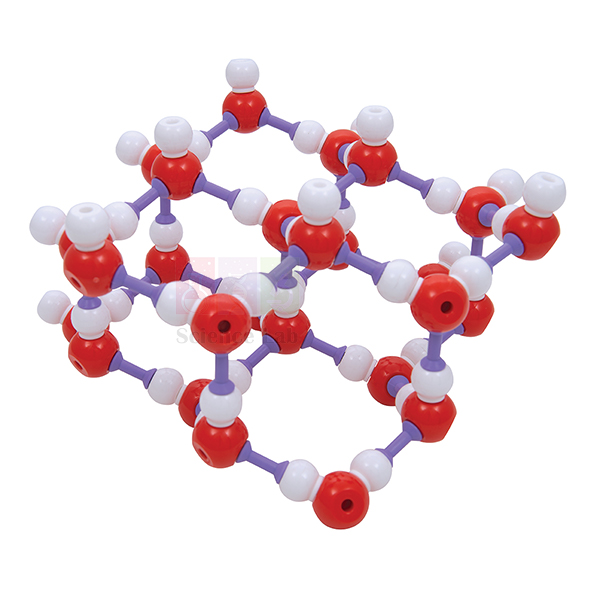
Molecular Model, Ice
Molecular Model, Ice (Product Code: SLE/Mo/38) is a self-assembly kit used to build the hydrogen-bonded crystal structure of ice for chemistry and physics teaching. Built from 26 water units, it lets students and teachers see the open arrangement of molecules that makes solid water less dense than liquid water. It is made by Jain Scientific Equipments Pvt Ltd (ScienceLab), an OEM manufacturer, at its own factory in Ambala, India, and works as a hands-on chemistry teaching kit for schools and colleges.
Specifications
| Parameter | Detail |
|---|---|
| Structure modelled | Ice (solid water, hydrogen-bonded lattice) |
| Kit type | Self-assembly kit |
| Building units | 26 water units |
| Product code | SLE/Mo/38 |
| Manufacturer | Jain Scientific Equipments Pvt Ltd (ScienceLab) — OEM |
| Country of origin | India (made in Ambala, Haryana) |
What Is the Ice Molecular Model Used For?
In ice, each water molecule is held to its neighbours by hydrogen bonds, which lock the molecules into an open, hexagonal pattern with a lot of empty space. Assembling the 26 water units shows students why ice floats, why water expands when it freezes and how hydrogen bonds between molecules differ from the covalent bonds inside each molecule.
The model also connects chemistry with physics and biology topics such as states of matter, density and the survival of pond life beneath a frozen surface. After building it, ask students to trace one water molecule and count the neighbours it is hydrogen-bonded to, then compare that open lattice with the closer packing of liquid water described in their textbook. It pairs well with a practical ice-melting experiment.
OEM Manufacturer
Jain Scientific Equipments Private Limited trades under the name ScienceLab and is the original equipment manufacturer of this ice structure kit. It is produced at the company's own licensed factory at Saha, Ambala, Haryana, India, and dispatched factory-direct to schools, colleges, institutions, dealers and importers. For extra kits in a later term, contact the manufacturer directly for a fresh quotation. Company background is on the ScienceLab profile page.
Related Molecular Models
These items fit the same lessons on water, bonding and states of matter:
- Ice Melting Kit — a practical on change of state that the ice model explains at particle level.
- Atom Molecular Models Set — for building a single water molecule and other simple molecules first.
- Molecular Model, Diamond — a tetrahedral network to compare with the open ice lattice.
- Set for Demonstration of Crystal Lattices — for extending the lesson to other crystal types.
More structures are listed in the Molecule category.
Frequently Asked Questions
How many water molecules are in the Molecular Model, Ice kit?
The Molecular Model, Ice kit is built from 26 water units, which students join into the hydrogen-bonded ice lattice. For details of the connectors and packing in the current batch, contact ScienceLab before placing an order.
What does the ice model teach about density?
The Molecular Model, Ice shows that hydrogen bonds hold water molecules in an open lattice with empty space between them. This explains why ice is less dense than liquid water, why it floats and why water expands as it freezes.
Is the ice model useful outside chemistry lessons?
Yes. The Molecular Model, Ice also supports physics lessons on states of matter and density, and biology discussions of how floating ice insulates the water beneath it so that aquatic life can survive cold weather.
Who makes the Molecular Model, Ice?
The Molecular Model, Ice is made by Jain Scientific Equipments Pvt Ltd (ScienceLab), the OEM, at its own licensed factory at Saha, Ambala, Haryana, India. Quotations and repeat orders come straight from the manufacturer.
Does the ice model arrive assembled?
No. The Molecular Model, Ice is a self-assembly kit, so students connect the 26 water units themselves. Building the lattice by hand is what makes the hydrogen-bond pattern easy to remember.
Can I order several ice model kits for a class or for export?
Yes. The Molecular Model, Ice can be quoted in class sets for schools, colleges, dealers and importers in India and international markets. Mention the quantity and the delivery destination when you send your enquiry.
Request a Quote
Send your requirement for the Molecular Model, Ice through the contact page, or add it to the enquiry cart with any other models you need. You will receive a quotation direct from the manufacturer.
Last updated: 24 September 2026
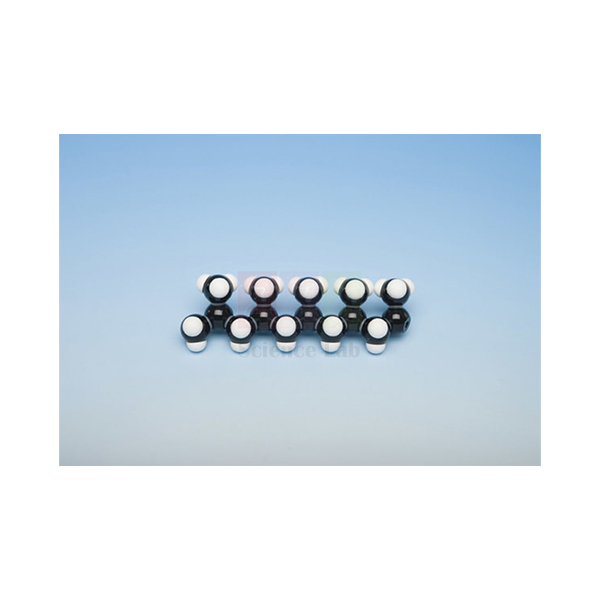
Molecular Model, Polypropylene
Molecular Model, Polypropylene (Product Code: SLE/Mo/39) is a self-assembly model used to show the chain structure of the polymer polypropylene in organic chemistry and materials lessons. It comes with instructions for self-assembly, so students can build the repeating units and see how a long addition polymer grows from small monomer molecules. It is made by Jain Scientific Equipments Pvt Ltd (ScienceLab), an OEM manufacturer, at its own factory in Ambala, India, and carries a molecular model organic chemistry collection forward into the topic of plastics.
Key Details
| Parameter | Detail |
|---|---|
| Structure modelled | Polypropylene (an addition polymer) |
| Model type | Self-assembly molecular model |
| Included | Instructions for self-assembly |
| Product code | SLE/Mo/39 |
| Manufacturer | Jain Scientific Equipments Pvt Ltd (ScienceLab) — OEM |
| Country of origin | India (made in Ambala, Haryana) |
What Is the Polypropylene Molecular Model Used For?
Polypropylene forms when many propene molecules join through their carbon–carbon double bonds, leaving a long saturated carbon backbone with a methyl group on every second carbon. Building the model makes that repeat unit visible, so students can identify the monomer, draw the repeat unit correctly and explain why the finished plastic is chemically unreactive.
With senior classes, the model can open a discussion of how the arrangement of methyl groups along the chain affects how closely neighbouring chains pack, and so influences stiffness and melting behaviour. Linking it to everyday laboratory items made of polypropylene, such as beakers and carboys, helps students connect molecular structure with the materials already on their bench.
OEM Manufacturer
This polymer model is made by ScienceLab, the brand of Jain Scientific Equipments Private Limited, which acts as the OEM and builds it at its own licensed factory at Saha, Ambala, Haryana, India. Schools, colleges and trade buyers purchase it straight from the manufacturer, and the same team answers questions about the assembly instructions or repeat orders. See the ScienceLab company profile for more about the business.
Related Molecular Models
Useful companions for a lesson on hydrocarbons, polymers and plastics:
- Organic Chemistry Molecular Models Kits — for building propene and other small monomers before the polymer.
- Molecular Model Kit, Saturated Fat – Stearic Acid — another long carbon chain to compare with the polymer backbone.
- Beaker, Polypropylene — an everyday lab vessel made from the polymer the model shows.
- Polypropylene Carboys — larger polypropylene containers students may see in the lab store.
Explore more structures in the Molecule category.
Frequently Asked Questions
What comes with the Molecular Model, Polypropylene?
The Molecular Model, Polypropylene comes with instructions for self-assembly, so students can build the polymer chain step by step. The number of atoms and the chain length are not listed here, so ask ScienceLab for the parts list of the current batch before ordering.
Which topics does the polypropylene model support?
The Molecular Model, Polypropylene supports lessons on addition polymerisation, monomers and repeat units, saturated hydrocarbons and the properties and uses of plastics. It suits school chemistry syllabuses as well as introductory college courses on polymers.
Can students assemble the polypropylene model on their own?
Yes, with light guidance. The Molecular Model, Polypropylene includes self-assembly instructions, so older students can build it in small groups. For younger classes, the teacher can first build one repeat unit as a demonstration.
Who manufactures the Molecular Model, Polypropylene?
The Molecular Model, Polypropylene is manufactured by Jain Scientific Equipments Pvt Ltd (ScienceLab), the OEM, at its own licensed factory in Saha, Ambala, Haryana, India. Enquiries and repeat orders go directly to the manufacturer.
How should the polymer model be looked after?
Store the Molecular Model, Polypropylene parts and instructions together in a closed box, away from heat and direct sunlight. Check that every piece is returned after each lesson so the full chain can be rebuilt next time.
What information does a quotation for this model need?
For the Molecular Model, Polypropylene, send the product code SLE/Mo/39, the number of models required, your delivery city and country, and any other models you want quoted from the same range.
Request a Quote
Request pricing for the Molecular Model, Polypropylene through the contact page or place it in the enquiry cart. The quotation is issued directly by ScienceLab as the manufacturer.
Last updated: 24 September 2026
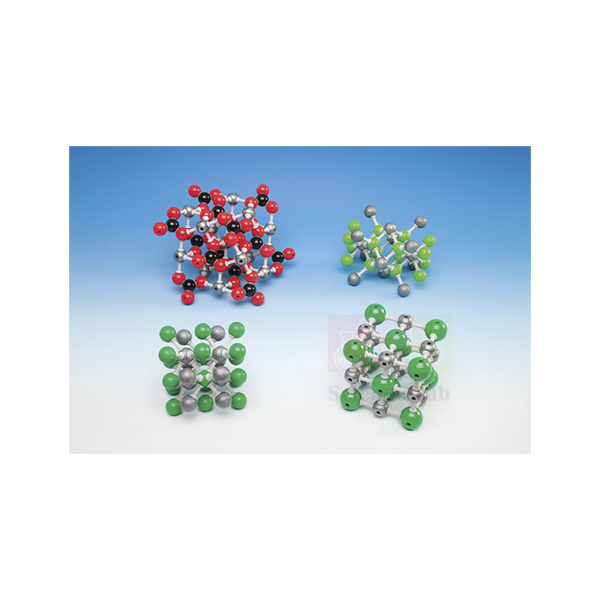
Molecular Model, Pre-assembled, Calcite
Molecular Model, Pre-assembled, Calcite (Product Code: SLE/Mo/40) is a ready-built crystal structure model used to show how calcium ions and carbonate groups are arranged in calcite, for chemistry and earth-science teaching. Because it arrives pre-assembled with firmly held joining pieces, teachers can pass it round the class during a lesson without it coming apart. It is made by Jain Scientific Equipments Pvt Ltd (ScienceLab), an OEM manufacturer, at its own factory in Ambala, India, as part of its school chemistry lab equipment range.
Specifications
| Parameter | Detail |
|---|---|
| Structure modelled | Calcite (calcium carbonate, CaCO3) |
| Format | Pre-assembled model |
| Production | Precision-engineered moulds and materials |
| Joining pieces | Designed to hold the model firmly so it can be handled during lessons |
| Storage | Durable storage case with compartments for segregating parts |
| Product code | SLE/Mo/40 |
| Manufacturer | Jain Scientific Equipments Pvt Ltd (ScienceLab) — OEM |
| Country of origin | India (made in Ambala, Haryana) |
What Is the Calcite Crystal Model Used For?
Calcite is the common crystalline form of calcium carbonate found in limestone, marble and chalk. The model shows calcium ions and flat carbonate groups repeating in a regular three-dimensional lattice, which helps students understand ionic bonding in a compound whose negative ion is itself a covalently bonded group.
Earth-science and geography classes can use it to connect the internal arrangement of ions with the way calcite crystals split along smooth cleavage faces, and with the familiar fizzing test for limestone in dilute acid. As the model is already built, lesson time goes on discussion rather than construction. Return it to its case after each class to protect the joints.
OEM Manufacturer
ScienceLab is the trading name of Jain Scientific Equipments Private Limited, the OEM that produces this pre-assembled calcite model at its own licensed factory at Saha, Ambala, Haryana, India. Buying factory-direct means institutions, dealers and importers deal with the maker itself for quotations, repeat orders and replacement parts. For vendor registration, the company's details are GSTIN 06AAECJ8618A1ZT and LEI 3358004HRD1JIVXKYX49. More background is on the ScienceLab company profile.
Related Molecular Models
Build a complete crystal-structures lesson with these pre-assembled and demonstration models:
- Molecular Model, Pre-assembled, Calcium Fluoride — a second calcium compound with a simpler ionic lattice.
- Molecular Model, Pre-assembled, Quartz — a silicate mineral structure to compare with calcite.
- Molecular Models, Pre-Assembled, Iron, Zinc, and Copper — metallic lattices for the bonding-types topic.
- Set for Demonstration of Crystal Lattices — a demonstration set covering further lattice types.
All molecular and crystal models are listed in the Molecule category.
Frequently Asked Questions
Does the Molecular Model, Pre-assembled, Calcite need to be built?
No. The Molecular Model, Pre-assembled, Calcite arrives already assembled, and its joining pieces are designed to keep the structure firm, so it can be handed round the class straight from its storage case.
How is the calcite model stored?
The Molecular Model, Pre-assembled, Calcite comes in a durable storage case with compartments for segregating parts. Returning the model to its case after each lesson protects the joints and keeps any loose pieces together.
What chemistry does the calcite model illustrate?
The Molecular Model, Pre-assembled, Calcite illustrates an ionic lattice built from calcium ions and carbonate groups. It supports lessons on bonding types, the structure of limestone, marble and chalk, and the reaction of carbonates with acids.
What are the dimensions of the calcite model?
The overall size and the number of ions shown in the Molecular Model, Pre-assembled, Calcite are not listed on this page. Contact ScienceLab with your requirement and we will confirm the dimensions and packing details before quoting.
Who manufactures the Molecular Model, Pre-assembled, Calcite?
The Molecular Model, Pre-assembled, Calcite is manufactured by Jain Scientific Equipments Pvt Ltd (ScienceLab) as the OEM, at its own licensed factory in Saha, Ambala, Haryana, India, and is supplied factory-direct to schools, colleges and trade buyers.
Can I order the calcite model together with other crystal models?
Yes. The Molecular Model, Pre-assembled, Calcite can be quoted alongside the calcium fluoride, quartz and metal lattice models. List each model and the quantity you need so one combined quotation covers the set.
Request a Quote
To buy the Molecular Model, Pre-assembled, Calcite, contact us through the contact page or add it to the enquiry cart. Your quotation comes directly from ScienceLab, the manufacturer.
Last updated: 24 September 2026
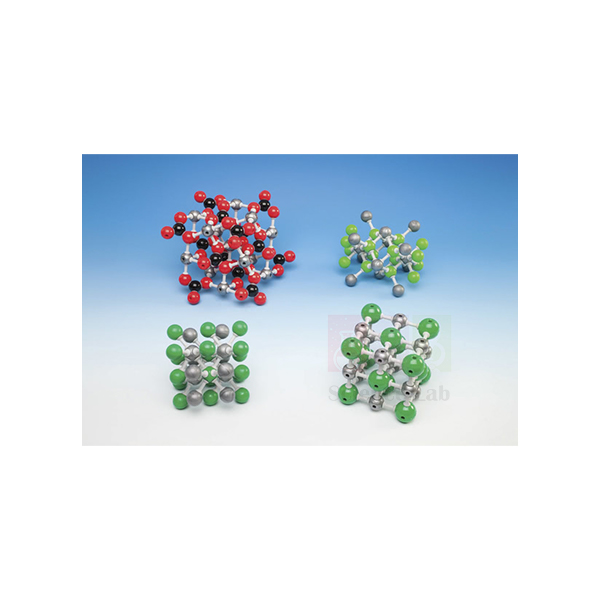
Molecular Model, Pre-assembled, Calcium Fluoride
Molecular Model, Pre-assembled, Calcium Fluoride (Product Code: SLE/Mo/41) is a ready-built ionic lattice model used to demonstrate the fluorite crystal structure of calcium fluoride (CaF2) in chemistry classrooms and lecture rooms. Produced from precision-engineered moulds and materials, it is sturdy enough to pass from student to student while the teacher explains how the ions are arranged. It is made by Jain Scientific Equipments Pvt Ltd (ScienceLab), an OEM and science apparatus manufacturer in India, at its own factory in Ambala.
Specifications
| Parameter | Detail |
|---|---|
| Structure modelled | Calcium fluoride (CaF2, fluorite structure) |
| Format | Pre-assembled model |
| Production | Precision-engineered moulds and materials |
| Joining pieces | Designed so the model stays firmly constructed when passed around |
| Storage | Durable storage case with compartments for segregation of parts |
| Product code | SLE/Mo/41 |
| Manufacturer | Jain Scientific Equipments Pvt Ltd (ScienceLab) — OEM |
| Country of origin | India (made in Ambala, Haryana) |
What Is the Calcium Fluoride Lattice Model Used For?
In calcium fluoride, each calcium ion is surrounded by eight fluoride ions and each fluoride ion by four calcium ions. This arrangement is what textbooks call the fluorite structure. The model lets students count those neighbours directly and see why the ratio of ions matches the formula CaF2.
It is especially useful for comparing ionic lattices, for example setting the fluorite arrangement beside the rock-salt structure of sodium chloride. It also helps explain why ionic solids have high melting points and are brittle. Turn the model slowly so the class can view it along different directions, and point out how the calcium ions form a cubic framework with the fluoride ions sitting in the gaps between them.
OEM Manufacturer
Jain Scientific Equipments Private Limited, known to customers as ScienceLab, is the original equipment manufacturer of this calcium fluoride lattice model. It is made at the company's own licensed factory in Saha, Ambala, Haryana, India. Schools, laboratories, distributors and importers are supplied factory-direct. If you have questions about fittings, parts or additional models, ask us and the manufacturer will answer directly. Read about the company on the ScienceLab profile page.
Related Molecular Models
Pair this lattice with the following models when teaching structure and bonding:
- Molecular Model, Pre-assembled, Calcite — another calcium compound, this time with a polyatomic anion.
- Molecular Model, Pre-assembled, Quartz — a covalent network solid that contrasts with an ionic lattice.
- Molecular Model Set – Complex Ions — carries the idea of coordination number into complex-ion chemistry.
- Set for Demonstration of Crystal Lattices — more lattice types for a full structures unit.
Find other models in the Molecule category.
Frequently Asked Questions
What structure does the Molecular Model, Pre-assembled, Calcium Fluoride show?
The Molecular Model, Pre-assembled, Calcium Fluoride shows the fluorite lattice of CaF2, in which each calcium ion is surrounded by eight fluoride ions and each fluoride ion by four calcium ions. It is the standard example of this ionic structure type.
Is the calcium fluoride model robust enough for students to handle?
Yes. The joining pieces of the Molecular Model, Pre-assembled, Calcium Fluoride are designed so the structure stays firmly constructed when it is passed around during a lesson. The model is produced from precision-engineered moulds and materials.
What storage comes with the calcium fluoride model?
The Molecular Model, Pre-assembled, Calcium Fluoride is kept in a durable storage case with compartments for segregation of parts, which protects the lattice between lessons and keeps any separate pieces in order.
How many ions or unit cells does the model show?
The number of ions, the unit cells shown and the overall dimensions of the Molecular Model, Pre-assembled, Calcium Fluoride are not stated on this page. Please contact ScienceLab and we will confirm these details before you order.
Who makes the Molecular Model, Pre-assembled, Calcium Fluoride?
Jain Scientific Equipments Pvt Ltd (ScienceLab) makes the Molecular Model, Pre-assembled, Calcium Fluoride as the OEM at its own licensed factory in Saha, Ambala, Haryana, India. Quotations and repeat orders are handled by the manufacturer itself.
Can the calcium fluoride model be supplied to buyers outside India?
Yes. The Molecular Model, Pre-assembled, Calcium Fluoride is offered to schools, colleges, dealers and importers in India and international markets. Include the quantity and destination in your enquiry so the quotation covers packing and freight.
Request a Quote
Ask for a price on the Molecular Model, Pre-assembled, Calcium Fluoride via the contact page, or collect it with other items in the enquiry cart. ScienceLab replies with a quotation direct from the manufacturer.
Last updated: 24 September 2026
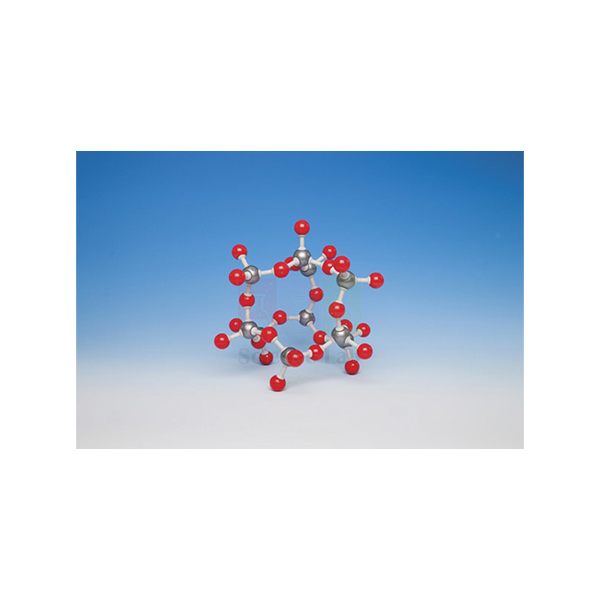
Molecular Model, Pre-assembled, Quartz
Molecular Model, Pre-assembled, Quartz (Product Code: SLE/Mo/42) is a ready-built structure model used to show the silicon–oxygen network of quartz (silicon dioxide, SiO2) in chemistry, geology and materials lessons. Its carefully designed joining pieces keep the network firmly together, so it holds up when handled by a whole class. It is made by Jain Scientific Equipments Pvt Ltd (ScienceLab), an OEM and school laboratory equipment manufacturer, at its own factory in Ambala, India.
Specifications
| Parameter | Detail |
|---|---|
| Structure modelled | Quartz (silicon dioxide, SiO2) |
| Format | Pre-assembled model |
| Production | Precision-engineered moulds and materials |
| Joining pieces | Carefully designed so the model does not fall apart when handled in class |
| Storage | Durable storage case with compartments that keep parts segregated |
| Product code | SLE/Mo/42 |
| Manufacturer | Jain Scientific Equipments Pvt Ltd (ScienceLab) — OEM |
| Country of origin | India (made in Ambala, Haryana) |
What Is the Quartz Structure Model Used For?
Quartz is a giant covalent structure. Every silicon atom is bonded to four oxygen atoms, and every oxygen atom bridges two silicon atoms, so linked tetrahedra extend throughout the crystal. The model helps students explain why quartz and sand are hard, melt only at very high temperatures and do not dissolve in water, and why the formula SiO2 describes a ratio rather than a separate molecule.
It pairs naturally with a diamond model, because both are covalent networks built from tetrahedral units, and with a calcite model to contrast a covalent mineral with an ionic one. Geography and earth-science teachers can bring it into lessons on rock-forming minerals, and physics teachers can use it when introducing glass and other silica-based materials.
OEM Manufacturer
The Quartz structure model is manufactured by ScienceLab, the trading name of Jain Scientific Equipments Private Limited. The company is the OEM and produces the model at its own licensed factory at Saha, Ambala, Haryana, India. Selling factory-direct means buyers receive a quotation from the maker rather than a reseller, and can return to the same source for repeat orders or spare parts. Visit the ScienceLab company profile to learn more.
Related Molecular Models
These models support the same unit on giant structures and minerals:
- Molecular Model, Diamond — another tetrahedral covalent network, built from one element only.
- Molecular Model, Pre-assembled, Calcite — an ionic mineral to contrast with covalent quartz.
- Molecular Model, Pre-assembled, Calcium Fluoride — a classic ionic lattice for the same comparison.
- Orbital Model of Sp3 Hybridization — explains the tetrahedral bonding around each silicon atom.
Browse further structures in the Molecule category.
Frequently Asked Questions
What does the Molecular Model, Pre-assembled, Quartz represent?
The Molecular Model, Pre-assembled, Quartz represents the silicon dioxide network, in which each silicon atom bonds to four oxygen atoms and each oxygen atom links two silicon atoms, forming tetrahedra joined in three dimensions.
Why compare the quartz model with a diamond model?
The Molecular Model, Pre-assembled, Quartz and a diamond model are both giant covalent networks based on tetrahedral bonding. Comparing them explains shared properties such as hardness and high melting point, and shows how a two-element network differs from a single-element one.
Will the quartz model stay together when students handle it?
Yes. The joining pieces of the Molecular Model, Pre-assembled, Quartz are carefully designed so the model is firmly constructed and can be passed around during a lesson. Keep it in its durable compartment case between classes.
What size is the quartz model?
The overall dimensions and the number of atoms shown in the Molecular Model, Pre-assembled, Quartz are not listed on this page. Contact ScienceLab and we will confirm the size and packing before sending a quotation.
Who manufactures the Molecular Model, Pre-assembled, Quartz?
The Molecular Model, Pre-assembled, Quartz is manufactured by Jain Scientific Equipments Pvt Ltd (ScienceLab), the OEM, at its own licensed factory in Saha, Ambala, Haryana, India. Buyers deal directly with the manufacturer.
How do I request a quotation for the quartz model?
Send the product code SLE/Mo/42 for the Molecular Model, Pre-assembled, Quartz, the quantity and your delivery location through the contact page or enquiry cart. Schools, dealers and importers in India and abroad are all welcome to enquire.
Request a Quote
Enquire about the Molecular Model, Pre-assembled, Quartz on the contact page or add it to your enquiry cart. ScienceLab quotes directly as the manufacturer.
Last updated: 24 September 2026