- Physics Lab Equipment
- Chemistry Lab Equipment
- Biology Lab Equipment
- Anatomical Lab Equipment
- Learning
- Educational Lab Equipment
- Magnets
- Agriculture
- Astronomy
- Earth Science
- Geography Lab Equipment
- Safety Lab Coat
- Laboratory
- Meteorological
- Electricity & Magnetism
- Heat
- School Lab Equipment
- Lab Glassware
- Science Lab Equipment
- Tvet Lab Equipment
- Robotics Kits Supplier and Manufacturer for Schools India
- Math Lab Equipment Manufacturers and Exporters in Ambala
- STEM Kits Manufacturers and Supplier India
- Engineering Lab Equipment
- Hospital Lab Equipment
- Water, Sanitation & Hygiene Supplies
- Cold Chain, Solar & Communication Equipment
- Nutrition
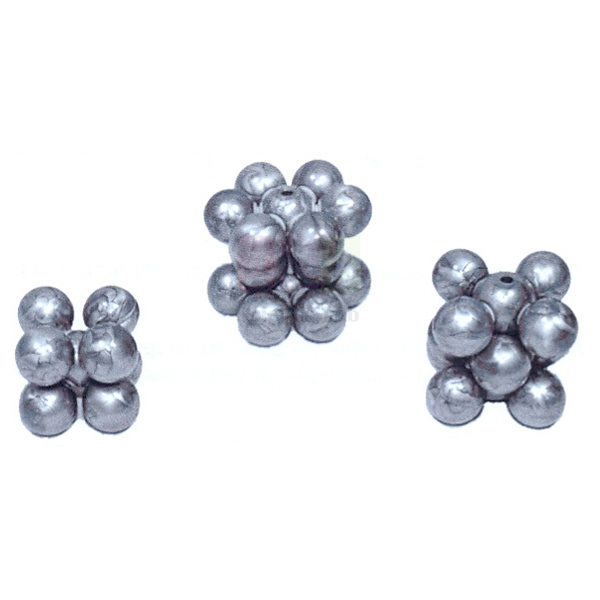
Molecular Models, Pre-Assembled, Iron, Zinc, and Copper
Molecular Models, Pre-Assembled, Iron, Zinc, and Copper (Product Code: SLE/Mo/43) is a set of ready-built metal structure models used to compare how atoms pack in three common metals, for chemistry, physics and materials-science teaching. Suitable for students at all levels, the models give the teacher a concrete, hand-held picture of metallic structure in place of a flat textbook diagram. They are made by Jain Scientific Equipments Pvt Ltd (ScienceLab), an OEM manufacturer of educational laboratory equipment in India, at its own factory in Ambala.
Specifications
| Parameter | Detail |
|---|---|
| Structures modelled | Iron, zinc and copper (metallic structures) |
| Format | Pre-assembled models |
| Suitable for | Students at all levels |
| Production | Precision-engineered moulds and materials |
| Joining pieces | Designed to keep the models firmly constructed during handling |
| Storage | Durable storage case with compartments for segregation of parts |
| Product code | SLE/Mo/43 |
| Manufacturer | Jain Scientific Equipments Pvt Ltd (ScienceLab) — OEM |
| Country of origin | India (made in Ambala, Haryana) |
What Are the Iron, Zinc and Copper Lattice Models Used For?
These three metals are often taught together because they show the main ways metal atoms pack. At room temperature iron adopts a body-centred cubic arrangement, copper a face-centred cubic (cubic close-packed) arrangement and zinc a hexagonal close-packed arrangement. Setting the models side by side lets students compare the number of nearest neighbours and how tightly the atoms fill space.
The models support lessons on metallic bonding and the delocalised electrons that make metals malleable, ductile and good conductors. In materials and engineering courses they help introduce alloys, for example brass made from copper and zinc and steel made from iron, and explain why metals such as copper can be drawn into wire. Return each model to its compartment in the storage case after use.
What to Specify When Ordering
- Whether you need all three metal models (iron, zinc and copper) or individual structures.
- The number of sets required per laboratory or classroom.
- Any companion pre-assembled models, such as calcite, calcium fluoride or quartz, to be quoted together.
- Your delivery city and country, so packing and freight can be included.
OEM Manufacturer
Jain Scientific Equipments Private Limited, which operates under the ScienceLab name, is the OEM behind these metal lattice models and makes them at its own licensed factory at Saha, Ambala, Haryana, India. Because orders go straight to the manufacturer, the same team can advise on combining these models with other crystal structures in one consignment, and on repeat supplies for additional classrooms. Company details are on the ScienceLab profile page.
Related Molecular Models
Use these alongside the metal models to cover all the main bonding types:
- Molecular Model, Pre-assembled, Calcite — an ionic mineral lattice to contrast with metallic bonding.
- Molecular Model, Pre-assembled, Calcium Fluoride — a second ionic structure with a cubic framework.
- Set for Demonstration of Crystal Lattices — further lattice types for a complete structures unit.
- Bar Compound Copper & Iron — a physics item that puts real copper and iron together in one bar.
See the complete range in the Molecule category.
Frequently Asked Questions
Which metals do the Molecular Models, Pre-Assembled, Iron, Zinc, and Copper cover?
The Molecular Models, Pre-Assembled, Iron, Zinc, and Copper cover the structures of iron, zinc and copper, supplied ready-built so students can compare how metal atoms pack. Ask us to confirm whether you need the three models together or individually.
What level of student are the metal lattice models suited to?
The Molecular Models, Pre-Assembled, Iron, Zinc, and Copper suit students at all levels, from school lessons on metallic bonding to college materials-science classes on crystal structures and atomic packing.
Are the metal models ready to use on delivery?
Yes. The Molecular Models, Pre-Assembled, Iron, Zinc, and Copper arrive assembled, with joining pieces designed to keep them firmly constructed. They are kept in a durable storage case with compartments for segregation of parts.
How many atoms or unit cells does each metal model show?
The atom count, unit cells shown and dimensions of the Molecular Models, Pre-Assembled, Iron, Zinc, and Copper are not listed on this page. Contact ScienceLab and we will confirm these details before you place an order.
Who manufactures the Molecular Models, Pre-Assembled, Iron, Zinc, and Copper?
Jain Scientific Equipments Pvt Ltd (ScienceLab) manufactures the Molecular Models, Pre-Assembled, Iron, Zinc, and Copper as the OEM, at its own licensed factory in Saha, Ambala, Haryana, India, and supplies them factory-direct.
Can the metal models be ordered with other crystal models?
Yes. The Molecular Models, Pre-Assembled, Iron, Zinc, and Copper can be quoted together with the calcite, calcium fluoride and quartz models. List each model and quantity in one enquiry to receive a single combined quotation.
Request a Quote
Send your enquiry for the Molecular Models, Pre-Assembled, Iron, Zinc, and Copper through the contact page or the enquiry cart. The quotation comes directly from ScienceLab as the manufacturer.
Last updated: 24 September 2026

Molyorbital Atomic Orbital Model Set – 14 Model
Molyorbital Atomic Orbital Model Set – 14 Model (Product Code: SLE/Mo/44) is a set of 14 orbital models used to show the three-dimensional shapes of atomic orbitals and how they combine in chemical bonding, for school, college and university chemistry teaching. It gives teachers a concrete way to present shapes that students usually meet only as drawings, and it is kept in a durable case with compartments for its parts. It is supplied by Jain Scientific Equipments Pvt Ltd (ScienceLab), Ambala, India, alongside its atom model kit range.
Specifications
| Parameter | Detail |
|---|---|
| Set contents | 14 models (as named) |
| Topic | Atomic orbitals and bonding |
| Suitable for | Students at all levels |
| Production | Precision-engineered moulds and materials |
| Joining pieces | Designed so the models stay firmly constructed when passed around |
| Storage | Durable storage case with compartments for segregation of parts |
| Product code | SLE/Mo/44 |
| Supplied by | Jain Scientific Equipments Pvt Ltd (ScienceLab), Ambala, India |
What Is the Atomic Orbital Model Set Used For?
Atomic orbitals have distinctive shapes, from the simple sphere of an s orbital to the paired lobes of a p orbital and the more complex forms of d orbitals, and they are hard to picture from a flat diagram. A physical orbital set lets students hold each shape, see how orbitals are oriented in space and follow how they overlap to form sigma and pi bonds or combine into hybrid orbitals.
In class, introduce one orbital shape at a time, then use the models to explain molecular geometry and the difference between single and multiple bonds. Because the joining pieces hold firmly, the models can be passed round during the lesson. The exact list of the 14 models is not given here, so ask us for the contents to check that they match your syllabus.
Supplier
ScienceLab, the trading name of Jain Scientific Equipments Private Limited, sources and supplies the Molyorbital Atomic Orbital Model Set to schools, colleges, universities, dealers and importers in India and international markets. The set can be included in one combined quotation with other chemistry models from our range. For vendor registration, the supplying company is Jain Scientific Equipments Private Limited (CIN U29309HR2020PTC087597, GSTIN 06AAECJ8618A1ZT). More about the company is on the ScienceLab profile page.
Related Molecular Models
These orbital and hybridisation items complement the 14-model set:
- Atomic Orbital Model Px — a single large p orbital for whole-class demonstration.
- Orbital Model of Sp3 Hybridization — shows how orbitals combine into the tetrahedral hybrid set.
- Molecular And Orbital Model Set – Organic Structures — links orbital shapes to real organic molecules.
- Hybrid Orbital Chart — a wall reference to use alongside the models.
- Dynamic Model for Atomic Orbital Demonstration — a demonstration model for introducing the topic.
Browse more in the Molecule category.
Frequently Asked Questions
How many models are in the Molyorbital Atomic Orbital Model Set – 14 Model?
The Molyorbital Atomic Orbital Model Set – 14 Model contains 14 models, as its name states. The list of orbital shapes included is not given on this page, so please ask ScienceLab for the contents before ordering.
What does the orbital model set help students understand?
The Molyorbital Atomic Orbital Model Set helps students understand the three-dimensional shapes of atomic orbitals and how orbitals overlap to form bonds and hybrid orbitals. It bridges the gap between energy-level diagrams and the shapes of real molecules.
Is the orbital set sturdy enough for classroom handling?
Yes. The Molyorbital Atomic Orbital Model Set is produced from precision-engineered moulds and materials, and its joining pieces are designed so the models stay firmly constructed when passed around during a lesson.
How is the orbital model set stored?
The Molyorbital Atomic Orbital Model Set comes in a durable storage case with compartments for segregation of parts. Returning each model to its compartment after class keeps the set complete and easy to check.
Who supplies the Molyorbital Atomic Orbital Model Set?
The Molyorbital Atomic Orbital Model Set is supplied by Jain Scientific Equipments Pvt Ltd (ScienceLab), Ambala, India, to institutions, dealers and importers in India and international markets. ScienceLab sources the set and handles quotations and dispatch.
Can the orbital set be quoted with other orbital models?
Yes. The Molyorbital Atomic Orbital Model Set can be quoted together with single orbital models, hybridisation models and orbital charts. List every item and quantity in one enquiry for a combined quotation.
Request a Quote
To request a price for the Molyorbital Atomic Orbital Model Set – 14 Model, use the contact page or add it to the enquiry cart together with any related items.
Last updated: 24 September 2026
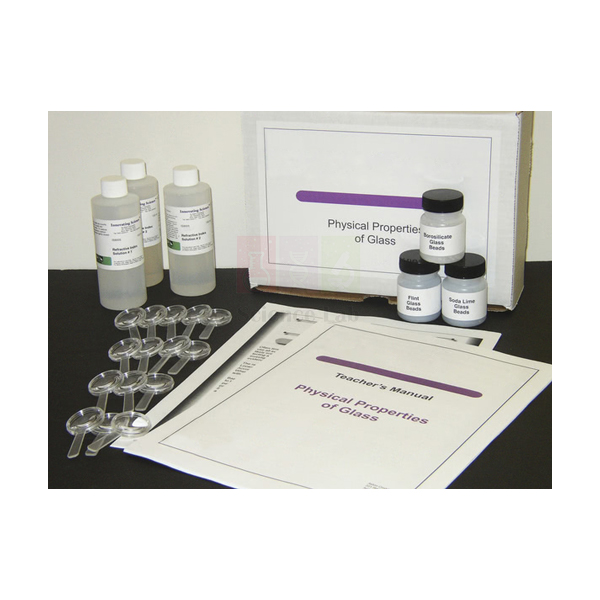
Physical Properties of Glass
Physical Properties of Glass (Product Code: SLE/CH/167) is a forensic science activity in which students learn about the different chemical and physical characteristics and properties of glass, and find out how forensic scientists use these differences to help provide evidence that solves crimes. There is enough material for 15 groups, and the activity comes with a Teachers Manual and Student Guide and Analysis copy-masters. It is supplied by Jain Scientific Equipments Pvt Ltd (ScienceLab), Ambala, India, as a science kit with manual support for chemistry and forensic science classes.
Key Details
| Parameter | Detail |
|---|---|
| Type | Forensic chemistry activity kit |
| Subject | Chemical and physical characteristics and properties of glass |
| Forensic application | How differences between glasses are used as evidence in criminal investigations |
| Group capacity | Enough material for 15 groups |
| Teaching material | Teachers Manual; Student Guide and Analysis copy-masters |
Typical Use
During a criminal investigation, police and crime scene investigators use every available tool and piece of evidence to work backwards and build the most likely picture of what happened, and each type of evidence supplies a different piece of the puzzle. Glass is a common example: a broken window, bottle or headlamp can leave fragments at a scene and on a suspect. In this activity students examine how glasses differ in their chemical and physical properties and then apply that knowledge the way a forensic examiner would – deciding whether two samples could share a source.
The Teachers Manual sets out the lesson, while the Student Guide and Analysis copy-masters give each group a structured record of observations and conclusions. With material for 15 groups, one kit can serve a full class working in pairs or threes, which makes it practical school chemistry lab equipment for a forensic-themed unit. Treat any glass samples with care: wear eye protection, handle pieces with tweezers or gloves, and put broken fragments in a dedicated broken-glass container.
Supplier
This forensic activity reaches schools through Jain Scientific Equipments Private Limited, the Ambala, Haryana company that trades as ScienceLab and sources practical kits and consumables alongside the apparatus it builds. Our company profile gives the background.
Related Chemistry Lab Equipment
Kits and tools for a complete forensic science unit:
- Crime Scene Investigation — a wider scenario in which glass can be one line of evidence
- Forensic Science Lab Investigation — further forensic techniques for the same course
- Forensic Comparison Microscope — views two samples side by side for detailed comparison
- Forensic Chemistry of Dusting for Fingerprints — adds fingerprint evidence to the investigation
- Crime Scene Tape — marks out a mock scene for role-play
See more in Chemistry Lab Equipment.
Frequently Asked Questions
How many student groups does one kit serve?
There is enough material for 15 groups, so a typical class can work in small teams at the same time.
What teacher and student material comes with it?
A Teachers Manual plus Student Guide and Analysis copy-masters, which you can reproduce for each group.
Which properties of glass do students test?
The activity covers chemical and physical characteristics of glass; the specific procedures are set out in the Teachers Manual. For a detailed list of tests and materials before ordering, please ask through our contact page.
Can the kit be used with more than one class?
The copy-masters can be reused, but the practical material is sized for 15 groups. Contact us about replacement materials if you plan to run the activity again.
What safety precautions apply?
Eye protection, careful handling of any glass pieces, and disposal of fragments in a broken-glass container. Follow your school’s laboratory rules for any reagents used.
Do you supply forensic kits to institutions abroad?
Yes. We supply schools and colleges in India and international markets; tell us your destination and quantity when you enquire.
Request a Quote
Ask for pricing through our contact page, or add this activity to the enquiry cart with other forensic kits.
Last updated: 24 September 2026
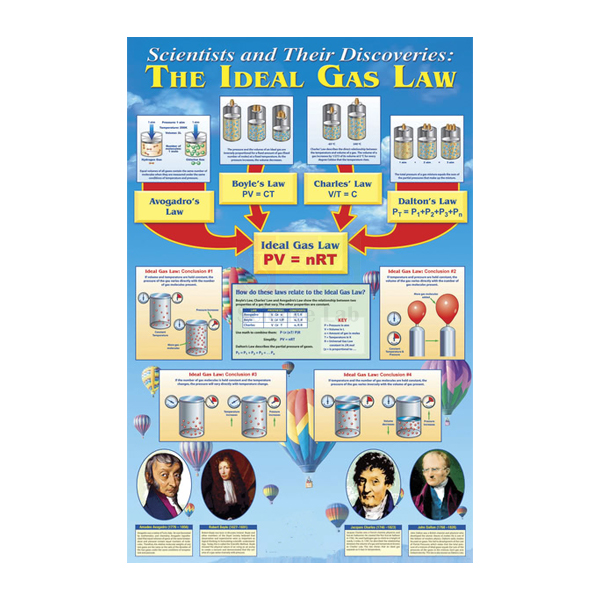
Gas Laws Poster
Gas Laws Poster (Product Code: SLE/CH/168) introduces the laws discovered by some of the giants of chemistry. Graphic illustrations show how gases behave in different environments, and students can see how Boyle’s Law, Avogadro’s Law and Charles’ Law combine to form the Ideal Gas Law, as well as the importance of Dalton’s Law of partial pressures. Manufactured by Jain Scientific Equipments Pvt Ltd (ScienceLab), Ambala, India, it is a chemistry teaching poster for classrooms and laboratories where gas behaviour is taught.
Key Details
| Parameter | Detail |
|---|---|
| Type | Wall poster (teaching aid) |
| Laws illustrated | Boyle’s Law, Charles’ Law, Avogadro’s Law, the Ideal Gas Law, Dalton’s Law of partial pressures |
| Presentation | Graphic illustrations of how gases behave in different environments |
| Learning levels | Younger students meet the core contributors to chemistry and physics; advanced students study how each law contributes to understanding gas behaviour |
| Subjects | Chemistry and physics |
Typical Use
Displayed in a chemistry or physics room, the poster gives students a constant visual reference while they work through the gas laws. Teachers can walk the class through the relationships one at a time: Boyle’s Law links pressure and volume at constant temperature, Charles’ Law links volume and temperature at constant pressure, and Avogadro’s Law links volume and the amount of gas. Bringing the three together leads to the Ideal Gas Law, often written PV = nRT, while Dalton’s Law explains that the total pressure of a gas mixture is the sum of the partial pressures of its components – an idea students meet again in breathing, diving and weather.
For younger classes, the poster is a way to get to know the scientists behind the laws; advanced students can use it to check how each law fits into the overall model of gas behaviour. Pairing it with a Boyle’s law apparatus lets students collect their own pressure–volume data and compare it with the relationship shown on the wall.
Manufacturer
The Gas Laws Poster is produced by Jain Scientific Equipments Private Limited in Ambala, Haryana. Operating as ScienceLab, the company makes charts, models and apparatus for school and college science teaching – see our company profile.
Related Laboratory Equipment
Apparatus and displays that go with gas-law lessons:
- Boyle’s Law – Simple Type — lets students measure the pressure–volume relationship themselves
- Simple Gas Preparation Kit — for preparing and collecting gases in practical lessons
- Gas Jar, Glass — collects gas samples during experiments
- The Ultimate Periodic Table Poster — a companion wall display for the chemistry room
Browse the wider range in Chemistry Lab Equipment.
Frequently Asked Questions
Which gas laws does the poster cover?
Boyle’s, Charles’ and Avogadro’s Laws, how they combine into the Ideal Gas Law, and Dalton’s Law of partial pressures.
What size is it, and is it laminated?
Size and finish are not stated on this page. Please ask through our contact page and we will confirm before you order.
Does the poster include the equations?
It explains the laws through graphic illustrations of gas behaviour. If you need to check the exact wording or equations shown, request a preview via the contact page.
Is it suitable for both junior and senior classes?
Yes. Younger students become acquainted with the scientists behind the laws, while advanced students use it to see how each law contributes to the full picture of gas behaviour.
How should we display it?
Mount it at eye level on a flat wall, away from direct sunlight and damp, so the illustrations stay clear for longer.
Can we order posters for several classrooms or schools?
Yes. Send the quantity and delivery addresses; we supply India and international markets and can combine posters with other teaching aids in one quotation.
Request a Quote
To order, reach us through the contact page or add the poster to the enquiry cart.
Last updated: 24 September 2026

The Ultimate Periodic Table Poster
The Ultimate Periodic Table Poster (Product Code: SLE/CH/169) is an oversized, colour coded laminated wall chart that gives students a super-sized look at the elements, pairing the familiar atomic symbol and weight with the story of where each element comes from and what it does. Chemistry teachers hang it as the main reference point in a classroom or laboratory, and it serves as a periodic table chart for schools in India that want students to read more than a bare grid of symbols. It is manufactured by Jain Scientific Equipments Pvt Ltd (ScienceLab), Ambala.
Specifications
| Parameter | Detail |
|---|---|
| Type | Oversized, colour coded periodic table wall chart |
| Finish | Laminated |
| Dimension | 95cm x 139cm |
| Data for each element | Standard information such as atomic symbol and weight |
| Extended element information | Discovery of the element, its characteristics, availability, uses and role in life processes |
| Composition panels | Composition by element of the human body, the planets in our solar system, a fish, a tree and a cheeseburger |
Typical Use
Because the poster is large enough to read from the back of a room, it suits whole-class teaching: a teacher can point to an element while introducing symbols and atomic weights, then send students to the chart to look up values for formula-mass or mole calculations. The extra notes on discovery, availability and uses turn it into a research station, where pairs of students pick an element and summarise how it was found and why it matters in industry or in living things.
The composition panels are a natural bridge to other subjects. Comparing the elements in the human body with those in a fish, a tree or the planets gives biology and earth science lessons a chemistry angle, and the cheeseburger panel is a memorable hook for food chemistry discussions. As part of a wider set of school chemistry lab equipment in India, the laminated surface stands up to daily handling; wipe it with a soft, slightly damp cloth and mount it flat at eye level so the lower rows stay easy to read.
Manufacturer
ScienceLab is the trading name of Jain Scientific Equipments Private Limited, a company based in Ambala, Haryana, that produces teaching aids and laboratory apparatus for schools, colleges and training institutes. Wall charts such as this one are supplied alongside the practical equipment used in the same lessons, so a department can equip a room from one source. Read more on our company profile.
Related Chemistry Lab Equipment
These items are often ordered with the poster to support lessons on atomic structure and the behaviour of matter:
- Gas Laws Poster — a companion wall chart for the physical chemistry side of the syllabus.
- Atom Activity Model — lets students build the atoms they have just located on the table.
- New Improved Organic And Inorganic Molecular Set — moves the lesson from single elements to bonded molecules.
- Modern Periodic Table Laminated — a separate laminated table for laboratories or smaller wall spaces.
- Laboratory Safety Chart — another wall reference for the same chemistry room.
Browse the full range in our Chemistry Lab Equipment category.
Frequently Asked Questions
How large is The Ultimate Periodic Table Poster?
It measures 95cm x 139cm, so plan a clear wall area of at least that size before ordering.
What does the chart show for each element?
Each element carries standard information such as its atomic symbol and weight, together with notes on its discovery, characteristics, availability, uses and role in life processes.
Is the poster laminated?
Yes. The lamination protects the print from handling and allows light cleaning with a damp cloth; avoid solvents and abrasive pads, which can cloud the surface.
Can it be used outside chemistry lessons?
Yes. The panels on the composition of the human body, the planets, a fish, a tree and a cheeseburger give biology, earth science and food science teachers a ready discussion starter.
Are frames or mounting fixtures included?
Mounting hardware is not listed as part of the product. Please ask through our contact page if you need framing or fixing advice.
Can schools order several posters for different classrooms?
Yes. We supply single pieces and institutional quantities to schools and colleges in India and international markets; share the quantity and delivery address and we will prepare a quotation.
Request a Quote
For pricing and availability of The Ultimate Periodic Table Poster, send your quantity and delivery location through our contact page, or add it to the enquiry cart with other chemistry teaching aids so we can quote them together.
Last updated: 24 September 2026
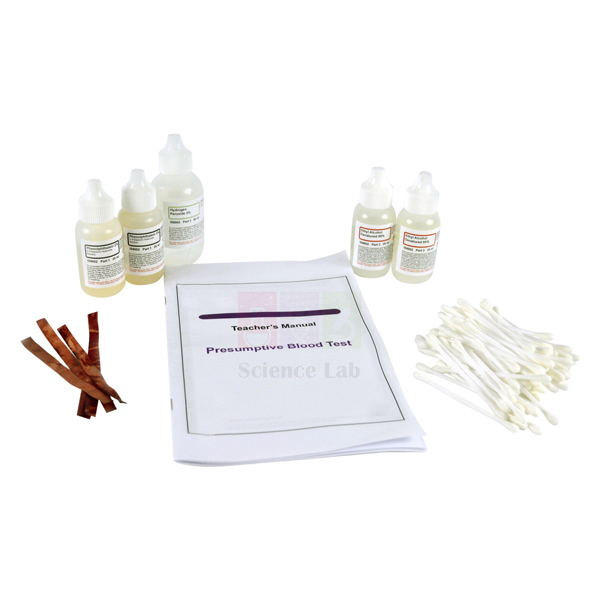
Presumptive Blood Test Kit
Presumptive Blood Test Kit (Product Code: SLE/CH/170) is a phenolphthalein-based test kit used to check materials for the presence of blood in forensic science and chemistry teaching labs. It includes instructions, a blood standard and reagents to complete 30 tests, and shows students why a screening result must be followed by further serology tests. It is supplied by Jain Scientific Equipments Pvt Ltd (ScienceLab), Ambala, India, as a hands-on chemistry experiment kit for classrooms in India and abroad.
Specifications
| Parameter | Detail |
|---|---|
| Test type | Presumptive test for the presence of blood on materials |
| Indicator | Phenolphthalein |
| Contents | Instructions, blood standard and reagents |
| Number of tests | Reagents to complete 30 tests |
| Species discrimination | Does not distinguish between animal and human blood |
| Confirmation | Further serology tests are needed |
| Shelf life | Depends on the chemical, its grade and storage conditions; ask us for the expiry date of the batch you are quoted |
| Product code | SLE/CH/170 |
| Supplied by | Jain Scientific Equipments Pvt Ltd (ScienceLab), Ambala, India |
What Is the Presumptive Blood Test Kit Used For?
A typical lesson starts with the blood standard, so students first see what a positive reaction looks like before they test unknown samples such as stained cloth, paper or wood prepared by the teacher. They then apply the reagents to each sample in the order given in the instructions and record whether the characteristic pink colour appears. Running a known negative, such as an unstained piece of the same material, beside every unknown builds the habit of using controls and opens a discussion of false positives.
The kit is also a clear way to show the limits of a screening test. Because the result cannot separate animal from human blood and further serology tests are needed, students learn why forensic laboratories treat a presumptive positive as a lead rather than proof. For departments that buy through a lab consumables supplier in India for recurring practicals, the 30-test quantity helps in working out how many kits a term of classes will need.
Supplier
The Presumptive Blood Test Kit is supplied by Jain Scientific Equipments Private Limited, which trades as ScienceLab from Ambala, Haryana, India, and sources forensic and chemistry teaching kits for schools, colleges and training centres. Export consignments are handled under Importer-Exporter Code AAECJ8618A (DGFT), and the company's GSTIN, 06AAECJ8618A1ZT, is available for buyers who need vendor registration details. See our company profile for more background.
Related Chemistry Lab Equipment
Pair the blood screen with these items to build a complete forensic chemistry sequence:
- Forensic Chemistry of Blood Types — a logical next step once a stain has screened positive
- Chemiluminescence in Blood Stain Detection — shows a second, light-based method for locating stains
- Gunshot Residue Presumptive Test Kit — another screening test for a mock crime-scene station
- Forensics Using Simulated Blood — for activities where real biological material is not wanted
- Gloves W/o Powder Nitrile Disposable — hand protection while handling samples and reagents
Find more investigation kits in our Chemistry Lab Equipment category.
Frequently Asked Questions
How many tests can be run with one kit?
One Presumptive Blood Test Kit contains reagents to complete 30 tests, together with instructions and a blood standard. Larger classes or repeated sessions across a term will need additional kits, so plan quantities before ordering.
What is included in the Presumptive Blood Test Kit?
The Presumptive Blood Test Kit includes instructions, a blood standard and the reagents for the test. General items such as gloves, swabs and sample materials are not listed as included and should be arranged separately.
Can the test show whether blood is human?
No. The phenolphthalein test in the Presumptive Blood Test Kit does not distinguish between animal and human blood, which is an important teaching point about the limits of presumptive methods in forensic work.
Does a positive result prove that a stain is blood?
No. A positive result from the Presumptive Blood Test Kit indicates that blood may be present; further serology tests are needed to confirm the finding, which is why forensic laboratories treat it as a lead rather than proof.
What is the shelf life of the reagents?
The shelf life of the Presumptive Blood Test Kit depends on the chemicals, their grade and storage conditions; ask us for the expiry date of the batch you are quoted before planning a long storage period, and keep reagent containers capped.
Who supplies the Presumptive Blood Test Kit?
Jain Scientific Equipments Private Limited (ScienceLab), Ambala, Haryana, India, supplies the Presumptive Blood Test Kit to schools, colleges and training centres in India and international markets; include the destination country in your enquiry so shipping can be quoted.
Request a Quote
To order the Presumptive Blood Test Kit, tell us the number of kits and your delivery location through our contact page, or place it in the enquiry cart with other forensic chemistry items for a combined quotation.
Last updated: 24 September 2026
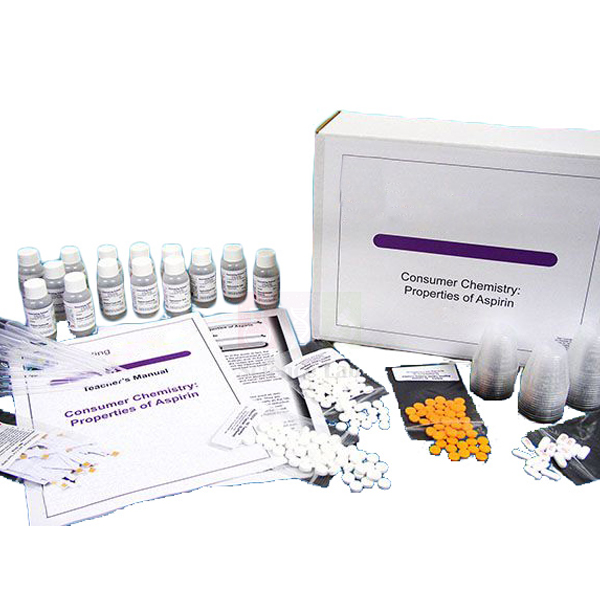
Properties of Aspirin
Properties of Aspirin (Product Code: SLE/CH/171) is a consumer-chemistry investigation in which students trace the history of acetylsalicylic acid and then put several commercial types of aspirin to the test. Designed for secondary and introductory college chemistry, it is a chemistry teaching kit that links acids, bases and solubility to a medicine students already recognise. The kit is supplied by Jain Scientific Equipments Pvt Ltd (ScienceLab), Ambala.
Specifications
| Parameter | Detail |
|---|---|
| Investigations | Solubility of aspirin in varying gastrointestinal environments; active ingredients in regular and extra-strength aspirin; differences between regular and buffered aspirin |
| Class capacity | Enough materials for fifteen groups |
| Aspirin samples | All aspirin samples included |
| Documentation | Teacher’s Manual and Student Study Guide copymasters |
Kit contents:
- 45 Disposable Medicine Cups
- 5 x 30 ml Hydrochloric Acid, 1M Solution
- 8 x 30 ml Sodium Hydroxide, 1M Solution
- 1 x 30 ml Phenolphthalein, 1% in Ethanol
- 1 Pkg/50 Universal Indicator Strips
- 1 Pkg/15 Graduated Plastic Pipettes
- 1 Pkg/75 Aspirin, Regular
- 1 Pkg/60 Aspirin, Buffered
- 1 Pkg/45 Aspirin, Enteric Coated
- 1 Pkg/15 Aspirin, Extra Strength
Typical Use
Groups place tablets of each type in medicine cups containing the acid and base solutions, then watch how quickly and how completely each one breaks up. The contrast between regular and enteric coated tablets in acidic conditions is usually the most striking result, and it opens a discussion on why some tablets are designed to pass the stomach before dissolving. Universal indicator strips and phenolphthalein let students track pH changes, while the graduated pipettes keep liquid volumes consistent from group to group so results can be pooled on the board.
A second session can compare regular with extra-strength and buffered aspirin, helping students connect dose, formulation and the chemistry of neutralisation. The copymasters give teachers a ready structure for pre-lab questions and data tables. Because the kit uses 1M hydrochloric acid and 1M sodium hydroxide, students should wear safety goggles and gloves, and all tablets must be treated strictly as laboratory samples, never taken by mouth.
Supplier
Schools order this investigation from Jain Scientific Equipments Private Limited, the Ambala, Haryana company behind the ScienceLab name, which supplies classroom-ready chemistry kits together with the laboratory apparatus that supports them. Details of the company are on our company profile page.
Related Chemistry Lab Equipment
These items extend the aspirin study or replenish what the class uses up:
- Greener Synthesis Of Acetylsalicylic Acid — lets advanced students make the compound they have just tested.
- Properties of Shampoo — a companion consumer-product investigation for the same unit.
- Paper, Universal, pH 1-14 — extra indicator paper for repeat or extension runs.
- Plastic Microchemistry Pipets — spare pipettes for dispensing the acid and base solutions.
- Safety Goggles — eye protection while handling the 1M solutions.
See more practical kits in our Chemistry Lab Equipment category.
Frequently Asked Questions
Are the aspirin tablets included?
Yes. The kit includes 75 regular, 60 buffered, 45 enteric coated and 15 extra-strength aspirin, so no tablets need to be bought locally.
How many students can use one kit?
It contains enough materials for fifteen groups; the number of students per group is up to the teacher.
What strength are the acid and base solutions?
Both are 1M: five 30 ml bottles of hydrochloric acid and eight 30 ml bottles of sodium hydroxide, plus 30 ml of 1% phenolphthalein in ethanol.
Is teacher guidance provided?
Yes. A Teacher’s Manual and Student Study Guide copymasters are included for photocopying.
Can individual components be reordered?
Separate refill packs are not listed in our product details. Tell us which items you need through our contact page and we will advise on availability.
What should an institutional quotation request include?
State the number of kits, the delivery address and whether you need a formal quotation for purchase approval; we supply schools and colleges in India and international markets.
Request a Quote
To receive a quotation for Properties of Aspirin, send your requirement through our contact page, or add the kit to the enquiry cart with any related glassware and safety items.
Last updated: 24 September 2026
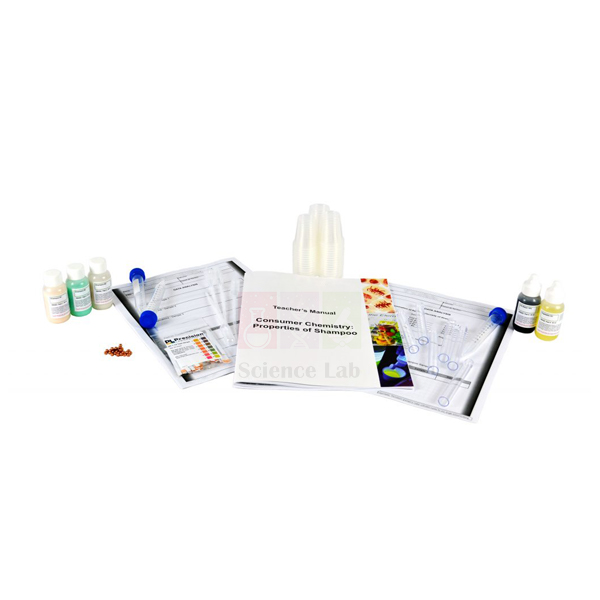
Properties of Shampoo
Properties of Shampoo (Product Code: SLE/CH/172) turns an everyday bathroom product into a structured chemistry investigation: students learn what several common shampoo ingredients do, then compare three different shampoos for viscosity, pH, foaming, oil handling and dirt dispersion. It suits middle and secondary school chemistry and is a practical science kit for students in India studying mixtures, surfactants and consumer chemistry. The kit is supplied by Jain Scientific Equipments Pvt Ltd (ScienceLab), Ambala.
Specifications
| Parameter | Detail |
|---|---|
| Properties tested | Relative viscosity, pH, flash-foam formation and retention, oil emulsification, contaminant-dispersion ability |
| Shampoos supplied | Three different shampoos (#1, #2, #3), 30 ml each |
| Class capacity | Enough materials for fifteen groups |
| Documentation | Teacher’s Manual and Student Study Guide copymasters |
Kit contents:
- 30 ml Shampoo #1
- 1 x 30 ml Shampoo #2
- 1 x 30 ml Shampoo #3
- 45 Disposable Medicine Cups
- 45 Polystyrene Test Tubes
- 3 Plastic Centrifuge Tube
- 1 x 30 ml Ink, Black, 10%
- 1 x 30 ml Vegetable Oil
- 1 Pkg/50 Universal Indicator Strips
- 1 Pkg/45 Graduated Plastic Pipettes
- 1 Pkg/25 Copper Balls
Typical Use
Each group works through a set of short stations. Universal indicator strips give a quick pH reading for each shampoo, and the results often surprise students who assume all shampoos are neutral. Shaking a measured amount in a test tube shows how much foam forms at once and how long it lasts, while adding vegetable oil shows which formulation holds oil in an emulsion best. A few drops of the black ink act as simulated dirt, so the class can see which shampoo keeps the contaminant spread through the water instead of letting it settle.
Relative viscosity is compared by timing a copper ball as it falls through each shampoo, giving a numerical result that can be graphed. Because every test uses small volumes dispensed with graduated pipettes, groups get comparable data and clean-up is quick. For extension work, students can bring a shampoo from home and test it against the three supplied samples, checking each reading with pH indicator paper or the strips provided.
Supplier
The kit is supplied by Jain Scientific Equipments Private Limited, a company headquartered in Ambala, Haryana, whose ScienceLab brand covers ready-to-teach chemistry investigations as well as the glassware and apparatus schools use every day. Visit our company profile to learn how we work with schools and colleges.
Related Chemistry Lab Equipment
Consider these items when planning a consumer chemistry or materials unit:
- Properties of Aspirin — a second everyday-product investigation using a similar group format.
- Physical Properties of Glass — carries the property-testing approach over to a solid material.
- Test Tube Racks — keeps the polystyrene tubes upright during foam-retention timing.
- Paper, Universal, pH 1-14 — additional paper for testing extra shampoo samples.
More investigation kits are listed in our Chemistry Lab Equipment category.
Frequently Asked Questions
Which shampoos come in the kit?
Three different shampoos, labelled #1, #2 and #3, each in a 30 ml quantity. Brand names are not listed in our product details, so ask through our contact page if you need them.
What properties do students measure?
Relative viscosity, pH, flash-foam formation and retention, oil emulsification and the ability to disperse a contaminant.
How many groups does one kit serve?
There are enough materials for fifteen groups, including 45 medicine cups, 45 polystyrene test tubes and 45 graduated plastic pipettes.
What are the copper balls used for?
They serve as falling objects for comparing the relative viscosity of the shampoos; the Teacher’s Manual sets out the procedure.
Are any hazardous chemicals involved?
The listed contents are shampoos, ink, vegetable oil and indicator strips, but normal lab practice still applies: wear eye protection, avoid getting shampoo in the eyes and wipe up spills promptly because they are slippery.
Can you quote for several schools at once?
Yes. Send the number of kits and delivery points through our contact page; we supply institutions in India and international markets.
Request a Quote
To price Properties of Shampoo for your department, contact us through the contact page or add the kit to the enquiry cart along with any racks or indicator paper you need.
Last updated: 24 September 2026