- Physics Lab Equipment
- Chemistry Lab Equipment
- Biology Lab Equipment
- Anatomical Lab Equipment
- Learning
- Educational Lab Equipment
- Magnets
- Agriculture
- Astronomy
- Earth Science
- Geography Lab Equipment
- Safety Lab Coat
- Laboratory
- Meteorological
- Electricity & Magnetism
- Heat
- School Lab Equipment
- Lab Glassware
- Science Lab Equipment
- Tvet Lab Equipment
- Robotics Kits Supplier and Manufacturer for Schools India
- Math Lab Equipment Manufacturers and Exporters in Ambala
- STEM Kits Manufacturers and Supplier India
- Engineering Lab Equipment
- Hospital Lab Equipment
- Water, Sanitation & Hygiene Supplies
- Cold Chain, Solar & Communication Equipment
- Nutrition
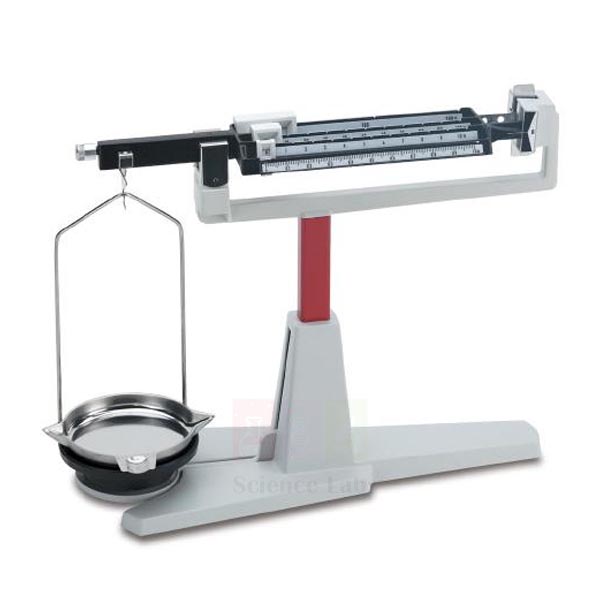
Balance Single Pan
The Balance Single Pan is a four-beam mechanical balance that weighs up to 311 g with 10 mg readability. Each beam carries its own non-removable slider, so no separate masses are needed. The stainless steel pan has two pouring spouts and a handle, the beam is magnetically damped, and a platform housed in the base serves for density determination.
Four-beam single pan balance specifications
| Parameter | Detail |
|---|---|
| Capacity | 311 g |
| Readability | 10 mg |
| Beams | 4, each with a non-removable slider |
| Beam graduations | 0–200 g × 100 g; 0–100 g × 10 g; 0–10 g × 1 g; 0–1 g × 10 mg |
| Additional masses | Not required |
| Zero | Zero adjustment provided |
| Pan | Stainless steel, 90 mm diameter, with 2 pouring spouts and handle |
| Damping | Magnetically damped beam movement |
| Density work | Platform housed in the base for density determination |
| Product code | SLE/LB/05 |
| Minimum order | 10 units |
| Dispatch | Usually within 7 to 10 working days |
| Manufacturer | ScienceLab (Jain Scientific Equipments Pvt Ltd), Ambala, India |
Weighing and density practicals on the four-beam balance
Density of an irregular solid. Weigh a metal density cube or a small stone in air and add the four slider readings. Weigh it again fully immersed in water, using the density platform in the base as the supplied operating instructions describe. The loss in weight gives the volume displaced, and mass divided by volume gives the density.
Density of a liquid. Weigh a dry glass measuring cylinder, pour in a measured volume of salt solution or cooking oil and weigh it again. Divide the mass of liquid by its volume, repeat with tap water and compare the two results. Tip the liquid back through a funnel rather than over the pan.
Mass gained on burning magnesium. Coil a strip of magnesium ribbon into a weighed crucible with lid, heat it until it stops glowing, lifting the lid now and then, then cool and weigh again. The gain is the oxygen taken up, and students use it to work out the formula of magnesium oxide.
Frequently Asked Questions About the Balance Single Pan
How are the four beam readings added together?
Move the sliders in order, starting with the heaviest beam: the 100 g beam, then the 10 g beam, the 1 g beam and finally the fine beam marked in 10 mg steps. When the pointer rests on the zero mark, add the four slider values to get the mass of the load.
How is the balance zeroed before weighing?
Empty and wipe the pan, set all four sliders to zero and let the beam come to rest. Turn the zero adjustment until the pointer lines up with the zero mark. Repeat the check at the start of each lesson and whenever the balance has been moved.
How finely can the last beam be read?
The 0 to 1 g beam is marked in 10 mg divisions, which is the readability of the balance. Read the slider against the nearest division with your eye level with the beam. Estimating between marks adds a digit that the balance cannot really support.
How is the density platform used?
Weigh the object in air first. Then, with the water container set up on the platform in the base as the operating instructions describe, weigh the object again fully immersed. The loss in weight in grams equals the volume of water displaced in cubic centimetres, so the mass divided by that loss gives the density.
Why does a trapped air bubble spoil a density result?
A bubble clinging to the object adds buoyancy, so the immersed weighing reads too low. The apparent volume then comes out too large and the density too small. Lower the object slowly, tap it or brush the bubbles away, and check that no air is held in hollows before reading.
What does magnetic damping do on this balance?
It slows the swing of the beam without any contact, so the pointer comes to rest after only a few swings. Students can read the sliders quickly instead of waiting for long oscillations to die away, which keeps a busy practical moving.
Density samples, weighing accessories and other mechanical balances
- Metal Density Cube Set
- Plastic Weighing Boats
- Triple-Beam Balance
- Double Beam Balance
- Glass Measuring Cylinder
To request a quotation, send the product name, code and quantity through our contact page or add the item to your enquiry cart.
Last updated: 14 November 2026
