- Physics Lab Equipment
- Chemistry Lab Equipment
- Biology Lab Equipment
- Anatomical Lab Equipment
- Learning
- Educational Lab Equipment
- Magnets
- Agriculture
- Astronomy
- Earth Science
- Geography Lab Equipment
- Safety Lab Coat
- Laboratory
- Meteorological
- Electricity & Magnetism
- Heat
- School Lab Equipment
- Lab Glassware
- Science Lab Equipment
- Tvet Lab Equipment
- Robotics Kits Supplier and Manufacturer for Schools India
- Math Lab Equipment Manufacturers and Exporters in Ambala
- STEM Kits Manufacturers and Supplier India
- Engineering Lab Equipment
- Hospital Lab Equipment
- Water, Sanitation & Hygiene Supplies
- Cold Chain, Solar & Communication Equipment
- Nutrition
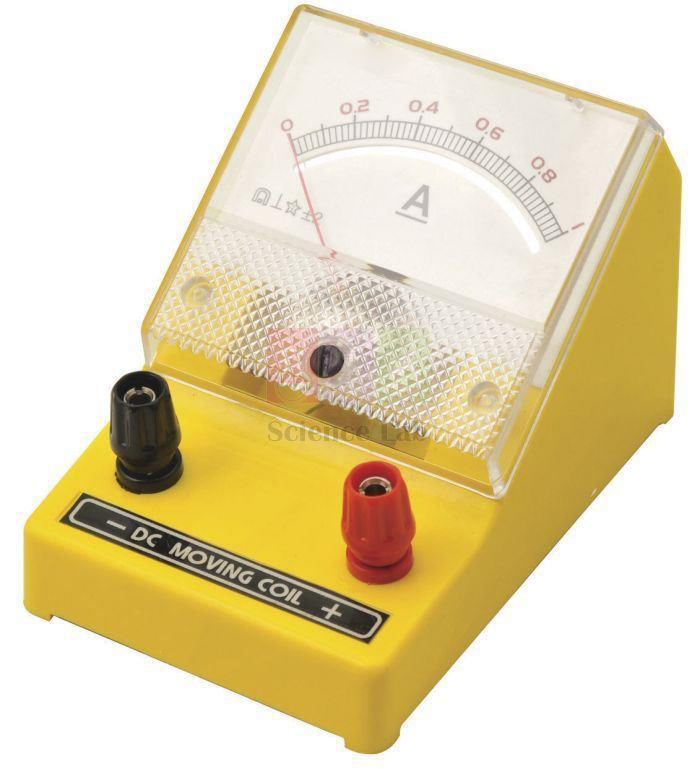
Dual Range Ammeter
Dual Range Ammeter (Product Code: SLE/PHY/01A) is a moving-coil DC ammeter used to measure circuit current in school and college physics laboratories. Students and lab technicians choose between its 0–1 A and 0–5 A ranges, both read on a single 60 mm scale, so one bench meter covers low- and higher-current experiments. It is made by Jain Scientific Equipments Pvt Ltd (ScienceLab), an OEM manufacturer, at its own factory in Ambala, India.
Specifications
| Parameter | Detail |
|---|---|
| Type | Moving-coil ammeter, DC only |
| Ranges | 0–1 A and 0–5 A (dual range, single scale) |
| Accuracy | 2.5% |
| Scale length | 60 mm |
| Overall size | 125 × 80 × 80 mm |
| Terminals | 4 mm socket terminals, with zero adjustment |
| Product code | SLE/PHY/01A |
| Manufacturer | Jain Scientific Equipments Pvt Ltd (ScienceLab) — OEM |
| Country of origin | India (made in Ambala, Haryana) |
What Is the Dual Range Ammeter Used For?
The meter is connected in series to read the direct current flowing in practical circuits: verifying Ohm’s law with a rheostat and voltmeter, comparing currents in series and parallel branches, checking the current in a potentiometer or meter bridge circuit, and monitoring current during electrolysis. As a core piece of physics lab equipment in India, it sits beside the power supply in most electricity practicals.
Start on the 0–5 A range whenever the current is unknown, then move to the 0–1 A range for a more readable deflection. Check that the pointer rests on zero and use the zero adjustment before each session, connect positive to the positive socket, and never place the meter directly across a supply without a load, as that would drive excessive current through the movement.
OEM Manufacturer
The Dual Range Ammeter is an original product of Jain Scientific Equipments Private Limited, the company behind the ScienceLab brand, which acts as the OEM (original equipment manufacturer) for its range of physics meters. Production takes place at the company’s own licensed factory at Saha, Ambala, Haryana, so schools, colleges, dealers and importers buy directly from the maker rather than from a trader.
The company is incorporated under CIN U29309HR2020PTC087597, and its factory at 449, HSIIDC Industrial Area, Saha, Ambala operates under Factory Licence AMB-ONLINE-CHD-J-414. For replacement parts or repeat batches of this ammeter, ask us; more background is on our company profile.
Related Physics Lab Equipment
Equipment that completes a DC circuit practical with this ammeter:
- Ammeter Voltmeter — a dual-purpose meter when voltage must be read in the same circuit
- Ammeter DC Dual Range OHP — a projectable version for whole-class demonstrations
- Circuits Kit Rheostat — varies the current for a set of Ohm’s law readings
- Power Supply, Stepped — a DC source with set voltage steps for the circuit
- Crocodile Clips & Leads — for wiring the meter to components on the bench
Browse the full Physics Lab Equipment range for more meters and circuit apparatus.
Frequently Asked Questions
What ranges does the Dual Range Ammeter have?
The Dual Range Ammeter SLE/PHY/01A has two DC current ranges, 0–1 A and 0–5 A, read on a single 60 mm scale. The lower range suits small classroom circuits, while the higher range covers heavier loads such as lamp circuits or electrolysis.
Can the Dual Range Ammeter measure AC current?
No, the Dual Range Ammeter is a moving-coil instrument for direct current only. For alternating current measurements, choose an AC-rated meter or contact us with the current range you need to measure so we can suggest a suitable instrument.
How accurate is the Dual Range Ammeter?
The Dual Range Ammeter is specified at 2.5% accuracy, which suits school and undergraduate practicals. If your institution needs a calibration certificate for the instrument, please discuss that requirement with us through the contact page before ordering.
What size is the Dual Range Ammeter and how does it connect?
The Dual Range Ammeter measures 125 × 80 × 80 mm overall and connects through 4 mm socket terminals, so standard 4 mm plug leads fit directly. A zero adjustment lets the pointer be reset before each practical session.
Who manufactures the Dual Range Ammeter?
The Dual Range Ammeter is manufactured by Jain Scientific Equipments Pvt Ltd (ScienceLab), the OEM, at its own licensed factory at Saha, Ambala, Haryana, India. Buyers deal directly with the maker for quotations, repeat orders and replacement-part enquiries.
Is the Dual Range Ammeter available in bulk for schools or export?
Yes, the Dual Range Ammeter can be quoted in classroom quantities for schools, colleges, tender buyers, dealers and importers in India and international markets. Share the number of meters and the delivery destination through our contact page.
Request a Quote
Quotations for the Dual Range Ammeter come direct from the manufacturer. Send your quantity and delivery location through the contact page, or add the meter to the enquiry cart with the rest of your electricity lab list.
Last updated: 24 September 2026
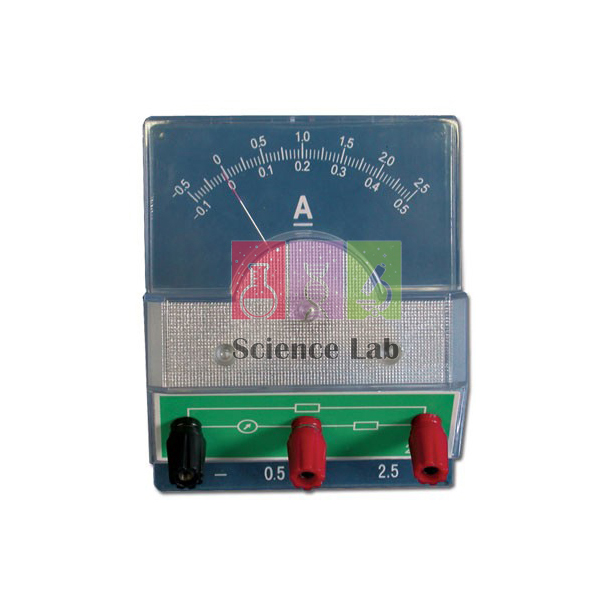
Ammeter DC Dual Range OHP
The Ammeter DC Dual Range OHP (Product Code: SLE/PHY/01) is a dual-range, DC-only ammeter manufactured by Jain Scientific Equipments Pvt Ltd (ScienceLab), Ambala, for school and college physics laboratories. Built into a transparent case, it is designed to sit directly on an overhead projector (OHP) so the needle and scale stay visible to a full classroom during demonstrations — a practical alternative to a standard bench ammeter for group teaching of physics lab equipment.
Specifications
| Parameter | Detail |
|---|---|
| Type | Moving-coil ammeter, DC only |
| Ranges | 0–0.5A and 0–2.5A (dual range, single scale) |
| Accuracy | ±2.5% |
| Case | Transparent, OHP-projectable housing |
| Additional features | Magnetic shielding and dampening for stable readings |
Typical Use
This ammeter is used wherever a class needs to read live current together rather than crowd around a bench meter — Ohm’s law demonstrations, series/parallel circuit teaching, and other core physics lab equipment sessions in schools and colleges. The dual 0–0.5A/0–2.5A range covers both low-current and higher-current classroom circuits without swapping instruments, and the magnetic shielding keeps the reading stable near other electrical apparatus on the same bench.
Manufacturer
The Ammeter DC Dual Range OHP is manufactured by Jain Scientific Equipments Private Limited, which trades under the brand ScienceLab. The company is based in Ambala, Haryana, India, with its registered office and manufacturing unit in the Ambala district. See our full company profile for more on our manufacturing background and product range.
Related Physics Lab Equipment
Equipment typically used in the same DC circuit demonstration:
- Ammeter Voltmeter — a compatible DC voltmeter/ammeter combination for the same circuit
- Power Supply, Variable — a suitable variable DC power supply for the demonstration circuit
- Circuits Kit Rheostat — variable resistance for Ohm’s law and current-control experiments
- Stackable Leads — connecting leads for wiring the demonstration circuit
- Dual Range Ammeter — a bench-mount dual-range DC ammeter (0–1A/0–5A) for non-projected setups
Browse the full Physics Lab Equipment range from a physics instruments and laboratory instruments supplier exporting to schools and colleges across India and internationally.
Frequently Asked Questions
Who manufactures the Ammeter DC Dual Range OHP?
It is manufactured by Jain Scientific Equipments Pvt Ltd (ScienceLab), based in Ambala, India — a physics lab equipment and laboratory instruments supplier to schools, colleges and technical institutes.
Why does it have a transparent case?
The transparent housing lets the meter sit on an overhead projector so the scale and needle movement are visible to the whole class during demonstrations.
Can this ammeter measure AC current?
No — it is a moving-coil instrument designed for DC current only.
Is bulk or institutional supply available?
Yes, this product can be supplied in bulk to schools, colleges, and distributors; contact us for quantity and export enquiries.
How are the two current ranges selected?
The meter offers 0–0.5A and 0–2.5A on a single dual-range scale. The exact terminal/selector configuration is confirmed on the datasheet — contact us if you need this before ordering.
What is the smallest scale division on each range?
Scale graduation isn’t listed in our current product documentation for this item; contact us for the detailed datasheet.
Are connecting leads included?
No, connecting leads are supplied separately — see Stackable Leads or Crocodile Clips & Leads in our Physics Lab Equipment range.
Is a calibration certificate available?
Calibration certificate availability depends on the order — contact us to discuss requirements for institutional or bulk purchases.
What is the warranty?
Warranty terms are confirmed at the time of quotation — contact us for current terms.
Can the instrument be used without an overhead projector?
Yes. The transparent case is an added feature for OHP projection; the meter works as a standard DC ammeter on any bench without a projector.
What information is required for an institutional quotation?
Please share the quantity required, delivery location (India or export destination), and any customisation needed via our contact form or enquiry cart, and we will follow up with pricing and lead time.
Request a Quote
For pricing or bulk order enquiries, please contact us or add this product to your enquiry cart.
Last updated: 23 September 2026
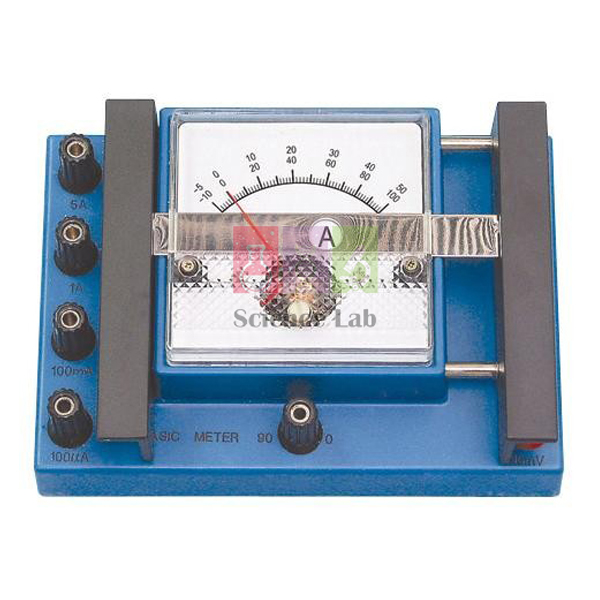
Ammeter Voltmeter
Ammeter Voltmeter (Product Code: SLE/PHY/02) is an analogue dual-purpose meter used to measure DC current and DC voltage in school and college electricity practicals. A slide selector switches between amps and volts, bringing in the internal shunting automatically, while four ranges on each function run from 100 µA to 5 A and from 100 mV to 50 V. It is supplied by Jain Scientific Equipments Pvt Ltd (ScienceLab), Ambala, India, to schools, colleges and laboratory dealers.
Specifications
| Parameter | Detail |
|---|---|
| Function | Measures current and the voltage between two points in an electric circuit |
| Selector | Slide selector for amps/volts; automatically selects internal shunting, indicates whether the meter is on amps or volts and secures the input sockets against incorrect connection |
| DC current ranges | 100 µA, 100 mA, 1 A and 5 A (dual scale) |
| DC voltage ranges | 100 mV, 1 V, 10 V and 50 V (dual scale) |
| Display | Analogue, quadruple range |
| Input connection | Dual 4 mm or terminal-type connection |
| Zero setting | Screw adjustment on the front of the meter |
| Dimensions | 160 × 114 × 60 mm |
| Product code | SLE/PHY/02 |
| Supplied by | Jain Scientific Equipments Pvt Ltd (ScienceLab), Ambala, India |
What Is the Ammeter Voltmeter Used For?
One instrument covers both readings that most DC practicals need. Set the slide to amps and connect the meter in series to measure current, from the microamp level of a high-resistance circuit up to 5 A for lamps and heating coils; slide to volts and connect it in parallel to read potential difference from 100 mV to 50 V. Teachers choosing an ammeter voltmeter for school labs in India use it for Ohm’s law, internal-resistance and cell-emf experiments.
Choose the highest range first and step down until the needle gives a clear reading. Reset the pointer with the front zero screw before each session, and never connect the meter in series while set to volts or across a supply while set to amps. A bench that must read current and voltage at the same moment needs two meters, so plan quantities per bench accordingly.
Supplier
Jain Scientific Equipments Private Limited trades as ScienceLab and supplies this Ammeter Voltmeter from Ambala, Haryana, India, as part of its range of meters for school and college electricity practicals. The company sources the meter and handles quotations and supply for schools, colleges, laboratory dealers and importers in India and international markets. Questions about matching an earlier supply or placing a repeat order can be sent to us directly. Learn more on our company profile.
Related Physics Lab Equipment
Items commonly wired up with this meter:
- Dual Range Ammeter — a second, current-only meter so current and voltage can be read together
- Micro Voltmeter — for potential differences below the 100 mV range
- Standard Digital Multimeter — a digital alternative with a numeric readout
- Power Supply Variable — an adjustable DC source for the test circuit
- Stackable Leads — connecting leads for the meter’s input sockets
See the complete Physics Lab Equipment category for more meters and circuit apparatus.
Frequently Asked Questions
What ranges does the Ammeter Voltmeter cover?
The Ammeter Voltmeter SLE/PHY/02 has four DC current ranges (100 µA, 100 mA, 1 A and 5 A) and four DC voltage ranges (100 mV, 1 V, 10 V and 50 V), each shown on a dual scale for easy reading.
How do you switch between current and voltage on the Ammeter Voltmeter?
The Ammeter Voltmeter uses a slide selector for amps or volts. Moving it automatically selects the internal shunting, shows which quantity the meter is set to read, and secures the input sockets so leads cannot be connected incorrectly for that mode.
Can the Ammeter Voltmeter measure AC?
No AC ranges are listed for the Ammeter Voltmeter; its current and voltage ranges are all DC. If your practicals need alternating current or voltage readings, contact us with the ranges required and we will advise on a suitable meter.
What are the dimensions of the Ammeter Voltmeter?
The Ammeter Voltmeter measures 160 × 114 × 60 mm, a compact size for a student bench. Inputs are made through a dual 4 mm or terminal-type connection, and the pointer is zeroed with a screw adjustment on the front.
Who supplies the Ammeter Voltmeter?
The Ammeter Voltmeter is supplied by Jain Scientific Equipments Pvt Ltd (ScienceLab), Ambala, Haryana, India. The company sources this analogue meter and handles quotations and dispatch for schools, colleges, laboratory dealers and institutional buyers in India and international markets.
Is a calibration certificate available for the Ammeter Voltmeter?
Calibration-certificate requirements for the Ammeter Voltmeter should be discussed with us before you order. Tell us which ranges need documenting and why, for example an institutional audit, through the contact page, and we will reply with what can be arranged.
What should a quotation request for the Ammeter Voltmeter include?
A quotation request for the Ammeter Voltmeter should state the product code SLE/PHY/02, the number of meters, any leads or power supplies needed with them, and the delivery location in India or abroad. Send it through our contact page or enquiry cart.
Request a Quote
Pricing for the Ammeter Voltmeter is quoted directly by ScienceLab as the supplier. Send your requirement through the contact page or add the meter to the enquiry cart.
Last updated: 24 September 2026
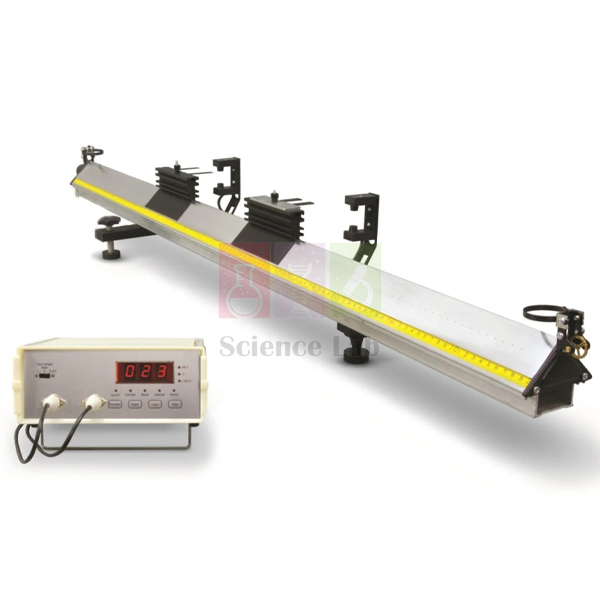
Apparatus Air Track Light Gate
Apparatus Air Track Light Gate (Product Code: SLE/PHY/03) is an air-cushion linear track with photo light gates and a timer, used to study motion under virtually frictionless conditions in school and college mechanics labs. One to four carts ride on the air supplied by the blower, so teachers can run collision, momentum and acceleration experiments with electronic timing. It is made by Jain Scientific Equipments Pvt Ltd (ScienceLab), an OEM manufacturer, at its own factory in Ambala, India.
Key Details
| Parameter | Detail |
|---|---|
| Purpose | Study of linear motion under virtually frictionless conditions |
| Carts | One to four carts riding on a cushion of air |
| Timing system | Photo light gate system complete with timer and light gates |
| Air source | Blower |
| Accessories | Accessories kit; spring bumpers can be attached to record impact forces; weights can be attached to each cart for momentum and force studies |
| Pulleys | High-precision pulleys included, to mount on the ends for free-fall and incline experiments |
| Product code | SLE/PHY/03 |
| Manufacturer | Jain Scientific Equipments Pvt Ltd (ScienceLab) — OEM |
| Country of origin | India (made in Ambala, Haryana) |
What Is the Air Track with Light Gates Used For?
With friction almost removed, the air track lets students test Newton’s laws and conservation principles with results that sit close to theory. Typical sessions include measuring velocity and acceleration as a cart passes the light gates, pulling a cart with a falling mass over an end pulley to relate force and acceleration, setting up incline runs, and colliding two carts to compare momentum before and after impact. That makes it a central item of mechanics lab equipment in India for senior secondary and undergraduate courses.
Level the track carefully before each run, since a slight tilt adds an unwanted acceleration. Switch the blower on before placing carts on the track and lift them off before switching it off, so cart and track surfaces do not rub. Load the attachable weights evenly to keep carts running straight, and fit the spring bumpers when students are studying impact forces at the ends.
What to Specify When Ordering
- The number of complete air track sets required for your laboratory
- How many carts you plan to run together (the apparatus allows one to four)
- Whether to add the Apparatus Air Track Part Kit of spare vehicles, buffers and catapults
OEM Manufacturer
This air track is produced by Jain Scientific Equipments Private Limited, which trades as ScienceLab and is the OEM (original equipment manufacturer) of the apparatus. It is made and assembled at the company’s own licensed factory at Saha, Ambala, Haryana, India, rather than bought in from a trader, and is supplied factory-direct to schools, colleges, universities and dealers. Spare carts, bumpers and other replacement parts can be requested from the manufacturer itself; ask us. See our company profile for more.
Related Physics Lab Equipment
Items that extend or support the air track set-up:
- Apparatus Air Track Part Kit — replacement vehicles, buffers, catapults and other spares
- Linear Air Track Blower — a separately listed blower for air track work
- Linear Air Track — an alternative air track listing in the same range
- Apparatus Newton’s Second Law — a dedicated set-up for force and acceleration studies
- Ticker Tape Timer — a traditional timing method to compare with light-gate results
Explore the full Physics Lab Equipment category for more mechanics apparatus.
Frequently Asked Questions
What is included with the Apparatus Air Track Light Gate?
The Apparatus Air Track Light Gate comes with a photo light gate system complete with timer and light gates, an accessories kit, a blower air source and high-precision pulleys for the track ends. Spring bumpers and cart weights attach as needed; confirm their quantities in your quotation.
How many carts can run on the air track at once?
The Apparatus Air Track Light Gate allows one to four carts to ride along its cushion of air, so it handles single-cart motion studies as well as two-cart collisions and multi-cart momentum demonstrations. Tell us how many carts you need when requesting a quote.
Can the air track be used for free-fall and incline experiments?
Yes, the Apparatus Air Track Light Gate includes high-precision pulleys that mount on the track ends, so a falling mass can pull a cart for free-fall and force studies, and the track can also be set up for incline experiments.
How does the light gate timing work on the air track?
On the Apparatus Air Track Light Gate, a cart passing through a light gate interrupts its beam and the timer records the time. From the length of the part that blocks the beam, students calculate velocity, and with two gates they can find the acceleration between them.
Who manufactures the Apparatus Air Track Light Gate?
The Apparatus Air Track Light Gate is manufactured by Jain Scientific Equipments Pvt Ltd (ScienceLab), the OEM, at its own licensed factory at Saha, Ambala, Haryana, India. Quotations, spare parts and repeat orders are handled by the manufacturer directly.
Is the Apparatus Air Track Light Gate available for export?
Yes, the Apparatus Air Track Light Gate can be quoted for schools, colleges, dealers and importers in India and international markets. Share the number of sets, the delivery country and any accessories required through our contact page to receive a quotation.
Request a Quote
Request a manufacturer-direct quotation for the Apparatus Air Track Light Gate through our contact page, or add it to the enquiry cart together with the part kit and any other mechanics apparatus you need.
Last updated: 24 September 2026
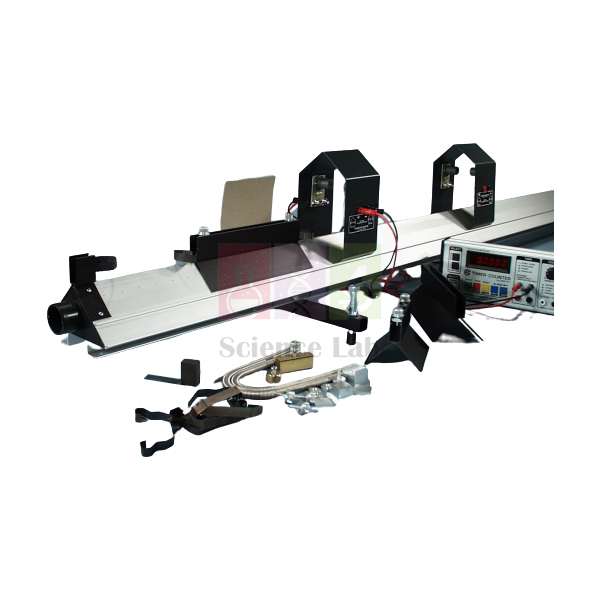
Apparatus Air Track Part Kit
Apparatus Air Track Part Kit (Product Code: SLE/PHY/04) is a set of replacement parts and vehicles used to keep an air track running for collision, momentum and motion experiments in school and college physics labs. It supplies two heavy vehicles and one light vehicle with a 2:1 mass ratio, plus buffers, catapults and consumables such as plasticine, thread and elastic bands. It is made by Jain Scientific Equipments Pvt Ltd (ScienceLab), an OEM manufacturer, at its own factory in Ambala, India.
Specifications
| Parameter | Detail |
|---|---|
| Kit type | Replacement parts for the apparatus air track |
| Vehicles | 2 heavy and 1 light, mass ratio 2:1 |
| Buffers | 2 magnetic buffers |
| Plasticine holders | 2, with central hole |
| Needles | 24 |
| Cards | 20 black plain cards |
| Catapults | 4, with slots for elastic band |
| Thread | 1 reel of nylon thread |
| Rods | 2 white rods, 4 mm diameter × 150 mm long |
| Plasticine | 1 pack |
| Elastic bands | 20 |
| Documentation | 1 instruction manual |
| Product code | SLE/PHY/04 |
| Manufacturer | Jain Scientific Equipments Pvt Ltd (ScienceLab) — OEM |
| Country of origin | India (made in Ambala, Haryana) |
What Is the Air Track Part Kit Used For?
The kit replaces parts that wear out or go missing from a busy air track and adds the items needed for classic collision work. The 2:1 mass ratio between heavy and light vehicles lets students predict and check velocities after a collision. Magnetic buffers can give repelling, nearly elastic interactions, while a needle meeting plasticine in a holder can make two vehicles stick together for an inelastic collision; catapults with elastic bands launch vehicles at repeatable speeds.
Keeping one kit per track is a practical way for schools and colleges to hold lab equipment spare parts in India, so a lost buffer or a worn elastic band does not stop a practical. Store the plasticine wrapped, keep the needles in a labelled container, and check the nylon thread for fraying before it is used to tow or hang masses.
What to Specify When Ordering
- The number of part kits required (for example, one per air track)
- Which air track the kits will serve, so compatibility can be confirmed
- Any individual parts you need in extra quantity, so we can confirm availability
OEM Manufacturer
Jain Scientific Equipments Private Limited, trading as ScienceLab, is the OEM (original equipment manufacturer) of the Apparatus Air Track Part Kit and of the air track apparatus it serves. Kits are assembled at the company’s own licensed factory in Saha, Ambala, Haryana, so buyers of its air tracks get replacement parts from the same maker rather than from a third-party stockist.
For vendor records, the company’s Corporate Identification Number is U29309HR2020PTC087597, and its Saha works at 449, HSIIDC Industrial Area holds Factory Licence AMB-ONLINE-CHD-J-414. Read more on our company profile.
Related Physics Lab Equipment
Apparatus used with these spare parts:
- Apparatus Air Track Light Gate — the complete air track with light gates, timer and blower
- Linear Air Track Blower — supplies the air cushion the vehicles ride on
- Linear Air Track — an alternative air track listing; confirm part compatibility with us
- Apparatus Collision 2 Dimension — extends momentum studies to collisions in two dimensions
The complete Physics Lab Equipment category lists more mechanics apparatus.
Frequently Asked Questions
What does the Apparatus Air Track Part Kit contain?
The Apparatus Air Track Part Kit contains 2 heavy and 1 light vehicle (mass ratio 2:1), 2 magnetic buffers, 2 plasticine holders, 24 needles, 20 black plain cards, 4 catapults, a reel of nylon thread, 2 white rods, a pack of plasticine, 20 elastic bands and an instruction manual.
Why do the vehicles in the part kit have a 2:1 mass ratio?
The 2:1 mass ratio between the heavy and light vehicles in the Apparatus Air Track Part Kit gives simple, predictable numbers in momentum calculations, so students can compare predicted and measured velocities after collisions without complicated arithmetic.
Will the Apparatus Air Track Part Kit fit my air track?
The Apparatus Air Track Part Kit is described as replacement parts for the apparatus air track. If your track came from another source or is an older model, tell us its details through the contact page so we can confirm compatibility before you order.
What size are the white rods in the Air Track Part Kit?
The Apparatus Air Track Part Kit includes 2 white rods, each 4 mm in diameter and 150 mm long, along with 2 plasticine holders that have a central hole. Refer to the instruction manual supplied in the kit when setting these parts up.
Who manufactures the Apparatus Air Track Part Kit?
The Apparatus Air Track Part Kit is manufactured by Jain Scientific Equipments Pvt Ltd (ScienceLab), the OEM, at its own licensed factory at Saha, Ambala, Haryana, India. Repeat orders and replacement-part enquiries go directly to the manufacturer.
Can labs order several part kits or ship them abroad?
Yes, the Apparatus Air Track Part Kit can be quoted in multiple units for schools, colleges, dealers and importers in India and international markets. Send the quantity, the air tracks the kits will serve and the delivery destination through the contact page.
Request a Quote
Quotations for the Apparatus Air Track Part Kit are issued directly by the manufacturer. Send your requirement via the contact page, or add the kit to the enquiry cart with your air track order.
Last updated: 24 September 2026
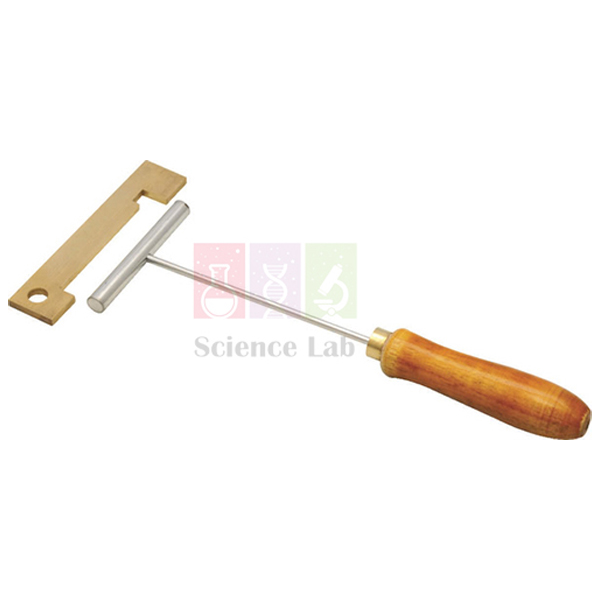
Apparatus Bar & Gauge
Apparatus Bar & Gauge (Product Code: SLE/PHY/05) is a heat-expansion demonstrator used to show that a solid grows when heated and shrinks when cooled, in school and college physics classes. An iron bar 108 mm long and 12.7 mm in diameter just fits the cut-out and hole of a brass gauge when cold, and stops fitting once heated. It is made by Jain Scientific Equipments Pvt Ltd (ScienceLab), an OEM manufacturer, at its own factory in Ambala, India.
Specifications
| Parameter | Detail |
|---|---|
| Purpose | Illustrates expansion by heat and contraction by cooling |
| Overall length | Approx. 225 mm |
| Bar | Iron, 108 mm long × 12.7 mm diameter |
| Bar mounting | On a support rod fitted with a wooden handle |
| Gauge | Brass, 150 × 38 mm |
| Gauge openings | A cut-out that just admits the bar lengthways and a hole that passes the bar endways when cold |
| Product code | SLE/PHY/05 |
| Manufacturer | Jain Scientific Equipments Pvt Ltd (ScienceLab) — OEM |
| Country of origin | India (made in Ambala, Haryana) |
What Is the Bar and Gauge Apparatus Used For?
The demonstration takes a few minutes and needs only a flame. At room temperature, students check that the bar slides lengthways into the cut-out and passes endways through the hole. The bar is then heated in a burner flame and tried again: it no longer enters either opening, showing that both its length and its diameter have increased. As it cools, or is dipped in cold water, it fits once more, proving the change is reversible.
Because a length gauge and a diameter gauge share one brass plate, the apparatus shows linear expansion and expansion in cross-section in the same lesson, a natural lead-in to the coefficient of linear expansion and to everyday cases such as gaps in railway lines. It is a staple of the physics practical equipment CBSE and state-board schools use when teaching thermal properties of matter. Hold the bar only by its wooden handle while heating, rest it on a heat-proof mat afterwards, and let students handle the gauge only once it has cooled.
OEM Manufacturer
The Apparatus Bar & Gauge comes from Jain Scientific Equipments Private Limited, trading as ScienceLab, which is the OEM (original equipment manufacturer) of this item. It is manufactured at the company’s licensed factory at Saha, Ambala, Haryana, India, and reaches schools, colleges, science dealers and importers factory-direct. Questions about repeat orders or a replacement gauge go straight to the maker; just ask us. More on our company profile.
Related Physics Lab Equipment
Apparatus that pairs with the bar and gauge in a thermal-expansion lesson:
- Ball & Ring Apparatus — the companion demonstration of expansion with a ball and ring
- Bar & Gauge Apparatus — a separately listed bar and gauge in the same range
- Bar Compound Copper & Iron — shows unequal expansion of two metals bending a bonded bar
- Bunsen Burner — the heat source for warming the iron bar
- Expansion Of Liquids Apparatus — extends the topic from solids to liquids
Browse the full Physics Lab Equipment range for more heat apparatus.
Frequently Asked Questions
What are the dimensions of the Apparatus Bar & Gauge?
The Apparatus Bar & Gauge is about 225 mm long overall. Its iron bar measures 108 mm in length and 12.7 mm in diameter, and the brass gauge measures 150 × 38 mm, with a cut-out and a hole sized to the cold bar.
How does the Apparatus Bar & Gauge show expansion?
With the Apparatus Bar & Gauge, the cold iron bar just fits the gauge’s cut-out lengthways and passes through its hole endways. After heating it fits neither, showing expansion in length and diameter; once cooled it fits again, showing contraction.
What heat source is needed for the Bar & Gauge demonstration?
The Apparatus Bar & Gauge only needs a flame that can heat the iron bar for a short time, such as a Bunsen burner or a spirit lamp. Hold the bar by its wooden handle throughout and place it on a heat-proof surface afterwards.
What materials are the bar and gauge made of?
In the Apparatus Bar & Gauge the bar is iron and the gauge is brass, with the bar mounted on a support rod fitted with a wooden handle. The wooden handle keeps the user’s hand away from the heated metal during the demonstration.
Who manufactures the Apparatus Bar & Gauge?
The Apparatus Bar & Gauge is manufactured by Jain Scientific Equipments Pvt Ltd (ScienceLab), the OEM, at its licensed factory at Saha, Ambala, Haryana, India, and is supplied factory-direct to schools, colleges and dealers.
Can the Apparatus Bar & Gauge be ordered in class sets or for export?
Yes, the Apparatus Bar & Gauge can be quoted in class-set quantities for schools, colleges, tender buyers, dealers and importers in India and international markets. Send the quantity and delivery location through our contact page for a quotation.
Request a Quote
Ask for a factory-direct quotation on the Apparatus Bar & Gauge through our contact page, or add it to the enquiry cart alongside the ball and ring and other heat apparatus for your lab.
Last updated: 24 September 2026
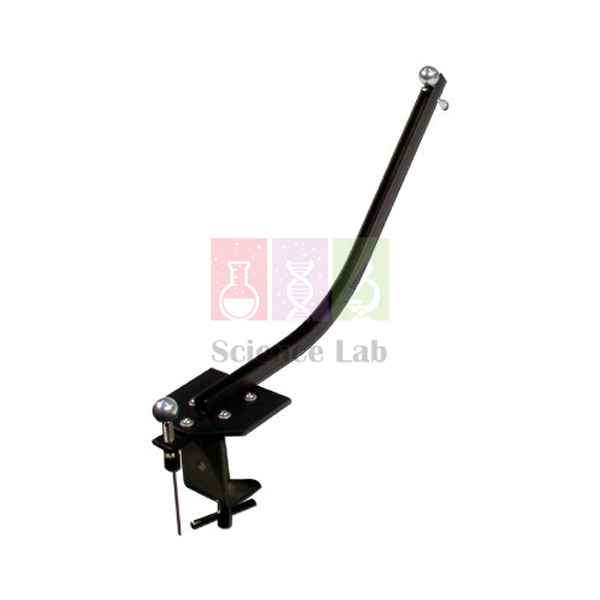
Apparatus Collision 2 Dimension
Apparatus Collision 2 Dimension (Product Code: SLE/PHY/06) is a curved-track ball collision apparatus used to study how momentum and energy change in elastic and inelastic collisions in school and college physics labs. A support on its fixed base holds a target ball at the right height for a centre-to-centre impact, and a pin with three holes gives a repeatable release height. It is made by Jain Scientific Equipments Pvt Ltd (ScienceLab), an OEM manufacturer, at its own factory in Ambala, India.
Key Details
| Parameter | Detail |
|---|---|
| Purpose | Study of energy and momentum changes in elastic and inelastic collisions |
| Track | Curved track with a base permanently mounted at one end |
| Collision plane | Track is level so the collision occurs only in the horizontal plane, simplifying calculations |
| Target support | Support on the base holds a ball at the proper height for a centre-to-centre collision with a second ball rolling down the track |
| Release control | A pin and three holes in the track keep the drop height of the ball consistent |
| Product code | SLE/PHY/06 |
| Manufacturer | Jain Scientific Equipments Pvt Ltd (ScienceLab) — OEM |
| Country of origin | India (made in Ambala, Haryana) |
What Is the 2D Collision Apparatus Used For?
The apparatus is set at the edge of a bench so that balls leaving the base fall to the floor as projectiles. Students first release the incident ball alone from one of the pin positions and mark where it lands, then place the target ball on the support and repeat. Because every ball leaves from the same height, the horizontal distance to each landing mark is proportional to its velocity just after impact, so momentum before and after can be compared directly.
Repeating runs from the other holes shows how a greater drop height raises the incident speed, and comparing kinetic energy before and after tells students whether a collision was elastic or inelastic. Where the balls leave in different directions, their momenta are resolved into components in the horizontal plane. A plumb line marks the floor point below the launch position, making the apparatus a natural companion to the projectile motion kit school labs already use.
What to Specify When Ordering
- The number of sets needed for your laboratory
- Confirmation of the incident and target balls supplied, and any spare balls
- Measuring accessories to order with it, such as a plumb line and a metre scale
OEM Manufacturer
Jain Scientific Equipments Private Limited, the company that trades as ScienceLab, is the OEM (original equipment manufacturer) of the Apparatus Collision 2 Dimension. The apparatus is manufactured at its licensed factory at Saha, Ambala, Haryana, India, and sold factory-direct, so schools, colleges and dealers deal with the maker itself for quotations, repeat orders and any replacement parts they need. Company background is on our company profile.
Related Physics Lab Equipment
Items used with this apparatus when measuring collisions:
- Apparatus Falling Bodies (Projectile) — studies the projectile paths the balls follow after impact
- Plumb Line Level — marks the floor point directly below the launch position
- Meter Scale 100 cm — measures the horizontal range of each ball
- Vernier Calliper — measures ball diameters when locating the centres of impact
- Apparatus Air Track Light Gate — one-dimensional collisions with carts and electronic timing
More mechanics apparatus is listed in the Physics Lab Equipment category.
Frequently Asked Questions
What does the Apparatus Collision 2 Dimension demonstrate?
The Apparatus Collision 2 Dimension demonstrates how momentum and kinetic energy change when one ball strikes another, letting students compare elastic and inelastic collisions. The collision takes place only in the horizontal plane, which keeps the calculations simple.
How is the drop height kept the same on every run?
The Apparatus Collision 2 Dimension has a pin and three holes in its curved track. Setting the pin in a hole fixes where the incident ball is released, so the drop height, and therefore the speed at impact, stays consistent between runs.
How is the target ball positioned on the Apparatus Collision 2 Dimension?
On the Apparatus Collision 2 Dimension, a support on the base holds the target ball at the proper height for a centre-to-centre collision with the ball rolling down the track. The base is permanently mounted at one end of the curved track.
Are the balls included with the Apparatus Collision 2 Dimension?
The Apparatus Collision 2 Dimension is designed around an incident ball rolling down the track and a target ball on the support. Please confirm the balls supplied, and any spares you want, when you request a quotation through our contact page.
Who manufactures the Apparatus Collision 2 Dimension?
The Apparatus Collision 2 Dimension is manufactured by Jain Scientific Equipments Pvt Ltd (ScienceLab), the OEM, at its licensed factory at Saha, Ambala, Haryana, India. Institutions and dealers buy it directly from the manufacturer.
What should a quotation request for this apparatus include?
A quotation request for the Apparatus Collision 2 Dimension should give the product code SLE/PHY/06, the number of sets, any accessories such as a plumb line or metre scale, and the delivery location in India or international markets.
Request a Quote
Quotations for the Apparatus Collision 2 Dimension come direct from the manufacturer. Use our contact page or add the apparatus to the enquiry cart with the rest of your mechanics list.
Last updated: 24 September 2026
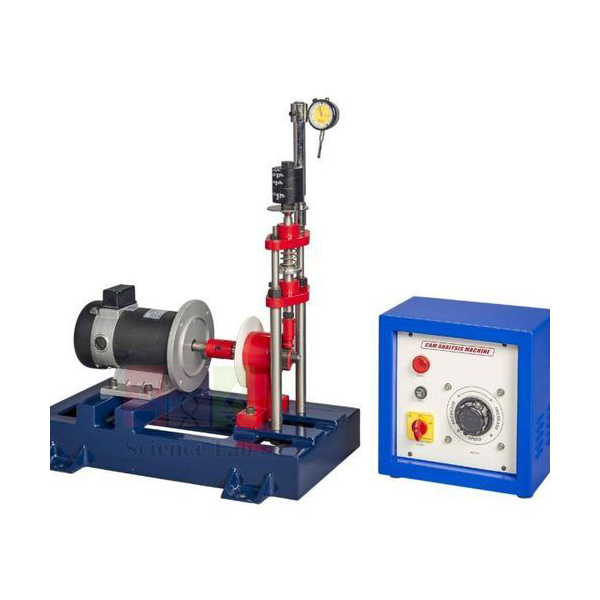
Apparatus Conductivity Cam
Apparatus Conductivity Cam (Product Code: SLE/PHY/07) is a thermal-conductivity demonstrator used to compare how well different metals conduct heat in school and college physics classes. Metal rods are mounted vertically on the outside of the base of a cylindrical copper vessel, and the indices supplied with it let students mark results so they can be studied later. It is made by Jain Scientific Equipments Pvt Ltd (ScienceLab), an OEM manufacturer, at its own factory in Ambala, India.
Key Details
| Parameter | Detail |
|---|---|
| Purpose | Demonstrates the different thermal conductivities of different metals |
| Vessel | Cylindrical copper vessel with a thick rim at the top |
| Mounting | Rim rests on a ring fitted to a retort stand |
| Test rods | Metal rods mounted vertically on the outer side at the base of the vessel |
| Indices | Supplied complete with indices, so observations can be studied at a later stage |
| Product code | SLE/PHY/07 |
| Manufacturer | Jain Scientific Equipments Pvt Ltd (ScienceLab) — OEM |
| Country of origin | India (made in Ambala, Haryana) |
What Is the Metal Conductivity Apparatus Used For?
The vessel is supported by its rim in a ring on a retort stand, so the rods hang below it. Hot water fills the copper vessel and heat travels down each rod at a rate set by the conductivity of its metal. A common way to make the difference visible is to coat the rods thinly with wax beforehand: the wax melts furthest along the better conductors, and students use the indices to mark how far the melting has reached on each rod.
Because the indices hold the readings, the class can compare the rods after the apparatus has cooled, rank the metals from better to poorer conductor, and relate the result to everyday choices such as copper-bottomed pans. Keep the vessel steady in its ring while filling it, keep hands clear of the hot copper, and let everything cool before the indices are handled.
OEM Manufacturer
Jain Scientific Equipments Private Limited, which markets its products under the ScienceLab name, is the OEM (original equipment manufacturer) of this conductivity apparatus and one of the physics instruments manufacturers based in Ambala, Haryana. The apparatus is manufactured at the company’s own licensed factory at Saha, Ambala, and shipped factory-direct to schools, colleges, science dealers and importers. For replacement indices or a repeat order, ask us directly; our company profile has more about the company.
Related Physics Lab Equipment
Apparatus used alongside it in heat-transfer lessons:
- Apparatus Heat/Thermal Conductivity — another conductivity apparatus in the same range
- Thermal Conductivity Bars — bars for comparing conduction in different materials
- Retort Stand — with a ring, supports the vessel by its rim
- Wax — for coating the rods so the progress of heat along them is visible
- Bunsen Burner — heats the water used in the vessel
See the full Physics Lab Equipment range for more heat apparatus.
Frequently Asked Questions
What does the Apparatus Conductivity Cam demonstrate?
The Apparatus Conductivity Cam demonstrates that different metals conduct heat at different rates. Heat from hot water in its copper vessel travels down metal rods mounted on the base, and students compare how far the heating effect progresses along each rod.
Which metals are the rods of the Apparatus Conductivity Cam made from?
The metals used for the rods of the Apparatus Conductivity Cam are not listed on this page. Please ask us through the contact page for the rod metals and number of rods before you order, especially if your syllabus names specific metals.
What are the indices on the Apparatus Conductivity Cam for?
The indices supplied with the Apparatus Conductivity Cam let students mark the position reached on each rod, so the observations can be studied at a later stage, after the apparatus has cooled or when the class returns to its results.
How is the Apparatus Conductivity Cam mounted?
The Apparatus Conductivity Cam has a thick rim at the top of its cylindrical copper vessel. The rim rests on a ring fitted to a retort stand, which holds the vessel steady with the metal rods hanging vertically below it.
Who manufactures the Apparatus Conductivity Cam?
The Apparatus Conductivity Cam is manufactured by Jain Scientific Equipments Pvt Ltd (ScienceLab), the OEM, at its own licensed factory at Saha, Ambala, Haryana, India, and is supplied factory-direct to schools, colleges and dealers.
Can the Apparatus Conductivity Cam be supplied in bulk or for export?
Yes, the Apparatus Conductivity Cam can be quoted in quantity for schools, colleges, tender buyers, dealers and importers in India and international markets. Share the number of units, any retort stands needed and the delivery destination through our contact page.
Request a Quote
Send your enquiry for the Apparatus Conductivity Cam through our contact page for a quotation direct from the manufacturer, or add it to the enquiry cart together with retort stands and other heat apparatus.
Last updated: 24 September 2026