- Physics Lab Equipment
- Chemistry Lab Equipment
- Biology Lab Equipment
- Anatomical Lab Equipment
- Learning
- Educational Lab Equipment
- Magnets
- Agriculture
- Astronomy
- Earth Science
- Geography Lab Equipment
- Safety Lab Coat
- Laboratory
- Meteorological
- Electricity & Magnetism
- Heat
- School Lab Equipment
- Lab Glassware
- Science Lab Equipment
- Tvet Lab Equipment
- Robotics Kits Supplier and Manufacturer for Schools India
- Math Lab Equipment Manufacturers and Exporters in Ambala
- STEM Kits Manufacturers and Supplier India
- Engineering Lab Equipment
- Hospital Lab Equipment
- Water, Sanitation & Hygiene Supplies
- Cold Chain, Solar & Communication Equipment
- Nutrition
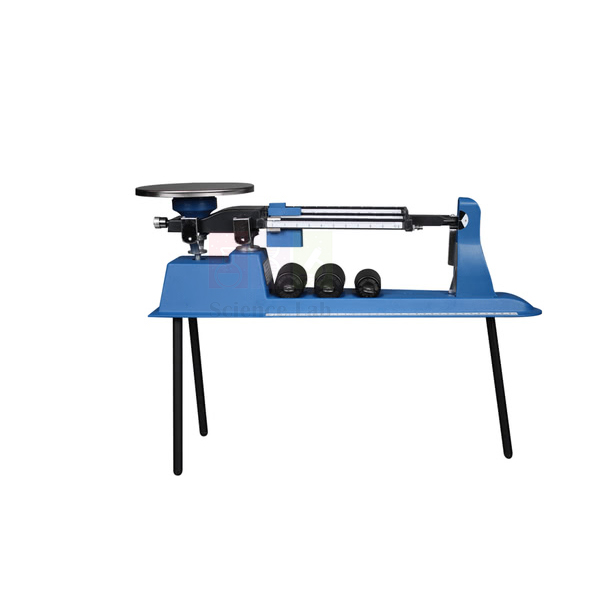
Triple-Beam Balance
The Triple-Beam Balance measures mass up to 2610 g with 0.1 g readability, using three notched, graduated beams and no power supply. A die-cast aluminium body, a 152 mm grade 304 stainless steel pan and magnetic damping suit daily class use, and a 225 g tare takes up the mass of a container.
Triple-Beam Balance specifications
| Parameter | Detail |
|---|---|
| Capacity | 2610 g |
| Readability | 0.1 g |
| Repeatability and linearity | 0.2 g each |
| Tare range | 225 g |
| Calibration | External; zero adjustment |
| Construction | Die-cast aluminium; metal housing |
| Pan | 152 mm diameter, grade 304 stainless steel |
| Beams and damping | Notched, tiered and graduated beams with centre reading; magnetic damping |
| Accessories | Tripod legs for density measurement; weigh-below hook (optional); storage for additional weights; slot for an optional Kensington-type lock |
| Size and net weight | 550 x 110 x 160 mm (W x D x H); 2.7 kg |
| Minimum order | 10 units |
| Dispatch | Usually within 7 to 10 working days |
| Supplied by | ScienceLab (Jain Scientific Equipments Pvt Ltd), Ambala, India |
Chemistry and physics weighings on the triple-beam balance
Density of a stone by suspension. Stand the balance on its tripod legs, fit the optional weigh-below hook and hang a stone from it on cotton thread. Weigh the stone in air, then again fully under water in a glass beaker that it does not touch. The loss in mass equals the stone's volume in cubic centimetres; divide the mass in air by it for the density.
Conservation of mass. Put a little dilute acid and a small tube of calcium carbonate granules inside a polypropylene conical flask with screw cap and weigh it closed. Tip the flask to mix them, and the reading stays the same. Loosen the cap and the mass falls as carbon dioxide escapes.
Density of a liquid. Weigh an empty polypropylene measuring cylinder, pour in a measured volume of tap water and weigh again. Divide the mass of liquid by its volume, then repeat with a salt solution and compare the two densities.
Frequently Asked Questions About the Triple-Beam Balance
In what order should the poises be moved?
Begin with the beam that has the biggest steps. Move its poise one notch at a time until the pointer drops below the centre mark, then step it back one notch. Do the same on the next beam, and finish by sliding the front poise smoothly until the pointer settles on centre.
Why must each notched poise sit fully in its notch?
The notches fix the rear poises at exact values. A poise resting between two notches can still let the pointer balance, but the value read off the beam no longer matches where the poise really is, so the total comes out wrong. Check each one has dropped into place before reading.
Why does the beam stick or stop swinging freely?
Look first for dirt, lint or metal filings caught in the gap of the magnetic damper, and for anything touching the beam or pan. Clear the gap gently with a soft brush or a piece of card. If a part has been bent by a knock, adjust it only as the supplied instructions describe.
How should students carry the balance between benches?
Slide all poises back to zero and take any load off the pan first. Then lift the balance with both hands under its die-cast base, keeping fingers away from the beam end and the damper. Carrying it by the beam or the pan can bend parts and upset its readings.
How is the 225 g tare used with a container?
With every poise at zero, put the empty container on the pan and set the tare until the pointer rests on the centre mark again. A container of up to 225 g is then balanced out, so the beams read only the sample added to it.
Mechanical balances and weighing accessories for class use
- Balance Single Pan
- Double Beam Balance
- Physical Balance
- Lever Balance Dual Scale
- Metric Attachment Weight Set
- Plastic Weighing Boats
To request a quotation, send the product name, code and quantity through our contact page or add the item to your enquiry cart.
Last updated: 15 November 2026