- Physics Lab Equipment
- Chemistry Lab Equipment
- Biology Lab Equipment
- Anatomical Lab Equipment
- Learning
- Educational Lab Equipment
- Magnets
- Agriculture
- Astronomy
- Earth Science
- Geography Lab Equipment
- Safety Lab Coat
- Laboratory
- Meteorological
- Electricity & Magnetism
- Heat
- School Lab Equipment
- Lab Glassware
- Science Lab Equipment
- Tvet Lab Equipment
- Robotics Kits Supplier and Manufacturer for Schools India
- Math Lab Equipment Manufacturers and Exporters in Ambala
- STEM Kits Manufacturers and Supplier India
- Engineering Lab Equipment
- Hospital Lab Equipment
- Water, Sanitation & Hygiene Supplies
- Cold Chain, Solar & Communication Equipment
- Nutrition
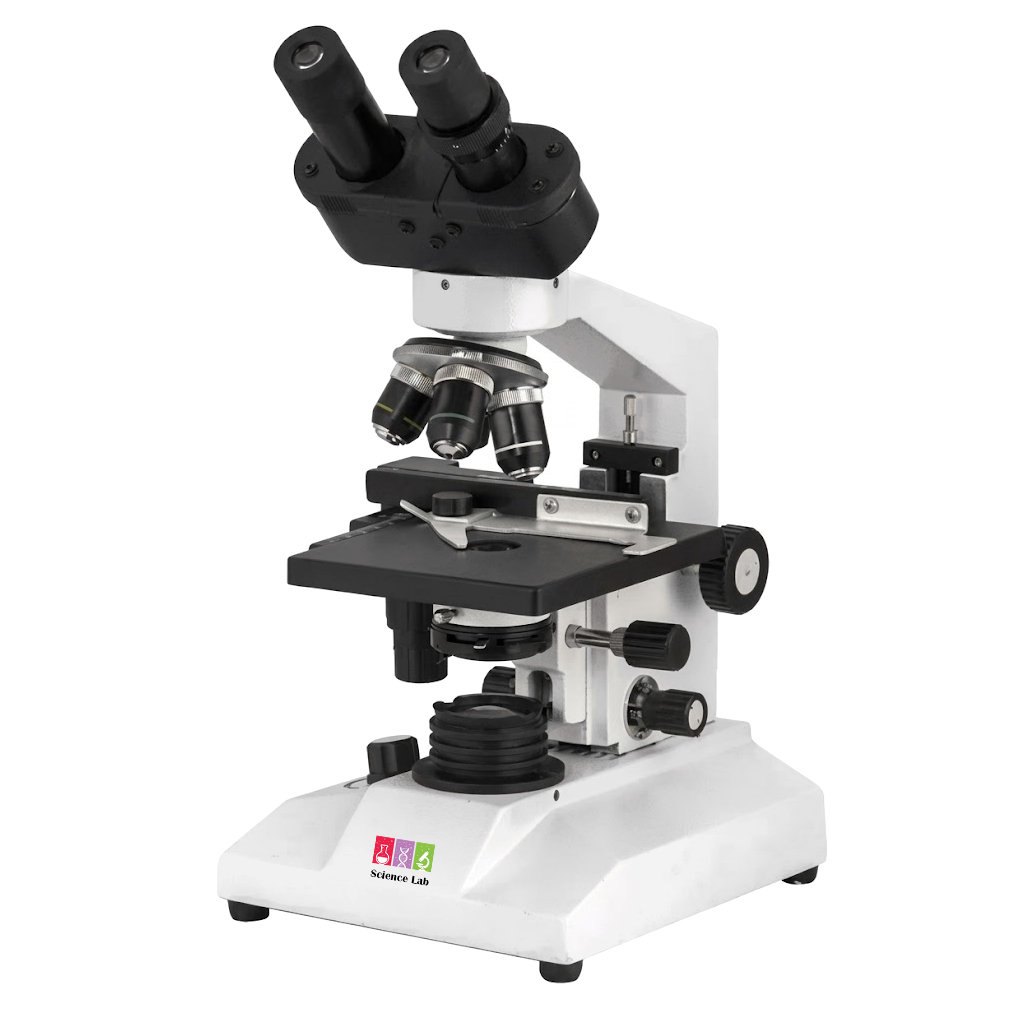
Microscope x 600
Microscope x 600 (Product Code: SCL/AG26-115) is a compound light microscope used to examine specimens at magnifications from 50x to 600x in biology, bacteriology and teaching laboratories. Universities, research institutions and school science departments choose it for its all-metal body, three objectives and two eyepieces with a pointer, packed in a lockable cabinet. It is supplied by Jain Scientific Equipments Pvt Ltd (ScienceLab), Ambala, India, to buyers looking for a sturdy compound microscope in India and abroad.
Specifications
| Parameter | Detail |
|---|---|
| Magnification | 50x to 600x |
| Objectives | 3 |
| Eyepieces | 2, with pointer |
| Body | All-metal, sturdy construction |
| Condenser | With iris diaphragm |
| Mirror | Plano-concave |
| Focusing | Coarse and fine |
| Illumination | Light source included |
| Storage | Cabinet with lock and key, carrying handle |
| Intended use | General biology and bacteriology work in laboratories, research institutions and universities; teaching demonstrations |
| Product code | SCL/AG26-115 |
| Supplied by | Jain Scientific Equipments Pvt Ltd (ScienceLab), Ambala, India |
What Is the 600x Microscope Used For?
In biology and bacteriology practicals, this microscope is used to study cells, tissues and microorganisms on prepared or freshly mounted slides. Students usually find the specimen at 50x, then move up through the objectives until fine structure is visible at 600x. The pointer in the eyepiece lets a teacher mark a nucleus, cell wall or colony so the whole group looks at the same feature during a demonstration.
For good images, use coarse focus only at low power and switch to fine focus once a higher objective is in place. Closing the iris diaphragm on the condenser raises contrast on pale, unstained material, while opening it brightens stained slides. Because it is a complete kit in a locking cabinet, it works well as shared biology lab equipment in India where microscopes move between rooms.
Supplier
Jain Scientific Equipments Private Limited, which trades under the ScienceLab name, supplies the Microscope x 600 from Ambala, Haryana. Schools, colleges, universities, research laboratories and dealers in India and international markets buy it together with slides and related optics in a single order. More about the company is on the ScienceLab company profile.
Related Physics Lab Equipment
These items are used with a 600x microscope for preparing and storing slides, or as alternatives when a different viewing setup is needed:
- Microscope Compound 1000 — an alternative when a higher top magnification is required.
- Binocular Microscope, 1000x, LED — two-eyed viewing with LED lighting for longer sessions.
- Microscope Slides Glass — plain slides for mounting specimens.
- Glass Cover Slips — to cover wet mounts before viewing.
- Blue Box, for storing Microscope Slides — keeps a class set of slides organised.
See the full Physics Lab Equipment range for optics and other practical apparatus.
Frequently Asked Questions
What magnification range does the Microscope x 600 cover?
The Microscope x 600 covers magnifications from 50x to 600x. It reaches this range by combining its three objectives with its two eyepieces, so students can locate a specimen at low power and then examine detail at the top setting.
What comes with the Microscope x 600?
The Microscope x 600 comes with three objectives, two eyepieces with a pointer, a condenser with iris diaphragm, a plano-concave mirror and a light source. Everything is packed in a cabinet with lock and key and a carrying handle for storage and transport.
How is light provided on the Microscope x 600?
The Microscope x 600 is listed with a light source as well as a plano-concave mirror for directing light into the condenser. The iris diaphragm on the condenser then lets the user balance brightness and contrast for each specimen.
Is the Microscope x 600 suitable for bacteriology classes?
Yes, the Microscope x 600 is described for general biology and bacteriology work in laboratories, research institutions and universities. If your syllabus calls for more than 600x, compare it with the higher-power compound microscope listed above or ask us which model fits.
Who supplies the Microscope x 600?
The Microscope x 600 is supplied by Jain Scientific Equipments Pvt Ltd (ScienceLab) of Ambala, Haryana, India. The company provides it to schools, colleges, universities, research laboratories and dealers, and quotes for single units or full class sets.
What should a quotation request for the Microscope x 600 include?
A quotation request for the Microscope x 600 should state the number of microscopes, any slides or cover slips wanted with them, the delivery address and whether the order is for export. Send these details through the contact page for a written quote.
Can the Microscope x 600 be ordered in bulk for export?
Yes, the Microscope x 600 can be quoted in quantity for institutions and distributors in India and international markets. Each unit comes in its own lockable cabinet; share the quantity and destination on the contact page so packing and freight can be planned.
Request a Quote
To order the Microscope x 600, send your quantity and delivery location through the contact page, or add it to the enquiry cart with slides and other items for one combined quotation.
Last updated: 24 September 2026
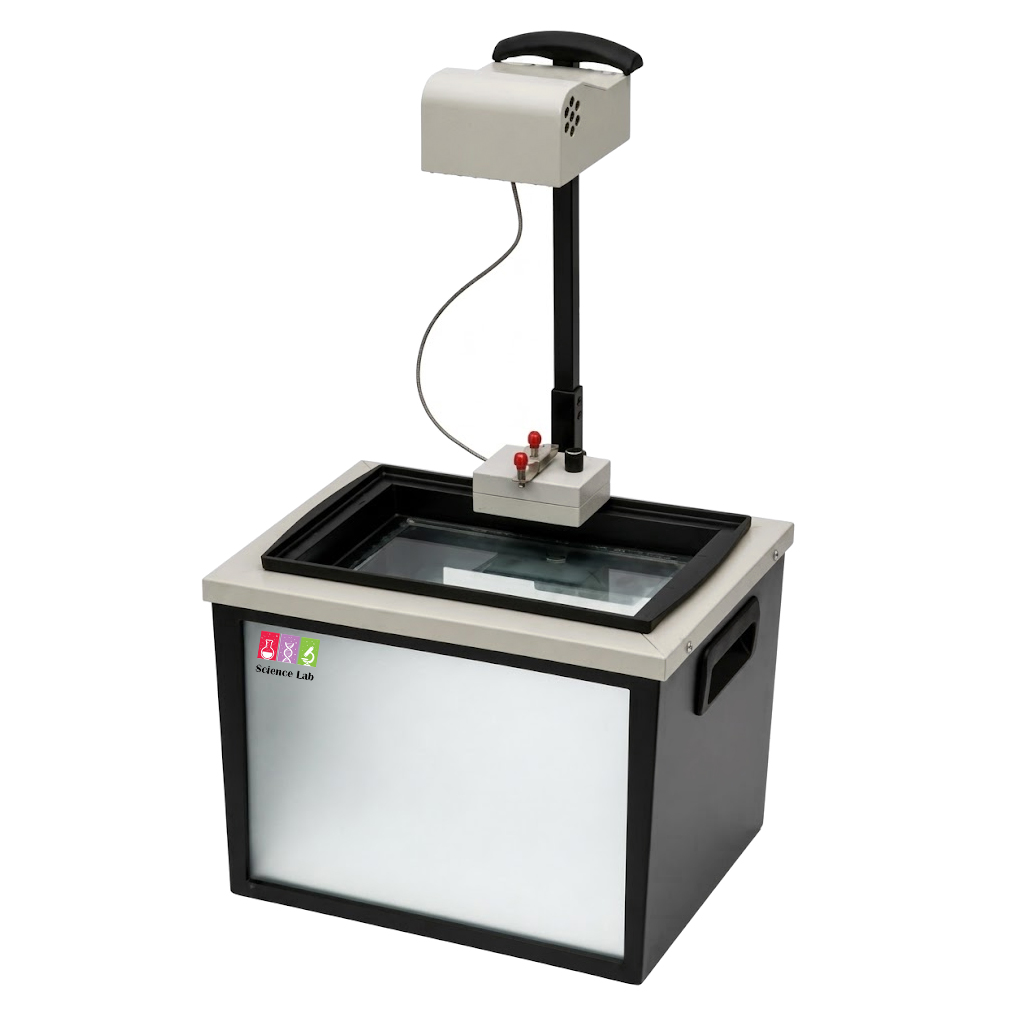
Ripple Tank Kit
Ripple Tank Kit (Product Code: SCL/AG26-117) is a wave demonstration set used to show reflection, refraction, diffraction and interference of water waves in school and college physics laboratories. Teachers run it on a 600 mm × 500 mm wooden tray with a plate-glass base, driven by a small DC motor on a wave generator bar. It is supplied by Jain Scientific Equipments Pvt Ltd (ScienceLab), Ambala, India, with its illuminant, rheostat and power supply unit as a complete wave motion kit for schools.
Specifications
| Parameter | Detail |
|---|---|
| Purpose | Visual demonstration of wave motion: reflection, refraction, diffraction and interference |
| Tray | Wooden, with plate-glass base and detachable legs |
| Tray overall size | 600 mm × 500 mm × 55 mm deep |
| Generator supports | Pair of support rods with integral G clamps attached to the tray sides |
| Wave generator bar | Waxed wood, 330 mm long, with a row of holes; 1.5 to 4.5 V DC electric motor mounted at the centre |
| Dippers | 2 spherical dippers |
| Barriers (set of 4, metal) | Two straight, 150 mm × 25 mm; one curved, 215 mm chord length × 25 mm high; one short straight, 25 mm × 25 mm |
| Beaches | Set of 4 mesh beaches |
| Accessories (one each) | Water dropper; wooden rod 230 mm × 25 mm dia.; rubber tube 600 mm × 6 mm bore; glass plate 300 × 202 × 4 mm; sponge; Hoffmann clip; support for illuminant; illuminant; rheostat to control motor speed; ripple tank power supply unit |
| Spare | Extra 4.5 V DC motor |
| Documentation | Instruction book |
| Product code | SCL/AG26-117 |
| Supplied by | Jain Scientific Equipments Pvt Ltd (ScienceLab), Ambala, India |
What Is the Ripple Tank Used For?
A ripple tank turns invisible wave behaviour into patterns a whole class can watch. With a shallow layer of water in the tray and the illuminant above it, light passing through the glass base throws bright and dark wave bands onto a white sheet below. The vibrating bar sends straight wavefronts across the water, while the spherical dippers produce circular ripples; using both dippers together gives a clear interference pattern.
The metal barriers show reflection from flat and curved surfaces and, set with a gap between them, diffraction through an opening. Laying the glass plate in the tray creates a shallower zone where waves slow down and bend, which demonstrates refraction. Level the tray with its legs, keep the water depth even, and use the rheostat to change motor speed and therefore wavelength; the mesh beaches soak up waves at the edges so patterns stay clean. It makes a practical physics demonstration kit for India's secondary and senior classes.
What to Specify When Ordering
- Number of complete kits (each with tray, wave generator, barriers, dippers, beaches, illuminant, rheostat and power supply unit).
- Whether spare motors are wanted beyond the extra 4.5 V DC motor already included.
- Whether a separate stroboscope is needed to freeze moving wave patterns.
- Delivery location and whether the order is for export.
Supplier
ScienceLab is the trading name of Jain Scientific Equipments Private Limited, Ambala, Haryana, which supplies this ripple tank kit to schools, colleges, teacher-training centres and distributors in India and international markets. Questions about the contents list, spare motors and delivery are handled by the same sales team. Company background is on the ScienceLab profile page.
Related Physics Lab Equipment
These items suit the same wave lessons, either as alternatives to this kit or as additions to it:
- Ripple Tank — a separate ripple tank model to compare.
- Mini Ripple Tank — a compact option for small-group work.
- Xenon Stroboscope — makes moving wave patterns appear to stand still.
- Wave Form, Helix — a second way to show wave motion alongside the tank.
Browse all Physics Lab Equipment for further mechanics, optics and wave apparatus.
Frequently Asked Questions
What experiments can be done with the Ripple Tank Kit?
The Ripple Tank Kit is designed for visual demonstrations of wave motion, including reflection, refraction, diffraction and interference. Its barriers, spherical dippers, mesh beaches and glass plate let a teacher set up each effect in turn in the same tray.
What size is the Ripple Tank Kit tray?
The Ripple Tank Kit tray measures 600 mm × 500 mm overall and 55 mm deep. It is made of wood with a plate-glass base and detachable legs, so the legs can be removed when the tank is put away.
How are waves generated in the Ripple Tank Kit?
Waves in the Ripple Tank Kit come from a 1.5 to 4.5 V DC electric motor mounted at the centre of a waxed wooden wave generator bar, 330 mm long. The bar is carried on support rods with integral G clamps, and a rheostat sets the motor speed.
Is a power supply included with the Ripple Tank Kit?
Yes, the Ripple Tank Kit accessories include a ripple tank power supply unit, a rheostat for motor speed, an illuminant and a support for the illuminant. An extra 4.5 V DC motor is also packed as a spare.
Who supplies the Ripple Tank Kit?
The Ripple Tank Kit is supplied by Jain Scientific Equipments Pvt Ltd (ScienceLab), Ambala, Haryana, India. It is offered to schools, colleges and dealers in India and international markets, with its instruction book included in the set.
What should a quote request for the Ripple Tank Kit include?
A quote request for the Ripple Tank Kit should give the number of kits, any extra spare motors or a stroboscope wanted, the delivery address and whether the shipment is for export. Send these details through the contact page.
Request a Quote
Send your Ripple Tank Kit requirement through the contact page, or add the kit to the enquiry cart with any other wave apparatus to receive one quotation for the whole list.
Last updated: 24 September 2026
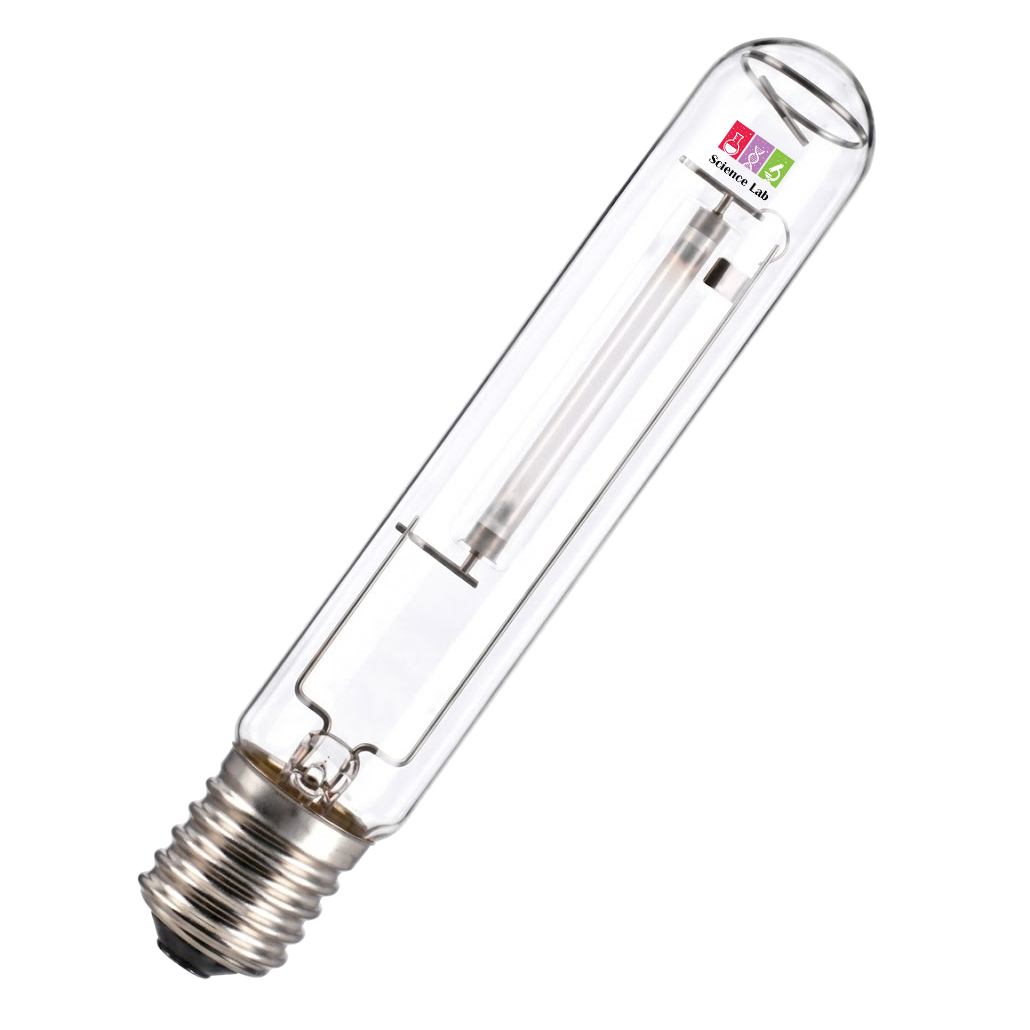
Sodium Lamp Kit
Sodium Lamp Kit (Product Code: SCL/AG26-119) is a low-pressure sodium discharge light source used to give monochromatic yellow light for optics experiments in physics and chemistry laboratories. It uses a 45 W sodium discharge tube housed in a metal shield with a 25 mm diameter aperture, for 200–250 V AC supplies. It is supplied by Jain Scientific Equipments Pvt Ltd (ScienceLab), Ambala, India, as part of its optics lab equipment for India and overseas buyers.
Specifications
| Parameter | Detail |
|---|---|
| Lamp type | Low-pressure sodium tubular gas-discharge lamp |
| Tube rating | 45 W sodium discharge tube |
| Housing | Metal shield with a 25 mm diameter aperture |
| Supply | For use on 200–250 V AC supplies |
| Control gear | Designed to operate with a matching electrical ballast/transformer |
| Applications | Physics and chemistry laboratory experiments, optical polarimetry, monochromatic lighting, scientific demonstrations |
| Product code | SCL/AG26-119 |
| Supplied by | Jain Scientific Equipments Pvt Ltd (ScienceLab), Ambala, India |
What Is the Sodium Lamp Used For?
The light from a low-pressure sodium lamp is concentrated in a narrow yellow band, the sodium D lines, so it serves as a reference source wherever one known colour is needed. Physics students shine it on the slit of a spectrometer to measure prism angles and refractive index, and use it for interference work such as Newton's rings. In chemistry, it is the traditional light for a polarimeter measuring the optical rotation of sugar and other solutions.
Always run the lamp through its matching ballast or transformer, never straight from the socket. Give it time after switching on until the yellow output is steady, then turn the 25 mm aperture towards the slit or instrument being lit. Avoid switching it on and off repeatedly during a practical, and let the shield cool before the lamp is moved.
What to Specify When Ordering
- The mains supply at your site (the lamp is for 200–250 V AC supplies).
- Whether a matching ballast, transformer or spectral lamp power supply should be quoted with the lamp.
- The number of kits, and the spectrometers or polarimeters they will serve.
Supplier
Jain Scientific Equipments Private Limited, known by its trading name ScienceLab, supplies the Sodium Lamp Kit from Ambala, Haryana, to physics and chemistry departments, universities, research laboratories and dealers in India and international markets. Buyers who list the instruments the lamp will light can have the power arrangement discussed at quotation stage. Read about the company on the ScienceLab profile.
Related Physics Lab Equipment
These products are used with a sodium light source in optics practicals, or offer another way to set one up:
- Sodium Spectral Lamp — another sodium light source to compare.
- Spectral Lamp Power Supply with Lamp Holder — power and mounting for spectral lamps; ask us about compatibility.
- Spectro Meter — measures angles of deviation using the yellow sodium light.
- Prism, Borosilicate Glass — for refractive-index measurements on the spectrometer table.
More optics and light sources are listed under Physics Lab Equipment.
Frequently Asked Questions
What wattage is the tube in the Sodium Lamp Kit?
The Sodium Lamp Kit uses a 45 W low-pressure sodium discharge tube. The tube sits inside a metal shield, and light leaves through a 25 mm diameter aperture that can be turned towards the slit of an optical instrument.
What mains supply does the Sodium Lamp Kit need?
The Sodium Lamp Kit is for use on 200–250 V AC supplies. It is designed to operate through a matching electrical ballast or transformer rather than directly from the socket, so confirm your supply and control gear when ordering.
Is a ballast included with the Sodium Lamp Kit?
The description of the Sodium Lamp Kit says it works with a matching ballast or transformer but does not state whether one is packed with it. Please ask us through the contact page so the quotation shows exactly what is included.
What is the Sodium Lamp Kit used for?
The Sodium Lamp Kit provides monochromatic yellow light for physics and chemistry laboratory experiments, optical polarimetry and general monochromatic lighting. Typical uses include spectrometer, polarimeter and interference practicals where a single known wavelength is needed.
Who supplies the Sodium Lamp Kit?
The Sodium Lamp Kit is supplied by Jain Scientific Equipments Pvt Ltd (ScienceLab), Ambala, Haryana, India, to schools, colleges, universities and research laboratories. Dealers and institutions in India and international markets can request quotations directly.
How should the Sodium Lamp Kit be handled after use?
Switch the Sodium Lamp Kit off and let the metal shield cool before moving or packing it, because discharge lamps run hot. Handle the kit gently, as the tube inside is a glass gas-discharge lamp, and store it in a dry place.
Request a Quote
For a quotation on the Sodium Lamp Kit, write to us on the contact page with your quantity and mains supply, or place it in the enquiry cart alongside a spectrometer or prism for a single combined quote.
Last updated: 24 September 2026
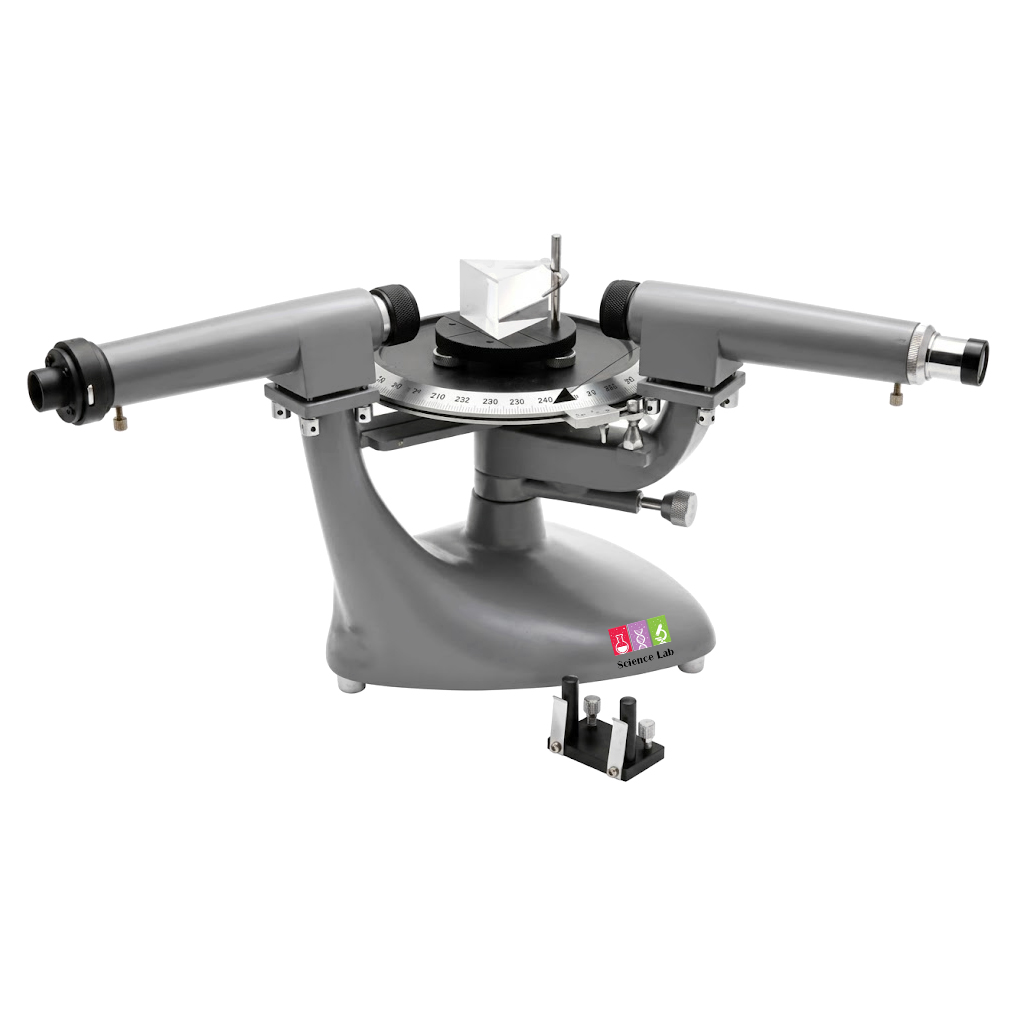
Spectro Meter
Spectro Meter (Product Code: SCL/AG26-121) is a prism and grating spectrometer used to measure angles of deviation, refractive index and wavelengths of light in college and senior-school physics laboratories. Its collimator and telescope are heavy castings, and angles are read on a 170 mm diameter circle scale graduated 0–360° with a spring-loaded vernier. It is made by Jain Scientific Equipments Pvt Ltd (ScienceLab), an OEM manufacturer, at its own factory in Ambala, India, for buyers who need a laboratory spectrometer in India or abroad.
Specifications
| Parameter | Detail |
|---|---|
| Construction | Main structural parts, including collimator and telescope, are heavy castings; other metal parts polished bright |
| Stand | Carried on three plastic legs |
| Circle scale | 170 mm dia., graduated 0–360° in 1° divisions, independently rotatable with locking screw |
| Vernier | Spring-loaded, rust-proof metal |
| Collimator | Axis adjustment; objective lens 150 mm, 21 mm aperture; unilaterally adjustable slit, 6 mm long |
| Telescope | Fine adjustment, locking screw and axis adjustment; objective 170 mm, 21 mm aperture; spiral focusing system |
| Eyepiece | Cross wire, locking-ring focus adjustment |
| Prism table | Three levelling screws; lines marked to assist placing the prism |
| Accessories | Small screwdriver, tommy bar, prism clamp for prisms up to 40 mm high, 1 diffraction grating holder with 25 × 25 mm aperture |
| Packing | Sturdy box with carrying handle |
| Documentation | Instructions and maintenance manual |
| Product code | SCL/AG26-121 |
| Manufacturer | Jain Scientific Equipments Pvt Ltd (ScienceLab) — OEM |
| Country of origin | India (made in Ambala, Haryana) |
What Is the Spectrometer Used For?
The instrument covers the standard optics practicals of undergraduate and senior secondary courses. With a glass prism on the table, students find the angle of the prism and the angle of minimum deviation, then calculate refractive index and dispersive power. Swapping the prism for a diffraction grating in the holder lets them measure the wavelengths of spectral lines from a sodium or other discharge lamp, which is why it is often listed as a prism spectrometer in India's practical syllabi.
Good readings start with setup: level the prism table using its three screws, focus the eyepiece on the cross wire, then focus the telescope and collimator for parallel light. Keep the slit narrow for sharp lines, lock the relevant screw before using the fine adjustment, and add the vernier reading to the main scale value for each angle. The carrying box keeps the optics protected between sessions.
What to Specify When Ordering
- Number of spectrometers needed per laboratory.
- Prisms and diffraction gratings wanted (the clamp takes prisms up to 40 mm high; the grating holder has a 25 × 25 mm aperture).
- Light source to be quoted with it, such as a sodium lamp.
- Delivery location and whether the order is for export.
OEM Manufacturer
Jain Scientific Equipments Private Limited, trading as ScienceLab, is the OEM (original equipment manufacturer) of the Spectro Meter. The company makes this spectrometer at its own licensed factory at Saha, Ambala, Haryana, India, rather than sourcing it from a trader, and supplies it factory-direct to physics departments, colleges, schools, distributors and importers in India and international markets.
Because the maker handles your enquiry itself, questions about matching instruments for a repeat order or about replacement accessories such as the prism clamp or grating holder go straight to the manufacturer — just ask us. Production takes place at the company's licensed factory at 449, HSIIDC Industrial Area, Saha, Ambala (Factory Licence AMB-ONLINE-CHD-J-414), and the company is registered under CIN U29309HR2020PTC087597. Further background is on the ScienceLab company profile.
Related Physics Lab Equipment
These items complete a spectrometer bench, or offer an alternative instrument:
- Sodium Lamp Kit — monochromatic light source for the collimator slit.
- Sodium Spectral Lamp — another sodium source for wavelength work.
- Prism, Clear Glass — a prism for refractive-index practicals on the table.
- Spectrometer — a different spectrometer model to compare.
View the complete Physics Lab Equipment range for more optics apparatus.
Frequently Asked Questions
What scale does the Spectro Meter use?
The Spectro Meter has a 170 mm diameter circle scale graduated from 0 to 360° in 1° divisions, read with a spring-loaded vernier of rust-proof metal. The scale rotates independently and can be fixed in place with its locking screw.
What accessories come with the Spectro Meter?
The Spectro Meter comes with a small screwdriver, a tommy bar, a prism clamp for prisms up to 40 mm high and one diffraction grating holder with a 25 × 25 mm aperture. It is packed in a sturdy box with a carrying handle, plus an instructions and maintenance manual.
Can the Spectro Meter be used with a diffraction grating?
Yes, the Spectro Meter includes a diffraction grating holder with a 25 × 25 mm aperture, so grating experiments can be set up on the prism table. The grating itself is not listed in the contents, so add it to your enquiry if you need one.
What light source is needed with the Spectro Meter?
The Spectro Meter needs a separate light source at the collimator slit, such as a sodium lamp for monochromatic work. Lamps are not listed among its contents, so the Sodium Lamp Kit or Sodium Spectral Lamp can be quoted with it on request.
Who manufactures the Spectro Meter?
The Spectro Meter is manufactured by Jain Scientific Equipments Pvt Ltd (ScienceLab), the OEM, at its own licensed factory in Saha, Ambala, Haryana, India. It is supplied factory-direct to colleges, schools, universities and dealers in India and international markets, with quotations coming from the manufacturer itself.
What should a quotation request for the Spectro Meter specify?
A quotation request for the Spectro Meter should specify the number of instruments, any prisms, gratings or lamps needed with them, the delivery location and whether the order is for export. Send the list through the contact page for a combined quote.
Request a Quote
Ask for a Spectro Meter quotation on the contact page, or build a full optics list in the enquiry cart with lamps and prisms and send it in one go. Quotations come direct from the manufacturer.
Last updated: 24 September 2026

Materials Kit
A selection of materials in the form of rectangular blocks intended to familiarize the student with appearance, feel, texture, hardness and density of a range of common substances.
