- Physics Lab Equipment
- Chemistry Lab Equipment
- Biology Lab Equipment
- Anatomical Lab Equipment
- Learning
- Educational Lab Equipment
- Magnets
- Agriculture
- Astronomy
- Earth Science
- Geography Lab Equipment
- Safety Lab Coat
- Laboratory
- Meteorological
- Electricity & Magnetism
- Heat
- School Lab Equipment
- Lab Glassware
- Science Lab Equipment
- Tvet Lab Equipment
- Robotics Kits Supplier and Manufacturer for Schools India
- Math Lab Equipment Manufacturers and Exporters in Ambala
- STEM Kits Manufacturers and Supplier India
- Engineering Lab Equipment
- Hospital Lab Equipment
- Water, Sanitation & Hygiene Supplies
- Cold Chain, Solar & Communication Equipment
- Nutrition
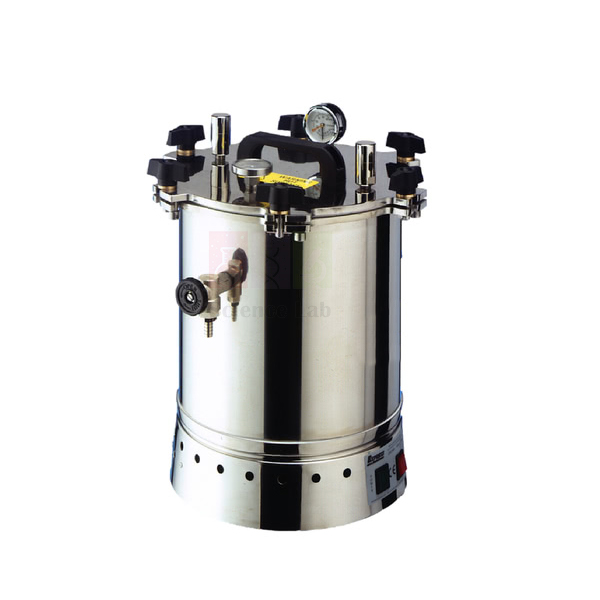
Autoclave, Stainless Steel, 15 Litre
This benchtop autoclave is built in Stainless Steel 316, with a 15 litre chamber heated by a 2.0 kW internal element under electronic thermostatic control. It works at 121°C and suits instruments, glassware, media and waste, including destructive sterilisation of spent cultures. The lid lifts off completely and locks with six wing nuts, and a condensing vacuum after the sterilising period helps loads dry.
15 litre SS 316 autoclave specifications
| Parameter | Detail |
|---|---|
| Capacity and chamber | 15 litres; internal 280 mm (D) × 245 mm (H) |
| Material | Stainless Steel 316, polished exterior for easier cleaning |
| Overall size and weight | 370 × 390 × 485 mm; net weight 19 kg |
| Heating | Internal electric element with electronic thermostatic control, 230 V, 2.0 kW |
| Pressure | Design and S W pressure 1.3 bar (18 psi); H T pressure 2.0 bar (30 psi) |
| Temperature | Design 0–125°C; standard and maximum working temperature 121°C |
| Lid | Removable for full-width access; six wing nuts and six locking lugs hold it shut while the vessel is under pressure |
| Supplied with | Inner liner for holding items to be sterilised |
| Drying | Condensing vacuum drawn after the sterilising period |
| Product code | SLE/LA/05 |
| Minimum order | 10 units |
| Dispatch | Usually within 7 to 10 working days |
| Supplied by | ScienceLab (Jain Scientific Equipments Pvt Ltd), Ambala, India |
Sterilising routines with the 15 litre autoclave
Destructive sterilisation of spent cultures. At the end of a practical, students drop used triple-vent Petri dishes into an autoclave bag that stands in the inner liner. The bag goes through a full 121°C cycle before any of the waste leaves the laboratory.
Dressings and drapes for a nursing skills room. Wrap each pack loosely, mark it with autoclave tape and stand the packs on edge in the liner so steam passes between them. The condensing vacuum drawn after the sterilising period helps the packs come out dry enough to store.
Reusable glass plates. Wash glass Petri dishes with lids, wrap them in paper in small stacks and run them through a cycle. Leave them to dry and cool in their wrapping, so they stay covered until agar is poured.
Frequently Asked Questions About the Autoclave, Stainless Steel, 15 Litre
What is the condensing vacuum at the end of the cycle for?
It helps the load dry. After the sterilising period, the vessel draws a condensing vacuum that pulls moisture out of porous items. Wrapped packs, dressings and drapes would otherwise stay damp after a steam cycle and could not be stored.
How should a bag of waste be loaded for destructive sterilisation?
Stand the bag upright in the inner liner and close its neck loosely so steam can get in. Fill it no more than about three-quarters. Dense or tightly packed waste heats slowly in the middle, so give large loads a longer time at temperature than a light load.
Which items should never go into the autoclave?
Sealed or tightly capped containers, which can burst as pressure builds. Also keep out flammable solvents, bleach and other chlorine-based or corrosive chemicals, which can give off fumes or attack the stainless steel. Check that plastics are marked as autoclavable before loading them.
What water should be used in the chamber?
Distilled or deionised water, where it is available. Hard tap water leaves scale on the internal element and chamber walls, and scale slows heating. Drain the water after the day's last cycle and refill with fresh water before the next session.
How are the wing nuts tightened and released?
Close the lid, then tighten the six wing nuts by hand in opposite pairs, so the lid seats evenly on all six lugs. After the cycle, switch off and leave the vessel to cool until all pressure has gone before loosening any nut.
How should the chamber and the outer body be cleaned?
Empty and wipe the chamber after use with water and a mild detergent, then rinse and dry it. Avoid bleach and chloride cleaners, which can pit stainless steel. The polished SS 316 exterior only needs a damp cloth.
Autoclaves and sterilising consumables
- Classic Standard Autoclave
- Electric Autoclave
- Autoclave Stainless Steel
- Autoclave Bag
- Autoclave Tape
- Autoclave Basket
To request a quotation, send the product name, code and quantity through our contact page or add the item to your enquiry cart.
Last updated: 14 November 2026
