- Physics Lab Equipment
- Chemistry Lab Equipment
- Biology Lab Equipment
- Anatomical Lab Equipment
- Learning
- Educational Lab Equipment
- Magnets
- Agriculture
- Astronomy
- Earth Science
- Geography Lab Equipment
- Safety Lab Coat
- Laboratory
- Meteorological
- Electricity & Magnetism
- Heat
- School Lab Equipment
- Lab Glassware
- Science Lab Equipment
- Tvet Lab Equipment
- Robotics Kits Supplier and Manufacturer for Schools India
- Math Lab Equipment Manufacturers and Exporters in Ambala
- STEM Kits Manufacturers and Supplier India
- Engineering Lab Equipment
- Hospital Lab Equipment
- Water, Sanitation & Hygiene Supplies
- Cold Chain, Solar & Communication Equipment
- Nutrition
Heat and thermal physics apparatus for schools, colleges and technical institutes shows how materials expand when heated, how heat moves by conduction, convection and radiation, how specific heat and energy are measured, and how heat engines turn heat into motion. Jain Scientific Equipments Pvt Ltd (ScienceLab), Ambala, India, groups it here for building the heat section of a physics lab, from simple demonstrations to quantitative calorimetry. Buyers seeking a heat energy science kit or thermometry apparatus will find them here too.
Heat Apparatus by Topic
| Topic | What It Covers | Example Products |
|---|---|---|
| Thermal expansion | Linear expansion of solids | Expansion Apparatus |
| Conduction | Comparing how fast different metals conduct heat | Thermal Conductivity Bars, Heat Conducto meter, Conductivity Apparatus, Conductivity of Metal Apparatus, Ice Melting Kit |
| Convection | Convection currents in air | Convection of Gas Apparatus |
| Radiation | Emission and absorption by different surfaces; Newton’s law of cooling | Leslie's Cube, Radiation Can Set, Radiation Kit |
| Calorimetry and heat transfer | Specific heat, energy in foods and heat flow between bodies | Calorimeter, Electric, Food Calorimeter, Heat Specimen Set, Heat Transfer Kit |
| Heat engines and energy conversion | Turning heat into motion and motion into heat | Stirling Engine, Stirling Engine with Alcohol Burner, Hand-Powered Engine Models, Energy Transfer Balls |
| Thermometry and change of state | Temperature-measuring devices, melting points and vapour pressure | Thermoelectric Effects Apparatus, Melting Point Apparatus Simple, Measuring Vapor Apparatus |
Featured Heat Apparatus
| Product | Product Code | Typical Use |
|---|---|---|
| Leslie's Cube | SLE/H/06 | Measuring thermal radiation against surface colour and texture |
| Heat Conducto meter | SLE/H/11 | Comparing heat conduction in five metal rods using paraffin |
| Convection of Gas Apparatus | SLE/H/08 | Showing convection currents in air with two chimneys |
| Calorimeter, Electric | SLE/H/12 | Electrical heating experiments in calorimetry |
| Stirling Engine | SLE/H/01 | Demonstrating a low-temperature-difference heat engine |
| Expansion Apparatus | SLE/H/17 | Measuring linear expansion of a heated bar on a pointer scale |
| Thermoelectric Effects Apparatus | SLE/H/14 | Investigating temperature-measuring devices and thermoelectric effects |
| Radiation Can Set | SLE/H/04 | Comparing black and bright cans for absorption, emission and cooling |
Manufacturing & Supply
The Heat range is supplied by Jain Scientific Equipments Private Limited (ScienceLab), which manufactures laboratory teaching equipment at its licensed factory in Saha, Ambala. The company is registered with the Ministry of Corporate Affairs under CIN U29309HR2020PTC087597, holds DGFT Importer-Exporter Code AAECJ8618A and carries Legal Entity Identifier 3358004HRD1JIVXKYX49. We supply single demonstration items, sets for student groups, bulk institutional orders, tenders and export shipments.
Related Ranges
Heat here means thermal physics teaching apparatus. Lab heating appliances such as hot plates and heating mantles are separate ranges.
- Physics Lab Equipment: more heat apparatus, including calorimeter sets, a ball and ring apparatus and a bimetallic strip
- Physics Lab: practical-lab items such as Newton’s cooling law apparatus and a hypsometer
- Physics STEM Kits Manufacturer and Supplier Ambala: heat and energy kits for activity-based lessons
- Hot Plates and Heating Mantle: heating appliances for laboratory work, not teaching apparatus
- Measuring: thermometers and other measuring instruments
Frequently Asked Questions
What topics does the Heat range cover?
Thermal expansion, conduction, convection, radiation, calorimetry, heat engines and thermometry, across 21 listed products.
Is the range for demonstrations or student experiments?
Both. Items such as the Stirling Engine and Energy Transfer Balls are demonstrations. Others, like the Radiation Can Set and Thermal Conductivity Bars, can be used for small-group student work.
Do I need extra items to run these experiments?
Some items need thermometers, a heat or light source, or a battery that is not included. The Leslie’s Cube, for example, needs water, a thermometer and a light source. Check each product page for what it needs.
How is Heat different from Hot Plates or Heating Mantle?
Heat covers apparatus for teaching thermal physics. Hot Plates and Heating Mantle are laboratory heating appliances used across chemistry and biology.
Can you supply a full heat section for a physics lab, including export?
Yes. We combine items from this range and Physics Lab Equipment into one quotation for schools, colleges, tenders or export buyers.
Request a Quote or Catalogue
To price heat apparatus or plan a thermal physics section, contact us or add products to your enquiry cart.
Last updated: 23 September 2026
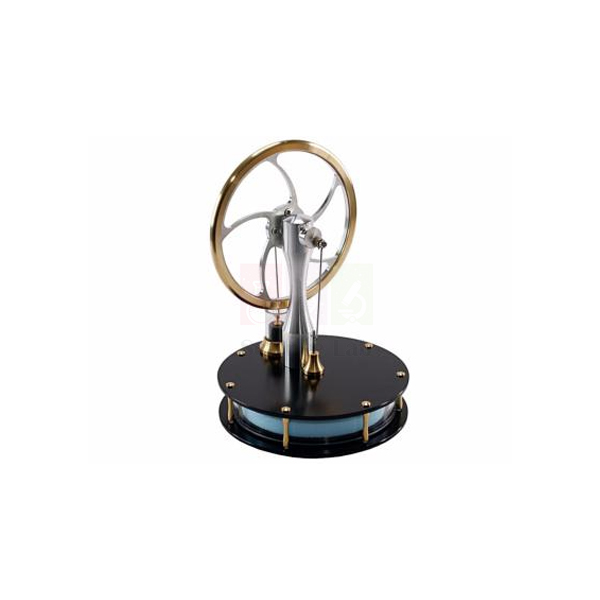
Stirling Engine
Stirling Engine (Product Code: SLE/H/01) is a low-temperature differential heat engine in durable stainless steel that shows students, in real time, how heat energy is converted into mechanical work. Stand it on a cup of hot water or ice water, give the flywheel a turn by hand and it keeps running on the temperature difference alone. A classic thermodynamics demonstration for middle school and a clear physics demonstration kit for India’s classrooms, it is made by Jain Scientific Equipments Pvt Ltd (ScienceLab), Ambala.
Specifications
| Parameter | Detail |
|---|---|
| Type | Low-temperature differential Stirling engine |
| Material | Durable stainless steel |
| Flywheel diameter | 3-1/2" (9 cm) |
| Displacement cylinder diameter | 3-1/2" (9 cm) |
| Unit height | About 5-3/4" (14.5 cm) overall |
| Unit weight | 7.6 oz (216 g) |
| Heat source limit | Should not exceed 100° C |
| Cold source limit | Should not be below −20° C |
| Included | Engine and instructions |
| Needed, not supplied | Hot source, cold source and cup |
Typical Use
Fill a cup with hot water (kept at or below 100° C), set the engine on top and wait briefly for the base plate to warm. Rotate the flywheel by hand to start it: the displacer shuttles air between the hot and cool plates, the pressure changes drive the power piston, and the flywheel carries the motion round. To reverse the engine’s direction, use ice water instead, keeping the cold source no lower than −20° C. Pupils can time the flywheel, compare hot and cold runs, and discuss why a larger temperature difference gives more vigorous motion — a strong starting point for any heat energy science kit lesson on engines and efficiency.
This is a delicate instrument, and the connections between the flywheel and pistons can be damaged. Before each experiment, check two things: the flywheel, connecting rods and pistons should move freely without resistance, and the connecting rods must be properly seated so the linkages to the piston move freely. Avoid rough handling and never force the flywheel.
Manufacturer
The engine carries the ScienceLab brand of Jain Scientific Equipments Private Limited, an Ambala, Haryana company that designs and builds physics, chemistry and biology teaching apparatus for India and international markets. The about-us profile gives the full company background.
Related Laboratory Equipment
Items that complete a Stirling engine lesson:
- Stirling Engine with Alcohol Burner — an alternative engine that runs from a flame instead of a water cup.
- Glass Beaker — can hold the hot or ice water the engine needs.
- Hot Plate General Purpose — warms water for the hot source.
- Digital Thermometer — confirms the water stays within the engine’s temperature limits.
- Hand-Powered Engine Models — contrast with internal-combustion engine cycles.
Explore the complete Heat category for more thermal physics apparatus.
Frequently Asked Questions
What do I need to run it?
A hot source, a cold source and a cup, which are not supplied. Hot water in a cup is the usual choice; ice water makes it run the other way.
How hot or cold can the source be?
The heat source should not exceed 100° C and the cold source should not be below −20° C. Staying inside these limits protects the engine.
Why won’t my engine keep turning?
Check that the flywheel, connecting rods and pistons move freely and that the rods are properly seated. Give the base time to warm or cool, then start the flywheel by hand again.
How big is the engine?
It stands about 5-3/4" (14.5 cm) high, weighs 7.6 oz (216 g), and has a 3-1/2" (9 cm) flywheel and displacement cylinder.
Is it suitable for students to handle?
Yes, under supervision. It is a delicate instrument, so rough handling can damage the flywheel-to-piston connections.
What warranty applies?
Warranty terms are confirmed at quotation stage. Please raise any questions through our contact page.
Can schools order several units for group work?
Yes, class sets can be quoted for buyers in India and international markets; state the quantity of SLE/H/01 and the delivery location.
Request a Quote
Request pricing via the contact page, or add the Stirling Engine to the enquiry cart together with your other heat apparatus.
Last updated: 24 September 2026
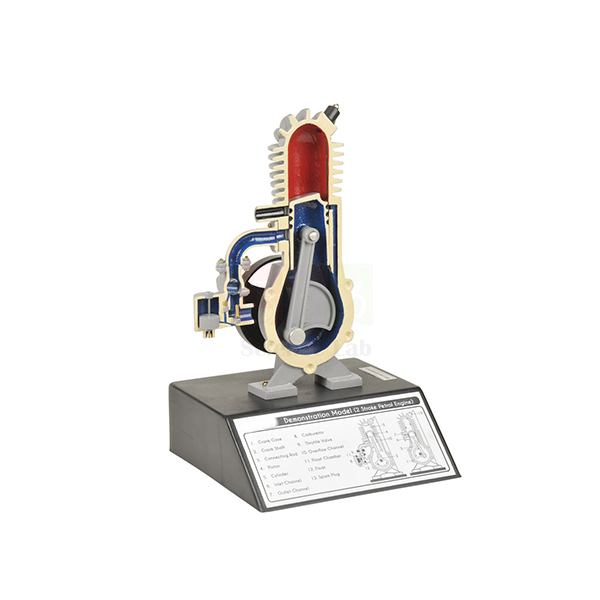
Hand-Powered Engine Models
Hand-Powered Engine Models (Product Code: SLE/H/02) are working teaching models that let students turn a hand crank and watch an engine move through every stage of its cycle. Each model sits on a sturdy base with a placard naming the key engine components, and a simulated spark plug lamp lights to show exactly when firing occurs. Physics and automotive teachers use them as a demonstration model in the physics lab or workshop, and they are made by Jain Scientific Equipments Pvt Ltd (ScienceLab), Ambala.
Specifications
| Parameter | Detail |
|---|---|
| Operation | Cycles through all stages with hand crank rotation |
| Construction | Solid cast metal and plastic |
| Mounting | Sturdy base |
| Labelling | Placard with key engine components |
| Firing indicator | Simulated spark plug (lamp) on each model |
| Lamp power | Depending on the model, 2 AA batteries or a 6- to 12-V power supply (not included) |
| Supplied as | Models are sold separately |
Typical Use
Turn the crank slowly the first time so the class can follow each moving part against the labelled placard, then speed up to show how the stages link into a continuous cycle. The spark plug lamp is the key teaching cue: pause the crank as it lights and ask students what is happening to the charge in the cylinder at that instant, and why ignition is timed where it is. Because the models are driven by hand, there is no fuel, heat or exhaust, so they can be used safely on an ordinary classroom desk.
The models suit lessons on heat engines and energy conversion in physics, introductory mechanical and automotive courses, and science exhibitions. As engineering lab equipment in India’s polytechnics and ITIs, they help trainees connect textbook diagrams to real component movement before working on full-size engines. Fit the batteries or connect a suitable supply before class, and keep the crank mechanism clean and free of grit.
Manufacturer
Jain Scientific Equipments Private Limited, known to customers as ScienceLab, builds these engine models as part of its teaching apparatus programme in Ambala, Haryana. The company equips institutions throughout India and in international markets; its profile page describes the full scope of work.
Related Laboratory Equipment
Apparatus that extends an engines and energy topic:
- Stirling Engine — an external-combustion heat engine that runs on a temperature difference.
- Engine, Diesel, 4 Stroke — compare a compression-ignition design with spark ignition.
- Hero Engine — the historic steam reaction engine for a history-of-engines lesson.
- Power Supply Variable — a bench supply option for models whose lamp needs an external supply; confirm the output range with us.
For more thermal physics apparatus, visit the Heat category.
Frequently Asked Questions
Are all the engine models included in one order line?
No. The models are sold separately, so list each model you need when you request a quotation.
What powers the spark plug lamp?
Depending on the model, the lamp runs on 2 AA batteries or a 6- to 12-V power supply. Batteries and power supplies are not included.
Does the model need fuel or a motor?
No. It is turned by a hand crank, which cycles it through all stages without fuel, heat or an electric motor.
How robust are the models for student use?
They are of solid cast metal and plastic construction on a sturdy base. Turn the crank smoothly rather than forcing it to keep the mechanism in good order.
Are the parts labelled?
Yes, a placard with the key engine components is part of each model, so students can name parts as they watch them move.
Can you quote for a polytechnic or training centre?
Yes. Send the models required, quantities and delivery details, in India or overseas, through our contact page.
Request a Quote
Ask for a quotation through the contact page, or place the models in the enquiry cart and mention which versions you need.
Last updated: 24 September 2026
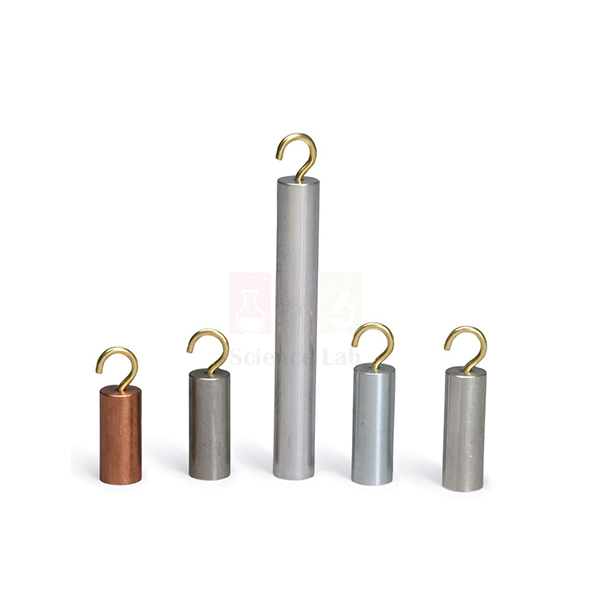
Heat Specimen Set
Heat Specimen Set (Product Code: SLE/H/03) is a set of five hooked metal cylinders — aluminium, copper, stainless steel, tin and zinc — precision machined to equal mass so that students can compare how much heat different metals store and release. Because the mass is the same for every cylinder, any difference in results comes down to the metal itself, which makes specific heat capacity easy to see and measure. Physics teachers use the set for calorimeter experiments and wax-melting demonstrations, and it is made by Jain Scientific Equipments Pvt Ltd (ScienceLab), Ambala.
Specifications
| Parameter | Detail |
|---|---|
| Number of specimens | Five cylinders |
| Metals | Aluminium, copper, stainless steel, tin and zinc |
| Diameter | 1/2" |
| Mass | Precision machined to equal mass |
| Form | Hooked cylinders |
| Identification | Metal identification stamped on one end |
Typical Use
Hang the cylinders by their hooks on thread and lower them into boiling water until they reach the same temperature. In the classic demonstration, all five are lifted out together and stood on a slab of paraffin wax: the metal holding the most heat per unit mass melts deepest, so the class sees specific heat capacity as a row of different depths. For a quantitative calorimeter experiment, transfer one hot cylinder into a calorimeter holding a known mass of water, record the temperature rise and calculate the metal’s specific heat capacity by the method of mixtures.
Since every cylinder has equal mass, groups can each take a different metal and pool their results into one comparison table. The stamped end prevents mix-ups once the cylinders are hot or lying together in a tray. Handle hot specimens with tongs, dry them after use and store them together so the set stays complete — a small but valuable part of physics lab equipment in India’s senior secondary schools and colleges.
Manufacturer
Jain Scientific Equipments Private Limited produces this set under its ScienceLab brand in Ambala, Haryana, where the company makes heat, mechanics and optics apparatus for schools and colleges in India and international markets. See our company profile for more.
Related Laboratory Equipment
Items used with the specimen set in specific heat experiments:
- Calorimeter Set, Copper — for method-of-mixtures measurements with each cylinder.
- Paraffin — wax for the melting-depth comparison of the hot cylinders.
- Glass Beaker — a boiling-water bath for heating the specimens.
- Digital Thermometer — reads the water temperature before and after each transfer.
- Metal Density Cube Set — extends the same metals into a density comparison.
The Heat category lists more thermal physics apparatus.
Frequently Asked Questions
Which metals are in the set?
Aluminium, copper, stainless steel, tin and zinc — five cylinders in all, each stamped with its metal on one end.
Why are the cylinders the same mass?
Equal mass means heat stored depends only on each metal’s specific heat capacity, so results can be compared directly without correcting for mass.
What are the hooks for?
They let you suspend each cylinder on thread in hot water and lift it out quickly into wax or a calorimeter.
Is a calorimeter or wax included?
No, the set contains the five cylinders. Calorimeters and paraffin are listed separately in the related items above.
Can the exact mass of each cylinder be confirmed?
The cylinders are machined to equal mass. Weigh them on your own balance for precise calculations, or contact us if you need the nominal value stated on a quotation.
Are replacement single cylinders available?
Please ask our team through the contact page; availability of individual pieces is confirmed case by case.
Request a Quote
For a price on class quantities, write to us on the contact page or add the Heat Specimen Set to the enquiry cart.
Last updated: 24 September 2026
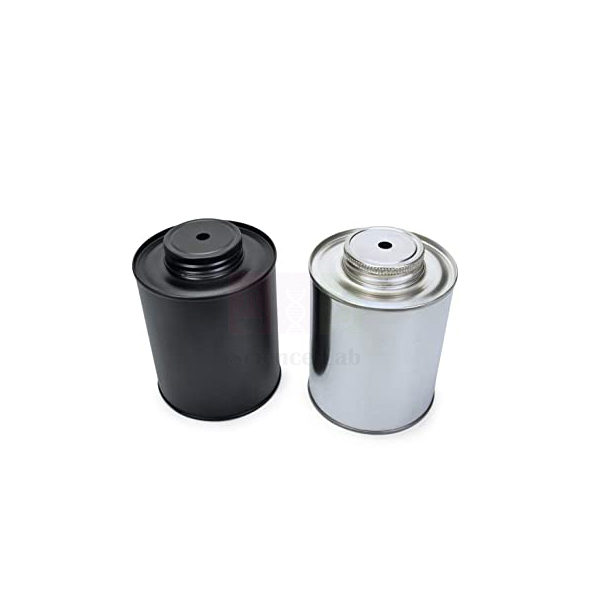
Radiation Can Set
Radiation Can Set (Product Code: SLE/H/04) is a pair of cans that are identical in every way except colour — one black, the other bright tin — for studying absorption, emission and Newton’s law of cooling. Because shape and size match, any difference in how fast the water inside warms or cools is due to the surface alone. It works as a simple Newton law of cooling apparatus for school and college physics, and is made by Jain Scientific Equipments Pvt Ltd (ScienceLab), Ambala.
Specifications
| Parameter | Detail |
|---|---|
| Contents | Two cans, identical except for colour |
| Finishes | One black can, one bright tin can |
| Thermometer access | Hole at the top of each can for inserting a thermometer |
| Studies | Absorption, emission and Newton’s law of cooling |
| Needed, not included | Thermometer |
Typical Use
For an emission (cooling) experiment, fill both cans with equally hot water, insert a thermometer through the hole at the top of each and record the temperatures at regular intervals. The black can loses heat faster, and plotting temperature against time gives cooling curves that students can compare against Newton’s law of cooling. For absorption, start both cans with cold water and place them the same distance from a lamp or in direct sunlight; the black can warms up more quickly than the bright tin one.
Running both experiments with the same pair of cans shows learners that a good absorber is also a good emitter — a result that links to solar water heaters, cooking pots and the colour of clothing in hot climates. Use equal volumes of water, keep both cans on the same insulating surface and away from draughts, and time readings with a stop clock. The set is an economical radiation experiment kit for India’s schools that already stock thermometers.
Manufacturer
Jain Scientific Equipments Private Limited, registered under CIN U29309HR2020PTC087597, trades as ScienceLab from Ambala, Haryana. Its physics apparatus is produced at the licensed factory at 449, HSIIDC Industrial Area, Saha, Ambala, operating under Factory Licence AMB-ONLINE-CHD-J-414, and supplied to institutions in India and international markets. Read the company profile for more detail.
Related Laboratory Equipment
Complete the radiation and cooling practical with:
- Immersion Thermometer — the thermometer each can needs, as none is included.
- Stop Clock (Metal Case) — times readings for cooling curves.
- Radiation Kit — a fuller kit with lids, thermometers and a lamp for absorption tests.
- Leslie’s Cube — compares emission from different surfaces at one temperature.
- Heat Absorption & Radiation Comparator — another way to show dark versus shiny surfaces.
Find further thermal apparatus in the Heat category.
Frequently Asked Questions
How many cans are in the set?
Two: one black and one bright tin, identical except for colour.
Are thermometers included?
No. Insert your own thermometer through the hole at the top of each can; suitable thermometers are linked above.
Which experiments can it cover?
Absorption of radiant heat, emission during cooling, and Newton’s law of cooling using temperature–time readings.
Can it be used with sunlight instead of a lamp?
Yes. Any heat source that reaches both cans equally will work; place them side by side at the same distance.
How should the cans be looked after?
Empty and dry them after each lesson and avoid scratching the black or bright finishes, since the surface is what the experiment compares.
Can you include it in a complete heat lab order?
Yes. Send your list with SLE/H/04 and quantities through the contact page and we will quote everything together, for delivery in India or abroad.
Request a Quote
Request a price through our contact page, or add the Radiation Can Set to the enquiry cart along with thermometers.
Last updated: 24 September 2026
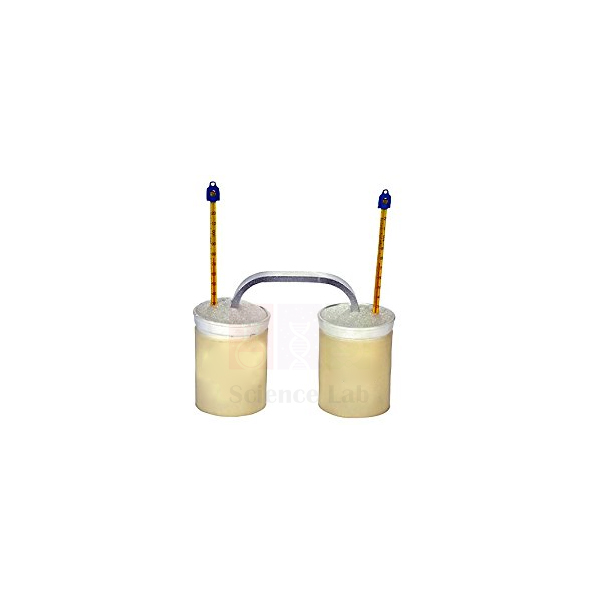
Heat Transfer Kit
Heat Transfer Kit (Product Code: SLE/H/05) lets students observe and measure heat flowing by conduction from a hot body to a cold one. It combines two insulated containers with lids, an aluminium transfer bar that links them, two thermometers and instructions, so a complete investigation can be set up in minutes. It is a ready physics experiment kit for school heat topics, made by Jain Scientific Equipments Pvt Ltd (ScienceLab), Ambala.
Specifications
| Parameter | Detail |
|---|---|
| Purpose | Observing and measuring heat transfer |
| Containers | 2 insulated containers with lids |
| Transfer bar | Aluminium |
| Thermometers | 2 included |
| Documentation | Instructions included |
Typical Use
Pour hot water into one insulated container and cold water into the other, fit the lids, and bridge the two with the aluminium transfer bar. With a thermometer in each container, students log both temperatures every minute or two and plot them on the same graph: the hot line falls, the cold line rises, and the two curves close in on a common value. The insulated walls and lids keep losses to the room small, so most of the change can be credited to heat travelling along the metal bar.
The kit supports discussion of temperature gradient, rate of transfer and thermal equilibrium, and suits both a teacher demonstration and small-group practical work. Extension ideas include starting with different temperature gaps to see how the rate changes, or comparing results with a lid removed to show the role of insulation. Rinse and dry the containers after use and store the thermometers in their places so they are ready for the next thermometry lesson.
Manufacturer
This kit is assembled under the ScienceLab name by Jain Scientific Equipments Private Limited, whose operations are based in Ambala, Haryana. The company supplies ready-to-use practical kits and apparatus to schools and colleges in India and international markets — more on the company profile.
Related Laboratory Equipment
Apparatus that builds on the same conduction lesson:
- Thermal Conductivity Bars — compares four metals side by side.
- Heat Conducto meter — ranks five metal rods by conduction rate using paraffin.
- Hot Plate General Purpose — heats the water for the hot container.
- Stop Clock (Metal Case) — keeps reading intervals consistent.
Browse the Heat category for more heat transfer apparatus.
Frequently Asked Questions
What comes in the kit?
Two insulated containers with lids, an aluminium transfer bar, two thermometers and instructions.
Do I need anything else?
Only hot and cold water and a way to heat it, such as a kettle or hot plate. A stop clock helps keep readings evenly spaced.
Why is the transfer bar aluminium?
Aluminium conducts heat well, so the temperature change in both containers is large enough to measure within a single lesson.
Can a calibration certificate be supplied for the thermometers?
Please discuss documentation for the thermometers with us via the contact page before ordering; we will confirm what is possible for your order.
Are spare thermometers available?
Yes, thermometers can be ordered separately; tell us your quantity and we will suggest a suitable type.
Can I order class sets for several lab groups?
Yes. Give the number of kits (SLE/H/05) and your delivery location, in India or overseas, and we will send a quotation.
Request a Quote
Get a price via the contact page, or add the Heat Transfer Kit to your enquiry cart with any other heat apparatus you need.
Last updated: 24 September 2026
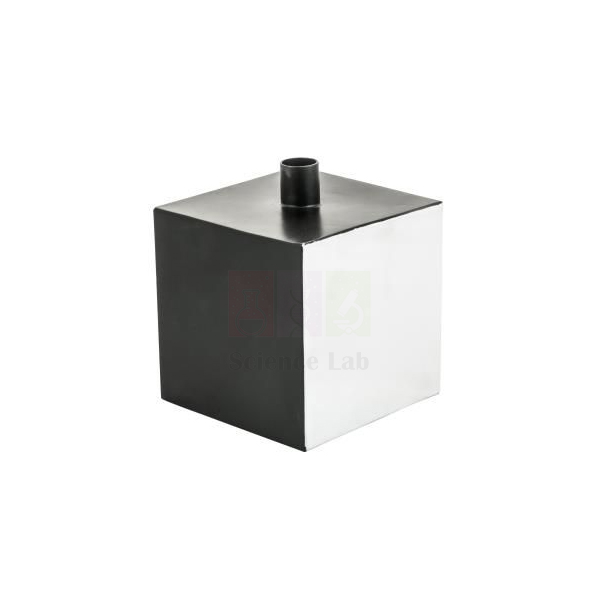
Leslie's Cube
Leslie’s Cube (Product Code: SLE/H/06) is a 4 x 4" hollow cube used to measure thermal radiation properties as a function of temperature, colour and surface texture. Filled with hot water, its differently finished faces sit at the same temperature yet radiate by different amounts, giving a direct, measurable demonstration that surface matters as much as heat. Physics teachers and college practical labs use it to introduce emissivity and black-body ideas, and it is made by Jain Scientific Equipments Pvt Ltd (ScienceLab), Ambala.
Specifications
| Parameter | Detail |
|---|---|
| Dimensions | 4 x 4" |
| Measures | Thermal radiation as a function of temperature, colour and surface texture |
| Needed, not included | Water, thermometer and light source |
Typical Use
Fill the cube with hot water and place a thermometer in it so the internal temperature is known. Point a radiation sensor or an infra-red thermometer at each face in turn from the same distance and record the readings: although every face is at the same temperature, the dark and dull faces register more radiation than the shiny ones. Repeat as the water cools, or refill with water at different temperatures, to show how emitted radiation rises steeply with temperature.
The experiment connects directly to everyday design choices — why radiators are often painted, why vacuum flasks are silvered and why solar collectors are dark. Have students predict the order of the faces before measuring, then compare predictions with data. Empty and dry the cube after use and avoid scratching or marking the faces, since their finish is what the lesson depends on. For institutions sourcing physics lab equipment in India, it pairs naturally with radiation cans for a complete radiation unit.
Manufacturer
Leslie’s Cube is part of the physics range offered by ScienceLab, the brand under which Jain Scientific Equipments Private Limited of Ambala, Haryana, trades. As a physics instruments supplier in India that also serves international markets, the company outlines its work on the company profile page.
Related Laboratory Equipment
Items that complete a Leslie’s cube practical:
- Immersion Thermometer — measures the water temperature inside the cube.
- Thermometer, Infra Red, Hand Held — a quick way to compare readings from each face.
- Hot Plate General Purpose — heats the water before filling.
- Radiation Can Set — follows on with absorption and cooling comparisons.
See the full Heat category for more thermal physics apparatus.
Frequently Asked Questions
What size is the cube?
It measures 4 x 4".
What else do I need?
Water, a thermometer and a light source are needed but not included. A radiation sensor or infra-red thermometer is also useful for comparing the faces.
What does the experiment demonstrate?
How thermal radiation depends on temperature, colour and surface texture — the basis of emissivity and good and poor emitters.
Can boiling water be used?
Hot water is the normal method. Please check with us about any upper temperature limit before pouring in boiling water.
How do I keep the faces in good condition?
Wipe gently with a soft dry cloth, avoid abrasive cleaners and never stack items on the cube.
What should our purchase office include in an enquiry?
Product code SLE/H/06, quantity, billing and delivery details, and any tender format you must follow; we reply with a formal quotation.
Request a Quote
For pricing, write to us through the contact page or add Leslie’s Cube to the enquiry cart.
Last updated: 24 September 2026
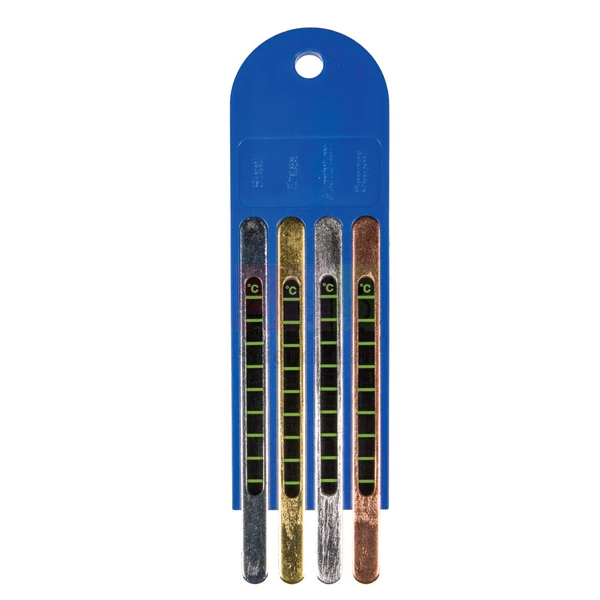
Thermal Conductivity Bars
Thermal Conductivity Bars (Product Code: SLE/H/07) test the conductivity of four metals at once: steel, brass, aluminium and copper strips are connected to a strip thermometer and mounted side by side on a plastic base. Dip the ends into a warm water bath and the strip thermometer shows which metal carries heat along its length fastest. Science teachers use it to make conduction visible to a whole class, and it forms part of the school physics lab equipment in India made by Jain Scientific Equipments Pvt Ltd (ScienceLab), Ambala.
Specifications
| Parameter | Detail |
|---|---|
| Metals | Steel, brass, aluminium and copper (4 strips) |
| Metal strip size | 5-1/4" L x 3/8" W x 3/8" D |
| Temperature indication | Strips connected to a strip thermometer |
| Base | Plastic, 7" L |
| Included | Instructions |
Typical Use
Prepare a shallow bath of warm water, hold the unit by its plastic base and dip the ends of all four strips in together so each metal starts under identical conditions. Watch the strip thermometer: the reading advances along the copper strip first, followed by aluminium, then brass, with steel lagging well behind. Because all four are tested at once, there is no need to repeat runs and compare them from memory, and the result is obvious even from the back of the room.
Follow-up questions work well here: why are cooking pans often made with copper or aluminium bases, why do steel spoon handles stay cooler, and how does conductivity relate to the metals’ structure? Let the bars return to room temperature before a second run, dry them after use and keep the strip thermometer away from direct flames or very hot surfaces. The unit makes a compact, hands-on addition to any school physics lab equipment set for heat.
Manufacturer
ScienceLab, the trading name of Jain Scientific Equipments Private Limited, produces these conductivity bars in Ambala, Haryana, alongside a wide range of heat and energy apparatus for customers in India and international markets. Details about the company are on the profile page.
Related Laboratory Equipment
Useful with, or as follow-ons to, the conductivity bars:
- Glass Beaker — a simple container for the warm water bath.
- Water Bath — holds the bath at a steady temperature for repeat runs.
- Heat Conducto meter — a paraffin-based comparison across five metals.
- Heat Transfer Kit — measures heat flow through a bar between two containers.
More conduction and convection apparatus is in the Heat category.
Frequently Asked Questions
Which metals are compared?
Steel, brass, aluminium and copper, all tested at the same time.
How big are the strips and base?
Each metal strip is 5-1/4" long, 3/8" wide and 3/8" deep, on a 7" long plastic base.
Do I need a separate thermometer?
No, the strips are connected to a strip thermometer that shows the heat moving along each metal. You only need a warm water bath.
How hot should the water be?
Warm water is enough to show the effect. Avoid boiling water or flames near the plastic base; the included instructions describe the method.
Is it suitable for students to use themselves?
Yes, with supervision around the water bath. It is small enough for group practical work as well as teacher demonstrations.
Can you quote for several units across schools?
Yes. Send the quantity of SLE/H/07, school names and delivery addresses through our contact page, for India or international delivery.
Request a Quote
Place your enquiry on the contact page, or add the Thermal Conductivity Bars to the enquiry cart with the rest of your heat apparatus list.
Last updated: 24 September 2026
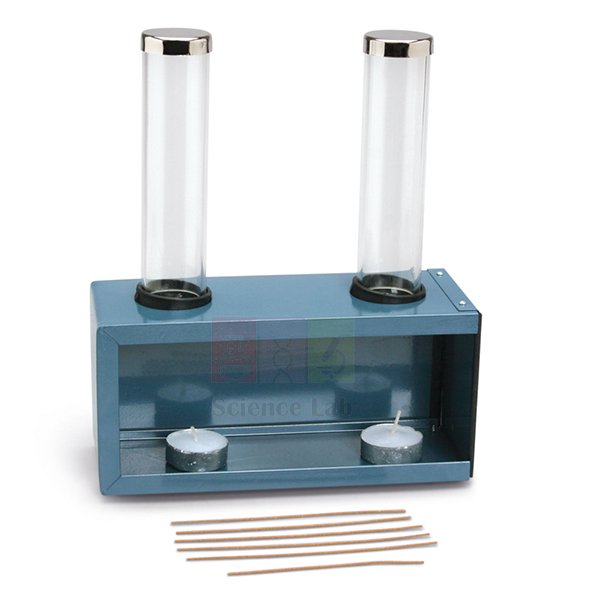
Convection of Gas Apparatus
Convection of Gas Apparatus (Product Code: SLE/H/08) is used to study convection currents in air. It consists of a metal box measuring 9" W × 4" D × 4" H with a removable glass front and 2 chimneys, supplied with touch paper and instructions. Smoke from the touch paper traces the moving air so students can actually watch warm air rise and cool air sink to replace it. A dependable piece of junior science lab equipment, it is made by Jain Scientific Equipments Pvt Ltd (ScienceLab), Ambala.
Specifications
| Parameter | Detail |
|---|---|
| Purpose | Studying convection currents in air |
| Body | Metal box, 9" W × 4" D × 4" H |
| Front | Removable glass front |
| Chimneys | 2 |
| Supplied with | Touch paper and instructions |
Typical Use
Slide out the glass front, stand a small lit candle (not listed among the contents) beneath one chimney and refit the glass. Light a piece of touch paper, blow it out so it smoulders, and hold it just above the second chimney. The smoke is drawn down that chimney, travels across the box and rises out through the chimney above the flame, drawing a visible loop of circulating air. The glass front lets the whole class follow the smoke path inside the box.
The demonstration explains everyday effects such as sea breezes, room ventilation, chimney draught and why heaters are placed low and air-conditioners high. Ask students to predict what will happen if the candle is moved under the other chimney, then test it. Carry out the activity in a well-ventilated room with a heat-resistant mat under the box, and let the metal cool before handling. It suits middle-school science lessons as well as introductory physics, and belongs in any educational laboratory equipment set in India covering the three modes of heat transfer.
Manufacturer
This apparatus is built by Jain Scientific Equipments Private Limited, which trades as ScienceLab from Ambala, Haryana. The company is a registered MSME (Udyam UDYAM-HR-01-0003714), and its export orders move under Importer-Exporter Code AAECJ8618A issued by DGFT, serving buyers in India and international markets. Learn more on the company profile.
Related Laboratory Equipment
Pair this with apparatus for the other modes of heat transfer:
- Apparatus Convection In Liquid — shows the same principle in water.
- Convection in Air Apparatus — an alternative design for air convection studies.
- Thermal Conductivity Bars — covers conduction in metals.
- Radiation Kit — completes the set with radiation and absorption.
Explore more in the Heat category.
Frequently Asked Questions
What is included?
The metal box with removable glass front and 2 chimneys, touch paper and instructions.
What heat source do I need?
A small candle placed under one chimney is the usual choice. It is not listed among the contents, so please arrange one locally.
How large is the box?
It measures 9" wide, 4" deep and 4" high.
Why is the front made of glass?
So students can see the smoke moving inside the box; it is removable for placing and lighting the candle.
Can I reorder touch paper?
Please ask us about refill touch paper when you order; we will confirm availability.
Can you supply it for export?
Yes, we ship to institutions and distributors in India and international markets; include SLE/H/08, quantity and destination in your enquiry.
Request a Quote
Ask for a quotation through our contact page, or add the Convection of Gas Apparatus to the enquiry cart.
Last updated: 24 September 2026
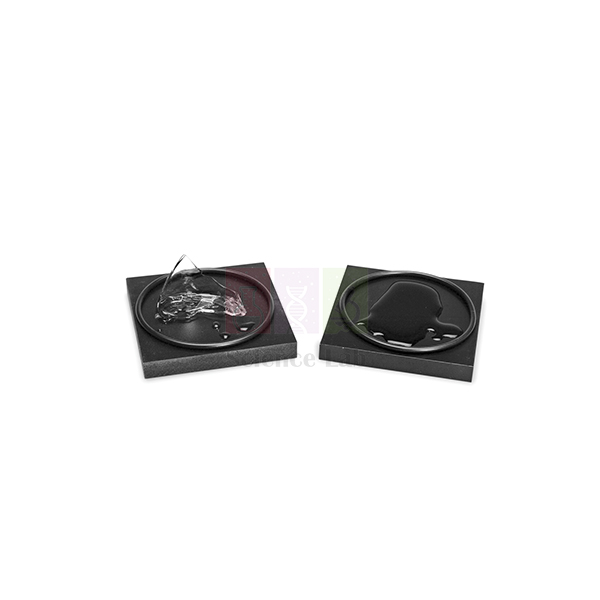
Ice Melting Kit
Ice Melting Kit (Product Code: SLE/H/09) is a surprising demonstration of thermal conductivity built around 2 identical-looking squares. Place a piece of ice on each: on one square the ice starts melting immediately, while on the other it remains unchanged. The puzzle grabs students’ attention and leads straight into a discussion of how heat moves through materials, making it a memorable hands-on science kit for primary and middle school. It is made by Jain Scientific Equipments Pvt Ltd (ScienceLab), Ambala.
Key Details
| Parameter | Detail |
|---|---|
| Type | Conductivity demonstration kit |
| Contents | 2 identical squares |
| Effect shown | Ice melts immediately on one square and remains unchanged on the other |
| Needed, not included | Ice |
| Suitable for | Classroom demonstrations and small-group enquiry on heat conduction |
Typical Use
Before adding ice, ask students to touch both squares and say which one feels colder. Most will pick one of them, even though both have been sitting in the same room at the same temperature. Then set an ice cube on each square at the same moment. The ice on the square that felt colder begins to melt at once, because that square conducts heat from the room into the ice quickly; on the other square, which conducts poorly, the ice hardly changes. The same idea explains why that square felt colder — it was drawing heat out of fingers faster.
Use the result to challenge the common idea that some materials are “naturally cold”, and link it to real examples like metal railings in winter or a tiled floor versus a carpet. For a stronger lesson, let groups record how long the ice takes to disappear on each square and write their own explanation before the teacher reveals it. Wipe the squares dry afterwards. It is an easy, low-mess addition for teachers building a science kit for students in India.
Manufacturer
ScienceLab is the trading identity of Jain Scientific Equipments Private Limited, an Ambala, Haryana maker of classroom demonstration kits and laboratory apparatus. Schools and distributors in India and international markets buy from its range; the company profile has the background.
Related Laboratory Equipment
Continue the conduction topic with these items:
- Thermometer, Infra Red, Hand Held — shows students that both squares start at the same temperature.
- Thermal Conductivity Bars — compares how well four metals conduct.
- Heat Conducto meter — ranks five metals by conduction using paraffin.
- Heat Transfer Kit — measures heat flowing from hot to cold water through a bar.
Browse the Heat category for more demonstrations.
Frequently Asked Questions
How does the kit work?
The two squares look identical but conduct heat very differently, so ice melts immediately on one and stays unchanged on the other.
What materials are the squares made of?
The listing does not state the materials. If you need them for lesson planning or a tender specification, please contact us.
Does it need power, heating or chemicals?
No. Only ice is needed; the squares work at room temperature.
Which age group is it for?
It works well from primary level upward because the effect is visible without measurement, and older students can add timing and explanation.
How do I care for the squares?
Dry them after each use and store them flat so the surfaces stay clean and undamaged.
Can we order one kit per group?
Yes. Tell us how many kits (SLE/H/09) you need and where to deliver, in India or overseas, and we will quote accordingly.
Request a Quote
Send your requirement through our contact page, or put the Ice Melting Kit in the enquiry cart with your other science kits.
Last updated: 24 September 2026
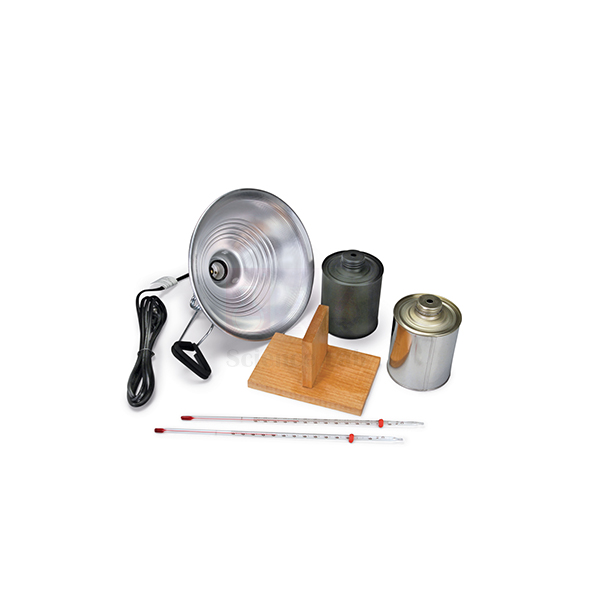
Radiation Kit
Radiation Kit (Product Code: SLE/H/10) is a complete set-up for examining how light and dark surfaces absorb heat from a lamp. It pairs a 6-oz black metal can with a 6-oz shiny metal can, adds two insulating lids and two thermometers, and includes a clamp lamp with reflector as the radiant source, plus instructions. Because nothing else has to be sourced, it is a straightforward radiation experiment kit in India for schools that want the lesson ready out of the box. It is made by Jain Scientific Equipments Pvt Ltd (ScienceLab), Ambala.
Specifications
| Parameter | Detail |
|---|---|
| Purpose | Examining heat absorption of light versus dark surfaces |
| Cans | 6-oz black metal can and 6-oz shiny metal can |
| Lids | 2 insulating lids |
| Thermometers | 2, range –20 to 50° C |
| Radiant source | 110-V AC clamp lamp with reflector |
| Documentation | Instructions included |
Typical Use
Fill both cans with the same volume of cool water, fit the insulating lids and push a thermometer through each so the bulb sits in the water. Clamp the lamp so its reflector points midway between the cans at equal distance, switch it on and read both thermometers at fixed intervals. The black can’s temperature climbs noticeably faster than the shiny can’s, giving a clear data set on absorption that students can graph and compare.
After the lamp is switched off, keep recording to see which can cools faster, which extends the lesson from absorption to emission. The thermometers read from –20 to 50° C, so start with water well below the top of that range and do not let the lamp run so long that readings go past 50° C. Let the lamp cool before unclamping it. The kit suits middle and secondary school practicals and makes a tidy addition to any science lab kit for heat and energy.
Manufacturer
Jain Scientific Equipments Private Limited assembles this kit under the ScienceLab brand at its Ambala, Haryana operation, which serves schools, colleges and distributors in India and international markets. Company details are available on the ScienceLab profile.
Related Laboratory Equipment
Apparatus that fits the same radiation unit:
- Radiation Can Set — a black and bright tin pair for cooling-curve work with your own thermometers.
- Leslie’s Cube — compares radiation emitted by different surface finishes.
- Stop Clock (Metal Case) — times the readings accurately.
- Heat Absorption & Radiation Comparator — another approach to dark versus shiny surfaces.
The Heat category lists further heat apparatus.
Frequently Asked Questions
What is in the kit?
A 6-oz black metal can, a 6-oz shiny metal can, 2 insulating lids, 2 thermometers, a clamp lamp with reflector and instructions.
What voltage is the lamp?
The clamp lamp listed is rated 110-V AC. If your mains supply differs from 110 V, as it does in India, discuss a suitable arrangement with us through the contact page before ordering.
What range do the thermometers cover?
Each thermometer reads from –20 to 50° C, which suits water-warming experiments under a lamp.
Can I use sunlight instead of the lamp?
Yes, direct sunlight works as a radiant source as long as both cans receive the same exposure.
Is calibration paperwork available for the thermometers?
Talk to us about any documentation your department needs; we confirm what can be supplied at quotation stage.
Do you supply complete kits in bulk?
Yes, for schools, colleges and distributors in India and abroad. Share quantity, product code SLE/H/10 and delivery details.
Request a Quote
Request a price on the contact page, or add the Radiation Kit to your enquiry cart for a combined quotation.
Last updated: 24 September 2026
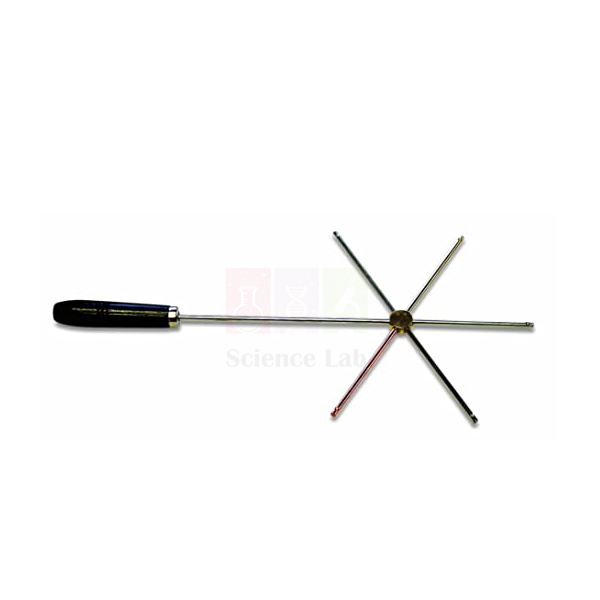
Heat Conducto meter
Heat Conducto meter (Product Code: SLE/H/11) demonstrates the rate of heat conduction in 5 different metals — aluminium, brass, copper, nickel and steel. The rods are equally spaced on a brass disk mounted on an insulated handle, and each has a cavity in its outer end to hold paraffin, so the order in which the wax melts reveals which metal conducts heat fastest. Teachers use it as a quick, visual comparison that needs no thermometers, and it comes from Jain Scientific Equipments Pvt Ltd (ScienceLab), a science apparatus manufacturer in India based in Ambala.
Specifications
| Parameter | Detail |
|---|---|
| Number of rods | 5, each of a different metal |
| Metals | Aluminium, brass, copper, nickel and steel |
| Rod size | 15 mm diameter, 95 mm long |
| Rod ends | Cavity in the outer end of each rod for holding paraffin |
| Mounting | Rods equally spaced on a brass disk |
| Handle | Insulated |
Typical Use
Press a small amount of paraffin wax into the cavity at the outer end of each rod. Holding the unit by its insulated handle, heat the brass disk evenly over a burner flame so that all five rods receive heat from the same source at the same time. As heat travels outward, the paraffin melts first at the end of the best conductor, and the class notes the order in which the remaining cavities follow. Because the rods are equally spaced and of identical 15 mm by 95 mm size, the comparison is fair and the ranking can be read straight off the apparatus.
Students can then relate the order they observed to tables of thermal conductivity and discuss why copper is used in heat exchangers and cookware while steel is chosen where slower heat flow is useful. Timing each melt with a stop clock adds a simple quantitative element to this physics experiment for school labs. Let the disk cool completely before cleaning out old wax, and store the unit so the rods are not bent.
Manufacturer
Made under the ScienceLab name, the Heat Conducto meter is one of many heat apparatus items from Jain Scientific Equipments Private Limited in Ambala, Haryana. The company supplies teaching laboratories throughout India and in international markets; see the company profile for more about its work.
Related Laboratory Equipment
Items you need or may want with the conducto meter:
- Paraffin — the wax placed in each rod’s cavity.
- Bunsen Burner — a flame source for heating the brass disk.
- Stop Clock (Metal Case) — times how long each cavity takes to melt.
- Thermal Conductivity Bars — a water-bath comparison using a strip thermometer.
Discover more apparatus in the Heat category.
Frequently Asked Questions
Which metals does it compare?
Five: aluminium, brass, copper, nickel and steel, one rod of each.
What size are the rods?
Each rod is 15 mm in diameter and 95 mm long, mounted equally spaced on a brass disk.
Is paraffin supplied?
Paraffin is not listed as part of the unit; it is available separately (see related items) or can be sourced locally.
How do I hold it while heating?
Use the insulated handle and keep hands clear of the brass disk and rods, which become hot. Place it on a heat-resistant mat to cool.
How is it different from Thermal Conductivity Bars?
This unit uses melting paraffin on 5 metals heated from a common disk, while the bars use a strip thermometer on 4 metals dipped in warm water.
What warranty and delivery terms apply?
These are confirmed on your quotation. Send SLE/H/11, quantity and destination, in India or abroad, through the contact page.
Request a Quote
For prices, contact us through the contact page or add the Heat Conducto meter to the enquiry cart.
Last updated: 24 September 2026
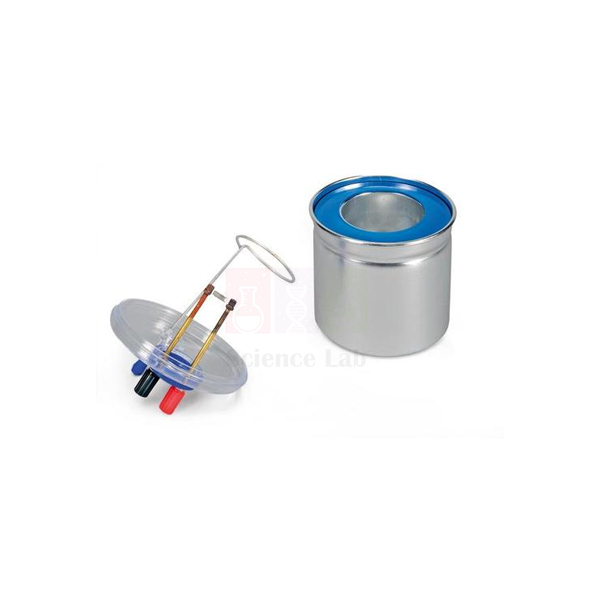
Calorimeter, Electric
Calorimeter, Electric (Product Code: SLE/H/12) is an electrically heated calorimeter for experiments in which a measured current warms a known quantity of water, so students can compare the electrical energy supplied with the heat the water gains. Its moulded cover carries a 1.5-ohm heating coil with standard binding posts, and the unit operates at 4 A from a 6-V lantern battery. Physics teachers in secondary schools, junior colleges and teacher-training labs use it for specific heat and electrical-energy practicals. It is made by Jain Scientific Equipments Pvt Ltd (ScienceLab), Ambala, as part of its calorimeter lab equipment for schools in India and international markets.
Specifications
| Parameter | Detail |
|---|---|
| Type | Electrically heated calorimeter with heating coil in the cover |
| Heating coil | 1.5-ohm coil mounted in a moulded cover |
| Operating current | 4 A |
| Power source | 6-V lantern battery (not included) |
| Electrical connections | Standard binding posts on the cover |
| Coil protection | Supporting posts and coil coated to prevent electrolysis |
| Supplied with | Insulated stirrer, single-hole rubber stopper and instructions |
Typical Use
In a standard practical, students pour a weighed amount of water into the calorimeter, fit the cover so the coil is immersed, and hold a thermometer in the single-hole rubber stopper. The binding posts are then wired to the 6-V lantern battery, the coil carries its 4 A working current, and the class stirs gently with the insulated stirrer while noting the temperature every half-minute or so. From the current, the coil resistance and the heating time they calculate the electrical energy delivered and set it against the heat absorbed by the water, which opens a discussion of heat losses and specific heat capacity.
The coating on the coil and its supporting posts prevents electrolysis while they sit in water, so the measured temperature rise comes from resistive heating rather than chemical side reactions. Practical tips: switch off between runs so the battery is not drained, keep stirring at an even pace for uniform water temperature, and dry the vessel and cover after the lesson. It is a compact addition to school physics lab equipment in India and elsewhere wherever heat and electricity are taught together.
Manufacturer
Calorimeter, Electric is produced by Jain Scientific Equipments Private Limited, the company behind the ScienceLab brand, from its base in Ambala, Haryana. For institutional buyers who need vendor registration details, the company's GSTIN is 06AAECJ8618A1ZT and its Legal Entity Identifier (LEI) is 3358004HRD1JIVXKYX49. More background on the business is in our company profile.
Related Laboratory Equipment
Items that complete an electrical-heating calorimetry practical:
- Ammeter Voltmeter — to monitor the current and voltage feeding the heating coil
- Digital Thermometer — for reading the water temperature as it rises
- Stop Clock — to time the heating interval used in the energy calculation
- Power Supply Variable — a bench DC source; check its output against the 6-V, 4 A requirement before using it instead of a battery
- Calorimeter Set, Copper, Joules — a copper calorimeter set for comparison heat experiments
More thermal apparatus is listed in our Heat equipment range.
Frequently Asked Questions
Is the 6-V lantern battery included?
No. The calorimeter needs a 6-V lantern battery, which is not included and is normally sourced locally.
What current does the heating coil draw?
The unit operates at 4 A through its 1.5-ohm coil, so use connecting leads and a source that can handle that current.
What comes with the calorimeter?
An insulated stirrer, a single-hole rubber stopper and instructions are supplied along with the calorimeter and its coil cover.
Why are the coil and posts coated?
The coating prevents electrolysis while the coil is immersed in water, keeping the experiment about heating and protecting the coil over repeated use.
Is a thermometer supplied?
A thermometer is not listed among the included items. A suitable one can be added to your order — contact us with your requirement.
Can a calibration certificate be provided?
This is a teaching calorimeter; if your institution needs any calibration documentation, please discuss it with us through the contact page before ordering.
What warranty applies?
Warranty terms are confirmed with each quotation — ask us for the current terms.
Do you supply schools in bulk or overseas?
Yes. We supply schools, colleges and distributors in India and international markets; share the quantity and delivery location when you enquire.
Request a Quote
To price Calorimeter, Electric for your laboratory, send your quantity through our contact page or add it to the enquiry cart.
Last updated: 24 September 2026
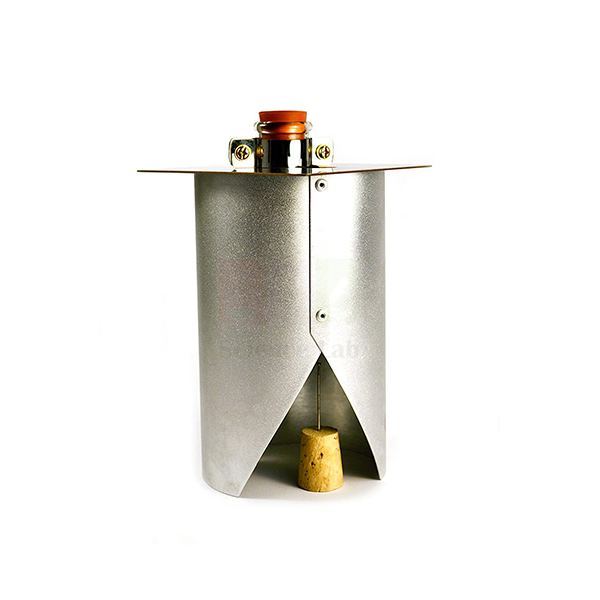
Food Calorimeter
Food Calorimeter (Product Code: SLE/H/13) is a classroom device for finding out how much energy solid foods release when they burn. A food sample is pinned on the stand beneath a flask of water, and the rise in the water's temperature as the sample burns shows how much heat it gave off. Biology, home-science and physics teachers use it in nutrition and energy lessons, and it is made by Jain Scientific Equipments Pvt Ltd (ScienceLab), Ambala, as part of its school biology lab equipment for India and international markets.
Key Details
| Parameter | Detail |
|---|---|
| Type | Food calorimeter for solid food samples |
| Purpose | Measuring the calories released when solid foods burn |
| Method | Food pinned on the stand under a flask of water; the water's temperature change is measured as the food burns |
| Result | Heat evolved per gram of food burned, compared with food labels or other burned samples |
| Lesson fit | Several samples can be tested within one class period |
| Supplied with | Instructions |
Typical Use
Students weigh a small piece of food such as a nut, a cracker or a piece of dried bread, pin it on the stand and light it, with a flask of water held above. They read the water temperature before ignition and again when the sample stops burning, then reweigh what is left. Using the mass of water, its temperature rise and the specific heat capacity of water, they work out the heat released and divide it by the mass of food burned to get a heat-per-gram value. Comparing that figure with the energy printed on the food label is the most memorable part of the lesson, because the class result is usually lower — which leads straight into a discussion of heat escaping to the air and incomplete burning.
Since the procedure is short, a class can test several foods in one period and compare fatty snacks with starchy ones. To build a complete calorimeter experiment kit, pair the device with a thermometer, a balance and a small flame source. Work on a heat-resistant surface in a ventilated room, keep safety goggles on while samples burn, and check for nut allergies in the group before using nuts as samples.
Manufacturer
ScienceLab is the brand name under which Jain Scientific Equipments Private Limited makes laboratory apparatus in Ambala, Haryana, and the Food Calorimeter is produced there for school and college laboratories. You can read about the company's background and product range in our company profile.
Related Laboratory Equipment
Useful additions for a food-energy practical:
- Triple Beam Balance — to weigh each food sample before and after burning for the per-gram figure
- Laboratory Thermometer — for reading the water temperature before and after each burn
- Glass Spirit Lamp — a steady flame for igniting the food sample
- Safety Goggles — eye protection for students while samples burn
- Calorimeter Food — another food calorimeter model listed in our biology range
Browse other thermal teaching apparatus in the Heat category.
Frequently Asked Questions
What kinds of food can be tested?
The device is designed for solid foods, which can be pinned on the stand and burned beneath the water.
How many samples can a class test in one lesson?
The procedure is simple enough for students to test multiple samples within one class period.
Is the water flask included?
The method uses a flask of water above the stand, but the flask is not listed as a separate item. Please contact us to confirm what is packed with your order.
Do I need a thermometer?
Yes — the experiment depends on measuring the water's temperature change, and a thermometer is not listed among the supplied items. See the Laboratory Thermometer above or ask us to quote one.
Why are class results lower than the values on food labels?
Some heat escapes to the surrounding air and some food may not burn completely, so classroom figures normally fall below label values. Comparing the two is part of the learning.
Are instructions provided?
Yes, instructions are included with the Food Calorimeter.
What should an institutional enquiry include?
Share the number of units, the delivery location in India or abroad, and any accessories you want quoted alongside through our contact form; warranty terms are confirmed in the quotation.
Request a Quote
For prices and delivery details on the Food Calorimeter, get in touch with us or place it in your enquiry cart.
Last updated: 24 September 2026
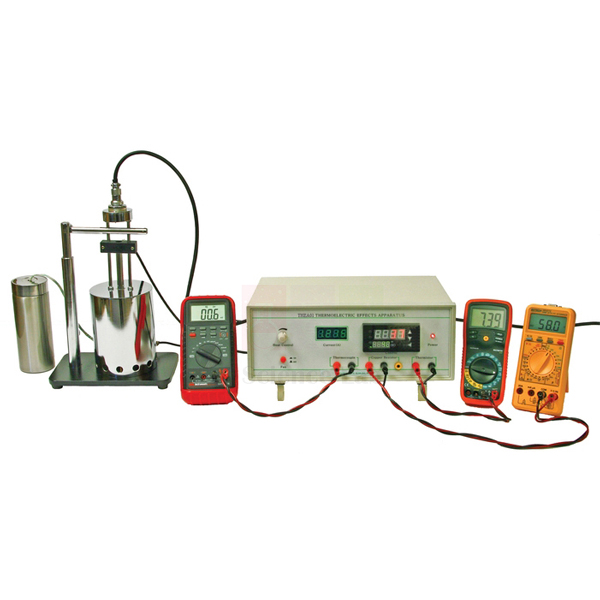
Thermoelectric Effects Apparatus
Thermoelectric Effects Apparatus (Product Code: SLE/H/14) is a bench apparatus for studying how temperature is measured and controlled in industrial practice. It combines an oven with a brass heating block, a regulated heater supply, a configurable P/PI/PD/PID digital controller and a K-type (Chromel-Alumel) thermocouple, and it is designed for two types of investigation, including the thermal characteristics and measuring techniques of three devices commonly used in industrial and technical thermometry. College physics, instrumentation and engineering departments use it for advanced heat practicals. It is made by Jain Scientific Equipments Pvt Ltd (ScienceLab), Ambala, as a thermometry apparatus for laboratories in India and international markets.
Specifications
| Parameter | Detail |
|---|---|
| Investigations | 2 types, including the thermal characteristics and measuring techniques of 3 devices used for industrial and technical thermometry |
| Heater supply | Regulated voltage source, 0 to 36 V DC, 10-turn potentiometer control |
| Current display | Digital, 0.000 to 1.999 A |
| Cooling fan | 12 V DC, 0.14 A, on/off switch control |
| Digital controller | Configurable for P, PI, PD or PID mode |
| Process value (PV) range | 0 to 400 °C (factory default, settable) |
| PV temperature display | 4-digit, resolution 1 °C or 0.1 °C |
| SV temperature display | 4-digit, resolution matches PV |
| Controller parameters | 24 settable parameters; 2 parameters determined by apparatus configuration |
| Power input | 110 V AC, 60 Hz, 65 W |
| Fuse | Miniature type, 5 x 20 mm, F1.5 A, 250 V |
| Oven dimensions | 13 cm H x 35 cm W x 31 cm D |
| Brass heating block | 40 mm diameter x 67 mm H |
| Weight | 5.2 kg (11-1/2 lb) |
| Thermocouple | K-type (Chromel-Alumel) |
| Chromel composition | Ni 90%, Cr 10% |
| Alumel composition | Ni 95%, Mn 2%, Al 2%, Si 1% |
| Thermocouple output | Approximately 4 mV for a 100 °C difference between hot and cold junctions |
| Documentation | Instruction manual with sample activities and sample data |
Typical Use
A typical session places the thermocouple's cold junction in ice water and its hot junction in the brass heating block. Students set a target on the controller, let the block settle, and record the thermocouple voltage at each step. Between room temperature and 100 °C the output is conveniently read with a digital multimeter of 0.01 mV resolution or a suitable data logger, and plotting voltage against temperature difference shows the roughly 4 mV per 100 °C behaviour of a K-type junction. The ice-water temperature should be checked before and after the run with an independent thermometer or temperature probe so the cold-junction reference is known.
The same bench also teaches process control: switching the controller between P, PI, PD and PID modes lets students watch overshoot and settling change, while the heater current display and the 10-turn potentiometer show how supply voltage drives heating. The fan speeds up cool-down between runs. The sample activities in the manual make it straightforward to plan a lab sequence, which suits it to engineering lab equipment lists for instrumentation and thermal-science courses.
Manufacturer
This apparatus is manufactured by Jain Scientific Equipments Private Limited, which sells its laboratory range under the ScienceLab name and operates from Ambala in Haryana, India. Our company profile covers the firm's background and the departments it supplies.
Related Laboratory Equipment
Instruments and apparatus that fit the same thermometry workflow:
- Digital Multimeter — for reading the thermocouple's millivolt output; check its resolution against the 0.01 mV the manual recommends
- Micro Voltmeter — an option for measuring very small thermoelectric voltages
- Digital Thermometer — an independent check of the ice-water reference before and after a run
- Glass Beaker — to hold the ice-water bath for the cold junction
- Measuring Vapor Apparatus — a companion apparatus for advanced thermodynamics practicals
See the complete Heat apparatus range for further thermal experiments.
Frequently Asked Questions
Which thermocouple does the apparatus use?
A K-type Chromel-Alumel thermocouple: Chromel is Ni 90% and Cr 10%; Alumel is Ni 95%, Mn 2%, Al 2% and Si 1%.
What output voltage should students expect?
About 4 mV for a 100 °C difference between the hot and cold junctions, so a meter with 0.01 mV resolution or a data logger is recommended.
Is a multimeter supplied?
A multimeter is not listed among the items supplied. You can use one you already have or ask us to include one in the quotation.
What mains supply does it need?
The listed power input is 110 V AC, 60 Hz, 65 W. If your laboratory uses a different mains supply, contact us to confirm the power configuration before ordering.
Which control modes and ranges are available?
The controller can be set to P, PI, PD or PID mode, with a factory-default process range of 0 to 400 °C that can be changed and 24 settable parameters.
Can you provide calibration documents?
Calibration paperwork is not part of the standard listing; please raise any requirement with us through the contact page so it can be discussed.
Do you supply colleges in quantity or abroad?
Yes, we supply institutions and distributors in India and international markets; include quantity, destination and warranty questions in your enquiry.
Request a Quote
To receive a quotation for the Thermoelectric Effects Apparatus, write to us via the contact page or add the item to your enquiry cart.
Last updated: 24 September 2026
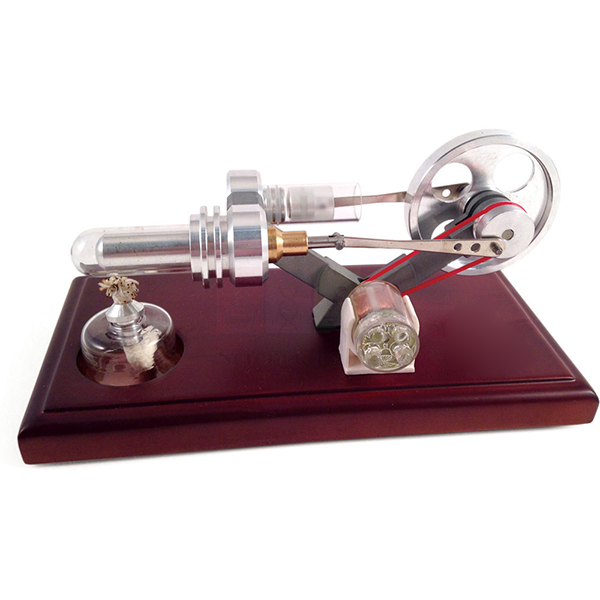
Stirling Engine with Alcohol Burner
Stirling Engine with Alcohol Burner (Product Code: SLE/H/15) is a working demonstration engine that runs on heat applied from outside the cylinder. The alcohol burner creates a temperature difference across the engine, and that difference moves the pistons and flywheel, so students watch heat being turned into mechanical and electrical energy in front of them. It arrives ready to run, and every moving part stays in view. Science teachers in middle and secondary schools use it to introduce heat engines, and it is made by Jain Scientific Equipments Pvt Ltd (ScienceLab), Ambala, as a ready-to-run centrepiece for a heat energy science kit.
Specifications
| Parameter | Detail |
|---|---|
| Type | Stirling engine demonstration model |
| Heat source | Alcohol burner (external heat source) |
| Operating principle | External heating creates a temperature difference that drives the pistons and flywheel |
| Energy conversion shown | Heat into mechanical and electrical energy |
| Visibility | All working parts of the engine are easy to see |
| Base dimensions | 3-1/2 x 7 in |
| Height to top of engine | 3-1/4 in |
| Assembly | None required |
| Construction | Built to last through many classroom uses |
| Supplied with | Instructions |
Typical Use
The teacher fills and lights the alcohol burner beneath the hot end, waits for the engine to warm, and gives the flywheel a light turn to start it. Once running, the class can follow the pistons moving out of step with each other and link what they see to the heating, expansion, cooling and contraction of the working gas. Removing the flame and watching the flywheel slow as the temperature difference fades is a simple way to show that a heat engine needs both a hot and a cooler side to do work, and it naturally leads into talk about efficiency and real engines.
Because nothing needs assembling, the model can move between classrooms and still be running within minutes of lighting the burner, which makes it a practical demonstration model for the physics lab and for science exhibitions. Stand it on a stable, heat-resistant surface, keep hands off the hot end until it has cooled, and refuel the burner only when the flame is out and the burner is cold.
Manufacturer
The Stirling Engine with Alcohol Burner comes from Jain Scientific Equipments Private Limited, an Ambala, Haryana company whose laboratory products carry the ScienceLab trade name. Find out more about who we are in the company profile.
Related Laboratory Equipment
Pair this engine with the following for a fuller heat-and-energy lesson:
- Thermometer, Infra Red, Hand Held — to compare hot-end and cold-end temperatures without touching the engine
- Stirling Engine — the separately listed Stirling model in our Heat range
- Hand-Powered Engine Models — for comparing the Stirling design with other engine cycles
- Energy Transfer Balls — shows the opposite conversion, mechanical energy into heat
- Alcohol Burner, Wickless — a separate burner for other bench-heating tasks
Explore further thermal demonstrations in the Heat category.
Frequently Asked Questions
Does the engine need to be assembled?
No. It is supplied ready to run with instructions, so no assembly is required.
Is fuel for the burner included?
Fuel is not listed among the supplied items. Use the type of alcohol given in the instructions, sourced locally.
How large is the model?
The base measures 3-1/2 x 7 in, and the engine stands 3-1/4 in to its top, compact enough for a front-bench demonstration.
Can students see how it works?
Yes. All working parts are in plain view, including the pistons and the flywheel.
Can I heat it with something other than the alcohol burner?
The engine runs from an external heat source and is supplied with the alcohol burner for that job. Please check with us before trying a different heat source.
How long will it last in regular class use?
It is built to last through many uses; handle hot parts only after cooling and store it dry. Warranty terms are stated in each quotation.
Can you supply several units for a school group or export order?
Yes. Tell us the quantity and whether delivery is within India or to international markets, and we will quote accordingly.
Request a Quote
Ask for pricing on the Stirling Engine with Alcohol Burner through our contact page, or collect items for one request in the enquiry cart.
Last updated: 24 September 2026
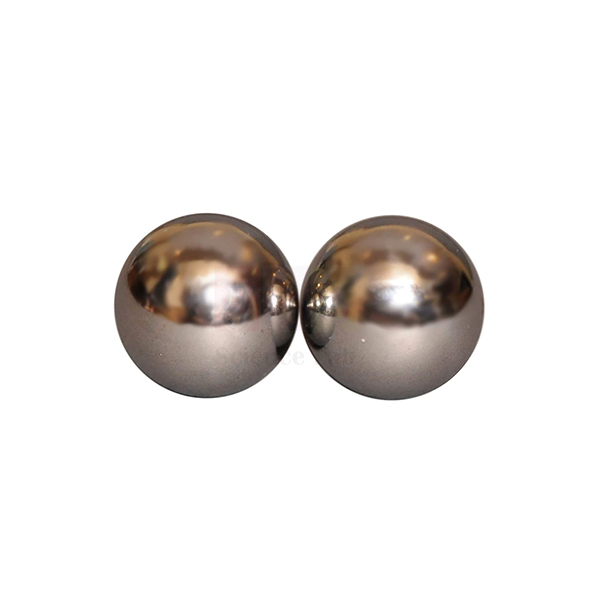
Energy Transfer Balls
Energy Transfer Balls (Product Code: SLE/H/16) are a pair of steel balls that make the link between motion and heat impossible to forget. When the two balls collide on a piece of paper, the impact generates enough heat to burn a hole in it — a vivid, quick transformation of mechanical energy into heat energy. Teachers use them to open or round off lessons on energy conservation and heat, and they are made by Jain Scientific Equipments Pvt Ltd (ScienceLab), Ambala, as a compact physics demonstration kit for schools in India and international markets.
Key Details
| Parameter | Detail |
|---|---|
| Type | Energy transformation demonstration |
| Contents | 2 steel balls |
| Effect shown | The collision generates enough heat to burn a hole in a piece of paper |
| Concept | Mechanical energy transformed into heat energy |
| Supplied with | Instructions |
| Suitable for | Teacher demonstrations and supervised student activities in energy and heat units |
Typical Use
Ask the class to predict what will happen, then place a small piece of paper on one ball and bring the second ball down sharply onto it. Holding the paper up to the light reveals a tiny scorched hole where the balls met. The discussion that follows is the real lesson: the kinetic energy of the moving ball is not lost but is concentrated as internal energy at a very small contact point, raising the temperature enough to char the paper. Everyday links — a hammered nail feeling warm, brakes heating up on a long descent — help students see the same principle outside the lab.
The demonstration takes seconds and needs no power or setup, so it slots easily into a busy period or a revision class, and it complements other physics lab equipment for schools in India and overseas that deals with heat and energy. Wear safety goggles, keep fingers well away from the point of impact, and use thin paper so the result is easy to see. Wipe the balls dry after use so the steel stays clean.
Manufacturer
These steel balls are produced by Jain Scientific Equipments Private Limited, which trades as ScienceLab from Ambala, Haryana. The company is an incorporated private limited company (CIN U29309HR2020PTC087597) and manufactures at its licensed factory at 449, HSIIDC Industrial Area, Saha, Ambala (Factory Licence AMB-ONLINE-CHD-J-414). Read the company profile for more about us.
Related Laboratory Equipment
Other apparatus for teaching energy conversion and heat:
- Stirling Engine with Alcohol Burner — shows the reverse journey, heat becoming mechanical energy
- Potential And Energy Kit — for exploring the mechanical energy stored and released before a collision
- Heat Transfer Kit — a follow-on to study how heat moves once it has been produced
- Safety Goggles — eye protection for whoever strikes the balls
Our Heat range lists more thermal teaching apparatus.
Frequently Asked Questions
What is in the set?
Two steel balls and instructions for the demonstration.
Do I need special paper?
No special paper is listed; an ordinary piece of paper is used, and thin paper makes the burnt hole easiest to see.
Is the demonstration safe for students to try?
Yes, with supervision. Students should wear goggles and keep fingers clear of the impact point.
Which topic does it support?
It shows mechanical energy being transformed into heat energy, supporting lessons on energy conservation and internal energy.
How should the balls be stored?
Wipe them clean and dry after each lesson and keep them in a dry cupboard so the steel surfaces stay in good condition.
What do you need for an institutional quotation?
Send the number of sets, the delivery address in India or abroad and any other items you want quoted through our contact form; warranty terms are confirmed in the quotation.
Request a Quote
For a price on Energy Transfer Balls, send us an enquiry or add them to the enquiry cart.
Last updated: 24 September 2026
Expansion Apparatus
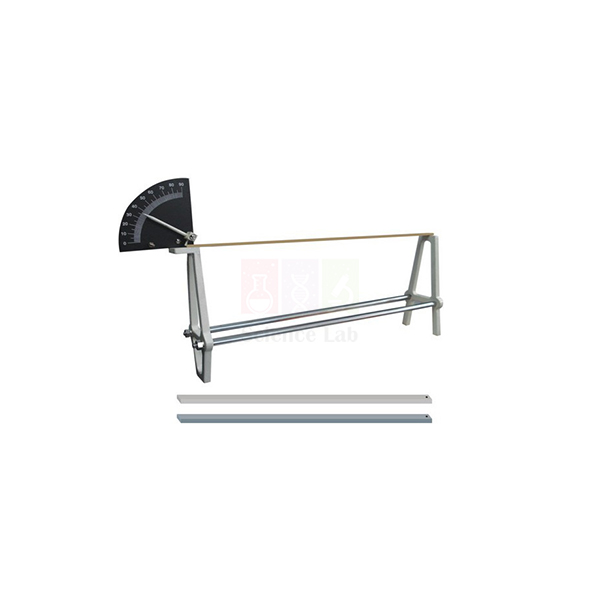
Expansion Apparatus (Product Code: SLE/H/17) demonstrates the linear expansion of solids by turning a very small change in a bar's length into a visible pointer movement. An expansion bar sits across the top of two cast-metal uprights: one end is fixed, the other rests beneath a friction pointer that moves along a scale reading 0 to 90 as the bar lengthens. It is used in school and college heat lessons, and it is made by Jain Scientific Equipments Pvt Ltd (ScienceLab), Ambala, a physics instruments supplier to institutions in India and international markets.
Specifications
| Parameter | Detail |
|---|---|
| Purpose | Demonstrates the linear expansion of solids |
| Frame | Two cast-metal uprights linked by a pair of parallel plated metal support rods |
| Expansion bar | Supported at the top; fixed to one upright and resting beneath a friction pointer on the other |
| Indicator | Friction pointer moving along a scale |
| Scale reading | 0 to 90 |
Typical Use
With the pointer noted at its starting position, the teacher warms the expansion bar with a flame moved steadily along its length. Because one end of the bar is held fast, all of the lengthening appears at the free end, which drags the friction pointer across the 0 to 90 scale. Students record the pointer movement as heating continues and then watch it respond again as the bar cools and contracts. The demonstration makes a good starting point for discussing why railway lines, bridges and pipelines are designed with room to expand.
The cast uprights and paired support rods keep the bar steady during heating, so the reading reflects expansion rather than wobble. Heat evenly rather than at one spot, allow the bar to cool completely before handling it, and keep the scale area free of soot for clear readings. As a demonstration model for the physics lab it works well at the front bench, where the pointer can be seen by a group gathered around it.
Manufacturer
Jain Scientific Equipments Private Limited manufactures the Expansion Apparatus in Ambala, Haryana, and markets its equipment under the ScienceLab name to schools, colleges and distributors. Visit our company profile for an overview of the business.
Related Laboratory Equipment
Apparatus that extends a thermal-expansion lesson:
- Bunsen Burner — a flame source for heating the expansion bar
- Expansion Of Liquids Apparatus — carries the same idea from solids on to liquids
- Apparatus Bar & Gauge — a second way of showing that heated solids grow in size
- Conductivity of Metal Apparatus — follows on with how quickly heat travels through different metals
For more heat apparatus, visit the Heat category.
Frequently Asked Questions
What does the apparatus demonstrate?
The linear expansion of a solid bar when it is heated, shown by a pointer moving along a 0 to 90 scale.
Does the scale read in millimetres?
The scale is marked 0 to 90; its units are not stated in our listing, so it is best used to compare expansion. Contact us if you need scale details.
Are bars of different metals included?
The apparatus is described with one expansion bar. If you want to compare several metals, please ask us about options before ordering.
What heat source should I use?
A heat source is not listed among the supplied items; a laboratory burner is commonly used to warm the bar along its length.
How is the bar held in place?
It is fixed to one cast-metal upright and rests beneath the friction pointer on the other, with a pair of plated metal rods linking the uprights.
Can you supply this in quantity for several schools?
Yes, we handle bulk orders for institutions and distributors in India and international markets. Share quantities and destination; warranty terms are confirmed in the quotation.
Request a Quote
For pricing on the Expansion Apparatus, reach us through the contact page or add it to your enquiry cart.
Last updated: 24 September 2026
Melting Point Apparatus Simple
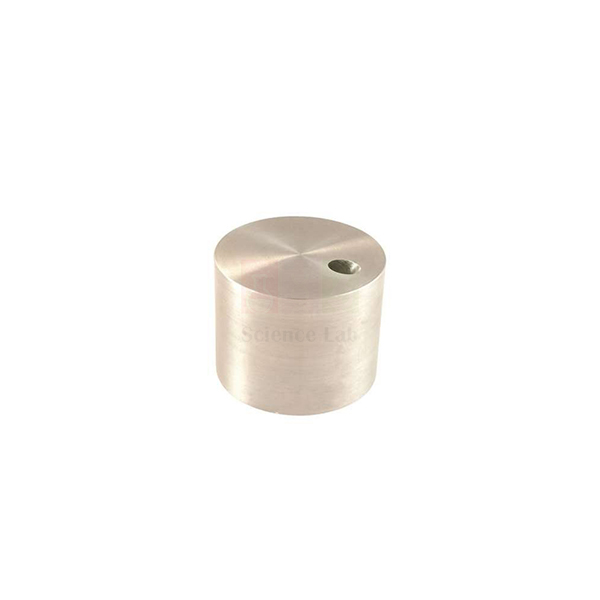
Melting Point Apparatus Simple (Product Code: SLE/H/18) is a very simple device for determining the melting point of amorphous solids. It consists of an aluminium cylinder with an obliquely drilled hole at its top that holds a thermometer; a thin layer of the test substance is sprinkled on the top face, the block is heated gently, and the temperature at which the substance melts is read straight from the thermometer. It suits introductory chemistry and physics practicals, and it is made by Jain Scientific Equipments Pvt Ltd (ScienceLab), Ambala, as part of its school chemistry lab equipment for India and international markets.
Key Details
| Parameter | Detail |
|---|---|
| Type | Simple block-type melting point apparatus |
| Purpose | Determination of the melting point of amorphous solids |
| Body | Aluminium cylinder |
| Thermometer mounting | Obliquely drilled hole at the top for accommodating thermometers |
| Method | Very thin layer of substance sprinkled on top of the block, heated gently; melting temperature read directly from the thermometer |
Typical Use
The block is set on a stand above a small, gentle flame and a thermometer is slid into the oblique hole so its bulb lies inside the aluminium close to the top face. A pinch of the powdered sample is spread in a very thin layer on that face. As the block warms, students watch the powder closely and note the thermometer reading at the moment it turns to liquid. Because aluminium carries heat quickly, the top face and the thermometer bulb stay at similar temperatures, which is what makes a direct reading possible. For substances that soften gradually, it is worth recording both the point where softening starts and where the layer becomes fully liquid.
Heat slowly as the expected melting point approaches, clean the top face between samples once the block has cooled, and use a fresh thin layer for each reading so results can be repeated. Its simplicity makes it popular as low-maintenance lab equipment for college and school practical rooms where a quick, visual melting-point check is needed.
Manufacturer
The apparatus is manufactured by Jain Scientific Equipments Private Limited, trading as ScienceLab and based in Ambala, Haryana. Registered with the Ministry of Corporate Affairs under CIN U29309HR2020PTC087597, the company produces its range at a licensed factory in HSIIDC Industrial Area, Saha, Ambala (Factory Licence AMB-ONLINE-CHD-J-414). More detail is in our company profile.
Related Laboratory Equipment
Items used with the block or as alternatives for melting-point work:
- Laboratory Thermometer — for the oblique thermometer hole; confirm stem size with us when ordering together
- Micro Burner — a small flame that suits the gentle heating the method calls for
- Tripod Stand 200mm — to hold the block steadily above the flame
- Melting-Point Tubes — for the capillary method when a sharper reading is needed
- Digital Melting Point Apparatus — an electronic alternative for higher-level courses
See related thermal apparatus in the Heat category.
Frequently Asked Questions
Is a thermometer included?
A thermometer is not listed as part of the apparatus. The oblique hole is made to accommodate one — contact us if you want a matching thermometer quoted.
Which substances is it intended for?
It is designed for determining the melting point of amorphous solids. For sharp melting points of pure crystalline compounds, the capillary or digital methods linked above are the usual choice.
What heat source do I need?
Any source that allows gentle, controllable heating, such as a small burner or spirit lamp; a heat source is not listed among the supplied items.
How do I clean the block?
Let it cool, then wipe the top face free of residue before the next sample, without scratching the surface.
Is a calibration certificate available?
Readings come from the thermometer you use. If you need calibration paperwork for the thermometer or apparatus, please discuss it with us via the contact page.
Can you supply multiple units for a lab or export order?
Yes. We supply schools, colleges and distributors across India and international markets; warranty terms and lead time are confirmed in your quotation.
Request a Quote
To order the Melting Point Apparatus Simple, contact our team or add it to the enquiry cart with any accessories you need.
Last updated: 24 September 2026
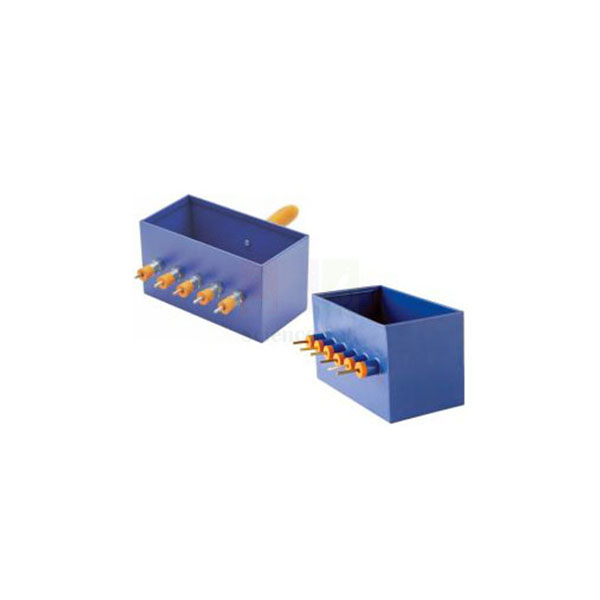
Conductivity Apparatus
Conductivity Apparatus (Product Code: SLE/H/19) lets students compare how well six different metals conduct heat, side by side and under the same conditions. It carries six metal rods — one each of copper, iron, lead, aluminium, steel and zinc — fixed horizontally through holed rubber bungs in a sheet-metal body, so all six can be heated together and their behaviour compared at a glance. It is widely used as physics lab equipment for schools in India and abroad, and it is made by Jain Scientific Equipments Pvt Ltd (ScienceLab), Ambala, a science apparatus manufacturer in India.
Specifications
| Parameter | Detail |
|---|---|
| Metal rods | Six: one each of copper, iron, lead, aluminium, steel and zinc |
| Rod mounting | Fixed horizontally through holed rubber bungs |
| Body | Sheet metal, with six holes on one side |
| Sizes listed | 150 x 90 x 100 mm; 150 x 3 mm |
| Handle | Plastic handle and wooden handle both listed — version confirmed at quotation |
Typical Use
One end of every rod sits in the sheet-metal body, so all six are heated from the same place at the same time. A common classroom method is to coat the exposed lengths of the rods with a thin film of wax before heating; as heat travels outward, the wax melts back along each rod, and after a few minutes students can see which metals have carried heat furthest. Copper and aluminium usually lead clearly, while lead and steel lag behind, giving an easy-to-read ranking that students can record in a table and explain in terms of thermal conductivity.
Having six metals in a single fixture makes this a stronger comparison than testing rods one at a time, because the heat input is shared. Keep the rods clean and free of old wax before a new run, use the handle to move the apparatus while it is warm, and let it cool before storing. Teachers building a school physics practical set for heat topics often keep it alongside a simpler strip-type conductivity demonstration for younger classes.
Manufacturer
This apparatus is made in Ambala, Haryana, by Jain Scientific Equipments Private Limited, whose products are sold under the ScienceLab brand to education and training institutions. Learn more in our company profile.
Related Laboratory Equipment
Supplies and alternatives for conduction experiments:
- Wax — for coating the rods so the spread of heat becomes visible
- Conductivity of Metal Apparatus — a four-strip, centre-heated version for simpler comparisons
- Thermal Conductivity Bars — another bar set for comparing conduction in metals
- Apparatus Heat/Thermal Conductivity — a thermal conductivity apparatus from our physics range
Browse the full Heat equipment range.
Frequently Asked Questions
Which metals are included?
Six rods: copper, iron, lead, aluminium, steel and zinc, one of each.
What are the dimensions?
The listing gives 150 x 90 x 100 mm and 150 x 3 mm. If you need a dimensioned drawing showing which part each size refers to, contact us.
Does it come with a plastic or a wooden handle?
Both handle types appear in our listing; the version supplied is confirmed when we quote.
Is wax supplied for the experiment?
Wax is not listed among the included items. It can be ordered separately — see the Wax link above.
Why does the set include lead and zinc as well as copper?
A wide spread of metals gives a clearer ranking; good conductors such as copper stand out sharply against poorer ones such as lead.
Is bulk or export supply possible?
Yes. We supply institutions and distributors in India and international markets; quote quantity and destination, and warranty terms will be stated in the quotation.
Request a Quote
Request pricing for the Conductivity Apparatus on our contact page or through the enquiry cart.
Last updated: 24 September 2026
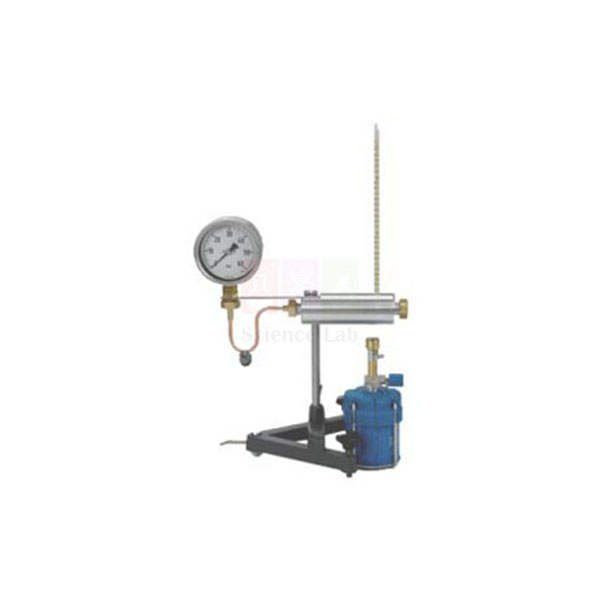
Measuring Vapor Apparatus
Measuring Vapor Apparatus (Product Code: SLE/H/20) is a high-pressure steam apparatus in which water is heated inside a closed pressure chamber at constant volume, so that liquid and vapour settle into equilibrium and the steam pressure can be measured across a temperature range of 100–250 °C. From those readings, students determine the heat of vaporisation at various temperatures and study the behaviour of real gases and vapours. It is intended for college and university thermodynamics laboratories and is made by Jain Scientific Equipments Pvt Ltd (ScienceLab), Ambala, a laboratory instruments supplier in India serving international markets as well.
Specifications
| Parameter | Detail |
|---|---|
| Type | High-pressure steam apparatus |
| Operating principle | Water heated in a closed pressure chamber at constant volume |
| Steam pressure measurement range | 100–250 °C |
| Phase behaviour | Typical equilibrium states between gas and liquid phases can be set up |
| Investigations | Real gases and vapours; vapour pressure as a function of temperature; heat of vaporisation at various temperatures |
Typical Use
In a standard experiment the chamber is heated in stages, and at each stage the class waits for liquid and vapour to reach equilibrium before recording the temperature and the steam pressure. Repeating this across the 100–250 °C range produces a vapour-pressure curve. Plotting the natural logarithm of pressure against the reciprocal of absolute temperature turns that curve into a near-straight line whose slope, through the Clausius–Clapeyron relation, gives the heat of vaporisation; comparing slopes over different parts of the range shows how that value changes with temperature.
Because the chamber works above atmospheric pressure and at high temperature, the apparatus belongs in supervised college or university sessions. Follow the operating instructions for filling and heating, wear eye protection, and let the unit cool and depressurise fully before any handling. It fits well into physics lab equipment for thermodynamics and heat-engine courses, giving students measured data on real, non-ideal vapour behaviour.
Manufacturer
Jain Scientific Equipments Private Limited builds this steam apparatus in Ambala, Haryana, and supplies it under its ScienceLab trade name to teaching and training laboratories. See our company profile for more about the company.
Related Laboratory Equipment
Apparatus that supports a thermodynamics and pressure-measurement syllabus:
- Thermoelectric Effects Apparatus — for studying how the temperatures in such experiments are measured and controlled
- Calibration of a Pressure Gauge — teaches how pressure readings are checked against a reference
- Pressure Measurement Bench — broader practice with pressure-measuring devices
- Safety Goggles — eye protection when working near hot, pressurised equipment
Further apparatus is listed under Heat.
Frequently Asked Questions
Over what temperature range can steam pressure be measured?
From 100 to 250 °C, with water heated in the closed chamber at constant volume.
What quantities can students determine?
Vapour pressure as a function of temperature and, from it, the heat of vaporisation at various temperatures.
Why is the chamber kept at constant volume?
In a sealed chamber the liquid and its vapour reach equilibrium, so the measured pressure depends on temperature alone — the condition needed for a clean vapour-pressure curve.
Is it suitable for school classes?
It is better suited to supervised college and university work because it operates at high temperature and above atmospheric pressure.
How is pressure read, and what power supply is needed?
Our listing does not give the gauge type or electrical requirements. Please contact us for the full datasheet before ordering.
Can a calibration certificate be supplied?
Calibration paperwork is not part of the standard listing; discuss any requirement with us through the contact page.
Do you ship to institutions outside India?
Yes, we supply universities and distributors in India and international markets; warranty terms are confirmed with each quotation.
Request a Quote
To discuss the Measuring Vapor Apparatus for your laboratory, use our contact page or add it to the enquiry cart.
Last updated: 24 September 2026
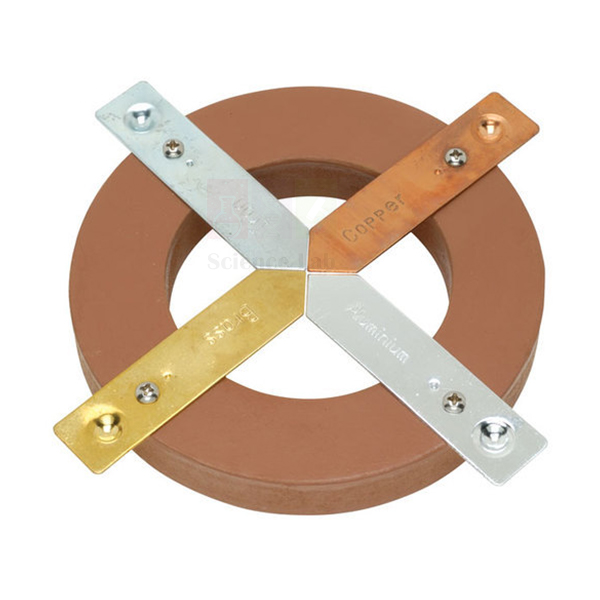
Conductivity of Metal Apparatus
Conductivity of Metal Apparatus (Product Code: SLE/H/28) turns a comparison of four metals into a timed race. Strips of copper, brass, steel and aluminium are mounted on a wooden ring and meet in the centre; when the centre is heated gently, wax placed in a hollow at the far end of each strip melts, and the difference in the time each cup of wax takes to melt shows how fast heat travels through each metal. It is a favourite for middle- and secondary-school heat lessons, and it is made by Jain Scientific Equipments Pvt Ltd (ScienceLab), Ambala, a school laboratory equipment manufacturer supplying India and international markets.
Key Details
| Parameter | Detail |
|---|---|
| Metal strips | Copper, brass, steel and aluminium |
| Mounting | Wooden ring, with the strips meeting in the centre |
| Heating point | Gentle heating at the centre, where the strips meet |
| Indicator | Wax placed in hollows at the end of each strip |
| What is compared | Time taken for each cup of wax to melt |
Typical Use
Students put a small, equal amount of wax into the hollow at the end of each strip, then place a gentle flame under the centre point and start timing. Because all four strips draw heat from the same shared centre, the only thing that differs is the metal. As each cup of wax melts, students log the time, and the finishing order gives a direct ranking of conduction rates. Asking the class to predict the order first, then explaining the result in terms of how readily each metal passes on heat, makes the lesson stick.
For fair results, use the same amount of wax in every hollow, keep the flame small and centred so it does not reach the wooden ring, and let the apparatus cool before resetting the wax. With a stop clock and a data table it becomes a neat, quantitative piece of physics lab equipment for school practicals, and its open layout lets a whole group watch the wax melt.
Manufacturer
ScienceLab products, including this conductivity ring, are manufactured by Jain Scientific Equipments Private Limited of Ambala, Haryana, for schools, colleges and distributors. Our company profile gives an overview of the business.
Related Laboratory Equipment
Everything else a timed conduction practical usually needs:
- Stop Clock — for timing how long each cup of wax takes to melt
- Wax — for filling the hollows at the end of each strip
- Micro Burner — a small, controllable flame for gentle heating at the centre
- Conductivity Apparatus — a six-metal rod version for a wider comparison
Find more thermal teaching aids in our Heat range.
Frequently Asked Questions
Which metals does the ring compare?
Copper, brass, steel and aluminium, each as a strip running to the centre.
How are the results measured?
By the difference in time taken for the wax in each strip's hollow to melt once the centre is heated.
Is wax supplied?
Wax is not listed among the included items; it can be ordered separately from our range.
What heat source should be used?
A small, gentle flame such as a micro burner or spirit lamp placed under the centre. A heat source is not listed as supplied.
How does this differ from the Conductivity Apparatus (SLE/H/19)?
This model uses four strips on a wooden ring and times melting wax cups; the SLE/H/19 apparatus holds six metal rods in a sheet-metal body.
Can you supply class sets or export orders?
Yes. We supply schools and distributors across India and international markets; state the quantity and destination, and warranty terms will be confirmed in the quotation.
Request a Quote
For a quotation on the Conductivity of Metal Apparatus, write to us or save it to the enquiry cart.
Last updated: 24 September 2026
