- Physics Lab Equipment
- Chemistry Lab Equipment
- Biology Lab Equipment
- Anatomical Lab Equipment
- Learning
- Educational Lab Equipment
- Magnets
- Agriculture
- Astronomy
- Earth Science
- Geography Lab Equipment
- Safety Lab Coat
- Laboratory
- Meteorological
- Electricity & Magnetism
- Heat
- School Lab Equipment
- Lab Glassware
- Science Lab Equipment
- Tvet Lab Equipment
- Robotics Kits Supplier and Manufacturer for Schools India
- Math Lab Equipment Manufacturers and Exporters in Ambala
- STEM Kits Manufacturers and Supplier India
- Engineering Lab Equipment
- Hospital Lab Equipment
- Water, Sanitation & Hygiene Supplies
- Cold Chain, Solar & Communication Equipment
- Nutrition
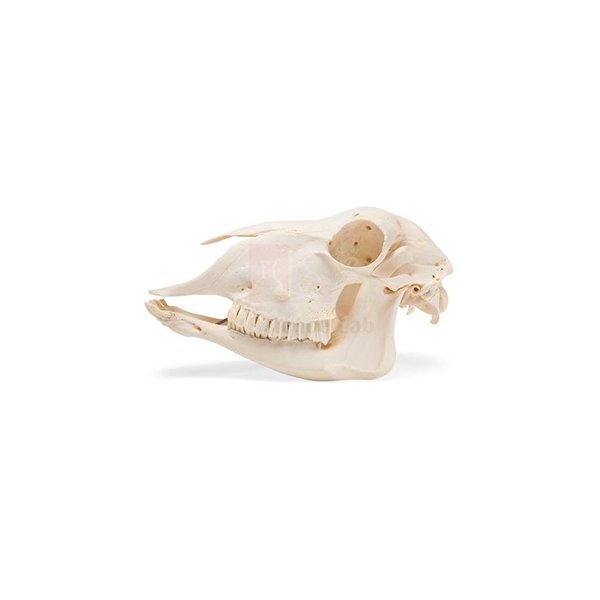
Sheep Skull, Plastic
Sheep Skull, Plastic (Product Code: SLE/A/114) is a plastic replica of a sheep skull, complete with mandible, used for comparative anatomy and herbivore-adaptation lessons in zoology, veterinary and school biology labs. It is faithfully reproduced and anatomically accurate, featuring almost all the detail found in natural bone without the preparation a real skull needs. It is made by Jain Scientific Equipments Pvt Ltd (ScienceLab), an OEM manufacturer, at its own factory in Ambala, India.
Key Details
| Parameter | Detail |
|---|---|
| Species | Sheep |
| Material | Plastic |
| Mandible | Included (complete with mandible) |
| Detail | Almost all the detail found in natural bone |
| Accuracy | Faithfully reproduced and anatomically accurate |
| Product code | SLE/A/114 |
| Manufacturer | Jain Scientific Equipments Pvt Ltd (ScienceLab) — OEM |
| Country of origin | India (made in Ambala, Haryana) |
What Is the Plastic Sheep Skull Used For?
Setting a sheep skull beside a human skull is one of the clearest ways to show how diet and lifestyle shape anatomy. Students notice the long face, the eye sockets placed at the sides of the head for a wide field of view, and the long gap between the front of the jaws and the cheek teeth. They can then examine the broad, ridged cheek teeth used for grinding plants, and see that a sheep has no upper incisors, cropping grass against a firm dental pad instead.
In college practicals it serves as zoology lab equipment in India for mammalian skull identification, and in introductory veterinary and animal-husbandry anatomy it gives students a reference skull they can handle freely. A useful exercise is to have groups draw up a two-column table of differences between the sheep and human skulls, then explain each difference in terms of feeding and senses.
OEM Manufacturer
Jain Scientific Equipments Private Limited, whose trading name is ScienceLab, is the OEM (original equipment manufacturer) of this sheep skull replica and makes it at its own licensed factory in Saha, Ambala, Haryana, India. Zoology departments, veterinary and agricultural colleges, schools, dealers and importers are served factory-direct rather than through a distributor chain.
For repeat orders, quote the product code SLE/A/114 when you ask us, and the manufacturer will handle the request itself. More about the company appears on the ScienceLab profile.
Related Skulls
Skulls that make useful comparisons with the sheep skull:
- Human Skull — a colour-coded human skull for side-by-side comparison with a herbivore.
- Economy Human Skull — a detailed human skull with removable cap and mandible for group comparisons.
- Anthropology Cranium Set — five early hominid-type crania for extending comparisons into human evolution.
- Human Skull Model, Life Size Colored — a coloured human skull for matching equivalent bones between species.
Browse the Skulls category for human and animal skull models.
Frequently Asked Questions
Does the Sheep Skull, Plastic include the lower jaw?
Yes. The Sheep Skull, Plastic is complete with its mandible, so students can study the upper skull and the lower jaw together and see how the cheek teeth of both jaws meet during chewing.
How realistic is the Sheep Skull, Plastic?
The Sheep Skull, Plastic is faithfully reproduced and anatomically accurate, featuring almost all the detail found in natural bone. That makes it suitable for identification practicals in which students would otherwise need a prepared natural sheep skull.
Why choose a plastic sheep skull over a natural one?
A Sheep Skull, Plastic avoids the sourcing, cleaning and preparation that a natural skull requires, and it can be wiped clean after each class. Being plastic, it can also be passed to every student during comparative anatomy practicals.
Which courses use the Sheep Skull, Plastic?
The Sheep Skull, Plastic is used in school biology lessons on herbivore adaptations, in BSc and MSc zoology practicals on mammalian skulls, and in introductory veterinary and animal-husbandry anatomy, often placed beside a human skull for comparison.
Who manufactures the Sheep Skull, Plastic?
The Sheep Skull, Plastic is manufactured by Jain Scientific Equipments Pvt Ltd (ScienceLab), the OEM, at its own licensed factory at Saha, Ambala, Haryana, India. Enquiries, quotations and repeat orders are handled by the manufacturer itself.
What should I include when asking for a Sheep Skull, Plastic quotation?
For a Sheep Skull, Plastic quotation, send the product code SLE/A/114, the quantity and the delivery location. If you also need human skulls or the cranium set for comparison, list them in the same enquiry so they are priced together.
Request a Quote
Send your Sheep Skull, Plastic enquiry through our contact page or add the item to the enquiry cart. The quotation is prepared directly by the manufacturer.
Last updated: 24 September 2026
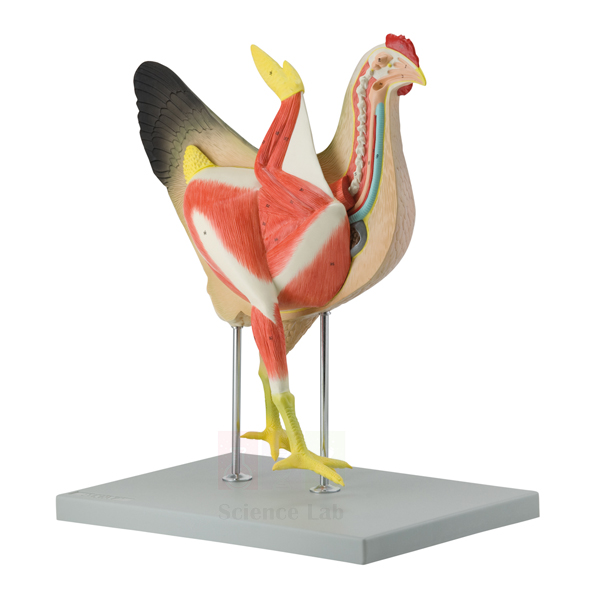
Hen Model
Hen Model (Product Code: SLE/A/115) is a life-size, 8-part anatomical model of a hen used to teach bird anatomy in school biology, poultry science and veterinary classes. Its right side shows the external morphology, while the longitudinally sectioned left side reveals the heart, lungs, digestive organs, reproductive system and an egg, and a numbered key is included. It is made by Jain Scientific Equipments Pvt Ltd (ScienceLab), the OEM manufacturer, at its own factory in Ambala, India.
Specifications
| Parameter | Detail |
|---|---|
| Scale | Life size |
| Construction | 8 parts |
| Size (with base) | 39.5 x 26 x 46.7 cm |
| Right side | External morphology |
| Left side | Longitudinal section showing muscles, heart, liver, intestines, stomach, lungs, reproductive system and an egg |
| Mounting | On a base |
| Supplied with | Numbered key |
| Product code | SLE/A/115 |
| Manufacturer | Jain Scientific Equipments Pvt Ltd (ScienceLab) — OEM |
| Country of origin | India (made in Ambala, Haryana) |
What Is the Hen Model Used For?
Having the outside and inside of the same bird on one model is what makes it effective in class. Students start on the right side, naming external features, then turn the model around to see which organs lie beneath each region. The sectioned side supports lessons on how birds are adapted to their way of life: large breast muscles that power the wings, the lungs, and a digestive tract that handles food without teeth. Checking the parts one by one against the numbered key is a straightforward practical for pairs or small groups.
For agriculture and poultry courses the reproductive system with its egg is the key feature, letting instructors explain egg formation and laying before students work with live flocks. As one of the animal models a biology lab keeps for vertebrate comparisons, its life-size proportions give a realistic sense of organ sizes that diagrams cannot.
OEM Manufacturer
Jain Scientific Equipments Private Limited — known by its trading name ScienceLab — is the original equipment manufacturer of the Hen Model and builds it at its own licensed factory at Saha, Ambala, Haryana, India. Because schools, agriculture colleges and dealers buy directly from the maker, a lost or damaged part can be raised with us simply by quoting the product code. See our company profile for more.
Related Animal Models
Items that pair well with the Hen Model in vertebrate lessons:
- Pigeon Skeleton — a natural-bone bird skeleton to show the framework beneath the muscles.
- Vertebrate Hearts Model Set — compares heart designs across vertebrate groups.
- Bony Fish Model — another life-size vertebrate with internal features on one side and external on the other.
- Male and Female Rat Model — a mammal for comparing reproductive systems across classes.
Explore the rest of the Animal Model category.
Frequently Asked Questions
How many parts does the Hen Model have?
The Hen Model is built in eight parts and mounted on a base, so sections of the bird can be separated during a lesson to study individual organs and then returned to their correct positions afterwards.
What size is the Hen Model?
The Hen Model measures 39.5 x 26 x 46.7 cm including its base, and the bird itself is shown life size, so the proportions of its organs match those students will later see in real poultry.
Which organs can students see on the Hen Model?
The longitudinally sectioned left side of the Hen Model shows muscles, heart, liver, intestines, stomach, lungs, the reproductive system and an egg, while the right side presents the bird's external morphology for comparison.
Who manufactures the Hen Model?
The Hen Model is manufactured by Jain Scientific Equipments Pvt Ltd (ScienceLab), which is its OEM, at the company's own licensed factory at Saha, Ambala, Haryana, India. Schools, colleges and dealers order it factory-direct and receive quotations from the manufacturer.
Is the Hen Model suitable for poultry or veterinary training?
Yes. The Hen Model gives a clear, life-size introduction to hen anatomy, including the reproductive tract with an egg, which helps poultry-science and veterinary students recognise organs before practical work with live birds.
What if a part of the Hen Model is lost or damaged?
Contact us through the contact page, quote the Hen Model's product code SLE/A/115 and describe the missing or damaged part. As the manufacturer, ScienceLab can advise on replacement options directly.
Request a Quote
Enquire about the Hen Model on our contact page, or place it in the enquiry cart to request a price with other models; the quotation comes directly from the manufacturer.
Last updated: 24 September 2026
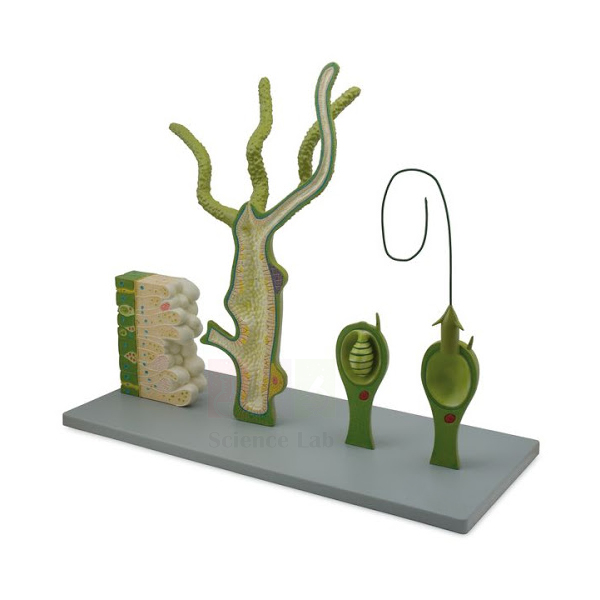
Hydra Model
Hydra Model (Product Code: SLE/A/116) is a large, 4-part dissectible model of the freshwater cnidarian Hydra used for the Hydra type study in school and undergraduate zoology. Its longitudinal and cross-sectional views, a 250x life size tissue block and a separate armed-and-triggered cnidoblast are all referenced by a printed key to 26 structures. The model is made by Jain Scientific Equipments Pvt Ltd (ScienceLab), the OEM manufacturer, at its own factory in Ambala, India.
Specifications
| Parameter | Detail |
|---|---|
| Construction | Dissectible into 4 parts |
| Size (without base) | 58 x 14 x 59 cm |
| Mounting | Durable base |
| Sectional views | Longitudinal and cross-sectional: ectoderm, mesoglea, coelenteron, egg cells, buds, mouth opening |
| Cross-sectional block | 250x life size; nematocysts, sensory and epithelial cells, interstitial structures, nerve plexus |
| Cnidoblast | Shown separately, armed and triggered |
| Key | Printed key referencing all 26 anatomical structures |
| Product code | SLE/A/116 |
| Manufacturer | Jain Scientific Equipments Pvt Ltd (ScienceLab) — OEM |
| Country of origin | India (made in Ambala, Haryana) |
What Is the Hydra Model Used For?
A real Hydra is only a few millimetres long, so most students first meet it as a faint outline on a slide. This model bridges that gap. The longitudinal view explains the two-layered body wall with the jelly-like mesoglea between the layers, the single gut cavity (coelenteron) that opens only through the mouth, and the two ways the animal reproduces: budding and egg cells. The 250x block then zooms in on the tissue itself, where the nerve plexus, sensory cells and stinging nematocysts can be picked out, and the separate cnidoblast shows the stinging cell before and after it fires.
In practical classes it works well next to a microscope: students observe prepared slides of Hydra, draw what they see, and then use the model and its 26-point key to label structures they could not resolve. At 58 cm across it is easy to see in whole-class demonstrations, and its four parts can be separated to focus on one region at a time, which makes it a dependable piece of biology lab equipment in India for invertebrate teaching.
OEM Manufacturer
The Hydra Model is produced by Jain Scientific Equipments Private Limited, which trades as ScienceLab and is the OEM (original equipment manufacturer): it is made at the company's own licensed factory at Saha, Ambala, Haryana, not sourced from a trader. Universities, schools, dealers and importers therefore get quotations and follow-up support straight from the maker. Find more on our company profile.
Related Animal Models
Useful with the Hydra Model in a cnidarian or invertebrate practical:
- Hydra — a prepared glass slide of the real animal to compare with the model.
- Monocular Biological Microscope 400x, LED — for viewing the slide in class.
- Stereo Binocular Microscope — low magnification for watching live specimens collected from ponds.
- Starfish Model — another radially arranged invertebrate for comparison.
- Comparative Tapeworm Set — continues the survey of invertebrate body plans with flatworms.
Find more models in the Animal Model category.
Frequently Asked Questions
How many structures does the Hydra Model's key identify?
The printed key supplied with the Hydra Model references all 26 anatomical structures shown on the model, from the ectoderm and mesoglea to the nematocysts and nerve plexus, so students can label their drawings accurately.
What is the enlarged block on the Hydra Model for?
The Hydra Model includes a cross-sectional block at 250x life size. It shows nematocysts, sensory and epithelial cells, interstitial structures and the nerve plexus, tissue detail that is very hard to resolve on a school microscope slide.
Does the Hydra Model show how the stinging cell works?
Yes. The Hydra Model shows a cnidoblast separately in both its armed and triggered states, so teachers can explain how the stinging thread is held ready and how it looks after it has been discharged.
Who manufactures the Hydra Model?
The Hydra Model is manufactured by its OEM, Jain Scientific Equipments Pvt Ltd (ScienceLab), at the company's own licensed factory at Saha, Ambala, Haryana, India. Institutions, dealers and importers buy it factory-direct with quotations from the manufacturer.
How much space does the Hydra Model need?
The Hydra Model measures 58 x 14 x 59 cm without its base, so allow a little extra for the base on a shelf or bench. Its size makes it easy to see during whole-class demonstrations.
Can the Hydra Model be taken apart?
Yes. The Hydra Model is dissectible into four parts, which lets a teacher separate one region at a time and focus on the body wall, the coelenteron or the reproductive buds and egg cells.
Request a Quote
To buy the Hydra Model, contact us via the contact page or save it to your enquiry cart for a combined quotation from the manufacturer.
Last updated: 24 September 2026
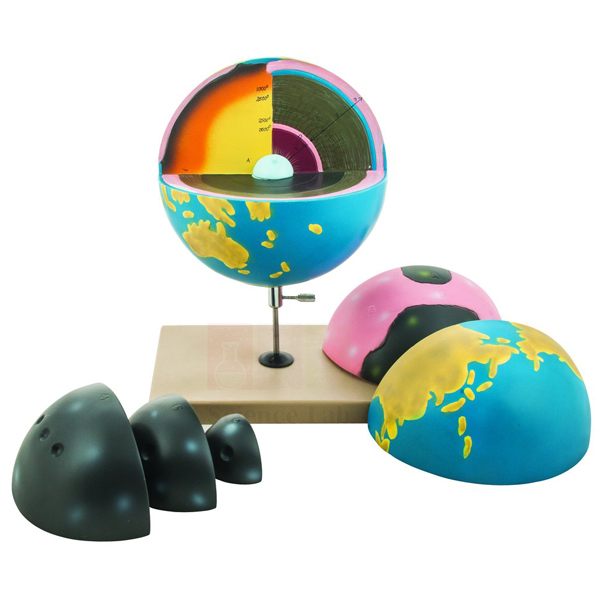
Earth Globe Model
The Earth Globe Model (Product Code: SLE/GG/02) is a sectional globe that opens up to show the layers inside the Earth. It is built from 7 detachable parts: lifting them away one at a time reveals the outer edge of each layer in turn, and once the upper crust is removed the inner core and its surrounding layers come into view. Each layer is finished in a different colour. It is manufactured by Jain Scientific Equipments Pvt Ltd (ScienceLab), Ambala, for geography and earth science teaching in schools.
Specifications
| Parameter | Detail |
|---|---|
| Type | Earth interior (layered) globe model |
| Construction | 7 detachable parts showing the interior of the Earth |
| Layer view | Removing the parts one by one shows the periphery of each layer |
| Core view | Inner core with its layers visible when the upper crust is removed |
| Colour coding | Different colours for different layers |
| Suitable for | Teaching the internal structure of the Earth |
Typical Use
The model turns a flat textbook diagram of the Earth’s interior into something students can take apart. Teachers remove the parts in sequence while naming each layer, then ask a student to rebuild the globe in the right order — a quick check that the class has understood which layer lies where.
The colour coding helps when explaining how temperature and pressure rise with depth, why the outer core is liquid while the inner core is solid, and how the study of earthquake waves revealed this layered structure. Displayed beside a volcano cross-section and a seismograph model, it anchors a geography lab equipment corner on the dynamic Earth.
Manufacturer
ScienceLab is the brand name used by Jain Scientific Equipments Private Limited of Ambala, Haryana, which manufactures geography and science teaching models. The company is a registered MSME enterprise (Udyam UDYAM-HR-01-0003714), and export consignments are shipped under Importer-Exporter Code AAECJ8618A issued by DGFT. See the company profile for more.
Related Geography Lab Equipment
Models that extend a lesson on the Earth’s structure:
- Volcano Model — shows how molten rock from below the crust reaches the surface
- Seismograph Model — explains how earthquake waves, the evidence for the layered interior, are recorded
- Physiographic Relief Globe — shows surface landforms to complement the interior view
- Fractures, Faults and Dislocations Model — crustal structures at a closer scale
- Ocean Floor Raised Relief Map — the relief of the crust beneath the oceans
Explore the full Geography Lab Equipment collection.
Frequently Asked Questions
How many parts does the globe separate into?
It has 7 detachable parts that reveal the interior of the Earth layer by layer.
Can the inner core be seen?
Yes. When the upper crust is removed, the inner core with its layers can be seen.
Are the layers labelled with their names?
The layers are distinguished by colour. Printed labels are not mentioned in the product description, so contact us if you need them confirmed.
Which classes is it suited to?
Middle and secondary school geography and earth science, wherever the structure of the Earth is taught.
How should the parts be stored and handled?
Keep the globe assembled when not in use, lift parts by their edges rather than forcing them, and wipe with a soft dry cloth.
What should a school include in a quotation request?
The quantity, delivery address in India or abroad and any tender reference. Use our contact page or enquiry cart.
Request a Quote
To order the Earth Globe Model for your school, contact us or add it to the enquiry cart.
Last updated: 24 September 2026
Bony Fish Model
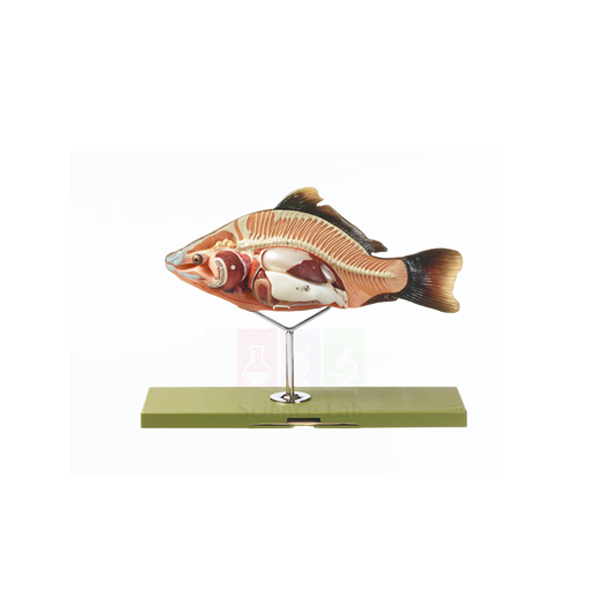
Bony Fish Model (Product Code: SLE/A/117) is a life-size replica of a carp used to teach fish anatomy, with external features on one side and internal organs on the other. It separates into 4 parts, with the air bladder, intestines and testicles removable, which suits school biology, fisheries courses and college zoology. The model is made by Jain Scientific Equipments Pvt Ltd (ScienceLab), the OEM manufacturer, at its own factory in Ambala, India.
Specifications
| Parameter | Detail |
|---|---|
| Species represented | Carp (life-size replica) |
| Size | 35 x 49 x 16 cm |
| Construction | Separates into 4 parts |
| Removable organs | Air bladder, intestines, testicles |
| Views | Internal features on one side, external features on the other |
| Product code | SLE/A/117 |
| Manufacturer | Jain Scientific Equipments Pvt Ltd (ScienceLab) — OEM |
| Country of origin | India (made in Ambala, Haryana) |
What Is the Bony Fish Model Used For?
The two-sided design suits a lesson that begins with adaptation to water. On the external side students study the streamlined outer form of the carp and discuss how its shape helps with swimming. Turning to the internal side, the removable air bladder becomes the focus: lifting it out shows how much of the body cavity it occupies and leads into buoyancy control, a feature of bony fish that sharks and rays lack. The intestines and testicles can then be removed to discuss digestion and reproduction.
Carp are farmed widely, so the model is also relevant to fisheries and aquaculture training where learners must recognise organs before handling real fish. Teachers who carry out a fish dissection can keep the model on the bench as a clean reference, and it is a practical item for any biology lab setup in schools across India.
OEM Manufacturer
ScienceLab, the trading name of Jain Scientific Equipments Private Limited, is the OEM for the Bony Fish Model: it is made at the company's own licensed factory at Saha, Ambala, Haryana, and sold factory-direct to schools, fisheries colleges, dealers and importers. If a removable organ goes missing, ask us — replacement queries are handled by the manufacturer. Details are on the company profile page.
Related Animal Models
Items used alongside this model in fish biology lessons:
- Fish Dissection Model — a 5-part alternative with magnet-held pieces and a 24-structure key.
- Fish Dissection — a preserved dissection in a glass container for comparing the model with real tissue.
- Mini Fish Measuring Board — for measuring small fish during field or fisheries practicals.
- Net, Basic Fish Dip — for collecting fish from tanks or ponds for observation.
Browse the Animal Model category for more vertebrate models.
Frequently Asked Questions
Which fish is the Bony Fish Model based on?
The Bony Fish Model is a life-size replica of a carp, a widely farmed bony fish. External features appear on one side and internal anatomy on the other, so a single model covers both halves of a fish structure lesson.
Which parts of the Bony Fish Model come out?
The Bony Fish Model separates into four parts: the air bladder, intestines and testicles are removable from the body. Lifting out the air bladder is a useful starting point for explaining buoyancy control in bony fish.
What are the dimensions of the Bony Fish Model?
The Bony Fish Model measures 35 x 49 x 16 cm. Being life size, it shows realistic organ proportions and is still compact enough to sit on a practical bench shared by two or three students.
Who manufactures the Bony Fish Model?
Jain Scientific Equipments Pvt Ltd (ScienceLab) manufactures the Bony Fish Model as the OEM at its own licensed factory at Saha, Ambala, Haryana, India. Schools and dealers buy it direct from the maker, and quotations are issued by the manufacturer.
How does the Bony Fish Model differ from the Fish Dissection Model?
The Bony Fish Model is a carp replica in four parts with external features on one side and internal organs on the other. The Fish Dissection Model is a longitudinal dissection with magnet-held parts and a numbered key; choose by the detail your course needs.
Is a key card included with the Bony Fish Model?
A key is not mentioned in the Bony Fish Model's product details. If your course needs a labelled key, please check with us through the contact page before ordering so we can confirm what is supplied.
Request a Quote
Request pricing for the Bony Fish Model on the contact page, or add it to the enquiry cart together with related fish biology items; the manufacturer quotes directly.
Last updated: 24 September 2026
Volcano Model
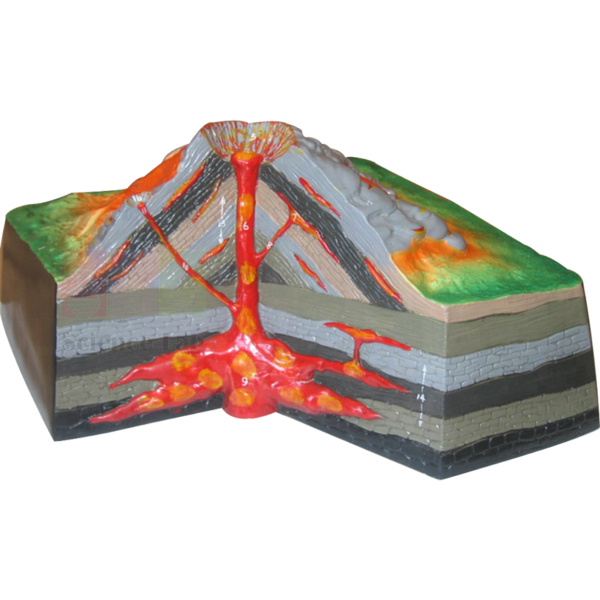
The Volcano Model (Product Code: SLE/GG/03) is a realistic, hand-painted resin model of a volcano cut through by a vertical section, so students can follow the path magma takes on its upward course through the volcano. It is securely mounted on a sturdy base for display and for handling in class. The model is manufactured by Jain Scientific Equipments Pvt Ltd (ScienceLab), Ambala, for geography and earth science departments in schools.
Key Details
| Parameter | Detail |
|---|---|
| Type | Sectional volcano model |
| Material | Resin, hand painted |
| Section | Vertical section showing the path magma takes on its upward course through the volcano |
| Mounting | Securely mounted on a sturdy base |
| Suitable for | Teaching volcano structure and how eruptions happen |
Typical Use
Using the vertical section, teachers trace the route magma follows on its way up and link it to the terms students meet in textbooks, such as magma chamber, vent, crater and lava flow. Seeing the inside of the cone makes it much easier to explain why pressure builds before an eruption and where the erupted material comes from.
The model pairs well with rock samples: igneous rocks such as basalt or pumice show what magma becomes once it cools. Its resin body and sturdy base make it suitable for passing around a small group or standing on a display shelf, and schools building up geography models often place it next to an Earth-interior globe so students can connect the molten layers below the crust with activity at the surface.
Manufacturer
Jain Scientific Equipments Private Limited is the company behind ScienceLab and manufactures teaching models like this volcano from Ambala, Haryana, India. Learn more on our company profile page.
Related Geography Lab Equipment
Useful alongside the volcano in an earth science lesson:
- Earth Globe Model — shows the interior layers beneath the crust
- Class Rock Pack — includes igneous rock samples for linking volcanoes to rock formation
- Seismograph Model — connects volcanic activity with earthquake monitoring
- Fractures, Faults and Dislocations Model — other crustal features shaped by the Earth’s internal forces
View all items in Geography Lab Equipment.
Frequently Asked Questions
What is the model made of?
Resin, finished by hand painting for a realistic appearance.
Does it show the inside of the volcano?
Yes. A vertical section shows the path magma takes as it moves up through the volcano.
Can it be used for a ‘baking soda’ eruption demonstration?
It is described as a painted sectional display model, not an eruption kit, so we suggest keeping liquids away from it. Contact us if you also need an eruption activity.
How should the painted surface be cleaned?
Use a soft brush or dry cloth to remove dust, and avoid water, solvents and abrasive cleaners on the paintwork.
Are size and weight available?
Dimensions are not stated in the current listing; contact us and we will share them with your quotation.
Do you supply schools outside India?
Yes, we supply schools and distributors in India and international markets.
Request a Quote
Add the Volcano Model to your enquiry cart or contact us for pricing and availability.
Last updated: 24 September 2026
Comparative Tapeworm Set
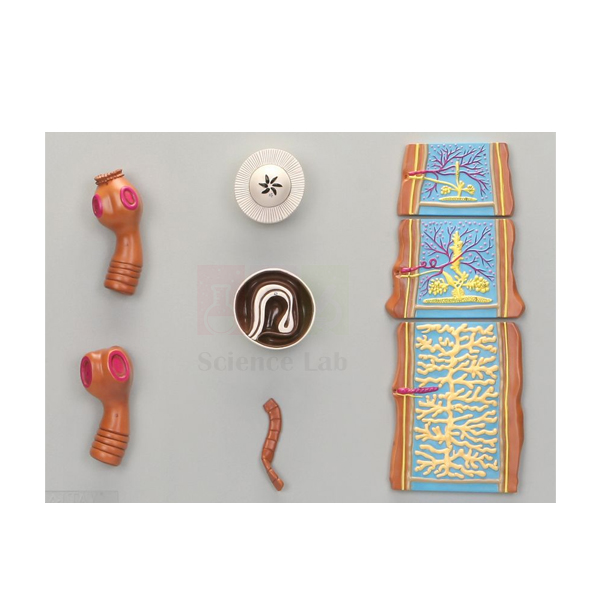
Comparative Tapeworm Set (Product Code: SLE/A/118) is a plaque-mounted set of greatly enlarged models used to compare the tapeworms Taenia saginata and Taenia solium in zoology and parasitology teaching. It shows both scolices, a mature egg, a cysticercus and sections through the immature, mature and gravid proglottid, with a numbered key and plaques of 53 x 38 cm each. The set is made by Jain Scientific Equipments Pvt Ltd (ScienceLab), the OEM manufacturer, at its own factory in Ambala, India.
Specifications
| Parameter | Detail |
|---|---|
| Scale | Greatly enlarged |
| Format | Plaque-mounted set |
| Size (each) | 53 x 38 cm |
| Scolices | Taenia saginata and Taenia solium |
| Life-cycle stages | Mature egg; cysticercus |
| Proglottid sections | Longitudinal sections through the immature, mature and gravid proglottid |
| Supplied with | Numbered key |
| Product code | SLE/A/118 |
| Manufacturer | Jain Scientific Equipments Pvt Ltd (ScienceLab) — OEM |
| Country of origin | India (made in Ambala, Haryana) |
What Is the Comparative Tapeworm Set Used For?
Placing the two scolices side by side lets students see the main identifying difference between the species: the head of T. solium carries a crown of hooks, while that of T. saginata relies on suckers alone. From there the teacher follows the chain of segments, using the three proglottid sections to show how a young segment develops reproductive organs and finally becomes a gravid segment packed with eggs. The mature egg and cysticercus complete the life cycle, making it easy to explain how undercooked beef or pork passes the infection to people.
Because the models are plaque-mounted, learners work through the numbered key without handling small loose parts, and the plaques can be laid on a bench or displayed for a whole class. Medical and paramedical courses often use the set before microscopy practicals so students know what to look for, which makes it one of the more practical biology teaching aids in India for parasitology.
OEM Manufacturer
Jain Scientific Equipments Private Limited trades as ScienceLab and is the OEM (original equipment manufacturer) of the Comparative Tapeworm Set, which is produced at its own licensed factory at Saha, Ambala, Haryana. Medical-technology colleges, nursing and veterinary schools, dealers and importers order it factory-direct, and every quotation is issued by the manufacturer. Visit the company profile to learn more.
Related Animal Models
Other models that support invertebrate and health-science teaching:
- Human Blood Cell Types Model — another plaque for medical laboratory courses, showing red cells, platelets and leukocytes.
- Hydra Model — a cnidarian for comparing simpler invertebrate body plans.
- Starfish Model — adds an echinoderm to a survey of invertebrate phyla.
- Classification of Living Things Poster — shows where flatworms sit in the animal kingdom.
See every model in our Animal Model category.
Frequently Asked Questions
Which tapeworm species does the Comparative Tapeworm Set cover?
The Comparative Tapeworm Set covers Taenia saginata, the beef tapeworm, and Taenia solium, the pork tapeworm. Showing both species on matching plaques lets students compare their scolices and life-cycle stages directly.
Which stages are included in the Comparative Tapeworm Set?
The Comparative Tapeworm Set includes the scolices of both species, a mature egg, a cysticercus and longitudinal sections through the immature, mature and gravid proglottid, which together trace the tapeworm's development and life cycle.
How large is each plaque in the Comparative Tapeworm Set?
Each plaque in the Comparative Tapeworm Set measures 53 x 38 cm. The models are greatly enlarged and numbered against an accompanying key, so small structures can be identified from a normal viewing distance.
Who manufactures the Comparative Tapeworm Set?
The OEM behind the Comparative Tapeworm Set is Jain Scientific Equipments Pvt Ltd (ScienceLab), which manufactures it at its own licensed factory at Saha, Ambala, Haryana, India. Colleges and dealers receive quotations and order support directly from the manufacturer.
Can the Comparative Tapeworm Set be wall-mounted?
The Comparative Tapeworm Set is plaque-mounted and suited to display, but fixing arrangements for a wall or cabinet are not listed in its product details. Ask us through the contact page before ordering if you plan to hang it.
Is the Comparative Tapeworm Set suitable for medical laboratory technology courses?
Yes. The Comparative Tapeworm Set shows the stages and structures used to tell the two Taenia species apart, which is standard content in parasitology teaching for medical laboratory technology, nursing and veterinary students.
Request a Quote
For the Comparative Tapeworm Set, send an enquiry through the contact page or add it to your enquiry cart along with other parasitology or zoology items, and the manufacturer will quote directly.
Last updated: 24 September 2026
Fractures, Faults and Dislocations Model
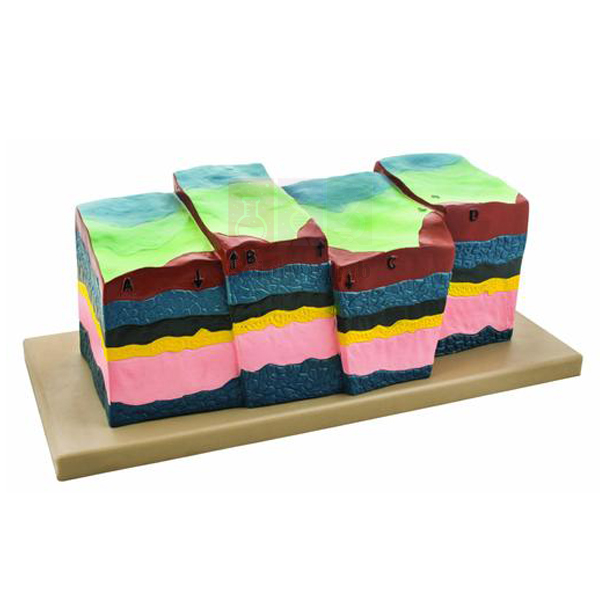
The Fractures, Faults and Dislocations Model (Product Code: SLE/GG/04) shows five different structural features of the Earth’s crust in cross-section, illustrating the structures associated with fault planes and fractures. It is made of coloured, unbreakable material, mounted on a base and numbered, with an English key card identifying each feature. The model is manufactured by Jain Scientific Equipments Pvt Ltd (ScienceLab), Ambala, for geography and geology teaching in schools and colleges.
Key Details
| Parameter | Detail |
|---|---|
| Type | Structural geology cross-section model |
| Features shown | Five different structural features, showing structures related to fault planes and fractures |
| Material | Unbreakable material, coloured |
| Mounting | Mounted on base |
| Identification | Numbered, with English key card |
Typical Use
Students match each numbered feature to the key card and describe what has happened to the rock: where it has cracked without moving, and where blocks have slipped past each other along a fault plane. The colouring makes offsets between layers easy to follow, so even beginners can see which side has moved up or down.
Teachers use the model to support lessons on the main fault types — normal, reverse and strike-slip — and on how such movements relate to earthquakes and to landforms such as rift valleys and block mountains; the key card confirms which structures the five sections represent. Because it is made of unbreakable material, it can be handed round a group, which makes it a practical addition to geography lab equipment for secondary schools and undergraduate geology.
Manufacturer
Jain Scientific Equipments Private Limited trades as ScienceLab and manufactures geography teaching models from Ambala, Haryana. For vendor registration forms, our GSTIN is 06AAECJ8618A1ZT and our Legal Entity Identifier (LEI) is 3358004HRD1JIVXKYX49. The company profile gives more background.
Related Geography Lab Equipment
Other models that help explain movements of the crust:
- Seismograph Model — shows how the ground shaking caused by fault slip is recorded
- Earth Globe Model — places the crust in the context of the Earth’s layered interior
- Volcano Model — another way internal forces reshape the crust
- Geology History Kit — explores how rock layers record the Earth’s past
- Ocean Floor Raised Relief Map — sea-floor relief shaped by movements of the crust
See the whole Geography Lab Equipment range.
Frequently Asked Questions
How many features does the model show?
Five different structural features, all shown in cross-section.
How are the features identified?
Each feature is numbered on the model and explained on the English key card supplied with it.
Can students handle it without risk of breakage?
It is made of unbreakable material, so it suits hands-on group work; normal care still keeps the coloured finish looking good.
Which fault types are included?
The key card names the five features. If you need the list before ordering, contact us and we will share it.
Where can we find your registration details for a purchase order?
GSTIN and LEI are given in the Manufacturer section above; other vendor details can be requested through our contact page.
Is bulk or export supply possible?
Yes. We supply schools, colleges and distributors in India and international markets; use the enquiry cart to list quantities.
Request a Quote
For a quotation on this structural geology model, contact us or add it to your enquiry cart.
Last updated: 24 September 2026