- Physics Lab Equipment
- Chemistry Lab Equipment
- Biology Lab Equipment
- Anatomical Lab Equipment
- Learning
- Educational Lab Equipment
- Magnets
- Agriculture
- Astronomy
- Earth Science
- Geography Lab Equipment
- Safety Lab Coat
- Laboratory
- Meteorological
- Electricity & Magnetism
- Heat
- School Lab Equipment
- Lab Glassware
- Science Lab Equipment
- Tvet Lab Equipment
- Robotics Kits Supplier and Manufacturer for Schools India
- Math Lab Equipment Manufacturers and Exporters in Ambala
- STEM Kits Manufacturers and Supplier India
- Engineering Lab Equipment
- Hospital Lab Equipment
- Water, Sanitation & Hygiene Supplies
- Cold Chain, Solar & Communication Equipment
- Nutrition
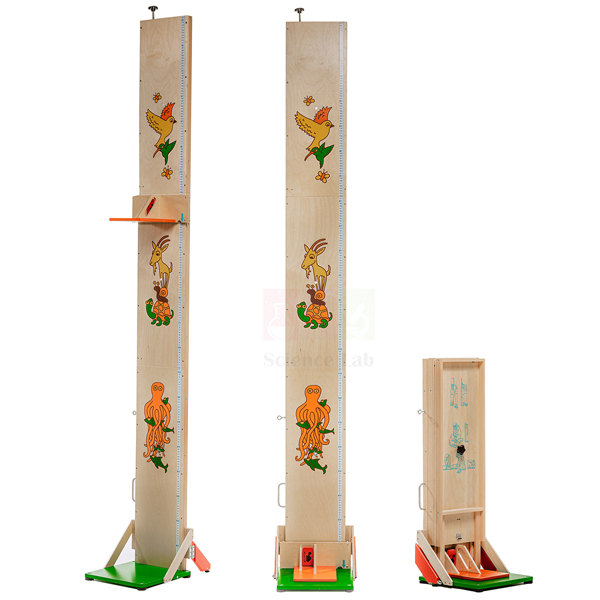
Portable Baby/Chd/adult L-H
The Portable Baby/Chd/adult L-H is one folding board for the whole household. Babies up to 24 months lie on it for recumbent length, from a minimum of 0 cm, while older children and adults stand against it for height. Fitted with two extensions it reads 0–204 cm; with one, 0–142 cm. The scale is divided in 0.1 cm steps.
Baby, child and adult measuring board specifications
| Parameter | Detail |
|---|---|
| Measures | Recumbent length of babies up to 24 months (minimum length 0 cm); standing height of children from 24 months and adults |
| Range with two extensions | 0–204 cm |
| Range with one extension | 0–142 cm |
| Graduation and accuracy | Centimetres, smallest graduation 0.1 cm; accuracy ±0.2 cm, precision ±0.2 cm |
| Scale and width | Integrated, hard-wearing scale with numerals along the board, readable in low light; board about 25 cm wide |
| Measuring slide | Glides smoothly; lockable or friction-held; wobble of about 0.2 cm at most over the full length; reading point marked by arrow or pictogram |
| Folding and carrying | Folds up; panels held by self-contained spring-loaded bolts; handle at the point of balance and/or removable shoulder or back strap |
| Set-up | No tools needed; no calibration needed, as all parts have fixed positions |
| Construction | Light, strong material with a smooth finish for cleaning; resists high humidity and heat; water splash proof and shock resistant |
| Product code | SLE/AE/011 |
| Minimum order | 10 units |
| Dispatch | Usually within 7 to 10 working days |
| Supplied by | ScienceLab (Jain Scientific Equipments Pvt Ltd), Ambala, India |
Measuring tasks with the full-range length-height board
Household survey round. Measure each family member in turn: babies lying with the board flat, everyone else standing barefoot with it upright. Weigh the same people on a mother and child scale and take arm circumference with an adult MUAC tape, so one visit gives a complete record for the family.
School health check-up. Pupils stand against the upright board with heels, buttocks and head touching it, and the slide comes down onto the crown. Weight comes from bathroom scales at the next station, and the class works out each pupil's BMI from the two figures.
Checking the board before a survey. Lay a metre scale along the board and compare its marks with the board's divisions at several points. Confirm that the slide locks, that the bolts hold each panel firm and that the head piece stands square on the floor; a spirit level on the upright board shows any lean.
Frequently Asked Questions About the Portable Baby/Chd/adult L-H
Should a child under two be measured lying down or standing?
Lying down. Babies up to 24 months are measured for recumbent length with the board flat on a table or the floor. From 24 months, children stand against the upright board for height. Lying length usually reads slightly more than standing height, so always note which position was used.
How should a person stand for a height reading?
Barefoot, feet together, with heels, buttocks, shoulders and the back of the head touching the board. The person looks straight ahead and breathes normally. Bring the slide down firmly onto the crown, pressing the hair flat, lock it and read at the arrow.
Why do two height readings of the same person sometimes differ?
Small changes in posture, hair caught under the slide, shoes left on or a slide that was not locked all shift the result. Height also drops slightly through the day. Measure barefoot at a similar time, and take the reading again if two results disagree.
When is one extension enough?
With one extension the board reads 0–142 cm, which covers babies and younger children. Fit the second extension to reach 0–204 cm when taller children and adults are measured. On mixed household visits, keep both extensions fitted.
Why does a small height error matter when BMI is worked out?
BMI divides weight by the square of height, so a height error counts twice over. A reading that is slightly short pushes the BMI up. Reading to the nearest 0.1 cm at the arrow keeps this error small.
How is the board packed away after a survey day?
Wipe the surface and the slide with a damp cloth and let them dry. Fold the panels until the spring-loaded bolts hold them, then carry the board by its handle or strap. Fold it before loading it into a vehicle, as the bolts keep the parts from shaking loose.
Measuring and weighing items for surveys and clinics
- Portable Baby/Child L-hgt
- Scale Mother/Child Batteries Mains Solar
- MUAC, Adult, Without Color Code
- Scale for Adults with Height Rod
- Scale, Physician, Adult, Metric, 6-180kg
To request a quotation, send the product name, code and quantity through our contact page or add the item to your enquiry cart.
Last updated: 15 November 2026
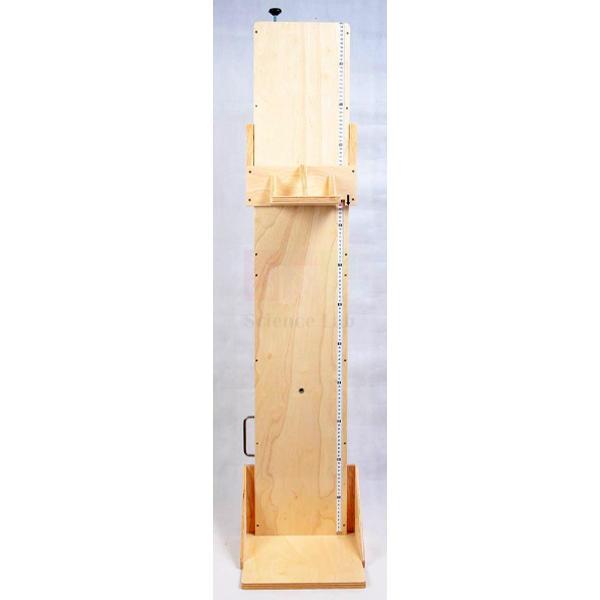
Portable Baby/Child L-hgt
Sized for children only, this fold-up board reads 0–120 cm in 0.1 cm steps on a metal scale. Laid flat, it takes the recumbent length of babies up to 24 months. Stood upright on its adjustable feet, it takes the standing height of children from 24 months. Accuracy and precision are both given as ±0.2 cm.
Child length-height board specifications
| Parameter | Detail |
|---|---|
| Measures | Recumbent length of babies up to 24 months; standing height of children aged 24 months and above |
| Measurement range | 0–120 cm |
| Graduation | Centimetres; smallest graduation 0.1 cm |
| Accuracy and precision | ±0.2 cm each |
| Measurement scale | Metal, fully integrated; numerals along the board; readable in low light; board about 25 cm wide |
| Foot/head piece | Large piece with adjustable feet for uneven floors; base when upright, headboard when flat |
| Measuring slide | Smooth gliding; lockable or friction-held; reading points marked with arrow or pictogram |
| Folding and carrying | Fold-up, low weight; spring-loaded bolts or spring clasps; integrated handle plus removable shoulder or back strap |
| Set-up | No tools and no calibration needed; all parts have fixed positions |
| Product code | SLE/AE/012 |
| Minimum order | 10 units |
| Dispatch | Usually within 7 to 10 working days |
| Supplied by | ScienceLab (Jain Scientific Equipments Pvt Ltd), Ambala, India |
Growth-monitoring tasks with the child measuring board
Under-two length check. Lay the board flat with the headpiece at one end. One measurer cups the baby's head against it while the second keeps the body straight, presses gently on the knees and brings the wedge against both heels. Weigh the same baby on the newborn spring scale or the 25 kg dial spring scale and record both figures together.
Anganwadi health round. Stand the board upright, turn the adjustable feet until it stops rocking, and measure each child barefoot. Take arm circumference with a child MUAC tape, then weigh the child in weighing trousers on a hanging scale, so each child passes three stations in order.
Training practice. Nursing or public-health students take turns measuring the same child-sized doll, then compare their readings. The spread between results shows where technique slips: a bent knee, a tilted head or a wedge that was not locked before reading.
Frequently Asked Questions About the Portable Baby/Child L-hgt
Why does measuring a baby's length need two people?
One person holds the head still against the headpiece while the other straightens the body and legs and moves the wedge. A single measurer cannot do both, and a baby who turns or bends gives a short reading. A parent standing close by can help keep the baby calm.
How are the legs kept straight when the wedge is brought up?
Rest one hand gently over both knees to press the legs flat, with the toes pointing straight up. With the other hand, slide the wedge until it sits firmly against both heels. Lock it before letting go of the baby, then read at the arrow.
Can a tape measure replace a length board for babies?
Not well. A flexible tape laid beside a lying baby bends and slips, and there is nothing square at the head or the feet. The board has a fixed headpiece and a sliding wedge that meet the body at right angles, so the length is read between two firm stops.
How often should the board be checked?
It needs no calibration, because all its parts have fixed positions. Still, look it over before each session: the slide should glide and lock, the bolts should hold the panels firm and the markings should be clean. Compare the scale with a known length from time to time.
Will the board stand steady on an uneven floor?
Yes. The large foot piece has adjustable feet. Turn them until the upright board no longer rocks before the child steps on. When the board is laid flat for a baby, the same piece serves as the fixed headboard.
What happens when a child grows past 120 cm?
The range ends at 120 cm, so taller children need the full-range baby, child and adult board, which reads to 204 cm with two extensions. Teams that see all age groups often carry one of each.
Child growth-monitoring equipment
- Portable Baby/Chd/adult L-H
- MUAC, Child 11.5 Red
- Scale, Infant, Spring Type, 25kg x 100g
- Weighing Trousers
- Electronic Scale Baby
To request a quotation, send the product name, code and quantity through our contact page or add the item to your enquiry cart.
Last updated: 14 November 2026

Polypropylene Thermometer Jar Without Cover
Polypropylene Thermometer Jar Without Cover (Product Code: SLE/MU/06) is a round polypropylene container with a base, used to hold clean thermometers upright on hospital wards, in clinics and at nursing stations. Nurses use it because its narrow internal diameter of approximately 30mm and depth of approximately 110mm keep a thermometer standing safely, and the autoclavable polypropylene can go through a steam steriliser. It is supplied by Jain Scientific Equipments Pvt Ltd (ScienceLab), Ambala, India.
Specifications
| Parameter | Detail |
|---|---|
| Material | Polypropylene, autoclavable |
| Shape | Round container with base |
| Internal diameter | Approximately 30mm |
| Overall height | Approximately 120mm |
| Depth | Approximately 110mm |
| Size basis | Size chosen as the most commonly used |
| Reprocessing | Clean, disinfect and sterilise in a steam steriliser as often as necessary |
| Use rule | Clean container for clean thermometers only |
| Product code | SLE/MU/06 |
| Supplied by | Jain Scientific Equipments Pvt Ltd (ScienceLab), Ambala, India |
What Is the Thermometer Jar Used For?
A thermometer jar gives each ward or bedside a fixed, upright place to keep thermometers between readings, so they are not laid on trays or bedside tables where they can roll off and break. The jar is a basic item of medical equipment, and its size, around 120mm tall overall, was chosen as the one most commonly used, which suits standard thermometers.
Its description sets a clear rule: the jar is a clean container for clean thermometers only. Used thermometers should be cleaned before they go back in, and the jar itself should be cleaned, disinfected and sterilised in a steam steriliser as often as necessary. Many wards keep two jars, one in use and one being reprocessed, so there is never a gap.
Supplier
This thermometer jar is supplied by Jain Scientific Equipments Private Limited, which trades as ScienceLab from Ambala in Haryana. Hospitals, clinics, nursing schools, dealers and importers can order it with other ward utensils and thermometers on a single enquiry. For company information, see the ScienceLab profile.
Related Medical Utensils
Items that go with the thermometer jar at a nursing station:
- Clinical Thermometer Digital — a digital clinical thermometer for patient readings.
- Glass Thermometer — a glass thermometer that benefits from safe upright storage.
- Kidney Basin Polypropylene — a polypropylene basin for used items awaiting cleaning.
- Autoclave Stainless Steel — a steam steriliser for reprocessing the jar.
See all Medical Utensils.
Frequently Asked Questions
What are the dimensions of the Polypropylene Thermometer Jar Without Cover?
The Polypropylene Thermometer Jar Without Cover has an internal diameter of approximately 30mm, an overall height of approximately 120mm and a depth of approximately 110mm. It is a round container with a base, sized as the most commonly used thermometer jar.
Can the thermometer jar be sterilised?
Yes. The Polypropylene Thermometer Jar Without Cover is made of autoclavable polypropylene, and its description says it must be cleaned, disinfected and sterilised in a steam steriliser as often as necessary.
Does the Polypropylene Thermometer Jar Without Cover come with a lid?
As its name states, the Polypropylene Thermometer Jar Without Cover is the version without a cover. If you want a lid to stop thermometers falling out, ask us about availability through the contact page before you order.
Can used thermometers be placed straight into the jar?
No. The Polypropylene Thermometer Jar Without Cover is meant as a clean container for clean thermometers only. Clean each thermometer according to ward procedure before returning it, and reprocess the jar itself regularly.
Who supplies the Polypropylene Thermometer Jar Without Cover?
Jain Scientific Equipments Pvt Ltd, trading as ScienceLab from Ambala, Haryana, India, supplies the Polypropylene Thermometer Jar Without Cover to hospitals, clinics, nursing schools, dealers and importers in India and international markets.
Request a Quote
For a quotation on the Polypropylene Thermometer Jar Without Cover, send your quantity through the contact page or add it to the enquiry cart with other ward items.
Last updated: 24 September 2026

Dressing Tray Stainless Steel
Dressing Tray Stainless Steel (Product Code: SLE/MU/07) is a shallow, seamless stainless steel tray of 300 x 200 x 30mm used to lay out dressings and instruments for wound care in wards, clinics and dressing rooms. Nursing and surgical staff choose it because it is made of austenitic stainless steel with rounded corners and a smooth surface, in the size described as the most commonly used. It is supplied by Jain Scientific Equipments Pvt Ltd (ScienceLab), Ambala, India.
Specifications
| Parameter | Detail |
|---|---|
| Nominal size | 300 x 200 x 30mm |
| Length | 285-315mm |
| Width | 190-220mm |
| Height | 28-32mm |
| Sheet thickness | 0.75-0.85mm |
| Material | Austenitic stainless steel |
| Composition | 18 to 20% chromium, 8 to 10% nickel |
| Construction | Seamless, rectangular with rounded corners, smooth surface |
| Cover | Not listed (open tray) |
| Product code | SLE/MU/07 |
| Supplied by | Jain Scientific Equipments Pvt Ltd (ScienceLab), Ambala, India |
What Is the Stainless Steel Dressing Tray Used For?
The dressing tray is described as basic equipment for nursing and surgical care. At the bedside or on a dressing trolley it holds gauze, cotton, bandages, forceps and scissors so that everything needed for a dressing change is in one place and off the patient's bed. The low 28-32mm sides keep items contained while leaving them easy to pick up with forceps.
Being seamless with rounded corners, the tray has no joints or sharp internal angles where residue can collect, which makes cleaning simpler. One caution comes straight from its description: do not use a stainless steel container to hold a chlorine solution, as chlorine may damage the steel. Keep chlorine solutions in a plastic container and reserve this tray for dressings and instruments.
Supplier
Jain Scientific Equipments Private Limited, trading as ScienceLab, supplies this dressing tray from Ambala, Haryana, within its range of medical utensils. Hospitals, nursing colleges, health centres, dealers and importers can combine it with instrument trays, bowls and dressing sets in one quotation. The company profile has more about ScienceLab.
Related Medical Utensils
Items used with the dressing tray during wound care:
- Surgical Instruments, Dressing /SET — the instruments laid out on the tray.
- Dressing Trolley SS 2 Trays — a trolley to carry the tray to the bedside.
- Instrument Tray Stainless Steel — a deeper tray with cover for storing instruments.
- Bowl Stainless Steel — a round bowl for swabs or cleaning solution.
- Plastic Bottle 1 litre With Screw Cap — the right container for chlorine solutions.
Browse the Medical Utensils category.
Frequently Asked Questions
What size is the Dressing Tray Stainless Steel?
The Dressing Tray Stainless Steel has a nominal size of 300 x 200 x 30mm, with tolerances of 285-315mm in length, 190-220mm in width and 28-32mm in height. The steel sheet is 0.75-0.85mm thick.
What grade of steel is the dressing tray made from?
The Dressing Tray Stainless Steel is made from austenitic stainless steel with a composition of 18 to 20% chromium and 8 to 10% nickel. It is seamless, rectangular with rounded corners and has a smooth surface.
Can chlorine solution be kept in the Dressing Tray Stainless Steel?
No. The description of the Dressing Tray Stainless Steel warns against holding chlorine solution in a stainless steel container, as it may damage the steel. Use a plastic container for chlorine and keep this tray for dressings and instruments.
Does the Dressing Tray Stainless Steel have a lid?
No cover is listed for the Dressing Tray Stainless Steel; it is an open, shallow tray for laying out a dressing. If you need a covered tray for storing instruments, the Instrument Tray Stainless Steel in the same range comes with a cover.
Who supplies the Dressing Tray Stainless Steel?
The Dressing Tray Stainless Steel is supplied by Jain Scientific Equipments Pvt Ltd, which trades as ScienceLab in Ambala, Haryana, India. It is available to hospitals, health centres, dealers and importers in India and international markets; send quantities through the contact page.
Request a Quote
Request a price for the Dressing Tray Stainless Steel through the contact page, or add it to the enquiry cart with product code SLE/MU/07 and the number of trays required.
Last updated: 24 September 2026

Instrument Tray Stainless Steel
Instrument Tray Stainless Steel (Product Code: SLE/MU/08) is a covered, seamless stainless steel tray of 310 x 195 x 60mm used to hold, store and carry surgical and nursing instruments between the sterilising area, the store and the point of use. Theatre and ward staff prefer it to an open tray because the fitted cover and the deeper 55-65mm body keep instruments enclosed, and the tray can go into a steam steriliser. It is supplied by Jain Scientific Equipments Pvt Ltd (ScienceLab), Ambala, India.
Specifications
| Parameter | Detail |
|---|---|
| Nominal size | 310 x 195 x 60mm, with cover |
| Length range | 300-320mm |
| Width range | 185-205mm |
| Height range | 55-65mm |
| Thickness | 0.75-0.85mm |
| Steel type | Austenitic stainless steel, 18 to 20% chromium and 8 to 10% nickel |
| Form | Seamless tray and cover, rectangular with rounded corners, smooth surface |
| Care | Clean and disinfect after each use; can be sterilised in a steam steriliser when necessary |
| Product code | SLE/MU/08 |
| Supplied by | Jain Scientific Equipments Pvt Ltd (ScienceLab), Ambala, India |
What Is the Stainless Steel Instrument Tray Used For?
Listed as basic equipment for nursing and surgical care, this tray keeps a set of instruments together from the moment they are cleaned until they are opened for a procedure. Its roughly 60mm depth takes forceps, scissors and needle holders lying flat, and the cover protects them from dust and handling while they are stored on a shelf or carried on a trolley. The size was chosen as the one most commonly used.
The tray's own care instructions are straightforward: clean and disinfect it after each use, and sterilise it in a steam steriliser when necessary. As with all stainless steel ware, do not use it to hold a chlorine solution, which may damage the steel; chlorine belongs in a plastic container. Check the cover fit periodically so it continues to close properly.
Supplier
ScienceLab is the name under which Jain Scientific Equipments Private Limited of Ambala, Haryana, supplies this instrument tray. It is offered to hospitals, operating theatres, nursing colleges, dealers and importers, and can be quoted together with instrument sets and other steel ware. Company details are on the ScienceLab profile.
Related Medical Utensils
Items that pair with the covered instrument tray:
- Surgical Instruments, Basic Surgery /SET — an instrument set that can be kept in the tray.
- Instrument Table Mayo type SS On Castors — a mobile table to set the tray beside the patient.
- Dressing Tray Stainless Steel — a shallower open tray for dressing changes.
- Kidney Basin Stainless Steel — for used instruments and swabs during a procedure.
- Autoclave Stainless Steel — a steam steriliser for the tray and its contents.
View all Medical Utensils.
Frequently Asked Questions
Does the Instrument Tray Stainless Steel come with a cover?
Yes. The Instrument Tray Stainless Steel is supplied with a cover. Both the tray and the cover are seamless, rectangular with rounded corners and finished with a smooth surface, so instruments stay enclosed during storage and transport.
What are the dimensions of the Instrument Tray Stainless Steel?
The Instrument Tray Stainless Steel measures 310 x 195 x 60mm nominally, within ranges of 300-320mm long, 185-205mm wide and 55-65mm high. The steel is 0.75-0.85mm thick.
Can the Instrument Tray Stainless Steel be sterilised?
Yes. According to its care instructions, the Instrument Tray Stainless Steel must be cleaned and disinfected after each use and can be sterilised in a steam steriliser when necessary. Follow your facility's sterilisation procedure for loading and cycle selection.
How is the instrument tray different from the dressing tray?
The Instrument Tray Stainless Steel is deeper, with a height of 55-65mm compared with the shallow Dressing Tray Stainless Steel, and it comes with a cover. It suits storing and carrying instruments, while the open dressing tray suits laying out a dressing change.
Who supplies the Instrument Tray Stainless Steel?
Jain Scientific Equipments Pvt Ltd, trading as ScienceLab from Ambala, Haryana, India, supplies the Instrument Tray Stainless Steel to hospitals, theatres, colleges, dealers and importers in India and international markets. Quantities can be quoted through the contact page.
Request a Quote
To get pricing for the Instrument Tray Stainless Steel, send your requirement through the contact page or add the tray to the enquiry cart along with any instrument sets you are ordering.
Last updated: 24 September 2026

Bowl Stainless Steel
Bowl Stainless Steel (Product Code: SLE/MU/09) is a round 600 ml stainless steel bowl used to hold swabs, cotton, water and cleaning solutions during dressings and minor procedures in hospitals and clinics. Nursing teams choose it for its austenitic stainless steel body with a smooth surface, an inner diameter of 115-135 mm and a working capacity of 550-650 ml. It is supplied by Jain Scientific Equipments Pvt Ltd (ScienceLab), Ambala, India.
Specifications
| Parameter | Detail |
|---|---|
| Shape | Round bowl, smooth surface |
| Nominal capacity | 600 ml |
| Capacity range | 550-650 ml |
| Inner diameter | 115-135 mm |
| Height | 50-70 mm |
| Wall thickness | 0.75-0.85 mm |
| Material | Austenitic stainless steel: 18 to 20% chromium, 8 to 10% nickel |
| Product code | SLE/MU/09 |
| Supplied by | Jain Scientific Equipments Pvt Ltd (ScienceLab), Ambala, India |
What Is the Stainless Steel Bowl Used For?
A small steel bowl is one of the most handled items on any dressing trolley or procedure tray. Staff use it to hold cotton balls and gauze swabs, to carry water or a cleaning solution to the bedside, or to receive small instruments after use. The 600 ml size, with an inner diameter of around 115-135 mm, is large enough for these jobs yet small enough to sit on a tray alongside instruments.
Austenitic stainless steel with 18 to 20% chromium and 8 to 10% nickel resists everyday corrosion and tolerates repeated washing, and the smooth surface is easy to wipe clean. Clean and reprocess the bowl according to your facility's routine after each use, and, as a general rule for steel ware, keep chlorine solutions in plastic containers rather than in the bowl.
Supplier
Jain Scientific Equipments Private Limited supplies this bowl as part of the ScienceLab medical utensils range from Ambala, Haryana. Hospitals, clinics, nursing schools, dealers and importers in India and international markets can order it with matching trays and basins. Learn about the company on the ScienceLab profile page.
Related Medical Utensils
Steel ware and supplies used with this bowl:
- Dressing Tray Stainless Steel — a tray to set the bowl on during a dressing.
- Kidney Basin Stainless Steel — a curved basin for used swabs and instruments.
- Round Bowl Polypropylene — a much larger plastic bowl for ward use.
- Cotton Wool, 500g, Roll, Non-Sterile — cotton that is often kept in the bowl.
Explore the Medical Utensils category.
Frequently Asked Questions
What is the capacity of the Bowl Stainless Steel?
The Bowl Stainless Steel has a nominal capacity of 600 ml, within a range of 550-650 ml. It is round, with an inner diameter of 115-135 mm and a height of 50-70 mm.
What steel is the Bowl Stainless Steel made of?
The Bowl Stainless Steel is made of austenitic stainless steel containing 18 to 20% chromium and 8 to 10% nickel, with a wall thickness of 0.75-0.85 mm and a smooth surface finish.
What is the stainless steel bowl used for in a hospital?
In a hospital, the Bowl Stainless Steel is typically used on dressing trolleys and procedure trays to hold cotton, gauze swabs, water or cleaning solutions, and to receive small used instruments. Its 600 ml size fits comfortably on a standard tray.
Is a lid available for the Bowl Stainless Steel?
No lid is listed for the Bowl Stainless Steel; it is an open round bowl. If you need a covered container, describe your requirement through the contact page and we will suggest suitable items from the range.
Who supplies the Bowl Stainless Steel?
The Bowl Stainless Steel is supplied by Jain Scientific Equipments Pvt Ltd, which trades as ScienceLab from Ambala, Haryana, India. It can be quoted for hospitals, clinics, dealers and importers in India and international markets, singly or in bulk.
Request a Quote
Send the number of Bowl Stainless Steel units you need through the contact page, or add it to the enquiry cart with trays and basins for the same ward.
Last updated: 24 September 2026

Round Bowl Polypropylene
Round Bowl Polypropylene (Product Code: SLE/MU/10) is a large autoclavable polypropylene bowl, approximately 346mm across, used for general ward tasks such as patient washing, soaking and carrying water in hospitals and health centres. Ward staff choose it for its capacity of approximately 6 to 8 litres in a light plastic body about 120mm high that tolerates autoclaving. It is supplied by Jain Scientific Equipments Pvt Ltd (ScienceLab), Ambala, India.
Specifications
| Parameter | Detail |
|---|---|
| Material | Polypropylene, autoclavable |
| Shape | Round bowl |
| Diameter | Approximately 346mm |
| Height | Approximately 120mm |
| Capacity | Approximately 6-8 litres |
| Intended use | General ward use |
| Product code | SLE/MU/10 |
| Supplied by | Jain Scientific Equipments Pvt Ltd (ScienceLab), Ambala, India |
What Is the Polypropylene Round Bowl Used For?
This is a general-purpose ward bowl. Nurses and care assistants use a bowl of this size for bed baths and hand or foot washing, for carrying warm water to the bedside, and for soaking items before cleaning. With room for around 6 to 8 litres, it holds enough water for a full wash without constant refilling, while the wide 346mm rim makes it easy to reach into.
Polypropylene is light, does not dent, and can be autoclaved, so the bowl can be reprocessed between patients according to ward routine. Because it is plastic, it is also a sensible choice for chlorine solutions, which can damage stainless steel. Many wards colour-code or label their bowls so that washing bowls and bowls used for cleaning solutions are kept apart.
Supplier
The Round Bowl Polypropylene is supplied by ScienceLab, the trading name of Jain Scientific Equipments Private Limited, from Ambala, Haryana. Hospitals, health centres, care homes, relief programmes, dealers and importers can order it with other ward utensils on one quotation. See the company profile for more about ScienceLab.
Related Medical Utensils
Ward items used with the polypropylene bowl:
- Kidney Basin Polypropylene — a smaller polypropylene basin for bedside procedures.
- Bowl Stainless Steel — a small steel bowl for dressing trays.
- Measuring Jug 1 litre — for measuring water or concentrate into the bowl.
- Soap Toilet Bar Approx. 100-110g Wrapped — soap for patient washing.
Browse all Medical Utensils.
Frequently Asked Questions
How much does the Round Bowl Polypropylene hold?
The Round Bowl Polypropylene holds approximately 6 to 8 litres. It measures approximately 346mm in diameter and 120mm in height, which gives a wide, stable bowl for general ward tasks.
Can the Round Bowl Polypropylene be autoclaved?
Yes. The Round Bowl Polypropylene is made of autoclavable polypropylene, so it can be reprocessed in an autoclave according to your ward or central sterile department routine. Allow it to cool before stacking.
What is the Round Bowl Polypropylene used for?
The Round Bowl Polypropylene is intended for general ward use, such as bed baths and patient washing, carrying water to the bedside and soaking items before cleaning. Its plastic body also makes it suitable for chlorine solutions, which can damage steel.
How does it compare with the stainless steel bowl?
The Round Bowl Polypropylene is a large plastic bowl of approximately 6 to 8 litres for washing and ward tasks, while the Bowl Stainless Steel in the same range is a small steel bowl for dressing trays. Choose by task and by the solutions you will use.
Who supplies the Round Bowl Polypropylene?
Jain Scientific Equipments Pvt Ltd, trading as ScienceLab from Ambala, Haryana, India, supplies the Round Bowl Polypropylene to hospitals, clinics, care facilities, dealers and importers in India and international markets. Send quantities through the contact page.
Request a Quote
For a quotation on the Round Bowl Polypropylene, contact us through the contact page or add the bowl to the enquiry cart with product code SLE/MU/10.
Last updated: 24 September 2026

Kidney Basin Stainless Steel
Kidney Basin Stainless Steel (Product Code: SLE/MU/11) is a kidney-shaped dish made of austenitic stainless steel, used to hold swabs, dressings and small instruments or to collect fluids during routine care in hospital wards, clinics and nursing-training rooms. Its curved 240–260 mm body holds 800–850 ml and has a smooth metal surface that is simple to wipe down. The basin is supplied by Jain Scientific Equipments Pvt Ltd (ScienceLab), Ambala, India, a laboratory equipment supplier in India that also supplies matching trays and bowls.
Specifications
| Parameter | Detail |
|---|---|
| Item | Container, kidney shaped (kidney dish) |
| Material | Austenitic stainless steel |
| Steel composition | 18–20% chromium, 8–10% nickel |
| Surface | Smooth |
| Length | 240–260 mm |
| Width | 130–150 mm |
| Height | 30–50 mm |
| Sheet thickness | 0.75–0.85 mm |
| Capacity | 800–850 ml |
| Product code | SLE/MU/11 |
| Supplied by | Jain Scientific Equipments Pvt Ltd (ScienceLab), Ambala, India |
What Is the Stainless Steel Kidney Basin Used For?
The inward curve of a kidney dish lets it sit snugly against a patient's cheek, arm or side, so liquid and used material drop straight in without spilling. Nurses use it to receive soiled swabs during a dressing change, to carry syringes and small instruments to the bedside, to hold a cleaning solution, or to catch vomit and other fluids. Nursing and paramedical colleges also place one on every practical-demonstration tray.
With a working capacity of 800–850 ml, this steel version suits procedures that produce more fluid or need several instruments at once. Empty and rinse it promptly after each use, then clean and reprocess it according to your facility's own protocol; the smooth chromium-nickel steel surface does not trap residue in seams, which makes routine washing quicker.
What to Specify When Ordering
- The number of kidney basins needed per ward, procedure room or training lab
- Stainless steel (this item) or the lighter polypropylene kidney basin listed separately
- Any matching stainless steel trays or bowls to be quoted together
- Delivery location, so packing and freight can be included in one quotation
Supplier
Jain Scientific Equipments Private Limited, which trades as ScienceLab, supplies this stainless steel kidney basin from Ambala, Haryana, as part of a wider range of hospital utensils. Hospitals, clinics, nursing institutes, dealers and importers in India and international markets can combine it with trays, bowls and waste receptacles in a single order. Read more about the company on the ScienceLab company profile.
Related Medical Utensils
These items are commonly used alongside a kidney basin on a dressing or procedure trolley:
- Kidney Basin Polypropylene — a lighter plastic alternative for general ward use
- Instrument Tray Stainless Steel — lays out instruments before the kidney dish receives them after use
- Dressing Tray Stainless Steel — carries fresh dressings to the bedside
- Bowl Stainless Steel — holds cleaning solution during wound care
- Waste Receptacle Pedal Action — hands-free disposal of used swabs emptied from the basin
See the complete Medical Utensils range for bottles, jugs, bowls and trays.
Frequently Asked Questions
What is the capacity of the Kidney Basin Stainless Steel?
The Kidney Basin Stainless Steel holds 800–850 ml. It measures 240–260 mm long, 130–150 mm wide and 30–50 mm high, a size that suits dressing changes and procedures where a smaller dish would need emptying too often.
What steel is the Kidney Basin Stainless Steel made from?
The Kidney Basin Stainless Steel is made from austenitic stainless steel containing 18–20% chromium and 8–10% nickel. The sheet is 0.75–0.85 mm thick and the surface is smooth, so the dish is easy to clean between uses.
Can the Kidney Basin Stainless Steel be autoclaved?
Sterilisation and autoclave conditions are not stated in the product details for the Kidney Basin Stainless Steel. Reprocess it according to your facility's own procedure, and contact us if you need handling information before you order.
Should I choose the stainless steel or polypropylene kidney basin?
Choose the Kidney Basin Stainless Steel when you want a larger, sturdier metal dish for heavy daily use. The polypropylene kidney basin is lighter and suits general ward use; many hospitals stock both types for different areas.
Who supplies the Kidney Basin Stainless Steel?
The Kidney Basin Stainless Steel is supplied by Jain Scientific Equipments Pvt Ltd (ScienceLab), Ambala, Haryana, India. The company sources and dispatches hospital utensils to hospitals, nursing institutes, dealers and importers in India and international markets.
What should a quotation request for the Kidney Basin Stainless Steel include?
For the Kidney Basin Stainless Steel, send the quantity required, the delivery city or country, and any other medical utensils you need. Including everything in one enquiry lets us quote packing and freight together.
Request a Quote
To order the Kidney Basin Stainless Steel for a ward, clinic or training institute, send your quantity through our contact page or add it to the enquiry cart. Quotations for single units, ward sets and bulk orders are prepared promptly.
Last updated: 24 September 2026