- Physics Lab Equipment
- Chemistry Lab Equipment
- Biology Lab Equipment
- Anatomical Lab Equipment
- Learning
- Educational Lab Equipment
- Magnets
- Agriculture
- Astronomy
- Earth Science
- Geography Lab Equipment
- Safety Lab Coat
- Laboratory
- Meteorological
- Electricity & Magnetism
- Heat
- School Lab Equipment
- Lab Glassware
- Science Lab Equipment
- Tvet Lab Equipment
- Robotics Kits Supplier and Manufacturer for Schools India
- Math Lab Equipment Manufacturers and Exporters in Ambala
- STEM Kits Manufacturers and Supplier India
- Engineering Lab Equipment
- Hospital Lab Equipment
- Water, Sanitation & Hygiene Supplies
- Cold Chain, Solar & Communication Equipment
- Nutrition
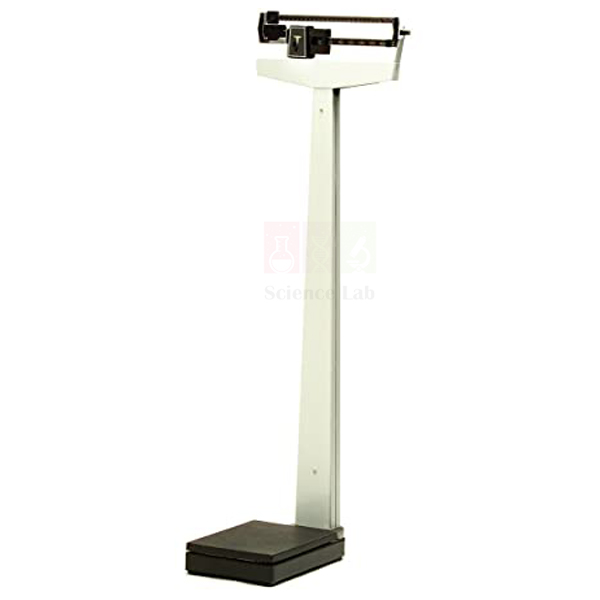
Scale, Physician, Adult, Metric, 6-180kg
Standing adults are weighed on this floor-standing beam scale from 6 kg up to 180 kg, in 100 g steps. Black numbers on a silver surface can be read from both sides, so the clinician and the person on the platform both see the result. It has an attached hand pole and adjustable feet, but no height rod.
Adult physician beam scale specifications
| Parameter | Detail |
|---|---|
| Type | Beam-type mechanical scale for adults |
| Capacity | 6–180 kg |
| Minimum graduation | 100 g |
| Readout and display | Metric (kg); black numbers on a silver surface, readable from both sides and in low light |
| Reading time | Less than 15 seconds, with stabilising mechanism |
| Zero setting | Easy zero adjustment |
| Hand pole and height rod | Hand pole attached; height rod not included |
| Levelling | Adjustable feet for horizontal levelling |
| Body and calibration screw | Metal only (stainless steel or epoxy-coated steel); stainless steel calibration screw |
| Product code | SLE/AE/010 |
| Minimum order | 10 units |
| Dispatch | Usually within 7 to 10 working days |
| Supplied by | ScienceLab (Jain Scientific Equipments Pvt Ltd), Ambala, India |
Clinic routines with the adult beam scale
Adult assessment station. Weigh the person on the beam scale, then measure standing height on a portable length-height board, since this model has no rod. Mid-upper arm circumference taken with an adult MUAC tape completes the record.
Accuracy check. With the platform empty, confirm the zero. Then stack enough cast alloy masses of known value in the centre of the platform to pass the 6 kg lower limit, and compare the beam reading with their total. Adjust with the calibration screw if the zero has drifted, and log the date of the check.
Antenatal or occupational-health follow-up. Weigh each person on the same scale, at a similar time of day, without shoes or heavy items, so that monthly readings can be compared. Write the figure down straight away rather than from memory.
Frequently Asked Questions About the Scale, Physician, Adult, Metric, 6-180kg
What should I do if the platform rocks?
Turn the adjustable feet until the platform sits firm and does not tilt when pressed at each corner. Use a hard, level floor; a soft mat or uneven tiles let the base move during weighing and upset the beam.
How is the zero set on this beam scale?
With nobody on the platform and the beam set to zero, use the zero adjustment until the beam floats level at its balance mark. Check the zero at the start of each session and after the scale has been moved.
How should the person use the hand pole?
Only for balance while stepping on and off. Once on the platform, the person stands still in the centre with arms by the sides. Leaning on or gripping the pole moves part of the body weight off the platform, and the reading falls.
How can height be measured when the scale has no rod?
Use a separate measuring board, such as the Portable Baby/Chd/adult L-H, which reads standing height up to 204 cm. Measure barefoot with heels, buttocks and head against the board, and record the height straight after the weight.
How do I keep repeat weighings comparable over months?
Use the same scale at a similar time of day, with shoes and heavy items removed and similar light clothing. Check the zero before each session. Changes between visits then reflect the person rather than the method.
Can the reading be kept from the person being weighed?
Yes, if the person stands facing away from the beam. The figures can be read from both sides, so the health worker reads the result from where they stand without showing it. A person who wants to know can face the beam and watch instead. Weigh in a screened space where possible.
Weighing and measuring items for clinic stations
- Portable Baby/Chd/adult L-H
- MUAC, Adult, Without Color Code
- Scale for Adults with Height Rod
- Scale Mother/Child Batteries Mains Solar
- Scale, Infant, Clinic, Beam Type, 16kg x 10g
To request a quotation, send the product name, code and quantity through our contact page or add the item to your enquiry cart.
Last updated: 14 November 2026