- Physics Lab Equipment
- Chemistry Lab Equipment
- Biology Lab Equipment
- Anatomical Lab Equipment
- Learning
- Educational Lab Equipment
- Magnets
- Agriculture
- Astronomy
- Earth Science
- Geography Lab Equipment
- Safety Lab Coat
- Laboratory
- Meteorological
- Electricity & Magnetism
- Heat
- School Lab Equipment
- Lab Glassware
- Science Lab Equipment
- Tvet Lab Equipment
- Robotics Kits Supplier and Manufacturer for Schools India
- Math Lab Equipment Manufacturers and Exporters in Ambala
- STEM Kits Manufacturers and Supplier India
- Engineering Lab Equipment
- Hospital Lab Equipment
- Water, Sanitation & Hygiene Supplies
- Cold Chain, Solar & Communication Equipment
- Nutrition

Needle, Disposable, 21G, Sterile
Needle, Disposable, 21G, Sterile (Product Code: SLE/HLI/013) is a single-use stainless steel hypodermic needle, sterilised with ethylene oxide, used on Luer syringes to inject or withdraw fluids in hospitals, clinics and clinical-skills labs. Measuring 21G x 1 1/2 inch (0.8 x 40 mm), it is longer than the 23G needle in the same range, and its size is identified by a colour code on the base. It is supplied by Jain Scientific Equipments Pvt Ltd (ScienceLab), Ambala, India.
Specifications
| Parameter | Detail |
|---|---|
| Size | 21G x 1 1/2 inch (0.8 x 40 mm) |
| Needle material | Stainless steel |
| Base and protective cap | Medical grade plastic |
| Size marking | External diameter in gauge and millimetres; length in inches and millimetres |
| Colour code | Visible at the base of the needle |
| Sterilisation | Sterile (ethylene oxide sterilisation) |
| Use | Disposable, single use |
| Product code | SLE/HLI/013 |
| Supplied by | Jain Scientific Equipments Pvt Ltd (ScienceLab), Ambala, India |
What Is the 21G Disposable Needle Used For?
The 21G x 1 1/2 inch needle is a middle-of-the-range size: wider than 23G, finer than 19G, and at 40 mm long it is the longer of the two needle sizes listed with a length. Clinicians commonly reach for this size for general injections and for withdrawing blood or other fluids, pairing it with 5 ml, 10 ml or 20 ml syringes. As always, gauge and length are chosen by the treating professional for each patient and procedure.
The coloured base is a practical safety feature on a busy trolley: staff can confirm the size at a glance without reading the small print on the pack. In nursing and phlebotomy training, the 21G needle is widely used to demonstrate attaching a needle, removing the cap safely and disposing of sharps. Institutions that order from a lab consumables supplier in India usually keep it in stock beside the 19G and 23G sizes.
Supplier
Jain Scientific Equipments Private Limited, operating as ScienceLab from Ambala, Haryana, supplies the 21G disposable needle to hospitals, health programmes, colleges and distributors. It can be quoted together with syringes, tourniquets and sharps containers so that a complete injection or sampling kit comes from one source. See the ScienceLab profile page for company details.
Related Medical Consumables & Dressings
Useful companions for a 21G needle:
- Syringe, Disposable, 5ml, Sterile — a mid-size Luer syringe.
- Syringe, Disposable, 10ml, Sterile — for larger volumes.
- Syringe, Disposable, 10ml, W/ndl, 21G — a 10 ml syringe already bi-packed with a 21G needle.
- Tourniquet, Latex-Free, 50cm — used when a vein is located for blood withdrawal.
- Sharp Container Leak Proof Plastic — for used needles.
Browse the Medical Consumables & Dressings category for more.
Frequently Asked Questions
What size is the Needle, Disposable, 21G, Sterile?
The Needle, Disposable, 21G, Sterile is 21G x 1 1/2 inch, which is 0.8 mm external diameter and 40 mm long. Its size is shown in gauge and millimetres for diameter, and in inches and millimetres for length.
How is the 21G disposable needle sterilised?
The 21G disposable needle is listed as sterile by ethylene oxide sterilisation. Ask ScienceLab for the batch expiry date and pack details when you request a quotation, so your stores team can plan stock rotation.
How can staff identify the 21G needle quickly?
The Needle, Disposable, 21G, Sterile carries a colour code visible at the base of the needle, so staff can recognise the gauge at a glance and avoid mixing it up with other needle sizes on the trolley.
What is the 21G needle made of?
The 21G needle has a stainless steel shaft, and both its base and protective cap are made of medical grade plastic. The base fits standard Luer syringe nozzles.
Who supplies the Needle, Disposable, 21G, Sterile?
The Needle, Disposable, 21G, Sterile is supplied by Jain Scientific Equipments Pvt Ltd (ScienceLab), Ambala, India, to hospitals, colleges, NGOs and distributors in India and international markets. Send your required quantity through the contact page for a quotation.
Request a Quote
Request pricing for the Needle, Disposable, 21G, Sterile by sending your quantity via the contact page, or add it to the enquiry cart along with matching syringes.
Last updated: 24 September 2026

Plastic Bottle 1 litre With Screw Cap
Plastic Bottle 1 litre With Screw Cap (Product Code: SLE/MU/01) is a 1 litre plastic storage bottle used to hold chlorine and iodine solutions in a hospital environment. Wards, dressing rooms and clinic stores use it because the screw cap and sound seal keep prepared solutions closed, and the mouth is narrower than the body for controlled pouring. It is supplied, assembled, by Jain Scientific Equipments Pvt Ltd (ScienceLab), Ambala, India, alongside its lab plastic ware range.
Specifications
| Parameter | Detail |
|---|---|
| Capacity | 1 litre |
| Material | Plastic |
| Shape | Round or square |
| Mouth | Diameter smaller than the body diameter |
| Closure | Screw cap; seal must be sound |
| Condition on supply | Bottle assembled |
| Intended contents | Chlorine and iodine solutions in a hospital environment |
| Product code | SLE/MU/01 |
| Supplied by | Jain Scientific Equipments Pvt Ltd (ScienceLab), Ambala, India |
What Is the 1 Litre Plastic Screw Cap Bottle Used For?
Health facilities prepare chlorine solutions for cleaning and iodine solutions for skin preparation in bulk, then need a safe container to keep them between uses. This bottle serves that purpose: plastic is the right choice for chlorine, which attacks stainless steel, and the screw cap limits spills and evaporation once the bottle is closed.
Good practice is to label each bottle with its contents and the date it was prepared, keep the cap tightly closed, and store it away from heat and direct sunlight. Keep separate bottles for chlorine and iodine rather than switching contents, and check the seal regularly, since the specification requires the closure to be sound. A 1 litre size is easy to carry to the point of use and to pour into smaller wash bottles or bowls.
Supplier
Jain Scientific Equipments Private Limited, known to customers as ScienceLab, supplies this screw cap bottle from Ambala, Haryana, as part of its medical utensils range. Hospitals, clinics, health programmes, dealers and importers can combine it with other ward utensils in one quotation. See the ScienceLab profile to learn more about the company.
Related Medical Utensils
Utensils that work with this bottle when preparing and using solutions:
- Measuring Jug 1 litre — graduated jug for measuring water and concentrate before filling.
- Plastic Wash Bottle 250ml — smaller squeeze bottle for dispensing at the bedside.
- Sprayer Trigger Bottle Handheld 1 Liter — for applying cleaning solution to surfaces.
- Round Bowl Polypropylene — a plastic bowl for solutions poured out for use.
Browse all Medical Utensils.
Frequently Asked Questions
What is the Plastic Bottle 1 litre With Screw Cap used for?
The Plastic Bottle 1 litre With Screw Cap is intended for storing chlorine and iodine solutions in a hospital environment. Its plastic body suits chlorine, and the screw cap keeps the prepared solution closed between uses.
Why use a plastic bottle rather than steel for chlorine solution?
Chlorine solution can damage stainless steel, so a plastic container such as the Plastic Bottle 1 litre With Screw Cap is the practical choice for keeping it. Stainless steel trays and bowls are better kept for instruments and dressings.
Is the 1 litre screw cap bottle round or square?
The specification of the Plastic Bottle 1 litre With Screw Cap allows either a round or a square bottle, always with a mouth narrower than the body. If your facility needs one shape consistently, state it in your enquiry and we will confirm what can be supplied.
Does the bottle arrive ready to use?
Yes. The Plastic Bottle 1 litre With Screw Cap is supplied assembled, with the screw cap fitted. Rinse it before first filling, check that the seal closes properly, and label it with the solution and preparation date.
Who supplies the Plastic Bottle 1 litre With Screw Cap?
The Plastic Bottle 1 litre With Screw Cap is supplied by Jain Scientific Equipments Pvt Ltd, which trades as ScienceLab, from Ambala, Haryana, India. It is available for hospitals, clinics, NGOs, dealers and importers in India and international markets.
What details should a quotation request include?
For the Plastic Bottle 1 litre With Screw Cap, give product code SLE/MU/01, the number of bottles, any shape preference and the delivery location. Adding other ward utensils on the same enquiry lets us quote everything together.
Request a Quote
Send your quantity for the Plastic Bottle 1 litre With Screw Cap through the contact page, or add it to the enquiry cart with the other medical utensils you need.
Last updated: 24 September 2026
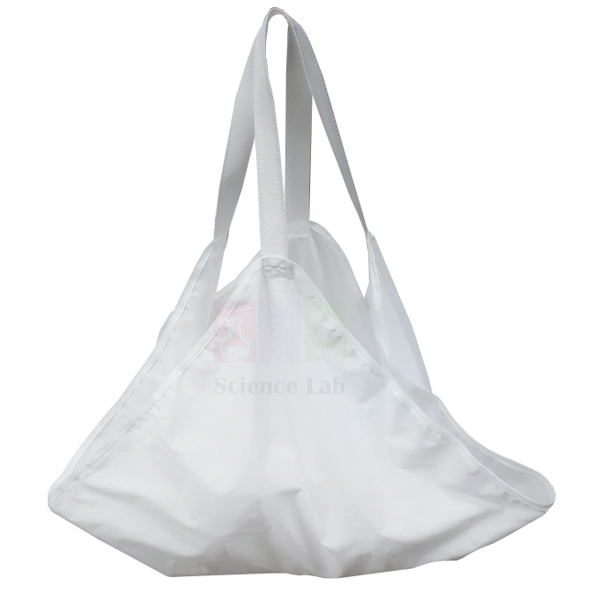
Sling for use with Scale
This square fabric sling carries a newborn or young infant on a hanging spring scale. The 80 x 80 cm panel holds a baby of up to 5 kg lying flat, for ages 0 to 6 months. Two straps, each fixed at two parallel corners, go over the scale's lower hook, and the double-stitched, non-elastic fabric is machine washable.
Infant weighing sling specifications
| Parameter | Detail |
|---|---|
| Type | One-size-fits-all weighing sling for spring scales |
| Intended users and load | Newborns and infants aged 0–6 months; holds an infant up to 5 kg |
| Shape and size | Square, 80 x 80 cm (±5%) |
| Suspension | 2 straps/handles; each strap fitted with both ends on 2 parallel corners of the sling |
| Strap length | 40 cm (±10%) |
| Fabric and seams | Soft and flexible but non-elastic, easy to clean; double-stitched seams |
| Washing and shrinkage | Machine washable up to 40°C with domestic-type detergent; shrinks not more than 10% after such washing |
| Product code | SLE/AE/01 |
| Minimum order | 10 units |
| Dispatch | Usually within 7 to 10 working days |
| Supplied by | ScienceLab (Jain Scientific Equipments Pvt Ltd), Ambala, India |
Newborn weighing tasks with the infant sling
Setting up a newborn weighing station. Hang the 5 kg tubular spring scale from a beam or tripod and pass both sling straps over its lower hook. Check that neither strap is twisted and that the square panel hangs level, then zero the scale with the empty sling before the first baby arrives.
Tare practice for trainees. Each trainee weighs the empty sling and writes the figure down. The group then weighs one baby twice: once with the scale zeroed on the empty sling, and once without zeroing, taking the sling weight away from the reading. The two results should agree, and any gap points to a reading or arithmetic slip.
Moving up a size. At every visit, note whether the baby can sit and how close the weight is to 5 kg. A baby who sits, or who nears that limit, moves to weighing trousers on the 25 kg dial spring scale. Length is taken on a portable baby and child length board during the same visit.
Frequently Asked Questions About the Sling for use with Scale
Which scales can the sling hang from?
Any hanging spring scale with a lower hook that covers the baby's weight. Pass both straps over the hook so the panel hangs level. The 5 kg x 25 g tubular infant scale is a good match, because its range ends at the same 5 kg limit as the sling.
How should a newborn be placed in the sling?
Open the panel flat, lay the undressed baby on its back in the centre and let the fabric close around the body. Keep your hands close but not touching while you read. A baby lying off-centre tilts the sling, and the pointer then swings for longer.
How should the sling be washed?
Machine wash it at no more than 40°C with an ordinary domestic detergent, then dry it fully before the next session. Washed this way, the fabric shrinks by no more than 10%. Clinics that weigh many babies keep a second sling, so one is always clean and dry.
Why is the sling fabric non-elastic?
Stretchy cloth would let the baby bounce, so the pointer would keep moving and the reading would drift. Non-elastic fabric holds the load still under the hook. It stays soft and flexible, so the baby lies comfortably for the few seconds a reading takes.
When should a baby move from the sling to weighing trousers?
The sling is meant for babies up to about 6 months who lie flat and weigh no more than 5 kg. Once a baby can sit up or nears that weight, change to weighing trousers on a scale with a larger range, such as the 25 kg dial spring scale.
What should be checked on the sling before each session?
Look over both straps and the double-stitched seams at the corners for fraying, loose threads or thin patches. Check that the two straps are the same length, so the panel hangs level. Take a worn sling out of use instead of patching it up during a session.
Scales, carriers and length boards for infant growth monitoring
- Scale, Infant, Spring Type, 5kg x 25g
- Scale, Infant, Spring Type, 25kg x 100g
- Weighing Trousers
- Scale, Infant, Clinic, Beam Type, 16kg x 10g
- Portable Baby/Child L-hgt
To request a quotation, send the product name, code and quantity through our contact page or add the item to your enquiry cart.
Last updated: 14 November 2026
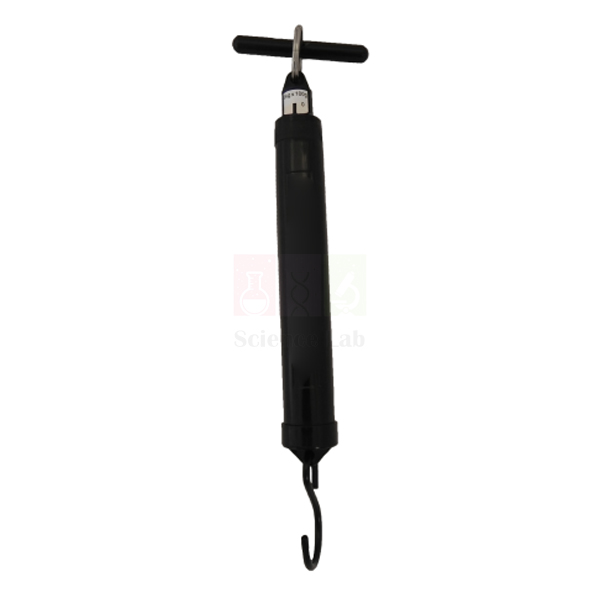
Scale, Infant, Spring Type, 5kg x 25g
For newborns and young infants, this tubular hanging scale reads 0–5 kg in 25 g steps, with a precision of ±25 g. It works without power: hang it from a door frame, beam or tripod, attach a sling or weighing trousers to the lower hook and reset to zero. The pointer settles in less than 3 seconds.
5 kg tubular infant scale specifications
| Parameter | Detail |
|---|---|
| Type | Mechanical infant scale, spring type, tubular |
| Measuring range | 0–5 kg |
| Minimum graduation | 25 g |
| Precision | ±25 g |
| Reading time | Less than 3 seconds |
| Zero setting | Easy zero adjustment / reset-to-zero (tare) function |
| Hooks and handle | 2 non-removable hooks: upper for hanging, lower for a sling or weighing trousers; easy-to-hold handle |
| Materials | Body stainless steel, epoxy-coated steel or ABS-type plastic; dial metal or ABS-type plastic; calibration screw stainless steel or ABS-type plastic |
| Build | Rust-proof mechanics; UV-resistant plastic parts; splash proof, shock resistant, light-weight; smooth finish for cleaning |
| Product code | SLE/AE/02 |
| Minimum order | 10 units |
| Dispatch | Usually within 7 to 10 working days |
| Supplied by | ScienceLab (Jain Scientific Equipments Pvt Ltd), Ambala, India |
Newborn weighing tasks with the 5 kg spring scale
Birth-weight record at a home visit. Hang the scale from a door frame or a tripod, hook the sling onto the lower hook and reset to zero with the sling empty. Lay the undressed newborn in the sling, read the weight to the nearest 25 g once the pointer steadies, and write it down with the date.
Follow-up weighing. Use the same scale and the same sling at each visit so that successive readings can be compared. Once the baby nears 5 kg, move to the 25 kg dial spring scale fitted with weighing trousers for the seated child.
Frequently Asked Questions About the Scale, Infant, Spring Type, 5kg x 25g
Should the baby be weighed with clothes on?
No. Weigh the baby undressed, or in a dry nappy only if the room is cold. At 25 g steps, a vest, a blanket or a wet nappy shows on the reading and makes one visit hard to compare with the next.
Does the time of the weighing make a difference?
It can. A feed or a full nappy changes a small baby's weight by an amount the 25 g divisions will show. Weigh at a similar time at each visit, and before a feed where possible, so that changes reflect growth rather than timing.
How is the weight of the sling removed from the reading?
Hang the empty sling or trousers on the lower hook and use the zero adjustment to bring the pointer back to zero. The scale then shows only the baby's weight. Reset the zero whenever you change to a different carrier.
How do I read the scale without error?
Keep the scale at the level of your eyes and wait for the pointer to steady, which takes under 3 seconds. Make sure the baby, the sling and your hands touch nothing else. Read to the nearest 25 g mark.
How can I check the scale is still reading correctly?
Hang a known mass from the lower hook and compare the reading with its marked value. Do this before a run of home visits and whenever the scale has been dropped. A wrong result can be corrected with the calibration screw.
Where can the scale be hung during a home visit?
Any firm point that holds the scale at about eye level will do; give it a firm pull before the baby goes in. The upper hook takes the load. Between houses, carry the scale by its handle with the sling folded away.
Carriers and scales for infant and child weighing
- Sling for use with Scale
- Weighing Trousers
- Scale, Infant, Spring Type, 25kg x 100g
- Scale, Infant, Clinic, Beam Type, 16kg x 10g
- Electronic Scale Baby
To request a quotation, send the product name, code and quantity through our contact page or add the item to your enquiry cart.
Last updated: 14 November 2026

Weighing Trousers
Weighing Trousers hold a baby or young child upright under a hanging spring scale. A pre-shaped seat keeps the child centred, while a 124–130 cm suspension strap runs along both side seams and forms the loop that goes over the scale's lower hook. The double-stitched, non-elastic fabric takes children up to 25 kg.
Weighing trousers sizes and construction
| Parameter | Detail |
|---|---|
| Type | Weighing trousers with strap for suspension from a spring scale |
| Load capacity | Holds infants/children up to 25 kg |
| Waist | 29 cm (58 cm circumference) |
| Height | 27 cm at centre; 16 cm at the side |
| Crotch width | 11–15 cm |
| Leg openings | 13–14 cm (26–29 cm circumference) |
| Suspension strap | 124–130 cm long, running from the leg opening along the side seams and fixed on both sides of the trousers |
| Fabric and seams | Soft, flexible and non-elastic; easily maintained; double-stitched seams |
| Shape | Pre-shaped for easy placing of the infant |
| Product code | SLE/AE/03 |
| Minimum order | 10 units |
| Dispatch | Usually within 7 to 10 working days |
| Supplied by | ScienceLab (Jain Scientific Equipments Pvt Ltd), Ambala, India |
Child weighing routines with weighing trousers
Two-person weighing at a survey station. One team member hangs the 25 kg dial spring scale at eye level and hooks the strap loop onto its lower hook. The second slips the child's legs through the openings and lowers the child until the trousers carry the weight. The reader calls out the figure and the recorder writes it down.
Rotating pairs in a busy session. Number each pair and set the scale to zero every time a different pair goes on the hook. A soiled pair goes straight into a laundry bag, and the next child goes into a clean one. Wash and dry the used pairs at the end of the day before they are packed again.
Weight and height at one visit. After weighing, the child moves to a portable length-height board for standing height, or lies on it for length if under two years old. Babies who cannot yet sit skip the trousers and are weighed lying flat in the infant weighing sling.
Frequently Asked Questions About the Weighing Trousers
How is a child put into the weighing trousers?
Hang the empty trousers from the scale by the strap loop and set the zero. Hold the child under the arms, slip both legs through the leg openings and lower the child slowly until the trousers take the full weight. The feet should hang clear of the floor before you read.
Should the scale be zeroed again for every child?
Yes, check the zero with the empty trousers hanging before each child. Re-set it whenever a different pair goes on the hook, because washed pairs can differ slightly in weight. The check takes a few seconds and keeps each reading true to the child alone.
What if a child soils the trousers during weighing?
Lift the child out, hang a clean pair, zero the scale again and repeat the weighing. Put the soiled pair aside for washing and do not use it again that day. Carrying several pairs to each session keeps the queue moving when this happens.
Are weighing trousers suitable for a child who cannot sit up?
Not as a first choice. The trousers are pre-shaped for a child who sits upright. A newborn who must lie flat is better weighed in the sling for use with a scale, which holds up to 5 kg. A heavier child who cannot sit can be held by an adult on the mother and child scale.
How can weighing in trousers be made more comfortable for the child?
Check that the leg openings sit loosely around the thighs and that nothing pinches at the crotch. Keep the caregiver in sight, talk to the child, and lift the child out as soon as the reading is taken. Lower a sick child more slowly and support the back while placing them.
What if a caregiver does not want the child weighed in trousers?
Explain that the trousers carry the child for only a few seconds and let the caregiver help place the child. If they still object, the caregiver can stand on the mother and child scale holding the child, so the trousers are not needed.
Hanging scales and growth-monitoring tools
- Scale, Infant, Spring Type, 25kg x 100g
- Scale, Infant, Spring Type, 5kg x 25g
- Sling for use with Scale
- MUAC, Child 11.5 Red
- Portable Baby/Chd/adult L-H
To request a quotation, send the product name, code and quantity through our contact page or add the item to your enquiry cart.
Last updated: 14 November 2026

Plastic Wash Bottle 250ml
Plastic Wash Bottle 250ml (Product Code: SLE/MU/02) is a 250 ml plastic wash bottle with a screw closure and riser tube, used to dispense diluted solutions in small, controlled amounts in wards, dressing rooms and clinical laboratories. Nurses and lab staff use it because squeezing the round body pushes liquid up the riser tube, and the bottle is supplied assembled and ready to fill. It is supplied by Jain Scientific Equipments Pvt Ltd (ScienceLab), Ambala, India, a lab plastic ware supplier in India.
Specifications
| Parameter | Detail |
|---|---|
| Capacity | 250 ml |
| Material | Plastic |
| Body | Round, mouth diameter smaller than the body |
| Closure | Screw closure with riser tube |
| Condition on supply | Bottle assembled |
| Cleaning between dilutions | 0.5% detergent-disinfectant solution for medical devices (25 ml, one stroke of a dosing pump, per 5 litres of water) |
| Product code | SLE/MU/02 |
| Supplied by | Jain Scientific Equipments Pvt Ltd (ScienceLab), Ambala, India |
What Is the 250ml Plastic Wash Bottle Used For?
A wash bottle puts a diluted solution exactly where it is needed, whether that is rinsing skin, wetting a dressing or rinsing equipment on a bench. The riser tube draws liquid from the bottom of the bottle, so a gentle squeeze produces a steady stream without removing the cap. The 250 ml size fits in one hand and on a dressing trolley.
The product's instructions set out a simple routine. Write the contents, the dilution date and the expiry date of the solution on the bottle, and make sure the seal is watertight. Rinse the bottle thoroughly before filling it again, and between two different dilutions clean and disinfect it with a 0.5% detergent-disinfectant solution for medical devices, made up as 25 ml, one stroke of a dosing pump, in 5 litres of water.
Supplier
ScienceLab, the trading name of Jain Scientific Equipments Private Limited in Ambala, Haryana, supplies this wash bottle to hospitals, clinics, laboratories, dealers and importers. It can be added to an order for other ward utensils or laboratory plasticware so that one quotation covers the lot. The company profile gives more background.
Related Medical Utensils
Items used alongside the 250ml wash bottle:
- Plastic Bottle 1 litre With Screw Cap — larger stock bottle for refilling the wash bottle.
- Measuring Jug 1 litre — for measuring water when making up dilutions.
- Wash Bottle LDPE with Narrow Mouth — an LDPE wash bottle from the laboratory range.
- Polythene Wash Bottles — polythene wash bottles for general lab rinsing.
See more Medical Utensils.
Frequently Asked Questions
What is the capacity of the Plastic Wash Bottle 250ml?
The Plastic Wash Bottle 250ml holds 250 ml. It has a round plastic body with a mouth narrower than the body, a screw closure and a riser tube, and it is supplied assembled.
How should the Plastic Wash Bottle 250ml be labelled?
Its instructions say to write the contents, the dilution date and the expiry date of the solution on the Plastic Wash Bottle 250ml. Clear labelling stops staff using an old or wrong dilution, especially when several bottles are on one trolley.
How do I clean the wash bottle between dilutions?
Between two dilutions, the Plastic Wash Bottle 250ml must be cleaned and disinfected with a 0.5% detergent-disinfectant solution for medical devices, which is 25 ml, one stroke of a dosing pump, in 5 litres of water. Rinse it thoroughly before refilling.
Is the 250ml wash bottle leak-proof?
The instructions for the Plastic Wash Bottle 250ml say to make sure the seal is watertight, so check the screw closure each time the bottle is filled. If the seal no longer closes properly, replace the bottle rather than risk leaks on a trolley or bench.
Who supplies the Plastic Wash Bottle 250ml?
Jain Scientific Equipments Pvt Ltd, trading as ScienceLab in Ambala, Haryana, India, supplies the Plastic Wash Bottle 250ml. Hospitals, clinics, laboratories, dealers and importers in India and international markets can order it in any quantity they need.
Request a Quote
For a quotation on the Plastic Wash Bottle 250ml, send the number of bottles through the contact page or add the item to the enquiry cart with product code SLE/MU/02.
Last updated: 24 September 2026

ID Bracelet, Child, Red
Fitted at admission or registration, this red identification band stays on a child's wrist until it is cut off. The transparent, non-stretch plastic takes details written with a ballpoint pen, or a paper strip slipped inside, and its clip locks once and cannot be reopened. Centres often use red to mark one group of children and blue for another.
Red child ID band specifications
| Parameter | Detail |
|---|---|
| Type | Personal identification bracelet for paediatric use; single use, tamper proof, transparent, non-stretch |
| Colour | Red |
| Band material | Supple non-stretch plastic, LDPE-based, vinyl or equivalent |
| Resistance | Water, common solvents and soaps |
| Feel | Strong and durable, soft to the touch |
| Closure | Strong single-use clip that cannot be removed once clicked into position |
| Writing | Common ballpoint pen directly on the band (non-erasable), or on a paper strip inserted inside the transparent band |
| Dimensions | Approximately 1 cm x 25 cm (w x l) |
| Length adjustment | Adjustable at the closure; the free end can be trimmed next to the clip |
| Product code | SLE/AE/04 |
| Minimum order | 10 units |
| Dispatch | Usually within 7 to 10 working days |
| Supplied by | ScienceLab (Jain Scientific Equipments Pvt Ltd), Ambala, India |
Fitting and checking the red ID band
Fitting at intake. Write the child's name, number and date, let the ink dry, then wrap the band round the wrist, leaving a little slack. Press the clip until it locks and cut the spare tail close to the clip. The child then moves on to the MUAC tape and the spring-type infant scale.
Checking at each contact. Before a weight from the Electronic Scale Baby or any other measurement goes into the register, staff read the band aloud and match it with the register entry. A band that has slipped or faded is replaced on the spot.
Removal at discharge. When the child leaves the ward or programme, cut the band with blunt-ended scissors next to the clip and throw it away. The removal date goes into the register with the final measurements.
Frequently Asked Questions About the ID Bracelet, Child, Red
How tightly should the red band be fitted?
Snug, but with room for one finger between the band and the wrist. Adjust the length at the closure, press the clip until it locks, then trim the free end next to the clip so it cannot catch on bedding or clothes. The band is about 1 cm wide and 25 cm long before trimming.
Can the red band be reopened or used again?
No. The clip is single use and cannot be removed once it clicks into position, and the plastic does not stretch over the hand. The only way to take the band off is to cut it, so a cut or missing band shows at once that it has been removed.
When should the band be put on, and how long does it stay?
Fit it at admission or registration, before weighing or any other step, so every record that follows can be matched to the child. It then stays on for the whole stay or programme period and is checked at each contact.
Does a red band have a fixed meaning?
Not on this band itself; what red stands for is set by your facility. Many hospitals already use red to flag allergies, so check the local colour scheme first. Where red is free, it can mark one enrolment group while blue marks another.
Is the band comfortable for long wear?
The band is soft to the touch and made of supple plastic, strong enough to last a long stay. During routine care, check the fit and the skin under the band. Replace it with a new band if it has become tight or if the details are fading.
Items used when registering and screening children
- ID Bracelet, Child, Blue
- MUAC, Child 11.5 Red
- Scale, Infant, Spring Type, 25kg x 100g
- Weighing Trousers
- Electronic Scale Baby
To request a quotation, send the product name, code and quantity through our contact page or add the item to your enquiry cart.
Last updated: 14 November 2026

Safety Pin Medium Size
Safety Pin Medium Size (Product Code: SLE/MU/03) is a general-purpose medical safety pin used to secure wraps and bandages in wards, clinics, first aid points and health programmes. Nursing staff and first-aiders stock it because the medium length of approximately 40mm suits most bandage widths, and the nickel plated brass construction gives a smooth pin with a covered point. It is supplied by Jain Scientific Equipments Pvt Ltd (ScienceLab), Ambala, India, as a lab consumables supplier in India.
Specifications
| Parameter | Detail |
|---|---|
| Size | Medium |
| Length | Approximately 40mm |
| Material | Nickel plated brass |
| Purpose | Securing wraps and bandages |
| Use category | General purpose medical use |
| Product code | SLE/MU/03 |
| Supplied by | Jain Scientific Equipments Pvt Ltd (ScienceLab), Ambala, India |
What Is the Medium Safety Pin Used For?
A safety pin is the simplest way to fasten the free end of a roller bandage, close a triangular bandage used as a sling, or hold a wrap in place over a dressing. The clasp covers the point once the pin is closed, which makes it safer to leave on a patient than an open pin. At about 40mm, the medium size is long enough to pass through several bandage layers while staying small enough not to catch on clothing.
When pinning, slide a finger between the bandage and the skin so the point never touches the patient, then close the clasp fully. Keep pins in a closed container on the dressing trolley or in the first aid kit, and discard any pin whose clasp no longer locks. Hospitals, schools, workplaces and relief programmes typically buy them in bulk to restock first aid boxes and ward supplies.
Supplier
Safety pins are part of the medical utensils range supplied by Jain Scientific Equipments Private Limited, whose trading name is ScienceLab, from Ambala, Haryana. Hospitals, NGOs, schools, dealers and importers can order them with bandages, dressings and other ward items on one enquiry. The ScienceLab profile explains more about the company.
Related Medical Utensils
Items used with safety pins in bandaging and first aid:
- Bandage, Gauze, 8cmx4m, Roll — a gauze roller bandage that the pin can secure.
- Bandage, Elastic, 7.5cmx5m, Roll — an elastic bandage for support wraps.
- Emergency First Aid Kit — a wall-mounted kit that includes safety pins.
- Dressing Tray Stainless Steel — a tray to lay out pins and dressings.
View the Medical Utensils category.
Frequently Asked Questions
How long is the Safety Pin Medium Size?
The Safety Pin Medium Size is approximately 40mm long. This medium length is suitable for fastening the end of a roller bandage or closing a triangular bandage, and it passes easily through several layers of fabric.
What material is the Safety Pin Medium Size made of?
The Safety Pin Medium Size is made of nickel plated brass. The plating gives the pin a smooth finish that slides through bandage material, and brass does not rust in the way plain steel can in humid storage.
What is the Safety Pin Medium Size used for?
The Safety Pin Medium Size is a general-purpose medical safety pin for securing wraps and bandages. Typical uses are fastening roller bandages, pinning slings and holding wraps over dressings in wards, clinics and first aid kits.
Is the Safety Pin Medium Size sterile?
Sterility is not stated for the Safety Pin Medium Size, and it is intended for securing wraps and bandages rather than for contact with open wounds. Ask us through the contact page if you need details of packing before ordering.
Who supplies the Safety Pin Medium Size?
Jain Scientific Equipments Pvt Ltd, trading as ScienceLab from Ambala, Haryana, India, supplies the Safety Pin Medium Size. It can be quoted in bulk for hospitals, schools, NGOs, dealers and importers in India and international markets; state the quantity required.
Request a Quote
To order the Safety Pin Medium Size, send the quantity and delivery location through the contact page or add the pins to the enquiry cart with your bandages and dressings.
Last updated: 24 September 2026