- Physics Lab Equipment
- Chemistry Lab Equipment
- Biology Lab Equipment
- Anatomical Lab Equipment
- Learning
- Educational Lab Equipment
- Magnets
- Agriculture
- Astronomy
- Earth Science
- Geography Lab Equipment
- Safety Lab Coat
- Laboratory
- Meteorological
- Electricity & Magnetism
- Heat
- School Lab Equipment
- Lab Glassware
- Science Lab Equipment
- Tvet Lab Equipment
- Robotics Kits Supplier and Manufacturer for Schools India
- Math Lab Equipment Manufacturers and Exporters in Ambala
- STEM Kits Manufacturers and Supplier India
- Engineering Lab Equipment
- Hospital Lab Equipment
- Water, Sanitation & Hygiene Supplies
- Cold Chain, Solar & Communication Equipment
- Nutrition
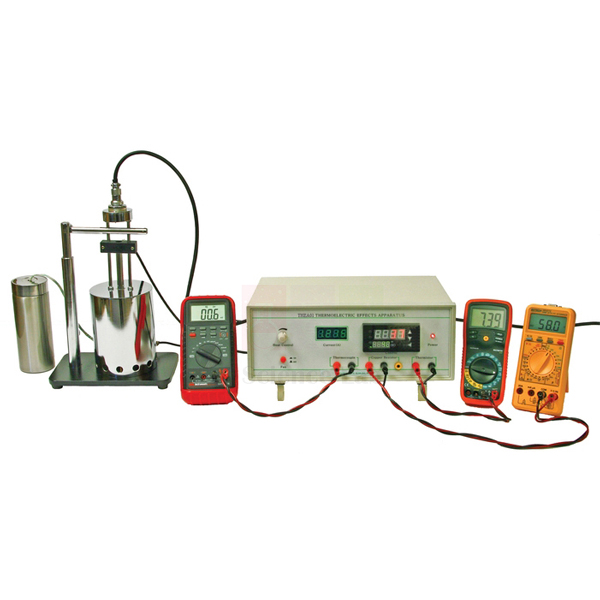
Thermoelectric Effects Apparatus
Thermoelectric Effects Apparatus (Product Code: SLE/H/14) is a bench apparatus for studying how temperature is measured and controlled in industrial practice. It combines an oven with a brass heating block, a regulated heater supply, a configurable P/PI/PD/PID digital controller and a K-type (Chromel-Alumel) thermocouple, and it is designed for two types of investigation, including the thermal characteristics and measuring techniques of three devices commonly used in industrial and technical thermometry. College physics, instrumentation and engineering departments use it for advanced heat practicals. It is made by Jain Scientific Equipments Pvt Ltd (ScienceLab), Ambala, as a thermometry apparatus for laboratories in India and international markets.
Specifications
| Parameter | Detail |
|---|---|
| Investigations | 2 types, including the thermal characteristics and measuring techniques of 3 devices used for industrial and technical thermometry |
| Heater supply | Regulated voltage source, 0 to 36 V DC, 10-turn potentiometer control |
| Current display | Digital, 0.000 to 1.999 A |
| Cooling fan | 12 V DC, 0.14 A, on/off switch control |
| Digital controller | Configurable for P, PI, PD or PID mode |
| Process value (PV) range | 0 to 400 °C (factory default, settable) |
| PV temperature display | 4-digit, resolution 1 °C or 0.1 °C |
| SV temperature display | 4-digit, resolution matches PV |
| Controller parameters | 24 settable parameters; 2 parameters determined by apparatus configuration |
| Power input | 110 V AC, 60 Hz, 65 W |
| Fuse | Miniature type, 5 x 20 mm, F1.5 A, 250 V |
| Oven dimensions | 13 cm H x 35 cm W x 31 cm D |
| Brass heating block | 40 mm diameter x 67 mm H |
| Weight | 5.2 kg (11-1/2 lb) |
| Thermocouple | K-type (Chromel-Alumel) |
| Chromel composition | Ni 90%, Cr 10% |
| Alumel composition | Ni 95%, Mn 2%, Al 2%, Si 1% |
| Thermocouple output | Approximately 4 mV for a 100 °C difference between hot and cold junctions |
| Documentation | Instruction manual with sample activities and sample data |
Typical Use
A typical session places the thermocouple's cold junction in ice water and its hot junction in the brass heating block. Students set a target on the controller, let the block settle, and record the thermocouple voltage at each step. Between room temperature and 100 °C the output is conveniently read with a digital multimeter of 0.01 mV resolution or a suitable data logger, and plotting voltage against temperature difference shows the roughly 4 mV per 100 °C behaviour of a K-type junction. The ice-water temperature should be checked before and after the run with an independent thermometer or temperature probe so the cold-junction reference is known.
The same bench also teaches process control: switching the controller between P, PI, PD and PID modes lets students watch overshoot and settling change, while the heater current display and the 10-turn potentiometer show how supply voltage drives heating. The fan speeds up cool-down between runs. The sample activities in the manual make it straightforward to plan a lab sequence, which suits it to engineering lab equipment lists for instrumentation and thermal-science courses.
Manufacturer
This apparatus is manufactured by Jain Scientific Equipments Private Limited, which sells its laboratory range under the ScienceLab name and operates from Ambala in Haryana, India. Our company profile covers the firm's background and the departments it supplies.
Related Laboratory Equipment
Instruments and apparatus that fit the same thermometry workflow:
- Digital Multimeter — for reading the thermocouple's millivolt output; check its resolution against the 0.01 mV the manual recommends
- Micro Voltmeter — an option for measuring very small thermoelectric voltages
- Digital Thermometer — an independent check of the ice-water reference before and after a run
- Glass Beaker — to hold the ice-water bath for the cold junction
- Measuring Vapor Apparatus — a companion apparatus for advanced thermodynamics practicals
See the complete Heat apparatus range for further thermal experiments.
Frequently Asked Questions
Which thermocouple does the apparatus use?
A K-type Chromel-Alumel thermocouple: Chromel is Ni 90% and Cr 10%; Alumel is Ni 95%, Mn 2%, Al 2% and Si 1%.
What output voltage should students expect?
About 4 mV for a 100 °C difference between the hot and cold junctions, so a meter with 0.01 mV resolution or a data logger is recommended.
Is a multimeter supplied?
A multimeter is not listed among the items supplied. You can use one you already have or ask us to include one in the quotation.
What mains supply does it need?
The listed power input is 110 V AC, 60 Hz, 65 W. If your laboratory uses a different mains supply, contact us to confirm the power configuration before ordering.
Which control modes and ranges are available?
The controller can be set to P, PI, PD or PID mode, with a factory-default process range of 0 to 400 °C that can be changed and 24 settable parameters.
Can you provide calibration documents?
Calibration paperwork is not part of the standard listing; please raise any requirement with us through the contact page so it can be discussed.
Do you supply colleges in quantity or abroad?
Yes, we supply institutions and distributors in India and international markets; include quantity, destination and warranty questions in your enquiry.
Request a Quote
To receive a quotation for the Thermoelectric Effects Apparatus, write to us via the contact page or add the item to your enquiry cart.
Last updated: 24 September 2026
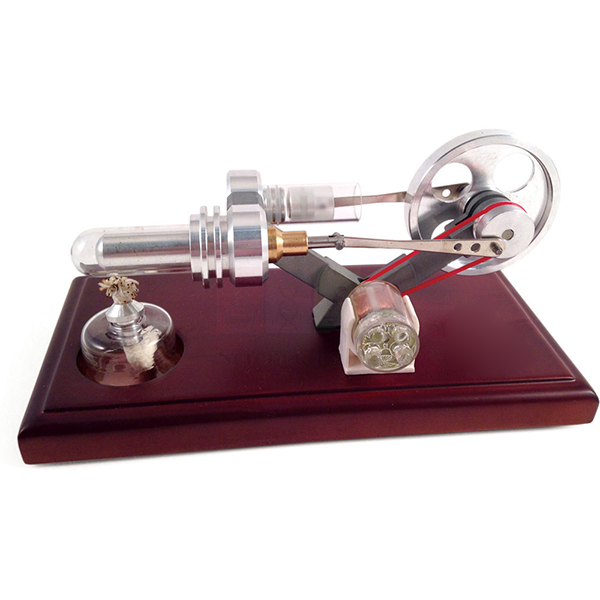
Stirling Engine with Alcohol Burner
Stirling Engine with Alcohol Burner (Product Code: SLE/H/15) is a working demonstration engine that runs on heat applied from outside the cylinder. The alcohol burner creates a temperature difference across the engine, and that difference moves the pistons and flywheel, so students watch heat being turned into mechanical and electrical energy in front of them. It arrives ready to run, and every moving part stays in view. Science teachers in middle and secondary schools use it to introduce heat engines, and it is made by Jain Scientific Equipments Pvt Ltd (ScienceLab), Ambala, as a ready-to-run centrepiece for a heat energy science kit.
Specifications
| Parameter | Detail |
|---|---|
| Type | Stirling engine demonstration model |
| Heat source | Alcohol burner (external heat source) |
| Operating principle | External heating creates a temperature difference that drives the pistons and flywheel |
| Energy conversion shown | Heat into mechanical and electrical energy |
| Visibility | All working parts of the engine are easy to see |
| Base dimensions | 3-1/2 x 7 in |
| Height to top of engine | 3-1/4 in |
| Assembly | None required |
| Construction | Built to last through many classroom uses |
| Supplied with | Instructions |
Typical Use
The teacher fills and lights the alcohol burner beneath the hot end, waits for the engine to warm, and gives the flywheel a light turn to start it. Once running, the class can follow the pistons moving out of step with each other and link what they see to the heating, expansion, cooling and contraction of the working gas. Removing the flame and watching the flywheel slow as the temperature difference fades is a simple way to show that a heat engine needs both a hot and a cooler side to do work, and it naturally leads into talk about efficiency and real engines.
Because nothing needs assembling, the model can move between classrooms and still be running within minutes of lighting the burner, which makes it a practical demonstration model for the physics lab and for science exhibitions. Stand it on a stable, heat-resistant surface, keep hands off the hot end until it has cooled, and refuel the burner only when the flame is out and the burner is cold.
Manufacturer
The Stirling Engine with Alcohol Burner comes from Jain Scientific Equipments Private Limited, an Ambala, Haryana company whose laboratory products carry the ScienceLab trade name. Find out more about who we are in the company profile.
Related Laboratory Equipment
Pair this engine with the following for a fuller heat-and-energy lesson:
- Thermometer, Infra Red, Hand Held — to compare hot-end and cold-end temperatures without touching the engine
- Stirling Engine — the separately listed Stirling model in our Heat range
- Hand-Powered Engine Models — for comparing the Stirling design with other engine cycles
- Energy Transfer Balls — shows the opposite conversion, mechanical energy into heat
- Alcohol Burner, Wickless — a separate burner for other bench-heating tasks
Explore further thermal demonstrations in the Heat category.
Frequently Asked Questions
Does the engine need to be assembled?
No. It is supplied ready to run with instructions, so no assembly is required.
Is fuel for the burner included?
Fuel is not listed among the supplied items. Use the type of alcohol given in the instructions, sourced locally.
How large is the model?
The base measures 3-1/2 x 7 in, and the engine stands 3-1/4 in to its top, compact enough for a front-bench demonstration.
Can students see how it works?
Yes. All working parts are in plain view, including the pistons and the flywheel.
Can I heat it with something other than the alcohol burner?
The engine runs from an external heat source and is supplied with the alcohol burner for that job. Please check with us before trying a different heat source.
How long will it last in regular class use?
It is built to last through many uses; handle hot parts only after cooling and store it dry. Warranty terms are stated in each quotation.
Can you supply several units for a school group or export order?
Yes. Tell us the quantity and whether delivery is within India or to international markets, and we will quote accordingly.
Request a Quote
Ask for pricing on the Stirling Engine with Alcohol Burner through our contact page, or collect items for one request in the enquiry cart.
Last updated: 24 September 2026
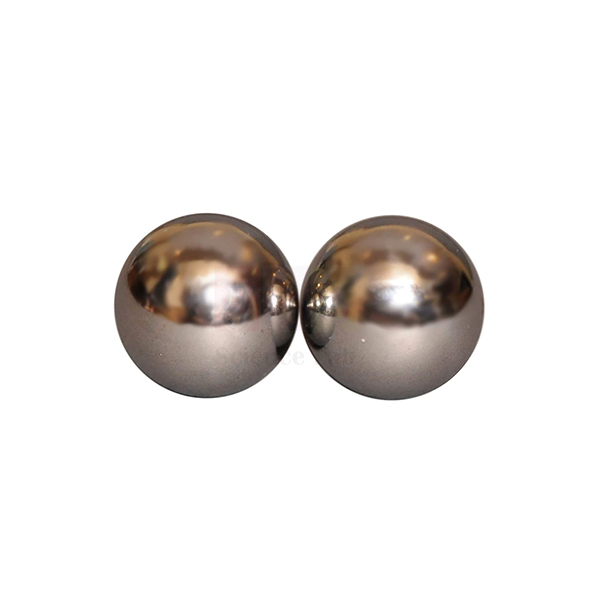
Energy Transfer Balls
Energy Transfer Balls (Product Code: SLE/H/16) are a pair of steel balls that make the link between motion and heat impossible to forget. When the two balls collide on a piece of paper, the impact generates enough heat to burn a hole in it — a vivid, quick transformation of mechanical energy into heat energy. Teachers use them to open or round off lessons on energy conservation and heat, and they are made by Jain Scientific Equipments Pvt Ltd (ScienceLab), Ambala, as a compact physics demonstration kit for schools in India and international markets.
Key Details
| Parameter | Detail |
|---|---|
| Type | Energy transformation demonstration |
| Contents | 2 steel balls |
| Effect shown | The collision generates enough heat to burn a hole in a piece of paper |
| Concept | Mechanical energy transformed into heat energy |
| Supplied with | Instructions |
| Suitable for | Teacher demonstrations and supervised student activities in energy and heat units |
Typical Use
Ask the class to predict what will happen, then place a small piece of paper on one ball and bring the second ball down sharply onto it. Holding the paper up to the light reveals a tiny scorched hole where the balls met. The discussion that follows is the real lesson: the kinetic energy of the moving ball is not lost but is concentrated as internal energy at a very small contact point, raising the temperature enough to char the paper. Everyday links — a hammered nail feeling warm, brakes heating up on a long descent — help students see the same principle outside the lab.
The demonstration takes seconds and needs no power or setup, so it slots easily into a busy period or a revision class, and it complements other physics lab equipment for schools in India and overseas that deals with heat and energy. Wear safety goggles, keep fingers well away from the point of impact, and use thin paper so the result is easy to see. Wipe the balls dry after use so the steel stays clean.
Manufacturer
These steel balls are produced by Jain Scientific Equipments Private Limited, which trades as ScienceLab from Ambala, Haryana. The company is an incorporated private limited company (CIN U29309HR2020PTC087597) and manufactures at its licensed factory at 449, HSIIDC Industrial Area, Saha, Ambala (Factory Licence AMB-ONLINE-CHD-J-414). Read the company profile for more about us.
Related Laboratory Equipment
Other apparatus for teaching energy conversion and heat:
- Stirling Engine with Alcohol Burner — shows the reverse journey, heat becoming mechanical energy
- Potential And Energy Kit — for exploring the mechanical energy stored and released before a collision
- Heat Transfer Kit — a follow-on to study how heat moves once it has been produced
- Safety Goggles — eye protection for whoever strikes the balls
Our Heat range lists more thermal teaching apparatus.
Frequently Asked Questions
What is in the set?
Two steel balls and instructions for the demonstration.
Do I need special paper?
No special paper is listed; an ordinary piece of paper is used, and thin paper makes the burnt hole easiest to see.
Is the demonstration safe for students to try?
Yes, with supervision. Students should wear goggles and keep fingers clear of the impact point.
Which topic does it support?
It shows mechanical energy being transformed into heat energy, supporting lessons on energy conservation and internal energy.
How should the balls be stored?
Wipe them clean and dry after each lesson and keep them in a dry cupboard so the steel surfaces stay in good condition.
What do you need for an institutional quotation?
Send the number of sets, the delivery address in India or abroad and any other items you want quoted through our contact form; warranty terms are confirmed in the quotation.
Request a Quote
For a price on Energy Transfer Balls, send us an enquiry or add them to the enquiry cart.
Last updated: 24 September 2026
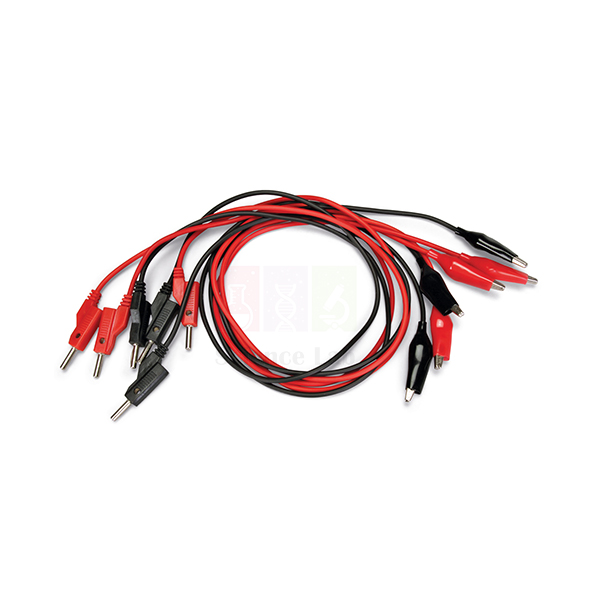
Banana/Alligator Cords
Banana/Alligator Cords (Product Code: SLE/EM/01) are colour-coded connecting leads with a stacking banana plug at one end and an alligator clip at the other, so students can join socketed instruments to bare wires, electrodes and component leads in seconds. Each cord is made of insulated 18-SWG copper wire, 24 in long, and the pack of 6 holds 3 red and 3 black leads for clear polarity. Physics, chemistry and electronics teachers keep them as everyday school physics lab equipment for circuit, meter and electrochemistry practicals. They are made by Jain Scientific Equipments Pvt Ltd (ScienceLab), Ambala.
Specifications
| Parameter | Detail |
|---|---|
| Connector, end 1 | Stacking banana plug |
| Connector, end 2 | Alligator clip |
| Conductor | Insulated 18-SWG copper wire |
| Length | 24 in |
| Pack size | 6 cords: 3 red and 3 black |
| Compatibility | Connects easily to a variety of terminals |
Typical Use
The banana end plugs into power supplies, meters and terminal blocks, and because the plug stacks, a second lead can be pushed into the back of the first to take two connections from one socket – handy when a voltmeter must be placed across a component already in circuit. The alligator end grips items that have no socket at all: resistance wire, battery tabs, electrode plates, lamp holder screws or component legs. Red for positive and black for negative helps students trace their circuit and check it before switching on.
Typical practicals include Ohm's law and series-parallel circuits, electrolysis and voltaic cell experiments, and connecting a multimeter to any AC/DC circuits experiment kit. Use the cords for the low-voltage circuits common in student work, never for mains wiring. Remove them by the plug or clip rather than pulling the wire, coil them loosely after class, and set aside any cord whose insulation is cut or whose clip no longer closes firmly.
Manufacturer
These leads are made under the ScienceLab brand of Jain Scientific Equipments Private Limited, a producer of electrical, physics and chemistry apparatus based in Ambala, Haryana. The company equips laboratories in India and international markets; our company profile tells you more.
Related Electricity Equipments
These items are commonly connected with the cords in the same experiments:
- Digital Multimeter — measure voltage and current once the circuit is wired.
- Holder for ‘D’ Dry Cells — a battery supply the clips attach to directly.
- Student Voltaic Cell Set — electrode cell that the leads connect to a meter.
- Crocodile Clips & Leads — clip-to-clip leads for components without sockets at either end.
- Banana Plug Connectors Leads — plug-to-plug leads for socket-to-socket connections.
Browse the full Electricity Equipments category for meters, coils and electrolysis apparatus.
Frequently Asked Questions
How many cords are in a pack, and in what colours?
Six cords per pack: 3 red and 3 black.
How long is each cord and what wire is used?
Each cord is 24 in long and made from insulated 18-SWG copper wire.
What does "stacking" banana plug mean?
The plug has a socket in its back, so another banana plug can be inserted into it. This lets you take two or more connections from a single terminal.
Will they fit our existing meters and power supplies?
The banana end fits terminals that accept banana plugs, and the alligator clip grips posts, wires and component leads. If you are unsure about a particular socket, send us its details through the contact page.
Can we order other lengths or colours?
This listing covers 24 in cords in red and black. Ask us about other options when you enquire, and we will confirm what can be supplied.
What should a bulk order request include?
The product code SLE/EM/01, the number of packs, and any meters or cells to be quoted together, with your delivery location in India or abroad.
Request a Quote
Order Banana/Alligator Cords for your laboratory through our contact page, or add packs to the enquiry cart with the instruments they will connect.
Last updated: 24 September 2026
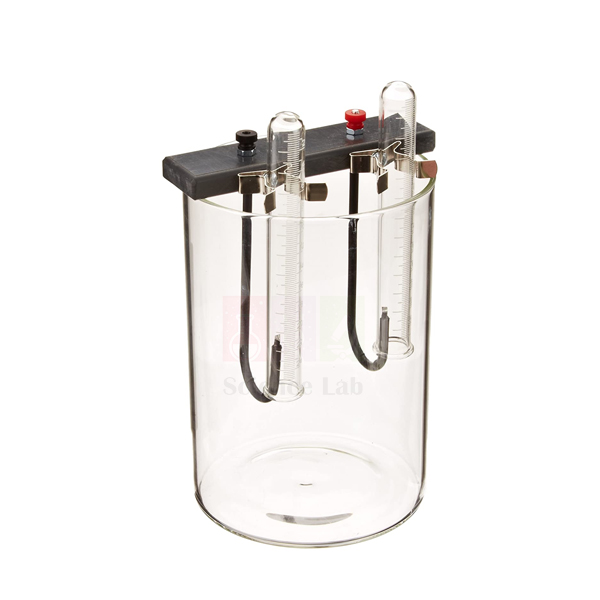
Brownlee Electrolysis Apparatus
The Brownlee Electrolysis Apparatus (Product Code: SLE/EM/02) is a compact electrolysis apparatus for showing how an electric current splits water or other electrolytes into gases that collect in separate tubes. Designed for simplicity and economy, it pairs a nonconducting support carrying binding posts and 2 insulated platinum electrodes with 2 inverted 6 in test tubes and a 4 1/2 x 5 in battery jar. It is equally suited to the lecture table and to student laboratory work in school chemistry and physics, and it is made by Jain Scientific Equipments Pvt Ltd (ScienceLab), Ambala.
Specifications
| Parameter | Detail |
|---|---|
| Design | Simple, economical electrolysis set for lecture table or student laboratory |
| Support | Nonconducting support equipped with binding posts |
| Electrodes | 2 insulated platinum electrodes, connected to the binding posts |
| Gas collection | 2 inverted test tubes, 6 in |
| Vessel | Battery jar, 4 1/2 x 5 in |
Typical Use
For the classic electrolysis of water, the battery jar is filled with a dilute electrolyte prepared by the teacher, each 6 in test tube is filled with the same solution and inverted over one platinum electrode, and a low-voltage DC source is connected to the binding posts. Bubbles rise immediately and displace the liquid in the tubes; hydrogen collects at the negative electrode in roughly twice the volume of oxygen at the positive one, which gives students a visual confirmation of the formula of water. The gases can then be tested with a lighted or glowing splint under supervision.
Because the electrodes are platinum they resist attack by the electrolyte, so the same set can be reused for comparing different salt solutions. As economical chemistry lab equipment for schools, it is a lighter alternative to a Hoffman voltameter when bench space or budget is limited. Wear eye protection, keep the supply at low voltage, disconnect before handling the tubes, and rinse the jar, tubes and electrodes with water after every use.
Manufacturer
Jain Scientific Equipments Private Limited, which trades as ScienceLab, is an Ambala, Haryana maker of chemistry, physics and electrical teaching apparatus. Electrolysis sets like this one are supplied to schools and colleges in India and international markets; visit our company profile for background.
Related Electricity Equipments
Use these items with the Brownlee set or as alternatives within the same topic:
- Hoffman Electrolysis Apparatus — graduated alternative for measuring gas volumes precisely.
- Banana/Alligator Cords — leads to connect the binding posts to your DC source.
- Holder for ‘D’ Dry Cells — a simple battery supply for low-voltage electrolysis.
- Conductivity of Solutions Apparatus — shows which liquids conduct before they are electrolysed.
- Digital Multimeter — monitors the current flowing through the cell.
More electrical apparatus is listed under Electricity Equipments.
Frequently Asked Questions
What parts make up the apparatus?
A nonconducting support with binding posts connected to 2 insulated platinum electrodes, 2 inverted 6 in test tubes and a 4 1/2 x 5 in battery jar.
Is a power supply or electrolyte included?
Neither is listed with the apparatus. Use a low-voltage DC supply or dry cells, and prepare the electrolyte solution in your laboratory.
Why platinum electrodes?
Platinum is not attacked by most electrolytes used in school work, so the electrodes stay clean and the gases produced come from the solution rather than from corroding metal.
How is it different from a Hoffman apparatus?
The Brownlee set collects gas in simple inverted test tubes and is designed for simplicity and economy, whereas a Hoffman apparatus uses graduated tubes for direct volume readings.
How should it be cleaned?
Disconnect the supply, empty the jar and tubes, rinse all parts with water and let them dry before storage; handle the electrodes gently.
What should a quotation request include?
The product code SLE/EM/02, quantity, any leads or power sources to include, and the delivery location. Send it through the contact page; we supply India and international markets.
Request a Quote
Ask for a quotation on the Brownlee Electrolysis Apparatus via our contact page, or add it to the enquiry cart together with connecting leads.
Last updated: 24 September 2026
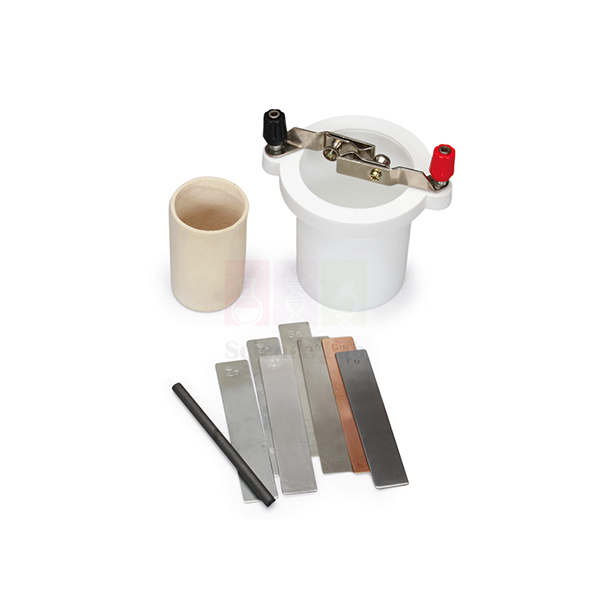
Student Voltaic Cell Set
The Student Voltaic Cell Set (Product Code: SLE/EM/03) lets students build their own simple and primary cells and measure how the choice of electrodes changes the voltage produced. It consists of an 8-oz plastic jar with a screw-on plastic rim carrying 2 adjustable brass electrode holders, 8 electrodes in seven materials, and a porous ceramic cup for two-solution cells, with instructions included. Secondary school chemistry and physics departments use it as an electrochemical cell kit for school practicals on cells and reactivity. It is made by Jain Scientific Equipments Pvt Ltd (ScienceLab), Ambala.
Specifications
| Parameter | Detail |
|---|---|
| Purpose | Demonstrates the characteristics of simple and primary cells |
| Cell vessel | 8-oz plastic jar with screw-on plastic rim |
| Electrode holders | 2 adjustable brass holders mounted in the rim |
| Electrodes | 8 in total: 1 aluminium, 1 nickel, 1 tin, 1 graphite, 1 iron, 1 copper and 2 zinc |
| Separator | Porous ceramic cup |
| Documentation | Instructions included |
Typical Use
Students pour a suitable electrolyte into the jar, clamp two different electrodes into the brass holders, screw on the rim and connect the holders to a voltmeter. Swapping one electrode at a time – for example keeping zinc and trying copper, iron, tin, nickel, aluminium and graphite in turn – produces a table of voltages from which the class can rank the materials and discover the idea of an electrochemical series. Placing two identical electrodes in the holders gives a control that should produce little or no voltage.
The porous ceramic cup allows a two-solution cell: one electrode and its solution sit inside the cup, the other outside it, so ions can move while the liquids stay largely separate, as in a Daniell-type cell. This makes the set a flexible chemistry experiment kit for comparing simple one-liquid cells with primary cells. Rinse the electrodes, holders and cup with water after use, dry them before storage, and lightly clean electrode surfaces when they dull, as oxide layers lower the readings.
Manufacturer
The set is produced by Jain Scientific Equipments Private Limited, whose ScienceLab brand covers electrochemistry, electricity and general physics apparatus made in Ambala, Haryana. Laboratories in India and international markets source their teaching equipment from the company; see our company profile for details.
Related Electricity Equipments
These items are used alongside the cell set in the same practical:
- Digital Multimeter — reads the voltage produced by each electrode pair.
- Banana/Alligator Cords — connect the brass holders to the meter.
- Daniell Cell — a dedicated two-solution cell for comparison.
- Zinc Plate — a spare zinc electrode, as zinc is used in most pairings.
- Electrodes, Copper — replacement copper electrodes for repeated class use.
Find more apparatus in the Electricity Equipments category.
Frequently Asked Questions
Which electrodes are supplied?
Eight electrodes: one each of aluminium, nickel, tin, graphite, iron and copper, plus two zinc electrodes.
Why are there two zinc electrodes?
Zinc is the usual partner electrode in simple cells, and having two lets students run a zinc–zinc control or keep one zinc electrode in use while the other is cleaned.
What is the porous ceramic cup for?
It separates two different solutions while still allowing ions to pass, so students can build a two-solution primary cell in the same jar.
Are a meter and electrolyte included?
No meter or electrolyte is listed in the set; instructions are included. Use a voltmeter or multimeter and solutions prepared in your laboratory.
Can replacement electrodes be ordered?
Yes, please tell us which electrode you need through the contact page; copper electrodes and zinc plates are also listed individually.
What should an institutional quotation include?
The product code SLE/EM/03, the number of sets (often one per student pair or group), any meters or leads required and the delivery location. We supply schools and colleges in India and international markets.
Request a Quote
Request a quotation for the Student Voltaic Cell Set through our contact page, or add it to the enquiry cart along with multimeters and connecting cords.
Last updated: 24 September 2026
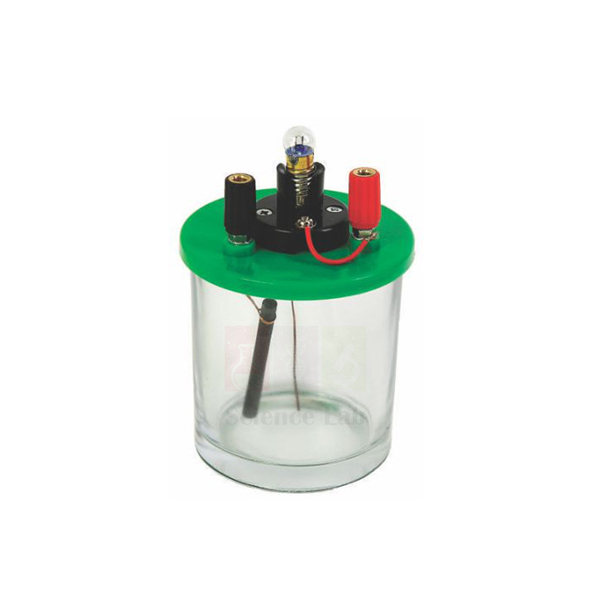
Conductivity of Solutions Apparatus
Conductivity of Solutions Apparatus (Product Code: SLE/EM/04) is a lamp-indicator set that shows students, at a glance, which liquids carry an electric current and which do not. A small bulb sits in a miniature lamp receptacle on a PVC base, and the liquid under test goes into a clear glass tumbler: when the circuit is completed through the solution, the bulb glows brightly, faintly or not at all, giving a direct visual comparison of relative conductivity. Made by Jain Scientific Equipments Pvt Ltd (ScienceLab) in Ambala, it is a straightforward electricity experiment kit for school lessons on electrolytes, acids, bases and salts, and it comes with instructions.
Specifications
| Parameter | Detail |
|---|---|
| Type | Lamp-indicator apparatus for comparing the relative conductivity of solutions |
| Lamp assembly | Miniature lamp receptacle mounted on a PVC base, with bulb |
| Solution container | Clear glass tumbler |
| Power requirement | 3-V DC power source (not included) |
| Documentation | Instructions supplied |
Typical Use
Teachers use this apparatus to sort everyday liquids into good conductors, weak conductors and non-conductors. A typical sequence is distilled water first (the bulb stays dark), then tap water, sugar solution, common-salt solution, dilute acid and dilute alkali, so the class sees that dissolved ions, not water itself, allow current to flow. Because the glass tumbler is clear, students can watch the liquid and the bulb at the same time, which makes the link between solution and brightness easy to discuss.
For fair comparisons, keep the same volume of liquid and the same immersion depth for every sample, and rinse the tumbler with distilled water between tests so one solution does not contaminate the next. Keep the PVC base and the lamp receptacle dry. The set fits naturally with other school chemistry lab equipment in India used for the electrolytes and electrolysis topics in middle and secondary classes.
Manufacturer
This apparatus is produced by Jain Scientific Equipments Private Limited, the Ambala, Haryana company behind the ScienceLab brand. The firm is a registered MSME enterprise (Udyam UDYAM-HR-01-0003714), and its overseas consignments move under Importer-Exporter Code AAECJ8618A issued by the DGFT. You can read more about the company on our company profile page.
Related Electricity Equipment
Items that are often ordered with this set for the same conductivity practical:
- Electrodes, Copper — stamped copper strips that can serve as the electrodes dipped into the test liquid
- Holder for ‘D’ Dry Cells — snap-fit holders for assembling a dry-cell battery in series as the DC source
- Banana/Alligator Cords — leads for wiring the battery, lamp and electrodes together
- Receptacle for Miniature Lamp — a separate brass-shell receptacle with screw terminals for setting up a second test station
- Sodium Chloride — common salt for preparing a strongly conducting sample solution
More circuit and electrochemistry apparatus is listed in our Electricity Equipments range.
Frequently Asked Questions
What is included with the Conductivity of Solutions Apparatus?
A miniature lamp receptacle mounted on a PVC base, a bulb, a clear glass tumbler and instructions. The power source is not part of the set.
What power source does it need?
A 3-V DC source, which you supply separately — for example dry cells connected in series or a low-voltage DC bench supply set to 3 V. Do not connect it to mains power.
Does it give a numerical conductivity reading?
No. It is a qualitative indicator: the brightness of the bulb shows relative conductivity. A dedicated conductivity meter is needed if you want measured values.
How should the glass tumbler be cleaned between samples?
Empty it, rinse with distilled water and dry the outside before adding the next solution. This prevents carry-over of ions that would make a weak conductor look stronger than it is.
Is a calibration or test certificate available?
The apparatus is a demonstration indicator rather than a measuring instrument. If your purchase procedure needs any supporting documents, please discuss them with us through the contact page before ordering.
What should an institutional quotation request include?
The quantity of sets, the delivery address, whether you also need dry cells, holders or leads, and any tender or vendor-registration forms your institution uses.
Can you supply class sets or export orders?
Yes. We supply schools, colleges and distributors in India and international markets; send your requirement through the contact page.
Request a Quote
For pricing and availability of the Conductivity of Solutions Apparatus, contact our sales team or add it to your enquiry cart together with any accessories you need.
Last updated: 24 September 2026
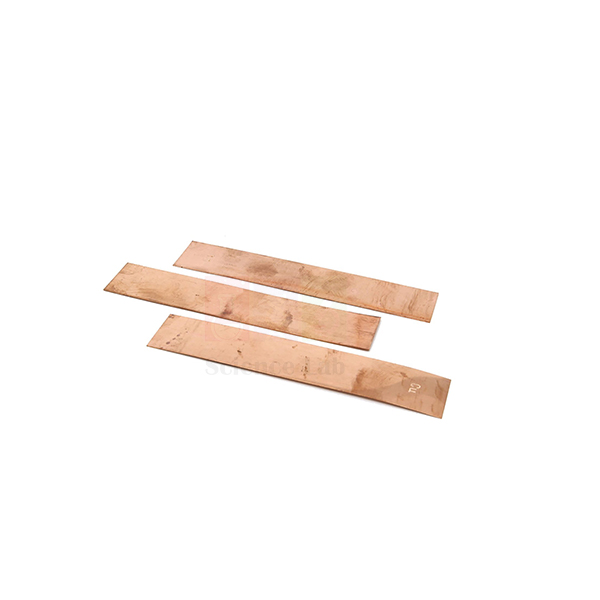
Electrodes, Copper
Electrodes, Copper (Product Code: SLE/EM/05) are flat copper strips for electrochemistry and electricity practicals such as electroplating, copper electrolysis, simple voltaic cells and conductivity tests. Each strip measures 3/4 x 5-1/2 inches and is stamped with the chemical formula for copper (Cu), so it stays identifiable when several metals share a bench tray. The electrodes come in a pack of 12 and are supplied by Jain Scientific Equipments Pvt Ltd (ScienceLab), Ambala, as a practical refill from a chemistry consumables supplier in India that also equips complete school and college laboratories.
Specifications
| Parameter | Detail |
|---|---|
| Material | Copper |
| Strip size | 3/4 x 5-1/2 inches (each electrode) |
| Marking | Each electrode stamped with the formula for copper |
| Pack quantity | 12 electrodes |
| Formula weight of copper (reference) | 63.55 (approx.) |
Typical Use
In electrolysis of copper sulfate solution, a pair of these strips shows copper dissolving from the anode and depositing on the cathode; weighing the cathode before and after the run lets older students connect the mass of copper deposited with the charge passed, as in Faraday’s first law. Paired with a zinc strip in an electrolyte, a copper electrode forms the positive terminal of a simple voltaic cell, so the same pack serves an electrochemical cell kit school groups can assemble themselves. The strips are equally useful as dip electrodes in lamp-based conductivity tests.
Copper tarnishes in air, so rub each strip bright with fine abrasive paper before a quantitative run, rinse with distilled water and hold it by the edges to keep fingerprints off the working area. Dry the electrodes after use and store them flat. Because anodes are gradually consumed during electrolysis, many labs keep a spare pack beside their copper voltameter or other electrolysis apparatus.
Supplier
This pack is supplied by Jain Scientific Equipments Private Limited, which trades as ScienceLab from Ambala, Haryana, and stocks electrode strips and other consumables alongside the teaching apparatus it manufactures. See our company profile for an overview of the business.
Related Electricity Equipment
Apparatus and materials used with copper electrodes in the same practicals:
- Voltameter, Copper — a three-plate copper voltameter for Faraday’s-law electrolysis
- Hydrated Copper Sulfate — the copper salt used to prepare the electrolyte for plating and electrolysis
- Metal Strips Set — aluminium, brass, copper, steel and zinc strips for pairing with copper in cells
- Student Voltaic Cell Set — for building simple cells in student groups
- Digital Multimeter — DC voltage and current ranges for reading cell output
Browse the complete Electricity Equipments range for more electrochemistry apparatus.
Frequently Asked Questions
How many copper electrodes are in one pack?
Twelve. Each pack contains 12 stamped copper strips.
What size is each electrode?
Each strip measures 3/4 x 5-1/2 inches. The sheet thickness is not given in our current listing, so please contact us if you need it for a holder or clamp.
Why is each strip stamped?
The stamped formula for copper identifies the metal at a glance, which avoids mix-ups when copper, zinc and other strips are used together.
Can the electrodes be reused?
Yes, after cleaning and drying. Strips used as anodes in electrolysis lose copper over time and are eventually replaced, which is why they are sold in packs.
Are connecting leads or clips included?
No. The pack contains the electrodes only; leads such as Banana/Alligator Cords are ordered separately.
Can you confirm the copper purity grade?
The purity grade is not stated in our current product documentation. Please ask through the contact page before ordering if your experiment depends on it.
Do you supply larger quantities?
Yes. Multiple packs can be supplied to schools, colleges and distributors in India and international markets.
Request a Quote
To order copper electrodes, send your quantity through our contact form or place them in the enquiry cart and submit one combined request.
Last updated: 24 September 2026