- Physics Lab Equipment
- Chemistry Lab Equipment
- Biology Lab Equipment
- Anatomical Lab Equipment
- Learning
- Educational Lab Equipment
- Magnets
- Agriculture
- Astronomy
- Earth Science
- Geography Lab Equipment
- Safety Lab Coat
- Laboratory
- Meteorological
- Electricity & Magnetism
- Heat
- School Lab Equipment
- Lab Glassware
- Science Lab Equipment
- Tvet Lab Equipment
- Robotics Kits Supplier and Manufacturer for Schools India
- Math Lab Equipment Manufacturers and Exporters in Ambala
- STEM Kits Manufacturers and Supplier India
- Engineering Lab Equipment
- Hospital Lab Equipment
- Water, Sanitation & Hygiene Supplies
- Cold Chain, Solar & Communication Equipment
- Nutrition
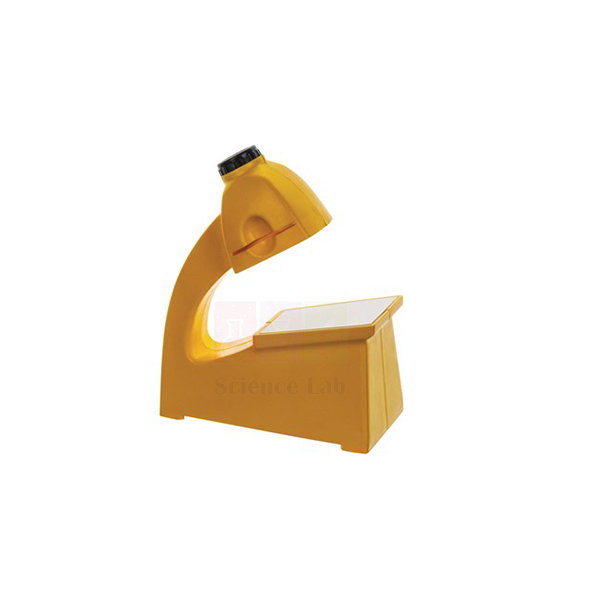
Micro Slide Viewer
Micro Slide Viewer (Product Code: SLE/M/89) is a compact 50x optical viewer used to show students magnified specimens without setting up a full microscope, in primary, middle-school and outreach science lessons. It needs no power at all and is very lightweight, so it can be passed around a classroom or taken outdoors, while still giving students a quality image. It is supplied by Jain Scientific Equipments Pvt Ltd (ScienceLab), Ambala, India, as a simple entry point to microscopy for schools.
Key Details
| Parameter | Detail |
|---|---|
| Magnification | 50x |
| Power requirement | None |
| Weight | Very light |
| Image | Quality image for student viewing |
| Value | Cost-effective option for class sets |
| Product code | SLE/M/89 |
| Supplied by | Jain Scientific Equipments Pvt Ltd (ScienceLab), Ambala, India |
What Is the Micro Slide Viewer Used For?
Younger learners often struggle with the focusing knobs, lamps and slides of a compound microscope. A slide viewer removes those hurdles: the child simply looks through it and sees the specimen enlarged 50 times, which is enough to show plant cells, tissue patterns and small organisms. Teachers use it for observation stations, science clubs, museum and outreach visits, and revision lessons where a whole class needs to see the same specimen quickly.
Because there is no power supply, the viewer relies on daylight or room light, so point it towards a bright window or lamp for the clearest picture. There are no bulbs, cables or batteries to fail, which makes it dependable in classrooms without sockets and on field trips. It works well as the first step of a microscopy starter kit for school before students move on to a compound microscope.
Supplier
ScienceLab, the trading name of Jain Scientific Equipments Private Limited in Ambala, Haryana, supplies the Micro Slide Viewer to schools, science centres and educational distributors. We source it as part of our microscopy range, so viewers, magnifiers, microscopes and prepared slides can be ordered together. More about us is on the ScienceLab profile.
Related Microscope Products
Next steps and companions for early microscopy lessons:
- Pocket Magnifier — a 10X hand lens for field observation.
- Student Monocular Microscope — the next step up for older students.
- Basic Botany Slide (Set of 25) — prepared slides for use with a student microscope.
- Bacteria slide Set of 12 — prepared specimens for later microscopy lessons.
Explore our Microscope category and Prepared Slides range.
Frequently Asked Questions
What magnification does the Micro Slide Viewer give?
The Micro Slide Viewer gives 50x magnification. That is enough to show plant cells, tissue patterns and small organisms in a prepared specimen without the setup time and handling skills a compound microscope needs.
Does the Micro Slide Viewer need batteries or mains power?
No. The Micro Slide Viewer has no power requirement, so there are no bulbs, batteries or cables to manage. Hold it towards a bright window or lamp so that enough light passes through the specimen.
Which slides can be used in the Micro Slide Viewer?
The slide format that fits the Micro Slide Viewer is not listed on this page. Before ordering specimens, ask us through the contact page which slides suit the viewer so that your set arrives ready to use.
Who is the Micro Slide Viewer best suited to?
The Micro Slide Viewer suits younger students, outreach programmes and classes meeting microscopy for the first time. It is very light and gives students a quality image, and several units let a whole class view specimens at once.
Who supplies the Micro Slide Viewer?
Jain Scientific Equipments Pvt Ltd (ScienceLab), Ambala, India, supplies the Micro Slide Viewer to schools, science centres and educational distributors, and can quote class quantities for India and international markets.
What information is needed to quote the Micro Slide Viewer?
A Micro Slide Viewer quotation needs product code SLE/M/89, the number of viewers, the delivery location and whether you also want slides or magnifiers on the same order. Send these through the contact page or the enquiry cart.
Request a Quote
Order the Micro Slide Viewer (SLE/M/89) for your classes by sending quantity and delivery details through our contact page, or add it to the enquiry cart.
Last updated: 24 September 2026
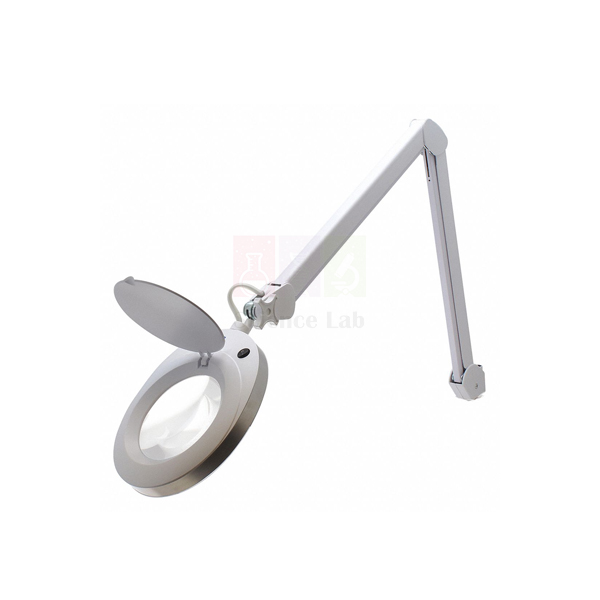
Magnifier
Magnifier (Product Code: SLE/M/90) is a clamp-mounted lighted magnifier used for hands-free close work such as specimen sorting, dissection, fine assembly and reading small scales on a lab bench or desk. It pairs a large 5-inch glass lens of 1.8x magnification with 48 ultra-bright LED lights on an adjustable metal arm with a rotating head, powered through an included AC/DC adapter. It is supplied by Jain Scientific Equipments Pvt Ltd (ScienceLab), Ambala, India.
Specifications
| Parameter | Detail |
|---|---|
| Type | Lighted magnifier for desktop or tabletop mounting |
| Lens | 5 inch glass lens |
| Magnification | 1.8x |
| Illumination | 48 ultra-bright LED lights |
| Arm and head | Adjustable metal arm with rotating head |
| Mounting | C-clamp, included |
| Power | Plugs into a standard outlet using the included AC/DC adapter |
| Overall size | 31 × 9 × 22 inches |
| Weight | 5-1/5 lb as listed (please confirm the packed weight on quotation) |
| Product code | SLE/M/90 |
| Supplied by | Jain Scientific Equipments Pvt Ltd (ScienceLab), Ambala, India |
What Is the Lighted Magnifier Used For?
A clamp-on lighted magnifier fills the gap between a hand lens and a microscope. Because it stays in place, both hands are free to hold forceps, needles, a soldering iron or a pen. Biology teachers use it for flower and insect dissections, sorting seeds and soil samples, and labelling specimen tubes; physics and electronics labs use it for inspecting small components; technicians use it to read fine instrument scales.
The low 1.8x power keeps a wide area in view, and the 48 LEDs light the work evenly without a separate lamp. Fix the C-clamp to a sturdy bench edge, swing the metal arm over the task and tilt the head until the image is sharp. When it is not in use, turn the lens away from windows, since any glass lens can focus sunlight onto nearby surfaces, and wipe it with a soft microfiber cloth. It is a useful piece of laboratory equipment for schools in India that need clear, hands-free close-up viewing.
What to Specify When Ordering
- Your mains voltage and plug type for the AC/DC adapter.
- The bench or desk edge where the C-clamp will be fixed, so fit can be checked.
- Number of magnifiers per lab or workstation.
Supplier
Jain Scientific Equipments Private Limited, trading as ScienceLab, supplies this lighted Magnifier from Ambala, Haryana. It is an item we source for schools, colleges, laboratories and dealers, and it can be quoted alongside microscopes, hand lenses and other bench equipment. Find out more on our company profile.
Related Microscope Products
Other magnification options for close-up work:
- Magnifying Glass — a hand-held lens for quick inspection.
- Pocket Magnifier — 10X folding lens for fieldwork.
- Dissecting Microscope — when higher magnification is needed for dissection.
- Stereomicroscopes — three-dimensional viewing at 10x to 40x.
- Microfiber Lens Cloth — for cleaning the large glass lens.
See the full Microscope range.
Frequently Asked Questions
What magnification and lens size does the Magnifier (SLE/M/90) have?
The Magnifier (SLE/M/90) has a large 5-inch glass lens giving 1.8x magnification. The low power keeps a wide area in view, so users can work with forceps, needles or small tools under the lens with both hands free.
How is the Magnifier (SLE/M/90) lit and powered?
The Magnifier (SLE/M/90) has 48 ultra-bright LED lights to illuminate the work area. It plugs into any standard outlet using the included AC/DC adapter, so it needs a power socket within reach of the bench.
How is the lighted Magnifier mounted?
The Magnifier (SLE/M/90) attaches to a desktop or tabletop with the included C-clamp. Its adjustable metal arm and rotating head then let you position the lens exactly where it is needed over the task.
What are the size and weight of the Magnifier (SLE/M/90)?
The Magnifier (SLE/M/90) has an overall size of 31 × 9 × 22 inches and a listed weight of 5-1/5 lb. Please confirm the packed weight with us when you request a quotation, particularly for export shipments.
How should the lighted Magnifier be looked after?
When the Magnifier (SLE/M/90) is not in use, turn the head away from windows, because a glass lens can focus sunlight onto nearby surfaces. Wipe the lens with a soft microfiber cloth to remove dust and fingerprints.
Who supplies the Magnifier (SLE/M/90)?
Jain Scientific Equipments Pvt Ltd (ScienceLab), Ambala, India, supplies this lighted Magnifier to schools, colleges, laboratories and dealers in India and international markets. It is an item we source, and it can be quoted with microscopes and other bench equipment.
Request a Quote
For the Magnifier (SLE/M/90), send quantity, mains supply details and delivery address through our contact page, or add it to the enquiry cart with related items.
Last updated: 24 September 2026
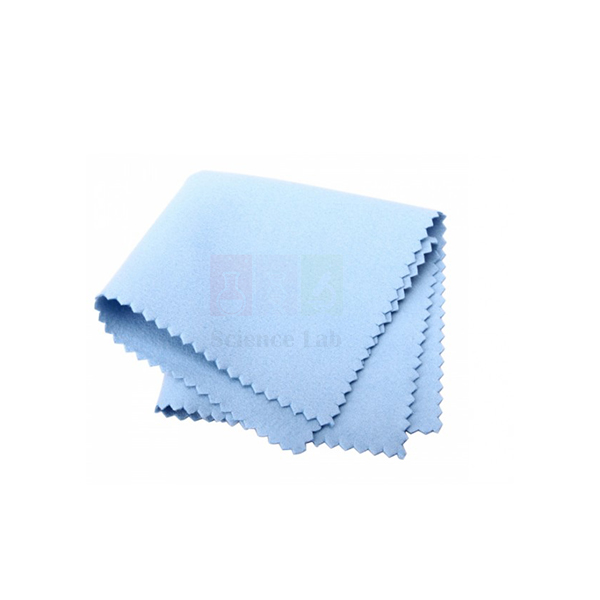
Microfiber Lens Cloth
Microfiber Lens Cloth (Product Code: SLE/M/91) is a 12 × 16 inch microfiber cleaning cloth used to wipe dust, oil smudges and dirt from lenses and other optical surfaces in laboratories, classrooms and field kits. It works dry or with cleaning sprays and fluids, can be used many times over, and is large enough for binoculars, cameras and bigger gear as well as microscope eyepieces. It is supplied by Jain Scientific Equipments Pvt Ltd (ScienceLab), Ambala, India.
Specifications
| Parameter | Detail |
|---|---|
| Material | Microfiber |
| Size | 12 × 16 inches |
| Removes | Dust, oil smudges and dirt |
| Use | With or without cleaning sprays and fluids |
| Reuse | Can be used multiple times |
| Suitable for | Binoculars, cameras and larger gear |
| Product code | SLE/M/91 |
| Supplied by | Jain Scientific Equipments Pvt Ltd (ScienceLab), Ambala, India |
What Is the Microfiber Lens Cloth Used For?
Eyepieces collect skin oil and eyelash marks every lesson, objectives pick up dust, and field binoculars and cameras come back from outings covered in fine grit. A microfiber cloth lifts these deposits instead of smearing them, which is why it is standard kit for lab assistants who look after microscopes, for geography and ecology teachers managing binoculars, and for anyone photographing specimens.
Blow or brush away loose particles first, then wipe gently with light circular strokes from the centre of the lens outwards. For stubborn fingerprints, put a little lens-cleaning fluid on the cloth rather than directly on the glass so it does not seep into the mount. Keep the cloth in a clean pouch between uses and wash it when it looks dirty; a gritty cloth can scratch coated optics. It is a small but worthwhile addition to a microscopy starter kit for school labs.
Supplier
Jain Scientific Equipments Private Limited supplies the Microfiber Lens Cloth under its trading name ScienceLab, from Ambala, Haryana. We source this cleaning consumable for schools, colleges, laboratories and distributors, often packing it into the same order as microscopes and optical accessories. Institutions adding us as a vendor can use GSTIN 06AAECJ8618A1ZT and LEI 3358004HRD1JIVXKYX49 for the company. Background information is on our profile page.
Related Microscope Products
Other cleaning and care items for optical equipment:
- Lens Tissue — single-use tissue for delicate lens surfaces.
- Microscope Cleaning Kit — a fuller set for routine microscope care.
- Microscope Maintenance & Servicing Kit — for technicians servicing class sets.
- Binoculars — field optics that the cloth is suitable for.
More accessories are listed in our Microscope category.
Frequently Asked Questions
What size is the Microfiber Lens Cloth?
The Microfiber Lens Cloth measures 12 × 16 inches. That is large enough to fold into a clean pad for small eyepieces and still cover binoculars, cameras and larger gear without reusing the same dirty patch.
Does the Microfiber Lens Cloth need cleaning fluid?
No. The Microfiber Lens Cloth can be used dry for dust or with cleaning sprays and fluids for stubborn oil smudges. Apply fluid to the cloth rather than directly onto the lens so that it does not run into the mount.
Can the Microfiber Lens Cloth be reused?
Yes. The Microfiber Lens Cloth can be used multiple times. Store it in a clean pouch or box between uses and replace or wash it once it becomes gritty, since trapped particles could scratch coated optical surfaces.
What can the Microfiber Lens Cloth clean?
The Microfiber Lens Cloth removes dust, oil smudges and dirt, and is suitable for binoculars, cameras and larger gear. In a laboratory it is also handy for wiping microscope eyepieces and other lens surfaces between classes.
Should grit be removed before using the lens cloth?
Yes. Before wiping with the Microfiber Lens Cloth, blow or brush loose grit off the lens, then wipe gently with light circular strokes. This avoids dragging hard particles across the glass and keeps optics in good condition for longer.
Can the Microfiber Lens Cloth be ordered in bulk?
Yes. Jain Scientific Equipments Pvt Ltd (ScienceLab), Ambala, India, supplies the Microfiber Lens Cloth in bulk to schools, colleges, laboratories and distributors, and can quote it with microscopes or cleaning kits for India and international markets.
Request a Quote
To order the Microfiber Lens Cloth (SLE/M/91), send the number of cloths and your delivery location through our contact page, or add it to the enquiry cart.
Last updated: 24 September 2026
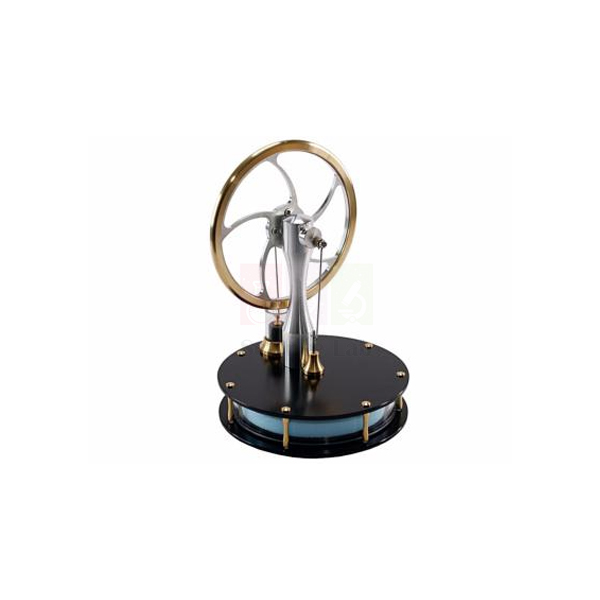
Stirling Engine
Stirling Engine (Product Code: SLE/H/01) is a low-temperature differential heat engine in durable stainless steel that shows students, in real time, how heat energy is converted into mechanical work. Stand it on a cup of hot water or ice water, give the flywheel a turn by hand and it keeps running on the temperature difference alone. A classic thermodynamics demonstration for middle school and a clear physics demonstration kit for India’s classrooms, it is made by Jain Scientific Equipments Pvt Ltd (ScienceLab), Ambala.
Specifications
| Parameter | Detail |
|---|---|
| Type | Low-temperature differential Stirling engine |
| Material | Durable stainless steel |
| Flywheel diameter | 3-1/2" (9 cm) |
| Displacement cylinder diameter | 3-1/2" (9 cm) |
| Unit height | About 5-3/4" (14.5 cm) overall |
| Unit weight | 7.6 oz (216 g) |
| Heat source limit | Should not exceed 100° C |
| Cold source limit | Should not be below −20° C |
| Included | Engine and instructions |
| Needed, not supplied | Hot source, cold source and cup |
Typical Use
Fill a cup with hot water (kept at or below 100° C), set the engine on top and wait briefly for the base plate to warm. Rotate the flywheel by hand to start it: the displacer shuttles air between the hot and cool plates, the pressure changes drive the power piston, and the flywheel carries the motion round. To reverse the engine’s direction, use ice water instead, keeping the cold source no lower than −20° C. Pupils can time the flywheel, compare hot and cold runs, and discuss why a larger temperature difference gives more vigorous motion — a strong starting point for any heat energy science kit lesson on engines and efficiency.
This is a delicate instrument, and the connections between the flywheel and pistons can be damaged. Before each experiment, check two things: the flywheel, connecting rods and pistons should move freely without resistance, and the connecting rods must be properly seated so the linkages to the piston move freely. Avoid rough handling and never force the flywheel.
Manufacturer
The engine carries the ScienceLab brand of Jain Scientific Equipments Private Limited, an Ambala, Haryana company that designs and builds physics, chemistry and biology teaching apparatus for India and international markets. The about-us profile gives the full company background.
Related Laboratory Equipment
Items that complete a Stirling engine lesson:
- Stirling Engine with Alcohol Burner — an alternative engine that runs from a flame instead of a water cup.
- Glass Beaker — can hold the hot or ice water the engine needs.
- Hot Plate General Purpose — warms water for the hot source.
- Digital Thermometer — confirms the water stays within the engine’s temperature limits.
- Hand-Powered Engine Models — contrast with internal-combustion engine cycles.
Explore the complete Heat category for more thermal physics apparatus.
Frequently Asked Questions
What do I need to run it?
A hot source, a cold source and a cup, which are not supplied. Hot water in a cup is the usual choice; ice water makes it run the other way.
How hot or cold can the source be?
The heat source should not exceed 100° C and the cold source should not be below −20° C. Staying inside these limits protects the engine.
Why won’t my engine keep turning?
Check that the flywheel, connecting rods and pistons move freely and that the rods are properly seated. Give the base time to warm or cool, then start the flywheel by hand again.
How big is the engine?
It stands about 5-3/4" (14.5 cm) high, weighs 7.6 oz (216 g), and has a 3-1/2" (9 cm) flywheel and displacement cylinder.
Is it suitable for students to handle?
Yes, under supervision. It is a delicate instrument, so rough handling can damage the flywheel-to-piston connections.
What warranty applies?
Warranty terms are confirmed at quotation stage. Please raise any questions through our contact page.
Can schools order several units for group work?
Yes, class sets can be quoted for buyers in India and international markets; state the quantity of SLE/H/01 and the delivery location.
Request a Quote
Request pricing via the contact page, or add the Stirling Engine to the enquiry cart together with your other heat apparatus.
Last updated: 24 September 2026
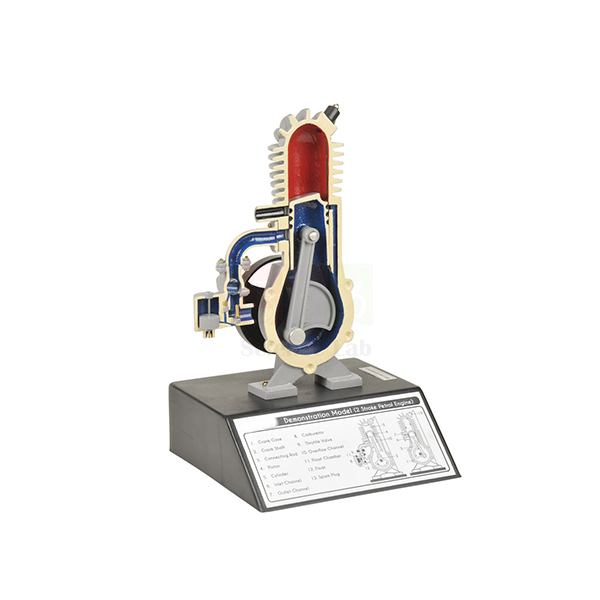
Hand-Powered Engine Models
Hand-Powered Engine Models (Product Code: SLE/H/02) are working teaching models that let students turn a hand crank and watch an engine move through every stage of its cycle. Each model sits on a sturdy base with a placard naming the key engine components, and a simulated spark plug lamp lights to show exactly when firing occurs. Physics and automotive teachers use them as a demonstration model in the physics lab or workshop, and they are made by Jain Scientific Equipments Pvt Ltd (ScienceLab), Ambala.
Specifications
| Parameter | Detail |
|---|---|
| Operation | Cycles through all stages with hand crank rotation |
| Construction | Solid cast metal and plastic |
| Mounting | Sturdy base |
| Labelling | Placard with key engine components |
| Firing indicator | Simulated spark plug (lamp) on each model |
| Lamp power | Depending on the model, 2 AA batteries or a 6- to 12-V power supply (not included) |
| Supplied as | Models are sold separately |
Typical Use
Turn the crank slowly the first time so the class can follow each moving part against the labelled placard, then speed up to show how the stages link into a continuous cycle. The spark plug lamp is the key teaching cue: pause the crank as it lights and ask students what is happening to the charge in the cylinder at that instant, and why ignition is timed where it is. Because the models are driven by hand, there is no fuel, heat or exhaust, so they can be used safely on an ordinary classroom desk.
The models suit lessons on heat engines and energy conversion in physics, introductory mechanical and automotive courses, and science exhibitions. As engineering lab equipment in India’s polytechnics and ITIs, they help trainees connect textbook diagrams to real component movement before working on full-size engines. Fit the batteries or connect a suitable supply before class, and keep the crank mechanism clean and free of grit.
Manufacturer
Jain Scientific Equipments Private Limited, known to customers as ScienceLab, builds these engine models as part of its teaching apparatus programme in Ambala, Haryana. The company equips institutions throughout India and in international markets; its profile page describes the full scope of work.
Related Laboratory Equipment
Apparatus that extends an engines and energy topic:
- Stirling Engine — an external-combustion heat engine that runs on a temperature difference.
- Engine, Diesel, 4 Stroke — compare a compression-ignition design with spark ignition.
- Hero Engine — the historic steam reaction engine for a history-of-engines lesson.
- Power Supply Variable — a bench supply option for models whose lamp needs an external supply; confirm the output range with us.
For more thermal physics apparatus, visit the Heat category.
Frequently Asked Questions
Are all the engine models included in one order line?
No. The models are sold separately, so list each model you need when you request a quotation.
What powers the spark plug lamp?
Depending on the model, the lamp runs on 2 AA batteries or a 6- to 12-V power supply. Batteries and power supplies are not included.
Does the model need fuel or a motor?
No. It is turned by a hand crank, which cycles it through all stages without fuel, heat or an electric motor.
How robust are the models for student use?
They are of solid cast metal and plastic construction on a sturdy base. Turn the crank smoothly rather than forcing it to keep the mechanism in good order.
Are the parts labelled?
Yes, a placard with the key engine components is part of each model, so students can name parts as they watch them move.
Can you quote for a polytechnic or training centre?
Yes. Send the models required, quantities and delivery details, in India or overseas, through our contact page.
Request a Quote
Ask for a quotation through the contact page, or place the models in the enquiry cart and mention which versions you need.
Last updated: 24 September 2026
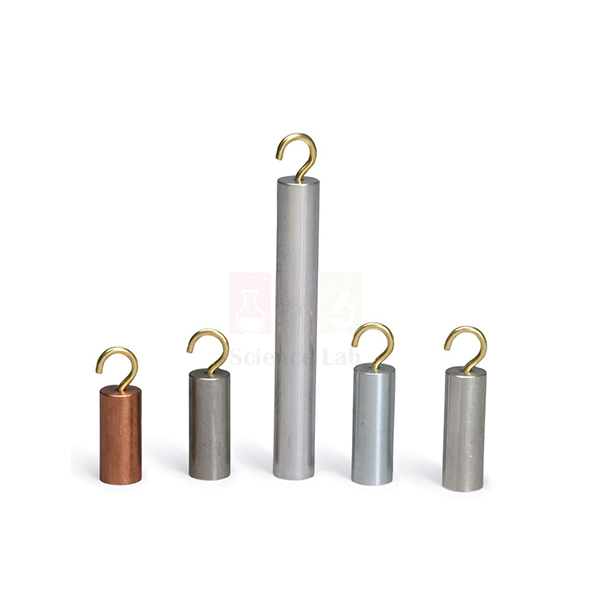
Heat Specimen Set
Heat Specimen Set (Product Code: SLE/H/03) is a set of five hooked metal cylinders — aluminium, copper, stainless steel, tin and zinc — precision machined to equal mass so that students can compare how much heat different metals store and release. Because the mass is the same for every cylinder, any difference in results comes down to the metal itself, which makes specific heat capacity easy to see and measure. Physics teachers use the set for calorimeter experiments and wax-melting demonstrations, and it is made by Jain Scientific Equipments Pvt Ltd (ScienceLab), Ambala.
Specifications
| Parameter | Detail |
|---|---|
| Number of specimens | Five cylinders |
| Metals | Aluminium, copper, stainless steel, tin and zinc |
| Diameter | 1/2" |
| Mass | Precision machined to equal mass |
| Form | Hooked cylinders |
| Identification | Metal identification stamped on one end |
Typical Use
Hang the cylinders by their hooks on thread and lower them into boiling water until they reach the same temperature. In the classic demonstration, all five are lifted out together and stood on a slab of paraffin wax: the metal holding the most heat per unit mass melts deepest, so the class sees specific heat capacity as a row of different depths. For a quantitative calorimeter experiment, transfer one hot cylinder into a calorimeter holding a known mass of water, record the temperature rise and calculate the metal’s specific heat capacity by the method of mixtures.
Since every cylinder has equal mass, groups can each take a different metal and pool their results into one comparison table. The stamped end prevents mix-ups once the cylinders are hot or lying together in a tray. Handle hot specimens with tongs, dry them after use and store them together so the set stays complete — a small but valuable part of physics lab equipment in India’s senior secondary schools and colleges.
Manufacturer
Jain Scientific Equipments Private Limited produces this set under its ScienceLab brand in Ambala, Haryana, where the company makes heat, mechanics and optics apparatus for schools and colleges in India and international markets. See our company profile for more.
Related Laboratory Equipment
Items used with the specimen set in specific heat experiments:
- Calorimeter Set, Copper — for method-of-mixtures measurements with each cylinder.
- Paraffin — wax for the melting-depth comparison of the hot cylinders.
- Glass Beaker — a boiling-water bath for heating the specimens.
- Digital Thermometer — reads the water temperature before and after each transfer.
- Metal Density Cube Set — extends the same metals into a density comparison.
The Heat category lists more thermal physics apparatus.
Frequently Asked Questions
Which metals are in the set?
Aluminium, copper, stainless steel, tin and zinc — five cylinders in all, each stamped with its metal on one end.
Why are the cylinders the same mass?
Equal mass means heat stored depends only on each metal’s specific heat capacity, so results can be compared directly without correcting for mass.
What are the hooks for?
They let you suspend each cylinder on thread in hot water and lift it out quickly into wax or a calorimeter.
Is a calorimeter or wax included?
No, the set contains the five cylinders. Calorimeters and paraffin are listed separately in the related items above.
Can the exact mass of each cylinder be confirmed?
The cylinders are machined to equal mass. Weigh them on your own balance for precise calculations, or contact us if you need the nominal value stated on a quotation.
Are replacement single cylinders available?
Please ask our team through the contact page; availability of individual pieces is confirmed case by case.
Request a Quote
For a price on class quantities, write to us on the contact page or add the Heat Specimen Set to the enquiry cart.
Last updated: 24 September 2026
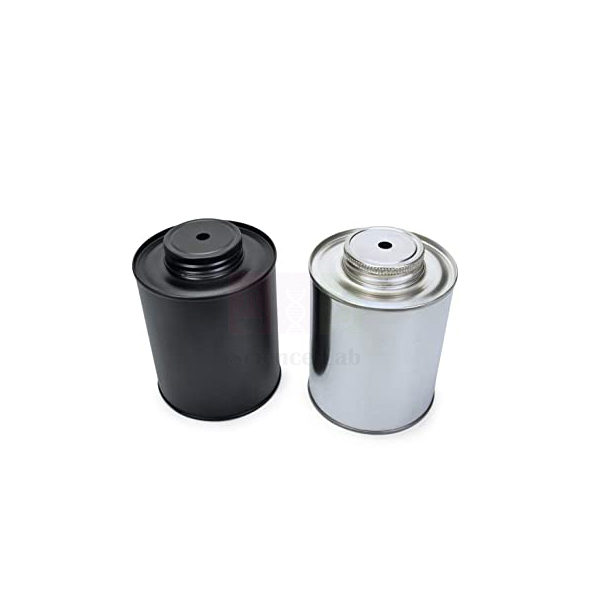
Radiation Can Set
Radiation Can Set (Product Code: SLE/H/04) is a pair of cans that are identical in every way except colour — one black, the other bright tin — for studying absorption, emission and Newton’s law of cooling. Because shape and size match, any difference in how fast the water inside warms or cools is due to the surface alone. It works as a simple Newton law of cooling apparatus for school and college physics, and is made by Jain Scientific Equipments Pvt Ltd (ScienceLab), Ambala.
Specifications
| Parameter | Detail |
|---|---|
| Contents | Two cans, identical except for colour |
| Finishes | One black can, one bright tin can |
| Thermometer access | Hole at the top of each can for inserting a thermometer |
| Studies | Absorption, emission and Newton’s law of cooling |
| Needed, not included | Thermometer |
Typical Use
For an emission (cooling) experiment, fill both cans with equally hot water, insert a thermometer through the hole at the top of each and record the temperatures at regular intervals. The black can loses heat faster, and plotting temperature against time gives cooling curves that students can compare against Newton’s law of cooling. For absorption, start both cans with cold water and place them the same distance from a lamp or in direct sunlight; the black can warms up more quickly than the bright tin one.
Running both experiments with the same pair of cans shows learners that a good absorber is also a good emitter — a result that links to solar water heaters, cooking pots and the colour of clothing in hot climates. Use equal volumes of water, keep both cans on the same insulating surface and away from draughts, and time readings with a stop clock. The set is an economical radiation experiment kit for India’s schools that already stock thermometers.
Manufacturer
Jain Scientific Equipments Private Limited, registered under CIN U29309HR2020PTC087597, trades as ScienceLab from Ambala, Haryana. Its physics apparatus is produced at the licensed factory at 449, HSIIDC Industrial Area, Saha, Ambala, operating under Factory Licence AMB-ONLINE-CHD-J-414, and supplied to institutions in India and international markets. Read the company profile for more detail.
Related Laboratory Equipment
Complete the radiation and cooling practical with:
- Immersion Thermometer — the thermometer each can needs, as none is included.
- Stop Clock (Metal Case) — times readings for cooling curves.
- Radiation Kit — a fuller kit with lids, thermometers and a lamp for absorption tests.
- Leslie’s Cube — compares emission from different surfaces at one temperature.
- Heat Absorption & Radiation Comparator — another way to show dark versus shiny surfaces.
Find further thermal apparatus in the Heat category.
Frequently Asked Questions
How many cans are in the set?
Two: one black and one bright tin, identical except for colour.
Are thermometers included?
No. Insert your own thermometer through the hole at the top of each can; suitable thermometers are linked above.
Which experiments can it cover?
Absorption of radiant heat, emission during cooling, and Newton’s law of cooling using temperature–time readings.
Can it be used with sunlight instead of a lamp?
Yes. Any heat source that reaches both cans equally will work; place them side by side at the same distance.
How should the cans be looked after?
Empty and dry them after each lesson and avoid scratching the black or bright finishes, since the surface is what the experiment compares.
Can you include it in a complete heat lab order?
Yes. Send your list with SLE/H/04 and quantities through the contact page and we will quote everything together, for delivery in India or abroad.
Request a Quote
Request a price through our contact page, or add the Radiation Can Set to the enquiry cart along with thermometers.
Last updated: 24 September 2026
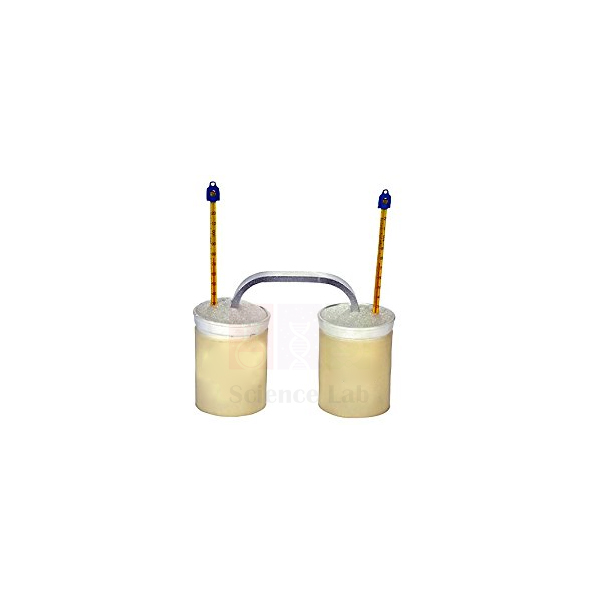
Heat Transfer Kit
Heat Transfer Kit (Product Code: SLE/H/05) lets students observe and measure heat flowing by conduction from a hot body to a cold one. It combines two insulated containers with lids, an aluminium transfer bar that links them, two thermometers and instructions, so a complete investigation can be set up in minutes. It is a ready physics experiment kit for school heat topics, made by Jain Scientific Equipments Pvt Ltd (ScienceLab), Ambala.
Specifications
| Parameter | Detail |
|---|---|
| Purpose | Observing and measuring heat transfer |
| Containers | 2 insulated containers with lids |
| Transfer bar | Aluminium |
| Thermometers | 2 included |
| Documentation | Instructions included |
Typical Use
Pour hot water into one insulated container and cold water into the other, fit the lids, and bridge the two with the aluminium transfer bar. With a thermometer in each container, students log both temperatures every minute or two and plot them on the same graph: the hot line falls, the cold line rises, and the two curves close in on a common value. The insulated walls and lids keep losses to the room small, so most of the change can be credited to heat travelling along the metal bar.
The kit supports discussion of temperature gradient, rate of transfer and thermal equilibrium, and suits both a teacher demonstration and small-group practical work. Extension ideas include starting with different temperature gaps to see how the rate changes, or comparing results with a lid removed to show the role of insulation. Rinse and dry the containers after use and store the thermometers in their places so they are ready for the next thermometry lesson.
Manufacturer
This kit is assembled under the ScienceLab name by Jain Scientific Equipments Private Limited, whose operations are based in Ambala, Haryana. The company supplies ready-to-use practical kits and apparatus to schools and colleges in India and international markets — more on the company profile.
Related Laboratory Equipment
Apparatus that builds on the same conduction lesson:
- Thermal Conductivity Bars — compares four metals side by side.
- Heat Conducto meter — ranks five metal rods by conduction rate using paraffin.
- Hot Plate General Purpose — heats the water for the hot container.
- Stop Clock (Metal Case) — keeps reading intervals consistent.
Browse the Heat category for more heat transfer apparatus.
Frequently Asked Questions
What comes in the kit?
Two insulated containers with lids, an aluminium transfer bar, two thermometers and instructions.
Do I need anything else?
Only hot and cold water and a way to heat it, such as a kettle or hot plate. A stop clock helps keep readings evenly spaced.
Why is the transfer bar aluminium?
Aluminium conducts heat well, so the temperature change in both containers is large enough to measure within a single lesson.
Can a calibration certificate be supplied for the thermometers?
Please discuss documentation for the thermometers with us via the contact page before ordering; we will confirm what is possible for your order.
Are spare thermometers available?
Yes, thermometers can be ordered separately; tell us your quantity and we will suggest a suitable type.
Can I order class sets for several lab groups?
Yes. Give the number of kits (SLE/H/05) and your delivery location, in India or overseas, and we will send a quotation.
Request a Quote
Get a price via the contact page, or add the Heat Transfer Kit to your enquiry cart with any other heat apparatus you need.
Last updated: 24 September 2026