- Physics Lab Equipment
- Chemistry Lab Equipment
- Biology Lab Equipment
- Anatomical Lab Equipment
- Learning
- Educational Lab Equipment
- Magnets
- Agriculture
- Astronomy
- Earth Science
- Geography Lab Equipment
- Safety Lab Coat
- Laboratory
- Meteorological
- Electricity & Magnetism
- Heat
- School Lab Equipment
- Lab Glassware
- Science Lab Equipment
- Tvet Lab Equipment
- Robotics Kits Supplier and Manufacturer for Schools India
- Math Lab Equipment Manufacturers and Exporters in Ambala
- STEM Kits Manufacturers and Supplier India
- Engineering Lab Equipment
- Hospital Lab Equipment
- Water, Sanitation & Hygiene Supplies
- Cold Chain, Solar & Communication Equipment
- Nutrition
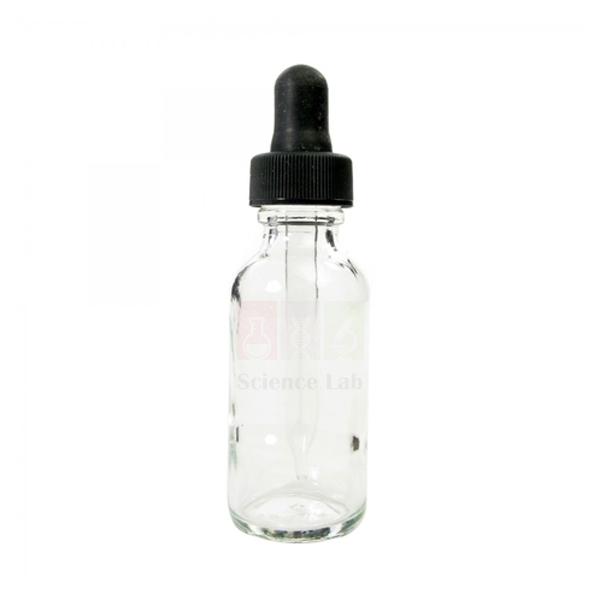
Dropping Bottles
Dropping Bottles (Product Code: SLE/GBO/07) are clear glass bottles closed with a screw cap that carries a glass dropper, so a reagent can be stored and released a few drops at a time from the same container. Chemistry teachers, laboratory assistants and analysts keep them on the bench for indicators and test solutions that are used in small quantities, and the four capacities let a lab match each bottle to how quickly its solution is consumed. They are made by Jain Scientific Equipments Pvt Ltd (ScienceLab), Ambala, as part of its range of borosilicate laboratory glassware in India.
Specifications
| Parameter | Detail |
|---|---|
| Type | Dropping bottle |
| Closure | Screw cap with glass dropper |
| Material | Borosilicate glass |
| Colour | Clear (flint) |
| Heat resistance | Heat resistant |
| Chemical resistance | Chemical resistant |
| Glass surface | Non-porous, allowing easy cleaning or autoclaving |
| Capacities | 30 ml, 60 ml, 120 ml, 250 ml |
Typical Use
In school and college practicals, dropping bottles hold the indicators and test reagents that students add dropwise — phenolphthalein or methyl orange during acid–base titrations, for example, or the reagents used in qualitative tests. Because the glass is clear, a teacher can check the liquid level and colour at a glance and spot a contaminated or exhausted solution before the class begins. The 30 ml and 60 ml sizes suit a student reagent shelf where many different solutions are needed in small amounts, while the 120 ml and 250 ml sizes suit a preparation room or a shared teaching bench.
Label every bottle with the reagent name and preparation date, and return each dropper to its own bottle so that solutions are never cross-contaminated. Do not lay the dropper on the bench between uses. When refilling, rinse the bottle and dropper with distilled water first; the non-porous glass makes this quick. Clear bottles are not the right choice for light-sensitive solutions — use the amber version for those. A labelled row of dropping bottles is one of the simplest ways to organise school chemistry lab equipment in India so that practicals run smoothly.
Manufacturer
These bottles are produced by Jain Scientific Equipments Private Limited, the Ambala, Haryana company that trades under the ScienceLab name and supplies teaching and laboratory glassware to institutions in India and international markets. The company is a registered MSME enterprise (Udyam UDYAM-HR-01-0003714), and its export consignments are handled under Importer-Exporter Code AAECJ8618A issued by the DGFT. Background on the business is available on the company profile page.
Related Glassware Bottles
Items usually ordered alongside dropping bottles when a reagent shelf is being set up or restocked:
- Amber Dropping Bottle — the same screw-cap dropper design in amber glass for light-sensitive reagents.
- Dropper Bottle Tray — keeps rows of small bottles upright and grouped on the bench.
- Reagent Bottle, Narrow Mouth — holds the larger stock solution from which dropping bottles are refilled.
- Wash Bottle LDPE with Narrow Mouth — for rinsing droppers and bottles with distilled water between refills.
- Bottle Brush — for scrubbing out residues before a bottle is reused.
See the full range in our Glassware Bottles category.
Frequently Asked Questions
Which capacities can I order?
Four sizes are listed: 30 ml, 60 ml, 120 ml and 250 ml. Mention the quantity required for each size in your enquiry.
Does each bottle come with its dropper?
Yes. The screw cap carries a glass dropper, so the bottle is ready to fill and dispense as delivered.
Can the bottles be autoclaved?
The glass is non-porous and is described as suitable for easy cleaning or autoclaving. Before sterilising the complete assembly, please contact us to confirm that the cap suits your cycle.
Are these suitable for light-sensitive solutions?
Not ideally, because the glass is clear. For solutions that degrade in light, choose the Amber Dropping Bottle, which has the same capacities and closure.
What should an institutional quotation request include?
List the sizes and quantities, the delivery location, and any other glassware you want quoted at the same time, so that one consolidated quotation can be prepared.
Do you supply in bulk and for export?
Yes. Bulk orders for schools, colleges and laboratories in India and international markets are handled through our contact page.
Request a Quote
To price Dropping Bottles for your laboratory, send the sizes and quantities through our contact page, or add the item to the enquiry cart together with the other glassware you need.
Last updated: 24 September 2026
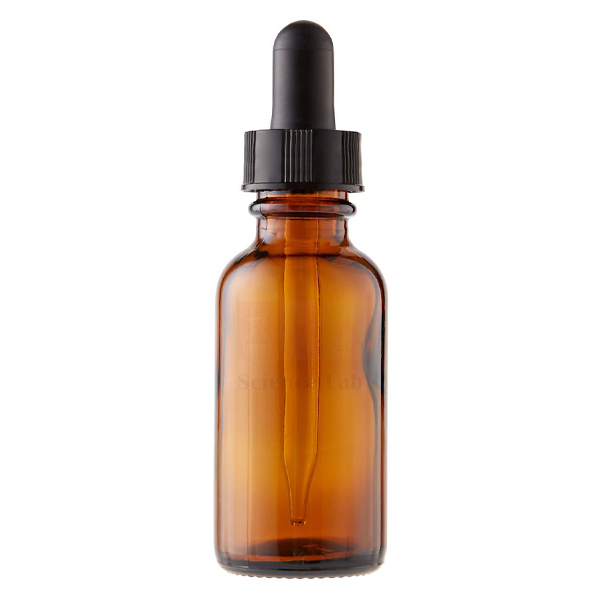
Amber Dropping Bottle
The Amber Dropping Bottle (Product Code: SLE/GBO/08) is a brown-tinted glass bottle with a screw cap and glass dropper, intended for reagents that lose strength when exposed to light. The amber glass cuts down the light, particularly ultraviolet, that reaches the solution, so laboratories rely on it for photosensitive stains, indicators and test reagents that must be dispensed in drops. Made by Jain Scientific Equipments Pvt Ltd (ScienceLab), Ambala, it is a routine piece of chemistry lab glassware in India for schools, colleges and testing laboratories.
Specifications
| Parameter | Detail |
|---|---|
| Type | Dropping bottle with screw cap |
| Dispensing | Glass dropper fitted to the screw cap |
| Material | Amber glass |
| Colour | Amber |
| Heat resistance | Heat resistant |
| Chemical resistance | Chemical resistant |
| Capacities | 30 ml, 60 ml, 120 ml, 250 ml |
Typical Use
Silver nitrate solution for chloride tests, iodine solution for starch tests and many biological stains darken or decompose when left in daylight, so they are normally kept in amber bottles. With a dropper built into the cap, the reagent is dispensed straight from its protective container onto a slide, into a test tube or onto a spot plate, and the bottle is closed again within seconds. The 30 ml and 60 ml sizes are convenient for individual student benches; the 120 ml and 250 ml sizes suit a teacher’s demonstration table or the preparation room.
Because the brown glass makes the contents harder to see, hold the bottle up to a light source to check the level, and label each one clearly with the reagent name and date — colour alone will not identify the contents. Amber glass reduces light exposure but does not eliminate it, so store the bottles in a cupboard away from direct sunlight. Schools buying from a single lab glassware supplier in India often order the clear and amber versions together so that every reagent has a suitable bottle.
Manufacturer
Jain Scientific Equipments Private Limited is the registered company behind the ScienceLab brand. From its base in Ambala, Haryana, it makes and dispatches laboratory glassware and teaching equipment for customers in India and international markets. You can read about the company on its profile page.
Related Glassware Bottles
Other bottles and accessories that work with amber dropping bottles on a reagent shelf:
- Dropping Bottles — the clear version in the same capacities, for reagents whose colour or level you need to see.
- Reagent Bottle Narrow Mouth, Amber Glass — a larger amber stock bottle for the same light-sensitive solution.
- Dropper Bottle, Amber — a pipette-style amber dropper bottle with teat, sold in packs of 6.
- Dropper Bottle Tray — holds small bottles upright so they are not knocked over.
- Bottle Brush — for cleaning bottles before they are refilled with a fresh batch.
Browse all storage and dispensing bottles in the Glassware Bottles category.
Frequently Asked Questions
What sizes are available?
30 ml, 60 ml, 120 ml and 250 ml. Smaller sizes suit student benches; larger ones suit shared or preparation-room use.
How is this different from the clear Dropping Bottles?
Both have a screw cap with glass dropper and the same capacities. The amber glass reduces the light reaching the solution; the clear bottle is better when you need to watch the colour or level of the reagent.
Which reagents should go in an amber bottle?
Any solution that is affected by light, such as silver nitrate, iodine solutions and certain stains. For aggressive solvents, ask us to confirm that the cap and dropper suit the chemical.
How can I check how much reagent is left?
Hold the bottle against a window or lamp; the level shows through the tinted glass. Checking before each practical avoids running out mid-session.
Can I order spare droppers or caps?
Availability of spares is confirmed at the time of enquiry. Please list the size and number of spares needed when you contact us.
Can you supply large quantities or export orders?
Yes. We quote for school, college and laboratory orders in India and international markets; include sizes, quantities and destination in your request.
Request a Quote
Send your size-wise quantities for the Amber Dropping Bottle through our contact page, or place it in the enquiry cart with any other items you would like quoted.
Last updated: 24 September 2026
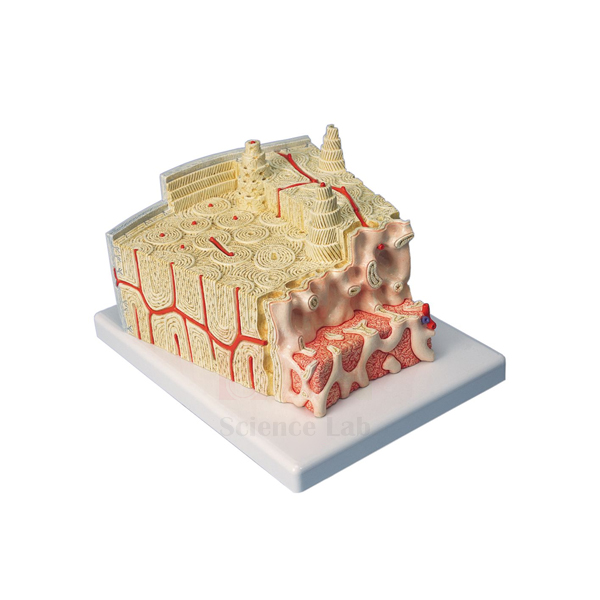
3B Bone Microanatomy Model
3B Bone Microanatomy Model (Product Code: SLE/A/89) enlarges a section of lamellar bone to about 80x life size so that the microscopic architecture of compact bone can be studied without a microscope. The block is cut in both cross and longitudinal section through all layers, down to the bone marrow, with Haversian canals, endosteum, cortical substance and osteocytes clearly visible. It is used in histology, physiology, orthopaedics and senior biology teaching, and is supplied by Jain Scientific Equipments Pvt Ltd (ScienceLab), Ambala, India.
Specifications
| Parameter | Detail |
|---|---|
| Scale | About 80x life size |
| Mounting | Mounted on a base |
| Tissue shown | Section of lamellar bone |
| Sections | Cross and longitudinal, through all layers including bone marrow |
| Visible structures | Haversian canals, endosteum, cortical substance, osteocytes |
Typical Use
Students often find it difficult to turn a flat slide image of compact bone into a mental picture of cylinders of lamellae running along the bone. Because this model shows the same tissue in two planes at once, a teacher can point to a Haversian canal in cross section and then follow it lengthwise in the longitudinal face, explaining how osteocytes sit between the lamellae and how the endosteum lines the inner surface next to the marrow.
It works best alongside the microscope: show the model first, then let learners find the same features on prepared microscope slides of bone. In physiology lessons it also supports discussion of bone remodelling and blood supply, while orthopaedic and physiotherapy students use it to understand how fractures heal at tissue level.
Supplier
This model is supplied by Jain Scientific Equipments Private Limited, which trades as ScienceLab from Ambala, Haryana, and sources selected teaching models to sit alongside its own laboratory products. For more about the company, see our company profile.
Related Human Models
Items that support a complete lesson on bone tissue and structure:
- Microslide Animal Tissue Set 2 Muscle, Bone, Connective — real bone sections to compare with the enlarged model
- Binocular Biological Microscope — for viewing bone slides after the model demonstration
- Human Bone Structures Model — shows bone at the level of the whole bone rather than the tissue
- Human Femur Bone Model — a long bone to relate the microanatomy to gross anatomy
- Skeletal Muscle Fiber Model — another enlarged tissue model for the musculoskeletal unit
Browse our anatomy models category for more microanatomy and organ models.
Frequently Asked Questions
How much is the bone enlarged?
About 80x life size, enough to make individual osteocytes and canals visible from across a classroom.
Which structures can students identify?
Haversian canals, endosteum, cortical substance, osteocytes and the bone marrow, shown in both cross and longitudinal section.
Is this model made by ScienceLab?
No. It is a branded model that we supply; our team can advise on availability and delivery for your order.
What are the dimensions and weight?
These are not given in the product details. Please ask through the contact page if you need them for storage or shipping.
How should it be cleaned?
Use a soft brush to remove dust from the textured surfaces and a slightly damp cloth on the base. Avoid solvents.
Can it be included in a bulk order for a medical college?
Yes. It can be quoted together with our own models for institutions in India and international markets; send your full list and delivery location.
Request a Quote
For availability and pricing, contact us on the contact page or place the model in your enquiry cart with the slides and microscope you need.
Last updated: 24 September 2026
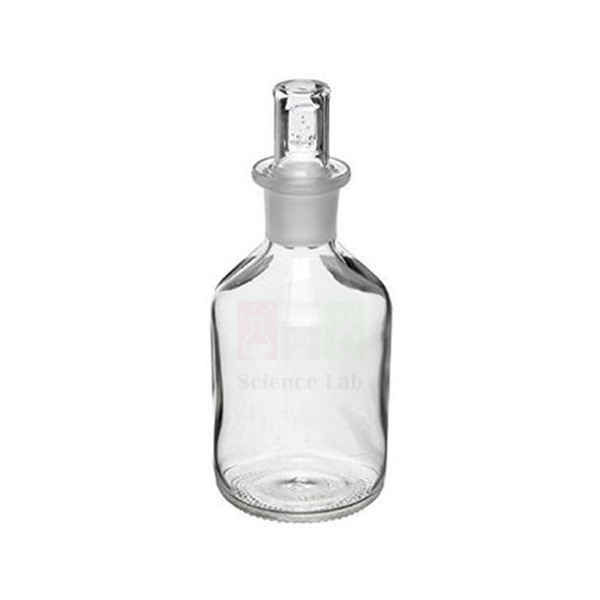
Reagent Bottle, Narrow Mouth
The Reagent Bottle, Narrow Mouth (Product Code: SLE/GBO/09) is a clear borosilicate glass storage bottle closed with a pressed flat stopper, used to keep stock solutions, distilled water and prepared liquid reagents on the laboratory shelf. Its narrow neck limits evaporation and gives a controlled pour, which is why this pattern is a staple of borosilicate glassware in India’s school, college and research laboratories. It is manufactured by Jain Scientific Equipments Pvt Ltd (ScienceLab), Ambala, in five capacities from 125 ml to 2000 ml.
Specifications
| Parameter | Detail |
|---|---|
| Mouth | Narrow mouth |
| Closure | Pressed flat stopper |
| Material | Borosilicate glass |
| Colour | Clear |
| Heat resistance | Heat resistant |
| Chemical resistance | Chemical resistant |
| Capacities | 125 ml, 250 ml, 500 ml, 1000 ml, 2000 ml |
Typical Use
A typical chemistry laboratory keeps its dilute acids, alkalis, salt solutions and indicator stocks in narrow-mouth reagent bottles. The 1000 ml and 2000 ml sizes are used in the preparation room for bulk stock, while 125 ml, 250 ml and 500 ml bottles are placed on student benches or reagent racks so that each group has its own supply. Clear glass lets staff see at once whether a solution has turned cloudy, changed colour or dropped to a low level.
Fill the bottles through a funnel to avoid wetting the neck, and wipe the neck before inserting the stopper. Label each bottle with the contents, concentration and date. Stoppers that stay in contact with strong alkali solutions can stick, so rinse spills from the neck promptly; a plastic-stoppered bottle may be more convenient for such solutions. Institutions stocking a new reagent shelf often buy all five sizes from one laboratory glassware supplier in India so that the bottles match.
Manufacturer
ScienceLab is the brand name used by Jain Scientific Equipments Private Limited, a laboratory equipment maker based in Ambala, Haryana. The company produces glassware, apparatus and teaching aids for educational and scientific institutions and serves buyers in India and international markets. Company details are on the ScienceLab profile page.
Related Glassware Bottles
Items that complete a reagent storage set-up built around narrow-mouth bottles:
- Reagent Bottle Narrow Mouth, Amber Glass — the amber alternative for solutions that must be protected from light.
- Bottle Reagent, W.M. Glass — a wide-mouth bottle that is easier to use for solids and powders.
- Glass Funnel — for refilling the narrow neck without spills.
- Dropping Bottles — to decant a small working quantity that is dispensed drop by drop.
- Bottle Brush — for scrubbing the inside of the bottle when it is emptied and cleaned.
More storage options are listed in the Glassware Bottles category.
Frequently Asked Questions
Which capacities are made?
125 ml, 250 ml, 500 ml, 1000 ml and 2000 ml. You can combine sizes in a single order.
What kind of closure does it have?
Each bottle comes with a pressed flat stopper. If you need details of the stopper material for a particular chemical, please contact us.
Should I choose a narrow or wide mouth bottle?
Narrow mouth bottles are intended for liquids because they pour steadily and reduce evaporation. For solids, a wide-mouth reagent bottle is easier to fill and empty with a spatula.
Can the bottles be washed in hot water or dried in an oven?
The borosilicate glass is heat resistant, so hot washing and oven drying of the empty bottle are practical. Never heat a bottle with the stopper in place, and avoid sudden temperature changes.
What details should a school or college include in a quotation request?
The quantity of each size, the delivery address and any related items such as funnels or dropping bottles, so that everything can be quoted together.
Is bulk or export supply possible?
Yes. We supply institutions in India and international markets; send your requirement through the contact page.
Request a Quote
For a quotation on the Reagent Bottle, Narrow Mouth, write to us via the contact page or add it to the enquiry cart with the sizes you need.
Last updated: 24 September 2026
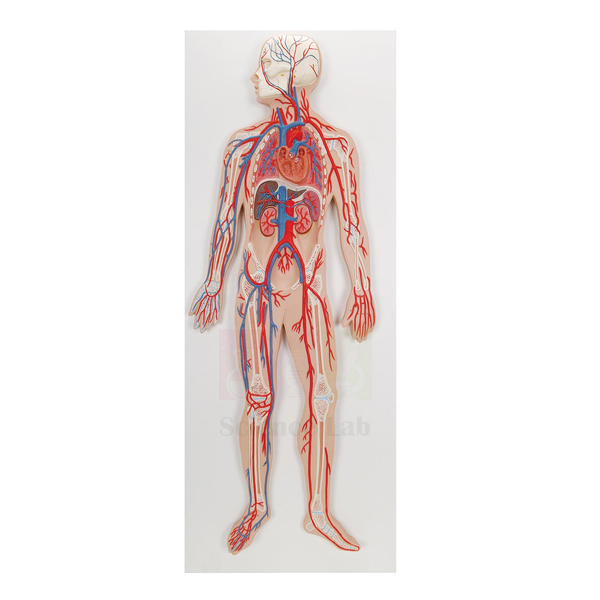
Human Circulatory System Model
Human Circulatory System Model (Product Code: SLE/A/90) is a generalized, about 1/2x life size representation of the human circulatory system, laid out on a durable polymer base with a key. It traces the circuitry of both the pulmonary and systemic pathways and includes a 2-part heart together with the lungs, liver, spleen and kidneys, so students can see how blood reaches and returns from the major organs. It is used in school, nursing and paramedical biology teaching, and is made by Jain Scientific Equipments Pvt Ltd (ScienceLab), Ambala.
Specifications
| Parameter | Detail |
|---|---|
| Scale | About 1/2x life size |
| Size | 32 x 90 x 12 cm |
| Mounting | Durable polymer base |
| Key | Included |
| Organs shown | 2-part heart, lungs, liver, spleen, kidneys |
| Pathways | Pulmonary and systemic circulatory pathways |
| Representation | Generalized schematic of the human circulatory system |
Typical Use
The model is designed to answer the question students always ask: where does the blood actually go? A teacher can start at the heart, open the 2-part heart to show its chambers, and then follow the pulmonary circuit to the lungs and back before tracing the systemic circuit out to the liver, spleen and kidneys. Because it is a generalized layout rather than a crowded full-body figure, the double circulation is easy to follow and to redraw in notebooks.
The key allows the model to be used for self-testing, with students naming the vessels and organs and then checking their answers against it. It is a useful heart model anatomy companion in India’s secondary and nursing curricula, where double circulation, the hepatic portal system and renal blood supply are standard topics.
Manufacturer
The model is built by Jain Scientific Equipments Private Limited in Ambala, Haryana, the company that owns the ScienceLab trading name. Purchase departments that need vendor details can register the company under GSTIN 06AAECJ8618A1ZT, and its Legal Entity Identifier is 3358004HRD1JIVXKYX49. Further background is on our company profile.
Related Human Models
Models and slides that round out a circulation unit:
- Human Heart Model — a larger heart for detailed study of chambers and valves
- Human Cardiac Beat And Blood Circulation — a demonstration aid for the heartbeat and blood flow
- Human Lymphatic System Model — the second transport system that works alongside the blood vessels
- Human Fetal Circulation Model — shows how circulation differs before birth
- Prepared Microscope Slide Set – Circulatory System — vessel and blood tissue sections for the microscope practical
Explore further organ system models in our anatomy models range.
Frequently Asked Questions
Which organs are included?
A 2-part heart, the lungs, liver, spleen and kidneys, connected by the pulmonary and systemic pathways.
Is it a realistic full-body model?
No. It is a generalized representation designed for clarity, which makes the circulatory routes easier to follow than on a whole-body figure.
What size is it?
About 1/2x life size, measuring 32 x 90 x 12 cm on its polymer base.
Does it come with a key?
Yes, a key is included for identifying the structures shown.
Can it be hung on a wall?
Wall-mounting fittings are not mentioned in the product details. Please check with us through the contact page.
How should the model be cleaned?
Dust regularly with a soft cloth and wipe gently with mild soap solution when needed; keep it away from heaters and strong sunlight.
Is a warranty included?
Warranty terms are set out in each quotation. Our team will confirm them when you enquire.
Request a Quote
Send your enquiry through the contact page or add the model to your enquiry cart; we quote for single schools, institutions and distributors in India and international markets.
Last updated: 24 September 2026
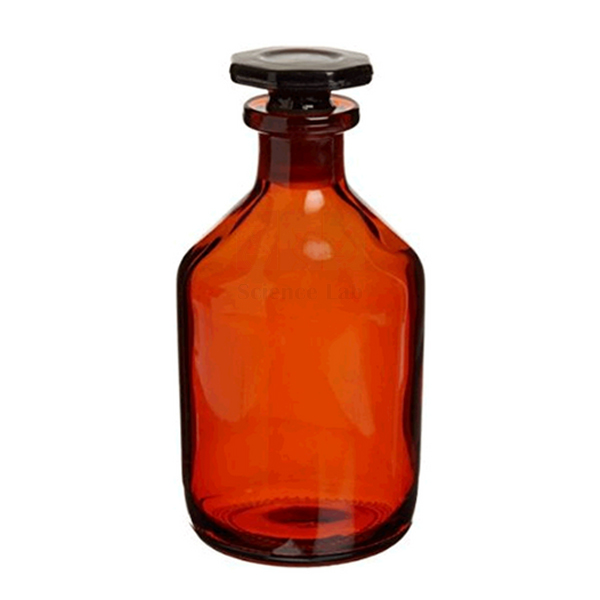
Reagent Bottle Narrow Mouth, Amber Glass
Reagent Bottle Narrow Mouth, Amber Glass (Product Code: SLE/GBO/10) is a brown glass storage bottle with a narrow neck and a PE (polyethylene) stopper, offered in seven capacities from 30 ml to 2000 ml. The amber tint shields light-sensitive solutions such as potassium permanganate, silver nitrate and iodine from daylight and room lighting, helping them keep their strength between practicals. It is made by Jain Scientific Equipments Pvt Ltd (ScienceLab), an Ambala-based laboratory glassware manufacturer serving schools, colleges and testing laboratories.
Specifications
| Parameter | Detail |
|---|---|
| Mouth | Narrow mouth |
| Stopper | PE (polyethylene) stopper |
| Material | Amber glass |
| Colour | Amber |
| Heat resistance | Heat resistant |
| Chemical resistance | Chemical resistant |
| Capacities | 30 ml, 50 ml, 100 ml, 250 ml, 500 ml, 1000 ml, 2000 ml |
Typical Use
Standard solutions used in volumetric analysis — potassium permanganate for redox titrations or silver nitrate for chloride determinations — are normally prepared in quantity and then stored in amber bottles until the titration is run. The 1000 ml and 2000 ml sizes hold this stock in the preparation room, the 250 ml and 500 ml sizes serve a bench or a burette-filling station, and the 30 ml, 50 ml and 100 ml bottles are handy for small amounts of expensive or rarely used reagents and for teacher demonstrations. Such bottles are a standard item of chemistry lab equipment in India, from senior secondary schools to university departments.
A polyethylene stopper does not bond to the neck the way a glass-to-glass joint sometimes can, which makes the bottle easy to open even after long storage. Check the compatibility of PE with strong oxidisers and organic solvents before storing them, and let hot solutions cool before the stopper is inserted. Keep the bottles in a closed cupboard, since amber glass reduces light exposure rather than blocking it entirely.
Manufacturer
Jain Scientific Equipments Private Limited, which operates under the ScienceLab name, manufactures this bottle in Ambala, Haryana. The company works with educational institutions, laboratories and distributors in India and international markets. Visit the company profile to learn more.
Related Glassware Bottles
Products that fit into the same storage and titration workflow:
- Reagent Bottle, Narrow Mouth — clear borosilicate version with a pressed flat stopper for solutions that are not light-sensitive.
- Bottle Reagent, W.M. Glass Amber Colour — a wide-mouth amber bottle for light-sensitive solids.
- Amber Dropping Bottle — for dispensing small portions of the same reagent drop by drop.
- Glass Funnel — to fill the narrow neck cleanly from a larger vessel.
- Burettes — the burette into which a stored standard solution is transferred for titration.
View all bottles in our Glassware Bottles category.
Frequently Asked Questions
Which sizes are available?
Seven: 30 ml, 50 ml, 100 ml, 250 ml, 500 ml, 1000 ml and 2000 ml.
What is the stopper made of?
The stopper is PE (polyethylene). It is easy to remove and does not seize in the neck, but check its compatibility with any strong oxidiser or solvent you intend to store.
When should I choose amber rather than clear?
Choose amber for any solution that degrades in light. For solutions where you need to see colour or clarity at a glance, the clear narrow-mouth bottle is more convenient.
Can I pour in a freshly prepared hot solution?
The glass is heat resistant, but allow the solution to cool before fitting the PE stopper, so the plastic is not softened and pressure does not build up.
What should I include when requesting a quotation?
Quantities for each of the seven sizes, the delivery location and whether you also need funnels, dropping bottles or burettes, so one quotation covers the set.
Do you handle large institutional and export orders?
Yes. Orders for India and international markets are quoted on request through our contact page.
Request a Quote
Tell us the sizes and quantities you need via the contact page, or add this bottle to the enquiry cart and submit it with the rest of your glassware list.
Last updated: 24 September 2026
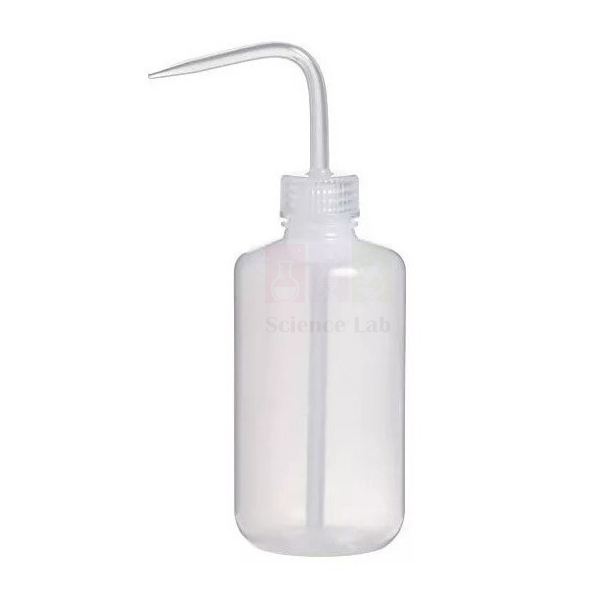
Wash Bottle LDPE with Narrow Mouth
The Wash Bottle LDPE with Narrow Mouth (Product Code: SLE/GBO/12) is a transparent, low-density polyethylene bottle with a screw cap, used to deliver a controlled stream of distilled water or rinse solution when washing glassware, transferring precipitates or making a solution up to the mark. LDPE is soft and flexible, so a gentle squeeze of the body is enough to dispense the liquid, and the narrow mouth keeps refilling tidy. It is made by Jain Scientific Equipments Pvt Ltd (ScienceLab), Ambala, for hospital and laboratory use, and is a regular item for institutions buying from a lab plastic ware supplier in India.
Specifications
| Parameter | Detail |
|---|---|
| Material | LDPE (low-density polyethylene) |
| Mouth | Narrow mouth |
| Cap type | Screw cap |
| Colour | Transparent |
| Chemical resistance | Chemical resistant |
| Capacities | 250 ml, 500 ml |
| Usage | Hospital and laboratory |
Typical Use
During a titration, a short squeeze washes titrant from the inner wall of the conical flask back into the solution so that none is left unreacted. Before a burette or pipette is filled, the wash bottle rinses it with distilled water; during filtration it carries the last particles of a precipitate from the beaker onto the filter paper. In hospital and clinical settings the same bottle is used for rinsing and routine cleaning tasks at the bench. The 250 ml size is easy to handle at an individual student place, while the 500 ml size needs refilling less often on a shared bench.
Keep a separate, clearly labelled bottle for each liquid — distilled water, ethanol or a specific rinse solution — and never top one up with a different liquid. Refill with fresh distilled water regularly rather than letting water stand for weeks. LDPE is not meant for heating, so keep the bottle away from hot plates and burner flames. Wash bottles are a basic part of chemistry lab equipment for schools in India, and most labs keep several in reserve.
Manufacturer
This bottle comes from Jain Scientific Equipments Private Limited, the Ambala, Haryana manufacturer that trades as ScienceLab. Alongside its glass bottles, the company offers plastic labware for schools, colleges, hospitals and laboratories in India and international markets. Read more on the company profile.
Related Laboratory Equipment
Glassware and alternatives that a wash bottle is used with day to day:
- Conical Flask — its walls are washed down with the bottle during titrations.
- Burettes — rinsed with distilled water from the wash bottle before being filled with titrant.
- Glass Funnel — used in filtration, where the bottle rinses residue onto the filter paper.
- Widemouthed Wash Bottles — an alternative with a wider opening for quicker refilling.
- Polythene Wash Bottles — another polythene wash bottle option from our plasticware range.
This item is listed in our Glassware Bottles category.
Frequently Asked Questions
Which sizes are available?
250 ml and 500 ml.
Can the bottle be heated or autoclaved?
Heat resistance is not part of this product’s listing, and LDPE softens at relatively low temperatures, so do not heat it. If you need a bottle for sterilisation, please contact us before ordering.
Which liquids can it hold?
It is listed as chemical resistant and is routinely used for distilled water and common aqueous rinse solutions. For organic solvents, confirm compatibility with us before use.
Why a narrow mouth?
The narrow opening reduces spillage when the bottle is refilled and is closed by a screw cap. If quick refilling matters more, a wide-mouth wash bottle may suit you better.
Is it suitable for hospitals?
Yes, the listed usage is hospital and laboratory, for general rinsing and cleaning at the bench.
Can I order in bulk?
Yes. Send the quantity of each size and your delivery location; we quote for institutions in India and international markets.
Request a Quote
Ask for a price on the Wash Bottle LDPE with Narrow Mouth through our contact page, or add it to the enquiry cart along with the glassware it will be used with.
Last updated: 24 September 2026
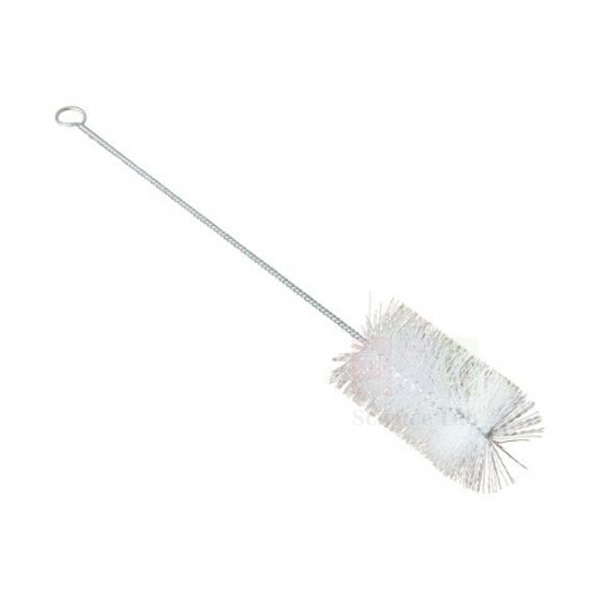
Bottle Brush
The Bottle Brush (Product Code: SLE/GBO/13) is a cleaning brush with white nylon bristles set on a metal handle, used to scrub the inside walls and base of laboratory bottles that a cloth or sponge cannot reach. Lab assistants use it to remove dried reagent films, deposits and residues from reagent, dropping and storage bottles before they are rinsed and reused. It is supplied by Jain Scientific Equipments Pvt Ltd (ScienceLab), Ambala, a lab consumables supplier in India that also offers the bottles it is meant to clean.
Key Details
| Parameter | Detail |
|---|---|
| Type | Bottle cleaning brush |
| Bristle material | Nylon |
| Bristle colour | White |
| Handle | Metal |
| Purpose | Cleaning bottles |
Typical Use
After a bottle has been emptied, rinse it with tap water, add a little laboratory detergent solution, then insert the brush and work it up and down while turning it so the bristles sweep the shoulder, walls and base. Finish with several tap-water rinses followed by a distilled-water rinse, and leave the bottle upside down to drain. White bristles make it easy to see when residue is being lifted off and when the brush itself needs rinsing.
Do not force the brush into a neck that is narrower than its head, and avoid jabbing the metal handle tip against the glass base, which can scratch or crack it. Rinse the brush after each use, shake out the water and hang it to dry; replace it once the bristles splay or flatten. Schools ordering glassware from a lab glassware supplier in India often add a few brushes so that wash-up can start the day the bottles arrive.
Supplier
ScienceLab is the trading name of Jain Scientific Equipments Private Limited, headquartered in Ambala, Haryana. The company supplies cleaning accessories such as this brush together with its laboratory glassware to buyers in India and international markets. Its vendor registration details are CIN U29309HR2020PTC087597 and GSTIN 06AAECJ8618A1ZT. See the company profile for more.
Related Laboratory Equipment
Brushes and bottles that belong to the same wash-up routine:
- Brush, Beaker, Nylon — a larger-headed brush for wide-bodied beakers.
- Brush, Bristle Test Tube Fan Shape — a fan-tipped brush that reaches the rounded base of test tubes.
- Burette Brush — for the long, narrow bore of burettes.
- Reagent Bottle, Narrow Mouth — one of the bottles this brush is used to clean.
- Wash Bottle LDPE with Narrow Mouth — for the final distilled-water rinse after brushing.
This brush is listed in our Glassware Bottles category.
Frequently Asked Questions
What are the bristles and handle made of?
The bristles are white nylon and the handle is metal.
Will it fit my bottles?
Brush dimensions are not given in this listing. Tell us the neck opening and depth of the bottles you want to clean via our contact page, and we will confirm suitability.
Can I use it with cleaning solutions?
Use it with ordinary laboratory detergent solutions. For strong acid or oxidising cleaning mixtures, ask us first, because the bristles and metal handle may not tolerate them.
How do I make the brush last?
Rinse it after use, shake off excess water, hang it to dry and keep it away from heat. Replace it when the bristles lose their shape.
How is it packed?
Pack quantities are not stated here; include the number of brushes you need in your enquiry and we will confirm how they are supplied.
Can you include brushes in a larger school or export order?
Yes. Brushes can be added to glassware orders for institutions in India and international markets.
Request a Quote
To order the Bottle Brush, send the quantity through our contact page or add it to the enquiry cart with the bottles and glassware on your list.
Last updated: 24 September 2026