- Physics Lab Equipment
- Chemistry Lab Equipment
- Biology Lab Equipment
- Anatomical Lab Equipment
- Learning
- Educational Lab Equipment
- Magnets
- Agriculture
- Astronomy
- Earth Science
- Geography Lab Equipment
- Safety Lab Coat
- Laboratory
- Meteorological
- Electricity & Magnetism
- Heat
- School Lab Equipment
- Lab Glassware
- Science Lab Equipment
- Tvet Lab Equipment
- Robotics Kits Supplier and Manufacturer for Schools India
- Math Lab Equipment Manufacturers and Exporters in Ambala
- STEM Kits Manufacturers and Supplier India
- Engineering Lab Equipment
- Hospital Lab Equipment
- Water, Sanitation & Hygiene Supplies
- Cold Chain, Solar & Communication Equipment
- Nutrition
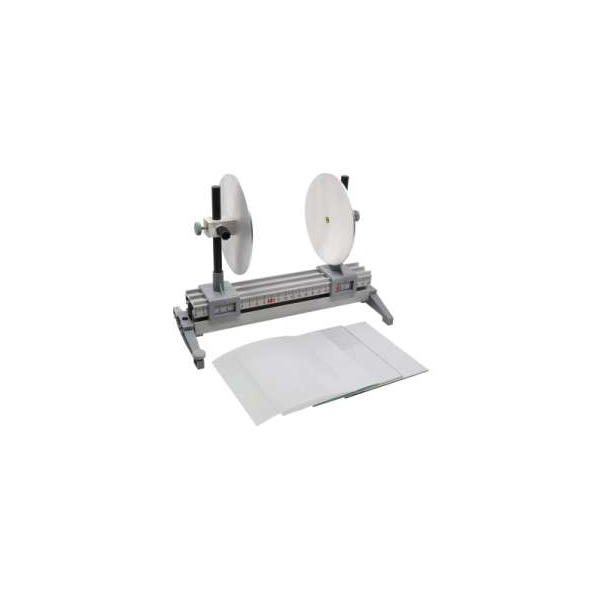
Demonstrative Plan Condenser/Capacitor
Demonstrative Plan Condenser/Capacitor (Product Code: SCL2405/032) is a large parallel-plate capacitor used to demonstrate how plate separation changes stored charge and capacitance in secondary-school and college electrostatics lessons. Two 250 mm metal discs stand on an insulated stand and can be moved coaxially from 160 mm apart down to touching, so a whole class can watch the gap change. It is manufactured by Jain Scientific Equipments Pvt Ltd (ScienceLab), an OEM manufacturer, at its own factory in Ambala, India.
Specifications
| Parameter | Detail |
|---|---|
| Type | Demonstration plane (parallel-plate) capacitor |
| Plates | Two metal discs attached vertically to an insulated stand |
| Plate diameter | 250 mm |
| Plate material | Solid castings, stainless steel or corrosion-resistant steel |
| Electrode | Attached to the middle of the disc |
| Plate spacing | 0–160 mm; the support allows coaxial approach of the discs down to zero distance |
| Plate adjustment | Possible between 0 and 20 mm |
| Finish | No burrs |
| Product code | SCL2405/032 |
| Manufacturer | Jain Scientific Equipments Pvt Ltd (ScienceLab) — OEM |
| Country of origin | India (made in Ambala, Haryana) |
What Is the Demonstration Plate Capacitor Used For?
The classic lesson connects the two discs to an electroscope, charges them, and then slowly widens the gap. Because the charge on the plates cannot escape, the electroscope leaves open further as the plates move apart: the same charge now sits at a higher potential difference, which shows students that capacitance falls as separation grows. Closing the gap again brings the leaves back down, and sliding an insulating sheet between the discs at a fixed spacing introduces the idea of a dielectric in the same period.
For clean results, set the discs parallel before charging, keep hands away from the plate faces during readings, and run the demonstration on a dry day, since humid air bleeds charge away. The large 250 mm plates keep the effect visible from the back of a classroom, making this a useful physics demonstration kit for India's senior secondary syllabus.
What to Specify When Ordering
- The plate material, if your tender names one: solid castings, stainless steel or corrosion-resistant steel.
- Whether an electroscope and a charging source, such as an EHT power supply, should be quoted with it, as neither is listed.
- The quantity and delivery location for single schools or bulk supply.
OEM Manufacturer
Jain Scientific Equipments Private Limited, which sells under the ScienceLab name, is the OEM (original equipment manufacturer) of this plate capacitor and produces it at its own licensed factory at Saha, Ambala, Haryana, India. Schools, colleges, dealers and importers receive it factory-direct instead of through a trader, and the maker itself handles quotations, repeat orders and any replacement-part request — ask us. Read more on the company profile page.
Related Lab Equipment
These items are used alongside a demonstration plate capacitor in electrostatics lessons:
- Electroscope with Accessories — shows the change in potential difference as the plate gap is varied.
- EHT Power Supply — a steady source for charging the plates in place of friction methods.
- Capacitor Study Kit — lets students follow up the demonstration with their own capacitor experiments.
- Capacitor (Charging and Discharging) — extends the topic to charging and discharging in circuits.
Browse more apparatus in our Lab Equipment category.
Frequently Asked Questions
How large are the plates?
Each disc of the Demonstrative Plan Condenser/Capacitor is 250 mm in diameter. The plate material is listed as solid castings, stainless steel or corrosion-resistant steel, so tell us if your tender specifies one of these.
How far apart can the plates be set?
The plates of the Demonstrative Plan Condenser/Capacitor can be spaced from 0 to 160 mm, with plate adjustment possible between 0 and 20 mm. The support lets the discs approach each other coaxially until the gap is zero.
Is an electroscope or power source included?
No electroscope or voltage source is listed with the Demonstrative Plan Condenser/Capacitor. An electroscope is normally needed to see the effect of changing the gap; ask us to quote one, and a charging source, together with the capacitor.
Can dielectric sheets be used with it?
Yes. An insulating sheet placed between the discs of the Demonstrative Plan Condenser/Capacitor shows how a dielectric changes capacitance. Dielectric sheets are not listed as part of this item, so ask us about suitable options.
Who manufactures the Demonstrative Plan Condenser/Capacitor?
The Demonstrative Plan Condenser/Capacitor is manufactured by Jain Scientific Equipments Pvt Ltd (ScienceLab), the OEM, at its own licensed factory at Saha, Ambala, Haryana, India. Quotations and repeat orders for schools and distributors are handled by the manufacturer itself.
Is test documentation available?
The Demonstrative Plan Condenser/Capacitor is a qualitative demonstration apparatus, so no calibration document is listed with it. If your institution needs any test documentation, discuss it with us through the contact page before you place the order.
What should an institutional quotation request include?
For a Demonstrative Plan Condenser/Capacitor quotation, send the product code SCL2405/032, the quantity, delivery location and any tender specification. We handle single-school orders and bulk supply within India and to international markets.
Request a Quote
To order the Demonstrative Plan Condenser/Capacitor with a quotation straight from the manufacturer, send your requirements through our contact page or add it to the enquiry cart with the rest of your physics list.
Last updated: 24 September 2026
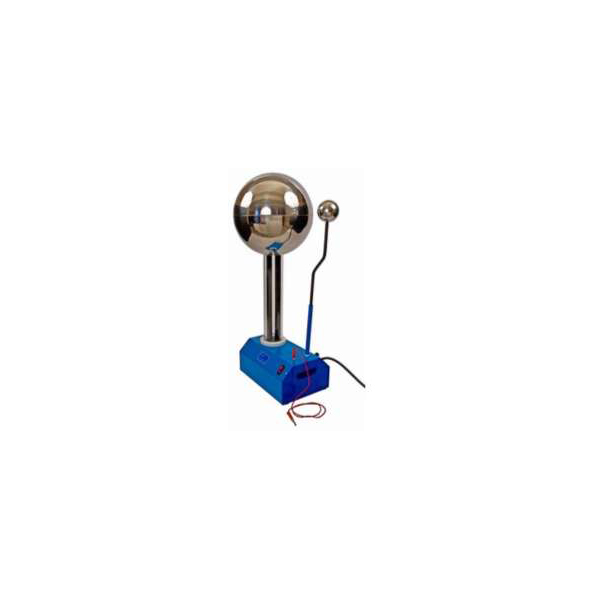
Rods (wands) to Study Electrification
Rods (wands) to Study Electrification (Product Code: SCL2309/033) are hand-held rods used in school electrostatics lessons to show how objects become charged when they are rubbed, and how charged objects attract or repel one another. Teachers use them for quick front-of-class demonstrations and students use them in simple bench activities. As part of the physics lab equipment range for schools in India, they are offered by Jain Scientific Equipments Pvt Ltd (ScienceLab), Ambala, India.
Key Details
| Parameter | Detail |
|---|---|
| Type | Rods (wands) for studying electrification |
| Purpose | Producing static charge by rubbing, and showing attraction and repulsion between charged objects |
| Supplied as | Rods for classroom electrostatics work; rod materials and quantity per set confirmed on enquiry |
| Suitable for | School physics and general science lessons on static electricity |
Typical Use
In a typical lesson a rod is rubbed briskly with a dry cloth and then held near small scraps of paper, which jump up to it. The charged rod can next be brought close to an electroscope cap to make the leaves diverge, or towards a second charged rod hung from a thread so that students see it swing away (like charges) or swing closer (unlike charges). Rods of different materials charge with opposite signs, which is how the idea of two kinds of charge is usually introduced.
Static experiments are sensitive to moisture, so work in a dry room, keep the rods clean and free of grease, and wipe them with a dry cloth before each trial. Grouping these wands with an electroscope and a small indicator gives a compact electricity experiment kit for school practicals on charging by friction and induction.
Manufacturer
ScienceLab is the brand under which Jain Scientific Equipments Private Limited, based in Ambala, Haryana, manufactures and sells school science apparatus. Buyers who must register a vendor can use the company's GSTIN 06AAECJ8618A1ZT and LEI 3358004HRD1JIVXKYX49. See the company profile for more background.
Related Lab Equipment
These items are commonly used with electrification rods in static electricity lessons:
- Electroscope with Accessories — detects the charge picked up by a rubbed rod.
- Gold Leaf Electroscope — a sensitive indicator for comparing how strongly rods are charged.
- Electrostatic Sultan — an electrostatic indicator for showing repulsion between like charges.
- Friction Rod, Brass/Ebonite — a rod with a listed material pairing, for comparing charge signs.
- Friction Rod, Perspex — an acrylic alternative for charging-by-rubbing activities.
More apparatus is listed in our Lab Equipment category.
Frequently Asked Questions
What materials are the rods made from?
The rod materials and the number of rods per set are not stated on this listing. Please contact us and we will confirm them before you order.
Is a rubbing cloth included?
Rubbing materials are not listed with this item. Ask us when you enquire and we can advise on what is supplied or recommended.
Why does the demonstration sometimes fail?
Moist air lets charge leak away quickly. Choose a dry day, keep the rods dry and clean, and rub them firmly just before testing.
Can the rods be used with an electroscope?
Yes. Bringing a charged rod near an electroscope cap is one of the standard ways to show charging, and touching it to the cap shows charging by contact.
Are the rods suitable for students to handle?
Static charges from rubbed rods are small and are routinely used in school practicals. As with any rods, students should handle them carefully and not wave them near faces.
How do I request a quotation for a school or tender?
Share the product code SCL2309/033, the quantity and your delivery address. We supply schools across India and international markets and can quote in bulk.
Request a Quote
For prices and availability of the Rods (wands) to Study Electrification, write to us through the contact page or add them to your enquiry cart.
Last updated: 24 September 2026
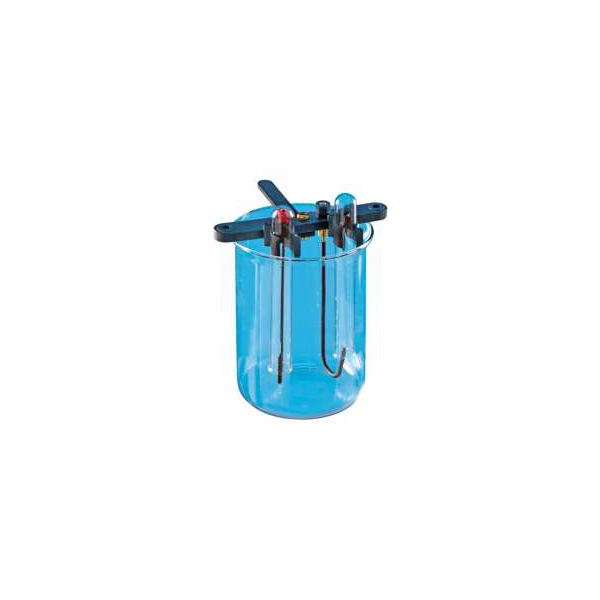
Device to Study Electric Current In Electrolytes
Device to Study Electric Current In Electrolytes (Product Code: SCL222/034) is a small electrolysis cell for showing that solutions of acids, bases and salts conduct electricity while pure water barely does, and for watching what happens at the electrodes while current flows. A transparent plastic vessel with a lid holds the solution, and interchangeable electrodes of different materials connect to external contacts. This electrolysis apparatus for school laboratories in India is manufactured by Jain Scientific Equipments Pvt Ltd (ScienceLab), Ambala.
Specifications
| Parameter | Detail |
|---|---|
| Vessel | Electrolysis vessel with lid, transparent plastic |
| Vessel volume | 200 ml |
| Electrodes | Two or more: one copper, the others graphite or coal and zinc or lead |
| Electrode diameter | 4 mm |
| Connections | External contacts fixed on the plastic support |
Typical Use
Fill the vessel with the test liquid, fit two electrodes, and connect them through a lamp or ammeter to a low-voltage DC source. Distilled water gives little or no current; adding a pinch of salt or a few drops of acid makes the reading jump, which is the core observation of the topic. With copper sulphate solution and a copper electrode, students can watch copper build up on the negative electrode, and switching between graphite, zinc or lead electrodes shows how electrode material affects the products.
The same parts can be used without an external supply: copper and zinc electrodes in a salt or acid solution form a simple cell whose voltage can be read on a meter. Keep voltages low, work in a ventilated room because gases may form at the electrodes, and rinse the electrodes and vessel after every class. It fits neatly into an electrochemical cell kit for school chemistry and physics practicals.
Manufacturer
Jain Scientific Equipments Private Limited makes this electrolyte cell and trades under the ScienceLab name from Ambala in Haryana, India, where it produces teaching apparatus for chemistry and physics departments. The company profile explains who we are and how we work with institutions.
Related Lab Equipment
These products complete a conductivity and electrolysis practical:
- Cupric Sulphate (Copper Sulphate) — the usual electrolyte for copper deposition experiments.
- Battery Eliminator 12 Volt — a low-voltage source to drive current through the cell.
- Digital Multimeter — measures current through the solution or the voltage of a copper-zinc cell.
- Crocodile Clips & Leads — quick connections between the external contacts and the circuit.
- Hoffman Electrolysis Apparatus — the next step when gas volumes need to be collected and compared.
See the full Lab Equipment category for more.
Frequently Asked Questions
Which electrodes come with the device?
The listing gives two or more 4 mm electrodes: a copper one, plus graphite or coal and zinc or lead. Tell us which combination you need and we will confirm it in the quotation.
How much solution does the vessel hold?
The transparent plastic vessel has a volume of 200 ml and comes with a lid.
Is a power supply included?
No power source is listed with this device. A low-voltage DC supply or battery is needed for electrolysis work; see the related items above or ask us to quote one.
Are the chemicals supplied?
Electrolytes are not part of this item. Solutions such as copper sulphate are available separately from our chemicals range.
Can the vessel be heated?
The vessel is plastic, so it should be used with room-temperature solutions only and never placed over a burner.
How do I clean it after use?
Empty the vessel, rinse it and the electrodes with water, dry them, and lightly clean any deposits off the electrodes before storing.
Do you supply schools in bulk and overseas?
Yes. Quote the code SCL222/034 with your quantity and delivery location; we supply institutions in India and international markets.
Request a Quote
Send your requirement for the Device to Study Electric Current In Electrolytes via the contact page, or add it to the enquiry cart together with any electrolytes you need.
Last updated: 24 September 2026
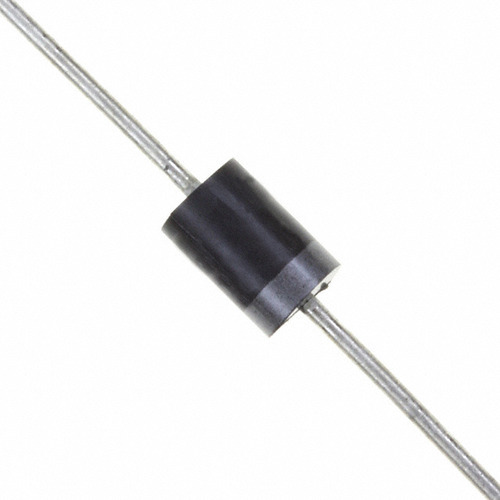
Semiconductor Diodes (for high school)
Semiconductor Diodes (for high school) (Product Code: SCL226/035) are rectifier diodes for practical lessons on one-way conduction, forward and reverse bias, and converting alternating current into direct current. Their 1000 V direct voltage rating and 5 A maximum direct current leave a wide margin for the low-voltage circuits used in school laboratories. These components are supplied by Jain Scientific Equipments Pvt Ltd (ScienceLab), Ambala, India, for use in any semiconductor diode kit for physics practicals.
Specifications
| Parameter | Detail |
|---|---|
| Type | Semiconductor rectifier diode |
| Direct voltage rating | 1000 V |
| Maximum direct current | 5 A |
| Intended level | High school physics and electronics practicals |
Typical Use
The first experiment is usually the simplest: place a diode in series with a small lamp and a cell, then reverse it. The lamp lights one way round and stays dark the other, which makes the idea of forward and reverse bias concrete. With a variable supply, a resistor and two meters, students then record current against voltage and plot the characteristic curve, noting the sharp rise once the forward threshold is passed.
Senior classes use the same diodes to build a half-wave rectifier from a low-voltage AC source, then combine four of them into a bridge for full-wave rectification, a standard rectifier circuit kit exercise. Always include a series resistor to limit current, check the band that usually marks the cathode before connecting, and never feed the circuits directly from the mains.
Supplier
Jain Scientific Equipments Private Limited, known to customers as ScienceLab, operates from Ambala, Haryana and supplies electronic components like these diodes alongside its own physics apparatus, so a school can source a complete practical from one place. Visit the company profile to learn more.
Related Lab Equipment
Useful items for diode and rectifier practicals:
- Light-Emitting Diode (LED) — a diode that shows forward bias by lighting up.
- Zener Diode — for comparing ordinary diode behaviour with reverse breakdown.
- Zener Diode Experiment Circuit Board — a ready board for characteristic-curve experiments.
- Multimeter — reads current and voltage when plotting the diode curve.
- Battery Eliminator 12 Volt — a low-voltage source for bias and rectifier circuits.
Explore the rest of our Lab Equipment category.
Frequently Asked Questions
What are the diode ratings?
The direct voltage rating is 1000 V and the maximum direct current is 5 A, which comfortably covers low-voltage school circuits.
How many diodes are in each pack?
The pack quantity is not stated on this listing. Please contact us with the number your class needs and we will confirm how they are supplied.
Can they be used to build a bridge rectifier?
Yes. Four diodes arranged in a bridge give full-wave rectification from a low-voltage AC supply; one diode alone gives half-wave rectification.
Do I need a resistor in the circuit?
Yes. A series resistor limits the current, protects the diode and the supply, and gives students a steady reading when plotting the curve.
How do students identify the terminals?
On most rectifier diodes a band on the body marks the cathode. Check the marking on the parts you receive before wiring.
Can you quote for a whole lab or export order?
Yes. Give us the code SCL226/035, the quantity and delivery address; we supply schools in India and international markets.
Request a Quote
To request pricing for Semiconductor Diodes (for high school), use our contact page or place them in the enquiry cart with the rest of your electronics list.
Last updated: 24 September 2026
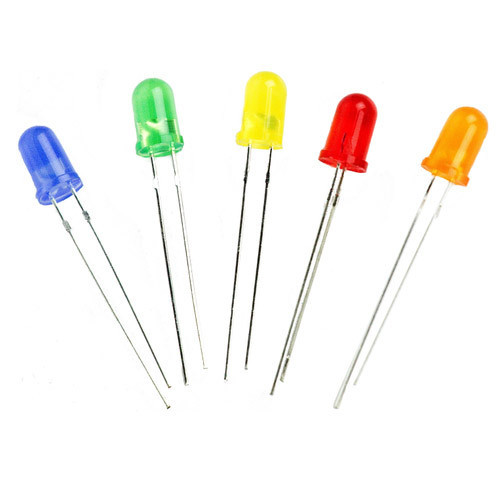
Light-Emitting Diode (LED)
Light-Emitting Diode (LED) (Product Code: SCL2529/036) is a white luminescent diode that glows when current passes through it in the forward direction, making it a clear visual indicator for circuit and semiconductor lessons. The capsule is at least 5 mm across and the wire ends are tinned copper, so it can be soldered, clipped or pushed into a circuit board. Schools use it in LED characteristics experiment kits and simple circuit builds; it is supplied by Jain Scientific Equipments Pvt Ltd (ScienceLab), Ambala, India.
Specifications
| Parameter | Detail |
|---|---|
| Type | Light-emitting diode |
| Colour | White luminescent |
| Capsule diameter | Minimum 5 mm |
| Leads | Tinned copper wire ends |
Typical Use
Younger classes use the LED as a polarity test: connected one way it lights, reversed it stays dark, which introduces the idea that some components only let current pass in one direction. In senior practicals it becomes a subject of study in its own right, with students raising the voltage in small steps and recording the point at which it starts to glow, then comparing that turn-on voltage with other LED colours.
Because it draws little current, the white LED also serves as a status light in student-built circuits such as a light-sensing switch or a continuity tester. Always wire a resistor in series with it, since connecting an LED straight across a battery can burn it out. Tinned leads take solder easily, but keep soldering brief to avoid overheating the capsule. It is an inexpensive addition to any electricity experiment kit for school benches.
Supplier
Components such as this LED are sourced and supplied by Jain Scientific Equipments Private Limited, which trades as ScienceLab from its base in Ambala, Haryana, so schools can order them together with other circuit apparatus. Our company profile has more about the business.
Related Lab Equipment
Pair this LED with the following items for circuit and optics-electronics work:
- LED Bright Red — a second colour for comparing turn-on voltages.
- Simple Circuit Module LED Board Green — a mounted LED module for younger students.
- Battery Snap with Crocodile Clip — a quick way to power the LED from a battery.
- Light Dependent Resistor — combines with an LED in light-sensing circuit projects.
- Semiconductor Diodes (for high school) — ordinary rectifier diodes for contrasting with the LED.
More items are available in the Lab Equipment category.
Frequently Asked Questions
What colour and size is this LED?
It is a white luminescent diode with a capsule diameter of at least 5 mm. For a red LED, see the related item above.
Which resistor should I use with it?
A series resistor is always needed; its value depends on your supply voltage. Ask us with your circuit details and we will suggest a suitable value.
Why does my LED not light?
The most common reason is reversed polarity. Swap the leads round; if it still stays dark, check the battery and the connections.
Can the leads be soldered?
Yes. The wire ends are tinned copper, which accepts solder readily. Keep the iron on the joint only briefly.
Are larger quantities available?
Yes. Pack sizes are not fixed on this listing, so tell us how many you need for your classes and we will confirm supply.
Do you ship outside India?
Yes. Quote code SCL2529/036 with your quantity and destination; we supply customers in India and international markets.
Request a Quote
Ask for a price on the Light-Emitting Diode (LED) through our contact page, or add it to the enquiry cart along with resistors and leads.
Last updated: 24 September 2026
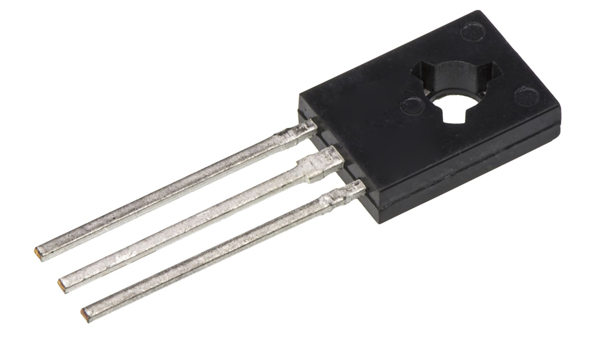
Transistor (for high school)
Transistor (for high school) (Product Code: SCL234/037) is an NPN bipolar transistor used to show how a small base current controls a much larger collector current in school electronics and physics practicals. Rated for a maximum allowable collector current of 1 A, it suits switching circuits with LEDs or small lamps as well as the curves plotted with a transistor characteristics kit. It is supplied by Jain Scientific Equipments Pvt Ltd (ScienceLab), Ambala, India.
Specifications
| Parameter | Detail |
|---|---|
| Type | Bipolar transistor, NPN |
| Maximum allowable collector current | 1 A |
| Maximum allowable voltage | 300 V (as listed for the collector and emitter) |
| Maximum junction temperature | Confirmed on enquiry |
| Product code | SCL234/037 |
| Supplied by | Jain Scientific Equipments Pvt Ltd (ScienceLab), Ambala, India |
What Is the High School Transistor Used For?
A good starting circuit uses the transistor as a switch: an LED or small lamp sits in the collector circuit, and a resistor feeds the base from a second, weaker path. Touching the base connection on and off turns the load on and off, showing that a tiny control current can govern a larger one. Adding a light dependent resistor to the base divider turns this into an automatic night light, a popular project for class 11 and 12 students.
For quantitative work, students hold the collector-emitter voltage steady, vary the base current and record the collector current, then repeat at other voltages to draw the output characteristics used in common emitter amplifier experiments. Identify the emitter, base and collector leads from the part marking before wiring, always include a base resistor, and keep currents well below the 1 A limit.
Supplier
Jain Scientific Equipments Private Limited, which trades as ScienceLab from Ambala, Haryana, supplies this transistor to schools and colleges together with the LEDs, resistors and meters used in the same practicals. For vendor registration, the supplying company is Jain Scientific Equipments Private Limited (CIN U29309HR2020PTC087597, GSTIN 06AAECJ8618A1ZT). More details are on our company profile.
Related Lab Equipment
These items are typically used in the same transistor practicals:
- PNP Transistor — the opposite polarity type, for comparing current directions.
- NPN Transistor — an alternative NPN listing for larger class sets.
- Light Dependent Resistor — turns the transistor switch into a light-operated circuit.
- Light-Emitting Diode (LED) — a simple load that shows when the transistor conducts.
- Multimeter — measures base and collector currents for characteristic curves.
Find more apparatus in the Lab Equipment category.
Frequently Asked Questions
Is this an NPN or a PNP transistor?
The Transistor (for high school) is an NPN bipolar transistor. If you also want PNP devices so students can compare current directions and biasing, the PNP Transistor listed above can be added to the same order.
What current and voltage can it handle?
The Transistor (for high school) has a maximum allowable collector current of 1 A, and its voltage rating is listed as 300 V. Typical school circuits run far below both limits, which leaves a wide safety margin.
What is the maximum junction temperature?
The junction temperature figure in our source listing for the Transistor (for high school) is unclear, so it is not quoted here. Contact us and we will confirm the rating for the parts supplied with your order.
How do I tell which lead is which?
Use the part marking on the Transistor (for high school) you receive to identify the emitter, base and collector before wiring. If you need the pin arrangement in writing for student worksheets, ask us when you place the order.
Can it be used without a base resistor?
No. The Transistor (for high school) should always be used with a base resistor, which limits the base current and protects the device. Connecting the base straight to a supply can pass excessive current and destroy the transistor.
Who supplies the Transistor (for high school)?
The Transistor (for high school) is supplied by Jain Scientific Equipments Pvt Ltd (ScienceLab), Ambala, Haryana, India. Schools can order it with LEDs, light dependent resistors and multimeters in one enquiry through the contact page.
Can you supply class sets or export orders?
Yes. For class sets of the Transistor (for high school), send the code SCL234/037, the quantity and your delivery location, and we will quote for schools in India or international markets.
Request a Quote
For availability of the Transistor (for high school), write to us through the contact page or add it to the enquiry cart with your other electronics items.
Last updated: 24 September 2026
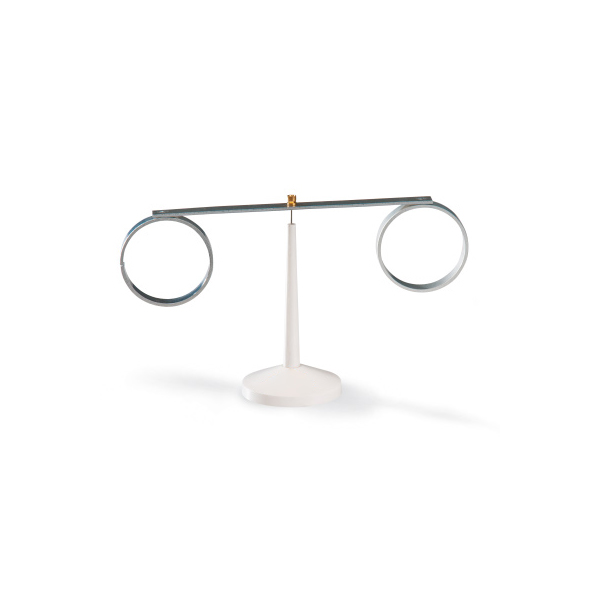
Device to Verify The Lenz's Law (for high school)
Device to Verify The Lenz's Law (for high school) (Product Code: SCL239/038) is a balanced rocker carrying two aluminium rings, used to show that an induced current opposes the change that produces it in school physics lessons on electromagnetic induction. A magnet pushed into the closed ring makes the arm swing away, while the slotted ring does not respond at all. It is manufactured by Jain Scientific Equipments Pvt Ltd (ScienceLab), an OEM manufacturer, at its own factory in Ambala, India, as physics practical equipment for schools.
Specifications
| Parameter | Detail |
|---|---|
| Construction | Two identical aluminium rings fixed to the ends of an aluminium rocker arm, a tripod with a needle, and a stand |
| Ring arrangement | One ring with a slot, the other closed |
| Ring diameter | 25 mm |
| Rocker arm length | In the range of 130 to 180 mm |
| Pivot | Beam mounted on the tripod needle |
| Product code | SCL239/038 |
| Manufacturer | Jain Scientific Equipments Pvt Ltd (ScienceLab) — OEM |
| Country of origin | India (made in Ambala, Haryana) |
What Is the Lenz's Law Device Used For?
Set the stand on a level bench, balance the arm on the needle and wait for it to settle. Push one pole of a strong bar magnet quickly into the closed ring: the changing magnetic field induces a current in the ring, and the field of that current repels the magnet, so the arm turns away. Withdraw the magnet and the ring is drawn after it. Repeat with the slotted ring and nothing happens, because the slot breaks the conducting loop and no current can circulate.
That side-by-side comparison lets students reason out Lenz's law for themselves before it is written on the board, and it links naturally to energy conservation and eddy current braking. Move the magnet briskly, keep the room free of draughts, and avoid knocking the arm off its needle between trials. It fits well into an electromagnetic kit for school physics in India alongside coils, magnets and galvanometers.
OEM Manufacturer
The Lenz's law rocker is made by Jain Scientific Equipments Private Limited, trading as ScienceLab, which is its OEM (original equipment manufacturer) and builds it at its own licensed factory at Saha, Ambala, Haryana, India. Physics departments, dealers and importers buy it factory-direct, and a quotation, repeat order or replacement tripod needle comes from the maker rather than a middleman — ask us. Learn more on the company profile.
Related Lab Equipment
These items support induction lessons alongside this device:
- Magnet Set of 4 — provides the magnets needed to move in and out of the rings.
- Lenz’s Law – Open & closed loop — an alternative open and closed loop version of the same experiment.
- Eddy Current Unit — extends the lesson to eddy current damping.
- Faraday's Law Apparatus — measures the induced pulse that Lenz's law gives a direction to.
- Device for Demonstrating Magnetic Field Lines — shows the field shape around the magnet first.
Visit our Lab Equipment category for more.
Frequently Asked Questions
Is a magnet included?
No magnet is listed with the Device to Verify The Lenz's Law (for high school). A strong bar magnet works well; the Magnet Set of 4 linked above can be added, or ask us to include a magnet in your quotation.
Why does one ring have a slot?
On the Device to Verify The Lenz's Law, the slot breaks the conducting loop so no induced current can flow round that ring. It acts as a control, proving the closed ring moves because of induced current, not simple attraction.
How big are the rings and the arm?
Each aluminium ring of the Device to Verify The Lenz's Law (for high school) is 25 mm in diameter, and the aluminium rocker arm carrying them has a length in the range of 130 to 180 mm.
Do aluminium rings stick to the magnet?
No. Aluminium is not attracted to a magnet in the ordinary way, so any movement of the closed ring on the Device to Verify The Lenz's Law must come from the current induced in it by the moving magnet.
Who manufactures the Device to Verify The Lenz's Law?
The Device to Verify The Lenz's Law (for high school) is manufactured by Jain Scientific Equipments Pvt Ltd (ScienceLab), the OEM, at its own licensed factory at Saha, Ambala, Haryana, India. Quotations and repeat orders come directly from the manufacturer.
How should the device be stored?
Before moving or storing the Device to Verify The Lenz's Law, lift the rocker arm off the tripod needle so the pivot is not damaged, and keep the aluminium rings free of dents so the arm stays balanced.
Request a Quote
Send an enquiry for the Device to Verify The Lenz's Law (for high school) to the manufacturer through our contact page, or add it to the enquiry cart together with a suitable magnet.
Last updated: 24 September 2026
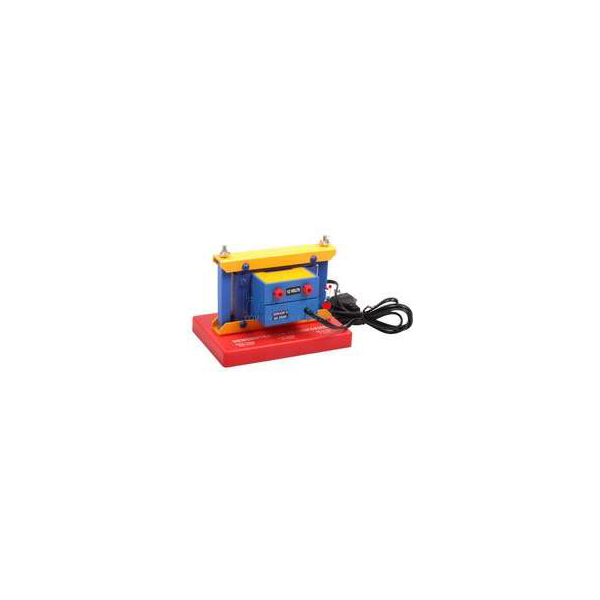
Demonstrative Transformer (for high school)
Demonstrative Transformer (for high school) (Product Code: SCL241/039) is a working model of a U-shaped steel core transformer that lets students see every part of a real step-down transformer: the steel core that carries the magnetic flux, a clamped bar that closes the field lines, and two enamelled copper coils on a wooden or plastic support. The 1400-turn primary takes 220 V and the 400-turn secondary delivers 60 V, so the turns ratio can be checked directly against measured voltages. It is manufactured by Jain Scientific Equipments Pvt Ltd (ScienceLab), Ambala, India.
Specifications
| Parameter | Detail |
|---|---|
| Type | Functional model of a U-shaped steel core transformer |
| Core | U-shaped steel core with a bar that closes the clamped field lines |
| Coils | Enamelled copper |
| Support | Wooden or plastic |
| Primary coil | 220 V / 0.3 A, 1400 turns |
| Secondary coil | 60 V / 1 A, 400 turns |
| Transformer power | 30 W |
Typical Use
With the closing bar clamped in place, the teacher energises the primary and students read both voltages on AC meters. Dividing 1400 turns by 400 turns and comparing the result with the ratio of the measured voltages is the central calculation of the topic. Loosening or removing the bar then shows a clear drop in secondary output, because the flux now leaks through air instead of staying in the steel, which explains why real transformers use closed cores.
A small lamp on the secondary lets the class compare input and output power and discuss efficiency and heating losses. Because the primary works at 220 V, the model should be connected and switched only by the teacher, using insulated leads, and all rewiring should be done with the supply off. It suits any transformer experiment kit for school physics labs.
Manufacturer
This demonstration transformer comes from Jain Scientific Equipments Private Limited, which manufactures teaching apparatus at its Ambala, Haryana factory and sells it, with the rest of its electromagnetism range, under the ScienceLab brand. For more about the company and its manufacturing base, open the company profile.
Related Lab Equipment
These items are used with the transformer when teaching electromagnetic induction:
- Analogue Voltmeter AC — reads primary and secondary voltages on a large dial.
- Multimeter — checks voltages and currents while comparing input and output.
- Demountable Transformer Kit — lets students assemble their own coil combinations.
- Transformer Parts Kit — for hands-on work on how cores and windings fit together.
- U-Shaped Electromagnet — introduces the magnetised core before the transformer lesson.
See more in our Lab Equipment category.
Frequently Asked Questions
What are the coil ratings?
The primary is rated 220 V / 0.3 A with 1400 turns and the secondary 60 V / 1 A with 400 turns. Total transformer power is 30 W.
Can students operate it themselves?
The primary runs at 220 V, so it should be connected and switched by a teacher. Students can safely take readings from the secondary side under supervision.
What does the closing bar do?
It completes the magnetic circuit across the open ends of the U-core. Removing it shows how much output is lost when flux has to cross an air gap.
Is the base wooden or plastic?
The support is listed as wooden or plastic. Mention your preference in the enquiry and we will confirm what is available.
Are meters included?
No meters are listed with this model. AC voltmeters or a multimeter are needed for measurements; contact us to add them.
Is a test report or calibration certificate provided?
This is a teaching model rather than a measuring instrument. If your purchase rules call for any documentation, please discuss it with us before ordering.
What details should a tender quotation include?
The code SCL241/039, the quantity, delivery location and any required specification. We supply institutions in India and international markets.
Request a Quote
To price the Demonstrative Transformer (for high school), use our contact page or add it to the enquiry cart with any meters you need.
Last updated: 24 September 2026