- Physics Lab Equipment
- Chemistry Lab Equipment
- Biology Lab Equipment
- Anatomical Lab Equipment
- Learning
- Educational Lab Equipment
- Magnets
- Agriculture
- Astronomy
- Earth Science
- Geography Lab Equipment
- Safety Lab Coat
- Laboratory
- Meteorological
- Electricity & Magnetism
- Heat
- School Lab Equipment
- Lab Glassware
- Science Lab Equipment
- Tvet Lab Equipment
- Robotics Kits Supplier and Manufacturer for Schools India
- Math Lab Equipment Manufacturers and Exporters in Ambala
- STEM Kits Manufacturers and Supplier India
- Engineering Lab Equipment
- Hospital Lab Equipment
- Water, Sanitation & Hygiene Supplies
- Cold Chain, Solar & Communication Equipment
- Nutrition
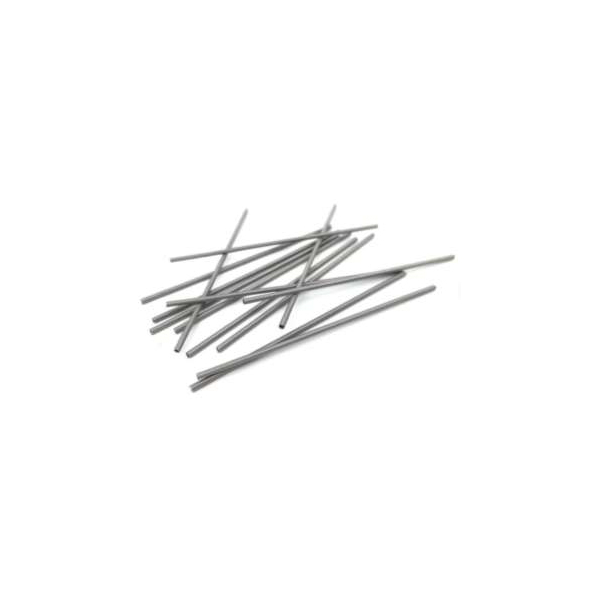
Long Cylindrical Spring (Resort)
Long Cylindrical Spring (Resort) (Product Code: SCL1219/08) is a long helical spring in silver-coloured stainless steel, 20 mm in diameter and 3 metres long, specified for an elongation of 3 times. Laid on the floor or a long bench and stretched between two students, it carries pulses and waves slowly enough for a whole class to follow them, so transverse and longitudinal motion can be compared side by side. It is made by Jain Scientific Equipments Pvt Ltd (ScienceLab), Ambala, and forms the heart of a wave motion kit for schools in India.
Specifications
| Parameter | Detail |
|---|---|
| Type | Long cylindrical helical spring (resort) |
| Shape | Cylindrical |
| Material | Stainless steel |
| Colour | Silver |
| Diameter | 20 mm |
| Length | 3 metres |
| Elongation | 3 times |
Typical Use
With one student holding each end, a quick sideways flick sends a transverse pulse along the coils, while a sharp push along the spring's length sends a band of compression that models how sound travels. Holding one end firmly shows that a pulse returns inverted from a fixed end; letting that end move freely shows it returning the same way up. Shaking one end at a steady rate sets up standing waves, and the class can point out nodes and antinodes, measure the wavelength with a tape and time pulses to estimate wave speed.
Work on a smooth, clear floor or a long bench, keep the stretch within the specified elongation so the coils are not permanently deformed, and never let go of a stretched end suddenly. Easy to see from the back of the room, the spring earns its place in any physics demonstration kit in India.
Manufacturer
Jain Scientific Equipments Private Limited, known to schools by its trade name ScienceLab, produces this spring in Ambala, Haryana, alongside a wide range of apparatus for teaching waves, sound and mechanics. Visit the company profile to learn more about the business.
Related Lab Equipment
Apparatus that supports wave demonstrations with this spring:
- Tape Measure — for marking out wavelengths and the stretched length on the floor.
- Digital Chronometer (Stopwatch) — times a pulse over a known distance to estimate wave speed.
- Apparatus for demonstrating the phenomenon of wave propagation and reflection — a bench-top follow-up on propagation and reflection.
- Metal Slinky, Helical Spring — a shorter helical spring for small-group work.
See the whole Lab Equipment category for more physics apparatus.
Frequently Asked Questions
How far can the spring be stretched?
It is specified for an elongation of 3 times. Staying within that limit keeps the coils evenly spaced and prevents permanent stretching.
Can it show both transverse and longitudinal waves?
Yes. A sideways movement of one end produces transverse pulses, and a push along the axis produces compressions and rarefactions.
What is it made of?
The spring is silver-coloured stainless steel with a cylindrical shape and a diameter of 20 mm.
How much space is needed for a demonstration?
It is 3 metres long before it is stretched, so a corridor, a long bench or a clear strip of classroom floor works best.
How can we stop it from tangling in storage?
Let the coils close up gently, tie the bundle loosely at a few points and store it in a box or bag so the turns cannot twist through each other.
Do you supply schools in bulk and abroad?
Yes. We quote class and bulk quantities for institutions and distributors in India and international markets; share the quantity and destination with your enquiry.
Request a Quote
To receive a price for the Long Cylindrical Spring (Resort), use our contact page or add it to the enquiry cart with the rest of your waves and sound apparatus.
Last updated: 24 September 2026
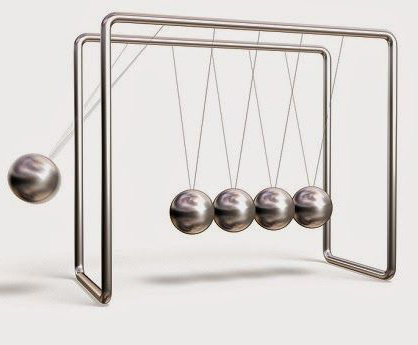
Newton's Pendulum (Newton's Cradle)
Newton's Pendulum (Newton's Cradle) (Product Code: SCL1321/09) is a row of suspended steel balls used to show how momentum and energy pass along a line of colliding bodies in school and college physics lessons. Its 5 steel balls, at least 15 mm across, hang on two 120 mm wires in a straight line, so a released end ball sends the far ball swinging while the middle ones stay still. It is manufactured by Jain Scientific Equipments Pvt Ltd (ScienceLab), an OEM manufacturer, at its own factory in Ambala, India.
Specifications
| Parameter | Detail |
|---|---|
| Type | Newton's cradle on a support |
| Balls | 5 steel balls |
| Suspension | Each ball attached with two wires; balls aligned on a straight line |
| Ball diameter | Minimum 15 mm |
| Suspension wire length | 120 mm |
| Demonstrates | Impulse and energy passing from an end ball to the ball at the opposite end without the intermediate balls changing position |
| Product code | SCL1321/09 |
| Manufacturer | Jain Scientific Equipments Pvt Ltd (ScienceLab) — OEM |
| Country of origin | India (made in Ambala, Haryana) |
What Is the Newton's Cradle Used For?
Start by releasing a single end ball and ask the class to predict what will happen; then release two together and watch two leave from the far side. Discussing why the number of balls leaving always matches the number released leads students to see that both momentum and kinetic energy are conserved in these near-elastic collisions. Raising the first ball higher makes the far ball rise higher too, a neat link between potential and kinetic energy, and the gradual dying away of the motion opens a discussion of energy lost as sound and heat.
Place the cradle on a level bench, check that the balls hang in a straight line and just touch before you begin, and release the ball rather than pushing it. The two-wire suspension keeps each ball swinging in one plane, which is why the effect is so clear when the set is well aligned. It is a favourite demonstration model in physics lab equipment across India, for classroom lessons and science exhibitions alike.
OEM Manufacturer
Jain Scientific Equipments Private Limited, trading as ScienceLab, is the OEM (original equipment manufacturer) of this Newton's cradle and makes it at its own licensed factory at Saha, Ambala, Haryana, India, rather than sourcing it from a trader. Schools, colleges, dealers and importers order it factory-direct, and replacement balls or wires for sets already in use can be requested from the manufacturer — ask us. For vendor registration, institutional buyers can record the company's GSTIN 06AAECJ8618A1ZT and its Legal Entity Identifier (LEI) 3358004HRD1JIVXKYX49. More about the company is on the company profile.
Related Lab Equipment
Follow-up apparatus for momentum, energy and oscillation lessons:
- Apparatus Collision 2 Dimension — takes collisions from a straight line into two dimensions.
- Apparatus Newton’s Second Law — links force, mass and acceleration in the same unit of study.
- Mathematical Pendulum Demonstration Apparatus — for studying the swing of a single pendulum in detail.
- Caliper — lets students measure ball diameters when discussing the set-up.
More demonstration apparatus is listed in our Lab Equipment category.
Frequently Asked Questions
How many balls does it have and how large are they?
The Newton's Pendulum (Newton's Cradle) has 5 steel balls with a minimum diameter of 15 mm. Each ball hangs on two wires 120 mm long, and the balls are aligned in a straight line on the support.
What happens if two balls are released together?
When two end balls of the Newton's Pendulum (Newton's Cradle) are released together, two balls swing out from the opposite end. The number leaving matches the number released because both momentum and kinetic energy are conserved in the collisions.
Why does the motion eventually stop?
The swinging of the Newton's Pendulum (Newton's Cradle) dies away because each collision is not perfectly elastic. A little energy is lost as sound and heat and to air resistance with every swing, so the motion gradually stops.
What should I do if the balls fall out of line?
If the balls of the Newton's Pendulum (Newton's Cradle) drift out of line, gently untwist the wires until every ball hangs in a straight row and just touches its neighbours. For a damaged wire, ask us about a replacement through the contact page.
Who manufactures the Newton's Pendulum (Newton's Cradle)?
The Newton's Pendulum (Newton's Cradle) is manufactured by Jain Scientific Equipments Pvt Ltd (ScienceLab), the OEM, at its own licensed factory at Saha, Ambala, Haryana, India. Schools and distributors receive quotations directly from the manufacturer.
Do you supply it for bulk and export orders?
Yes. The Newton's Pendulum (Newton's Cradle) is quoted for single units, class sets and distributor quantities. Send the code SCL1321/09, the quantity and your delivery location in India or international markets through the contact page.
Request a Quote
Request a price for the Newton's Pendulum (Newton's Cradle) straight from the manufacturer on our contact page, or add it to the enquiry cart if you are building a list of mechanics demonstrations.
Last updated: 24 September 2026
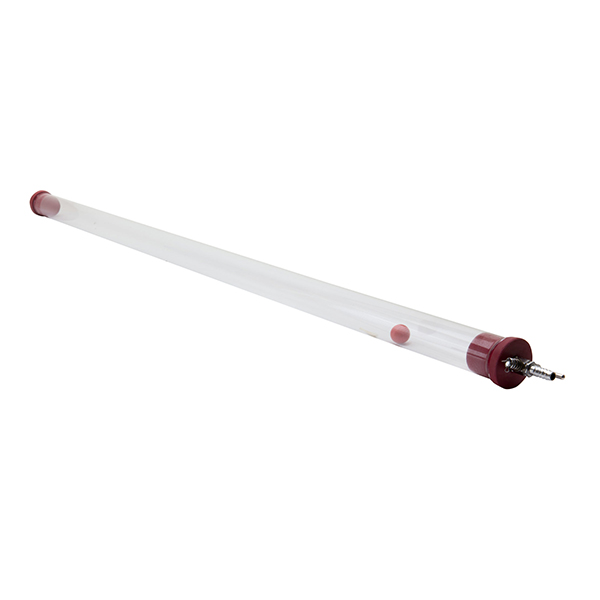
Newton's Tube
Newton's Tube (Product Code: SCL1223/010) is a long, sealed glass tube used to show that light and heavy bodies fall together once air resistance is removed, in school and college physics demonstrations. At least 1,500 mm long, it holds a wedge, a piece of sponge and a 5 mm metal ball, and its lid carries a tap and an air-outlet connection for a vacuum pump. It is manufactured by Jain Scientific Equipments Pvt Ltd (ScienceLab), an OEM manufacturer, at its own factory in Ambala, India, as mechanics lab equipment.
Specifications
| Parameter | Detail |
|---|---|
| Tube | Transparent glass |
| Diameter | 30–100 mm |
| Length | Minimum 1,500 mm |
| Ends | One end closed; the other end with a sealed lid carrying a tap and an air-outlet connection |
| Objects inside | A wedge, a piece of sponge and a metal ball of 5 mm external diameter |
| Product code | SCL1223/010 |
| Manufacturer | Jain Scientific Equipments Pvt Ltd (ScienceLab) — OEM |
| Country of origin | India (made in Ambala, Haryana) |
What Is the Newton's Tube Used For?
The demonstration runs in two stages. First, with the tube full of air, the teacher closes the tap, holds the tube upright and turns it over smoothly: the metal ball drops quickly while the sponge drifts down slowly, just as everyday experience suggests. Next, the air outlet is connected to a vacuum pump, the air is drawn out and the tap is closed before the tube is inverted again. This time the objects fall side by side, showing that without air resistance all bodies fall with the same acceleration.
Letting a little air back in and repeating shows the effect of air resistance returning step by step, which makes a strong closing question for the class. An evacuated glass tube must be handled with care: turn it in a controlled way, never knock it against the bench, keep students at a safe distance and wear eye protection while it is under vacuum. Wipe the glass clean before class so the falling objects are easy to see from the back of the room.
What to Specify When Ordering
- The tube diameter you need within the 30–100 mm range (the length is a minimum of 1,500 mm).
- Whether a vacuum pump and vacuum tubing should be quoted with the tube, as no pump is listed with it.
- The number of tubes and the delivery location, so packing for the glass can be planned.
OEM Manufacturer
Jain Scientific Equipments Private Limited, trading as ScienceLab, is the OEM (original equipment manufacturer) of the Newton's Tube and makes it at its own licensed factory at Saha, Ambala, Haryana, India. Because the tube comes from its maker rather than a trader, schools and distributors get quotations, packing advice and repeat orders straight from the source, and a replacement part can be requested if one is damaged — ask us. Read more on the about-us profile.
Related Lab Equipment
Items needed to evacuate the tube, plus alternatives for the same lesson:
- Vacuum Pump with Pressure Gauge — removes the air through the tube's outlet and shows the pressure reached.
- Vacuum Tubing — connects the air outlet to the pump.
- Vacuum Pump, Hand — a manual option for evacuating the tube.
- Guinea & Feather Apparatus — an alternative apparatus for the same free-fall demonstration.
- Apparatus for Demonstrating the Free Fall of Bodies — continues the topic of free fall in air.
Explore other items in the Lab Equipment category.
Frequently Asked Questions
What objects are inside the Newton's Tube?
The Newton's Tube contains a wedge, a piece of sponge and a metal ball of 5 mm external diameter. The contrast between the light sponge and the dense ball makes the effect of air resistance, and its removal, easy to see.
Is a vacuum pump supplied with the tube?
No pump is listed with the Newton's Tube. The tube connects through its tap and air-outlet connection to a separate vacuum pump, such as the Vacuum Pump with Pressure Gauge, using suitable vacuum tubing.
What diameter will the tube be?
The Newton's Tube is specified with a diameter of 30–100 mm and a minimum length of 1,500 mm. Tell us the diameter your syllabus or tender needs, and the exact dimensions will be confirmed in your quotation.
Can the demonstration be done without a vacuum?
Partly. With air inside, the Newton's Tube shows the sponge falling far more slowly than the metal ball, which demonstrates air resistance. The equal-fall result needs the air to be pumped out through the air outlet first.
What precautions apply to an evacuated glass tube?
Handle the evacuated Newton's Tube gently: turn it in a controlled way, avoid knocks and sudden temperature changes, keep observers at a safe distance and wear eye protection while the glass tube is under vacuum.
Who manufactures the Newton's Tube?
The Newton's Tube is manufactured by Jain Scientific Equipments Pvt Ltd (ScienceLab), the OEM, at its own licensed factory at Saha, Ambala, Haryana, India. Quotations for the tube, with or without a pump and tubing, come directly from the manufacturer.
Request a Quote
To price the Newton's Tube together with a pump and tubing, send your list to the manufacturer through our contact page or add everything to the enquiry cart.
Last updated: 24 September 2026
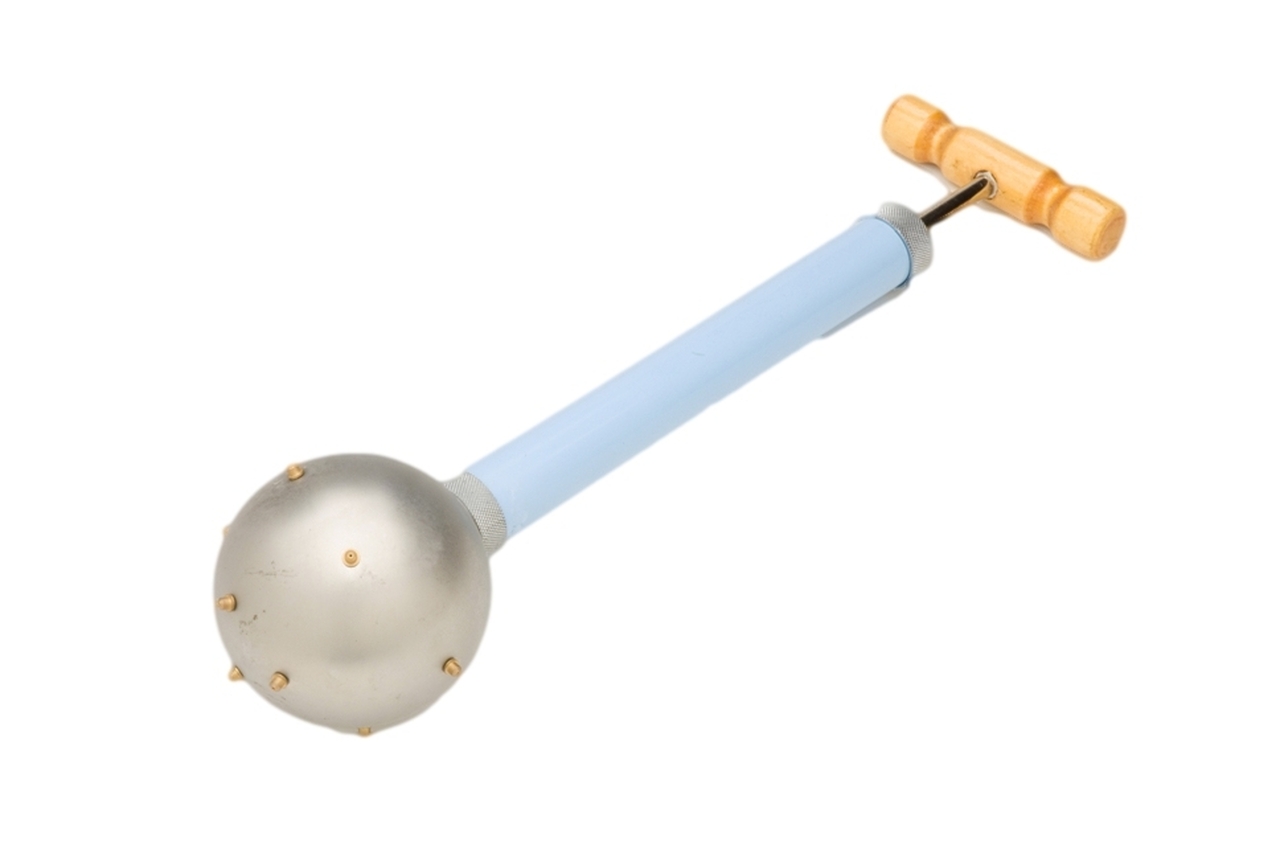
Pascal's Sphere
Pascal's Sphere (Product Code: SCL1225/011) is a complete demonstration of Pascal's law: a hollow sphere with 10 equidistant nozzles, connected to a hand pump whose plunger applies pressure to the fluid inside. Push the plunger and fluid leaves every nozzle with equal force in all directions, showing that a change in pressure in a fluid is transmitted equally to all its parts. Supplied with instructions, it is made by Jain Scientific Equipments Pvt Ltd (ScienceLab), Ambala, as part of its educational laboratory equipment in India for fluid-pressure lessons.
Specifications
| Parameter | Detail |
|---|---|
| Type | Pascal's law demonstration apparatus |
| Main parts | Hollow sphere connected to a hand pump with plunger |
| Nozzles | 10, equidistant over the sphere |
| Principle shown | A change in pressure in a fluid is transmitted equally in all directions to all parts of the fluid |
| Documentation | With instructions |
Typical Use
The sphere is filled with water, the teacher pushes the plunger steadily, and thin jets spring from all the nozzles at once – upwards, downwards and sideways alike. Because the jets leave with equal force whichever way the nozzles point, students can see that the pressure applied at the pump is passed on undiminished throughout the liquid. The lesson leads naturally to hydraulic jacks, presses and vehicle brakes, where a small force on a small piston produces a large force on a larger one.
Carry out the demonstration over a sink or a large tray, and push the plunger smoothly rather than in jerks for even jets. After class, empty out the water, let the sphere and pump dry, and check that no nozzle is blocked, since a blocked opening spoils the symmetry of the display. Follow the supplied instructions for filling and use.
Manufacturer
Jain Scientific Equipments Private Limited, trading as ScienceLab, builds this sphere in Ambala, Haryana, as one of several apparatus it makes for teaching pressure and fluids to secondary students. You can find out more from the company profile.
Related Lab Equipment
Other items for a fluids and pressure unit:
- Glass Beaker — a container of water for filling the sphere through its nozzles.
- Pascal’s Principle Demonstrator — an alternative apparatus for the same law.
- Set to Demonstrate Archimedes’ Principle/Law — the next step in the fluids syllabus, on buoyancy.
- Set of Capillary Tubes — shows another property of liquids, capillary rise.
More fluids and mechanics apparatus is in our Lab Equipment category.
Frequently Asked Questions
How many nozzles does the sphere have?
It has 10 equidistant nozzles, so jets appear in every direction when pressure is applied.
Which liquid should be used?
Clean water is the usual choice for classroom demonstrations. Use the instructions supplied with the apparatus for filling and operation.
Are instructions included?
Yes, the apparatus is supplied with instructions.
Why do the jets leave with equal force from every nozzle?
The plunger raises the pressure of the enclosed liquid, and that increase is transmitted equally in all directions, which is exactly what Pascal's law states.
What materials are the sphere and pump made from?
Materials are not listed in the current specification. Please ask through the contact page if your tender or purchase order needs them stated.
Can you supply several units for a school network or distributor?
Yes, bulk quantities can be quoted for institutions and distributors in India and international markets. Include the product code SCL1225/011.
Request a Quote
For a quotation on Pascal's Sphere, write to us through the contact page, or add it to the enquiry cart along with other fluids apparatus.
Last updated: 24 September 2026
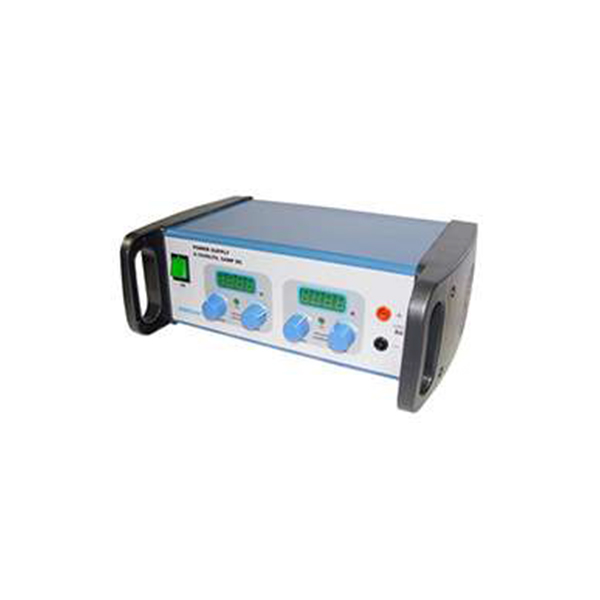
Power Source For Teacher
Power Source For Teacher (Product Code: SCL1427/012) is a demonstration-table power unit with two separate outputs: an alternating (AC) source on one pair of terminals and a continuous (DC) source on the other pair. The output is adjustable from 2 to 24 V (minimum range) on a graduated control, supplies a maximum current of 5 A, and is protected against short circuits, while a built-in voltmeter and ammeter let the whole class see the voltage and current. Made by Jain Scientific Equipments Pvt Ltd (ScienceLab), Ambala, it is a practical power supply unit for lab demonstrations in India.
Specifications
| Parameter | Detail |
|---|---|
| Outputs | Alternating (AC) source on two terminals; continuous (DC) source on the other two terminals |
| Voltage adjustment | From 2 to 24 V (minimum), graduated |
| Maximum current | 5 A |
| Protection | Short-circuit protection |
| Indication | Voltmeter and ammeter for voltage and current |
| Mains connection | Plug with conductor for earth connection |
| Power supply | 220 V |
Typical Use
From the front bench, a teacher can run the DC terminals into an electrolysis cell, an electromagnet or a resistance wire to show chemical, magnetic and heating effects of current, then switch to the AC terminals for a demonstration transformer or induction experiment. Because the meters are built in, students read the voltage and current straight from the unit while the teacher varies the setting, which makes Ohm's law and power calculations easy to follow in real time.
Good practice is to turn the control to its lowest setting before switching on, make all connections with the unit off, and raise the voltage gradually while watching the ammeter. If the short-circuit protection operates, switch off and check the wiring before trying again. Always plug into an earthed 220 V socket so the earth conductor can do its job.
Manufacturer
The unit is built by Jain Scientific Equipments Private Limited, which trades as ScienceLab from Ambala, Haryana, and produces electrical demonstration apparatus for school and college physics. Further information is available on the ScienceLab company profile.
Related Lab Equipment
Items commonly powered by, or wired to, this source in electricity demonstrations:
- Connecting Wire — for wiring demonstration circuits to the output terminals.
- Rheostat — fine control of current in a demonstration circuit.
- Multimeter — for measuring at points in the circuit away from the unit's own meters.
- Demonstrative Transformer (for high school) — an AC demonstration that uses the alternating output.
- Device to Study Electric Current In Electrolytes — a DC experiment on conduction in liquids.
Browse other electrical apparatus in our Lab Equipment category.
Frequently Asked Questions
Does it provide both AC and DC?
Yes. Two terminals give an alternating (AC) output and the other two give a continuous (DC) output.
What voltage and current can it deliver?
The output is adjustable from 2 to 24 V (minimum range) on a graduated control, with a maximum current of 5 A.
What happens if the output is short-circuited?
The unit has short-circuit protection. Switch it off, find and correct the fault in the circuit, then switch on again at a low setting.
What mains supply does it need?
It is specified for a 220 V supply through a plug with an earth conductor. If your country uses a different mains voltage, tell us before ordering so we can confirm suitability.
Is it intended for student benches?
It is designed as the teacher's source for demonstrations. If you also need supplies for student groups, mention the number of benches in your enquiry.
Can a calibration certificate be provided for the meters?
Please discuss calibration-certificate needs with us through the contact page before placing an order.
What warranty applies?
Warranty terms are stated in our written quotation; ask for them when you request a price.
Request a Quote
Send your requirement for the Power Source For Teacher via the contact page, or place it in the enquiry cart with leads, meters and other electrical items.
Last updated: 24 September 2026
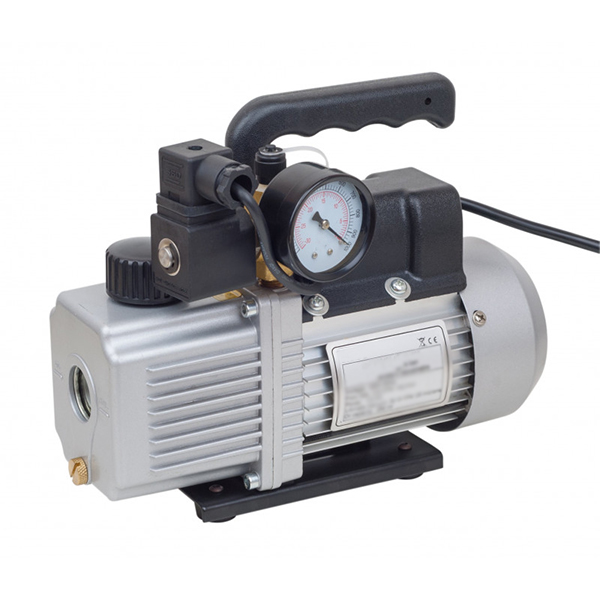
Vacuum Pump with Pressure Gauge
Vacuum Pump with Pressure Gauge (Product Code: SCL1429/013) is a mechanical or electrical installation with a minimum power of 90 W that both removes air from, and pumps air into, the apparatus used to study gas processes. Through its tap, air can be exhausted down to a pressure of 130 Pa, and by pumping, a pressure of up to 0.3 MPa can be obtained, while the pressure gauge lets the class follow each change. It is made by Jain Scientific Equipments Pvt Ltd (ScienceLab), Ambala, for schools that want a single physics instruments supplier in India for pump and accessories.
Specifications
| Parameter | Detail |
|---|---|
| Type | Mechanical or electrical installation for evacuation and pumping of air |
| Power | Minimum 90 W |
| Evacuation | Tap allows air to be exhausted down to a pressure of 130 Pa |
| Pumping | Pressure up to 0.3 MPa can be obtained |
| Indication | Pressure gauge |
| Application | Experiments for studying gas processes |
Typical Use
Connected to a glass bell on its sealed support, the pump draws out the air so students can watch a partly inflated balloon swell, water begin to boil at room temperature, or a ringing bell fade into silence as the medium for sound is removed. The same pump evacuates a Newton's tube for the free-fall demonstration and supports other experiments on gases where pressure is the variable being changed. In pumping mode it raises the pressure inside suitable apparatus, so the class can explore how a gas responds to compression.
Check hoses and seals before each lesson, close the tap to hold a vacuum once the gauge shows the pressure you want, and open it slowly to let air back in. Only pressurise vessels that are intended to take pressure – never ordinary thin glassware – and keep students behind a safe line when glass is under vacuum.
Manufacturer
ScienceLab is the brand of Jain Scientific Equipments Private Limited in Ambala, Haryana, which supplies gas-law and pressure apparatus to schools and colleges. The company is incorporated under CIN U29309HR2020PTC087597 and manufactures at its licensed factory at 449, HSIIDC Industrial Area, Saha, Ambala (Factory Licence AMB-ONLINE-CHD-J-414). See the company profile for more.
Related Lab Equipment
Apparatus that is evacuated or connected with this pump:
- Glass Bell on The Support — a sealed enclosure for vacuum experiments.
- Newton’s Tube — evacuated by the pump to show bodies falling together.
- Vacuum Tubing — for connecting the pump to apparatus.
- Bell In Glass Jar and Base — demonstrates that sound needs a medium once air is removed.
Our Lab Equipment category lists further apparatus for pressure and gas experiments.
Frequently Asked Questions
Is the pump hand-operated or electric?
The specification covers a mechanical or electrical installation with a minimum power of 90 W. Tell us your preference and we will confirm the drive type in the quotation.
How low a pressure can it reach?
Through its tap, air can be exhausted down to a pressure of 130 Pa, which is enough for the usual school vacuum demonstrations.
Can it also be used to compress air?
Yes. By pumping, a pressure of up to 0.3 MPa can be obtained. Use this only with vessels designed to hold pressure.
Is a bell jar or tubing included?
They are not listed in the specification. The Glass Bell on The Support and Vacuum Tubing can be ordered alongside the pump.
How should the pump be looked after?
Keep the inlet free of dust, do not let water or vapour be drawn into the pump, and store it with the connections capped. For servicing questions, contact us through the contact page.
Is a calibration certificate available for the gauge?
Please discuss any calibration-certificate requirement with us before ordering, and we will tell you what can be provided.
Do you ship to other countries?
Yes, we supply institutions and distributors in India and international markets. Share the destination and quantity with your enquiry.
Request a Quote
For a price on the Vacuum Pump with Pressure Gauge and matching accessories, contact us via the enquiry form or add the items to the enquiry cart.
Last updated: 24 September 2026
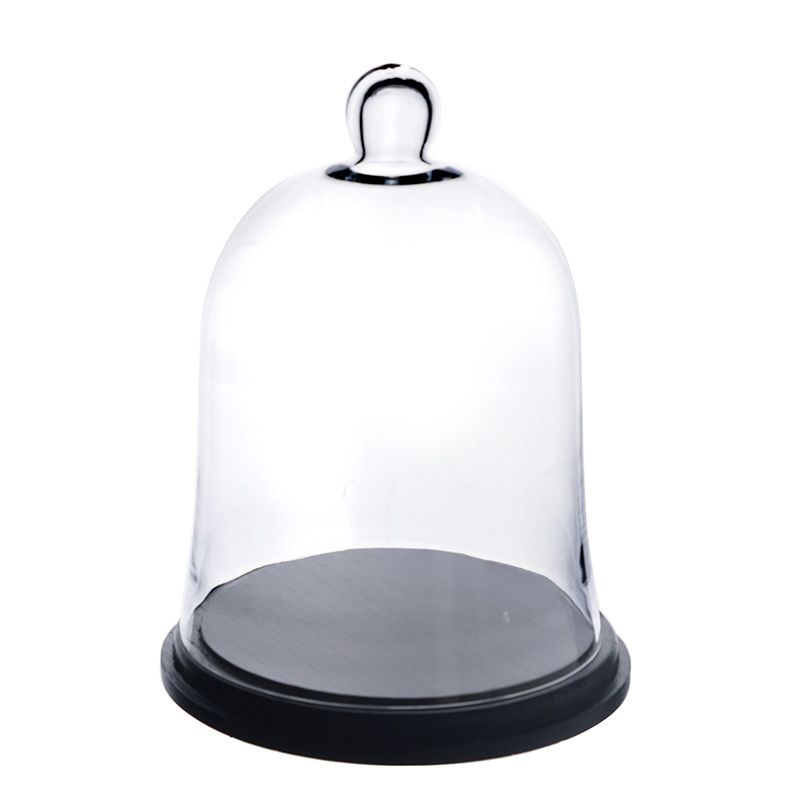
Glass Bell on The Support
Glass Bell on The Support (Product Code: SCL1431/014) is a transparent glass bell with a handle, at least 200 mm in diameter and 250 mm high, standing on a plastic holder fitted with a sealing gasket. Placed over small apparatus and used with a vacuum pump, it forms a clear, sealed enclosure in which students can watch what happens as the air is taken away. It is made by Jain Scientific Equipments Pvt Ltd (ScienceLab), Ambala, a school laboratory equipment supplier in India for air-pressure and vacuum lessons.
Specifications
| Parameter | Detail |
|---|---|
| Bell | Transparent glass, with a handle |
| Diameter | Minimum 200 mm |
| Height | Minimum 250 mm |
| Support | Plastic holder with sealing gasket |
Typical Use
Typical experiments under the bell include a partly blown-up balloon that swells as the surrounding air is pumped away, warm water that starts to boil at reduced pressure, and a small ringing device whose sound fades as the air thins. Once the bell has been evacuated, students can also try to lift it by the handle and feel how firmly the outside air presses it onto the gasket – a memorable way to show that atmospheric pressure is real and large.
Before each use, inspect the glass for chips or cracks and never evacuate a damaged bell. Keep the rim and the sealing gasket clean and free of grit so the seal holds, and let air back in slowly before lifting the bell off the support. Carry it with one hand on the handle and the other under the glass.
Manufacturer
This bell and support come from Jain Scientific Equipments Private Limited, the Ambala, Haryana company that sells its teaching apparatus under the ScienceLab name to schools in India and international markets. For company details, see the ScienceLab profile.
Related Lab Equipment
Items used with the bell to create and study a vacuum:
- Vacuum Pump with Pressure Gauge — removes the air from under the bell and shows the pressure.
- Vacuum Pump, Hand — a manual option for simpler demonstrations.
- Vacuum Tubing — for the connection between pump and enclosure.
- Bell In Glass Jar and Base — a ready set for the sound-in-a-vacuum experiment.
Find more apparatus in our Lab Equipment category.
Frequently Asked Questions
What size is the glass bell?
It has a minimum diameter of 200 mm and a minimum height of 250 mm. We can confirm the exact dimensions of the supplied bell in the quotation.
Is a vacuum pump included?
No. The item consists of the glass bell with handle and the plastic holder with sealing gasket; a pump is ordered separately.
How does it connect to my pump?
The connection arrangement depends on the pump you use. Please describe your pump through the contact page so we can confirm the connection before dispatch.
Why is the bell hard to lift after the air is removed?
Atmospheric pressure outside pushes the bell onto the gasket. Let air back in slowly and it lifts off easily.
How should the gasket and glass be cared for?
Wipe the gasket and rim clean after use, store the bell upright on its support away from the bench edge, and check the glass for damage before every evacuation.
Can we order several sets for a school group or export?
Yes. We quote multiple sets for institutions and distributors in India and international markets; include product code SCL1431/014.
Request a Quote
Ask for a quotation on the Glass Bell on The Support through our contact page, or add it and a suitable pump to the enquiry cart.
Last updated: 24 September 2026
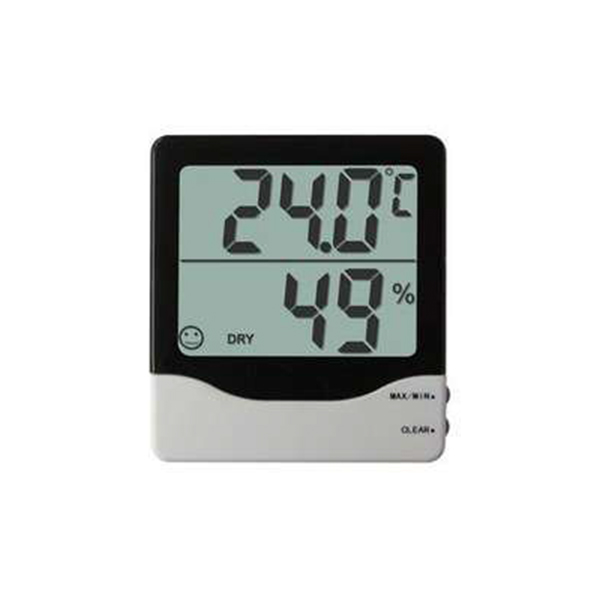
Digital Hygrometer - Thermometer
Digital Hygrometer - Thermometer (Product Code: SCL1235/015) is a digital device for measuring humidity and temperature, equipped with a measuring probe so that readings can be taken both inside and outside. It covers temperatures from -10 °C to +40 °C and relative humidity from 20-25% up to 80-95%, in a compact 20x100x150 mm body with the battery included. Made by Jain Scientific Equipments Pvt Ltd (ScienceLab), Ambala, it is one of the simple digital measuring instruments in India's school labs that students can read at a glance.
Specifications
| Parameter | Detail |
|---|---|
| Type | Digital hygrometer and thermometer |
| Measures | Relative humidity and temperature |
| Temperature range | -10 °C to +40 °C |
| Relative humidity range | From 20-25% to 80-95% |
| Probe | Measuring probe for both inside and outside readings |
| Dimensions | 20x100x150 mm |
| Power | Battery included |
Typical Use
A class weather project is the classic use: students record indoor conditions on the display and outdoor conditions through the probe at the same time each day, then plot how temperature and humidity change with the weather and the season. The readings feed discussions on evaporation, why washing dries slowly on humid days, dew and human comfort. In biology the instrument checks conditions around germination trays or potted plants in transpiration work, and laboratory staff use it to keep an eye on humidity where hygroscopic chemicals or balances are stored.
After moving the unit from one room to another, allow the reading to settle before recording it. Keep the probe out of direct sun and rain for true air readings, stay within the stated temperature range, and replace the battery when the display becomes faint. As a practical addition to an environmental science kit for schools, it gives students real data rather than textbook values.
Manufacturer
ScienceLab, the trading name of Jain Scientific Equipments Private Limited in Ambala, Haryana, offers this instrument alongside its thermometers, barometers and other measuring apparatus for teaching laboratories. Company background is on the profile page.
Related Lab Equipment
Instruments that complete a school weather station or climate study:
- Aneroid Barometer — adds air-pressure readings to the daily weather log.
- Laboratory Thermometer — for liquid temperatures and for cross-checking air readings.
- Thermometer, Electronic, Max/Min — records the highest and lowest temperatures between readings.
- Indoor/Outdoor Thermometer — a simpler alternative when humidity is not needed.
Browse all measuring instruments in our Lab Equipment category.
Frequently Asked Questions
What ranges does it measure?
Temperature from -10 °C to +40 °C, and relative humidity from 20-25% at the low end to 80-95% at the high end.
Is a battery supplied?
Yes, the battery is included. If you need to know the battery type for spares, ask us through the contact page.
Can the probe be dipped into liquids?
The specification describes a device for measuring humidity and temperature in air, inside and outside; it does not state that the probe is suitable for immersion. Use a laboratory thermometer for liquids.
What accuracy does it offer?
An accuracy figure is not given in the current specification. Please contact us if your purchase requires a stated accuracy.
Is a calibration certificate available?
Discuss any calibration-certificate requirement with us before ordering so we can confirm what can be provided.
Why does the humidity reading change slowly?
Humidity sensors need time to come into balance with the surrounding air, so wait a few minutes after moving the unit before noting a value.
Do you supply larger quantities?
Yes, we quote class sets and distributor quantities for India and international markets.
Request a Quote
To order the Digital Hygrometer - Thermometer, send your quantity through our contact page or add it to the enquiry cart with any other weather instruments you need.
Last updated: 24 September 2026