- Physics Lab Equipment
- Chemistry Lab Equipment
- Biology Lab Equipment
- Anatomical Lab Equipment
- Learning
- Educational Lab Equipment
- Magnets
- Agriculture
- Astronomy
- Earth Science
- Geography Lab Equipment
- Safety Lab Coat
- Laboratory
- Meteorological
- Electricity & Magnetism
- Heat
- School Lab Equipment
- Lab Glassware
- Science Lab Equipment
- Tvet Lab Equipment
- Robotics Kits Supplier and Manufacturer for Schools India
- Math Lab Equipment Manufacturers and Exporters in Ambala
- STEM Kits Manufacturers and Supplier India
- Engineering Lab Equipment
- Hospital Lab Equipment
- Water, Sanitation & Hygiene Supplies
- Cold Chain, Solar & Communication Equipment
- Nutrition
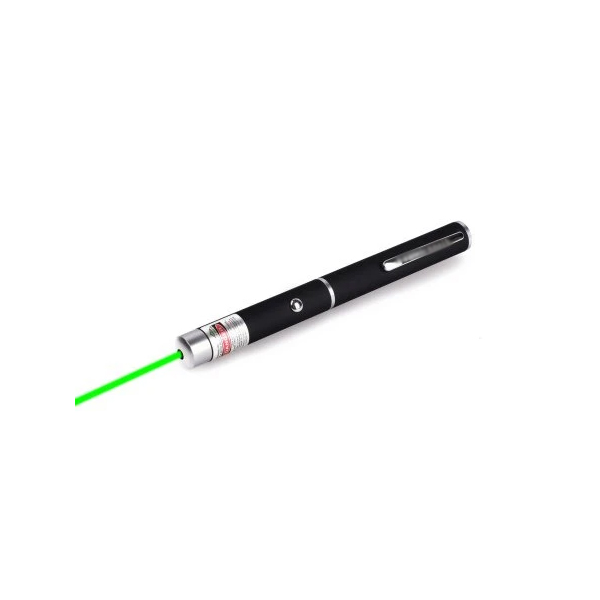
Laser (for high school)
Laser (for high school) (Product Code: SCL248/040) is a portable green laser that gives a narrow, bright beam for ray optics and wave optics lessons. Its listed wavelength is 550 nm with a power of 5 mW, and it runs either from a stationary supply or from a rechargeable battery, with the charger included. Physics teachers use it to make reflection, refraction and diffraction visible to a whole class. It is supplied by Jain Scientific Equipments Pvt Ltd (ScienceLab), Ambala, India, as part of its laser experiment range for schools.
Specifications
| Parameter | Detail |
|---|---|
| Type | Portable laser |
| Colour and wavelength | Green, 550 nm |
| Power | 5 mW |
| Power source | Stationary or rechargeable battery |
| Charger | Included |
Typical Use
Aimed at a plane mirror, the beam shows the law of reflection with a precision that ray boxes cannot match; sent through a glass block or prism, it traces refraction and total internal reflection, and a little chalk dust or water mist makes the path visible in the air. Passing the beam through a narrow slit or a fine grating produces a diffraction pattern on a far wall, giving students a way to estimate spacing or wavelength from simple measurements.
Safe handling matters as much as the physics. Never look into the beam or point it at anyone, keep the beam below eye level, remove shiny objects from the bench, and let the teacher keep and switch the laser. Charge the battery fully before practical sessions so the output stays steady. Used this way, it becomes a core part of any optics experiment kit for school laboratories.
Supplier
This laser is supplied by Jain Scientific Equipments Private Limited, the Ambala, Haryana business behind the ScienceLab name, which offers optical accessories so that the full ray optics practical can be ordered together. Read about the company on its profile page.
Related Lab Equipment
These products are used with the laser in optics practicals:
- Prism, Clear Glass — for refraction and total internal reflection with the beam.
- Mirror, Plane Glass — for measuring angles of incidence and reflection.
- Optical Bench Kit — keeps the source, lenses and screen aligned on one axis.
- Laser Pen, Red — a red source for comparing colours and diffraction patterns.
Browse our Lab Equipment category for more.
Frequently Asked Questions
What colour is the beam and how powerful is it?
The laser is green with a listed wavelength of 550 nm and a power of 5 mW.
Is the charger included?
Yes. The laser works from a stationary supply or a rechargeable battery, and a charger comes with it.
What laser safety class does it carry?
A safety class is not stated on this listing. Please contact us and we will confirm the labelling of the unit supplied before you order.
Can students use it on their own?
We recommend that a teacher controls the laser at all times. Beams of this kind can harm eyes, so it should never be aimed at people or reflective surfaces at head height.
Will it fit on an optical bench?
Mounting depends on your bench fittings. Tell us which bench you use and we will advise on holding the laser in line with lenses and screens.
Can it be shipped internationally?
Yes. Send the code SCL248/040, the quantity and destination; shipping arrangements for battery-powered items are confirmed at quotation stage for India and international markets.
Request a Quote
Ask for pricing on the Laser (for high school) via our contact page, or add it to the enquiry cart along with prisms and mirrors.
Last updated: 24 September 2026
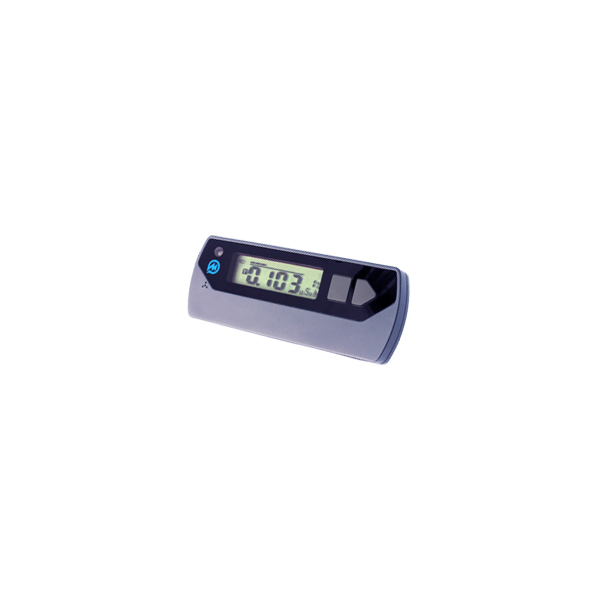
Dosimeter Digital
Dosimeter Digital (Product Code: SCL249/041) is a digital radiation dosimeter used to measure accumulated dose during radioactivity and radiation-safety lessons in school and college physics labs. It reads from 0.1 µSv to 1 000 µSv, weighs no more than 200 g and comes with batteries, so it is ready to use on arrival. It is supplied by Jain Scientific Equipments Pvt Ltd (ScienceLab), Ambala, India, alongside other nuclear physics lab equipment for teaching.
Specifications
| Parameter | Detail |
|---|---|
| Type | Digital dosimeter |
| Dose measuring range | 0.1 µSv – 1 000 µSv |
| Mass | Maximum 200 g |
| Batteries | Included |
| Product code | SCL249/041 |
| Supplied by | Jain Scientific Equipments Pvt Ltd (ScienceLab), Ambala, India |
What Is the Digital Dosimeter Used For?
A useful first activity is to leave the dosimeter on a bench for a lesson and read the dose from natural background radiation, which gives the class a baseline for everything that follows. The teacher can then place it near a sealed school source for a fixed time and compare the reading, before repeating the exposure at a greater distance or behind a sheet of shielding to show how dose falls off. Turning these readings into everyday comparisons helps students see why time, distance and shielding are the three rules of radiation safety.
Teachers who handle sources can also carry the dosimeter during practical sessions as a check on their own accumulated dose. Keep it away from strong heat and moisture, switch it off or remove the batteries for long storage, and log readings so the data can be reused in later lessons. It pairs well with a Geiger counter in any radiation experiment kit for India's senior secondary classes.
Supplier
Jain Scientific Equipments Private Limited, trading as ScienceLab from Ambala, Haryana, supplies this dosimeter to schools, colleges and distributors together with its radioactivity apparatus. For vendor and import-export records, the supplying company's Importer-Exporter Code is AAECJ8618A (DGFT) and its GSTIN is 06AAECJ8618A1ZT. See the company profile for more information.
Related Lab Equipment
These items complete a school radioactivity practical:
- Geiger Counter — counts individual events, complementing the dosimeter's dose reading.
- Sealed Radioactive Source, Cobalt — a sealed source for distance and shielding measurements.
- Apparatus for studying the value of the half-decay period during radioactive decay — extends the topic to half-life.
- Digital Chronometer (Stopwatch) — times each exposure so readings can be compared fairly.
More apparatus is available in our Lab Equipment category.
Frequently Asked Questions
What dose range does it measure?
The Dosimeter Digital measures dose from 0.1 µSv to 1 000 µSv and shows the result on a digital display, giving students a direct number for background radiation and for classroom exposure experiments.
Are batteries included?
Yes. Batteries are included with the Dosimeter Digital, so it can be used as soon as it arrives. For long storage between terms, remove the batteries or switch the unit off to avoid unnecessary drain.
Is a calibration certificate available?
A calibration certificate is not stated on the Dosimeter Digital listing. If your institution needs calibration documentation, please contact us before ordering so we can tell you what can be provided with the unit.
Can it be used for official occupational dose records?
The Dosimeter Digital is listed for teaching use. If you need a dosimeter for regulated personal monitoring of radiation workers, discuss your requirements with us before ordering rather than relying on this classroom instrument.
Does it replace a Geiger counter?
Not entirely. The Dosimeter Digital totals the dose received, while a Geiger counter counts individual events and suits count-rate experiments, so many physics departments use both instruments in the same radioactivity practical.
Who supplies the Dosimeter Digital?
The Dosimeter Digital is supplied by Jain Scientific Equipments Pvt Ltd (ScienceLab), Ambala, Haryana, India. Send the product code SCL249/041, quantity and delivery location through the contact page for a quotation within India or to international markets.
Request a Quote
To enquire about the Dosimeter Digital, contact us through the contact page or add it to the enquiry cart with your radioactivity apparatus.
Last updated: 24 September 2026
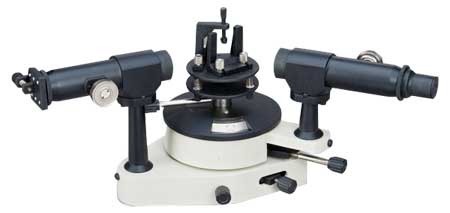
Spectroscope (for high school)
Spectroscope (for high school) (Product Code: SCL255/042) is a prism spectroscope that splits light into its component colours so students can study continuous and line spectra. Light enters through a slit in the collimator tube, is dispersed by a three-edged prism on a table, and is viewed through a telescope with a moving eyepiece, while a micrometer screw allows fine adjustment. As a prism spectrometer for India’s school and junior college optics labs, it is manufactured by Jain Scientific Equipments Pvt Ltd (ScienceLab), Ambala.
Specifications
| Parameter | Detail |
|---|---|
| Type | Prism spectroscope |
| Dispersing element | Table with a three-edged prism |
| Collimator | Tube with a lens and a slit |
| Telescope | With a lens and a moving eyepiece |
| Adjustment | Micrometer screw |
| Mounting | Stand for installing the device on a support |
Typical Use
Point the collimator at an ordinary filament lamp first: the class sees an unbroken band from red to violet, the continuous spectrum of a hot solid. Swap the lamp for a sodium lamp or a glowing gas discharge tube and the band is replaced by a few sharp bright lines, each one a fingerprint of the element. Comparing these patterns is how students meet the idea that atoms emit only particular wavelengths.
To set up, focus the telescope on a distant object, narrow the slit until lines look sharp, then turn the prism table until the spectrum appears and settle it at the position of least deviation. The micrometer screw helps line up the eyepiece on individual lines when recording their positions. Keep the prism faces free of fingerprints and cover the instrument when not in use; it is a lasting part of the optics lab equipment in any school.
Manufacturer
ScienceLab spectroscopes come from Jain Scientific Equipments Private Limited, a manufacturer of teaching apparatus in Ambala, Haryana, which supplies optics instruments to schools and colleges in India and international markets. Our company profile gives further background.
Related Lab Equipment
Light sources and accessories used with this spectroscope:
- Spectral Tube Set with Voltage Source (for high school) — gas tubes whose line spectra are viewed through the spectroscope.
- Sodium Spectral Lamp — a bright line source for alignment and first observations.
- Spectral Lamp Power Supply with Lamp Holder — runs and holds the spectral lamp at the slit.
- Spectroscope, Direct Vision — a hand-held option for quick student viewing.
See more in our Lab Equipment category.
Frequently Asked Questions
What parts make up the spectroscope?
A table with a three-edged prism, a collimator tube with a lens and a slit, a telescope with a lens and a moving eyepiece, a micrometer screw, and a stand for mounting it on a support.
Is a light source included?
No lamp is listed with the spectroscope. Sodium lamps and gas spectral tubes are available separately; ask us to quote them together.
What can students observe with it?
Continuous spectra from incandescent lamps and line spectra from sodium lamps or gas discharge tubes, which is the basis for lessons on atomic emission.
Does it have an angle scale for measurements?
A graduated circle is not listed for this model. If you need angle readings for refractive index work, contact us so we can suggest a suitable instrument.
How should the optics be cleaned?
Blow off dust first, then wipe lenses and prism faces gently with lens tissue. Avoid solvents and never touch the prism faces with bare fingers.
Can you supply a full optics lab?
Yes. Send the code SCL255/042 and your list of items, quantities and delivery location; we quote for India and international markets.
Request a Quote
For a price on the Spectroscope (for high school), reach us through the contact page or add it to the enquiry cart with the light sources you need.
Last updated: 24 September 2026
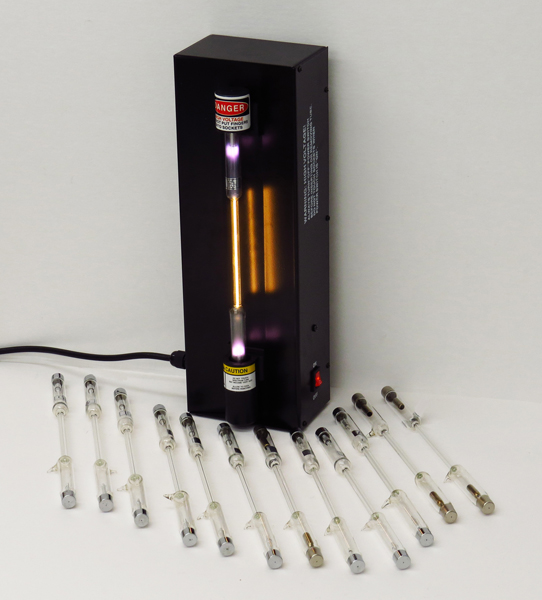
Spectral Tube Set with Voltage Source (for high school)
Spectral Tube Set with Voltage Source (for high school) (Product Code: SCL267/043) contains five gas discharge tubes and the high voltage source needed to light them, so a class can see the characteristic glow and emission lines of different gases. When the source is connected, an electrical discharge passes through the gas and the tube lights up in a colour that belongs to that gas alone. The set is manufactured by Jain Scientific Equipments Pvt Ltd (ScienceLab), Ambala, India, and is a natural companion to a spectrometer in India’s school and college physics labs.
Specifications
| Parameter | Detail |
|---|---|
| Number of tubes | 5 |
| Gases | Hydrogen (H2), oxygen (O2), argon (Ar), carbon dioxide (CO2), neon (Ne) |
| Electrodes | Two, at the ends of each tube |
| Tube length | About 200 mm |
| Tube shape | Narrowed in the middle to allow spectroscopic observation of the emission lines |
| Voltage source | High voltage source with adaptable support for connecting the tubes, included in the set |
| Power consumption | 4.5 W |
Typical Use
Fit one tube into the support, switch on, and darken the room: the narrow middle section glows brightly, and each gas gives a visibly different colour, with neon’s red-orange standing out at once. Viewing the glowing capillary through a spectroscope or a direct-vision spectroscope then reveals a set of separate bright lines rather than a rainbow. Hydrogen is usually studied first because its few visible lines are easy to pick out and connect to the energy levels of the atom.
Working through all five gases lets students build their own table of spectral fingerprints and discuss how astronomers identify elements in stars. The source works at high voltage, so switch it off before changing tubes, let each tube cool for a moment, and hold tubes by their ends. Treat the set as teacher-operated physics lab equipment for India’s senior secondary classes.
Manufacturer
Jain Scientific Equipments Private Limited manufactures laboratory apparatus at its factory in Ambala, Haryana, and markets this spectral tube set under the ScienceLab brand for physics and chemistry teaching. More about the company is on our company profile.
Related Lab Equipment
These items are used with the spectral tubes in emission spectra practicals:
- Spectroscope (for high school) — resolves the glow of each tube into separate lines.
- Spectroscope, Direct Vision — lets several students view the lines quickly by hand.
- Hydrogen Spectrum Set — a focused option for detailed hydrogen line work.
- Spectrum Tube Power Supply — an additional source when running two tubes side by side.
- Sodium Spectral Lamp — a reference line source for comparison.
Browse the Lab Equipment category for more.
Frequently Asked Questions
Which gases are in the set?
Five tubes filled with hydrogen, oxygen, argon, carbon dioxide and neon, each about 200 mm long with an electrode at each end.
Is the voltage source included?
Yes. The set includes a high voltage source with an adaptable support for connecting the tubes. Its power consumption is 4.5 W.
Why is each tube narrow in the middle?
The narrow section concentrates the discharge into a bright, thin line of light, which is ideal for viewing through a spectroscope slit.
Is a spectroscope needed?
The colour differences are visible by eye, but separate emission lines can only be seen with a spectroscope. See the related items above or contact us for a combined quotation.
Can students operate the set?
Because the source produces high voltage, a teacher should connect and switch it. Students can view the tubes and record observations safely from the bench.
Can replacement tubes be ordered?
Please contact us with the gas you need. We will confirm whether single tubes can be supplied for your set.
What should a school quotation request include?
Include code SCL267/043, the number of sets and your delivery location. We supply schools in India and international markets.
Request a Quote
Send your enquiry for the Spectral Tube Set with Voltage Source via the contact page, or add it to the enquiry cart together with a spectroscope.
Last updated: 24 September 2026
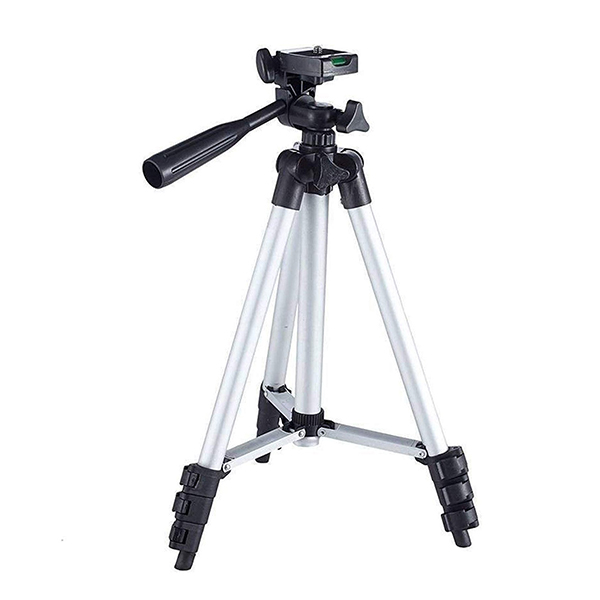
Binocular
Binocular (Product Code: SCL274/044) is a pair of field binoculars with BAK-4 lenses, 40 mm lens diameter and a minimum magnification of 8x, suited to nature study, bird watching, geography field trips and simple sky observation. Multi-layer antireflection coating, a central focus wheel and a tripod mount make it practical for students to share during outdoor sessions. It is supplied by Jain Scientific Equipments Pvt Ltd (ScienceLab), Ambala, India, a school lab equipment supplier to institutions across India and international markets.
Specifications
| Parameter | Detail |
|---|---|
| Optics | BAK-4 lenses |
| Lens diameter | 40 mm |
| Magnification | Minimum 8x |
| Interpupillary distance | In the range of 56 to 76 mm |
| Coatings | Anti-reflex coating; multiple lens antireflection coating |
| Focusing | Central focus |
| Mounting | Tripod mount |
| Protection | Lids for lens and eyepiece |
Typical Use
In biology and environmental studies the binocular lets students identify birds, record behaviour and count animals at a distance without disturbing them. Geography classes use it to read landforms, vegetation zones and distant landmarks on field trips, while astronomy clubs turn it on the Moon’s craters or bright star clusters at night. The 40 mm lenses gather enough light for early morning or evening sessions, when birds and wildlife are most active.
Before each use, hinge the barrels until the interpupillary distance matches the viewer’s eyes, then turn the central focus until the image is sharp. For long observations or group viewing, fix the binocular to a tripod through its mount so the image stays steady. Never look at the Sun through binoculars. Replace the lens and eyepiece lids after use and store it in a dry place; it serves as lab equipment for college and school outdoor programmes alike.
Supplier
This binocular is supplied by Jain Scientific Equipments Private Limited of Ambala, Haryana, which trades as ScienceLab and offers optical field instruments together with its classroom apparatus. Visit the company profile for more.
Related Lab Equipment
Items that pair well with binoculars for field and sky observation:
- Astronomical Telescope — higher magnification for Moon and planet observation.
- Telescope Refractor — a refracting telescope for fixed-position viewing.
- Hand Lens — for close-up study of leaves, insects and rocks collected in the field.
- Microfiber Lens Cloth — cleans the coated lenses without scratching.
- Lens Tissue — removes fingerprints from objective and eyepiece lenses.
More apparatus is listed in the Lab Equipment category.
Frequently Asked Questions
What magnification and lens size does it have?
The binocular has a minimum magnification of 8x and a lens diameter of 40 mm, with BAK-4 lenses.
Will it suit younger students?
The interpupillary distance adjusts between 56 and 76 mm. Very small children may find the lower end still too wide, so check your age group with us if unsure.
Can it be mounted on a tripod?
Yes, it has a tripod mount. A tripod is not listed as included; ask us if you need one quoted.
Is a carry case or strap included?
Lids for the lens and eyepiece are included. A case or strap is not stated on this listing, so please confirm with us when ordering.
How should the lenses be cleaned?
Brush or blow off grit first, then wipe gently with a microfibre cloth or lens tissue. Do not use household glass cleaners on the coated lenses.
Can you supply sets for field clubs or export?
Yes. Send the code SCL274/044 with quantity and delivery location; we supply schools and colleges in India and international markets.
Request a Quote
Request a price for the Binocular through our contact page or add it to the enquiry cart with any other field equipment you need.
Last updated: 24 September 2026
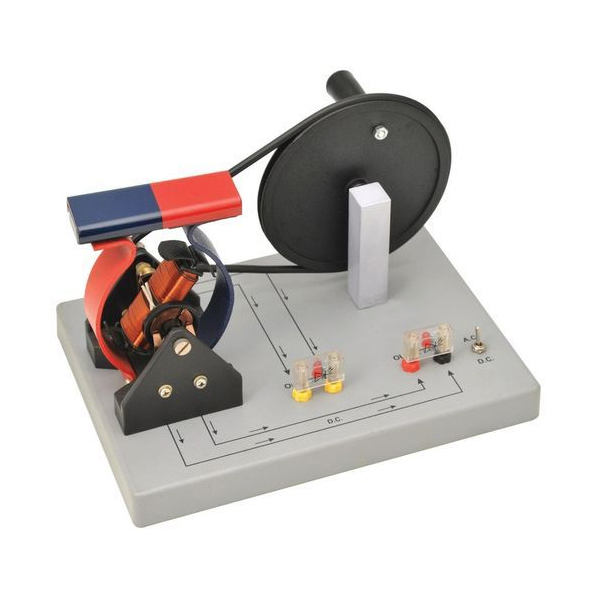
Generator Model (for high school)
Generator Model (for high school) (Product Code: SCL280/045) is an open teaching model that shows how mechanical rotation is turned into electrical energy. Every constructive element is visible: the support, the stator coils or permanent magnets, the coil rotor and the copper or carbon blade brushes that carry current out of the moving coil. The model is designed to demonstrate the working principle of a generator in both its alternating current (AC) and direct current (DC) forms. It is manufactured by Jain Scientific Equipments Pvt Ltd (ScienceLab), Ambala, India, as a demonstration model for the physics lab.
Key Details
| Parameter | Detail |
|---|---|
| Type | Open generator demonstration model |
| Support | Plastic or metal |
| Field system | Stator coils or permanent magnets |
| Rotor | Coil rotors |
| Brushes | Copper or carbon blade brushes |
| Construction | All constructive elements visible |
| Demonstrates | Working principle of the generator, of the AC generator and of the DC generator |
Typical Use
The teacher turns the rotor slowly with the output connected to a centre-zero galvanometer. As the coil cuts the magnetic field the needle swings, and students can link each swing to the coil’s position in the field. In an AC generator the current reverses every half turn, so the needle swings first one way and then the other; in a DC generator the current is kept flowing in one direction, and the needle stays on one side of zero. Seeing both behaviours on one open model makes the role of the brushes and the output connection easy to explain.
Turning faster produces larger deflections, which leads naturally to the factors that affect induced voltage: speed of rotation, strength of the field and number of turns. Because nothing is hidden inside a casing, students can trace the path of current from the coil through the brushes to the meter. The model fits any electromagnetic kit for school lessons on power generation and complements motor demonstrations, since a motor is a generator run in reverse.
Manufacturer
This generator model is made by Jain Scientific Equipments Private Limited, an Ambala, Haryana manufacturer that brands its educational apparatus as ScienceLab. For vendor registration, the company’s GSTIN is 06AAECJ8618A1ZT and its LEI is 3358004HRD1JIVXKYX49. Read more on the company profile.
Related Lab Equipment
These items are used with the generator model in electromagnetism lessons:
- Galvanometer, Centre Zero Universal Meter — shows the direction of the output current as the rotor turns.
- Demonstration Motor AC/DC — shows the reverse process of turning current into motion.
- A.C. Generator — a dedicated AC generator for further study.
- Working Model of Dynamo — a working dynamo for comparing with the open model.
- Device to Verify The Lenz’s Law (for high school) — explains why turning the rotor under load takes effort.
Explore the Lab Equipment category for more.
Frequently Asked Questions
Does the model show both AC and DC generation?
Yes. It is designed to demonstrate the working principle of the generator, the AC generator and the DC generator.
Does it use magnets or field coils?
The field is listed as stator coils or permanent magnets, and the brushes as copper or carbon blades. Tell us if your syllabus needs a particular arrangement and we will confirm it.
Is a meter included to show the output?
No meter is listed with the model. A centre-zero galvanometer is recommended; contact us to include one.
Can it light a lamp?
Output depends on how fast the rotor is turned and the arrangement supplied. Ask us before ordering if lighting a lamp is part of your lesson plan.
How should it be maintained?
Keep the brushes and contact surfaces clean and dry, turn the rotor by hand without force, and store the model covered so dust does not settle on the open parts.
What should a quotation request include?
Quote the code SCL280/045, the number of models, delivery location and any tender wording. We supply institutions in India and international markets.
Request a Quote
Enquire about the Generator Model (for high school) through our contact page, or add it to the enquiry cart along with a galvanometer.
Last updated: 24 September 2026
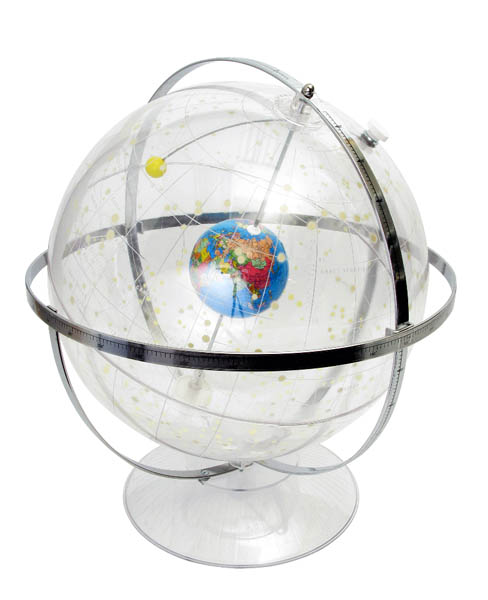
The Model of The Celestial Sphere (for high school)
The Model of The Celestial Sphere (for high school) (Product Code: SCL282/046) is a 300 mm transparent celestial globe on a gyroscopic support, with a small Earth shown at its centre. The main reference circles, the celestial equator and the celestial meridians, are marked on the sphere, together with an equatorial or horizontal plane, so students can see how astronomers locate stars on the sky as seen from Earth. This item of astronomy lab equipment is manufactured in India by Jain Scientific Equipments Pvt Ltd (ScienceLab), Ambala.
Specifications
| Parameter | Detail |
|---|---|
| Type | Model of the celestial sphere |
| Model diameter | 300 mm |
| Globe | Transparent celestial globe with the Earth indicated inside |
| Reference circles | Celestial equator and celestial meridians |
| Reference plane | Equatorial or horizontal plane |
| Support | Gyroscopic |
Typical Use
Because the globe is transparent, students can look through it from the Earth’s point of view and relate what they see on the model to the real sky. Turning the sphere on its support shows the apparent daily rotation of the heavens: stars near the celestial pole circle without setting, while those near the celestial equator rise and set. The marked equator and meridians give a concrete picture of declination and right ascension, the sky’s equivalents of latitude and longitude.
With the horizontal plane set for the school’s own latitude, the teacher can show why the pole star stands at the same height above the horizon as the observer’s latitude, and why the Sun’s path changes through the year. The model links geography lessons on the Earth’s axis with physics and astronomy club work, and it pairs naturally with geography models such as globes and planetaria. Dust it with a soft dry cloth and store it covered to keep the transparent sphere clear.
Manufacturer
Jain Scientific Equipments Private Limited, an educational equipment manufacturer based in Ambala, Haryana, produces this celestial sphere model and sells it under its ScienceLab brand to schools in India and international markets. Find out more on the company profile.
Related Lab Equipment
These items support astronomy and Earth-and-sky lessons:
- Celestial Star Globe — shows the constellations that the sphere’s coordinates describe.
- Earth Globe Model — compares terrestrial latitude and longitude with celestial coordinates.
- Solar System Model — places the Earth in the wider solar system.
- Project Planetarium Set — projects the night sky for whole-class viewing.
- Astronomical Telescope — for observing the real sky after the model lesson.
See more in the Lab Equipment category.
Frequently Asked Questions
How big is the model?
The celestial sphere has a diameter of 300 mm, large enough for a teacher to demonstrate at the front of a class.
Which reference circles are marked?
The celestial equator and the celestial meridians are indicated, along with an equatorial or horizontal plane.
Are constellations shown on the sphere?
Star patterns are not described on this listing. If you need constellations, see the Celestial Star Globe or contact us to confirm the markings.
Is it suitable for geography as well as physics classes?
Yes. It helps explain the Earth’s axis, latitude and the apparent motion of the sky, topics shared by geography and physics syllabi.
How should the transparent globe be cleaned?
Use a soft, dry or slightly damp cloth. Avoid solvents and abrasive cleaners, which can cloud or scratch the surface.
Can you quote for several schools or an export order?
Yes. Provide code SCL282/046, the quantity and delivery locations; we supply institutions in India and international markets.
Request a Quote
For a quotation on The Model of The Celestial Sphere, use our contact page or add it to the enquiry cart with your other astronomy items.
Last updated: 24 September 2026
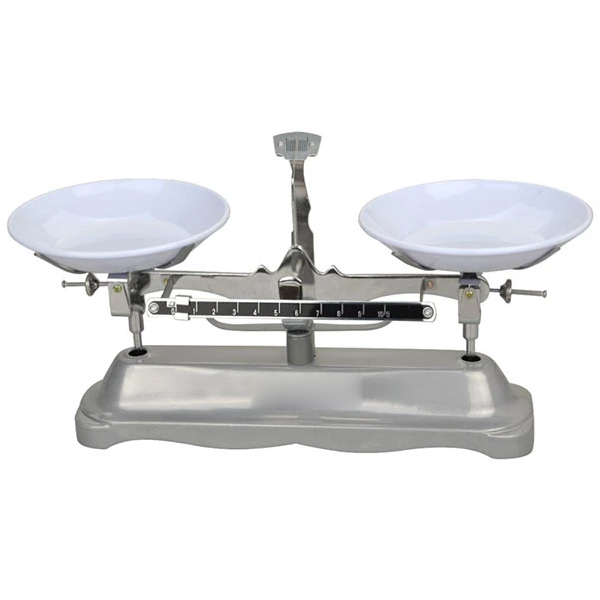
Balance
Balance (Product Code: SCL-541/01a) is an equal-arm beam balance with two plastic trays that lets students find the mass of small objects by comparing them against known masses. Science teachers use it to introduce mass, equilibrium and weighing by comparison in middle and secondary classes. It is made by Jain Scientific Equipments Pvt Ltd (ScienceLab), Ambala, India, as part of its range of school physics lab equipment in India.
Specifications
| Parameter | Detail |
|---|---|
| Type | Equal-arm balance with balancing mechanism |
| Pans | Plastic trays |
| Support | Steel support |
| Maximum measurement mass | 200 g |
| Precision | 0.1 g |
| Height | 200 mm |
| Included | Marked mass set |
Typical Use
Students place the object on one tray and add marked masses to the other until the beam settles level; the total of the masses gives the object's mass, readable to the balance's 0.1 g precision. Before each lesson, set the empty beam level with the balancing mechanism so that every reading starts from a true zero, and keep the combined load within the 200 g maximum to protect the pivot.
The balance works well in practical sessions on density (weigh a sample, then find its volume), on conservation of mass, and on the difference between mass and weight. Used next to a spring dynamometer and other mechanics lab equipment in India, it helps learners see that a balance compares masses directly, while a spring scale measures the pull of gravity as a force.
Manufacturer
This balance is produced by Jain Scientific Equipments Private Limited, the Ambala, Haryana company that trades under the ScienceLab name and builds teaching apparatus for schools, colleges and science distributors. Read more about the company on its company profile page.
Related Lab Equipment
These catalogue items are often ordered with the balance for weighing and equilibrium lessons:
- Set Of Marked Masses — extra hooked masses for the comparison tray or for hanging experiments.
- Weight Box — a boxed set of reference weights for comparison weighing.
- Dynamometer — measures weight as a force in newtons, a useful contrast to weighing by comparison.
- Lever — extends the equal-arm idea to moments at unequal distances from the pivot.
- Triple Beam Balance — an alternative single-pan balance with sliding riders.
See the full Lab Equipment category for more school physics apparatus.
Frequently Asked Questions
What is the capacity and precision of this balance?
It measures up to 200 g with a precision of 0.1 g. For heavier samples, choose a balance with a higher capacity from our catalogue.
Are masses supplied with the balance?
Yes, a marked mass set is included. For the exact pieces in the set, please ask through our contact page before ordering.
How do I set the balance to zero?
With both trays empty, adjust the balancing mechanism until the beam rests level. Recheck this at the start of each class, since moving the balance can shift the zero.
How should the balance be cleaned and stored?
Wipe the plastic trays with a soft, slightly damp cloth and dry them. Store the balance unloaded, with the masses kept together so pieces are not lost.
Can a calibration certificate be provided?
Please discuss calibration-certificate availability with our team via the contact page when you enquire.
What should an institutional quotation request include?
Give the product code SCL-541/01a, the quantity, the delivery address and any tender specification you must match, so we can respond accurately.
Do you supply schools in bulk and overseas?
Yes. We supply institutions and distributors across India and international markets; packing and shipping terms are confirmed with each quotation.
Request a Quote
To request a quotation for the Balance (SCL-541/01a), send your quantity and delivery details through our contact page, or add it to the enquiry cart along with other apparatus you need.
Last updated: 24 September 2026