- Physics Lab Equipment
- Chemistry Lab Equipment
- Biology Lab Equipment
- Anatomical Lab Equipment
- Learning
- Educational Lab Equipment
- Magnets
- Agriculture
- Astronomy
- Earth Science
- Geography Lab Equipment
- Safety Lab Coat
- Laboratory
- Meteorological
- Electricity & Magnetism
- Heat
- School Lab Equipment
- Lab Glassware
- Science Lab Equipment
- Tvet Lab Equipment
- Robotics Kits Supplier and Manufacturer for Schools India
- Math Lab Equipment Manufacturers and Exporters in Ambala
- STEM Kits Manufacturers and Supplier India
- Engineering Lab Equipment
- Hospital Lab Equipment
- Water, Sanitation & Hygiene Supplies
- Cold Chain, Solar & Communication Equipment
- Nutrition
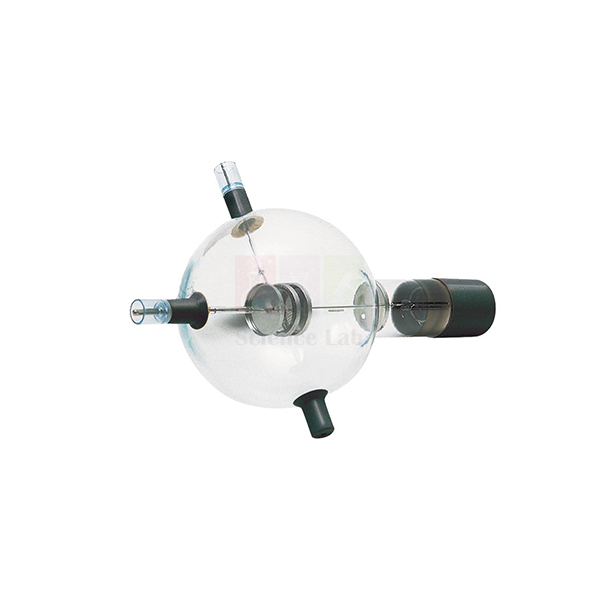
Teltron Diode D
Teltron Diode D (Product Code: SLE/PHY/304) is a thermionic diode tube from the Teltron D range used to demonstrate thermionic emission and the one-way flow of electrons in college and senior school physics laboratories. The D range is the original Teltron series, with the electrical connections fixed on the tube itself, and a diode of this kind is the classic vacuum tube characteristics experiment. It is supplied by Jain Scientific Equipments Pvt Ltd (ScienceLab), Ambala, India.
Key Details
| Parameter | Detail |
|---|---|
| Product type | Thermionic diode demonstration tube |
| Range | Teltron D range (connections fixed on the tube) |
| Brand | Teltron (third-party brand) |
| Operating data | Heater and anode ratings confirmed on the specification sheet sent with your quotation |
| Product code | SLE/PHY/304 |
| Supplied by | Jain Scientific Equipments Pvt Ltd (ScienceLab), Ambala, India |
What Is the Teltron Diode D Used For?
Inside a thermionic diode, a heated cathode releases electrons into the vacuum. They reach the anode only when it is positive with respect to the cathode, so current flows in one direction and not the other. This is the principle behind early valve rectifiers, and it lets students see the link between thermionic emission and rectification in a single piece of apparatus.
In a typical practical, the class varies the anode voltage in steps, records the anode current, and plots the characteristic curve to see how the current rises and then levels off. The tube is fragile evacuated glass, so a teacher or technician should mount it, make the connections to its fixed D-range terminals and switch the supplies on and off.
Supplier
Teltron is a third-party brand. Jain Scientific Equipments Private Limited, which trades as ScienceLab, supplies the Teltron Diode D from Ambala, Haryana, India, sourcing it for colleges, universities and schools that teach thermionic emission. We confirm the current specification and the holder and supplies the tube needs as part of every quotation. More about the company is on our company profile.
Related Physics Lab Equipment
Items that complete a thermionic diode practical or offer an alternative:
- Teltron Diode S — the S-range diode, whose connections sit on the stand.
- Teltron Tube Holder D — mounting for Teltron D-range tubes.
- EHT Power Supply — high-voltage supply listed for use with Teltron tubes.
- Digital Voltmeter/Ammeter With Shunts — for reading voltage and current during the characteristic-curve experiment.
- Semiconductor Diode — the solid-state counterpart for comparison lessons.
Browse all items in Physics Lab Equipment.
Frequently Asked Questions
What does the Teltron Diode D demonstrate?
The Teltron Diode D demonstrates thermionic emission from a heated cathode and the one-way conduction of electrons to a positive anode. Students use it to plot the current-voltage characteristic of a vacuum diode and to understand how valve rectification works.
How does the Teltron Diode D differ from the Teltron Diode S?
The Teltron Diode D belongs to the original Teltron D range, where the connections are fixed on the tube. The Diode S belongs to the newer S range, where the connections are on the stand, so each needs its own matching holder.
What are the technical specifications of the Teltron Diode D?
Please ask us for the current specification sheet of the Teltron Diode D, including heater and anode ratings. We confirm these figures with your quotation instead of printing unverified values on this page, so you can check them against your power supplies.
What other equipment does the Teltron Diode D need?
The Teltron Diode D is normally mounted in a Teltron D-range holder and connected to suitable heater and anode supplies, with meters to read voltage and current. Tell us what your lab already owns and we will confirm the complete set-up.
Is the Teltron Diode D made by ScienceLab?
No. Teltron is a third-party brand, and the Teltron Diode D is supplied, not manufactured, by Jain Scientific Equipments Pvt Ltd (ScienceLab) of Ambala, India. We source it for institutions and confirm its specification with each quotation.
Can students operate the Teltron Diode D themselves?
Students can take readings from the Teltron Diode D, but a teacher or technician should set it up, make the connections and switch the supplies. The tube is evacuated glass and is operated from high-voltage equipment, so careful handling is essential.
Request a Quote
For a quotation on the Teltron Diode D, tell us the quantity and which holders, supplies and meters you already have through our contact page, or add it to the enquiry cart.
Last updated: 24 September 2026
648.jpg)
Stop Clock (Metal Case)
Stop Clock (Metal Case) (Product Code: SLE/PHY/305) is a general-purpose mechanical stop clock used to time experiments, demonstrations and practical tests in school and college laboratories. Its 100 mm dial can be read from across a bench, and large start and reset triggers make it simple to operate, all housed in a black powder-coated metal case. A practical piece of physics lab equipment for schools in India, it is supplied by Jain Scientific Equipments Pvt Ltd (ScienceLab), Ambala, India.
Key Details
| Parameter | Detail |
|---|---|
| Type | Mechanical stop clock, general purpose |
| Dial | 100 mm |
| Controls | Large start and reset triggers |
| Housing | Black powder-coated metal case |
| Packing | Sturdy case with protective foam insert |
| Product code | SLE/PHY/305 |
| Supplied by | Jain Scientific Equipments Pvt Ltd (ScienceLab), Ambala, India |
What Is the Metal-Case Stop Clock Used For?
A bench stop clock is the everyday timer of the science lab. Physics classes use it to time pendulum swings and the oscillations of a mass on a spring, chemistry groups time rates of reaction, and biology practicals time activities such as pulse counts. Because the large dial is visible to a whole group, one clock can serve a demonstration while students record the readings.
For better results, time a number of complete oscillations rather than one and divide, which reduces the effect of human reaction time. Reset the clock before each run, stand it where it will not be knocked, and return it to its foam-lined case after the lesson to protect the mechanism.
Supplier
Jain Scientific Equipments Private Limited, trading as ScienceLab, supplies the Stop Clock (Metal Case) from Ambala, Haryana, India to schools, colleges, laboratories and dealers in India and international markets. We source it as part of our laboratory timing range and can quote it together with the apparatus you are timing. For vendor registration, the supplying company's GSTIN is 06AAECJ8618A1ZT and its Legal Entity Identifier is 3358004HRD1JIVXKYX49. Read more on our company profile.
Related Physics Lab Equipment
Other timers and the apparatus they are most often used with:
- Stop Clock — another stop clock option in our physics range.
- Digital Stopclock — an electronic alternative with a digital readout.
- Stopwatch, Digital — a handheld timer for individual students.
- Mathematical Pendulum Demonstration Apparatus — a classic experiment timed with a stop clock.
- Extension Spring, Steel — for timing the oscillations of a mass on a spring.
See the complete range in Physics Lab Equipment.
Frequently Asked Questions
How large is the dial of the Stop Clock (Metal Case)?
The Stop Clock (Metal Case) has a 100 mm dial, large enough to read from across a laboratory bench. This makes it suitable for class demonstrations as well as group practicals where several students need to see the time.
How is the Stop Clock (Metal Case) started and reset?
The Stop Clock (Metal Case) has large start and reset triggers, so it is quick to operate even when a student is also watching an experiment. Reset it before each run to begin timing from zero.
What is the case of the Stop Clock (Metal Case) made from?
The Stop Clock (Metal Case) is housed in a black powder-coated metal case. It is packed in a sturdy case with a protective foam insert, which is also a good place to store it between lessons.
What are the dial graduations of the Stop Clock (Metal Case)?
The dial graduations and maximum timing range of the Stop Clock (Metal Case) are not listed on this page. Please ask us through the contact page and we will confirm them with your quotation before you order.
Should I choose a mechanical or a digital stop clock?
The Stop Clock (Metal Case) is a mechanical clock with a large 100 mm dial that suits whole-class viewing. If you prefer an electronic readout, our Digital Stopclock is an alternative; tell us how you will use it and we can advise.
Who supplies the Stop Clock (Metal Case)?
The Stop Clock (Metal Case) is supplied by Jain Scientific Equipments Pvt Ltd (ScienceLab) of Ambala, Haryana, India, to schools, colleges and dealers in India and international markets. Bulk quantities for several labs can be quoted together.
Request a Quote
To request a quotation for the Stop Clock (Metal Case), send your quantity and delivery location through our contact page, or add it to the enquiry cart.
Last updated: 24 September 2026
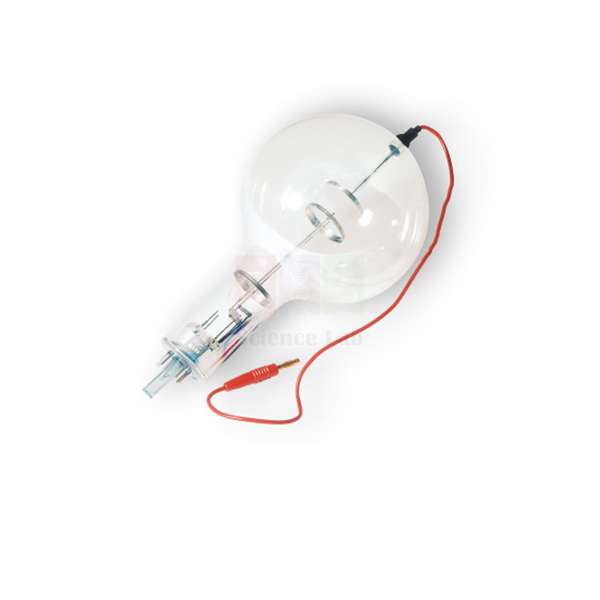
Teltron Diode S
Teltron Diode S (Product Code: SLE/PHY/306) is a high-vacuum electron tube with a thermionic cathode used to demonstrate the Edison effect and diode rectification in advanced school and college physics laboratories. Part of the newer Teltron S range, whose connections sit on the stand rather than on the tube, it gives an anode current of approximately 2 mA at 200 V and accepts up to 500 V on the anode. This physics lab equipment item is supplied by Jain Scientific Equipments Pvt Ltd (ScienceLab), Ambala, India.
Specifications
| Parameter | Detail |
|---|---|
| Tube type | High-vacuum electron tube with thermionic cathode |
| Range | Teltron S range (connections on the stand) |
| Brand | Teltron (third-party brand) |
| Anode current | Approx. 2 mA at 200 V anode voltage |
| Max. heater voltage | 7.5 V AC/DC |
| Max. anode voltage | 500 V |
| Documentation | Instructions included |
| Listed for use with | EHT power supply, digital meter with two shunts, shrouded test leads (red and black) |
| Product code | SLE/PHY/306 |
| Supplied by | Jain Scientific Equipments Pvt Ltd (ScienceLab), Ambala, India |
What Is the Teltron Diode S Used For?
The Edison effect was first noticed as a small current reaching an extra electrode inside a lamp bulb, and it is now understood as electrons boiling off a hot filament. With the Teltron Diode S, students heat the cathode, make the anode positive and watch the emission current appear, then reverse the anode and see it stop. The same tube lets them measure how the emission current changes as the applied voltage is raised, giving the familiar diode characteristic.
Applying an alternating voltage to the anode shows rectification: current flows only during the half-cycles when the anode is positive. Keep the heater at or below 7.5 V and the anode at or below 500 V, use shrouded leads for every high-voltage connection, and follow the instructions supplied with the tube.
What to Specify When Ordering
- Whether you already have a Teltron S-range stand, since the connections for this tube are on the stand.
- Whether you need the EHT power supply and the digital meter with two shunts listed for use with Teltron tubes.
- How many sets of red and black shrouded test leads are required.
- The number of tubes per laboratory.
Supplier
The Teltron Diode S carries a third-party brand, and Jain Scientific Equipments Private Limited, known by its trading name ScienceLab, supplies it from Ambala, Haryana, India. As a physics instruments supplier in India, we source it for colleges, universities and senior schools in India and international markets, and can quote the tube together with its stand, supply and meters. See our company profile for more about us.
Related Physics Lab Equipment
Equipment that works alongside the Teltron Diode S:
- Teltron Tube Holder S — the stand for S-range tubes, where the connections are made.
- EHT Power Supply — listed as other equipment for Teltron tubes.
- Digital Voltmeter/Ammeter With Shunts — for reading emission current and voltage.
- Teltron Diode D — the D-range diode with connections fixed on the tube.
- Teltron Thomson Tube S — the next S-range experiment, measuring e/m of the electron.
More items are listed in Physics Lab Equipment.
Frequently Asked Questions
What experiments can be done with the Teltron Diode S?
The Teltron Diode S is used to demonstrate the Edison effect (thermionic emission), to investigate diode characteristics through rectification, and to measure how emission current depends on the applied voltage. Instructions for these experiments are included with the tube.
What are the voltage limits of the Teltron Diode S?
The Teltron Diode S has a maximum heater voltage of 7.5 V AC/DC and a maximum anode voltage of 500 V. Keeping within these limits protects the cathode and the tube, so check your supplies before connecting them.
What anode current does the Teltron Diode S give?
The Teltron Diode S gives an anode current of approximately 2 mA at an anode voltage of 200 V. A milliammeter or a digital meter with a suitable shunt is needed to read this current during the experiment.
What equipment is needed with the Teltron Diode S?
The Teltron Diode S is listed for use with an EHT power supply, a digital meter with two shunts, and red and black shrouded test leads. Because S-range connections are on the stand, a Teltron S-range holder is also needed.
Is the Teltron Diode S a ScienceLab product?
No. The Teltron Diode S carries the Teltron brand, a third-party name, and is supplied by Jain Scientific Equipments Pvt Ltd (ScienceLab), Ambala, India. We source it for institutions and can quote it with its accessories.
Is a calibration certificate available for the Teltron Diode S?
A calibration certificate is not listed for the Teltron Diode S. If your institution needs any test documentation, please raise it through our contact page before ordering so we can tell you what can be provided with the tube.
Request a Quote
Send the number of tubes and the stands, supplies and leads you need through our contact page, or add the Teltron Diode S to the enquiry cart for a quotation.
Last updated: 24 September 2026
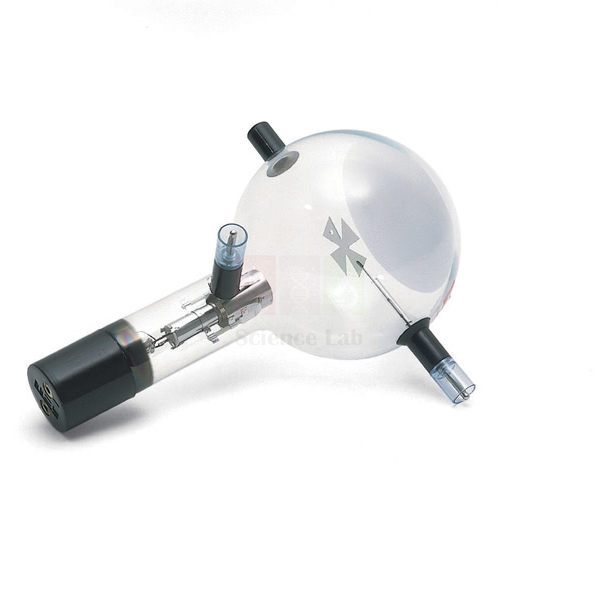
Teltron Maltese Cross Tube D
Teltron Maltese Cross Tube D (Product Code: SLE/PHY/307) is a high-vacuum electron tube used to show that electrons travel in straight lines, by casting the shadow of a Maltese cross onto a fluorescent screen, in college and senior school physics laboratories. Its divergent electron gun runs at up to 5 kV on the anode, and a magnetic field from Helmholtz coils lets students study electron optics such as beam focusing. A clear physics demonstration for cathode-ray lessons, it is supplied by Jain Scientific Equipments Pvt Ltd (ScienceLab), Ambala, India.
Specifications
| Parameter | Detail |
|---|---|
| Tube type | High-vacuum electron tube with divergent electron gun |
| Screen | Fluorescent, partially obscured by a Maltese cross |
| Range | Teltron D range (connections fixed on the tube) |
| Brand | Teltron (third-party brand) |
| Anode current | Approx. 0.1 mA at 4 kV |
| Max. filament voltage | 6.3 V AC |
| Max. anode voltage | 5 kV |
| Documentation | Instructions included |
| Listed for use with | EHT power supply; Helmholtz coils for magnetic-field experiments |
| Product code | SLE/PHY/307 |
| Supplied by | Jain Scientific Equipments Pvt Ltd (ScienceLab), Ambala, India |
What Is the Maltese Cross Tube Used For?
With no electric or magnetic field applied, electrons from the divergent gun travel straight to the fluorescent screen, and the Maltese cross in their path leaves a sharp, cross-shaped shadow. That shadow is the evidence: just as light casts a shadow of an object, the electron stream travels in straight lines. It is one of the first observations students make when they meet cathode rays.
Next, bring in a magnetic field using Helmholtz coils. The shadow shifts and changes, showing that the beam is made of charged particles that respond to a field, and adjusting the field lets the class explore electron optics such as focusing the beam. Darken the room for the clearest image, keep the filament at or below 6.3 V AC and the anode at or below 5 kV, and let a teacher handle all high-voltage connections.
What to Specify When Ordering
- Whether you need the EHT power supply listed for this tube.
- Whether you already own a Teltron D-range holder and Helmholtz coils for the magnetic-field experiments.
- The number of tubes for your laboratory.
Supplier
Jain Scientific Equipments Private Limited, whose trading name is ScienceLab, supplies the Teltron Maltese Cross Tube D from Ambala, Haryana, India. Teltron is a third-party brand; we source the tube for physics departments in India and international markets and can combine it in one quotation with the supply and coils it works with. Visit our company profile for more about the company.
Related Physics Lab Equipment
Items for the same series of electron-beam demonstrations:
- EHT Power Supply — the high-voltage supply listed for use with this tube.
- Teltron Helmholtz Pair of Coils D — magnetic field source for D-range tubes.
- Teltron Tube Holder D — mounting for Teltron D-range tubes.
- Teltron Electron Deflection Tube D — follows on by bending the beam with electric and magnetic fields.
- Teltron Electron Diffraction Tube D — contrasts straight-line travel with the wave behaviour of electrons.
Find the full list in Physics Lab Equipment.
Frequently Asked Questions
What does the Teltron Maltese Cross Tube D demonstrate?
The Teltron Maltese Cross Tube D demonstrates that electrons travel in straight lines when no field is applied, by projecting the shadow of a Maltese cross onto a fluorescent screen. With Helmholtz coils it also shows electron-optics effects such as beam focusing.
What are the operating voltages of the Teltron Maltese Cross Tube D?
The Teltron Maltese Cross Tube D has a maximum filament voltage of 6.3 V AC and a maximum anode voltage of 5 kV, with an anode current of approximately 0.1 mA at 4 kV. Use a supply that stays within these limits.
Which power supply does the Teltron Maltese Cross Tube D need?
An EHT power supply is listed as the other equipment for use with the Teltron Maltese Cross Tube D. Tell us which supply your lab already owns and we will confirm whether it suits the tube before you order.
Can the Teltron Maltese Cross Tube D show magnetic effects?
Yes. Applying a magnetic field with Helmholtz coils to the Teltron Maltese Cross Tube D moves and reshapes the shadow, so students can study how a field acts on the electron beam and explore beam focusing.
Are instructions supplied with the Teltron Maltese Cross Tube D?
Yes, instructions are included with the Teltron Maltese Cross Tube D. They help the teacher set up the tube, connect the supplies safely and run the shadow and magnetic-field demonstrations with a class.
Who supplies the Teltron Maltese Cross Tube D?
The Teltron Maltese Cross Tube D is supplied by Jain Scientific Equipments Pvt Ltd (ScienceLab) of Ambala, India. Teltron is a third-party brand; ScienceLab does not manufacture the tube but sources it for institutions in India and international markets.
Request a Quote
For a quotation on the Teltron Maltese Cross Tube D and any accessories, contact us through our contact page or add it to the enquiry cart.
Last updated: 24 September 2026
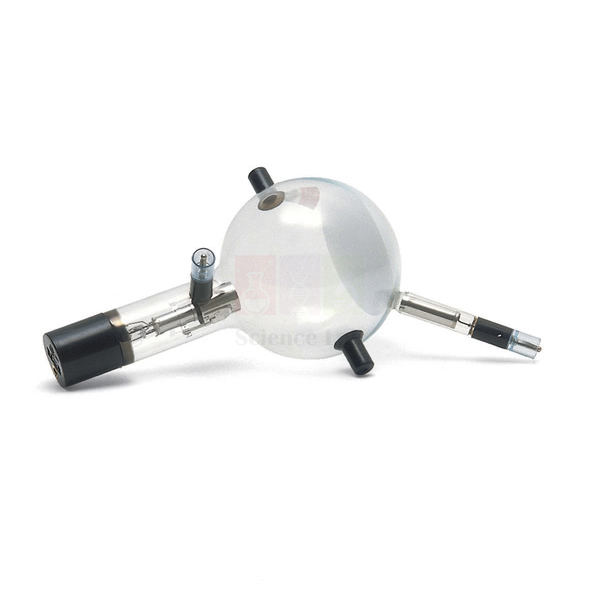
Teltron Perrin Tube D
Teltron Perrin Tube D (Product Code: SLE/PHY/308) is an evacuated electron tube from the Teltron D range used to reproduce Jean Perrin's cathode-ray experiment, which shows that the electron beam carries negative charge, in university and senior school physics teaching. As a D-range tube it has its electrical connections fixed on the tube itself, and it fits into a sequence of D-range tubes that takes students from cathode rays to the properties of the electron. It is supplied by Jain Scientific Equipments Pvt Ltd (ScienceLab), Ambala, India.
Key Details
| Parameter | Detail |
|---|---|
| Product type | Evacuated electron tube for Perrin's experiment |
| Range | Teltron D range, with connections fixed on the tube |
| Brand | Teltron (third-party brand) |
| Specification sheet | Sent on request with your quotation |
| Product code | SLE/PHY/308 |
| Supplied by | Jain Scientific Equipments Pvt Ltd (ScienceLab), Ambala, India |
What Is the Teltron Perrin Tube D Used For?
Before the electron was identified, physicists argued over whether cathode rays were charged particles or a kind of wave. Perrin settled part of the question by catching the rays in an insulated collector and showing that it gained negative charge. In the classic teaching arrangement, a magnetic field steers the beam into the collector, a connected electroscope or electrometer responds, and when the beam is steered away the charging stops, tying the charge to the beam itself.
Among physics lab instruments in India, a tube like this is normally used as a teacher-led demonstration. It needs a suitable high-voltage supply, a D-range holder, a magnetic field source and a charge indicator, and the glass envelope must be handled with care. Confirm the operating voltages and accessory needs with us before ordering, as we send the specification with each quotation.
What to Specify When Ordering
- Whether you already have a Teltron D-range holder and Helmholtz coils.
- The high-voltage supply your laboratory uses, so we can check it suits the tube.
- Which charge indicator you will connect, such as an electroscope.
- The number of tubes required.
Supplier
Jain Scientific Equipments Private Limited, which operates under the ScienceLab name, supplies the Teltron Perrin Tube D from Ambala, Haryana, India to physics departments in India and international markets. Teltron is a third-party brand and the tube is sourced, not made, by us; we check the specification and the D-range accessories it needs before we quote. Our company profile has more about the company.
Related Physics Lab Equipment
Accessories and companion tubes for a Perrin demonstration:
- Teltron Perrin Tube S — the S-range version, with connections on the stand.
- Teltron Tube Holder D — holds D-range tubes during the demonstration.
- Teltron Helmholtz Pair of Coils D — a magnetic field source to steer the beam.
- EHT Power Supply — high-voltage supply for Teltron electron tubes.
- Electroscope in Flask, Gold Leaf — a charge indicator of the kind used in Perrin's experiment.
Browse further in Physics Lab Equipment.
Frequently Asked Questions
Which experiment is the Teltron Perrin Tube D designed for?
The Teltron Perrin Tube D is designed for Perrin's experiment, in which the electron beam is collected and shown to carry negative charge. It gives students experimental evidence that cathode rays are streams of negatively charged particles.
What does the D in Teltron Perrin Tube D mean?
The D identifies the original Teltron D range, in which the electrical connections are fixed on the tube itself. The Teltron Perrin Tube D therefore uses a D-range holder, whereas the S-range version makes its connections on the stand.
Where can I find the specifications of the Teltron Perrin Tube D?
Ask us through the contact page for the current specification sheet of the Teltron Perrin Tube D, including its voltages. We confirm the figures in writing with the quotation rather than publishing unverified values on this page.
What accessories does the Teltron Perrin Tube D need?
The Teltron Perrin Tube D generally needs a D-range holder, a high-voltage supply, a magnetic field source such as Helmholtz coils, and a charge indicator such as an electroscope. List what you already own and we will confirm the rest.
Does ScienceLab manufacture the Teltron Perrin Tube D?
No. The Teltron Perrin Tube D carries the Teltron brand, which belongs to a third party. Jain Scientific Equipments Pvt Ltd (ScienceLab) of Ambala, India supplies it to colleges, universities and schools that teach the discovery of the electron.
Can the Teltron Perrin Tube D be ordered for export?
Yes. The Teltron Perrin Tube D can be quoted for institutions in India and international markets. Send the quantity, accessories and delivery destination through our contact page and we will reply with a quotation.
Request a Quote
Ask for a quotation on the Teltron Perrin Tube D through our contact page, or add it to the enquiry cart along with any holder, coils or supply you need.
Last updated: 24 September 2026
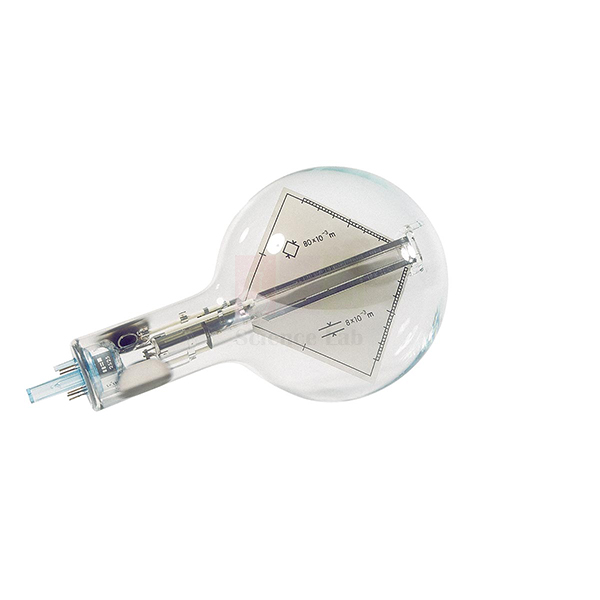
Teltron Thomson Tube S
Teltron Thomson Tube S (Product Code: SLE/PHY/309) is a high-vacuum electron tube used to determine the charge-to-mass ratio (e/m) of the electron by balancing electric and magnetic deflection, in the manner of J.J. Thomson, in college and university physics laboratories. It has a high-accuracy electron gun, a ruled phosphorescent target screen and a built-in plate capacitor rated to 500 V, making it a standard specific charge of the electron experiment. It is supplied by Jain Scientific Equipments Pvt Ltd (ScienceLab), Ambala, India.
Specifications
| Parameter | Detail |
|---|---|
| Tube type | High-vacuum electron tube |
| Electron gun | High-accuracy electron gun |
| Screen | Ruled phosphorescent target screen |
| Beam deflection | Electric field of the built-in plate capacitor; magnetic field of external Helmholtz Coils S |
| Range | Teltron S range (connections on the stand) |
| Brand | Teltron (third-party brand) |
| Max. filament voltage | 6.3 V AC |
| Max. anode voltage | 5 kV |
| Anode current | Approx. 0.1 mA at 4 kV (anode) |
| Max. capacitor voltage | 500 V |
| Listed for use with | EHT power supply, digital meter with two shunts, shrouded test leads (red and black) |
| Product code | SLE/PHY/309 |
| Supplied by | Jain Scientific Equipments Pvt Ltd (ScienceLab), Ambala, India |
What Is the Thomson Tube Used For?
The tube recreates the reasoning of Thomson's classic measurement. First, students bend the beam with the magnetic field of the external Helmholtz coils and read its path against the ruled screen. Then they apply a voltage to the built-in plate capacitor and adjust it until the electric deflection exactly cancels the magnetic one, so the beam runs straight again.
At that balance point the ratio of the two fields gives the mean electron velocity, and combining this with the curvature from the magnetic-only run yields e/m. The same set-up can be used to explore electron optics. Keep within the 6.3 V AC filament, 5 kV anode and 500 V capacitor limits, and make every high-voltage connection with shrouded leads.
What to Specify When Ordering
- Whether you already own Teltron Helmholtz Coils S and an S-range stand.
- Whether the EHT power supply and the digital meter with two shunts should be included.
- How many sets of red and black shrouded test leads you need.
- The number of tubes, for example one per demonstration bench.
Supplier
Jain Scientific Equipments Private Limited, trading as ScienceLab, supplies the Teltron Thomson Tube S from Ambala, Haryana, India to universities, colleges and senior schools in India and international markets. Teltron is a third-party brand; we source this tube and can quote it together with the coils, stand and supplies it works with. For vendor registration, the supplying company is Jain Scientific Equipments Private Limited (CIN U29309HR2020PTC087597, GSTIN 06AAECJ8618A1ZT). Read more on our company profile.
Related Physics Lab Equipment
Equipment needed for the e/m experiment with this tube:
- Teltron Helmholtz Pair of Coils S — the external coils that provide the magnetic deflection.
- Teltron Tube Holder S — the S-range stand that carries the connections.
- EHT Power Supply — high-voltage supply for the anode.
- Digital Voltmeter/Ammeter With Shunts — for measuring coil current and voltages.
- Teltron Dual Beam Tube S — another S-range tube for electron-beam experiments.
View the range in Physics Lab Equipment.
Frequently Asked Questions
What can be measured with the Teltron Thomson Tube S?
The Teltron Thomson Tube S is used to determine the charge-to-mass ratio (e/m) of the electron, to study mean electron velocities by field cancellation, and to explore electron optics. The ruled phosphorescent screen lets students read the beam path directly.
What are the voltage limits of the Teltron Thomson Tube S?
The Teltron Thomson Tube S has a maximum filament voltage of 6.3 V AC, a maximum anode voltage of 5 kV and a maximum capacitor voltage of 500 V. Its anode current is approximately 0.1 mA at 4 kV.
Which coils are used with the Teltron Thomson Tube S?
The Teltron Thomson Tube S is deflected magnetically by external Helmholtz Coils S, and electrically by its built-in plate capacitor. The coils are a separate item, so tell us if you need them included in the quotation.
What other equipment does the Teltron Thomson Tube S need?
The Teltron Thomson Tube S is listed for use with an EHT power supply, a digital meter with two shunts, and red and black shrouded test leads. As an S-range tube, it also needs the S-range stand, where the connections are made.
Who supplies the Teltron Thomson Tube S?
The Teltron Thomson Tube S is supplied by Jain Scientific Equipments Pvt Ltd (ScienceLab) of Ambala, India. Teltron is a third-party brand, so ScienceLab does not manufacture the tube; vendor registration details are given on this page and with the quotation.
Is a calibration certificate available for the Teltron Thomson Tube S?
No calibration certificate is listed for the Teltron Thomson Tube S. If your department requires test or calibration paperwork, please discuss it with us through the contact page before ordering, and we will explain what documentation can accompany the tube.
Request a Quote
To receive a quotation for the Teltron Thomson Tube S, send the quantity and required accessories via our contact page, or add it to the enquiry cart.
Last updated: 24 September 2026
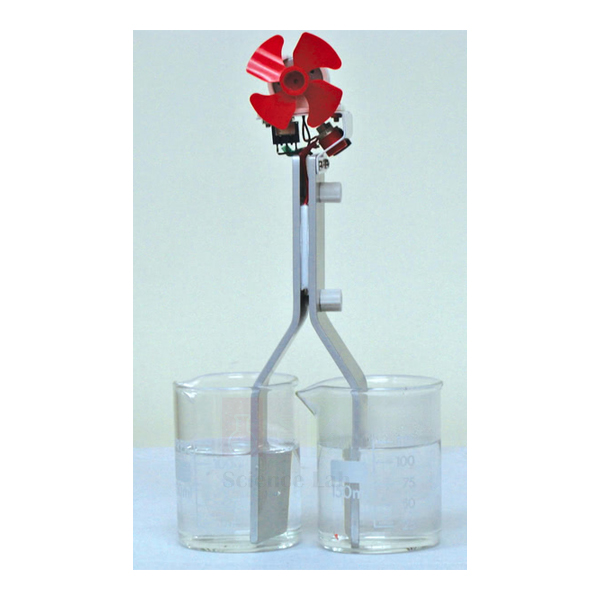
Thermoelectric Converter
Thermoelectric Converter (Product Code: SLE/PHY/310) is a demonstration device used to show that a temperature difference across semiconductor junctions generates electricity, and that electricity can create a temperature difference, in school and college physics lessons. Its semiconducting junction plates sit between two aluminium heat-conducting plates, and a switch connects them either to a small motor fan or to a pair of 4 mm sockets. For heat energy science lessons, it is supplied by Jain Scientific Equipments Pvt Ltd (ScienceLab), Ambala, India.
Key Details
| Parameter | Detail |
|---|---|
| Junctions | Series of semiconducting junction plates |
| Heat-conducting plates | 2 aluminium plates, one on each side of the junctions |
| Visual indicator | Small motor fan driven by the generated current |
| Selector switch | Connects the junction plates to the motor fan or to a pair of 4 mm sockets |
| Reverse (heat-pump) mode | 5 V DC applied at the 4 mm sockets creates a temperature difference, conducted by the aluminium plates |
| Product code | SLE/PHY/310 |
| Supplied by | Jain Scientific Equipments Pvt Ltd (ScienceLab), Ambala, India |
What Is the Thermoelectric Converter Used For?
In generator mode, set the switch to the fan and create a temperature difference between the two aluminium plates, for example by standing one side on a container of warm water and keeping the other cool. Current generated at the semiconductor junctions spins the little fan, a direct and visible example of the Seebeck effect turning heat energy into electrical and then kinetic energy. A larger temperature difference usually gives a livelier fan, which makes a good prompt for discussion.
Switch to the 4 mm sockets and drive them with 5 V DC to reverse the process: the junctions now pump heat, so one plate becomes warmer and the other cooler, which is the Peltier effect used in small electronic coolers. Use only moderate temperatures unless we have confirmed the limits for your unit, and let the plates return to room temperature before touching them.
Supplier
Jain Scientific Equipments Private Limited, which trades as ScienceLab, supplies the Thermoelectric Converter from Ambala, Haryana, India to schools, colleges and dealers in India and international markets. The device is sourced for our heat and energy teaching range, and we confirm its operating details with each quotation. See our company profile for more about the company.
Related Physics Lab Equipment
Items that extend thermoelectric and energy-conversion lessons:
- Thermoelectric Effects Apparatus — a further set-up for studying thermoelectric effects.
- Power Supply Variable — a continuously variable AC or DC source for the heat-pump mode.
- Stackable Leads — 4 mm leads to connect a supply to the sockets.
- Mounted Solar Cell — a contrasting conversion of light energy into electrical energy.
More options are in Physics Lab Equipment.
Frequently Asked Questions
What does the Thermoelectric Converter demonstrate?
The Thermoelectric Converter demonstrates that a temperature difference across semiconducting junction plates produces an electric current, shown by a small motor fan. In reverse, applying 5 V DC to its 4 mm sockets creates a temperature difference across the aluminium plates.
Does the Thermoelectric Converter need a power supply?
The Thermoelectric Converter needs no power supply to run the fan; a temperature difference between the two plates is enough. A 5 V DC supply is needed only when you select the 4 mm sockets to show a temperature difference being created.
What is the switch on the Thermoelectric Converter for?
The switch on the Thermoelectric Converter connects the semiconducting junction plates either to the motor fan, for generating electricity from heat, or to the pair of 4 mm sockets, for driving the junctions with 5 V DC.
What heat sources are safe with the Thermoelectric Converter?
The temperature limits of the Thermoelectric Converter are not listed on this page, so use moderate sources such as warm water and a cool surface. Ask us through the contact page before using hotter sources, and we will confirm what the unit can take.
Who supplies the Thermoelectric Converter?
The Thermoelectric Converter is supplied by Jain Scientific Equipments Pvt Ltd (ScienceLab) of Ambala, Haryana, India, to schools, colleges and dealers in India and international markets. Quotations can include the leads and power supply you need.
Request a Quote
For a quotation on the Thermoelectric Converter, send your quantity and delivery details through our contact page, or add it to the enquiry cart.
Last updated: 24 September 2026
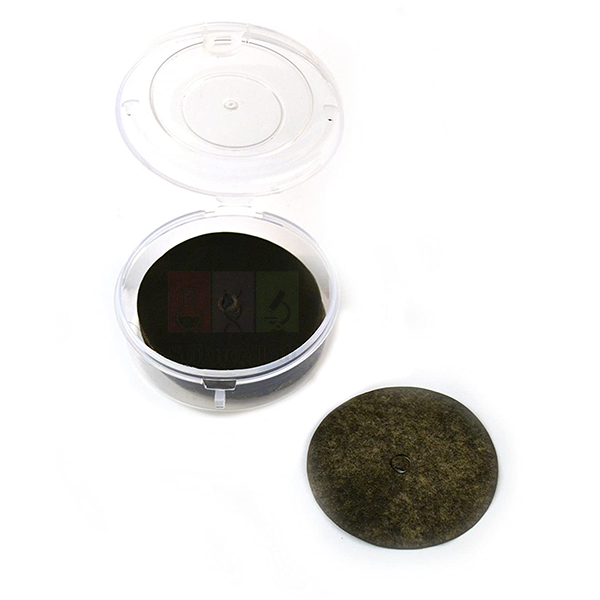
Ticker Tape Carbon Disc
Ticker Tape Carbon Disc (Product Code: SLE/PHY/311) is a replacement carbon disc used in ticker tape timers to transfer a dot onto the paper tape each time the striker hits, in school motion practicals. Each disc measures 50 mm in diameter with a 4 mm hole, and the discs come in boxes of 100 for classes that run regular force and motion experiments. It is supplied by Jain Scientific Equipments Pvt Ltd (ScienceLab), Ambala, India.
Specifications
| Parameter | Detail |
|---|---|
| Diameter | 50 mm |
| Hole | 4 mm |
| For use with | Ticker tape timers |
| Pack | Box of 100 |
| Product code | SLE/PHY/311 |
| Supplied by | Jain Scientific Equipments Pvt Ltd (ScienceLab), Ambala, India |
What Is the Ticker Tape Carbon Disc Used For?
In a ticker tape timer, the striker taps down at a steady rate, and the carbon disc between the striker and the paper tape turns each tap into a small dark dot. As a trolley or falling mass pulls the tape through, the pattern of dots becomes a record of its motion, so a clean, fresh disc is what keeps the dots sharp enough to measure.
When dots start to look faint or patchy, turn the disc slightly so the striker meets an unused area, and replace it once the whole face is worn. Store spare discs flat and dry in their box, and keep a box beside each set of timers so practicals are not held up by a worn disc.
What to Specify When Ordering
- The number of boxes of 100 discs you need for the term or year.
- That your timers take a 50 mm disc with a 4 mm hole.
- Whether you also want ticker tape timers quoted at the same time.
Supplier
Jain Scientific Equipments Private Limited, trading as ScienceLab, supplies the Ticker Tape Carbon Disc from Ambala, Haryana, India as a consumable for motion practicals. We source the discs for schools, colleges and dealers in India and international markets, and can combine them in one quotation with ticker tape timers and trolleys. More about us is on the company profile.
Related Physics Lab Equipment
Apparatus used with the carbon discs in ticker tape experiments:
- Ticker Tape Timer — the electromagnetic timer that uses these discs.
- Dynamics Trolley, Plastic — pulls the tape through the timer in motion experiments.
- Dynamics Trolley, Wooden — a wooden trolley option for the same practicals.
Explore all items in Physics Lab Equipment.
Frequently Asked Questions
What size is the Ticker Tape Carbon Disc?
The Ticker Tape Carbon Disc is 50 mm in diameter with a 4 mm hole. Check that your ticker tape timers take discs of this size before ordering, and ask us if you are unsure which disc your timers use.
How many discs are in a box of Ticker Tape Carbon Discs?
Ticker Tape Carbon Discs are packed in a box of 100. One box can keep several timers supplied across a series of motion practicals, and multiple boxes can be quoted for larger departments.
Which timers use the Ticker Tape Carbon Disc?
The Ticker Tape Carbon Disc is made for ticker tape timers, where a striker presses the disc against the paper tape to print dots. It suits timers that accept a 50 mm disc with a 4 mm hole; ask us to confirm the fit for your timer model.
When should a Ticker Tape Carbon Disc be replaced?
Replace a Ticker Tape Carbon Disc when the dots on the tape become faint or uneven even after turning the disc to a fresh area. Clear dots matter because students measure the spacing between them to work out speed and acceleration.
Does the Ticker Tape Carbon Disc include paper tape?
This listing covers the Ticker Tape Carbon Disc only, packed in a box of 100. Paper tape is not part of this item, so ask us through the contact page if you need tape or timers quoted with the discs.
Who supplies the Ticker Tape Carbon Disc?
The Ticker Tape Carbon Disc is supplied by Jain Scientific Equipments Pvt Ltd (ScienceLab) of Ambala, Haryana, India, to schools, colleges and dealers in India and international markets. Bulk orders of several boxes can be quoted together.
Request a Quote
Send the number of boxes and your delivery location through our contact page, or add the Ticker Tape Carbon Disc to the enquiry cart for a quotation.
Last updated: 24 September 2026