- Physics Lab Equipment
- Chemistry Lab Equipment
- Biology Lab Equipment
- Anatomical Lab Equipment
- Learning
- Educational Lab Equipment
- Magnets
- Agriculture
- Astronomy
- Earth Science
- Geography Lab Equipment
- Safety Lab Coat
- Laboratory
- Meteorological
- Electricity & Magnetism
- Heat
- School Lab Equipment
- Lab Glassware
- Science Lab Equipment
- Tvet Lab Equipment
- Robotics Kits Supplier and Manufacturer for Schools India
- Math Lab Equipment Manufacturers and Exporters in Ambala
- STEM Kits Manufacturers and Supplier India
- Engineering Lab Equipment
- Hospital Lab Equipment
- Water, Sanitation & Hygiene Supplies
- Cold Chain, Solar & Communication Equipment
- Nutrition
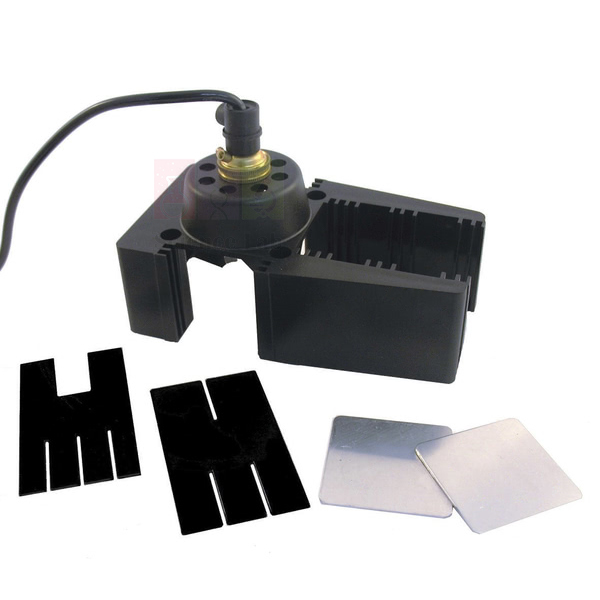
Raybox, 12V
Raybox, 12V (Product Code: SLE/PHY/283) is a 12 V lamp housing that produces narrow rays of light for reflection, refraction and lens experiments in school optics practicals. It has three openings, two of which can be used at the same time by two groups of pupils, and it comes with a 12 V, 24 W B15 bulb, bulb holder, slit plate, aluminium blanking plates and an instruction manual. It is supplied by Jain Scientific Equipments Pvt Ltd (ScienceLab), Ambala, India.
Specifications
| Parameter | Detail |
|---|---|
| Openings | Three; two can be used simultaneously by two sets of pupils |
| Front opening | Seven grooves for accessories and lenses |
| Side openings | Two slots each, for blanking plates and 50 mm slide accessories |
| Ray control | Designed so that, with a biconvex cylindrical lens of 75 mm focal length, divergent or convergent rays are obtained through the slit plate |
| Bulb | 12 V, 24 W, B15 |
| Cable | 2 m, with two 4 mm plugs |
| Supplied with | Cable, bulb, bulb holder, slit plate, aluminium blanking plates and instruction manual |
| Power supply | Not included |
| Product code | SLE/PHY/283 |
| Supplied by | Jain Scientific Equipments Pvt Ltd (ScienceLab), Ambala, India |
What Is the 12V Ray Box Used For?
A ray box turns a bulb into thin, well-defined beams that students can trace on paper, the foundation of ray optics. With a mirror, glass block or prism placed in the beam, pupils measure angles of incidence, reflection and refraction, find the critical angle and see how lenses bring rays to a focus. Only a minimum of accessories is needed to cover a wide range of optics experiments, which makes the ray box a core item of optics lab equipment.
Because two openings can be used at once, one box can serve two groups working on opposite sides, reducing the number of units a class needs. Run it from a separate 12 V supply, let the housing cool before changing the bulb, and dim the room lights slightly for the sharpest rays. The blanking plates close any opening that is not in use so stray light does not disturb the neighbouring group.
What to Specify When Ordering
- Number of ray boxes, remembering that one box can serve two groups.
- A 12 V power supply, since none is included.
- Extra slit plates, a cylindrical lens, prisms or blocks for your planned experiments.
- Spare 12 V, 24 W B15 bulbs.
Supplier
Jain Scientific Equipments Private Limited, trading as ScienceLab, supplies the Raybox, 12V from Ambala, Haryana, India. The company sources the ray box with its standard accessories and can quote the power supply, slit plates and optical blocks that go with it, so a school can equip an optics practical from one enquiry. Schools, colleges, dealers and importers can contact us directly. Our company profile has more about ScienceLab.
Related Physics Lab Equipment
Accessories and optical parts used with the ray box:
- Raybox Slit Plates — additional plates for single or multiple rays.
- Power Supply, Stepped — a low-voltage supply to run the 12 V bulb.
- Prism – Acrylic, Set of 7 — polished blocks for refraction with the rays.
- Lenses Cylindrical Glass, Biconvex — a cylindrical lens for converging rays.
- Mirror, Plane Glass — for reflection experiments.
Browse the Physics Lab Equipment category for more optics apparatus.
Frequently Asked Questions
What comes with the Raybox, 12V?
The Raybox, 12V is supplied with a 2 m cable fitted with two 4 mm plugs, a 12 V, 24 W B15 bulb, a bulb holder, a slit plate, aluminium blanking plates and an instruction manual. A power supply is not included.
Does the Raybox, 12V include a power supply?
No. The Raybox, 12V does not include a power supply. It needs a 12 V source connected through its 2 m cable with two 4 mm plugs, and a suitable low-voltage laboratory power supply can be quoted with it on request.
How many groups can use one Raybox, 12V?
The Raybox, 12V has three openings, and two of them can be used simultaneously by two sets of pupils. That lets one ray box serve two groups at once during reflection and refraction practicals.
How does the Raybox, 12V produce converging and diverging rays?
The front opening of the Raybox, 12V has seven grooves for accessories and lenses. Used with a biconvex cylindrical lens of 75 mm focal length, the slit plate gives divergent or convergent rays, so students can study lenses and focal points.
What bulb does the Raybox, 12V use?
The Raybox, 12V uses a 12 V, 24 W bulb with a B15 fitting, held in the supplied bulb holder. Keeping spare bulbs of the same rating on hand avoids lost lesson time if a bulb fails.
Who supplies the Raybox, 12V?
The Raybox, 12V is supplied by Jain Scientific Equipments Pvt Ltd (ScienceLab), Ambala, Haryana, India. The company sources the ray box with its standard accessories and quotes it to schools, colleges, dealers and importers in India and international markets.
Request a Quote
Send the number of ray boxes, any power supplies or accessories you need, and your delivery location through our contact page, or add the Raybox, 12V to the enquiry cart.
Last updated: 24 September 2026
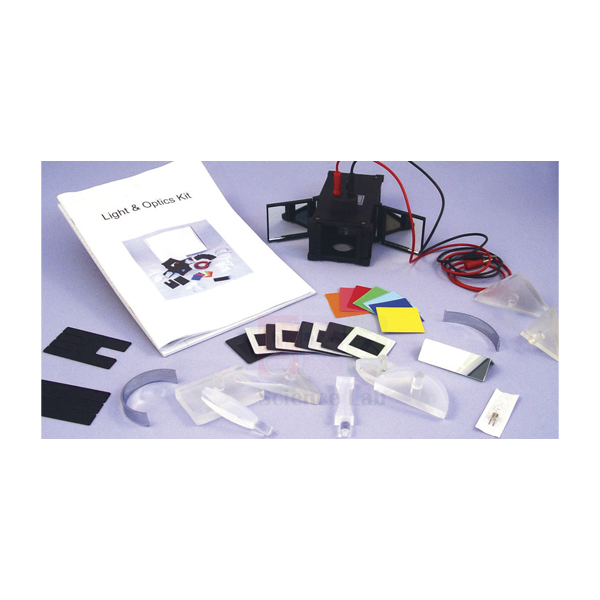
Raybox Mirrored with Accessories
Raybox Mirrored with Accessories (Product Code: SLE/PHY/284) is a ray box with a 12 V, 24 W lamp, used for reflection, refraction and colour-mixing experiments in school and college optics lessons. It produces a convergent, divergent or parallel beam, and an adjustable hinged mirror on the lateral aperture works with a triple aperture system for colour mixing. It is supplied by Jain Scientific Equipments Pvt Ltd (ScienceLab), Ambala, India.
Specifications
| Parameter | Detail |
|---|---|
| Light source | 12 V, 24 W lamp |
| Beam | Convergent, divergent or parallel |
| Parallel beam | Adjustable cylindrical convex lens at one end |
| Colour mixing | Triple aperture system at the other end |
| Lateral aperture | Adjustable hinged mirror |
| Apertures | All fitted with vertical channels to hold slit plates and colour filters |
| Applications | Reflection, refraction and colour-mixing experiments |
| Product code | SLE/PHY/284 |
| Supplied by | Jain Scientific Equipments Pvt Ltd (ScienceLab), Ambala, India |
What Is the Mirrored Ray Box Used For?
The mirrored design adds colour work to ordinary ray optics. At the triple-aperture end, colour filters placed in the vertical channels give beams of different colours, and the adjustable hinged mirror on the lateral aperture can steer a beam so that coloured light overlaps on a white screen, a clear way to show how colours of light combine.
At the other end, the adjustable cylindrical convex lens sets up a parallel beam for tracing rays through blocks, prisms and mirrors, while the box can also give convergent or divergent beams for lens experiments. Slide slit plates into the channels to divide the light into single or multiple rays. Power the 12 V, 24 W lamp from a suitable low-voltage supply and let the box cool before handling the lamp; it is a versatile piece of optics lab equipment for one bench.
What to Specify When Ordering
- Number of ray boxes for the class.
- The slit plates and colour filters you need; we will confirm which accessories are included with the quotation.
- A low-voltage power supply for the 12 V, 24 W lamp, if you do not already have one.
- Spare lamps.
Supplier
ScienceLab, the trading name of Jain Scientific Equipments Private Limited, supplies the Raybox Mirrored with Accessories from Ambala, Haryana, India. The company sources this colour-mixing ray box for school and college physics departments and quotes it with slit plates, lenses and power supplies on request. Buyers completing vendor registration can use the supplying company’s GSTIN 06AAECJ8618A1ZT and Legal Entity Identifier 3358004HRD1JIVXKYX49. Learn more on our profile page.
Related Physics Lab Equipment
Optics items often ordered with the mirrored ray box:
- Raybox, 12V — a two-group ray box with slit plate and blanking plates.
- Raybox Slit Plates — plates for single or multiple rays.
- Newton’s Colour Disc — another way to show colours combining into white.
- Prism, Clear Glass — splits white light into a spectrum.
- Power Supply, Stepped — a low-voltage supply for the 12 V lamp.
More optics apparatus is listed under Physics Lab Equipment.
Frequently Asked Questions
What experiments can be done with the Raybox Mirrored with Accessories?
The Raybox Mirrored with Accessories is designed for reflection, refraction and colour-mixing experiments. It produces convergent, divergent or parallel beams for ray optics, and its triple aperture system and hinged mirror are used for combining coloured beams.
What light source does the mirrored ray box use?
The Raybox Mirrored with Accessories uses a 12 V, 24 W lamp as its light source. Whether a power supply is included is not stated in this listing, so confirm it through our contact page when you ask for a quotation.
How does the Raybox Mirrored with Accessories produce a parallel beam?
One end of the Raybox Mirrored with Accessories has an adjustable cylindrical convex lens for producing a parallel beam. The box can also give convergent or divergent beams, so students can compare all three in lens and mirror experiments.
What is the hinged mirror on the mirrored ray box for?
The lateral aperture of the Raybox Mirrored with Accessories has an adjustable hinged mirror. It can redirect a beam, for example so that it overlaps light from the triple aperture system during colour-mixing experiments.
Which accessories come with the Raybox Mirrored with Accessories?
Every aperture of the Raybox Mirrored with Accessories has vertical channels that hold slit plates and colour filters, but this listing does not give a full contents list. Ask us through the contact page to confirm which accessories are supplied with the ray box.
Who supplies the Raybox Mirrored with Accessories?
The Raybox Mirrored with Accessories is supplied by Jain Scientific Equipments Pvt Ltd (ScienceLab), Ambala, Haryana, India. The company sources the ray box and quotes it for schools, colleges, dealers and importers in India and international markets.
Request a Quote
Request a Raybox Mirrored with Accessories quotation through our contact page, or add it to the enquiry cart together with slit plates, filters and a power supply.
Last updated: 24 September 2026
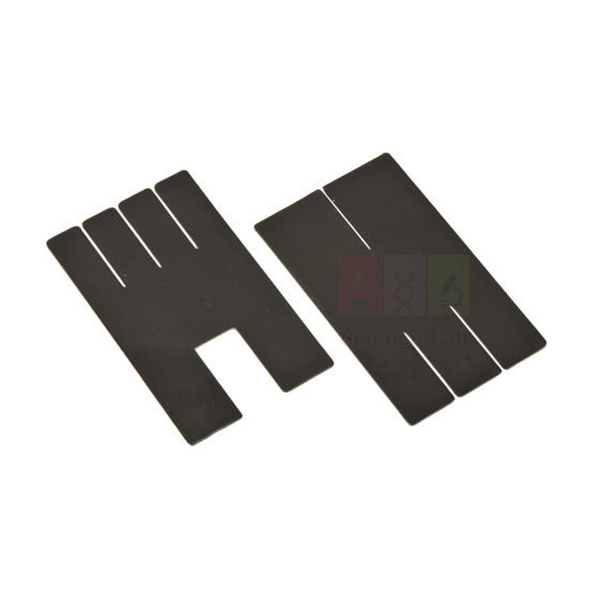
Raybox Slit Plates
Raybox Slit Plates (Product Code: SLE/PHY/285) is a pack of raybox accessories used to shape the lamp’s light into narrow rays for ray optics experiments in school physics laboratories. The pack holds 2 plates, each 84 mm long, 50 mm wide and 1 mm thick, so teachers can keep a spare with every raybox. It is supplied by Jain Scientific Equipments Pvt Ltd (ScienceLab), Ambala, India, for optics experiment kits in schools.
Specifications
| Parameter | Detail |
|---|---|
| Type | Accessories for a raybox |
| Pack size | Pack of 2 |
| Length | 84 mm |
| Width | 50 mm |
| Thickness | 1 mm |
| Product code | SLE/PHY/285 |
| Supplied by | Jain Scientific Equipments Pvt Ltd (ScienceLab), Ambala, India |
What Are Raybox Slit Plates Used For?
A raybox on its own gives a broad patch of light; a slit plate placed in the raybox opening turns it into thin, clearly defined rays that students can trace on paper. With those rays they study reflection at plane and curved mirrors, refraction through glass blocks and prisms, total internal reflection, and how converging and diverging lenses bend parallel rays to a focus. Clear, narrow rays make angle measurements with a protractor far more accurate.
Because each plate is only 1 mm thick, handle it by the edges, keep it flat and store the pair together so neither gets bent or scratched. Darkening the room slightly and placing the raybox close to the paper gives the sharpest rays. Thin accessories like these are easily mislaid in busy classes, so a spare pack per laboratory keeps ray optics lessons running.
What to Specify When Ordering
- Number of packs; each pack contains 2 slit plates.
- The raybox model you use, so we can confirm the 84 x 50 mm plates fit its openings.
- Whether rayboxes, lenses or glass blocks should be quoted as well.
Supplier
ScienceLab is the trading name of Jain Scientific Equipments Private Limited, located in Ambala, Haryana, India. The company supplies Raybox Slit Plates as spares for existing rayboxes and as part of complete ray optics sets for schools, colleges and dealers, and can check fit against your raybox model before quoting. Read more on our company profile.
Related Physics Lab Equipment
Items used with the Raybox Slit Plates:
- Raybox, 12V — ray box with front grooves for slit plates and lenses.
- Raybox Mirrored with Accessories — ray box with channels for slit plates and colour filters.
- Lenses Cylindrical Glass, Biconvex — converges the rays to show a focus.
- Prism – Glass Rectangular Block — refraction and lateral displacement experiments.
- Power Supply, Stepped — low-voltage supply for the raybox lamp.
Explore more optics items in Physics Lab Equipment.
Frequently Asked Questions
What size are the Raybox Slit Plates?
Each of the Raybox Slit Plates is 84 mm long, 50 mm wide and 1 mm thick. Check that your raybox opening takes plates of this size, or send us the raybox model and we will confirm the fit.
How many plates come in a pack of Raybox Slit Plates?
Raybox Slit Plates are supplied as a pack of 2. Order one pack per raybox to replace lost or damaged plates, or extra packs to keep spares in the laboratory.
What are Raybox Slit Plates used for?
Raybox Slit Plates fit in front of a raybox lamp to produce narrow rays of light. Students use these rays to trace reflection, refraction, total internal reflection and lens focusing on paper during ray optics practicals.
How many slits does each of the Raybox Slit Plates have?
The slit pattern of the Raybox Slit Plates is not listed in our current product details. If you need a particular number of rays, tell us through the contact page and we will confirm what is available.
Who supplies the Raybox Slit Plates?
Raybox Slit Plates are supplied by Jain Scientific Equipments Pvt Ltd (ScienceLab), Ambala, Haryana, India. We supply schools, colleges, institutions and dealers in India and international markets, as spares or with complete rayboxes.
Request a Quote
Request a price for Raybox Slit Plates through the contact page, or add them to the enquiry cart with your rayboxes and optics accessories.
Last updated: 24 September 2026
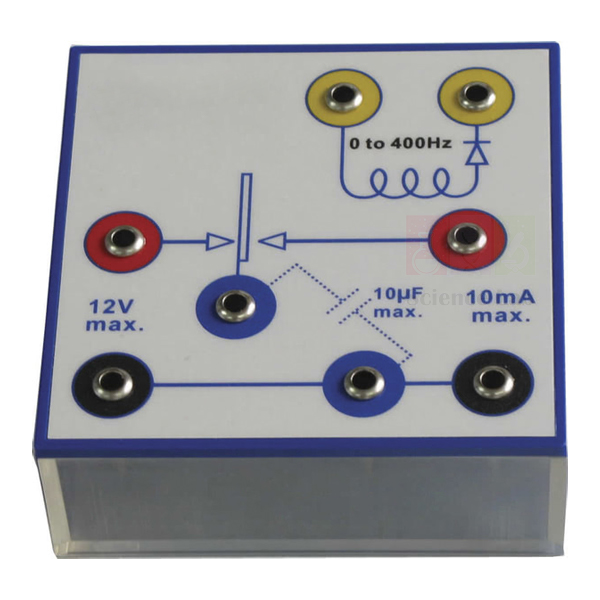
Reed Relay
Reed Relay (Product Code: SLE/PHY/286) is a single pole changeover switching unit used to charge and discharge a capacitor many times per second in school and college physics laboratories. Driven by a power signal generator, it changes over at 5 to 400 Hz, so students can find capacitance from a steady average current. It is supplied by Jain Scientific Equipments Pvt Ltd (ScienceLab), Ambala, India, for physics lab equipment buyers in India and international markets.
Specifications
| Parameter | Detail |
|---|---|
| Type | Single pole changeover reed relay |
| Switching rate | 5 to 400 changeovers per second when driven by a power signal generator |
| Coil drive | Coil operates at up to 400 Hz |
| Maximum contact rating | 12 V, 10 mA |
| Contact protection | Contact current-protected by a 12 ohm resistor |
| Main application | Repeated charge and discharge of parallel plate capacitors |
| Product code | SLE/PHY/286 |
| Supplied by | Jain Scientific Equipments Pvt Ltd (ScienceLab), Ambala, India |
What Is the Reed Relay Used For?
The reed relay is the switching heart of the classic vibrating-switch method for measuring capacitance. Its changeover contact connects a parallel plate capacitor to a DC supply, then discharges it through a sensitive current meter, once in every cycle of the drive signal. Because the capacitor charges and discharges f times per second, the meter shows a steady average current I = fCV, and students calculate C from their readings.
Changing the frequency on the signal generator, the plate separation or the plate area turns one set-up into a full graph-based investigation, including an estimate of the permittivity of free space. It suits senior secondary and undergraduate electricity practicals. Keep the charging circuit within the 12 V, 10 mA contact rating, start at a low switching rate and raise it gradually while watching for a stable meter reading.
What to Specify When Ordering
- Number of reed relay units, usually one per working group.
- Whether you also need a power signal generator to drive the relay coil.
- Parallel plate capacitor and a sensitive meter for the discharge current.
- Delivery location, so the quotation can include packing and freight.
Supplier
ScienceLab is the trading name of Jain Scientific Equipments Private Limited, a laboratory equipment company based in Ambala, Haryana. The company supplies this reed relay to schools, colleges, training institutes and dealers, and can combine it in one quotation with the signal generator, capacitor plates and meters needed for the same experiment. Read more about us on the company profile page.
Related Physics Lab Equipment
These items complete a capacitance practical built around the Reed Relay:
- Signal Generator and Amplifier — supplies the drive signal that sets the switching frequency.
- Demonstrative Plan Condenser/ Capacitor — parallel plate capacitor for charge and discharge measurements.
- Power Supply Variable — DC source for the charging voltage.
- Standard Digital Multimeter — checks the supply voltage and the average current.
- Simple Circuit Module Reed Relay — module-format reed relay for simple circuit work.
Browse the full Physics Lab Equipment range for more electricity apparatus.
Frequently Asked Questions
What does the Reed Relay do in a capacitance experiment?
The Reed Relay switches a capacitor between charging and discharging many times per second. Driven by a power signal generator at 5 to 400 Hz, it produces a steady average current, from which students calculate capacitance using the relation I = fCV.
What are the contact ratings of the Reed Relay?
The Reed Relay contact is rated at a maximum of 12 V and 10 mA, and it is current-protected by a 12 ohm resistor. Keeping the charging circuit within these limits protects the reed contact and keeps readings consistent.
What do I need to operate the Reed Relay?
The Reed Relay coil is driven by a power signal generator at up to 400 Hz. To complete the circuit you also need a DC supply for charging, a parallel plate capacitor and a sensitive current meter, all of which ScienceLab can quote together.
Who supplies the Reed Relay?
The Reed Relay is supplied by Jain Scientific Equipments Pvt Ltd, which trades as ScienceLab from Ambala, Haryana, India. It is offered to schools, colleges, institutions and dealers in India and international markets, alongside the matching signal generator and capacitor.
Can a calibration certificate be provided with the Reed Relay?
If your purchase needs any calibration or test document for the Reed Relay, please raise it with us through the contact page before ordering, and we will confirm what paperwork can accompany the supply.
What should a quotation request for the Reed Relay include?
State the number of Reed Relay units, whether you also need the signal generator, capacitor and meter, and your delivery location. With these details ScienceLab can prepare one quotation covering the complete capacitance practical.
Request a Quote
To order the Reed Relay, send your requirement through our contact page or add it to the enquiry cart and submit it for a quotation. We respond with supply details for single laboratories and bulk orders alike.
Last updated: 24 September 2026
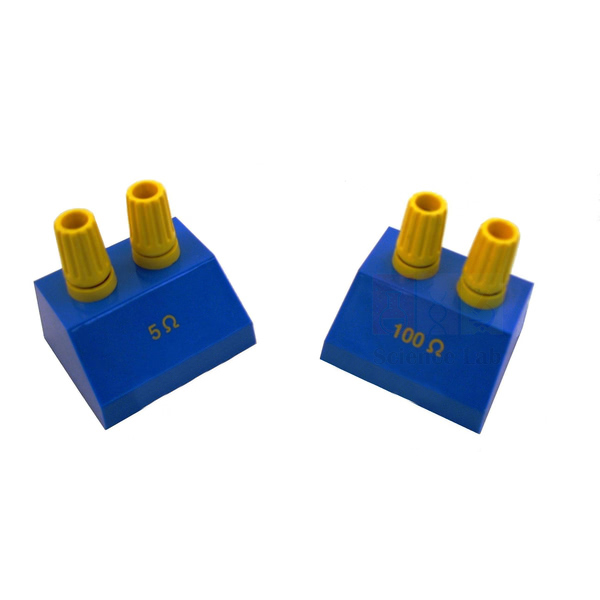
Resistance Coil
Resistance Coil (Product Code: SLE/PHY/287) is a 1 ohm resistance unit used to add a known resistance to a circuit in basic electrical experiments in schools and colleges. Instead of a bare resistor, the coil is built into a block with 4mm sockets, so students connect it quickly with standard leads, keeping no more than 0.7 V across it. It is supplied by Jain Scientific Equipments Pvt Ltd (ScienceLab), Ambala, India, for Ohm law experiment kits and general circuit work.
Specifications
| Parameter | Detail |
|---|---|
| Resistance | 1 ohm |
| Maximum voltage | 0.7 V |
| Connections | 4mm sockets |
| Format | Resistance unit in block form, used in place of a simple resistor |
| Application | Adding resistance to any circuit in basic electrical experiments |
| Product code | SLE/PHY/287 |
| Supplied by | Jain Scientific Equipments Pvt Ltd (ScienceLab), Ambala, India |
What Is the Resistance Coil Used For?
A 1 ohm coil is a convenient known resistance for introductory circuit work. Students place it in series with a cell and an ammeter to see how current changes, use it with a voltmeter to confirm Ohm’s law, or connect several units in series and parallel to compare combined resistance with the calculated value. Because the block takes 4mm plugs, a circuit can be built, changed and checked in minutes without soldering or loose wire ends.
A low value like 1 ohm is also useful as a current-sensing resistance: the voltage across it in volts equals the current through it in amperes. Keep the voltage across the coil to 0.7 V or less, which by Ohm’s law limits the current to about 0.7 A, and switch off between readings so the coil does not warm up and drift.
What to Specify When Ordering
- Number of 1 ohm Resistance Coil units per bench or per class set.
- Whether you also need 4mm connecting leads, meters or a low-voltage supply.
- Any other resistance values your practicals call for, so we can check what else is available.
Supplier
Jain Scientific Equipments Private Limited, trading as ScienceLab, supplies the Resistance Coil from Ambala, Haryana, to schools, colleges, institutes and dealers. The coil can be quoted as part of a complete electricity bench, together with meters, leads and resistance boxes, which saves buyers from sourcing each part separately. Company background is on our profile page.
Related Physics Lab Equipment
Use the Resistance Coil alongside these circuit items:
- Resistance Box — selectable resistance values when one fixed coil is not enough.
- Decade Resistance Box — wider range of values in single steps for comparison work.
- Rheostat — varies the current smoothly in the same circuit.
- Ammeter Voltmeter — measures current and voltage for Ohm’s law readings.
- Stackable Leads — connect the 4mm sockets to the rest of the circuit.
See all items in our Physics Lab Equipment category.
Frequently Asked Questions
What is the resistance value of the Resistance Coil?
The Resistance Coil has a value of 1 ohm. It is built into a block with 4mm sockets so it can be added to any basic electrical circuit, and several units can be combined in series or parallel.
What is the maximum voltage for the Resistance Coil?
The Resistance Coil is rated for a maximum of 0.7 V across it. With 1 ohm resistance, that corresponds to a current of about 0.7 A, so use a low-voltage supply or a series resistance to stay within the limit.
How is the Resistance Coil connected?
The Resistance Coil connects through 4mm sockets, so standard 4mm plug leads fit directly. This avoids soldering and loose wires, and lets students rebuild the circuit quickly between readings.
Who supplies the Resistance Coil?
The Resistance Coil is supplied by Jain Scientific Equipments Pvt Ltd (ScienceLab) of Ambala, Haryana, India. We supply schools, colleges, institutions and dealers across India and international markets, and can bundle the coil with meters and leads.
Is a calibration certificate available for the Resistance Coil?
Requirements for a calibration or test document with the Resistance Coil should be discussed with us before you order. Please describe what your institution needs through the contact page and we will reply with what can be provided.
Can the Resistance Coil be ordered in bulk for class sets?
Yes, the Resistance Coil can be quoted in class-set quantities for schools, colleges and dealers. Send the number of units and your delivery location, and we will include packing and freight in the quotation.
Request a Quote
Ask for a price on the Resistance Coil through the contact page, or place it in the enquiry cart with any other circuit items and send one enquiry for everything.
Last updated: 24 September 2026
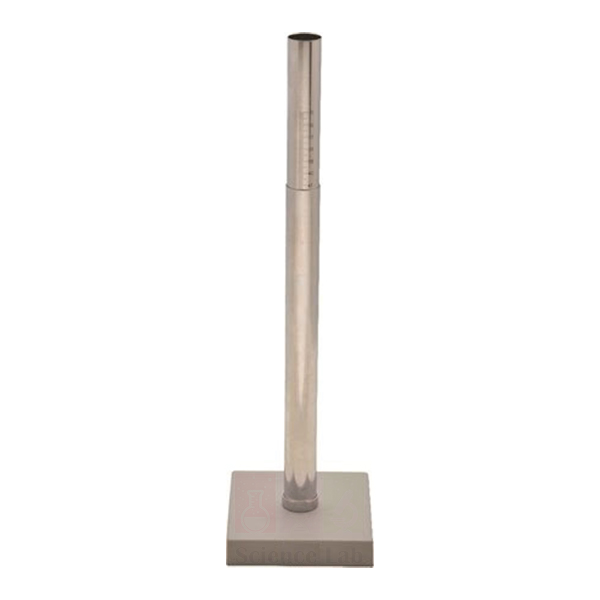
Resonance Apparatus with Brass Tube
Resonance Apparatus with Brass Tube (Product Code: SLE/PHY/288) is an air-column apparatus used to study sound resonance and estimate the speed of sound in school and college physics laboratories. Two metal tubes telescope into each other on a removable base, so students can set the air column anywhere from 300 mm to 530 mm. It is made by Jain Scientific Equipments Pvt Ltd (ScienceLab), an OEM manufacturer, at its own factory in Ambala, India.
Specifications
| Parameter | Detail |
|---|---|
| Tubes | Two metal tubes telescoping into each other (brass tube) |
| Air column length | Adjustable from 300 mm up to 530 mm by moving the outer tube |
| Mounting | Fitted on a removable base |
| Application | Resonance investigations in air columns |
| Product code | SLE/PHY/288 |
| Manufacturer | Jain Scientific Equipments Pvt Ltd (ScienceLab) — OEM |
| Country of origin | India (made in Ambala, Haryana) |
What Is the Resonance Tube Apparatus Used For?
Students hold a sounding tuning fork, or a small loudspeaker driven by a signal generator, just above the open end and slide the outer tube until the note swells to a clear maximum. That length marks a resonance of the air column. In a column closed at the lower end, the first resonance is close to a quarter of a wavelength plus a small end correction, so a known frequency leads to the wavelength and then to the speed of sound from v = fλ.
Repeating the measurement with several forks and plotting length against the reciprocal of frequency turns this resonance tube experiment kit into a graph-based practical that also yields the end correction. Because the length is changed by sliding metal tubes rather than by raising a water level, set-up is dry and quick. Approach each resonance from both directions, average the two positions and note the room temperature, since the speed of sound depends on it.
What to Specify When Ordering
- Number of Resonance Apparatus with Brass Tube sets, usually one per student group.
- Your sound source: tuning fork sets, or a signal generator with a loudspeaker.
- Whether the order is for your own laboratories or for resale as a dealer or importer.
OEM Manufacturer
ScienceLab is the trading name of Jain Scientific Equipments Private Limited, the original equipment manufacturer (OEM) of this resonance apparatus. The telescoping tubes and base are made and assembled at the company’s own licensed factory at Saha, Ambala, Haryana, India, instead of being bought in from a trader, and each order is supplied factory-direct to schools, colleges, institutions, dealers and importers.
For purchase files, the company is incorporated as Jain Scientific Equipments Private Limited (CIN U29309HR2020PTC087597) and produces this apparatus at 449, HSIIDC Industrial Area, Saha, Ambala, under Factory Licence AMB-ONLINE-CHD-J-414. Replacement tubes, bases and repeat orders are handled by the manufacturer itself, so just ask us. More about the company is on our profile page.
Related Physics Lab Equipment
Pair the Resonance Apparatus with Brass Tube with a sound source and supporting items:
- Tuning Fork Set, Steel — forks of known frequency for classic resonance readings.
- Tuning Fork Set, Aluminium — an alternative fork set for the same experiment.
- Signal Generator and Amplifier — drives a loudspeaker at any chosen frequency.
- Loudspeaker Unit — sound source placed over the open end of the tube.
- Resonance Tube Apparatus — another resonance tube design for comparison.
Explore more sound and wave apparatus in Physics Lab Equipment.
Frequently Asked Questions
What air column lengths does the Resonance Apparatus with Brass Tube cover?
The Resonance Apparatus with Brass Tube lets you set the air column anywhere from 300 mm up to 530 mm by sliding the outer tube. The continuous adjustment makes it easy to find a resonance position precisely.
How is the speed of sound measured with the Resonance Apparatus with Brass Tube?
With the Resonance Apparatus with Brass Tube, students find the air column length that gives the loudest sound for a known frequency. For a column closed at one end this length is about a quarter wavelength plus an end correction, and v = fλ then gives the speed of sound.
What sound source works with the Resonance Apparatus with Brass Tube?
Tuning forks of known frequency are the traditional source for the Resonance Apparatus with Brass Tube, while a loudspeaker driven by a signal generator lets students vary the frequency. Both are listed separately and can be added to your quotation.
Who manufactures the Resonance Apparatus with Brass Tube?
The Resonance Apparatus with Brass Tube is manufactured by Jain Scientific Equipments Pvt Ltd (ScienceLab) as the OEM, at its own licensed factory at Saha, Ambala, Haryana, India. Buyers deal directly with the manufacturer for quotations, repeat orders and replacement parts.
Is the base of the Resonance Apparatus with Brass Tube removable?
Yes, the Resonance Apparatus with Brass Tube is fitted on a removable base. The tubes can be taken off the base, which makes the apparatus easier to pack, store and move between laboratories.
Can the Resonance Apparatus with Brass Tube be supplied in bulk or for export?
Yes, the Resonance Apparatus with Brass Tube is supplied in quantity to schools, colleges, dealers and importers in India and international markets. Share the quantity and destination, and the quotation comes directly from the manufacturer in Ambala.
Request a Quote
Send your enquiry for the Resonance Apparatus with Brass Tube through the contact page or add it to the enquiry cart. Quotations come direct from the manufacturer, so pricing and supply details reach you without a middleman.
Last updated: 24 September 2026
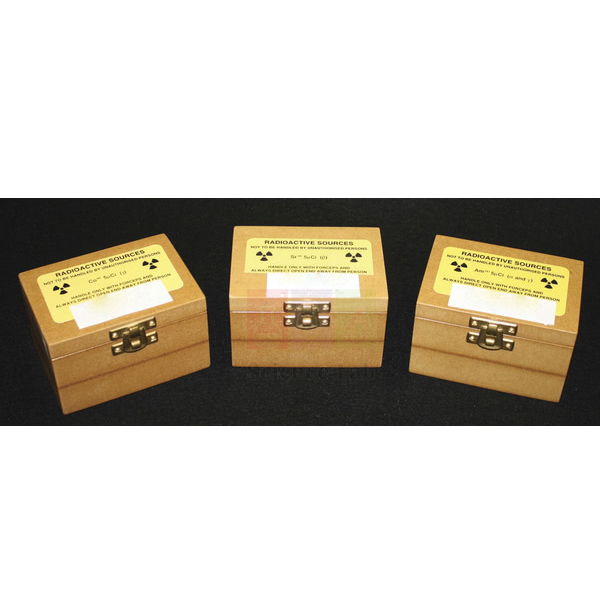
Sealed Radioactive Source, Cobalt
Sealed Radioactive Source, Cobalt (Product Code: SLE/PHY/289) is a 5 µCi (185 kBq) cobalt-60 teaching source used to demonstrate gamma radiation in school and college physics laboratories. An aluminium disc over the active material absorbs the beta particles, so only gamma rays leave the source, and the mount is colour-coded green. It is supplied by Jain Scientific Equipments Pvt Ltd (ScienceLab), Ambala, India, for nuclear physics lab equipment set-ups in India and international markets.
Specifications
| Parameter | Detail |
|---|---|
| Isotope | Cobalt-60 |
| Activity | 5 µCi (185 kBq) |
| Emission | Gamma only; an aluminium disc shields the beta particles |
| Half-life | 5.26 years |
| Construction | Active material enclosed in metal foil, fixed in a cylindrical mount |
| Stem | 4 mm diameter |
| Window protection | Wire gauze cap over the open window guards the foil against accidental damage |
| Identification | Nature and strength engraved on the mount; colour code green |
| Packing | Small lead castle in a labelled MDF storage box, 100 x 75 x 65 mm high |
| Documentation | Data sheet enclosed |
| Product code | SLE/PHY/289 |
| Supplied by | Jain Scientific Equipments Pvt Ltd (ScienceLab), Ambala, India |
What Is the Cobalt-60 Source Used For?
Because the beta component is filtered out, the cobalt source gives a clean gamma beam for the parts of a radioactivity course that alpha and beta sources cannot cover. With a Geiger-Muller tube and counter, students show that gamma rays pass through paper and aluminium almost unchanged and are reduced only gradually by thickening layers of lead. Moving the detector away in measured steps lets them test the inverse-square law, and a magnet placed in the beam shows that gamma rays, unlike beta particles, are not deflected.
Good practice follows the time, distance and shielding rule. Lift the source by its 4 mm stem with tongs, point the window away from people, take readings promptly, and return the source to its lead castle and labelled box straight after use. Keep a written log of each use, store the box in a locked cupboard, and remember that with a 5.26-year half-life the count rate drops noticeably over several years of teaching.
What to Specify When Ordering
- Quantity of cobalt-60 sources, and whether strontium or americium sources are needed as well.
- Any registration or authorisation reference your institution holds for sealed radioactive sources.
- Whether a GM tube holder, counter or scaler should be quoted with the source.
- Full delivery address and country, as transport rules for radioactive material vary.
Supplier
ScienceLab is the trading name of Jain Scientific Equipments Private Limited in Ambala, Haryana, India. The company sources this cobalt-60 teaching source for schools, colleges and institutes, and can quote it together with the detectors and counters used in the same practical. Because radioactive sources are controlled materials in most countries, we confirm documentation and delivery requirements with each buyer before supply. See our company profile for more about us.
Related Physics Lab Equipment
These items complete a radiation practical with the Sealed Radioactive Source, Cobalt:
- Sealed Radioactive Source, Strontium — beta source to contrast with the gamma rays.
- Sealed Radioactive Source, Americium — alpha source that completes the set of three radiations.
- Geiger Muller Tube Holder — holds the detector at a fixed height for distance readings.
- Scaler Timer — records counts over timed intervals for absorption graphs.
- Geiger Counter — checks background radiation and the storage area.
More nuclear and radiation apparatus is listed under Physics Lab Equipment.
Frequently Asked Questions
What radiation does the Sealed Radioactive Source, Cobalt emit?
The Sealed Radioactive Source, Cobalt emits gamma radiation only. Its cobalt-60 is covered by an aluminium disc that absorbs the beta particles, so the source is well suited to gamma penetration, lead absorption and inverse-square law experiments.
What are the activity and half-life of the Sealed Radioactive Source, Cobalt?
The Sealed Radioactive Source, Cobalt holds 5 µCi (185 kBq) of cobalt-60, which has a half-life of 5.26 years. Its activity therefore halves over that period, so note the date of receipt alongside the strength engraved on the mount.
How is the Sealed Radioactive Source, Cobalt identified and packed?
The Sealed Radioactive Source, Cobalt is colour-coded green, with its nature and strength engraved on the mount. It arrives in a small lead castle inside a labelled MDF storage box, 100 x 75 x 65 mm high, with a data sheet enclosed.
Is authorisation needed to buy the Sealed Radioactive Source, Cobalt?
Rules for holding a sealed source such as the Sealed Radioactive Source, Cobalt differ from country to country. Before ordering, check with your national radiation regulatory authority what your institution needs, and share those details with us through the contact page.
How should students handle the Sealed Radioactive Source, Cobalt?
The Sealed Radioactive Source, Cobalt should be moved only with tongs by its 4 mm stem, with the window pointed away from people. Never touch or press the gauze cap, keep exposure time short, and return the source to its lead castle immediately after readings.
Who supplies the Sealed Radioactive Source, Cobalt?
The Sealed Radioactive Source, Cobalt is supplied by Jain Scientific Equipments Pvt Ltd, trading as ScienceLab, from Ambala, Haryana, India. We quote it for schools, colleges and institutions in India and international markets, together with matching detectors and counters.
Request a Quote
Request pricing for the Sealed Radioactive Source, Cobalt through the contact page, or add it to the enquiry cart with your detector and counter. Include your delivery country and any authorisation reference so we can confirm supply terms.
Last updated: 24 September 2026
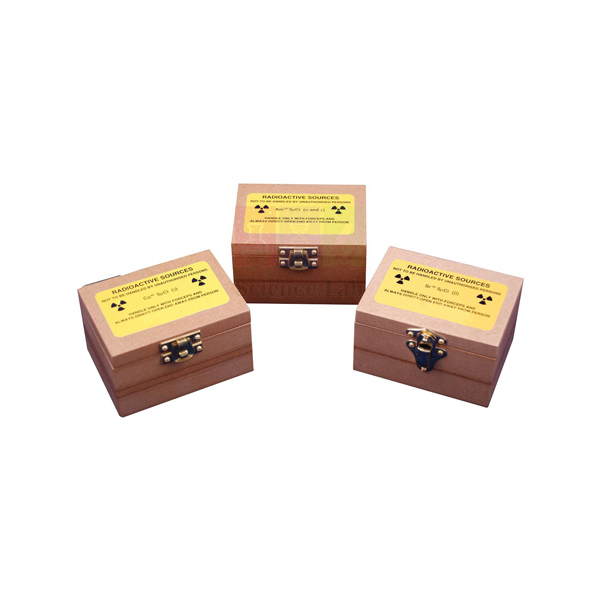
Sealed Radioactive Source, Strontium
Sealed Radioactive Source, Strontium (Product Code: SLE/PHY/290) is a 5 µCi (185 kBq) strontium-90 teaching source used for beta-particle experiments in school and college physics laboratories. Its strontium-90 sits in equilibrium with the daughter nuclide yttrium-90 inside a silver disc that lets most of the beta radiation escape, and the mount is colour-coded yellow. It is supplied by Jain Scientific Equipments Pvt Ltd (ScienceLab), Ambala, India, as part of a radiation experiment kit for institutions.
Specifications
| Parameter | Detail |
|---|---|
| Isotope | Strontium-90 in equilibrium with its daughter nuclide yttrium-90 |
| Activity | 5 µCi (185 kBq) |
| Emission | Beta |
| Half-life | 28 years (strontium-90); 64 hours (yttrium-90) |
| Active element | Incorporated in a silver disc that allows the major proportion of the beta radiation to escape; active material enclosed in metal foil |
| Mount | Cylindrical mount with a 4 mm diameter stem |
| Window protection | Wire gauze cap over the open window |
| Identification | Nature and strength engraved on the mount; colour code yellow |
| Storage | Small lead castle in a labelled MDF box, 100 x 75 x 65 mm high |
| Documentation | Data sheet enclosed with each source |
| Product code | SLE/PHY/290 |
| Supplied by | Jain Scientific Equipments Pvt Ltd (ScienceLab), Ambala, India |
What Is the Strontium-90 Source Used For?
The strontium source is the standard way to show how beta particles behave. Placed in front of a GM tube, it gives a count that paper barely changes but that falls steeply as aluminium sheets of increasing thickness are added, so students can plot absorption curves and estimate the range of the particles. Holding a strong magnet beside the beam bends the particles and moves the count, which demonstrates that beta radiation is charged.
The yttrium-90 daughter has a half-life of only 64 hours, so it stays in equilibrium with the strontium and the source decays at the 28-year rate of strontium-90. In practice the count rate changes very little over a school career, which suits long-term comparison of results. Use tongs, keep the open window facing away from the body, subtract the background count before every reading, and return the source to its lead castle as soon as the measurement is complete.
What to Specify When Ordering
- How many strontium-90 sources you need, and whether cobalt or americium sources are required too.
- Details of any authorisation your institution holds for keeping sealed sources.
- Detection equipment to include: GM tube holder, scaler timer or counter.
- Delivery address and country for the shipment.
Supplier
Jain Scientific Equipments Private Limited, which trades as ScienceLab, supplies the strontium-90 source from Ambala, Haryana, India to schools, colleges and research institutes. The company sources it for teaching use and checks the paperwork and transport conditions for each destination before confirming an order. Details of the company appear on our profile page.
Related Physics Lab Equipment
Buyers of the Sealed Radioactive Source, Strontium often add these items:
- Sealed Radioactive Source, Cobalt — gamma source for comparing penetrating power.
- Sealed Radioactive Source, Americium — alpha source for the short-range end of the comparison.
- Geiger Muller Tube Holder — keeps the detector aligned with the source window.
- Scaler Timer — counts pulses for each absorber thickness.
- Steel Horseshoe Magnet — deflects the beta particles in the magnetic deflection demonstration.
Find detectors and more apparatus in Physics Lab Equipment.
Frequently Asked Questions
What type of radiation comes from the Sealed Radioactive Source, Strontium?
The Sealed Radioactive Source, Strontium emits beta particles. Its strontium-90 and yttrium-90 are incorporated in a silver disc that allows the major proportion of the beta radiation to escape, which makes it the usual choice for beta absorption and deflection practicals.
How long does the Sealed Radioactive Source, Strontium last?
The Sealed Radioactive Source, Strontium decays with the 28-year half-life of strontium-90, while its yttrium-90 daughter has a 64-hour half-life and stays in equilibrium. The count rate therefore falls only slowly over years of classroom use.
What is the activity of the Sealed Radioactive Source, Strontium?
The Sealed Radioactive Source, Strontium contains 5 µCi (185 kBq) of strontium-90 in equilibrium with yttrium-90. The nature and strength are engraved on the mount, which is colour-coded yellow, and a data sheet comes with each source.
How is the Sealed Radioactive Source, Strontium stored?
The Sealed Radioactive Source, Strontium is supplied in a small lead castle inside a labelled MDF box, 100 x 75 x 65 mm high. Keep the box in a locked, marked store away from students, and log each time the source is taken out.
Do regulations apply to buying the Sealed Radioactive Source, Strontium?
Yes, sealed sources such as the Sealed Radioactive Source, Strontium are regulated in most countries. Confirm with your national radiation regulatory authority what your institution must hold, then send those details with your enquiry through the contact page.
Who supplies the Sealed Radioactive Source, Strontium?
The Sealed Radioactive Source, Strontium is supplied by Jain Scientific Equipments Pvt Ltd (ScienceLab), Ambala, Haryana, India. We supply institutions in India and international markets and can combine the source with GM tube holders and counters in one quotation.
Request a Quote
For a quotation on the Sealed Radioactive Source, Strontium, write to us via the contact page or add it to the enquiry cart. Mention the quantity, destination country and any detection equipment you need.
Last updated: 24 September 2026