- Physics Lab Equipment
- Chemistry Lab Equipment
- Biology Lab Equipment
- Anatomical Lab Equipment
- Learning
- Educational Lab Equipment
- Magnets
- Agriculture
- Astronomy
- Earth Science
- Geography Lab Equipment
- Safety Lab Coat
- Laboratory
- Meteorological
- Electricity & Magnetism
- Heat
- School Lab Equipment
- Lab Glassware
- Science Lab Equipment
- Tvet Lab Equipment
- Robotics Kits Supplier and Manufacturer for Schools India
- Math Lab Equipment Manufacturers and Exporters in Ambala
- STEM Kits Manufacturers and Supplier India
- Engineering Lab Equipment
- Hospital Lab Equipment
- Water, Sanitation & Hygiene Supplies
- Cold Chain, Solar & Communication Equipment
- Nutrition
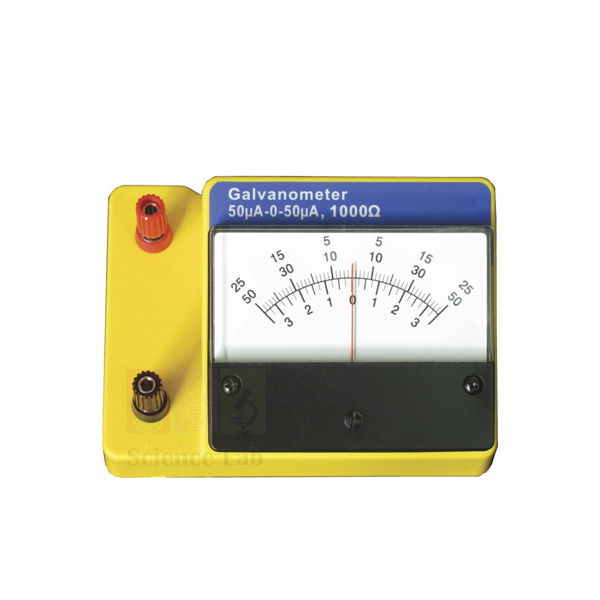
Galvanometer, Centre Zero Universal Meter
Galvanometer, Centre Zero Universal Meter (Product Code: SLE/PHY/182) is a sensitive moving coil galvanometer reading 50 µA-0-50 µA, used to detect very small currents and their direction in school and college physics practicals. Also called a universal galvanometer, it is electrically identical to the universal meter, with a 1000 ohm movement and diode protection against overload up to 12 V DC. It is supplied by Jain Scientific Equipments Pvt Ltd (ScienceLab), Ambala, India.
Specifications
| Parameter | Detail |
|---|---|
| Type | Centre zero universal meter (universal galvanometer) |
| Range | 50 µA-0-50 µA |
| Movement | Moving coil, 1000 ohm |
| Overload protection | Diode protection up to 12 V DC |
| AC use | Suitable as an indicator in slow AC |
| Electrical design | Identical to the universal meter |
| Product code | SLE/PHY/182 |
| Supplied by | Jain Scientific Equipments Pvt Ltd (ScienceLab), Ambala, India |
What Is the Centre Zero Universal Galvanometer Used For?
A 50 microamp range makes this meter respond to the tiny currents produced in induction experiments, and the centre zero shows at a glance which way each current flows. Because it works as an indicator in slow AC, it can follow a current that reverses slowly — for example a coil with a magnet swinging back and forth in front of it, where the needle moves left and right with every reversal.
The stated 1000 ohm movement and 50 microamp range also give students the two values they need to calculate a shunt for an ammeter or a series resistance for a voltmeter, a standard exercise in physics practical equipment CBSE syllabuses. The diode protection helps the meter survive wiring mistakes, but a high series resistance should still be used for first trials.
What to Specify When Ordering
- Number of meters, for example one per practical group.
- Whether you need this sensitive 50 µA centre-zero meter or a less sensitive 50-0-50 galvanometer.
- Any leads, coils or resistances to include for induction or meter-conversion practicals.
Supplier
ScienceLab is the trading name of Jain Scientific Equipments Private Limited, which supplies this universal galvanometer from Ambala, Haryana. The company sources sensitive meters of this kind for schools, universities, tender buyers and distributors in India and international markets, and can quote them alongside coils, magnets and leads.
Learn more about the company on the ScienceLab profile page.
Related Physics Lab Equipment
These items complete induction and meter experiments built around a sensitive galvanometer:
- Galvanometer 50-0-50mV — a less sensitive centre-zero meter for DC work.
- Apparatus for Studying the Production of Electricity by Induction — produces small induced currents to display.
- A.C. Generator — a source of alternating output to observe on a centre-zero scale.
- Standard Digital Multimeter — for checking readings after converting the galvanometer.
- Banana Plug Connectors Leads — leads for connecting the meter.
More instruments are listed under Physics Lab Equipment.
Frequently Asked Questions
How sensitive is the Galvanometer, Centre Zero Universal Meter?
The Galvanometer, Centre Zero Universal Meter reads 50 µA-0-50 µA with its zero at the centre of the scale, so it detects very small currents and shows their direction. Its moving coil movement is rated at 1000 ohm.
Can the centre zero universal meter be used on AC?
The centre zero universal meter is suitable as an indicator in slow AC, where the current reverses slowly enough for the pointer to follow. It is not meant for reading the value of fast-changing mains-frequency alternating current.
What overload protection does this galvanometer have?
The Galvanometer, Centre Zero Universal Meter has diode protection against overload up to 12 V DC. This lowers the risk of damage from wiring errors, but students should still start each circuit with a high resistance in series.
Can students convert this galvanometer into an ammeter or voltmeter?
Yes. With the stated 1000 ohm movement and 50 µA range, the Galvanometer, Centre Zero Universal Meter can be used in shunt and series-resistance conversion practicals. Ask us about suitable resistances when you enquire.
Who supplies the Galvanometer, Centre Zero Universal Meter?
The Galvanometer, Centre Zero Universal Meter is supplied by Jain Scientific Equipments Pvt Ltd (ScienceLab), Ambala, Haryana, India, to schools, colleges, institutions, dealers and export buyers in India and international markets.
What details should I send for a quotation?
For the Galvanometer, Centre Zero Universal Meter, send the quantity, any leads, coils or resistances to include, the delivery location, and any document requirements such as calibration paperwork, which we will discuss with you.
Request a Quote
Request pricing for the Galvanometer, Centre Zero Universal Meter through the contact page or place it in the enquiry cart together with the rest of your electricity bench items.
Last updated: 24 September 2026
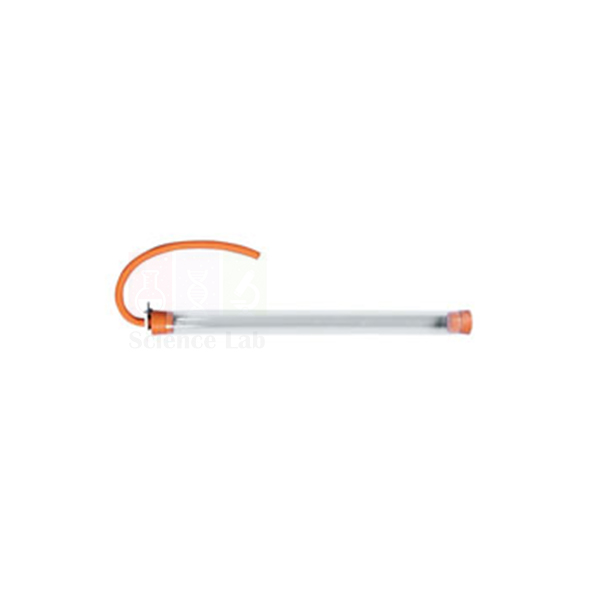
Guinea & Feather Apparatus
Guinea & Feather Apparatus (Product Code: SLE/PHY/183) is a glass-tube physics demonstration kit used to show that objects fall at the same rate in a vacuum, regardless of weight, in school and college classes. It consists of a 16 mm diameter glass tube 50 cm long, two rubber bungs and a 40 cm length of tube for connecting a vacuum pump. It is made by Jain Scientific Equipments Pvt Ltd (ScienceLab), an OEM manufacturer, at its own factory in Ambala, India.
Specifications
| Parameter | Detail |
|---|---|
| Tube | Glass, 16 mm diameter, 50 cm long |
| Stoppers | Two rubber bungs |
| Pump connection | 40 cm length of tube for connection to a vacuum pump |
| Demonstrates | Objects of different weight fall at the same rate in a vacuum |
| Extension study | Timing the fall of paper at different air pressures in the tube |
| Product code | SLE/PHY/183 |
| Manufacturer | Jain Scientific Equipments Pvt Ltd (ScienceLab) — OEM |
| Country of origin | India (made in Ambala, Haryana) |
What Is the Guinea and Feather Tube Used For?
Two objects with different weight and air resistance — for example a small mass and a feather or a piece of paper — are placed at the foot of the tube. After the air is pumped out, the tube is inverted and both objects drop back to the bottom together. Let the air back in, repeat, and the feather or paper trails behind, showing that air resistance, not weight, caused the difference.
For a deeper investigation, students can time the fall of a piece of paper at several different air pressures inside the tube and judge how air resistance changes the acceleration of an object under gravity. Check that both bungs are seated firmly and the connecting tube is airtight before pumping, invert the tube smoothly, and wear eye protection when working with glass under vacuum.
What to Specify When Ordering
- Whether a hand or electric vacuum pump should be quoted with the tube.
- Whether you need falling objects supplied or will use your own feather, paper and small mass — ask us to confirm.
- Number of apparatus sets, for teacher demonstration or group work.
- Any stopwatches needed for the timed air-pressure study.
OEM Manufacturer
ScienceLab is the trading name of Jain Scientific Equipments Private Limited (CIN U29309HR2020PTC087597), the OEM (original equipment manufacturer) of this guinea and feather apparatus. It is made and assembled at the company's licensed factory at 449, HSIIDC Industrial Area, Saha, Ambala, Haryana (Factory Licence AMB-ONLINE-CHD-J-414), and supplied factory-direct to schools, colleges, dealers and importers rather than through a trader.
If a glass tube or bung is damaged in use, replacement parts can be requested from the manufacturer itself — ask us about availability. Company details are on the ScienceLab profile.
Related Physics Lab Equipment
Items used with the guinea and feather tube in free-fall and air-resistance lessons:
- Vacuum Pump, Hand — a manual way to evacuate the tube.
- Vacuum Pump, Electric — for quicker evacuation in repeated demonstrations.
- Vacuum Tubing — spare tubing for pump connections.
- Stopwatch, Digital — times the fall at different air pressures.
- Apparatus for Demonstrating the Free Fall of Bodies — a companion free-fall demonstration.
Explore the wider Physics Lab Equipment range.
Frequently Asked Questions
What does the Guinea & Feather Apparatus consist of?
The Guinea & Feather Apparatus consists of a 16 mm diameter glass tube 50 cm long, fitted with two rubber bungs, and a 40 cm length of tube for connecting the apparatus to a vacuum pump.
Is a vacuum pump included with the Guinea & Feather Apparatus?
The Guinea & Feather Apparatus is listed as the tube, bungs and connecting tube, designed to be joined to a vacuum pump. If you need a pump, add a hand or electric vacuum pump to your enquiry and we will confirm the full scope.
What does the guinea and feather experiment prove?
The guinea and feather experiment proves that, in a vacuum, objects fall at the same rate whatever their weight. When air is present, the lighter object with more air resistance falls more slowly, showing the effect of air resistance.
Can the Guinea & Feather Apparatus be used for measurements?
Yes. With the Guinea & Feather Apparatus, students can time the fall of paper at different air pressures in the tube to gauge how air resistance affects the acceleration of an object under gravity.
Who manufactures the Guinea & Feather Apparatus?
The Guinea & Feather Apparatus is manufactured by Jain Scientific Equipments Pvt Ltd (ScienceLab) as the OEM at its own licensed factory in Saha, Ambala, Haryana, India, and quotations come straight from the manufacturer.
How should the glass tube be handled safely?
Handle the Guinea & Feather Apparatus glass tube with both hands, avoid knocking it while it is under vacuum, and wear eye protection. Release the vacuum slowly and store the tube where it cannot roll off the bench.
Request a Quote
For a price on the Guinea & Feather Apparatus, contact us through the contact page or add it to the enquiry cart. You receive the quotation directly from the manufacturer, including any pump or timer you add.
Last updated: 24 September 2026
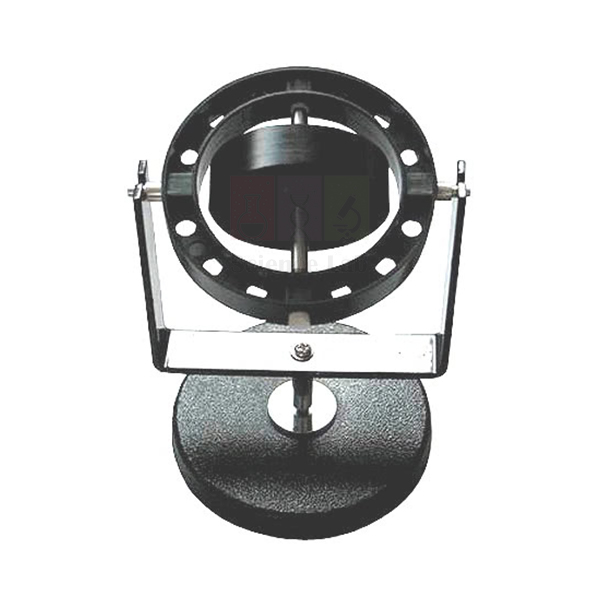
Gyroscope
Gyroscope (Product Code: SLE/PHY/184) is a spinning-wheel demonstration instrument used to show gyroscopic stability, precession and angular momentum in school and college mechanics lessons. This simple gyroscope keeps running for more than five minutes once set in motion, giving a whole class time to watch how it behaves. It is made by Jain Scientific Equipments Pvt Ltd (ScienceLab), an OEM manufacturer, at its own factory in Ambala, India, as part of its mechanics lab equipment range.
Key Details
| Parameter | Detail |
|---|---|
| Type | Simple demonstration gyroscope |
| Run time | More than five minutes once set in motion |
| Product code | SLE/PHY/184 |
| Manufacturer | Jain Scientific Equipments Pvt Ltd (ScienceLab) — OEM |
| Country of origin | India (made in Ambala, Haryana) |
What Is the Classroom Gyroscope Used For?
A fast-spinning gyroscope resists any attempt to tilt its axis. Supported at one end, it does not simply topple over; instead its axis swings slowly around the support, an effect called precession. As a demonstration model for the physics lab, it makes angular momentum visible and links classroom theory to bicycles, spinning tops, navigation instruments and spacecraft orientation.
Because this gyroscope runs for more than five minutes, students have time to observe how its steadiness changes as the wheel gradually slows, and to time the precession at different stages. Spin it up fully before each demonstration, keep the wheel and bearings free of dust, and store it where the axle cannot be knocked.
OEM Manufacturer
Jain Scientific Equipments Private Limited, which trades as ScienceLab, is the OEM (original equipment manufacturer) of this gyroscope and produces it at the company's licensed factory at Saha, Ambala, Haryana, India.
Schools, colleges, institutional buyers and distributors in India and international markets buy it factory-direct, so questions about repeat orders or replacement parts go straight to the people who make it — just ask us. More about the company is on the ScienceLab profile.
Related Physics Lab Equipment
These items support gyroscope and rotational-motion lessons:
- Gyroscope Experiment Manual — an engineering-lab gyroscope set-up for higher-level study.
- Apparatus Inertia — explores inertia, the idea behind the gyroscope's stability.
- Stopwatch, Digital — times the run-down and the precession.
- Newton's Pendulum (Newton's Cradle) — another classroom demonstration of momentum.
Find more in the Physics Lab Equipment category.
Frequently Asked Questions
How long does the Gyroscope keep spinning?
The ScienceLab Gyroscope runs for more than five minutes once it is set in motion. That gives enough time for a full class demonstration and for students to see how its behaviour changes as the wheel slows down.
What can students learn from the Gyroscope?
The Gyroscope shows that a spinning wheel resists changes to the direction of its axis, and that a supported gyroscope precesses instead of falling. These ideas explain angular momentum and the stability of bicycles, tops and navigation instruments.
How should the Gyroscope be looked after?
Keep the Gyroscope clean and dry, protect the wheel and bearings from dust, and store it so that the axle cannot be bent or knocked. Avoid dropping it while it is spinning.
Which classes is the Gyroscope suitable for?
The Gyroscope suits secondary-school demonstrations and introductory college mechanics lessons on rotation and angular momentum. For engineering-level measurements, ask us about the dedicated gyroscope apparatus in our Theory of Machines range.
Who manufactures the Gyroscope?
The Gyroscope (SLE/PHY/184) is manufactured by Jain Scientific Equipments Pvt Ltd (ScienceLab) as the OEM, at its own licensed factory in Saha, Ambala, Haryana, India, and is supplied factory-direct.
Can I order Gyroscopes for several schools at once?
Yes. ScienceLab quotes the Gyroscope for single schools, school chains, tender buyers and distributors in India and international markets. Share the quantity and delivery addresses and we will prepare a combined quotation.
Request a Quote
Ask for Gyroscope pricing via the contact page or add it to your enquiry cart. The quotation comes direct from the manufacturer, with no trading middleman in between.
Last updated: 24 September 2026
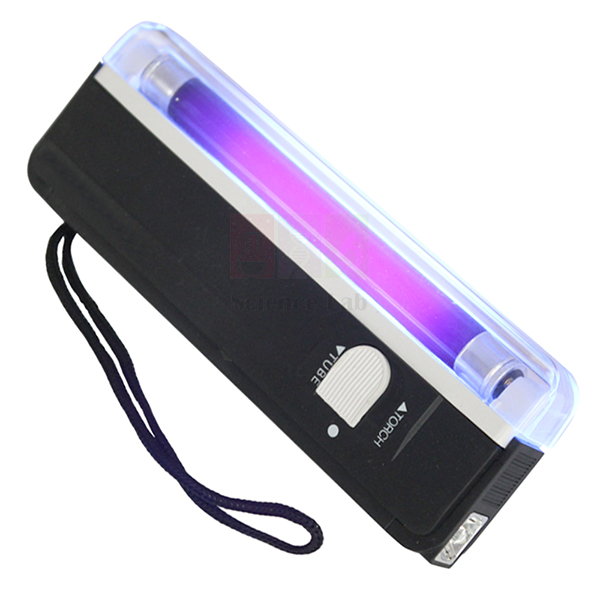
Hand Held UV Lamp
Hand Held UV Lamp (Product Code: SLE/PHY/185) is a battery-operated ultraviolet light source used to reveal fluorescent marks and traces in forensic science investigations and school science practicals. It is fitted with a 150 mm UV fluorescent tube and runs on 4 x AA cells (not supplied), so it can be carried to any bench or mock crime scene without a mains socket. It is supplied by Jain Scientific Equipments Pvt Ltd (ScienceLab), Ambala, India.
Specifications
| Parameter | Detail |
|---|---|
| Light source | 150 mm UV fluorescent tube |
| Power | Battery operated, 4 x AA cells (not supplied) |
| Application | Forensic science investigations |
| Product code | SLE/PHY/185 |
| Supplied by | Jain Scientific Equipments Pvt Ltd (ScienceLab), Ambala, India |
What Is the Hand Held UV Lamp Used For?
Many substances glow visibly when ultraviolet light falls on them. In a forensic science lesson, students use the lamp to reveal messages written in invisible ink, examine fluorescent fingerprint powders, check security printing on documents and compare traces collected from a mock crime scene. Physics teachers also use it to show fluorescence when explaining the part of the electromagnetic spectrum beyond violet light.
Darken the room for clearer results and hold the lamp close to the sample. Never look directly at the lit tube or shine it towards anyone's eyes, keep skin exposure short, and supervise students throughout. Take the cells out if the lamp will be stored for a long time.
What to Specify When Ordering
- Number of lamps, for example one per forensic investigation group.
- Whether AA cells should be quoted, since they are not supplied with the lamp.
- Any specific UV wavelength your procedure requires, so we can confirm suitability before you order.
Supplier
Jain Scientific Equipments Private Limited, trading as ScienceLab, supplies this hand held UV lamp from Ambala, Haryana. As a lab instruments supplier in India, the company sources items like this for schools, colleges, forensic science courses, dealers and importers, and ships to international markets.
You can read about the company on the ScienceLab profile.
Related Physics Lab Equipment
These kits and safety items are often used with a UV lamp in forensic lessons:
- Forensic Chemistry of Dusting for Fingerprints — fingerprint work that can be examined under the lamp.
- Forensic Science Lab Investigation — a complete investigation activity for student groups.
- Forensic Chemistry of Chromatography (Document Analysis) — document analysis that pairs with UV inspection.
- Safety Goggles — eye protection for the practical session.
See more items under Physics Lab Equipment.
Frequently Asked Questions
What batteries does the Hand Held UV Lamp need?
The Hand Held UV Lamp takes 4 x AA cells, which are not supplied with the lamp. Add AA cells to your enquiry if you want them quoted, or use your own stock of standard AA batteries.
What size is the tube in the Hand Held UV Lamp?
The Hand Held UV Lamp is fitted with a 150 mm UV fluorescent tube, which gives a strip of ultraviolet light wide enough to scan documents, fingerprint cards and small evidence items during forensic practicals.
What UV wavelength does the Hand Held UV Lamp emit?
The wavelength of the Hand Held UV Lamp is not stated in our current listing. If your forensic or chemistry procedure needs a particular UV band, contact us before ordering and we will confirm whether this lamp suits it.
Is the Hand Held UV Lamp safe for students to use?
The Hand Held UV Lamp should be used under teacher supervision. Students must not look directly at the lit tube or aim it at anyone's eyes, and should keep skin exposure brief and wear eye protection.
Who supplies the Hand Held UV Lamp?
The Hand Held UV Lamp is supplied by Jain Scientific Equipments Pvt Ltd (ScienceLab), Ambala, Haryana, India, to schools, colleges, forensic science courses, dealers and buyers in India and international markets.
Can the Hand Held UV Lamp be used outside forensic science?
Yes. Besides forensic science investigations, the Hand Held UV Lamp is handy for fluorescence demonstrations in physics and chemistry lessons, such as showing invisible-ink messages or fluorescent markers glowing under ultraviolet light.
Request a Quote
Price the Hand Held UV Lamp by writing to us through the contact page, or add it to the enquiry cart along with cells and forensic kits.
Last updated: 24 September 2026
Handwheel Drive Unit
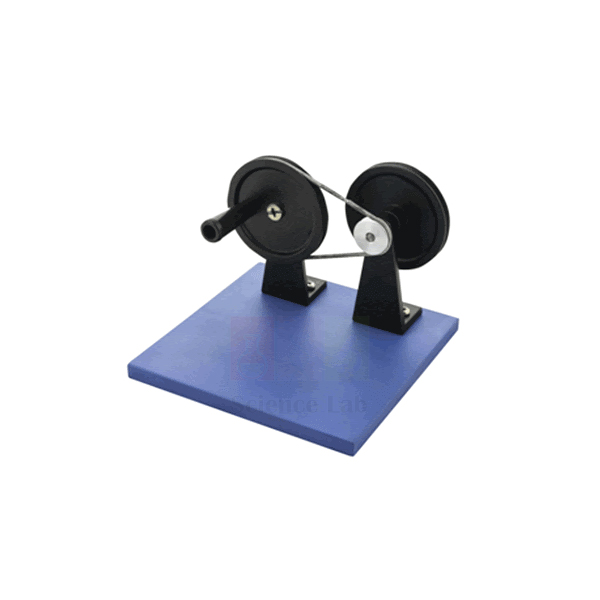
Handwheel Drive Unit (Product Code: SLE/PHY/186) is a hand-turned pulley drive used to power other units of an energy transfer kit, such as a dynamo, line shaft, flywheel or pump, in school physics lessons on energy conversion. Its 75 mm driving and output pulleys and 20 mm intermediate pulley give a step-up ratio of 3.75, on a 165 x 100 mm base. It is made by Jain Scientific Equipments Pvt Ltd (ScienceLab), an OEM manufacturer, at its own factory in Ambala, India.
Specifications
| Parameter | Detail |
|---|---|
| Kit | Unit of the Energy Transfer Kit (units available separately) |
| Driving pulley | 75 mm diameter |
| Output pulley | 75 mm diameter |
| Intermediate pulley | 20 mm diameter |
| Step-up ratio | 3.75 |
| Base size | 165 x 100 mm (common to all kit units) |
| Kit connections | 4 mm socket terminals on kit units where appropriate |
| Drives | Dynamo, line shafts, flywheels, pumps and similar units |
| Product code | SLE/PHY/186 |
| Manufacturer | Jain Scientific Equipments Pvt Ltd (ScienceLab) — OEM |
| Country of origin | India (made in Ambala, Haryana) |
What Is the Handwheel Drive Unit Used For?
Turning the handwheel converts a student's muscular work into rotational kinetic energy, and the pulley train steps the speed up by a ratio of 3.75 before passing it on. Coupled to a dynamo it shows kinetic energy becoming electrical energy; driving a flywheel it shows energy being stored as rotation; with a line shaft or pump it shows useful work being done. Every stage also loses some energy as heat and sound through friction, a useful discussion point.
Because all units of the Energy Transfer Kit share the same 165 x 100 mm base, they line up neatly on the bench and can be rearranged into different energy chains, making the set a flexible physics demonstration kit. Turn the handle at a steady speed, keep the pulley grooves clean, and line the unit up squarely with the unit it drives.
What to Specify When Ordering
- Which other Energy Transfer Kit units you need — dynamo, line shaft, flywheel or pump — since each is available separately.
- Number of handwheel units, for example one per energy chain or student group.
- Ask us to confirm what is included with each unit and how the units are linked.
OEM Manufacturer
Jain Scientific Equipments Private Limited, trading as ScienceLab, is the OEM (original equipment manufacturer) of this handwheel drive unit. It is produced at the company's own licensed factory at Saha, Ambala, Haryana, and supplied factory-direct to schools, colleges, institutions, dealers and importers in India and international markets.
Since every unit in the energy transfer range comes from the same maker, you can start with a few units and ask us later for matching additions. Company information is on the ScienceLab profile.
Related Physics Lab Equipment
These units and models extend energy-conversion lessons built around the handwheel:
- Line Shaft Unit — a line shaft of the kind the handwheel is designed to drive.
- Demonstration Dynamo Model — shows kinetic energy turning into electrical energy.
- Mini Motor Unit — demonstrates the reverse conversion, electrical to kinetic.
- Water Turbine with Dynamo Model — another energy-conversion demonstration for comparison.
Browse the full Physics Lab Equipment range.
Frequently Asked Questions
What is the step-up ratio of the Handwheel Drive Unit?
The Handwheel Drive Unit has a step-up ratio of 3.75. Its driving and output pulleys are both 75 mm in diameter and the intermediate pulley is 20 mm in diameter, so the drive runs faster than the handwheel is turned.
What can the Handwheel Drive Unit drive?
The Handwheel Drive Unit is designed for driving a dynamo, line shafts, flywheels, pumps and similar units of the Energy Transfer Kit, so students can follow energy from muscular effort to electrical, stored or useful mechanical energy.
Is the Handwheel Drive Unit sold on its own?
Yes. The Handwheel Drive Unit is one of several Energy Transfer Kit units that are available separately. You can order it alone or together with other units, and we will confirm the contents of each in the quotation.
What size base does the Handwheel Drive Unit have?
The Handwheel Drive Unit sits on a 165 x 100 mm base, the same base measurement used by all units of the Energy Transfer Kit, so the units line up neatly when set out on a bench.
Who manufactures the Handwheel Drive Unit?
The Handwheel Drive Unit is manufactured by Jain Scientific Equipments Pvt Ltd (ScienceLab) as the OEM, at its own licensed factory in Saha, Ambala, Haryana, India, and is supplied direct from the factory.
What should a quotation request for this unit include?
For the Handwheel Drive Unit, tell us how many units you need, which other Energy Transfer Kit units to add, and the delivery location in India or abroad, so we can prepare one complete quotation.
Request a Quote
Get a price for the Handwheel Drive Unit through the contact page or the enquiry cart. The quotation is prepared by the manufacturer itself and can cover the other energy transfer units you need.
Last updated: 24 September 2026
Heat Absorption & Radiation Comparator
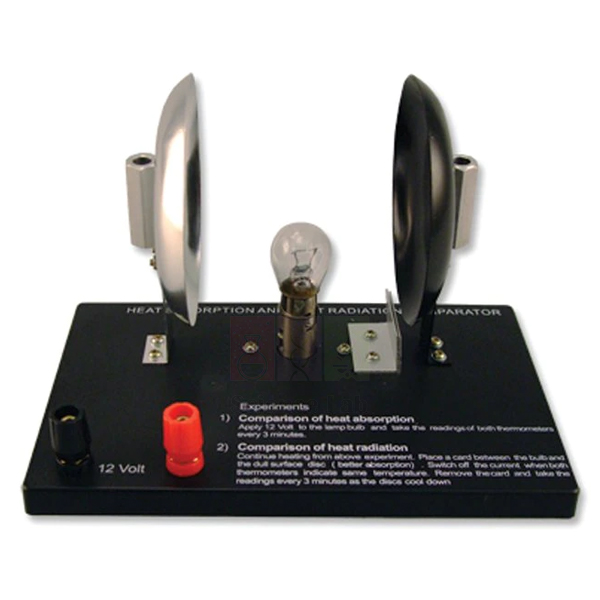
Heat Absorption & Radiation Comparator (Product Code: SLE/PHY/187) is a thermal radiation demonstration used to compare how a black surface and a shiny metal surface absorb and give out heat in school physics lessons. A 12 V bulb serves as the heat source for two parabolic metal bodies, one finished black and one shiny, each fitted with a thermometer holder. It is made by Jain Scientific Equipments Pvt Ltd (ScienceLab), an OEM manufacturer, at its own factory in Ambala, India.
Specifications
| Parameter | Detail |
|---|---|
| Heat source | 12 V bulb |
| Test bodies | 2 parabolic metal bodies — one black, one shiny metal |
| Temperature readings | 2 thermometer holders attached to the bodies |
| Thermometers | Not included |
| Instructions | Included |
| Demonstrates | Heat absorption and radiation by black versus shiny surfaces |
| Product code | SLE/PHY/187 |
| Manufacturer | Jain Scientific Equipments Pvt Ltd (ScienceLab) — OEM |
| Country of origin | India (made in Ambala, Haryana) |
What Is the Heat Radiation Comparator Used For?
With the bulb switched on, students record both thermometer readings at regular intervals and find that the black body warms up faster, because a dull black surface absorbs radiant heat better than a shiny one. After the bulb is switched off, the readings show the black body also cooling faster, since good absorbers are also good radiators. It is a compact radiation experiment kit for classes in India studying heat transfer.
The result explains everyday choices such as black-painted solar water heater panels and shiny insulating surfaces. For fair results, use two matching thermometers, start both bodies at room temperature, keep the set-up away from draughts, and power the bulb from a suitable 12 V supply rather than the mains.
What to Specify When Ordering
- Two thermometers, since they are not included — tell us if you want them quoted.
- A 12 V supply for the bulb, if your lab does not already have one.
- Number of comparators, for a teacher demonstration or several student groups.
OEM Manufacturer
Jain Scientific Equipments Private Limited trades as ScienceLab and is the OEM (original equipment manufacturer) of this comparator, which it makes at its own licensed factory at Saha, Ambala, Haryana. The company is a registered MSME with manufacturing as its major activity (Udyam UDYAM-HR-01-0003714), and export consignments are shipped under Importer-Exporter Code AAECJ8618A issued by the DGFT.
Schools, colleges, dealers and importers in India and international markets order it direct from the factory rather than through a trader. Company background is on the ScienceLab profile.
Related Physics Lab Equipment
These items help complete heat radiation practicals:
- Battery Eliminator 12 Volt — a possible 12 V source for the bulb; ask us to confirm suitability.
- Immersion Thermometer — thermometers for the two holders.
- Leslie's Cube — compares radiation from different surfaces at the same temperature.
- Radiation Kit — further experiments on thermal radiation.
More heat apparatus is listed in Physics Lab Equipment.
Frequently Asked Questions
What does the Heat Absorption & Radiation Comparator include?
The Heat Absorption & Radiation Comparator includes a 12 V bulb heat source, two parabolic metal bodies (one black, one shiny) with two thermometer holders attached, and instructions. Thermometers are not included.
Do I need to buy thermometers separately?
Yes. Thermometers are not included with the Heat Absorption & Radiation Comparator, so you will need two for the attached holders. Tell us if you would like matching thermometers added to your quotation.
What power supply does the comparator need?
The Heat Absorption & Radiation Comparator uses a 12 V bulb as its heat source, so it should be run from a suitable 12 V supply, never directly from the mains. Ask us to quote a supply if you need one.
What result should students expect from the comparator?
With the Heat Absorption & Radiation Comparator, the black body normally heats up faster than the shiny body and also cools faster afterwards, showing that dull black surfaces are better absorbers and better radiators of heat.
Who manufactures the Heat Absorption & Radiation Comparator?
The Heat Absorption & Radiation Comparator is manufactured by Jain Scientific Equipments Pvt Ltd (ScienceLab) as the OEM, at its own licensed factory in Saha, Ambala, Haryana, India.
Can ScienceLab export the comparator?
Yes. ScienceLab supplies the Heat Absorption & Radiation Comparator to schools and dealers in India and international markets, handling exports under its Importer-Exporter Code. Share the quantity and destination to receive a quotation.
Request a Quote
To price the Heat Absorption & Radiation Comparator, use the contact page or add it to the enquiry cart. Quotes come direct from the manufacturer and can include thermometers and a 12 V supply.
Last updated: 24 September 2026

Heat Sensitive Paper
Heat Sensitive Paper (Product Code: SLE/PHY/188) is a thermochromic paper used to show temperature differences as colour changes in school science lessons on heat, insulation and body temperature. Each pack holds 40 A4 sheets in four colour pairs, and the paper reacts even to the warmth of a hand, so results are visible at once. It is supplied by Jain Scientific Equipments Pvt Ltd (ScienceLab), Ambala, India.
Specifications
| Parameter | Detail |
|---|---|
| Type | Thermochromic heat sensitive paper |
| Pack size | 40 A4 sheets |
| Colours | Four: blue/white, purple/pink, pink/white and green/yellow |
| Response | Changes colour as temperature rises, even from the heat of a hand |
| Topics | Temperature, insulation and body temperature |
| Product code | SLE/PHY/188 |
| Supplied by | Jain Scientific Equipments Pvt Ltd (ScienceLab), Ambala, India |
What Is Heat Sensitive Paper Used For?
Press a palm onto a sheet and a coloured handprint appears, strongest where the skin is warmest — an instant way to talk about body temperature. Wrap strips around containers of warm water covered with different materials and the colour change shows which material insulates better. Laid over a warm object, a sheet maps the hotter and cooler areas, making the paper a low-cost addition to any heat energy science kit.
Cut sheets into strips so one pack can serve several groups, and use the four colour pairs to tell different trials apart. Keep unused sheets flat, dry and away from direct sunlight and heaters, and never hold the paper near a flame or a very hot surface.
What to Specify When Ordering
- Number of packs, each containing 40 A4 sheets.
- Any specific colour-change temperature your activity needs — ask us to confirm before ordering.
- Thermometers or heat apparatus you want quoted in the same order.
Supplier
ScienceLab, the trading name of Jain Scientific Equipments Private Limited, supplies heat sensitive paper from Ambala, Haryana, to primary and secondary schools, teacher training institutes, dealers and importers in India and international markets.
Because it is a classroom consumable, it is often ordered with thermometers and heat apparatus so a whole heat topic arrives in one delivery. Read more on the ScienceLab profile.
Related Physics Lab Equipment
These items fit the same heat and insulation lessons:
- Apparatus Heat/Thermal Conductivity — a conduction experiment to pair with colour-change observations.
- Heat Transfer Kit — a broader kit for heat transfer lessons.
- Digital Thermometer — gives numerical readings to compare with the colour changes.
Explore more in Physics Lab Equipment.
Frequently Asked Questions
How many sheets are in a pack of Heat Sensitive Paper?
A pack of Heat Sensitive Paper contains 40 A4 sheets, supplied across four colour pairs. The sheets can be cut into smaller strips so that one pack covers several student groups or repeated experiments.
What colours does the Heat Sensitive Paper come in?
Heat Sensitive Paper is supplied in four colour pairs: blue/white, purple/pink, pink/white and green/yellow. Using different pairs helps students tell separate trials apart when comparing temperatures or insulating materials.
How warm does Heat Sensitive Paper need to be to change colour?
Heat Sensitive Paper changes colour as its temperature rises, and even the heat of a hand is enough to see a change. The exact change temperature is not stated in our listing, so contact us if you need that value.
What experiments can students do with Heat Sensitive Paper?
Students use Heat Sensitive Paper to investigate temperature, compare insulating materials and look at body temperature, for example by making handprints or wrapping strips around warm containers covered with different materials.
Who supplies Heat Sensitive Paper?
Heat Sensitive Paper is supplied by Jain Scientific Equipments Pvt Ltd (ScienceLab), Ambala, Haryana, India, to schools, colleges, dealers and importers in India and international markets as a classroom consumable.
Can schools order Heat Sensitive Paper in bulk?
Yes. Schools and dealers can order Heat Sensitive Paper in multiple packs of 40 A4 sheets. Tell us the number of packs and the delivery location, and we will send a quotation.
Request a Quote
Request a price for Heat Sensitive Paper through the contact page or add packs to the enquiry cart with your other heat apparatus.
Last updated: 24 September 2026
Hero Engine
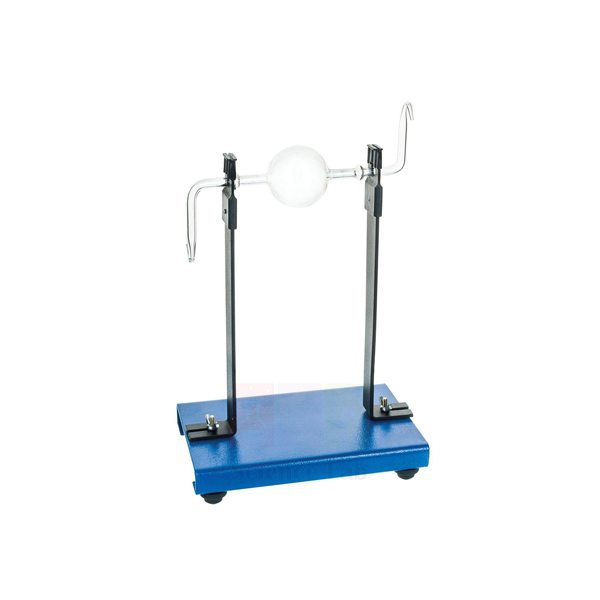
Hero Engine (Product Code: SLE/PHY/189) is a glass model of the steam engine invented by Hero of Alexandria in about 60 AD, used to demonstrate energy transformation and Newton's third law in physics lessons. Heated by a Bunsen burner (not supplied), it spins as steam jets out of its nozzles, working in a similar way to a rocket engine. It is made by Jain Scientific Equipments Pvt Ltd (ScienceLab), an OEM manufacturer, at its own factory in Ambala, India.
Specifications
| Parameter | Detail |
|---|---|
| Type | Glass model of Hero's steam engine |
| Original design | Hero of Alexandria, about 60 AD |
| Heat source | Bunsen burner (not supplied) |
| Principle | Steam jets from the nozzles create a turning force about the long axis of the glassware (Newton's third law) |
| Demonstrates | Thermal energy to kinetic energy; aspects of Newton's laws of motion; rocket-style propulsion |
| Product code | SLE/PHY/189 |
| Manufacturer | Jain Scientific Equipments Pvt Ltd (ScienceLab) — OEM |
| Country of origin | India (made in Ambala, Haryana) |
What Is the Hero Engine Used For?
Heat from the burner turns the water inside the glass vessel into steam, which escapes through the nozzles as fast jets. Those jets carry momentum, and by Newton's third law — action and reaction are equal and opposite — they push the nozzles backwards, producing a turning movement that makes the whole glass apparatus rotate. The model is one of the earliest machines to turn thermal energy into kinetic energy.
As a demonstration model for the physics lab, it links ancient engineering to modern rockets and jet propulsion. Heat it gently, never let it boil dry, keep students clear of the steam jets, wear eye protection, and allow the glass to cool fully before handling or refilling.
What to Specify When Ordering
- Whether a Bunsen burner and gas tubing should be quoted, since the burner is not supplied.
- Number of Hero engines, for a teacher demonstration or several groups.
- Any safety goggles needed for students watching the demonstration.
OEM Manufacturer
The glass Hero engine is produced by Jain Scientific Equipments Private Limited, which trades as ScienceLab and is the OEM (original equipment manufacturer), at its licensed factory at Saha, Ambala, Haryana, India. Schools, colleges, dealers and importers in India and international markets buy it straight from the maker.
Glass apparatus can break in everyday use, so replacement engines can be requested from the manufacturer directly — just ask us. See the ScienceLab profile for company background.
Related Physics Lab Equipment
These items are needed or useful when running the Hero engine demonstration:
- Bunsen Burner — the heat source the engine needs.
- Bunsen Burner Tubing — connects the burner to the gas supply.
- Gas Lighter, Piezo Electric — lights the burner without matches.
- Safety Goggles — eye protection near hot glass and steam.
- Steam Engine Model — a later steam engine design for comparison.
See more demonstrations in Physics Lab Equipment.
Frequently Asked Questions
How does the Hero Engine work?
In the Hero Engine, heated water turns to steam that escapes through the nozzles as jets. By Newton's third law, the jets push the nozzles backwards, creating a turning force about the long axis so the glass apparatus rotates.
Is a Bunsen burner included with the Hero Engine?
No. The Hero Engine is heated by a Bunsen burner, which is not supplied with it. Add a Bunsen burner, gas tubing and a lighter to your enquiry if your lab needs them, and we will include them in the quotation.
What topics does the Hero Engine teach?
The Hero Engine teaches the transformation of thermal energy into kinetic energy, aspects of Newton's laws of motion, especially action and reaction, and the basic principle behind rocket engines, all in one short demonstration.
Who invented the original Hero engine?
The original engine was invented by Hero of Alexandria in about 60 AD. The ScienceLab Hero Engine is a glass model of that design and represents an early example of a machine converting thermal energy into kinetic energy.
Who manufactures the Hero Engine?
The Hero Engine (SLE/PHY/189) is manufactured by Jain Scientific Equipments Pvt Ltd (ScienceLab) as the OEM, at its own licensed factory in Saha, Ambala, Haryana, India, and is quoted direct from the factory.
What safety precautions apply to the Hero Engine?
When using the Hero Engine, heat gently, never let it boil dry, keep faces and hands away from the steam jets, and wear eye protection. Let the glass cool completely before touching, refilling or packing it away.
Request a Quote
Ask for a Hero Engine price through the contact page or use the enquiry cart. Your quotation comes direct from the manufacturer and can include burners and safety goggles.
Last updated: 24 September 2026