- Physics Lab Equipment
- Chemistry Lab Equipment
- Biology Lab Equipment
- Anatomical Lab Equipment
- Learning
- Educational Lab Equipment
- Magnets
- Agriculture
- Astronomy
- Earth Science
- Geography Lab Equipment
- Safety Lab Coat
- Laboratory
- Meteorological
- Electricity & Magnetism
- Heat
- School Lab Equipment
- Lab Glassware
- Science Lab Equipment
- Tvet Lab Equipment
- Robotics Kits Supplier and Manufacturer for Schools India
- Math Lab Equipment Manufacturers and Exporters in Ambala
- STEM Kits Manufacturers and Supplier India
- Engineering Lab Equipment
- Hospital Lab Equipment
- Water, Sanitation & Hygiene Supplies
- Cold Chain, Solar & Communication Equipment
- Nutrition
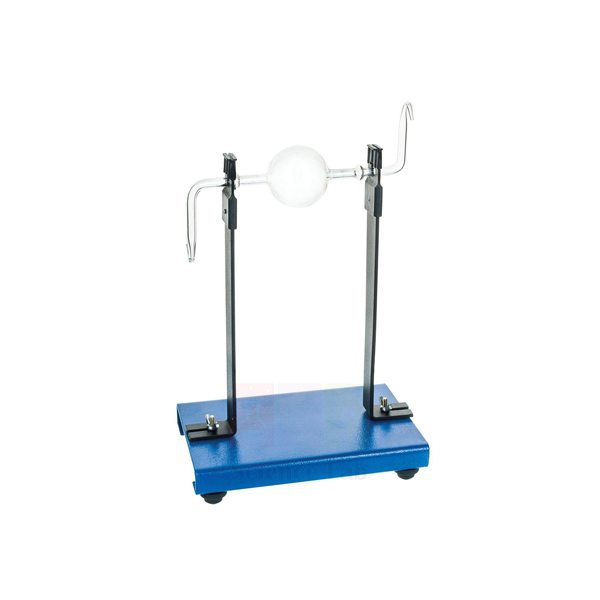
Hero Engine
Hero Engine (Product Code: SLE/PHY/189) is a glass model of the steam engine invented by Hero of Alexandria in about 60 AD, used to demonstrate energy transformation and Newton's third law in physics lessons. Heated by a Bunsen burner (not supplied), it spins as steam jets out of its nozzles, working in a similar way to a rocket engine. It is made by Jain Scientific Equipments Pvt Ltd (ScienceLab), an OEM manufacturer, at its own factory in Ambala, India.
Specifications
| Parameter | Detail |
|---|---|
| Type | Glass model of Hero's steam engine |
| Original design | Hero of Alexandria, about 60 AD |
| Heat source | Bunsen burner (not supplied) |
| Principle | Steam jets from the nozzles create a turning force about the long axis of the glassware (Newton's third law) |
| Demonstrates | Thermal energy to kinetic energy; aspects of Newton's laws of motion; rocket-style propulsion |
| Product code | SLE/PHY/189 |
| Manufacturer | Jain Scientific Equipments Pvt Ltd (ScienceLab) — OEM |
| Country of origin | India (made in Ambala, Haryana) |
What Is the Hero Engine Used For?
Heat from the burner turns the water inside the glass vessel into steam, which escapes through the nozzles as fast jets. Those jets carry momentum, and by Newton's third law — action and reaction are equal and opposite — they push the nozzles backwards, producing a turning movement that makes the whole glass apparatus rotate. The model is one of the earliest machines to turn thermal energy into kinetic energy.
As a demonstration model for the physics lab, it links ancient engineering to modern rockets and jet propulsion. Heat it gently, never let it boil dry, keep students clear of the steam jets, wear eye protection, and allow the glass to cool fully before handling or refilling.
What to Specify When Ordering
- Whether a Bunsen burner and gas tubing should be quoted, since the burner is not supplied.
- Number of Hero engines, for a teacher demonstration or several groups.
- Any safety goggles needed for students watching the demonstration.
OEM Manufacturer
The glass Hero engine is produced by Jain Scientific Equipments Private Limited, which trades as ScienceLab and is the OEM (original equipment manufacturer), at its licensed factory at Saha, Ambala, Haryana, India. Schools, colleges, dealers and importers in India and international markets buy it straight from the maker.
Glass apparatus can break in everyday use, so replacement engines can be requested from the manufacturer directly — just ask us. See the ScienceLab profile for company background.
Related Physics Lab Equipment
These items are needed or useful when running the Hero engine demonstration:
- Bunsen Burner — the heat source the engine needs.
- Bunsen Burner Tubing — connects the burner to the gas supply.
- Gas Lighter, Piezo Electric — lights the burner without matches.
- Safety Goggles — eye protection near hot glass and steam.
- Steam Engine Model — a later steam engine design for comparison.
See more demonstrations in Physics Lab Equipment.
Frequently Asked Questions
How does the Hero Engine work?
In the Hero Engine, heated water turns to steam that escapes through the nozzles as jets. By Newton's third law, the jets push the nozzles backwards, creating a turning force about the long axis so the glass apparatus rotates.
Is a Bunsen burner included with the Hero Engine?
No. The Hero Engine is heated by a Bunsen burner, which is not supplied with it. Add a Bunsen burner, gas tubing and a lighter to your enquiry if your lab needs them, and we will include them in the quotation.
What topics does the Hero Engine teach?
The Hero Engine teaches the transformation of thermal energy into kinetic energy, aspects of Newton's laws of motion, especially action and reaction, and the basic principle behind rocket engines, all in one short demonstration.
Who invented the original Hero engine?
The original engine was invented by Hero of Alexandria in about 60 AD. The ScienceLab Hero Engine is a glass model of that design and represents an early example of a machine converting thermal energy into kinetic energy.
Who manufactures the Hero Engine?
The Hero Engine (SLE/PHY/189) is manufactured by Jain Scientific Equipments Pvt Ltd (ScienceLab) as the OEM, at its own licensed factory in Saha, Ambala, Haryana, India, and is quoted direct from the factory.
What safety precautions apply to the Hero Engine?
When using the Hero Engine, heat gently, never let it boil dry, keep faces and hands away from the steam jets, and wear eye protection. Let the glass cool completely before touching, refilling or packing it away.
Request a Quote
Ask for a Hero Engine price through the contact page or use the enquiry cart. Your quotation comes direct from the manufacturer and can include burners and safety goggles.
Last updated: 24 September 2026