- Physics Lab Equipment
- Chemistry Lab Equipment
- Biology Lab Equipment
- Anatomical Lab Equipment
- Learning
- Educational Lab Equipment
- Magnets
- Agriculture
- Astronomy
- Earth Science
- Geography Lab Equipment
- Safety Lab Coat
- Laboratory
- Meteorological
- Electricity & Magnetism
- Heat
- School Lab Equipment
- Lab Glassware
- Science Lab Equipment
- Tvet Lab Equipment
- Robotics Kits Supplier and Manufacturer for Schools India
- Math Lab Equipment Manufacturers and Exporters in Ambala
- STEM Kits Manufacturers and Supplier India
- Engineering Lab Equipment
- Hospital Lab Equipment
- Water, Sanitation & Hygiene Supplies
- Cold Chain, Solar & Communication Equipment
- Nutrition
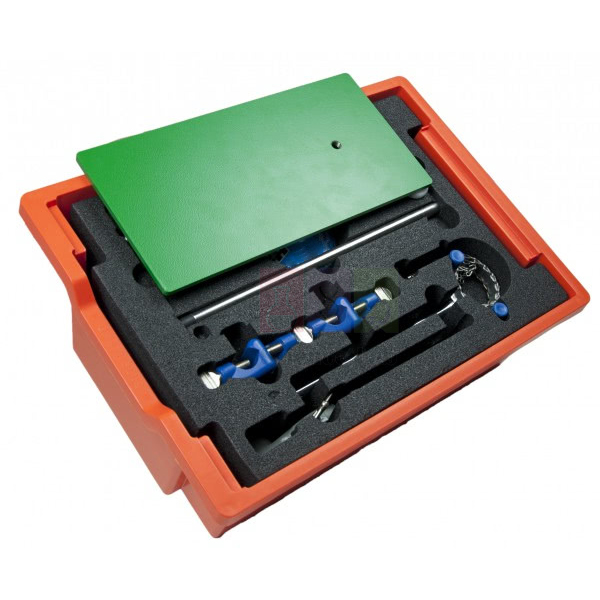
Solar Bio Fuel Supplement
Solar Bio Fuel Supplement (Product Code: SLE/PHY/206) is an extension box of accessories used to complete the Solar Bio Fuel Large biofuel experiment set with a stand, clamps, a Bunsen burner, an AV-Module and test leads. It suits schools and colleges that own or are buying Bio Fuel Large; no chemicals are included, and air shipments are sent without the Bunsen burner. It is supplied by Jain Scientific Equipments Pvt Ltd (ScienceLab), Ambala, India.
Specifications
| Parameter | Detail |
|---|---|
| Purpose | Extension box with accessories for Solar Bio Fuel Large |
| Stand parts | 1 x stand base plate, 1 x stand rod 60cm, 1 x universal stand clamp, 2 x double clamp, 1 x chain clamp |
| Heat source | 1 x Bunsen burner (not sent with air shipments) |
| Electrical | 1 x AV-Module |
| Test leads | 2 x black 25 cm, 2 x red 25 cm |
| Chemicals | Not included |
| Product code | SLE/PHY/206 |
| Supplied by | Jain Scientific Equipments Pvt Ltd (ScienceLab), Ambala, India |
What Is the Solar Bio Fuel Supplement Used For?
A biofuel practical needs more than glassware: the flask, distilling head and condenser have to be clamped firmly over a heat source, and the electrical side of the experiment needs a measuring module and leads. This box supplies exactly those support items for Bio Fuel Large — a base plate and 60cm rod to build the stand, a universal clamp, two double clamps and a chain clamp to hold the glassware, a Bunsen burner for heating, and an AV-Module with red and black test leads for the electrical connections.
These lab equipment accessories turn the set into a complete bench station. If your order travels by air, the Bunsen burner will not be in the box, so plan a burner and gas connection locally. No chemicals are included either, so arrange the substances for your experiments before the first lesson.
What to Specify When Ordering
- The number of supplement boxes, matching your Solar Bio Fuel Large sets
- The shipping mode, since air shipments are sent without the Bunsen burner
- Any chemicals or a separate burner you want quoted, as neither is in an air-shipped box (ask us)
Supplier
The Solar Bio Fuel Supplement is supplied by Jain Scientific Equipments Private Limited, whose trading name is ScienceLab, to schools, colleges, dealers and importers in India and international markets. It can be quoted on its own for an existing Bio Fuel Large set, or together with a new set so both arrive in one shipment. Company background is on the ScienceLab company profile.
Related Physics Lab Equipment
These items are used with the supplement box or replace parts not sent by air:
- Solar Bio Fuel Large — the biofuel experiment set this box extends
- Bunsen Burner — a burner to source separately when shipping by air
- Bunsen Burner Tubing — the gas connection for the burner
- Retort Stand — an additional stand for larger glassware set-ups
- Standard Digital Multimeter — an extra meter for electrical readings
Explore more in Physics Lab Equipment.
Frequently Asked Questions
What is the Solar Bio Fuel Supplement for?
The Solar Bio Fuel Supplement is an extension box with accessories for Solar Bio Fuel Large. It adds a stand base plate, a 60cm stand rod, clamps, a Bunsen burner, an AV-Module and red and black test leads to that experiment set.
Are chemicals included in the Solar Bio Fuel Supplement?
No. The Solar Bio Fuel Supplement does not include any chemicals. Substances needed for the biofuel experiments must be sourced separately; ask us which ones you need and for batch dates, as shelf life depends on the chemical and its storage.
Is the Bunsen burner sent with every Solar Bio Fuel Supplement?
The Solar Bio Fuel Supplement includes one Bunsen burner, but air shipments are sent without it. If your order travels by air, arrange a burner locally or ask us about supplying one by another route.
Which stand parts and clamps are in the Solar Bio Fuel Supplement?
The Solar Bio Fuel Supplement contains one stand base plate, one 60cm stand rod, one universal stand clamp, two double clamps and one chain clamp, giving a complete support set for clamping glassware during the experiments.
Who supplies the Solar Bio Fuel Supplement?
The Solar Bio Fuel Supplement is supplied by Jain Scientific Equipments Pvt Ltd (ScienceLab), Ambala, Haryana, India, to schools, colleges, dealers and importers in India and international markets, either alone or with a Solar Bio Fuel Large set.
What should a quotation request for the supplement box include?
A quotation request for the Solar Bio Fuel Supplement should state the quantity, whether Solar Bio Fuel Large is being ordered too, the shipping mode (air shipments exclude the Bunsen burner) and the delivery location.
Request a Quote
Send your Solar Bio Fuel Supplement enquiry through our contact page, or add it to the enquiry cart with the Bio Fuel Large set it completes.
Last updated: 24 September 2026
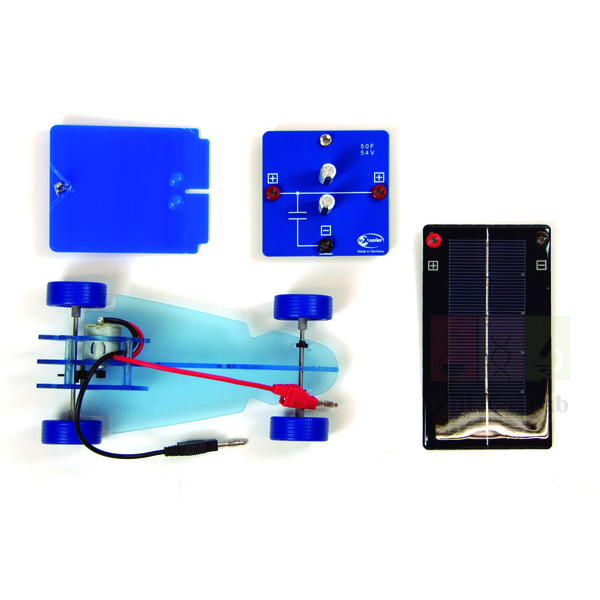
Solar EMobility Basic
Solar EMobility Basic (Product Code: SLE/PHY/207) is an electric-mobility experiment kit used to let students drive an electric model car from a supercapacitor or directly from a solar module in primary and junior high school science lessons. It brings energy storage and an electric vehicle together in one kit, with a 2.5 V, 420 mA solar module and a 5.0F/5.4V capacitor module, and works alongside the Solar-Minikit Basic or Solar-Kit Basic. It is supplied by Jain Scientific Equipments Pvt Ltd (ScienceLab), Ambala, India.
Specifications
| Parameter | Detail |
|---|---|
| Solar module | 2.5 V, 420 mA |
| Capacitor module | 5.0F / 5.4V (supercapacitor) |
| Vehicle | Electric model car, powered by the supercapacitor or directly by the solar module in sunlight |
| Expansion | Combined with Solar-H2 Basic, a fuel cell car can be built |
| Also needed | Solar-Minikit Basic (primary school) or Solar-Kit Basic (junior high school), each containing the necessary accessories |
| Product code | SLE/PHY/207 |
| Supplied by | Jain Scientific Equipments Pvt Ltd (ScienceLab), Ambala, India |
Components:
- 1 x solar module 2.5 V, 420 mA
- 1 x capacitor module 5.0F/5.4V
- 1 x electric model car
- 1 x insert EMobility basic
- 1 x layout diagram EMobility Basic
- 1 x info sheet initial startup
- 1 x carton
What Is the Solar EMobility Basic Used For?
Students experience electric mobility close up. In one run they store energy in the capacitor module and watch the model car race across the classroom on that stored charge; in another they connect the solar module and drive the car straight from sunlight. Comparing the two raises the key questions of electric transport — why a vehicle needs storage, what happens when a cloud passes, and how storage and generation work together. As a solar energy science kit, India’s primary and junior high classes can use it to introduce these ideas with simple, illustrative experiments.
For solar runs, work outdoors or in strong direct light, as the module depends on sunlight. Observe the polarity marked on the capacitor module and never charge it beyond its 5.4V rating. The layout diagram and start-up info sheet show how the parts fit together with your base kit.
What to Specify When Ordering
- The number of Solar EMobility Basic kits required
- Which base kit you have or need: Solar-Minikit Basic for primary school or Solar-Kit Basic for junior high school
- Whether you plan to build a fuel cell car with Solar-H2 Basic (ask us)
Supplier
Solar EMobility Basic is supplied by Jain Scientific Equipments Private Limited, the company that trades as ScienceLab, to schools, STEM centres, dealers and importers in India and international markets. It can be quoted together with the base kit your school needs, so the EMobility components arrive ready to use. Schools registering a new vendor can use the supplying company’s details: CIN U29309HR2020PTC087597 and GSTIN 06AAECJ8618A1ZT. Further information is on the ScienceLab company profile.
Related Physics Lab Equipment
These kits complete or extend Solar EMobility Basic:
- Solar Minikit Basic — the base kit needed for primary school use
- Solar Kit Basic — the base kit needed for junior high school use
- Solar EMobility Large — a follow-on kit on battery technologies
- Solar EMobility Ready-To-Go — a case kit covering many storage types
- Solar Photovoltaic Basic — an introduction to solar electricity
See the full Physics Lab Equipment range.
Frequently Asked Questions
What else do I need to use Solar EMobility Basic?
Solar EMobility Basic needs one base kit in addition: the Solar-Minikit Basic for primary school use or the Solar-Kit Basic for junior high school use. Each of these contains the necessary accessories to work with the EMobility components.
How is the model car in Solar EMobility Basic powered?
The electric model car in Solar EMobility Basic can run from the 5.0F/5.4V capacitor module, which stores energy so the car can cross the classroom, or directly from the 2.5 V, 420 mA solar module when it is in sunlight.
Can a fuel cell car be built with Solar EMobility Basic?
Yes. When Solar EMobility Basic is combined with Solar-H2 Basic, a fuel cell car can be built. Ask us about Solar-H2 Basic availability if you want to extend the kit in this direction.
What is in the Solar EMobility Basic box?
Solar EMobility Basic contains a solar module (2.5 V, 420 mA), a capacitor module (5.0F/5.4V), an electric model car, an insert, a layout diagram and an info sheet for initial start-up, all packed in a carton.
Which age group is Solar EMobility Basic suitable for?
Solar EMobility Basic is intended for primary school when used with the Solar-Minikit Basic, and for junior high school when used with the Solar-Kit Basic. Its illustrative experiments teach the basics of energy storage and electric vehicles.
Who supplies Solar EMobility Basic?
Solar EMobility Basic is supplied by Jain Scientific Equipments Pvt Ltd (ScienceLab), Ambala, Haryana, India, to schools, dealers and importers in India and international markets, and can be quoted together with the base kit it needs.
Request a Quote
Ask for a Solar EMobility Basic quotation through our contact page, or add it to the enquiry cart with your chosen base kit.
Last updated: 24 September 2026
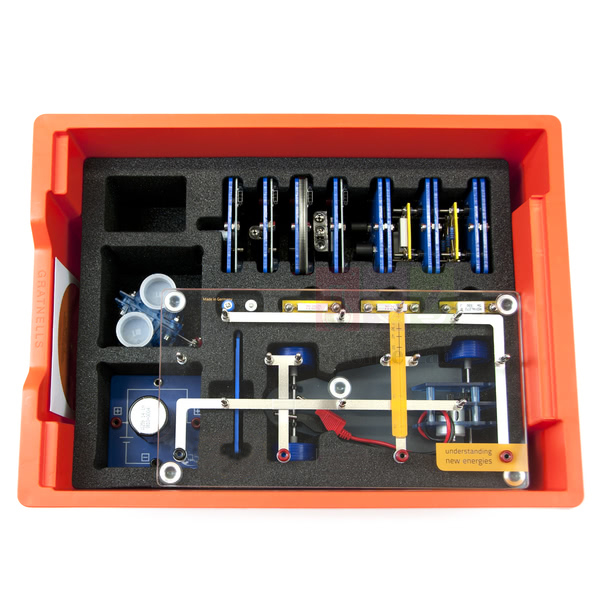
Solar EMobility Large
Solar EMobility Large (Product Code: SLE/PHY/208) is a battery-technology experiment kit used to teach the physical and technical foundations and applications of different battery types, with an electric model car to explore electric mobility, in secondary school and college labs. Students analyse NiMH, NiZn and LiFePo cells, a capacitor module and a reversible fuel cell in qualitative and quantitative experiments on dimensioning, life expectancy and charging methods. It is supplied by Jain Scientific Equipments Pvt Ltd (ScienceLab), Ambala, India.
Specifications
| Parameter | Detail |
|---|---|
| Subject | Physical and technical foundations and applications of different battery technologies |
| Storage types included | NiMH (3xAAA module and a single AAA cell), NiZn AAA, LiFePo AAA, capacitor module, reversible fuel cell |
| Load and circuit parts | Potentiometer module 110 Ohm Pro; resistor module (triple) Pro; resistor plug elements 1 Ohm, 10 Ohm (x2) and 100 Ohm |
| Vehicle | Electric model car |
| Topics | Dimensioning and application of battery types, life expectancy, charging methods |
| Expandable with | A lithium-polymer battery module and a lead battery module |
| Extras needed (not included) | AV-Module, Charger Module, digital multimeter, test leads red 50 cm, black 50 cm, red 25 cm and black 25 cm |
| Product code | SLE/PHY/208 |
| Supplied by | Jain Scientific Equipments Pvt Ltd (ScienceLab), Ambala, India |
Components:
- Storage modules and cells: 1 x battery module NiMH 3xAAA Pro, 1 x battery module holder 1xAAA Pro, 1 x NiMH battery AAA, 1 x NiZn-battery AAA, 1 x LiFePo-battery AAA, 1 x capacitor module Pro, 1 x reversible fuel cell, 1 x distilled water (100 ml)
- Load and circuit modules: 1 x potentiometer module 110 Ohm Pro, 1 x resistor module (triple) Pro, 1 x resistor plug element 1 Ohm, 2 x resistor plug element 10 Ohm, 1 x resistor plug element 100 Ohm, 1 x Solar-Base unit EMobility
- Vehicle: 1 x electric model car
- Storage and documents: 1 x box, 1 x lid for tray, 1 x insert 4E energy storage box (Energiespeicherbox), 1 x packing layout plan (Einräumplan) EMobility Large, 1 x info sheet initial startup
What Is the Solar EMobility Large Used For?
The kit makes battery chemistry measurable. Using the potentiometer module and resistor plug elements as defined loads, students record how each storage type behaves under current, compare the cells with the capacitor and the reversible fuel cell, and discuss which technology suits which job — the dimensioning question that engineers face when they design an electric vehicle or store renewable electricity. Life expectancy and charging methods are treated in the same practical way, and the electric model car shows the result on the move.
As a physics experiment kit for school and college labs, it needs the listed extras for quantitative work, so plan the AV-Module, Charger Module, multimeter and test leads before the first lesson. Reversible fuel cells of this kind work with distilled water, which is why 100 ml is part of the kit; top up only with distilled water.
What to Specify When Ordering
- The number of Solar EMobility Large kits
- Which listed extras to quote: AV-Module, Charger Module, digital multimeter and the four test leads
- Whether you want the lithium-polymer and lead battery modules that expand the kit (ask us)
Supplier
Jain Scientific Equipments Private Limited, known to customers as ScienceLab, supplies Solar EMobility Large to schools, colleges, polytechnics, dealers and importers in India and international markets. It can be quoted with its listed extras and expansion modules so a laboratory receives a working set in one delivery. The ScienceLab company profile gives more background.
Related Physics Lab Equipment
These kits and instruments go with Solar EMobility Large:
- Standard Digital Multimeter — a meter for the digital multimeter listed as an extra
- Solar EMobility Ready-To-Go — the case version of the battery-technology topic
- Solar EMobility Basic — an introductory e-mobility kit for younger classes
- Solar H2 Ready-To-Go — more on hydrogen and fuel cells
- Solar Smart Grid Ready-To-Go — storage within a renewable electricity grid
Browse all Physics Lab Equipment.
Frequently Asked Questions
Which battery types are included in Solar EMobility Large?
Solar EMobility Large includes a NiMH 3xAAA battery module, a single NiMH AAA battery, a NiZn AAA battery, a LiFePo AAA battery, a capacitor module and a reversible fuel cell, so students can compare several storage technologies side by side.
What extras are needed for Solar EMobility Large?
Solar EMobility Large lists these extras as needed: an AV-Module, a Charger Module, a digital multimeter and four test leads (red and black, in 25 cm and 50 cm lengths). Include them in your enquiry if you want them priced together.
Can Solar EMobility Large be expanded?
Yes. Solar EMobility Large is expandable with a lithium-polymer battery module and a lead battery module, which add two further storage types to the experiments. Ask us about these modules when you request a quotation.
What topics does Solar EMobility Large teach?
Solar EMobility Large covers the dimensioning and application of different battery types, their life expectancy and charging methods, and electric mobility with a model car, linking all of these to the storage problems of renewable energy.
Who supplies Solar EMobility Large?
Solar EMobility Large is supplied by Jain Scientific Equipments Pvt Ltd (ScienceLab), Ambala, Haryana, India, to schools, colleges, dealers and importers in India and international markets, together with its listed extras when requested.
What should a quotation request for Solar EMobility Large include?
A quotation request for Solar EMobility Large should give the number of kits, which extras and expansion modules to include, and the delivery location, so that one offer covers everything needed to run the experiments.
Request a Quote
Request a quotation for Solar EMobility Large through our contact page, or add it to the enquiry cart with the extras you need.
Last updated: 24 September 2026
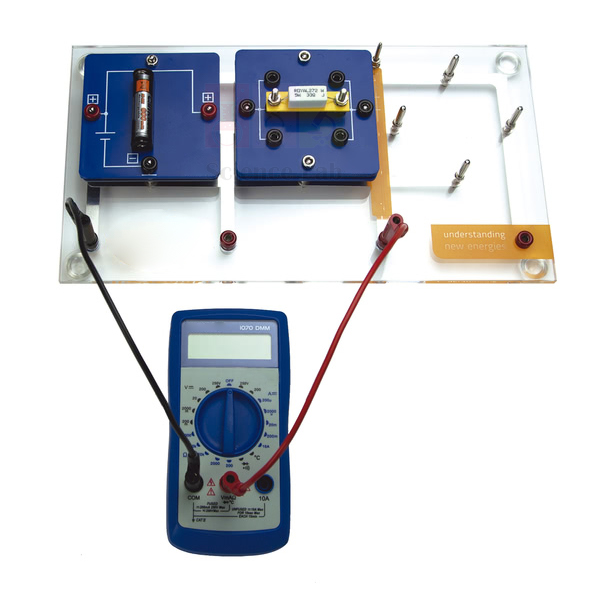
Solar EMobility Ready-To-Go
Solar EMobility Ready-To-Go (Product Code: SLE/PHY/209) is a portable battery-technology experiment case used to teach the foundations and applications of energy storage, from Ohm’s law to fuel cells, in secondary school, college and teacher-training labs. Eight different battery types, including a lithium-polymer battery, a capacitor and a reversible fuel cell, can each run the included electric car, and an integrated Charger Module keeps the batteries ready for use. It is supplied by Jain Scientific Equipments Pvt Ltd (ScienceLab), Ambala, India.
Specifications
| Parameter | Detail |
|---|---|
| Subject | Physical and technical foundations and applications of different battery technologies |
| Storage types | Eight different battery types, including NiMH, NiZn, LiFePo, lead and lithium-polymer batteries, a capacitor and a reversible hydrogen fuel cell |
| Electric car | Can be run with all included storage types |
| Charging | Integrated Charger Module keeps batteries ready to use and lets charging methods be studied |
| Measurement and loads | AV-Module, potentiometer module 110 Ohm Pro, resistor module (triple) Pro, resistor plug elements 1 Ohm, 10 Ohm (x2) and 100 Ohm |
| Use | Flexible and location-independent; no additional equipment required |
| Product code | SLE/PHY/209 |
| Supplied by | Jain Scientific Equipments Pvt Ltd (ScienceLab), Ambala, India |
Experiments:
- Circuit basics: Ohm’s law; series connection and parallel connection of ohmic resistances
- Capacitor: the charging process and the discharge process of a capacitor
- I-V characteristics of the single NiMH, triple NiMH, NiZn, LiFePo, lead and lithium-polymer battery modules
- The charging process of the NiMH, NiZn, LiFePo, lead and lithium-polymer batteries; the discharging process of a battery module
- Voltage sources: nominal voltage and capacity; four-terminal sensing; internal resistance; series connection of voltage sources
- Battery module performance: capacitance, energy density, Ri efficiency and total efficiency
- Temperature-dependent behaviour of the lithium-polymer cell
- Hydrogen: hydrogen production in the reversible hydrogen fuel cell; characteristic curve of the electrolyzer; hydrogen consumption of a fuel cell; characteristic curve of the fuel cell; efficiency of the hydrogen fuel cell
- Electric car: operation with several battery modules; operation with the reversible fuel cell
Components:
- Storage modules and cells: 1 x battery module NiMH 3xAAA Pro, 1 x battery module holder 1xAAA Pro, 1 x NiMH battery AAA, 1 x NiZn-battery AAA, 1 x LiFePo-battery AAA, 1 x lithium-polymer (LiPo) battery module, 1 x lead (Pb) battery module Pro, 1 x capacitor module Pro, 1 x reversible fuel cell, 1 x distilled water (100 ml)
- Measurement, charging and loads: 1 x AV-Module, 1 x Charger Module, 1 x potentiometer module 110 Ohm Pro, 1 x resistor module (triple) Pro, 1 x resistor plug element 1 Ohm, 2 x resistor plug element 10 Ohm, 1 x resistor plug element 100 Ohm, 1 x Solar-Base unit EMobility, 2 x test lead black 25 cm, 2 x test lead red 25 cm
- Vehicle: 1 x electric model car
- Case and documents: 1 x case (Koffer), 1 x insert EMobility, 1 x studded lid foam (Deckelschaum mit Noppen), 1 x packing layout plan (Einräumplan) EMobility Ready-to-go, 1 x info sheet initial startup
What Is the Solar EMobility Ready-To-Go Used For?
It packs a full course on energy storage into one case. Students begin with Ohm’s law and resistor networks, then plot the I-V characteristic and charging curve of each battery chemistry, measure internal resistance with four-terminal sensing, and compare capacity, energy density and efficiency. The hydrogen section adds the electrolyzer and fuel cell curves, and the course ends by running the electric car on different storage types to see how each choice performs in a vehicle.
As physics lab equipment in India’s senior classes and teacher-training colleges, it can be carried between rooms and used without other apparatus. Charge the batteries with the Charger Module before each session, handle the lithium-polymer module carefully and never puncture or overheat it, and use only distilled water in the reversible fuel cell.
What to Specify When Ordering
- The number of cases, based on how many student groups will work in parallel
- Whether you want replacement cells or modules quoted for later use (ask us)
- Any other Ready-to-go renewable-energy cases to be priced in the same enquiry
Supplier
Solar EMobility Ready-To-Go is supplied by Jain Scientific Equipments Private Limited, trading as ScienceLab, to schools, colleges, universities, teacher-training institutes, dealers and importers in India and international markets. The company sources the complete case and can quote it alongside other energy-storage and renewable-energy kits for a single delivery. More about the company is on the ScienceLab company profile.
Related Physics Lab Equipment
These kits and cases sit alongside Solar EMobility Ready-To-Go in an energy curriculum:
- Solar EMobility Large — the tray-based battery-technology kit
- Solar EMobility Basic — a simpler e-mobility kit for younger students
- Solar H2 Ready-To-Go — a deeper look at hydrogen technology
- Solar New Energy Ready-To-Go — a broader renewable-energy case
- Solar Wind Ready-To-Go — wind generation, whose output needs storage
View the complete Physics Lab Equipment range.
Frequently Asked Questions
Which storage types are included in Solar EMobility Ready-To-Go?
Solar EMobility Ready-To-Go includes eight different battery types for study, among them NiMH, NiZn, LiFePo, lead and lithium-polymer batteries, a capacitor module and a reversible hydrogen fuel cell, and the electric car can be run with every one of them.
Is additional equipment needed for Solar EMobility Ready-To-Go?
Like the other products of the Ready-to-go line, Solar EMobility Ready-To-Go is designed for flexible, location-independent use that does not require any additional equipment. The Charger Module, AV-Module and test leads are already inside the case.
Which experiments can be carried out with Solar EMobility Ready-To-Go?
Solar EMobility Ready-To-Go supports experiments from Ohm’s law and series or parallel resistances to I-V characteristics and charging of each battery, internal resistance, energy density and efficiency, electrolyzer and fuel cell curves, and running the electric car on different storage types.
How are the batteries in Solar EMobility Ready-To-Go charged?
Solar EMobility Ready-To-Go has an integrated Charger Module, so the batteries are always ready to use, and the charging processes of the NiMH, NiZn, LiFePo, lead and lithium-polymer batteries become experiments in their own right.
Who supplies Solar EMobility Ready-To-Go?
Solar EMobility Ready-To-Go is supplied by Jain Scientific Equipments Pvt Ltd (ScienceLab), Ambala, Haryana, India, to schools, colleges, dealers and importers in India and international markets, and can be quoted with related energy kits.
What should a quotation request for this EMobility case include?
A quotation request for Solar EMobility Ready-To-Go should state the number of cases, any replacement cells or modules you want priced, other renewable-energy kits of interest and the delivery location, so a single complete offer can be prepared.
Request a Quote
For pricing on Solar EMobility Ready-To-Go, contact us through the contact page or add the case to the enquiry cart with any related kits.
Last updated: 24 September 2026
Solar H2 Ready-To-Go
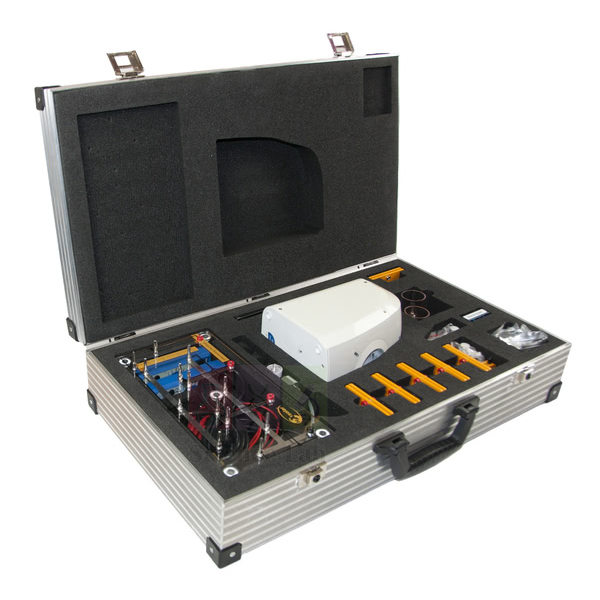
Solar H2 Ready-To-Go (Product Code: SLE/PHY/210) is a complete hydrogen and fuel cell experiment set used to build and examine a solar-hydrogen cycle in the science classroom. Teachers choose it because it lets students compare PEM fuel cells with an ethanol fuel cell, and every ancillary part, down to two digital multimeters, travels in one aluminium suitcase. This solar energy science kit is supplied by Jain Scientific Equipments Pvt Ltd (ScienceLab), Ambala, India.
Specifications
| Parameter | Detail |
|---|---|
| Kit type | Fuel cell and hydrogen technology experiment set from the Ready-to-go series, with all ancillary equipment included |
| Energy chain demonstrated | Solar module → electrolyzer → hydrogen storage → fuel cell (solar-hydrogen cycle) |
| Solar module | 2.5 V, 420 mA |
| Fuel cells | 3 x PEM fuel cell module and 1 x solar ethanol fuel cell module |
| Hydrogen generation and storage | Electrolyzer module 2.0, H2 Charger, H2 Storage with valve, gas storage module |
| Measuring instruments | 2 x digital multimeter; potentiometer module for load variation |
| Load and light source | Motor module without gear with propeller; lamp with table clamp |
| Case | Aluminium suitcase with H2 Ready-to-go insert |
| Experiments covered | What an electrolyzer does; characteristics of the electrolyzer, PEM fuel cell and ethanol fuel cell; Faraday and energy efficiency of the electrolyzer and PEM fuel cell; hydrogen production with the H2 Charger; hydrogen storage with H2 Storage; parallel and series connection of PEM fuel cells; setting up the electrolyzer and the fuel cells |
| Product code | SLE/PHY/210 |
| Supplied by | Jain Scientific Equipments Pvt Ltd (ScienceLab), Ambala, India |
Complete list of components:
- 1 x Solar-Base unit Large
- 1 x Potentiometer module
- 1 x Motor module without gear
- 1 x Solar module 2.5 V, 420 mA
- 1 x H2 Charger
- 1 x H2 Storage
- 1 x Valve for H2 Storage
- 1 x Gas storage module
- 1 x Electrolyzer module 2.0
- 1 x Solar ethanol fuel cell module
- 3 x PEM fuel cell module
- 2 x Digital multimeter
- 1 x Lamp with table clamp
- 1 x Propeller
- 1 x Test lead black 50 cm and 1 x test lead red 50 cm
- 2 x Test lead black 25 cm and 2 x test lead red 25 cm
- Silicone tube 2 mm, cut length (part L2-02-048)
- 1 x Case with 1 x insert H2 Ready-to-go
- 1 x Info sheet for initial startup and 1 x layout diagram H2 Ready-to-go 2.0
What Is the Solar H2 Ready-To-Go Used For?
The Solar H2 Ready-To-Go is used to show, step by step, how electricity from a solar module splits water in an electrolyzer, how the hydrogen is charged and held in storage, and how fuel cells turn it back into electrical energy to drive a motor and propeller. Students measure the working principle, efficiency and characteristic curves of both the electrolyzer and the fuel cells, which makes the kit a good fit for senior physics and chemistry units on energy conversion.
Because two digital multimeters are included, one group can read voltage and current at the same time while plotting a characteristic curve. The lamp with table clamp lets the solar module work indoors when sunlight is not available, and the three PEM fuel cell modules can be wired in series and in parallel to compare outputs. As a STEM science kit for India and abroad, it suits demonstration lessons as well as small-group practicals.
What to Specify When Ordering
- Number of complete kits needed for your class groups
- Whether you want extra digital multimeters or test leads for additional work stations
- Whether spare PEM fuel cell modules should be quoted (ask us about availability)
- Delivery location in India or abroad, so packing and freight can be quoted
Supplier
ScienceLab is the trading name of Jain Scientific Equipments Private Limited, a supplier of laboratory and teaching equipment based in Ambala, Haryana. The company sources the Solar H2 Ready-To-Go and supplies it to schools, colleges, training centres and dealers, often packed together with other physics apparatus in one consignment.
Our team can advise on which kit in the renewable-energy range matches your syllabus before you order. Read more on the ScienceLab company profile.
Related Physics Lab Equipment
These items fit alongside hydrogen and fuel cell lessons:
- Solar New Energy Ready-To-Go — broader case kit adding wind, hydro and e-mobility topics with a reversible fuel cell
- Solar Smart Grid Ready-To-Go — extends fuel cell and storage ideas into a laboratory-scale smart grid
- Hoffman Electrolysis Apparatus — glass apparatus for showing the electrolysis of water in chemistry lessons
- Digital Multimeter — an additional meter for groups that want more measuring points
- Solar Photovoltaic Ready-To-Go — deeper study of the solar cells that power the hydrogen cycle
More energy and electricity apparatus is listed under Physics Lab Equipment.
Frequently Asked Questions
What is included in the Solar H2 Ready-To-Go?
The Solar H2 Ready-To-Go includes a 2.5 V, 420 mA solar module, electrolyzer module 2.0, H2 Charger, H2 Storage with valve, gas storage module, three PEM fuel cell modules, an ethanol fuel cell module, two digital multimeters, a lamp with table clamp, motor with propeller, test leads and an aluminium suitcase.
Which fuel cell types can students compare with the Solar H2 Ready-To-Go?
Students can compare PEM fuel cells with an ethanol fuel cell using the Solar H2 Ready-To-Go. The set contains three PEM fuel cell modules, which can be connected in series and in parallel, and one solar ethanol fuel cell module, so characteristic curves of both technologies can be measured side by side.
Does the Solar H2 Ready-To-Go need any extra equipment?
The Solar H2 Ready-To-Go already contains its ancillary equipment, including meters, lamp, test leads and hydrogen storage. Operating liquids for the electrolyzer and the ethanol fuel cell do not appear in the components list, so confirm them with us when you request a quotation.
Who supplies the Solar H2 Ready-To-Go?
The Solar H2 Ready-To-Go is supplied by Jain Scientific Equipments Pvt Ltd (ScienceLab), Ambala, Haryana, India. ScienceLab sources the kit and supplies it to schools, colleges, laboratories and dealers, and can combine it with other physics apparatus on the same order.
How should the Solar H2 Ready-To-Go be stored between lessons?
The Solar H2 Ready-To-Go should go back into its aluminium suitcase after each lesson, with every module placed as shown on the layout diagram. Follow the info sheet for initial startup when handling the electrolyzer, H2 Storage and fuel cells, and ask us if any handling question remains.
What should a quotation request for the Solar H2 Ready-To-Go include?
A quotation request for the Solar H2 Ready-To-Go should state product code SLE/PHY/210, the number of kits, any extra meters or spare modules you want, and the delivery location. Send it through the contact page or add the kit to the enquiry cart.
Can the Solar H2 Ready-To-Go be supplied in bulk or for export?
Yes, the Solar H2 Ready-To-Go can be quoted for several classrooms at once and for buyers in India and international markets. Share the quantity and destination so ScienceLab can confirm availability, packing and shipping in a written quotation.
Request a Quote
To order the Solar H2 Ready-To-Go (SLE/PHY/210), send your quantity and delivery details through the ScienceLab contact page, or add it to the enquiry cart with other items for one combined quotation.
Last updated: 24 September 2026
Solar Hydropower Basic
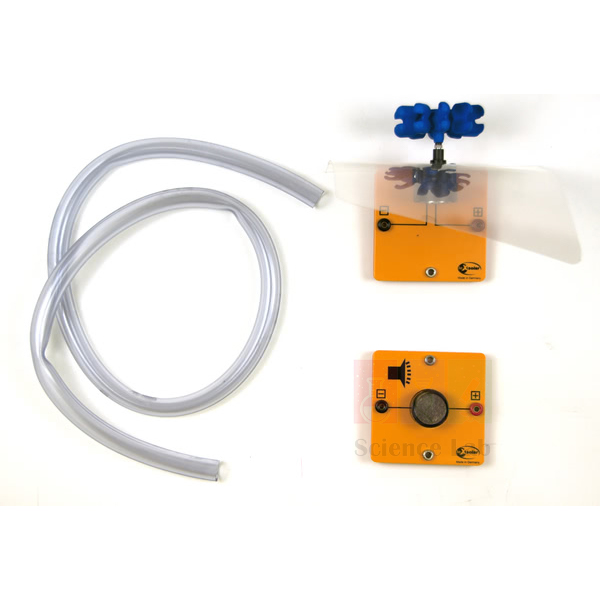
Solar Hydropower Basic (Product Code: SLE/PHY/211) is a beginner add-on set used to teach how a small hydropower plant turns moving water into electricity, both in the classroom and outdoors. Built around a water wheel module with a Pelton turbine and an attached hose, it is a hands-on science kit for primary school and junior high classes that already use the Basic series base kits. It is supplied by Jain Scientific Equipments Pvt Ltd (ScienceLab), Ambala, India.
Specifications
| Parameter | Detail |
|---|---|
| Kit type | Hydropower add-on set for the Basic series, beginner level |
| Turbine | Water wheel module with Pelton turbine |
| Water connection | Attached hose; silicone tube 12 mm |
| Output indicator | Buzzer module |
| Experiment style | Qualitative and quantitative experiments, indoors or outdoors |
| Required base kit (not included) | Solar Minikit Basic for primary school, or Solar Kit Basic for junior high school; each contains all necessary accessories |
| Packing | Carton with Hydropower Basic insert |
| Documentation | Layout diagram Hydropower Basic; info sheet for initial startup |
| Product code | SLE/PHY/211 |
| Supplied by | Jain Scientific Equipments Pvt Ltd (ScienceLab), Ambala, India |
Components supplied in the set:
- 1 x Water wheel module
- 1 x Buzzer module
- 1 x Silicone tube 12 mm
- 1 x Insert Hydropower Basic
- 1 x Carton
- 1 x Layout diagram Hydropower Basic
- 1 x Info sheet for initial startup
What Is the Solar Hydropower Basic Used For?
The Solar Hydropower Basic is used to introduce hydroelectric power through short, playful experiments. Water is led through the hose onto the Pelton turbine of the water wheel module, the turbine turns, and the electricity it produces sounds the buzzer module, so students can see and hear the energy conversion. From there, classes explore the basic characteristics of a hydropower plant, first qualitatively and then with measurements.
Younger pupils work with the Solar Minikit Basic, while junior high students connect the set to the Solar Kit Basic for quantitative readings. Because the experiments can also be carried out outdoors, teachers can run the lesson next to a water source and keep the classroom dry. Keep the base-kit modules and cables away from splashing water during every run.
What to Specify When Ordering
- Which school level the set is for, so the matching base kit (Solar Minikit Basic or Solar Kit Basic) can be quoted
- Whether your school already owns the required base kit
- Number of Hydropower Basic sets needed per class
- Delivery location in India or abroad
Supplier
Jain Scientific Equipments Private Limited, trading as ScienceLab, is an Ambala-based supplier of school and college laboratory equipment. It sources the Solar Hydropower Basic together with the base kits it depends on, so a school can receive the add-on and the required base kit in a single delivery.
For import or export paperwork, the supplying company holds Importer-Exporter Code AAECJ8618A (DGFT) and GSTIN 06AAECJ8618A1ZT. Company background is on the ScienceLab profile page.
Related Physics Lab Equipment
Hydropower lessons usually draw on these items as well:
- Solar Minikit Basic — the base kit this set needs in primary school
- Solar Kit Basic — the base kit this set needs for junior high quantitative work
- Solar Hydropower Ready-to-go — self-contained case kit with several turbine types for deeper study
- Pelton Wheel (Turbine) — larger impulse turbine for fluid mechanics demonstrations
- Water Turbine with Dynamo Model — simple model showing mechanical energy becoming electrical energy
Find other energy apparatus in the Physics Lab Equipment category.
Frequently Asked Questions
Is the Solar Hydropower Basic a complete kit on its own?
No, the Solar Hydropower Basic is an add-on set. It needs the Solar Minikit Basic in primary school or the Solar Kit Basic in junior high school, each of which contains all the necessary accessories. The add-on itself provides the water wheel module, buzzer module, silicone tube and insert.
What turbine does the Solar Hydropower Basic use?
The Solar Hydropower Basic uses a water wheel module with a Pelton turbine fed through an attached hose. This arrangement lets students carry out both qualitative and quantitative experiments on how a hydropower plant turns the energy of moving water into electricity.
Can the Solar Hydropower Basic be used outdoors?
Yes, the Solar Hydropower Basic is described for experiments in the classroom and outdoors. Working outside near a water source keeps the classroom dry; make sure the modules and cables of the base kit stay away from splashing water during each experiment.
What comes in the Solar Hydropower Basic box?
The Solar Hydropower Basic box contains one water wheel module, one buzzer module, one silicone tube 12 mm, the Hydropower Basic insert, a carton, a layout diagram and an info sheet for initial startup. The required base kit is ordered separately.
Who supplies the Solar Hydropower Basic?
The Solar Hydropower Basic is supplied by Jain Scientific Equipments Pvt Ltd (ScienceLab), Ambala, Haryana, India. ScienceLab can quote it together with the Solar Minikit Basic or Solar Kit Basic so that schools receive a working set in one order.
What details help ScienceLab quote the Solar Hydropower Basic quickly?
To quote the Solar Hydropower Basic quickly, ScienceLab needs the product code SLE/PHY/211, the quantity, the school level, whether you already own a base kit and the delivery location in India or abroad. Bulk orders for several schools can be combined in one quotation.
Request a Quote
Ask for a quotation for the Solar Hydropower Basic (SLE/PHY/211), with or without its base kit, through the contact form, or collect items in the enquiry cart and send them together.
Last updated: 24 September 2026
Solar Hydropower Ready-to-go
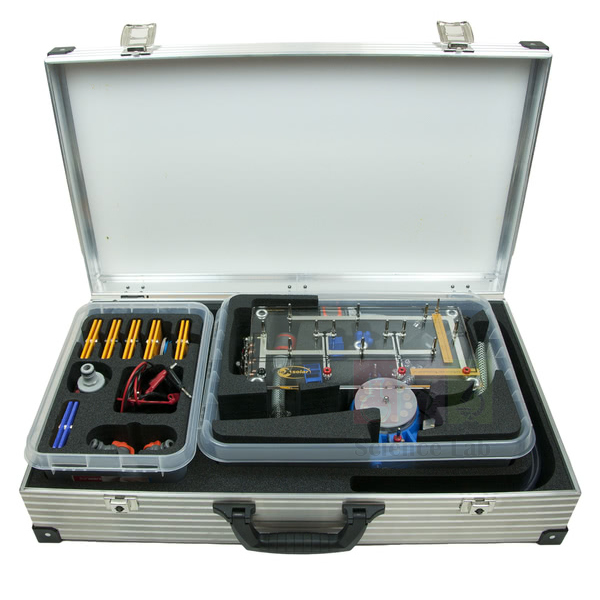
Solar Hydropower Ready-to-go (Product Code: SLE/PHY/212) is a self-contained water turbine experiment kit used to take junior high school students from first qualitative hydropower trials to fundamental quantitative measurements on turbines. What sets it apart is a set of different turbine types, from a simple water wheel to a Pelton turbine, packed with manometers, flow sets and a water meter in one aluminium case. This physics experiment kit for schools is supplied by Jain Scientific Equipments Pvt Ltd (ScienceLab), Ambala, India.
Specifications
| Parameter | Detail |
|---|---|
| Kit type | Hydropower experiment kit from the Ready-to-go series, in an aluminium case |
| Turbines | Water turbine casing with a turbine set ranging from a simple water wheel to a Pelton turbine |
| Generator | Induction generator, 12-fold |
| Pressure measurement | Manometer set 2 bar and manometer set 4 bar |
| Flow control | Flow sets 4 mm, 8 mm and 12 mm; intake connector; flow box; connection set |
| Water quantity | Water flow meter; collecting box 6 L |
| Electrical loads | Light bulb module, LED module 2 mA (red), buzzer module, motor module without gear, resistor module |
| Electrical measurement | AV module used with the Solar-Base unit Large |
| Experiment level | Qualitative introduction to hydropower for junior high school, plus fundamental quantitative experiments on the physics of water turbines |
| Product code | SLE/PHY/212 |
| Supplied by | Jain Scientific Equipments Pvt Ltd (ScienceLab), Ambala, India |
Complete list of components (German part names from the packing list translated):
- 1 x Water turbine casing and 1 x turbines set
- 1 x Induction generator, 12-fold
- 1 x Manometer set 2 bar and 1 x manometer set 4 bar
- 1 x Intake connector
- 1 x Flow set 4 mm, 1 x flow set 8 mm and 1 x flow set 12 mm
- 1 x Flow box and 1 x connection set
- 1 x Water flow meter (Wassermengenzähler)
- 1 x Collecting box 6 L
- Fabric-reinforced hose 12/18 mm, cut length
- 2 x Hose clamp, plus 1 x stainless steel hose clamp with turn knob and hex screw
- 1 x Solar-Base unit Large and 1 x AV module
- 1 x Light bulb module, 1 x LED module 2 mA (red), 1 x buzzer module
- 1 x Motor module without gear and 1 x resistor module
- 1 x Color discs - Set 1
- 1 x Test lead black 50 cm, 1 x test lead red 50 cm, 1 x test lead black 25 cm, 1 x test lead red 25 cm
- 1 x Aluminium case with HydroPower insert
- 1 x Info sheet for initial startup and 1 x packing layout plan Hydropower Ready-to-go
What Is the Solar Hydropower Ready-to-go Used For?
The Solar Hydropower Ready-to-go is used to connect school physics with real hydropower practice. Students fit different turbines into the casing, change the nozzle size with the 4, 8 and 12 mm flow sets, and watch how the water wheel and the Pelton turbine respond. Loads such as the LED, buzzer, light bulb and motor show the generated power, while the AV module records voltage and current for quantitative work.
With pressure read on the manometers and water volume logged on the flow meter, older students can compare the energy supplied by the water with the electrical output of the induction generator. Plan the lesson near a water supply, route the outflow into the collecting box, and check that every hose clamp is tight before the first run.
What to Specify When Ordering
- Number of kits for your student groups
- How water will be supplied in your lab, so we can advise on connecting the intake connector and hose
- Whether extra hose, hose clamps or test leads should be quoted as spares
- Delivery location in India or abroad
Supplier
The Solar Hydropower Ready-to-go is a sourced renewable-energy teaching kit that Jain Scientific Equipments Private Limited supplies under its ScienceLab trading name from Ambala, Haryana. Institutions, dealers and project buyers can order it on its own or bundle it with fluid mechanics and electricity apparatus from the same catalogue.
For details of the company and the ranges it handles, visit the ScienceLab profile.
Related Physics Lab Equipment
Useful companions for water-power and turbine lessons:
- Solar Hydropower Basic — smaller add-on for introducing hydropower in primary and junior classes
- Demonstration Pelton Turbine — larger impulse turbine for fluid mechanics teaching
- Francis Turbine — reaction turbine for comparing turbine designs
- Solar Wind Ready-To-Go — case kit for the companion topic of wind energy
- Solar New Energy Ready-To-Go — overview kit covering hydro, wind, solar, e-mobility and fuel cells
The Physics Lab Equipment category lists more apparatus for energy topics.
Frequently Asked Questions
Which turbine types come with the Solar Hydropower Ready-to-go?
The Solar Hydropower Ready-to-go comes with a water turbine casing and a turbines set that ranges from a simple water wheel to a Pelton turbine. Students can swap turbines in the same casing and compare how each design converts the energy of flowing water.
What can students measure with the Solar Hydropower Ready-to-go?
With the Solar Hydropower Ready-to-go, students read water pressure on the 2 bar and 4 bar manometers, water volume on the flow meter, and voltage and current through the AV module. Together these support quantitative experiments on the physics of water turbines.
What else is needed to run the Solar Hydropower Ready-to-go?
The Solar Hydropower Ready-to-go carries its turbines, generator, measuring module, loads, hoses and collecting box in one case, but it needs a water supply at the place of use. Tell us how water is available in your lab and we will advise on the connection.
Is the Solar Hydropower Ready-to-go suitable for beginners?
Yes, the Solar Hydropower Ready-to-go starts with qualitative experiments that introduce hydropower use to junior high school students, then moves on to fundamental quantitative experiments. Teachers can therefore use one kit across several years of physics lessons.
Who supplies the Solar Hydropower Ready-to-go?
The Solar Hydropower Ready-to-go is supplied by Jain Scientific Equipments Pvt Ltd (ScienceLab), Ambala, Haryana, India. ScienceLab sources the kit and delivers it to schools, colleges, training centres and dealers in India and international markets.
How should the Solar Hydropower Ready-to-go be packed away?
After using the Solar Hydropower Ready-to-go, drain the turbine casing, hoses and collecting box, let the parts dry, and return each item to the HydroPower insert following the packing layout plan. This keeps the electrical modules and manometers ready for the next lesson.
How can I get a quotation for the Solar Hydropower Ready-to-go?
For a Solar Hydropower Ready-to-go quotation, send product code SLE/PHY/212, the quantity, any spares wanted and the delivery location through the contact page or enquiry cart. ScienceLab replies with availability, packing and shipping details for single or bulk orders.
Request a Quote
Request your Solar Hydropower Ready-to-go (SLE/PHY/212) quotation through the contact page, or add it to the enquiry cart alongside other physics items.
Last updated: 24 September 2026
Solar Kit Basic
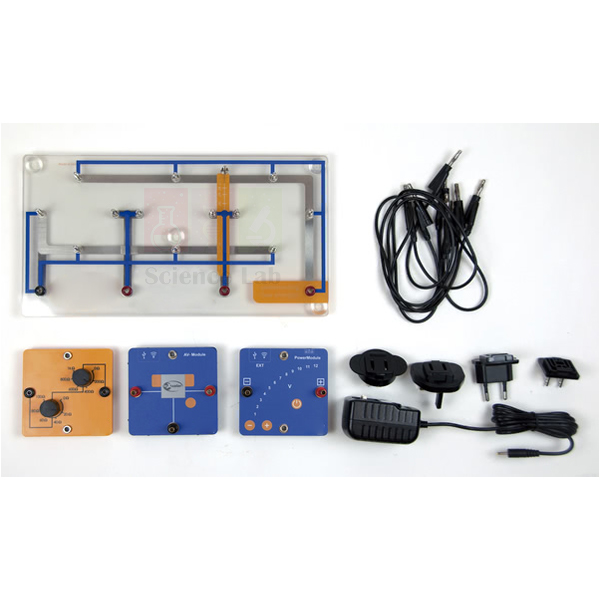
Solar Kit Basic (Product Code: SLE/PHY/213) is a base kit used to power, connect and measure quantitative renewable-energy experiments with the Basics add-on sets in junior high school. It brings the power module, an AV module for voltage and current readings, Smart Control components, a potentiometer, the large base unit and test leads, so each topic set becomes a measurable electricity experiment kit for school groups. It is supplied by Jain Scientific Equipments Pvt Ltd (ScienceLab), Ambala, India.
Specifications
| Parameter | Detail |
|---|---|
| Kit type | Base kit for the Basic series, junior high school level |
| Experiment type | Mainly quantitative experiments with the Basics add-on sets |
| Power supply | Power module, a compact power supply for experiments |
| Measurement | AV module for simple voltage and current measurement |
| Measuring and control | Smart Control components; potentiometer module |
| Base | Solar-Base unit Large |
| Cables | Test leads 25 cm and 50 cm, one black and one red of each length |
| Packing | Carton with Kit Basic insert |
| Documentation | Layout diagram Kit Basic; info sheet for initial startup |
| Product code | SLE/PHY/213 |
| Supplied by | Jain Scientific Equipments Pvt Ltd (ScienceLab), Ambala, India |
Components in the Solar Kit Basic:
- 1 x Power module
- 1 x AV module
- 1 x Potentiometer module
- 1 x Solar-Base unit Large
- 1 x Test lead black 25 cm and 1 x test lead red 25 cm
- 1 x Test lead black 50 cm and 1 x test lead red 50 cm
- 1 x Insert Kit Basic
- 1 x Carton
- 1 x Layout diagram Kit Basic
- 1 x Info sheet for initial startup
What Is the Solar Kit Basic Used For?
The Solar Kit Basic is used as the common platform on which junior high students run the quantitative part of the Basics experiments. The topic add-on sets supply the solar, water or wind modules, while this kit supplies the base unit to mount them on, the leads to wire them, the power module to feed them and the AV module to read voltage and current.
A typical lesson has students plug modules onto the Solar-Base unit Large, use the potentiometer as an adjustable load, and note readings from the AV module to draw simple characteristic curves. With the Smart Control components, the same set also serves as a measuring and control system, which helps teachers move from observing an effect to recording numbers without changing equipment.
What to Specify When Ordering
- School level: this kit is for junior high school; primary classes use the Solar Minikit Basic
- Which Basics add-on sets you plan to use with it
- Number of base kits, usually one per student group
- Delivery location in India or abroad
Supplier
ScienceLab, the trading name of Jain Scientific Equipments Private Limited in Ambala, Haryana, supplies the Solar Kit Basic as part of a sourced range of renewable-energy teaching kits. Buyers can order the base kit and the add-on sets together, which keeps every group in a class working with matching modules.
Learn more about the company on the ScienceLab profile page.
Related Physics Lab Equipment
Add-on sets and alternatives that work with this base kit:
- Solar Photovoltaic Basic — solar cell topic set that uses this kit in junior high school
- Solar Hydropower Basic — water wheel topic set for hydropower lessons
- Solar Wind Basic — wind energy topic set for rotor experiments
- Solar EMobility Basic — electric mobility topic set with a model car
- Solar Minikit Basic — the primary school base kit with a hand generator
Browse the wider Physics Lab Equipment range for electricity and energy apparatus.
Frequently Asked Questions
What is the Solar Kit Basic used with?
The Solar Kit Basic is used with the Basics add-on sets when junior high school students carry out quantitative experiments. It supplies the power module, AV module, potentiometer, Solar-Base unit Large and test leads that the topic sets rely on for powering and measuring.
What does the power module in the Solar Kit Basic do?
The power module in the Solar Kit Basic is a compact power supply for experiments. It feeds the modules on the base unit so that experiments can run without depending only on sunlight, while the AV module shows the voltage and current in the circuit.
Is the Solar Kit Basic suitable for primary school?
The Solar Kit Basic is aimed at junior high school and mainly quantitative experiments. For primary classes the Basic series uses the Solar Minikit Basic, which relies on a hand generator and focuses on qualitative experiments; ask us which fits your syllabus.
What comes in the Solar Kit Basic carton?
The Solar Kit Basic carton holds a power module, AV module, potentiometer module, Solar-Base unit Large, four test leads (black and red in 25 cm and 50 cm), the Kit Basic insert, a layout diagram and an info sheet for initial startup.
Who supplies the Solar Kit Basic?
The Solar Kit Basic is supplied by Jain Scientific Equipments Pvt Ltd (ScienceLab), Ambala, Haryana, India. ScienceLab sources the kit and can deliver it together with the matching Basics add-on sets to schools, dealers and institutions in India and international markets.
What should I include when asking for a Solar Kit Basic quotation?
When asking for a Solar Kit Basic quotation, include product code SLE/PHY/213, the number of base kits, the add-on sets you want with them and your delivery location. ScienceLab then confirms availability and packing for the complete order.
Request a Quote
Send your Solar Kit Basic (SLE/PHY/213) requirement through the ScienceLab contact page, or add it with its add-on sets to the enquiry cart for one quotation.
Last updated: 24 September 2026
