- Physics Lab Equipment
- Chemistry Lab Equipment
- Biology Lab Equipment
- Anatomical Lab Equipment
- Learning
- Educational Lab Equipment
- Magnets
- Agriculture
- Astronomy
- Earth Science
- Geography Lab Equipment
- Safety Lab Coat
- Laboratory
- Meteorological
- Electricity & Magnetism
- Heat
- School Lab Equipment
- Lab Glassware
- Science Lab Equipment
- Tvet Lab Equipment
- Robotics Kits Supplier and Manufacturer for Schools India
- Math Lab Equipment Manufacturers and Exporters in Ambala
- STEM Kits Manufacturers and Supplier India
- Engineering Lab Equipment
- Hospital Lab Equipment
- Water, Sanitation & Hygiene Supplies
- Cold Chain, Solar & Communication Equipment
- Nutrition
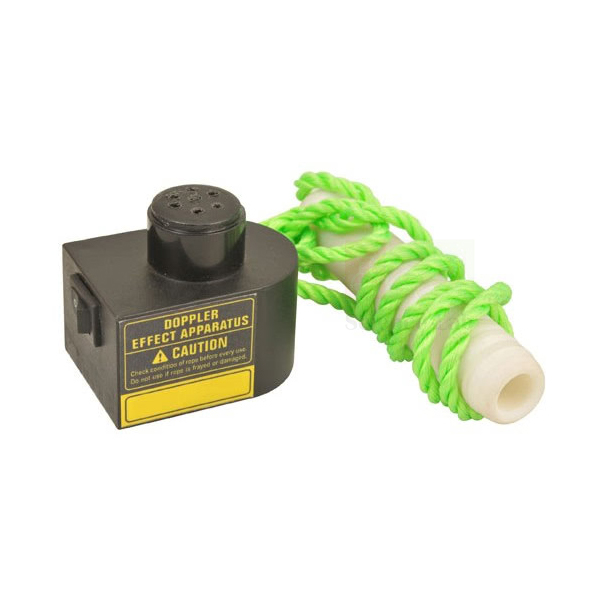
Doppler Effect
Doppler Effect (Product Code: SLE/PHY/158) is a demonstration apparatus used to let a class hear the Doppler effect — the change in pitch from a moving sound source — in physics lessons on sound and waves. It consists of a plastic box with a sound source that runs on 9 V batteries (not included) and a strong string for whirling it in a circle. It is supplied by Jain Scientific Equipments Pvt Ltd (ScienceLab), Ambala, India.
Specifications
| Parameter | Detail |
|---|---|
| Components | Plastic box with sound source; strong string for rotation |
| Power | 9 V batteries (not included) |
| Length | 13 cm |
| Height | 8 cm |
| Width | 9 cm |
| Demonstrates | The Doppler effect with sound |
| Product code | SLE/PHY/158 |
| Supplied by | Jain Scientific Equipments Pvt Ltd (ScienceLab), Ambala, India |
What Is the Doppler Effect Apparatus Used For?
With the sound source switched on, the teacher whirls the box in a circle on its string. Students standing to one side hear the pitch rise as the box moves towards them and fall as it moves away, while the person swinging it hears an almost steady note because their distance from the box hardly changes. That contrast is a memorable way to show that the effect depends on relative motion between source and listener.
The demonstration leads naturally to everyday examples such as passing sirens, and to applications like speed measurement and the red shift of distant galaxies. Use a hall or open space, check the string and its attachment before each session, and keep students well back from the swinging box. It is a compact Doppler effect kit that fits into any sound wave experiment unit for schools in India and abroad.
What to Specify When Ordering
- Number of units required for your classes.
- Batteries — 9 V batteries are not included, so arrange them locally or ask us about adding them to the quotation.
- Any other sound and wave apparatus you want quoted at the same time.
Supplier
The Doppler Effect apparatus is supplied by Jain Scientific Equipments Private Limited, trading as ScienceLab, from Ambala, Haryana, India. It sits alongside the company's range of sound and wave teaching apparatus, so a school equipping a waves unit can request everything in one enquiry. Schools, colleges, dealers and institutional buyers across India and international markets are supplied. Learn more on our company profile.
Related Physics Lab Equipment
These items complete a practical unit on sound and waves:
- Tuning Fork Set, Steel — boxed forks marked with their frequencies, for pitch and frequency lessons.
- Resonance Apparatus with Brass Tube — for resonance investigations in air columns.
- Signal Generator & Amplifier — produces tones of chosen frequency for sound experiments.
- Loudspeaker Unit — boxed speaker with 4 mm sockets for playing generated tones.
Browse more apparatus in our Physics Lab Equipment category.
Frequently Asked Questions
What is included with the Doppler Effect apparatus?
The Doppler Effect apparatus includes a plastic box containing a sound source and a strong string for swinging the box in a circle. The 9 V batteries that power the sound source are not included and must be arranged separately.
How is the Doppler Effect apparatus used in class?
To use the Doppler Effect apparatus, switch on the sound source and whirl the box in a circle on its string. Listeners at the side hear the pitch rise as the box approaches and fall as it moves away, demonstrating the Doppler effect.
Why does the person swinging the Doppler Effect apparatus hear little change?
The person swinging the Doppler Effect apparatus stays at the centre of the circle, so the box neither approaches nor recedes from them. Without relative motion towards or away from the listener there is little pitch change, which helps explain the effect.
What size is the Doppler Effect apparatus?
The Doppler Effect apparatus measures 13 cm in length, 8 cm in height and 9 cm in width. The compact plastic box is designed to be swung on its string, so the whole demonstration fits easily into a classroom or hall.
Who supplies the Doppler Effect apparatus?
The Doppler Effect apparatus is supplied by Jain Scientific Equipments Pvt Ltd (ScienceLab), Ambala, Haryana, India, to schools, colleges, dealers and institutions across India and international markets.
What details should I send for a Doppler Effect apparatus quotation?
For a Doppler Effect apparatus quotation, send the product code SLE/PHY/158, the quantity, whether batteries or other sound apparatus should be added, and the delivery location through our contact page.
Request a Quote
To request a quotation for the Doppler Effect apparatus (SLE/PHY/158), use our contact page or add it to the enquiry cart with the other sound and wave items on your list.
Last updated: 24 September 2026
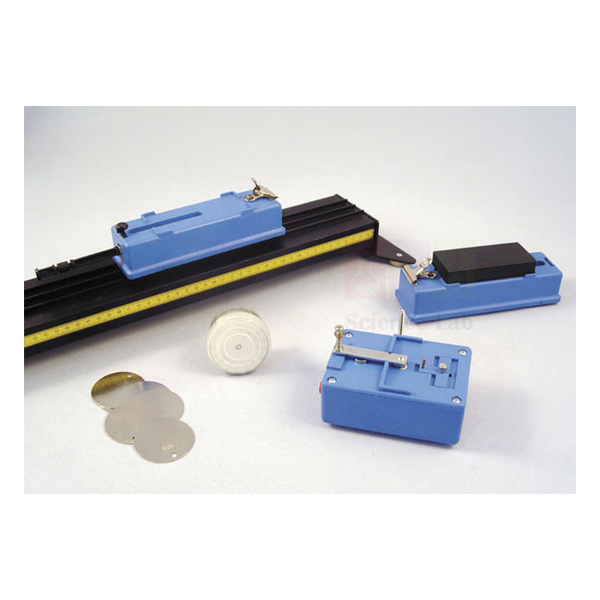
Dynamics Kit, Track & Accessories
Dynamics Kit, Track & Accessories (Product Code: SLE/PHY/159) is a force and motion experiment kit used to study velocity, acceleration, momentum and Newton's laws in school and college physics labs. It brings together a 1.2 m aluminium track, two high-impact moulded trolleys (one spring loaded), masses, a ticker tape timer and carbon discs as one matched set for curriculum-based experiments. It is made by Jain Scientific Equipments Pvt Ltd (ScienceLab), an OEM manufacturer, at its own factory in Ambala, India.
Specifications
| Parameter | Detail |
|---|---|
| Track | Aluminium, 1.2 m |
| Trolleys | 2 high-impact moulded trolleys (1 spring loaded) |
| Masses | 10 x 10 g |
| Timer | 1 x ticker tape timer |
| Trolley weight | 1 |
| Carbon discs | 20 |
| Topic | Curriculum-based Force & Motion experiments |
| Product code | SLE/PHY/159 |
| Manufacturer | Jain Scientific Equipments Pvt Ltd (ScienceLab) — OEM |
| Country of origin | India (made in Ambala, Haryana) |
What Is the Dynamics Kit Used For?
The kit covers the core mechanics practicals in one box. Students run a trolley down the tilted aluminium track while the ticker tape timer marks dots at regular intervals, then use the dot spacing to calculate velocity and acceleration. Adding the 10 g masses or the trolley weight changes the mass being accelerated, which leads straight into Newton's second law. The spring-loaded trolley and its partner are used for collision and "explosion" experiments on conservation of momentum.
For cleaner results, first raise one end of the track just enough for a gently pushed trolley to run at constant speed; evenly spaced dots show that friction has been compensated. Note that ticker tape and a power supply for the timer are not listed among the kit contents, so check what your lab already has. It is a practical force motion experiment kit for schools and colleges in India and abroad.
What to Specify When Ordering
- Number of kits — usually one per student group.
- Ticker tape and a suitable supply for the timer, if your lab does not already have them.
- Extra trolleys, timers or carbon discs for larger classes.
- Delivery location within India or overseas.
OEM Manufacturer
Jain Scientific Equipments Private Limited (CIN U29309HR2020PTC087597), trading as ScienceLab, is the OEM (original equipment manufacturer) of the Dynamics Kit, Track & Accessories. Production takes place at the company's licensed factory at 449, HSIIDC Industrial Area, Saha, Ambala (Factory Licence AMB-ONLINE-CHD-J-414), and complete kits are supplied factory-direct to schools, colleges, dealers and importers. If a kit in use needs a replacement trolley, masses or carbon discs, ask us and the manufacturer will advise. See our company profile for more.
Related Physics Lab Equipment
These items extend or resupply the dynamics kit:
- Ticker Tape Carbon Disc — boxed replacement discs for ticker tape timers.
- Ticker Tape Timer — additional timers for more student groups.
- Dynamics Trolley, Plastic — extra low-friction trolleys for collision experiments.
- Pulley, Bench Mounting, Ball Bearing — for pulling a trolley with a hanging mass.
- Linear Air Track — near friction-free alternative for momentum studies.
More mechanics apparatus is available in the Physics Lab Equipment category.
Frequently Asked Questions
What is included in the Dynamics Kit, Track & Accessories?
The Dynamics Kit, Track & Accessories contains a 1.2 m aluminium track, 2 high-impact moulded trolleys (1 spring loaded), 10 x 10 g masses, 1 ticker tape timer, 1 trolley weight and 20 carbon discs for force and motion experiments.
What is the spring-loaded trolley in the Dynamics Kit used for?
The spring-loaded trolley in the Dynamics Kit, Track & Accessories pushes the two trolleys apart or cushions their impact. Students use it for recoil and collision experiments, comparing momentum before and after to test the conservation of momentum.
How does the ticker tape timer in the Dynamics Kit measure motion?
The ticker tape timer in the Dynamics Kit, Track & Accessories marks dots on a paper tape pulled by the trolley at regular time intervals. Wider spacing means faster motion, so students can work out velocity and acceleration from the tape.
Are ticker tape and a power supply included with the Dynamics Kit?
Ticker tape and a power supply are not listed among the contents of the Dynamics Kit, Track & Accessories. Ask us through the contact page what the timer needs, and include any extra items in the same quotation.
Who manufactures the Dynamics Kit, Track & Accessories?
The Dynamics Kit, Track & Accessories is manufactured by Jain Scientific Equipments Pvt Ltd (ScienceLab), the OEM, at its own factory at Saha, Ambala, Haryana, India. Quotations and repeat orders come directly from the manufacturer.
Can the Dynamics Kit, Track & Accessories be ordered in bulk or for export?
Yes. The Dynamics Kit, Track & Accessories is supplied in bulk to schools, colleges, dealers and institutions across India and international markets. Give the product code SLE/PHY/159, the number of kits and the destination for a full quotation.
Request a Quote
Request a quotation for the Dynamics Kit, Track & Accessories (SLE/PHY/159) through our contact page, or add it to the enquiry cart with any extra trolleys or discs. Your quotation comes straight from the manufacturer.
Last updated: 24 September 2026
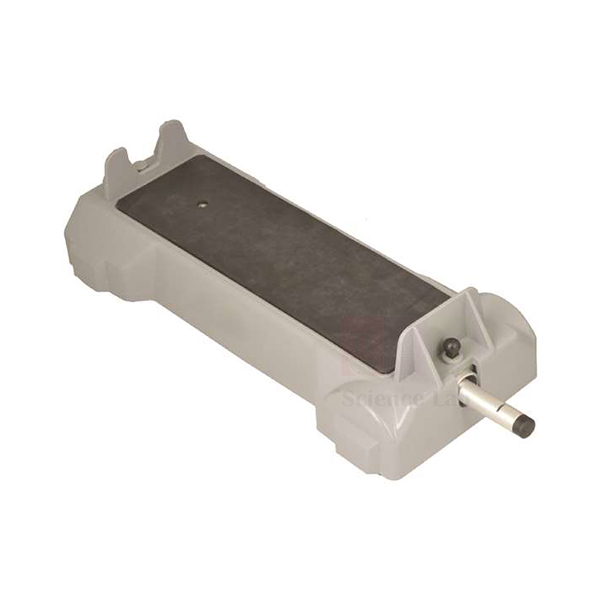
Dynamics Trolley, Plastic
Dynamics Trolley, Plastic (Product Code: SLE/PHY/160) is a rigid ABS plastic laboratory trolley used for kinematics, collision and momentum experiments in school and college physics. It has accurately aligned, very low-friction wheels, an accurate mass of 600 g and velcro pads for inelastic collisions, and it can withstand loads up to 60 kg. It is made by Jain Scientific Equipments Pvt Ltd (ScienceLab), an OEM manufacturer, at its own factory in Ambala, India.
Specifications
| Parameter | Detail |
|---|---|
| Material | Rigid ABS plastic |
| Wheels | Accurately aligned, very low friction |
| Firing pins | Two-position, with locking catch for safety |
| Collision pads | Velcro pads for inelastic collision experiments |
| Mass | 600 g (accurate) |
| Load capacity | Up to 60 kg |
| Design | Stackable, low profile |
| Dimensions | 310 mm (L) x 130 mm (W) x 90 mm (H) |
| Product code | SLE/PHY/160 |
| Manufacturer | Jain Scientific Equipments Pvt Ltd (ScienceLab) — OEM |
| Country of origin | India (made in Ambala, Haryana) |
What Is the Plastic Dynamics Trolley Used For?
The accurate 600 g mass means students can put the trolley straight into momentum and force calculations without weighing it first. Stacking one trolley on another doubles the moving mass, and the high load capacity allows extra masses to be piled on for Newton's second law investigations. Very low-friction wheels keep losses small, so results from collisions and accelerations stay close to theory.
For collisions, the velcro pads make two trolleys stick together to model a perfectly inelastic impact, while the two-position firing pins push trolleys apart for "explosion" experiments. Keep the firing pin on its locking catch until the moment of release, and store trolleys stacked to save bench space. It is a rigid, practical piece of mechanics lab equipment for schools and colleges in India and abroad.
What to Specify When Ordering
- Number of trolleys — collision and explosion experiments need at least two per group.
- Whether you would prefer the complete Dynamics Kit, Track & Accessories instead of single trolleys.
- Any ticker tape timers, pulleys or masses needed for the experiments you plan.
- Delivery location for the quotation.
OEM Manufacturer
ScienceLab, the trading name of Jain Scientific Equipments Private Limited, is the OEM (original equipment manufacturer) of the plastic Dynamics Trolley and produces it at its own licensed factory at Saha, Ambala, Haryana, India. Buying from the maker means a lab that starts with a few trolleys and later expands to a full class set can come back to the same source — ask us about repeat orders. Schools, colleges, dealers and importers are supplied factory-direct. Read more on our company profile.
Related Physics Lab Equipment
These items are used with the trolley in mechanics practicals:
- Dynamics Trolley, Wooden — a pair of three-wheeled wooden trolleys with a spring-loaded rod, for simpler impulse work.
- Dynamics Kit, Track & Accessories — complete set with aluminium track, trolleys and ticker tape timer.
- Ticker Tape Timer — records the trolley's motion as dots on a tape.
- Pulley, Bench Mounting, Ball Bearing — for accelerating the trolley with a hanging mass.
- Mass Set — steel masses for loading the trolley.
See more mechanics apparatus under Physics Lab Equipment.
Frequently Asked Questions
What is the mass of the Dynamics Trolley, Plastic?
The Dynamics Trolley, Plastic has an accurate mass of 600 g. Because the trolleys are stackable, students can double the moving mass by stacking one on another, which is useful in momentum and Newton's second law experiments.
How much load can the Dynamics Trolley, Plastic carry?
The Dynamics Trolley, Plastic can withstand loads up to 60 kg. Its rigid ABS body therefore takes stacked trolleys and added masses in class experiments without difficulty, which suits busy school and college labs.
What are the velcro pads on the Dynamics Trolley, Plastic for?
The velcro pads on the Dynamics Trolley, Plastic make two trolleys stick together when they collide. This models an inelastic collision, so students can compare momentum before and after impact when the trolleys move off as one.
How do the firing pins on the Dynamics Trolley, Plastic work?
The Dynamics Trolley, Plastic has two-position firing pins that are used to push trolleys apart in explosion experiments. A locking catch holds the pin safely until release, reducing the chance of an accidental firing during set-up.
What are the dimensions of the Dynamics Trolley, Plastic?
The Dynamics Trolley, Plastic measures 310 mm long, 130 mm wide and 90 mm high. Its low profile keeps the trolley stable on the bench or track during collision and acceleration experiments.
Who manufactures the Dynamics Trolley, Plastic?
The Dynamics Trolley, Plastic is manufactured by Jain Scientific Equipments Pvt Ltd (ScienceLab) as the OEM, at its own factory at Saha, Ambala, Haryana, India. Quotations and repeat orders are handled directly by the manufacturer.
Can the Dynamics Trolley, Plastic be ordered in bulk or exported?
Yes. The Dynamics Trolley, Plastic is supplied in bulk to schools, colleges, dealers and institutions across India and international markets. Send the product code SLE/PHY/160, the quantity and destination through our contact page.
Request a Quote
Ask for a quotation for the Dynamics Trolley, Plastic (SLE/PHY/160) through our contact page, or add it to the enquiry cart with any timers or masses. Quotations are issued directly by the manufacturer.
Last updated: 24 September 2026
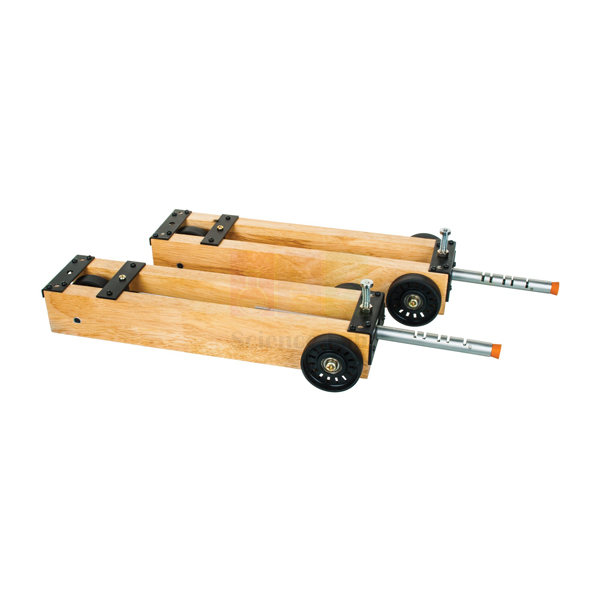
Dynamics Trolley, Wooden
Dynamics Trolley, Wooden (Product Code: SLE/PHY/161) is a pair of 300 mm long wooden trolleys on three wheels, used to demonstrate impulse, recoil and momentum in school physics lessons. A spring-loaded rod is fitted to give an impulse when released, which is used to drive the two trolleys apart in simple recoil experiments. It is made by Jain Scientific Equipments Pvt Ltd (ScienceLab), an OEM manufacturer, at its own factory in Ambala, India.
Specifications
| Parameter | Detail |
|---|---|
| Material | Wooden |
| Supplied as | A pair of trolleys |
| Length | 300 mm |
| Wheels | Mounted on three wheels |
| Impulse mechanism | Spring-loaded rod that gives an impulse when released |
| Product code | SLE/PHY/161 |
| Manufacturer | Jain Scientific Equipments Pvt Ltd (ScienceLab) — OEM |
| Country of origin | India (made in Ambala, Haryana) |
What Is the Wooden Dynamics Trolley Used For?
The classic use is the recoil or "explosion" experiment. The two trolleys are placed end to end, the spring-loaded rod is set, and on release the trolleys shoot apart in opposite directions. With equal loads they travel roughly equal distances; add extra mass to one and it moves off more slowly, which gives students a clear, hands-on feel for Newton's third law and conservation of momentum.
Because the pair is simple to set up, it suits younger classes meeting forces and motion for the first time, before they move on to ticker-timer measurements. Keep the wooden trolleys dry, store them flat and check that the wheels turn freely before each lesson. The set is a straightforward addition to physics lab equipment for schools in India and overseas.
What to Specify When Ordering
- Number of pairs required — the trolleys come as a pair.
- Masses for loading one trolley in unequal-mass recoil experiments.
- Whether plastic trolleys or the full dynamics kit with track and timer should be quoted as well.
OEM Manufacturer
The wooden Dynamics Trolley pair is made by Jain Scientific Equipments Private Limited, the company behind the ScienceLab brand, as OEM (original equipment manufacturer) at its own licensed factory at Saha, Ambala, Haryana, India. Teaching apparatus like this is supplied factory-direct to schools, teacher-training colleges, dealers and importers, so quotations come from the maker rather than a reseller. Ask us when you need more pairs for additional classes. Visit our company profile to learn more.
Related Physics Lab Equipment
These items build on the wooden trolleys for fuller mechanics practicals:
- Dynamics Trolley, Plastic — ABS trolley with velcro pads and firing pins for more detailed collision work.
- Dynamics Kit, Track & Accessories — track, trolleys and ticker tape timer for quantitative measurements.
- Ticker Tape Timer — records trolley motion so speeds can be calculated.
- Mass Set — steel masses for loading one trolley in unequal-mass experiments.
Explore more in our Physics Lab Equipment category.
Frequently Asked Questions
How many trolleys come with the Dynamics Trolley, Wooden?
The Dynamics Trolley, Wooden is a pair of trolleys. Each is 300 mm long, made of wood and mounted on three wheels, and a spring-loaded rod is fitted to give an impulse when released.
What does the spring-loaded rod on the Dynamics Trolley, Wooden do?
The spring-loaded rod on the Dynamics Trolley, Wooden gives an impulse when it is released. Teachers use it to push the two trolleys apart, so students can observe recoil and compare the motion of each trolley.
Which experiments can be done with the Dynamics Trolley, Wooden?
The Dynamics Trolley, Wooden is mainly used for recoil and impulse demonstrations that illustrate Newton's third law and conservation of momentum. Loading one trolley with extra mass shows how a heavier trolley moves off more slowly after release.
How does the Dynamics Trolley, Wooden differ from the plastic trolley?
The Dynamics Trolley, Wooden is a simple pair of three-wheeled wooden trolleys with a spring-loaded rod. The plastic trolley adds low-friction wheels, velcro pads and firing pins for more detailed collision experiments at higher levels.
How should the Dynamics Trolley, Wooden be looked after?
Keep the Dynamics Trolley, Wooden dry and store the pair flat when not in use. Check that all three wheels turn freely and that the spring-loaded rod releases cleanly before each lesson for consistent results.
Who manufactures the Dynamics Trolley, Wooden?
The Dynamics Trolley, Wooden is manufactured by Jain Scientific Equipments Pvt Ltd (ScienceLab) as the OEM, at its own factory at Saha, Ambala, Haryana, India. Enquiries and repeat orders are handled directly by the manufacturer.
Can the Dynamics Trolley, Wooden be ordered in bulk or exported?
Yes. The Dynamics Trolley, Wooden is supplied in bulk to schools, colleges, dealers and institutions across India and international markets. Share the product code SLE/PHY/161, the number of pairs and the destination on our contact page.
Request a Quote
Request a quotation for the Dynamics Trolley, Wooden (SLE/PHY/161) through our contact page, or add it to the enquiry cart together with any masses or timers. The quotation is sent directly by the manufacturer.
Last updated: 24 September 2026
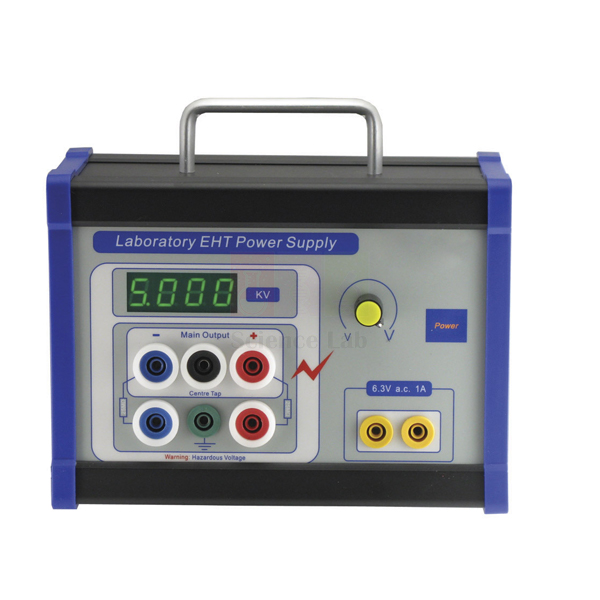
EHT Power Supply
EHT Power Supply (Product Code: SLE/PHY/162) is an extra-high-tension laboratory power supply used to drive electron tubes and electrostatic experiments in college and advanced school physics labs. It gives a fully isolated, continuously variable output of 0–2.5 kV or 0–5 kV DC at a maximum of 2 mA, shown on a bright 12.5 mm green LED display, plus a 6.3 V AC auxiliary output for cathode heaters. It is supplied by Jain Scientific Equipments Pvt Ltd (ScienceLab), Ambala, India.
Specifications
| Parameter | Detail |
|---|---|
| EHT output | Continuously variable, 0–2.5 kV DC or 0–5 kV DC, maximum 2 mA; fully isolated |
| Current limiting | Electronically limited to 2 mA; outputs also current-limited by 100 kΩ resistors to avoid larger transient currents |
| Output stability | Specially wound switching transformer keeps the output voltage stable with time |
| Secondary outputs | Two, via 25 MΩ safety resistors (total 50 MΩ on the 5 kV range); short-circuit current 60 µA for electrostatic experiments |
| Auxiliary output | 6.3 V AC at 1 A for cathode heaters, protected by resettable fuse |
| Display | Bright 12.5 mm green LED display indicating EHT output |
| Earthing | Independent earth terminal for earthing any one of the five output sockets |
| Sockets | Shrouded; suitable for standard 4 mm plugs or shrouded plugs |
| Input | 220–240 V, 50/60 Hz |
| Mains supply (as listed) | 230 V ±5%, 50 Hz |
| Fuse | 315 mA (L) |
| Dimensions | 208 x 155 x 115 mm (W x H x D); height including handle 187 mm |
| Suitable for | Driving Teltron tubes and electrostatic experiments |
| Product code | SLE/PHY/162 |
| Supplied by | Jain Scientific Equipments Pvt Ltd (ScienceLab), Ambala, India |
What Is the EHT Power Supply Used For?
Electron-beam tubes need a high accelerating voltage on the anode and a low-voltage supply for the cathode heater. This unit provides both: the variable EHT output accelerates the beam, and the 6.3 V AC auxiliary output heats the cathode, so one supply can run deflection and fine-beam experiments such as measuring the specific charge of the electron. The bright LED display lets the class read the accelerating voltage as it is adjusted.
For electrostatics, the secondary outputs pass through 25 MΩ resistors, which limit the short-circuit current to 60 µA while still delivering a high voltage for charging plates and electroscopes. High voltage demands care: only trained staff should set up the unit, use shrouded leads where possible, turn the output to zero before making connections, and use the independent earth terminal as the experiment requires.
What to Specify When Ordering
- The tubes or electrostatic experiments you plan to run, so matching tubes and holders can be quoted together.
- Whether shrouded leads are needed for the output sockets.
- Your local mains supply, checked against the listed 220–240 V input.
- Any documentation required, such as a calibration certificate — ask us before ordering.
Supplier
Jain Scientific Equipments Private Limited, trading as ScienceLab, supplies the EHT Power Supply from Ambala, Haryana, India. The company also supplies the electron tubes, tube holders and electrostatics apparatus this unit is typically used with, so a physics department can source the supply and the experiments it powers through a single quotation. Colleges, universities, schools, dealers and institutional buyers across India and international markets are served. More about the company is on our company profile.
Related Physics Lab Equipment
These items are commonly powered by, or used alongside, an EHT supply:
- Teltron Electron Deflection Tube D — for studying electric and magnetic deflection of an electron beam.
- Teltron Dual Beam Tube D — helium-filled tube for observing fine luminous electron beams.
- Teltron Tube Holder D — holder for mounting D-series tubes.
- High Tension Power Supply — companion supply designed for thermionic experiments.
- Electroscope, Gold Leaf — for electrostatic experiments using the current-limited outputs.
Browse more power supplies and electrical apparatus in the Physics Lab Equipment category.
Frequently Asked Questions
What output does the EHT Power Supply provide?
The EHT Power Supply provides a fully isolated, continuously variable output of 0–2.5 kV or 0–5 kV DC at a maximum current of 2 mA. The output is shown on a bright 12.5 mm green LED display for easy reading during experiments.
Can the EHT Power Supply drive Teltron tubes?
Yes. The EHT Power Supply is described as suitable for driving Teltron tubes. Alongside the high-voltage output it has an auxiliary 6.3 V AC output at 1 A for cathode heaters, protected by a resettable fuse.
What are the secondary outputs on the EHT Power Supply for?
The two secondary outputs on the EHT Power Supply are linked through 25 MΩ safety resistors, totalling 50 MΩ on the 5 kV range. They limit the short-circuit current to 60 µA, making them appropriate for electrostatic experiments.
How does the EHT Power Supply limit current?
The EHT Power Supply limits output current electronically to 2 mA, and its outputs are also current-limited by 100 kΩ resistors to avoid larger transient currents. The auxiliary heater output is separately protected by a resettable fuse.
What mains supply does the EHT Power Supply need?
The EHT Power Supply is listed with an input of 220–240 V, 50/60 Hz, a mains supply rating of 230 V ±5%, 50 Hz, and a 315 mA (L) fuse. Check these figures against your local mains supply before ordering.
What are the dimensions of the EHT Power Supply?
The EHT Power Supply measures 208 x 155 x 115 mm (width x height x depth), and its height including the handle is 187 mm. It has five shrouded output sockets suitable for standard 4 mm plugs or shrouded plugs.
Is a calibration certificate available for the EHT Power Supply?
Calibration-certificate availability for the EHT Power Supply should be discussed with us before ordering. State the requirement in your enquiry through our contact page and we will confirm what documentation can accompany the unit.
Who supplies the EHT Power Supply?
The EHT Power Supply is supplied by Jain Scientific Equipments Pvt Ltd (ScienceLab), Ambala, Haryana, India, to colleges, schools, dealers and institutions across India and international markets. Send the product code SLE/PHY/162 and quantity for a quotation.
Request a Quote
To request a quotation for the EHT Power Supply (SLE/PHY/162), write to us through the contact page or add it to the enquiry cart with the tubes and leads you plan to use.
Last updated: 24 September 2026
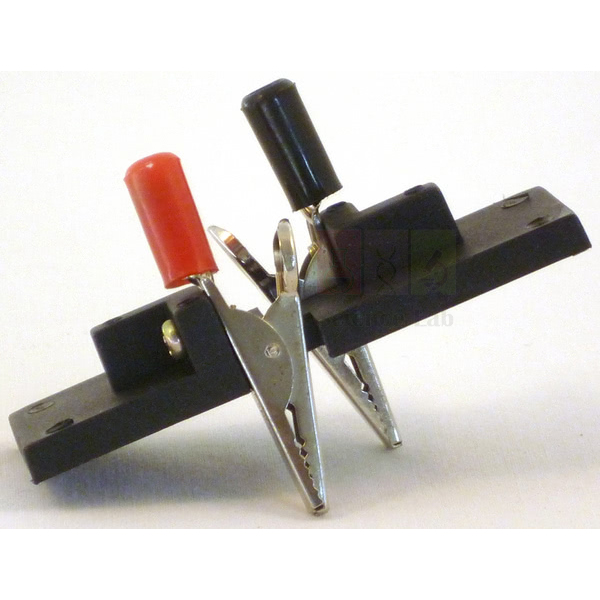
Electrode Foil Holders
Electrode Foil Holders (Product Code: SLE/PHY/163) are plastic strips with 4 mm socket terminals and two crocodile clips, used to hold electrode foils in place and connect them into a circuit during electricity and electrochemistry practicals. Listed as "Foils, Pack of 5", they let students set up simple cells, electrolysis and electroplating experiments with the foils held steady and wired through standard 4 mm leads. They are made by Jain Scientific Equipments Pvt Ltd (ScienceLab), an OEM manufacturer, at its own factory in Ambala, India.
Specifications
| Parameter | Detail |
|---|---|
| Listed as | Foils, pack of 5 |
| Construction | Plastic strip |
| Terminals | 4 mm socket terminals |
| Clips | Two crocodile clips |
| Function | Holds electrode rods and foils in place during use |
| Product code | SLE/PHY/163 |
| Manufacturer | Jain Scientific Equipments Pvt Ltd (ScienceLab) — OEM |
| Country of origin | India (made in Ambala, Haryana) |
What Are Electrode Foil Holders Used For?
Thin metal foils are awkward to keep upright in a solution and even harder to connect reliably. The holder solves both problems: its crocodile clips grip the foils, and the 4 mm socket terminals take ordinary laboratory leads to a meter or power supply. Typical experiments include building simple cells from two different metal foils, ranking metals in an electrochemical series by the voltage they produce, electroplating copper onto another foil, and electrolysis of salt solutions.
For consistent readings, clean the foils before each run and keep the crocodile clips above the liquid so they do not corrode or take part in the reaction. Rinse and dry the holders after practicals and store them with the foils. They are a small but useful part of any electricity experiment kit for school labs in India and abroad.
What to Specify When Ordering
- Number of packs — the item is listed as foils, pack of 5; confirm the pack contents in your quotation.
- Whether you also need the Electrode Rod Holders version for carbon or metal rods.
- Metal foils or strips and 4 mm leads to use with the holders.
OEM Manufacturer
ScienceLab is the trading name of Jain Scientific Equipments Private Limited, an MSME registered with manufacturing as its major activity (Udyam UDYAM-HR-01-0003714). As the OEM (original equipment manufacturer), the company makes the Electrode Foil Holders at its own licensed factory at Saha, Ambala, Haryana, India, and exports under DGFT Importer-Exporter Code AAECJ8618A. Schools, colleges, dealers and importers buy them factory-direct, and repeat orders for new lab sections are handled by the manufacturer itself — just ask us. More details are on our company profile.
Related Physics Lab Equipment
Use the holders with these items to complete cell and electrolysis practicals:
- Electrode Rod Holders — the matching holder listed for electrode rods.
- Metal Strips Set — aluminium, brass, copper, steel and zinc strips for comparing metals.
- Electrodes, Copper — copper electrodes for plating and simple cell work.
- Simple Cell Kit — glass jar with zinc and copper plates for making simple cells.
- Standard Digital Multimeter — for reading the voltage produced by each cell.
Find more electrical apparatus in the Physics Lab Equipment category.
Frequently Asked Questions
What do Electrode Foil Holders hold?
Electrode Foil Holders hold electrode foils, and also electrode rods, in place during use. Each is a plastic strip with two crocodile clips that grip the electrodes and 4 mm socket terminals for connecting them into a circuit.
How many Electrode Foil Holders are in a pack?
Electrode Foil Holders are listed as "Foils, Pack of 5". Please confirm the exact pack contents when you request a quotation through our contact page, so the number ordered matches your class size.
How are Electrode Foil Holders connected to a circuit?
Electrode Foil Holders connect to a circuit through their 4 mm socket terminals, which accept standard 4 mm laboratory leads. This lets students link the clipped foils to a meter, power supply or another cell without soldering or twisting wires.
Which experiments use Electrode Foil Holders?
Electrode Foil Holders are used in simple cell experiments, electrochemical series investigations, electroplating and electrolysis of solutions. Any practical that needs a foil electrode held steady and connected to a meter or supply can use them.
What is the difference between Electrode Foil Holders and Electrode Rod Holders?
Electrode Foil Holders and Electrode Rod Holders share the same plastic strip, 4 mm socket terminals and two crocodile clips. The foil version is listed as "Foils, Pack of 5" and the rod version as "Rods, Pack of 5", so choose by electrode type.
Who manufactures Electrode Foil Holders?
Electrode Foil Holders are manufactured by Jain Scientific Equipments Pvt Ltd (ScienceLab), the OEM, at its own factory at Saha, Ambala, Haryana, India. Quotations and repeat orders come directly from the manufacturer.
Can Electrode Foil Holders be ordered in bulk or for export?
Yes. Electrode Foil Holders are supplied in bulk to schools, colleges, dealers and institutions across India and international markets. Give the product code SLE/PHY/163, the number of packs and the destination for a complete quotation.
Request a Quote
Request a quotation for Electrode Foil Holders (SLE/PHY/163) through our contact page, or add them to the enquiry cart with any foils, leads or meters you need. Quotations come directly from the manufacturer.
Last updated: 24 September 2026
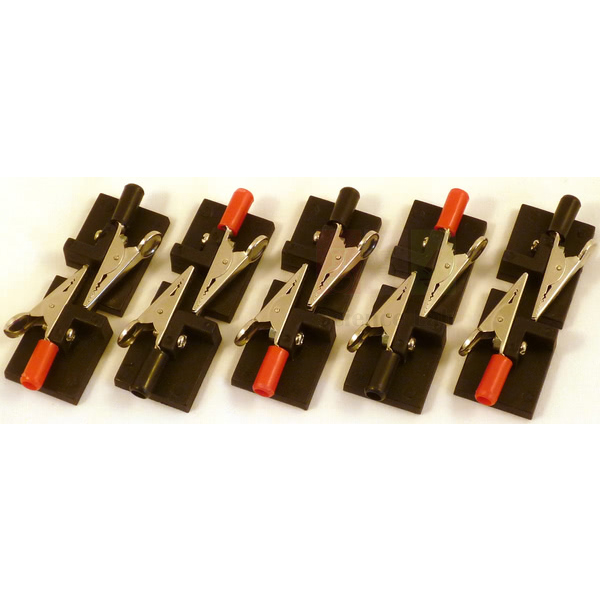
Electrode Rod Holders
Electrode Rod Holders (Product Code: SLE/PHY/164) are plastic strips fitted with two crocodile clips and 4 mm socket terminals, used to grip electrode rods and wire them to a power supply in electrolysis and conductivity experiments. Listed as "Rods, Pack of 5", they hold a pair of carbon or metal rods steady in the solution so students can concentrate on what happens at each electrode. They are made by Jain Scientific Equipments Pvt Ltd (ScienceLab), an OEM manufacturer, at its own factory in Ambala, India.
Specifications
| Parameter | Detail |
|---|---|
| Pack listing | Rods, pack of 5 |
| Body | Plastic strip |
| Connections | 4 mm socket terminals |
| Grips | Two crocodile clips |
| Purpose | Holds electrode rods and foils in place during use |
| Product code | SLE/PHY/164 |
| Manufacturer | Jain Scientific Equipments Pvt Ltd (ScienceLab) — OEM |
| Country of origin | India (made in Ambala, Haryana) |
What Are Electrode Rod Holders Used For?
Electrolysis with carbon rods is one of the most common school practicals, and it gives clear results only when the rods stay still. Clip two rods into the holder, lower them into the electrolyte and connect the 4 mm sockets to a low-voltage DC supply; students can then watch metal deposit on the cathode and gas form at the anode, and test the products. The same set-up checks whether a solution conducts, using a lamp or meter in series.
Carbon rods are brittle, so clip them gently near the top and keep the crocodile clips clear of the liquid. Use red and black leads to keep track of polarity, switch off before removing the rods, and ventilate the room when electrolysing chloride solutions. The holders are a practical item among chemistry and physics lab equipment for schools in India and abroad.
What to Specify When Ordering
- Number of packs — listed as rods, pack of 5; ask us to confirm exactly what each pack contains.
- Electrode rods to use with the holders, such as carbon rods, if you need them separately.
- A low-voltage DC supply and 4 mm leads for each group.
- Whether the Electrode Foil Holders version should be added for foil electrodes.
OEM Manufacturer
Electrode Rod Holders are produced by Jain Scientific Equipments Private Limited, which trades as ScienceLab and is the OEM (original equipment manufacturer) of this accessory. They are made at the company's own licensed factory at Saha, Ambala, Haryana, India, and sold straight from the factory to schools, colleges, lab-supply dealers and importers. If your department wants more holders later, reordering from the manufacturer is straightforward — ask us for repeat supply. See our company profile for background.
Related Physics Lab Equipment
These items complete an electrolysis or conductivity set-up:
- Electrode Foil Holders — the matching holder listed for flat foil electrodes.
- Electrode, Carbon Rod — carbon rods for electrolysis.
- Power Supply, Stepped — low-voltage AC/DC supply providing DC for electrolysis.
- Stackable Leads — 4 mm leads for the socket terminals.
Browse related apparatus in the Physics Lab Equipment category.
Frequently Asked Questions
What are Electrode Rod Holders?
Electrode Rod Holders are plastic strips with 4 mm socket terminals and two crocodile clips. They hold electrode rods, and also foils, in place during use, and let the electrodes be connected to a supply or meter with standard leads.
Are electrode rods included with Electrode Rod Holders?
Electrode Rod Holders are listed as "Rods, Pack of 5". To be sure whether rods are included or should be ordered separately, ask us through the contact page; carbon rods are also available as a separate item.
Can Electrode Rod Holders be used for electrolysis with carbon rods?
Yes. Electrode Rod Holders grip carbon rods with their crocodile clips while the 4 mm sockets connect to a low-voltage DC supply. Keep the clips above the electrolyte so that only the rods take part in the reaction.
When should I choose Electrode Rod Holders instead of Electrode Foil Holders?
Choose Electrode Rod Holders when your practicals use cylindrical electrodes such as carbon rods, and the foil version when you work with flat metal foils. Both use the same strip, clip and 4 mm socket design, so many labs stock both.
How should Electrode Rod Holders be cared for?
After each practical, rinse Electrode Rod Holders in clean water and let them dry before storage, paying attention to the crocodile clips. Handle carbon rods gently when clipping them in, because they can snap if gripped too hard.
Who manufactures Electrode Rod Holders?
Electrode Rod Holders are manufactured by Jain Scientific Equipments Pvt Ltd (ScienceLab) as the OEM, at its own factory at Saha, Ambala, Haryana, India. Quotations and repeat orders are handled directly by the manufacturer.
Can Electrode Rod Holders be ordered in bulk or for export?
Yes. Electrode Rod Holders are supplied in bulk to schools, colleges, dealers and institutions across India and international markets. Share the product code SLE/PHY/164, the number of packs and the delivery destination for a quotation.
Request a Quote
To request a quotation for Electrode Rod Holders (SLE/PHY/164), use our contact page or place them in the enquiry cart with any rods, leads or power supplies. You receive the quotation directly from the manufacturer.
Last updated: 24 September 2026
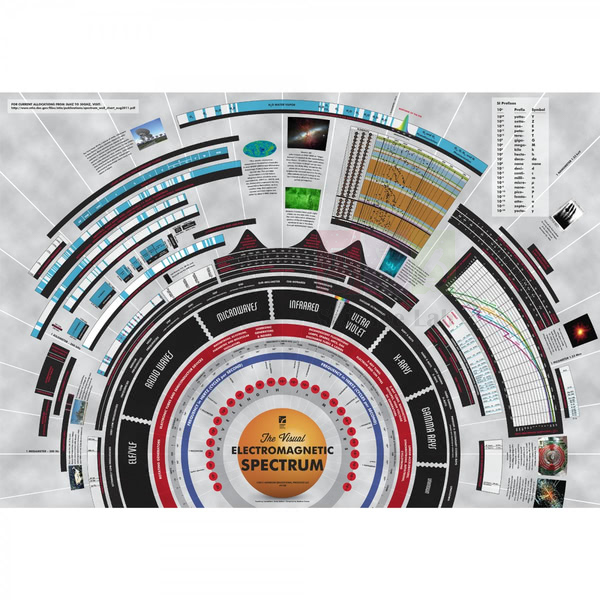
Electromagnetic Spectrum Chart
Electromagnetic Spectrum Chart (Product Code: SLE/PHY/165) is a large visual aid used to show students how the unseen electric and magnetic waves around us are arranged by wavelength and frequency in school and college physics classrooms. At 69 cm x 99 cm (height x width) it can be read by a whole class, and it is accompanied by an explanatory sheet. It is made by Jain Scientific Equipments Pvt Ltd (ScienceLab), an OEM manufacturer of physics lab equipment, at its own factory in Ambala, India.
Specifications
| Parameter | Detail |
|---|---|
| Type | Visual aid chart on the electromagnetic spectrum |
| Dimensions | 69 cm x 99 cm (H x W) |
| Topics shown | Wavelength and frequency scales; radio and microwave usage; X-ray and gamma-ray absorption |
| Supplied with | Explanatory sheet |
| Product code | SLE/PHY/165 |
| Manufacturer | Jain Scientific Equipments Pvt Ltd (ScienceLab) — OEM |
| Country of origin | India (made in Ambala, Haryana) |
What Is the Electromagnetic Spectrum Chart Used For?
We live in a sea of waves we cannot see, and this chart gives teachers one reference for walking a class from long radio waves to short gamma rays. Because the wavelength and frequency scales sit side by side, learners can see that as one increases the other decreases, which leads naturally into the wave equation. It is a useful wall reference for school physics lab equipment in India, from secondary science to senior physics.
The chart also frames everyday questions: how radio and microwaves are put to use, and why X-rays and gamma rays are absorbed differently by different materials. Mount it at eye level near the demonstration bench, keep it out of direct sunlight to limit fading, and use the explanatory sheet to plan discussion questions before the lesson.
OEM Manufacturer
ScienceLab is the trading name of Jain Scientific Equipments Private Limited, the original equipment manufacturer (OEM) behind this chart. The company produces its teaching aids at its own licensed factory at Saha, Ambala, Haryana, instead of reselling a trader's stock, and supplies schools, colleges, dealers and importers directly. Read more on the ScienceLab company profile.
Related Physics Lab Equipment
These items turn the chart into hands-on lessons on waves and spectra:
- Apparatus Microwave — demonstrates reflection, polarisation, diffraction and interference with real microwaves.
- Microwave Transmitter/Receiver — lets students investigate transverse waves in the microwave band.
- Hydrogen Spectrum Set — shows a line spectrum for a closer look at visible wavelengths.
- Prism, Borosilicate Glass — disperses white light to reveal the visible band of the spectrum.
- Wave Form, Helix — models wavelength and frequency with a wave students can see.
Browse the full range in our Physics Lab Equipment category.
Frequently Asked Questions
What size is the Electromagnetic Spectrum Chart?
The Electromagnetic Spectrum Chart measures 69 cm high by 99 cm wide, a format large enough to be read across a typical classroom when it is mounted on a wall or display board near the teaching area.
What comes with the Electromagnetic Spectrum Chart?
The Electromagnetic Spectrum Chart is accompanied by an explanatory sheet that helps teachers expand on wavelength, frequency and the uses of different wave bands. Mounting hardware and lamination are not listed, so ask us if you need them.
Which topics does the Electromagnetic Spectrum Chart cover?
The Electromagnetic Spectrum Chart compares wavelength and frequency scales and covers radio and microwave usage along with X-ray and gamma-ray absorption, so students can connect the unseen electric and magnetic waves around them to real applications.
Who manufactures the Electromagnetic Spectrum Chart?
The Electromagnetic Spectrum Chart is manufactured by Jain Scientific Equipments Pvt Ltd (ScienceLab), an OEM manufacturer, at its own factory in Ambala, Haryana, India. Quotations and repeat orders are handled directly by the manufacturer.
Can schools order the Electromagnetic Spectrum Chart in bulk or for export?
Yes, the Electromagnetic Spectrum Chart can be quoted in classroom quantities for schools, dealers and importers in India and international markets. Share the quantity and delivery location on our contact page and we will reply with a quotation.
What should a quotation request for the chart include?
A quotation request for the Electromagnetic Spectrum Chart should give the product code SLE/PHY/165, the number of charts, the delivery address and any questions about language or finish, so the quotation matches what your classrooms need.
Request a Quote
To order the Electromagnetic Spectrum Chart, send your requirement through our contact page or add it to the enquiry cart. Quotations come direct from the manufacturer, with no trading intermediary.
Last updated: 24 September 2026