- Physics Lab Equipment
- Chemistry Lab Equipment
- Biology Lab Equipment
- Anatomical Lab Equipment
- Learning
- Educational Lab Equipment
- Magnets
- Agriculture
- Astronomy
- Earth Science
- Geography Lab Equipment
- Safety Lab Coat
- Laboratory
- Meteorological
- Electricity & Magnetism
- Heat
- School Lab Equipment
- Lab Glassware
- Science Lab Equipment
- Tvet Lab Equipment
- Robotics Kits Supplier and Manufacturer for Schools India
- Math Lab Equipment Manufacturers and Exporters in Ambala
- STEM Kits Manufacturers and Supplier India
- Engineering Lab Equipment
- Hospital Lab Equipment
- Water, Sanitation & Hygiene Supplies
- Cold Chain, Solar & Communication Equipment
- Nutrition

Knife Switch, Double Pole
Knife Switch, Double Pole (Product Code: SLE/PHY/198) is a double-pole, double-throw (DPDT) knife switch used to reverse the direction of a current or to change a circuit over between two paths in physics and electrical practicals. Its brass poles and blades sit on a plastic base and are chosen to ensure good electrical connections on both poles at once. It is supplied by Jain Scientific Equipments Pvt Ltd (ScienceLab), Ambala, India.
Key Details
| Parameter | Detail |
|---|---|
| Switch type | Knife switch, double pole, double throw (DPDT) |
| Mounting | Plastic base |
| Poles and blades | Brass, to ensure good electrical connections |
| Suitable for | Electricity circuits |
| Range | One of a range of knife switches on plastic bases; a single-pole version is also listed |
| Product code | SLE/PHY/198 |
| Supplied by | Jain Scientific Equipments Pvt Ltd (ScienceLab), Ambala, India |
What Is the Double Pole Knife Switch Used For?
With its outer terminals cross-connected, the switch becomes a reversing key: one throw sends current through a solenoid, motor or galvanometer in one direction, and the other throw reverses it. That is exactly what is needed to show a magnetic field changing direction, to run a small DC motor backwards, or to average tangent galvanometer readings taken with the current both ways. Wired without the cross-connection, it moves one supply between two circuits, for example charging a capacitor and then discharging it through a meter.
Check that both blades seat fully in their contacts on each throw, since a half-closed pole gives erratic readings. Keep the brass faces clean and limit use to low-voltage circuits, because the conductors are exposed. It is a practical addition to any set of AC DC circuits experiment kits in a school or college laboratory.
What to Specify When Ordering
- Double pole, double throw (this item) or the single-pole version from the same range
- The quantity required for student benches and the demonstration table
- Connecting wire or other circuit components you want included in the same quotation
Supplier
This double pole knife switch is supplied by Jain Scientific Equipments Private Limited, the company behind the ScienceLab name, from Ambala, Haryana, India. Laboratories, training institutes, dealers and importers can source it on one order with the motors, capacitors, power supplies and wiring used in reversing and changeover circuits.
Need more switches to match an earlier delivery, or a mix of single-pole and double-pole switches? Mention it in your enquiry and we will include it in the offer. Company background is on the ScienceLab company profile.
Related Physics Lab Equipment
These items are used with a double pole switch in reversing and changeover circuits:
- Knife Switch – Single Pole — for circuits that only need on/off control
- Capacitor (Charging and Discharging) — a changeover switch moves it between charge and discharge
- Electric Motor — shows reversal of rotation when the current is reversed
- Power Supply, Stepped — a low-voltage DC source for the reversing circuit
- Connecting Wire — for the cross-connection and circuit wiring
Explore the wider range of Physics Lab Equipment.
Frequently Asked Questions
What does DPDT mean on the Knife Switch, Double Pole?
On the Knife Switch, Double Pole, DPDT means double pole, double throw: two separate circuit paths are switched together, and each can be connected to either of two positions. One movement can therefore reverse a current or swap between two circuits.
How do I wire the double pole knife switch as a reversing switch?
To use the Knife Switch, Double Pole as a reversing switch, connect the supply to the common (hinge) terminals, the load to one pair of outer terminals, and cross-connect the outer terminals diagonally. Throwing the blades the other way then reverses the current through the load.
What is the Knife Switch, Double Pole made of?
The Knife Switch, Double Pole has brass poles and blades to ensure good electrical connections, mounted on a plastic base. Wipe the contacts clean if they tarnish, and keep the switch for low-voltage laboratory circuits because the brass parts are exposed.
Which experiments need a double pole knife switch?
The Knife Switch, Double Pole is useful whenever a current must be reversed or a supply moved between circuits: reversing a solenoid or motor, taking tangent galvanometer readings in both directions, switching a capacitor between charge and discharge, or comparing two cells.
Who supplies the Knife Switch, Double Pole?
Jain Scientific Equipments Pvt Ltd (ScienceLab) of Ambala, Haryana, India supplies the Knife Switch, Double Pole to schools, colleges, laboratory dealers and importers. Orders can combine the switch with the single-pole version and the other electricity apparatus used in the same experiments.
Can double pole knife switches be supplied in bulk?
Yes. The Knife Switch, Double Pole can be quoted for a single school or in larger quantities for colleges, dealers and importers in India and international markets. State the quantity and destination in your enquiry, and add any single-pole switches you also need.
Request a Quote
To receive a quotation for the Knife Switch, Double Pole, send the quantity and delivery location through our contact page, or place the switch in the enquiry cart together with other electricity apparatus for a single combined offer from ScienceLab.
Last updated: 24 September 2026
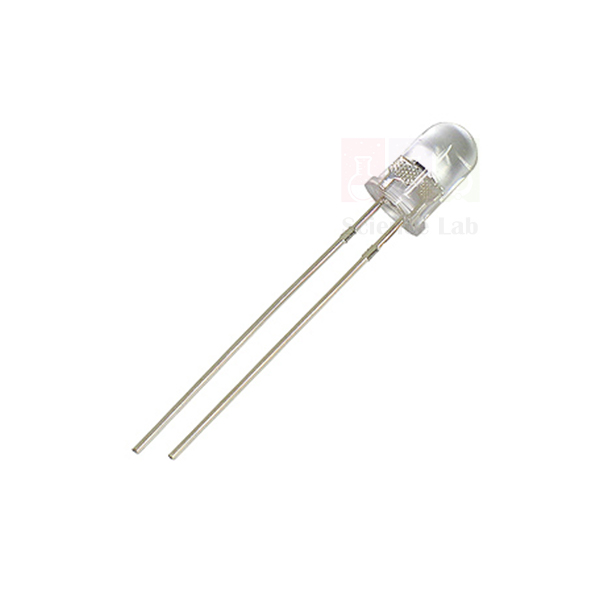
LED White
LED White (Product Code: SLE/PHY/199) is a standard 5mm white light-emitting diode used as a low-power light source in student circuits and LED characteristics experiments in physics and electronics labs. It is packed 100 to a pack, and its listed data — forward voltage values of 3.3 and 3.8, a luminous intensity of 10 mcd and an IF value of 30 — help students plan current-limiting resistors and compare white LEDs with other colours. It is supplied by Jain Scientific Equipments Pvt Ltd (ScienceLab), Ambala, India.
Specifications
| Parameter | Detail |
|---|---|
| Type | Standard LED (light-emitting diode) |
| Size | 5mm |
| Colour | White |
| Pack size | 100 LEDs |
| Forward current (IF) | 30 (listed value; forward-current ratings for 5mm LEDs are normally stated in mA) |
| Forward voltage (VF) | 3.3 V and 3.8 V (two values listed) |
| Colour coordinates | x: 0.31, y: 0.30 (listed under wavelength in the source data; white LEDs are described by colour coordinates rather than one wavelength) |
| Luminous intensity | 10 mcd |
| Other colours | The same standard 5mm LED is available in a range of colours |
| Product code | SLE/PHY/199 |
| Supplied by | Jain Scientific Equipments Pvt Ltd (ScienceLab), Ambala, India |
What Is the White LED Used For?
In an LED characteristics experiment kit, students plot current against voltage for the white LED and see that it only begins to conduct and glow once the forward voltage is reached — a noticeably higher turn-on voltage than a red LED, which opens a discussion of photon energy and colour. The same LEDs serve as the light source for light-dependent resistor circuits, as indicators on circuit boards, and in simple optics and science-fair projects.
Always wire a series resistor with each LED: subtract the forward voltage from the supply voltage and divide by the chosen current, keeping that current below the IF rating. Check polarity before switching on — on standard LEDs the longer lead is normally the anode — because a reversed LED will not light.
What to Specify When Ordering
- The colour: white (this item) or another colour from the standard 5mm range
- The number of packs, remembering each pack holds 100 LEDs
- Battery clips, circuit boards or sensors you want quoted with the LEDs
Supplier
These white LEDs are supplied by Jain Scientific Equipments Private Limited, the company behind the ScienceLab name, to schools, colleges, electronics training centres, dealers and importers. Packs can be combined with circuit boards, battery connectors and other physics items in a single consignment. For vendor records, buyers can note the supplying company’s Importer-Exporter Code AAECJ8618A (DGFT) and GSTIN 06AAECJ8618A1ZT. The ScienceLab company profile has more background.
Related Physics Lab Equipment
These items are often ordered with white LEDs for circuit and sensor work:
- LED Bright Red — compare its forward voltage with the white LED
- LED Blue — another colour for colour and photon-energy comparisons
- Light Dependent Resistor — detects the LED’s light in sensor circuits
- Battery Snap with Crocodile Clip — a quick battery connection for LED circuits
- Worcester Circuit Board — a base for building student circuits
Find more components in Physics Lab Equipment.
Frequently Asked Questions
How many LEDs are in a pack of LED White?
LED White is supplied in packs of 100 standard 5mm white LEDs, enough for a class to build circuits and keep spares for replacements. Order the number of packs you need, and mention any other colours from the same range.
What forward voltage does the white LED need?
The data for LED White lists forward voltage (VF) values of 3.3 V and 3.8 V. White LEDs need a higher forward voltage than red ones, so allow for this when you choose the supply voltage and the series resistor.
Does LED White need a series resistor?
Yes. LED White should always be used with a series resistor that keeps the current below its listed IF value of 30. Work out the resistor by subtracting the forward voltage from the supply voltage and dividing by the chosen current.
Why is no single wavelength given for a white LED?
LED White is specified with colour coordinates of x: 0.31, y: 0.30 rather than one wavelength, because a white LED emits a broad spread of colours. The coordinates describe its white tint, and its luminous intensity is listed as 10 mcd.
Who supplies LED White?
LED White is supplied by Jain Scientific Equipments Pvt Ltd (ScienceLab), Ambala, Haryana, India, to schools, colleges, electronics labs, dealers and importers in India and international markets, usually alongside other circuit components and physics lab equipment.
What should a quotation request for white LEDs include?
A quotation request for LED White should give the number of packs, any other LED colours needed, related components such as battery clips or circuit boards, and the delivery location, so everything can be quoted together in one offer.
Request a Quote
To get a price for LED White, write to us through the contact page or add the packs to the enquiry cart with any other components you need.
Last updated: 24 September 2026
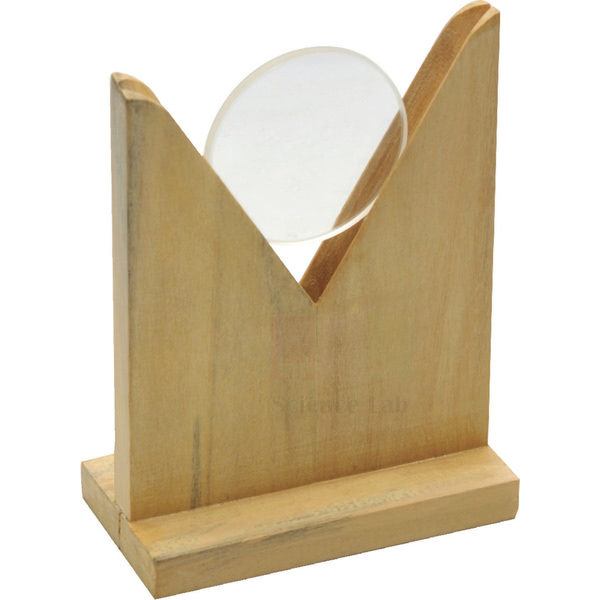
Lens Holder, Wooden
Lens Holder, Wooden (Product Code: SLE/PHY/200) is a bench-top wooden stand used to hold a lens or mirror upright while students locate images and measure focal lengths in school optics practicals. It takes lenses or mirrors up to 76mm in diameter in the V-shaped slot of a 100mm upright, and an index mark engraved on each end of its 100 x 50mm base shows its position against a scale. It is made by Jain Scientific Equipments Pvt Ltd (ScienceLab), an OEM manufacturer, at its own factory in Ambala, India.
Specifications
| Parameter | Detail |
|---|---|
| Holds | Lenses or mirrors up to 76mm diameter |
| Material | Wood |
| Upright | 100mm high, with a V-shaped slot to hold a convex or concave lens |
| Base | Rectangular, 100 x 50mm |
| Position reference | Index mark engraved on each end of the base |
| Product code | SLE/PHY/200 |
| Manufacturer | Jain Scientific Equipments Pvt Ltd (ScienceLab) — OEM |
| Country of origin | India (made in Ambala, Haryana) |
What Is the Wooden Lens Holder Used For?
The holder is the fixed point of most focal-length experiments. Students stand it beside a metre rule, line up an index mark with the scale, and move a screen or object until a sharp image forms, then read off the distances for a convex lens or a concave mirror. Because it simply rests on the bench, it can be moved in small steps and re-read quickly, which suits the u–v method and the distant-object method alike.
Let the lens settle to the bottom of the V so that its centre stays at the same height as the object and screen, which keeps the image on the principal axis. Clean lenses before use and handle them by the edges. Simple items like this form the backbone of optics lab equipment in India, where many student groups work at the same time.
What to Specify When Ordering
- The number of holders per student group or per laboratory
- The diameter of the lenses and mirrors you use, which must be 76mm or less for this holder
- Any lenses, mirrors or metre rules you want quoted in the same enquiry
OEM Manufacturer
ScienceLab, the trading name of Jain Scientific Equipments Private Limited, is the OEM (original equipment manufacturer) of this wooden lens holder. It is made and finished at the company’s own licensed factory at Saha, Ambala, Haryana, India, and dispatched directly to schools, colleges, dealers and importers without a middleman.
Buying from the manufacturer means that matching repeat orders and questions about the holder go to the people who make it — ask us whenever you need more. See the ScienceLab company profile for more about the company.
Related Physics Lab Equipment
These items are used with the wooden lens holder in focal-length and image experiments:
- Convex Lens — the lens held in the V-slot for image formation
- Mirror, Concave — for concave-mirror focal-length work
- Meter Stick, White — the scale against which the index marks are read
- Lens Holder with Base — a plastic holder with a locking ring for smaller lenses
- Optical Bench Kit — for a more complete optics set-up
View all items in Physics Lab Equipment.
Frequently Asked Questions
What size lenses fit the Lens Holder, Wooden?
The Lens Holder, Wooden takes lenses or mirrors up to 76mm in diameter. They rest in the V-shaped slot of its 100mm upright, which centres round optics of different sizes without any clamping or adjustment.
Can the wooden lens holder hold mirrors as well as lenses?
Yes. The Lens Holder, Wooden is designed to take lenses or mirrors up to 76mm in diameter, so one stand serves convex and concave lens experiments as well as curved-mirror experiments on the laboratory bench.
What are the index marks on the base for?
The Lens Holder, Wooden has an index mark engraved on each end of its 100 x 50mm base. Lining a mark up with a metre rule lets students read the exact position of the lens and so measure object and image distances accurately.
What is the Lens Holder, Wooden made of?
The Lens Holder, Wooden is made of wood, with a 100mm upright on a rectangular 100 x 50mm base. Keep it dry and away from heat sources, and wipe it with a dry cloth after use so the engraved marks stay easy to read.
Who manufactures the Lens Holder, Wooden?
The Lens Holder, Wooden is manufactured by Jain Scientific Equipments Pvt Ltd (ScienceLab), the OEM, at its own factory in Saha, Ambala, Haryana, India. It is supplied factory-direct to schools, colleges, dealers and importers in India and international markets.
Can the wooden lens holder be ordered in class sets?
Yes. The Lens Holder, Wooden can be quoted in class sets for schools or in larger quantities for dealers and importers. Give the quantity, any lenses or mirrors to include, and the delivery location in your enquiry.
Request a Quote
Quotations for the Lens Holder, Wooden are issued directly by the manufacturer. Reach us through the contact page or add the holder to the enquiry cart with the lenses and mirrors you need.
Last updated: 24 September 2026
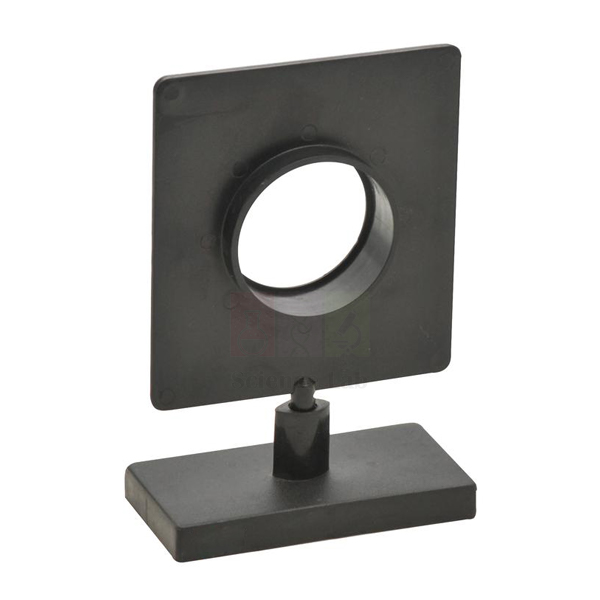
Lens Holder with Base
Lens Holder with Base (Product Code: SLE/PHY/201) is a black plastic lens mount on its own base, used to hold a lens firmly upright during light and optics experiments in school and college labs. It houses lenses up to 50mm, a simple locking ring keeps the lens in position, and it comes in a pack of 5 so a group can line up several lenses at once. It is made by Jain Scientific Equipments Pvt Ltd (ScienceLab), an OEM manufacturer, at its own factory in Ambala, India.
Specifications
| Parameter | Detail |
|---|---|
| Material | Plastic |
| Colour | Black |
| Lens size | Houses lenses up to 50mm |
| Mounting | Mounted on a base |
| Lens retention | Simple locking ring holds the lens firmly in position |
| Pack size | 5 holders |
| Application | Light and optics experiments |
| Product code | SLE/PHY/201 |
| Manufacturer | Jain Scientific Equipments Pvt Ltd (ScienceLab) — OEM |
| Country of origin | India (made in Ambala, Haryana) |
What Is the Lens Holder with Base Used For?
Whenever an experiment needs more than one lens standing at a time, these holders do the job: two convex lenses set up as a simple telescope or compound microscope model, lenses placed in contact to find a combined focal length, or a lens in front of a light source to throw an image on a screen. Paired with a convex concave lens set, school students can set up and change arrangements quickly because the locking ring stops the lens tipping or dropping out when the holder is moved.
Tighten the locking ring by hand only until the lens no longer moves; there is no need to force it against the glass. Wipe lenses with a soft lens cloth before fitting them, and keep each pack of five holders together so a complete set is ready for the next class.
What to Specify When Ordering
- The number of packs, each containing 5 holders
- The diameter of your lenses, which should be 50mm or less for this holder
- Any lenses, light sources or optical benches you want quoted together
OEM Manufacturer
The Lens Holder with Base is produced by Jain Scientific Equipments Private Limited, known by its trading name ScienceLab, as the OEM (original equipment manufacturer). Production takes place at the company’s own licensed factory at Saha, Ambala, Haryana, India, and packs are shipped from there to schools, colleges, dealers and importers.
Since the quotation comes from the maker, extra packs to match an earlier order, or a question about a part, can be raised with the same team — ask us at any time. The ScienceLab company profile explains more about the business.
Related Physics Lab Equipment
These items are used with the plastic lens holders in light and optics lessons:
- Lens Holder, Wooden — takes larger lenses and mirrors in a V-shaped slot
- Convex Lens — the most common lens fitted in the holder
- Light Box and Optical Set — a light source and optics for image and ray work
- Optical Bench with 3 Stands — for measured lens positions along a scale
- Microfiber Lens Cloth — keeps lenses clean before they are mounted
Browse more optics items in Physics Lab Equipment.
Frequently Asked Questions
How many holders are in a pack of Lens Holder with Base?
The Lens Holder with Base comes in a pack of 5 black plastic holders, each mounted on its own base. Five holders let one group line up several lenses at once, or let five groups each work with a single lens.
What size lens does the Lens Holder with Base take?
The Lens Holder with Base houses lenses up to 50mm. For larger lenses, or for holding mirrors, the wooden lens holder in the same physics range is the better fit, as it holds the optic in a V-shaped slot.
How does the locking ring on the lens holder work?
The Lens Holder with Base has a simple locking ring that holds the lens firmly in position. Tighten it by hand until the lens no longer moves; forcing it further is unnecessary and could stress the glass.
Which experiments use the Lens Holder with Base?
The Lens Holder with Base is used in light and optics experiments such as finding focal length, combining lenses, and building simple telescope or microscope models from two lenses, where each lens must stay upright and steady.
Who manufactures the Lens Holder with Base?
The Lens Holder with Base is manufactured by Jain Scientific Equipments Pvt Ltd (ScienceLab) as the OEM at its own factory in Saha, Ambala, Haryana, India, and is supplied factory-direct to schools, colleges, dealers and importers in India and international markets.
What should a quotation request for lens holders include?
A quotation request for the Lens Holder with Base should state the number of packs of 5, the lens sizes you use, any lenses or optics sets to be included, and the delivery location, so the complete order can be quoted at once.
Request a Quote
Ask the manufacturer directly for a quotation on the Lens Holder with Base through our contact page, or add packs to the enquiry cart alongside your other optics items.
Last updated: 24 September 2026
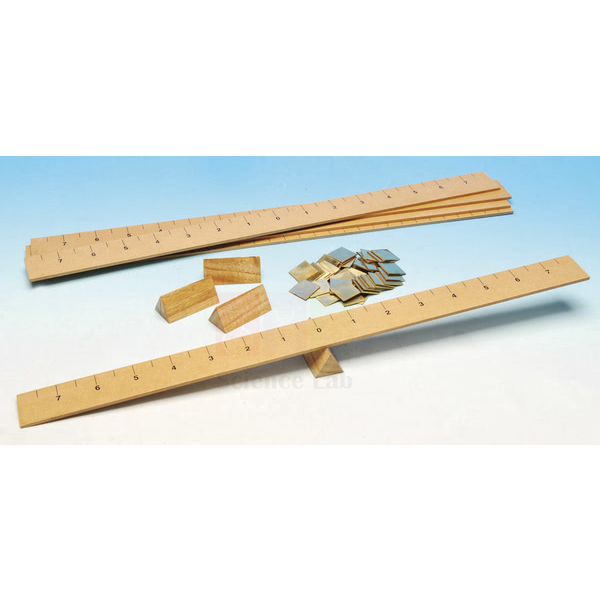
Levers Kit
Levers Kit (Product Code: SLE/PHY/202) is a class set of graduated plywood beams, fulcrums and matched metal blanks used to investigate the principle of moments and lever balance in school physics practicals. Designed for eight pupils, it contains five 600 x 44 x 3mm beams graduated every 38mm, four 32 x 32 x 64mm fulcrums and forty 25mm square metal blanks whose masses are matched to ±1%. It is made by Jain Scientific Equipments Pvt Ltd (ScienceLab), an OEM manufacturer, at its own factory in Ambala, India.
Specifications
| Parameter | Detail |
|---|---|
| Designed for | Eight pupils |
| Beams | Five plywood beams, 600 x 44 x 3mm |
| Beam graduations | Every 38mm |
| Fulcrum location | Groove across the centre of each beam |
| Fulcrums | Four, 32 x 32 x 64mm |
| Metal blanks | Forty, 25mm square |
| Blank mass matching | Matched to ±1% |
| Product code | SLE/PHY/202 |
| Manufacturer | Jain Scientific Equipments Pvt Ltd (ScienceLab) — OEM |
| Country of origin | India (made in Ambala, Haryana) |
What Is the Levers Kit Used For?
Pupils rest a beam on a fulcrum at its centre groove and load metal blanks at the graduation marks on either side until it balances. Because the blanks are matched in mass, each one counts as an equal unit, and because the graduations are evenly spaced, each mark counts as an equal unit of distance. The rule that the turning effect on one side equals the turning effect on the other can then be checked simply by counting — for example, two blanks at four marks balance four blanks at two marks.
Check that the empty beam balances before adding loads, and centre each blank on its graduation line so distances stay true. Keep the plywood beams flat and dry when stored. As mechanics lab equipment in India, the kit gives a whole group a hands-on introduction to moments before they move on to spring balances and standard masses.
What to Specify When Ordering
- The number of kits, based on one kit per eight pupils
- Whether you would like additional blanks or beams held in reserve (ask us)
- Any force meters or mass sets you want quoted for extension work
OEM Manufacturer
Jain Scientific Equipments Private Limited, which trades as ScienceLab, is the OEM (original equipment manufacturer) of the Levers Kit and makes it at its own licensed factory in Saha, Ambala, Haryana, India. Schools, colleges, dealers and importers receive the kit straight from the factory rather than from a trading house.
Working directly with the manufacturer means a request for extra kits, or for a replacement beam or blank, is answered by the team that produces them — just ask us. Read more on the ScienceLab company profile.
Related Physics Lab Equipment
These items extend lever and moments work beyond the class kit:
- Balance Demonstration Fulcrum/Lever — for a teacher demonstration of lever balance
- Apparatus for Demonstrating the Moment of Force — shows turning effect at the front of the class
- Lever — a further lever apparatus for comparing designs
- Force Meter/Spring Balance — measures effort forces in extended lever experiments
- Mass Set — standard masses for quantitative moment calculations
See the complete Physics Lab Equipment range.
Frequently Asked Questions
What is included in the Levers Kit?
The Levers Kit contains five plywood beams measuring 600 x 44 x 3mm, four fulcrums of 32 x 32 x 64mm and forty 25mm square metal blanks. Together these parts equip eight pupils to investigate balance and turning effects.
How many pupils can use one Levers Kit?
One Levers Kit is designed for eight pupils. The class shares the five graduated beams and four fulcrums between its groups and divides the forty matched metal blanks among them to load the beams.
Why are the metal blanks in the Levers Kit matched?
The Levers Kit blanks have masses matched to ±1%, so each blank counts as one equal unit of weight. Students can verify the principle of moments by counting blanks and graduations instead of weighing every load.
How are the Levers Kit beams marked?
Each Levers Kit beam is graduated every 38mm along its 600mm length and has a groove across its centre that locates the fulcrum point, so the beam balances in the same place every time and distances can be counted in equal steps.
Who manufactures the Levers Kit?
The Levers Kit is manufactured by Jain Scientific Equipments Pvt Ltd (ScienceLab), the OEM, at its own factory in Saha, Ambala, Haryana, India. It is supplied factory-direct to schools, colleges, dealers and importers in India and international markets.
Can the Levers Kit be supplied for several classes?
Yes. The Levers Kit can be quoted for a single class or as several sets for schools, dealers and importers. State the number of kits, any extra force meters or masses, and the delivery location in your enquiry.
Request a Quote
For a quotation straight from the manufacturer, send your Levers Kit requirement through the contact page or add it to the enquiry cart with your other mechanics apparatus.
Last updated: 24 September 2026
Solar Bio Energy Ready-To-Go
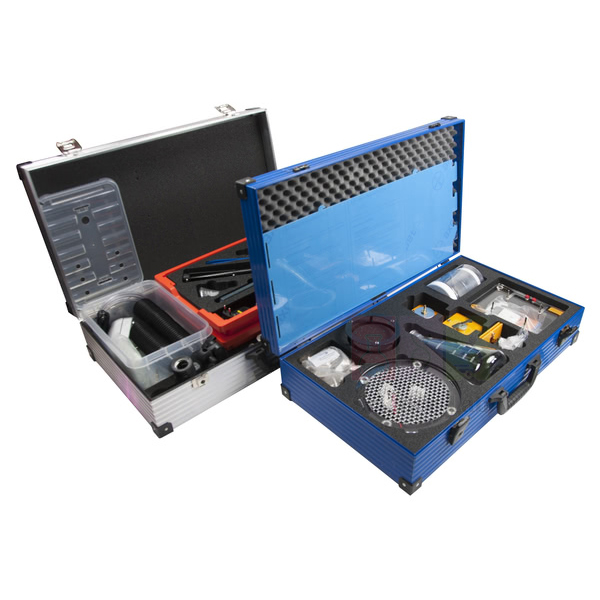
Solar Bio Energy Ready-To-Go (Product Code: SLE/PHY/203) is an extensive experiment system used to reconstruct and understand the whole biomass cycle, from seed germination to the energetic use of biomass, in school and college science labs. Students grow plants in a cultivation box and hydroculture, then follow the aerobic and anaerobic degradation of that biomass in compost and biogas processes, without any additional equipment. It is supplied by Jain Scientific Equipments Pvt Ltd (ScienceLab), Ambala, India.
Specifications
| Parameter | Detail |
|---|---|
| System type | Experiment system for the whole biomass cycle, usable without additional equipment |
| Plant growth | Cultivation box and hydroculture for observing sprouting and growth |
| Degradation processes | Aerobic degradation in a compost; anaerobic degradation in biogas processes |
| Analysis | Water and nutrient consumption in the different growth phases |
| Energy parts | PEM fuel cell module, motor module without gear, Solar-Base unit small and propeller |
| Cases | Aluminium case 1710, silver, and aluminium case 1710, blue |
| Consumables shelf life | Depends on the item (seeds, fertilizer, compost catalyst) and its storage; ask us for the dates of the batch you are quoted |
| Product code | SLE/PHY/203 |
| Supplied by | Jain Scientific Equipments Pvt Ltd (ScienceLab), Ambala, India |
Experiments:
- Germination of plant seeds
- Aerobic degradation of biomass in a compost
- Anaerobic degradation of biomass to form hydrogen
- Anaerobic degradation of biomass to form methane
- Plant growth in a hydroculture
- Consumption of water and nutrients
Components:
- Modules and electrical parts: 1 x motor module without gear, 1 x PEM fuel cell module, 1 x Solar-Base unit small, 1 x propeller, 2 x short-circuit plug, 1 x test lead black 25 cm, 1 x test lead red 25 cm
- Growing parts: 1 x seed set, 1 x sprout box, 50 x net cup planter, 2 x expanded clay pebbles, 1 x fertilizer, 2 x pot holder Bio Energy, 2 x plant light, 1 x tripod plant lighting, 1 x air pump, 2 x aeration stone, 1 x nebulizer, 2 x timer, 1 x EC meter
- Compost and gas parts: 1 x composter, 1 x compost catalyst, 1 x gas collecting container, 1 x Erlenmeyer flask 1000 ml, 1 x rubber plug with tube, 24 x stopper red, 1.5 x silicone tube 4mm, 1 x Y-switch 4mm, 1 x hose clamp, 1 x burner, 1 x tripod, 1 x box 6 L
- Measuring and handling: 1 x temperature logger, 1 x weight, 1 x tweezers, 1 x ID tags
- Cases, inserts and documents: 1 x aluminium case 1710 silver, 1 x aluminium case 1710 blue, 2 x plastic box (Gratnells) 75 mm deep, 1 x insert Bio Energy Rtg, 2 x info sheet initial startup, 1 x layout diagram Bio Energy Ready-to-go
What Is the Solar Bio Energy Ready-To-Go Used For?
The system joins biology and energy science in one sequence. Students germinate seeds in the sprout box, move the seedlings into net cups in the hydroculture under plant lights switched by timers, and track water and nutrient uptake through each growth phase with the EC meter. The grown biomass then goes into the composter for aerobic degradation, where the temperature logger can follow the process, and into sealed vessels for anaerobic degradation that forms hydrogen and methane. The fuel cell, motor and propeller modules take the lesson on to the energetic use of biomass.
As a plant growth experiment kit that also covers renewable energy, it suits project work that runs over several lessons, so plan space for the hydroculture and label trays with the ID tags. Treat any collected gas with care, since both hydrogen and methane are flammable, and follow the start-up info sheets before the first run.
What to Specify When Ordering
- The number of complete systems required for your classes or teacher-training centre
- Whether you want replacement consumables such as seeds, fertilizer, compost catalyst or net cup planters quoted (ask us)
- Other Ready-to-go renewable-energy cases you would like priced in the same enquiry
Supplier
Jain Scientific Equipments Private Limited, which trades as ScienceLab, supplies the Solar Bio Energy Ready-To-Go to schools, colleges, teacher-training centres, dealers and importers in India and international markets. The complete system is sourced by the company and can be quoted together with related renewable-energy experiment cases in one consignment. Institutional buyers completing vendor forms can use the company’s GSTIN 06AAECJ8618A1ZT and Legal Entity Identifier 3358004HRD1JIVXKYX49. More background is on the ScienceLab company profile.
Related Physics Lab Equipment
These cases and kits continue the renewable-energy and plant-science topics of this system:
- Solar Bio Fuel Ready-to-go — carries biomass on to bioethanol and biodiesel production
- Solar H2 Ready-To-Go — a Ready-to-go case on hydrogen as an energy carrier
- Solar Photovoltaic Ready-To-Go — the solar electricity side of renewable energy
- Kit for Demonstrating Seed Respiration in Germination — the biology of germinating seeds
See all items in Physics Lab Equipment.
Frequently Asked Questions
What experiments does the Solar Bio Energy Ready-To-Go cover?
The Solar Bio Energy Ready-To-Go covers germination of plant seeds, plant growth in a hydroculture, consumption of water and nutrients, aerobic degradation of biomass in a compost, and anaerobic degradation of biomass to form hydrogen and to form methane.
Is additional equipment needed for the Solar Bio Energy Ready-To-Go?
The Solar Bio Energy Ready-To-Go is described as letting you reconstruct and understand the whole biomass cycle without any additional equipment. It includes plant lights, timers, an air pump, an EC meter and a temperature logger alongside the growing and degradation parts.
Are seeds and other consumables included in the Solar Bio Energy Ready-To-Go?
Yes. The Solar Bio Energy Ready-To-Go includes a seed set, fertilizer, compost catalyst, expanded clay pebbles and 50 net cup planters. Their shelf life depends on the item and storage conditions, so ask us for the dates of the batch you are quoted.
How is the Solar Bio Energy Ready-To-Go packed?
The Solar Bio Energy Ready-To-Go comes in two aluminium cases, type 1710 in silver and in blue, with a fitted insert, two 75 mm deep plastic boxes, a layout diagram and two info sheets for initial start-up.
Who supplies the Solar Bio Energy Ready-To-Go?
The Solar Bio Energy Ready-To-Go is supplied by Jain Scientific Equipments Pvt Ltd (ScienceLab), Ambala, Haryana, India, to schools, colleges, dealers and importers in India and international markets, and can be quoted alongside related renewable-energy cases.
What should a quotation request for this bio energy kit include?
A quotation request for the Solar Bio Energy Ready-To-Go should state the number of systems, any replacement consumables you want priced, other renewable-energy kits of interest, and the delivery location, so we can prepare one complete offer.
Request a Quote
Send your requirement for the Solar Bio Energy Ready-To-Go through our contact page, or add it to the enquiry cart with any other renewable-energy kits you are considering.
Last updated: 24 September 2026
Solar Bio Fuel Large
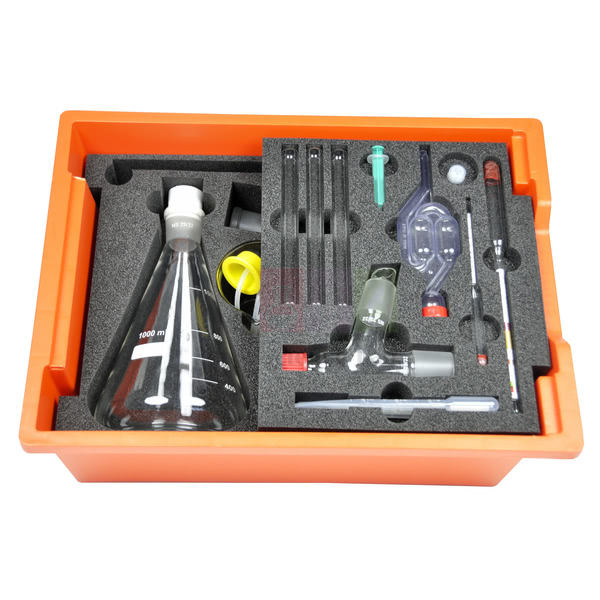
Solar Bio Fuel Large (Product Code: SLE/PHY/204) is a biofuel experiment set used to demonstrate the entire process of producing biofuels, from alcoholic fermentation to electricity from an ethanol fuel cell, in school and college science labs. Besides bioethanol it also covers biodiesel production through transesterification of fats, and the fermented mash is distilled with a Solar-condenser developed for this experiment. It is supplied by Jain Scientific Equipments Pvt Ltd (ScienceLab), Ambala, India.
Specifications
| Parameter | Detail |
|---|---|
| Process covered | The entire process of producing biofuels |
| Fuels | Bioethanol, and biodiesel through transesterification of fats |
| Step 1 | Alcoholic fermentation (the biological step) |
| Step 2 | Distillation of the mash with the Solar-condenser developed for this experiment |
| Step 3 | Conversion of the biofuel into usable energy, such as electrical energy, with the provided ethanol fuel cell |
| Distilling head | 2 cores, 75°, NS 19/26 |
| Yeast shelf life | Depends on storage conditions; ask us for the date of the batch you are quoted |
| Product code | SLE/PHY/204 |
| Supplied by | Jain Scientific Equipments Pvt Ltd (ScienceLab), Ambala, India |
Components:
- Fuel cell and electrical modules: 1 x solar ethanol fuel cell module, 1 x potentiometer module, 1 x motor module without gear, 1 x yellow propeller
- Glassware and fittings: 1 x Erlenmeyer flask 1000 ml, 1 x distilling head (2 cores, 75°, NS 19/26), 1 x condenser, 1 x beaker 250 ml, 1 x measuring cylinder 100ml, 3 x test tubes, 1 x airlock, 1 x rubber stopper, 1 x grip stopper, 1 x silicone ring, 1 x plug with hose
- Measuring and dosing: 1 x laboratory thermometer, 1 x alcoholmeter, 1 x areometer, 1 x syringe 2ml, 3 x Pasteur pipette
- Consumable: 1 x yeast
- Storage and documents: 1 x box, 1 x lid for tray, 1 x padding “Bio Fuel-Large”, 1 x Solar-CD, 1 x packing layout plan (Einräumplan) Bio Fuel Large, 4 x transparent bump-on feet 5.0 mm high x 11.1 mm diameter
What Is the Solar Bio Fuel Large Used For?
The set follows the chain from sugar to electricity. Students ferment a sugar-containing mash with yeast under the airlock, follow the change in density with the areometer, distil the mash through the distilling head and condenser, and check the strength of the distillate with the alcoholmeter. The ethanol then feeds the fuel cell module, whose output drives the motor and propeller or is studied with the potentiometer module. A separate strand shows how fats are turned into biodiesel by transesterification.
As an environmental science kit, school and college groups can use it to compare fuels made from plants with fossil fuels. Note that the component list does not include a stand or heat source for the distillation step. Ethanol is flammable, so heat carefully, keep open flames away from the collecting vessel and wear eye protection.
What to Specify When Ordering
- The number of sets required
- Whether the Solar Bio Fuel Supplement accessory box should be quoted with each set
- The fermentation and transesterification substances you need, which are not in the component list apart from yeast (ask us)
Supplier
Solar Bio Fuel Large is supplied by Jain Scientific Equipments Private Limited, which trades under the ScienceLab name, to schools, colleges, universities, dealers and importers in India and international markets. The company sources the complete set and can quote it with the accessory box and other renewable-energy kits so that a laboratory receives everything in one delivery. See the ScienceLab company profile for company details.
Related Physics Lab Equipment
These items are used with, or build on, the Bio Fuel Large experiments:
- Solar Bio Fuel Supplement — the extension box of accessories for Bio Fuel Large
- Solar Bio Fuel Ready-to-go — the case version designed for student experiments
- Bunsen Burner — a heat source for the distillation step
- Green Chemistry: Production Of Biodiesel — a further biodiesel practical
- Solar Bio Energy Ready-To-Go — the biomass cycle that comes before fuel production
Browse the wider Physics Lab Equipment range.
Frequently Asked Questions
Which fuels can be produced with Solar Bio Fuel Large?
Solar Bio Fuel Large covers the production of bioethanol by alcoholic fermentation and distillation, and also the production of biodiesel through transesterification of fats, so students see both kinds of plant-based liquid fuel in one experiment set.
How does Solar Bio Fuel Large produce electricity?
In the last step of the Solar Bio Fuel Large process, the produced biofuel is converted into usable energy, such as electrical energy, using the provided ethanol fuel cell module. A potentiometer module, motor module and yellow propeller are included for the energy experiments.
Are chemicals included with Solar Bio Fuel Large?
The Solar Bio Fuel Large component list includes yeast but no other chemicals, so substances for fermentation and transesterification should be arranged separately. Ask us which ones you need; shelf life depends on the item and its storage conditions.
What glassware comes with Solar Bio Fuel Large?
Solar Bio Fuel Large includes a 1000 ml Erlenmeyer flask, a 250 ml beaker, a 100ml measuring cylinder, three test tubes, a distilling head (2 cores, 75°, NS 19/26), a condenser, an airlock, a 2ml syringe and three Pasteur pipettes.
Who supplies Solar Bio Fuel Large?
Solar Bio Fuel Large is supplied by Jain Scientific Equipments Pvt Ltd (ScienceLab), Ambala, Haryana, India, to schools, colleges, dealers and importers in India and international markets, and can be quoted together with its accessory box.
What should a quotation request for Solar Bio Fuel Large include?
A quotation request for Solar Bio Fuel Large should give the number of sets, whether the supplement box is needed, any consumables you want priced, and the delivery location, so one complete offer can be prepared.
Request a Quote
Ask for a quotation on Solar Bio Fuel Large through our contact page, or add it to the enquiry cart together with its supplement box and any related kits.
Last updated: 24 September 2026
Solar Bio Fuel Ready-to-go
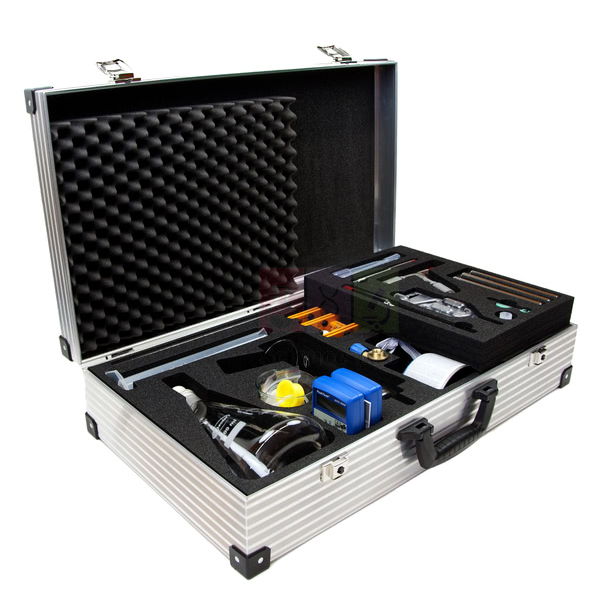
Solar Bio Fuel Ready-to-go (Product Code: SLE/PHY/205) is a portable biofuel experiment case used to run the entire process of producing biofuel as student experiments, from resource selection and fermentation through distillation to electricity from an ethanol fuel cell. Its aluminium suitcase holds the parts and components, including two digital multimeters and a stand set, so it can be used from any location, and it also covers biodiesel made by transesterification of fats. It is supplied by Jain Scientific Equipments Pvt Ltd (ScienceLab), Ambala, India.
Specifications
| Parameter | Detail |
|---|---|
| Format | Aluminium suitcase containing the parts and components; usable from any location |
| Experiment programme | Four parts: biodiesel production, alcohol fermentation, distillation and production of bioethanol, ethanol fuels |
| Distillation | Custom-built Solar-condenser; the resulting ethanol is then characterised |
| Energy conversion | Provided ethanol fuel cell converts the biofuel into electricity |
| Measuring instruments | 2 digital multimeters, laboratory thermometer, alcoholmeter, areometer |
| Extras needed (not included) | 1 x Supplementary BioFuel; 1 x Bunsen burner |
| Yeast shelf life | Depends on storage conditions; ask us for the date of the batch you are quoted |
| Product code | SLE/PHY/205 |
| Supplied by | Jain Scientific Equipments Pvt Ltd (ScienceLab), Ambala, India |
Experiments:
- Part 1, biodiesel production: transesterification from fat to biodiesel (FAME); determination of fat parameters; extraction of fats from foods and oil plants
- Part 2, alcohol fermentation: production of a mash / alcoholic fermentation; fermentation of different sugar types, including catalytic splitting of starch; proof of fermentation gases
- Part 3, distillation and production of bioethanol: distillation of mash; characteristics of the produced ethanol
- Part 4, ethanol fuels: introduction to the ethanol fuel cell; I-V curve of ethanol fuel cells; dependency of ethanol fuel cells on concentration and temperature; energy balance of the whole process
Components:
- Fuel cell and electrical: 1 x solar ethanol fuel cell module, 1 x potentiometer module, 1 x motor module without gear, 1 x propeller, 2 x digital multimeter, 3 x test lead black 25 cm, 2 x test lead red 25 cm
- Glassware and fittings: 1 x Erlenmeyer flask 1000 ml, 1 x distilling head (2 cores, 75°, NS 19/26), 1 x condenser, 1 x beaker 250 ml, 1 x measuring cylinder 100ml, 3 x test tubes, 1 x airlock, 1 x rubber stopper, 1 x grip stopper, 1 x silicone ring, 1 x plug with hose
- Stand parts: 1 x stand base plate, 1 x stand rod 60cm, 1 x universal stand clamp, 2 x double clamp, 1 x chain clamp
- Measuring and dosing: 1 x laboratory thermometer, 1 x alcoholmeter, 1 x areometer, 1 x syringe 2ml, 3 x Pasteur pipette
- Consumable: 1 x yeast
- Case and documents: 1 x aluminium case Bio Fuel, 1 x insert Bio Fuel, 1 x info sheet initial startup, 1 x packing layout plan (Einräumplan) Bio Fuel Ready-to-go, 4 x transparent bump-on feet 5.0 mm high x 11.1 mm diameter
What Is the Solar Bio Fuel Ready-to-go Used For?
It gives student groups a complete, structured course on biofuels. They extract fats from foods and oil seeds, determine fat parameters and convert the fat into biodiesel; they ferment different sugars, split starch catalytically and prove the gases given off; they distil the mash and characterise the ethanol obtained. The final part turns to the fuel cell, where the two multimeters let students record an I-V curve and see how concentration and temperature change the output, before drawing up an energy balance for the whole process.
As a STEM science kit in India’s senior secondary and college labs, it links biology, chemistry and physics in one project. Start fermentations well before the distillation lesson, set up the stand and clamps securely before heating, and keep flames away from ethanol vapour. The Bunsen burner and Supplementary BioFuel listed as extras need to be on hand before the first run.
What to Specify When Ordering
- The number of cases, based on how many student groups will work at the same time
- Whether the listed extras, a Supplementary BioFuel and a Bunsen burner, should be quoted with each case
- Any replacement yeast or other consumables you want priced (ask us)
Supplier
Jain Scientific Equipments Private Limited, operating as ScienceLab, supplies the Solar Bio Fuel Ready-to-go to schools, colleges, universities, teacher-training institutes, dealers and importers in India and international markets. It sources the complete case and can combine it with the listed extras and other renewable-energy experiment cases in one quotation. Company information is on the ScienceLab company profile.
Related Physics Lab Equipment
These items support or extend the Bio Fuel Ready-to-go course:
- Bunsen Burner — the burner listed as a needed extra
- Yeast — for re-supplying the fermentation experiments
- Solar Bio Fuel Large — a larger set demonstrating the same biofuel chain
- Solar H2 Ready-To-Go — a companion Ready-to-go case on hydrogen
- Solar Bio Energy Ready-To-Go — growing and degrading the biomass behind biofuels
Find more in Physics Lab Equipment.
Frequently Asked Questions
What extras are needed for Solar Bio Fuel Ready-to-go?
Solar Bio Fuel Ready-to-go lists two extras that are needed but not included in the case: one Supplementary BioFuel and one Bunsen burner. Mention both in your enquiry if you would like them priced together with the case.
Which experiments are included in Solar Bio Fuel Ready-to-go?
Solar Bio Fuel Ready-to-go is organised in four parts: biodiesel production from fats, alcohol fermentation of different sugars, distillation and production of bioethanol, and ethanol fuels, including the I-V curve of the ethanol fuel cell and the energy balance of the whole process.
Can Solar Bio Fuel Ready-to-go be used outside a fully equipped laboratory?
Solar Bio Fuel Ready-to-go is made for flexible use: its suitcase holds the parts and components and can be used from any location. You will still need a Bunsen burner and the Supplementary BioFuel, which are listed as extras.
Which measuring instruments come with Solar Bio Fuel Ready-to-go?
Solar Bio Fuel Ready-to-go includes two digital multimeters, a laboratory thermometer, an alcoholmeter and an areometer, plus a 100ml measuring cylinder, a 2ml syringe and three Pasteur pipettes for measuring and dosing liquids during the experiments.
Who supplies Solar Bio Fuel Ready-to-go?
Solar Bio Fuel Ready-to-go is supplied by Jain Scientific Equipments Pvt Ltd (ScienceLab), Ambala, Haryana, India, to schools, colleges, dealers and importers in India and international markets, together with its listed extras when requested.
What should a quotation request for this biofuel case include?
A quotation request for Solar Bio Fuel Ready-to-go should state the number of cases, whether the Supplementary BioFuel and Bunsen burner are required, any consumables to include, and the delivery location, so a single complete offer can be sent.
Request a Quote
Request pricing for Solar Bio Fuel Ready-to-go through our contact page, or place it in the enquiry cart along with the listed extras.
Last updated: 24 September 2026