- Physics Lab Equipment
- Chemistry Lab Equipment
- Biology Lab Equipment
- Anatomical Lab Equipment
- Learning
- Educational Lab Equipment
- Magnets
- Agriculture
- Astronomy
- Earth Science
- Geography Lab Equipment
- Safety Lab Coat
- Laboratory
- Meteorological
- Electricity & Magnetism
- Heat
- School Lab Equipment
- Lab Glassware
- Science Lab Equipment
- Tvet Lab Equipment
- Robotics Kits Supplier and Manufacturer for Schools India
- Math Lab Equipment Manufacturers and Exporters in Ambala
- STEM Kits Manufacturers and Supplier India
- Engineering Lab Equipment
- Hospital Lab Equipment
- Water, Sanitation & Hygiene Supplies
- Cold Chain, Solar & Communication Equipment
- Nutrition
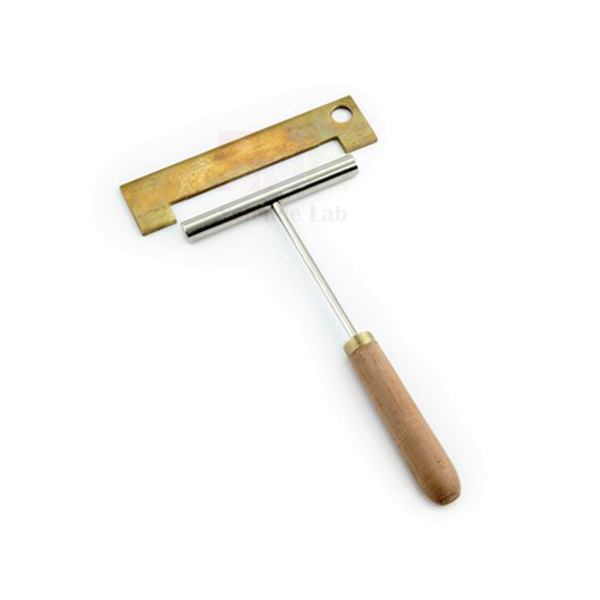
Bar & Gauge Apparatus
Bar & Gauge Apparatus (Product Code: SLE/PHY/135) is a heat-expansion demonstrator used to test an iron bar against a brass gauge before and after heating, in school and college physics labs. The gauge has a cut-out that barely admits the cold bar lengthways and a hole that passes it endways only while cold, so a heated bar visibly fails both checks. It is made by Jain Scientific Equipments Pvt Ltd (ScienceLab), an OEM manufacturer, at its own factory in Ambala, India.
Key Details
| Parameter | Detail |
|---|---|
| Bar | Iron, mounted on a support rod with a wooden handle |
| Gauge | Brass, with a lengthways cut-out and an endways hole |
| Fit when cold | Cut-out barely admits the bar lengthways; hole passes the bar endways |
| Fit after heating | The heated bar is compared with the gauge to show that it has expanded |
| Demonstrates | Expansion by heating and contraction by cooling |
| Product code | SLE/PHY/135 |
| Manufacturer | Jain Scientific Equipments Pvt Ltd (ScienceLab) — OEM |
| Country of origin | India (made in Ambala, Haryana) |
What Is the Bar and Gauge Used For?
Because the gauge checks the bar in two directions, the bar and gauge shows students that heating makes a solid grow in length and in thickness at the same time. A typical sequence is to test both fits while the bar is cold, heat the bar in a Bunsen flame, show that it no longer enters the cut-out or the hole, and then cool it and show that it fits again.
Many schools group it with a ball and ring and a bimetallic strip as a simple heat energy science kit for the thermal-expansion lesson. Hold the apparatus only by the wooden handle, never force a hot bar into the gauge, and rest the heated iron on a heat-proof mat while the class discusses the result.
OEM Manufacturer
Jain Scientific Equipments Private Limited, which trades as ScienceLab, is the original equipment manufacturer (OEM) of the Bar & Gauge Apparatus. Each unit is built at the company's own licensed factory at Saha, Ambala, Haryana, India, so buyers deal with the maker directly instead of a reseller. Schools, colleges, institutions, dealers and importers can ask us about repeat orders and replacement gauges or bars. Company background is on the ScienceLab profile page.
Related Physics Lab Equipment
Pair the bar and gauge with these items for a complete expansion practical:
- Apparatus Bar & Gauge — a companion bar-and-gauge model whose listing gives bar and gauge dimensions.
- Ball & Ring Apparatus — the same principle shown with a brass ball and ring.
- Bar Compound Copper & Iron — a two-metal bar that bends when heated, showing the thermostat principle.
- Bunsen Burner with Stopcock — heat source with gas-flow control for warming the bar.
More heat and mechanics apparatus is listed under Physics Lab Equipment.
Frequently Asked Questions
What is included with the Bar & Gauge Apparatus?
The Bar & Gauge Apparatus consists of an iron bar mounted on a support rod with a wooden handle, and a brass gauge with a lengthways cut-out and an endways hole. A burner or other heat source is not listed as part of the apparatus.
How does the Bar & Gauge Apparatus show thermal expansion?
In the Bar & Gauge Apparatus, the cold iron bar just fits the gauge's cut-out lengthways and passes through its hole endways. After heating, the expanded bar no longer fits, and once it cools it fits again, showing expansion by heating and contraction by cooling.
What are the dimensions of the Bar & Gauge Apparatus?
The listing for the Bar & Gauge Apparatus (SLE/PHY/135) does not state bar or gauge dimensions. If your syllabus or tender specifies sizes, send them through the contact page and we will confirm the dimensions of the unit we quote.
Can the bar of the Bar & Gauge Apparatus be cooled in water?
Yes, the heated iron bar of the Bar & Gauge Apparatus can be cooled in air or dipped in cold water to show contraction more quickly. Keep the wooden handle out of the water and dry the iron thoroughly afterwards, because wet iron rusts.
Who manufactures the Bar & Gauge Apparatus?
The Bar & Gauge Apparatus is manufactured by Jain Scientific Equipments Pvt Ltd (ScienceLab), the OEM, at its own licensed factory at Saha, Ambala, Haryana, India. Quotations, repeat orders and spare-part requests are handled directly by the manufacturer.
What details should a Bar & Gauge Apparatus enquiry include?
A Bar & Gauge Apparatus enquiry should give the product code SLE/PHY/135, the number of units, the delivery location and any other heat-expansion items you need. Institutions and importers can list everything in one enquiry for a combined quotation.
Request a Quote
For a price on the Bar & Gauge Apparatus, write to us through the contact page or place it in the enquiry cart. You receive the quotation straight from the manufacturer.
Last updated: 24 September 2026
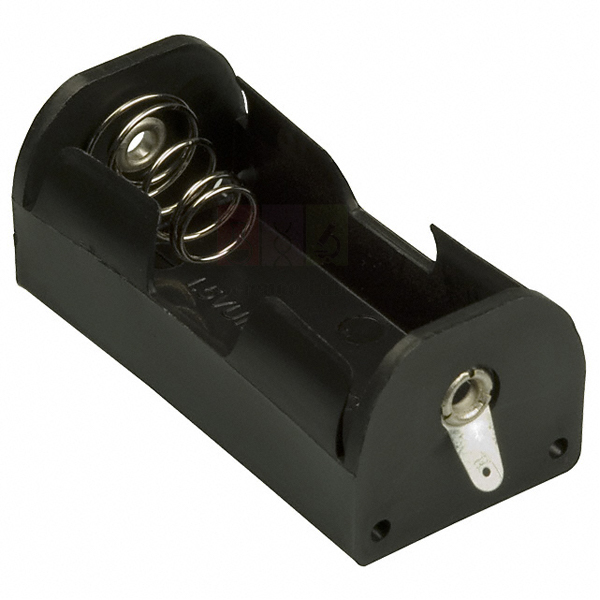
Battery Holder, C
Battery Holder, C (Product Code: SLE/PHY/136) is a single-cell battery holder used to hold one C-size battery and connect it into simple circuits in school physics and electronics labs. It measures 58 mm long by 29 mm wide and has tag terminals, so leads can be soldered on or clipped to it for bench circuits and student projects. It is supplied by Jain Scientific Equipments Pvt Ltd (ScienceLab), Ambala, India.
Specifications
| Parameter | Detail |
|---|---|
| Type | Battery holder |
| Battery size | C |
| Number of cells | 1 |
| Length | 58 mm |
| Width | 29 mm |
| Terminal type | Tag |
| Product code | SLE/PHY/136 |
| Supplied by | Jain Scientific Equipments Pvt Ltd (ScienceLab), Ambala, India |
What Is a C Battery Holder Used For?
A C battery holder turns a loose cell into a secure, reusable power source for electricity experiment kit practicals in school: lighting a lamp, running a small motor or buzzer, or measuring the voltage of a single cell. The tag terminals accept a crocodile clip for quick lessons or a soldered wire for a permanent project board.
Several holders can be wired in series when an investigation needs a higher voltage. Match the positive end of the cell to the positive contact before connecting, take batteries out at the end of term to avoid leakage damage, and use insulated leads when connecting the holder to meters.
Supplier
Jain Scientific Equipments Private Limited trades as ScienceLab and supplies this C battery holder from Ambala, Haryana, alongside the leads, clips and meters used with it. Schools, colleges, dealers and importers in India and international markets can combine it with other electricity items in a single enquiry. Read about the company on the ScienceLab profile page.
Related Physics Lab Equipment
Useful companions for battery-powered circuit work:
- Battery Clip, PP3 — connects a PP3 battery instead of a C cell.
- Battery Snap with Crocodile Clip — battery connector with crocodile clips already fitted.
- Circuits Kit Cell Holder — panel-mounted holder for a D cell in the Circuits Kit.
- Crocodile Clips & Leads — leads for connecting to the tag terminals.
- Standard Digital Multimeter — checks the voltage of the cell in the holder.
Find more circuit components in the Physics Lab Equipment category.
Frequently Asked Questions
Which battery fits the Battery Holder, C?
The Battery Holder, C takes one C-size cell. The listing describes the holder only, so the cell itself is not shown as included; if you need batteries quoted together with the holders, mention it in your enquiry.
What are the dimensions of the Battery Holder, C?
The Battery Holder, C measures 58 mm in length and 29 mm in width. That compact footprint lets it sit on a circuit board, inside a project box or on a bench next to other components without taking much space.
How are wires connected to the Battery Holder, C?
The Battery Holder, C has tag terminals. A wire can be soldered to each tag for a permanent connection, or a crocodile clip can be attached for quick temporary circuits that students build and take apart during a lesson.
Can several Battery Holder, C units be connected together?
Yes, several Battery Holder, C units can be wired positive-to-negative in series to raise the circuit voltage, or side by side in parallel to share the load between cells. Students can compare lamp brightness for each arrangement.
Who supplies the Battery Holder, C?
The Battery Holder, C is supplied by Jain Scientific Equipments Pvt Ltd (ScienceLab), Ambala, Haryana, India, to schools, colleges, dealers and importers. It can be quoted together with leads, clips and meters for complete electricity practicals.
What should a Battery Holder, C quotation request include?
A Battery Holder, C quotation request should state the product code SLE/PHY/136, the quantity of holders, whether cells or connecting leads are also needed, and the delivery address in India or abroad.
Request a Quote
Ask for a price on the Battery Holder, C through the contact page, or add it to the enquiry cart with the other circuit items you need.
Last updated: 24 September 2026
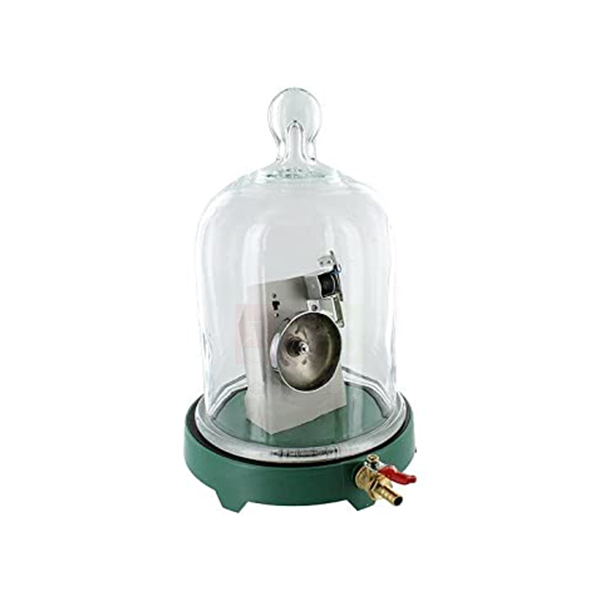
Bell In Glass Jar and Base
Bell In Glass Jar and Base (Product Code: SLE/PHY/137) is a vacuum demonstration unit used to show that sound cannot travel through a vacuum, along with other properties of a vacuum, in school and college physics labs. It combines a sturdy baseplate with a tap, a glass bell jar and a detachable battery-operated bell, and works with a hand pump or, ideally, an electric vacuum pump. It is made by Jain Scientific Equipments Pvt Ltd (ScienceLab), an OEM manufacturer, at its own factory in Ambala, India.
Key Details
| Parameter | Detail |
|---|---|
| Purpose | Demonstrating the properties of a vacuum |
| Base | Sturdy baseplate with tap |
| Jar | Glass bell jar |
| Sound source | Detachable battery-operated bell |
| Pump to use | Hand pump, or ideally an electric vacuum pump (not among the listed parts) |
| Product code | SLE/PHY/137 |
| Manufacturer | Jain Scientific Equipments Pvt Ltd (ScienceLab) — OEM |
| Country of origin | India (made in Ambala, Haryana) |
What Is the Bell in Jar Apparatus Used For?
In the classic experiment the bell is switched on, the jar is placed over it on the base, and the class hears it ringing clearly. As the pump draws air out through the tap, the sound fades even though students can still see the hammer striking, which shows that sound needs a medium to travel. Opening the tap lets air back in and the ringing returns.
Schools often teach it together with a tuning fork set as a sound wave experiment kit for the secondary science chapter on sound. A thin film of vacuum grease on the jar rim helps it seal on the plate, and the glass should be checked for chips or cracks before every evacuation.
What to Specify When Ordering
- The number of Bell In Glass Jar and Base units required (one per demonstration bench is typical).
- Whether a hand vacuum pump or an electric vacuum pump should be quoted with it.
- Whether connecting tubing between the tap and the pump is needed.
- Whether batteries for the bell should be included in the quotation.
OEM Manufacturer
The Bell In Glass Jar and Base is an own-make product: Jain Scientific Equipments Private Limited, trading as ScienceLab, is the OEM and makes the unit at its own licensed factory at Saha, Ambala, Haryana, India. The company is incorporated under CIN U29309HR2020PTC087597, and its factory premises operate under Factory Licence AMB-ONLINE-CHD-J-414. Quotations, repeat orders and requests for a replacement jar or bell come straight to the manufacturer, so ask us about availability. More about the company is on the ScienceLab profile.
Related Physics Lab Equipment
These items complete a vacuum and air-pressure demonstration set:
- Vacuum Pump, Hand — manual pump for evacuating the bell jar.
- Vacuum Pump, Electric — the preferred pump type for this unit.
- Vacuum Tubing — connects the baseplate tap to the pump.
- Magdeburg Hemisphere — another air-pressure demonstration that uses the same pump.
- Tuning Fork Set, Steel — for the rest of the sound lesson.
Browse all Physics Lab Equipment for further sound and pressure apparatus.
Frequently Asked Questions
What does the Bell In Glass Jar and Base consist of?
The Bell In Glass Jar and Base comprises a sturdy baseplate with a tap, a glass bell jar and a detachable battery-operated bell. A vacuum pump is not among the listed parts, so it is chosen and ordered separately to suit your lab.
Which vacuum pump works with the Bell In Glass Jar and Base?
The Bell In Glass Jar and Base can be used with a hand pump or, ideally, with an electric vacuum pump connected to the baseplate tap. The tap lets you hold the reduced pressure or let air back in during the demonstration.
Why does the bell sound fainter as air is pumped out of the jar?
In the Bell In Glass Jar and Base, sound reaches the class as vibrations passed through air. As the pump removes air, fewer molecules are left to carry those vibrations, so the ringing fades while the hammer can still be seen moving.
Is the bell in the Bell In Glass Jar and Base removable?
Yes, the bell in the Bell In Glass Jar and Base is detachable and battery-operated, so it can be taken out for changing cells or for storage. Ask us whether cells are included when you request a quotation.
Who manufactures the Bell In Glass Jar and Base?
The Bell In Glass Jar and Base is manufactured by Jain Scientific Equipments Pvt Ltd (ScienceLab), the OEM, at its own licensed factory at Saha, Ambala, Haryana, India. Schools, dealers and importers buy it direct from the maker.
How should the glass jar of the Bell In Glass Jar and Base be handled?
Before lifting the glass jar of the Bell In Glass Jar and Base, open the tap so air re-enters and the jar releases from the plate. Inspect the jar for chips or cracks before each use and store it with the rim protected.
What should a quotation request for the Bell In Glass Jar and Base include?
For the Bell In Glass Jar and Base, give the product code SLE/PHY/137, the number of units, the pump type you want quoted with it and your delivery address. Institutions and importers can add other vacuum apparatus to the same request.
Request a Quote
Send your requirement for the Bell In Glass Jar and Base through the contact page or add it to the enquiry cart. The quotation comes direct from the manufacturer.
Last updated: 24 September 2026
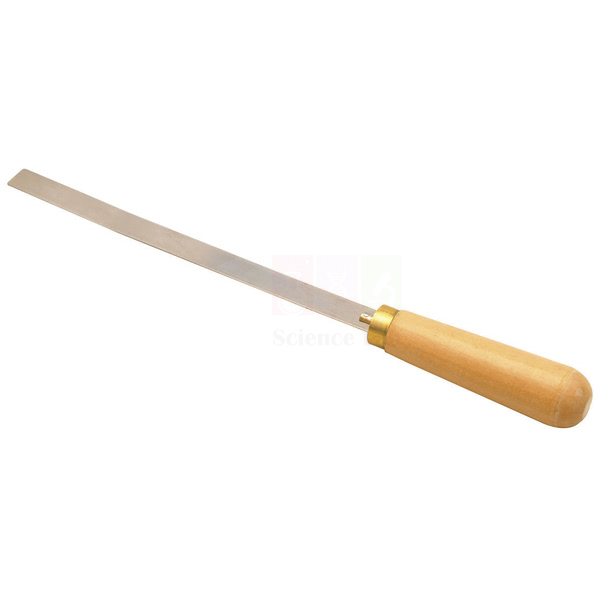
Bimetallic Strip
Bimetallic Strip (Product Code: SLE/PHY/138) is a brass-and-steel strip used to demonstrate the unequal expansion of two metals, which makes the strip curve when it is heated in a flame, in school and college physics labs. The 200 x 15 mm strip is riveted with heat-resistant rivets and set in a well-finished wooden handle for safe holding. It is made by Jain Scientific Equipments Pvt Ltd (ScienceLab), an OEM manufacturer, at its own factory in Ambala, India.
Specifications
| Parameter | Detail |
|---|---|
| Strip size | 200 x 15 mm |
| Metals | Brass and steel |
| Joining | Riveted together with heat-resistant rivets |
| Handle | Well-finished wooden handle |
| Demonstrates | Differential expansion of two metals, shown by the curvature produced when the strip is heated in a flame |
| Product code | SLE/PHY/138 |
| Manufacturer | Jain Scientific Equipments Pvt Ltd (ScienceLab) — OEM |
| Country of origin | India (made in Ambala, Haryana) |
What Is a Bimetallic Strip Used For?
Held in a Bunsen or spirit-lamp flame, the bimetallic strip curls because brass expands more than steel for the same rise in temperature, so the brass ends up on the outside of the curve. Students can then predict how it will bend when chilled instead, and check that it curves the opposite way.
The same effect is the working principle of thermostats, fire alarms and flashing indicator units, which makes the strip a useful bridge between physics lab equipment in India syllabuses and everyday devices. Heat the strip evenly along its length, keep the wooden handle well clear of the flame, and let the metal cool naturally before it goes back into storage.
OEM Manufacturer
Jain Scientific Equipments Private Limited, better known by its trading name ScienceLab, makes this Bimetallic Strip as the OEM at its own licensed factory at Saha, Ambala, Haryana, India. Because the strip comes straight from the maker, institutions, dealers and importers get factory-direct quotations and can ask us about repeat batches for several labs at once. See the company profile for background.
Related Physics Lab Equipment
Other apparatus for the thermal expansion topic:
- Ball & Ring Apparatus — shows a single metal expanding until a ball no longer fits a ring.
- Bar & Gauge Apparatus — tests a heated iron bar against a brass gauge.
- Bar Compound Copper & Iron — another two-metal bar used to explain the thermostat principle.
- Glass Spirit Lamp — a steady, gentle flame for heating the strip.
View the full Physics Lab Equipment category for related heat apparatus.
Frequently Asked Questions
What metals are used in the Bimetallic Strip?
The Bimetallic Strip is made of brass and steel riveted together with heat-resistant rivets. The strip measures 200 x 15 mm and is mounted in a well-finished wooden handle so it can be held in a flame comfortably.
Which way does the Bimetallic Strip bend when heated?
When heated, the Bimetallic Strip bends towards the steel side, because the brass expands more and forms the outer, longer side of the curve. When cooled below room temperature, it bends the other way as the brass contracts more.
What heat source should be used with the Bimetallic Strip?
A Bunsen burner or spirit lamp works well with the Bimetallic Strip. Move the strip slowly through the flame so both metals warm evenly, and hold it by the wooden handle so the hand stays well away from the heated metal.
How does the Bimetallic Strip relate to a thermostat?
The Bimetallic Strip shows the same bending that a thermostat uses: as temperature changes, a two-metal strip curves and can open or close an electrical contact. Showing the strip first helps students understand how irons, heaters and alarms switch themselves.
Who manufactures the Bimetallic Strip?
The Bimetallic Strip is manufactured by Jain Scientific Equipments Pvt Ltd (ScienceLab), the OEM, at its own licensed factory at Saha, Ambala, Haryana, India. It is supplied factory-direct to schools, colleges, institutions, dealers and importers.
How do I get a quotation for the Bimetallic Strip?
To get a quotation for the Bimetallic Strip, send the product code SLE/PHY/138, the quantity you need and your delivery location through our contact page or enquiry cart. Bulk and export enquiries for India and international markets are welcome.
Request a Quote
Request a price for the Bimetallic Strip via the contact page or the enquiry cart; the quotation is prepared directly by the manufacturer.
Last updated: 24 September 2026
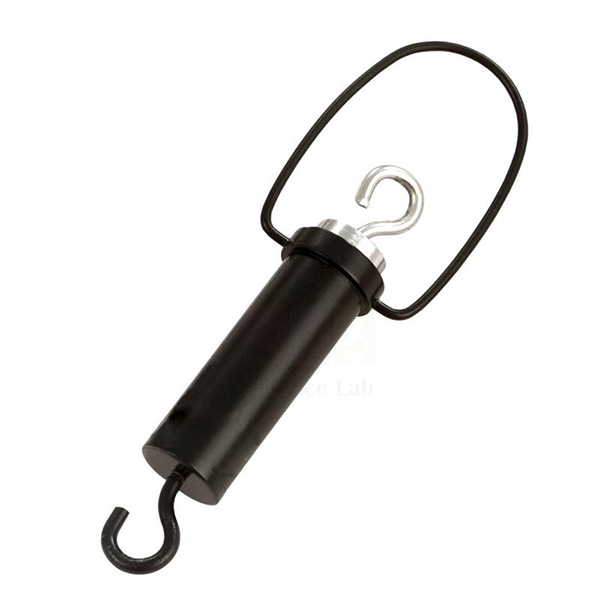
Bucket & Cylinder
Bucket & Cylinder (Product Code: SLE/PHY/140) is a brass apparatus used to verify Archimedes' principle, showing that the upthrust on a submerged cylinder equals the weight of liquid it displaces, in school and college physics labs. The cylinder hooks beneath the bucket, and the unit, listed at 60 mm with an overall size of 160 mm, suits both teacher demonstrations and individual student work. It is made by Jain Scientific Equipments Pvt Ltd (ScienceLab), an OEM manufacturer, at its own factory in Ambala, India.
Specifications
| Parameter | Detail |
|---|---|
| Material | Brass (simple brass unit) |
| Size (as listed) | 60 mm; overall 160 mm |
| Bucket fittings | Suspension loop at the top, hook at the bottom |
| Cylinder fitting | Suspension hook at one end |
| Use | Class demonstration or individual use |
| Demonstrates | Archimedes' principle |
| Product code | SLE/PHY/140 |
| Manufacturer | Jain Scientific Equipments Pvt Ltd (ScienceLab) — OEM |
| Country of origin | India (made in Ambala, Haryana) |
What Is a Bucket and Cylinder Apparatus Used For?
Students record three readings. First, the bucket hangs from a spring balance by its top loop with the cylinder on the bottom hook, in air. Second, the cylinder alone is lowered fully into water and the lower reading is noted. Third, the empty bucket is filled with water while the cylinder stays submerged, and the balance returns to the first reading.
Because the solid cylinder and the inside of the bucket hold the same volume in this type of apparatus, the water added to the bucket weighs exactly as much as the upthrust lost in step two. It is a low-cost addition to physics lab instruments in India for the fluids topic. Wipe the brass dry after each class and hang the parts by their hooks so the loop and hooks keep their shape.
What to Specify When Ordering
- The product code SLE/PHY/140, since other bucket and cylinder sizes are also listed on the site.
- How many sets you need: one for a teacher demonstration or one per student group for individual use.
- Whether spring balances or measuring cylinders should be quoted with the sets.
OEM Manufacturer
This Bucket & Cylinder is produced by Jain Scientific Equipments Private Limited, which trades as ScienceLab and acts as the OEM, at the company's own licensed factory at Saha, Ambala, Haryana, India. Ordering from the maker means one point of contact for price, quantity and any later request for a matching bucket or cylinder. The company supplies schools, colleges, institutions, dealers and importers in India and international markets. Read more on the ScienceLab profile.
Related Physics Lab Equipment
Items that complete an Archimedes' principle practical:
- Bucket & Cylinder, Small — a smaller version for student benches.
- Balance Spring Tubular Plastic — weighs the bucket and cylinder in air and in water.
- Glass Measuring Cylinder — measures the volume of water used to refill the bucket.
- Set to Demonstrate Archimedes' Principle/Law — an alternative plastic set with a dynamometer.
More mechanics and fluids apparatus is in Physics Lab Equipment.
Frequently Asked Questions
How does the Bucket & Cylinder verify Archimedes' principle?
With the Bucket & Cylinder hanging from a spring balance, the reading drops when the cylinder is submerged in water. Filling the bucket with water restores the reading, showing that the upthrust equals the weight of the water the cylinder displaced.
What size is the Bucket & Cylinder (SLE/PHY/140)?
The Bucket & Cylinder (SLE/PHY/140) is listed as 60 mm with an overall size of 160 mm. The listing does not say which part the 60 mm refers to, so ask us through the contact page if you need exact bucket or cylinder dimensions.
Can students use the Bucket & Cylinder individually?
Yes, the Bucket & Cylinder is suitable for class demonstration or individual use. Many labs order one set for the teacher and further sets so that small groups can take their own three readings and compare results.
What else is needed with the Bucket & Cylinder?
To use the Bucket & Cylinder you also need a spring balance to hang it from, a vessel of water deep enough to cover the cylinder, and a stand or hand to hold the balance. These are ordered separately if required.
Who manufactures the Bucket & Cylinder?
The Bucket & Cylinder is manufactured by Jain Scientific Equipments Pvt Ltd (ScienceLab), the OEM, at its own licensed factory at Saha, Ambala, Haryana, India. Quotations and repeat orders for extra sets come directly from the manufacturer.
What should a Bucket & Cylinder quotation request include?
A Bucket & Cylinder quotation request should mention the product code SLE/PHY/140, the number of sets, any spring balances or measuring cylinders you want added, and the delivery address in India or overseas.
Request a Quote
Get a price for the Bucket & Cylinder through the contact page or by adding it to the enquiry cart. Quotations are issued by the manufacturer itself.
Last updated: 24 September 2026
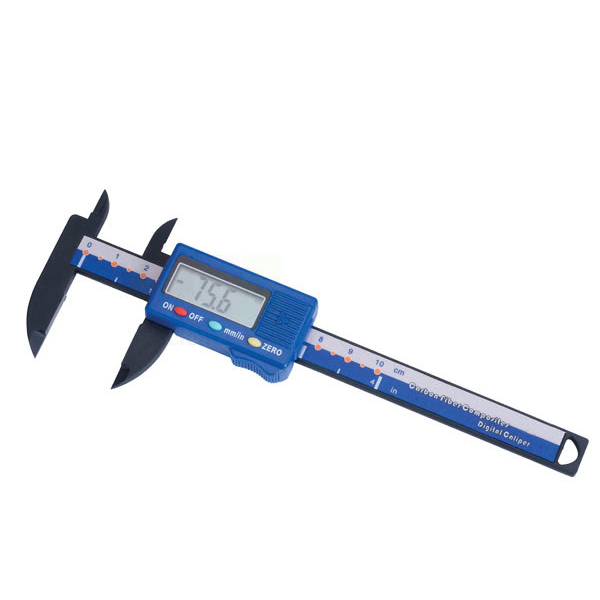
Caliper, Digital
Caliper, Digital (Product Code: SLE/PHY/141) is an LCD digital caliper used to measure the length, thickness and diameter of small objects up to 100 mm (4 in) in school, college and workshop labs. Its body is carbon fibre composite, and the clear LCD can show each reading in either millimetres or inches. It is supplied by Jain Scientific Equipments Pvt Ltd (ScienceLab), Ambala, India.
Specifications
| Parameter | Detail |
|---|---|
| Type | LCD digital caliper |
| Measuring capacity | 100 mm (4 in) |
| Display | Clear LCD |
| Units | Millimetres or inches |
| Construction | Carbon fibre composite |
| Power | 1.55 V battery |
| Product code | SLE/PHY/141 |
| Supplied by | Jain Scientific Equipments Pvt Ltd (ScienceLab), Ambala, India |
What Is a Digital Caliper Used For?
In physics practicals a digital caliper speeds up routine measurement: the diameter of a rod or wire, the side of a density cube, the length and diameter of a metal cylinder, or the thickness of a glass slab. Because the value appears directly on the display, younger students can collect data quickly without first mastering vernier-scale reading, which makes it a handy entry point into digital measuring instruments in India's school labs.
Close the jaws and zero the display before each set of readings, and close the jaws gently on the object rather than forcing them. Keep the jaws clean and dry, switch the unit off after use, and take the battery out if the caliper will be stored for a long time.
Supplier
Jain Scientific Equipments Private Limited, which trades as ScienceLab, supplies this digital caliper from Ambala, Haryana, together with other measuring instruments for physics labs. For vendor registration, the supplying company's Importer-Exporter Code is AAECJ8618A (DGFT) and its GSTIN is 06AAECJ8618A1ZT. Company details are on the ScienceLab profile page.
Related Physics Lab Equipment
Other measuring tools and samples used with a caliper:
- Caliper Vernier (Metal) — the scale-reading alternative for teaching vernier reading.
- Micrometer Screw Gauge, Lock Type — for finer measurement of wire and sheet thickness.
- Metal Density Cubes, Set of 7 — regular solids to measure and weigh in density practicals.
- Cylinders, Metal (Set of 6) — cylinders for diameter and length measurement.
Further measuring apparatus is listed under Physics Lab Equipment.
Frequently Asked Questions
What is the measuring range of the Caliper, Digital?
The Caliper, Digital has a measurement capacity of 100 mm, which is 4 inches. Readings can be shown in either millimetres or inches on its clear LCD display, so the same caliper suits metric and imperial worksheets.
What battery does the Caliper, Digital use?
The Caliper, Digital is powered by a 1.55 V battery. If you would like spare cells quoted with the calipers, mention the quantity in your enquiry, and remove the battery before storing the caliper for a long period.
What is the Caliper, Digital made of?
The Caliper, Digital has carbon fibre composite construction rather than a steel body. Handle it with the same care as any measuring tool: avoid dropping it, keep the jaws clean, and do not use it as a scriber or spanner.
What is the resolution or accuracy of the Caliper, Digital?
The listing for the Caliper, Digital does not state its resolution or accuracy. If your syllabus or tender specifies these values, send the requirement through the contact page and we will confirm the figures for the model we quote.
Is a calibration certificate available for the Caliper, Digital?
A calibration certificate is not listed for the Caliper, Digital. If your institution needs calibration documents for measuring instruments, please discuss the requirement with us before ordering so we can tell you what can be provided.
Who supplies the Caliper, Digital?
The Caliper, Digital is supplied by Jain Scientific Equipments Pvt Ltd (ScienceLab), Ambala, Haryana, India, to schools, colleges, dealers and importers. It can be quoted together with vernier calipers, micrometers and measurement samples.
What should a Caliper, Digital quotation request include?
For a Caliper, Digital quotation, give the product code SLE/PHY/141, the number of calipers, whether spare batteries are wanted and your delivery address. Bulk orders for several labs and export enquiries are welcome.
Request a Quote
Ask for a price on the Caliper, Digital through the contact page or add it to the enquiry cart along with your other measuring instruments.
Last updated: 24 September 2026
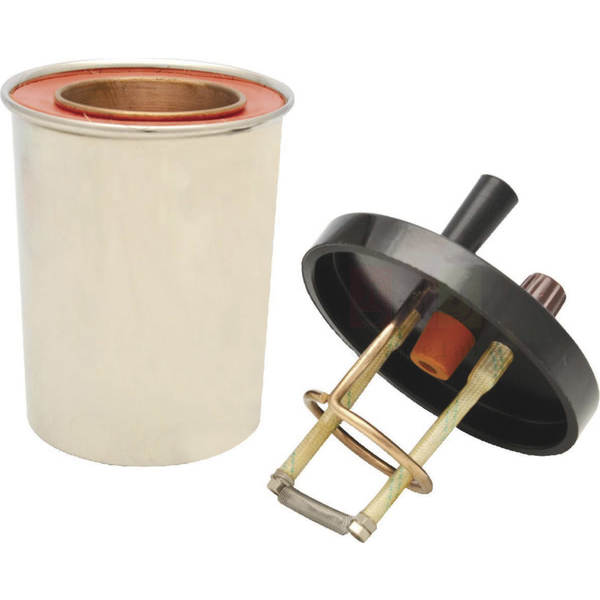
Calorimeter Set, Copper, Joules
Calorimeter Set, Copper, Joules (Product Code: SLE/PHY/142) is an electrically heated calorimeter used to find the specific heat capacity of a liquid by Joule's electrical method in senior-school and college physics labs. A Constantan coil of about 6 ohms, fed through two 4 mm sockets in the ebonite lid, runs at 0.5 A (1 A maximum) inside a lagged, nickel-plated copper vessel. It is made by Jain Scientific Equipments Pvt Ltd (ScienceLab), an OEM manufacturer, at its own factory in Ambala, India.
Specifications
| Parameter | Detail |
|---|---|
| Inner calorimeter | Nickel-plated copper, 75 x 50 mm (diameter) |
| Outer vessel | 100 x 75 mm (diameter); the calorimeter is lagged and enclosed within it |
| Lid | Close-fitting ebonite lid with wire stirrer |
| Terminals | Pair of 4 mm socket terminals connected to the heating coil |
| Heating coil | Constantan wire, approximately 6 ohms |
| Current | 0.5 A recommended, 1 A maximum |
| Thermometer | Not supplied |
| Application | Specific heat capacity of a liquid by the electrical method |
| Product code | SLE/PHY/142 |
| Manufacturer | Jain Scientific Equipments Pvt Ltd (ScienceLab) — OEM |
| Country of origin | India (made in Ambala, Haryana) |
What Is the Joule Calorimeter Used For?
Joule's method equates electrical energy with heat. The energy put in by the coil, voltage × current × time, or the reading on a joulemeter, is set equal to the heat gained by the liquid plus the heat gained by the copper vessel, and the only unknown left is the specific heat capacity of the liquid. Recording the temperature every half minute also lets students plot a heating graph and apply a cooling correction.
As a calorimeter experiment kit for India's Class 11 and 12 thermal physics practicals, the set needs only a low-voltage supply, meters and a thermometer. Constantan is chosen for heating coils because its resistance changes very little as it warms, so the current stays steady. Switch on only when the coil is fully covered by liquid, and keep stirring throughout the run.
What to Specify When Ordering
- Number of sets for your practical batch.
- A thermometer for each set, since none is supplied; state the type or ask us to suggest one.
- A low-voltage supply able to deliver 0.5 A (1 A maximum) and leads with 4 mm plugs.
- Either an ammeter and voltmeter pair or a joulemeter for measuring the energy supplied.
OEM Manufacturer
ScienceLab, the trading name of Jain Scientific Equipments Private Limited, is the OEM for the Calorimeter Set, Copper, Joules and builds it at the company's own licensed factory at Saha, Ambala, Haryana, India. Buying from the manufacturer means requests for a spare lid, stirrer or coil, and repeat orders for new batches, go to the people who make the set; ask us what is currently available. The company supplies schools, colleges, universities, dealers and importers in India and international markets. Find out more on the ScienceLab profile.
Related Physics Lab Equipment
Instruments that complete a Joule's-method practical:
- Joulemeter, Student Digital — reads the electrical energy delivered to the coil directly.
- Joulemeter / Wattmeter, Digital — shows both energy and power during the heating run.
- Power Supply, Stepped — low-voltage supply for driving the heating coil.
- Immersion Thermometer — measures the liquid's temperature, as no thermometer is included.
- Calorimeter Set, Copper — a companion copper calorimeter set listed under code SLE/PHY/30.
See the wider Physics Lab Equipment range for more heat apparatus.
Frequently Asked Questions
Why is it called the Calorimeter Set, Copper, Joules?
The Calorimeter Set, Copper, Joules takes its name from Joule's electrical method, in which a known amount of electrical energy heats a liquid. Comparing that energy with the temperature rise gives the liquid's specific heat capacity.
How is the specific heat capacity calculated with the Calorimeter Set, Copper, Joules?
With the Calorimeter Set, Copper, Joules, the energy supplied (voltage × current × time) equals the mass of liquid × its specific heat × temperature rise, plus the same product for the copper vessel. Rearranging gives the liquid's specific heat capacity.
Can a joulemeter be used with the Calorimeter Set, Copper, Joules?
Yes, a joulemeter can be connected between the supply and the 4 mm terminals of the Calorimeter Set, Copper, Joules to read the energy directly. This saves timing and multiplying, and students can focus on stirring and temperature readings.
What current should the Calorimeter Set, Copper, Joules be run at?
The Calorimeter Set, Copper, Joules should be run at 0.5 A, with 1 A as the maximum. Its Constantan coil is approximately 6 ohms, so a low-voltage supply is enough to drive the recommended current through it.
Does the Calorimeter Set, Copper, Joules include a thermometer?
No, the Calorimeter Set, Copper, Joules is supplied without a thermometer. Choose one that reads the temperature range of your experiment and add it to your enquiry so it can be quoted with the sets.
Who manufactures the Calorimeter Set, Copper, Joules?
The Calorimeter Set, Copper, Joules is manufactured by Jain Scientific Equipments Pvt Ltd (ScienceLab), the OEM, at its own licensed factory at Saha, Ambala, Haryana, India. Quotations and repeat orders come from the manufacturer directly.
What should a quotation request for the Calorimeter Set, Copper, Joules include?
For the Calorimeter Set, Copper, Joules, state the product code SLE/PHY/142, the number of sets, and whether thermometers, a power supply or a joulemeter should be added. Include the delivery address for India or export shipment.
Request a Quote
Request pricing for the Calorimeter Set, Copper, Joules through the contact page or the enquiry cart. Quotes are sent direct from the manufacturer.
Last updated: 24 September 2026
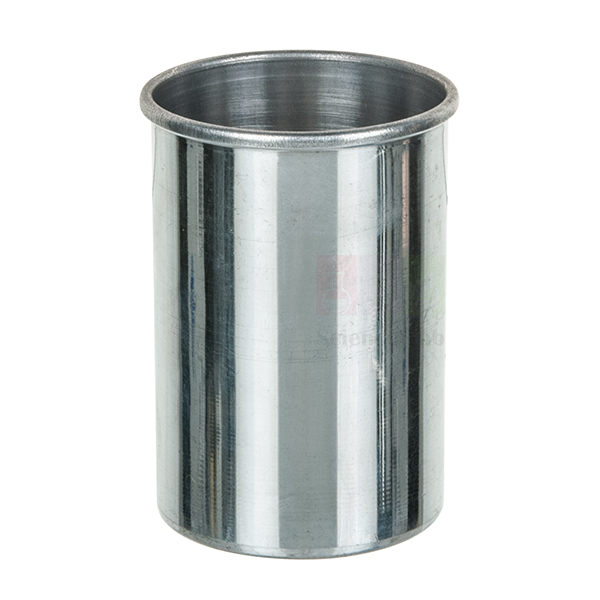
Calorimeter, Aluminium
Calorimeter, Aluminium (Product Code: SLE/PHY/143) is a plain aluminium calorimeter cup used to hold water or another liquid during heat-exchange experiments such as the method of mixtures in school and college physics labs. It has parallel sides and a rolled rim, measures 75 mm long by 50 mm in diameter, and comes without a stirrer. It is made by Jain Scientific Equipments Pvt Ltd (ScienceLab), an OEM manufacturer, at its own factory in Ambala, India.
Specifications
| Parameter | Detail |
|---|---|
| Material | Aluminium |
| Form | Parallel sides with rolled rim |
| Length | 75 mm |
| Diameter | 50 mm |
| Stirrer | Not included (supplied without stirrer) |
| Product code | SLE/PHY/143 |
| Manufacturer | Jain Scientific Equipments Pvt Ltd (ScienceLab) — OEM |
| Country of origin | India (made in Ambala, Haryana) |
What Is an Aluminium Calorimeter Used For?
The aluminium calorimeter is the container in which heat is exchanged and measured. Typical practicals include finding the specific heat capacity of a metal by dropping a heated sample into cold water in the cup, measuring the latent heat of fusion of ice, and recording cooling curves. The cup itself absorbs some heat, so students weigh it empty first and include it in their heat balance.
For better results in calorimeter lab work in India's school and college labs, stand the cup inside a lagging jacket or an insulated outer container to cut heat loss, and stir with a separate stirrer so the temperature is even. Rinse and dry the cup after use; the rolled rim gives a smooth edge for handling and pouring.
What to Specify When Ordering
- The number of aluminium calorimeters needed for your student groups.
- Stirrers and thermometers, which are not included with the cup.
- Lagging or an outer container if you want to reduce heat loss.
- Whether you also need copper calorimeters for comparison work.
OEM Manufacturer
Jain Scientific Equipments Private Limited, trading under the ScienceLab name, is the OEM that makes this aluminium calorimeter at its own licensed factory at Saha, Ambala, Haryana, India. Laboratories that need matching cups for a whole class can order them straight from the factory, and later top-up orders are handled by the same manufacturer. Schools, colleges, dealers and importers in India and international markets are supplied factory-direct. More on the company is on the ScienceLab profile page.
Related Physics Lab Equipment
Items commonly used with an aluminium calorimeter:
- Calorimeter, Copper — a larger copper cup for comparison experiments.
- Calorimeter Set, Aluminium — an aluminium set with stirrer and heating element for electrical methods.
- Calorimeter Lagging — felt jacket and mat that reduce heat loss from the cup.
- Immersion Thermometer — reads the water temperature before and after mixing.
- Cylinders, Metal (Set of 6) — metal samples for specific heat by the method of mixtures.
More heat apparatus is available in Physics Lab Equipment.
Frequently Asked Questions
What are the dimensions of the Calorimeter, Aluminium?
The Calorimeter, Aluminium is 75 mm long and 50 mm in diameter, with parallel sides and a rolled rim. The compact size suits student benches where small volumes of water are heated or mixed during a practical period.
Does the Calorimeter, Aluminium come with a stirrer?
No, the Calorimeter, Aluminium is supplied without a stirrer. A separate stirrer should be used to mix the contents during experiments, and it can be added to your enquiry along with thermometers if you need them.
Which experiments use the Calorimeter, Aluminium?
The Calorimeter, Aluminium is used for specific heat capacity by the method of mixtures, latent heat of fusion of ice, and cooling-curve experiments. In each case the cup holds the liquid while temperatures are measured before and after heat is exchanged.
Should I choose the Calorimeter, Aluminium or a copper calorimeter?
Choose the Calorimeter, Aluminium when your practical manual specifies aluminium or when a smaller cup suits the experiment. A copper calorimeter is also listed; follow the metal named in your method, since the cup's specific heat enters the calculation.
Who manufactures the Calorimeter, Aluminium?
The Calorimeter, Aluminium is manufactured by Jain Scientific Equipments Pvt Ltd (ScienceLab), the OEM, at its own licensed factory at Saha, Ambala, Haryana, India. Quotations and repeat orders are handled by the manufacturer directly.
What should a Calorimeter, Aluminium quotation request include?
Include the product code SLE/PHY/143, the number of Calorimeter, Aluminium cups, any stirrers, thermometers or lagging you want added, and the delivery address. Bulk orders for several labs and export enquiries are welcome.
Request a Quote
For a price on the Calorimeter, Aluminium, contact us through the contact page or use the enquiry cart. Quotations come direct from the manufacturer.
Last updated: 24 September 2026