- Physics Lab Equipment
- Chemistry Lab Equipment
- Biology Lab Equipment
- Anatomical Lab Equipment
- Learning
- Educational Lab Equipment
- Magnets
- Agriculture
- Astronomy
- Earth Science
- Geography Lab Equipment
- Safety Lab Coat
- Laboratory
- Meteorological
- Electricity & Magnetism
- Heat
- School Lab Equipment
- Lab Glassware
- Science Lab Equipment
- Tvet Lab Equipment
- Robotics Kits Supplier and Manufacturer for Schools India
- Math Lab Equipment Manufacturers and Exporters in Ambala
- STEM Kits Manufacturers and Supplier India
- Engineering Lab Equipment
- Hospital Lab Equipment
- Water, Sanitation & Hygiene Supplies
- Cold Chain, Solar & Communication Equipment
- Nutrition
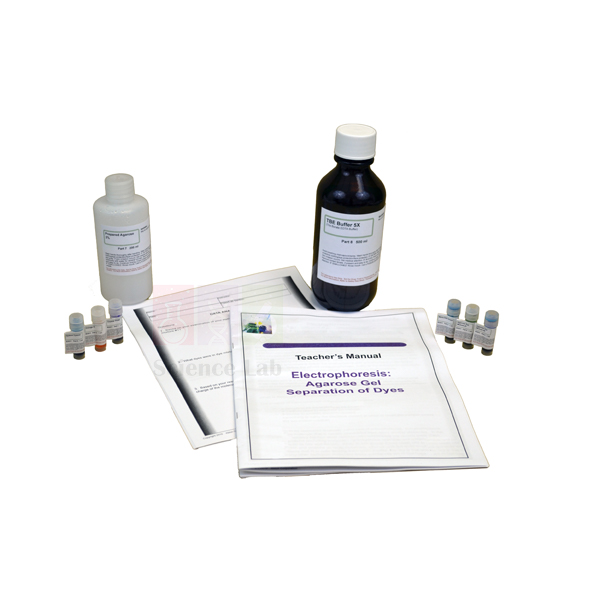
Electrophoresis: Agarose Gel Separation of Dyes
Electrophoresis: Agarose Gel Separation of Dyes (Product Code: SLE/CH/126) is a classroom kit used to introduce agarose gel electrophoresis with coloured dyes in school and college science labs. Unlike DNA, which cannot be seen during a run, the dyes move visibly through the gel, so students watch separation happen, and the kit holds enough materials for ten 20 ml gels. It is supplied by Jain Scientific Equipments Pvt Ltd (ScienceLab), Ambala, India, as a first hands-on electrophoresis kit for school labs in India.
Specifications
| Parameter | Detail |
|---|---|
| Activity | Separation of dyes by agarose gel electrophoresis |
| Materials supplied for | Ten 20 ml agarose gels (actual number of runs may vary with your equipment) |
| Samples | Dyes that can be observed during the procedure |
| Teaching material | Teacher’s Manual and Student Study Guide copymasters |
| Required, not included | Agarose electrophoresis chambers, electrophoresis power supplies, micropipettes capable of measuring 10 µl |
| Shelf life | Depends on the chemical, its grade and storage conditions; ask us for the expiry date of the batch you are quoted |
| Product code | SLE/CH/126 |
| Supplied by | Jain Scientific Equipments Pvt Ltd (ScienceLab), Ambala, India |
What Is the Agarose Gel Dye Electrophoresis Kit Used For?
It teaches the technique before students meet invisible samples. Groups cast an agarose gel, load small volumes of each dye into the wells with a micropipette and connect the chamber to the power supply; within the lesson the coloured bands begin to separate, and depending on their charge some dyes may travel towards the positive electrode while others head the opposite way. Students measure how far each band has moved and relate the distance to the charge and size of the dye molecules, the same reasoning they will later apply to DNA fragments.
Because the dyes are visible without staining, the activity is a convenient skills session for careful pipetting and gel handling. Students who can load 10 µl cleanly into a well without piercing the gel are ready for a DNA-based practical, and pairing the kit with a dedicated electrophoresis power supply lets several groups run gels at once.
What to Specify When Ordering
- The number of kits, bearing in mind each one has materials for ten 20 ml agarose gels
- Whether you also need agarose electrophoresis chambers, and how many
- Whether electrophoresis power supplies should be quoted to match the chambers
- Micropipettes capable of measuring 10 µl, and tips, if your lab does not already have them
Supplier
Jain Scientific Equipments Private Limited, trading as ScienceLab from Ambala, Haryana, India, supplies this kit to school, college and university laboratories. It can be quoted on one order with the chambers, power supplies and micropipettes it needs, so a department receives a complete electrophoresis set-up from a single vendor. Read more in our company profile.
Related Chemistry Lab Equipment
The kit needs a chamber, power and accurate pipetting; these items cover each step:
- Gel Electrophoresis Apparatus — a chamber in which to cast and run the agarose gels
- Electrophoresis Power Supply — provides the electric field that moves the dyes
- Micropipette — for loading small dye volumes into the wells
- Micropipette Tips — disposable tips so each dye is loaded without cross-contamination
- DNA Fingerprinting Electrophoresis Lab Activity — a natural follow-on once students have mastered the technique
Explore more practical kits in Chemistry Lab Equipment.
Frequently Asked Questions
How many gels can one kit run?
The Electrophoresis: Agarose Gel Separation of Dyes kit contains enough material for ten 20 ml agarose gels. The actual number of runs can vary with the size of your gel trays and chambers, so check your equipment before planning classes.
What equipment do I need besides the kit?
Alongside the Agarose Gel Separation of Dyes kit you need agarose electrophoresis chambers, electrophoresis power supplies and micropipettes capable of measuring 10 µl. These are not included, but we can quote them together with the kit.
Why use dyes instead of DNA?
Dyes in the Agarose Gel Separation of Dyes kit can be seen during the run, so students observe separation as it happens instead of waiting for a stain; it is a safe, colourful starting point before DNA work.
Are teacher notes and worksheets provided?
Yes. The Agarose Gel Separation of Dyes kit includes a Teacher’s Manual and Student Study Guide copymasters, which can be photocopied so every group has its own sheet for recording how far each band travels.
What is the shelf life of the kit?
The shelf life of the Agarose Gel Separation of Dyes kit depends on the chemicals, their grade and storage conditions; ask us for the expiry date of the batch you are quoted, particularly if you plan to use the kit across several terms.
Who supplies the Agarose Gel Separation of Dyes kit?
Jain Scientific Equipments Private Limited (ScienceLab), Ambala, Haryana, India, supplies the Electrophoresis: Agarose Gel Separation of Dyes kit to schools, colleges and distributors in India and international markets; include code SLE/CH/126, the number of kits and the delivery address.
Request a Quote
Request pricing for the kit and any chambers, power supplies or micropipettes you need via our contact page, or collect the items in the enquiry cart and send one combined enquiry.
Last updated: 24 September 2026
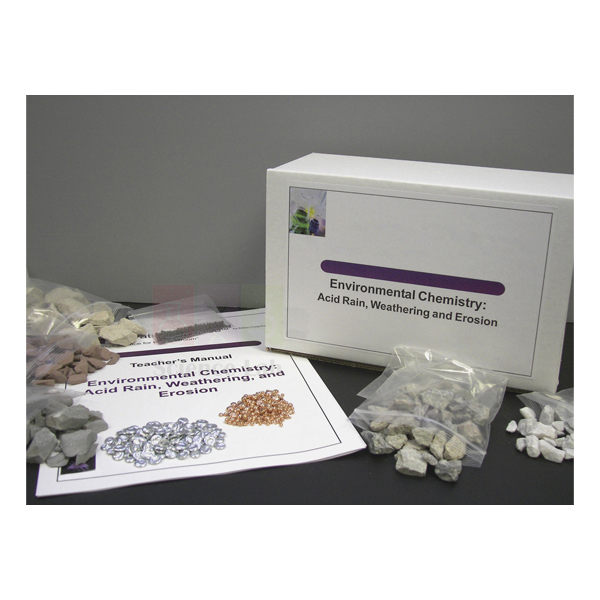
Environmental Chemistry: Acid Rain, Weathering & Erosion
Environmental Chemistry: Acid Rain, Weathering & Erosion (Product Code: SLE/CH/127) is a class activity kit in which students expose naturally occurring and construction materials to an acidic environment and compare them with matching samples left in ‘normal’ rain, represented by tap water. With sufficient materials for 15 groups plus a teacher’s manual and student copy masters, it gives teachers a ready-made environmental science kit for school chemistry, geography and environmental studies lessons. The kit is supplied by Jain Scientific Equipments Pvt Ltd (ScienceLab), Ambala, India.
Key Details
| Parameter | Detail |
|---|---|
| Type | Environmental chemistry activity kit |
| Investigation | Natural and construction materials in an acidic environment compared with tap water (‘normal’ rain) |
| Group capacity | Sufficient materials for 15 groups |
| Teaching material | Teacher’s manual and student copy masters |
| Topics covered | Acid rain, weathering, erosion, damage to natural and man-made surfaces |
Typical Use
Acid rain can be devastating to aquatic ecosystems and to land, and it attacks not only natural surfaces such as the exposed rock of mountainous regions but also the stones and metals used in buildings, statues and monuments. In this activity each group sets up paired samples, one in the acidic solution and one in tap water, and then records what changes: fizzing, discolouration, pitting or crumbling of the surface. Because weathering and erosion speed up sharply as rain becomes more acidic, comparing the two sets gives students direct evidence for a process that normally takes years outdoors.
For a fair test, ask groups to note each sample’s appearance before the start and to keep the containers side by side at the same temperature. The results link naturally to lessons on acids and carbonates, to geography units on rock weathering, and to class discussions on why carved stone on older buildings wears away faster in polluted cities, making the kit a useful earth science kit in India as well as a chemistry resource.
Supplier
This activity kit is supplied by Jain Scientific Equipments Private Limited, which trades as ScienceLab and is based in Ambala, Haryana, India. For tender forms and vendor registration, the company’s details are GSTIN 06AAECJ8618A1ZT and LEI 3358004HRD1JIVXKYX49. Learn more in our company profile.
Related Chemistry Lab Equipment
Useful additions when planning an environmental chemistry unit around this kit:
- Paper, Universal, pH 1-14 — lets students measure how acidic their ‘rain’ is compared with tap water
- Class Rock Pack — additional rock specimens for extending the weathering comparison
- Environmental Chemistry: Nitrates, Phosphates & Eutrophication — a companion activity on nutrient pollution of fresh water
- Environmental Chemistry: Water Treatment & Filtration — completes the unit with how polluted water is cleaned
- Safety Goggles — eye protection while students handle acidic solutions
More teaching kits are available in Chemistry Lab Equipment.
Frequently Asked Questions
How many groups can use one kit?
Fifteen. The kit contains sufficient materials for 15 groups, so a typical class can work in small teams at the same time.
Which materials do students test?
Naturally occurring materials and construction materials. The individual sample list is not given on this page; ask us via the contact page if you need it for lesson planning.
What is used as the control?
Tap water stands in for ‘normal’ rain, so students can compare each acid-exposed sample with an identical one in ordinary water.
Is teacher support included?
Yes. A teacher’s manual and student copy masters come with the kit.
Which subjects does the activity support?
Chemistry (acids and their reactions), geography and earth science (weathering and erosion) and environmental studies (air pollution and its effects on buildings and ecosystems).
What should a school quotation request include?
The product code SLE/CH/127, the number of kits, the delivery address and any vendor documents your tender requires. We supply institutions in India and international markets.
Request a Quote
Send your requirement for this acid rain kit through our contact page, or add it to the enquiry cart with the rest of your environmental chemistry order.
Last updated: 24 September 2026
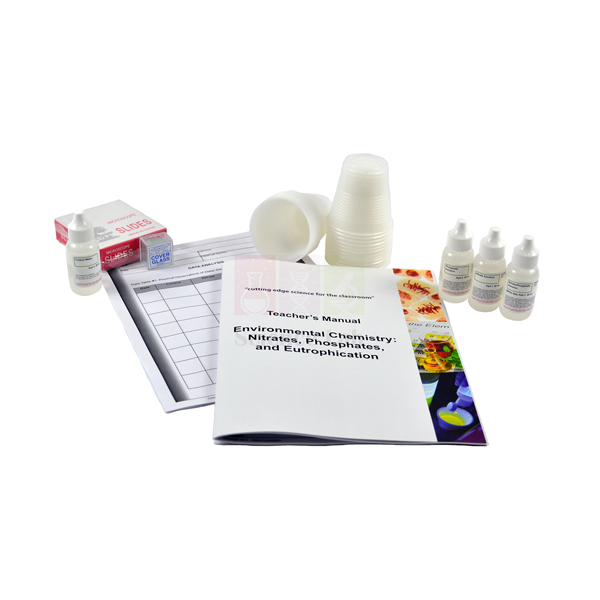
Environmental Chemistry: Nitrates, Phosphates & Eutrophication
Environmental Chemistry: Nitrates, Phosphates & Eutrophication (Product Code: SLE/CH/128) is a water-pollution investigation in which students build miniature ‘ponds’ and compare what happens when nitrates, phosphates, or a combination of the two are added. Along the way learners come to appreciate the importance and value of fresh water and the need to protect and conserve it. With enough materials for 15 groups and a teacher’s manual plus student copy masters, it works as a complete ecology science kit for India’s secondary classrooms and is supplied by Jain Scientific Equipments Pvt Ltd (ScienceLab), Ambala, India.
Key Details
| Parameter | Detail |
|---|---|
| Type | Water-pollution activity kit |
| Investigation | Effects of nitrates, of phosphates and of both together in miniature ‘ponds’ |
| Group capacity | Enough materials for 15 groups |
| Teaching material | Teacher’s manual and student copy masters |
| Learning outcomes | Point-source versus non-point-source pollution; role of nitrates and phosphates in eutrophication; natural and human contributions to water pollution |
Typical Use
Eutrophication begins when excess nutrients reach a lake or pond, feeding a surge of algae; when that growth dies and decays, oxygen in the water is used up and other aquatic life suffers. In this lab each group prepares a set of small ponds, doses them with nitrate, phosphate or both, and then observes and examines how the water changes over time – colour, cloudiness and visible growth. Comparing the three treatments shows students which nutrient drives the change and why the combination matters, while the accompanying discussion shows that a variety of factors, including natural ones, contribute to the overall problem of water pollution.
Keep every pond in the same light and temperature, label them clearly and ask students to keep a dated log with sketches or photographs. Many teachers add a plain-water pond for comparison. By the end, learners should be able to explain the difference between a point source, such as a single discharge pipe, and non-point sources like run-off from fields, which is exactly the kind of outcome a well-structured science kit with manual in India is expected to deliver.
Supplier
The kit is supplied by Jain Scientific Equipments Private Limited, which trades as ScienceLab and operates from Ambala, Haryana, India, serving schools, colleges and training institutes. Our company profile describes the business in more detail.
Related Chemistry Lab Equipment
Items that extend a fresh-water pollution project:
- Water Monitoring Kit, Microscience — lets students test water quality alongside their visual observations
- Water Analysis Kit — for analysing local pond or tap water samples
- Hand Magnifier — to examine growth in the miniature ponds more closely
- Environmental Chemistry: Water Treatment & Filtration — shows how polluted water is made fit for use
- Environmental Chemistry: Acid Rain, Weathering & Erosion — another pollution topic from the same series
See the full Chemistry Lab Equipment range for more classroom kits.
Frequently Asked Questions
What exactly do students compare?
The effects of nitrates, the effects of phosphates, and the effects of the two combined, each in its own miniature pond.
How many groups does the kit serve?
There are enough materials for 15 groups working at the same time.
What is the difference between point and non-point source pollution?
A point source enters water from one identifiable place, such as an outlet pipe; non-point pollution arrives from many diffuse places, such as run-off from farms and streets. The kit’s activity is designed so that students can explain this distinction.
Are the chemicals safe to handle in class?
Use normal laboratory precautions: goggles, hand-washing and supervised disposal. If you need safety information for the kit contents, request it through our contact page.
Is teacher guidance provided?
Yes, a teacher’s manual and student copy masters are included.
Can you supply kits for several schools or overseas?
Yes. We supply institutions in India and international markets; include product code SLE/CH/128, the number of kits and your delivery address in the enquiry.
Request a Quote
Ask for pricing on the eutrophication kit via our contact page, or place it in the enquiry cart together with water-testing items for one consolidated quote.
Last updated: 24 September 2026
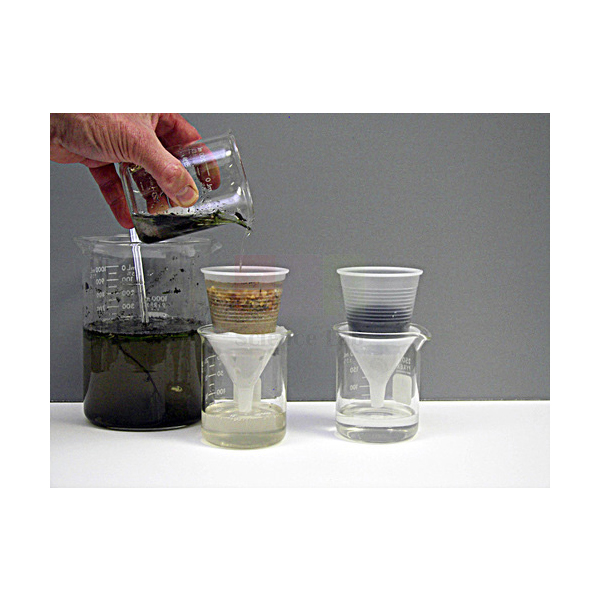
Environmental Chemistry: Water Treatment & Filtration
Environmental Chemistry: Water Treatment & Filtration (Product Code: SLE/CH/129) is a hands-on kit in which students carry out, on a small scale, several of the procedures used at a water treatment plant on a sample of ‘polluted’ water. They learn what each stage does and why it is needed, and they examine how the water changes after every step. Supplied by Jain Scientific Equipments Pvt Ltd (ScienceLab), Ambala, India, it is a practical water purification science kit for schools, with enough materials for 15 groups plus a teacher’s manual and student copy masters.
Key Details
| Parameter | Detail |
|---|---|
| Type | Water treatment activity kit |
| Investigation | Small-scale treatment of ‘polluted’ water using several treatment-plant procedures |
| Observations | Clarity, colour and odour of the water from the start of treatment to the end |
| Group capacity | Enough materials for 15 groups |
| Teaching material | Teacher’s manual and student copy masters |
Typical Use
Municipal plants clean water in stages – typically removing large debris, clumping fine particles together so they settle, filtering what remains and finally disinfecting. This kit lets each group reproduce several of those stages at bench scale. After every step students pour off a small sample and describe its clarity, colour and odour, so they can see which stage removes which kind of contamination and explain the reason each process exists.
A simple way to organise the lesson is to line up a labelled jar from each stage along the bench, turning the class results into a visual timeline from dirty to clear. Remind students that clear water is not necessarily safe water and that nothing produced in the activity should be tasted. The kit fits environmental science, chemistry and geography units, and makes a useful chemistry experiment kit in India for exploring separation techniques in a real-world context.
Supplier
Water Treatment & Filtration is supplied by Jain Scientific Equipments Private Limited, trading as ScienceLab, from Ambala, Haryana, India. The company equips school and college laboratories with apparatus, kits and consumables; see our company profile for more.
Related Chemistry Lab Equipment
Consumables and test kits that pair well with a water treatment practical:
- Filter Paper — for extra filtration trials or comparing filter media
- Glass Funnel — holds filter paper when groups repeat the filtration stage
- Water Monitoring Kit, Microscience — adds chemical tests to the visual checks on treated water
- Water And Soil Analysis Kit — for follow-up analysis of local water samples
- Environmental Chemistry: Nitrates, Phosphates & Eutrophication — explores how nutrients pollute fresh water in the first place
Browse the Chemistry Lab Equipment category for related apparatus.
Frequently Asked Questions
Which treatment steps does the kit reproduce?
Several of the procedures carried out at a water treatment plant. The exact sequence is not listed on this page, so please ask through our contact page if you need it for curriculum mapping.
What do students record?
Physical characteristics of the water – clarity, colour and odour – checked after each step from the beginning of treatment to the end.
How many groups can work at once?
The kit holds enough materials for 15 groups.
Is the treated water safe to drink?
No. This is a classroom demonstration of the principles only; treated samples must never be tasted or drunk.
Are teaching notes included?
Yes, a teacher’s manual and student copy masters are part of the kit.
What information speeds up a quotation?
The product code SLE/CH/129, the number of kits, the delivery address and whether you also need test kits or glassware. We supply institutions in India and international markets.
Request a Quote
Send your enquiry for this water treatment kit through the contact page or add it to the enquiry cart with filtration glassware and test kits.
Last updated: 24 September 2026
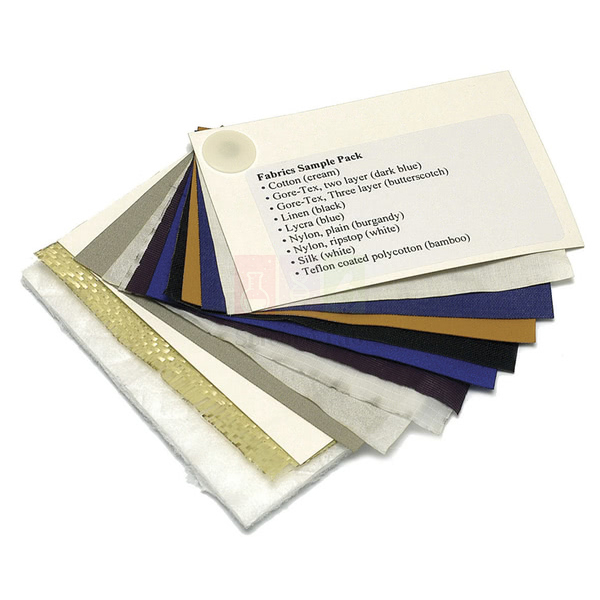
Fabrics Sample Pack
Fabrics Sample Pack (Product Code: SLE/CH/130) is a set of fabric swatches – linen, cotton, Thinsulate, Lycra, Gore-Tex, nylon, silk and Teflon-coated polycotton – held together by a tag, with every swatch in a different colour and a key card to identify each one. It puts real natural, synthetic and performance textiles into students’ hands for lessons on polymers, material properties and product design, making it a compact addition to any STEM science kit in India. The pack is supplied by Jain Scientific Equipments Pvt Ltd (ScienceLab), Ambala, India.
Key Details
| Parameter | Detail |
|---|---|
| Type | Fabric swatch sample pack |
| Fabrics included | Linen, cotton, Thinsulate, Lycra, Gore-Tex, nylon, silk, Teflon-coated polycotton |
| Identification | Each swatch is a different colour; key card included |
| Presentation | Swatches held together by a tag |
| Suitable for | Comparing natural, synthetic and coated or engineered textiles |
Typical Use
The eight fabrics fall neatly into groups for classification: plant fibres (linen and cotton), an animal fibre (silk), synthetic polymers (nylon and the stretch fibre Lycra) and performance materials designed for a job – Gore-Tex for waterproof yet breathable clothing, Thinsulate for insulation and Teflon-coated polycotton for water and stain resistance. Students can drip water on each swatch, stretch it gently, feel its warmth and examine the weave under a magnifier, then link what they observe to the structure of the fibre and to where each fabric is used in everyday products.
Because the colours differ and the key card holds the answers, teachers can run the lesson as a blind identification challenge: groups name each swatch from its properties first, then check against the card. Schools that buy from a lab consumables supplier in India often keep one pack per bench group so that every student can handle the samples during the same lesson.
Supplier
Fabrics Sample Pack is supplied by Jain Scientific Equipments Private Limited, which trades as ScienceLab and is based in Ambala, Haryana, India. The company supplies schools and colleges with teaching resources, apparatus and consumables – our company profile has more information.
Related Chemistry Lab Equipment
Resources that support a materials-and-properties unit:
- Metals and Smart Alloys Starter Pack — the companion sample set for metals and smart materials
- Mini Science Kit – Characteristics of Materials — activities on comparing everyday materials
- Hand Magnifier — for looking closely at weave and fibre structure
- Consumer Chemistry Science Kit — extends the lesson to the chemistry of everyday products
Other teaching resources are listed under Chemistry Lab Equipment.
Frequently Asked Questions
Which fabrics are in the pack?
Linen, cotton, Thinsulate, Lycra, Gore-Tex, nylon, silk and Teflon-coated polycotton – eight swatches in all, joined by a tag.
How do students know which swatch is which?
Each swatch is a different colour, and the included key card matches every colour to its fabric.
What size are the swatches?
Swatch dimensions are not stated in this listing. Please ask through our contact page if you need the size for planning tests.
Can the swatches be used for burn or chemical tests?
The pack works best as a reference set for handling and non-destructive tests such as water drops and stretching. For destructive tests, use separate offcuts under teacher supervision so the identified set stays complete.
Which subjects can use it?
Chemistry (natural and synthetic polymers), physics (insulation and waterproofing), design and technology, and home science or textiles courses.
Can we order packs for a whole class or for export?
Yes. We supply institutions in India and international markets; include code SLE/CH/130 and the number of packs in your enquiry.
Request a Quote
Ask for a quotation on Fabrics Sample Pack through our contact page, or add it to the enquiry cart with other materials-science resources.
Last updated: 24 September 2026
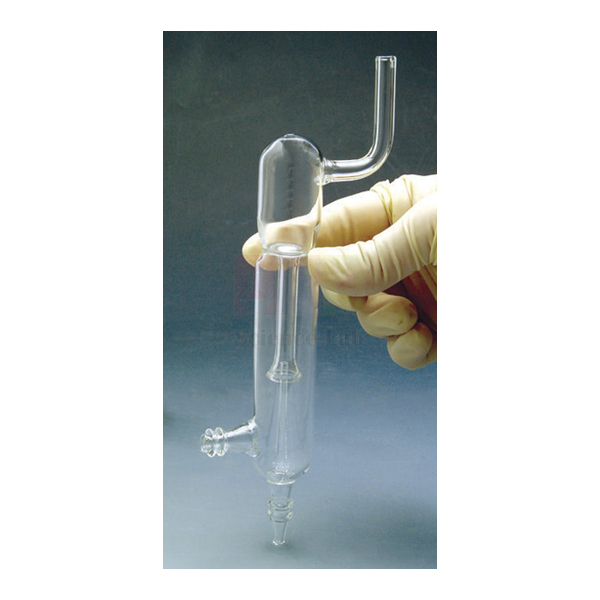
Filter Pump, Borosilicate Glass
Filter Pump, Borosilicate Glass (Product Code: SLE/CH/131) is a water-jet filter pump made from chemical-resistant borosilicate glass that creates a moderate vacuum when connected to a water supply. Fitted to a laboratory tap, it draws air out of a filter flask so that liquid is pulled through a Buchner funnel much faster than gravity filtration allows – a simple way to run suction filtration without an electric vacuum pump. It is made by Jain Scientific Equipments Pvt Ltd (ScienceLab), Ambala, India, and complements the borosilicate glassware India’s school and college laboratories already rely on.
Key Details
| Parameter | Detail |
|---|---|
| Type | Water-jet (aspirator) filter pump |
| Material | Chemical-resistant borosilicate glass |
| Operation | Creates a moderate vacuum when connected to a water supply |
| Driven by | Running tap water – no electrical supply needed |
| Typical application | Suction filtration with a Buchner funnel and filter flask |
Typical Use
Water rushing through the narrow jet inside the pump lowers the pressure around it, so air is dragged in through the side arm and carried away with the water. Connect the inlet to a tap with rubber tubing, and the side arm to a filter flask with thick-walled vacuum tubing; a Buchner funnel sealed into the flask with a bung completes the set-up. Students use it to collect crystals after recrystallisation, to separate precipitates quickly, or to dry a solid on the filter paper by drawing air through it.
Place a trap bottle between the pump and the flask, and when the filtration is finished always disconnect the tubing or let air into the flask before turning off the water – otherwise tap water can be sucked back into your filtrate. The glass body lets you see the water flow at a glance and resists chemical vapours drawn through it. Rinse the pump with clean water after use and store it where it cannot be knocked; laboratories buying from a lab glassware supplier in India often keep a spare for busy practical weeks.
Manufacturer
ScienceLab is the trading name of Jain Scientific Equipments Private Limited (CIN U29309HR2020PTC087597), based in Ambala, Haryana, India. The company manufactures laboratory apparatus at its licensed factory at 449, HSIIDC Industrial Area, Saha, Ambala (Factory Licence AMB-ONLINE-CHD-J-414). Read more in our company profile.
Related Chemistry Lab Equipment
Everything else needed for a vacuum filtration set-up:
- Conical Filter Flask — the side-arm flask that collects the filtrate under vacuum
- Buchner Funnel, 90 mm, Porcelain — holds the filter paper on its perforated plate
- Buchner Bungs (Black) — seal the funnel into the flask neck
- Vacuum Tubing — thick-walled tubing that will not collapse under suction
- Filter Pump, Edward Type — a metal-bodied alternative for heavy daily use
See more apparatus in Chemistry Lab Equipment.
Frequently Asked Questions
How does a glass filter pump make a vacuum without electricity?
Fast-flowing water in the jet creates low pressure that pulls air from the side arm. As long as the tap runs, the pump keeps drawing air from the connected flask.
How strong is the vacuum?
It produces a moderate vacuum, suitable for routine suction filtration. The exact level depends on your water pressure and temperature, and no figure is stated for this listing.
What tubing sizes do I need?
Connector dimensions are not listed here. Tell us your tap and flask fittings through the contact page and we will suggest suitable rubber and vacuum tubing.
How do I stop water sucking back into the flask?
Fit a trap bottle in the line and always release the vacuum or disconnect the tubing before closing the tap.
Should I choose the glass or the Edward type pump?
The borosilicate glass version is chemically resistant and lets you watch the flow; the Edward type is made of nickel plated brass and is the sturdier choice where glassware tends to get knocked.
What warranty and documentation are available?
Warranty terms are not given on this page. Ask for them, along with any vendor details your purchase department needs, when you request a quotation.
Do you supply several pumps for a lab or for export?
Yes, we supply institutions across India and in international markets. Mention product code SLE/CH/131 and the quantity required.
Request a Quote
For prices on the glass filter pump and a complete filtration set, contact us through the contact page or add the items to the enquiry cart.
Last updated: 24 September 2026
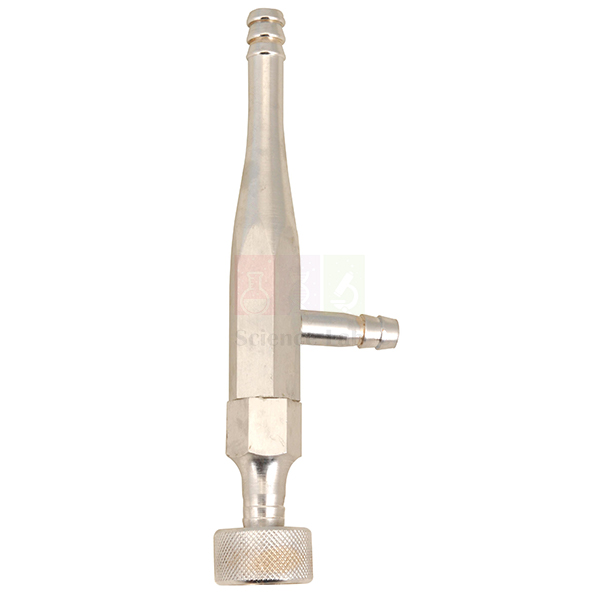
Filter Pump, Edward Type
Filter Pump, Edward Type (Product Code: SLE/CH/132) is a nickel plated brass water pump that produces a vacuum once its water inlet is connected to a running tap. It is a sturdy, no-electricity answer to everyday suction jobs in teaching laboratories – speeding up filtration through a Buchner funnel or drawing air out of a vacuum desiccator. The pump is made by Jain Scientific Equipments Pvt Ltd (ScienceLab), Ambala, India, and is a long-standing piece of chemistry lab equipment in India’s school, college and university laboratories.
Key Details
| Parameter | Detail |
|---|---|
| Type | Edward type water filter pump |
| Material | Nickel plated brass |
| Operation | Creates a vacuum when connected to a water supply via the water inlet |
| Driven by | Running water; no motor or electrical supply |
| Typical applications | Suction filtration and other light bench vacuum tasks |
Typical Use
Attach the water inlet to the laboratory tap with rubber tubing held by a hose clip, run the outlet into the sink, and connect the side vacuum port to your filter flask or desiccator with thick-walled vacuum tubing. With the tap turned on fully, the stream passing through the internal jet pulls air out of the connected vessel. The metal body stands up well to the knocks of a busy student laboratory, and the nickel plating keeps the brass from tarnishing at the sink.
Keep the pump roughly upright so that water drains freely, and add a trap bottle between the pump and your apparatus so that a drop in water pressure cannot send tap water back into the filtrate. If suction weakens over time, flush the pump with clean water and check the jet for debris or scale. For purchasing teams building a filtration station, the pump sits with tubing, flasks and bungs among the lab equipment accessories in India that are easiest to order together.
Manufacturer
Filter Pump, Edward Type is made by Jain Scientific Equipments Private Limited, which trades as ScienceLab and is based in Ambala, Haryana, India, producing apparatus for chemistry, physics and biology teaching. Details of the company are in our company profile.
Related Chemistry Lab Equipment
Pieces that connect to this pump in a working set-up:
- Rubber Tubing — links the water inlet to the tap
- Vacuum Tubing — carries suction from the side port without collapsing
- Conical Filter Flask — the receiving flask for suction filtration
- Vacuum Desiccator — can be evacuated with a water pump for drying samples
- Filter Pump, Borosilicate Glass — the all-glass version where chemical resistance matters most
Browse all items in Chemistry Lab Equipment.
Frequently Asked Questions
What is the Edward type pump made of?
Nickel plated brass. The metal construction makes it less vulnerable to breakage than an all-glass pump.
How does it connect to the tap?
Through its water inlet, normally with rubber tubing secured by a clip. Inlet and port dimensions are not stated here, so send us your tap details via the contact page if you want us to check the fit.
Can it be used with a vacuum desiccator?
Water pumps are commonly used to evacuate desiccators. The vacuum reached depends on your water pressure, so ask us if your procedure needs a particular level.
Do I need a trap bottle?
It is strongly recommended. A trap stops tap water from being drawn back into the flask if the water pressure drops or the tap is closed first.
How do I maintain it?
Flush it with clean water after use, let it drain, and inspect the jet occasionally for scale or debris, especially in hard-water areas.
Can you quote for a full lab set or an export shipment?
Yes. We supply institutions in India and international markets; include product code SLE/CH/132, the quantity and your delivery location.
Request a Quote
Request a price for the Edward type filter pump through our contact page, or add it with tubing and flasks to the enquiry cart.
Last updated: 24 September 2026
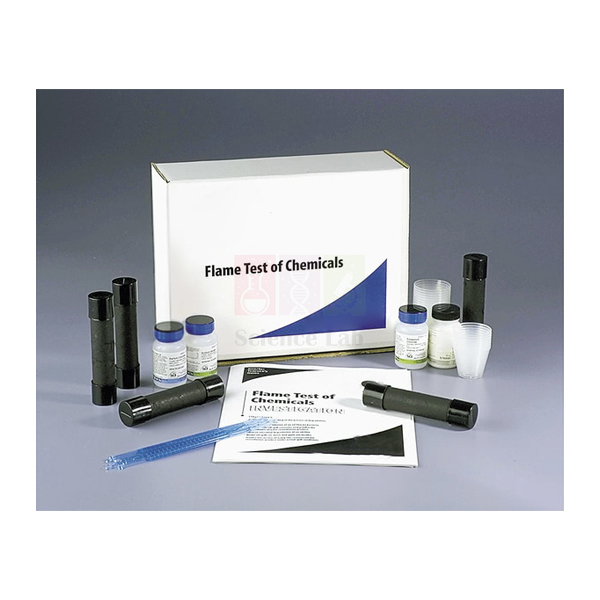
Flame Test Of Chemicals Lab Investigation
Flame Test Of Chemicals Lab Investigation (Product Code: SLE/CH/133) is a classroom investigation, sized for a class of 40 students, in which learners discover how elements can be identified by the colour they give to a flame. Students observe and record the colours emitted by metallic elements on heating, compare them with known standards to identify unknown samples, and use the results to explore the electronic structure of the atom. Supplied by Jain Scientific Equipments Pvt Ltd (ScienceLab), Ambala, India, it serves as a ready-to-run flame test kit for schools in India teaching atomic structure and qualitative analysis.
Key Details
| Parameter | Detail |
|---|---|
| Type | Flame test lab investigation |
| Class size | 40 students |
| Student tasks | Observe and record flame colours of metallic elements; relate results to known standards; identify unknown samples |
| Concepts | Electronic structure of the atom; relationship between colour and energy in the electromagnetic spectrum |
| Component list | Not detailed in this listing – available on request |
Typical Use
When a metal compound is heated in a hot, non-luminous flame, some of its electrons absorb energy and jump to higher energy levels; as they fall back they release light of particular wavelengths, which the eye sees as a characteristic colour. Sodium compounds, for instance, give an intense yellow-orange flame. Students first test the known standards and build a colour reference table, then use that table to name the unknowns, and finally discuss why a red flame corresponds to lower-energy light than a violet one.
Clean the sampling loop or splint thoroughly between samples, because a trace of sodium can mask fainter colours, and let students view the flames against a dark background. Viewing the same flames through a spectroscope turns a colour observation into a set of spectral lines, which is an effective extension for senior classes. Teachers looking for a chemistry teaching kit in India that connects practical work to atomic theory will find this investigation covers both in a single session.
Supplier
This lab investigation is supplied by Jain Scientific Equipments Private Limited, trading as ScienceLab from Ambala, Haryana, India, a supplier of practical kits and apparatus to schools and colleges. Visit our company profile to learn more.
Related Chemistry Lab Equipment
Equipment that supports a flame test lesson:
- Bunsen Burner — provides the hot, non-luminous flame the test depends on
- Spectroscope, Direct Vision — resolves each flame colour into its emission lines
- Safety Goggles — eye protection when working close to the flame
- Rust Race Lab Investigation — another investigation in the same series, on corrosion
Explore more investigations in Chemistry Lab Equipment.
Frequently Asked Questions
How many students is it designed for?
A class size of 40 students.
What will students learn?
How elements can be identified using flames, how flame colour relates to the electronic structure of the atom, and how colour relates to energy in the electromagnetic spectrum.
What exactly is in the kit?
The component list is not detailed on this page. Request it through our contact page so you can check what your laboratory needs to add.
Do we need a burner?
A hot, non-luminous flame is required, usually from a Bunsen burner. If your laboratory does not have enough burners, we can quote them with the kit.
Why do some colours look alike?
Faint colours can be hidden by sodium contamination or confused by eye. Careful cleaning between samples and a spectroscope both help students tell similar flames apart.
What safety precautions apply?
Goggles, tied-back hair, a clear bench and supervision near open flames. Allow hot loops or splints to cool before handling.
Can you supply several classes or export orders?
Yes. We supply institutions in India and international markets; include code SLE/CH/133 and the number of kits you need.
Request a Quote
Ask for pricing on the flame test investigation through the contact page, or add it to the enquiry cart along with burners and goggles.
Last updated: 24 September 2026