- Physics Lab Equipment
- Chemistry Lab Equipment
- Biology Lab Equipment
- Anatomical Lab Equipment
- Learning
- Educational Lab Equipment
- Magnets
- Agriculture
- Astronomy
- Earth Science
- Geography Lab Equipment
- Safety Lab Coat
- Laboratory
- Meteorological
- Electricity & Magnetism
- Heat
- School Lab Equipment
- Lab Glassware
- Science Lab Equipment
- Tvet Lab Equipment
- Robotics Kits Supplier and Manufacturer for Schools India
- Math Lab Equipment Manufacturers and Exporters in Ambala
- STEM Kits Manufacturers and Supplier India
- Engineering Lab Equipment
- Hospital Lab Equipment
- Water, Sanitation & Hygiene Supplies
- Cold Chain, Solar & Communication Equipment
- Nutrition
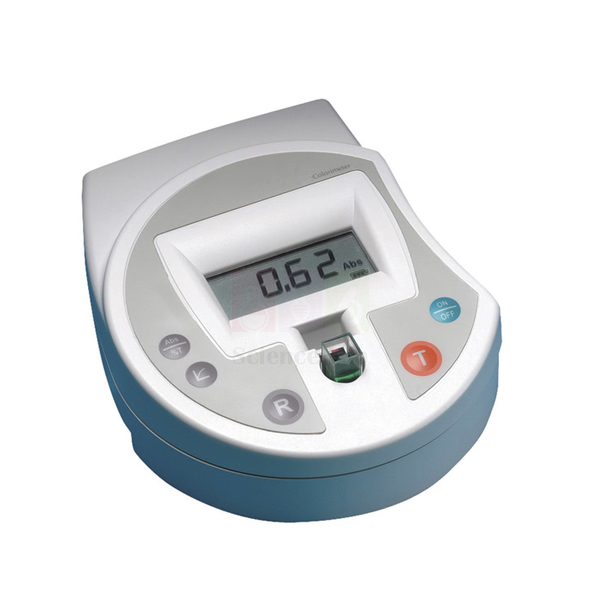
Colorimeter
The Colorimeter (Product Code: SLE/CH/110) is a compact bench instrument that measures how strongly a coloured solution absorbs light, so students can link the depth of a colour to the concentration of the substance that causes it. It has been designed for educational establishments such as schools and colleges: it is lightweight, ergonomically shaped to withstand student handling, and fitted with a large display that is easy to read from across a bench. Manufactured by Jain Scientific Equipments Pvt Ltd (ScienceLab), Ambala, it is one of the analytical lab instruments India teaching laboratories use to introduce quantitative light-absorption work.
Specifications
| Parameter | Detail |
|---|---|
| Intended users | Educational establishments such as schools and colleges |
| Construction | Compact, lightweight and ergonomically designed to withstand student use |
| Display | Large, easy-to-read display |
| Operation | Simple to set up and use, giving rapid results |
| Cuvette compatibility | Standard or semi-micro cuvettes with 10mm pathlength |
| Test tube compatibility | 16mm diameter test tubes |
| Optional adapters | Adapters for 10/12 mm test tubes are available |
Typical Use
The classic student investigation is a calibration curve: learners prepare a dilution series of a coloured solution, record a reading for each standard, plot reading against concentration, and then use the graph to find the concentration of an unknown sample. The same instrument supports reaction-rate work, where a solution that changes colour or turns cloudy is read at regular intervals, and simple biology practicals that follow a colour change produced by an indicator or an enzyme reaction. Because it gives rapid results and is quick to set up, several groups can share one unit during a busy practical period.
For reliable readings, zero the instrument with a blank of the solvent in the same type of container used for the samples, wipe the clear faces of each cuvette with a lint-free tissue, and always insert the cuvette facing the same way. Using 16mm test tubes directly saves a transfer step when a whole class is measuring many samples. Institutions that source their chemistry lab instruments supplier-direct from us often order transfer pipettes and racks with the colorimeter so each station is complete.
Manufacturer
This colorimeter is manufactured by Jain Scientific Equipments Private Limited, which markets its range under the name ScienceLab. The company is based in Ambala, Haryana, India, and produces teaching and laboratory equipment for schools, colleges and technical institutes. Visit our company profile for details of the business.
Related Chemistry Lab Equipment
Instruments and accessories that fit the same absorbance workflow:
- Digital Photo Colorimeter 5 Filters — an alternative colorimeter model with selectable filters
- Single Beam Microprocessor UV-VIS Spectrophotometer — for courses that need wavelength selection across the UV and visible range
- Test Tube 12 x 100 mm — narrow tubes that can be read with the optional 10/12 mm adapter
- Transfer Pipette, 3ml — for filling cuvettes cleanly without splashing the sample chamber
- Test Tube Racks — keeps a dilution series in order while readings are taken
Browse our wider Chemistry Lab Equipment range for supporting glassware and bench items.
Frequently Asked Questions
What sample containers does the colorimeter accept?
It reads samples in standard or semi-micro cuvettes with a 10mm pathlength, or in 16mm diameter test tubes. Adapters for 10/12 mm test tubes are also available.
Are cuvettes and test tube adapters included?
The standard contents are not listed in our current product notes, so the accessories supplied with each unit will be stated in your quotation. Please mention any adapters you need when you contact us.
Which wavelengths or filters does it offer?
Filter and wavelength details are not given in our present documentation for this model. Ask us for the datasheet before ordering if your syllabus specifies particular wavelengths.
What power supply does it need?
Power details are not listed here. Tell us the country where the instrument will be used and we will confirm the electrical configuration.
Will it stand up to daily student use?
It is designed to withstand student use. Good habits still help: keep liquids out of the sample chamber, wipe up spills immediately and store the unit covered.
Is a calibration certificate available?
Please discuss calibration certificate availability with us when you enquire. For everyday teaching, zeroing against a blank before each session keeps readings consistent.
What warranty applies?
Warranty terms are confirmed at the time of quotation; our team can explain them before you place an order.
What should a school or college include in its enquiry?
State the product code SLE/CH/110, the number of units, the country of use, any accessories such as adapters, and whether the order is for India or international delivery.
Request a Quote
Request pricing and availability for the Colorimeter through our contact page, or add it to the enquiry cart alongside other laboratory items for one consolidated quotation.
Last updated: 24 September 2026
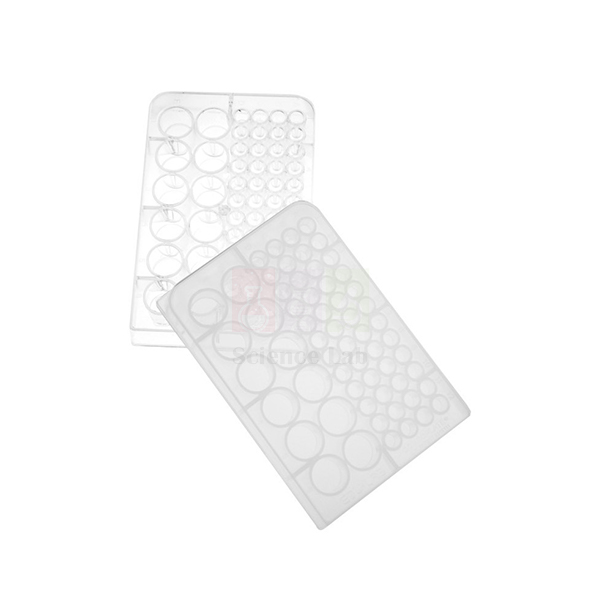
Comboplate, Microscience
The Comboplate, Microscience (Product Code: SLE/CH/111) is a transparent 60-well plate on which students run chemistry, biology and physics experiments with drops of reagent instead of full test tubes. Its 48 small wells behave like “micro test tubes” and its 12 large wells like “micro beakers”, and every well is labelled by a grid reference so results can be recorded precisely. Manufactured by Jain Scientific Equipments Pvt Ltd (ScienceLab), Ambala, it is a practical piece of chemistry lab equipment for schools in India that want to run microscale practicals across a whole class.
Specifications
| Parameter | Detail |
|---|---|
| Total wells | 60 (two sections) |
| Small wells | 48 wells, volume 0.3 ml each |
| Large wells | 12 wells, volume approx 2.5 ml each |
| Well identification | Grid reference system |
| Format | Designed to the dimensions of standard 96-well and 48-well plates; combines features of the 24 and 96 well microplates used in industry, pharmacy, diagnostics and research |
| Optical properties | Optically clear and completely transparent; allows light to pass for overhead projection |
| Care | Dishwasher proof; may be used repeatedly |
| System role | Acts as a base for the ancillary components of the Microscience System |
| Applications | General microtitration, special procedures, and chemistry, biology and physics education experiments; suitable for a wide range of inorganic uses |
Typical Use
A favourite first lesson is acids and bases: a row of small wells receives a drop of indicator, students add acid or alkali drop by drop, and the colour changes are logged against each grid reference. Because the plate is completely transparent, a teacher can place it on an overhead projector and the whole class sees the colours develop at the same time. Microtitrations work the same way, with drops counted instead of burette readings, while the 12 larger wells take reactions that need a little more volume or mixing space, such as displacement reactions or small gas-producing tests.
The plate also serves as the base for other components of the Microscience System, so it pairs naturally with a titration kit for school use in India built around the same approach. After the practical, rinse the wells promptly so residues do not dry on, then wash the plate in a dishwasher and reuse it for the next class. Recording results by grid reference (for example, row and column) helps students write up methods that someone else could repeat exactly.
Manufacturer
ScienceLab is the trading name of Jain Scientific Equipments Private Limited, a laboratory equipment maker based in Ambala, Haryana, India. The company is a registered MSME enterprise (Udyam UDYAM-HR-01-0003714), and its export consignments move under Importer-Exporter Code AAECJ8618A issued by the DGFT. Read more on our company profile.
Related Chemistry Lab Equipment
Microscience items and accessories that work with this plate:
- Basic Microscience Kit, Student — an entry-level student kit for microscale chemistry
- Advanced Microscience Kit, Student — extends microscale work to more demanding practicals
- Titration Kit, Student, Microscience — for drop-count titrations carried out on the plate
- Water Monitoring Kit, Microscience — water-quality tests using the same microscale method
- Dropper Bottle, 10 ml — dispenses reagents one drop at a time into the wells
Find more items in our Chemistry Lab Equipment category.
Frequently Asked Questions
How many wells does the plate have, and what do they hold?
It has 60 wells: 48 small wells of 0.3 ml and 12 large wells of approximately 2.5 ml.
Which plastic is the plate made from?
Our current product notes mention both polystyrene and polypropylene for this plate, so we will confirm the exact material with your quotation. This matters if you plan to use organic solvents; please raise it through our contact page.
Can it be used on an overhead projector?
Yes. The plate is completely transparent and lets light pass through, which is why it is used for whole-class demonstrations of acids and bases.
How do I clean it between lessons?
Rinse the wells soon after use, then wash the plate in a dishwasher; it is dishwasher proof and may be used repeatedly.
Will it work with plate-handling equipment made for 96-well plates?
It follows the dimensions of standard 96-well and 48-well plates, but its well layout is different, so check compatibility with any specific instrument before relying on it.
Does it fit the other Microscience components?
It is designed to act as the base for the ancillary components of the Microscience System. Tell us which kit you use and we will confirm the match.
Can you supply class sets or export quantities?
Yes. We supply schools, colleges and distributors in India and international markets; include the number of plates and destination in your enquiry.
Request a Quote
For pricing on the Comboplate, Microscience, write to us via the contact page or add it to the enquiry cart together with any Microscience kits you need.
Last updated: 24 September 2026
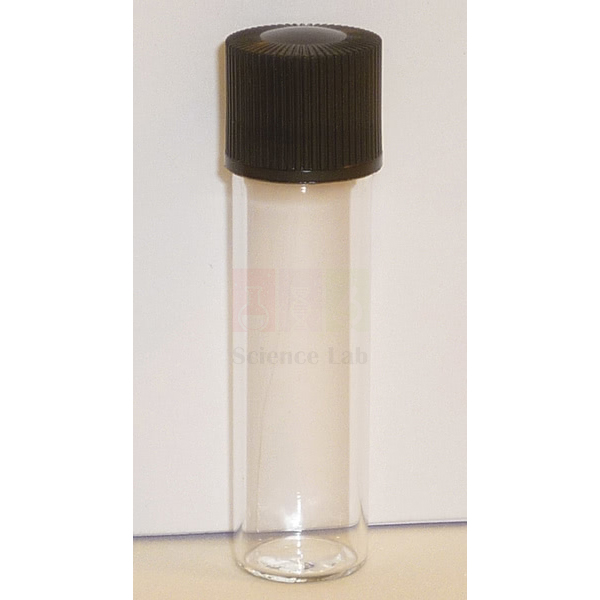
Inner Reaction Vessel
The Inner Reaction Vessel (Product Code: SLE/CH/112) is a slim, small-volume container with a 5 ml capacity, measuring 50 mm in height and 14 mm in diameter. In small-scale chemistry, a vessel of this kind is typically used to hold a few millilitres of one reactant inside a larger container or apparatus, so that the reaction can be started, contained and observed with only a small quantity of chemicals. It is made by Jain Scientific Equipments Pvt Ltd (ScienceLab), Ambala, and joins the wider range of chemistry lab equipment India schools and colleges use for microscale practicals.
Specifications
| Parameter | Detail |
|---|---|
| Type | Small-volume inner reaction vessel |
| Capacity | 5 ml |
| Height | 50 mm |
| Diameter | 14 mm |
Typical Use
Working at the 5 ml scale lets a class repeat a reaction several times in one lesson while keeping chemical use, waste and clean-up to a minimum. Teachers use small inner vessels to keep a reagent apart until the moment it is needed, to confine a reaction whose gas or colour change is then watched in a surrounding container, or simply as compact reaction tubes when bench space is limited. The narrow 14 mm body keeps the liquid column tall, which makes small colour changes and bubbling easier to see.
Measure reagents into the vessel with a dropper or a small graduated pipette rather than pouring, and stand it securely before adding anything so it cannot tip. Because the material is not stated in our current notes, check with us before heating the vessel or using strong solvents. Clean it promptly with a narrow brush and leave it inverted to dry. It is a useful spare to keep with any chemistry experiment kit India teachers run at microscale.
Manufacturer
The Inner Reaction Vessel is manufactured by Jain Scientific Equipments Private Limited, better known by its trade name ScienceLab. The company is located in Ambala, Haryana, India, and serves educational and research laboratories. Our company profile has more information.
Related Chemistry Lab Equipment
Other small-scale items used alongside this vessel:
- Comboplate, Microscience — a 60-well plate for running parallel microscale tests
- Basic Microscience Kit, Student — a student kit built around low-volume chemistry
- Transfer Pipette, 1ml — for measuring small reagent volumes into the vessel
- Dropper Bottle, 10 ml — holds stock reagents and delivers them drop by drop
- Brush Test Tube — a narrow brush for cleaning slim vessels after use
See all items in the Chemistry Lab Equipment category.
Frequently Asked Questions
What are the capacity and dimensions?
The vessel holds 5 ml and measures 50 mm high with a 14 mm diameter.
What material is it made from?
The material is not recorded in our current product notes. Please confirm it through our contact page before ordering, especially if the vessel will be heated or used with solvents.
Which outer container or apparatus does it fit?
Its slim 14 mm diameter allows it to sit inside wider containers, but fit depends on your apparatus. Share the model or dimensions of your outer vessel and we will advise.
Is a lid or stopper supplied?
A closure is not listed for this item. Tell us if you need one and we will check what can be offered.
How should it be cleaned?
Rinse it straight after the reaction, scrub gently with a narrow brush and leave it upside down to drain and dry.
Can I order it in larger quantities for a whole class?
Yes. Class quantities and distributor orders for India and international markets can be quoted on request.
Request a Quote
Ask for a quotation on the Inner Reaction Vessel through our contact page, or add it to the enquiry cart with other microscale items.
Last updated: 24 September 2026
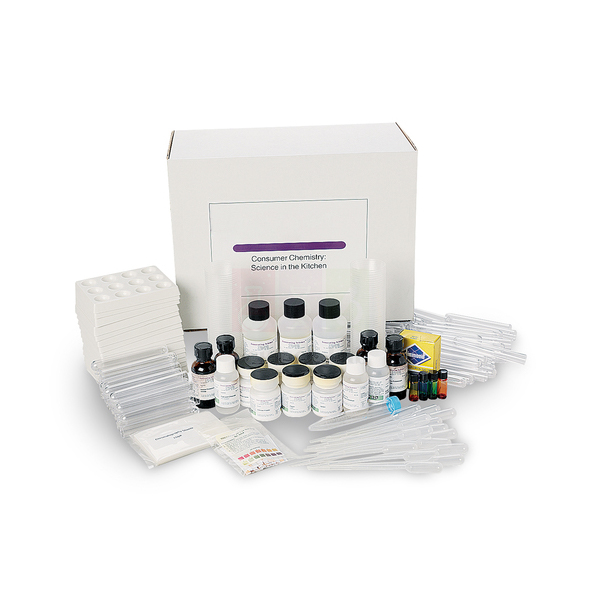
Consumer Chemistry Science Kit
Consumer Chemistry Science Kit (Product Code: SLE/CH/113) is a kitchen-themed chemistry kit used to teach chromatography, chemical identification tests, enzyme action, titration and the chemistry of cleaning products in school and college labs. It contains enough materials for fifteen groups, so a full class can work through each technique using materials found in an ordinary kitchen. It is supplied by Jain Scientific Equipments Pvt Ltd (ScienceLab), Ambala, India, as a chemistry teaching kit for integrated science courses.
Key Details
| Parameter | Detail |
|---|---|
| Theme | Scientific techniques applied to common kitchen materials |
| Group capacity | Enough materials for fifteen groups |
| Chromatography | Separation of commercial food colours |
| Chemical tests | Identifying an unknown cooking ingredient |
| Enzyme study | Protein-digesting ability of a common meat tenderizing enzyme |
| Titration | Quantifying vitamin C levels, then testing an unknown juice or soda |
| Cleaning materials | Differences and similarities between soap, hand dishwashing detergent and machine dishwashing detergent |
| Not provided | The juice or soda used as the unknown in the vitamin C test |
| Shelf life | Depends on the chemical, its grade and storage conditions; ask us for the expiry date of the batch you are quoted |
| Product code | SLE/CH/113 |
| Supplied by | Jain Scientific Equipments Pvt Ltd (ScienceLab), Ambala, India |
What Is the Consumer Chemistry Science Kit Used For?
Most teachers spread the activities over a short sequence of practical lessons, each introducing a different technique. The food-colour chromatography shows that one commercial colour can contain several dyes; the chemical tests train students to reason from observations to name an unknown ingredient; the meat-tenderiser activity turns protein digestion into something visible; the vitamin C titration develops careful end-point judgement; and the detergent comparison links structure to cleaning action.
Students can bring in a juice or soda of their own for the final vitamin C test, which gives the unit a satisfying real-world ending. Give each of the fifteen groups a labelled tray, keep the enzyme activity away from heat sources until it is needed, and collect results in a shared table so class data can be compared. Because the investigations draw on both chemistry and biology, schools often run it with other themed chemistry experiment kits in India so a single topic, such as food science, carries across a term.
Supplier
This kit is supplied by Jain Scientific Equipments Private Limited, the Ambala, Haryana company behind the ScienceLab name. It sources investigation kits and consumables for schools, colleges and distributors in India and international markets, and can quote this kit together with extra chromatography paper, burettes and beakers. Learn more on our company profile.
Related Chemistry Lab Equipment
Items that extend or support these kitchen-chemistry investigations:
- Chromatography Paper No. 1 — extra paper for repeating the food-colour separations
- Micro Burettes, Class-A — for finer volume readings if the vitamin C titration is extended
- Glass Beaker Set of 5 — general containers for preparing and holding test solutions
- Environmental Chemistry: Water Treatment & Filtration — another themed kit linking chemistry to daily life
- Organic Chemistry Kit — a follow-on kit for classes moving into organic reactions
Explore more kits in our Chemistry Lab Equipment range.
Frequently Asked Questions
How many groups can use one Consumer Chemistry Science Kit?
One Consumer Chemistry Science Kit contains enough materials for fifteen groups, so a typical class can carry out each kitchen-themed investigation in small teams rather than watching a single demonstration.
Is the juice or soda for the vitamin C test included?
No. The unknown juice or soda for the vitamin C titration is not provided with the Consumer Chemistry Science Kit, so students or teachers bring their own drink to test at the end of the unit.
Which techniques does the kit cover?
The Consumer Chemistry Science Kit covers chromatography of commercial food colours, chemical tests to identify an unknown cooking ingredient, the protein-digesting action of a meat tenderizing enzyme, vitamin C titration, and a comparison of soap with hand and machine dishwashing detergents.
Where can I see the full list of components?
A detailed component list for the Consumer Chemistry Science Kit is not part of our current product notes. Request it through our contact page and we will share it with your quotation so you can check it against your syllabus.
What is the shelf life of the kit?
The shelf life of the Consumer Chemistry Science Kit depends on the chemicals and other contents, their grade and storage conditions; ask us for the expiry date of the batch you are quoted, and keep the kit closed in a cool, dry cupboard.
Which class level is it suitable for?
The Consumer Chemistry Science Kit includes titration and enzyme work, so it suits supervised laboratory classes; compare the five investigations with your syllabus, and ask us through the contact page if you need help matching them.
Who supplies the Consumer Chemistry Science Kit?
Jain Scientific Equipments Private Limited (ScienceLab), based in Ambala, Haryana, India, supplies the Consumer Chemistry Science Kit to schools, colleges and school networks in India and international markets; tell us the number of kits and the destination.
Request a Quote
Send your requirement for the Consumer Chemistry Science Kit through our contact page, or add it to the enquiry cart with other kits for one combined quotation.
Last updated: 24 September 2026
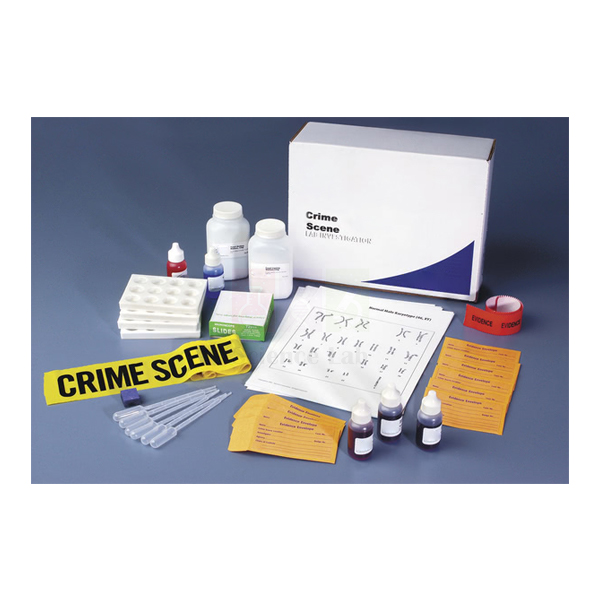
Crime Scene Investigation
Crime Scene Investigation (Product Code: SLE/CH/114) is a forensic science activity that lets students explore how criminal investigations actually work, from the first look at a crime scene to naming a likely suspect. Learners examine physical evidence, identify the victim through dental records and fingerprints, run tests on what they collect and work out the cause of death. With materials for up to 40 students, it is a STEM science kit India classrooms can use to connect chemistry and biology to a story students want to solve. It is supplied by Jain Scientific Equipments Pvt Ltd (ScienceLab), Ambala.
Key Details
| Parameter | Detail |
|---|---|
| Activity type | Forensic science investigation |
| Class size | Materials for up to 40 students |
| Evidence gathering | Examining the physical evidence of a crime scene |
| Victim identification | Using dental records and fingerprints |
| Evidence analysis | Various tests to analyse the evidence gathered |
| Cause of death | Tests to determine how the victim died |
| Outcome | Analysing all evidence to determine a suspect |
Typical Use
Teachers usually stage the activity as a mock case. A corner of the lab is marked off as the scene, teams of students take on roles such as scene examiner, evidence recorder and laboratory analyst, and every item they collect is labelled and logged before testing. Matching dental records and fingerprints teaches careful comparison and observation, while the evidence tests and cause-of-death analysis give practice in carrying out procedures and interpreting results. The investigation ends with each team presenting its case for a suspect and defending it with evidence, which builds scientific reasoning and communication at the same time.
For a class of up to 40, dividing students into small teams that rotate between evidence stations keeps everyone busy. Provide gloves and eye protection during the testing stage, and review the scenario in advance so it suits the age of your group. As a school science kit supplier in India, we find many schools run this investigation during science weeks or as the final project of a forensics unit.
Supplier
Jain Scientific Equipments Private Limited, trading as ScienceLab, supplies this investigation from its base in Ambala, Haryana, India. The company manufactures laboratory apparatus and also provides teaching kits and consumables for schools and colleges. See our company profile for more about who we are.
Related Chemistry Lab Equipment
Items that help you stage and extend the investigation:
- Crime Scene Tape — bright yellow tape to cordon off the mock scene
- Forensic Chemistry of Dusting for Fingerprints — deepens the fingerprint part of the case
- Forensics Using Simulated Blood — adds blood-evidence analysis to the scenario
- Crime Scene Investigation – Forensic Chemistry Of Whodunit — a smaller-group case built on ink chromatography
- Forensic Science Lab Investigation — another forensic activity for a follow-up lesson
More kits are listed in our Chemistry Lab Equipment category.
Frequently Asked Questions
How many students can take part?
It contains materials for up to 40 students, so a full class can work in teams.
What will students actually do?
They examine physical evidence, identify the victim through dental records and fingerprints, perform tests on the evidence, determine the cause of death and analyse everything to decide on a suspect.
Is a teacher guide included?
Teaching notes are not listed in our current product description. Ask through our contact page and we will confirm what documentation comes with the kit.
Can the kit be reused with another class?
That depends on which materials are consumed during the tests. Tell us how many classes you plan to run and we will advise on quantities.
Is the scenario suitable for younger students?
The case involves a victim and a cause of death, so teachers should review it against the maturity of their group; we can share further details before you buy.
Do you supply several kits for districts or overseas buyers?
Yes. Multi-school and export orders for India and international markets can be quoted on request.
Request a Quote
To buy Crime Scene Investigation, contact us through the contact page or add it to the enquiry cart with any other forensic items you need.
Last updated: 24 September 2026

Crime Scene Investigation – Forensic Chemistry Of Whodunit
Crime Scene Investigation – Forensic Chemistry Of Whodunit (Product Code: SLE/CH/115) is a forensic chemistry case in which students solve the crime of the missing frogs. Four possible suspects have been identified, and the class uses fingerprints, hair examination and chemical analysis of ink by Thin-Layer Chromatography to decide who is most likely responsible. With material for 6 groups and printed teaching resources, it doubles as a story-led chromatography kit for school India laboratories. The activity is supplied by Jain Scientific Equipments Pvt Ltd (ScienceLab), Ambala.
Key Details
| Parameter | Detail |
|---|---|
| Case scenario | The crime of the missing frogs |
| Suspects | Four possible suspects |
| Forensic techniques | Fingerprints, hair examination and chemical analysis of ink by Thin-Layer Chromatography |
| Printed resources | Teacher’s Manual, Student Guide and Analysis copy-masters |
| Group capacity | Material for 6 groups |
Typical Use
The lesson opens with the mystery: frogs have gone missing and four suspects are in the frame. Each of the 6 groups works through three lines of evidence. Fingerprint comparison narrows the field by pattern type, hair examination adds physical evidence that must be compared carefully, and the ink analysis brings in real chemistry, as students spot ink samples on a TLC plate, develop it and compare the separated bands with ink linked to each suspect. No single test is decisive on its own, so groups must weigh all three results before naming the most likely culprit, which mirrors how forensic scientists build a case.
The Teacher’s Manual sets out the running of the activity, while the Student Guide and Analysis copy-masters can be photocopied so every learner records observations in the same format. For teachers who prefer a science kit with manual India syllabuses can map onto, this makes preparation straightforward. Run the TLC stage in a ventilated area with solvent jars covered, and ask groups to present their verdict with evidence at the end of the session.
Supplier
This forensic activity is supplied by Jain Scientific Equipments Private Limited, which trades as ScienceLab from Ambala, Haryana, India, and also manufactures laboratory apparatus for education. Buyers completing vendor registration can use the company’s GSTIN 06AAECJ8618A1ZT and its Legal Entity Identifier, LEI 3358004HRD1JIVXKYX49. More details are on our company profile.
Related Chemistry Lab Equipment
Items that support the evidence stations in this case:
- Chromatography Plates, TLC — spare pre-coated plates for repeating the ink analysis
- Forensic Chemistry of Chromatography (Document Analysis) — a companion activity focused on questioned documents
- Forensic Comparison Microscope — for side-by-side hair comparison at the examination stage
- Crime Scene Tape — sets the scene when the case is introduced
- Crime Scene Investigation — a larger forensic investigation for up to 40 students
Browse other activities in our Chemistry Lab Equipment category.
Frequently Asked Questions
How many groups does the activity serve?
There is material for 6 groups.
Which printed resources come with it?
A Teacher’s Manual, a Student Guide and Analysis copy-masters are included.
Which forensic techniques are covered?
Fingerprints, hair examination and chemical analysis of ink by Thin-Layer Chromatography, applied to four possible suspects.
Do I need a microscope for the hair examination?
A microscope is not listed among the contents, so plan to use one from your laboratory for comparing hair samples.
Are TLC solvents and developing jars part of the kit?
Our current notes do not break down the chemical contents. Please confirm the full list through our contact page so you know what to prepare beforehand.
What details help us prepare an institutional quotation?
Share the product code SLE/CH/115, the number of kits, your delivery address and any vendor-registration forms your institution requires.
Can several kits be shipped for a school group or overseas?
Yes. We quote multi-kit orders for schools in India and international markets.
Request a Quote
Enquire about Crime Scene Investigation – Forensic Chemistry Of Whodunit through our contact page, or add it to the enquiry cart along with spare TLC plates.
Last updated: 24 September 2026
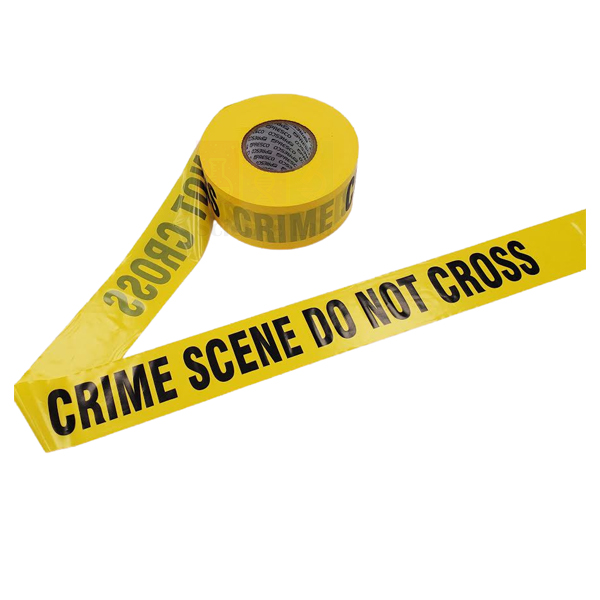
Crime Scene Tape
Crime Scene Tape (Product Code: SLE/CH/116) is a bright yellow roll of barrier tape, 30 m long, made for forensics crime scene lessons. Stretched across a doorway or around a set of benches, it instantly turns part of a classroom into a “scene” that students must investigate carefully and must not disturb. It is a small item from our school lab equipment supplier India range that adds realism to forensic activities, and it is supplied by Jain Scientific Equipments Pvt Ltd (ScienceLab), Ambala.
Specifications
| Parameter | Detail |
|---|---|
| Format | Tape roll |
| Length | 30 m |
| Colour | Bright yellow |
| Intended use | Forensics crime scene lessons |
Typical Use
Teachers tie the tape between retort stands, chair backs or door handles to mark the boundary of a mock crime scene before students arrive. The boundary does real teaching work: only the “scene examiners” may cross it, evidence must be photographed or sketched before anything is moved, and students learn why preserving a scene matters in forensic science. A 30 m roll is long enough to cordon off several separate scenes, so different teams can each have their own area during a single lesson.
The tape also makes an eye-catching border for forensic displays at open days and for a science fair project kit India students assemble around crime-solving themes. After the lesson, roll unused or undamaged lengths back up for the next class. Keep it for teaching scenarios only; genuine hazards in a laboratory should be marked with dedicated hazard warning tape so the two messages are never confused.
Supplier
Crime Scene Tape is supplied by Jain Scientific Equipments Private Limited, whose products are sold under the ScienceLab name. The company is headquartered in Ambala, Haryana, India, where it manufactures laboratory apparatus and provides supporting classroom supplies. Read our company profile for background.
Related Chemistry Lab Equipment
Forensic activities and safety items often ordered with this tape:
- Crime Scene Investigation — a full forensic case for up to 40 students
- Crime Scene Investigation – Forensic Chemistry Of Whodunit — a chromatography-based case that benefits from a taped-off scene
- DNA Murder Mystery Lab Investigation — a DNA fingerprinting simulation with a murder scenario
- Forensic Science Lab Investigation — further forensic practice for follow-up lessons
- Hazard Warning Tape — the right choice for marking real laboratory hazards
View all items in our Chemistry Lab Equipment category.
Frequently Asked Questions
How long is one roll?
Each roll is 30 m long.
What wording is printed on the tape?
The printed text is not specified in our current product notes. If a particular message is important for your lesson, check with us through our contact page.
What is the tape width, and is it adhesive?
Width and adhesive details are not listed. Ask us before ordering if either affects how you plan to use it.
Can I use it to mark a real hazard in the lab?
It is intended for forensics lessons. For genuine hazards, use purpose-made hazard warning tape instead.
Can the tape be reused?
Yes, lengths that are not torn or stretched can be rolled up and used again in later lessons.
Do you supply multiple rolls to schools and overseas buyers?
Yes. We quote multi-roll orders for schools in India and international markets, often together with forensic activity kits.
Request a Quote
Tell us how many rolls of Crime Scene Tape you need via our contact page, or add it to the enquiry cart with your forensic kits.
Last updated: 24 September 2026
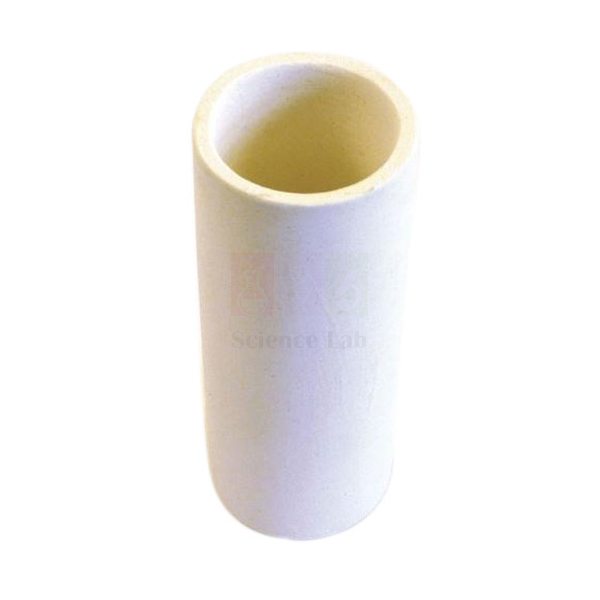
Current Indicator LED
The Current Indicator LED (Product Code: SLE/CH/117) is a light-emitting diode indicator used to show, at a glance, whether an electric current is flowing in a circuit. In a chemistry classroom it is most often connected in series with a solution or a simple cell, so students can see immediately whether a liquid conducts or whether a cell is producing current. It is a simple companion to any electrochemical cell kit school laboratories use, and it is manufactured by Jain Scientific Equipments Pvt Ltd (ScienceLab), Ambala.
Key Details
| Parameter | Detail |
|---|---|
| Type | LED current indicator |
| Purpose | Gives a visual signal when current flows through the circuit |
| Suitable for | Classroom circuits, conductivity-of-solutions tests and simple electrochemistry demonstrations |
| Electrical ratings | Available on request — please confirm before ordering |
Typical Use
A common practical places the indicator in series with a low-voltage supply and a pair of electrodes dipped into different liquids. Tap water, salt solution, sugar solution and dilute acid can be tested in turn: where the LED lights, the liquid contains mobile ions and conducts; where it stays dark, it does not. Comparing how brightly the indicator glows gives a quick, qualitative sense of stronger and weaker electrolytes before students move on to measured readings with a meter. The same indicator can confirm that a home-made cell, such as two different metals in an electrolyte, is actually delivering current.
Like all LEDs, the indicator conducts in one direction only, so if it fails to light in a working circuit, reverse the connections before assuming there is no current. Use low-voltage supplies, keep connections dry and away from the liquid being tested, and rinse the electrodes between samples to avoid carry-over. It is a handy first step before setting up the electrolysis apparatus India schools use for decomposing solutions, because it shows students that current is flowing before products begin to form.
Manufacturer
The Current Indicator LED is manufactured by Jain Scientific Equipments Private Limited, which operates under the brand ScienceLab from Ambala, Haryana, India. The company supplies laboratory equipment to schools, colleges and technical institutes. Find out more on our company profile.
Related Chemistry Lab Equipment
Equipment used in the same conductivity and electrochemistry practicals:
- Conductivity Demonstrator — a ready-made set-up for comparing the conductivity of solutions
- Conductivity of Solutions Apparatus — electrodes and holder for testing liquids in turn
- Crocodile Clips & Leads — quick connections between the indicator, electrodes and supply
- Battery Holder, C — a simple low-voltage source for the test circuit
- Brownlee Electrolysis Apparatus — the next step once students have seen that solutions conduct
See more in our Chemistry Lab Equipment category.
Frequently Asked Questions
What does the Current Indicator LED show?
It lights up when current flows through the circuit it is connected to, giving a clear yes-or-no signal for conductivity and cell tests.
What operating voltage and current does it need?
The electrical ratings are not published in our current product notes. Please request them through our contact page so you can match the indicator to your power source.
Why doesn’t it light even though the circuit is complete?
An LED only conducts in one direction. Swap the two connections; if it still stays dark, check the supply and the electrode contacts.
Does it have built-in current limiting?
This is not stated in our documentation. Confirm with us before connecting it directly to a supply without a series resistor.
Can it tell strong and weak electrolytes apart?
Only roughly, through differences in brightness. For measured values, use an ammeter or conductivity meter alongside it.
Can you supply class quantities or export orders?
Yes. We quote class sets and larger orders for schools and distributors in India and international markets.
Request a Quote
For a quotation on the Current Indicator LED, reach us through the contact page or add it to the enquiry cart with leads and electrodes.
Last updated: 24 September 2026