- Physics Lab Equipment
- Chemistry Lab Equipment
- Biology Lab Equipment
- Anatomical Lab Equipment
- Learning
- Educational Lab Equipment
- Magnets
- Agriculture
- Astronomy
- Earth Science
- Geography Lab Equipment
- Safety Lab Coat
- Laboratory
- Meteorological
- Electricity & Magnetism
- Heat
- School Lab Equipment
- Lab Glassware
- Science Lab Equipment
- Tvet Lab Equipment
- Robotics Kits Supplier and Manufacturer for Schools India
- Math Lab Equipment Manufacturers and Exporters in Ambala
- STEM Kits Manufacturers and Supplier India
- Engineering Lab Equipment
- Hospital Lab Equipment
- Water, Sanitation & Hygiene Supplies
- Cold Chain, Solar & Communication Equipment
- Nutrition
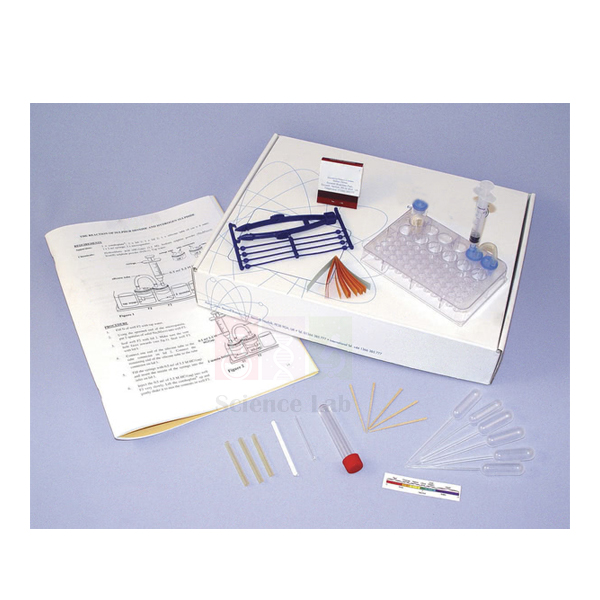
Basic Microscience Kit, Student
Basic Microscience Kit, Student (Product Code: SLE/CH/103) puts small-scale chemistry into each student's hands. It is built around the Comboplate, a development that inspired a family of physical apparatus giving students the opportunity to perform over a hundred chemical experiments that previously required macro-scale apparatus. The topics it supports run from chemical equilibrium and stoichiometry to rates of reaction, industrial pollution and the reactions of metals with salt solutions. Designed for individual use or small groups, it is a science kit for students in India and elsewhere who need regular hands-on practice. It is made by Jain Scientific Equipments Pvt Ltd (ScienceLab), Ambala.
Key Details
| Parameter | Detail |
|---|---|
| Core apparatus | Comboplate (dishwasher safe) |
| Materials | Durable, washable |
| Designed for | Individual use or small groups |
| Component design | Based on equipment used for modern laboratory techniques |
| Worksheets | Written for the students and suited to the curriculum; can be linked to AQA, IB, OCR, Edexcel, WJEC, SEB, IEB and CIE schemes |
| Workbooks and guides | Must be ordered separately |
| Spares | All kit components available for separate purchase |
Topics that may be covered with this kit:
- Chemical Equilibrium
- Acid Base Chemistry
- Enthalpy Changes
- Reactivity of Group 7 Elements
- Industrial Pollution
- Diffusion
- Solubility of Sulphates in Water
- Rates of Reaction
- Stoichiometry
- Reactions of Metals & Their Salt Solutions
Typical Use
The wells of a Comboplate act as a row of miniature test tubes and beakers, so a student can run a series of reactions side by side and compare them directly: a set of metals dropped into salt solutions to build a reactivity order, halide solutions mixed to show Group 7 displacement, or sulphate solutions combined to see which precipitate. Each test uses only drops of solution, which keeps reagent costs and waste low and makes it realistic to give every learner their own practical rather than a shared demonstration.
Plan the term's practicals from the topic list, hand out the matching worksheets, and collect the Comboplates for the dishwasher after class. Missing parts can be reordered one at a time. For a school science kit supplier in India, this is the entry-level set on which the wider microscience range is built.
Manufacturer
The kit is manufactured by Jain Scientific Equipments Private Limited, whose products are sold under the ScienceLab brand from Ambala, Haryana, India. Visit our company profile to learn about the company.
Related Chemistry Lab Equipment
Items that support the topics in this kit:
- Advanced Microscience Kit, Student — the hardware set for performing the basic-kit experiments
- Comboplate, Microscience — spare Comboplates so no student waits for a clean plate
- Titration Kit, Student, Microscience — takes the acid–base topic on to small-scale titration
- Paper, Universal, pH 1-14 — quick pH checks during acid–base work
- Microscience Work Station, Biology, Physics and Chemistry — a complete station for schools adopting microscience widely
See more in our Chemistry Lab Equipment category.
Frequently Asked Questions
Which topics can the Basic Microscience Kit cover?
Chemical equilibrium, acid–base chemistry, enthalpy changes, reactivity of Group 7 elements, industrial pollution, diffusion, solubility of sulphates in water, rates of reaction, stoichiometry, and reactions of metals and their salt solutions.
Do I also need the Advanced kit?
The Advanced Kit is described as providing the physical hardware for the basic-kit experiments. Send us your practical list via the contact page and we will confirm which kit, or combination, fits.
Is a workbook supplied?
Workbooks and guides are ordered separately from the kit.
Are the worksheets matched to exam boards?
They can be linked to AQA, IB, OCR, Edexcel, WJEC, SEB, IEB and CIE schemes; for other syllabuses, ask us to check coverage.
Does the kit include reagents?
Chemicals are not listed as part of the kit. Please confirm with us if you want them included in a quotation.
Can Comboplates go in a dishwasher?
Yes, they are dishwasher safe, and the rest of the kit is washable.
What should a school include when asking for a quotation?
The number of kits, whether you want spare Comboplates or workbooks, and the delivery address. We supply schools in India and international markets.
Request a Quote
Use the enquiry cart to add this kit, or contact us directly for class-set pricing.
Last updated: 24 September 2026
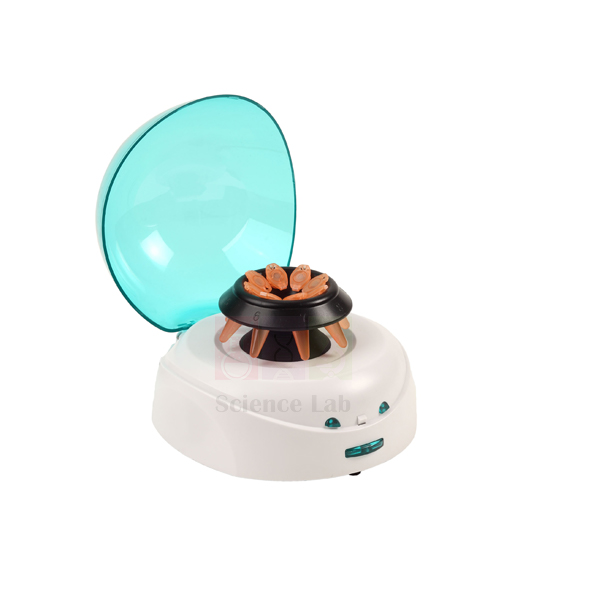
Centrifuge, Mini
Centrifuge, Mini (Product Code: SLE/LC/10) is a compact personal centrifuge used for quick spin-downs, DNA extraction and concentration, microfiltration and cell separation in molecular biology and teaching laboratories. It runs up to 7000 rpm at a noise level below 45 dB, weighs 0.5 kg and comes with two interchangeable rotors suited to 2 ml tubes and PCR tubes. It is supplied by Jain Scientific Equipments Pvt Ltd (ScienceLab), Ambala, India, a biology lab equipment supplier to schools, colleges and research labs.
Specifications
| Parameter | Detail |
|---|---|
| Type | Mini (micro) centrifuge |
| Maximum speed | 7000 rpm |
| Noise level | Less than 45 dB |
| Run time | Continuous operation |
| Driving motor | DC motor |
| Rotors supplied | 2 interchangeable rotors, suited to 2 ml tubes and PCR tubes |
| Rotor capacity | 0.2 / 0.5 / 1.5 / 2.0 mL x 8; 0.2 mL x 16 PCR strips, or 0.2 mL x 2 PCR 8-strips |
| Dimensions | 160 x 170 x 122 mm |
| Weight | 0.5 kg |
| Base | Multiple rubber feet for stability |
| Lid | Lid colour may vary |
| Product code | SLE/LC/10 |
| Supplied by | Jain Scientific Equipments Pvt Ltd (ScienceLab), Ambala, India |
What Is the 7000 rpm Mini Centrifuge Used For?
This mini centrifuge is the tool reached for many times a day: bringing droplets down from tube caps after mixing, collecting reagents at the bottom of PCR strips before cycling, pushing filtrate through spin columns during DNA extraction, and settling cells for a quick wash. Fit the rotor suited to 2 ml tubes for micro tubes, or change to the PCR rotor for strips and single PCR tubes; operation is continuous, so the run lasts as long as needed.
At 0.5 kg and under 45 dB it sits quietly beside a pipetting station or in a school biotechnology corner, and the rubber feet keep it steady on the bench. Paired with a DNA extraction kit for school practicals in India, it lets students pellet and recover material without queuing for a large centrifuge. Load opposite positions evenly and keep the lid closed while the rotor turns.
Supplier
ScienceLab is the trading name of Jain Scientific Equipments Private Limited, which supplies the Centrifuge, Mini from Ambala, Haryana, to schools, colleges, research laboratories and dealers in India and international markets. For supplier onboarding, the company's registration details are GSTIN 06AAECJ8618A1ZT and Legal Entity Identifier 3358004HRD1JIVXKYX49. More about us is on the company profile.
Related Laboratory Equipment
Items used with a mini centrifuge in molecular biology work:
- Micro Centrifuge Tube, 1.5ml — micro tubes for the 2 ml-format rotor.
- PCR Tube Rack — holds PCR tubes and strips while you pipette.
- Micropipette — for dispensing reagents into tubes before a quick spin.
- Polymerase Chain Reaction (PCR) Machine — the thermal cycling step that follows a spin-down of PCR strips.
- Micro Centrifuge — a microprocessor-controlled, higher-speed model with timer for longer pelleting runs.
Compare other models in our Centrifuges range.
Frequently Asked Questions
Which rotors come with the Centrifuge, Mini?
The Centrifuge, Mini is supplied with two interchangeable rotors, one suited to 2 ml tubes and one to PCR tubes. Listed capacities are 0.2/0.5/1.5/2.0 mL x 8, and 0.2 mL x 16 PCR strips or 0.2 mL x 2 PCR 8-strips.
Can the speed or run time of the Centrifuge, Mini be set?
The Centrifuge, Mini is listed with a maximum speed of 7000 rpm and continuous operation; adjustable speed or a timer is not listed. Contact us before ordering if your protocol needs either feature, and we will suggest a suitable model.
How noisy is the Centrifuge, Mini?
The Centrifuge, Mini runs at a noise level of less than 45 dB, quiet enough to use beside people working at the same bench, and its multiple rubber feet keep it stable while it spins.
How much bench space does the Centrifuge, Mini need?
The Centrifuge, Mini measures 160 x 170 x 122 mm and weighs 0.5 kg, so it fits beside a pipetting station or on a crowded shared bench. It is driven by a DC motor.
How is the Centrifuge, Mini different from the Micro Centrifuge?
The Centrifuge, Mini is a compact continuous-run unit for quick spin-downs, including PCR strips. The Micro Centrifuge adds microprocessor speed presets, a timer and higher speeds for longer pelleting runs in 1.5 ml and 2 ml tubes.
Why might the lid colour of the Centrifuge, Mini differ?
The lid colour of the Centrifuge, Mini may vary between batches, as noted in the product listing. The difference is cosmetic and does not change the rotors, speed or other listed specifications.
Who supplies the Centrifuge, Mini?
The Centrifuge, Mini is supplied by Jain Scientific Equipments Pvt Ltd (ScienceLab), Ambala, Haryana, India. The company quotes it for teaching laboratories, research institutes and distributors in India and international markets, and can add tubes, racks and pipettes to the order.
Can a calibration certificate be provided for the Centrifuge, Mini?
Availability of a calibration certificate for the Centrifuge, Mini is confirmed on quotation. Tell us the documentation your laboratory or tender needs, and we will confirm what can be supplied with the unit.
Request a Quote
To buy the Centrifuge, Mini, send us your quantity through the contact page or add it to the enquiry cart.
Last updated: 24 September 2026
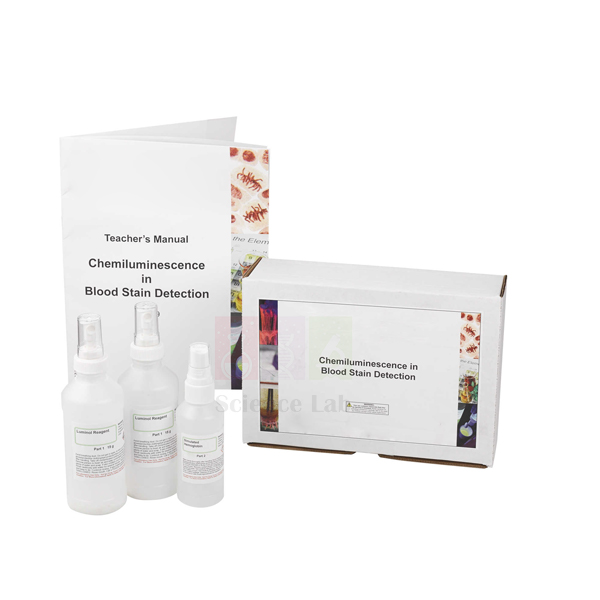
Chemiluminescence in Blood Stain Detection
Chemiluminescence in Blood Stain Detection (Product Code: SLE/CH/104) is a forensic chemistry demonstration kit used to show how luminol reveals hidden blood at a crime scene, in school and college science classes. Its special luminol formulation needs no separate hydrogen peroxide catalyst: re-hydrate it, use it with the simulated blood haemoglobin, and a faint glow appears once the lights are off. It is supplied by Jain Scientific Equipments Pvt Ltd (ScienceLab), Ambala, India, as a chemistry teaching kit for forensic science units.
Key Details
| Parameter | Detail |
|---|---|
| Type | Forensic chemistry demonstration (chemiluminescence) |
| Scenario | A scene with no visible blood is sprayed with a liquid and the lights are turned out, revealing a faint glow |
| Reagent | Special luminol formulation; no separate hydrogen peroxide catalyst required |
| Preparation | Re-hydrate, then use with the simulated blood haemoglobin |
| Quantity | Enough material for several demonstrations |
| Documentation | Instruction manual with suggested activities |
| Shelf life | Depends on the chemical, its grade and storage conditions; ask us for the expiry date of the batch you are quoted |
| Product code | SLE/CH/104 |
| Supplied by | Jain Scientific Equipments Pvt Ltd (ScienceLab), Ambala, India |
What Is the Chemiluminescence Blood Stain Detection Kit Used For?
It recreates a familiar investigation: crime scene officers have collected fingerprints, hair and fibres, yet no blood can be seen. Mark out a mock scene, apply the simulated blood haemoglobin where students cannot see it, re-hydrate the luminol and apply it as the manual describes, then darken the room completely. Afterwards, explain that luminol is oxidised in a reaction catalysed by the iron in haemoglobin, and that the energy released leaves the product molecule in an excited state that gives off light rather than heat.
Prepare the reagent shortly before the demonstration, keep everything else sealed until needed, and wear eye protection and gloves while handling it. The suggested activities let teachers extend the lesson into discussion of evidence, false positives and why forensic scientists confirm results with further tests, so this science kit with manual suits forensic and chemistry units in India and beyond.
Supplier
This demonstration kit is supplied by Jain Scientific Equipments Private Limited, which trades as ScienceLab from Ambala, Haryana, India. The company sources forensic and chemistry teaching kits for schools, colleges and training centres, and can combine this one with other crime-scene activities in a single quotation. Company background is on our company profile.
Related Chemistry Lab Equipment
Other forensic chemistry activities that fit the same unit:
- Forensics Using Simulated Blood — further investigations using safe simulated blood
- Presumptive Blood Test Kit — introduces a colour screening test alongside luminol detection
- Forensic Chemistry of Blood Types — moves from finding blood to typing it
- Forensic Chemistry of Dusting for Fingerprints — covers the fingerprint evidence mentioned in the scenario
- Crime Scene Investigation – Forensic Chemistry Of Whodunit — a wider crime-scene problem for students to solve
Discover more activities in our Chemistry Lab Equipment category.
Frequently Asked Questions
Does the Chemiluminescence in Blood Stain Detection kit use real blood?
No. The Chemiluminescence in Blood Stain Detection kit is designed to be used with simulated blood haemoglobin, so the class sees the luminol glow without anyone handling real blood.
Do I need to buy hydrogen peroxide separately?
No. The Chemiluminescence in Blood Stain Detection kit uses a special luminol formulation that does not require a separate hydrogen peroxide catalyst; you simply re-hydrate it and use it with the simulated blood haemoglobin.
How many demonstrations does one kit cover?
The Chemiluminescence in Blood Stain Detection kit contains enough material for several demonstrations. An exact number is not given in our product notes, so ask through our contact page if you need to plan a set number of classes.
How dark does the room need to be?
As dark as you can make it. The glow from the Chemiluminescence in Blood Stain Detection kit is faint, so close the blinds, switch off every light and give eyes a moment to adjust before applying the luminol.
What is the shelf life of the luminol kit?
The shelf life of the Chemiluminescence in Blood Stain Detection kit depends on the chemicals, their grade and storage conditions; ask us for the expiry date of the batch you are quoted, especially if you are ordering well ahead of the lesson.
Is there guidance for teachers?
Yes. The Chemiluminescence in Blood Stain Detection kit includes an instruction manual with suggested activities, which teachers can use to plan the demonstration and the follow-up discussion on forensic evidence.
Who supplies the Chemiluminescence in Blood Stain Detection kit?
Jain Scientific Equipments Private Limited (ScienceLab), Ambala, Haryana, India, supplies the Chemiluminescence in Blood Stain Detection kit to schools, colleges and distributors in India and international markets; include the quantity and delivery location in your enquiry.
Request a Quote
Add this kit to the enquiry cart or contact us for a quotation, together with any other forensic activities for the same unit.
Last updated: 24 September 2026
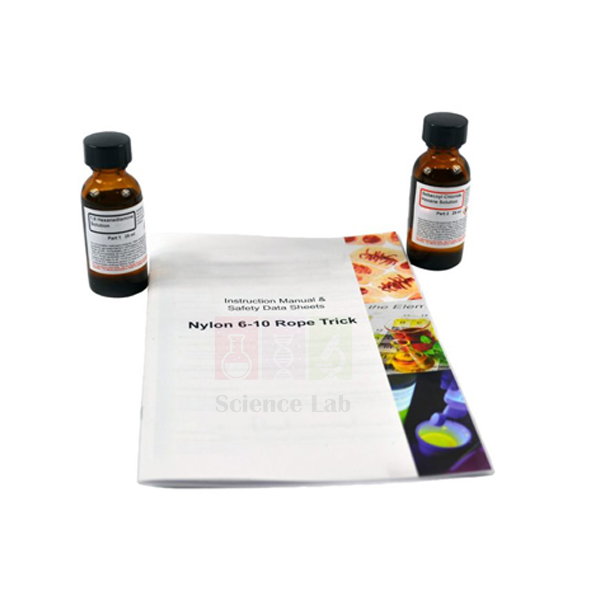
Chemistry Demonstration Nylon 6-10 Rope Trick
Chemistry Demonstration Nylon 6-10 Rope Trick (Product Code: SLE/CH/105) is a polymer chemistry demonstration kit used to make nylon and draw it out as a continuous rope in school and college chemistry lessons. It contains sufficient reagents for five demonstrations, with instructions, and produces Nylon 6-10, a synthetic polymer of high molecular weight built from up to millions of repeated chemical units. It is supplied by Jain Scientific Equipments Pvt Ltd (ScienceLab), Ambala, India, alongside the reagents it offers as a lab chemicals supplier in India.
Key Details
| Parameter | Detail |
|---|---|
| Type | Polymer chemistry demonstration kit |
| Polymer produced | Nylon 6-10 |
| Reagents | Sufficient for five demonstrations |
| Instructions | Included |
| Teaching focus | Synthetic polymers of high molecular weight consisting of up to millions of repeated, linked chemical units |
| Shelf life | Depends on the chemical, its grade and storage conditions; ask us for the expiry date of the batch you are quoted |
| Product code | SLE/CH/105 |
| Supplied by | Jain Scientific Equipments Pvt Ltd (ScienceLab), Ambala, India |
What Is the Nylon 6-10 Rope Trick Used For?
It is a vivid way to show polymerisation happening in real time. In the classic rope trick, two reagent solutions that do not mix are layered carefully in a beaker, and a film of polymer forms where they meet. Grip the film at the centre with forceps, lift it slowly and wind it onto a glass rod: fresh nylon keeps forming at the boundary, so a long rope can be drawn out while the class watches.
The name itself is a teaching point, because in Nylon 6-10 one monomer contributes six carbon atoms and the other ten to each repeating unit, which links neatly to lessons on condensation polymers. Follow the included instructions for quantities and the order of addition, wear goggles and gloves, work in a well-ventilated room and rinse the rope thoroughly before anyone handles it. Building the repeating unit with an organic molecular model set afterwards helps students connect what they saw to the structure of the chain.
Supplier
The Nylon 6-10 Rope Trick kit is supplied by Jain Scientific Equipments Private Limited, which trades as ScienceLab and is based in Ambala, Haryana, India. It is one of the demonstration reagent kits the company sources for schools and colleges, and it can be quoted with the beakers, forceps and goggles needed to run it. Our company profile has further details.
Related Laboratory Equipment
Apparatus and models used to run and explain the demonstration:
- Forceps (Tweezers) — for gripping the polymer film at the interface
- Stirring Rod, Glass — for winding up the nylon rope as it is drawn out
- Glass Beaker — the vessel in which the two solutions are layered
- Safety Goggles — eye protection for the demonstrator and nearby students
- Organic Chemistry Molecular Models Kits — to build the repeating unit and show how the chain grows
Find more kits and apparatus in our Chemistry Lab Equipment category.
Frequently Asked Questions
How many demonstrations can I run with the Nylon 6-10 Rope Trick kit?
The Chemistry Demonstration Nylon 6-10 Rope Trick kit contains sufficient reagents for five demonstrations, enough for a teacher to show the reaction to several classes or to repeat it when students revise polymers.
Are instructions provided?
Yes. Instructions are included with the Nylon 6-10 Rope Trick kit; follow them for the quantities of each solution and the order in which the layers are added, because careful layering is what lets the rope form cleanly.
What does "6-10" mean?
In the Nylon 6-10 Rope Trick, the name refers to the number of carbon atoms contributed by each of the two monomers that join to form the repeating unit of this nylon: six from one monomer and ten from the other.
Is it suitable for students to perform?
The Nylon 6-10 Rope Trick kit is designed as a demonstration. We recommend that a teacher runs it in a well-ventilated room, with students watching from a safe distance and everyone wearing eye protection.
What else do I need?
Apparatus such as a beaker, forceps and a glass rod is not listed as included with the Nylon 6-10 Rope Trick kit, so have these ready or order them together with the kit from the related items above.
What is the shelf life of the reagents?
The shelf life of the Nylon 6-10 Rope Trick kit depends on the chemicals, their grade and storage conditions; ask us for the expiry date of the batch you are quoted, and store the reagents as the instructions direct.
Who supplies the Nylon 6-10 Rope Trick kit?
Jain Scientific Equipments Private Limited, trading as ScienceLab from Ambala, Haryana, India, supplies the Nylon 6-10 Rope Trick kit to schools, colleges and distributors in India and international markets; share your quantity and delivery location for a quotation.
Request a Quote
Add the kit to the enquiry cart or send your requirement through the contact page, listing any beakers, forceps or goggles you also need.
Last updated: 24 September 2026
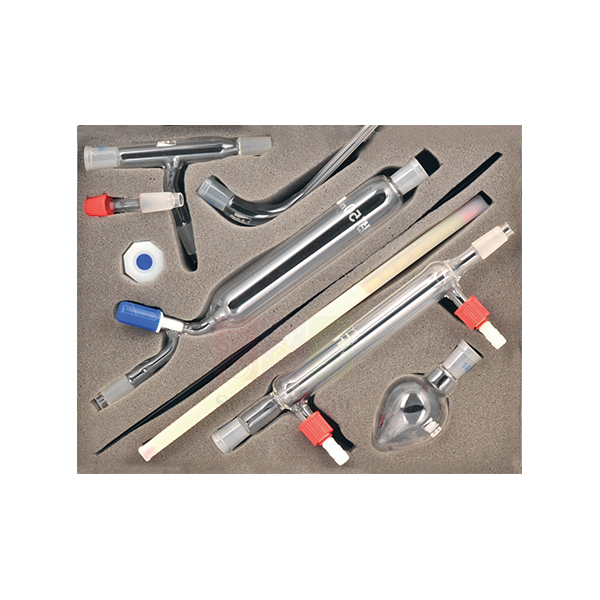
Organic Chemistry Kit
Organic Chemistry Kit (Product Code: SLE/CH/106) is a compact set of apparatus for small-scale organic preparations and purifications, built around a 50 ml pear-shaped flask. With a still head, Liebig condenser, receiver adaptor, 50 ml dropping funnel and thermometer, students can assemble a simple distillation, add a reagent dropwise to a reaction, or set the condenser upright for heating under reflux, all from one kit. It is used in senior secondary and undergraduate organic chemistry practicals. It is made by Jain Scientific Equipments Pvt Ltd (ScienceLab), Ambala, for institutions looking for laboratory distillation apparatus in India and international markets.
Specifications
| Parameter | Detail |
|---|---|
| Flask | 1 pear-shaped flask, 50 ml |
| Still head | 1 |
| Air leak / stream inlet | 1 |
| Dropping funnel | 1, 50 ml, with GP rotaflow tap |
| Stopper | 1 |
| Condenser | 1 Liebig condenser |
| Screwcap adaptor | 1 |
| Receiver adaptor | 1 |
| Thermometer | 1 |
Typical Use
For a simple distillation, the pear-shaped flask is clamped over the heat source, the still head fitted on top with the thermometer held through the screwcap adaptor at the side-arm level, and the Liebig condenser connected to the side arm with the receiver adaptor directing distillate into a collecting vessel. For a preparation, the dropping funnel with its rotaflow tap sits on the flask so a reagent can be added a little at a time while the mixture is heated or stirred; the stopper closes any unused opening, and the air leak inlet provides a controlled gas or air entry point where a procedure calls for one.
Clamp both the flask and the condenser, run cooling water in at the lower end of the condenser and out at the upper end, add anti-bumping granules before heating, and never heat a completely closed system. Because the flask holds 50 ml, reagent quantities stay small, which suits college labs and schools working under budget or safety limits. Departments buying from a chemistry lab instruments supplier often pair the kit with stands and clamps so each bench is complete.
Manufacturer
This kit is manufactured by Jain Scientific Equipments Private Limited, operating as ScienceLab in Ambala, Haryana, India, a maker of apparatus for chemistry, physics and biology teaching labs. See the company profile for more.
Related Chemistry Lab Equipment
Support and spare items for assembling the kit on the bench:
- Retort Stand — the upright support for clamping the assembly
- Universal Clamp — holds the flask and condenser securely to the stand
- Rubber Tubing — carries cooling water to and from the Liebig condenser
- Liebig Condenser — a separately listed condenser; confirm fit with the kit before ordering as a spare
- Fractional Distillation Assembly — for separations that need a fractionating set-up
Explore the Chemistry Lab Equipment category for more apparatus.
Frequently Asked Questions
What does the Organic Chemistry Kit contain?
One each of: 50 ml pear-shaped flask, still head, air leak/stream inlet, 50 ml dropping funnel with GP rotaflow tap, stopper, Liebig condenser, screwcap adaptor, receiver adaptor and thermometer.
What joint sizes are used?
Joint sizes are not listed on this page. Please contact us if you need them to match existing apparatus.
Are a stand and clamps included?
They are not listed in the kit contents, so order a retort stand and clamps separately if you do not already have them.
What is the thermometer range?
The range is not stated here; ask us for details before ordering if your procedure needs a specific range.
Can it be used for reflux as well as distillation?
Yes. With the Liebig condenser fitted vertically on the flask, the same kit can be used to heat a reaction under reflux.
Is a calibration certificate available for the thermometer?
Please discuss calibration certificate availability with us when you request a quotation.
Can you supply kits for a whole lab?
Yes. State the number of kits, any extra spares and your delivery location; we supply institutions across India and international markets.
Request a Quote
Add the Organic Chemistry Kit to our enquiry cart or contact us for pricing.
Last updated: 24 September 2026
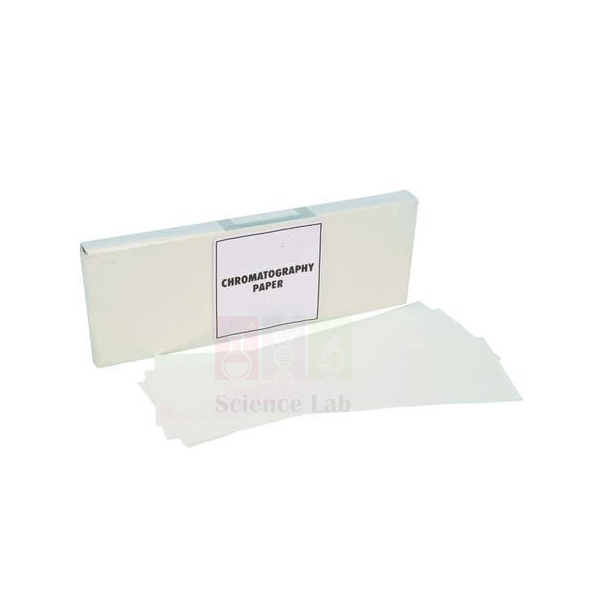
Chromatography Paper No. 1
Chromatography Paper No. 1 (Product Code: SLE/CH/107) is a pack of 100 sheets of No. 1 chromatography filter paper, each sheet measuring 200 x 200 mm and very thin. It is used in paper chromatography to separate a sample into its component parts, for example letting students split blended water-soluble inks into the original pigments to reveal their hidden colours. In wider laboratory work it helps test for the presence of various materials, monitor the rate and progress of a reaction, or determine the purity of a product. Suitable for school and college practicals and for experiments at home, it is a core consumable for any paper chromatography kit for school labs and is supplied by Jain Scientific Equipments Pvt Ltd (ScienceLab), Ambala.
Specifications
| Parameter | Detail |
|---|---|
| Grade | No. 1 chromatography filter paper |
| Pack size | 100 sheets |
| Sheet size | 200 x 200 mm |
| Thickness | Very thin |
| Absorbency | Absorbs liquids and provides more surface area for evaporation |
| Applications | Separating water-soluble inks; testing for the presence of materials; monitoring reaction rate and progress; checking product purity |
Typical Use
Cut a sheet into strips, draw a baseline in pencil a short distance from one end, and spot each ink or sample on the line. Stand the strip in a beaker with the solvent level below the baseline and cover it; as the solvent climbs, each component travels a different distance, leaving a row of separate spots. Students can then compare spots with known references or measure how far each has moved relative to the solvent front.
Handle sheets by the edges, because skin oils can distort the solvent flow, and never mark the baseline in ink, which would itself separate. Because the paper absorbs liquid readily and spreads it across a large surface, it also dries quickly between runs. Keep the pack sealed and flat in a dry cupboard. Labs sourcing from a chemistry consumables supplier in India usually order it with chromatography pens and TLC plates to cover both paper and thin-layer methods.
Supplier
This paper is supplied by Jain Scientific Equipments Private Limited, the company behind ScienceLab in Ambala, Haryana, India. The company supplies consumables such as this paper alongside its apparatus range; for vendor registration, its details are CIN U29309HR2020PTC087597 (Ministry of Corporate Affairs) and GSTIN 06AAECJ8618A1ZT. Read more in our company profile.
Related Chemistry Lab Equipment
Items used with chromatography paper in separation practicals:
- Chromatography Pens, Black — ink samples that separate into several colours on the paper
- Chromatography Plates, TLC — for comparing paper chromatography with thin-layer chromatography
- Forensic Chemistry of Chromatography (Document Analysis) — a ready-made investigation built on ink separation
- Glass Beaker — a simple developing vessel for paper strips
- Filter Paper — for general filtration work, kept separate from chromatography sheets
Browse more consumables and apparatus under Chemistry Lab Equipment.
Frequently Asked Questions
How many sheets are in a pack of Chromatography Paper No. 1, and what size are they?
Each pack holds 100 sheets, each 200 x 200 mm.
Can the sheets be cut into strips?
Yes. Cut them with clean scissors to whatever strip width your developing vessel needs.
Which solvent should I use?
Water works for separating water-soluble inks. Other samples may need a different solvent, as set out in your experiment method.
Can it be used outside the lab?
Yes, it can be used for various experiments in the laboratory and at home, with the usual care when handling solvents.
How should it be stored?
Keep it flat, dry and sealed in its pack, and handle sheets only by the edges.
Do you supply larger quantities for schools or distributors?
Yes. We supply institutions and distributors across India and international markets; tell us the number of packs and delivery location for a quotation.
Request a Quote
Add this paper to the enquiry cart or reach us through the contact page to request pricing.
Last updated: 24 September 2026
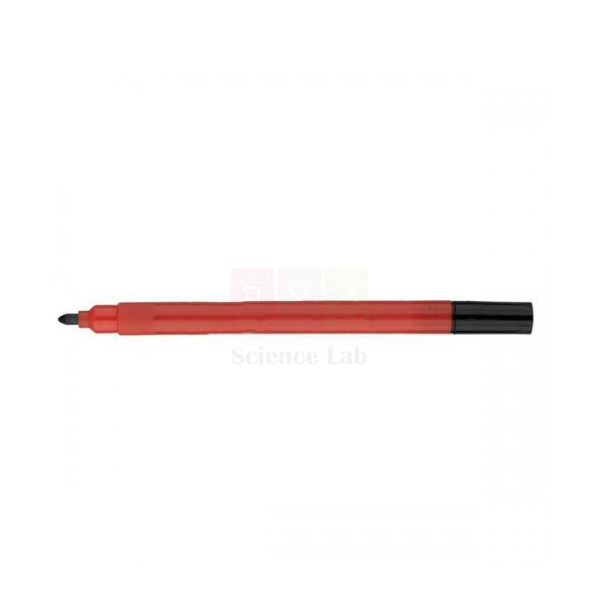
Chromatography Pens, Black
Chromatography Pens, Black (Product Code: SLE/CH/108) are water-based black marker pens with a 1.7 mm tip, used to show students that a single “black” ink is really a blend of several coloured dyes. A line or dot of ink is placed on paper or card, water is allowed to creep up through it, and the hidden colours spread apart into separate bands. They are a simple consumable to keep alongside a chromatography kit for school labs in India and are supplied by Jain Scientific Equipments Pvt Ltd (ScienceLab), Ambala, India.
Specifications
| Parameter | Detail |
|---|---|
| Pen type | Water-based marker pen |
| Ink colour | Black |
| Tip size | 1.7 mm |
| Suitable surfaces | Paper and card |
| Teaching purpose | Showing the separation of the colours used in black ink |
Typical Use
In a standard paper chromatography practical, students draw a pencil baseline near the bottom of a paper strip (pencil graphite does not dissolve, so it will not run), mark a small dot of black ink on it, and stand the strip in a container with a shallow layer of water kept below the ink mark. As the water rises through the paper it carries each dye at a different rate, depending on how soluble the dye is and how strongly it clings to the paper fibres. After a few minutes the single black spot opens into a ladder of blues, purples, yellows or browns, which students can sketch, compare and use to work out Rf values.
Let each ink spot dry before developing so it does not smear, and keep the caps firmly on between classes so the tips stay moist. The same pens make a good starting point for a mini forensic exercise, where students compare the pattern from an unknown note with patterns from several pens. Schools that order from us as a chemistry consumables supplier in India usually request these pens together with chromatography paper so that every bench has matching materials.
Supplier
These pens are supplied by Jain Scientific Equipments Private Limited, the company that trades under the ScienceLab brand. It is based in Ambala, Haryana, where it manufactures laboratory apparatus and supplies teaching consumables to schools and colleges in India and international markets. More background is available on our company profile page.
Related Chemistry Lab Equipment
Items commonly used in the same ink chromatography practical:
- Chromatography Paper No. 1 — the paper on which the black ink spot is developed
- Chromatography Plates, TLC — thin-layer plates for comparing the same separation on a coated surface
- Forensic Chemistry of Chromatography (Document Analysis) — a forensic activity built around identifying inks
- Glass Beaker — holds the water in which the paper strip stands
- Filter Paper — an everyday paper for quick demonstration runs
See the complete Chemistry Lab Equipment range for more chromatography and general bench items.
Frequently Asked Questions
How many pens are in one order unit?
The pack quantity is not listed in our current product notes. Tell us how many pens you need through our contact page and the pack format will be confirmed in your quotation.
What solvent do I need to separate the ink?
Plain water normally works, because the ink is water-based. Some teachers repeat the run with a different solvent as an extension activity to show how the solvent changes the result.
Which paper should I use with these pens?
They are intended for paper and card. Chromatography paper gives the cleanest bands for measurement, while card is handy for display work where the separated colours are mounted on a wall chart.
Can I spot this ink onto TLC plates?
The pens are described for paper and card only. If you plan to use them on thin-layer plates, ask us to check suitability before you order.
How should the pens be stored between lessons?
Replace the cap straight after use and keep the pens away from direct heat, so the water-based ink does not dry out in the tip.
Do you supply schools in bulk and overseas?
Yes. Class sets and larger institutional orders can be arranged for buyers in India and international markets; share your quantity and destination and we will respond with availability.
What should I include in an institutional quotation request?
Mention the product code SLE/CH/108, the number of pens, your delivery address and any tender or purchase-order format your institution follows.
Request a Quote
To order Chromatography Pens, Black, send your requirement through our contact page, or add this item to the enquiry cart together with other chromatography supplies and submit one combined request.
Last updated: 24 September 2026
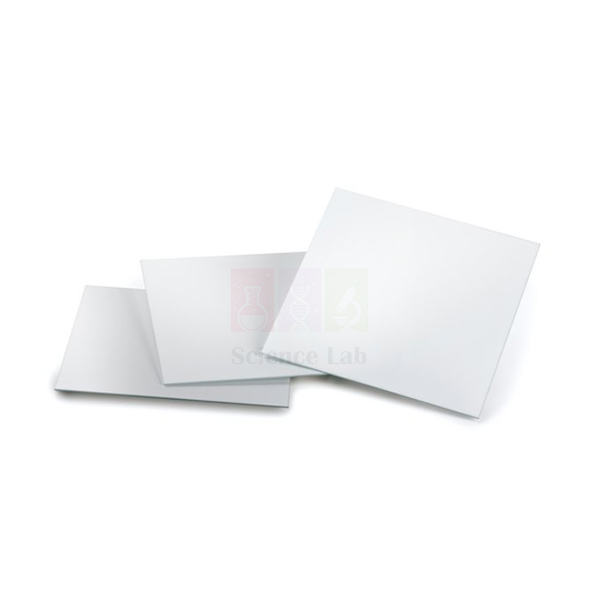
Chromatography Plates, TLC
Chromatography Plates, TLC (Product Code: SLE/CH/109) are pre-coated thin-layer chromatography plates cut to 40 x 80 mm and packed 50 to a pack. Because the stationary layer is already applied, teachers and lab assistants can move straight to spotting and developing samples without preparing slurry-coated slides. The plates suit senior-school and college practicals on separating and identifying the components of coloured mixtures, and they are supplied by Jain Scientific Equipments Pvt Ltd (ScienceLab), Ambala, a lab consumables supplier to institutions across India.
Specifications
| Parameter | Detail |
|---|---|
| Product type | Pre-coated TLC plates |
| Plate size | 40 x 80 mm |
| Pack quantity | Pack of 50 plates |
| Technique | Thin-layer chromatography (TLC) |
Typical Use
A TLC run starts with a light pencil line drawn across the plate a short distance above its lower edge. Students apply tiny spots of each sample on this line with a fine capillary, allow them to dry, and then stand the plate in a covered jar or beaker containing a shallow pool of solvent that sits below the spots. The solvent rises through the coating by capillary action and carries each component a different distance. Once the front nears the top, the plate is removed, the solvent front is marked, and Rf values are calculated and compared with known references. Coloured substances such as inks and food dyes can be seen directly; colourless compounds may need a visualising method that suits the coating.
Compared with paper chromatography, thin-layer runs are quicker and usually give tighter, rounder spots, which makes them useful when a class has only one period for the whole practical. The compact 40 x 80 mm format fits small developing jars and leaves room for several side-by-side spots. Hold each plate by its edges, press gently with the pencil so the coating is not scraped, and keep solvent jars covered in a ventilated area. Plates like these are a routine reorder item for any chemistry lab equipment India schools maintain for analytical practicals.
Supplier
Jain Scientific Equipments Private Limited trades as ScienceLab and operates from Ambala, Haryana. Alongside the laboratory apparatus it manufactures, the company supplies chromatography consumables such as these plates to schools, colleges and distributors. Our company profile gives an overview of the business.
Related Chemistry Lab Equipment
Items that complete a thin-layer chromatography practical:
- Capillary Tube Set — fine tubes for applying small, even sample spots
- Chromatography Pens, Black — black ink samples whose hidden dyes separate well in class demonstrations
- Crime Scene Investigation – Forensic Chemistry Of Whodunit — a forensic activity that uses TLC analysis of ink
- Chromatography Paper No. 1 — for running the same mixture on paper and comparing the two methods
- Glass Beaker — can act as a simple developing chamber when covered
More separation and bench items are listed in our Chemistry Lab Equipment category.
Frequently Asked Questions
How many plates are in one pack, and what size are they?
Each pack holds 50 plates, and every plate measures 40 x 80 mm.
What is the coating and backing material?
The plates are pre-coated, but the layer type and backing are not stated in our current product notes. If your method depends on a particular layer, please confirm through our contact page before ordering.
Can the plates be cut into narrower strips?
Whether cutting is practical depends on the backing material, so ask us first; the 40 x 80 mm size is already small enough for most student developing jars.
Are solvents or a developing tank included?
No. This item covers the plates only; solvents, capillaries and a developing container are arranged separately.
How should unopened plates be stored?
Keep them flat in their pack, in a dry cupboard away from solvent fumes, because a coated layer can absorb moisture and contaminants that affect later results.
Can batch documentation be provided with the order?
Documentation requirements vary by institution, so please discuss what you need with our team when you request a quotation.
Is bulk supply available for colleges and export buyers?
Yes. Multiple packs can be supplied to institutions in India and international markets; include the number of packs and destination in your enquiry.
Request a Quote
Send the number of packs you need through our contact page, or place Chromatography Plates, TLC in the enquiry cart with any other items and submit a single request.
Last updated: 24 September 2026