- Physics Lab Equipment
- Chemistry Lab Equipment
- Biology Lab Equipment
- Anatomical Lab Equipment
- Learning
- Educational Lab Equipment
- Magnets
- Agriculture
- Astronomy
- Earth Science
- Geography Lab Equipment
- Safety Lab Coat
- Laboratory
- Meteorological
- Electricity & Magnetism
- Heat
- School Lab Equipment
- Lab Glassware
- Science Lab Equipment
- Tvet Lab Equipment
- Robotics Kits Supplier and Manufacturer for Schools India
- Math Lab Equipment Manufacturers and Exporters in Ambala
- STEM Kits Manufacturers and Supplier India
- Engineering Lab Equipment
- Hospital Lab Equipment
- Water, Sanitation & Hygiene Supplies
- Cold Chain, Solar & Communication Equipment
- Nutrition

Visking Tubing Clips
Visking Tubing Clips (Product Code: SLE/BL/058) are single-size plastic clips used to seal the ends of dialysis membrane tubing for osmosis, diffusion and dialysis work in school, college and research laboratories. They suit most situations where membranes of up to 40mm flat width are used (to Size 7), are reusable and autoclavable, and come in a pack of 10. They are supplied by Jain Scientific Equipments Pvt Ltd (ScienceLab), Ambala, India, as a practical part of an osmosis experiment kit for schools.
Specifications
| Parameter | Detail |
|---|---|
| Type | Single-size plastic tubing clip, designed to meet the general needs of tubing users |
| Membrane compatibility | Membranes up to 40mm flat width (to Size 7) |
| Overall length when closed | 53mm |
| Width | 11mm |
| Thickness | 6mm |
| Reuse | Reusable and autoclavable |
| Pack size | Pack of 10 |
| Product code | SLE/BL/058 |
| Supplied by | Jain Scientific Equipments Pvt Ltd (ScienceLab), Ambala, India |
What Are Visking Tubing Clips Used For?
The classic use is making a sealed membrane bag for osmosis and diffusion experiments. Students soak a length of visking tubing until it softens, fold over one end and close it with a clip, fill the bag with a sugar or starch solution, then fold and clip the other end. The bag is placed in a beaker of water or a different solution, and changes in mass, volume or colour show which molecules have passed through the membrane — a simple model of a cell membrane or of absorption in the gut.
The same approach works for dialysis demonstrations in chemistry and for separating small molecules from large ones in introductory biochemistry, so the clips earn a place among cell biology equipment in India's teaching labs. For a leak-free seal, fold the tubing end neatly before clipping and check the bag over a sink before immersing it. After the practical, rinse the clips, autoclave them if your lab requires it, and store the full pack together for the next class.
Supplier
Visking Tubing Clips are supplied by Jain Scientific Equipments Private Limited, which trades as ScienceLab in Ambala, Haryana, India, and equips laboratories in India and international markets. The clips can be quoted together with dialysis tubing and beakers, so a membrane practical is covered by one order. The company profile describes the business in more detail.
Related Biology Lab Equipment
Items used with these clips in membrane experiments:
- Visking Tubing, 30m — the dialysis tubing the clips close off
- Visualising Osmosis & Diffusion Investigation — a structured investigation built around the same principles
- Osmosis Simulation Activity Model — helps students picture what happens at the membrane
- Glass Beaker — holds the solution in which the tubing bag is placed
See the full Biology Lab Equipment range.
Frequently Asked Questions
Which tubing sizes do Visking Tubing Clips fit?
Visking Tubing Clips are a single size designed for membranes of up to 40mm flat width (to Size 7), which covers most dialysis tubing used in teaching labs, so one pack serves several tubing sizes without separate clips for each.
How many clips are in a pack?
Each pack of Visking Tubing Clips contains 10 clips. Because a sealed membrane bag needs one clip at each end, a single pack closes up to five bags at the same time, enough for several groups in one osmosis practical.
What are the dimensions of Visking Tubing Clips?
Each of the Visking Tubing Clips has an overall length of 53mm when closed, a width of 11mm and a thickness of 6mm, a compact size that lets a filled tubing bag sit in a beaker without the clip getting in the way.
Can Visking Tubing Clips be autoclaved and reused?
Yes. Visking Tubing Clips are reusable and autoclavable, so they can be rinsed, autoclaved where your laboratory requires it, and used again, rather than being thrown away after each osmosis or dialysis practical.
Will the clips fit the Visking Tubing you supply?
Yes. The Visking Tubing, 30m that we supply has a flat width within the limit these Visking Tubing Clips are designed for, so the clips and tubing can be ordered together for membrane experiments.
Who supplies Visking Tubing Clips?
Visking Tubing Clips are supplied by Jain Scientific Equipments Private Limited, which trades as ScienceLab from Ambala, Haryana, India. Colleges, schools and distributors in India and international markets can order several packs, with or without tubing, on one quotation.
Request a Quote
For pricing on Visking Tubing Clips, contact us with the number of packs, or add them to your enquiry cart with the tubing.
Last updated: 24 September 2026

Visking Tubing, 30m
Visking Tubing, 30m (Product Code: SLE/BL/059) is a seamless viscose cellulose dialysis membrane used to separate small molecules from large ones in osmosis, model-gut and dialysis experiments in school, college and research laboratories. It has a flat width of 25mm (Size 2) and a molecular weight cut-off of 12000–14000, and it is supplied flat packed on a reel. It is supplied by Jain Scientific Equipments Pvt Ltd (ScienceLab), Ambala, India, as cell biology equipment in India.
Specifications
| Parameter | Detail |
|---|---|
| Material | Seamless viscose cellulose |
| Membrane type | RC dialysis tubular membrane |
| Molecular weight cut-off (MWCO) | 12000–14000 |
| Flat width | 25mm |
| Size | 2 |
| Length | 30m |
| Packing | Supplied flat packed on a reel |
| Product code | SLE/BL/059 |
| Supplied by | Jain Scientific Equipments Pvt Ltd (ScienceLab), Ambala, India |
What Is Visking Tubing Used For?
In school biology the tubing is widely used as a model gut. Students fill a length with a mixture of starch and the enzyme amylase, close both ends, and stand it in warm water. Testing the surrounding water over time shows that sugar produced by digestion passes through the membrane while the undigested starch stays inside — a clear link between digestion and absorption that makes it a staple companion to an enzyme experiment kit in school. The same tubing is used for osmosis work, where a bag of sugar solution gains mass as water moves in.
In college and research labs, the 12000–14000 cut-off makes it useful for dialysis, such as removing salts or small molecules from a protein sample. Cut only the length you need from the reel, soak it in water until it softens, and rub the end between your fingers to open the seamless tube. Close the ends with knots or clips, and handle the membrane with clean gloves so it is not contaminated.
Supplier
This tubing is supplied by Jain Scientific Equipments Private Limited, the company behind the ScienceLab name in Ambala, Haryana, India, which supplies laboratories in India and international markets. Buyers completing vendor registration can use the supplying company's CIN U29309HR2020PTC087597 and GSTIN 06AAECJ8618A1ZT. Details are on our company profile.
Related Biology Lab Equipment
Items used together with dialysis tubing:
- Visking Tubing Clips — reusable clips for sealing the tubing ends
- Visualising Osmosis & Diffusion Investigation — a guided investigation of the same membrane processes
- Enzyme Biotechnology Kit — enzyme work that can be extended with a tubing model gut
- Glass Beaker — holds the water or solution around the tubing bag
Browse the complete Biology Lab Equipment range.
Frequently Asked Questions
What does the molecular weight cut-off of Visking Tubing, 30m mean?
A molecular weight cut-off of 12000–14000 means Visking Tubing, 30m retains molecules much larger than that size, such as starch and most proteins, while water, salts, sugars and other small molecules can pass through the membrane.
How wide is Visking Tubing, 30m?
Visking Tubing, 30m has a flat width of 25mm and is designated Size 2. Once softened and opened, the seamless tube forms a narrow membrane bag that suits beaker-scale osmosis and model-gut experiments in teaching laboratories.
How is Visking Tubing, 30m packed?
Visking Tubing, 30m is supplied as a single 30m length, flat packed on a reel, so a technician can cut exactly the length each practical needs and keep the rest of the reel sealed and clean for later classes.
How is the tubing prepared before use?
Before use, soak a cut piece of Visking Tubing, 30m in water until it softens, then rub the end between your fingers to open the seamless tube. For research dialysis, follow your laboratory's own membrane preparation procedure.
How are the ends of the tubing sealed?
The ends of Visking Tubing, 30m can be closed by tying a knot in the softened membrane or by using Visking Tubing Clips, which are reusable and designed for this range of flat widths.
How should a reel of Visking Tubing, 30m be stored?
Store the Visking Tubing, 30m reel dry, sealed and away from heat and dust, and handle the membrane with clean hands or gloves when cutting pieces so the surface is not contaminated before an experiment.
Who supplies Visking Tubing, 30m?
Visking Tubing, 30m is supplied by Jain Scientific Equipments Private Limited, which trades as ScienceLab from Ambala, Haryana, India. The company serves laboratories in India and international markets and can quote several reels together with tubing clips.
Request a Quote
For prices on Visking Tubing, 30m, contact us with the number of reels, or add it to your enquiry cart.
Last updated: 24 September 2026
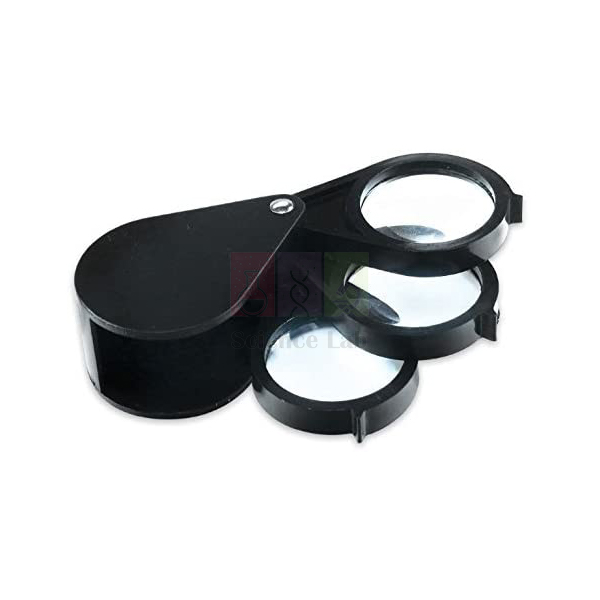
Magnifier, Folding
Magnifier, Folding (Product Code: SLE/PHY/101) is a compact 4x hand lens used to enlarge small objects and fine detail for close inspection in classrooms, laboratories and field studies. Students and teachers carry it on nature walks and in practical lessons, and its 25 mm lens is fitted in a folding frame that protects it when closed. It is supplied by Jain Scientific Equipments Pvt Ltd (ScienceLab), Ambala, India, as a handy hand lens magnifier for schools in India.
Specifications
| Parameter | Detail |
|---|---|
| Type | Folding, lens fitted in frame |
| Magnification | 4x |
| Diameter | 25 mm |
| Listing note | “Triple” — please confirm the lens arrangement when you enquire |
| Product code | SLE/PHY/101 |
| Supplied by | Jain Scientific Equipments Pvt Ltd (ScienceLab), Ambala, India |
What Is the Folding Magnifier Used For?
A folding magnifier is the everyday tool for looking closely at leaf veins, insect legs, seeds, crystals, fabric weave or small print. At 4x it reveals detail the naked eye misses, while keeping a wide enough view for beginners to find their subject quickly. Because the lens folds away, it can travel in a pocket or field bag on outdoor ecology lessons without getting scratched.
For the sharpest view, hold the lens close to the eye and move the object, not the lens, until it comes into focus; daylight or a desk lamp helps. In physics lessons the same magnifier illustrates how a converging lens forms an enlarged, upright virtual image when the object sits inside its focal length. Many school labs in India keep one as a pocket magnifier loupe for quick checks, wiping it with a soft cloth and folding it closed after use.
What to Specify When Ordering
- Quantity — one per student, or one per pair for group work.
- Magnification and size: 4x with a 25 mm diameter lens, as listed.
- The “Triple” note in the listing — confirm the lens arrangement you need.
- Whether a lens cleaning cloth should be quoted with the magnifiers.
Supplier
Jain Scientific Equipments Private Limited, which trades as ScienceLab, supplies the Magnifier, Folding alongside its wider range of school science equipment. The company sources this magnifier for its customers, so schools and dealers can add it to a larger laboratory order and deal with a single supplier. Read more about the company on our company profile.
Related Physics Lab Equipment
Pair the folding magnifier with these items for close-observation work:
- Folding Magnifier, Single — a single-lens folding alternative.
- Magnifier, Reading — a larger handled lens for reading small print.
- Minibeast Magnifier — for observing small living creatures.
- Microfiber Lens Cloth — cleans the lens without scratching it.
Browse more optics and observation items in our Physics Lab Equipment category.
Frequently Asked Questions
What magnification does the Magnifier, Folding provide?
The Magnifier, Folding provides 4x magnification through a lens listed at 25 mm diameter. That level suits general observation of leaves, insects, seeds and printed detail in school science, while keeping the field of view easy for students to use.
How does the folding design help?
The lens of the Magnifier, Folding is fitted in a frame that folds, so the lens is shielded when the magnifier is closed. This makes it easier to carry in a pocket, pencil case or field bag during outdoor lessons without scratching the lens.
What does “Triple” in the listing mean?
The original listing for the Magnifier, Folding carries the note “Triple”, which may refer to the lens arrangement. Because this is not fully described, please confirm the exact configuration with us through the contact page before you place a large order.
Who supplies the Magnifier, Folding?
The Magnifier, Folding is supplied by Jain Scientific Equipments Pvt Ltd, which trades as ScienceLab and is based in Ambala, Haryana, India. It can be combined with other school laboratory items in one order and one quotation.
How should the magnifier be cleaned and stored?
Clean the Magnifier, Folding with a soft, dry lens cloth, avoiding paper towels or abrasive cleaners that can scratch the lens surface. Fold it closed after each lesson and store it in a dry drawer or box so dust and grit stay off the lens.
Can you supply class sets and export orders?
Yes. The Magnifier, Folding can be ordered in class-set quantities by schools, colleges and dealers across India and international markets. Share the quantity and destination through our contact page, and we will confirm availability and dispatch details with the quotation.
Request a Quote
To receive a quotation for the Magnifier, Folding, send us your requirement or place it in the enquiry cart together with other items for your laboratory.
Last updated: 24 September 2026

Magnifier, Reading
Magnifier, Reading (Product Code: SLE/PHY/102) is a hand-held magnifying lens used to enlarge printed text and small detail for comfortable reading and inspection in schools, libraries and laboratories. Staff and students use it to read fine print, instrument scales and labels, and it has a chrome-plated metal frame with a bakelite handle. It is supplied by Jain Scientific Equipments Pvt Ltd (ScienceLab), Ambala, India, packed in a cardboard box.
Specifications
| Parameter | Detail |
|---|---|
| Frame | Metal, chrome plated |
| Handle | Bakelite |
| Diameter (as listed) | 7.5/20 cm — please confirm the lens size you need |
| Intended use | Reading |
| Packing | Cardboard box |
| Product code | SLE/PHY/102 |
| Supplied by | Jain Scientific Equipments Pvt Ltd (ScienceLab), Ambala, India |
What Is the Reading Magnifier Used For?
A reading magnifier makes small type, maps, dictionary entries, labels on reagent bottles and the fine graduations of measuring instruments easier to see. The handle lets the user hold the lens steady at the distance that gives the clearest, largest image, while the other hand keeps the page or object in place.
In the classroom it doubles as a simple demonstration of a convex lens: moving it slowly away from the page shows the image growing, then turning blurred and finally inverted once the page lies beyond the focal length. Keep the chrome frame dry, wipe the lens with a soft cloth, and return the magnifier to its cardboard box to protect it in storage. It suits school physics lab equipment sets in India as well as library and staff-room use.
What to Specify When Ordering
- Lens diameter — the listing shows “7.5/20 cm”, so state the size you require.
- Quantity for classrooms, the library or staff use.
- Packing — the magnifier is listed as packed in a cardboard box.
Supplier
ScienceLab is the trading name of Jain Scientific Equipments Private Limited in Ambala, Haryana. The company supplies this reading magnifier as part of its catalogue of school and laboratory items, so it can be quoted alongside optics, glassware and teaching aids in a single order. Visit our company profile for background on the business.
Related Physics Lab Equipment
Other magnifiers and accessories from the same range:
- Magnifier, Folding — a pocket-size 4x lens for field work.
- Hand Lens — a simple hand lens for biology observation.
- Watchmakers Eye Glass — a hands-free lens for close work on small parts.
- Microfiber Lens Cloth — keeps the lens clean and free of scratches.
Find the full range on our Physics Lab Equipment page.
Frequently Asked Questions
What is the Magnifier, Reading made of?
The Magnifier, Reading has a chrome-plated metal frame and a bakelite handle. The listing does not state the lens material, so if your requirement specifies glass or acrylic, please ask us through the contact page before ordering.
What size is the lens?
The listing for the Magnifier, Reading gives the diameter as 7.5/20 cm, which does not make the exact lens size clear. Please tell us the diameter you need when you enquire, and we will confirm the size we can supply with the quotation.
Is the reading magnifier useful in laboratories as well?
Yes. Although the Magnifier, Reading is listed for reading, the same hand-held lens is handy in laboratories for checking small labels, instrument scales and specimen detail. It also serves as a simple convex-lens example in physics lessons on image formation.
How is the Magnifier, Reading packed?
The Magnifier, Reading is packed in a cardboard box, which protects the lens and chrome finish during transport and gives a convenient place to store it between lessons. Ask us if your order needs any special packing for export.
Who supplies this magnifier?
The Magnifier, Reading is supplied by Jain Scientific Equipments Pvt Ltd, trading as ScienceLab, from Ambala, Haryana, India. Schools, colleges, dealers and importers can order it with other laboratory equipment on one quotation.
What should my enquiry include?
An enquiry for the Magnifier, Reading (SLE/PHY/102) should state the quantity, the lens diameter you require and the delivery location in India or abroad. Use the contact page or the enquiry cart, and we will reply with a quotation.
Request a Quote
Ask for a quotation on the Magnifier, Reading through our contact page, or collect it with other items in the enquiry cart and submit one request.
Last updated: 24 September 2026
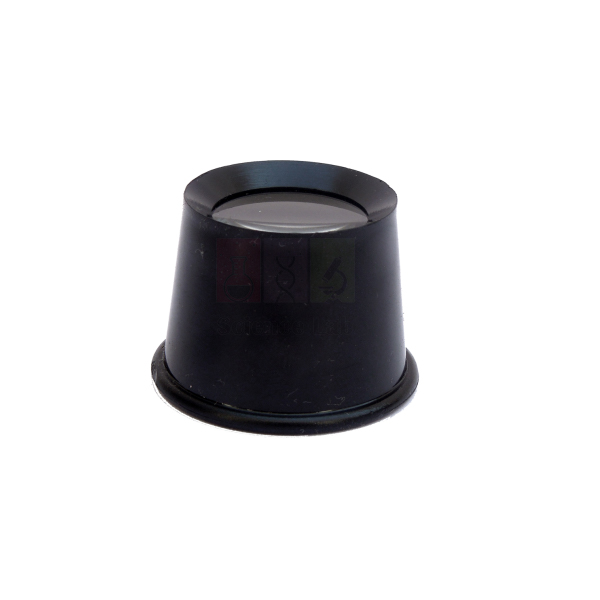
Watchmakers Eye Glass
Watchmakers Eye Glass (Product Code: SLE/PHY/103) is an eyepiece magnifier, or loupe, worn in the eye socket to enlarge small parts and fine detail while leaving both hands free. Hobbyists, technicians and science students use it for close inspection of components, specimens and minerals, and it has a plastic lens with a 25 mm diameter. It is supplied by Jain Scientific Equipments Pvt Ltd (ScienceLab), Ambala, India, as a handy magnifier loupe for lab work in India.
Specifications
| Parameter | Detail |
|---|---|
| Type | Watchmaker's eyeglass (eye loupe) |
| Lens | Plastic |
| Diameter | 25 mm |
| Product code | SLE/PHY/103 |
| Supplied by | Jain Scientific Equipments Pvt Ltd (ScienceLab), Ambala, India |
What Is the Watchmakers Eye Glass Used For?
Held in place by the brow and cheek, the eye glass lets the wearer handle tweezers, a small screwdriver or a specimen while viewing it enlarged. That makes it useful for checking solder joints and small electronic parts, sorting seeds and tiny insects, examining mineral grains, or reading fine engraving and markings.
To wear it, fit the rim into the eye socket, keep the other eye open to reduce strain, and bring the work closer until it is sharp. The plastic lens is light and less likely to shatter if dropped, but it scratches more easily than glass, so clean it gently with a soft cloth and keep it covered in storage.
Supplier
Jain Scientific Equipments Private Limited trades under the ScienceLab name from Ambala, Haryana, India, and supplies this eye glass as one of many small tools for school and workshop laboratories. Ordering it with the rest of a laboratory list keeps purchasing simple for schools, training institutes and dealers. More about the company is on our company profile.
Related Physics Lab Equipment
Useful companions for close-up inspection work:
- Forceps (Tweezers) — hold small parts or specimens steady under the lens.
- Magnifier, Folding — a 4x hand magnifier for pocket use.
- Magnifier, Reading — a handled lens for larger areas and print.
- Microfiber Lens Cloth — gentle cleaning for the plastic lens.
More magnifiers and optics items are listed under Physics Lab Equipment.
Frequently Asked Questions
What is the lens of the Watchmakers Eye Glass made of?
The Watchmakers Eye Glass has a plastic lens with a listed diameter of 25 mm. Plastic keeps the loupe light to wear in the eye socket and less prone to shattering if dropped, but it should be cleaned gently to avoid scratches.
What magnification does it give?
The magnification of the Watchmakers Eye Glass is not stated in its listing. If your practical or workshop task needs a particular power, please ask through our contact page and we will confirm what can be supplied before you order.
How do I wear a watchmaker's eye glass comfortably?
Place the Watchmakers Eye Glass in the eye socket and hold it lightly with the brow and cheek, keeping the other eye open. Bring the object towards the lens until it is sharp, and take short breaks during long inspection sessions.
Who supplies the Watchmakers Eye Glass?
The Watchmakers Eye Glass is supplied by Jain Scientific Equipments Pvt Ltd, trading as ScienceLab, of Ambala, Haryana, India. It can be quoted together with tweezers, magnifiers and other laboratory tools in a single order.
Is it suitable for students?
Yes, the Watchmakers Eye Glass suits older students in electronics, biology, geology and technical workshops who need a hands-free view of small objects. Younger pupils may find a hand-held folding magnifier easier to use at first.
Can I order it in bulk or for export?
The Watchmakers Eye Glass can be ordered in quantity by schools, training institutes and dealers in India and international markets. Send the quantity and destination through the contact page or enquiry cart, and we will reply with a quotation.
Request a Quote
Request a quotation for the Watchmakers Eye Glass via the ScienceLab contact page, or add it to the enquiry cart with the other tools on your list.
Last updated: 24 September 2026

Investigating Spontaneous Generation Lab Investigation
Investigating Spontaneous Generation Lab Investigation (Product Code: SLE/EB/17) is a microbiology class activity used to recreate Louis Pasteur's 1864 experiment and test whether life can arise from non-life in school biology labs. Students compare organisms grown in flasks open to airborne particles with flasks that have special S-shaped necks, and the activity is designed for a class of 40. It is supplied by Jain Scientific Equipments Pvt Ltd (ScienceLab), Ambala, India, as a microbiology teaching kit that joins lab skills with the history of science.
Specifications
| Parameter | Detail |
|---|---|
| Experiment | Recreation of Pasteur's classic spontaneous generation experiment |
| Question investigated | Can life arise from non-life? |
| Test flasks | Flasks exposed to particles in the atmosphere |
| Comparison flasks | Flasks with special S-shaped necks, exposed to air but not to particulate matter |
| Principle shown | Microorganisms do not develop spontaneously in a sterilised nutrient broth |
| Historical context | Louis Pasteur dispelled spontaneous generation in 1864 |
| Class size | 40 students |
| Product code | SLE/EB/17 |
| Supplied by | Jain Scientific Equipments Pvt Ltd (ScienceLab), Ambala, India |
What Is the Spontaneous Generation Investigation Used For?
It is used to let students test one of biology's oldest questions with their own eyes. Nutrient broth is sterilised in both kinds of flask, which are then left side by side while students check them regularly for cloudiness, the usual sign of microbial growth. The open flasks, reached by dust and airborne particles, cloud over; the S-neck flasks, where particles settle in the bend of the neck, stay clear even though air can still reach the broth. Students record their observations in a table and explain the difference.
The discussion that follows is the real payoff. Students see why Pasteur's design answered the critics who said boiled broth lacked “air”, and why the result supports the idea that microbes come only from other microbes, giving firsthand insight into ideas that underpin evolution. As a bacteria culture experiment it also introduces sterilisation, contamination and controls — ideas students will need in every later microbiology practical.
Supplier
ScienceLab is how Jain Scientific Equipments Private Limited presents its range; the company is based in Ambala, Haryana, India, and supplies this investigation to schools, colleges and distributors. Buyers completing vendor forms can list the supplying company under Importer-Exporter Code AAECJ8618A (DGFT) and GSTIN 06AAECJ8618A1ZT. Visit the company profile for more.
Related Laboratory Equipment
Useful additions for preparing and running the flasks:
- Autoclave, Stainless Steel, 15 Litre — sterilises the nutrient broth and glassware before the flasks are set up.
- Incubator 30L, upto 80C — keeps the flasks warm so that growth in the open flasks appears sooner.
- Spirit Lamp — a simple flame source for heating and careful handling during set-up.
- Microbe Scavenger Hunt — a follow-on activity in which students look for microbes in air, water, soil and food.
Browse other practicals in Biology Kits.
Frequently Asked Questions
What does the Investigating Spontaneous Generation Lab Investigation demonstrate?
The Investigating Spontaneous Generation Lab Investigation demonstrates that microorganisms in a sterilised nutrient broth do not appear spontaneously, recreating Pasteur's 1864 result that growth follows only when particles from the air can reach the broth.
What class size is the Investigating Spontaneous Generation Lab Investigation designed for?
The Investigating Spontaneous Generation Lab Investigation is designed for a class size of 40 students, so a single order covers a typical class working in groups around the open and S-neck flasks.
Are the S-neck flasks and the broth included?
Please ask us for the current contents list of the Investigating Spontaneous Generation Lab Investigation, including whether nutrient broth is supplied. The activity is built around open flasks and flasks with special S-shaped necks, exposed to air but not to particles.
How long does any nutrient broth supplied with the investigation keep?
No fixed period is stated for media used in the Investigating Spontaneous Generation Lab Investigation, because shelf life depends on the chemical, its grade and storage conditions. Ask us for the expiry date of the batch you are quoted.
How long before results can be seen?
In the Investigating Spontaneous Generation Lab Investigation, growth in the open flasks usually becomes visible within a few days, depending on room temperature; keeping the flasks in an incubator can speed this up.
Is the practical safe for schools?
Yes, the Investigating Spontaneous Generation Lab Investigation is suitable for schools with normal microbiology hygiene: avoid opening or tipping the flasks once growth appears, and sterilise all cultures before disposal.
Who supplies the Investigating Spontaneous Generation Lab Investigation?
Jain Scientific Equipments Pvt Ltd, trading as ScienceLab from Ambala, Haryana, India, supplies the Investigating Spontaneous Generation Lab Investigation to schools and colleges in India and international markets, and quotes directly for single classes or several schools.
Request a Quote
To bring Pasteur's experiment into your lab, request a quotation from us or add the investigation to the enquiry cart.
Last updated: 24 September 2026
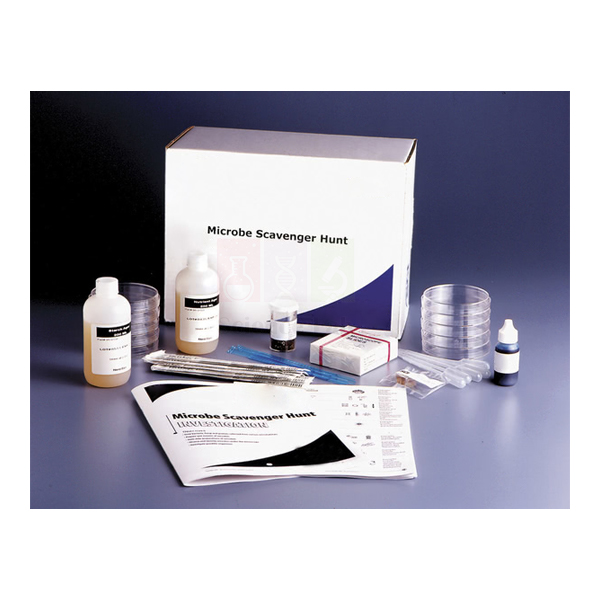
Microbe Scavenger Hunt
Microbe Scavenger Hunt (Product Code: SLE/EB/18) is a microbiology investigation kit used to find, grow and identify bacteria, fungi and protists from water, air, soil and food in school science labs. Its specially formulated, ready-to-use growth gel needs no autoclaving or special equipment, and a dried Microlife Mix adds pond organisms for students to study. It is supplied by Jain Scientific Equipments Pvt Ltd (ScienceLab), Ambala, India, as a microbiology kit for school classes that design their own sampling experiments.
Specifications
| Parameter | Detail |
|---|---|
| Organisms explored | Bacteria, fungi and protists |
| Sampling sources | Water, air, soil and food |
| Growth medium | Ready-to-use, specially formulated gel; requires no autoclaving or special equipment |
| Identification aid | Dichotomous key to moulds, bacteria and protists |
| Pond study material | Specially formulated dried Microlife Mix for exploring the diversity of pond organisms |
| Guidance | Guide to appropriate viewing techniques |
| Student activities | Prepare wet mounts and stained slide preparations; observe and identify microbes under the microscope; investigate pond-life organisms; grow bacteria, fungi and protists collected from various microhabitats |
| Shelf life | Shelf life depends on the chemical, its grade and storage conditions; ask us for the expiry date of the batch you are quoted |
| Product code | SLE/EB/18 |
| Supplied by | Jain Scientific Equipments Pvt Ltd (ScienceLab), Ambala, India |
What Is the Microbe Scavenger Hunt Used For?
It is used to show students that microbes are everywhere around them. Groups pick a microhabitat — a tap, a pinch of garden soil, a cut piece of fruit, the air near an open window — expose the gel to it and watch colonies appear over the following days. Colony shape, colour and texture give a first sort, and the dichotomous key then takes students from “fuzzy growth” to a named group of moulds, bacteria or protists. Wet mounts and simple stained preparations let them look at individual cells under the microscope.
The dried Microlife Mix brings pond organisms into the classroom without a field trip, so students can compare free-living protists with the colonies on their gel. For schools building up their microbiology lab equipment, the kit is a low-infrastructure starting point: no autoclave is needed for the medium, although used cultures should still be sterilised or safely disposed of at the end.
Supplier
ScienceLab is the trading name of Jain Scientific Equipments Private Limited in Ambala, Haryana, India, which supplies this microbe hunt together with the slides, coverslips and microscopes that schools add for the viewing work. Our company profile gives an overview of the business.
Related Laboratory Equipment
Add these items to get the most from the microscope work in the hunt:
- Cavity Slides (Single Cavity) — hold a drop of pond sample deep enough for protists to swim freely.
- Student Microscope with Movable Condenser — for examining wet mounts and stained microbes.
- Coverslips — cover wet mounts and stained smears before viewing.
- Bacteria slide Set of 12 — prepared reference slides to compare with students' own stained bacteria.
- Autoclave Bag — for collecting and sterilising grown cultures at the end of the hunt.
Other hands-on investigations are listed under Biology Kits.
Frequently Asked Questions
Does the Microbe Scavenger Hunt growth medium need an autoclave?
No. The Microbe Scavenger Hunt uses a specially formulated, ready-to-use gel that requires no autoclaving or special equipment, so students can start sampling microhabitats without sterilising media first.
Where can students look for microbes with the Microbe Scavenger Hunt?
With the Microbe Scavenger Hunt, students look for bacteria, fungi and protists in water, air, soil and even food, as well as any other microhabitat they choose to test in their own experiment design.
How do students identify what they have grown?
The Microbe Scavenger Hunt includes a dichotomous key to moulds, bacteria and protists and a guide to appropriate viewing techniques, so students can move from colony appearance to a named group of microbes.
What is the Microlife Mix for?
The Microlife Mix in the Microbe Scavenger Hunt is a specially formulated dried mix that lets a class explore the diversity of pond organisms under the microscope without collecting pond water.
Is a microscope required for the Microbe Scavenger Hunt?
Yes, a microscope is needed for the wet mounts and stained preparations in the Microbe Scavenger Hunt. It is not listed among the contents, so use your lab's microscopes or add them to your enquiry.
How should cultures from the Microbe Scavenger Hunt be handled?
Treat all colonies grown in the Microbe Scavenger Hunt as potentially harmful: keep containers closed after incubation, do not sniff or open mould growth, and sterilise everything before disposal.
How long do the gel and Microlife Mix keep?
No fixed period is stated for the growth gel or Microlife Mix in the Microbe Scavenger Hunt, because shelf life depends on the chemical, its grade and storage conditions. Ask us for the expiry date of the batch you are quoted.
Who supplies the Microbe Scavenger Hunt?
Jain Scientific Equipments Pvt Ltd, trading as ScienceLab from Ambala, Haryana, India, supplies the Microbe Scavenger Hunt to schools and colleges in India and international markets, and can quote for several kits for different sections at once through our contact page.
Request a Quote
To start a Microbe Scavenger Hunt in your school, talk to our team or add the kit to the enquiry cart with slides and coverslips.
Last updated: 24 September 2026
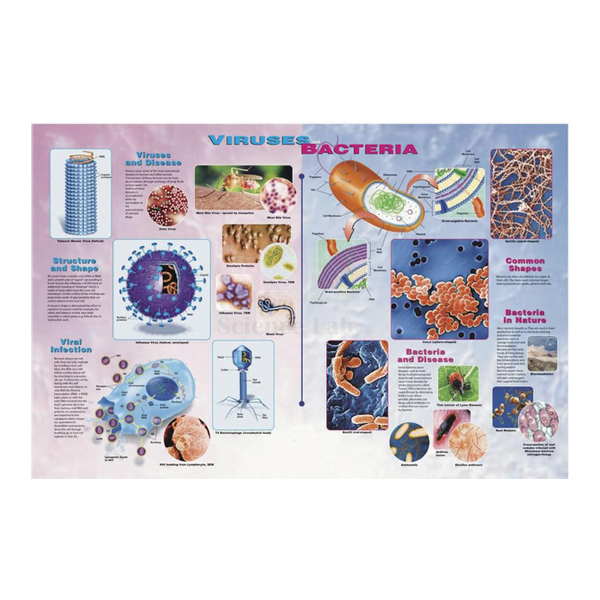
Viruses & Bacteria Poster
Viruses & Bacteria Poster (Product Code: SLE/BL/060) is a laminated wall chart used to help students identify the most prevalent viruses and bacteria and understand how they cause harm to humans in biology and microbiology lessons. Teachers rely on its detailed illustrations and photographs, printed on an 890mm W x 585mm H sheet that suits busy classrooms. It is supplied by Jain Scientific Equipments Pvt Ltd (ScienceLab), Ambala, India, as a visual companion to a microbiology teaching kit.
Specifications
| Parameter | Detail |
|---|---|
| Type | Microbiology wall poster |
| Dimensions | 890mm W x 585mm H |
| Finish | Laminated |
| Content | The most prevalent viruses and bacteria, shown with detailed illustrations and photographs |
| Learning focus | How to identify these agents and how they cause harm to humans |
| Product code | SLE/BL/060 |
| Supplied by | Jain Scientific Equipments Pvt Ltd (ScienceLab), Ambala, India |
What Is the Viruses & Bacteria Poster Used For?
Viruses and bacteria are too small to see without a microscope, so a well-illustrated chart gives students a reference point before they meet them in practical work. Teachers use the poster to explain the difference between the two groups — living cells versus particles that need a host — and to discuss how each one enters the body and causes illness. It is a natural backdrop for lessons on hand-washing, vaccination and the sensible use of antibiotics.
In the lab, students can compare the photographs with prepared microscope slides of bacteria to practise recognising shapes, then return to the poster to connect each organism with the harm it does. Because the surface is laminated, it can be wiped clean and suits a busy practical room or a microbiology prep area, making it a sensible addition to microbiology lab equipment in India's schools and colleges. Mount it where the whole class can see it and where it will not be splashed.
Supplier
The Viruses & Bacteria Poster is supplied by Jain Scientific Equipments Private Limited, whose trading name is ScienceLab, based in Ambala, Haryana, India. The company serves schools, colleges and institutes in India and international markets, and can combine this chart with prepared slides and other posters in one order — visit the company profile to learn more.
Related Biology Lab Equipment
Resources for the same microbes and disease topic:
- Bacteria slide Set of 12 — prepared slides for viewing real bacterial forms
- Microslide Harmful Bacteria — focuses on disease-causing species
- Microslide Helpful Bacteria — balances the lesson with bacteria that benefit people
- Teaching About Immunity Kit — shows how the body fights back against infecting agents
- Systems of The Human Body Poster — a companion chart of the body systems microbes affect
Explore more in Biology Lab Equipment.
Frequently Asked Questions
Is the Viruses & Bacteria Poster laminated?
Yes. The Viruses & Bacteria Poster is laminated, so its surface can be wiped with a damp cloth. That makes it suitable for classroom walls, microbiology prep rooms and practical labs where an unprotected paper chart would soon mark.
What size is the Viruses & Bacteria Poster?
The Viruses & Bacteria Poster measures 890mm wide by 585mm high, a size that lets the whole class see the illustrations and photographs from their seats when the chart is mounted at eye level.
Which viruses and bacteria are included on the poster?
The Viruses & Bacteria Poster covers the most prevalent viruses and bacteria affecting people, shown with detailed illustrations and photographs. For the full list of organisms on the chart, ask us through the contact page and we will share it before you order.
What will students learn from the poster?
From the Viruses & Bacteria Poster, students learn how to identify common viruses and bacteria and how these agents cause harm to humans, which supports lessons on hand-washing, vaccination and the sensible use of antibiotics.
Is the poster suitable for college teaching?
Yes. The Viruses & Bacteria Poster works for secondary school biology as well as introductory microbiology, nursing and allied health classes, where students need a clear visual reference before examining prepared slides of bacteria.
Who supplies the Viruses & Bacteria Poster?
The Viruses & Bacteria Poster is supplied by Jain Scientific Equipments Private Limited, which trades as ScienceLab from Ambala, Haryana, India, and can be quoted with prepared slides and other posters for delivery in India and international markets.
Request a Quote
For prices on the Viruses & Bacteria Poster, contact us with the number of copies, or add it to your enquiry cart.
Last updated: 24 September 2026