- Physics Lab Equipment
- Chemistry Lab Equipment
- Biology Lab Equipment
- Anatomical Lab Equipment
- Learning
- Educational Lab Equipment
- Magnets
- Agriculture
- Astronomy
- Earth Science
- Geography Lab Equipment
- Safety Lab Coat
- Laboratory
- Meteorological
- Electricity & Magnetism
- Heat
- School Lab Equipment
- Lab Glassware
- Science Lab Equipment
- Tvet Lab Equipment
- Robotics Kits Supplier and Manufacturer for Schools India
- Math Lab Equipment Manufacturers and Exporters in Ambala
- STEM Kits Manufacturers and Supplier India
- Engineering Lab Equipment
- Hospital Lab Equipment
- Water, Sanitation & Hygiene Supplies
- Cold Chain, Solar & Communication Equipment
- Nutrition
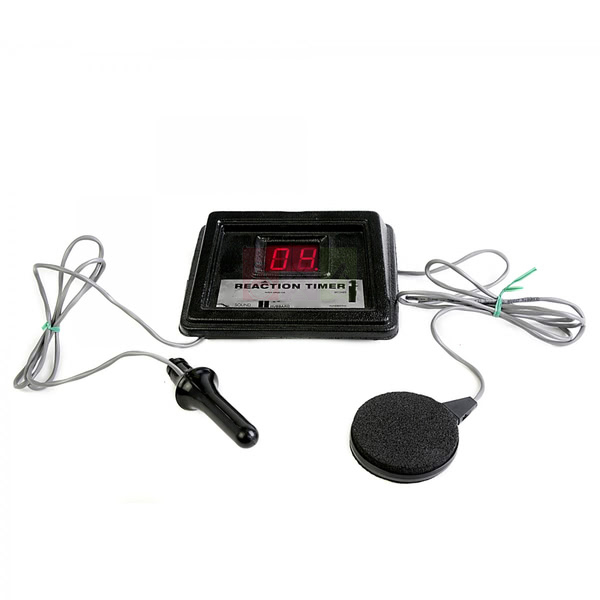
Reaction Timer
Reaction Timer (Product Code: SLE/BL/049) is a classroom timing instrument used to measure how quickly a person responds to a stimulus in biology, physiology and physical education lessons. Students use it to record their response time to various stimuli, including light, sound and touch, and then compare how fast each sense triggers a reaction. It is supplied by Jain Scientific Equipments Pvt Ltd (ScienceLab), Ambala, India, among its biology teaching aids for schools and colleges.
Key Details
| Parameter | Detail |
|---|---|
| Type | Reaction timer for student investigations |
| Purpose | Measures a person's response time to a stimulus |
| Stimuli covered | Various stimuli, including light, sound and touch |
| Suitable for | School and college biology, human physiology and sports science classes |
| Product code | SLE/BL/049 |
| Supplied by | Jain Scientific Equipments Pvt Ltd (ScienceLab), Ambala, India |
What Is the Reaction Timer Used For?
Students usually work in pairs: one person runs the test while the other waits to respond as soon as they notice the signal. After several trials with a light, then a sound, then a touch stimulus, the class can calculate an average for each and ask which sense produces the quickest response. The same routine can compare the dominant and non-dominant hand, test the effect of a distraction, or look at results before and after a short spell of exercise.
The data lead naturally into a discussion of how a signal travels from a sense organ to the brain and out to a muscle, and why a reflex is faster than a decision. Because results differ so clearly between people, the timer also makes a good starting point for a science fair project kit in India on attention, practice or fatigue. Ask students to keep conditions the same between trials — same seat, same hand, same warning — so their comparisons are fair.
Supplier
The Reaction Timer is supplied by Jain Scientific Equipments Private Limited, trading as ScienceLab and located in Ambala, Haryana, India. The company equips teaching laboratories in India and international markets, and a department can order the timer with the sense-organ and physiology items used in the same unit on one quotation. Learn more on the company profile page.
Related Biology Lab Equipment
Items that pair well with reaction time investigations:
- Sight & Sound Health Lab — explores the sense organs whose signals the timer measures
- Tumble & Teach Exercise — quick classroom exercises for before-and-after reaction tests
- Stethoscope — records pulse changes in the same human physiology session
- Millisecond Timer — a general laboratory timer for other short-interval timing work
Find more human biology items in the Biology Lab Equipment section.
Frequently Asked Questions
Which stimuli can the Reaction Timer test?
The Reaction Timer measures a student's response time to various stimuli, including light, sound and touch. Running the same test with each stimulus lets a class compare which sense produces the quickest reaction and discuss why the results differ.
What display and power supply does the Reaction Timer use?
Display type and power supply for the Reaction Timer are not given in our current product information. Please ask through the contact page and we will share the datasheet for the model we quote before you place an order.
What age group is the Reaction Timer suitable for?
The Reaction Timer suits reaction-time activities from middle school to college. Younger classes can simply compare light, sound and touch responses, while senior students calculate averages, repeat trials and discuss nerve pathways and reflex arcs using the same data.
How should the Reaction Timer be looked after?
Keep the Reaction Timer on a dry bench away from water and chemicals, avoid dropping it, and store it in a cupboard between lessons. Check that it works before a practical so each pair of students can start testing straight away.
Is a calibration certificate available for the Reaction Timer?
If your department needs timing documentation for the Reaction Timer, mention it in your enquiry. We will discuss with you what can be provided for the specific unit quoted before you commit to the order.
Who supplies the Reaction Timer?
The Reaction Timer is supplied by Jain Scientific Equipments Private Limited, which trades as ScienceLab from Ambala, Haryana, India. Schools, colleges and distributors in India and international markets can ask for one unit or several timers for a whole class.
Request a Quote
To ask about pricing, contact us with the number of timers you need, or add the Reaction Timer to your enquiry cart.
Last updated: 24 September 2026
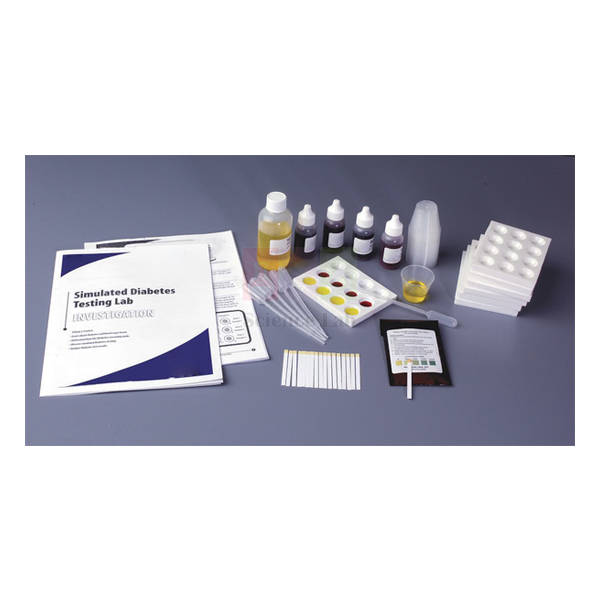
Simulated Diabetes Testing
Simulated Diabetes Testing (Product Code: SLE/BL/050) is a classroom investigation kit used to teach how diabetes is diagnosed, with students running a series of standard diagnostic tests on simulated blood and urine samples in school, college and health-science courses. Working from several patient medical histories, they reach a diagnosis, plan how to manage the condition and take a 'diabetic risk test' themselves. It is supplied by Jain Scientific Equipments Pvt Ltd (ScienceLab), Ambala, India.
Key Details
| Parameter | Detail |
|---|---|
| Type | Simulated diabetes diagnosis activity |
| Supplied as | Several patient medical histories with simulated blood and urine samples |
| Student tasks | Series of standard diagnostic tests, diagnosis, and a plan for managing the patient's condition |
| Class activity | A 'diabetic risk test' for students to assess their own potential for developing the disease |
| Topics covered | Types, causes, symptoms and treatment options of diabetes |
| Diagnostic use | None — a classroom simulation, not a medical test |
| Shelf life | Depends on the chemical, its grade and storage conditions — ask us for the expiry date of the batch you are quoted |
| Product code | SLE/BL/050 |
| Supplied by | Jain Scientific Equipments Pvt Ltd (ScienceLab), Ambala, India |
What Is Simulated Diabetes Testing Used For?
The teacher hands each group a patient history and the matching simulated samples. Groups carry out the tests, record their observations and compare the results with the symptoms and background in the history to decide whether the patient has diabetes, and of which type. Each group then drafts a management plan covering points such as diet, activity and treatment, and presents its reasoning to the class — turning a textbook chapter into applied problem-solving.
The lesson usually closes with the diabetic risk test, where students consider their own lifestyle and family factors. Because the samples are simulated, the whole activity can run in an ordinary classroom without real body fluids, which makes it a practical choice for a health education kit in school or an introductory biomedical course. Wear gloves and eye protection as for any wet practical, and follow the instructions supplied with the samples.
Supplier
Jain Scientific Equipments Private Limited, which trades as ScienceLab from Ambala, Haryana, India, supplies Simulated Diabetes Testing as part of its range of simulated-sample kits, working as a biology lab equipment supplier in India to schools, colleges and health-science courses. For vendor registration, the supplying company is registered under CIN U29309HR2020PTC087597 and GSTIN 06AAECJ8618A1ZT. Read the company profile for more about the business.
Related Biology Lab Equipment
Other simulated diagnostic and human biology resources that suit the same course:
- HIV/AIDS Testing Kit, Simulated — another simulated diagnostic testing exercise
- Blood Typing Kit, Simulated — blood group testing without real blood
- Benedicts Reagent (Test Of Glucose) — the classic reagent for showing how glucose is detected
- Systems of The Human Body Poster — shows the endocrine system alongside the other body systems
More teaching items are listed under Biology Lab Equipment.
Frequently Asked Questions
Does Simulated Diabetes Testing use real blood or urine?
No. Simulated Diabetes Testing uses simulated blood and urine samples, so students practise a series of standard diagnostic tests without handling real body fluids, and the activity can run in an ordinary classroom with gloves and eye protection.
What is supplied with Simulated Diabetes Testing, and how many students does it serve?
Simulated Diabetes Testing provides several patient medical histories with simulated blood and urine samples. Sample quantities and group numbers are not stated in our current listing, so contact us with your class size and ScienceLab will confirm what one set covers.
Is the diabetic risk test in Simulated Diabetes Testing a medical screening?
No. The diabetic risk test in Simulated Diabetes Testing is a classroom exercise that helps students think about lifestyle and family risk factors. It is not a medical screening, and anyone with a health concern should consult a doctor.
Is extra apparatus needed for Simulated Diabetes Testing?
Our listing for Simulated Diabetes Testing does not specify additional apparatus. Ask ScienceLab before ordering and we will tell you what, if anything, your laboratory should provide alongside the kit so the tests run smoothly on the day.
What is the shelf life of the Simulated Diabetes Testing samples?
Shelf life of the simulated samples and reagents in Simulated Diabetes Testing depends on the chemical, its grade and storage conditions; ask us for the expiry date of the batch you are quoted, and store the samples as directed on their packaging.
Who supplies Simulated Diabetes Testing?
Simulated Diabetes Testing is supplied by Jain Scientific Equipments Pvt Ltd (ScienceLab), Ambala, Haryana, India, to schools, colleges, health-science courses and distributors in India and international markets, alongside other simulated diagnostic kits for health teaching.
How do we request a quotation for Simulated Diabetes Testing?
To request a quotation for Simulated Diabetes Testing, share product code SLE/BL/050, the number of sets, the level of the class and the delivery location in India or abroad, and ScienceLab will respond with pricing and availability.
Request a Quote
For pricing on Simulated Diabetes Testing, contact us or add it to your enquiry cart.
Last updated: 24 September 2026
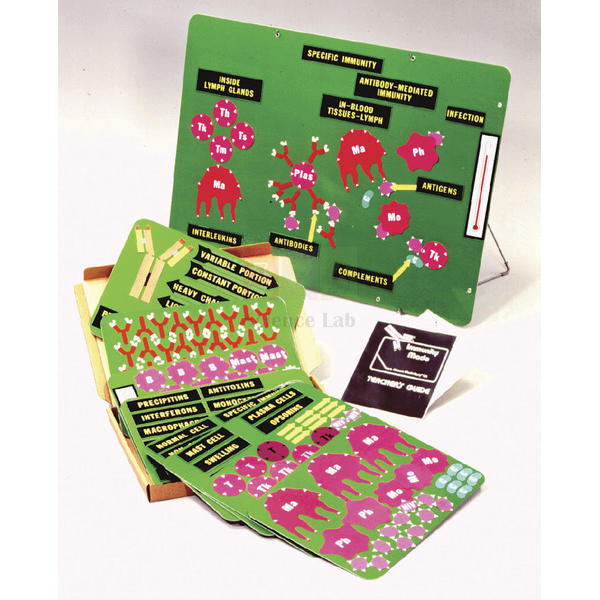
Teaching About Immunity Kit
Teaching About Immunity Kit (Product Code: SLE/BL/051) is a board-based demonstration kit used to show how the parts of the immune system work together in secondary and senior biology classes. Teachers and students move durable plastic pieces on a 30 x 40 inch demonstration board to act out antigen attack, antibody production and conditions such as AIDS, cancer and allergies. It is supplied by Jain Scientific Equipments Pvt Ltd (ScienceLab), Ambala, India, for school biology lab equipment in India.
Specifications
| Parameter | Detail |
|---|---|
| Type | Immune system demonstration kit |
| Demonstration board | 30 x 40 inch, with mounting legs |
| Pieces | Plastic pieces that will not break, chip, tear, peel or wear out |
| Cells and molecules represented | Phagocytes, monocytes, macrophages, T-cells, B-cells, plasma cells and antibodies; helper, killer, memory and suppression cells |
| Topics demonstrated | AIDS, cancer, vaccines, allergies, autoimmune reactions and more |
| Teaching material | Teacher's Guide with detailed lesson plans plus reproducible student worksheets |
| Product code | SLE/BL/051 |
| Supplied by | Jain Scientific Equipments Pvt Ltd (ScienceLab), Ambala, India |
What Is the Teaching About Immunity Kit Used For?
A typical lesson starts with an invading antigen placed on the board. Students move a phagocyte or monocyte to attack it, produce macrophages, and then bring in T-cells and B-cells. Cloning the T and B cells produces helper, killer, memory and suppression cells, while plasma cells release antibodies — so the class sees each stage as a physical step rather than a list to memorise. Replaying the sequence with memory cells already on the board shows why a vaccine leads to a faster response the second time.
The same pieces then model disease: removing helper cells to show how HIV weakens the whole defence, or turning the response against the body's own tissue to explain an autoimmune reaction. Invite students to the board to place the pieces themselves, since the kit is built for hands-on participation, and use the reproducible worksheets to record each scenario. It sits well beside a human biology model set in India when a department wants practical resources for the immunity chapter.
Supplier
This kit is supplied by Jain Scientific Equipments Private Limited, the Ambala, Haryana company that trades as ScienceLab and provides educational laboratories in India and international markets with biology teaching resources. Departments can order it together with slides, posters and simulated test kits on one quotation. Visit our company profile to find out more.
Related Biology Lab Equipment
Resources that support the same immunity and disease topic:
- Microslide Lesson Set – Immunity — microscope slides that let students see the tissues behind the board model
- HIV/Aids Testing Kit, Simulated — a practical follow-up to the AIDS demonstration
- Viruses & Bacteria Poster — illustrates the pathogens the immune system defends against
- Systems of The Human Body Poster — places the immune system among the other body systems
Explore the wider Biology Lab Equipment range.
Frequently Asked Questions
What comes with the Teaching About Immunity Kit?
The Teaching About Immunity Kit comes with a 30 x 40 inch demonstration board, mounting legs, the plastic immune-cell pieces and a Teacher's Guide containing detailed lesson plans plus reproducible student worksheets, so a teacher can run the lessons without preparing separate materials.
Which immune processes can the kit show?
With the Teaching About Immunity Kit a class can show antigen attack by a phagocyte or monocyte, macrophage production, T-cells, B-cells, plasma cells and antibodies, and cloning into helper, killer, memory and suppression cells, plus AIDS, cancer, vaccines, allergies and autoimmune reactions.
Does the demonstration board need to be fixed to a wall?
No wall fixing is needed for the Teaching About Immunity Kit, because mounting legs are included so the demonstration board can stand at the front of the class. If you would prefer another mounting arrangement, ask us about the options before ordering.
Will the pieces survive regular student handling?
Yes. The plastic pieces of the Teaching About Immunity Kit are described as pieces that will not break, chip, tear, peel or wear out, which suits repeated student handling. Keep them together in a box between lessons so none go missing.
Can the student worksheets be photocopied?
Yes. The student worksheets in the Teaching About Immunity Kit's Teacher's Guide are reproducible, so a school can copy them for each class. The Guide also sets out detailed lesson plans that follow the pieces used on the board.
Who supplies the Teaching About Immunity Kit?
The Teaching About Immunity Kit is supplied by Jain Scientific Equipments Private Limited, trading as ScienceLab, from Ambala, Haryana, India. Schools, colleges and distributors in India and international markets can request a quotation for one kit or for several classrooms.
Request a Quote
To order the Teaching About Immunity Kit, contact us with the number of kits and your delivery location, or add it to your enquiry cart.
Last updated: 24 September 2026
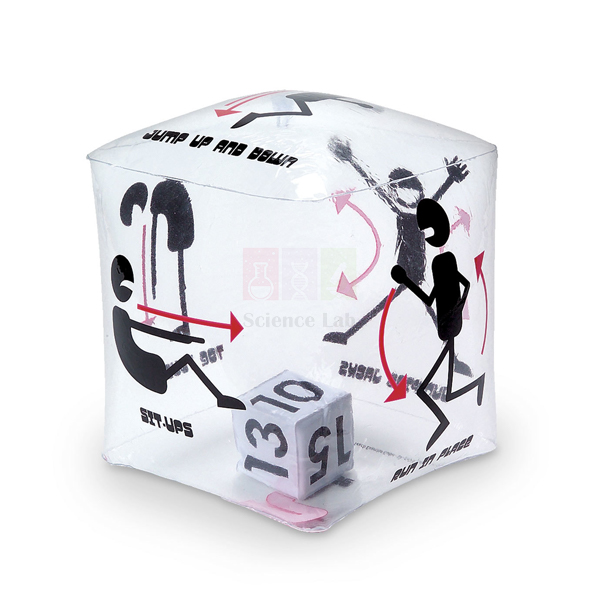
Tumble & Teach Exercise
Tumble & Teach Exercise (Product Code: SLE/BL/052) is an inflatable activity cube used to lead quick exercise breaks in classrooms, gyms and outdoor sessions. A teacher or student rolls it to pick one of a variety of basic exercises — from stretching and running to good old jumping jacks — and it measures approx 18cm square when inflated. It is supplied by Jain Scientific Equipments Pvt Ltd (ScienceLab), Ambala, India, as a simple addition to a health education kit for schools.
Specifications
| Parameter | Detail |
|---|---|
| Type | Inflatable Tumble 'n Teach exercise cube |
| Size when inflated | Approx 18cm square |
| Activities | A variety of basic exercises, from stretching and running to jumping jacks |
| Where to use | Classroom, gym or outdoors |
| Product code | SLE/BL/052 |
| Supplied by | Jain Scientific Equipments Pvt Ltd (ScienceLab), Ambala, India |
What Is the Tumble & Teach Exercise Cube Used For?
Teachers use the cube as a quick warm-up at the start of a PE period or as a short movement break between desk-based lessons, when a few minutes of activity helps students refocus. Let a different student roll it each time so the whole group takes part, and set a count or a time for each exercise so the session keeps its pace.
In biology, the cube is a handy way to raise the heart rate before a practical on circulation or breathing. Students take their resting pulse, complete two or three rolls of exercises, and measure again to see how quickly the body responds and recovers — a hands-on complement to biology lab equipment in schools in India such as a stethoscope or a peak flow meter. Clear a safe space before each roll, and keep the cube away from sharp edges when it is inflated.
Supplier
Tumble & Teach Exercise is supplied by Jain Scientific Equipments Private Limited, known by its brand name ScienceLab and based in Ambala, Haryana, India. The company serves schools and colleges in India and international markets, and can add this cube to an order for physiology or health-education items — the company profile has more details.
Related Biology Lab Equipment
Items for exercise and body-response lessons:
- Tumble & Teach Substance Abuse — a companion cube for health discussion rather than movement
- Stethoscope — lets students hear their heartbeat change after exercising
- Reaction Timer — compares response times before and after activity
- Breathing Fitness Health Lab — follows up with measurements of breathing and fitness
Browse all Biology Lab Equipment.
Frequently Asked Questions
How big is the Tumble & Teach Exercise cube?
The Tumble & Teach Exercise cube measures approx 18cm square once inflated, which is large enough for a whole class to see which exercise has come up and small enough to toss safely around a classroom or gym.
Which exercises are on the cube?
The Tumble & Teach Exercise cube features a variety of basic exercises, from stretching and running to jumping jacks. For the exact wording on every face before ordering, ask us through the contact page and we will share the full list.
Can the cube be used outdoors?
Yes. The Tumble & Teach Exercise cube is suitable for the classroom, the gym or outdoors. Keep it away from sharp objects and rough ground, and bring it back inside after use so it stays clean and inflated for the next lesson.
How can the cube support a science lesson?
The Tumble & Teach Exercise cube helps a biology lesson by raising students' heart and breathing rates before they measure pulse or breathing, so each group collects clear before-and-after data for a practical on circulation or respiration.
Who supplies the Tumble & Teach Exercise cube?
The Tumble & Teach Exercise cube is supplied by Jain Scientific Equipments Private Limited, which trades as ScienceLab from Ambala, Haryana, India, and serves schools, colleges and distributors in India and international markets.
Can schools order several cubes at once?
Yes. Schools can order several Tumble & Teach Exercise cubes in one enquiry. State the number of cubes, whether you also want the Substance Abuse discussion cube, and your delivery location in India or abroad for a quotation.
Request a Quote
For prices on Tumble & Teach Exercise, contact us or use the enquiry cart to list it with your other health-education items.
Last updated: 24 September 2026
Tumble & Teach Substance Abuse
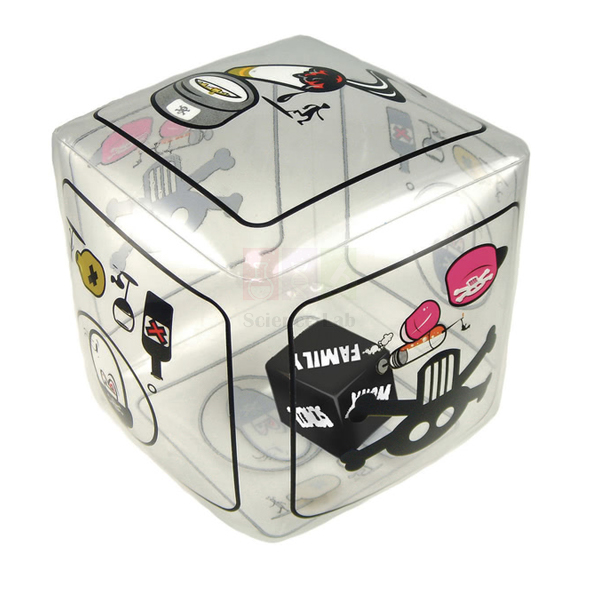
Tumble & Teach Substance Abuse (Product Code: SLE/BL/053) is an inflatable discussion cube used to open serious conversations about tobacco, alcohol and drugs in health, life-skills and counselling sessions. Teachers and counsellors use it as an ice-breaker in one-to-one situations or as a discussion tool for an entire class, and it measures approx 18cm square when inflated. It is supplied by Jain Scientific Equipments Pvt Ltd (ScienceLab), Ambala, India, among its biology teaching aids for schools.
Specifications
| Parameter | Detail |
|---|---|
| Type | Inflatable discussion cube |
| Size when inflated | Approx 18cm square |
| Subjects | Use and abuse of tobacco, alcohol and drugs |
| Effects discussed | On family and friends, school or work situations, and the body — physically and mentally |
| Settings | Ice-breaker in one-to-one situations or discussion tool for the entire class |
| Product code | SLE/BL/053 |
| Supplied by | Jain Scientific Equipments Pvt Ltd (ScienceLab), Ambala, India |
What Is the Substance Abuse Discussion Cube Used For?
Talking about substance use is difficult for many students, and a cube gives the conversation a neutral starting point. The student who rolls it responds to the theme that comes up — for example how a habit might change friendships, affect schoolwork, or harm health — and others add their views. Because the topic is chosen by the roll rather than by the teacher, students often open up more readily than in a question-and-answer session.
School counsellors use the same cube one-to-one to ease into a sensitive conversation. Set ground rules first: no one has to share personal experiences, and everyone listens respectfully. Close the session by telling students where they can go for help. The cube fits naturally into a health education kit for secondary classes in India and pairs well with anatomy resources that show what tobacco and alcohol do inside the body.
Supplier
This cube is supplied by Jain Scientific Equipments Private Limited, which does business as ScienceLab in Ambala, Haryana, India, and provides teaching resources to institutions in India and international markets. Schools can order it alongside anatomy models and posters for the same health unit. More about the company is on its profile page.
Related Biology Lab Equipment
Resources that support the same health and anti-substance-abuse lesson:
- Effects of Smoking Model — shows the physical damage that tobacco causes
- Human Lung Model in Bell Jar — explains the breathing system that smoking affects
- Systems of The Human Body Poster — a reference for the organs and systems under discussion
- Tumble & Teach Exercise — a companion cube that promotes healthy activity
See more in the Biology Lab Equipment category.
Frequently Asked Questions
Which topics does the Tumble & Teach Substance Abuse cube raise?
The Tumble & Teach Substance Abuse cube raises how the use and abuse of tobacco, alcohol and drugs can affect family and friends, school or work situations, and a person's body, both physically and mentally, giving each roll a clear discussion theme.
Is the cube meant for a whole class or for individual sessions?
Both. The Tumble & Teach Substance Abuse cube is intended as an ice-breaker in one-to-one situations, such as a counselling session, and as a discussion tool for an entire class, so the same cube serves teachers and school counsellors.
What size is the cube?
The Tumble & Teach Substance Abuse cube measures approx 18cm square once inflated, a size that is easy to pass around a circle of students or roll across a table during a one-to-one conversation.
Which age group is the cube suited to?
The right age for the Tumble & Teach Substance Abuse cube should be judged by the teacher or counsellor, because the subject is serious. If you would like to see the wording on each face before ordering, ask us through the contact page.
How do we keep the cube in good condition?
Check the Tumble & Teach Substance Abuse cube for punctures before each session, keep it out of strong sun and away from sharp objects, and store it with your health or counselling resources so it is ready for the next group.
Who supplies the Tumble & Teach Substance Abuse cube?
The Tumble & Teach Substance Abuse cube is supplied by Jain Scientific Equipments Private Limited, trading as ScienceLab, from Ambala, Haryana, India. Institutions in India and international markets can order it on its own or together with the Tumble & Teach Exercise cube.
Request a Quote
For pricing on Tumble & Teach Substance Abuse, contact us with the quantity you need, or add it to your enquiry cart.
Last updated: 24 September 2026
Microslide Nerve & Muscle Action
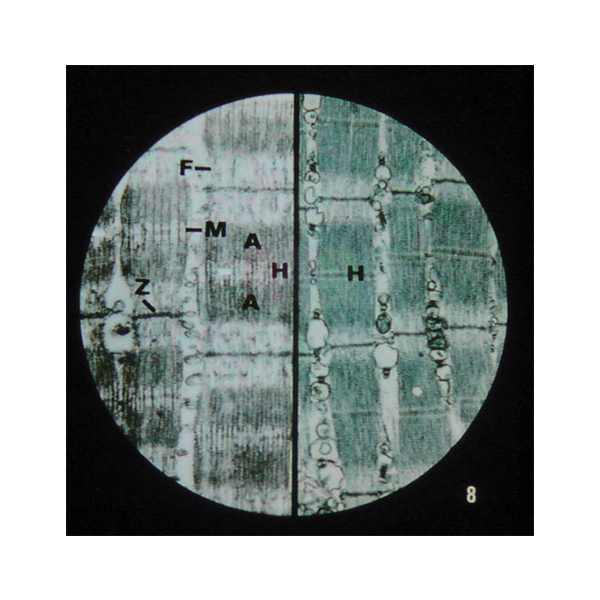
Microslide Nerve & Muscle Action (Product Code: SLE/PS/97) is a set of 8 related 35 mm images taken through a microscope, used to follow a nerve impulse from a single nerve cell to a contracting muscle in biology and physiology lessons. Its distinguishing frames show sarcomeres in both the relaxed and contracted state, with synapses, synaptic knobs and the nerve-muscle junction along the way. The set is supplied by Jain Scientific Equipments Pvt Ltd (ScienceLab), Ambala, India.
Specifications
| Parameter | Detail |
|---|---|
| What you get | 8 related 35 mm images photographed through a microscope |
| Nerve images | Single Cell; Synapse; Axons; Myelinated Axons; Synaptic Knobs |
| Junction image | Nerve-Muscle Junction |
| Muscle images | Striated Muscle Cell; Sarcomeres – relaxed and contracted |
| On-image help | Arrows and callouts locate the important structures |
| Text folder | Detailed folder that informs and questions students, with a handy pocket for the Microslides |
| Viewed with | Microslide Viewer |
| Product code | SLE/PS/97 |
| Supplied by | Jain Scientific Equipments Pvt Ltd (ScienceLab), Ambala, India |
What Is the Microslide Nerve & Muscle Action Used For?
Teachers use the set to tell one continuous story. Students start with a whole nerve cell, compare plain axons with myelinated axons, and then look closely at a synapse and the synaptic knobs where the signal passes from one cell to the next. The nerve-muscle junction image shows where that signal reaches a muscle fibre.
The last frames switch to the muscle itself: a striated muscle cell, followed by sarcomeres shown relaxed and contracted, which makes the shortening of the sarcomere during contraction easy to explain. With the callouts as a guide and the text folder questions to answer, this set suits both class teaching and self-study at senior secondary and early college level, and pairs well with a synapse model on the demonstration bench.
Supplier
ScienceLab is the trading name of Jain Scientific Equipments Private Limited, Ambala, Haryana, which supplies Microslide Nerve & Muscle Action to schools, colleges and distributors. Shipments outside India are handled under Importer-Exporter Code AAECJ8618A (DGFT), and the company is GST-registered under GSTIN 06AAECJ8618A1ZT. Background on the business is on our company profile.
Related Prepared Slides
Items that help students connect these images to three-dimensional structures:
- Microslide Viewer — the viewer these 35 mm images are made for
- Human Nerve Ending and Synapse Model — a model version of the synapse frames
- Skeletal Muscle Fiber Model — enlarges the striated muscle structure seen in the set
- Microslide Animal Tissue Set 2 Muscle, Bone, Connective — more muscle and tissue images for the same unit
More topic sets are listed under Prepared Slides.
Frequently Asked Questions
What does Microslide Nerve & Muscle Action show?
Microslide Nerve & Muscle Action shows 8 views: a single nerve cell, a synapse, axons, myelinated axons, the nerve-muscle junction, synaptic knobs, a striated muscle cell, and sarcomeres in relaxed and contracted states.
Are magnifications stated for Microslide Nerve & Muscle Action?
No magnification values are given in our listing for Microslide Nerve & Muscle Action. If your syllabus or worksheet needs them, ask us through the contact page and we will check the details for the sets we quote.
Can Microslide Nerve & Muscle Action be used with a normal microscope?
Microslide Nerve & Muscle Action is made for a Microslide Viewer rather than a compound microscope, because the images are 35 mm photographs taken through a microscope. Add viewers to your enquiry if needed.
How is Microslide Nerve & Muscle Action stored?
Microslide Nerve & Muscle Action comes with a detailed text folder that has a pocket for the Microslides, so the images are kept inside the folder with their notes and questions between lessons.
Who supplies Microslide Nerve & Muscle Action?
Microslide Nerve & Muscle Action is supplied by Jain Scientific Equipments Pvt Ltd (ScienceLab) in Ambala, Haryana, India, for schools, colleges and dealers in India and international markets, with IEC and GSTIN details for export paperwork.
What information speeds up a quotation for Microslide Nerve & Muscle Action?
For a Microslide Nerve & Muscle Action quotation, quote code SLE/PS/97, the number of sets, whether viewers or models are needed, and the delivery location. We reply with availability and terms once we have these details.
Request a Quote
Send an enquiry for Microslide Nerve & Muscle Action through our contact page, or add it to the enquiry cart with any viewers and models for your physiology lessons.
Last updated: 24 September 2026
Microslide The Digestive System
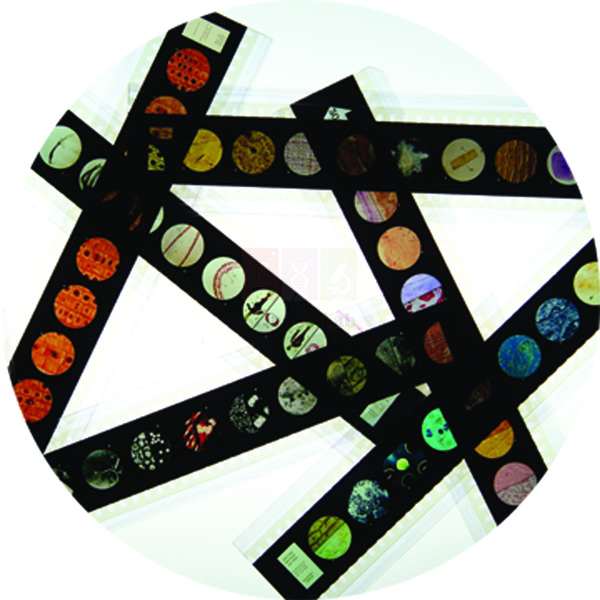
Microslide The Digestive System (Product Code: SLE/PS/98) is a set of 8 related 35 mm microscope photographs used to show the structure of the human gut, from the mouth to the small intestine, in school biology classes. Students follow food past the salivary gland and taste buds, down the gullet, into the stomach lining with its gastric glands and on to the intestinal villi. It is supplied by Jain Scientific Equipments Pvt Ltd (ScienceLab), Ambala, India.
Specifications
| Parameter | Detail |
|---|---|
| Number of images | 8 related 35 mm images, photographed through a microscope |
| Mouth | Salivary gland; Taste buds |
| Gullet | Gullet (Oesophagus); Smooth muscle; Junction of gullet and stomach |
| Stomach | Stomach lining and gastric glands |
| Small intestine | Small intestine; Intestinal glands and villi |
| Teaching features | Arrows and callouts on the images; detailed text folder with a pocket to store the Microslides |
| Viewer | Made to be viewed through a Microslide Viewer |
| Product code | SLE/PS/98 |
| Supplied by | Jain Scientific Equipments Pvt Ltd (ScienceLab), Ambala, India |
What Is the Microslide The Digestive System Used For?
The images are arranged in the order food travels, which makes the set a natural companion to a lesson on digestion and absorption. Students can relate each structure to its job: saliva from the salivary gland, taste detection in the taste buds, the smooth muscle that moves food along the oesophagus, and the change in lining where the gullet joins the stomach.
In the stomach and small intestine frames, the callouts draw attention to gastric glands, intestinal glands and villi, so learners can explain how the folded lining increases the surface for absorption. Working in a Microslide Viewer, a group can annotate a worksheet directly from the images, then use the text folder questions to check understanding. It is a compact addition to school biology lab equipment where time for sectioning and staining is limited.
Supplier
We supply Microslide The Digestive System as part of the biology teaching range offered by Jain Scientific Equipments Private Limited, known by its trading name ScienceLab, from Ambala in Haryana. Schools and dealers in India and international markets can combine it with models and glass slide sets on a single enquiry. Our profile page explains more about the company.
Related Prepared Slides
For a complete digestion unit, buyers also look at:
- Microslide Viewer — required to see the images
- Prepared Microscope Slide Set – Digestion — glass slides of gut tissue for microscope practicals
- Human Digestive System Model — shows where each tissue sits in the body
- Microslide Nutrition — links what we eat to how it is digested
- Kit for Digestion Experiments — practical work on the same topic
Browse the rest of our Prepared Slides.
Frequently Asked Questions
What parts of the gut appear in Microslide The Digestive System?
Microslide The Digestive System covers the salivary gland, taste buds, gullet (oesophagus), smooth muscle, the junction of gullet and stomach, stomach lining with gastric glands, the small intestine, and intestinal glands with villi.
Does Microslide The Digestive System include the liver, pancreas or large intestine?
No, Microslide The Digestive System does not list the liver, pancreas or large intestine; its images end at the small intestine and villi. For liver, pancreas and tongue, see our separate glass slide set on digestion.
What is supplied with Microslide The Digestive System?
Microslide The Digestive System comes as 8 related 35 mm images with a detailed text folder of notes and questions. The folder has a handy pocket, so the Microslides are stored with it after class.
How are the images in Microslide The Digestive System labelled?
Microslide The Digestive System uses arrows and callouts on the images to help students find the important features, such as the gastric glands and villi, without needing a teacher to point them out on each view.
Who supplies Microslide The Digestive System?
Microslide The Digestive System is supplied by Jain Scientific Equipments Pvt Ltd (ScienceLab), based in Ambala, Haryana, India. The company supplies schools, colleges, dealers and importers in India and in international markets.
Can I order Microslide The Digestive System for several schools?
Yes, Microslide The Digestive System can be quoted in the number of sets you need for several schools or a dealer order. Give the product code SLE/PS/98, quantity and delivery location through our contact page.
Request a Quote
For pricing and availability of Microslide The Digestive System, write to us on the contact page or add it to your enquiry cart together with any viewers or models.
Last updated: 24 September 2026
Endocrine System Model Activity Set
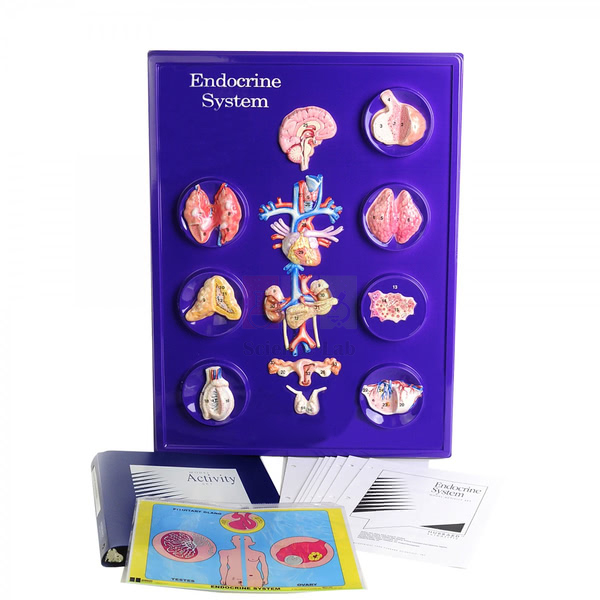
The Endocrine System Model Activity Set (Product Code: SLE/A/155) represents seven endocrine glands, each depicted whole and again as a magnified section in detail, together with closely related organs. Covering the pituitary, thyroid, parathyroid and adrenal glands as well as the pancreas, ovaries and testes, it gives biology teachers one human biology model set for chapters on hormones and chemical coordination in schools, colleges and nursing programmes. The set is manufactured by Jain Scientific Equipments Pvt Ltd (ScienceLab) in Ambala, India.
Specifications
| Parameter | Detail |
|---|---|
| Glands depicted | Seven: pituitary, thyroid, parathyroid and adrenal glands, pancreas, ovaries and testes |
| Views | Each gland shown whole and as a magnified section in detail |
| Additional structures | Closely related organs are also depicted |
| Format | Model activity set |
Typical Use
A useful approach is to begin with the whole-gland views so students can place each gland in the body, then move to the magnified sections to discuss what happens inside the tissue that produces hormones. Because both ovaries and testes are included, the set supports a side-by-side comparison of male and female reproductive hormones, while the pancreas opens a link to blood-sugar regulation and digestion.
For group work, give each team one or two glands and ask them to build a short profile — location, neighbouring organs, the hormones released and the tissues those hormones act on — then present it to the class using the model. Activities like this turn the set into working school biology lab equipment rather than a display piece.
Manufacturer
Jain Scientific Equipments Private Limited produces this activity set under its trading name, ScienceLab, from its base in Ambala, Haryana, where it builds biology models and science laboratory apparatus for education buyers. Read the company profile for an overview of the business.
Related Human Models
Models teachers often use alongside this set when covering hormones and the organs they affect:
- Human Endocrine Organs Model — an organ-level model for showing where the glands sit in the body
- Kidney with Adrenal Gland Model — a closer look at the adrenal gland and its vessels
- Pathology of the Human Thyroid Model — extends thyroid lessons into disorders of the gland
- Human Spleen, Duodenum, and Pancreas Model — context for the pancreas and its neighbouring organs
- Circulatory System Model Activity Set — a companion activity set, since hormones travel in the blood
Explore more in our Human Models category.
Frequently Asked Questions
Which glands are in the set?
Seven: the pituitary, thyroid, parathyroid and adrenal glands, the pancreas, the ovaries and the testes, along with closely related organs.
Are the glands shown at actual size?
Each gland appears whole and also as a magnified section. The scale of the whole-gland views is not stated in our documentation; contact us if you need it.
What activity materials come with the set?
The product documentation describes the glands and their sections. For a full list of components, such as any printed guide or worksheets, please confirm with us before ordering.
Which courses is it suited to?
It matches the endocrine topics taught in secondary and higher secondary biology and in introductory college and nursing courses; the depth of study is set by the teacher.
Can I order it together with other activity sets?
Yes. Add it to the enquiry cart with items such as the Circulatory System Model Activity Set and we will quote them together.
What information do you need to quote a school or college?
Tell us the number of sets, the delivery address, the billing name and any documents your purchase procedure requires, and we will prepare the quotation accordingly.
Request a Quote
For a quotation on the Endocrine System Model Activity Set, send your requirement through our contact page or place it in the enquiry cart. We supply schools and colleges in India and international markets.
Last updated: 24 September 2026