- Physics Lab Equipment
- Chemistry Lab Equipment
- Biology Lab Equipment
- Anatomical Lab Equipment
- Learning
- Educational Lab Equipment
- Magnets
- Agriculture
- Astronomy
- Earth Science
- Geography Lab Equipment
- Safety Lab Coat
- Laboratory
- Meteorological
- Electricity & Magnetism
- Heat
- School Lab Equipment
- Lab Glassware
- Science Lab Equipment
- Tvet Lab Equipment
- Robotics Kits Supplier and Manufacturer for Schools India
- Math Lab Equipment Manufacturers and Exporters in Ambala
- STEM Kits Manufacturers and Supplier India
- Engineering Lab Equipment
- Hospital Lab Equipment
- Water, Sanitation & Hygiene Supplies
- Cold Chain, Solar & Communication Equipment
- Nutrition
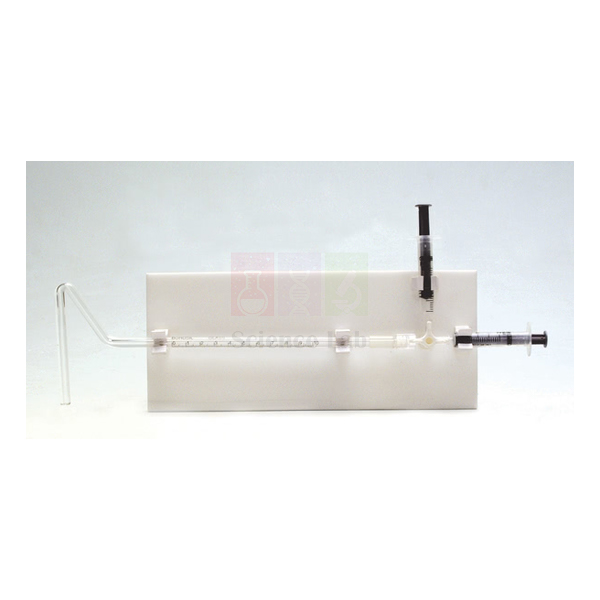
Photosynthesis Apparatus
Photosynthesis Apparatus (Product Code: SLE/EBT/19) is a panel-mounted teaching apparatus used to measure and collect the gas evolved by aquatic plants during photosynthesis in school and college biology laboratories. Students read the gas volume in a calibrated capillary tube and draw the gas off for analysis with plastic syringes, all fixed on a compact 190mm x 150mm plastic panel. It is made by Jain Scientific Equipments Pvt Ltd (ScienceLab), an OEM manufacturer, at its own factory in Ambala, India, as a photosynthesis experiment kit for class practicals.
Specifications
| Parameter | Detail |
|---|---|
| Purpose | Measurement and collection of gas evolved by aquatic plants during photosynthesis |
| Mounting | Plastic panel |
| Size | 190mm x 150mm (19 cm x 15 cm) |
| Gas measurement | Calibrated capillary tube |
| Gas sampling | Plastic syringes for drawing off the gas for analysis |
| Product code | SLE/EBT/19 |
| Manufacturer | Jain Scientific Equipments Pvt Ltd (ScienceLab) — OEM |
| Country of origin | India (made in Ambala, Haryana) |
What Is the Photosynthesis Apparatus Used For?
The apparatus turns the rate of photosynthesis into a number students can record. A freshly cut sprig of pondweed is placed in water in the apparatus and lit by a lamp; as the plant photosynthesises it gives off gas, which collects in the calibrated capillary tube where the length of the gas column is read over a fixed time. Repeating the reading with the lamp at different distances, or with the water at different temperatures, turns a simple observation into an investigation of limiting factors with results that can be graphed and compared between groups.
Once enough gas has collected, the plastic syringes let students draw it off so it can be analysed separately. For steadier data, allow the plant a few minutes to settle under each new condition before timing, keep the water temperature constant when light is the variable, and use a stem with a freshly cut end. As a piece of plant biology lab equipment it suits both class practicals and coursework investigations.
OEM Manufacturer
ScienceLab is the trading name of Jain Scientific Equipments Private Limited, the OEM (original equipment manufacturer) of this Photosynthesis Apparatus. The company produces it at its own licensed factory at Saha, Ambala, Haryana, India, and sells it factory-direct to schools, colleges, dealers and importers rather than through a trading intermediary.
Because the maker handles every order itself, questions about repeat class sets or replacement parts such as syringes go straight to the people who build the apparatus — just ask us. Read more about the company on the company profile.
Related Botany Equipment
Items that fit into the same photosynthesis and respiration practicals:
- Kit for Demonstration of Aquatic Plant Respiration — the matching respiration practical with aquatic plants.
- Apparatus for Photosynthesis — an alternative photosynthesis set-up for comparing methods.
- Volumeter Respirometer — measures gas volume changes in closed-system respiration studies.
- Potometer Apparatus — a companion plant physiology practical on transpiration.
- Stopwatch, Digital — for timing gas collection at each light setting.
More plant physiology apparatus is listed in the Botany category.
Frequently Asked Questions
What does the Photosynthesis Apparatus measure?
The Photosynthesis Apparatus measures the gas evolved by aquatic plants during photosynthesis. The gas collects in a calibrated capillary tube, where students read its volume, so the rate of gas production can be compared under different light or temperature conditions.
What are the plastic syringes on the Photosynthesis Apparatus for?
The plastic syringes on the Photosynthesis Apparatus are used to draw off the gas collected from the aquatic plant, so that it can be taken out of the capillary tube and analysed separately by the students.
Are a plant and a lamp included with the Photosynthesis Apparatus?
No plant material or light source is listed with the Photosynthesis Apparatus. Schools normally use a common aquatic plant such as pondweed and a bench lamp; mention any accessories you need on the contact page and we will advise.
How big is the Photosynthesis Apparatus?
The Photosynthesis Apparatus is mounted on a plastic panel measuring 190mm x 150mm, about 19 cm by 15 cm, so it sits comfortably on a student bench and several units can run side by side in one practical.
What are the capillary graduations, and is a calibration certificate available?
The graduation interval of the Photosynthesis Apparatus capillary tube is not stated in our listing, and calibration certificate availability should be discussed with us before ordering. Please ask through the contact page and we will confirm.
Who manufactures the Photosynthesis Apparatus?
The Photosynthesis Apparatus is manufactured by Jain Scientific Equipments Pvt Ltd (ScienceLab) as the OEM, at its own factory at Saha, Ambala, Haryana, India. Quotations, repeat orders and spare-part enquiries are handled directly by the manufacturer.
How should the Photosynthesis Apparatus be cleaned?
After each practical, flush the capillary tube and syringes of the Photosynthesis Apparatus with clean water, drain them fully and let the panel dry before storage. This stops algae and deposits building up and keeps the capillary easy to read.
Can the Photosynthesis Apparatus be ordered in class sets?
Yes. The Photosynthesis Apparatus is supplied in class-set quantities to schools, colleges, dealers and importers in India and international markets. State the number of units and the delivery destination so the quotation can be prepared correctly.
Request a Quote
For a quotation on the Photosynthesis Apparatus, send your requirement through the contact page or add it to the enquiry cart with any timers or respiration apparatus you need. Quotes come direct from the manufacturer.
Last updated: 24 September 2026
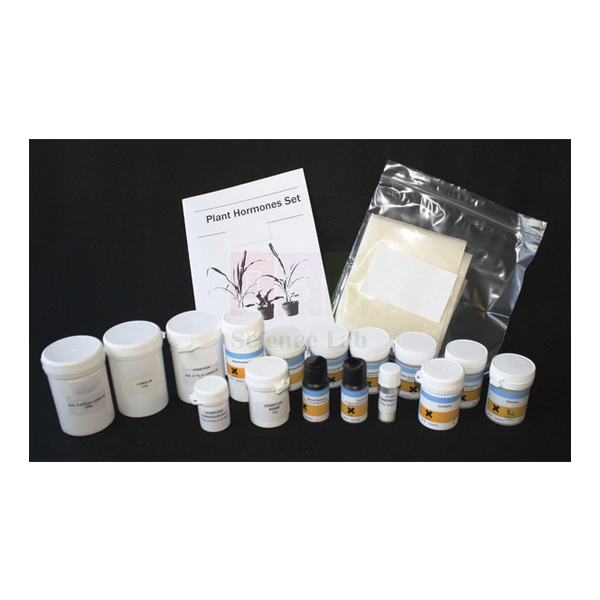
Plant Hormones Set
Plant Hormones Set (Product Code: SLE/EBT/20) is a collection of plant growth regulators and supporting materials used to show how plant hormones affect plant growth and development in school and college biology laboratories. Suitable for GCSE students, it covers four experiments — breaking dormancy in seeds, rooting cuttings, killing weeds and preventing leaves from dropping — with IAA pastes, N.A.A., 2,4-D, gibberellic acid and culture materials in one plant growth experiment kit. It is supplied by Jain Scientific Equipments Pvt Ltd (ScienceLab), Ambala, India.
Specifications
| Parameter | Detail |
|---|---|
| Purpose | Understanding how plant hormones affect plant growth and development |
| Experiments | Breaking dormancy in seeds; rooting cuttings; killing weeds; preventing leaves from dropping |
| Level | Suitable for GCSE students |
| Auxin pastes | 0.1% IAA in lanolin paste; 0.01% IAA in lanolin paste |
| Shelf life | Depends on the chemical, its grade and storage conditions; ask us for the expiry date of the batch you are quoted |
| Product code | SLE/EBT/20 |
| Supplied by | Jain Scientific Equipments Pvt Ltd (ScienceLab), Ambala, India |
Contents:
- Culture Medium
- Indol-3-yl acetic acid (IAA)
- Lanolin
- Gibberellic acid
- Sucrose
- 0.1% IAA in lanolin paste
- Coumarin
- N.A.A.
- 0.01% IAA in lanolin paste
- Thiourea
- 2,4-D
- Ethrel ‘e’
- Tetrazolium chloride
- Agar
What Is the Plant Hormones Set Used For?
Each group of chemicals supports a different investigation. Gibberellic acid and thiourea are widely used to break seed dormancy, while coumarin acts as a germination inhibitor for comparison; seeds can be set on agar prepared with the culture medium and sucrose so that germination is easy to observe. The IAA pastes in lanolin, at 0.1% and 0.01%, and N.A.A. are auxins that students apply to cuttings to encourage root formation, or smear on a leaf stalk to show how auxin delays leaf fall.
2,4-D is a synthetic auxin used as a selective weedkiller, which makes the killing-weeds experiment a direct link to agriculture, and Ethrel releases ethylene, the hormone behind ripening and leaf drop. Tetrazolium chloride turns living seed tissue red, so students can check seed viability before a germination trial.
As a biology experiment kit for students, the set is easiest to run when teachers prepare dilutions in advance and give each group a clear control. Wear gloves and eye protection, label every container, keep the chemicals away from food areas and store them tightly closed in a cool, dry, dark cupboard.
Supplier
ScienceLab is the trading name of Jain Scientific Equipments Private Limited, Ambala, Haryana, India, which supplies chemical sets such as this one to schools, colleges and distributors in India and international markets. For vendor registration, the supplying company is Jain Scientific Equipments Private Limited (CIN U29309HR2020PTC087597, GSTIN 06AAECJ8618A1ZT). More details are on the company profile.
Related Botany Equipment
Useful items for running the hormone experiments:
- Petri Dish Glass With Lid — for setting seeds on agar in dormancy and germination tests.
- Greenbox Repl. Planting Tray — for growing treated and control seedlings side by side.
- Forceps, Plastic — for handling seeds and small cuttings without contaminating them.
- Clinostat (Electric) — for a follow-on study of how shoots and roots respond to gravity.
- Safety Goggles — eye protection while students handle the growth regulators.
Browse the Botany category for more plant physiology kits.
Frequently Asked Questions
Which experiments can be done with the Plant Hormones Set?
The Plant Hormones Set supports four experiments: breaking dormancy in seeds, rooting cuttings, killing weeds and preventing leaves from dropping. Together they show students how different plant hormones and growth regulators control germination, root formation, weed growth and leaf fall.
What level is the Plant Hormones Set designed for?
The Plant Hormones Set is suitable for GCSE students and equivalent secondary-level biology courses. Teachers can also adapt the same experiments for introductory college plant physiology practicals, preparing dilutions in advance so that each group works with a clear treatment and control.
What does the Plant Hormones Set contain?
The Plant Hormones Set contains culture medium, indol-3-yl acetic acid, lanolin, gibberellic acid, sucrose, 0.1% and 0.01% IAA in lanolin paste, coumarin, N.A.A., thiourea, 2,4-D, Ethrel ‘e’, tetrazolium chloride and agar. Quantities are not stated, so ask us to confirm them before ordering.
What is the shelf life of the Plant Hormones Set?
Shelf life depends on the chemical, its grade and storage conditions, so the Plant Hormones Set carries no single expiry period. Ask us for the expiry date of the batch you are quoted, and keep every container sealed, cool, dry and away from light.
Is safety information included with the Plant Hormones Set?
Safety documentation is not listed with the Plant Hormones Set. Request safety data for the chemicals when you enquire, have a teacher prepare 2,4-D and other concentrated reagents, and make sure students wear gloves and eye protection throughout the practical.
Who supplies the Plant Hormones Set?
The Plant Hormones Set is supplied by Jain Scientific Equipments Pvt Ltd (ScienceLab), Ambala, Haryana, India. The company sources chemical sets for school and college biology laboratories and sends quotations to institutions and distributors in India and international markets.
Can the Plant Hormones Set be shipped internationally?
Yes, the Plant Hormones Set is supplied to India and international markets. Because it contains chemicals, tell us the destination country when you enquire so that packing and shipping requirements can be checked before a quotation is issued.
Request a Quote
Request a quotation for the Plant Hormones Set through our contact page, or add it to the enquiry cart with dishes, trays and eye protection for a complete plant growth practical.
Last updated: 24 September 2026
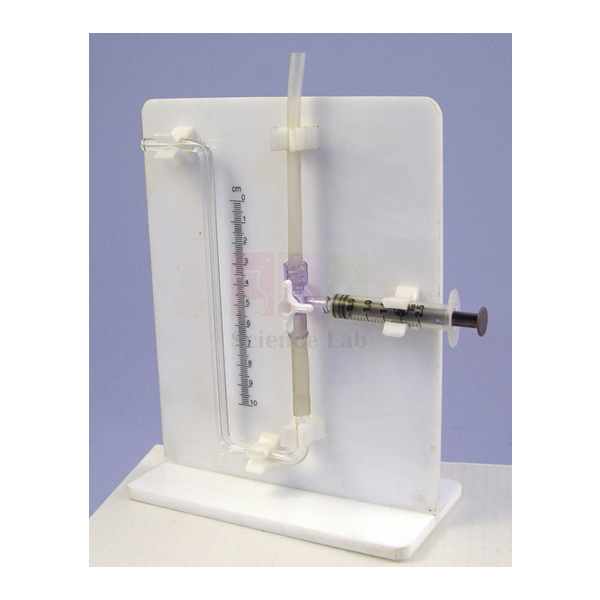
Potometer Apparatus
Potometer Apparatus (Product Code: SLE/EBT/21) is a low-breakage student potometer used to measure transpiration in small plant shoots during school and college biology practicals. Its only glass component is the capillary tube, mounted on a strong backing plate, and a syringe zeros the scale between readings. It is made by Jain Scientific Equipments Pvt Ltd (ScienceLab), an OEM manufacturer, at its own factory in Ambala, India, as a transpiration experiment kit that groups can use with minimal risk of breakage.
Specifications
| Parameter | Detail |
|---|---|
| Type | Potometer for measuring transpiration |
| Demonstrates | Transpiration occurring in small plant shoots |
| Glass components | One only – the capillary tube |
| Mounting | Strong backing plate |
| Reading method | Movement of the bubble within the capillary as transpiration occurs |
| Set-up | Apparatus is submerged and the specimen placed in the tube |
| Zeroing | Scale is zeroed using a syringe |
| Additional use | Can measure humidity when a porous pot is connected |
| Design focus | Minimal risk of breakage during student use |
| Product code | SLE/EBT/21 |
| Manufacturer | Jain Scientific Equipments Pvt Ltd (ScienceLab) — OEM |
| Country of origin | India (made in Ambala, Haryana) |
What Is the Potometer Used For?
Teachers use this potometer to show that leaves lose water continuously and that the rate changes with the surroundings. A typical practical compares how far the bubble travels in a fixed time with the shoot in still air, beside a fan, in bright light and in shade, so students can link wind, light and humidity to the rate of water loss. Because the apparatus is assembled under water, air is kept out of the system, and the syringe brings the bubble back to zero between runs without dismantling anything.
For reliable results, cut the shoot under water so that air does not enter the stem, fit it firmly before lifting the apparatus out, and blot the leaves dry before taking readings. Strictly, a potometer measures the water taken up by the shoot; this closely follows transpiration because most absorbed water leaves through the leaves — a useful discussion point for older students. With a porous pot connected in place of the shoot, the same unit can be used to compare humidity.
What to Specify When Ordering
- The number of potometers needed, usually one per student group.
- Whether you plan humidity measurements, so we can confirm whether a porous pot is included or should be added.
- Whether a teacher-demonstration model such as the Ganong’s potometer is also required.
- The delivery location and any tender or purchase-order format you use.
OEM Manufacturer
Jain Scientific Equipments Private Limited, trading as ScienceLab, is the OEM (original equipment manufacturer) of this Potometer Apparatus. The potometer is produced at the company’s own licensed factory at Saha, Ambala, Haryana, India, and goes factory-direct to schools, colleges, dealers and importers, so there is no trader between the buyer and the maker.
If a capillary tube or syringe needs replacing after years of class use, ask us — spares and repeat orders are dealt with by the manufacturer itself. Background on the business is on our company profile.
Related Botany Equipment
Items commonly used alongside this potometer in transpiration and plant physiology practicals:
- Potometer Apparatus (Ganong’s) — a Ganong-pattern alternative suited to teacher demonstrations of absorption and transpiration rates.
- Stopwatch, Digital — for timing the bubble’s movement consistently in each condition.
- Digital Hygrometer - Thermometer — records humidity and temperature around the shoot during each trial.
- Glass Beaker — holds water while shoots are cut and kept fresh before fitting.
- Photosynthesis Apparatus — a companion plant physiology practical for the same unit of study.
See the complete Botany equipment range for more plant science teaching apparatus.
Frequently Asked Questions
What does the Potometer Apparatus measure?
The Potometer Apparatus measures how quickly a small plant shoot takes up water, shown by a bubble moving along the capillary tube. Since most absorbed water is lost from the leaves, this rate is used in class as a practical measure of transpiration.
Why is the Potometer Apparatus described as low-breakage?
The Potometer Apparatus has only one glass part, the capillary tube, and it is mounted on a strong backing plate. That leaves far less fragile glassware to damage in student hands, although the capillary itself should still be handled with care.
How is the reading reset between trials on the Potometer Apparatus?
On the Potometer Apparatus a syringe is used to bring the bubble back to zero on the scale. The shoot stays in place, so repeated readings under different conditions such as light, shade or moving air can be taken quickly.
Can the Potometer Apparatus measure anything besides transpiration?
Yes. The Potometer Apparatus can also be used to measure humidity by connecting a porous pot. Please ask on the contact page whether a porous pot is included with your order or should be added to the quotation.
Who manufactures the Potometer Apparatus?
The Potometer Apparatus is manufactured by Jain Scientific Equipments Pvt Ltd (ScienceLab), the OEM, at its own factory in Saha, Ambala, Haryana, India. Buyers deal directly with the maker for quotations, class sets and replacement parts.
Is a calibration certificate available for the Potometer Apparatus?
Calibration certificate availability for the Potometer Apparatus, which is a teaching instrument, should be discussed with us before ordering. Send your requirement through the contact page and we will tell you what documentation can accompany the supply.
Can the Potometer Apparatus be supplied for export or tenders?
Yes. The Potometer Apparatus is supplied to schools, colleges and distributors in India and international markets. Send the quantity, delivery location and any tender format so that a manufacturer’s quotation can be prepared for you.
Request a Quote
To request a quotation for the Potometer Apparatus, send your requirement through our contact page or add the item to the enquiry cart with the other laboratory items you need. Quotes come straight from the manufacturer.
Last updated: 24 September 2026
242.jpg)
Potometer Apparatus (Ganong's)
Potometer Apparatus (Ganong's) (Product Code: SLE/EBT/22) is a Ganong-pattern potometer used to demonstrate transpiration rates and the rate of water absorption by a cut shoot under various external conditions in school and college botany laboratories. Its 1mm capillary bore and glass stopcock reservoir let a teacher reset the air bubble and compare several conditions with the same shoot, which makes it dependable plant biology lab equipment for comparative work. It is made by Jain Scientific Equipments Pvt Ltd (ScienceLab), an OEM manufacturer, at its own factory in Ambala, India.
Specifications
| Parameter | Detail |
|---|---|
| Type | Ganong's potometer, demonstration apparatus |
| Purpose | Demonstrating transpiration rates and rates of water absorption by a cut shoot under various external conditions |
| Base | 20 x 80mm |
| Capillary bore | 1mm |
| Shoot fitting | Plant shoot sealed into a stopper that fits the end tube |
| Bubble adjustment | Glass stopcock admits water from the reservoir to reposition the air bubble |
| Operation | Whole apparatus filled with water; open end of the capillary tube dipped into a beaker of water |
| Mounting | Varnished wooden base, apparatus held by spring clips |
| Product code | SLE/EBT/22 |
| Manufacturer | Jain Scientific Equipments Pvt Ltd (ScienceLab) — OEM |
| Country of origin | India (made in Ambala, Haryana) |
What Is the Ganong's Potometer Used For?
The Ganong design is usually set up by the teacher at the front bench, where one shoot can be taken through a sequence of conditions in a single lesson – still room air, then moving air from a fan, then a darkened box, or leaves smeared with petroleum jelly on one surface to show where water is lost. Between stages, opening the glass stopcock lets water in from the reservoir and pushes the air bubble back along the capillary, so the class sees a fresh run without the shoot being disturbed. That makes it a practical transpiration experiment for India's school and college syllabuses, where comparing conditions matters more than a single reading.
Because the capillary bore is 1mm, students can go beyond distance-per-minute and estimate the volume of water taken up, using the cross-sectional area of the bore multiplied by the distance the bubble moves. For a good seal, cut the shoot under water, push it into the stopper while still submerged, and check that no bubbles appear at the joint. Keep the open end of the capillary under the water surface in the beaker throughout, otherwise air enters and the run must be restarted.
OEM Manufacturer
Jain Scientific Equipments Private Limited, which trades as ScienceLab, is the OEM (original equipment manufacturer) of this Ganong's potometer. The apparatus is made and assembled at the company's own licensed factory at Saha, Ambala, Haryana, India, rather than bought in from a trader, and it is supplied factory-direct to schools, colleges, university botany departments, dealers and importers in India and international markets.
Because the maker handles enquiries itself, quotations, repeat orders for additional lab sets and questions about replacement glass parts come straight to the manufacturer – just ask us. Read more on the company profile page.
Related Botany Equipment
Other items that fit into the same water-uptake and transpiration demonstration:
- Glass Beaker — holds the water into which the open end of the capillary is dipped.
- Potometer Apparatus — a backing-plate potometer with a single glass component, suited to student groups.
- Bench Stopwatch — a timer the whole class can see while the bubble is tracked.
- Digital Hygrometer - Thermometer — records humidity and temperature when comparing external conditions.
- Volumeter Respirometer — a follow-on plant physiology apparatus for respiration practicals.
Browse the full Botany category for further plant science apparatus and teaching aids.
Frequently Asked Questions
How is the Potometer Apparatus (Ganong's) different from the standard Potometer Apparatus?
The Potometer Apparatus (Ganong's) has a reservoir with a glass stopcock for resetting the air bubble and sits on a varnished wooden base with spring clips, suiting front-bench demonstrations. The standard Potometer Apparatus has only one glass component, the capillary tube, on a strong backing plate for student groups.
What is the capillary bore of the Potometer Apparatus (Ganong's)?
The Potometer Apparatus (Ganong's) has a 1mm capillary bore. Knowing the bore lets students convert the distance the air bubble travels into an approximate volume of water absorbed by the shoot, turning a simple observation into a quantitative transpiration result.
How do I reset the air bubble on a Ganong's potometer?
On the Potometer Apparatus (Ganong's), open the glass stopcock briefly to admit water from the reservoir; the air bubble moves back along the capillary. Close the stopcock again and restart timing, so the same shoot can be tested under the next condition without being disturbed.
Is a beaker supplied with the Potometer Apparatus (Ganong's)?
The Potometer Apparatus (Ganong's) is used with a beaker of water, but a beaker is not listed as part of the apparatus. A suitable Glass Beaker can be added to the same order; contact us to confirm exactly what is included.
Who manufactures the Potometer Apparatus (Ganong's)?
The Potometer Apparatus (Ganong's) is manufactured by Jain Scientific Equipments Pvt Ltd (ScienceLab), the OEM, at its own licensed factory at Saha, Ambala, Haryana, India. Schools, dealers and importers buy it factory-direct, with quotations and repeat orders handled by the maker.
How should a Ganong's potometer be cleaned and stored?
After each lesson, rinse the glass parts of the Potometer Apparatus (Ganong's) with clean water, drain them fully and store the apparatus dry with the stopcock clean. Keep the varnished wooden base away from standing water to protect its finish.
Is a calibration certificate available for the Potometer Apparatus (Ganong's)?
The Potometer Apparatus (Ganong's) is a demonstration apparatus rather than a measuring instrument sold with documents. If your procurement process needs calibration or inspection paperwork, please discuss it with us through our contact page before ordering.
Request a Quote
For pricing and availability of the Potometer Apparatus (Ganong's), write to us via the contact page or place it in the enquiry cart. Quotations come direct from the manufacturer; mention the quantity and delivery location so we can reply in one step.
Last updated: 24 September 2026

Sach's Water Culture Mineral Deficiency
Sach's Water Culture Mineral Deficiency (Product Code: SLE/EBT/23) is a set of eight tubes of culture material used to grow plants in liquid media that each lack one mineral element, so students can compare deficiency symptoms against a complete-medium control in botany practicals. Each tube holds sufficient material to prepare four litres of liquid medium, which makes the set a ready plant growth experiment kit for senior school and college mineral-nutrition lessons. It is supplied by Jain Scientific Equipments Pvt Ltd (ScienceLab), Ambala, India.
Specifications
| Parameter | Detail |
|---|---|
| Type | Water culture media set for mineral deficiency studies |
| Number of tubes | Eight |
| Quantity per tube | Sufficient material to prepare four litres of liquid medium |
| Deficiency media | One tube lacking each of phosphorus, nitrogen, calcium, potassium, magnesium, iron or sulphur |
| Control | One tube of complete medium |
| Shelf life | Depends on the chemical, its grade and storage conditions; ask us for the expiry date of the batch you are quoted |
| Product code | SLE/EBT/23 |
| Supplied by | Jain Scientific Equipments Pvt Ltd (ScienceLab), Ambala, India |
Contents of the set:
- Complete medium (control)
- Medium lacking phosphorus
- Medium lacking nitrogen
- Medium lacking calcium
- Medium lacking potassium
- Medium lacking magnesium
- Medium lacking iron
- Medium lacking sulphur
What Is the Sach's Water Culture Set Used For?
Each tube is dissolved in water to make its own culture solution, and the eight solutions are placed in separate, clearly labelled culture vessels. Seedlings of a fast-growing species are supported so that their roots hang in the solution, and the vessels are kept side by side under the same light and temperature. Over the following weeks students record height, leaf colour, leaf size and root growth, then compare each deficient plant with the complete-medium control. Typical observations include yellowing of older leaves where nitrogen is missing and pale young leaves where iron is missing.
For clearer results, cover the culture vessels to keep light off the roots and reduce algal growth, top up with water as it evaporates, and aerate the solutions gently if possible. Running the practical as a whole-class project, with one group responsible for each medium, turns the set into shared plant biology lab equipment for a full unit on mineral nutrition.
Supplier
Jain Scientific Equipments Private Limited trades as ScienceLab from Ambala, Haryana, India, and supplies this water-culture set to schools, colleges and distributors in India and international markets. It can be quoted together with the glassware and growing trays the experiment needs, so a department receives everything for the practical in one consignment. See the company profile for more about the company.
Related Botany Equipment
Apparatus that supports setting up and observing a water-culture deficiency experiment:
- Greenbox Repl. Planting Tray — for raising seedlings before they are moved into the culture solutions.
- Hydroponic Tray — a soil-free growing option for related water-culture activities.
- Glass Measuring Cylinder — for measuring the water used to make up each medium.
- Glass Beaker — for dissolving tube contents before transfer to the culture vessels.
- Magnifying Glass — for close inspection of leaf symptoms as deficiencies develop.
More plant science resources are listed in our Botany range.
Frequently Asked Questions
What does the Sach's Water Culture Mineral Deficiency set contain?
The Sach's Water Culture Mineral Deficiency set contains eight tubes: seven media that each lack one mineral – phosphorus, nitrogen, calcium, potassium, magnesium, iron or sulphur – and one tube of complete medium that acts as the control for the experiment.
How much culture solution does each tube of the Sach's water culture set make?
Each tube in the Sach's Water Culture Mineral Deficiency set contains sufficient material to prepare four litres of liquid medium, so one set gives eight separate culture solutions for a full side-by-side comparison of mineral deficiencies.
Are culture jars, seeds or supports included with the Sach's water culture set?
No. The Sach's Water Culture Mineral Deficiency set consists of the eight tubes of material only; culture vessels, seedlings and supports are not listed. They are arranged separately, so contact us if you would like vessels quoted with the set.
Why does the Sach's water culture set include a complete-medium tube?
The complete-medium tube in the Sach's Water Culture Mineral Deficiency set is the control. Plants grown in it show normal growth, so any difference seen in the other seven vessels can be linked to the single mineral missing from that medium.
What is the shelf life of the Sach's Water Culture Mineral Deficiency set?
Shelf life depends on the chemical, its grade and storage conditions, so no single expiry period applies to the Sach's Water Culture Mineral Deficiency set. Ask us for the expiry date of the batch you are quoted, and keep unused tubes closed, labelled, cool and dry.
Can one Sach's water culture set serve several student groups?
Each medium in the Sach's Water Culture Mineral Deficiency set makes four litres, so depending on the size of your culture vessels one set may be shared across a few set-ups. For many parallel groups, order one set per group.
Who supplies the Sach's Water Culture Mineral Deficiency set?
The Sach's Water Culture Mineral Deficiency set is supplied by Jain Scientific Equipments Pvt Ltd (ScienceLab), Ambala, Haryana, India. Institutions and distributors in India and international markets can request a quotation with the number of sets and the delivery location.
Request a Quote
Ask for a quotation for Sach's Water Culture Mineral Deficiency sets through our contact page, or add it to the enquiry cart together with your other botany requirements.
Last updated: 24 September 2026
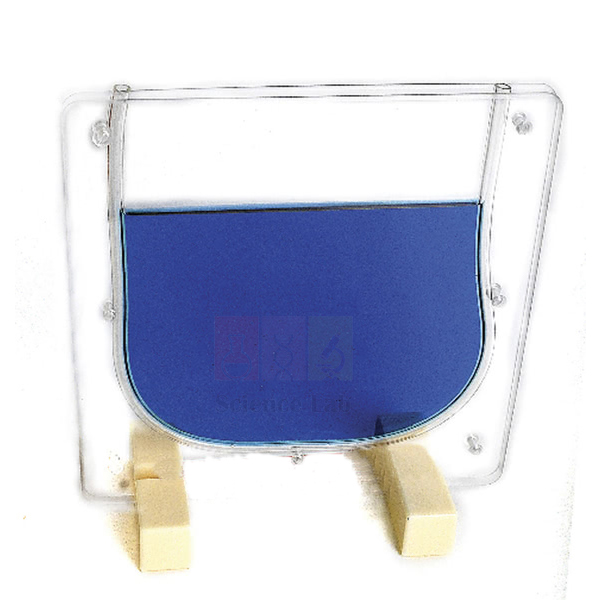
Teaching Tank 12 Inch Basic
Teaching Tank 12 Inch Basic (Product Code: SLE/EBT/24) is a 12 inch classroom observation tank used to run easy experiments on roots, worms or ants and to build basic skills of observation and conceptual learning. It includes a Teacher’s insert, can be turned into a small aquarium, and suits learners from nursery to college. It is supplied by Jain Scientific Equipments Pvt Ltd (ScienceLab), Ambala, India, as part of its range of biology teaching aids for schools.
Specifications
| Parameter | Detail |
|---|---|
| Size | 12 inch (Basic version) |
| Type | Teaching tank for observation-based classroom experiments |
| Observation uses | Roots, worms or ants |
| Included | Teacher’s insert |
| Add-on | 12" Expansion Kit for a wider variety of hands-on experiments |
| Other use | Can be set up as a small aquarium |
| Level | Nursery to college |
| Product code | SLE/EBT/24 |
| Supplied by | Jain Scientific Equipments Pvt Ltd (ScienceLab), Ambala, India |
What Is the Teaching Tank Used For?
In early years and primary classes the tank is filled with moist soil and a few seeds are planted close to the viewing side, so children can draw the roots and shoots each day and notice that roots grow downwards whichever way the seed was placed. Later the same tank can become a wormery with layers of soil and sand, letting pupils watch earthworms mix the layers, or an ant habitat for observing tunnelling. Each set-up practises the same core skill — careful, repeated observation recorded in a notebook.
Set up as a small aquarium, it can hold pond water with aquatic plants and small invertebrates for lessons on habitats and food chains. Keep the tank out of direct sunlight, return living animals to their habitat after the study, and wash the tank between projects. Adding the 12" Expansion Kit widens the range of experiments, making the tank a flexible item in a school biology lab setup.
What to Specify When Ordering
- The number of Teaching Tank 12 Inch Basic units, for example one per class or per group.
- Whether the 12" Expansion Kit should be quoted with the tanks.
- Whether you also want a dedicated aquarium tank for a permanent class aquarium.
- The delivery address and any tender or purchase-order format required.
Supplier
The Teaching Tank 12 Inch Basic is sourced and supplied by Jain Scientific Equipments Private Limited, which trades as ScienceLab from Ambala, Haryana, India, and serves schools, colleges and distributors in India and international markets. For vendor registration, the supplying company’s GSTIN is 06AAECJ8618A1ZT, and export consignments are shipped under Importer-Exporter Code AAECJ8618A issued by the DGFT. See our company profile for more details.
Related Botany Equipment
Useful companions for observation projects and aquarium work with this tank:
- Mini Aquarium Tank — a dedicated tank when a class wants an aquarium running permanently.
- Aquarium Dip Net — for gently moving small aquatic animals in and out of the tank.
- Key to Identifying Water Invertebrates — helps pupils name the pond organisms they observe.
- Plant Propagation Kit — for starting seedlings and cuttings for root-growth observations.
- Magnifying Glass 2 — for close-up viewing of roots, worms and ants.
Explore the wider Botany collection for more plant and nature study resources.
Frequently Asked Questions
What comes with the Teaching Tank 12 Inch Basic?
The Teaching Tank 12 Inch Basic includes a Teacher’s insert with the tank. For a complete list of the parts supplied in the box, please ask through our contact page before placing an order.
Is the 12" Expansion Kit included with the Teaching Tank 12 Inch Basic?
No. The 12" Expansion Kit is an add-on that extends the Teaching Tank 12 Inch Basic for a wider variety of hands-on experiments. Ask us about its availability if you want the tank and the kit quoted together.
Which age groups is the Teaching Tank 12 Inch Basic suitable for?
The Teaching Tank 12 Inch Basic is intended for learners from nursery to college, so the same tank can support simple root and worm observation in early years and more structured investigations with older students.
Can the Teaching Tank 12 Inch Basic be used as an aquarium?
Yes, the Teaching Tank 12 Inch Basic can be turned into a small aquarium. Fill it gradually, keep it on a level surface away from direct sunlight, and avoid overcrowding the aquatic plants and animals kept in it.
How should the Teaching Tank 12 Inch Basic be cleaned?
Empty the Teaching Tank 12 Inch Basic, wash it with lukewarm water and a soft cloth, rinse well and let it dry fully. Avoid abrasive pads and harsh solvents, which can mark the viewing surfaces.
Who supplies the Teaching Tank 12 Inch Basic?
The Teaching Tank 12 Inch Basic is supplied by Jain Scientific Equipments Pvt Ltd (ScienceLab), Ambala, Haryana, India, to schools, colleges and distributors in India and international markets. Company details are on the profile page.
What should a quotation request for the Teaching Tank 12 Inch Basic include?
A quotation request for the Teaching Tank 12 Inch Basic should give the number of tanks, whether 12" Expansion Kits are needed, and the delivery address, so that we can prepare an accurate price for schools or distributors.
Request a Quote
To receive a price for the Teaching Tank 12 Inch Basic, use our contact page or add it to the enquiry cart together with any other classroom science items you need.
Last updated: 24 September 2026
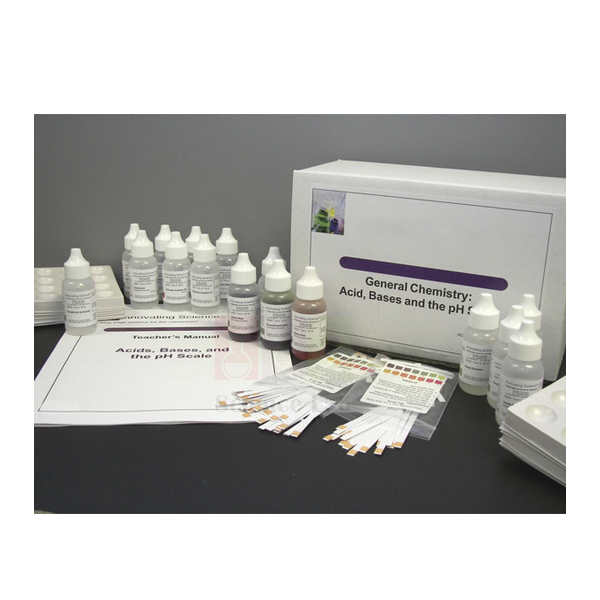
Acids, Bases And The pH Scale
Acids, Bases And The pH Scale (Product Code: SLE/CH/101) is a classroom lab activity kit used to teach the differences between acids and bases, the role of hydrogen and hydroxide ions and the meaning of the pH scale in secondary school chemistry. It holds enough materials for 15 groups, who test pH indicators, check household materials and identify four unknown clear solutions. It is supplied by Jain Scientific Equipments Pvt Ltd (ScienceLab), Ambala, India, as a ready-to-teach acid base indicator kit.
Key Details
| Parameter | Detail |
|---|---|
| Type | Classroom lab activity on acids, bases and pH |
| Learning objectives | Role of hydrogen and hydroxide ions in acids and bases; nature of the pH scale in relation to acid and base strength |
| Activities | Effects of acids and bases on several chemical pH indicators; pH of several common household materials; composition of four unknown clear solutions |
| Class size | Enough materials for 15 groups |
| Documentation | Teacher's manual and student copy masters included |
| Shelf life | Depends on the chemical, its grade and storage conditions; ask us for the expiry date of the batch you are quoted |
| Product code | SLE/CH/101 |
| Supplied by | Jain Scientific Equipments Pvt Ltd (ScienceLab), Ambala, India |
What Is the Acids, Bases and pH Scale Kit Used For?
The lesson builds in three steps. Groups first record the colour each indicator shows in known acids and bases, then apply those indicators to everyday household materials to place them on the pH scale, and finally combine their observations to deduce what each of the four unknown solutions is. Because the unknowns are clear, students cannot guess by appearance and must rely on evidence, so the final task is a good check of understanding.
Photocopy the student masters before class, set out one station per group, and make sure everyone wears eye protection when acids and bases are on the bench. To extend the lesson, add pH indicator paper or a pH meter so groups can compare indicator colours with a measured value. Departments that order from a lab chemicals supplier in India can list this kit with their other acid–base consumables so the practical is ready each term.
Supplier
This activity kit is supplied by Jain Scientific Equipments Private Limited, which trades as ScienceLab and is based in Ambala, Haryana, India. The company sources and supplies teaching kits, reagents and consumables for schools, colleges and distributors, so the kit can be quoted together with indicator paper, pH meters and dropper bottles on one order. Read our company profile for more.
Related Chemistry Lab Equipment
Useful additions for acid–base and pH lessons:
- Paper, Universal, pH 1-14 — lets groups check indicator results against a full-range pH paper
- Blue Litmus Paper — a quick acid test to introduce the topic
- pH Indicator Dispenser — hands out indicator in small, controlled amounts
- Waterproof pH Meter — measures pH values to compare with indicator colours
- Dropper Bottle, 10 ml — for dividing solutions between the 15 group stations
Browse more teaching kits under Chemistry Lab Equipment.
Frequently Asked Questions
How many students can use one Acids, Bases And The pH Scale kit?
One Acids, Bases And The pH Scale kit holds enough materials for 15 groups, so a whole class can work in small teams at the same time, each group testing indicators, household materials and the four unknown solutions.
What documentation comes with the kit?
The Acids, Bases And The pH Scale kit includes a teacher's manual and student copy masters. Teachers photocopy the student masters for each group before class and use the manual to plan and run the practical safely.
Which pH indicators are included?
The Acids, Bases And The pH Scale kit uses several chemical pH indicators, but the exact list is not given in our product notes. Contact us for the full contents list before you plan the lesson or match it to your syllabus.
Are the household materials included?
Our product notes for the Acids, Bases And The pH Scale kit do not say whether household test materials are included. Please confirm with us when you enquire, so you know whether to collect samples locally before the lesson.
What is the shelf life of the kit?
The shelf life of the Acids, Bases And The pH Scale kit depends on the chemicals it contains, their grade and storage conditions; ask us for the expiry date of the batch you are quoted, and keep the kit closed in a cool, dry place.
What safety precautions apply?
With the Acids, Bases And The pH Scale kit, students should wear eye protection, handle acids and bases only under teacher supervision and follow the teacher's manual. Rinse any splash with plenty of water and report it to the teacher at once.
Who supplies the Acids, Bases And The pH Scale kit?
Jain Scientific Equipments Private Limited, trading as ScienceLab in Ambala, Haryana, India, supplies the Acids, Bases And The pH Scale kit to schools, colleges and distributors in India and international markets, and can quote it together with related pH consumables.
Request a Quote
Add the Acids, Bases And The pH Scale kit to the enquiry cart, or contact us with the number of kits and your delivery location for a quotation.
Last updated: 24 September 2026
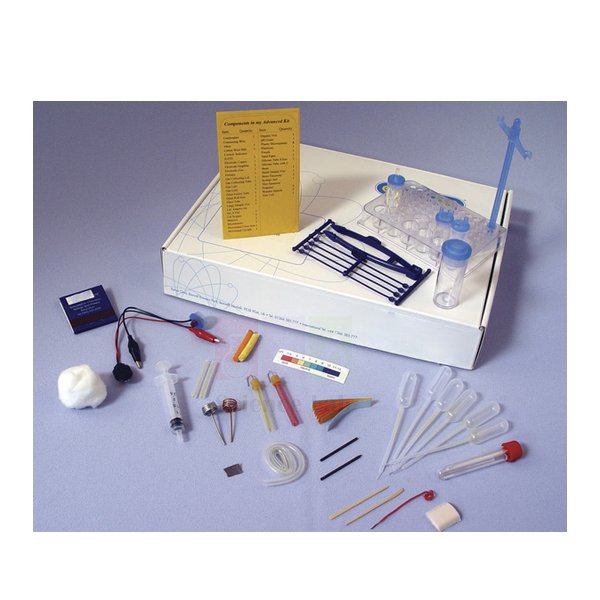
Advanced Microscience Kit, Student
Advanced Microscience Kit, Student (Product Code: SLE/CH/102) is the apparatus set for microscience chemistry, the approach in which practical work is carried out on a small scale with compact, purpose-designed equipment. The Advanced Kit provides all the physical hardware required to perform the experiments incorporated in the basic microscience kit, using durable, washable components whose design is based on equipment used for modern laboratory techniques. It is intended for individual students or small groups, making it a practical chemistry experiment kit in India for schools that want every learner to handle apparatus. It is made by Jain Scientific Equipments Pvt Ltd (ScienceLab), Ambala.
Key Details
| Parameter | Detail |
|---|---|
| Contents | All the physical hardware required to perform the experiments incorporated in the basic kit |
| Materials | Durable, washable |
| Comboplates | Dishwasher safe |
| Designed for | Individual use or small groups |
| Component design | Based on equipment used for modern laboratory techniques |
| Worksheets | Written for students and suited to the curriculum; can be linked to AQA, IB, OCR, Edexcel, WJEC, SEB, IEB and CIE schemes |
| Workbooks and guides | Must be ordered separately |
| Spares | All kit components available for separate purchase |
Typical Use
Schools usually issue one kit per student or per pair so each learner assembles and uses the apparatus personally rather than watching a demonstration. Working at small scale means reactions are set up quickly on the bench, smaller quantities of reagents are consumed, and there is less waste to dispose of, so more practical sessions fit into a term. Because the kit supplies the hardware behind the basic-kit experiments, teachers can plan a sequence of practicals knowing the apparatus is already on hand.
At the end of each session, Comboplates can go through a dishwasher and the other washable parts can be rinsed and dried before being packed back. Any lost or broken item can be bought individually rather than replacing the whole kit. Departments building a STEM science kit collection in India can combine it with other microscience sets for physics and water-quality work.
Manufacturer
ScienceLab is how Jain Scientific Equipments Private Limited is known to customers; the company is based in Ambala, Haryana, India, and manufactures science teaching apparatus. More detail is in our company profile.
Related Chemistry Lab Equipment
Other microscience items that extend this hardware set:
- Basic Microscience Kit, Student — the companion kit whose experiments this hardware supports
- Comboplate, Microscience — extra or replacement Comboplates for larger classes
- Water Monitoring Kit, Microscience — applies the small-scale method to water testing
- Electricity Kit Microscience — brings the same approach to electricity practicals
- Microscience Work Station, Biology, Physics and Chemistry — a multi-subject station for a microscience lab
The full Chemistry Lab Equipment range lists more kits and apparatus.
Frequently Asked Questions
How does the Advanced kit relate to the Basic Microscience Kit?
The Advanced Kit provides all the physical hardware needed to perform the experiments incorporated in the basic kit. For a component-by-component comparison, contact us.
Are workbooks and teacher guides included?
No. Workbooks and guides must be ordered separately.
Which syllabuses do the worksheets support?
They can be linked to AQA, IB, OCR, Edexcel, WJEC, SEB, IEB and CIE schemes. For other boards, ask us which experiments match your practical list.
Are chemicals part of the kit?
The kit is described as hardware; reagents are not listed. Please check with us if you also need consumables quoted.
Can individual parts be replaced?
Yes. All kit components are available for separate purchase.
How are the parts cleaned?
Comboplates are dishwasher safe, and the other components are made of washable materials.
Can you supply class sets?
Yes. Tell us the number of students or kits and your delivery location; we supply schools across India and international markets.
Request a Quote
Add the kit to the enquiry cart or reach us through the contact page to request pricing for class sets.
Last updated: 24 September 2026