- Physics Lab Equipment
- Chemistry Lab Equipment
- Biology Lab Equipment
- Anatomical Lab Equipment
- Learning
- Educational Lab Equipment
- Magnets
- Agriculture
- Astronomy
- Earth Science
- Geography Lab Equipment
- Safety Lab Coat
- Laboratory
- Meteorological
- Electricity & Magnetism
- Heat
- School Lab Equipment
- Lab Glassware
- Science Lab Equipment
- Tvet Lab Equipment
- Robotics Kits Supplier and Manufacturer for Schools India
- Math Lab Equipment Manufacturers and Exporters in Ambala
- STEM Kits Manufacturers and Supplier India
- Engineering Lab Equipment
- Hospital Lab Equipment
- Water, Sanitation & Hygiene Supplies
- Cold Chain, Solar & Communication Equipment
- Nutrition
60.jpg)
Molecular Model Kit, Fat (Glyceryl Tristearate)
Molecular Model Kit, Fat (Glyceryl Tristearate) (Product Code: SLE/Mo/12) is a model-building kit used to construct glyceryl tristearate, a typical saturated fat, in biology, food-science and chemistry lessons. Its joining pieces keep the three fatty-acid chains firmly attached to the glycerol unit so the molecule can be passed round the class, and the parts are kept in a compartment case. The kit is produced by Jain Scientific Equipments Pvt Ltd (ScienceLab), an OEM manufacturer, at its own factory in Ambala, India.
Key Details
| Parameter | Detail |
|---|---|
| Molecule | Glyceryl tristearate (a fat / triglyceride) |
| Construction | Moulded parts with joining pieces designed for a firm assembled model |
| Manufacture | Precision-engineered moulds and materials |
| Storage | Durable storage case with compartments for segregating parts |
| Part count and size | Not stated in this listing — confirmed with your quotation |
| Product code | SLE/Mo/12 |
| Manufacturer | Jain Scientific Equipments Pvt Ltd (ScienceLab) — OEM |
| Country of origin | India (made in Ambala, Haryana) |
What Is the Fat Molecular Model Kit Used For?
Glyceryl tristearate, also called tristearin, forms when one glycerol molecule is joined by ester bonds to three stearic acid molecules, with water released at each link. Every chain is saturated, with no carbon–carbon double bonds, so the chains stay straight and pack closely together — the reason fats of this type are solid at room temperature.
In class, students can build the glycerol unit first, attach the three chains and then locate the ester links. The finished model supports discussions of fat digestion by lipase, soap-making by saponification and the difference between saturated and unsaturated fats, making it a useful molecular model for organic chemistry as well as nutrition. Placing it beside the stearic acid kit shows how one fatty acid becomes part of a fat.
OEM Manufacturer
The fat kit is manufactured by Jain Scientific Equipments Private Limited, which trades as ScienceLab and acts as the OEM (original equipment manufacturer). Each kit is made and assembled at the company's own licensed factory at Saha, Ambala, Haryana, India, rather than sourced from a trader.
Schools, food-science and nutrition departments, dealers and importers can buy direct from the factory. Learn more on the ScienceLab company profile.
Related Molecule Models
Build a complete lipid lesson with these items:
- Molecular Model Kit, Saturated Fat – Stearic Acid — the fatty acid that makes up each of the three chains.
- Sudan III {Animal Tissue} — a lipid stain used in practical tests that detect fats.
- Molecular Model Kit, Glucose — for contrasting a carbohydrate with a lipid.
- Molecular Model Set, Biochemistry — a broader set for biochemistry classes.
See all biomolecule and chemistry models in the Molecule range.
Frequently Asked Questions
What molecule does the fat molecular model kit build?
The Molecular Model Kit, Fat (Glyceryl Tristearate) builds glyceryl tristearate, a triglyceride made from one glycerol unit and three stearic acid chains. It is a standard example of a saturated fat in biology and chemistry teaching.
Will the assembled fat molecule stay together?
Yes, the Molecular Model Kit, Fat (Glyceryl Tristearate) has joining pieces designed so the assembled molecule stays firmly constructed. It can be handed around the class during a lesson without falling apart.
How is the glyceryl tristearate kit stored?
The Molecular Model Kit, Fat (Glyceryl Tristearate) comes in a durable storage case with compartments that keep the parts segregated. Returning each piece to its compartment after use makes the next build quicker and helps spot missing parts.
Who manufactures the Molecular Model Kit, Fat (Glyceryl Tristearate)?
The Molecular Model Kit, Fat (Glyceryl Tristearate) is manufactured by Jain Scientific Equipments Pvt Ltd (ScienceLab) as the OEM at its own licensed factory in Saha, Ambala, India, and is quoted direct by the manufacturer.
How many parts does the fat model kit contain?
The part count and assembled size of the Molecular Model Kit, Fat (Glyceryl Tristearate) are not listed here. Ask us through the contact page, and the full contents will be confirmed in your quotation before you place an order.
Which topics does the glyceryl tristearate model support?
The Molecular Model Kit, Fat (Glyceryl Tristearate) supports lessons on lipids, ester bonds, saturated versus unsaturated fats, fat digestion by lipase and saponification. It suits senior-secondary biology and chemistry, food science and nutrition courses.
Request a Quote
For availability and a quotation on the Molecular Model Kit, Fat (Glyceryl Tristearate), contact us through the contact page or add the kit to the enquiry cart. The manufacturer quotes you directly.
Last updated: 24 September 2026
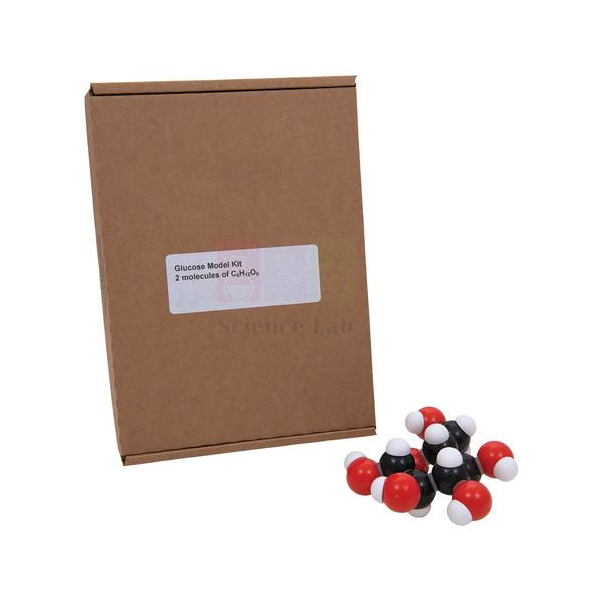
Molecular Model Kit, Glucose
Molecular Model Kit, Glucose (Product Code: SLE/Mo/13) is a model-building kit used to assemble the glucose molecule so students can study the structure of this simple sugar in biology and chemistry classes. Made from precision-engineered moulds, its parts join firmly and are stored in a durable compartment case, making it a dependable chemistry teaching kit for schools in India. Jain Scientific Equipments Pvt Ltd (ScienceLab), an OEM manufacturer, makes the glucose kit at its own factory in Ambala, India.
Key Details
| Parameter | Detail |
|---|---|
| Molecule | Glucose (a monosaccharide) |
| Construction | Moulded parts with joining pieces designed for a firm assembled model |
| Moulds and materials | Precision-engineered |
| Storage | Durable storage case with compartments |
| Part count and structural form | Not stated in this listing — ask us |
| Product code | SLE/Mo/13 |
| Manufacturer | Jain Scientific Equipments Pvt Ltd (ScienceLab) — OEM |
| Country of origin | India (made in Ambala, Haryana) |
What Is the Glucose Model Kit Used For?
Glucose, C6H12O6, is the sugar produced in photosynthesis and broken down in respiration to release energy. In solution it exists mostly as a six-membered ring, and its alpha and beta forms differ only in the position of one hydroxyl group — a small difference that separates starch from cellulose. A physical model makes these arrangements far easier to grasp than a formula on the board.
Students can count the atoms in the assembled model against the formula, then use it while balancing the photosynthesis and respiration equations. Two glucose models, or a glucose model beside the sucrose kit, help show how sugars join by condensation. Linking the model to a Benedict's test on real glucose connects structure to a practical result.
OEM Manufacturer
ScienceLab is the trading name of Jain Scientific Equipments Private Limited, the OEM (original equipment manufacturer) of the Molecular Model Kit, Glucose. The kit is made at the company's own licensed factory at Saha, Ambala, Haryana, India, and supplied factory-direct to schools, colleges, dealers and importers.
Institutional and tender buyers who need vendor registration details can use GSTIN 06AAECJ8618A1ZT and LEI 3358004HRD1JIVXKYX49. More about the company is on the ScienceLab profile.
Related Molecule Models
Items that turn the glucose model into a full carbohydrate practical:
- Sucrose Molecular Model — shows glucose bonded to fructose as a disaccharide.
- Benedicts Reagent (Test Of Glucose) — the classic practical test for reducing sugars.
- D-Glucose Powder Anhydrous — real glucose for the test-tube work that follows the model.
- Soluble Starch — a glucose polymer for iodine-test practicals.
More carbohydrate, lipid and protein models are in the Molecule category.
Frequently Asked Questions
What does the Molecular Model Kit, Glucose build?
The Molecular Model Kit, Glucose builds a model of the glucose molecule, the simple sugar made in photosynthesis and used in respiration. Students assemble it from moulded parts to see how the carbon, hydrogen and oxygen atoms are arranged.
Do the parts of the glucose kit fit together securely?
Yes, the Molecular Model Kit, Glucose uses joining pieces designed to keep the assembled model firmly constructed. The finished molecule can be passed around during a lesson without falling apart.
Does the glucose model show the ring or the chain form?
The listing for the Molecular Model Kit, Glucose does not state whether it builds the ring form, the open-chain form or both. Ask us through the contact page and the configuration will be confirmed with your quotation.
Who manufactures the Molecular Model Kit, Glucose?
The Molecular Model Kit, Glucose is manufactured by Jain Scientific Equipments Pvt Ltd (ScienceLab), the OEM, at its own licensed factory in Saha, Ambala, Haryana, India. Quotations come straight from the manufacturer.
How is the glucose kit stored between lessons?
The Molecular Model Kit, Glucose comes in a durable storage case with compartments that keep its parts segregated. After each lesson, sort the pieces back into their compartments so the kit stays complete and ready for the next class.
Can the glucose kit be ordered with sugar-test reagents?
Yes, the Molecular Model Kit, Glucose can be quoted together with reagents such as Benedict's solution and other items from our range. List everything you need on the contact page to receive one combined quotation.
Request a Quote
Get a quotation for the Molecular Model Kit, Glucose by writing to us via the contact page or by adding it to the enquiry cart. Quotes are issued directly by the manufacturer.
Last updated: 24 September 2026

Molecular Model Kit, Saturated Fat – Stearic Acid
Molecular Model Kit, Saturated Fat – Stearic Acid (Product Code: SLE/Mo/14) is a model-building kit used to assemble stearic acid, a saturated fatty acid, so students can see the long straight carbon chain typical of saturated fats. Its precision-moulded parts join firmly for handling and pack into a compartment case — a useful molecular model for organic chemistry and nutrition lessons. This kit comes from Jain Scientific Equipments Pvt Ltd (ScienceLab), an OEM manufacturer, which makes it at its own factory in Ambala, India.
Key Details
| Parameter | Detail |
|---|---|
| Molecule | Stearic acid (saturated fatty acid) |
| Joining pieces | Designed so the model stays firmly constructed when handed around |
| Production | Precision-engineered moulds and materials |
| Case | Durable storage case with compartments for segregating parts |
| Parts included | Not stated in this listing — ask us |
| Product code | SLE/Mo/14 |
| Manufacturer | Jain Scientific Equipments Pvt Ltd (ScienceLab) — OEM |
| Country of origin | India (made in Ambala, Haryana) |
What Is the Stearic Acid Model Kit Used For?
Stearic acid has a chain of 18 carbon atoms ending in a carboxylic acid group. Every carbon–carbon bond in the chain is single, which is what makes it saturated. The chain therefore stays straight in a zig-zag pattern, and neighbouring molecules can pack tightly — the reason fats rich in stearic acid are solid at room temperature.
Teachers use the kit to compare saturated and unsaturated fatty acids (drawing the kinked chain of an unsaturated acid on the board beside the straight model), to identify the carboxylic acid functional group and to explain how three fatty acids join glycerol to form a fat. Building two or three chains and laying them side by side is a quick way to show why straight chains pack closely.
OEM Manufacturer
Jain Scientific Equipments Private Limited, trading as ScienceLab, is the OEM (original equipment manufacturer) of this stearic acid kit. It is made at the company's own licensed factory at Saha, Ambala, Haryana, India, and supplied direct to schools, colleges, dealers and importers.
Spare parts or a replacement case for kits already in use can be requested from the manufacturer — ask us for what you need. Background on the company is on the ScienceLab profile.
Related Molecule Models
Related models and materials for teaching fatty acids and fats:
- Molecular Model Kit, Fat (Glyceryl Tristearate) — three stearic acid chains joined to glycerol as a complete fat.
- Sudan III {Animal Tissue} — a stain for practical tests that show where fats are present.
- Organic Chemistry Molecular Models Kits — for building other organic functional groups.
- Molecular Model Set – Elementary Organic, 30 atom — a starter set for simple organic molecules before long chains.
See all kits in the Molecule range.
Frequently Asked Questions
What is the stearic acid model used to show?
The Molecular Model Kit, Saturated Fat – Stearic Acid shows the structure of stearic acid, a saturated fatty acid with a long, straight carbon chain and a carboxylic acid group. It helps explain why saturated fats are solid at room temperature.
How does the stearic acid kit differ from the glyceryl tristearate kit?
The Molecular Model Kit, Saturated Fat – Stearic Acid builds a single fatty acid, while the glyceryl tristearate kit builds a complete fat with three stearic acid chains joined to glycerol. Using both shows how fats are assembled.
Are the stearic acid kit parts durable enough for student handling?
Yes, the Molecular Model Kit, Saturated Fat – Stearic Acid is produced from precision-engineered moulds and materials, and its joining pieces keep the model firm. Students can pass the finished molecule around during a lesson without it falling apart.
Who manufactures the stearic acid molecular model kit?
Jain Scientific Equipments Pvt Ltd (ScienceLab) manufactures the Molecular Model Kit, Saturated Fat – Stearic Acid as the OEM at its own licensed factory in Saha, Ambala, Haryana, India, and handles quotations directly.
What comes in the stearic acid kit case?
The Molecular Model Kit, Saturated Fat – Stearic Acid comes in a durable storage case with compartments for its parts. The exact part count is not stated in this listing, so ask us through the contact page to confirm the contents with your quotation.
Can the stearic acid kit be exported?
Yes, the Molecular Model Kit, Saturated Fat – Stearic Acid is available to schools, colleges and distributors in India and international markets. Send your quantity and destination through the contact page for a quotation.
Request a Quote
Send an enquiry for the Molecular Model Kit, Saturated Fat – Stearic Acid through the contact page, or use the enquiry cart to combine it with related kits. The manufacturer will reply with a quotation.
Last updated: 24 September 2026
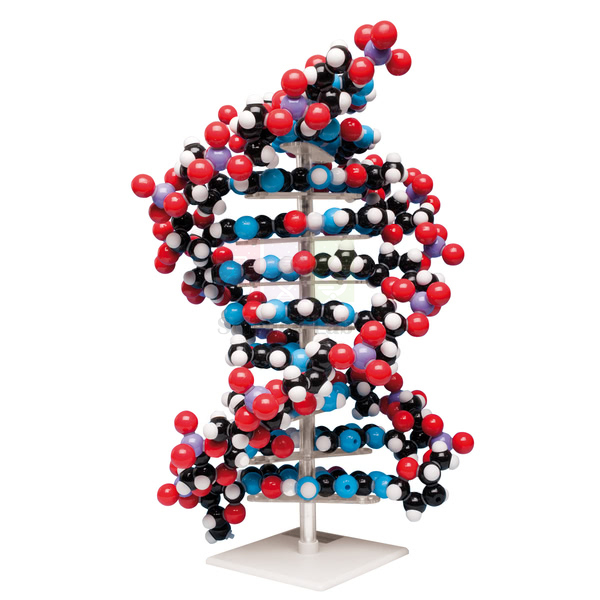
Molecular Model Kit, Ten Layer DNA
Molecular Model Kit, Ten Layer DNA (Product Code: SLE/Mo/15) is a model-building kit used to assemble a ten-layer section of the DNA double helix for biology and biotechnology teaching. Ten stacked base-pair layers take the model close to one full turn of the helix, while the precision-moulded parts join firmly and store neatly in a compartment case. It is manufactured by Jain Scientific Equipments Pvt Ltd (ScienceLab), an OEM manufacturer, at its own factory in Ambala, India.
Key Details
| Parameter | Detail |
|---|---|
| Model | Ten-layer DNA double helix |
| Joining pieces | Designed for a firmly constructed model that can be passed around |
| Moulds and materials | Precision-engineered |
| Storage | Durable case with compartments for segregating parts |
| Part count and assembled height | Not stated in this listing — ask us |
| Product code | SLE/Mo/15 |
| Manufacturer | Jain Scientific Equipments Pvt Ltd (ScienceLab) — OEM |
| Country of origin | India (made in Ambala, Haryana) |
What Is the Ten Layer DNA Model Used For?
The common form of DNA completes one turn of its helix roughly every ten base pairs, so a ten-layer model shows almost a complete twist. That is enough for students to see the two backbones winding around each other and the wider and narrower grooves that run along the molecule.
Groups can be given a short base sequence for one strand and asked to build the complementary strand, which tests their understanding of pairing rules. The model also demonstrates that the two strands run in opposite directions, and pulling the layers apart introduces replication. Noting the chosen sequence before building makes checking quick, and the firm joins let finished models circulate for peer review.
OEM Manufacturer
ScienceLab, the trading name of Jain Scientific Equipments Private Limited, is the OEM (original equipment manufacturer) of the Molecular Model Kit, Ten Layer DNA. The kit is made at the company's own licensed factory at Saha, Ambala, Haryana, India.
Schools, colleges, biotechnology departments, dealers and importers can buy it factory-direct, with quotations and repeat orders handled by the manufacturer. See the ScienceLab profile for company information.
Related Molecule Models
Other DNA teaching items that work alongside the ten-layer kit:
- Molecular Model Kit, Two Layer DNA — a minimal version for focusing on individual base pairs.
- Mini DNA 22 layer base pair Molecular Model — a longer helix that repeats over about two turns.
- Molecular Model, RNA 12 Base — for comparing a single RNA strand with the DNA double helix.
- DNA extraction lab kit — a practical for extracting DNA after the model lesson.
Browse more DNA and molecular models under Molecule.
Frequently Asked Questions
What does "ten layer" mean in this DNA kit?
In the Molecular Model Kit, Ten Layer DNA, each layer is one base-pair rung between the two strands, so the finished model has ten stacked base pairs. That is close to one complete turn of the DNA double helix.
Is the ten-layer DNA model sturdy?
Yes, the Molecular Model Kit, Ten Layer DNA uses joining pieces designed so the model stays firmly constructed. Once built, it can be passed around the class during a lesson without falling apart.
Which lessons suit the ten-layer DNA kit?
The Molecular Model Kit, Ten Layer DNA suits lessons on nucleotide structure, complementary base pairing, antiparallel strands and DNA replication. Its moderate length suits small-group builds where each group checks another group's sequence.
Who manufactures the Molecular Model Kit, Ten Layer DNA?
The Molecular Model Kit, Ten Layer DNA is manufactured by Jain Scientific Equipments Pvt Ltd (ScienceLab), the OEM, at its own licensed factory in Saha, Ambala, Haryana, India. Buyers deal directly with the manufacturer for quotations.
How many parts are in the ten-layer DNA kit?
The exact part count and assembled height of the Molecular Model Kit, Ten Layer DNA are not given in this listing. Ask us through the contact page and the contents will be confirmed in your quotation.
Should I choose the ten-layer kit or the longer Mini DNA model?
The Molecular Model Kit, Ten Layer DNA builds a shorter helix of about one turn, while the Mini DNA 22 layer base pair Molecular Model shows the helix repeating over about two turns. Choose according to how much of the helix students need to see.
Request a Quote
To order the Molecular Model Kit, Ten Layer DNA, send the number of kits you need through the contact page or add it to the enquiry cart. The manufacturer prepares your quotation.
Last updated: 24 September 2026
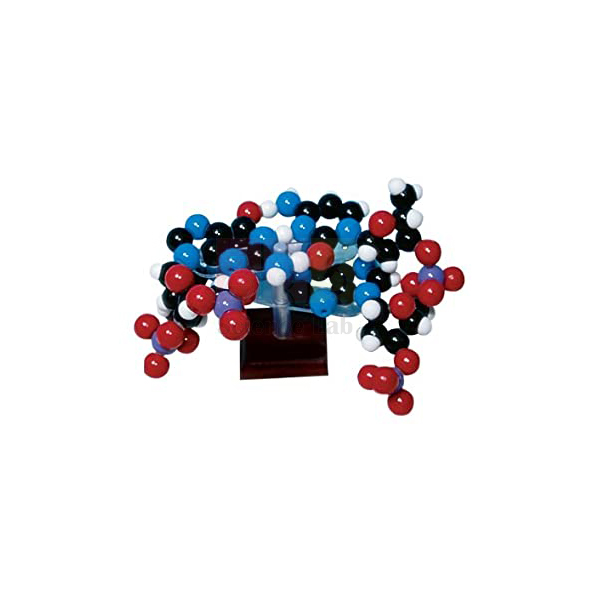
Molecular Model Kit, Two Layer DNA
Molecular Model Kit, Two Layer DNA (Product Code: SLE/Mo/16) is a small model-building kit used to assemble a two-layer section of DNA so students can study nucleotides and base pairing at close range. Because only two layers are built, attention stays on how the nucleotides pair across the two strands, which makes it an easy first DNA model kit for Indian classrooms. Jain Scientific Equipments Pvt Ltd (ScienceLab), an OEM manufacturer, produces this kit at its own factory in Ambala, India.
Key Details
| Parameter | Detail |
|---|---|
| Model | Two-layer DNA section |
| Assembly | Joining pieces designed so the model holds together when passed around |
| Moulds and materials | Precision-engineered |
| Storage | Durable storage case with compartments to keep parts apart |
| Part count and size | Not stated in this listing — confirmed with your quotation |
| Product code | SLE/Mo/16 |
| Manufacturer | Jain Scientific Equipments Pvt Ltd (ScienceLab) — OEM |
| Country of origin | India (made in Ambala, Haryana) |
What Is the Two Layer DNA Model Used For?
Each nucleotide in DNA is made of a phosphate group, a deoxyribose sugar and a nitrogenous base. Adenine pairs with thymine through two hydrogen bonds, and guanine pairs with cytosine through three. A two-layer model is the smallest segment that shows both a base pair across the strands and how one pair stacks on the next along the backbone.
Because the build is short, every student or pair can complete one in the opening minutes of an introductory lesson. Teachers can give different groups different base pairs to build, then compare results as a quick check of understanding before moving on to longer helix models. The compact size also makes the kit easy to use at a desk or during revision.
OEM Manufacturer
The Molecular Model Kit, Two Layer DNA is a ScienceLab product made by Jain Scientific Equipments Private Limited, its OEM (original equipment manufacturer). Production is carried out at the company's own licensed factory at Saha, Ambala, Haryana, India.
Whole-class quantities are quoted directly by the manufacturer to schools, colleges, dealers and importers. Visit the ScienceLab profile to learn more about the company.
Related Molecule Models
Continue from base pairing to the full double helix with these items:
- Molecular Model Kit, Ten Layer DNA — the next step, building about one full turn of the helix.
- Medical DNA Model — a large PVC model for the teacher's front-of-class demonstration.
- Model, DNA — for demonstrating gene duplication and mutation.
- DNA/Chromosome Staining Lab Activity — a lab activity that shows DNA inside cells.
The full Molecule range lists every DNA model kit.
Frequently Asked Questions
What does the Molecular Model Kit, Two Layer DNA show?
The Molecular Model Kit, Two Layer DNA shows a two-layer section of DNA, enough to see how bases pair across the two strands and how one pair stacks on the next. It focuses on nucleotide structure rather than the full helix.
Who is the two-layer DNA kit suited to?
The Molecular Model Kit, Two Layer DNA suits students meeting DNA structure for the first time in secondary biology. Its short build lets every student complete a model quickly before the class moves on to longer helix models.
Does the two-layer DNA model stay assembled when handled?
Yes, the Molecular Model Kit, Two Layer DNA uses joining pieces designed so the model is firmly constructed. It can be passed around the class during a lesson without falling apart.
Who manufactures the Molecular Model Kit, Two Layer DNA?
The Molecular Model Kit, Two Layer DNA is manufactured by Jain Scientific Equipments Pvt Ltd (ScienceLab) as the OEM at its own licensed factory in Saha, Ambala, Haryana, India. Class sets are quoted directly by the manufacturer.
What parts come with the two-layer DNA kit?
The part count of the Molecular Model Kit, Two Layer DNA is not stated in this listing, but the parts come in a durable storage case with compartments. Ask us through the contact page to confirm contents with your quotation.
Can the two-layer DNA kit be ordered as a class set?
Yes, the Molecular Model Kit, Two Layer DNA can be quoted as a class set for schools, colleges and dealers in India and international markets. Tell us the number of kits and the delivery location on the contact page.
Request a Quote
For a class-set quotation on the Molecular Model Kit, Two Layer DNA, use the contact page or add the kit to the enquiry cart. Quotes come direct from the manufacturer.
Last updated: 24 September 2026
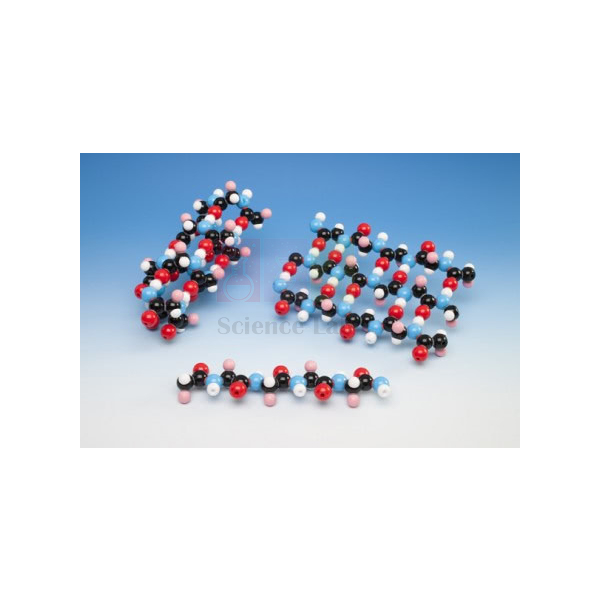
Molecular Model Set, 20 Amino Acid Collection
Molecular Model Set, 20 Amino Acid Collection (Product Code: SLE/Mo/17) is a molecular model set used to build amino acids, the building blocks of proteins, in biochemistry, biology and chemistry teaching. As the name indicates, it covers a collection of 20 amino acids, with precision-moulded parts that join firmly and a durable case with compartments to keep everything organised. The set is made by Jain Scientific Equipments Pvt Ltd (ScienceLab), an OEM manufacturer, at its own factory in Ambala, India.
Key Details
| Parameter | Detail |
|---|---|
| Collection | 20 amino acids (as named) |
| Listing reference | Amino Acid Collection Set 8 |
| Joining pieces | Designed so models stay firm when handed around the class |
| Moulds and materials | Precision-engineered |
| Storage | Durable storage case with compartments for segregating parts |
| Amino acids included and part count | Not listed here — confirmed with your quotation |
| Product code | SLE/Mo/17 |
| Manufacturer | Jain Scientific Equipments Pvt Ltd (ScienceLab) — OEM |
| Country of origin | India (made in Ambala, Haryana) |
What Is the 20 Amino Acid Model Set Used For?
Every amino acid has the same core: a central carbon atom bonded to an amino group, a carboxyl group, a hydrogen atom and a side chain, often called the R group. The side chain is what makes each amino acid different, deciding whether it is non-polar, polar, acidic or basic. With 20 models in one collection, a class can compare many side chains directly.
Teachers use the set to sort amino acids by side-chain property, to discuss why most amino acids exist in mirror-image forms, and to join two models to show how a peptide bond forms. Dividing the collection among groups, with each group presenting its amino acids, works well in biochemistry classes and makes a strong biology model kit for bulk orders across several sections.
OEM Manufacturer
Jain Scientific Equipments Private Limited (CIN U29309HR2020PTC087597) trades as ScienceLab and is the OEM (original equipment manufacturer) of the Molecular Model Set, 20 Amino Acid Collection. Production takes place at the company's licensed factory at 449, HSIIDC Industrial Area, Saha, Ambala, Haryana (Factory Licence AMB-ONLINE-CHD-J-414).
Sets are supplied factory-direct to schools, colleges, universities, dealers and importers. More details are on the ScienceLab profile.
Related Molecule Models
Models and reagents that follow on from amino acids:
- Molecular Model Set, 7 Amino Acid Collection — a smaller selection for introductory classes.
- Polypeptide Molecular Model Kit — for joining units into a polypeptide chain.
- Alpha Helix Molecular Model Kit — shows how a chain of amino acids coils into a helix.
- Biuret Reagent (Protein Test) — a practical test for proteins to round off the topic.
Find more biochemistry sets in the Molecule category.
Frequently Asked Questions
How many amino acids are in the 20 Amino Acid Collection?
As its name states, the Molecular Model Set, 20 Amino Acid Collection is a collection of 20 amino acid models. The listing does not name each amino acid, so ask us through the contact page for the full list with your quotation.
How is the 20 amino acid set different from the 7 amino acid set?
The Molecular Model Set, 20 Amino Acid Collection covers 20 amino acids, while the Molecular Model Set, 7 Amino Acid Collection is a smaller selection. Choose the larger set when students need to compare a wider range of side chains.
Are the amino acid models sturdy enough for group work?
Yes, the Molecular Model Set, 20 Amino Acid Collection has joining pieces designed so each model stays firmly constructed. Models can be handed from group to group during a lesson without falling apart.
How is the 20 amino acid set stored?
The Molecular Model Set, 20 Amino Acid Collection comes in a durable storage case with compartments to keep parts segregated. Returning parts to their compartments after class makes it easy to check the set is complete.
Who manufactures the Molecular Model Set, 20 Amino Acid Collection?
The Molecular Model Set, 20 Amino Acid Collection is manufactured by Jain Scientific Equipments Pvt Ltd (ScienceLab), the OEM, at its own licensed factory in Saha, Ambala, Haryana, India. Quotations come directly from the manufacturer.
Which courses use the 20 amino acid model set?
The Molecular Model Set, 20 Amino Acid Collection is used in senior-secondary biology and chemistry, undergraduate biochemistry, and nursing or pharmacy foundation courses where protein structure and amino acid properties are taught.
Request a Quote
Request a quotation for the Molecular Model Set, 20 Amino Acid Collection through the contact page or by adding it to the enquiry cart. The manufacturer replies with a quotation and terms.
Last updated: 24 September 2026
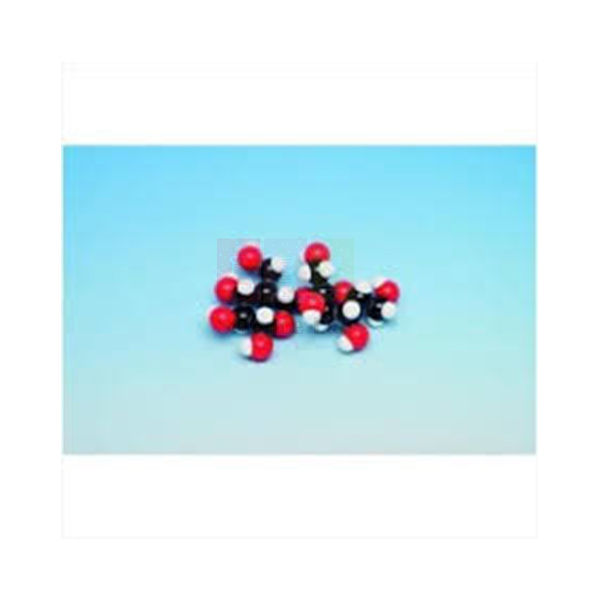
Molecular Model Set, 7 Amino Acid Collection
Molecular Model Set, 7 Amino Acid Collection (Product Code: SLE/Mo/18) is a compact molecular model set used to introduce the structure of amino acids in school and college biology and chemistry. With a collection of seven amino acids, it keeps an introductory lesson focused, and its precision-moulded parts join firmly and store in a compartment case. Jain Scientific Equipments Pvt Ltd (ScienceLab), an OEM manufacturer, makes the set at its own factory in Ambala, India.
Key Details
| Parameter | Detail |
|---|---|
| Collection | 7 amino acids (as named) |
| Listing reference | Amino Acid Collection Set 7 |
| Construction | Moulded parts with joining pieces designed for firmly constructed models |
| Moulds and materials | Precision-engineered |
| Storage | Durable storage case with compartments |
| Amino acids included and part count | Not listed here — ask us |
| Product code | SLE/Mo/18 |
| Manufacturer | Jain Scientific Equipments Pvt Ltd (ScienceLab) — OEM |
| Country of origin | India (made in Ambala, Haryana) |
What Is the 7 Amino Acid Model Set Used For?
A smaller selection lets a class concentrate on the backbone that all amino acids share — the amino group, the carboxyl group and the central carbon — before comparing a handful of different side chains. This suits a first lesson on proteins, where too many structures at once can overwhelm students.
Teachers can pair up models to demonstrate a condensation reaction forming a dipeptide, discuss how amino acids carry both acidic and basic groups, and ask students to predict which side chains would sit inside or outside a folded protein. Labelling each model with a small tag during the lesson helps students remember which is which.
OEM Manufacturer
ScienceLab is the name under which Jain Scientific Equipments Private Limited manufactures the Molecular Model Set, 7 Amino Acid Collection as the OEM (original equipment manufacturer). The set is produced at the company's own licensed factory at Saha, Ambala, Haryana, India.
Schools, colleges, dealers and importers order it directly from the manufacturer, which also answers questions about which amino acids the set contains. See the ScienceLab profile for more.
Related Molecule Models
Items that extend an introductory amino acid lesson:
- Molecular Model Set, 20 Amino Acid Collection — a larger collection for comparing more side chains.
- Polypeptide Molecular Model Kit — for linking units into a polypeptide chain.
- Protein Model — shows how amino acid chains fold into a protein.
- Molecular Model Set, Biochemistry — a broader set for general biochemistry.
Browse the Molecule range for more biomolecule models.
Frequently Asked Questions
Which amino acids are in the 7 Amino Acid Collection?
The listing for the Molecular Model Set, 7 Amino Acid Collection does not name the seven amino acids included. Ask us through the contact page and the list will be confirmed with your quotation so you can match it to your syllabus.
Is the 7 amino acid set enough for an introductory class?
Yes, the Molecular Model Set, 7 Amino Acid Collection is well suited to a first lesson on amino acids, as it shows the shared backbone and several side chains without overwhelming students. Larger courses may prefer the 20 amino acid set.
Will the amino acid models stay assembled?
Yes, the Molecular Model Set, 7 Amino Acid Collection has joining pieces designed so the models stay firmly constructed. They can be passed around the class during a lesson without falling apart.
Who manufactures the Molecular Model Set, 7 Amino Acid Collection?
The Molecular Model Set, 7 Amino Acid Collection is manufactured by Jain Scientific Equipments Pvt Ltd (ScienceLab) as the OEM at its own licensed factory in Saha, Ambala, Haryana, India, and quoted directly by the manufacturer.
How is the 7 amino acid set packed?
The Molecular Model Set, 7 Amino Acid Collection comes in a durable storage case with compartments for segregating its parts. This keeps the pieces organised between lessons and makes it easy to check that nothing is missing.
Can the 7 amino acid set be ordered for several classrooms?
Yes, the Molecular Model Set, 7 Amino Acid Collection can be quoted for several classrooms at once, for schools, colleges and dealers in India and international markets. Share the number of sets and the delivery location on the contact page.
Request a Quote
For a quotation on the Molecular Model Set, 7 Amino Acid Collection, write to us via the contact page or add the set to the enquiry cart. The manufacturer will respond directly.
Last updated: 24 September 2026
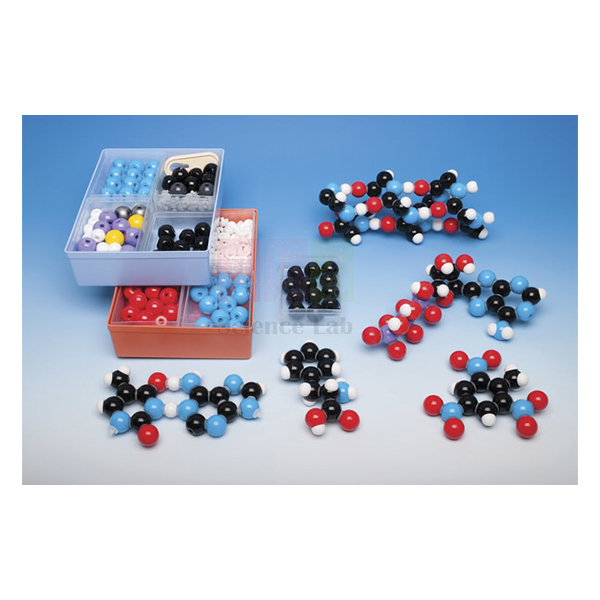
Molecular Model Set, Biochemistry
Molecular Model Set, Biochemistry (Product Code: SLE/Mo/19) is a molecular model set used to build the structures of biological molecules in biochemistry, biology and life-science lessons. Its parts come from precision-engineered moulds, lock together firmly for handling and are stored in a durable compartment case, making it a sound addition to school biology lab equipment in India. The set is produced by Jain Scientific Equipments Pvt Ltd (ScienceLab), an OEM manufacturer, at its own factory in Ambala, India.
Key Details
| Parameter | Detail |
|---|---|
| Set | Biochemistry molecular model set |
| Construction | Moulded parts with joining pieces designed for firmly constructed models |
| Moulds and materials | Precision-engineered |
| Storage | Durable storage case with compartments for segregating parts |
| Molecules covered and part count | Not listed here — confirmed with your quotation |
| Product code | SLE/Mo/19 |
| Manufacturer | Jain Scientific Equipments Pvt Ltd (ScienceLab) — OEM |
| Country of origin | India (made in Ambala, Haryana) |
What Is the Biochemistry Model Set Used For?
Biochemistry deals with the molecules of life — carbohydrates, lipids, proteins and nucleic acids — and much of it depends on shape: how an enzyme fits its substrate, how bases pair, how fatty acids pack. Building these structures by hand helps students connect a written formula to a three-dimensional molecule.
Because this listing does not say which molecules the set builds, teachers should confirm the contents against their syllabus before ordering. In class, models built from the set can be used for group presentations, for comparing functional groups across different biomolecules, and for revision before practical examinations. Firm joins mean finished models can be shared around the room safely.
OEM Manufacturer
Jain Scientific Equipments Private Limited, which trades as ScienceLab, manufactures the Molecular Model Set, Biochemistry as its OEM (original equipment manufacturer) at its own licensed factory at Saha, Ambala, Haryana, India. It sells factory-direct to schools, colleges, universities, dealers and importers.
The manufacturer can also advise which of its dedicated molecule kits would complement the set for your course — ask us. Read more on the ScienceLab profile.
Related Molecule Models
Dedicated kits for individual biomolecules, to use with or instead of the set:
- Molecular Model Kit, Glucose — a carbohydrate example.
- Molecular Model Kit, Fat (Glyceryl Tristearate) — a lipid example built as a complete triglyceride.
- Molecular Model Set, 20 Amino Acid Collection — the building blocks of proteins.
- Molecular Model Kit, Ten Layer DNA — a nucleic acid example as a short double helix.
The Molecule category lists all molecular model kits.
Frequently Asked Questions
Which molecules can be built with the Molecular Model Set, Biochemistry?
The listing for the Molecular Model Set, Biochemistry does not name the molecules it builds. Ask us through the contact page and the contents will be confirmed in your quotation, so you can check them against your biochemistry syllabus.
Are the biochemistry models sturdy?
Yes, the Molecular Model Set, Biochemistry uses joining pieces designed so assembled models stay firmly constructed. Finished models can be passed around during a lesson without falling apart, which suits group work and demonstrations.
How is the biochemistry set stored?
The Molecular Model Set, Biochemistry comes in a durable storage case with compartments that keep the parts segregated. Sorting parts back into their places after each class keeps the set complete and ready for the next lesson.
Who manufactures the Molecular Model Set, Biochemistry?
The Molecular Model Set, Biochemistry is manufactured by Jain Scientific Equipments Pvt Ltd (ScienceLab), the OEM, at its own licensed factory in Saha, Ambala, Haryana, India. Quotations are prepared directly by the manufacturer.
Should I buy the biochemistry set or individual molecule kits?
The Molecular Model Set, Biochemistry suits courses that want one general set, while individual kits such as glucose, glyceryl tristearate or ten-layer DNA cover one molecule each. Ask us to compare contents before deciding which option fits your course.
Which courses use the biochemistry model set?
The Molecular Model Set, Biochemistry is aimed at senior-secondary biology, undergraduate biochemistry and life-science courses, and at nursing, pharmacy or food-science programmes where the structure of biomolecules is part of the syllabus.
Request a Quote
Ask for a quotation on the Molecular Model Set, Biochemistry through the contact page, or add it to the enquiry cart with any individual kits you need. The manufacturer will quote directly.
Last updated: 24 September 2026