- Physics Lab Equipment
- Chemistry Lab Equipment
- Biology Lab Equipment
- Anatomical Lab Equipment
- Learning
- Educational Lab Equipment
- Magnets
- Agriculture
- Astronomy
- Earth Science
- Geography Lab Equipment
- Safety Lab Coat
- Laboratory
- Meteorological
- Electricity & Magnetism
- Heat
- School Lab Equipment
- Lab Glassware
- Science Lab Equipment
- Tvet Lab Equipment
- Robotics Kits Supplier and Manufacturer for Schools India
- Math Lab Equipment Manufacturers and Exporters in Ambala
- STEM Kits Manufacturers and Supplier India
- Engineering Lab Equipment
- Hospital Lab Equipment
- Water, Sanitation & Hygiene Supplies
- Cold Chain, Solar & Communication Equipment
- Nutrition
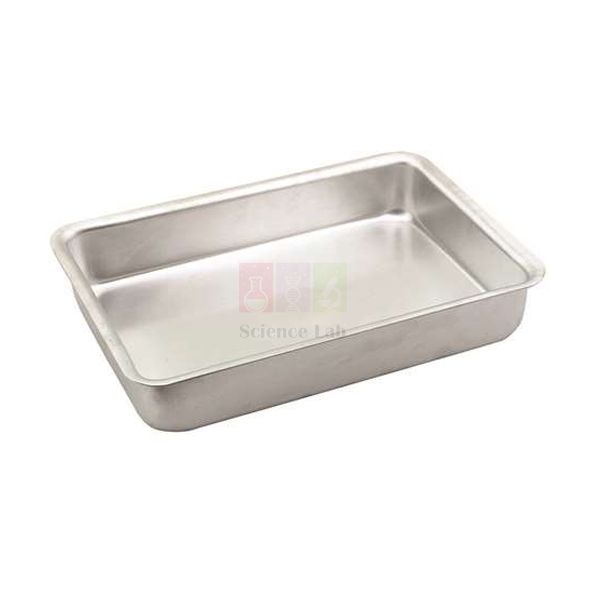
Dissecting Dishes
Dissecting Dishes (Product Code: SLE/EDE/02) are rectangular stainless steel dishes with flanged edges, used on the practical bench to hold specimens, removed organs and small instruments while a dissection is in progress. Biology teachers, lab assistants and students in schools, colleges and training institutes rely on them to keep wet material contained and the workspace organised. They are made by Jain Scientific Equipments Pvt Ltd (ScienceLab), Ambala, as part of its zoology lab equipment range for India and international markets.
Specifications
| Parameter | Detail |
|---|---|
| Product type | Dissecting dish |
| Material | Stainless steel |
| Shape | Rectangular |
| Edges | Flanged |
| Suitable for | Holding specimens, removed organs and instruments during dissection practicals |
Typical Use
In a typical practical, the specimen is opened on a dissection pan or board while a dissecting dish sits alongside to receive organs as they are removed, so each part can be examined, labelled or sketched on its own. The dish is also handy for rinsing small preserved specimens in water before work begins, and for parking forceps and needles between steps so they do not roll off the bench.
The flanged rim gives fingers a secure grip when a dish holding liquid has to be carried, and it helps limit drips on the way to the sink. Because the body is stainless steel, the dish can be scrubbed with warm soapy water after each session and dried fully before storage. Schools fitting out a new practical room often order these dishes with the rest of their school biology lab equipment in India so that every workstation receives a matching set.
Manufacturer
ScienceLab is the trading name of Jain Scientific Equipments Private Limited, a company based in Ambala, Haryana, that makes practical-room apparatus for science teaching. It is a registered MSME enterprise with manufacturing as its major activity (Udyam UDYAM-HR-01-0003714), and its overseas consignments move under Importer-Exporter Code AAECJ8618A issued by the DGFT. Background on the business is available on the company profile page.
Related Dissection Equipment
These items are commonly ordered alongside dissecting dishes to complete a dissection workstation:
- Dissection Pan — black wax pan on which the specimen itself is pinned and opened.
- Dissecting T-Pins — keep the specimen fixed in the wax while organs are moved to the dish.
- Forceps — stainless steel forceps for lifting organs into the dish without tearing them.
- Dissecting Set, Student — a cased instrument set covering cutting, holding and probing.
Browse the full Dissection Equipment category for boards, trays, needles and complete dissecting sets.
Frequently Asked Questions
What size are the Dissecting Dishes?
The listing describes a rectangular stainless steel dish with flanged edges but does not state dimensions. Please ask for the current size through our contact page before ordering, so the dishes suit your trays and bench space.
Do the dishes have a wax layer for pinning specimens?
No wax lining is described; these are plain stainless steel dishes. When a specimen has to be pinned out, use a wax-filled dissection pan or tray and keep the dish beside it for organs and rinsing.
How should the dishes be cleaned after a practical?
Empty any fluid, wash with warm water and a mild detergent, rinse and dry completely before stacking. If your lab follows a particular disinfection or sterilisation routine, check its suitability with us first.
How many dishes does a class normally need?
Most labs plan one dish per student pair or group workstation, plus a few spares. The right number depends on how your practicals are organised, and we can quote for any quantity.
Is a warranty offered?
Warranty and after-sales terms are confirmed in each quotation. Ask our team through the contact page if you need these terms in writing for your purchase file.
What should an institutional enquiry include?
Mention product code SLE/EDE/02, the quantity, the delivery address and any tender or purchase-order format your institution uses, so the quotation can be prepared in one step.
Can you supply bulk or export orders?
Yes. ScienceLab supplies schools, colleges and distributors across India and international markets; packing and dispatch are arranged to suit each order.
Request a Quote
To receive a quotation for Dissecting Dishes, send your quantity and delivery location through the contact page, or add the item to the enquiry cart along with any other dissection equipment you need.
Last updated: 24 September 2026
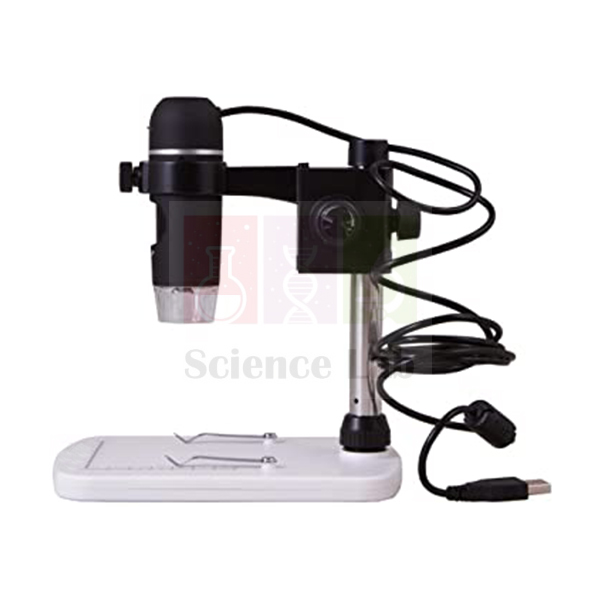
Handheld Digital Microscope
Handheld Digital Microscope (Product Code: SLE/M/57) is a hand-held digital microscope used to magnify, capture and measure objects at 20x to 200x in classrooms, laboratories and inspection work. It comes with an adjustable height stand, a calibration ruler, an adjustable 8-LED ring illuminator and Micro Capture Pro software on DVD with a measuring feature. It is supplied by Jain Scientific Equipments Pvt Ltd (ScienceLab), Ambala, India, as part of its educational laboratory equipment in India.
Specifications
| Parameter | Detail |
|---|---|
| Magnification | 20x to 200x |
| Focus | Manual, focus range from 10 mm to infinity |
| Illumination | Adjustable 8-LED ring illuminator |
| Software | Micro Capture Pro on DVD, with measuring feature |
| Included accessories | Adjustable height stand and calibration ruler |
| Size | 6-9/10 x 5-1/2 x 4-1/3 in (approx. 17.5 x 14.0 x 11.0 cm) |
| Weight | 2-1/5 lb (approx. 1.0 kg), microscope and stand |
| Product code | SLE/M/57 |
| Supplied by | Jain Scientific Equipments Pvt Ltd (ScienceLab), Ambala, India |
What Is a Handheld Digital Microscope Used For?
A handheld digital microscope goes to the object instead of the object going under a lens. Students can examine leaf surfaces, insects, fabric weaves, coins, rock faces, skin and hair, or the joints on a circuit board, starting at 20x for an overview and zooming to 200x for texture. Because the focus runs from 10 mm to infinity, the same unit can also frame larger or more distant objects.
For steady, hands-free imaging, mount it on the adjustable height stand; hold it by hand for bulky items. Adjust the 8-LED ring to cut glare on shiny surfaces. To measure a feature, capture an image of the calibration ruler at the working magnification, set the scale in Micro Capture Pro, then measure specimens at the same setting — a useful method for science fair project work and lab reports.
Supplier
Jain Scientific Equipments Private Limited, trading as ScienceLab, supplies the Handheld Digital Microscope from Ambala, Haryana. Schools, colleges, technical and vocational institutes, dealers and importers in India and international markets can include it in a larger microscopy or project-lab order. For company details, see the ScienceLab profile.
Related Laboratory Equipment
Other digital and specimen items for the same activities:
- LCD Digital Microscope — a slide-based digital model with its own screen
- Digital Zoom Microscope — another digital option to compare
- Insect Mount Set — specimens to image and measure
- Class Rock Pack — rock samples for surface texture studies
See more digital models in the Microscope category.
Frequently Asked Questions
What magnification does the Handheld Digital Microscope offer?
The Handheld Digital Microscope offers 20x to 200x magnification with manual focus. Low settings show a whole insect or coin, while the upper end reveals surface texture, fibres and fine printed detail.
What comes with the Handheld Digital Microscope?
The Handheld Digital Microscope comes with an adjustable height stand, a calibration ruler and the Micro Capture Pro software DVD with a measuring feature. The stated weight of 2-1/5 lb (about 1.0 kg) covers the microscope and stand together.
Can the Handheld Digital Microscope measure specimens?
Yes. The Handheld Digital Microscope’s Micro Capture Pro software includes a measuring feature. Capture the included calibration ruler at your chosen magnification to set the scale, then measure features in images taken at that same setting.
How does focusing work on the Handheld Digital Microscope?
The Handheld Digital Microscope uses manual focus with a range from 10 mm to infinity. Close objects are imaged at high magnification, and turning the focus further lets the microscope frame larger or more distant subjects.
How does the Handheld Digital Microscope connect to a computer?
The listing for the Handheld Digital Microscope does not state its connection type or supported operating systems. Its software is supplied on DVD, so ask us on the contact page to confirm computer requirements before ordering.
How large is the Handheld Digital Microscope?
The Handheld Digital Microscope measures 6-9/10 x 5-1/2 x 4-1/3 in (about 17.5 x 14.0 x 11.0 cm) and weighs 2-1/5 lb (about 1.0 kg) with its stand, so it moves easily between benches.
Who supplies the Handheld Digital Microscope?
The Handheld Digital Microscope is supplied by Jain Scientific Equipments Pvt Ltd (ScienceLab), Ambala, Haryana, India. The company supplies schools, colleges, technical institutes, dealers and importers in India and international markets, for single units or lab sets.
What should a Handheld Digital Microscope quotation request include?
A Handheld Digital Microscope quotation request should give the quantity, the delivery location and the computers you plan to use it with. Adding any specimen sets or other microscopes you need lets us prepare one combined quotation.
Request a Quote
Ask about the Handheld Digital Microscope through the contact page, or add it to the enquiry cart with specimens for your imaging activities.
Last updated: 24 September 2026
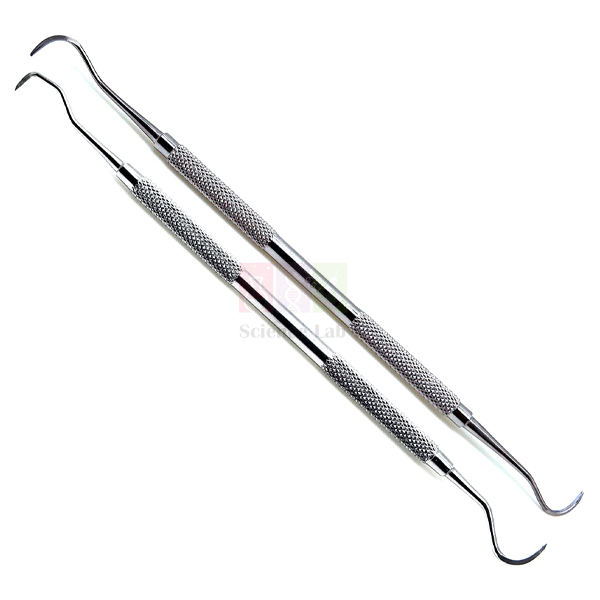
Dental Scaler
Dental Scaler (Product Code: SLE/BL/21) is a stainless steel hand instrument used to remove calculus (tartar) and other deposits from tooth surfaces during dental treatment in clinics and hospitals. Dentists, hygienists and dental students use it for scaling, and the listing describes it as meeting the diverse needs of dental treatments and surgery. It is supplied by Jain Scientific Equipments Pvt Ltd (ScienceLab), Ambala, India, a supplier of scientific & laboratory instruments for clinics and dental colleges.
Key Details
| Parameter | Detail |
|---|---|
| Material | Stainless steel |
| Instrument type | Hand dental scaler |
| Application | Dental treatments and surgery |
| Product code | SLE/BL/21 |
| Supplied by | Jain Scientific Equipments Pvt Ltd (ScienceLab), Ambala, India |
What Is a Dental Scaler Used For?
Scaling removes hardened calculus, plaque and stain from the enamel above the gum line. A hand scaler has a narrow working end that reaches into the spaces between teeth; the clinician places the edge just beyond the deposit and draws it away in short, controlled strokes, working around each tooth in turn.
Inspect the working end before each session and set aside any instrument with a bent or damaged tip. Clean and sterilise reusable instruments according to your facility's protocol. Dental teaching departments often buy scalers with mirrors so every trainee has a basic examination and scaling pair; as a lab equipment exporter, ScienceLab can quote both on one order.
What to Specify When Ordering
- How many scalers you need
- Preferred tip pattern or working-end design, as this page does not specify one
- Whether matching dental mirrors or other dental instruments are needed
- Delivery city or port
Supplier
Jain Scientific Equipments Private Limited, trading as ScienceLab, supplies the Dental Scaler from Ambala, Haryana. We source dental hand instruments for clinics, hospitals, dental colleges, distributors and importers, and state the pattern offered in each quotation.
Learn more about the company on our company profile.
Related Surgical Instruments
Useful companions for scaling work and dental teaching:
- Dental Mirrors, Plastic — mouth mirrors for indirect vision while scaling
- Examination Gloves — protective gloves for chairside use
- Instrument Tray Stainless Steel — keeps scalers and mirrors organised on the work surface
- Human Tooth Set — for teaching tooth anatomy alongside scaling practice
Browse more clinical hand instruments in Surgical Instruments.
Frequently Asked Questions
What is the Dental Scaler made of?
The Dental Scaler is made of stainless steel, a corrosion-resistant metal widely used for reusable dental hand instruments. Its pattern, handle design and length are not listed on this page, so ask us to confirm them in your quotation.
What is a Dental Scaler used for?
A Dental Scaler is used to remove calculus, plaque and stain from tooth surfaces during dental treatment. The listing for this Dental Scaler states that it meets the diverse needs of dental treatments and surgery in clinics and hospitals.
Is the Dental Scaler supplied sterile?
The listing for the Dental Scaler does not state that it is supplied sterile. Treat it as an instrument to be cleaned and sterilised under your facility's protocol before clinical use, and ask us if you need packing details.
Can the Dental Scaler be used by dental students?
Yes, the Dental Scaler can be used in dental teaching clinics and simulation labs, where students practise scaling strokes on models before treating patients under supervision. Ordering it with dental mirrors gives each trainee a basic instrument pair.
Who supplies the Dental Scaler?
The Dental Scaler is supplied by Jain Scientific Equipments Pvt Ltd (ScienceLab), Ambala, Haryana, India, to clinics, hospitals, dental colleges and distributors across India and international markets.
What should a quotation request for the Dental Scaler include?
A quotation request for the Dental Scaler should state the quantity, any preferred tip pattern, whether mirrors or other dental instruments are needed on the same order, and the delivery address or port.
Request a Quote
Request a quotation for the Dental Scaler on our contact page, or add it to the enquiry cart and send your full dental instrument list at once.
Last updated: 24 September 2026
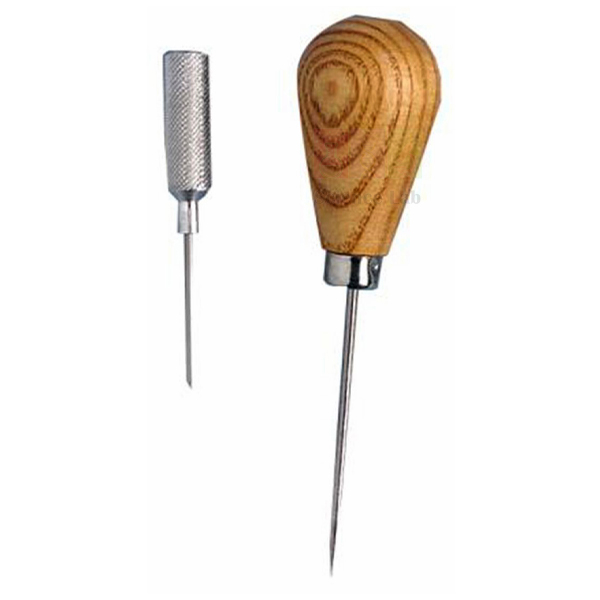
Dissecting Awl
Dissecting Awl (Product Code: SLE/EDE/03) is a pointed hand tool with a 50 mm stainless steel spike fixed in a wooden handle. It is used to pierce tough skin or cuticle before a cut is started, make small starter holes and mark points of interest on a specimen, which makes it a practical item among biology lab equipment in India for school and college practicals. The awl is produced by Jain Scientific Equipments Pvt Ltd (ScienceLab), Ambala.
Specifications
| Parameter | Detail |
|---|---|
| Product type | Dissecting awl |
| Spike material | Stainless steel |
| Spike length | 50 mm |
| Handle | Wooden |
| Suitable for | Piercing, marking and probing during dissection work |
Typical Use
Students reach for the awl when a scalpel alone would slip: puncturing the hard outer layer of an insect or crustacean, opening a small entry point in the body wall before scissors take over, or pricking holes in a card or soft board so specimens and labels can be pinned neatly. Teachers also use the point to indicate a structure during a demonstration without disturbing the surrounding tissue.
The wooden handle fills the palm and lets the user push with steady, controlled pressure. After use, wipe the spike clean, wash it briefly, and dry both the steel and the wood straight away rather than leaving the tool to soak. Many teachers add an awl to each dissection kit for school practicals in India because it covers tasks that finer needles are not built for.
Manufacturer
This awl comes from Jain Scientific Equipments Private Limited, which trades under the ScienceLab name from Ambala in Haryana and makes hand instruments, apparatus and teaching equipment for science laboratories. The company profile gives an overview of the business and its product range.
Related Dissection Equipment
Pair the awl with these tools for piercing, probing and pinning work:
- Dissecting Needle — a slimmer steel needle for teasing tissue once the awl has opened a way in.
- Probe, Chrome — a teasing probe for tracing vessels and nerves without cutting.
- Dissecting Board — a base on which the specimen is laid out while the awl is in use.
- Dissecting T-Pins — pins that fix skin flaps back after the awl and scissors have opened the specimen.
Other hand tools, trays and sets are listed in the Dissection Equipment category.
Frequently Asked Questions
How is an awl different from a dissecting needle?
An awl is made for piercing and making holes, so its spike is set in a handle suited to pushing force. A dissecting needle is slimmer and better for teasing tissue apart; many labs keep both.
What is the spike made of and how long is it?
The spike is stainless steel and 50 mm long, mounted in a wooden handle.
How do I look after the wooden handle?
Wipe it clean and dry it immediately after washing. Avoid long soaking in water or disinfectant, which can swell or crack wood over time.
Is the awl safe for younger students?
It has a sharp point, so use it under supervision, carry it point-down and return it to a case or tray after each task. Teachers of junior classes often hand it out only for specific steps.
Can I order the awl in class quantities?
Yes. State the number of pieces you need through the contact page and we will quote accordingly, together with any other dissection items on your list.
Do you ship outside India?
ScienceLab serves buyers in India and international markets. Share the destination and quantity so packing and freight can be included in the quotation.
Request a Quote
For pricing and availability of the Dissecting Awl, write to us via the contact page or place it in the enquiry cart and submit your list in one go.
Last updated: 24 September 2026
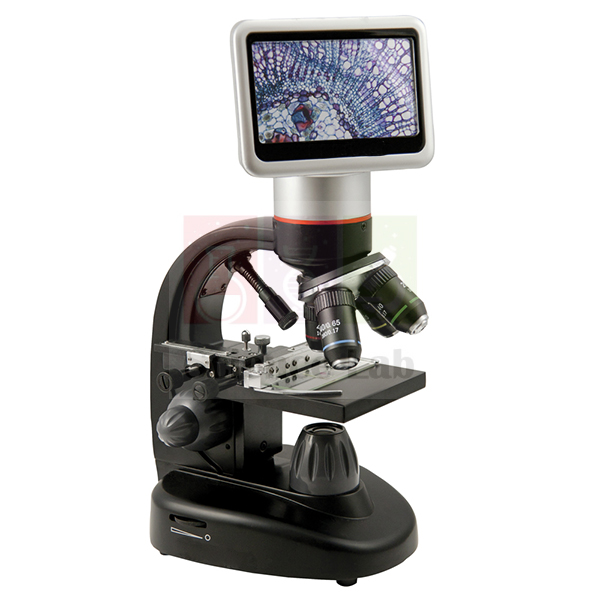
LCD Digital Microscope
LCD Digital Microscope (Product Code: SLE/M/58) is a compound microscope with an LCD screen used to view and record slides at 40x to 600x in classrooms, college labs and small-group demonstrations. It carries 4x, 10x, 20x, 40x and 60x objectives, coarse and fine focus, and an SD card slot supplied with a 4 GB card (cards up to 32 GB supported). This digital microscope for schools in India and abroad is supplied by Jain Scientific Equipments Pvt Ltd (ScienceLab), Ambala, India.
Specifications
| Parameter | Detail |
|---|---|
| Magnification | 40x, 100x, 200x, 400x and 600x |
| Objective lenses | 4x, 10x, 20x, 40x and 60x |
| Focus | Coarse- and fine-focus knobs |
| Display | LCD |
| Image storage | SD card slot; 4 GB SD card included; supports up to 32 GB |
| Power | 110 to 240 V AC; optional battery mode |
| Size | 13 in H x 5-1/2 in W x 7 in D (approx. 33.0 x 14.0 x 17.8 cm) |
| Product code | SLE/M/58 |
| Supplied by | Jain Scientific Equipments Pvt Ltd (ScienceLab), Ambala, India |
What Is the LCD Digital Microscope Used For?
A screen changes how a microscope lesson runs. Two or three students can look at the same cheek-cell or onion-root slide together, the teacher can point to a nucleus or cell wall directly on the display, and learners who struggle with eyepieces still see a clear image. Saved pictures on the SD card go straight into lab notebooks, worksheets and assessment files, which makes the unit useful cell biology equipment for school and college labs.
Start with the 4x objective (40x) to find and focus the specimen with the coarse knob, then move through 10x, 20x and 40x, using the fine knob at each step; the 60x objective gives 600x for small cells and micro-organisms. It runs from 110–240 V AC mains, and the optional battery mode allows use in rooms without a socket.
What to Specify When Ordering
- Number of microscopes and whether they are for student benches or teacher demonstration
- Whether you need the optional battery mode
- Storage plans: a 4 GB SD card is included, and cards up to 32 GB are supported
- Delivery location and local mains supply
Supplier
The LCD Digital Microscope is supplied by ScienceLab, the trading name of Jain Scientific Equipments Private Limited, Ambala, Haryana, to schools, colleges, teacher-training centres, dealers and importers in India and international markets. Institutional and tender buyers registering the vendor can use GSTIN 06AAECJ8618A1ZT and LEI 3358004HRD1JIVXKYX49 for the company. More background is on the ScienceLab profile.
Related Laboratory Equipment
Slides and accessories for screen-based microscopy lessons:
- Student-Grade Microscope Slides — ready specimens to display on the screen
- Prepared Microscope Slide Set – Health And Disease — a themed slide set for higher magnifications
- Microscope Cover Slips — for covering students’ own wet mounts
- Handheld Digital Microscope — for whole objects that do not fit on a slide
Browse further digital microscopes in the Microscope category.
Frequently Asked Questions
What magnifications does the LCD Digital Microscope provide?
The LCD Digital Microscope provides 40x, 100x, 200x, 400x and 600x, using 4x, 10x, 20x, 40x and 60x objective lenses. This covers finding a specimen at low power through to viewing small cells in detail.
Can the LCD Digital Microscope save images?
Yes. The LCD Digital Microscope has an SD card slot and comes with a 4 GB SD card, and it supports cards up to 32 GB. Saved images can be moved to a computer for reports, worksheets or class presentations.
What power does the LCD Digital Microscope need?
The LCD Digital Microscope runs on 110 to 240 V AC, so it suits a wide range of mains supplies. It also offers an optional battery mode; ask us on the contact page for battery details if you need it.
How is the LCD Digital Microscope focused?
The LCD Digital Microscope has separate coarse- and fine-focus knobs. Use the coarse knob at 40x to bring the specimen into view, then the fine knob at higher magnifications to sharpen the image on the screen.
What size is the screen on the LCD Digital Microscope?
The screen size of the LCD Digital Microscope is not stated in its listing. If display size matters for group viewing, ask us through the contact page and we will confirm it for the model we quote.
How large is the LCD Digital Microscope?
The LCD Digital Microscope measures 13 in H x 5-1/2 in W x 7 in D (about 33.0 x 14.0 x 17.8 cm). That footprint fits a standard student bench or a teacher’s demonstration table.
Who supplies the LCD Digital Microscope?
The LCD Digital Microscope is supplied by Jain Scientific Equipments Pvt Ltd (ScienceLab), Ambala, Haryana, India. The company quotes schools, colleges, training centres, dealers and importers in India and international markets, for single units or class sets.
What should an LCD Digital Microscope quotation request include?
An LCD Digital Microscope quotation request should state the quantity, the delivery location, whether battery mode is required and any prepared slides you need. With those details we can send one complete quotation.
Request a Quote
Enquire about the LCD Digital Microscope through the contact page, or add it to the enquiry cart with slides for your class.
Last updated: 24 September 2026
296.jpg)
Dissecting Kit (Economy)
Dissecting Kit (Economy) (Product Code: SLE/EDE/04) is an entry-level set of 18 instruments packed in a plastic box. It brings together scissors, forceps, scalpels, needles, a razor and a few glass accessories, so one student can carry out a basic dissection and prepare a temporary mount from a single box. As a budget-friendly dissection kit for school labs in India, it is assembled by Jain Scientific Equipments Pvt Ltd (ScienceLab), Ambala.
Specifications
| Parameter | Detail |
|---|---|
| Product type | Dissecting kit, economy version |
| Number of instruments | 18 |
| Packing | Plastic box |
| Scissors | 1 sharp; 1 sharp-blunt, 125 mm |
| Needles | 1 straight needle with plastic handle; 2 straight needles (steel); 1 arrow-head needle |
Full contents of the box:
- 1 Scissor, sharp
- 1 Scissor, sharp-blunt, 125 mm
- 1 Section lifter
- 1 Magnifier
- 1 Plain slide
- 1 Cover glass
- 1 Forceps, blunt
- 1 Forceps, sharp
- 2 Scalpels
- 1 Straight needle with plastic handle
- 1 Chain hook (small)
- 1 Razor
- 1 Watch glass
- 1 Blow pipe
- 2 Straight needles (steel)
- 1 Needle, arrow head
Typical Use
In a zoology practical, the scissors and scalpels open the specimen, the blunt and sharp forceps hold and lift tissue, the small chain hook keeps flaps drawn aside, and the needles tease out structures for the student to identify under the magnifier. The blow pipe can be used to gently inflate tubular organs so their path is easier to follow.
The same box also supports plant anatomy work: the razor cuts thin hand sections of stems or roots, the watch glass holds water or stain while sections are sorted, and the section lifter transfers a chosen section onto the plain slide under the cover glass. That mix of cutting tools and glassware makes it a versatile dissection set for biology classes in India, from middle school up to junior college. Wash and dry each piece after use and check that all 18 are back in the box before it is stored.
Manufacturer
Jain Scientific Equipments Private Limited is the company behind the ScienceLab brand. From its base in Ambala, Haryana, it assembles instrument kits and makes laboratory apparatus for schools, colleges and distributors. Read more on the company profile page.
Related Dissection Equipment
Buyers equipping students with this kit usually add the following:
- Dissection Pan — a wax-surfaced pan to pin the specimen on while the kit instruments are used.
- Dissecting T-Pins — the kit has no pins, so these fix the specimen in place.
- Cover Glass Slide — spare cover glasses for repeated temporary mounts.
- Dissecting Set, Large — a fuller set in a lined case for senior or teacher use.
Compare all kits, sets and single instruments in the Dissection Equipment category.
Frequently Asked Questions
What does the Economy kit contain?
Eighteen pieces in a plastic box: two scissors, a section lifter, a magnifier, a plain slide, a cover glass, blunt and sharp forceps, two scalpels, a straight needle with plastic handle, a small chain hook, a razor, a watch glass, a blow pipe, two steel straight needles and an arrow-head needle.
Are all the instruments stainless steel?
The listing names steel for the two straight needles and a plastic handle for one needle, but does not state the material of every piece. If your tender specifies materials, please confirm them with us through the contact page.
Can the glass items be replaced?
Yes. The slide, cover glass and watch glass are the pieces most likely to break over a term, and replacements can be quoted separately along with your kit order.
How is the Economy kit different from the cased dissecting sets?
It adds glass accessories, a blow pipe and a chain hook in a simple plastic box, which suits individual student issue. The cased sets focus on instruments and come in PVC or leatherette cases.
How should the kit be cleaned after a practical?
Rinse off tissue, wash in warm soapy water, dry every piece thoroughly and return it to the box. Handle the razor and scalpels by their backs while cleaning.
Is a warranty included?
Warranty and replacement terms are stated in the quotation. Ask us if you need them documented for your purchase committee.
Can you supply a full class or a distributor order?
Yes. We quote for class sets, school-wide orders and bulk quantities for buyers in India and international markets.
Request a Quote
Tell us how many Dissecting Kit (Economy) boxes you need and where they should be delivered through the contact page, or add the kit to the enquiry cart with any spares.
Last updated: 24 September 2026
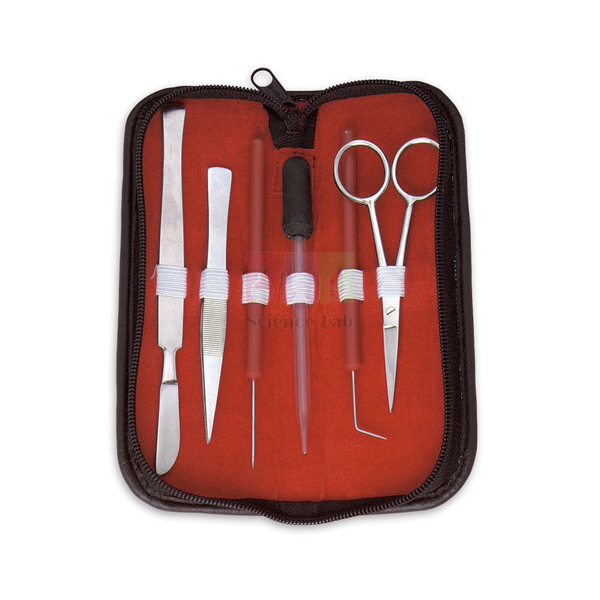
Dissecting Set, Elementary
Dissecting Set, Elementary (Product Code: SLE/EDE/05) is a set of 6 stainless steel dissecting instruments in a PVC case, used for first dissections and plant-section practicals in middle and secondary school biology. It gives each beginner the essential tools to cut, hold and tease a simple specimen, making it a practical dissection kit for school labs in India. It is made by Jain Scientific Equipments Pvt Ltd (ScienceLab), an OEM manufacturer, at its own factory in Ambala, India.
Specifications
| Parameter | Detail |
|---|---|
| Product type | Elementary dissecting instruments set |
| Number of instruments | 6 |
| Instrument material | Stainless steel |
| Case | PVC case |
| Contents | 1 scissors; 1 forceps, sharp; 1 forceps, blunt; 1 straight needle with plastic handle; 1 scalpel; 1 razor |
| Product code | SLE/EDE/05 |
| Manufacturer | Jain Scientific Equipments Pvt Ltd (ScienceLab) — OEM |
| Country of origin | India (made in Ambala, Haryana) |
What Is the Elementary Dissecting Set Used For?
With only six pieces, the set keeps a young learner focused on technique. The scalpel and scissors make the opening cuts, the blunt forceps grip tissue without puncturing it, the sharp forceps pick up small parts, and the straight needle separates structures once the specimen is open. The razor is handy for slicing thin sections of leaves, stems or flowers in plant study lessons.
Teachers often issue one case per student or pair and count the instruments back in at the end of the period, which is quick with so few items. As a worm dissection kit for school practicals, it pairs well with a wax pan and pins. Rinse, dry and return each instrument to its place in the case after every session.
OEM Manufacturer
ScienceLab is the trading name of Jain Scientific Equipments Private Limited, the OEM (original equipment manufacturer) of this elementary dissecting set, which is made at the company's own licensed factory at Saha, Ambala, Haryana, India. Schools, education departments, dealers and importers buy it factory-direct rather than from a trader. Replacement instruments or repeat class sets can be requested from the manufacturer itself; just ask us. See the company profile for more about who we are.
Related Dissection Equipment
These items complement an elementary set in the same practical:
- Dissection Pan — a black-wax pan for pinning an earthworm or other specimen flat.
- Dissecting T-Pins — nickel-plated T-head pins that hold the body wall open after the first cut.
- Magnifier — a lighted, clamp-on magnifier for hands-free viewing, since this set has no lens.
- Dissecting Set, Student — the next step up, with 10 instruments including a seeker and magnifier.
More sets and individual instruments are listed under Dissection Equipment.
Frequently Asked Questions
Which instruments are in the Dissecting Set, Elementary?
The Dissecting Set, Elementary contains six instruments: scissors, sharp forceps, blunt forceps, a straight needle with a plastic handle, a scalpel and a razor, all packed together in a PVC case for easy issue and collection.
Are the instruments in the Dissecting Set, Elementary stainless steel?
Yes. The instruments in the Dissecting Set, Elementary are made of stainless steel, and the straight needle is fitted with a plastic handle, so the set stands up to repeated school use and cleaning.
Does the Dissecting Set, Elementary include a magnifier or slides?
No. The Dissecting Set, Elementary contains only the six instruments listed. A magnifier, pins or a dissection pan can be quoted separately, or you can choose the Dissecting Set, Student, which includes a magnifier.
Does the scalpel take replacement blades?
The scalpel type in the Dissecting Set, Elementary is not specified in our product details. If replaceable blades matter for your laboratory, ask us through the contact page before ordering and we will confirm.
Who manufactures the Dissecting Set, Elementary?
Jain Scientific Equipments Pvt Ltd (ScienceLab) is the OEM manufacturer of the Dissecting Set, Elementary, making it at its own licensed factory at Saha, Ambala, Haryana, India, and supplying schools and dealers directly.
What should a school send for a quotation?
For the Dissecting Set, Elementary, send product code SLE/EDE/05, the number of sets, the delivery address and any pans, pins or consumables you want on the same order. We supply buyers in India and international markets.
Request a Quote
Send the quantity of Dissecting Set, Elementary you need via the contact page, or add it to the enquiry cart, and the manufacturer will reply with a quotation.
Last updated: 24 September 2026
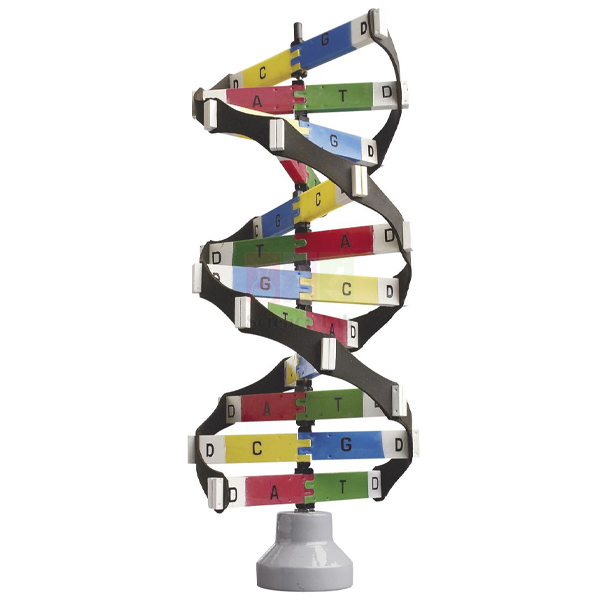
DNA Activity Model
DNA Activity Model (Product Code: SLE/Mo/01) is a build-it-yourself plastic double helix kit used to teach DNA structure, base pairing and replication in school and college biology. Students assemble colour-coded cytosine, adenine, guanine and thymine bases on phosphate strands around a centre rod representing hydrogen bonds, then display the model on a metal base that rotates. This DNA model kit for Indian classrooms is made by Jain Scientific Equipments Pvt Ltd (ScienceLab), an OEM manufacturer, at its own factory in Ambala, India.
Specifications
| Parameter | Detail |
|---|---|
| Model type | Three-dimensional double helix, assembled by students |
| Components | Cytosine, adenine, guanine and thymine bases; connecting phosphate strands; centre rod representing hydrogen bonds |
| Material | Durable plastic components |
| Base | Sturdy metal base for easy rotation and classroom display |
| Base pairing | Colour-coded parts with specially shaped ends for correct base-pair alignment |
| Replication demonstration | Can be unzipped to demonstrate DNA replication |
| Weight | 250 g approx. |
| Dimensions | 130 x 130 x 450 mm approx. |
| Product code | SLE/Mo/01 |
| Manufacturer | Jain Scientific Equipments Pvt Ltd (ScienceLab) — OEM |
| Country of origin | India (made in Ambala, Haryana) |
What Is the DNA Activity Model Used For?
Building the helix themselves helps students remember what a textbook diagram rarely conveys: adenine always pairs with thymine and cytosine with guanine, the two strands wind around a common axis, and the bases sit inside the helix like the rungs of a twisted ladder. Because the shaped ends of the colour-coded parts only align with the correct partner, mistakes show up straight away and students correct them as they build.
Once assembled, the model can be unzipped down the middle to show how each separated strand serves as a template for a new partner strand during replication. At roughly 130 x 130 x 450 mm on its metal base, it suits the teacher's desk for whole-class discussion and turns easily so everyone can follow the helix. Keeping the parts sorted by base type between lessons makes the next assembly much quicker.
OEM Manufacturer
ScienceLab is the trading name of Jain Scientific Equipments Private Limited, the OEM (original equipment manufacturer) of the DNA Activity Model, which it produces at its licensed factory at Saha, Ambala, Haryana. Schools, colleges, teacher-training institutes, dealers and importers in India and international markets buy it factory-direct, with quotations and repeat orders handled by the manufacturer. Ask us if you need replacement parts for models already in use. See our company profile for more.
Related Molecule Models
Models and kits that extend DNA and nucleic acid lessons:
- Molecular Model, RNA 12 Base — to contrast RNA with DNA
- Molecular Model Kit, Ten Layer DNA — a longer DNA build for group projects
- Mini DNA 22 layer base pair Molecular Model — a compact alternative model
- DNA extraction lab kit — a practical to pair with model work
See all models in the Molecule category.
Frequently Asked Questions
What parts are included in the DNA Activity Model?
The DNA Activity Model (SLE/Mo/01) includes colour-coded cytosine, adenine, guanine and thymine bases, connecting phosphate strands, a centre rod representing hydrogen bonds and a metal display base. Students assemble the plastic components into a three-dimensional double helix.
Can the DNA Activity Model show replication?
Yes. The DNA Activity Model can be unzipped between the base pairs to demonstrate DNA replication. Separating the two strands shows how each one carries the information needed to build a new complementary partner strand.
How big is the DNA Activity Model?
The assembled DNA Activity Model measures approximately 130 x 130 x 450 mm and weighs about 250 g. It is sized for classroom display on its metal base, which lets the helix be rotated so the whole class can see it.
How do students know the bases are paired correctly?
Parts of the DNA Activity Model are colour-coded and have specially shaped ends that ensure proper base-pair alignment. Students get immediate feedback while building, which reinforces the adenine-thymine and cytosine-guanine pairing rules.
Who manufactures the DNA Activity Model?
Jain Scientific Equipments Pvt Ltd (ScienceLab) manufactures the DNA Activity Model as the OEM at its licensed factory at Saha, Ambala, Haryana, India. Schools, colleges, dealers and importers in India and international markets can order it direct from the manufacturer.
What should a quotation request for the DNA model include?
A quotation request for the DNA Activity Model should give product code SLE/Mo/01, the number of models (for example one per student group), your delivery location and any other molecule models or DNA practical kits you want quoted with it.
Request a Quote
Quotations for the DNA Activity Model come direct from the manufacturer: send the quantity and delivery details through our contact page, or add it to the enquiry cart with other biology models.
Last updated: 24 September 2026