- Physics Lab Equipment
- Chemistry Lab Equipment
- Biology Lab Equipment
- Anatomical Lab Equipment
- Learning
- Educational Lab Equipment
- Magnets
- Agriculture
- Astronomy
- Earth Science
- Geography Lab Equipment
- Safety Lab Coat
- Laboratory
- Meteorological
- Electricity & Magnetism
- Heat
- School Lab Equipment
- Lab Glassware
- Science Lab Equipment
- Tvet Lab Equipment
- Robotics Kits Supplier and Manufacturer for Schools India
- Math Lab Equipment Manufacturers and Exporters in Ambala
- STEM Kits Manufacturers and Supplier India
- Engineering Lab Equipment
- Hospital Lab Equipment
- Water, Sanitation & Hygiene Supplies
- Cold Chain, Solar & Communication Equipment
- Nutrition
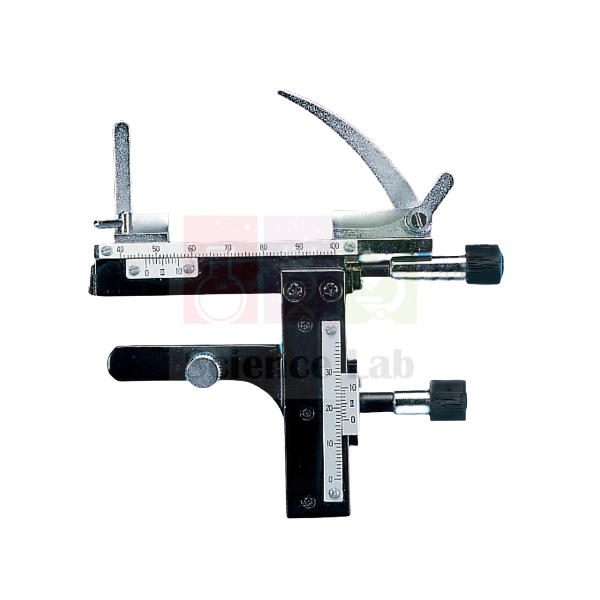
Student Graduated Mechanical Stage
Student Graduated Mechanical Stage (Product Code: SLE/M/65) is an attachable slide-moving stage with graduated scales, used to move a slide smoothly in two directions and return to a recorded position on student microscopes. It locates on two pins 33 mm apart and is listed to fit CFL Series and Cadre Series scope models only, extending to 160 mm by 135 mm. It is supplied by Jain Scientific Equipments Pvt Ltd (ScienceLab), Ambala, India, as an upgrade part within its biology lab equipment range for India and export.
Specifications
| Parameter | Detail |
|---|---|
| Type | Graduated mechanical stage, attachable |
| Compatibility | CFL Series and Cadre Series scope models only |
| Mounting | Two locating pins, 1-1/4 in (33 mm) apart |
| Extended length | 6-1/4 in (160 mm) |
| Extended width | 5-1/4 in (135 mm) |
| Product code | SLE/M/65 |
| Supplied by | Jain Scientific Equipments Pvt Ltd (ScienceLab), Ambala, India |
What Is the Graduated Mechanical Stage Used For?
At high power the field of view is tiny, and pushing a slide by hand usually overshoots the cell a student was trying to centre. A mechanical stage replaces that guesswork with controlled movement, so a blood smear, a root-tip squash or a pond-water mount can be scanned in neat rows without missing areas. The graduations let a student note where an interesting cell sits and give those readings to the teacher, who can return to exactly the same spot to check a drawing or a mitosis count.
Check the microscope series first, because this stage is listed for CFL and Cadre series scopes only. Seat it on the two locating pins, make sure it sits flat before securing it, and move the controls gently rather than forcing them at the end of travel. Keep the stage free of immersion oil and stain spills by wiping it after every session.
What to Specify When Ordering
- Microscope series and model (CFL Series or Cadre Series)
- Locating-pin spacing on your microscope stage, to match 33 mm
- Number of stages, one per microscope to be upgraded
Supplier
ScienceLab is the brand of Jain Scientific Equipments Private Limited, Ambala, Haryana, which supplies this mechanical stage alongside slides, cover glasses and other microscope accessories for schools, colleges, dealers and importers in India and international markets. Buyers completing vendor registration can use the company's GSTIN 06AAECJ8618A1ZT and Legal Entity Identifier 3358004HRD1JIVXKYX49. Background on the company is on the ScienceLab profile page.
Related Microscope Equipment
Items used with a mechanical stage for systematic slide work:
- Attachable Mechanical Stage — another add-on stage to consider for other microscope models
- Microscope Slides Glass — plain slides for smears and mounts
- Cover Glasses — 22 x 22 mm borosilicate covers for prepared mounts
- Haemocytometer — a counting chamber that benefits from controlled stage movement
See all accessories in the Microscope category.
Frequently Asked Questions
Which microscopes does the Student Graduated Mechanical Stage fit?
The Student Graduated Mechanical Stage is listed to fit CFL Series and Cadre Series scope models only. For other microscopes, look at the Attachable Mechanical Stage or send your model details through the contact page so we can advise.
How is the Student Graduated Mechanical Stage mounted?
The Student Graduated Mechanical Stage mounts on two locating pins set 1-1/4 inches (33 mm) apart. Check that your microscope stage has matching pin positions, seat the unit on the pins and make sure it lies flat before use.
How large is the Student Graduated Mechanical Stage?
When extended, the Student Graduated Mechanical Stage measures 6-1/4 inches (160 mm) in length and 5-1/4 inches (135 mm) in width. Allow for this footprint when checking clearance around the objectives and focusing knobs of your microscope.
Why does the Student Graduated Mechanical Stage have graduations?
The graduations on the Student Graduated Mechanical Stage let users read and record the slide position. A student can note the readings for a particular cell, and a teacher can later set the same readings to find that cell again for checking or demonstration.
Who supplies the Student Graduated Mechanical Stage?
Jain Scientific Equipments Pvt Ltd (ScienceLab), Ambala, Haryana, India supplies the Student Graduated Mechanical Stage to schools, colleges, laboratories, dealers and importers in India and international markets, together with slides and other microscope accessories.
Request a Quote
To order the Student Graduated Mechanical Stage, send your microscope series, quantity and delivery location through the contact page, or add it to the enquiry cart with any slides you need.
Last updated: 24 September 2026
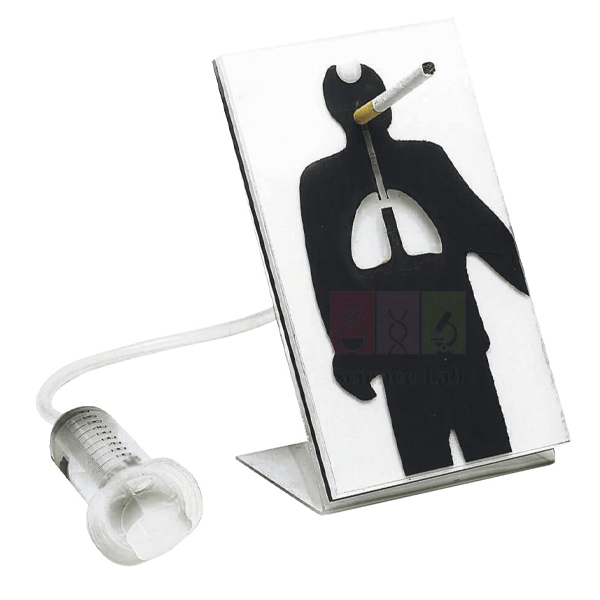
Effects of Smoking Model
Effects of Smoking Model (Product Code: SLE/BL/28) is a “Smoking Man” demonstration model used to show the impact of smoking on the lungs in school biology and health education lessons. Its included syringe pump draws smoke from a cigarette you provide into the model's lungs, which start to darken after only a few puffs, making it a memorable centrepiece for a health education kit in schools. It is made by Jain Scientific Equipments Pvt Ltd (ScienceLab), an OEM manufacturer, at its own factory in Ambala, India.
Key Details
| Parameter | Detail |
|---|---|
| Type | Smoking demonstration model (“Smoking Man”) |
| Operation | Syringe pump (included) draws cigarette smoke into the model’s lungs |
| Visible effect | Lungs start to darken after only a few short puffs |
| Cigarettes | Not included — provided by the user |
| Guides | Detailed teacher and student guides |
| Guide content | Background on the dangers of smoking; scenarios for testing cigarette brands for tar content under various conditions |
| Product code | SLE/BL/28 |
| Manufacturer | Jain Scientific Equipments Pvt Ltd (ScienceLab) — OEM |
| Country of origin | India (made in Ambala, Haryana) |
What Is the Effects of Smoking Model Used For?
The model is used in biology lessons on the respiratory system and in health education sessions on tobacco. The teacher lights the cigarette and operates the syringe pump while students watch the lungs discolour as tar is deposited, turning an abstract warning into something they can see. The discussion that follows usually covers how tar damages the airways and air sacs and links smoking with lung disease.
The scenarios in the guides let older students plan a fair comparison between brands and conditions, record their observations and draw conclusions. Run the demonstration in a well-ventilated room or under a fume hood, keep it strictly teacher-operated, have a container of water ready for cigarette ends, and follow your institution’s rules and local law on obtaining cigarettes for teaching. Few biology teaching aids in India leave such a lasting impression on a class.
OEM Manufacturer
Jain Scientific Equipments Private Limited, which trades as ScienceLab, is the OEM (original equipment manufacturer) of the Effects of Smoking Model and makes it at its own licensed factory at Saha, Ambala, Haryana, India. Schools, health-education programmes and dealers buy it straight from the maker rather than through a trading intermediary. If you plan to run the demonstration often, ask us about replacement parts before ordering, so the answer comes from the people who build the model. See our company profile for more.
Related Biology Lab Equipment
Resources for a lesson on smoking and respiratory health:
- Smoking Experiment — a related smoking investigation from our Biology Kits range
- Microslide Smoking & Health — microscope views to accompany the demonstration
- Human Lung Model in Bell Jar — explains how breathing moves air in and out of the lungs
- Spirometer — lets students measure their own lung volumes
- Kit on the Consequences of Smoking — further activities on the same theme
Browse more health and physiology items in the Biology Lab Equipment range.
Frequently Asked Questions
Are cigarettes included with the Effects of Smoking Model?
No. The Effects of Smoking Model uses a cigarette that you provide, placed in the mouth of the “Smoking Man”. Obtain cigarettes for teaching in line with your institution's rules and local law, and keep them under the teacher's control at all times.
What is included with the Effects of Smoking Model?
The Effects of Smoking Model includes the “Smoking Man” model, the syringe pump that draws smoke into its lungs, and detailed teacher and student guides with background on the dangers of smoking and scenarios for testing cigarette brands for tar content.
Can the lungs of the Effects of Smoking Model be cleaned or replaced?
Cleaning or replacement of the lungs is not described for the Effects of Smoking Model. If you plan to run the demonstration often, please contact us before ordering so we can confirm what is available for repeated use.
Is the Effects of Smoking Model safe to use with students?
The Effects of Smoking Model should be operated only by the teacher, in a well-ventilated room or under a fume hood, with students observing. Keep a container of water ready for cigarette ends and never let students draw on the cigarette.
Which age groups is the Effects of Smoking Model suited to?
The Effects of Smoking Model is used in secondary school biology and health education. Its guides include scenarios for testing cigarette brands for tar content under various conditions, which suit older students planning their own fair comparisons.
Who manufactures the Effects of Smoking Model?
Jain Scientific Equipments Pvt Ltd (ScienceLab) is the OEM manufacturer of the Effects of Smoking Model (SLE/BL/28). It is made at the company's own licensed factory at Saha, Ambala, Haryana, India, and supplied factory-direct to schools, health programmes and dealers.
Is bulk or export supply of the Effects of Smoking Model available?
Yes. ScienceLab supplies the Effects of Smoking Model to schools, health programmes, distributors and importers in India and international markets. Include the quantity and delivery location in your enquiry, and the quotation will come directly from the manufacturer.
Request a Quote
To request a price for the Effects of Smoking Model, contact us or add it to the enquiry cart along with related health education resources. Quotes come directly from the manufacturer.
Last updated: 24 September 2026
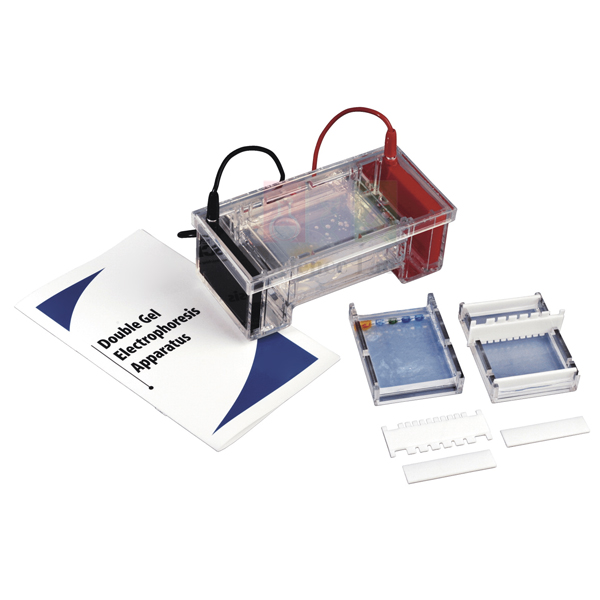
Double Gel Electrophoresis Apparatus
The Double Gel Electrophoresis Apparatus (Product Code: SLE/BL/29) is a horizontal gel tank that runs two gels at the same time, so two student groups can share one unit or a class can compare two sets of samples in a single session. Its leak-free, one-piece moulded chamber is made of durable clear acrylic and fitted with pure platinum electrodes, and a lid interlock prevents use until the lid is locked in place. Schools, colleges and biotechnology teaching labs use it as a complete gel electrophoresis kit for DNA and dye separation practicals. It is made by Jain Scientific Equipments Pvt Ltd (ScienceLab), Ambala.
Specifications
| Parameter | Detail |
|---|---|
| Capacity | Runs two gels simultaneously |
| Chamber | Leak-free, one-piece moulded, durable clear acrylic |
| Electrodes | Pure platinum |
| Casting trays | Two; hold melted agarose without tape or snap-on ends |
| Combs | Six 12-well forming combs |
| Well position | At the end or the centre of the gel |
| Connections | Patch cords included |
| Safety | Chamber cannot be used unless the lid is locked in place |
| Tank size | 155 mm (L) x 88 mm (W) x 62.5 mm (H) |
| Tray size | 100 mm (L) x 75 mm (W) |
| Power supply | Not included; available separately |
Typical Use
Students place a comb in one of the specially designed casting trays and pour melted agarose straight in – no taping of the tray ends is needed. Setting the comb at the end of the gel suits DNA, which moves in one direction, while a centre position lets charged dyes of opposite sign migrate both ways from the wells. Once set, the combs are lifted out, the trays go into the tank, running buffer is added, and samples are loaded into the 12 wells of each gel with a micropipette.
With the lid locked and the patch cords connected to a suitable power supply, both gels run together, which halves the time needed to get a whole class through the practical. In a biotechnology lab kit setting this makes it practical to compare, for example, a sample and a reference side by side. Rinse the chamber with water after use, avoid solvents and abrasive cleaners on the acrylic, and handle the platinum electrode wires gently when cleaning.
Manufacturer
ScienceLab is the trade name of Jain Scientific Equipments Private Limited, an Ambala, Haryana manufacturer of biology, biotechnology and physics teaching apparatus. Its electrophoresis equipment is used by schools, colleges and training labs in India and international markets – more on our company profile.
Related Electricity Equipments
Complete an electrophoresis workstation with these items:
- Electrophoresis Power Supply — required to run the tank; three outputs can drive up to three chambers.
- Micropipette — for loading small sample volumes accurately into the wells.
- Micropipette Tips — disposable tips so each sample is loaded without cross-contamination.
- Electrophoresis: Agarose Gel Separation of Dyes — a ready practical to run in this apparatus.
Browse related apparatus in the Electricity Equipments category.
Frequently Asked Questions
What comes in the box?
The acrylic gel chamber with platinum electrodes, two casting gel trays, six 12-well forming combs and patch cords.
Is a power supply included?
No. The power supply is purchased separately; our Electrophoresis Power Supply is designed for this type of chamber.
What size gels does it make?
Each casting tray measures 100 mm (L) x 75 mm (W), and the tank is 155 mm (L) x 88 mm (W) x 62.5 mm (H).
Do I need tape to cast gels?
No. The casting trays hold melted agarose without tape or snap-on ends, which saves time and reduces leaks.
How does the safety interlock work?
The chamber is designed so students cannot use it unless the lid is locked in place, keeping fingers away from the electrodes and buffer while current flows.
Is a warranty or calibration certificate available?
Warranty terms are included in each quotation, and any documentation needs should be discussed with us through the contact page.
What should a lab quotation request include?
The product code SLE/BL/29, number of units, whether you also need power supplies and micropipettes, and the delivery location. We supply India and international markets.
Request a Quote
To price the Double Gel Electrophoresis Apparatus with a matching power supply, contact us via the contact page or add both items to the enquiry cart.
Last updated: 24 September 2026
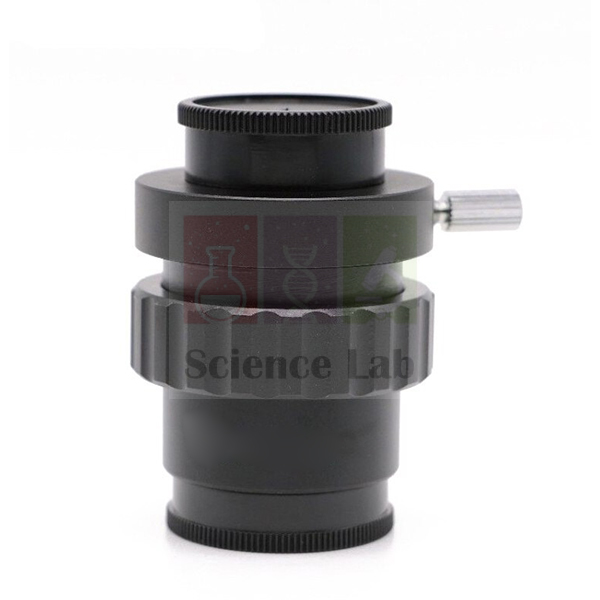
Adjustable C-Focus Mount Adapter
Adjustable C-Focus Mount Adapter (Product Code: SLE/M/66) is an adjustable C-mount camera adapter with a focusable 0.5x reducing lens, used to attach a C-mount microscope camera to the trinocular port of a zoom trinocular stereomicroscope. The 0.5x reduction lets the camera sensor record a wider part of the field, and the focus adjustment matches the camera image to the eyepiece view. It is supplied by Jain Scientific Equipments Pvt Ltd (ScienceLab), Ambala, India, among its lab equipment accessories for microscope imaging.
Specifications
| Parameter | Detail |
|---|---|
| Type | Adjustable C-mount adapter |
| Magnification | 0.5x (reducing lens) |
| Lens | Focusable |
| Designed for | Zoom trinocular stereomicroscope |
| Product code | SLE/M/66 |
| Supplied by | Jain Scientific Equipments Pvt Ltd (ScienceLab), Ambala, India |
What Is the C-Mount Adapter Used For?
Stereo work produces some of the most striking images in a biology lab: insect mouthparts, flower anatomy, a dissected earthworm, seed germination or crystals forming on a slide. With this adapter in the trinocular port, a C-mount camera can show those views live on a screen for the whole class, or record them for practical files and assessments. The reducing lens helps the camera capture a field closer to what users see through the eyepieces, which makes a zoom stereo microscope in an India classroom far more useful for demonstrations.
Screw the camera onto the adapter and fit the adapter into the trinocular port. Focus the specimen through the eyepieces first, then turn the adapter's focus adjustment until the camera image is equally sharp; after that the eyepiece and screen views should stay in step as you zoom. Cap the adapter when the camera is removed so dust cannot settle on the lens.
What to Specify When Ordering
- Make and model of your trinocular stereomicroscope
- The C-mount camera you plan to use, or whether you need one quoted
- Number of adapters required
Supplier
Jain Scientific Equipments Private Limited, which trades as ScienceLab from Ambala, Haryana, supplies this 0.5x camera adapter together with microscope cameras and stereo microscopes, so a complete imaging set-up can be quoted in one go. Colleges, research labs, dealers and importers in India and international markets order from the same team. Company details are on the ScienceLab profile page.
Related Microscope Equipment
Cameras, adapters and microscopes for an imaging bench:
- C-Mount Adapter — another camera adapter in the range
- Microscope Digital Camera, 5MP — a microscope camera for image capture
- 5mp Microscope Camera — an alternative camera option
- Stereomicroscopes — stereo instruments for dissection and specimen study
- Lens Tissue — for cleaning the adapter lens
Explore more in the Microscope category.
Frequently Asked Questions
What does the 0.5x lens in the Adjustable C-Focus Mount Adapter do?
The 0.5x reducing lens in the Adjustable C-Focus Mount Adapter shrinks the image projected onto the camera sensor, so the camera records a wider part of the field of view. This brings the on-screen image closer to what users see through the eyepieces.
Which microscope is the Adjustable C-Focus Mount Adapter designed for?
The Adjustable C-Focus Mount Adapter is designed for a zoom trinocular stereomicroscope. If you want to use it on another trinocular microscope, send the model and port details through the contact page so we can check the fit first.
Why is the Adjustable C-Focus Mount Adapter focusable?
The Adjustable C-Focus Mount Adapter has a focusable lens so the camera image can be made as sharp as the eyepiece image. Once set, users can focus through the eyepieces and the camera view stays in focus as well, which saves time during demonstrations.
Is a camera included with the Adjustable C-Focus Mount Adapter?
No camera is listed with the Adjustable C-Focus Mount Adapter; it is the adapter only. C-mount microscope cameras from our range can be quoted separately, and we can confirm that the camera and adapter suit your microscope.
Who supplies the Adjustable C-Focus Mount Adapter?
Jain Scientific Equipments Pvt Ltd (ScienceLab), Ambala, Haryana, India supplies the Adjustable C-Focus Mount Adapter to colleges, schools, research laboratories, dealers and importers in India and international markets, with microscope cameras and stereo microscopes available from the same range.
Request a Quote
Send your microscope model, camera details and quantity for the Adjustable C-Focus Mount Adapter through the contact page, or add it to the enquiry cart with a camera if you need a complete set-up.
Last updated: 24 September 2026
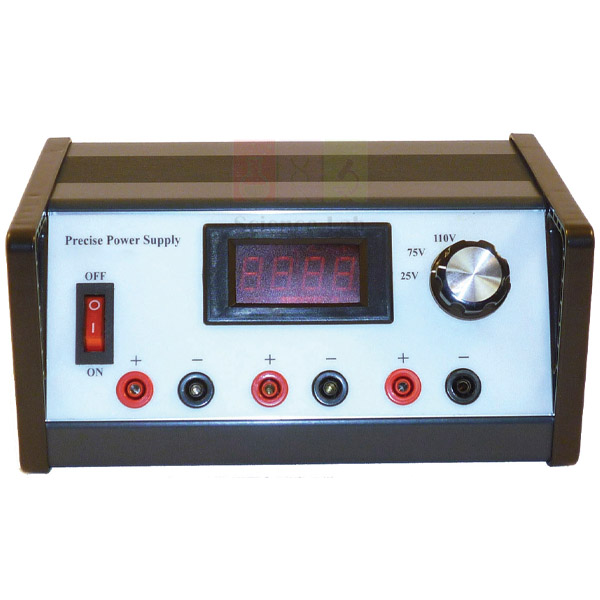
Electrophoresis Power Supply
The Electrophoresis Power Supply (Product Code: SLE/BL/30) provides the direct current that drives charged molecules through agarose gels in horizontal electrophoresis tanks. It offers 25V, 75V and 110V settings, delivers up to 55W and 500mA, and has three sets of output connectors so up to three chambers can run at once from a single unit. An LED screen, an illuminated power switch and overcurrent protection make it a practical electrophoresis power supply for school biotechnology labs, college practicals and teaching workshops. It is made by Jain Scientific Equipments Pvt Ltd (ScienceLab), Ambala.
Specifications
| Parameter | Detail |
|---|---|
| Voltage settings | 25V, 75V, 110V (variable voltage) |
| Maximum output | 55W |
| Maximum current | 500mA |
| Outputs | Three sets of output connectors; runs up to three chambers simultaneously |
| Power input | 230V AC, 50/60Hz |
| Display | LED screen |
| Switch | Illuminated power switch |
| Protection | Overcurrent protected |
Typical Use
After gels are loaded and tank lids closed, students connect each chamber's leads to one set of outputs – red to red and black to black, so that negatively charged DNA moves towards the positive electrode – then select the voltage and switch on. The lower setting suits longer, gentler runs, while the higher settings shorten the run for a timetabled lesson; the LED screen confirms the unit is working and the illuminated switch shows at a glance when the gels are live.
Being able to drive three chambers from one unit is valuable in horizontal gel electrophoresis classes, where several groups load gels at the same time. Keep the combined load within the 500mA and 55W limits, always switch off before opening a tank lid or disconnecting leads, and place the unit on a dry bench away from spilled buffer. The overcurrent protection adds a safeguard if a lead or tank develops a fault during a run.
Manufacturer
ScienceLab is the trading name of Jain Scientific Equipments Private Limited (CIN U29309HR2020PTC087597), an Ambala, Haryana company that manufactures teaching and laboratory apparatus at its licensed factory at 449, HSIIDC Industrial Area, Saha, Ambala (Factory Licence AMB-ONLINE-CHD-J-414). Its instruments are supplied to institutions in India and international markets; see our company profile for more.
Related Electricity Equipments
Pair the power supply with these items to complete an electrophoresis setup:
- Double Gel Electrophoresis Apparatus — acrylic tank that runs two gels and is sold without a power supply.
- Gel Electrophoresis Apparatus — an additional chamber to use one of the spare outputs.
- Electrophoresis: Agarose Gel Separation of Dyes — a classroom practical that runs on this unit.
- Micropipette — for loading samples into gel wells before the run.
See more mains-powered apparatus in the Electricity Equipments category.
Frequently Asked Questions
Which output voltages are available?
25V, 75V and 110V. Choose the setting that matches your gel, buffer and available lesson time.
How many gel tanks can it run at once?
Up to three, using its three sets of output connectors. Keep the total current drawn within the 500mA maximum.
Can each output be set to a different voltage?
The specification lists the voltage settings for the unit but does not state independent control per output. Please confirm with us through the contact page if your practicals need different voltages at the same time.
What mains supply does it need?
230V AC at 50/60Hz. Ask us before ordering if your site uses a different supply.
What safety features are built in?
Overcurrent protection, an illuminated power switch that shows when output is on, and an LED screen for monitoring.
Is a calibration certificate or warranty provided?
Warranty terms are given in each quotation. Discuss any calibration certificate or test documentation you require with us at the enquiry stage.
What should an institutional quotation request include?
The product code SLE/BL/30, the number of units, the number and type of tanks you will run, your mains supply and the delivery location. Orders from India and international markets are welcome.
Request a Quote
Get a quotation for the Electrophoresis Power Supply via our contact page, or add it to the enquiry cart with the gel tanks you plan to use.
Last updated: 24 September 2026
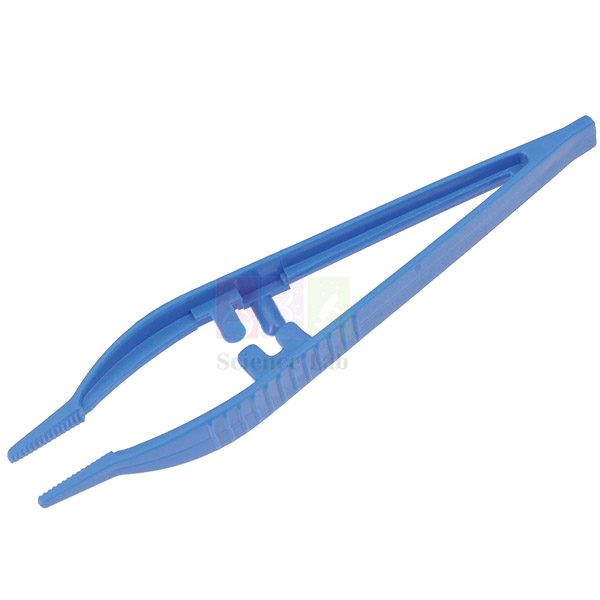
Forceps, Plastic
Forceps, Plastic (Product Code: SLE/BL/31) are disposable plastic forceps, 125mm long, used to pick up seeds, leaf discs, filter paper and small specimens without touching them by hand in biology practicals. Because they are meant for single use, each group can work with its own clean pair and soil or plant material is not carried from bench to bench. They are supplied by Jain Scientific Equipments Pvt Ltd (ScienceLab), Ambala, India, as part of its disposable lab equipment for schools and colleges.
Specifications
| Parameter | Detail |
|---|---|
| Type | Forceps, disposable (single use) |
| Material | Plastic |
| Length | 125mm |
| Product code | SLE/BL/31 |
| Supplied by | Jain Scientific Equipments Pvt Ltd (ScienceLab), Ambala, India |
What Are the Plastic Forceps Used For?
In a germination practical, students use a pair of these forceps to place seeds on moist filter paper in a petri dish; in a soil-life lesson, they pick small invertebrates out of a sorting tray for a closer look under a hand lens. A plastic tip is gentle on soft material and less likely to mark glass slides or dishes, which makes the forceps handy for moving coverslips, leaf fragments and paper discs as well.
Handing out a fresh pair per group keeps samples from one habitat or culture separate from the next, and used forceps can go into the lab's waste stream at the end of the lesson according to your school's disposal rules. Keep plastic forceps away from flames and hot apparatus, and use metal forceps for any step that involves heating. For teachers building a biology lab equipment list in India, a stock of disposable forceps is a simple way to run whole-class practicals without collecting and washing instruments between periods.
Supplier
These forceps are supplied by Jain Scientific Equipments Private Limited, an Ambala, Haryana company that trades as ScienceLab. Alongside apparatus and glassware, ScienceLab sources practical consumables such as disposable forceps, so a school can order a complete practical set-up from one vendor. Read our company profile for more about the business.
Related Biology Lab Equipment
Items often ordered with plastic forceps for specimen-handling practicals:
- Forceps, Nylon — a nylon forceps option if you are comparing materials
- Forceps (Tweezers) — forceps from our dissection equipment range for general specimen work
- Petri Dish Glass With Lid — holds seeds, leaf discs and small specimens while they are handled
- Hand Lens — for examining the small items picked up with the forceps
- Sorting Tray — for spreading out and sorting soil or pond samples
You can see more apparatus for school and college practicals in the Biology Lab Equipment category.
Frequently Asked Questions
How long are the Forceps, Plastic?
The Forceps, Plastic are 125mm long and made of plastic. That length gives students enough reach to lift seeds, leaf discs and small invertebrates from petri dishes and sorting trays without their fingers touching the specimen.
Can the Forceps, Plastic be reused?
The Forceps, Plastic are listed as disposable, so they are meant for single use. If you need forceps that can be washed and used again between classes, contact us and we will suggest a suitable reusable option from our range.
Are the Forceps, Plastic supplied sterile?
Sterility and packing of the Forceps, Plastic are not stated in our current details. If your work needs sterile-packed forceps, for example in microbiology practicals, please confirm this with us before ordering so that the right item is quoted.
How many Forceps, Plastic come in a pack?
The pack quantity of the Forceps, Plastic is not listed. Tell us how many pieces you need for each class or practical, and we will quote the disposable forceps in a quantity that matches your student numbers.
Can the Forceps, Plastic be used with hot items or in a flame?
No. The Forceps, Plastic should be kept away from flames and hot glassware, and no heat rating is given for them. Use metal forceps for any step that involves heating, flaming or handling warm apparatus.
Who supplies the Forceps, Plastic?
Jain Scientific Equipments Pvt Ltd (ScienceLab), Ambala, India, supplies the Forceps, Plastic (SLE/BL/31) to schools, colleges and distributors in India and international markets. Quote the product code, the number of pieces and the delivery location for an accurate quotation.
Request a Quote
To order Forceps, Plastic, send your requirements through our contact page or add the item to the enquiry cart together with the other practical supplies you need.
Last updated: 24 September 2026
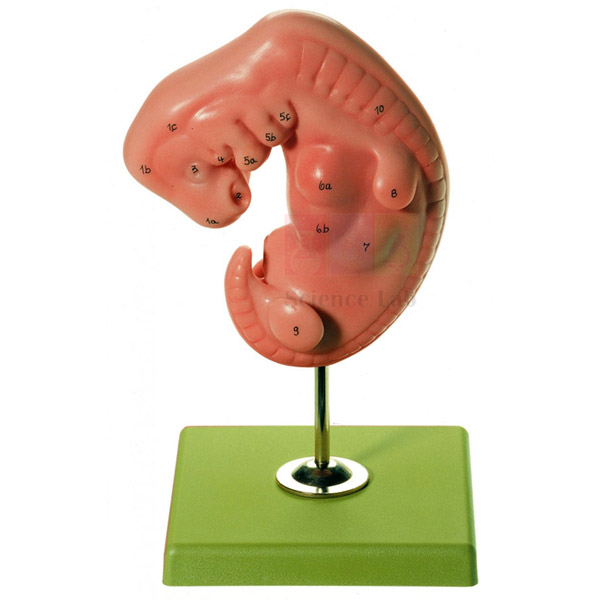
Embryo Model
The Embryo Model (Product Code: SLE/BL/32) is a stand-mounted teaching model of a human embryo at 4 weeks old, moulded in advanced PVC and marked with 12 positions for identification. It lets biology teachers, nursing tutors and embryology students show the very early body form in three dimensions, something that flat textbook drawings rarely convey well. The model is made by Jain Scientific Equipments Pvt Ltd (ScienceLab) in Ambala and sits comfortably among the biology teaching aids India's schools and colleges use to introduce development before birth.
Specifications
| Parameter | Detail |
|---|---|
| Type | Human embryo model |
| Stage represented | Embryo 4 weeks old |
| Positions shown | 12 |
| Material | Advanced PVC |
| Mounting | Mounted on stand |
Typical Use
In lessons on reproduction and human development, the Embryo Model gives students a fixed reference point for the first month after fertilisation. Teachers work through the 12 positions one at a time, explaining how the early body takes shape and how the foundations of the major organ systems are laid down long before the embryo resembles a baby. Because it stands upright, the model can be passed around a small group or placed on the front bench while the class sketches and labels it.
It is most effective when used as the first step in a sequence: start with this 4-week embryo, then move to later-stage fetus models so learners can see how dramatically form changes over the pregnancy. Schools assembling a human biology model set in India often place it next to placenta and uterus models for exactly this reason. For care, wipe the PVC surface with a soft damp cloth and mild soap, dry it, and keep it out of strong sunlight when stored.
Manufacturer
This embryo model comes from Jain Scientific Equipments Private Limited, the Ambala, Haryana company that trades under the ScienceLab name and produces anatomical models together with a wider range of laboratory teaching equipment. Background on the firm is available on our company profile page.
Related Human Models
To build a complete lesson on prenatal development, these models are commonly ordered together with the Embryo Model:
- Human Embryo Set, PVC — follows the fetus and uterus month by month through gestation, continuing where this 4-week stage leaves off
- Human Embryo Development Set — covers later fetal stages and fetal positions for the second half of the lesson
- Human Placenta Model — explains how the placenta and umbilical cord support the developing embryo
- Human Female Genital Organs Model — shows the organs where fertilisation and implantation take place
See every item in our Human Models range.
Frequently Asked Questions
What stage of development does the Embryo Model represent?
A human embryo at 4 weeks old. It is intended for teaching the earliest phase of development rather than the later fetal months.
How many features are identified on the model?
12 positions are shown. If you need a printed list of those positions for worksheets, please ask through our contact page when you enquire.
What is it made of, and how is it mounted?
It is made of advanced PVC and mounted on a stand, so it can be displayed upright on a bench or shelf and cleaned with a damp cloth.
What are the overall dimensions?
Dimensions are not listed in our current product details. Contact us and we will confirm the size before you order, which is useful when planning cabinet space.
Is it suitable for nursing and medical colleges as well as schools?
Yes. Senior school biology classes use it for the reproduction chapter, while nursing, midwifery and medical students use it when studying early embryology.
What should an institutional quotation request include?
Send the product code SLE/BL/32, the quantity, your delivery address and any paperwork your purchase department needs; we will reply with a formal quotation.
Do you supply outside India?
Yes. ScienceLab supplies schools, colleges and distributors in India and international markets; warranty and delivery terms are stated on each quotation.
Request a Quote
To order the Embryo Model, send your quantity and delivery location through our contact page, or add it to the enquiry cart along with other anatomy models so we can quote them together.
Last updated: 24 September 2026
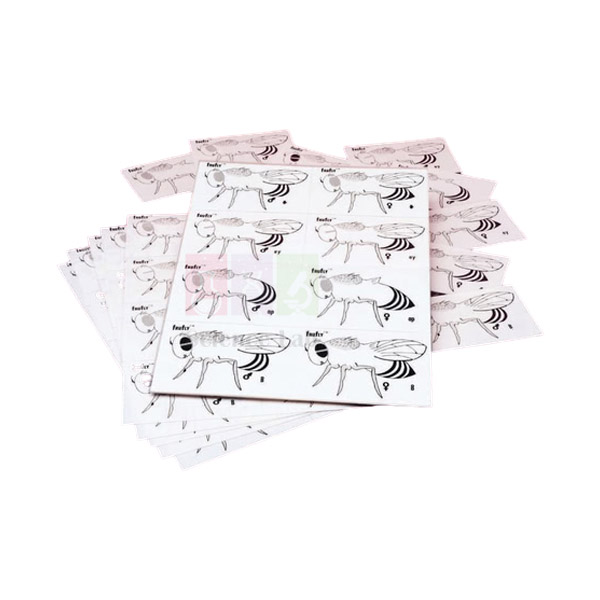
Fruit fly Genetics Kit
Fruit fly Genetics Kit (Product Code: SLE/BL/33) is a genetics simulation kit used to teach basic Drosophila melanogaster inheritance in school and college biology classes without keeping live flies. Students perform crosses with printed plastic pieces that snap apart from sheets — 15 sheets each — showing male and female flies and 4 types of fruit flies. It is made by Jain Scientific Equipments Pvt Ltd (ScienceLab), an OEM manufacturer of genetics inheritance kits in India, at its own factory in Ambala.
Specifications
| Parameter | Detail |
|---|---|
| Type | Genetics simulation kit — no live flies required |
| Organism modelled | Drosophila melanogaster (fruit fly) |
| Sheets | 15 sheets each, with snap-apart pieces |
| Pieces show | Male and female flies; 4 types of fruit flies |
| Pieces | Plastic, printed with features |
| Concepts simulated | Sex determination, single factor inheritance, double factor inheritance, sex linkage, dominance and recessiveness |
| Documentation | Teacher's Guide and Student instruction sheet |
| Product code | SLE/BL/33 |
| Manufacturer | Jain Scientific Equipments Pvt Ltd (ScienceLab) — OEM |
| Country of origin | India (made in Ambala, Haryana) |
What Is the Fruit Fly Genetics Kit Used For?
The fruit fly is the classic organism for inheritance studies because its traits are easy to see and it breeds quickly, but live cultures need regular feeding, anaesthetising and counting that many schools cannot fit into a timetable. With this kit, a teacher can introduce a single factor cross in one lesson: students choose parent pieces, predict the offspring with a Punnett square, then assemble and tally the offspring pieces to compare the result with the prediction. Later lessons build up to double factor crosses and sex-linked traits, while the male and female pieces make sex determination concrete.
Because nothing is alive, the activity can be repeated, paused or used for revision without any culture care. It works well as a biology experiment kit for students who will later meet real Drosophila work at college, and gives teachers a ready way to discuss why dominance and recessiveness produce the ratios they do. After each class, collect the pieces by type into labelled bags so that every set stays complete for the next group.
OEM Manufacturer
Jain Scientific Equipments Private Limited, the Ambala company behind the ScienceLab brand, is the OEM (original equipment manufacturer) of the Fruit fly Genetics Kit and produces it at its own licensed factory at Saha, Ambala, Haryana, India. Schools, colleges, dealers and importers order it factory-direct, so class-set quantities and replacement sheets are discussed with the maker itself — just ask us. Visit our company profile to learn more about the company.
Related Biology Lab Equipment
Resources that support the same genetics and inheritance unit:
- Mendelian Inheritance (Mendel's First) — covers Mendel's first law, the basis of single factor crosses
- Mendelian Inheritance (Mendel's Second) — supports the double factor crosses in the kit
- Human Genetic Disorders Poster — links fruit fly inheritance to human chromosomes and disorders
- Mitosis & Meiosis Set, Microscope Slides — shows the cell division behind the inheritance patterns
- DNA Activity Model — for the molecular side of the same topic
Other genetics and general teaching apparatus is listed in our Biology Lab Equipment range.
Frequently Asked Questions
Do I need live fruit flies to use the Fruit fly Genetics Kit?
No. The Fruit fly Genetics Kit is designed to teach Drosophila genetics without live flies, so there are no cultures to feed, anaesthetise or maintain. Students model each cross with printed plastic pieces instead, and the activity can be paused and resumed at any time.
What is included in the Fruit fly Genetics Kit?
The Fruit fly Genetics Kit includes 15 sheets each of snap-apart plastic pieces showing male and female flies and 4 types of fruit flies, plus a Teacher's Guide and a Student instruction sheet. For the exact number of pieces per sheet, contact us.
Which genetics topics does the Fruit fly Genetics Kit cover?
The Fruit fly Genetics Kit lets students simulate sex determination, single factor inheritance, double factor inheritance, sex linkage, and dominance and recessiveness. The topics build from a first single factor cross in one lesson to sex-linked traits later in the unit.
How many students can work with one Fruit fly Genetics Kit?
A class size for the Fruit fly Genetics Kit is not stated in our current details. Tell us how many groups you plan to run at the same time, and we can advise on how many kits to order for your class.
Can the pieces of the Fruit fly Genetics Kit be used again?
Yes, with care. The plastic pieces of the Fruit fly Genetics Kit are handled rather than used up during the crosses, so they can be collected by type into labelled bags after each class. Ask us about replacement sheets if any go missing.
Who manufactures the Fruit fly Genetics Kit?
Jain Scientific Equipments Pvt Ltd (ScienceLab) is the OEM manufacturer of the Fruit fly Genetics Kit (SLE/BL/33). It is made at the company's own licensed factory at Saha, Ambala, Haryana, India, and supplied factory-direct to schools, colleges, dealers and importers.
What details should go into a quotation request?
For a Fruit fly Genetics Kit quotation, include the product code SLE/BL/33, the number of kits, the delivery location in India or international markets, and any other genetics resources you want on the same order. The quotation comes directly from the manufacturer.
Request a Quote
For pricing and availability of the Fruit fly Genetics Kit, contact us or place it in the enquiry cart with the rest of your genetics teaching order.
Last updated: 24 September 2026