- Physics Lab Equipment
- Chemistry Lab Equipment
- Biology Lab Equipment
- Anatomical Lab Equipment
- Learning
- Educational Lab Equipment
- Magnets
- Agriculture
- Astronomy
- Earth Science
- Geography Lab Equipment
- Safety Lab Coat
- Laboratory
- Meteorological
- Electricity & Magnetism
- Heat
- School Lab Equipment
- Lab Glassware
- Science Lab Equipment
- Tvet Lab Equipment
- Robotics Kits Supplier and Manufacturer for Schools India
- Math Lab Equipment Manufacturers and Exporters in Ambala
- STEM Kits Manufacturers and Supplier India
- Engineering Lab Equipment
- Hospital Lab Equipment
- Water, Sanitation & Hygiene Supplies
- Cold Chain, Solar & Communication Equipment
- Nutrition
764.jpg)
Basic Botany Slide (Set of 25)
Basic Botany Slide (Set of 25) (Product Code: SLE/BL/09) is a collection of 25 glass microscope slides of botanical specimens used to teach the major plant groups in school and college biology practicals. It runs from algae such as Chlamydomonas and Spirogyra through mosses, liverworts and ferns to pine, maize and sunflower tissues. The set is supplied by Jain Scientific Equipments Pvt Ltd (ScienceLab), Ambala, India, among its prepared microscope slides for botany teaching.
Specifications
| Parameter | Detail |
|---|---|
| Number of slides | 25 |
| Slide type | Glass microscope slides with botanical specimens |
| Coverage | Specimens representing the major plant groups |
| Preparations | Whole mounts (E), transverse sections (TS), vertical sections (VS) and longitudinal sections (LS) |
| Product code | SLE/BL/09 |
| Supplied by | Jain Scientific Equipments Pvt Ltd (ScienceLab), Ambala, India |
Slides in the set, grouped for teaching:
- Algae: Chlamydomonas E; Spirogyra, vegetative E; Spirogyra, conjugation E; Fucus, dioecious antheridial and oogonial conceptacles.
- Fungi: Mucor, conjugation; Saccharomyces (yeast) budding; Penicillium, mycelium and conidia.
- Mosses and liverworts: Mnium, archegonial head VS; Mnium (moss) antheridial head VS; Marchantia, developing sporogonium VS; Marchantia (liverwort) thallus, antheridia VS; Marchantia, thallus, archegonia VS.
- Ferns: Dryopteris (fern), pinnule with sori TS; Dryopteris prothallus with antheridia and archegonia E.
- Gymnosperm: Pinus (pine) leaf TS.
- Flowering plant stems and roots: Zea, stem TS; Zea (maize), root TS; Helianthus, stem TS; Helianthus (sunflower) young root TS; Tilia (lime) young and old stem TS; Cucurbita (marrow) stem, for sieve tubes LS.
- Leaves, flowers, pollen and cell division: Prunus (cherry) leaf TS; Ranunculus (buttercup) flower bud LS; Pollen grains, wind and insect distribution E; Allium (onion) root apex, mitosis LS.
What Is the Basic Botany Slide Set Used For?
The set can carry a full botany practical course. Students begin by comparing simple algae and fungi, then trace the alternation of generations in mosses, liverworts and ferns using the antheridia, archegonia, sporogonium and prothallus slides. Stem and root sections of maize and sunflower give a direct monocot and dicot comparison, while the Cucurbita LS shows the sieve tubes of the phloem.
Pine and cherry leaf sections contrast a needle leaf with a broad leaf, the pollen slide supports lessons on wind and insect pollination, and the onion root apex shows cells in mitosis. Scan every slide at low power before moving to a higher objective, and ask students to draw and label each specimen; this builds the observation skills that botany lab equipment is meant to develop.
Supplier
ScienceLab is the trading name of Jain Scientific Equipments Private Limited, Ambala, which supplies prepared slide sets such as this botany collection to schools, colleges, universities, dealers and importers in India and international markets. For vendor registration, the supplying company is Jain Scientific Equipments Private Limited (CIN U29309HR2020PTC087597, GSTIN 06AAECJ8618A1ZT). Company background is available on the ScienceLab profile.
Related Prepared Slides
Useful additions for the same botany practicals:
- Basic Plant Anatomy Slide Set — extends the stem, root and leaf work into plant anatomy.
- Mitosis & Meiosis Set, Microscope Slides — follows cell division further than the single onion root slide.
- Protozoa and Algae Set of 20 — more algae for the lower-plant part of the course.
- Binocular Biological Microscope — for examining the sections in class.
- Slide Box, Wooden — storage to keep the collection together between practicals.
See every slide collection in the Prepared Slides category.
Frequently Asked Questions
How many slides are in the Basic Botany Slide (Set of 25)?
The Basic Botany Slide (Set of 25) contains 25 glass microscope slides, each carrying a different botanical specimen. Together they represent the major plant groups, from single-celled algae and fungi to mosses, ferns, pine and flowering plants.
Which plant groups does the Basic Botany Slide (Set of 25) cover?
The Basic Botany Slide (Set of 25) covers algae (Chlamydomonas, Spirogyra, Fucus), fungi (Mucor, yeast, Penicillium), mosses and liverworts (Mnium, Marchantia), a fern (Dryopteris), a gymnosperm (Pinus) and flowering plants including maize, sunflower, lime, marrow, cherry, buttercup and onion.
What do E, TS, VS and LS mean on the slide labels?
On the Basic Botany Slide (Set of 25), E marks a whole mount of the entire specimen, TS a transverse section, VS a vertical section and LS a longitudinal section. Knowing the direction of the cut helps students interpret what they see under the microscope.
Does the Basic Botany Slide (Set of 25) show mitosis?
Yes, the Basic Botany Slide (Set of 25) includes an Allium (onion) root apex LS showing mitosis. For a wider study of cell division, it can be paired with a dedicated mitosis and meiosis slide set from the same Prepared Slides range.
What microscope is needed for the Basic Botany Slide (Set of 25)?
The Basic Botany Slide (Set of 25) is examined with a compound light microscope; the product details do not name a minimum magnification. Scan each slide at low power first, then increase magnification, and ask us if you need a matching microscope quoted.
What should a quotation request for the Basic Botany Slide (Set of 25) include?
A quotation request for the Basic Botany Slide (Set of 25) should give the product code SLE/BL/09, the number of sets, and the delivery location. Mention any microscopes or storage boxes you want quoted with it so everything arrives together.
Who supplies the Basic Botany Slide (Set of 25)?
The Basic Botany Slide (Set of 25) is supplied by Jain Scientific Equipments Pvt Ltd (ScienceLab), Ambala, Haryana, India. The company sends slide sets to schools, colleges, universities, dealers and importers in India and international markets.
Request a Quote
Add the Basic Botany Slide (Set of 25) to the enquiry cart or send the number of sets you need through the contact page. We will reply with prices for the slides and any accessories you list.
Last updated: 24 September 2026
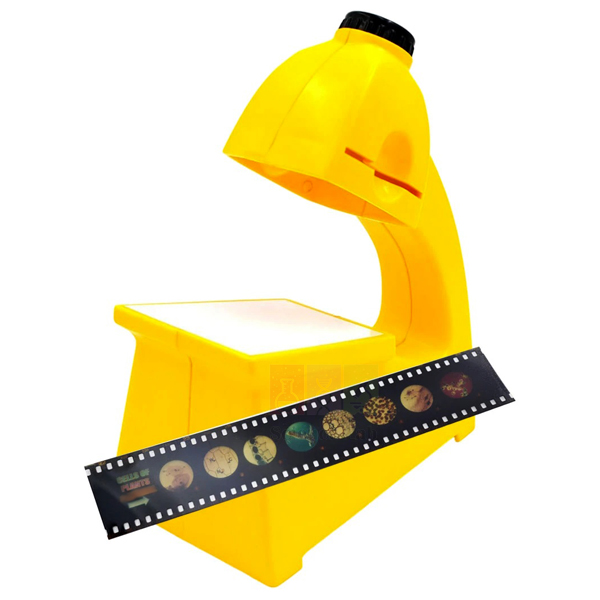
Bioviewer Strips Adaptation
Bioviewer Strips Adaptation (Product Code: SLE/BL/10) is a set of 8 images in 35 mm format, photographed through a microscope, used as a visual learning aid for the adaptation topic in biology lessons. Arrows and callouts on the images guide students to the features being studied, and a detailed lesson plan accompanies the set. It is supplied by Jain Scientific Equipments Pvt Ltd (ScienceLab), Ambala, India, as part of its biology teaching aids.
Key Details
| Parameter | Detail |
|---|---|
| Images in set | 8 |
| Image format | 35 mm |
| Image source | Photographed through a microscope |
| Student guidance | Arrows and callouts locating the important features |
| Teacher material | Detailed lesson plan designed to stimulate, inform and question students |
| Title | Adaptation |
| Type | Learning aid |
| Product code | SLE/BL/10 |
| Supplied by | Jain Scientific Equipments Pvt Ltd (ScienceLab), Ambala, India |
What Are Bioviewer Strips Used For?
Bioviewer strips bring microscope-level images into lessons where there are not enough microscopes or prepared slides for every student, or where students need to know what to look for before using a microscope themselves. Because each of the 8 images carries arrows and callouts, a student can find the feature under discussion without the teacher checking every eyepiece.
The lesson plan gives the session a structure: introduce the topic, let students study each image in turn, then use the plan’s questions to check understanding. The strips also work for revision and for comparing photographed features with students’ own slide observations, making them a flexible item among biology teaching aids.
Supplier
Jain Scientific Equipments Private Limited, trading as ScienceLab in Ambala, Haryana, supplies these Bioviewer strips as a learning aid alongside prepared slides and microscopes. Schools, colleges, dealers and importers in India and international markets can combine them with other biology resources in one enquiry. Read about the company on the ScienceLab profile.
Related Prepared Slides
Resources that connect image-based study with hands-on microscopy:
- Prepared Microscope Slide Set – Photosynthesis and Adaptations — real slides for the same topic area.
- Beginners Microscope Slide Set — a first slide collection once students move on to microscopes.
- Micro Slide Viewer — another viewer-based way to show magnified biology images to a class.
- Student Microscope with Fixed Condenser — for students to compare the images with their own observations.
Find more slide sets and viewers in the Prepared Slides category.
Frequently Asked Questions
What does the Bioviewer Strips Adaptation set contain?
The Bioviewer Strips Adaptation set contains 8 images in 35 mm format, each photographed through a microscope and marked with arrows and callouts. A detailed lesson plan accompanies the images to guide the teacher through the topic.
Which specimens appear on the Bioviewer Strips Adaptation images?
Bioviewer Strips Adaptation is titled for the biology topic of adaptation, but the individual specimens on the 8 images are not listed in the product details. Please ask us through the contact page if you need the image list before ordering.
How do the arrows and callouts help students?
The arrows and callouts on Bioviewer Strips Adaptation point directly to the important features being studied, so students can identify structures on their own. This saves time spent explaining where to look and keeps the lesson focused on what the features mean.
What is in the Bioviewer Strips Adaptation lesson plan?
The lesson plan with Bioviewer Strips Adaptation is described as detailed and designed to stimulate, inform and question students about the topic. It helps the teacher introduce each image, prompt discussion and check understanding through questions.
Is a viewer included with Bioviewer Strips Adaptation?
A viewer is not listed as part of Bioviewer Strips Adaptation; the set is described as 8 images in 35 mm format with a lesson plan. Please ask us about suitable viewing equipment for your classroom when you request a quotation.
Who supplies Bioviewer Strips Adaptation?
Bioviewer Strips Adaptation, product code SLE/BL/10, is supplied by Jain Scientific Equipments Pvt Ltd (ScienceLab), Ambala, India. Schools, colleges, dealers and importers in India and international markets can order it alone or with prepared slides and microscopes.
Request a Quote
Place Bioviewer Strips Adaptation in the enquiry cart or write to us via the contact page. Include the number of sets, any viewing equipment questions and your delivery location.
Last updated: 24 September 2026
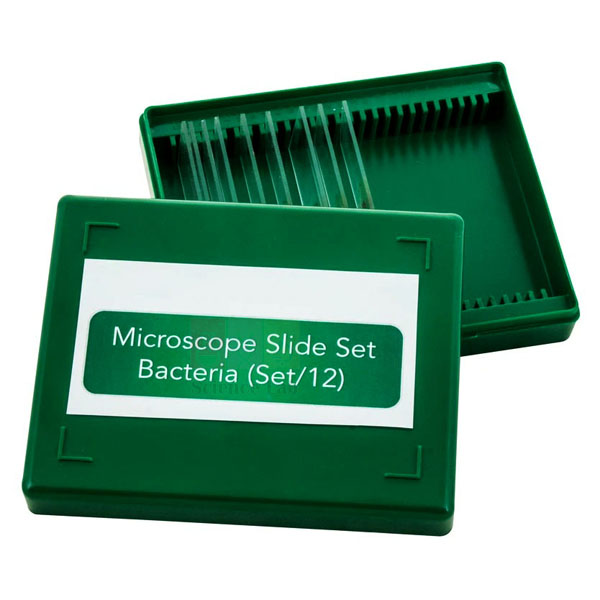
Bacteria slide Set of 12
Bacteria slide Set of 12 (Product Code: SLE/BL/11) is a set of 12 glass microscope slides of bacteria used to teach bacterial shapes, Gram staining and named species in biology and microbiology practicals. It ranges from mixed bacilli, cocci and spirillum to Rhizobium in a root nodule and Escherichia coli, and some samples need a 1000x magnification microscope. It is supplied by Jain Scientific Equipments Pvt Ltd (ScienceLab), Ambala, India, for microbiology teaching laboratories.
Specifications
| Parameter | Detail |
|---|---|
| Number of slides | 12 |
| Slide type | Glass microscope slides |
| Microscope requirement | 1000x magnification needed to view some samples |
| Bacterial shapes | Mixed bacteria – bacilli, cocci and spirillum |
| Gram reaction slides | Cocci, Gram positive and negative; Bacilli, Gram positive and negative |
| Named species | Bacillus megaterium; Bacillus subtilis; Escherichia coli; Streptococcus lactis; Staphylococcus epidermidis; Vibrio spirillum |
| Bacteria in host tissue | Rhizobium in root nodule; Mycobacterium tuberculosis in tissue |
| Product code | SLE/BL/11 |
| Supplied by | Jain Scientific Equipments Pvt Ltd (ScienceLab), Ambala, India |
The product listing names eleven slide subjects for this set of 12, so please confirm the complete slide list with us when you order.
What Is the Bacteria Slide Set Used For?
Teachers usually start with the mixed bacteria slide to show the three basic shapes, then move to the Gram-positive and Gram-negative cocci and bacilli, where the two staining reactions appear in contrasting colours. Named species such as Bacillus subtilis, Bacillus megaterium and Escherichia coli let students link a name to a shape and a staining result.
The Rhizobium root nodule slide connects microbiology with nitrogen fixation in plants, and the Mycobacterium tuberculosis tissue slide shows how bacteria appear within host tissue. Because some samples need 1000x magnification, plan to use an oil-immersion objective with immersion oil, and wipe the oil off each slide after use.
What to Specify When Ordering
- The number of sets needed for your practical groups.
- Whether your microscopes reach 1000x magnification, which some samples require.
- Whether immersion oil or a 1000x microscope should be quoted with the slides.
- Confirmation of the full 12-slide list, since eleven subjects are named in the listing.
Supplier
ScienceLab is the trading name of Jain Scientific Equipments Private Limited, based in Ambala, Haryana, India. The company supplies this bacteria slide set to schools, colleges, universities, microbiology teaching laboratories, dealers and importers in India and international markets, and can include microscopes and immersion oil in the same shipment. Company details are on the ScienceLab profile.
Related Prepared Slides
Items that complete a bacteria practical:
- Immersion Oil, 25ml — for oil-immersion viewing at high magnification.
- Monocular Microscope 1000x, LED light — a 1000x instrument for the samples that need it.
- Binocular Microscope, 1000x Mag LED — a binocular alternative at the same magnification.
- Microslide Helpful Bacteria — a lesson set on useful microbes.
- Microslide Harmful Bacteria — a lesson set on disease-causing bacteria.
Browse the full Prepared Slides range for more microbiology and biology slides.
Frequently Asked Questions
Which slides are included in the Bacteria slide Set of 12?
The Bacteria slide Set of 12 lists mixed bacteria, Gram-positive and Gram-negative cocci and bacilli, Bacillus megaterium, Rhizobium in root nodule, Mycobacterium tuberculosis in tissue, Escherichia coli, Bacillus subtilis, Vibrio spirillum, Streptococcus lactis and Staphylococcus epidermidis. Please confirm the remaining slide with us.
What magnification is needed for the Bacteria slide Set of 12?
A microscope with 1000x magnification is required to view some samples in the Bacteria slide Set of 12. At that power most microscopes use an oil-immersion objective, so keep immersion oil and lens tissue ready at the bench.
Does the Bacteria slide Set of 12 show Gram-positive and Gram-negative bacteria?
Yes, the Bacteria slide Set of 12 includes slides of Gram-positive and Gram-negative cocci and of Gram-positive and Gram-negative bacilli. Students can compare the two staining reactions side by side and relate them to the cell-wall differences taught in theory.
Which courses is the Bacteria slide Set of 12 suited to?
The Bacteria slide Set of 12 suits senior school biology, college microbiology and teacher-training practicals covering bacterial shapes, Gram staining and named species. Institutions with 1000x microscopes get the most from it, since some samples need that magnification.
Who supplies the Bacteria slide Set of 12?
The Bacteria slide Set of 12 (SLE/BL/11) is supplied by Jain Scientific Equipments Pvt Ltd (ScienceLab), Ambala, Haryana, India. The company ships slide sets to institutions, dealers and importers in India and international markets, alone or with microscopes.
What should a quotation request for the Bacteria slide Set of 12 include?
A quotation request for the Bacteria slide Set of 12 should state the product code SLE/BL/11, the number of sets and the delivery location. Add any microscopes or immersion oil you need so we can quote the complete practical set-up together.
Request a Quote
To get a price for the Bacteria slide Set of 12, add it to the enquiry cart or send your requirement through the contact page, listing the quantity and any related items.
Last updated: 24 September 2026
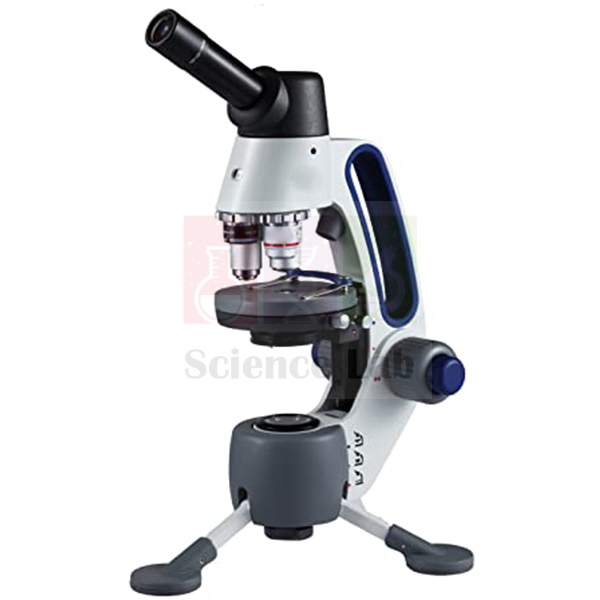
Binocular Micro/Macro/Field Microscope
Binocular Micro/Macro/Field Microscope (Product Code: SLE/M/52) is a dual-purpose binocular microscope used to view both whole specimens and prepared slides in classrooms, labs and outdoor field stations. A 2x macro objective works over a black/white contrast plate, while 4x, 10x and 40x micro objectives handle slides, giving a listed range of 10x to 400x. Cordless operation gives up to 50 hours of use on one 8-hour charge. It is supplied by Jain Scientific Equipments Pvt Ltd (ScienceLab), Ambala, India.
Specifications
| Parameter | Detail |
|---|---|
| Magnification range | 10x, 40x, 100x and 400x (as listed) |
| Eyepieces | 10x |
| Objectives | 2x macro; 4x, 10x and 40x micro |
| Head | Siedentopf-design binocular head |
| Focus | Coaxial coarse- and fine-focus control |
| Light source | Top and bottom LED lights; cool, energy-efficient white light |
| Illumination control | LED with variable intensity control |
| LED life | Up to 50,000 hours |
| Power supply | Cordless rechargeable or AC operation |
| Battery use | Up to 50 hours on a single 8-hour charge |
| Stage | Floating stage with clips for micro; floating black/white contrast plate for macro |
| Size | 15 in H x 6 in W x 8 in D (approx. 38.1 x 15.2 x 20.3 cm) |
| Product code | SLE/M/52 |
| Supplied by | Jain Scientific Equipments Pvt Ltd (ScienceLab), Ambala, India |
What Is the Micro/Macro Field Microscope Used For?
This instrument bridges the gap between a stereo magnifier and a slide microscope. In one lesson students can look at a whole beetle, seed head or rock chip on the contrast plate under the top light, then switch to a prepared slide of an insect leg or leaf section on the clipped stage with the bottom light. Use the black side of the plate for pale objects and the white side for dark ones.
The cordless battery makes it practical beside a pond, in a school garden or at a field station, where freshly collected samples can be examined before they dry out; back in the lab it runs on AC. The Siedentopf binocular head lets students set eye spacing without losing focus, and the coaxial knobs keep coarse and fine focus in one place, making it a flexible choice of school biology lab equipment in India.
Supplier
Jain Scientific Equipments Private Limited, known in the market as ScienceLab, supplies the Binocular Micro/Macro/Field Microscope from Ambala, Haryana. It is offered to schools, colleges, outdoor education centres, dealers and importers in India and international markets, and can be quoted with specimen sets and slides. Company details are on the ScienceLab profile.
Related Laboratory Equipment
Specimens and tools for macro and micro observation:
- Insect Mount Set — whole specimens for the macro contrast plate
- Insect Anatomy Slide Set of 9 — prepared slides for the micro objectives
- Insect Net, Economy — for collecting samples during field work
- Microscope Slides Depression — for pond-water drops and live organisms
- Binocular Stereo Microscope, 40x — a dedicated stereo option to compare
Explore further models in the Microscope category.
Frequently Asked Questions
What magnifications does the Binocular Micro/Macro/Field Microscope offer?
The Binocular Micro/Macro/Field Microscope is listed with a range of 10x, 40x, 100x and 400x. It has 10x eyepieces, a 2x macro objective and 4x, 10x and 40x micro objectives; please confirm the exact low-power figure with us when you enquire.
How long does the Binocular Micro/Macro/Field Microscope run on battery?
The Binocular Micro/Macro/Field Microscope gives up to 50 hours of use on a single 8-hour charge. It can also run on AC power, so the same unit works in the field and on a lab bench.
How do macro and micro modes differ on the Binocular Micro/Macro/Field Microscope?
In macro mode, the Binocular Micro/Macro/Field Microscope uses the 2x objective and a floating black/white contrast plate for whole specimens. In micro mode, the 4x, 10x and 40x objectives view slides held by clips on the floating stage.
What lighting does the Binocular Micro/Macro/Field Microscope have?
The Binocular Micro/Macro/Field Microscope has top and bottom LED lights giving cool, energy-efficient white light with variable intensity control. The LEDs are listed to last up to 50,000 hours, keeping maintenance to a minimum.
How large is the Binocular Micro/Macro/Field Microscope?
The Binocular Micro/Macro/Field Microscope measures 15 in H x 6 in W x 8 in D (about 38.1 x 15.2 x 20.3 cm). That compact footprint suits student benches as well as a field table.
Who supplies the Binocular Micro/Macro/Field Microscope?
The Binocular Micro/Macro/Field Microscope is supplied by Jain Scientific Equipments Pvt Ltd (ScienceLab), Ambala, Haryana, India. The company quotes schools, colleges, outdoor education centres, dealers and importers in India and international markets.
What should a quotation request for the Binocular Micro/Macro/Field Microscope include?
A quotation request for the Binocular Micro/Macro/Field Microscope should give the quantity, the delivery location and any specimen sets or slides needed. Mention whether units will be used mainly in the field so we can confirm the charging arrangement.
Request a Quote
Ask about the Binocular Micro/Macro/Field Microscope on the contact page, or add it to the enquiry cart with slides and specimen sets for your course.
Last updated: 24 September 2026
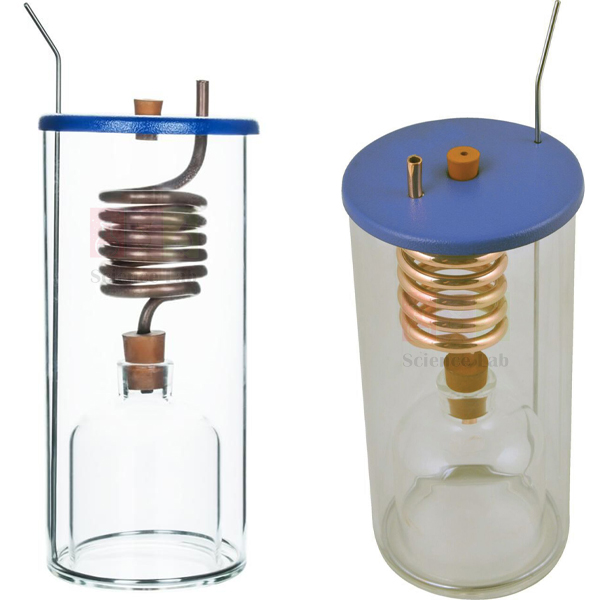
Calorimeter Food
Calorimeter Food (Product Code: SLE/BL/12) is a combustion calorimeter used to determine the energy value of food and fuels in school and college biology and chemistry laboratories. Teachers use it as a calorimeter experiment kit for nutrition and combustion lessons, built around a borosilicate glass vessel with a combustion chamber under a clear plastic lid with wire stirrer. It is made by Jain Scientific Equipments Pvt Ltd (ScienceLab), an OEM manufacturer, at its own factory in Ambala, India.
Specifications
| Parameter | Detail |
|---|---|
| Purpose | Determining the energy value of food and fuels |
| Vessel | Borosilicate glass vessel with a combustion chamber |
| Lid | Clear plastic lid with wire stirrer and a hole for a thermometer |
| Platform | Heat-resistant platform with support rod |
| Oxygen and ignition | Oxygen inlet tube and igniter coil mounting |
| Lead | 1 m insulated lead |
| Documentation | Supplied with instructions |
| Also required | Electrical supply, thermometer, oxygen supply and stand |
| Product code | SLE/BL/12 |
| Manufacturer | Jain Scientific Equipments Pvt Ltd (ScienceLab) — OEM |
| Country of origin | India (made in Ambala, Haryana) |
What Is the Food Calorimeter Used For?
A weighed sample of food is placed in the combustion chamber and a measured quantity of water is added to the vessel. The igniter coil lights the sample, oxygen is fed through the inlet tube so that it burns completely, and the heat released passes into the surrounding water while the wire stirrer keeps the temperature even. The thermometer reading before and after combustion gives the temperature rise; multiplying the mass of water by its specific heat capacity and by that rise, then dividing by the mass of sample burned, gives the energy value.
Because combustion takes place inside the water-filled vessel rather than under an open boiling tube, less heat escapes to the room than in the simple boiling-tube method. Students can compare fats, carbohydrates and proteins, or test fuels, and then discuss the remaining sources of error — a strong addition to school biology lab equipment in India for the nutrition topic. Keep oils and grease away from the oxygen supply, leave the gas and ignition to the teacher, and allow the glass vessel to cool before cleaning.
What to Specify When Ordering
- The number of calorimeters needed for your class or laboratory.
- Whether a thermometer should be quoted as well — one is required and passes through the hole in the lid.
- Whether a stand should be quoted, since a stand is listed as required.
- Your electrical and oxygen supply arrangements, so the igniter connection via the 1 m insulated lead can be confirmed for your lab.
OEM Manufacturer
Jain Scientific Equipments Private Limited, trading as ScienceLab, is the OEM (original equipment manufacturer) of the Calorimeter Food and makes it at its own licensed factory at Saha, Ambala, Haryana, India. The company is a registered MSME whose Udyam registration (UDYAM-HR-01-0003714) lists manufacturing as its major activity, and its export consignments are shipped under IEC AAECJ8618A issued by the DGFT. Colleges, schools and dealers buy factory-direct, and questions about the igniter coil, lid or replacement glass vessels go straight to the maker — just ask us. Visit our company profile for more.
Related Biology Lab Equipment
Items needed to set up and run the food calorimeter:
- Digital Thermometer — the calorimeter needs a thermometer through the lid
- Retort Stand — a stand is listed as required
- Thermometer Clamp — holds the thermometer steady during readings
- Glass Measuring Cylinder — for measuring the water added to the vessel
- Food Calorimeter — another food calorimeter from our Heat range, for comparison
Browse the Biology Lab Equipment range for more physiology and nutrition apparatus.
Frequently Asked Questions
What else do I need to use the Calorimeter Food?
The Calorimeter Food needs an electrical supply for the igniter, a thermometer, an oxygen supply and a stand, as these are listed as required alongside it. The thermometer passes through the hole in the clear plastic lid to read the water temperature.
What supply does the igniter coil of the Calorimeter Food need?
The supply rating for the igniter coil of the Calorimeter Food is not stated in our current details. Please contact us before choosing a power source, and we will confirm the connection for the 1 m insulated lead.
Is the Calorimeter Food vessel glass or metal?
The Calorimeter Food uses a borosilicate glass vessel containing a combustion chamber, closed by a clear plastic lid with a wire stirrer and a thermometer hole. The glass lets students watch the water and the burning sample throughout the experiment.
Can the Calorimeter Food test fuels as well as food?
Yes. The Calorimeter Food is designed to determine the energy value of both food and fuels, so the same apparatus serves nutrition lessons in biology and fuel-comparison work in chemistry, with the oxygen inlet tube helping each sample burn completely.
Are instructions provided with the Calorimeter Food?
Yes. The Calorimeter Food is supplied with instructions for its set-up and use. Teachers should still carry out a trial run before the class, particularly the ignition and oxygen supply steps, which should always remain teacher-operated.
Is a calibration certificate available for the Calorimeter Food?
Calibration-certificate availability for the Calorimeter Food should be discussed with us at the time of enquiry. Tell us what documentation your college or tender requires, and we will confirm what can accompany the units supplied.
Who manufactures the Calorimeter Food?
Jain Scientific Equipments Pvt Ltd (ScienceLab) is the OEM manufacturer of the Calorimeter Food (SLE/BL/12). It is made at the company's own licensed factory at Saha, Ambala, Haryana, India, and quoted factory-direct to colleges, schools, distributors and importers in India and international markets.
Request a Quote
To price the Calorimeter Food with its thermometer and stand, contact us or add it to the enquiry cart. Quotations come directly from the manufacturer.
Last updated: 24 September 2026
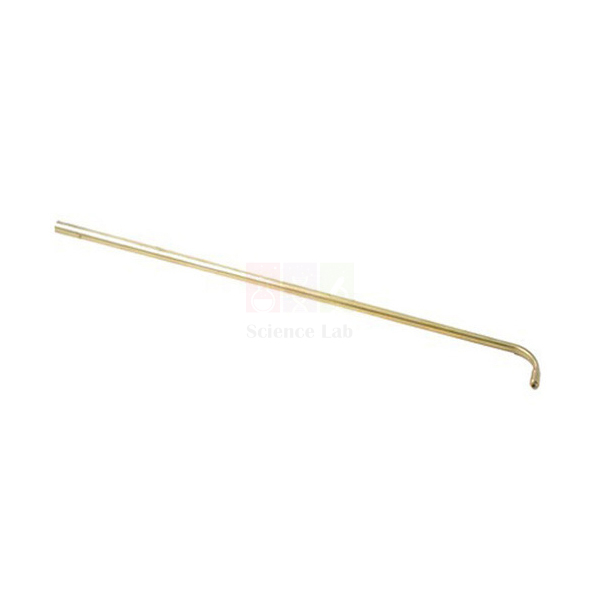
Blow Pipe
Blow Pipe (Product Code: SLE/BL/13) is a nickel-plated brass laboratory blowpipe with a curved end, used to direct a fine, hot flame onto a sample on a charcoal block during dry tests in chemistry laboratories. School and college students use it for the charcoal block reduction tests of qualitative salt analysis and simple mineral identification. It is made by Jain Scientific Equipments Pvt Ltd (ScienceLab), an OEM manufacturer, at its own factory in Ambala, India.
Key Details
| Parameter | Detail |
|---|---|
| Type | Laboratory blowpipe |
| Material | Brass |
| Finish | Nickel plated |
| Tip | Curved end |
| Used with | Charcoal block |
| Product code | SLE/BL/13 |
| Manufacturer | Jain Scientific Equipments Pvt Ltd (ScienceLab) — OEM |
| Country of origin | India (made in Ambala, Haryana) |
What Is the Blow Pipe Used For?
It is used for the charcoal block test. A little of the powdered salt, usually mixed with sodium carbonate, is placed in a small cavity cut in the block. The tip of the blowpipe is held at the edge of a luminous burner flame and the user blows gently and continuously, bending the flame onto the sample. Holding the tip just outside the flame gives a reducing flame, while pushing it slightly into the flame gives an oxidising flame; students then note any coating on the charcoal and whether a metallic bead forms.
Continuous blowing takes practice: breathe through the nose and use the cheeks as a reservoir so the flame stays steady. The curved end lets the flame be aimed downwards onto the block while the user keeps a comfortable distance, which is why the blowpipe remains standard chemistry lab equipment for school salt analysis. For hygiene, give each student their own blowpipe or wipe the mouthpiece with alcohol between users, and let the metal tip cool before putting it away.
OEM Manufacturer
ScienceLab is the trading name of Jain Scientific Equipments Private Limited, the OEM (original equipment manufacturer) of this blow pipe. It is made at the company's own licensed factory at Saha, Ambala, Haryana, India, rather than bought in from a trader, and goes factory-direct to schools, colleges, institutions, dealers and importers.
Because the maker handles every order itself, a repeat class set or a replacement for a lost or damaged pipe is simply a matter of asking us. Read more about the company on our company profile.
Related Chemistry Lab Equipment
Items used with the blow pipe in dry tests:
- Charcoal Block — the block this blow pipe is designed to be used with
- Bunsen Burner — the usual flame source for blowpipe work
- Glass Spirit Lamp — an alternative flame source where gas is not available
- Blow Pipe Brass — the plain brass blow pipe in the same range
See more items in the Chemistry Lab Equipment range.
Frequently Asked Questions
What is the Blow Pipe made of?
The Blow Pipe (SLE/BL/13) is made of brass with a nickel-plated finish and has a curved end. The curve lets the user aim a fine flame down onto a sample resting on a charcoal block while keeping a comfortable working distance.
Is a charcoal block included with the Blow Pipe?
No charcoal block is listed as part of the Blow Pipe; our product details describe it as used with a charcoal block. Add the Charcoal Block to your enquiry separately, unless your quotation from ScienceLab states that blocks are included.
What length is the Blow Pipe?
The length of the Blow Pipe is not given in our current product details. If your practical manual or tender specifies a length, send it through our contact page and ScienceLab, as the manufacturer, will confirm what it can supply before quoting.
How is the Blow Pipe cleaned between students?
Clean the Blow Pipe by wiping the mouthpiece with alcohol between users, clearing any soot from the tip once the metal has cooled, and storing it dry. For hygiene, many schools issue one blow pipe to each student during salt analysis practicals.
Who manufactures the Blow Pipe?
The Blow Pipe is manufactured by Jain Scientific Equipments Pvt Ltd (ScienceLab), the OEM, at its own factory at Saha, Ambala, Haryana, India. Schools, colleges, dealers and importers buy it factory-direct, and repeat or replacement orders are handled by the manufacturer itself.
Can schools order the Blow Pipe as a class set?
Yes. Schools and colleges can order the Blow Pipe in class-set quantities, and ScienceLab supplies institutions and distributors in India and international markets. State the number of pipes and whether charcoal blocks and burners are needed so one quotation covers the whole dry-test station.
Request a Quote
Quotations for the Blow Pipe come directly from the manufacturer. Send your quantity through our contact page, or add it to the enquiry cart with charcoal blocks and burners for a complete dry-test set-up.
Last updated: 24 September 2026
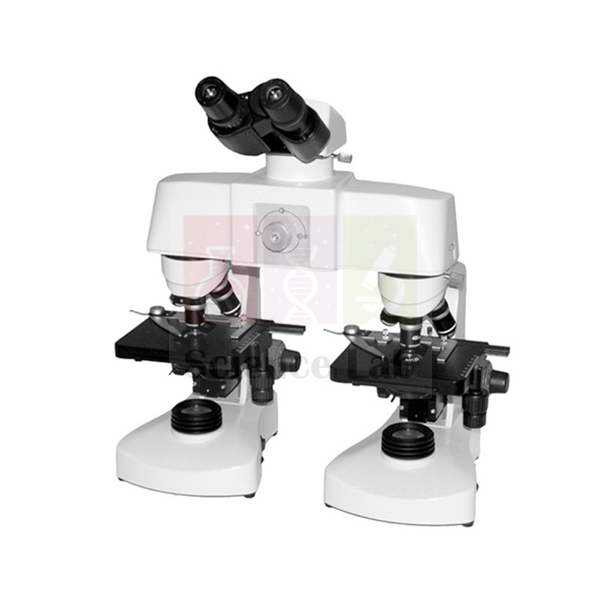
Forensic Comparison Microscope
Forensic Comparison Microscope (Product Code: SLE/M/53) is a twin-body microscope used to compare two specimens side by side, such as fibres, hairs or tool marks, in forensic science teaching labs and criminology courses. One Siedentopf-design trinocular head sits on a comparison bridge above two microscope bodies, with 2x macro and 4x, 10x and 40x micro objectives and top and bottom LED lighting. It is supplied by Jain Scientific Equipments Pvt Ltd (ScienceLab), Ambala, India, within its range of laboratory instruments in India.
Specifications
| Parameter | Detail |
|---|---|
| Head | One Siedentopf-design trinocular head mounted on a comparison bridge on top of 2 microscope bodies |
| Eyepieces | 2 x 10x |
| Objectives | 2x macro; 4x, 10x and 40x micro |
| Focus | Coaxial coarse and fine adjustment |
| Light source | Top and bottom LED lights; energy-efficient white light with virtually no heat |
| Illumination control | LED bulb with variable intensity control |
| LED life | Up to 50,000 hours between replacements |
| Power supply | Cordless rechargeable or AC operation |
| Stage | Floating stage with clips for micro; floating black-and-white plate for macro |
| Product code | SLE/M/53 |
| Supplied by | Jain Scientific Equipments Pvt Ltd (ScienceLab), Ambala, India |
What Is the Comparison Microscope Used For?
A comparison microscope brings two specimens into a single view so their features can be matched directly rather than from memory. In forensic science teaching, students set a questioned fibre beside a reference fibre, compare the colour and scale pattern of two hairs, or line up the striations left by a tool on two practice samples. The same approach helps in materials and textile classes where two samples must be judged against each other.
For a fair comparison, set both bodies to the same objective and match the top and bottom lighting with the intensity controls. Use the 2x macro objective and the black-and-white plate for larger items, and the 4x, 10x and 40x micro objectives with slides for fibres and hair. The LEDs give light with virtually no heat, so delicate samples are not warmed during long examinations.
Supplier
The Forensic Comparison Microscope is supplied by ScienceLab, the trading name of Jain Scientific Equipments Private Limited, Ambala, Haryana. Forensic science and criminology departments, police and investigation training academies, universities, dealers and importers in India and international markets can quote it with forensic practical kits and slides. The ScienceLab profile has more about the company.
Related Laboratory Equipment
Items used in the same forensic science practicals:
- Forensic Science Lab Investigation — a practical kit that generates evidence to examine
- Forensic Chemistry of Dusting for Fingerprints — companion activity on trace evidence
- Forensic Chemistry of Chromatography (Document Analysis) — ink comparison to pair with microscopy
- Microscope Slides Glass — for mounting fibre and hair samples
- 5mp Microscope Camera — for documenting comparisons (confirm fit with us)
More specialised microscopes are in the Microscope category.
Frequently Asked Questions
How does the Forensic Comparison Microscope work?
The Forensic Comparison Microscope has two microscope bodies joined by a comparison bridge that carries one Siedentopf-design trinocular head. Looking through its two 10x eyepieces, the user sees the specimens from both bodies together and can compare them side by side.
What objectives does the Forensic Comparison Microscope use?
The Forensic Comparison Microscope is listed with a 2x macro objective and 4x, 10x and 40x micro objectives. Macro work uses a floating black-and-white plate, while micro work uses a floating stage with clips for slides.
What lighting does the Forensic Comparison Microscope have?
The Forensic Comparison Microscope has top and bottom LED lights with variable intensity control, giving energy-efficient white light with virtually no heat. The LED is listed to last up to 50,000 hours between replacements, which keeps maintenance and downtime low.
Can the Forensic Comparison Microscope run without mains power?
Yes. The Forensic Comparison Microscope supports cordless rechargeable operation as well as AC operation. The battery run time is not stated in the listing, so ask us on the contact page if you plan extended use away from a socket.
Can a camera be fitted to the Forensic Comparison Microscope?
The Forensic Comparison Microscope has a trinocular head, which is normally used to attach a camera for recording comparisons. A camera and adapter are not listed as included, so tell us your imaging needs and we will advise on a suitable option.
Who supplies the Forensic Comparison Microscope?
The Forensic Comparison Microscope is supplied by Jain Scientific Equipments Pvt Ltd (ScienceLab), Ambala, Haryana, India. The company handles enquiries from universities, training academies, colleges, dealers and importers in India and international markets.
What should a Forensic Comparison Microscope quotation request include?
A Forensic Comparison Microscope quotation request should give the quantity, the delivery location and whether you need a camera for the trinocular port. Adding the forensic kits or slides you plan to use lets us quote a complete practical set-up.
Request a Quote
Enquire about the Forensic Comparison Microscope through the contact page, or add it to the enquiry cart with your forensic science practical kits.
Last updated: 24 September 2026
989.jpg)
Clinostat (Electric)
Clinostat (Electric) (Product Code: SLE/BL/14) is a motor-driven plant physiology instrument used to study geotropism and phototropism on seedlings, cut shoots and small potted plants in school and college botany labs. Seedlings pinned to its cork-faced disc turn slowly at 5 revolutions per hour on 220V, 50Hz mains, so gravity or light no longer acts from one fixed direction. It is made by Jain Scientific Equipments Pvt Ltd (ScienceLab), an OEM manufacturer, at its own factory in Ambala, India.
Specifications
| Parameter | Detail |
|---|---|
| Application | Geotropism and phototropism studies on seedlings, cut shoots and small potted plants |
| Specimen disc | Cork-lined/faced disc with a fitting to take a specimen tube; seedlings are pinned to the cork |
| Cork disc diameter | Listed as both 70 mm and 100 mm in our catalogue data; confirm at enquiry |
| Drive | Electric motor, 5 revolutions per hour |
| Angle adjustment | By thumb screw |
| Cover | Clear plastic cover |
| Power supply | 220V, 50Hz; complete with 3-core cable |
| Height | 300 mm |
| Product code | SLE/BL/14 |
| Manufacturer | Jain Scientific Equipments Pvt Ltd (ScienceLab) — OEM |
| Country of origin | India (made in Ambala, Haryana) |
What Is the Electric Clinostat Used For?
For a geotropism experiment, germinate seeds such as peas or beans on damp cotton until the roots and shoots are a few centimetres long, pin them to the cork disc and set the axis horizontal with the thumb screw. As the disc turns at 5 revolutions per hour, each seedling experiences gravity from every side in turn, so roots and shoots keep growing in the direction they were placed. A second set pinned to a stationary cork board shows the normal response, with roots curving down and shoots curving up, for direct comparison.
Phototropism is demonstrated the same way: a plant rotating beside a window grows straight, while a stationary control bends towards the light. The clear plastic cover helps hold humidity around the specimens during longer runs. As with any mains-powered botany lab equipment, connect the 3-core cable to an earthed socket, keep water away from the motor housing and switch off before repositioning seedlings.
OEM Manufacturer
Jain Scientific Equipments Private Limited, trading as ScienceLab, is the OEM (original equipment manufacturer) of this electric clinostat and builds it at its own licensed factory at Saha, Ambala, Haryana, India. Schools, colleges, universities, dealers and importers buy it factory-direct rather than through a trader. Questions about a spare cork disc, cover or repeat order are handled by the manufacturer itself; just ask us. Learn more on our company profile.
Related Botany Equipment
These items support the same plant growth and response practicals:
- Plant Hormones Set — IAA and other growth regulators for experiments on the hormones behind tropic responses.
- Hydroponic Tray — seed trays under a grow light for raising seedlings ahead of clinostat runs.
- Kit for Demonstrating Seed Respiration in Germination — a companion practical on germinating seeds.
- Photosynthesis Apparatus — measures gas evolved by aquatic plants, for a second light-response lesson.
- Potometer Apparatus — measures transpiration by cut shoots in the same plant physiology unit.
This clinostat is listed with other plant science apparatus in our Botany category.
Frequently Asked Questions
What plant material can be mounted on the Clinostat (Electric)?
The Clinostat (Electric) takes seedlings, cut shoots and small potted plants. Seedlings are pinned to the cork-faced disc, and a fitting on the disc accepts a specimen tube, so both pinned and tube-held material can be rotated.
How fast does the Clinostat (Electric) rotate?
The motor of the Clinostat (Electric) turns the disc at 5 revolutions per hour, slow enough to avoid spinning effects while evening out the gravity or light stimulus acting on the seedlings over time.
What is the diameter of the cork disc?
Our catalogue data for the Clinostat (Electric) lists the cork disc as both 70 mm and 100 mm in diameter, so please confirm the disc size with us through the contact page before ordering if it matters for your specimens.
What power supply does the Clinostat (Electric) need?
The Clinostat (Electric) runs on 220V, 50Hz mains and comes complete with a 3-core cable. If your laboratory uses a different mains supply, raise it with us before ordering so the quotation matches your site.
Can the axis angle of the clinostat be changed?
Yes. On the Clinostat (Electric) a thumb screw adjusts the angle, so the disc can be set horizontally for geotropism work or at other angles for comparison runs, with the clear plastic cover protecting the specimens.
Who manufactures the Clinostat (Electric)?
Jain Scientific Equipments Pvt Ltd (ScienceLab) is the OEM manufacturer of the Clinostat (Electric), building it at its own licensed factory at Saha, Ambala, Haryana, India, and supplying schools, colleges and dealers directly.
Is a calibration certificate available for the Clinostat (Electric)?
The Clinostat (Electric) is a teaching instrument rather than a measuring device. If your institution needs any documentation, including a calibration certificate, discuss it with us at enquiry stage; quotations for India and international markets come direct from the manufacturer.
Request a Quote
Request manufacturer-direct pricing for the Clinostat (Electric) through our contact page, or add it to the enquiry cart with other plant physiology apparatus.
Last updated: 24 September 2026