- Physics Lab Equipment
- Chemistry Lab Equipment
- Biology Lab Equipment
- Anatomical Lab Equipment
- Learning
- Educational Lab Equipment
- Magnets
- Agriculture
- Astronomy
- Earth Science
- Geography Lab Equipment
- Safety Lab Coat
- Laboratory
- Meteorological
- Electricity & Magnetism
- Heat
- School Lab Equipment
- Lab Glassware
- Science Lab Equipment
- Tvet Lab Equipment
- Robotics Kits Supplier and Manufacturer for Schools India
- Math Lab Equipment Manufacturers and Exporters in Ambala
- STEM Kits Manufacturers and Supplier India
- Engineering Lab Equipment
- Hospital Lab Equipment
- Water, Sanitation & Hygiene Supplies
- Cold Chain, Solar & Communication Equipment
- Nutrition
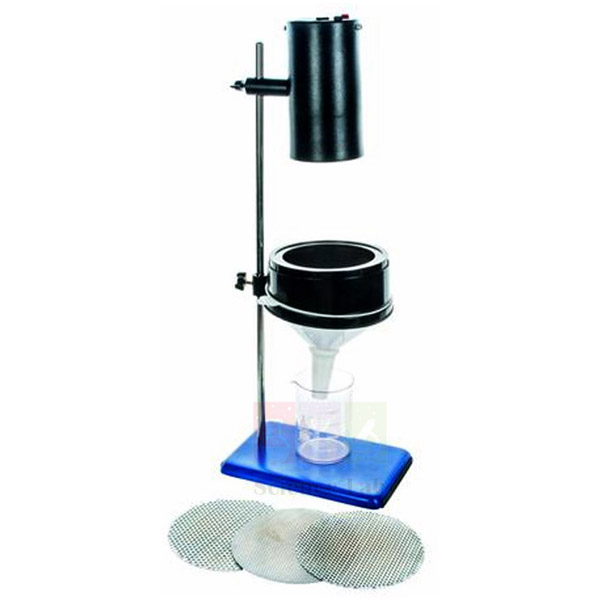
Funnel Tullgren
Funnel Tullgren (Product Code: SLE/BL/34) is a heat-and-light extraction funnel used to collect small invertebrate animals from a dry soil sample in school and college ecology practicals. The sample rests on a gauze mesh over the funnel beneath a light, and most species are collected after two hours, with complete extraction taking two-three days. It is made by Jain Scientific Equipments Pvt Ltd (ScienceLab), an OEM manufacturer of zoology lab equipment in India, at its own factory in Ambala.
Key Details
| Parameter | Detail |
|---|---|
| Type | Tullgren funnel for extracting soil invertebrates |
| Sample container | Base made from gauze, with a mesh designed to hold soil particles but permit the animals to pass |
| Arrangement | Container placed over a funnel, with a light above |
| Principle | Heat from above drives animals away from the top of the sample, through the gauze and into the funnel |
| Sample | Dry soil |
| Extraction time | Most species collected after two hours; complete extraction takes two-three days |
| Product code | SLE/BL/34 |
| Manufacturer | Jain Scientific Equipments Pvt Ltd (ScienceLab) — OEM |
| Country of origin | India (made in Ambala, Haryana) |
What Is the Tullgren Funnel Used For?
Soil biodiversity is hard to see by eye because most soil animals are tiny and hide from light. A Tullgren funnel turns that behaviour into a collecting method: students take equal samples from contrasting sites — a mown lawn, leaf litter under trees, a flower bed — set each one up under the lamp, and compare what drops into the collecting container beneath the funnel spout. Mites, springtails, small beetles and insect larvae are typical finds, and they can be counted and sorted under a hand lens or microscope.
Timing matters when planning the lesson. Most species will have come through after two hours, enough for a single practical session, while a full count needs the funnel left running for two-three days. Keep the light at a steady height so the sample dries from the top down rather than all at once, and place a little damp tissue in the collecting container if the animals are to be observed alive and returned. Several funnels running side by side turn a spare bench into a soil-ecology station, a useful addition to any biology lab setup for schools in India.
OEM Manufacturer
ScienceLab is the trading name of Jain Scientific Equipments Private Limited, the OEM (original equipment manufacturer) that makes the Funnel Tullgren at its own licensed factory at Saha, Ambala, Haryana, India. It is a registered MSME enterprise with manufacturing as its major activity (Udyam UDYAM-HR-01-0003714) and ships export orders under its DGFT Importer-Exporter Code AAECJ8618A. Schools, colleges and field centres buy direct from the maker, and questions about the gauze, funnel or repeat sets go to the same team — just ask us. More background is on our company profile page.
Related Biology Lab Equipment
Equipment used before and after the extraction in a soil-life study:
- Garden Auger Soil — screw-type auger for taking the soil samples to be extracted
- Tulgren Funnel — our other Tullgren-type listing, for comparison
- Invertebrate Sampling Tray — for sorting the animals recovered from the funnel
- Hand Lens — for a first look at mites, springtails and larvae
- Dissection Microscope — for identifying the smallest soil animals in detail
For fieldwork and ecology apparatus beyond this list, open the Biology Lab Equipment category.
Frequently Asked Questions
How long does an extraction take with the Funnel Tullgren?
With the Funnel Tullgren, most species are collected after two hours, which fits a single practical session. Complete extraction takes two-three days, so leave the funnel running over that period if students need a full count of the animals in each sample.
What kind of sample is the Funnel Tullgren designed for?
The Funnel Tullgren is described for extracting small invertebrate animals from a dry soil sample. If you plan to use other material, such as damp leaf litter, ask us first so we can advise whether the funnel suits your investigation.
Is a lamp included with the Funnel Tullgren?
The Funnel Tullgren works with a light above the sample, but our listing does not say whether a lamp is part of the supply. Please confirm the exact contents with us before ordering, and mention it if you want a lamp quoted.
Is a collecting container supplied with the Funnel Tullgren?
A collecting container is not stated for the Funnel Tullgren. Any small jar or tube that fits under the funnel spout can be used; tell us if you want suitable containers quoted along with the funnels for your class.
What animals will students find with the Funnel Tullgren?
Results from the Funnel Tullgren depend on the soil sampled, but small invertebrates such as mites, springtails and insect larvae are commonly recovered by this method. Students can then count and sort them under a hand lens or microscope.
How is the Funnel Tullgren different from the Tulgren Funnel listing?
The Funnel Tullgren and our separate Tulgren Funnel listing work on the same heat-and-light principle for extracting soil animals. Compare the two product pages, or contact us with your class size and sample type, and we will help you choose between them.
Who manufactures the Funnel Tullgren?
Jain Scientific Equipments Pvt Ltd (ScienceLab) is the OEM manufacturer of the Funnel Tullgren (SLE/BL/34). It is made at the company's own licensed factory at Saha, Ambala, Haryana, India, and supplied factory-direct to schools, colleges, distributors and importers in India and international markets.
Request a Quote
To get a quotation for the Funnel Tullgren, write to us via the contact page or add it to your enquiry cart along with the other items for your soil ecology practical. Quotations come directly from the manufacturer.
Last updated: 24 September 2026
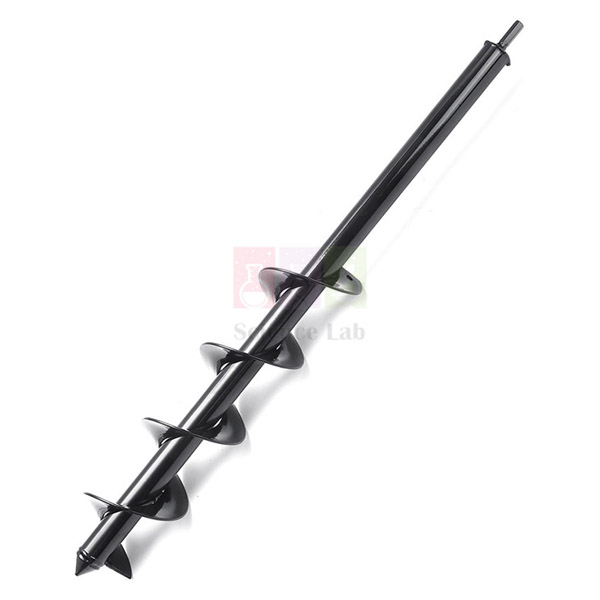
Garden Auger Soil
Garden Auger Soil (Product Code: SLE/BL/35) is a screw-type soil auger used to collect soil samples from school grounds, garden plots and field sites for biology and ecology investigations. Its top has an eye that accepts a tommy bar for turning (the bar is not included), so students can lift a core of soil without digging a pit. It is made by Jain Scientific Equipments Pvt Ltd (ScienceLab), an OEM manufacturer of biology lab equipment in India, at its own factory in Ambala.
Key Details
| Parameter | Detail |
|---|---|
| Type | Soil auger, screw type |
| Purpose | Collection of soil samples |
| Handle fitting | Eye to accept a tommy bar |
| Tommy bar | Not included |
| Product code | SLE/BL/35 |
| Manufacturer | Jain Scientific Equipments Pvt Ltd (ScienceLab) — OEM |
| Country of origin | India (made in Ambala, Haryana) |
What Is the Soil Auger Used For?
To take a sample, slide a tommy bar or similar strong rod through the eye, press the tip into the ground and turn the auger so the screw draws itself down. Pulling it straight up brings soil out on the screw, which can be scraped into a labelled bag noting site and depth. Repeating the bore at the same spot lets a class compare topsoil with the layer beneath, and sampling at several points gives a fair picture of how soil changes between a shaded bed, a path edge and an open lawn.
The samples then feed straight into classroom investigations: texture and colour descriptions, pH and nutrient tests, moisture and organic-matter content, or extraction of soil animals with a Tullgren funnel. That makes the auger a practical starting point for plant biology lab equipment set-ups that link soil conditions to plant growth. After use, knock off loose soil and wipe the screw clean and dry before storing it for the next field trip.
What to Specify When Ordering
- The number of augers needed for your class or field groups.
- Whether you already have a tommy bar or strong rod to fit the eye, since the bar is not included.
- Any length or material details you need confirmed, as these are not listed for this auger.
OEM Manufacturer
Jain Scientific Equipments Private Limited trades as ScienceLab and is the OEM (original equipment manufacturer) of the Garden Auger Soil, which it makes at its own licensed factory at Saha, Ambala, Haryana, India. Field-studies departments, schools and dealers buy the auger factory-direct rather than through a hardware trader. Details such as length or material can be confirmed with the maker before you order — just ask us. See the company profile for more information.
Related Biology Lab Equipment
Items that work with the auger in a soil sampling and testing workflow:
- Tulgren Funnel — extracts small soil animals from the samples you collect
- Soil Analysis Kit — for testing the collected soil in the classroom
- Water And Soil Analysis Kit — combines soil tests with water testing on the same field trip
- Quadrat — marks out the sampling area before boring
- Garden Secateurs — for clearing plants or collecting plant material at the same site
More fieldwork and laboratory items are grouped in our Biology Lab Equipment section.
Frequently Asked Questions
Is a tommy bar included with the Garden Auger Soil?
No. The Garden Auger Soil has an eye at the top to accept a tommy bar, but the bar itself is not included. A tommy bar or similar strong rod slid through the eye gives the leverage needed to turn the screw into the ground.
What does "screw type" mean for the Garden Auger Soil?
On the Garden Auger Soil, the working end is shaped like a large screw. Turning it draws the auger down into the soil, and the turns of the screw hold soil so that a sample comes up with it when the auger is lifted out.
How long is the Garden Auger Soil and what is it made of?
Length and material of the Garden Auger Soil are not given in our current product details. Please contact us if you need them before ordering, for example to check how deep students can sample, and we will confirm them for the auger quoted.
What can students do with samples from the Garden Auger Soil?
Samples taken with the Garden Auger Soil feed classroom investigations such as texture and pH testing, moisture and organic-matter measurements, and extraction of soil invertebrates with a Tullgren funnel, linking soil conditions to plant growth.
How should the Garden Auger Soil be cleaned after fieldwork?
After fieldwork, knock loose soil off the Garden Auger Soil, wipe the screw clean and let it dry fully before storage. Keeping the screw clean and dry helps it bite into the ground smoothly on the next field trip.
Who manufactures the Garden Auger Soil?
Jain Scientific Equipments Pvt Ltd (ScienceLab) is the OEM manufacturer of the Garden Auger Soil (SLE/BL/35). It is made at the company's own licensed factory at Saha, Ambala, Haryana, India, and supplied factory-direct to schools, colleges, dealers and importers.
Can you supply the Garden Auger Soil for a whole class or for export?
Yes. ScienceLab supplies the Garden Auger Soil in class quantities to schools, colleges and distributors in India and international markets. Send your quantity and delivery location via the contact page, and the quotation will come directly from the manufacturer.
Request a Quote
Ask for a price on the Garden Auger Soil (SLE/BL/35) through our contact page, or add it to the enquiry cart with the rest of your fieldwork equipment. Quotations come directly from the manufacturer.
Last updated: 24 September 2026

Micrometer Disc Reticle
Micrometer Disc Reticle (Product Code: SLE/M/67) is a 25 mm straight-line eyepiece reticle carrying a 5 mm scale divided into 100 parts, used inside a stereomicroscope eyepiece to measure specimens while they are being viewed. It fits inside most stereomicroscope eyepieces and comes with a retainer ring that holds the disc in position. It is supplied by Jain Scientific Equipments Pvt Ltd (ScienceLab), Ambala, India, as one of the measuring accessories it offers as a laboratory instruments supplier in India.
Specifications
| Parameter | Detail |
|---|---|
| Type | Straight-line micrometer reticle (eyepiece disc) |
| Diameter | 25 mm |
| Scale length | 5 mm |
| Divisions | 100 |
| Fit | Inside most stereomicroscope eyepieces |
| Included | Retainer ring to secure the reticle in the eyepiece |
| Product code | SLE/M/67 |
| Supplied by | Jain Scientific Equipments Pvt Ltd (ScienceLab), Ambala, India |
What Is the Micrometer Disc Reticle Used For?
A reticle turns a stereo microscope into a measuring instrument. Students can record the body length of insects and larvae, the size of seeds, fish scales or sand grains, and the spacing of leaf features, then compare samples in ecology or genetics practicals. Because the scale sits in the eyepiece, it stays superimposed on the specimen at every position, which is quicker than placing a ruler beside the object and far more precise at magnification.
The divisions must be calibrated before readings mean anything. Put a stage micrometer slide under the objective, line up the two scales and work out the real distance that one reticle division covers at that magnification; repeat for every zoom or objective setting you use. When installing the disc, handle it by its edges, seat it in the eyepiece, secure it with the retainer ring and adjust the eyepiece focus until the scale looks sharp.
What to Specify When Ordering
- Your stereomicroscope model, so the fit of the 25 mm disc can be confirmed
- Number of reticles, usually one per measuring eyepiece
- Whether a stage micrometer slide is needed for calibration
Supplier
This eyepiece reticle is supplied by Jain Scientific Equipments Private Limited, the Ambala, Haryana company behind the ScienceLab name, together with stage micrometer slides, eyepieces and stereo microscopes. Universities, schools, research labs, dealers and importers in India and international markets can order it on its own or as part of a measuring set-up. Read about the company on the ScienceLab profile page.
Related Microscope Equipment
Items used with an eyepiece reticle for microscope measurement:
- Micrometric Slide — a stage micrometer for calibrating the reticle scale
- Eyepiece Micrometric — a 10x eyepiece that already contains a measuring scale
- Stereo Microscope — a low-power instrument for measuring whole specimens
- Binocular Stereo Microscope — another stereo model for dissection and measurement
- Lens Tissue — for keeping the reticle and eyepiece lenses free of dust
Browse all accessories in the Microscope category.
Frequently Asked Questions
What scale does the Micrometer Disc Reticle have?
The Micrometer Disc Reticle carries a straight-line 5 mm scale divided into 100 divisions on a disc 25 mm in diameter. The real size each division represents depends on the magnification, so the scale is calibrated against a stage micrometer.
Will the Micrometer Disc Reticle fit my eyepiece?
The Micrometer Disc Reticle fits inside most stereomicroscope eyepieces that accept a 25 mm disc. To be certain, send your microscope model or the eyepiece details through the contact page and we will confirm before you order.
How is the Micrometer Disc Reticle held in the eyepiece?
The Micrometer Disc Reticle comes with a retainer ring that secures it inside the eyepiece. Once fitted, the scale stays fixed in the field of view, and the eyepiece focus is adjusted until the lines appear sharp.
How do I calibrate the Micrometer Disc Reticle?
Calibrate the Micrometer Disc Reticle by placing a stage micrometer slide under the microscope, aligning both scales and noting how many reticle divisions match a known distance. Calculate the value of one division and repeat the process for each magnification or zoom setting.
Who supplies the Micrometer Disc Reticle?
Jain Scientific Equipments Pvt Ltd (ScienceLab), Ambala, Haryana, India supplies the Micrometer Disc Reticle to schools, colleges, research laboratories, dealers and importers in India and international markets, together with stage micrometer slides and stereo microscopes.
Request a Quote
Send the number of Micrometer Disc Reticles you need and your microscope model through the contact page, or add the reticle to the enquiry cart with a stage micrometer for calibration.
Last updated: 24 September 2026
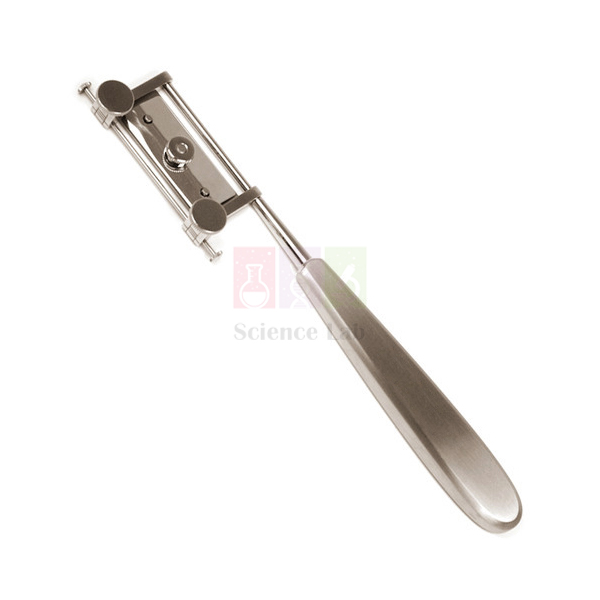
Handle Skin Grafting Small
Handle Skin Grafting Small (Product Code: SLE/BL/36) is a small stainless steel handle for a skin grafting instrument — the hand-held tool used to cut thin sheets of skin for covering wounds and burns — used in surgical instrument sets and in instrument training. Our product details describe it as corrosion proof and highly reliable for medical application, and nursing, paramedical and surgical teaching units also use it for recognition practice. It is supplied by Jain Scientific Equipments Pvt Ltd (ScienceLab), Ambala, India.
Key Details
| Parameter | Detail |
|---|---|
| Type | Skin grafting handle, small |
| Material | Stainless steel |
| Property | Corrosion proof |
| Intended application | Medical application |
| Blade | Not mentioned in our product details — confirm compatibility when enquiring |
| Product code | SLE/BL/36 |
| Supplied by | Jain Scientific Equipments Pvt Ltd (ScienceLab), Ambala, India |
What Is the Skin Grafting Handle Used For?
The handle carries the cutting part of a free-hand skin grafting instrument. In a grafting procedure the donor area is prepared, the instrument is drawn across the skin at a shallow angle, and a thin graft is lifted and moved to the wound or burn that needs covering.
In a skills lab the small handle is laid out with other surgical instruments so that trainees learn to name it, hold it correctly and understand where it fits in the procedure; pairing it with a burn model helps explain why grafts are needed. Wash the handle after each session, dry it thoroughly and follow your institution's own cleaning and sterilisation procedure if it is to be used clinically.
What to Specify When Ordering
- Which handle pattern you need — this Small handle or the Eschman Type in the same range
- The grafting blades or knives you already use, so fit can be checked
- Quantity per instrument set or training group
- Whether the handle is for teaching sets or clinical use, and any documentation you need
Supplier
Jain Scientific Equipments Private Limited, trading as ScienceLab from Ambala, Haryana, India, supplies this small skin grafting handle within its surgical instruments range. As a laboratory instruments supplier in India, the company quotes it for nursing and paramedical colleges, hospital training units and distributors; clinical procurement requirements should be raised before ordering. More detail is on our company profile.
Related Surgical Instruments
Instruments and models used alongside a skin grafting handle:
- Handle Skin Grafting Eschman Type — the Eschman-pattern alternative in the same range
- Scalpel Handle No. 3 — another bladed-instrument handle for recognition practice
- Tissue Forceps Standard Straight — for handling the graft during a demonstration
- Instrument Tray Stainless Steel — for laying out the handle with other instruments
- Human Skin with Burn Pathologies Model — shows the burn injuries that grafting is used to treat
Browse the Surgical Instruments range for more stainless steel instruments.
Frequently Asked Questions
What is the Handle Skin Grafting Small made of?
The Handle Skin Grafting Small is made of stainless steel that our product details describe as corrosion proof and highly reliable for medical application. Stainless steel tolerates repeated washing and drying, which suits both instrument rooms and teaching sets.
Does the Handle Skin Grafting Small come with a blade?
No blade is mentioned for the Handle Skin Grafting Small; the listing covers the handle only. Tell us which grafting blades or knives you use through our contact page so ScienceLab can confirm fit before you place an order.
How is the Handle Skin Grafting Small different from the Eschman Type?
The Handle Skin Grafting Small and the Handle Skin Grafting Eschman Type are two separate handle patterns in the same surgical instruments range. Neither listing gives dimensions, so contact us if you need the two compared before choosing one for your department.
Can the Handle Skin Grafting Small be sterilised?
A sterilisation method is not stated for the Handle Skin Grafting Small, and it is not described as supplied sterile. Follow your institution's own procedure for stainless steel instruments and ask us if you need further guidance before ordering.
Is the Handle Skin Grafting Small for clinical use or for teaching?
Our product details describe the Handle Skin Grafting Small for medical application, and it is also used in instrument-recognition sets for teaching. Buyers with clinical procurement requirements should discuss the documentation they need with ScienceLab before ordering.
Who supplies the Handle Skin Grafting Small?
The Handle Skin Grafting Small is supplied by Jain Scientific Equipments Pvt Ltd (ScienceLab), Ambala, Haryana, India. The company sources it for nursing and paramedical colleges, hospital training units and distributors in India and international markets.
Request a Quote
For a quotation on the Handle Skin Grafting Small, use our contact page or add it to the enquiry cart with any other instruments on your list.
Last updated: 24 September 2026
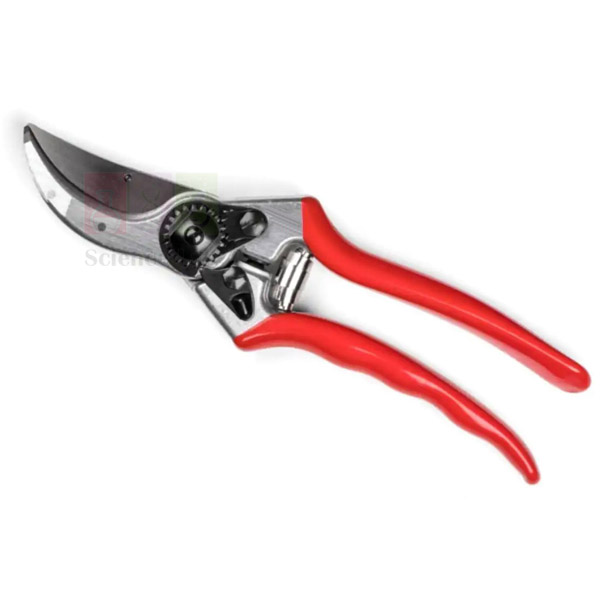
Garden Secateurs
Garden Secateurs (Product Code: SLE/BL/37) are hand-held pruning shears used to snip buds and similar plant material cleanly for flower study, propagation experiments and school-garden care. Listed among the garden tools in the biology range, they give botany teachers a clean cut where ordinary scissors would crush soft stems. They are supplied by Jain Scientific Equipments Pvt Ltd (ScienceLab), Ambala, India, alongside its botany lab equipment in India.
Key Details
| Parameter | Detail |
|---|---|
| Type | Garden secateurs (hand pruning shears) |
| Purpose | Snipping buds and similar plant material |
| Listed among | Garden tools |
| Product code | SLE/BL/37 |
| Supplied by | Jain Scientific Equipments Pvt Ltd (ScienceLab), Ambala, India |
What Are the Garden Secateurs Used For?
Biology teachers use secateurs whenever fresh plant material has to be cut rather than torn: snipping flower buds at different stages of opening to show how petals, stamens and carpels develop; taking soft stem cuttings for rooting trials; and collecting leaves or shoots for identification and microscope work. A clean cut leaves less crushed tissue at the end of the stem, which helps cuttings stay healthy and keeps specimens looking like the living plant.
For cuttings, cut just above a leaf joint on the parent plant and just below one on the piece being rooted. Wipe the blades between plants if you are sampling from different beds, so that disease is not carried from one plant to the next. Pupils should use secateurs only under supervision and hand them over closed, handle first. As part of a school's plant biology teaching aids in India, a pair kept in the prep room saves improvising with scissors that bruise stems.
Supplier
Jain Scientific Equipments Private Limited, trading as ScienceLab from Ambala, Haryana, India, supplies these secateurs together with the plant-study apparatus and fieldwork items a biology department needs. For vendor registration, institutional and tender buyers can record the supplying company's GSTIN 06AAECJ8618A1ZT and LEI 3358004HRD1JIVXKYX49. Read more on our company profile.
Related Biology Lab Equipment
Items used with secateurs in plant study and school garden work:
- Plant Propagation Kit — for rooting the cuttings taken with the secateurs
- Leaf Identification Kit — for identifying the leaves and shoots collected
- Hand Lens — for examining buds and flower parts after cutting
- Typical Flower V.S. Model — to compare a snipped flower with a sectioned model
- Garden Auger Soil — for sampling the soil the plants grow in
Our full Biology Lab Equipment listing covers more botany and fieldwork items.
Frequently Asked Questions
What are the Garden Secateurs used for in a biology lab?
The Garden Secateurs are used to snip buds and similar plant material, for example when cutting flower buds at different stages for dissection, taking soft stem cuttings for rooting trials, or collecting shoots and leaves for identification and microscope work.
What size are the Garden Secateurs, and what are the blades made of?
Size and blade material are not listed for the Garden Secateurs. Please contact us before ordering and we will confirm these details for the secateurs being quoted, so you can check they suit your students and plants.
Can the Garden Secateurs cut thick woody branches?
The Garden Secateurs are described for snipping buds and similar soft material, and no cutting capacity is stated. If you need to cut heavier woody stems in the school garden, ask us before ordering so we can advise on a suitable tool.
Are the Garden Secateurs safe for students to use?
The Garden Secateurs have sharp blades, so younger pupils should use them only under adult supervision. Teach students to hand them over closed and handle first, and store the secateurs closed in the prep room when they are not in use.
How should the Garden Secateurs be looked after?
Wipe sap and soil off the Garden Secateurs after use, dry the blades and store them in a dry place. A drop of light oil on the pivot keeps the action smooth, and wiping the blades between plants avoids carrying disease from bed to bed.
Who supplies the Garden Secateurs?
Jain Scientific Equipments Pvt Ltd (ScienceLab), Ambala, India, supplies the Garden Secateurs (SLE/BL/37) to schools, colleges and distributors in India and international markets. Send your quantity and delivery location via the contact page to receive a quotation with the rest of your botany order.
Request a Quote
To price Garden Secateurs with the rest of your botany order, contact us or add them to the enquiry cart.
Last updated: 24 September 2026
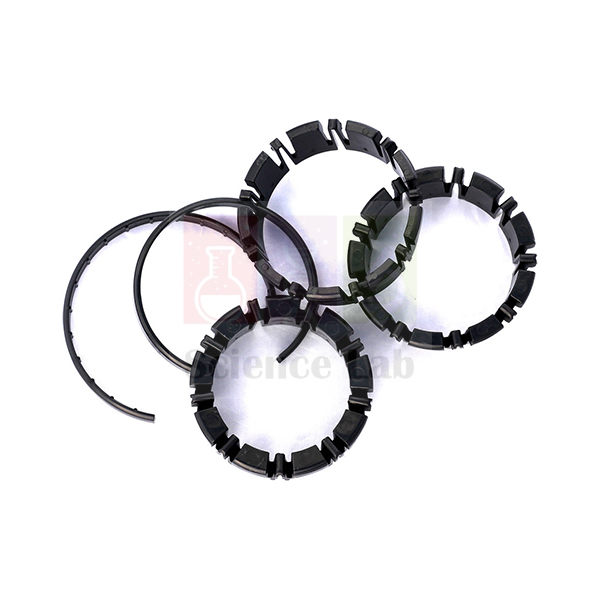
Standard Compression Ring Set
Standard Compression Ring Set (Product Code: SLE/M/68) is a set of 5 injection-moulded polymer rings used to make an eyepiece adapter grip eyepieces of different outer diameters, covering eyepieces from 39 to 60.75 mm. Choosing the matching ring gives a snug, centred hold, so an attached camera or viewing accessory stays aligned while images are taken. It is supplied by Jain Scientific Equipments Pvt Ltd (ScienceLab), Ambala, India, a laboratory equipment supplier for India and overseas buyers.
Specifications
| Parameter | Detail |
|---|---|
| Contents | 5 compression rings |
| Material | Injection-moulded polymer |
| Eyepiece diameter range | 39 to 60.75 mm |
| Compatibility | Described as working with any adapter (confirm your adapter with us) |
| Product code | SLE/M/68 |
| Supplied by | Jain Scientific Equipments Pvt Ltd (ScienceLab), Ambala, India |
What Is the Compression Ring Set Used For?
An eyepiece adapter only works well if it clamps the eyepiece firmly and squarely; a loose fit lets the camera tilt, which shows up as dark edges, off-centre images or blur. Compression rings fill the gap between the adapter's clamp and the eyepiece barrel, so one adapter can be moved between instruments whose eyepieces differ in outer diameter. Labs that photograph slides for records, displays or student projects use them to get a stable, repeatable set-up on each microscope.
Measure the outer diameter of the eyepiece where the adapter will clamp, ideally with a vernier caliper, then try the closest ring: it should slide on with light pressure and not rock. Tighten the adapter clamp only as much as needed to hold the ring. Keep the unused rings in a labelled bag with the adapter so the right size is always at hand.
What to Specify When Ordering
- Outer diameter of the eyepieces you want to fit, within 39 to 60.75 mm
- Type or model of eyepiece adapter you use
- Number of ring sets, one per adapter
Supplier
Jain Scientific Equipments Private Limited, trading as ScienceLab in Ambala, Haryana, supplies this compression ring set with its microscope imaging accessories, so adapters, rings and cameras can be combined in one order. Schools, colleges, research labs, dealers and importers in India and international markets buy from the same team. Visit the ScienceLab profile page for company details.
Related Microscope Equipment
Adapters and tools used with compression rings:
- Adjustable C-Focus Mount Adapter — a 0.5x camera adapter for trinocular stereomicroscopes
- C-Mount Adapter — another camera adapter in the microscope range
- Caliper Vernier (Metal) — for measuring eyepiece outer diameter before choosing a ring
- Microfiber Lens Cloth — for wiping eyepieces before an adapter is fitted
More imaging accessories are in the Microscope category.
Frequently Asked Questions
What eyepiece sizes does the Standard Compression Ring Set cover?
The Standard Compression Ring Set is made for eyepieces with outer diameters from 39 to 60.75 mm. Measure your eyepiece where the adapter clamps to it, and choose the ring from the set that gives a snug fit without forcing.
How many rings are in the Standard Compression Ring Set?
The Standard Compression Ring Set contains 5 rings made of injection-moulded polymer. The different ring sizes let one adapter be matched to several eyepieces across the stated 39 to 60.75 mm range.
Which adapters work with the Standard Compression Ring Set?
The Standard Compression Ring Set is described as working with any adapter. Adapter designs vary, so if you want certainty, send the adapter make or a photo through the contact page and we will confirm suitability before you order.
Is an adapter included with the Standard Compression Ring Set?
No adapter is included; the Standard Compression Ring Set consists of the 5 compression rings only. Camera adapters from our microscope range, such as the C-Mount Adapter, can be quoted on the same enquiry.
Who supplies the Standard Compression Ring Set?
Jain Scientific Equipments Pvt Ltd (ScienceLab), Ambala, Haryana, India supplies the Standard Compression Ring Set to schools, colleges, laboratories, dealers and importers in India and international markets, alongside microscope cameras and adapters.
Request a Quote
To price the Standard Compression Ring Set, send the quantity and your adapter details through the contact page, or add it to the enquiry cart together with any cameras or adapters.
Last updated: 24 September 2026
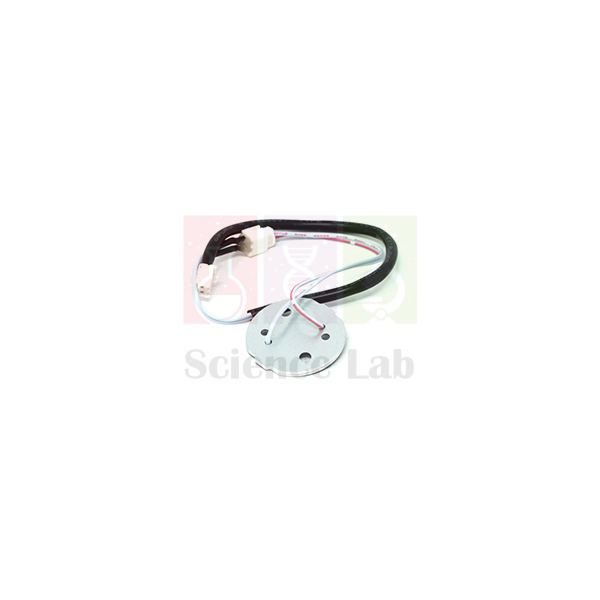
LED Replacement Bulb Assembly
LED Replacement Bulb Assembly (Product Code: SLE/M/69) is a 3 W LED lamp unit used to replace the light source in M10 Series microscopes when the original illumination fails or becomes unreliable. Because it is listed for all M10 Series models, a lab running several of these microscopes can stock one spare type for every instrument. It is supplied by Jain Scientific Equipments Pvt Ltd (ScienceLab), Ambala, India, a school laboratory equipment supplier in India that also handles microscope spares.
Key Details
| Parameter | Detail |
|---|---|
| Type | Replacement bulb assembly |
| Light source | LED |
| Power | 3 W |
| Compatibility | All M10 Series microscopes |
| Product code | SLE/M/69 |
| Supplied by | Jain Scientific Equipments Pvt Ltd (ScienceLab), Ambala, India |
What Is the LED Replacement Bulb Assembly Used For?
LED illumination lasts a long time, but a knock during transport, a wiring fault or a power surge can still leave a microscope dark or flickering in the middle of a practical. Swapping in a complete bulb assembly is quicker than repairing the old unit and brings the instrument back into service the same day. Keeping a spare for your M10 Series microscopes is simple preventive maintenance, especially before examinations or a busy practical term.
Before replacing the lamp, rule out simpler causes: check the power cord, switch, intensity control and any fuse. If the LED is at fault, unplug the microscope, follow the lamp-access steps in its manual, disconnect the old assembly, fit the new one in the same orientation and reconnect it. Test at low intensity first, then raise the brightness to confirm even lighting.
What to Specify When Ordering
- Confirmation that your microscopes are M10 Series models (check the model label)
- Number of spare assemblies for your microscope fleet
- Any other spares or consumables to add to the same order
Supplier
ScienceLab, the trading name of Jain Scientific Equipments Private Limited in Ambala, Haryana, supplies this LED assembly as part of its microscope spares service, so replacement parts can travel with orders for slides, cover glasses or new instruments. Schools, colleges, service engineers, dealers and importers in India and international markets use the same enquiry route. Company information is on the ScienceLab profile page.
Related Microscope Equipment
Other lighting spares and maintenance items:
- Lamp, 15 W, 120 V — a bi-post filament bulb for lamp-lit instruments
- Fluorescent Lamp 5W — a compact tube for fluorescent-lit microscopes
- Microscope Maintenance & Servicing Kit — for routine cleaning and upkeep while the lamp is changed
- Walter LED Gooseneck Illuminator — a separate LED light for bench and stereo work
Find more spares in the Microscope category.
Frequently Asked Questions
Which microscopes does the LED Replacement Bulb Assembly fit?
The LED Replacement Bulb Assembly is listed for all M10 Series microscopes. If your microscope belongs to a different series, send its model label details through the contact page so we can advise on the correct lamp before you order.
What is the power rating of the LED Replacement Bulb Assembly?
The LED Replacement Bulb Assembly is a 3 W LED unit. It is intended to restore the standard illumination of M10 Series microscopes, and brightness is then set with the microscope's own intensity control as usual.
How do I know if my microscope needs the LED Replacement Bulb Assembly?
Your microscope may need the LED Replacement Bulb Assembly if it gives no light or flickers even though the power cord, switch, intensity control and fuse are all working. Rule out those simpler faults first, then replace the lamp assembly.
Is the LED Replacement Bulb Assembly a bare LED or a complete unit?
The LED Replacement Bulb Assembly is listed as an assembly, meaning it is fitted as a unit rather than as a loose LED. For connector or mounting details for a particular microscope, ask us through the contact page before ordering.
Who supplies the LED Replacement Bulb Assembly?
Jain Scientific Equipments Pvt Ltd (ScienceLab), Ambala, Haryana, India supplies the LED Replacement Bulb Assembly to schools, colleges, laboratories, service engineers, dealers and importers in India and international markets, together with other microscope spares.
Request a Quote
Send the number of LED Replacement Bulb Assemblies and your microscope model through the contact page, or add the item to the enquiry cart with other spares you need.
Last updated: 24 September 2026
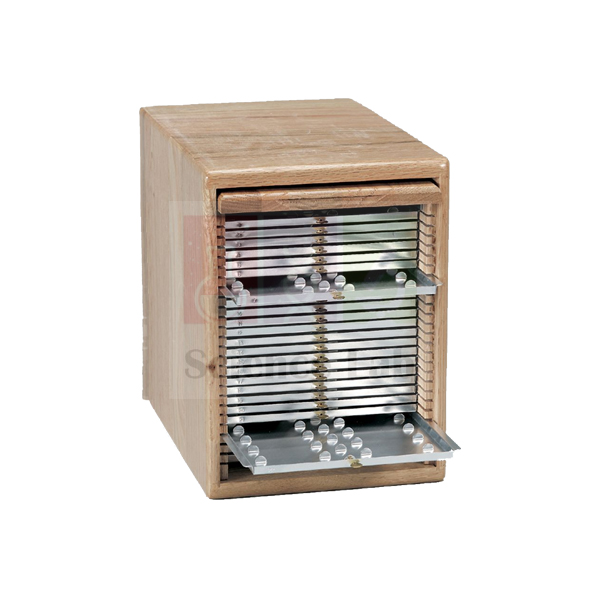
Unit System Slide Cabinet
Unit System Slide Cabinet (Product Code: SLE/PS/70) is a stackable storage cabinet used to keep up to five hundred 3 x 1 inch microscope slides flat and organised in biology departments and slide libraries. Its 25 aluminium trays give every slide its own compartment, and the door retracts into the top of the cabinet. It is supplied by Jain Scientific Equipments Pvt Ltd (ScienceLab), Ambala, India, for laboratories that need a dedicated lab storage cabinet for slides.
Specifications
| Parameter | Detail |
|---|---|
| Slide capacity | Five hundred 3 x 1 inch slides |
| Trays | 25 aluminium trays, horizontal |
| Slide position | Each slide lies flat in its own compartment |
| Door | Retracts into the top of the cabinet |
| Frame | Wood |
| Expansion | Additional units can be stacked on top |
| Size | 8 1/2 x 12 x 10 inch (H) |
| Product code | SLE/PS/70 |
| Supplied by | Jain Scientific Equipments Pvt Ltd (ScienceLab), Ambala, India |
What Is a Unit System Slide Cabinet Used For?
A department that builds up a prepared-slide collection needs storage that protects slides from dust, breakage and mix-ups. Keeping slides flat on horizontal trays helps mounted specimens and coverslips stay in position over the years, and giving each slide its own compartment shows at a glance which slide is out in a practical.
Arrange the trays by topic, for example plant slides on the upper trays and human histology lower down, and label each tray front so students return every slide to its place. The wood frame and aluminium trays give the collection a sturdy home, and when the collection grows a second unit can be stacked on top instead of finding new shelf space.
What to Specify When Ordering
- The number of cabinets, remembering that additional units stack on top of the first.
- Your slide format: the trays are made for 3 x 1 inch slides.
- The shelf or bench space available for a unit measuring 8 1/2 x 12 x 10 inch (H).
- Any prepared slide sets you want supplied to fill the cabinet.
Supplier
Jain Scientific Equipments Private Limited, which trades as ScienceLab, supplies the Unit System Slide Cabinet from Ambala, Haryana to schools, colleges, universities, research laboratories, dealers and importers in India and international markets. It can be shipped together with the prepared slide sets it is meant to hold. See the ScienceLab profile for company information.
Related Prepared Slides
Slides and storage that go with a department slide cabinet:
- Slide Tray Cabinet, Polypropylene — an alternative cabinet that holds separate slide trays.
- Slide Box, Wooden — a hinged box for a smaller collection or slides on loan.
- Basic Slide Set of 25 — prepared slides to start filling the trays.
- Human Histology Slide Set of 25 — a histology collection worth storing flat.
- Microscope Slide Case — a portable case for slides taken out for a practical.
All slide sets and storage items are listed under Prepared Slides.
Frequently Asked Questions
How many slides does the Unit System Slide Cabinet hold?
The Unit System Slide Cabinet holds five hundred 3 x 1 inch microscope slides on 25 aluminium trays. Each slide lies flat in its own compartment, so the cabinet suits a department collection rather than a single class set.
Can more Unit System Slide Cabinets be added later?
Yes, additional Unit System Slide Cabinet units can be stacked on top of the first one. A laboratory can therefore expand its slide storage in five-hundred-slide steps without taking up extra bench or floor area.
What are the dimensions of the Unit System Slide Cabinet?
The Unit System Slide Cabinet measures 8 1/2 x 12 x 10 inches, with 10 inches being the height. Check the space on your shelf or bench, and allow extra height if you plan to stack more units on top.
Why does the Unit System Slide Cabinet store slides flat?
The Unit System Slide Cabinet stores slides flat on horizontal trays because this keeps mounted specimens and coverslips in place over long periods. Slides stored on edge can let mounting media shift slowly, so flat storage suits long-term collections.
What is the Unit System Slide Cabinet made of?
The Unit System Slide Cabinet has a wood frame holding 25 aluminium trays. Its door retracts into the top of the cabinet, so it stays clear of the trays while slides are being selected or returned.
Who supplies the Unit System Slide Cabinet?
The Unit System Slide Cabinet (SLE/PS/70) is supplied by Jain Scientific Equipments Pvt Ltd (ScienceLab), Ambala, India. It can be sent to institutions, dealers and importers in India and international markets, on its own or with prepared slide sets.
Request a Quote
Add the Unit System Slide Cabinet to the enquiry cart or tell us through the contact page how many units and which slide sets you need. We will reply with a quotation for the complete storage order.
Last updated: 24 September 2026