- Physics Lab Equipment
- Chemistry Lab Equipment
- Biology Lab Equipment
- Anatomical Lab Equipment
- Learning
- Educational Lab Equipment
- Magnets
- Agriculture
- Astronomy
- Earth Science
- Geography Lab Equipment
- Safety Lab Coat
- Laboratory
- Meteorological
- Electricity & Magnetism
- Heat
- School Lab Equipment
- Lab Glassware
- Science Lab Equipment
- Tvet Lab Equipment
- Robotics Kits Supplier and Manufacturer for Schools India
- Math Lab Equipment Manufacturers and Exporters in Ambala
- STEM Kits Manufacturers and Supplier India
- Engineering Lab Equipment
- Hospital Lab Equipment
- Water, Sanitation & Hygiene Supplies
- Cold Chain, Solar & Communication Equipment
- Nutrition
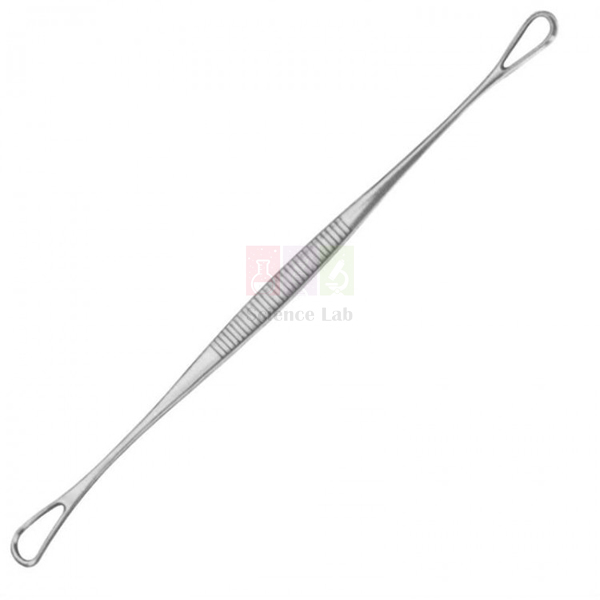
Curette Uterine Sharp & Blunt
Curette Uterine Sharp & Blunt (Product Code: SLE/BL/15) is a stainless steel gynaecological curette in sharp and blunt patterns, used to scrape or sample the uterine lining within gynaecology instrument sets and for instrument-identification practice in medical and nursing training. It suits instrument rooms, nursing schools and paramedical institutes that want a dimensionally accurate, strongly constructed curette. It is supplied by Jain Scientific Equipments Pvt Ltd (ScienceLab), Ambala, India, a laboratory equipment supplier to institutions.
Key Details
| Parameter | Detail |
|---|---|
| Type | Uterine curette, sharp and blunt pattern |
| Material | Stainless steel |
| Construction | Dimensionally accurate and strongly constructed |
| Sterility | Not stated — treat as non-sterile unless confirmed in writing |
| Product code | SLE/BL/15 |
| Supplied by | Jain Scientific Equipments Pvt Ltd (ScienceLab), Ambala, India |
What Is the Uterine Curette Used For?
A uterine curette is drawn along the uterine wall to scrape or sample tissue. The sharp pattern has a cutting edge and the blunt pattern a rounded one, which is why gynaecology instrument sets commonly carry both. In medical, nursing and paramedical teaching, the same instrument is used for identification tests, tray-preparation exercises and handling practice, where students learn to tell the two edge profiles apart and pass the instrument safely.
Stainless steel stays in good condition when it is cleaned promptly after each session, rinsed, dried thoroughly and stored in a dry tray; long soaks in strong chloride or bleach solutions should be avoided because they can mark the surface. Inspect the working edge before every use and set aside any instrument that is bent or nicked.
Supplier
Jain Scientific Equipments Private Limited trades as ScienceLab from Ambala, Haryana, India, and supplies this uterine curette as part of its surgical instruments range for teaching institutions, instrument rooms and distributors. Any clinical-use, sterility or packaging requirement should be raised at enquiry stage so it can be checked before a quotation is issued. Company background is on our company profile.
Related Surgical Instruments
Other gynaecology-pattern instruments often listed alongside a uterine curette:
- Sims Uterine Curette Sharp — a sharp-only curette pattern for comparison
- Hegar Uterine Dilator Double Ended — dilators that usually sit in the same gynaecology set
- Martin Uterine Sound — a probe-type instrument taught alongside curettes
- Museux Uterine Forceps Curved — holding forceps from the same instrument group
- Graves Vaginal Speculum — a speculum commonly included in gynaecology trays
Browse the Surgical Instruments range for more stainless steel instruments.
Frequently Asked Questions
Is the Curette Uterine Sharp & Blunt one double-ended instrument or two pieces?
Our product details for the Curette Uterine Sharp & Blunt name both sharp and blunt patterns but do not state whether they come as one double-ended instrument or two separate curettes. Please confirm the format through our contact page before ordering.
What material is the Curette Uterine Sharp & Blunt made from?
The Curette Uterine Sharp & Blunt is made of stainless steel and is described as dimensionally accurate and strongly constructed. Stainless steel suits instruments that are cleaned and dried repeatedly, provided they are not left soaking in bleach or chloride solutions.
Is the Curette Uterine Sharp & Blunt supplied sterile?
Sterile supply is not described in our product details for the Curette Uterine Sharp & Blunt, so treat it as non-sterile unless ScienceLab confirms otherwise in writing. Discuss any clinical-use or packaging requirement with us before you place an order.
Which sizes of the Curette Uterine Sharp & Blunt are available?
Sizes of the Curette Uterine Sharp & Blunt are not listed in our current product details. Send the size or pattern your department needs through the contact page and we will check what can be supplied before preparing a quotation.
How should the Curette Uterine Sharp & Blunt be cared for?
Clean the Curette Uterine Sharp & Blunt promptly after each use, rinse it, dry it completely and store it in a dry instrument tray. Avoid prolonged soaking in bleach or other chloride solutions, which can mark stainless steel surfaces over time.
Who supplies the Curette Uterine Sharp & Blunt?
The Curette Uterine Sharp & Blunt is supplied by Jain Scientific Equipments Pvt Ltd (ScienceLab), Ambala, Haryana, India. The company sources surgical-pattern instruments for training institutes, colleges, instrument rooms and distributors in India and international markets.
What should a quotation request for the Curette Uterine Sharp & Blunt include?
A quotation request for the Curette Uterine Sharp & Blunt should state product code SLE/BL/15, the quantity, whether you need the sharp pattern, the blunt pattern or both, and the delivery location, so availability and dispatch can be confirmed.
Request a Quote
For a quotation on the Curette Uterine Sharp & Blunt, contact us or add it to the enquiry cart with the rest of your gynaecology instrument list.
Last updated: 24 September 2026
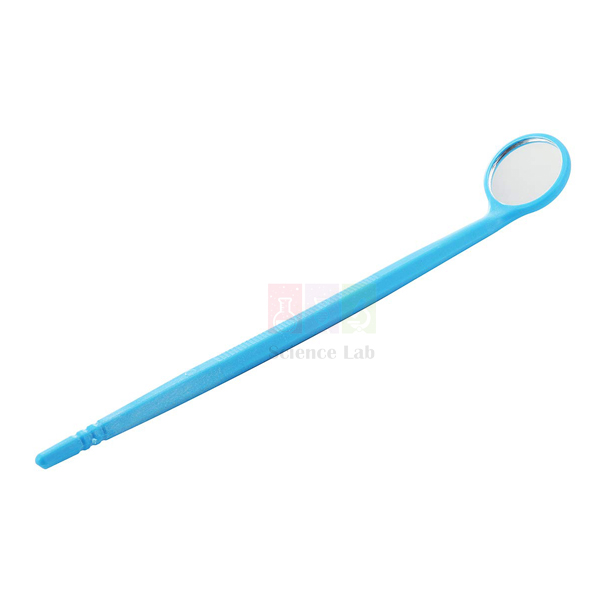
Dental Mirrors, Plastic
Dental Mirrors, Plastic (Product Code: SLE/BL/16) are hand-held mouth mirrors used to view and light up the teeth and oral tissues during examinations in hospitals and dental clinics. Being made of plastic, they are light to hold and suit routine check-ups as well as the teaching of oral examination technique. They are supplied by Jain Scientific Equipments Pvt Ltd (ScienceLab), Ambala, India, a laboratory instruments supplier in India.
Key Details
| Parameter | Detail |
|---|---|
| Material | Plastic |
| Instrument type | Dental mouth mirror |
| Intended settings | Hospitals and dental clinics |
| Product code | SLE/BL/16 |
| Supplied by | Jain Scientific Equipments Pvt Ltd (ScienceLab), Ambala, India |
What Are Plastic Dental Mirrors Used For?
A dental mirror gives indirect vision of surfaces that cannot be seen straight on, such as the tongue side of the lower front teeth, the back surfaces of molars and the palatal side of the upper teeth. It also reflects light onto the area being examined and gently holds the cheek or tongue aside to widen the working field.
Hold the mirror in a pen grasp and keep it steady against a finger rest. Warming or wiping the mirror face reduces fogging from breath. Because this listing does not say whether the mirrors are single-use or reusable, confirm that with us and follow your facility's own cleaning and sterilisation procedure. Dental colleges and clinics that buy from a supplier of scientific & laboratory instruments often order mirrors together with scalers so each chair or student has a basic set.
Supplier
ScienceLab is the trading name of Jain Scientific Equipments Private Limited, Ambala, Haryana. The company sources and supplies these plastic dental mirrors to hospitals, dental clinics, training institutions, distributors and importers, and can place them on one quotation with other examination items.
Mirror size, handle style and packing are confirmed with each quotation – just ask. More about us is on our company profile.
Related Surgical Instruments
Items commonly ordered with dental mirrors for examinations and teaching:
- Dental Scaler — stainless steel instrument used together with a mirror during tooth cleaning
- Examination Gloves — hand protection during oral examinations
- Instrument Tray Stainless Steel — to lay out mirrors and other instruments at the chair
- Human Tooth Set — model for teaching tooth identification
- Dental Caries Model — for explaining tooth decay to students and patients
Other hand instruments for clinics and theatres are listed under Surgical Instruments.
Frequently Asked Questions
What are Dental Mirrors, Plastic made of?
Dental Mirrors, Plastic are made of plastic, which keeps them light in the hand during examinations. Details such as mirror diameter, handle design and the type of reflective surface are not listed here, so ask us to confirm them in your quotation.
Where are Dental Mirrors, Plastic used?
Dental Mirrors, Plastic are used in hospitals and dental clinics for oral examinations, where the mirror gives indirect vision of hard-to-see tooth surfaces, reflects light into the mouth and helps hold back the cheek or tongue.
Are Dental Mirrors, Plastic disposable or sterile?
This listing for Dental Mirrors, Plastic does not state whether they are single-use or supplied sterile. Please confirm this with us before ordering, and always follow your facility's own cleaning and sterilisation procedure when handling dental instruments.
Can Dental Mirrors, Plastic be used for teaching?
Yes, Dental Mirrors, Plastic can be used when teaching oral examination technique, for example practising indirect vision and cheek retraction on dental models under supervision. Pair them with a tooth set or caries model for classroom demonstrations.
Who supplies Dental Mirrors, Plastic?
Dental Mirrors, Plastic are supplied by Jain Scientific Equipments Pvt Ltd (ScienceLab), Ambala, Haryana, India, to hospitals, clinics, institutions and distributors in India and international markets.
How do I get a quotation for Dental Mirrors, Plastic?
To get a quotation for Dental Mirrors, Plastic, send us the quantity, any preferred mirror size or handle style, your packing needs and the delivery destination. We will confirm what is available and quote accordingly.
Request a Quote
Ask for a quotation on Dental Mirrors, Plastic through our contact page, or add them to the enquiry cart along with other clinic supplies.
Last updated: 24 September 2026
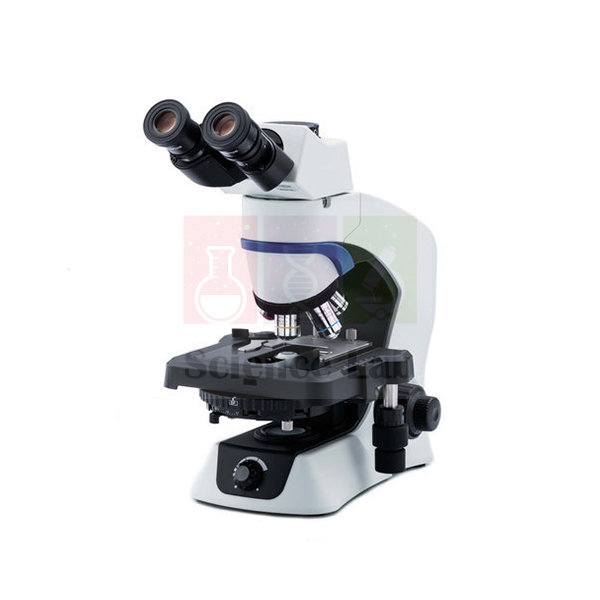
Research Microscope
Research Microscope (Product Code: SLE/M/54) is a binocular compound microscope used for detailed slide work, including oil-immersion study of bacteria and stained cells, in college, university and research laboratories. It pairs Koehler illumination from a 3 W LED with 4x, 10x, 40x and 100x oil-immersion objectives on a reversed quintuple nosepiece, above a large 180 x 170 mm stage. Supplied by Jain Scientific Equipments Pvt Ltd (ScienceLab), Ambala, India, it suits labs building up microbiology lab equipment in India and abroad.
Specifications
| Parameter | Detail |
|---|---|
| Head | Siedentopf-design inclined binocular head with 360° swivelling eyepiece tubes |
| Eyepieces | 2 x widefield N-WF10x/20 mm, high eyepoint, with dioptre adjustment |
| Interpupillary distance | Adjustable from 48 to 75 mm |
| Objectives | 4x, 10x, 40x and 100x (oil-immersion) |
| Nosepiece | Reversed quintuple nosepiece with click stops |
| Focus | Advanced coaxial coarse and fine focus |
| Illumination | Koehler, 3 W LED with intensity control |
| Stage | Large 180 x 170 mm stage with built-in mechanical stage and low-position coaxial controls |
| Stage travel range | 80 x 55 mm |
| Size | 15 in H x 7-1/2 in W x 10-1/2 in D (approx. 38.1 x 19.1 x 26.7 cm) |
| Product code | SLE/M/54 |
| Supplied by | Jain Scientific Equipments Pvt Ltd (ScienceLab), Ambala, India |
What Is the Research Microscope Used For?
The 100x oil-immersion objective is what separates this instrument from a student microscope: it resolves the shapes and arrangements of bacteria in stained smears, the structure of stained blood cells in teaching films and fine detail in histology sections. Koehler illumination spreads the 3 W LED light evenly across the field, which keeps high-power images crisp and suits photomicrography work.
For oil work, focus first at 40x, swing the nosepiece aside, place a drop of immersion oil on the slide and click the 100x objective into place; wipe the oil off with lens tissue afterwards. During long sessions, the swivelling tubes, 48–75 mm eye-spacing range and dioptre-adjustable high-eyepoint eyepieces keep viewing comfortable, including for spectacle wearers, while the low-position stage controls let the hand rest on the bench.
Supplier
ScienceLab, the trading name of Jain Scientific Equipments Private Limited in Ambala, Haryana, supplies the Research Microscope to universities, research institutes, pharmacy and life-science colleges, dealers and importers in India and international markets. It can be quoted alongside immersion oil, slides and cover glasses so a lab receives everything for its first session. Read about the company on the ScienceLab profile.
Related Laboratory Equipment
Consumables and alternatives for high-power microscopy:
- Immersion Oil, 25ml — needed for the 100x oil-immersion objective
- Lens Tissue — for removing oil from the objective after use
- Microscope Slides Glass — for preparing smears and mounts
- Glass Cover Slips — to cover specimens before high-power viewing
- Research Trinocular Microscope — a model with a camera port for imaging
Compare other research models in the Microscope category.
Frequently Asked Questions
What objectives does the Research Microscope have?
The Research Microscope has 4x, 10x, 40x and 100x oil-immersion objectives on a reversed quintuple nosepiece with click stops. The click stops seat each objective precisely, making magnification changes quick and repeatable during slide work.
What illumination does the Research Microscope use?
The Research Microscope uses Koehler illumination with a 3 W LED and intensity control. Koehler illumination lights the field of view evenly, which helps at high magnification and when capturing images for reports.
Does the Research Microscope need immersion oil?
Yes, for its 100x objective. The Research Microscope’s 100x objective is an oil-immersion lens, so a drop of immersion oil is placed between slide and lens. Oil is not listed as included; our Immersion Oil, 25ml can be added to the order.
How large is the stage on the Research Microscope?
The Research Microscope has a large 180 x 170 mm stage with a built-in mechanical stage giving a travel range of 80 x 55 mm. Low-position coaxial controls let the user move the slide smoothly while keeping the hand on the bench.
Can the Research Microscope be adjusted for different users?
Yes. The Research Microscope has an interpupillary range of 48 to 75 mm, 360° swivelling eyepiece tubes and N-WF10x/20 mm high-eyepoint eyepieces with dioptre adjustment, so each user can set a sharp, comfortable view.
Who supplies the Research Microscope?
The Research Microscope is supplied by Jain Scientific Equipments Pvt Ltd (ScienceLab), Ambala, Haryana, India. The company quotes universities, research institutes, colleges, dealers and importers in India and international markets, for single units or multiple workstations.
What should a Research Microscope quotation request include?
A Research Microscope quotation request should state the number of units, the delivery location and the consumables you need, such as immersion oil, slides and cover slips. Mention any imaging plans so we can suggest a suitable set-up.
Request a Quote
Request a Research Microscope quotation through the contact page, or add it to the enquiry cart with immersion oil and slides.
Last updated: 24 September 2026
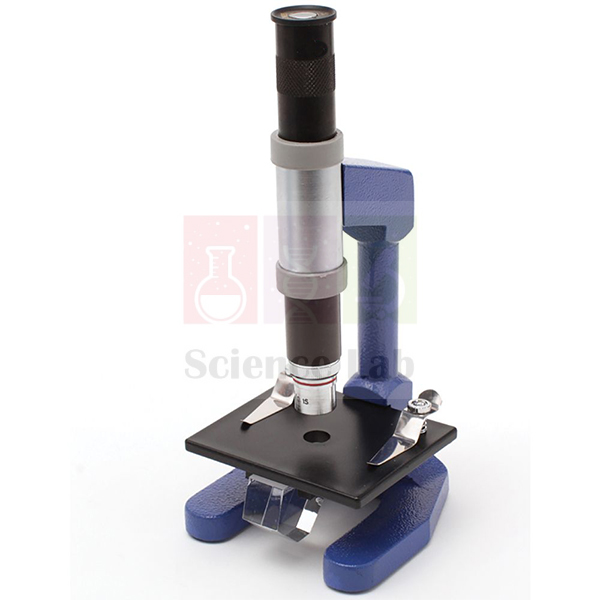
Scope
Scope (Product Code: SLE/M/55) is a simple 30x monocular microscope used to introduce young learners to slides and small specimens in primary and middle-school science classes. It combines a 5x eyepiece with a 6x objective and lights the specimen through a bottom prism, so no power supply is needed. This practical piece of junior science lab equipment is supplied by Jain Scientific Equipments Pvt Ltd (ScienceLab), Ambala, India.
Specifications
| Parameter | Detail |
|---|---|
| Magnification | 30x |
| Eyepiece | 5x |
| Objective lens | 6x |
| Head type | Fixed, non-rotating monocular head |
| Focus | Coarse focus only |
| Light source | Bottom prism |
| Power supply | None needed |
| Stage | Standard stage with clips |
| Size | 10 in H x 4-1/2 in W x 4 in D (approx. 25.4 x 11.4 x 10.2 cm) |
| Product code | SLE/M/55 |
| Supplied by | Jain Scientific Equipments Pvt Ltd (ScienceLab), Ambala, India |
What Is the Scope 30x Microscope Used For?
At 30x, children can see detail that a hand lens misses without the difficulty of a high-power instrument. Good first specimens include salt and sugar crystals, the cell outlines in a thin piece of onion skin, the scales on an insect wing, strands of hair and fabric fibres, and the dots that make up a printed picture. Each one shows how a microscope reveals structure hidden from the naked eye.
Place the Scope near a window or bright lamp so the bottom prism can send light up through the slide. Teach students to lower the tube while watching from the side, then focus upward while looking through the eyepiece. With no bulbs, batteries or cables, it works in classrooms without power points and alongside a hands-on science kit in primary school.
Supplier
Jain Scientific Equipments Private Limited, whose trading name is ScienceLab, supplies the Scope from Ambala, Haryana, to primary and middle schools, education programmes, dealers and importers in India and international markets. It can be ordered in class quantities together with slides, cover glasses and magnifiers. Background on the company is on the ScienceLab profile.
Related Laboratory Equipment
Items that complete a first microscopy lesson:
- Student-Grade Microscope Slides — ready-made slides to view straight away
- Microscope Slides Glass — plain slides for crystals, hair and fibres
- Cover Glasses — to hold thin specimens flat on the slide
- Pocket Magnifier — for lower-power observation before using the Scope
- Student Monocular Microscope — another student model to compare
Other school microscopes are in the Microscope category.
Frequently Asked Questions
What magnification does the Scope give?
The Scope gives 30x magnification, produced by a 5x eyepiece working with a 6x objective lens. That level shows crystals, fibres, insect parts and onion-skin cell outlines clearly while staying easy for young students to focus.
Does the Scope need electricity or batteries?
No. The Scope needs no power supply because a bottom prism directs available light up through the specimen. It works well near a window or under a bright lamp, and there are no bulbs or batteries to replace.
How is the Scope focused?
The Scope has coarse focus only. Students lower the tube while watching from the side, then turn the focus knob slowly upward while looking through the eyepiece until the specimen becomes sharp, which avoids pressing the objective onto the slide.
What type of head and stage does the Scope have?
The Scope has a fixed, non-rotating monocular head and a standard stage with clips to hold the slide. The fixed head keeps the eyepiece in one position, which makes it simple for younger children to share at a bench.
How big is the Scope?
The Scope measures 10 in H x 4-1/2 in W x 4 in D (about 25.4 x 11.4 x 10.2 cm). Its small footprint suits crowded classroom tables and makes class sets easy to store in a cupboard.
Who supplies the Scope?
The Scope is supplied by Jain Scientific Equipments Pvt Ltd (ScienceLab), Ambala, Haryana, India. The company supplies schools, education programmes, dealers and importers in India and international markets, from single units to full class sets.
What should a Scope quotation request include?
A Scope quotation request should give the number of microscopes, the delivery location and any slides, cover glasses or magnifiers you need. Telling us the class size helps us suggest a practical quantity for group work.
Request a Quote
Ask about the Scope on the contact page, or add it to the enquiry cart with slides for your first microscopy lessons.
Last updated: 24 September 2026
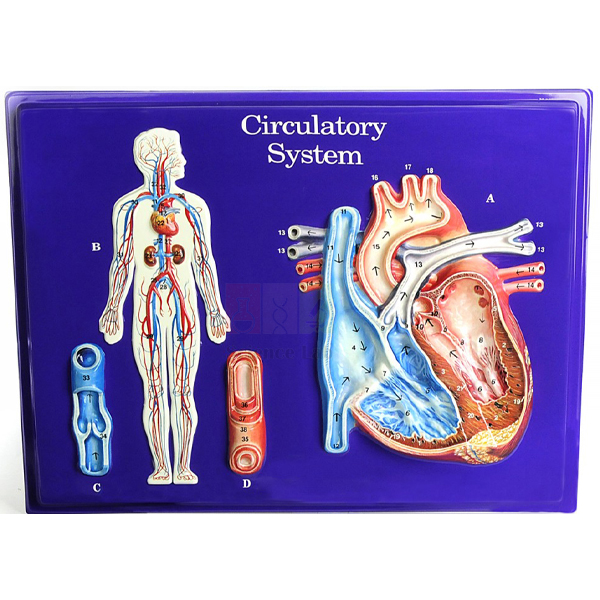
Circulatory System Model Activity Set
Circulatory System Model Activity Set (Product Code: SLE/BL/17) is a hands-on classroom set built around a full-colour, markable model of the circulatory system made from durable vinyl. Students trace blood vessels throughout the body, study a cutaway view of the heart’s interior and look at an enlarged cutaway section of a vein and an artery, while an activity guide and a three-overlay heart transparency reinforce how circulation works. Middle and secondary school biology teachers and teacher-training colleges use it as a ready-made human body model kit India classrooms can run as a guided activity. It is made by Jain Scientific Equipments Pvt Ltd (ScienceLab), Ambala.
Specifications
| Parameter | Detail |
|---|---|
| Model | Full-colour markable model of durable vinyl |
| Features shown | Vessels throughout the body, cutaway view of the interior of the heart, enlarged cutaway section of a vein and an artery |
| Transparency | Colourful three-overlay transparency of the heart |
| Activity guide | Background information, basic understandings, teacher-developed activities, glossary, key to model structures, colour transparencies and a blackline master |
Typical Use
Because the vinyl surface is markable, students can draw the path of blood directly on the model — for example, colouring the route from the body back to the heart, through the lungs and out again — and then compare their tracing with the key to model structures. The three-overlay heart transparency builds the heart up layer by layer on a projector, which helps a whole class follow the chambers and valves before pairs of students work with the cutaway heart on the model itself. Comparing the enlarged vein and artery sections leads naturally into a discussion of wall thickness, blood pressure and valves in veins.
The guide’s teacher-developed activities, glossary and blackline master save preparation time, making the set one of the more practical biology teaching aids India schools can use for a complete lesson sequence. Use the key to model structures for quick assessment, store transparencies flat in a folder, and ask us which markers are recommended for the vinyl surface.
Manufacturer
Jain Scientific Equipments Private Limited, which operates under the ScienceLab brand in Ambala, Haryana, supplies this activity set to schools and colleges. The company is incorporated as a private limited company (CIN U29309HR2020PTC087597) and manufactures at its licensed factory at 449, HSIIDC Industrial Area, Saha, Ambala (Factory Licence AMB-ONLINE-CHD-J-414). Our company profile has further details.
Related Human Models
Teachers extending a circulation unit often add:
- Human Circulatory System Model — a display model of the whole system for demonstration.
- Human Heart, Pumping Model — shows the heart’s pumping action to follow up the cutaway study.
- Human Cardiac Beat And Blood Circulation — demonstrates heartbeat and circulation together.
- Endocrine System Model Activity Set — a companion activity set for the next body-systems topic.
- Prepared Microscope Slide Set – Circulatory System — lets students see blood and vessel tissue under the microscope.
Browse all options in our Human Models category.
Frequently Asked Questions
What is included in the set?
A full-colour markable vinyl model and an activity guide containing background information, basic understandings, teacher-developed activities, a glossary, a key to model structures, colour transparencies and a blackline master, plus a three-overlay heart transparency.
Can students write on the model?
Yes, the model is markable, so students can trace vessels and label structures during activities. Please ask us which markers are best for cleaning off afterwards.
Which parts of the heart and vessels can be studied?
The model has a cutaway view of the interior of the heart and an enlarged cutaway section of a vein and an artery, alongside vessels traced throughout the body.
What is a blackline master used for?
It is a printable master sheet teachers can photocopy so each student has a worksheet to complete alongside the model.
What class levels is it suited to?
It suits school biology lessons on the circulatory system and introductory teacher-training or nursing courses. For curriculum questions, contact us through the contact page.
Can schools order several sets?
Yes, we supply schools in India and international markets. Share the number of sets and delivery details, and our quotation will include warranty terms.
Request a Quote
Request pricing for the Circulatory System Model Activity Set through our contact page, or add it to the enquiry cart with other biology teaching aids.
Last updated: 24 September 2026

Classification of Living Things Poster
Classification of Living Things Poster (Product Code: SLE/BL/18) is a wall poster used to teach the kingdoms of life in school and junior-college biology classrooms. It shows representative organisms from the Archaebacteria, Eubacteria, Protista, Fungi, Plantae and Animalia kingdoms in photographs and detailed illustrations at 890 mm W x 585 mm H, making it a practical classification chart for biology rooms in India. It is supplied by Jain Scientific Equipments Pvt Ltd (ScienceLab), Ambala, India.
Specifications
| Parameter | Detail |
|---|---|
| Type | Wall poster |
| Topic | Classification of living things — a close-up view of the kingdoms of life |
| Kingdoms shown | Archaebacteria, Eubacteria, Protista, Fungi, Plantae, Animalia |
| Content | Representative organisms with photographs and detailed illustrations |
| Size | 890 mm W x 585 mm H |
| Product code | SLE/BL/18 |
| Supplied by | Jain Scientific Equipments Pvt Ltd (ScienceLab), Ambala, India |
What Is the Classification Poster Used For?
The poster follows a six-kingdom scheme, which is a helpful bridge for students who first learn the five-kingdom system: the prokaryotes grouped as Monera appear here as two kingdoms, Archaebacteria and Eubacteria. Teachers can use it to discuss the criteria behind classification — cell type, whether organisms are single-celled or multicellular, and how they obtain food — and then ask students to place new examples in the right kingdom.
It works well as the centrepiece of a biology chart set for school, with smaller charts on individual groups displayed around it. Hang it at eye level, away from direct sunlight to limit fading, and consider a frame or protective cover if it will be displayed in a busy corridor or laboratory.
Supplier
Jain Scientific Equipments Private Limited, which trades as ScienceLab from Ambala, Haryana, India, supplies the Classification of Living Things Poster alongside its biology apparatus, models and teaching aids. Schools setting up a biology room can order wall charts together with practical equipment and receive a single quotation. Our company profile explains more about the company.
Related Biology Lab Equipment
Resources that support a classification unit:
- Viruses & Bacteria Poster — more detail on the microbial groups
- Concepts Of Classification Kit — a hands-on sorting activity to follow the poster
- Classification of Living Things Lab Investigation — a practical investigation on the same topic
- Hand Lens — for examining specimens before students classify them
- Systems of The Human Body Poster — another wall poster for the biology room
Find more posters and teaching aids in the Biology Lab Equipment range.
Frequently Asked Questions
What size is the Classification of Living Things Poster?
The Classification of Living Things Poster measures 890 mm wide by 585 mm high. That size is large enough to anchor a classroom wall display and to stay legible while the teacher points out individual organisms during a lesson.
Which kingdoms does the Classification of Living Things Poster cover?
The Classification of Living Things Poster covers six kingdoms: Archaebacteria, Eubacteria, Protista, Fungi, Plantae and Animalia. Each is shown with representative organisms in photographs and detailed illustrations, so students can compare similarities and differences between groups of living things.
Does the poster suit a syllabus that teaches five kingdoms?
Yes. On the Classification of Living Things Poster, the two bacterial kingdoms, Archaebacteria and Eubacteria, together correspond to Monera in the five-kingdom system. Teachers can point this out when comparing the two classification schemes with their students.
Is the Classification of Living Things Poster laminated?
The finish of the Classification of Living Things Poster is not stated in our current details. Please contact us if you need a specific finish, such as lamination for a busy corridor, and we will confirm what can be supplied.
Are hanging fittings included with the poster?
Hanging fittings are not listed with the Classification of Living Things Poster. Standard poster rails, frames or clips can be used; hang it at eye level and away from direct sunlight to limit fading over the school year.
Who supplies the Classification of Living Things Poster?
Jain Scientific Equipments Pvt Ltd (ScienceLab), Ambala, India, supplies the Classification of Living Things Poster (SLE/BL/18) to schools, colleges and distributors. It is often ordered together with the other biology posters and classification kits listed on this page.
Can we order posters for several classrooms?
Yes. ScienceLab supplies the Classification of Living Things Poster in quantity to schools and distributors in India and international markets. Send the number of copies and the delivery location through the contact page for a quotation.
Request a Quote
To order the Classification of Living Things Poster, contact us or add it to the enquiry cart with other biology charts.
Last updated: 24 September 2026

C-Mount Adapter
C-Mount Adapter (Product Code: SLE/M/56) is a 0.5x camera adapter used to connect a trinocular microscope head to C-mount digital or analogue cameras for photomicrography in teaching and research labs. It is designed to fit the S Trinocular Microscope, and its 0.5x magnification works well with cameras that have the popular 1/2 in chip size. It is supplied by Jain Scientific Equipments Pvt Ltd (ScienceLab), Ambala, India, a laboratory equipment supplier in India.
Key Details
| Parameter | Detail |
|---|---|
| Magnification | 0.5x |
| Mount type | C-mount |
| Designed to fit | S Trinocular Microscope (as listed) |
| Function | Connects the trinocular head to C-mount-style digital and analogue cameras |
| Suggested camera chip size | 1/2 in (the 0.5x magnification is matched to this size) |
| Product code | SLE/M/56 |
| Supplied by | Jain Scientific Equipments Pvt Ltd (ScienceLab), Ambala, India |
What Is a C-Mount Adapter Used For?
A trinocular microscope sends part of its image up a third tube for a camera, but a camera cannot simply be pushed onto that port. The C-mount adapter holds the camera at the correct position on the standard C-mount thread so the picture is in focus. With a camera attached, labs can record slides for reports, show a live image on a monitor during a demonstration and build image libraries for revision.
The 0.5x optics shrink the image so that more of the microscope field fits onto a small camera sensor. On a camera with a 1/2 in chip, the view on screen is therefore closer to what the user sees through the eyepieces; with other chip sizes the framing will differ. Always check that the adapter suits your microscope’s trinocular port before ordering.
What to Specify When Ordering
- Your microscope model and its trinocular port (the listing names the S Trinocular Microscope)
- Your camera’s mount type, confirming it is C-mount
- Your camera’s chip size (1/2 in suits the 0.5x adapter)
- Number of adapters needed
Supplier
ScienceLab is the trading name under which Jain Scientific Equipments Private Limited supplies the C-Mount Adapter from Ambala, Haryana. Colleges, research labs, schools, dealers and importers in India and international markets can order it with trinocular microscopes and cameras, and our team can help check compatibility first. Company information is on the ScienceLab profile.
Related Laboratory Equipment
Microscopes, cameras and fittings for a photomicrography set-up:
- Adjustable C-Focus Mount Adapter — another camera-mount fitting to compare
- 5mp Microscope Camera — a camera to consider (confirm C-mount fit with us)
- 2MP Digital USB-2 Colour Camera — a lower-resolution imaging option (confirm fit)
- Trinocular Microscope, LED — a microscope with a camera port (confirm adapter fit)
Find more accessories in the Microscope category.
Frequently Asked Questions
What does the C-Mount Adapter do?
The C-Mount Adapter connects the trinocular head of a microscope to a C-mount-style digital or analogue camera. It holds the camera at the right position on the port so that images of the specimen can be captured or displayed live.
Which microscope does the C-Mount Adapter fit?
The C-Mount Adapter is listed as designed to fit the S Trinocular Microscope. Trinocular ports vary between models, so if you have a different microscope, send its model through the contact page and we will confirm fit before you order.
Why does the C-Mount Adapter have 0.5x magnification?
The C-Mount Adapter’s 0.5x optics reduce the image so more of the microscope field fits on a small camera sensor. It is matched to cameras that have the popular 1/2 in chip size, giving a view close to the eyepiece image.
Which cameras can be used with the C-Mount Adapter?
The C-Mount Adapter is intended for C-mount-style digital and analogue cameras, ideally with a 1/2 in chip. Tell us your camera model and sensor size and we will check whether the adapter is the right match.
Who supplies the C-Mount Adapter?
The C-Mount Adapter is supplied by Jain Scientific Equipments Pvt Ltd (ScienceLab), Ambala, Haryana, India. The company handles orders from colleges, research labs, schools, dealers and importers in India and international markets, alone or with microscopes and cameras.
What should a C-Mount Adapter quotation request include?
A C-Mount Adapter quotation request should give your microscope model, your camera model and chip size, the quantity and the delivery location. These details let us confirm compatibility and quote the correct fitting in one reply.
Request a Quote
Send your C-Mount Adapter enquiry through the contact page, or add it to the enquiry cart with your microscope and camera.
Last updated: 24 September 2026

Dissecting Board
Dissecting Board (Product Code: SLE/EDE/01) is a soft wood board with raised edges on which specimens are pinned out for dissection. The soft wood lets dissecting pins be pressed in easily by hand alone, with no hammer or tool, so students can fix and re-fix a specimen quickly as the dissection progresses. It is manufactured by Jain Scientific Equipments Pvt Ltd (ScienceLab), Ambala, for school and college biology and zoology practicals, and pairs naturally with any dissection kit a school in India already uses.
Key Details
| Parameter | Detail |
|---|---|
| Type | Dissecting board for pinning specimens |
| Material | Soft wood |
| Edges | Raised |
| Pinning | Pins can be pressed in easily by hand only |
| Suitable for | Biology and zoology dissection practicals in schools and colleges |
Typical Use
The board provides a firm, pin-friendly working surface for dissecting preserved specimens and for pinning out plant material or insects for study. Students lay the specimen on the board, fix it at the corners with pins pushed in by hand, and then open and pin back the tissue layer by layer so that each structure stays exposed while it is drawn or identified. The raised edges help keep fluids and small pieces of tissue on the board rather than on the bench.
For a class practical, set out one board per pair of students with a dissection set, a supply of pins and a dissecting needle. After use, remove all pins, wipe the board down, and let it dry fully before storage so the wood stays in good condition. Boards like this are a basic item on most lists of zoology lab equipment in India.
Manufacturer
This board is made by Jain Scientific Equipments Private Limited, which operates as ScienceLab from Ambala in Haryana and produces dissection equipment alongside a broad range of school and college laboratory products. Learn more on our company profile.
Related Dissection Equipment
Items used on the same bench during a dissection practical:
- Dissecting T-Pins — pins for fixing specimens to the board
- Dissecting Set, Student — the cutting and handling instruments for each student pair
- Dissecting Needle — for separating tissues and pointing out structures
- Forceps (Tweezers) — for lifting and holding tissue while pinning
- Dissecting Tray with Wax — an alternative wax-filled surface for wetter specimens
See the full Dissection Equipment category for more tools.
Frequently Asked Questions
What is the board made of?
Soft wood, chosen so that dissecting pins can be pushed in by hand.
Do I need a hammer to fix pins?
No. Pins can be pressed in easily with the hand only.
What are the board’s dimensions?
Size is not given in our current product description. Please contact us for the measurements before ordering.
Are pins or instruments included?
The description covers the board itself. Pins and instruments are listed separately, such as Dissecting T-Pins and Dissecting Set, Student above.
Why does it have raised edges?
The raised edges help contain fluids and small pieces of tissue during dissection, keeping the bench cleaner.
How should the board be cleaned?
Take out all pins, wipe the surface with a damp cloth, and allow it to dry completely; avoid soaking the wood.
Can you supply boards for a whole laboratory?
Yes. Schools and colleges regularly order class quantities; tell us the number of boards and your delivery location.
Request a Quote
To order dissecting boards for your lab, send your requirement through the contact page or add the board and matching instruments to your enquiry cart.
Last updated: 24 September 2026