- Physics Lab Equipment
- Chemistry Lab Equipment
- Biology Lab Equipment
- Anatomical Lab Equipment
- Learning
- Educational Lab Equipment
- Magnets
- Agriculture
- Astronomy
- Earth Science
- Geography Lab Equipment
- Safety Lab Coat
- Laboratory
- Meteorological
- Electricity & Magnetism
- Heat
- School Lab Equipment
- Lab Glassware
- Science Lab Equipment
- Tvet Lab Equipment
- Robotics Kits Supplier and Manufacturer for Schools India
- Math Lab Equipment Manufacturers and Exporters in Ambala
- STEM Kits Manufacturers and Supplier India
- Engineering Lab Equipment
- Hospital Lab Equipment
- Water, Sanitation & Hygiene Supplies
- Cold Chain, Solar & Communication Equipment
- Nutrition
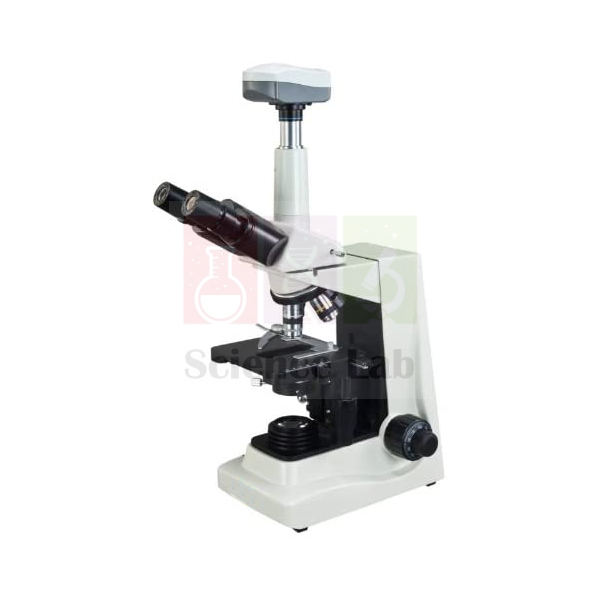
Advanced Digital Microscope
Advanced Digital Microscope (Product Code: SLE/M/59) is a trinocular compound microscope with 3-megapixel digital imaging, used to view, capture and share magnified images of specimens in college, school and research laboratories. Teachers choose it when a whole group needs to see what one user sees: semi-plan objectives from 4x to 100xR (oil immersion) are lit by a 3 W LED with variable intensity. It is supplied by Jain Scientific Equipments Pvt Ltd (ScienceLab), Ambala, India, as part of its compound microscope range for buyers in India and abroad.
Specifications
| Parameter | Detail |
|---|---|
| Microscope type | Digital compound microscope |
| Head type | Trinocular (the feature list also describes a binocular head — confirm the configuration with us) |
| Eyepieces | 2 x 10x widefield, 18 mm, with dioptric compensation |
| Objectives | Semi-plan 4x, 10x, 40xR and 100xR (oil immersion) |
| Focus | Advanced coaxial coarse and fine focus control |
| Illumination | 3 W LED with variable-intensity control |
| Stage | Built-in mechanical stage |
| Digital resolution | 3 megapixels |
| Computer requirements (as listed) | USB 3.0; 2 GB RAM; 1 GB free hard-disk space; 256 MB video card memory |
| Size | 16 in H x 7 1/4 in W x 9 in D |
| Product code | SLE/M/59 |
| Supplied by | Jain Scientific Equipments Pvt Ltd (ScienceLab), Ambala, India |
What Is the Advanced Digital Microscope Used For?
A digital compound microscope turns a single slide into a shared lesson. In college and senior-school biology it is used to display onion peel cells, stained blood smears, plant stem sections and pond-water organisms on a computer screen, so the teacher can point out structures while students compare the image with their own preparations. Captured images can go straight into practical records and project reports, which makes it useful school biology lab equipment in India for demonstration benches and research corners alike.
Start every specimen on the 4x objective, find it with the coarse control and sharpen it with the fine control before moving up to 10x and 40xR. The 100xR objective needs a drop of immersion oil between lens and cover glass; wipe the oil off with lens tissue after each session. Before installation, check that the connected computer meets the listed USB, memory and video requirements.
What to Specify When Ordering
- The head configuration you need (listed as trinocular; binocular viewing is also described)
- Number of microscopes per laboratory or per tender lot
- Accessories to quote together, such as immersion oil, slides and cover glasses
- Whether your computers meet the USB 3.0, 2 GB RAM and 256 MB video memory requirements
Supplier
Jain Scientific Equipments Private Limited trades as ScienceLab and supplies the Advanced Digital Microscope from Ambala, Haryana, alongside slides, cover glasses and microscope accessories, so one enquiry can equip a complete microscopy bench. Colleges, schools, research laboratories, dealers and importers in India and international markets order through the same office. For vendor registration, the supplying company is listed under CIN U29309HR2020PTC087597 and GSTIN 06AAECJ8618A1ZT. Read more on the ScienceLab company profile.
Related Microscope Equipment
Items that are used with a high-power digital microscope:
- Immersion Oil, 25ml — needed for the 100xR oil-immersion objective
- Microscope Slides Glass — plain slides for smears and temporary mounts
- Cover Glasses — borosilicate covers for wet and stained preparations
- Lens Tissue — for removing oil and dust from objectives and eyepieces
- Microscope Digital Camera, 5MP — an option for adding imaging to an existing optical microscope
See the full range in the Microscope category.
Frequently Asked Questions
What magnifications does the Advanced Digital Microscope offer?
The Advanced Digital Microscope pairs two 10x widefield eyepieces with semi-plan objectives of 4x, 10x, 40xR and 100xR. The 100xR is an oil-immersion objective, used with a drop of immersion oil for the highest-power work such as bacteria and blood cells.
What computer does the Advanced Digital Microscope need?
The listed computer requirements for the Advanced Digital Microscope are a USB 3.0 connection, 2 GB of RAM, 1 GB of free hard-disk space and 256 MB of video card memory. For anything not listed, such as operating-system support, ask us on the contact page.
Is the Advanced Digital Microscope binocular or trinocular?
The Advanced Digital Microscope is listed with a trinocular head type, while its feature list also describes a binocular head with two 10x eyepieces. Tell us the configuration you need through the contact page and it will be stated clearly in your quotation.
What light source does the Advanced Digital Microscope use?
The Advanced Digital Microscope uses a 3 W LED illuminator with variable-intensity control. Users can dim the light for low-power viewing of thin specimens and raise it for oil-immersion work, and LED lighting stays cool at the stage during long practical sessions.
Who supplies the Advanced Digital Microscope?
Jain Scientific Equipments Pvt Ltd (ScienceLab), Ambala, Haryana, India supplies the Advanced Digital Microscope to colleges, schools, research laboratories, dealers and importers in India and international markets. Quotations can include immersion oil, slides and cover glasses from the same range.
Is a calibration certificate available for the Advanced Digital Microscope?
No calibration certificate is listed for the Advanced Digital Microscope. If your institution needs inspection or calibration documents for a tender or audit, raise it on the contact page before ordering so we can discuss what can be provided.
What should a quotation request for the Advanced Digital Microscope include?
A quotation request for the Advanced Digital Microscope should state the quantity, the head configuration you need, the delivery location and any accessories such as immersion oil or slides. Send it through the contact page or add the item to the enquiry cart.
Request a Quote
To price the Advanced Digital Microscope for a laboratory or tender, send the quantity and delivery location through the contact page, or add it to the enquiry cart together with any slides and accessories you need.
Last updated: 24 September 2026
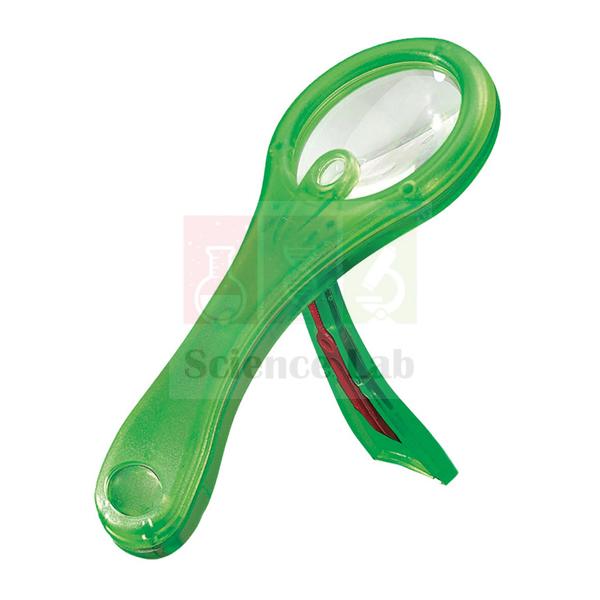
Magnifying Glass
Magnifying Glass (Product Code: SLE/M/60) is a dual-power hand magnifier used to examine insects, leaves, seeds, rocks and printed detail in school science and nature-study lessons. It combines a 4x wide-angle lens for scanning with a 9x narrow-focus lens for close inspection, and its handle holds a fold-out stand and a pair of specimen tweezers. It is supplied by Jain Scientific Equipments Pvt Ltd (ScienceLab), Ambala, India, as a hand lens magnifier for school classrooms and field kits.
Specifications
| Parameter | Detail |
|---|---|
| Lenses | 4x wide-angle view and 9x narrow-focus lens |
| Use modes | Handheld, or hands-free on the stand that unfolds from the handle |
| Built-in accessory | Specimen tweezers stored in the handle |
| Design | Ergonomic handle |
| Colours | Assorted |
| Size | 7 1/2 in L x 3 1/2 in W |
| Product code | SLE/M/60 |
| Supplied by | Jain Scientific Equipments Pvt Ltd (ScienceLab), Ambala, India |
What Is the Magnifying Glass Used For?
On a nature walk or at the classroom bench, students pick up a beetle, a seed or a flower part with the tweezers, scan it through the wide 4x lens to find the interesting region, then switch to the 9x lens to see leg hairs, compound eyes, leaf veins, crystal faces in rocks or the weave of a fabric. Unfolding the stand frees both hands for sketching, labelling or teasing a flower apart, which makes it one of the most practical biology teaching aids in India for junior and middle classes.
For the sharpest view, hold the lens close to the eye and bring the object towards it until the detail snaps into focus; the 9x lens has a shorter working distance than the 4x view. Never look at the sun through any magnifier, and do not leave it on a sunny window sill, where focused sunlight can scorch paper. Wipe the lenses with a soft, dry cloth.
What to Specify When Ordering
- Quantity per class, per group table or per field kit
- Whether assorted colours suit you, or if you need to discuss colour with us
- Companion items to quote together, such as insect containers or a stereo microscope
Supplier
ScienceLab is the trading name of Jain Scientific Equipments Private Limited, which supplies this dual-lens magnifier from Ambala, Haryana, to schools, activity centres, dealers and importers in India and international markets. Class sets can be combined with specimen containers and microscopes on a single quotation. Company background is on the ScienceLab profile page.
Related Microscope Equipment
Other magnifiers and viewing aids for nature study:
- Magnifying Glass 2 — a simpler single-lens option with a polished 2.5x lens
- Pocket Magnifier — a compact magnifier for pockets and field bags
- Magnifier, Foldable — another folding design for desk use
- Plastic Container with a Magnifying Glass Lid — for collecting and viewing live insects safely
- Stereo Microscope — the next step when students need higher magnification
Browse more optical items in the Microscope category.
Frequently Asked Questions
What magnification does the Magnifying Glass have?
The Magnifying Glass has two powers: a 4x lens with a wide-angle view for scanning a specimen, and a 9x narrow-focus lens for examining small details. Students usually find the area of interest at 4x before switching to 9x.
Can the Magnifying Glass be used hands-free?
Yes. The Magnifying Glass can be held in the hand or used hands-free by unfolding the stand built into its handle. Standing it on the desk leaves both hands free for sketching, labelling or handling a specimen with the tweezers.
What accessories come with the Magnifying Glass?
The Magnifying Glass carries a pair of specimen tweezers stored inside its handle, so the tweezers are not easily lost between lessons. No other accessories are listed; containers and other viewing aids can be added to the same quotation.
How big is the Magnifying Glass?
The Magnifying Glass measures 7 1/2 inches long and 3 1/2 inches wide. Its ergonomic handle is sized for comfortable handheld use by students, and the folding stand keeps it compact for storage in a classroom tray or field kit.
Can I choose the colour of the Magnifying Glass?
The Magnifying Glass is listed in assorted colours, which suits mixed class sets. If your school needs one colour for a kit or tender, ask on the contact page before ordering so we can confirm what is possible.
Who supplies the Magnifying Glass?
Jain Scientific Equipments Pvt Ltd (ScienceLab), Ambala, Haryana, India supplies the Magnifying Glass to schools, activity centres, dealers and importers in India and international markets, either as single pieces or as class sets with other nature-study items.
Request a Quote
For a class set of the Magnifying Glass, send the quantity and delivery address through the contact page, or add it to the enquiry cart along with any containers or microscopes you are planning to buy.
Last updated: 24 September 2026
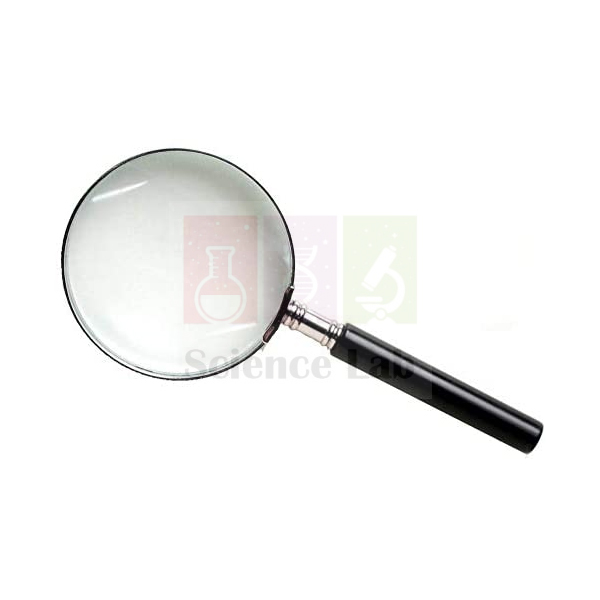
Magnifying Glass 2
Magnifying Glass 2 (Product Code: SLE/M/61) is a single-lens hand magnifier with an optically ground, highly polished 2.5x lens, used for low-power viewing of specimens, maps, instrument scales and fine print in school science rooms. Its gentle magnification shows a larger area of the object at once, which suits younger learners making their first observations. It is supplied by Jain Scientific Equipments Pvt Ltd (ScienceLab), Ambala, India, as a simple magnifier for lab and classroom use.
Key Details
| Parameter | Detail |
|---|---|
| Type | Hand magnifying glass, single lens |
| Magnification | 2.5x |
| Lens finish | Optically ground and highly polished |
| Product code | SLE/M/61 |
| Supplied by | Jain Scientific Equipments Pvt Ltd (ScienceLab), Ambala, India |
What Is the 2.5x Magnifying Glass Used For?
A low-power lens is the right tool when the whole object matters more than tiny detail: a complete leaf with its vein pattern, a spoonful of soil with seeds and grit, a flower head, a feather or a mineral sample. In physics and chemistry rooms it helps students read the fine graduations on thermometers, rulers and measuring cylinders without squinting. Teachers also use it to introduce the idea of magnification before students move on to a microscope, making it a handy magnifier loupe for any India lab.
Hold the lens steady and adjust the distance between lens and object until the image is sharp; at 2.5x there is a comfortable working gap for pointing, drawing or counting. Because the lens surfaces are ground and polished, clean them only with a soft lens cloth, keep the magnifier in a case or drawer, and never leave it in direct sunlight.
Supplier
Jain Scientific Equipments Private Limited, trading as ScienceLab from Ambala, Haryana, supplies this 2.5x magnifier with its range of hand lenses, microscopes and viewing accessories. Schools, coaching centres, dealers and importers in India and international markets can order it singly or in class quantities. See the ScienceLab profile for company details.
Related Microscope Equipment
Other magnifiers and care items to consider:
- Magnifying Glass — a dual 4x and 9x model with fold-out stand and tweezers
- Pocket Magnifier — a compact lens for field trips
- Magnifier — another hand lens option in the same range
- Microfiber Lens Cloth — for cleaning the polished lens without scratching
More optical items are listed in the Microscope category.
Frequently Asked Questions
What magnification does Magnifying Glass 2 give?
Magnifying Glass 2 gives 2.5x magnification through a single optically ground, highly polished lens. That low power shows a wide area of the object, making it suitable for whole leaves, soil samples, maps and reading fine scale markings.
How is Magnifying Glass 2 different from the dual-lens Magnifying Glass?
Magnifying Glass 2 is a simple single-lens 2.5x magnifier. The dual-lens Magnifying Glass in the same range has two powers, 4x and 9x, plus a fold-out stand and tweezers in the handle. Choose Magnifying Glass 2 for general low-power viewing by younger students.
What is the lens diameter of Magnifying Glass 2?
The lens diameter and handle material of Magnifying Glass 2 are not stated in the product details. If your kit list or tender specifies a lens size, send it through the contact page and we will confirm before quoting.
How should Magnifying Glass 2 be cleaned and stored?
Clean Magnifying Glass 2 with a soft lens cloth or lens tissue, never with paper towels or abrasive cleaners that can mark the polished surface. Store it in a drawer or case away from direct sunlight, which a lens can focus onto paper or wood.
Who supplies Magnifying Glass 2?
Jain Scientific Equipments Pvt Ltd (ScienceLab), Ambala, Haryana, India supplies Magnifying Glass 2 to schools, colleges, dealers and importers in India and international markets, either on its own or together with microscopes and other viewing aids.
Request a Quote
Send the quantity you need for Magnifying Glass 2 through the contact page, or place it in the enquiry cart with any lens cloths or microscopes, and we will reply with a quotation.
Last updated: 24 September 2026
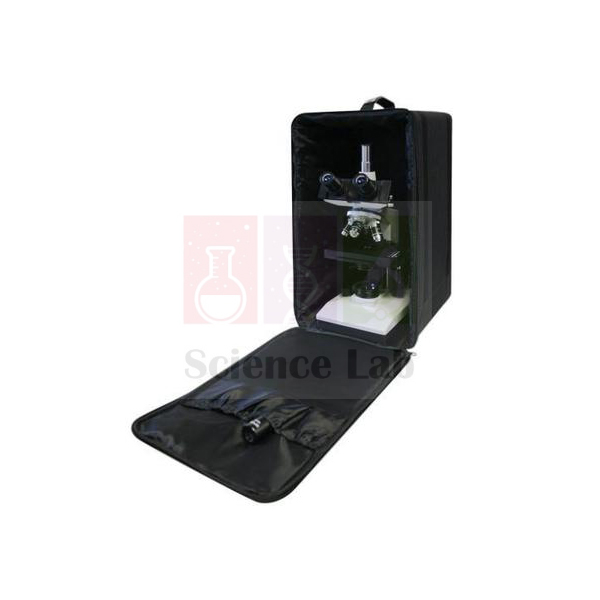
Microscope Case
Microscope Case (Product Code: SLE/M/62) is a hard carry case with a padded interior, used to store a microscope and move it safely between laboratories, classrooms, exam centres and outreach camps. Wide straps hold the instrument steady, inside pockets keep eyepieces, objective cases and manuals with it, and rubber feet allow the cases to be stacked. It is supplied by Jain Scientific Equipments Pvt Ltd (ScienceLab), Ambala, India, among its lab equipment accessories for microscopy.
Specifications
| Parameter | Detail |
|---|---|
| Case type | Hard carry case |
| Interior | Padded, with wide straps to hold the microscope securely |
| Storage pockets | Additional inside pockets for eyepieces, objective cases, manuals and other items |
| Base | Rubber feet |
| Stacking | Stackable |
| Inside dimensions | 16 in H x 7 in W x 10 in D |
| Product code | SLE/M/62 |
| Supplied by | Jain Scientific Equipments Pvt Ltd (ScienceLab), Ambala, India |
What Is the Microscope Case Used For?
Microscopes are most often damaged not during use but while being carried or stored: a knocked stage, a scratched objective or a lost eyepiece can take an instrument out of service for a whole term. A hard, padded case keeps dust off between practicals, protects the optics when microscopes travel to exam halls, science fairs or rural outreach camps, and keeps small accessories with the instrument they belong to. Stackable cases with rubber feet also make store-room shelving tidier and steadier.
Before packing, remove any slide, rack the stage down, turn the lowest-power objective into position and switch off and cool any lamp. Secure the microscope with the straps, put spare eyepieces and objective cases in the pockets, and store the case upright. Measure your microscope first, including knobs, mirror or lamp housing, to be sure it sits within the inside dimensions.
What to Specify When Ordering
- Height, width and depth of the microscope to be carried, so fit can be checked against 16 x 7 x 10 in
- Number of cases required, one per microscope
- Any slide cases or cleaning items to include on the same quotation
Supplier
This carry case is supplied by Jain Scientific Equipments Private Limited, the company behind the ScienceLab name in Ambala, Haryana. Laboratories that buy microscopes from the same range often add a case for each instrument, and dealers and importers in India and international markets can include cases in mixed consignments. Company information is on the ScienceLab profile page.
Related Microscope Equipment
Storage and care items that go with a microscope case:
- Carry Case for Microscopes — an alternative carrying case in the same range
- Microscope Slide Case — keeps prepared slides organised alongside the instrument
- Microscope Cleaning Kit — for cleaning optics before the microscope goes into storage
- Microfiber Lens Cloth — a small cloth that fits in the case pockets
View microscopes and accessories in the Microscope category.
Frequently Asked Questions
What size of microscope fits the Microscope Case?
The Microscope Case has inside dimensions of 16 inches high, 7 inches wide and 10 inches deep. Measure your microscope including knobs, mirror or lamp housing; if you are unsure, send the model details through the contact page and we will help check the fit.
How does the Microscope Case protect the instrument?
The Microscope Case combines a hard outer shell with a padded interior and wide straps that hold the microscope securely in place. This reduces movement and knocks during carrying, and the closed case keeps dust away from lenses during storage.
Can eyepieces and manuals be stored in the Microscope Case?
Yes. The Microscope Case has additional inside pockets for eyepieces, objective cases, manuals and other small items, so every accessory stays with the microscope it belongs to rather than getting lost in a drawer.
Can Microscope Cases be stacked?
Yes. The Microscope Case is stackable and has rubber feet, so several cases can be stored on top of one another on a store-room shelf or cupboard floor without sliding. Keep the heaviest instruments at the bottom of the stack.
Is a microscope included with the Microscope Case?
No microscope is included; the Microscope Case listing covers the carry case only. Microscopes from our range can be quoted separately, and we can check that the chosen instrument fits the case before you order.
Who supplies the Microscope Case?
Jain Scientific Equipments Pvt Ltd (ScienceLab), Ambala, Haryana, India supplies the Microscope Case to schools, colleges, laboratories, dealers and importers in India and international markets, on its own or together with microscopes and slide storage.
Request a Quote
Tell us how many Microscope Cases you need and the dimensions of your microscopes through the contact page, or add the case to the enquiry cart with any other microscope accessories.
Last updated: 24 September 2026
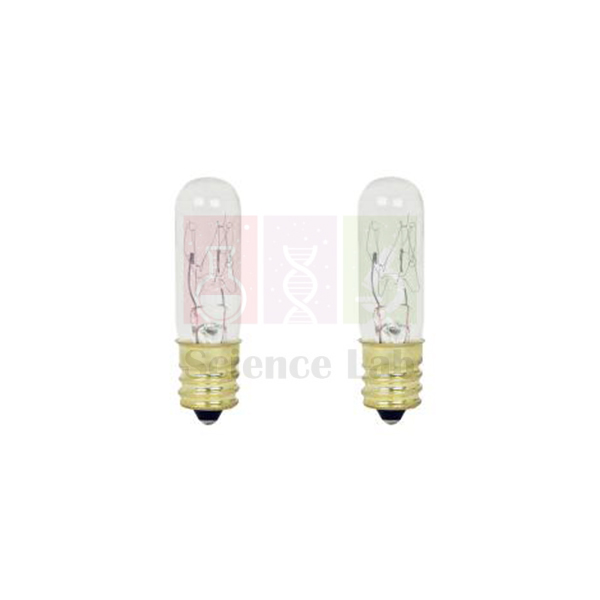
Lamp, 15 W, 120 V
Lamp, 15 W, 120 V (Product Code: SLE/M/63) is a clear glass-top replacement bulb with a bi-post double-contact base, used to restore illumination in microscopes and illuminators whose lamp holder takes this base and rating. Laboratory technicians keep it as a spare so that a failed bulb does not stop a practical session; it is rated 15 watts at 120 volts. It is supplied by Jain Scientific Equipments Pvt Ltd (ScienceLab), Ambala, India, as one of its lab equipment spare parts for microscopy.
Specifications
| Parameter | Detail |
|---|---|
| Illumination | Bulb (replacement lamp) |
| Glass | Clear glass top |
| Base | Bi-post, double contact |
| Wattage | 15 W |
| Voltage | 120 V |
| Product code | SLE/M/63 |
| Supplied by | Jain Scientific Equipments Pvt Ltd (ScienceLab), Ambala, India |
What Is the 15 W, 120 V Lamp Used For?
Every lamp-lit microscope eventually needs a new bulb, and a lab without a spare can lose a full practical while one is sourced. This 15 W bulb replaces a failed lamp in a microscope base, substage illuminator or lamp housing designed for a 120 V bulb with a bi-post double-contact base; the clear glass top gives an unfrosted light source for the condenser to collect. Fit it only where the instrument's lamp circuit is rated for this voltage and wattage, and compare it with the markings on the old bulb before ordering.
To change the lamp, switch off and unplug the microscope, let the old bulb cool completely, then withdraw it straight out of the holder. Line up both posts of the new lamp with the socket, press it fully home without twisting the glass, refit the cover and test at low brightness first. Keep a spare in the microscope case or store cupboard.
What to Specify When Ordering
- Confirmation that your instrument uses a 15 W, 120 V lamp
- Base type of the old lamp (this one is bi-post, double contact)
- Number of spares for your microscope fleet
- Microscope make and model, if you want us to check compatibility
Supplier
Jain Scientific Equipments Private Limited, known to customers as ScienceLab, supplies this replacement lamp from Ambala, Haryana, as part of its microscope spares range, so bulbs can be ordered together with slides, cover glasses and other consumables. Export consignments are handled under Importer-Exporter Code AAECJ8618A, and buyers who need vendor details can register the company under GSTIN 06AAECJ8618A1ZT. More about the company is on the ScienceLab profile page.
Related Microscope Equipment
Other lighting spares and aids for microscopes:
- Fluorescent Lamp 5W — a replacement tube for fluorescent-lit instruments
- LED Replacement Bulb Assembly — an LED lamp unit for microscopes built for LED lighting
- Walter LED Gooseneck Illuminator — an external light for specimens and stereo work
- Microscope Maintenance & Servicing Kit — tools and materials for routine microscope upkeep
Find more spares in the Microscope category.
Frequently Asked Questions
What is the rating of the Lamp, 15 W, 120 V?
The Lamp, 15 W, 120 V is rated 15 watts at 120 volts. It has a clear glass top and a bi-post double-contact base, and it is listed as a replacement bulb for microscope illumination.
Will the Lamp, 15 W, 120 V fit my microscope?
The Lamp, 15 W, 120 V fits instruments whose lamp holder takes a bi-post double-contact base and whose lamp circuit is designed for a 15 W, 120 V bulb. Compare the markings on your old lamp, or send the model and a photo of the bulb through the contact page.
Can the Lamp, 15 W, 120 V be connected directly to Indian mains?
No. The Lamp, 15 W, 120 V is a 120-volt bulb and should only be used in equipment whose lamp supply delivers that voltage. Connecting it directly to higher-voltage mains, such as the supply in India, would overload the filament, so check your instrument's rating first.
How do I replace the Lamp, 15 W, 120 V safely?
To replace the Lamp, 15 W, 120 V, switch off and unplug the instrument, allow the old bulb to cool, pull it straight out, align both posts of the new lamp with the socket and press it fully in. Refit the lamp cover and test at low brightness.
Who supplies the Lamp, 15 W, 120 V?
Jain Scientific Equipments Pvt Ltd (ScienceLab), Ambala, Haryana, India supplies the Lamp, 15 W, 120 V to schools, colleges, laboratories, service engineers, dealers and importers in India and international markets, alongside other microscope spares and consumables.
What should a quotation request for the Lamp, 15 W, 120 V include?
A quotation request for the Lamp, 15 W, 120 V should give the quantity of spares, your microscope make and model, the markings on the old bulb and the delivery location, so the rating and base can be matched before dispatch.
Request a Quote
Send the number of Lamp, 15 W, 120 V spares you need and your microscope details through the contact page, or add the lamp to the enquiry cart with other microscope consumables.
Last updated: 24 September 2026
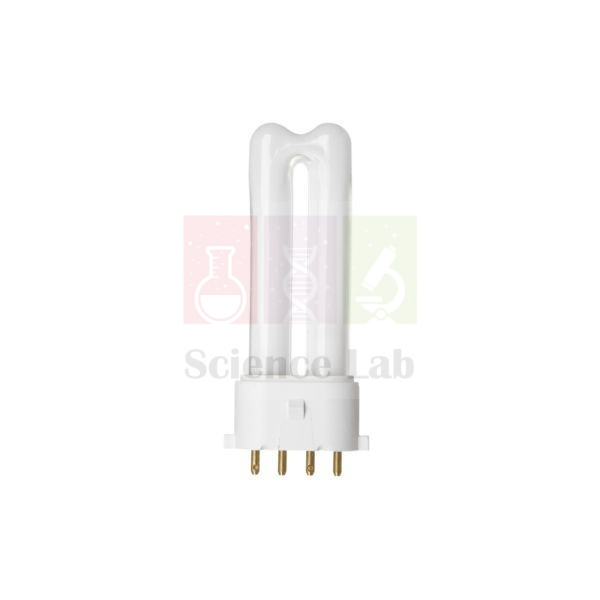
Fluorescent Lamp 5W
Fluorescent Lamp 5W (Product Code: SLE/M/64) is a compact replacement fluorescent tube with a square centre connection and wire posts on its sides, used as a spare light source for fluorescent-lit microscopes and small specimen illuminators in teaching laboratories. Measuring 4 1/4 in long and 1 1/4 in wide, it suits small lamp housings where a dim or flickering tube has to be changed quickly. It is supplied by Jain Scientific Equipments Pvt Ltd (ScienceLab), Ambala, India, with its other microscope lighting spares.
Specifications
| Parameter | Detail |
|---|---|
| Lamp type | Fluorescent |
| Base | Square connection centre with wire posts on the sides |
| Size | 4 1/4 in L x 1 1/4 in W |
| Power | 5 W, as named |
| Voltage | Please confirm with us — the recorded electrical figures for this item are inconsistent |
| Product code | SLE/M/64 |
| Supplied by | Jain Scientific Equipments Pvt Ltd (ScienceLab), Ambala, India |
What Is the Fluorescent Lamp 5W Used For?
Fluorescent lighting gives a cool, even glow that many student microscopes and small illuminators use to light slides without warming the specimen. Over time a tube dims, darkens at the ends or starts to flicker, and the image becomes hard to read. Replacing it with a matching compact tube restores clear, steady lighting for practicals on cells, tissues and microorganisms; keeping one or two in stock is sensible for any lab that runs several fluorescent-lit instruments.
Switch off and unplug the instrument before opening the lamp cover, and let the old tube cool. Note how the square base and side posts sit in the holder, remove the old lamp gently and fit the new one the same way round. Fluorescent tubes contain a small amount of mercury, so handle them carefully, do not break them and dispose of used tubes through an e-waste or lamp collection point.
What to Specify When Ordering
- Voltage and wattage marked on your existing lamp or lamp housing
- Base style and length, to match the 4 1/4 in square-base tube
- Microscope or illuminator make and model
- Number of spare tubes required
Supplier
Jain Scientific Equipments Private Limited operates under the ScienceLab name in Ambala, Haryana, and supplies this compact fluorescent tube as a microscope spare. Labs, service technicians, dealers and importers in India and international markets can add it to orders for slides, cover glasses and other consumables. Company details are on the ScienceLab profile page.
Related Microscope Equipment
Other lamps and lighting options for microscopes:
- Lamp, 15 W, 120 V — a bi-post bulb for lamp-lit instruments
- LED Replacement Bulb Assembly — a 3 W LED unit for microscopes built for LED lighting
- Walter LED Gooseneck Illuminator — separate lighting for specimens on the bench
- Microscope Cleaning Kit — for cleaning optics while the lamp housing is open
More spares are listed in the Microscope category.
Frequently Asked Questions
What size is the Fluorescent Lamp 5W?
The Fluorescent Lamp 5W measures 4 1/4 inches long and 1 1/4 inches wide. It has a square connection centre with wire posts on the sides, so compare both the length and the base with your old tube before ordering a replacement.
What voltage does the Fluorescent Lamp 5W use?
The Fluorescent Lamp 5W is named as a 5 W lamp, but the electrical figures recorded for it do not agree with each other. Send the markings from your old lamp through the contact page and we will confirm the correct voltage and wattage before quoting.
Will the Fluorescent Lamp 5W fit my microscope?
The Fluorescent Lamp 5W fits lamp holders that take a compact tube of this length with a square centre connection and side wire posts. If you are not sure, send the microscope model and a photo of the existing lamp so we can check compatibility.
How do I dispose of a used Fluorescent Lamp 5W?
A used Fluorescent Lamp 5W should not be broken or thrown in general waste, because fluorescent tubes contain a small amount of mercury. Wrap it carefully and take it to an e-waste or lamp collection point in line with local rules.
Who supplies the Fluorescent Lamp 5W?
Jain Scientific Equipments Pvt Ltd (ScienceLab), Ambala, Haryana, India supplies the Fluorescent Lamp 5W to schools, colleges, laboratories, service technicians, dealers and importers in India and international markets, together with other microscope lighting spares.
Request a Quote
For spare Fluorescent Lamp 5W tubes, send the quantity and the markings on your current lamp through the contact page, or add the item to the enquiry cart with any other microscope spares.
Last updated: 24 September 2026
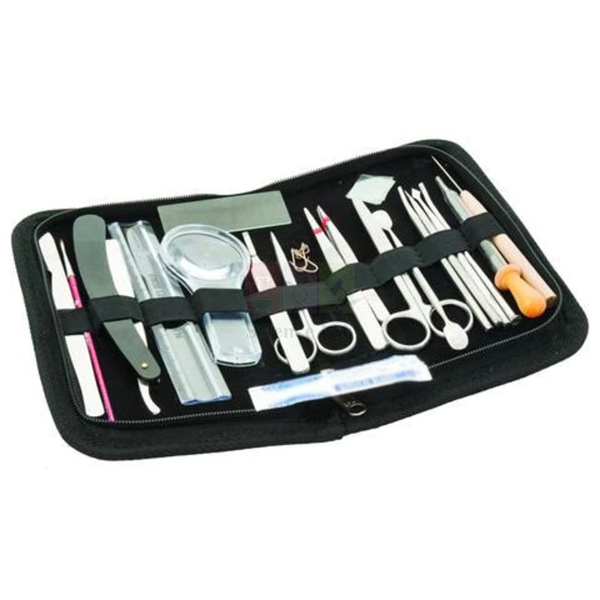
Dissecting Set, Large
Dissecting Set, Large (Product Code: SLE/EDE/06) is a comprehensive set of 20 dissecting instruments, all made of stainless steel and fitted in a velvet lined leatherette case. With two sizes of scissors, a no. 3 scalpel handle with blades, a seeker, needles and mounting accessories, it is aimed at senior secondary students, undergraduates and teachers who need a complete dissection set for biology work in India. The set is made by Jain Scientific Equipments Pvt Ltd (ScienceLab), Ambala.
Specifications
| Parameter | Detail |
|---|---|
| Product type | Dissecting instruments set, large |
| Number of instruments | 20 |
| Instrument material | Stainless steel |
| Case | Velvet lined leatherette case |
| Scissors | Sharp-blunt, 125 mm; sharp, 100 mm |
| Scalpels | 1 scalpel; 1 scalpel handle (no. 3) with 2 blades |
Contents as listed:
- 1 Scissors, sharp-blunt, 125 mm
- 1 Scissors, sharp, 100 mm
- 1 Forceps, blunt
- 1 Forceps, sharp
- 1 Scalpel
- 1 Scalpel handle (no. 3) with 2 blades
- 1 Needle, pointed (steel)
- 1 Slide
- 1 Cover slip
- 1 Watch glass
- 1 Needle with plastic handle
- 1 Blow pipe
- 1 Razor
- 1 Magnifier
- 1 Dropper
- 1 Needle, arrow head
- 1 Seeker
- 1 Section lifter
- 3 Drawing pins
Typical Use
The larger range of tools lets a student move through a longer dissection without borrowing from a neighbour. The 125 mm sharp-blunt scissors open the body wall safely, the finer 100 mm scissors handle delicate cuts, and the bladed no. 3 handle gives a controlled incision where a fixed scalpel would be too coarse. The seeker and arrow-head needle trace nerves and vessels, while the drawing pins fix labels or a drawing sheet beside the specimen.
For microscopy follow-up, the razor cuts a thin section, the section lifter moves it into the watch glass, the dropper adds water or stain, and the slide and cover slip complete a temporary mount for examination. That combination also makes the set useful botany lab equipment for stem and root section work. Dry every instrument fully before laying it back in the velvet lining, since trapped moisture is the main cause of spotting during storage.
Manufacturer
Jain Scientific Equipments Private Limited, trading as ScienceLab, builds instrument sets like this one at Ambala in Haryana for schools, universities and resellers. Its company profile explains the business, its product groups and how it works with institutional buyers.
Related Dissection Equipment
Owners of the large set often order these alongside it:
- Scalpel Handle no.3 — a spare handle of the same number as the one in the case.
- Cover Glass Slide — extra cover slips for repeated temporary mounts.
- Dissecting Hook & Chain Set — holds specimen walls apart while both hands use the instruments.
- Dissection Pan — wax-surfaced pan on which the specimen is pinned.
- Dissecting Kit (Economy) — a lower-cost boxed kit for junior classes.
See every set and single instrument in the Dissection Equipment category.
Frequently Asked Questions
Who is the large set intended for?
It suits senior school students, undergraduate zoology and botany students, and teachers who want one case holding cutting, probing and slide-preparation tools.
Are replacement blades available for the no. 3 handle?
The set ships with 2 blades on the handle. For spare blades, tell us your requirement through the contact page and we will confirm what can be supplied with your order.
What is the case made of?
A leatherette case with a velvet lining, which keeps each instrument in place and protects the cutting edges during storage and transport.
How should the set be cleaned?
Wash instruments in warm soapy water, rinse, and dry each one completely before returning it to the lining. Keep glass items separate while washing to avoid chipping.
Can the contents be customised for a tender?
If your tender lists a different instrument schedule, send it with your enquiry and we will advise what can be matched before quoting.
What warranty applies?
Warranty terms are given in the quotation for each order; ask if you need them in a specific format.
Do you supply universities and export buyers?
Yes. We quote for department, university and distributor quantities in India and international markets.
Request a Quote
Request pricing for the Dissecting Set, Large through our contact page, or add it to the enquiry cart together with spare handles, cover slips and pans.
Last updated: 24 September 2026
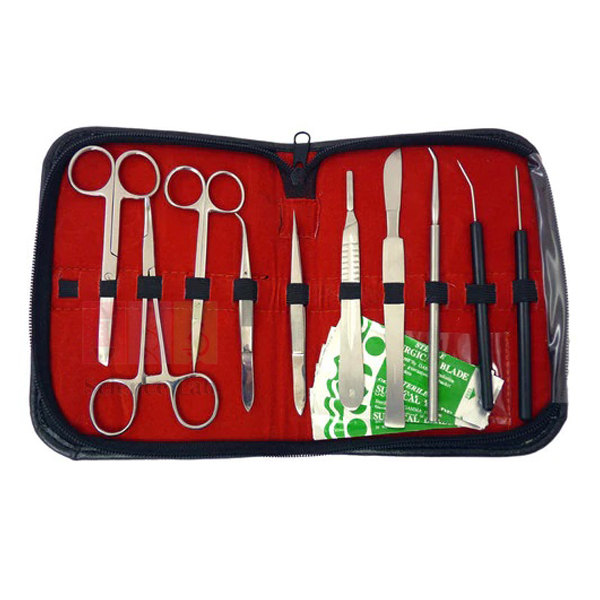
Dissecting Set, Student
Dissecting Set, Student (Product Code: SLE/EDE/07) is a mid-range set of 10 stainless steel dissecting instruments supplied in a PVC case. Between its two pairs of scissors, a no. 3 scalpel handle with blades, a seeker and a magnifier, it covers most of the cutting, holding and observation steps in school and first-year college practicals. Made by Jain Scientific Equipments Pvt Ltd (ScienceLab), Ambala, it is a practical choice among science kits for students in India who want their own instruments.
Specifications
| Parameter | Detail |
|---|---|
| Product type | Dissecting instruments set, student |
| Number of instruments | 10 |
| Instrument material | Stainless steel |
| Case | PVC case |
| Scissors | Sharp-blunt, 125 mm; sharp, 100 mm |
| Scalpel handle | No. 3, with 2 blades |
Contents as listed:
- 1 Needle
- 1 Scissor, sharp-blunt, 125 mm
- 1 Scissors, sharp, 100 mm
- 1 Scalpel handle (no. 3) with 2 blades
- 2 Scalpels
- 1 Forceps, blunt
- 1 Forceps, sharp
- 1 Seeker
- 1 Razor
- 1 Magnifier
Typical Use
A typical session starts with the sharp-blunt scissors, whose rounded blade slides under the body wall without piercing the organs below. The smaller sharp scissors and the bladed handle then take care of finer cuts, the forceps hold tissue steady, and the seeker follows nerves and blood vessels so students can name them in their record book. The magnifier helps with small features such as setae, mouthparts or floral parts.
Because every student can keep a personal case through the year, teachers spend less time distributing shared tools and more time on technique. Many schools list this set among their core biology teaching aids and pair it with a wax tray per bench. Clean the blades carefully, dry all pieces and close the case only once the instruments are fully dry.
Manufacturer
The Student set is produced by Jain Scientific Equipments Private Limited, the Ambala, Haryana company that sells under the ScienceLab brand. Its range spans dissection instruments, models, glassware and apparatus for teaching laboratories; the company profile has the full background.
Related Dissection Equipment
Useful additions and alternatives for this set:
- Dissecting Tray with Wax — a pinning surface for the specimen at each bench.
- Dissecting T-Pins — the set contains no pins, so these hold the specimen open.
- Scalpel Handle no.3 — a spare handle matching the one in the case.
- Dissecting Set, Large — adds slide-preparation items and a lined case for advanced students.
- Dissecting Set, Elementry — a simpler set for younger classes.
The Dissection Equipment category lists every set and single instrument in the range.
Frequently Asked Questions
How does the Student set compare with the Elementary and Large sets?
It adds a second pair of scissors, a bladed handle, a seeker and a magnifier to the basic tools, but leaves out the slide, watch glass and dropper found in the large set.
What is the seeker used for?
A seeker is a probing instrument for following and lifting nerves, ducts and vessels without cutting them, so structures can be traced and identified.
What blades come with the handle?
The no. 3 handle is supplied with 2 blades. For spares, ask us through the contact page and we will confirm what we can include with your order.
Can each student keep a set for the whole year?
Yes, that is how many schools use it. The PVC case keeps the instruments together, and a name label on the case makes collection easy.
Is a warranty provided?
Warranty details are set out in each quotation; request them in writing if your purchase process needs it.
What information speeds up a quotation?
Product code SLE/EDE/07, the number of sets, delivery address and any accompanying items such as trays or pins.
Do you take bulk and export orders?
Yes. School, college and distributor orders are supplied across India and to international markets.
Request a Quote
Ask for a price on the Dissecting Set, Student through our contact page, or save it in the enquiry cart while you build your full order.
Last updated: 24 September 2026