- Physics Lab Equipment
- Chemistry Lab Equipment
- Biology Lab Equipment
- Anatomical Lab Equipment
- Learning
- Educational Lab Equipment
- Magnets
- Agriculture
- Astronomy
- Earth Science
- Geography Lab Equipment
- Safety Lab Coat
- Laboratory
- Meteorological
- Electricity & Magnetism
- Heat
- School Lab Equipment
- Lab Glassware
- Science Lab Equipment
- Tvet Lab Equipment
- Robotics Kits Supplier and Manufacturer for Schools India
- Math Lab Equipment Manufacturers and Exporters in Ambala
- STEM Kits Manufacturers and Supplier India
- Engineering Lab Equipment
- Hospital Lab Equipment
- Water, Sanitation & Hygiene Supplies
- Cold Chain, Solar & Communication Equipment
- Nutrition
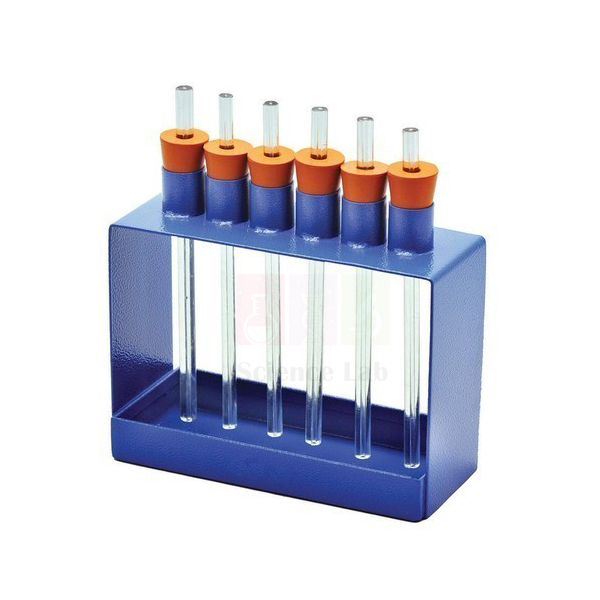
Capillary Tube Apparatus
Capillary Tube Apparatus (Product Code: SLE/PHY/32) is a demonstration apparatus used to show how the bore of a capillary tube affects the height to which water rises in it, in school and college physics laboratories. A metal frame holds six capillary tubes of different bores upright in a water trough, so the different column heights are visible at a glance. It is made by Jain Scientific Equipments Pvt Ltd (ScienceLab), an OEM manufacturer, at its own factory in Ambala, India, for capillary tube experiments in India and abroad.
Specifications
| Parameter | Detail |
|---|---|
| Capillary tubes | Six, each of a different bore |
| Length of capillary tubes | 150 mm |
| Frame | Metal frame holding the tubes vertically in a trough |
| Overall height of frame | 90 mm |
| Liquid | Trough filled with water |
| Demonstrates | Relationship between capillary pressure and the bore diameter of the tube |
| Product code | SLE/PHY/32 |
| Manufacturer | Jain Scientific Equipments Pvt Ltd (ScienceLab) — OEM |
| Country of origin | India (made in Ambala, Haryana) |
What Is the Capillary Tube Apparatus Used For?
The apparatus demonstrates capillarity, one of the most visible effects of surface tension. Once water is poured into the trough, it climbs each tube to a different height: the narrower the bore, the higher the column. Seeing all six columns side by side lets students link the rise directly to tube diameter and discuss why capillary pressure increases as the bore gets smaller.
For the clearest display, use clean tubes, since grease inside a tube reduces the rise, and add a drop of coloured ink to the water so the columns stand out from the back of the room. Rinse and dry the tubes after use. The unit makes a useful companion to surface tension apparatus in India when a lesson needs a quick qualitative demonstration before quantitative work.
OEM Manufacturer
ScienceLab is the trading name of Jain Scientific Equipments Private Limited, the OEM that manufactures this capillary tube apparatus at its own licensed factory at Saha, Ambala, Haryana, India. The company is a registered MSME enterprise (Udyam UDYAM-HR-01-0003714), and export consignments are shipped under Importer-Exporter Code AAECJ8618A issued by the DGFT.
Institutions, dealers and importers buy directly from the maker, so questions about replacement capillary tubes or additional units are answered by the factory itself; just ask us. Visit our company profile for more about ScienceLab.
Related Physics Lab Equipment
Items that support capillarity and fluid demonstrations:
- Capillary Tube Set — loose capillary tubes for further student investigations.
- Capillary Tube — single tubes for individual experiments.
- Microscope Travelling (Vernier) — for measuring column heights and bores in quantitative work.
- Bernoulli Tube Apparatus — another fluids demonstration for the same unit of study.
Browse the Physics Lab Equipment category for more properties-of-matter apparatus.
Frequently Asked Questions
How many tubes does the Capillary Tube Apparatus have?
The Capillary Tube Apparatus has six capillary tubes of different bores, held vertically in a trough by a metal frame. Each tube is 150 mm long, and the frame has an overall height of 90 mm.
What does the Capillary Tube Apparatus demonstrate?
The Capillary Tube Apparatus demonstrates the relationship between capillary pressure and the bore diameter of a capillary tube. When the trough is filled with water, the difference in height between the six water columns is immediately clear.
What liquid is used in the Capillary Tube Apparatus?
The Capillary Tube Apparatus is used with water poured into its trough. A little coloured ink can be added to make the columns easier to see, and the tubes should be rinsed and dried after each demonstration.
Who manufactures the Capillary Tube Apparatus?
The Capillary Tube Apparatus is manufactured by Jain Scientific Equipments Pvt Ltd (ScienceLab), the OEM, at its own licensed factory at Saha, Ambala, Haryana, India. Enquiries about replacement tubes and repeat orders are handled directly by the manufacturer.
Are the bore sizes of the Capillary Tube Apparatus specified?
The Capillary Tube Apparatus listing states that its six tubes have different bores but does not give individual diameters. If your experiment needs exact bore sizes, please ask us through the contact page before ordering.
Can the Capillary Tube Apparatus be supplied to dealers and importers?
Yes, the Capillary Tube Apparatus is supplied factory-direct to schools, colleges, dealers and importers in India and international markets. Include the quantity and destination in your enquiry so the manufacturer can prepare a quotation.
Request a Quote
For a quotation on the Capillary Tube Apparatus, write to us via the contact page or add it to the enquiry cart. Quotations are provided direct by the manufacturer, Jain Scientific Equipments Pvt Ltd (ScienceLab).
Last updated: 24 September 2026
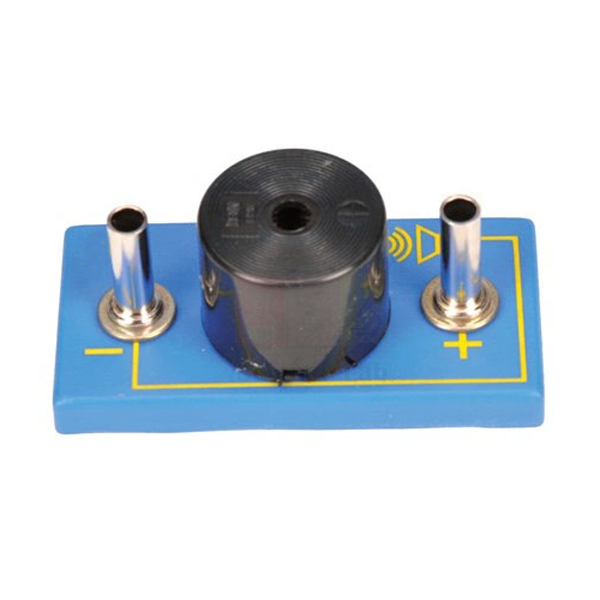
Circuits Kit Buzzer
Circuits Kit Buzzer (Product Code: SLE/PHY/33) is a panel-mounted buzzer offered as a spare component for the Circuits Kit, used to give an audible signal in simple electric circuits built in school science and physics labs. It lets pupils hear, rather than see, that a circuit is complete, and it helps with alarm and signalling projects. It is made by Jain Scientific Equipments Pvt Ltd (ScienceLab), an OEM manufacturer, at its own factory in Ambala, India, for electricity experiment kits in schools.
Key Details
| Parameter | Detail |
|---|---|
| Component | Buzzer |
| Role | Spare component for the Circuits Kit |
| Construction | Mounted on a sturdy panel |
| Practical benefit | Easy to use at the bench and easy to store |
| Product code | SLE/PHY/33 |
| Manufacturer | Jain Scientific Equipments Pvt Ltd (ScienceLab) — OEM |
| Country of origin | India (made in Ambala, Haryana) |
What Is the Circuits Kit Buzzer Used For?
The buzzer is the sound-producing output in a beginner's circuit. Connected with a cell and a switch, it sounds whenever current flows, which gives younger pupils a second way to recognise a complete circuit alongside a lamp. It is also the heart of classic design tasks such as a door alarm, a steady-hand game or a signalling circuit operated by a switch.
Some buzzers only work when connected the right way round, so if it stays silent, check the markings and reverse the connections before looking for other faults. Keep the panel dry, and store it flat with the other kit panels so the connections are not bent. As part of an electricity experiment kit for schools, it makes lessons on inputs, outputs and control more engaging.
OEM Manufacturer
This spare buzzer is manufactured by Jain Scientific Equipments Private Limited, which trades as ScienceLab, acting as the OEM at its own licensed factory at Saha, Ambala, Haryana, India. Ordering from the maker means spare panels for circuits kits can be matched and quoted without going through a trader.
Schools replacing worn components, and dealers or importers stocking spares, can ask us directly about quantities and repeat supplies. The company profile has more about ScienceLab.
Related Physics Lab Equipment
Pair the buzzer with these components to build working alarm and signalling circuits:
- Circuits Kit Push Switch — a switch to sound the buzzer on demand.
- Circuits Kit Cell Holder — supplies power to the circuit.
- Circuits Kit Bulb Holder — adds a visual output beside the sound.
- Simple Circuit Module Buzzer — a buzzer module from another circuit system.
- Electricity Circuits Kit — a complete kit for simple circuit work; ask us which spares suit it.
More components are listed under Physics Lab Equipment.
Frequently Asked Questions
What is the Circuits Kit Buzzer?
The Circuits Kit Buzzer is a spare buzzer component for the Circuits Kit. Like the other kit components it is mounted on a sturdy panel for ease of use and storage, and it gives an audible signal when current flows.
What voltage does the Circuits Kit Buzzer need?
The Circuits Kit Buzzer listing does not state an operating voltage. Please ask us through the contact page, mentioning the cells or supply your kits use, and we will confirm suitability before you order.
Why is my Circuits Kit Buzzer not sounding?
If the Circuits Kit Buzzer stays silent, first check that the circuit is complete and the cells are charged, then reverse the connections, because many buzzers only sound when current flows in one direction through them.
Who manufactures the Circuits Kit Buzzer?
The Circuits Kit Buzzer is manufactured by Jain Scientific Equipments Pvt Ltd (ScienceLab), the OEM, at its own licensed factory at Saha, Ambala, Haryana, India, and spare-part orders are handled by the manufacturer directly.
What projects can the Circuits Kit Buzzer be used for?
The Circuits Kit Buzzer suits door alarms, steady-hand games, signalling circuits and simple tests of whether a circuit is complete, giving pupils a sound output to compare with a lamp in introductory electricity lessons.
Can the Circuits Kit Buzzer be bought as a bulk spare?
Yes, the Circuits Kit Buzzer can be ordered in bulk by schools, dealers and importers, and ScienceLab supplies India and international markets. Give the quantity and delivery location in your enquiry to receive a quotation.
Request a Quote
Request a quote for the Circuits Kit Buzzer through our contact page or add it to the enquiry cart with other spares. Quotations come direct from the manufacturer.
Last updated: 24 September 2026
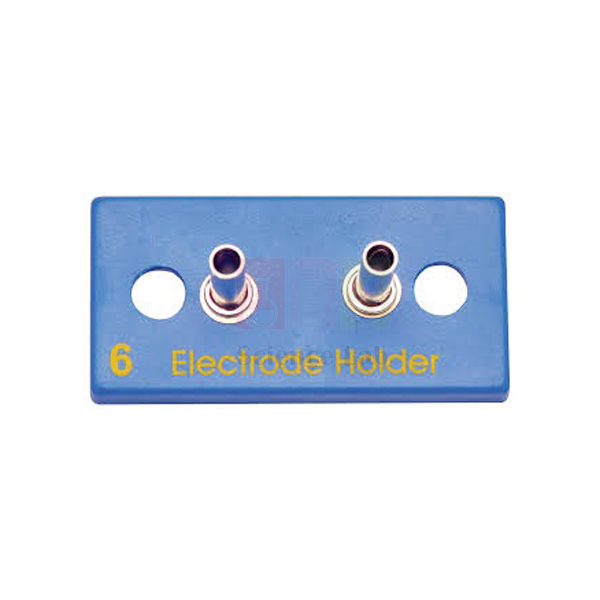
Circuits Kit Electrode Holder
Circuits Kit Electrode Holder (Product Code: SLE/PHY/34) is a panel-mounted electrode holder used as a spare component for the Circuits Kit, letting students bring a liquid into a simple circuit to test whether it conducts, in school science and physics labs. It suits lessons on conduction through solutions and introductory electrolysis. It is made by Jain Scientific Equipments Pvt Ltd (ScienceLab), an OEM manufacturer, at its own factory in Ambala, India, and fits into a wider range of school physics lab equipment.
Key Details
| Parameter | Detail |
|---|---|
| Component | Electrode holder |
| Kit | Spare component for the Circuits Kit |
| Mounting | Sturdy panel |
| Advantage | Easier handling during experiments and tidy storage |
| Product code | SLE/PHY/34 |
| Manufacturer | Jain Scientific Equipments Pvt Ltd (ScienceLab) — OEM |
| Country of origin | India (made in Ambala, Haryana) |
What Is the Circuits Kit Electrode Holder Used For?
The electrode holder extends circuit work from solid conductors to liquids. With electrodes held apart in a beaker of tap water, salt solution, sugar solution or dilute acid, and a lamp or buzzer in the same loop, students can see which liquids allow current to pass. The same arrangement introduces electrolysis, where gas bubbles or deposits form at the electrodes as the current flows.
Keep the electrodes from touching each other, rinse them with clean water between liquids so results are not contaminated, and dry the panel before it goes back into storage. Only use dilute solutions appropriate to the age group, with eye protection when acids or salts are involved.
OEM Manufacturer
Jain Scientific Equipments Private Limited, whose trading name is ScienceLab, manufactures this electrode holder as the OEM at its own licensed factory at Saha, Ambala, Haryana, India. Buying from the original manufacturer lets schools and distributors keep their circuits kits complete with spares from the same source.
Dealers, importers and institutions can ask us about matching spares and repeat orders, and quotations are issued by the manufacturer itself. Read about the company on our company profile.
Related Physics Lab Equipment
Useful additions for conduction-in-liquids and electrolysis lessons:
- Electrodes, Copper — electrodes for electrolysis work; confirm the fit with us.
- Electrode Rod Holders — an alternative style of holder for rod electrodes.
- Electrode Foil Holders — holders designed for foil electrodes.
- Circuits Kit Bulb Holder — a lamp that shows when the liquid conducts.
- Electricity Circuits Kit — a complete kit for simple circuits; ask us which spares match it.
Explore the Physics Lab Equipment category for more electricity apparatus.
Frequently Asked Questions
What is the Circuits Kit Electrode Holder used for?
The Circuits Kit Electrode Holder is used to hold electrodes in a liquid so that the liquid becomes part of a simple circuit. It supports lessons testing which solutions conduct electricity and introductory electrolysis demonstrations.
Are electrodes included with the Circuits Kit Electrode Holder?
The Circuits Kit Electrode Holder listing describes the panel-mounted holder and does not say that electrodes are included. Tell us which electrodes you need through the contact page and we will confirm them in the quotation.
How is the Circuits Kit Electrode Holder mounted?
The Circuits Kit Electrode Holder is mounted on a sturdy panel, like the other Circuits Kit components. The panel makes it easier to handle during experiments and allows it to be stored neatly with the rest of the kit.
Who manufactures the Circuits Kit Electrode Holder?
The Circuits Kit Electrode Holder is made by the OEM, Jain Scientific Equipments Pvt Ltd (ScienceLab), at its own licensed factory in Saha, Ambala, Haryana, India. Spares and repeat orders are handled directly by the manufacturer.
Is the Circuits Kit Electrode Holder safe for school use?
The Circuits Kit Electrode Holder is intended for supervised school practicals. Use low-voltage cells, dilute solutions suited to the age group and eye protection, and rinse the electrodes after each liquid so the holder stays clean for the next class.
Can the Circuits Kit Electrode Holder be ordered in bulk for export?
Yes, the Circuits Kit Electrode Holder can be ordered in bulk by schools, dealers and importers in India and international markets. Share the quantity and delivery location in your enquiry for a quotation from the manufacturer.
Request a Quote
To obtain a quote for the Circuits Kit Electrode Holder, reach us through the contact page or add it to the enquiry cart. The manufacturer will reply with a quotation directly.
Last updated: 24 September 2026
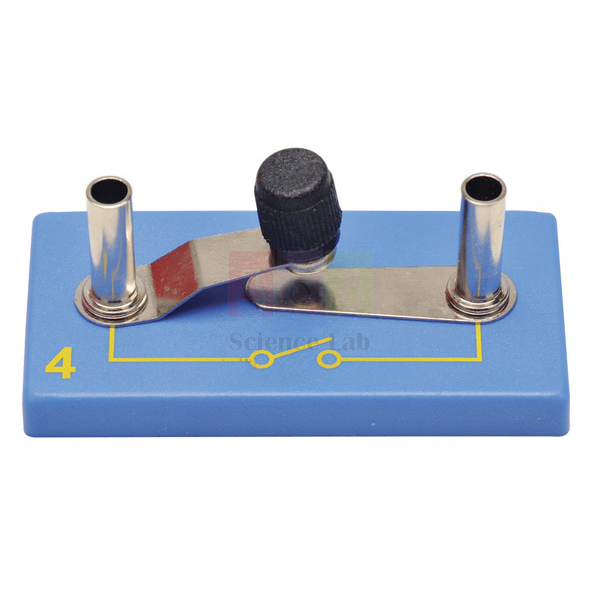
Circuits Kit Push Switch
Circuits Kit Push Switch (Product Code: SLE/PHY/35) is a panel-mounted push switch used as a spare component for the Circuits Kit to open and close simple electric circuits in school science and physics lessons. Pressing the switch gives students direct control over when a lamp, buzzer or motor receives current. It is made by Jain Scientific Equipments Pvt Ltd (ScienceLab), an OEM manufacturer, at its own factory in Ambala, India, as part of its physics lab equipment for schools in India and abroad.
Key Details
| Parameter | Detail |
|---|---|
| Component | Push switch |
| Role | Spare component for the Circuits Kit |
| Mounting | On a sturdy panel |
| Why a panel | Simple to use on the bench and to store after class |
| Product code | SLE/PHY/35 |
| Manufacturer | Jain Scientific Equipments Pvt Ltd (ScienceLab) — OEM |
| Country of origin | India (made in Ambala, Haryana) |
What Is the Circuits Kit Push Switch Used For?
A switch is how pupils learn that a circuit must be a complete loop. Wired between a cell and a lamp or buzzer, the push switch lets them make and break the circuit at will and see or hear the result immediately. It is also used to compare switch positions in series and parallel circuits, and to build simple control projects such as a doorbell.
Press the button squarely rather than at an angle, avoid leaving circuits connected between lessons so cells do not run down, and keep the panel with the rest of the kit so it is ready for the next class. To discuss different switch designs, set it beside a knife switch and compare how each one is operated.
OEM Manufacturer
ScienceLab, the trading name of Jain Scientific Equipments Private Limited, is the OEM for this push switch and manufactures it at its own licensed factory at Saha, Ambala, Haryana, India. Schools, colleges, dealers and importers order spares factory-direct instead of sourcing them through traders.
Replacement switches for existing kits and larger restocking orders are quoted by the manufacturer, so simply ask us for the quantity you need. Our company profile has more information.
Related Physics Lab Equipment
Other switches and components for circuit lessons:
- Contact Key (Push Switch) — a separate push key for bench circuits.
- Knife Switch – Single Pole, Single Throw — a switch that stays open or closed, for comparison.
- Circuits Kit Buzzer — pairs with the switch for a doorbell circuit.
- Circuits Kit Rheostat — adds variable control to the same circuit.
- Electricity Circuits Kit — a complete simple-circuits kit; ask us which spares match yours.
Visit the Physics Lab Equipment category for the full range.
Frequently Asked Questions
What is the Circuits Kit Push Switch?
The Circuits Kit Push Switch is a spare push switch for the Circuits Kit, mounted on a sturdy panel for ease of use and storage. It lets students open and close a simple circuit to control a lamp, buzzer or other output.
Is the Circuits Kit Push Switch momentary or latching?
The Circuits Kit Push Switch listing does not state whether the switch is momentary or latching. If your lesson depends on one type, please ask us through the contact page before ordering and we will confirm.
What lessons use the Circuits Kit Push Switch?
The Circuits Kit Push Switch is used in lessons on complete and broken circuits, switch placement in series and parallel circuits, and simple control projects such as a doorbell built with a buzzer and a cell.
Who manufactures the Circuits Kit Push Switch?
The OEM behind the Circuits Kit Push Switch is Jain Scientific Equipments Pvt Ltd (ScienceLab), which produces it at its own licensed factory at Saha, Ambala, Haryana, India. Spare-part enquiries and repeat orders are answered by the manufacturer.
Will the Circuits Kit Push Switch fit kits from other suppliers?
The Circuits Kit Push Switch is designed as a Circuits Kit spare. For kits from other sources, send us details or a photo of your existing panels and connections, and we will tell you whether it will match.
Can the Circuits Kit Push Switch be ordered in quantity?
Yes, the Circuits Kit Push Switch can be ordered in quantity by schools, dealers and importers, and ScienceLab supplies India and international markets. Include the quantity and destination in your enquiry to get a quotation.
Request a Quote
Ask for a quotation on the Circuits Kit Push Switch via our contact page or add it to the enquiry cart. Quotes are sent directly by the manufacturer.
Last updated: 24 September 2026
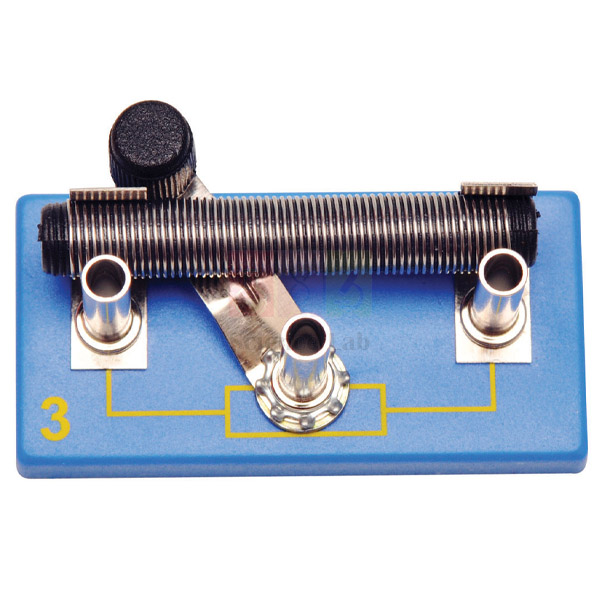
Circuits Kit Rheostat
Circuits Kit Rheostat (Product Code: SLE/PHY/36) is a panel-mounted variable resistor used as a spare component for the Circuits Kit to adjust the current in simple circuits in school science and physics labs. Adjusting the rheostat dims or brightens a lamp and changes meter readings, so pupils see resistance at work. It is made by Jain Scientific Equipments Pvt Ltd (ScienceLab), an OEM manufacturer, at its own factory in Ambala, India, as a panel rheostat for school labs in India and overseas.
Key Details
| Parameter | Detail |
|---|---|
| Component | Rheostat (variable resistor) |
| Category | Spare component for the Circuits Kit |
| Mounting | Mounted on a sturdy panel |
| Benefit | Ease of use and storage |
| Product code | SLE/PHY/36 |
| Manufacturer | Jain Scientific Equipments Pvt Ltd (ScienceLab) — OEM |
| Country of origin | India (made in Ambala, Haryana) |
What Is the Circuits Kit Rheostat Used For?
The rheostat is the component that shows resistance can be varied. In series with a cell and a lamp, adjusting it makes the lamp brighter or dimmer, which gives pupils an intuitive feel for how resistance limits current. With an ammeter and voltmeter added, the same set-up supports Ohm's law investigations, where the rheostat provides a range of current readings for a table and graph.
Start with the rheostat set to high resistance before switching on, then reduce it gradually so lamps and meters are not overloaded. Switch off between readings to stop the circuit warming up, and return the panel to kit storage after class. It is a practical introduction before students move on to larger bench rheostats in later years.
What to Specify When Ordering
- The number of spare rheostats needed for your circuits kits.
- The resistance range your lessons require, so we can confirm suitability.
- Any matching bulb holders, switches or meters to include in the quotation.
OEM Manufacturer
Jain Scientific Equipments Private Limited trades as ScienceLab and is the OEM for this circuits kit rheostat, which it manufactures at its own licensed factory at Saha, Ambala, Haryana, India. Schools, dealers and importers order it straight from the manufacturer, which also handles enquiries about replacement parts. For tender and vendor paperwork, the company's GSTIN is 06AAECJ8618A1ZT and its Legal Entity Identifier (LEI) is 3358004HRD1JIVXKYX49.
Ask us for repeat orders or for help matching this spare to your existing kits. More detail is on our company profile.
Related Physics Lab Equipment
Components and meters that complete a variable-resistance circuit:
- Circuits Kit Bulb Holder — a lamp to show the dimming effect.
- Circuits Kit Cell Holder — powers the circuit.
- Standard Digital Multimeter — measures current and voltage for Ohm's law work.
- Rheostat — a separate bench rheostat for more advanced circuits.
- Electricity Circuits Kit — a complete kit for simple circuits; ask us which spares match yours.
Find more in our Physics Lab Equipment category.
Frequently Asked Questions
What is the Circuits Kit Rheostat?
The Circuits Kit Rheostat is a spare variable resistor for the Circuits Kit, mounted on a sturdy panel for ease of use and storage. It lets students change the current in a simple circuit and observe the effect on lamps and meters.
What is the resistance value of the Circuits Kit Rheostat?
The Circuits Kit Rheostat listing does not state its resistance range or current rating. Please ask us through the contact page, describing the circuits you plan to build, and we will confirm the details before you order.
Which experiments use the Circuits Kit Rheostat?
The Circuits Kit Rheostat is used for dimming a lamp, showing how resistance controls current, and collecting a range of current and voltage readings in Ohm's law investigations with an ammeter and voltmeter.
Who manufactures the Circuits Kit Rheostat?
The Circuits Kit Rheostat comes from Jain Scientific Equipments Pvt Ltd (ScienceLab), which manufactures it as the OEM at its own licensed factory at Saha, Ambala, Haryana, India. Quotations, spares and repeat orders come directly from the manufacturer.
How should the Circuits Kit Rheostat be used safely?
Set the Circuits Kit Rheostat to high resistance before switching on, reduce it gradually while watching the lamp or meter, and switch off between readings so the circuit does not overheat during a long practical session.
Can the Circuits Kit Rheostat be ordered for dealers or export?
Yes, the Circuits Kit Rheostat can be ordered by dealers, importers and institutions in India and international markets. Give the quantity and destination in your enquiry and the manufacturer will prepare a quotation.
Request a Quote
For a quotation on the Circuits Kit Rheostat, contact us via the contact page or add it to the enquiry cart. The quote comes direct from the manufacturer, Jain Scientific Equipments Pvt Ltd (ScienceLab).
Last updated: 24 September 2026
257.jpg)
Compass Plotting (Clear)
Compass Plotting (Clear) (Product Code: SLE/PHY/37) is a plotting compass used to show magnetic field direction and trace the field around a bar magnet in school physics labs. Each 20 mm aluminium case has a clear plastic top and bottom, and the 10 mm steel needle, marked red at its north end, turns on a brass bearing. It is made by Jain Scientific Equipments Pvt Ltd (ScienceLab), an OEM manufacturer, at its own factory in Ambala, India, and is packed in 12s for magnetism practicals.
Specifications
| Parameter | Detail |
|---|---|
| Function | Indicates the direction of a magnetic field |
| Case | Aluminium, 20 mm diameter |
| Top and bottom | Clear plastic |
| Needle | Steel, 10 mm, north end marked in red |
| Bearing | Brass |
| Typical use | Tracing the field of a bar magnet |
| Pack size | Packs of 12 |
| Product code | SLE/PHY/37 |
| Manufacturer | Jain Scientific Equipments Pvt Ltd (ScienceLab) — OEM |
| Country of origin | India (made in Ambala, Haryana) |
What Is the Plotting Compass Used For?
Plotting compasses let students draw magnetic field lines for themselves. A bar magnet is laid on a sheet of paper, a compass is placed near one pole, and a dot is marked at each end of the needle; the compass is then moved so its tail sits on the last dot, and the process repeats until a line curves round to the other pole. Several lines drawn this way reveal the full field pattern, including neutral points when two magnets are used.
With a whole pack on the bench, a group can also set a ring of compasses around a magnet or a current-carrying wire and see the field direction at a glance. Keep compasses well away from strong magnets when stored, since this can weaken or reverse the needle, and check against the Earth's field that the red end points north before each lesson. They suit any bar magnet practical in Indian schools.
What to Specify When Ordering
- Number of packs; each pack contains 12 compasses.
- Whether you also need bar magnets for the same practical.
- Delivery location, for school, dealer or export supply.
OEM Manufacturer
Jain Scientific Equipments Private Limited, trading as ScienceLab, is the OEM that manufactures these clear plotting compasses at its own licensed factory at Saha, Ambala, Haryana, India. Schools, colleges, dealers and importers are supplied factory-direct, so pack quantities for whole classes are quoted by the maker itself.
Repeat orders to replace lost or damaged compasses are handled by the same manufacturer; simply ask us. You can read more about the company on our company profile.
Related Physics Lab Equipment
Items used with plotting compasses in magnetism lessons:
- Bar Magnet (Plastic) — the magnet whose field students plot.
- Plotting Compass, Single Glass Face — an alternative plotting compass design.
- Magnetic Compass Small Size — for finding north and general direction work.
- Oersted's Law Apparatus — shows the field around a current, detected with a compass.
Browse more apparatus in Physics Lab Equipment.
Frequently Asked Questions
How many compasses are in a pack of Compass Plotting (Clear)?
Compass Plotting (Clear) is supplied in packs of 12, which is enough for several student pairs or for one group to surround a magnet with compasses and see the whole field direction at once.
What size is the Compass Plotting (Clear)?
Each Compass Plotting (Clear) has a 20 mm diameter aluminium case with a clear plastic top and bottom. Inside, a 10 mm steel needle with its north end marked in red is mounted on a brass bearing.
What is the Compass Plotting (Clear) used for?
The Compass Plotting (Clear) indicates the direction of a magnetic field and is used for tracing the field of a bar magnet. Students mark the needle direction at successive points and join the marks to draw field lines.
Who manufactures the Compass Plotting (Clear)?
Compass Plotting (Clear) is manufactured by Jain Scientific Equipments Pvt Ltd (ScienceLab) as the OEM at its own licensed factory in Saha, Ambala, Haryana, India, and is sold factory-direct to institutions, dealers and importers.
How should the Compass Plotting (Clear) be stored?
Store Compass Plotting (Clear) away from strong magnets, which can weaken or reverse the needle, and keep steel objects clear while plotting. Before a lesson, check that the red-marked end points north when no magnet is nearby.
Can Compass Plotting (Clear) be ordered in bulk or for export?
Yes, Compass Plotting (Clear) can be ordered in multiple packs of 12 by schools, dealers and importers, and ScienceLab supplies India and international markets. Share the number of packs and the destination to receive a quotation.
Request a Quote
To request a quote for Compass Plotting (Clear), use our contact page or add it to the enquiry cart. Your quotation will be prepared by the manufacturer, Jain Scientific Equipments Pvt Ltd (ScienceLab), itself.
Last updated: 24 September 2026
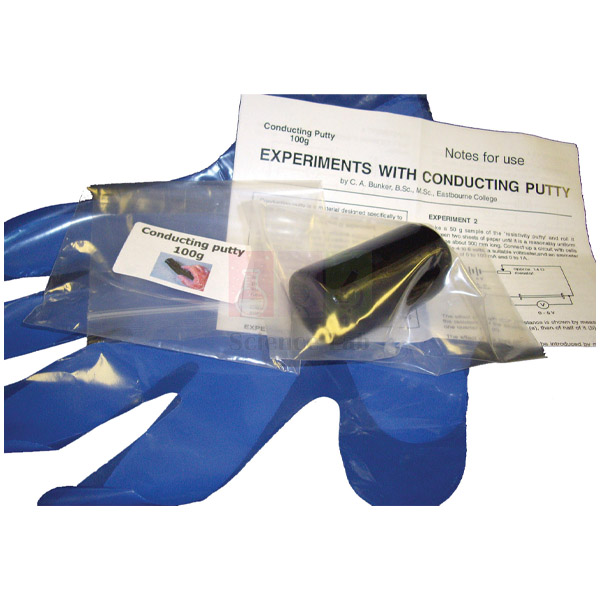
Conductive Putty
Conductive Putty (Product Code: SLE/PHY/38) is a mouldable conducting material used to teach resistivity and how the length and cross-sectional area of a conductor affect its resistance, in school and college physics labs. It comes as roughly 100 g of putty formed into a 60 mm long, 20 mm diameter cylinder of approximately 20 Ω that can be re-moulded to new shapes. It is supplied by Jain Scientific Equipments Pvt Ltd (ScienceLab), Ambala, India, as a hands-on addition to an Ohm's law experiment kit.
Specifications
| Parameter | Detail |
|---|---|
| Quantity | Approx. 100 g |
| Form supplied | Cylinder, 60 mm long and 20 mm in diameter |
| Resistance of cylinder | Approximately 20 Ω |
| Connection | Can readily be connected into an electrical circuit |
| Adjustability | Length and diameter changed by re-moulding the putty |
| Teaching use | Resistivity; effect of length and cross-sectional area on resistance |
| Product code | SLE/PHY/38 |
| Supplied by | Jain Scientific Equipments Pvt Ltd (ScienceLab), Ambala, India |
What Is Conductive Putty Used For?
Conductive putty turns the resistivity equation into something students can shape with their hands. Starting from the supplied cylinder, they measure its resistance, then roll it longer and thinner and measure again, or keep the length fixed and change the diameter. Plotting resistance against length, and against the inverse of cross-sectional area, shows the two relationships clearly and lets them estimate the material's resistivity.
For consistent readings, press the connecting probes or plates into the ends of the putty to the same depth each time, measure length and diameter carefully after every re-moulding, and keep the current small so the putty does not warm up. Work on a clean surface so dust and fibres are not folded into the material, and store it covered between lessons.
Supplier
Conductive Putty is supplied by Jain Scientific Equipments Private Limited, which trades as ScienceLab, from Ambala, Haryana, India. The company sources it for schools, colleges, dealers and importers and can include it in the same quotation as meters, leads and other resistance apparatus.
For details of pack quantities or combined orders, ask us, and see our company profile for more about ScienceLab.
Related Physics Lab Equipment
Tools and materials for a resistivity investigation with conductive putty:
- Standard Digital Multimeter — measures the putty's resistance after each change of shape.
- Caliper Vernier (Metal) — measures the diameter and length of the re-moulded putty.
- Crocodile Clips & Leads — connect the putty into the circuit.
- Conductive Paper — another conducting material for field and resistance work.
More items are in the Physics Lab Equipment category.
Frequently Asked Questions
How much Conductive Putty is supplied?
Conductive Putty is supplied as approximately 100 g, in the form of a cylinder 60 mm long and 20 mm in diameter. That starting shape has a resistance of approximately 20 ohms before students re-mould it.
What does Conductive Putty teach?
Conductive Putty is a teaching aid for resistivity and for the relationship between a conductor's length, its cross-sectional area and its resistance, because students can change both dimensions simply by re-moulding the putty and measuring again.
How is Conductive Putty connected into a circuit?
Conductive Putty can readily be connected into an electrical circuit by pressing leads, probes or contact plates into its ends. Keep the contact depth the same for each reading so that changes in resistance come from the shape, not the connections.
Who supplies Conductive Putty?
Conductive Putty is supplied by Jain Scientific Equipments Pvt Ltd (ScienceLab), Ambala, Haryana, India, to schools, colleges, dealers and importers, and can be quoted together with meters and leads for a complete resistivity practical.
How should Conductive Putty be stored?
Store Conductive Putty covered or in a closed container, away from heat and dust, so it stays clean and workable between lessons. For questions about keeping it for longer periods, please ask us through the contact page.
Can Conductive Putty be ordered in bulk or for export?
Yes, Conductive Putty can be ordered in class quantities by schools, dealers and importers, and ScienceLab supplies India and international markets. State the quantity and delivery location in your enquiry to receive a quotation.
Request a Quote
Request a quote for Conductive Putty through our contact page, or add it to the enquiry cart along with meters and leads for the same practical.
Last updated: 24 September 2026
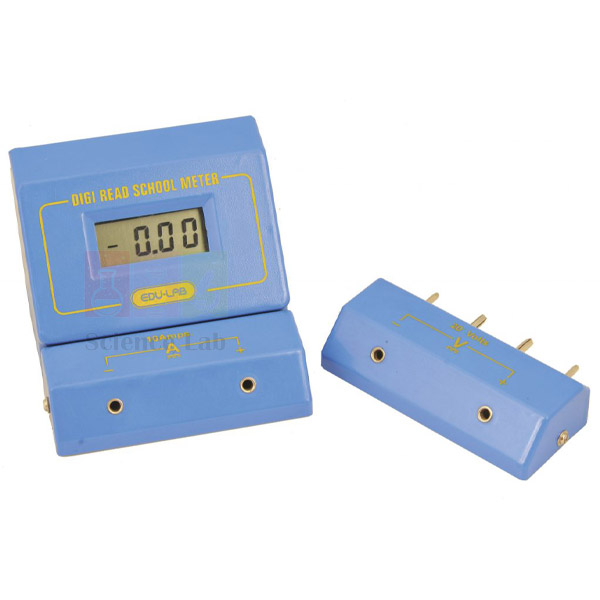
Digital Voltmeter/Ammeter With Shunts
Digital Voltmeter/Ammeter With Shunts (Product Code: SLE/PHY/39) is a battery-powered digital meter used to measure DC current or DC voltage in physics laboratory circuits, including experiments with Teltron Helmholtz coils. Two included attachments, 0-10 DC amps and 0-20 DC volts, let one unit act as an ammeter or a voltmeter, with 0.01 resolution and ± 2% accuracy. It is supplied by Jain Scientific Equipments Pvt Ltd (ScienceLab), Ambala, India, for colleges and schools in India and abroad.
Specifications
| Parameter | Detail |
|---|---|
| Type | Digital meter with shunts |
| Attachments included | Two: 0-10 A DC and 0-20 V DC |
| Modes | Ammeter or voltmeter, depending on the attachment fitted |
| Input impedance (basic unit) | 100 kΩ |
| Resolution | 0.01 |
| Accuracy | ± 2% |
| Power | PP3 battery, supplied; useful life of over 1000 hours |
| Suited to | Use with Teltron Helmholtz coils |
| Product code | SLE/PHY/39 |
| Supplied by | Jain Scientific Equipments Pvt Ltd (ScienceLab), Ambala, India |
What Is the Digital Voltmeter/Ammeter Used For?
The meter gives a clear digital reading of current or voltage in DC circuits without needing two separate instruments. In Helmholtz coil experiments it is typically used to monitor the coil current that sets the magnetic field, while in general electricity practicals it can be switched between roles by changing the attachment, reading currents up to 10 A or voltages up to 20 V.
Fit the current attachment and connect the meter in series when measuring amps; fit the voltage attachment and connect it across the component when measuring volts. Stay within the attachment's range, switch the meter off when not in use to make the most of the PP3 battery, and replace the battery when it runs low. It is a practical option among digital measuring instruments in India for teaching labs.
What to Specify When Ordering
- Number of meters required; each includes the 0-10 A DC and 0-20 V DC attachments.
- Whether the meters are for Helmholtz coil experiments or general DC circuit work.
- Any Helmholtz coils, leads or power supplies you want quoted together.
Supplier
Jain Scientific Equipments Private Limited, trading as ScienceLab, supplies this digital voltmeter/ammeter from Ambala, Haryana, India. The company sources electrical measuring instruments for colleges, schools, dealers and importers, and can quote the meter with coils and accessories so a complete experiment is covered in one order.
For availability of replacement attachments or larger quantities, ask us. More about ScienceLab is on our company profile.
Related Physics Lab Equipment
Items commonly used with this meter:
- Teltron Helmholtz Pair of Coils S — coils whose current this meter can monitor.
- Teltron Helmholtz Pair of Coils D — another Teltron Helmholtz coil pair in the range.
- Standard Digital Multimeter — a multi-function meter for resistance and other ranges.
- Crocodile Clips & Leads — connect the meter into the circuit.
Explore further instruments in Physics Lab Equipment.
Frequently Asked Questions
What ranges does the Digital Voltmeter/Ammeter With Shunts cover?
The Digital Voltmeter/Ammeter With Shunts comes with two attachments, 0-10 DC amps and 0-20 DC volts, so it can be used either as an ammeter or as a voltmeter. The resolution is 0.01 and the accuracy is ± 2%.
What is the input impedance of the Digital Voltmeter/Ammeter With Shunts?
The basic unit of the Digital Voltmeter/Ammeter With Shunts has an input impedance of 100 kohm. For other electrical details not given here, please ask us through the contact page before ordering.
What battery does the Digital Voltmeter/Ammeter With Shunts use?
The Digital Voltmeter/Ammeter With Shunts is supplied with a PP3 battery, which gives a useful life of over 1000 hours. Switching the meter off between readings helps the battery last through many practical sessions.
Can the Digital Voltmeter/Ammeter With Shunts be used with Helmholtz coils?
Yes. The Digital Voltmeter/Ammeter With Shunts is described as suited to use with Teltron Helmholtz coils, where it is commonly used to read the coil current. Confirm your coil model with us if you are unsure.
Who supplies the Digital Voltmeter/Ammeter With Shunts?
The Digital Voltmeter/Ammeter With Shunts is supplied by Jain Scientific Equipments Pvt Ltd (ScienceLab), Ambala, Haryana, India, to colleges, schools, dealers and importers, and can be quoted with coils, leads and other accessories.
Is a calibration certificate available for the Digital Voltmeter/Ammeter With Shunts?
Calibration documentation for the Digital Voltmeter/Ammeter With Shunts should be discussed with us before ordering. Please describe your requirement on the contact page and we will confirm what can be provided.
Can the Digital Voltmeter/Ammeter With Shunts be ordered for export?
Yes, the Digital Voltmeter/Ammeter With Shunts can be ordered by institutions, dealers and importers, and ScienceLab supplies India and international markets. Include the quantity and destination in your enquiry for a quotation.
Request a Quote
To request a quote for the Digital Voltmeter/Ammeter With Shunts, contact us through the contact page or add it to the enquiry cart.
Last updated: 24 September 2026