- Physics Lab Equipment
- Chemistry Lab Equipment
- Biology Lab Equipment
- Anatomical Lab Equipment
- Learning
- Educational Lab Equipment
- Magnets
- Agriculture
- Astronomy
- Earth Science
- Geography Lab Equipment
- Safety Lab Coat
- Laboratory
- Meteorological
- Electricity & Magnetism
- Heat
- School Lab Equipment
- Lab Glassware
- Science Lab Equipment
- Tvet Lab Equipment
- Robotics Kits Supplier and Manufacturer for Schools India
- Math Lab Equipment Manufacturers and Exporters in Ambala
- STEM Kits Manufacturers and Supplier India
- Engineering Lab Equipment
- Hospital Lab Equipment
- Water, Sanitation & Hygiene Supplies
- Cold Chain, Solar & Communication Equipment
- Nutrition
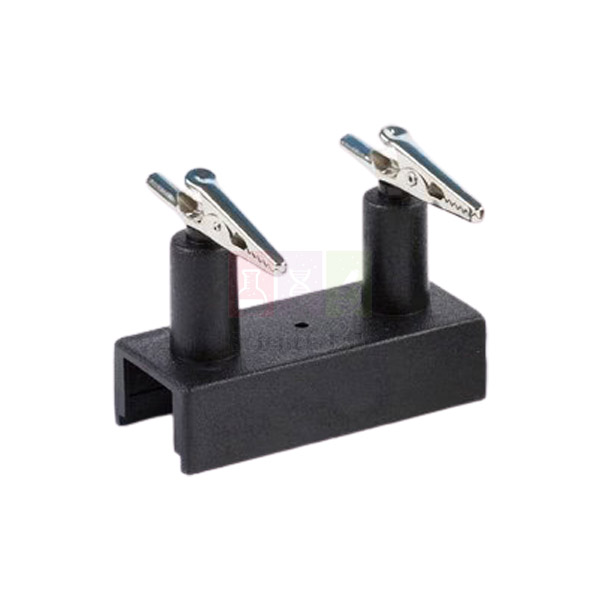
Component Holder
Component Holder (Product Code: SLE/PHY/40) is a pack of mounted clips used to hold components steady during physics investigations in school and college laboratories. Each pack contains 8 mounted clips, so one bench group can keep several parts of a set-up in position at once — a simple but useful item of physics lab equipment for schools in India. It is made by Jain Scientific Equipments Pvt Ltd (ScienceLab), an OEM manufacturer, at its own factory in Ambala, India.
Key Details
| Parameter | Detail |
|---|---|
| Product type | Mounted clips for holding components |
| Pack quantity | 8 mounted clips per pack |
| Application | Physics investigations; usable across a variety of experiments |
| Product code | SLE/PHY/40 |
| Manufacturer | Jain Scientific Equipments Pvt Ltd (ScienceLab) — OEM |
| Country of origin | India (made in Ambala, Haryana) |
What Is the Component Holder Used For?
Students use the Component Holder to grip a small part so it stays exactly where it is needed while the rest of the experiment is connected, observed or measured. In bench circuit work, for example, a held component no longer slides about when leads are clipped on, so meter readings stay steady and the layout on the bench matches the circuit diagram.
Because the clips are mounted rather than loose, they stand on the bench and can be arranged in a line or grid for series and parallel investigations, which makes them a handy addition to any electricity experiment kit at school level. A practical tip: give each group one pack of 8 and return the holders to a labelled tray after the lesson so the clips are not bent by heavier apparatus in storage.
OEM Manufacturer
ScienceLab is the trading name of Jain Scientific Equipments Private Limited, the OEM (original equipment manufacturer) of the Component Holder. The holders are made at the company's own licensed factory at Saha, Ambala, Haryana, India, and supplied factory-direct to schools, colleges, institutions, dealers and importers instead of passing through a trader.
The company is incorporated under CIN U29309HR2020PTC087597, and its production site at 449, HSIIDC Industrial Area, Saha, Ambala operates under Factory Licence AMB-ONLINE-CHD-J-414. For repeat packs or replacement holders, ask us directly — you deal with the manufacturer itself. Read more on our company profile.
Related Physics Lab Equipment
These items are often used alongside the Component Holder when students build and test circuits on the bench:
- Crocodile Clips & Leads — leads with a crocodile clip at each end for joining the parts you have clamped.
- Circuits Kit Cell Holder — panel-mounted cell holder to power the circuit.
- Circuits Kit Bulb Holder — adds a lamp to show current flow in the same circuit.
- Circuits Kit Rheostat — varies the current through the held components.
- Worcester Circuit Board — a board-based alternative for series and parallel circuit work.
Browse the full range of Physics Lab Equipment.
Frequently Asked Questions
What is included in one Component Holder pack?
One Component Holder pack (SLE/PHY/40) contains 8 mounted clips for holding components in physics investigations. Leads, cells, bulbs and other circuit parts are not part of the pack and can be quoted separately if you list them in your enquiry.
Which experiments is the Component Holder suitable for?
The Component Holder suits a variety of physics investigations in which a small part must stay steady, especially bench circuit work where components need to remain in place while students connect leads and take meter readings.
Who manufactures the Component Holder?
The Component Holder is manufactured by Jain Scientific Equipments Pvt Ltd (ScienceLab) as the OEM, at its own licensed factory at Saha, Ambala, Haryana, India. Quotations, repeat orders and replacement packs are handled directly by the manufacturer.
How many Component Holder packs does a class need?
Each Component Holder pack gives 8 mounted clips, so many schools order one pack per bench group plus a spare for the preparation room. Tell us how many groups work in your laboratory and we will quote the matching quantity.
Is a calibration certificate available for the Component Holder?
The Component Holder is a mechanical holding accessory with no measuring function, so calibration does not normally apply to it. If your purchase file needs a particular document, please discuss it with us through the contact page before you order.
Can the Component Holder be supplied in bulk or for export?
Yes, the Component Holder can be supplied in bulk to schools, colleges, dealers and importers in India and international markets. Share the number of packs and the delivery destination, and the manufacturer will send a quotation.
Request a Quote
To order the Component Holder, send your quantity through the contact page or add it to the enquiry cart. Quotes come direct from the manufacturer, with no trader between your laboratory and the factory.
Last updated: 24 September 2026

Protactinium Generator
Protactinium Generator (Product Code: SLE/PHY/41) is a sealed, leak-proof container of material from the uranium-238 decay series used to observe radioactive decay and measure a half-life in school and college physics laboratories. Teachers choose it because the protactinium-234 it yields has a half-life of about 70 seconds, so a complete decay curve can be recorded within one practical — a staple of nuclear physics lab equipment. It is supplied by Jain Scientific Equipments Pvt Ltd (ScienceLab), Ambala, India.
Specifications
| Parameter | Detail |
|---|---|
| Isotope studied | Protactinium-234, a product of the uranium-238 decay series |
| Half-life of protactinium-234 | About 70 seconds |
| Container | Sealed container with leak-proof closure |
| Main use | Observation of radioactive decay and half-life measurement |
| Product code | SLE/PHY/41 |
| Supplied by | Jain Scientific Equipments Pvt Ltd (ScienceLab), Ambala, India |
What Is the Protactinium Generator Used For?
The Protactinium Generator is used for the classic half-life practical, in which the count rate from protactinium-234 is recorded at regular intervals and plotted against time. With a half-life of about 70 seconds, the count rate falls clearly within a few minutes, so students can read the half-life straight from their decay graph or from a log plot of count rate.
In a typical radiation experiment, a Geiger–Müller tube connected to a counter is placed close to the container, a background count is taken first, and counts are then recorded over short fixed intervals with the background subtracted. Keep the container closed at all times, handle it for the shortest time needed, and return it to a labelled, locked radioactive-materials store after the lesson.
Supplier
Jain Scientific Equipments Private Limited, which trades as ScienceLab, supplies the Protactinium Generator to schools, colleges and institutions from Ambala, Haryana, India. The company sources this item for buyers and can combine it with detectors and counters from its physics range in one quotation. More about the company is on our profile page.
Related Physics Lab Equipment
A half-life practical with the Protactinium Generator needs a detector and a counter; these items complete the set-up:
- Geiger Muller Tube Holder — houses the GM tube socket and links the detector to the counter.
- Scaler Timer — counts pulses manually or over timed intervals for the decay curve.
- Geiger Counter — hand-held survey meter for checking background and the source store.
- Apparatus for studying the value of the half-decay period during radioactive decay — an alternative half-life experiment.
See more in our Physics Lab Equipment range.
Frequently Asked Questions
What half-life is measured with the Protactinium Generator?
The Protactinium Generator is used to measure the half-life of protactinium-234, which is about 70 seconds. This short half-life lets students record the fall in count rate and determine the half-life within a single practical session.
How is the Protactinium Generator packed?
The Protactinium Generator comes in a sealed container with a leak-proof closure. The container should stay closed during use and storage, and it should be kept in a labelled, secure radioactive-materials store whenever it is not in use.
What else do I need to use the Protactinium Generator?
To take readings with the Protactinium Generator you need a Geiger–Müller tube in a holder, connected to a counter such as a scaler timer, plus timed counting or a clock. These items are sold separately and can be added to the same quotation.
Is an authorisation needed to buy the Protactinium Generator?
Possibly. The Protactinium Generator contains material from the uranium-238 decay series, and radioactive materials are regulated in most countries. Before ordering, confirm with your national radiation-safety authority what your institution needs, and tell us the destination so we can discuss documents and shipping.
Who supplies the Protactinium Generator?
The Protactinium Generator is supplied by Jain Scientific Equipments Pvt Ltd (ScienceLab), Ambala, Haryana, India, to schools, colleges and institutions in India and international markets. Contact us with your quantity and destination for a quotation.
What should a Protactinium Generator quotation request include?
For a Protactinium Generator quotation, state the quantity, the delivery destination, whether you also need a GM tube holder and scaler timer, and any documents your purchase file requires. Send these through the contact page or the enquiry cart.
Request a Quote
Send your Protactinium Generator requirement through our contact page, or add it and the counting equipment to the enquiry cart, and we will reply with a quotation.
Last updated: 24 September 2026
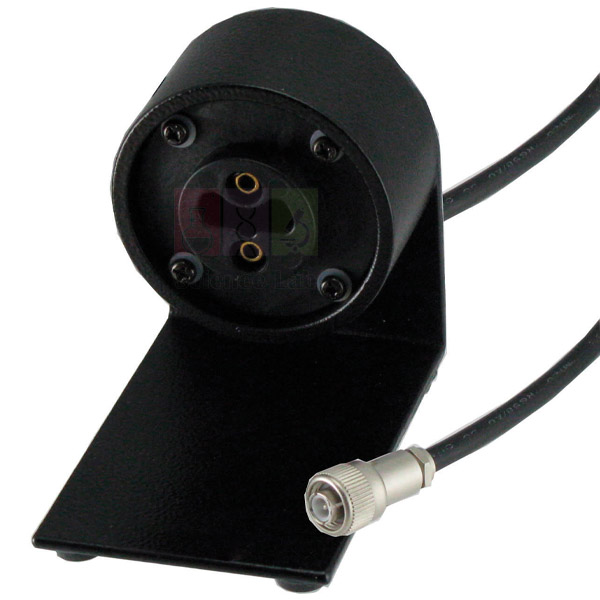
Geiger Muller Tube Holder
Geiger Muller Tube Holder (Product Code: SLE/PHY/42) is an aluminium box housing a G.M. tube socket, used to mount a Geiger–Müller tube and connect it to a counter for radioactivity measurements in physics laboratories. Designed for use with the Scaler Timer, it connects through a 1 m co-axial lead ending in a standard P.E.T. connector and has a stabilising resistor already wired inside. It is supplied by Jain Scientific Equipments Pvt Ltd (ScienceLab), Ambala, India.
Specifications
| Parameter | Detail |
|---|---|
| Housing | Aluminium box containing the G.M. tube socket |
| Connecting lead | 1 m long co-axial lead |
| Connector | Standard P.E.T. connector |
| Anode resistor | 2.2 megohm stabilising resistor, wired internally in series with the anode connection |
| For use with | Scaler Timer |
| Product code | SLE/PHY/42 |
| Supplied by | Jain Scientific Equipments Pvt Ltd (ScienceLab), Ambala, India |
What Is the GM Tube Holder Used For?
The Geiger Muller Tube Holder turns a bare GM tube into a bench-ready detector. The tube plugs into the socket inside the aluminium box, and the co-axial lead links it to the counter, so students can place the detector at a measured distance from a source and record counts. Common practicals include background counts, count rate against distance, absorption by paper or metal sheets, and half-life measurement.
Because the 2.2 megohm stabilising resistor sits inside the box in series with the anode, there is no loose resistor to wire on the bench, which keeps a Geiger Muller tube set-up in an Indian school or college lab tidy and repeatable. Before counting, set the tube voltage on the counter to suit your GM tube, and keep the delicate tube window away from fingers and sharp objects.
What to Specify When Ordering
- Number of detector stations, i.e. how many Geiger Muller Tube Holders you need.
- Whether you also need the Scaler Timer the holder is designed to work with.
- Whether you need a GM tube, as a tube is not listed as part of the holder.
Supplier
ScienceLab, the trading name of Jain Scientific Equipments Private Limited, supplies the Geiger Muller Tube Holder along with counting instruments and radioactivity accessories for physics laboratories. Buyers get one point of contact for the holder, the counter and related items, quoted together on request. Company details are on our profile page.
Related Physics Lab Equipment
Pair the Geiger Muller Tube Holder with a counter and one or more sources to complete a radioactivity practical:
- Scaler Timer — the counter this holder is designed to work with.
- Sealed Radioactive Source, Americium — alpha source for range and absorption work.
- Sealed Radioactive Source, Strontium — beta source for absorber experiments.
- Sealed Radioactive Source, Cobalt — gamma source for penetration and distance studies.
- Protactinium Generator — short half-life source for decay-rate practicals.
Explore the complete Physics Lab Equipment category.
Frequently Asked Questions
Is a GM tube included with the Geiger Muller Tube Holder?
The Geiger Muller Tube Holder is described as the aluminium housing with the G.M. tube socket, lead and stabilising resistor; a GM tube is not listed as part of it. Please ask us about a suitable tube when you request a quotation.
Which counter does the Geiger Muller Tube Holder work with?
The Geiger Muller Tube Holder is designed for use with the Scaler Timer. It connects through a 1 m co-axial lead terminated in a standard P.E.T. connector, so check that any other counter has a matching input before ordering.
Why does the Geiger Muller Tube Holder contain a resistor?
The Geiger Muller Tube Holder has a 2.2 megohm stabilising resistor wired internally in series with the anode connection. Keeping it inside the aluminium box means the bench wiring stays simple and the resistor stays protected from damage.
How should the Geiger Muller Tube Holder be handled?
Hold the Geiger Muller Tube Holder by its aluminium box rather than the lead, and avoid kinking the 1 m co-axial cable. Switch off the tube voltage at the counter before inserting or removing a GM tube, and cover the tube window when not in use.
Who supplies the Geiger Muller Tube Holder?
The Geiger Muller Tube Holder is supplied by Jain Scientific Equipments Pvt Ltd (ScienceLab), Ambala, India, to schools, colleges and institutions in India and international markets, together with scaler timers and other radioactivity items on request.
Request a Quote
For a Geiger Muller Tube Holder quotation, list the quantity and any counter or GM tube you need on our contact page, or add the items to the enquiry cart.
Last updated: 24 September 2026
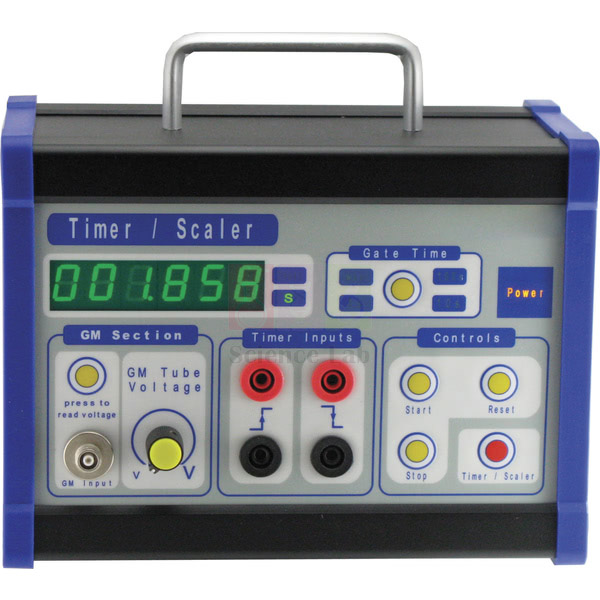
Scaler Timer
Scaler Timer (Product Code: SLE/PHY/43) is a general-purpose counting and timing instrument used for radioactivity counting with a GM tube and for millisecond digital timing in physics laboratories. Its 6-digit bright green LED display holds up to 999,999 counts or seconds, with manual counting or timed counts of 1, 10 or 100 seconds and manual or electronic triggering. It is supplied by Jain Scientific Equipments Pvt Ltd (ScienceLab), Ambala, India.
Specifications
| Parameter | Detail |
|---|---|
| Operation | Timer / Scaler |
| Display | 6-digit, bright green LED |
| Capacity | 999,999 counts or seconds |
| Counting | Manual, or timed counting of 1, 10 or 100 seconds |
| Timing | Millisecond digital timing with auto ranging on timing modes |
| Timing inputs | Manually switched start/stop; light gate(s) operated start/stop |
| GM tube voltage | 300 V to 500 V |
| Voltage check | Press-to-read switch shows the voltage applied to the GM tube |
| Audible counts | Built-in loudspeaker with on/off switch on the back |
| Fuse | 315 mA (L) slow-blow |
| Input power | 230 V ±5%, 50 Hz |
| Dimensions | 208 x 155 x 115 mm (W x H x D); 187 mm high including handle |
| Product code | SLE/PHY/43 |
| Supplied by | Jain Scientific Equipments Pvt Ltd (ScienceLab), Ambala, India |
What Is the Scaler Timer Used For?
In nuclear physics practicals, the Scaler Timer provides the GM tube voltage of 300 V to 500 V, counts each pulse and totals them, so students can measure background radiation, count rate against distance or absorber thickness, and half-life. The press-to-read switch lets them check the tube voltage, and the loudspeaker gives an audible click for each count when a class needs to hear the random nature of decay.
The same unit doubles as a millisecond timer for mechanics, with start and stop triggered by hand or by light gates, which suits timing a falling object, a trolley or a pendulum. Having one instrument serve both the radioactivity and the mechanics practicals is useful for any GM counter set-up in an Indian school or college lab where bench space is limited.
What to Specify When Ordering
- Whether you need the Geiger Muller Tube Holder and a GM tube for radioactivity counting.
- Whether you will trigger timing with light gates, and how many.
- Your mains supply: the unit is specified for 230 V ±5%, 50 Hz.
- Number of units per laboratory.
Supplier
Jain Scientific Equipments Private Limited trades as ScienceLab and supplies the Scaler Timer as part of its physics instrument range. The company can combine the timer, tube holder, sources and timing accessories in one quotation for a school, college or dealer. Background on the company is on our profile page.
Related Physics Lab Equipment
These items connect to the Scaler Timer or share the same practicals:
- Geiger Muller Tube Holder — GM tube housing designed for use with this timer.
- Protactinium Generator — short half-life source ideal for timed counting.
- Sealed Radioactive Source, Strontium — beta source for absorption practicals.
- Millisecond Timer — dedicated timer for free-fall and light-gate timing.
- Apparatus Air Track Light Gate — linear-motion track with a light gate system for timing experiments.
View all items in Physics Lab Equipment.
Frequently Asked Questions
What can the Scaler Timer count and time?
The Scaler Timer counts GM tube pulses for radioactivity work and also works as a millisecond digital timer. Its capacity is 999,999 counts or seconds, with manual counting or timed counts of 1, 10 or 100 seconds, and auto ranging on timing modes.
What GM tube voltage does the Scaler Timer provide?
The Scaler Timer provides a GM tube voltage of 300 V to 500 V. A press-to-read switch shows the voltage actually applied to the tube, so students can set it to suit their GM tube before they start counting.
Can the Scaler Timer be started and stopped by light gates?
Yes. The Scaler Timer accepts manually switched start/stop or light gate operated start/stop as timing inputs, so the same instrument can time motion experiments as well as count radioactivity in the physics laboratory.
What power supply does the Scaler Timer need?
The Scaler Timer runs on 230 V ±5%, 50 Hz mains and is protected by a 315 mA (L) slow-blow fuse. If your laboratory uses a different mains supply, mention it in your enquiry before ordering.
Is a GM tube included with the Scaler Timer?
A GM tube is not listed as part of the Scaler Timer. For radioactivity counting, add the Geiger Muller Tube Holder to your order and ask us about a suitable GM tube in the same enquiry.
Is a calibration certificate available for the Scaler Timer?
Please discuss any calibration-certificate requirement for the Scaler Timer with us before ordering, stating the document your purchase file needs. We will tell you what can be provided for the unit you are quoted.
Who supplies the Scaler Timer?
The Scaler Timer is supplied by Jain Scientific Equipments Pvt Ltd (ScienceLab), Ambala, India, to schools, colleges, institutions and dealers in India and international markets. Send your quantity through the contact page for a quotation.
Request a Quote
Request a Scaler Timer quotation through our contact page, or build a list with the tube holder and sources in the enquiry cart.
Last updated: 24 September 2026
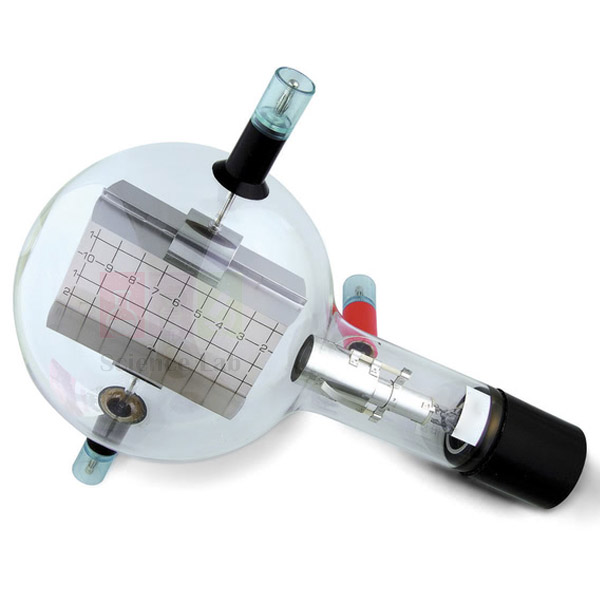
Teltron Electron Deflection Tube D
Teltron Electron Deflection Tube D (Product Code: SLE/PHY/44) is a highly evacuated electron tube used to show how electric and magnetic fields deflect an electron beam and to determine the specific charge e/m in physics laboratories. Its fluorescent screen, approx. 90 x 60 mm, is inclined to the beam axis so the whole beam path is visible, and a built-in plate capacitor provides the electric deflection. It is supplied by Jain Scientific Equipments Pvt Ltd (ScienceLab), Ambala, India.
Specifications
| Parameter | Detail |
|---|---|
| Tube type | Highly evacuated, with focusing electron gun and inclined fluorescent screen |
| Filament voltage | 6.3 V AC |
| Max. anode voltage | 5000 V |
| Anode current | Approx. 0.1 mA at 4000 V |
| Max. capacitor voltage | 5000 V |
| Fluorescent screen | Approx. 90 x 60 mm |
| Glass bulb | Approx. 130 mm diameter |
| Total length | Approx. 260 mm |
| Deflection | Electric: built-in plate capacitor; magnetic: Helmholtz coil pair D |
| Documentation | Instructions included |
| Product code | SLE/PHY/44 |
| Supplied by | Jain Scientific Equipments Pvt Ltd (ScienceLab), Ambala, India |
What Is the Electron Deflection Tube Used For?
With the Teltron Electron Deflection Tube D, students watch the electron beam trace a visible path across the inclined screen, then bend it with the electric field between the capacitor plates and with the magnetic field of the Helmholtz coil pair D. Adjusting the electric field until it exactly cancels the magnetic deflection straightens the beam again, and from the two field values the electron velocity and e/m can be calculated. This field-cancellation method makes it a core specific charge electron experiment for undergraduate physics.
Plan the power arrangement with the tube: it needs a 6.3 V AC filament supply and a high-voltage source for the anode and capacitor, each rated up to 5000 V. Mount the tube securely, use shrouded leads for every high-voltage connection, and let the filament warm up before raising the anode voltage.
What to Specify When Ordering
- Whether you need the Helmholtz coil pair D for the magnetic deflection.
- Whether you need a tube holder and a high-voltage power supply, or already own them.
- Number of tubes, for example one for demonstration or several for student groups.
Supplier
ScienceLab is the trading name of Jain Scientific Equipments Private Limited, which supplies Teltron electron tubes together with matching holders, coils and power supplies from Ambala, Haryana, India. Teltron is a third-party brand; the company sources the tube and quotes it with the accessories your experiment needs.
For vendor registration, the supplying company is Jain Scientific Equipments Private Limited (GSTIN 06AAECJ8618A1ZT), and export orders are handled under Importer-Exporter Code AAECJ8618A (DGFT). See our company profile for more.
Related Physics Lab Equipment
A complete e/m deflection set-up with the Teltron Electron Deflection Tube D usually includes these items:
- Teltron Tube Holder D — stand for the Teltron D-series tubes and coils.
- Teltron Helmholtz Pair of Coils D — magnetic field for the deflection and e/m measurement.
- EHT Power Supply — adjustable 5 kV supply with an auxiliary output for cathode heaters.
- Digital Voltmeter/Ammeter With Shunts — meter for reading the coil current.
- Teltron Maltese Cross Tube D — another D-series tube for electron-optics demonstrations.
Find more in our Physics Lab Equipment category.
Frequently Asked Questions
What can be measured with the Teltron Electron Deflection Tube D?
The Teltron Electron Deflection Tube D is used to determine the specific charge e/m and the velocity of the electrons. The electric field of the built-in plate capacitor is adjusted until it cancels the magnetic deflection produced by the Helmholtz coil pair D.
What voltages does the Teltron Electron Deflection Tube D need?
The Teltron Electron Deflection Tube D uses a 6.3 V AC filament supply, a maximum anode voltage of 5000 V and a maximum capacitor voltage of 5000 V. The anode current is approx. 0.1 mA at 4000 V.
Are Helmholtz coils included with the Teltron Electron Deflection Tube D?
The magnetic deflection uses the Helmholtz coil pair D, which is listed as a separate product. The Teltron Electron Deflection Tube D comes with instructions; add the coils, a tube holder and a power supply to your enquiry if you need them.
How large is the Teltron Electron Deflection Tube D?
The Teltron Electron Deflection Tube D has a glass bulb of approx. 130 mm diameter, a total length of approx. 260 mm and a fluorescent screen of approx. 90 x 60 mm. Store it in padded packaging, away from knocks, when not in use.
Who supplies the Teltron Electron Deflection Tube D?
The Teltron Electron Deflection Tube D is supplied by Jain Scientific Equipments Pvt Ltd (ScienceLab), Ambala, India. Teltron is a third-party brand; the company sources the tube for schools, colleges and institutions in India and international markets.
What should a Teltron Electron Deflection Tube D enquiry include?
For the Teltron Electron Deflection Tube D, state the number of tubes and whether you also need the Tube Holder D, Helmholtz Pair of Coils D and a high-voltage power supply. Send the list through our contact page or the enquiry cart.
Request a Quote
Ask for a Teltron Electron Deflection Tube D quotation on our contact page, or add the tube and its accessories to the enquiry cart.
Last updated: 24 September 2026
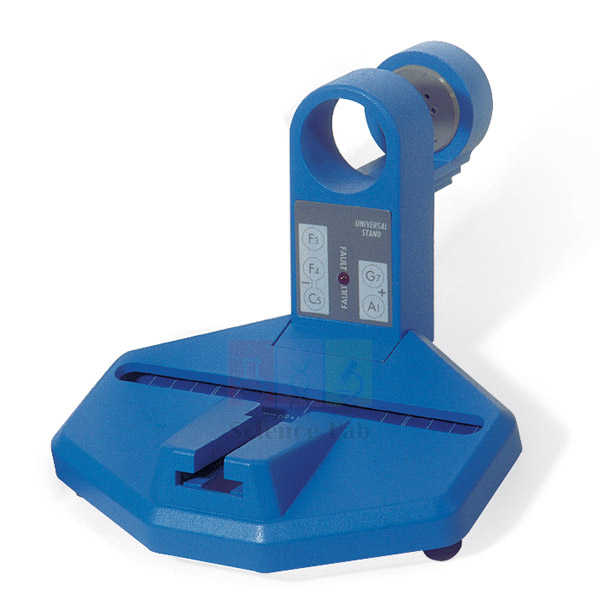
Teltron Tube Holder S
Teltron Tube Holder S (Product Code: SLE/PHY/45) is a stand used to mount Teltron Student (‘S’) Series electron tubes and their accessories for electron-beam experiments in physics laboratories. It carries the Helmholtz Coils S in slots with metric rulings that allow spacing up to 150 mm, and an easily replaceable fuse in the holder protects the tubes from excessive voltage. It is supplied by Jain Scientific Equipments Pvt Ltd (ScienceLab), Ambala, India.
Specifications
| Parameter | Detail |
|---|---|
| Compatible range | Entire line of Teltron Student (‘S’) Series tubes and related accessories |
| Accessories it holds | Helmholtz Coils S; Auxiliary Coil (inserts into the stepped front side) |
| Coil slots | Metric rulings for precise adjustment |
| Max. coil spacing | 150 mm |
| Tube protection | Easily replaceable fuse in the holder guards against excessive voltage |
| Product code | SLE/PHY/45 |
| Supplied by | Jain Scientific Equipments Pvt Ltd (ScienceLab), Ambala, India |
What Is the Teltron Tube Holder Used For?
The Teltron Tube Holder S is the base on which every S-series experiment is built: the tube sits in the holder and the Helmholtz coils slot in on either side. The metric rulings on the coil slots let students set and record the spacing — at the Helmholtz geometry for a uniform field, or at other distances up to 150 mm to see how the field shape changes the beam.
Because the fuse sits in the holder itself, an accidental over-voltage blows a replaceable fuse rather than damaging a valuable tube, so keep spare fuses of the correct rating with the kit. A stable, well-organised stand like this is the foundation of a physics demonstration kit for teaching electron beams to senior students in India.
What to Specify When Ordering
- Which S-series tubes you will use with the holder.
- Whether you need the Helmholtz Coils S and the Auxiliary Coil.
- Spare fuses for the holder.
Supplier
Jain Scientific Equipments Private Limited, trading as ScienceLab, supplies the Teltron Tube Holder S together with the S-series tubes and coils it supports. Teltron is a third-party brand, and the company sources and quotes the holder and matching items together for schools, colleges and dealers. Company background is on our profile page.
Related Physics Lab Equipment
These S-series items mount on the Teltron Tube Holder S:
- Teltron Helmholtz Pair of Coils S — the coil pair that slots into the holder.
- Teltron Dual Beam Tube S — helium-filled tube for e/m and gas-collision studies.
- Teltron Electron Diffraction Tube S — shows the wave nature of electrons.
- Teltron Thomson Tube S — e/m and electron velocity by field cancellation.
- Teltron Diode S — thermionic emission and diode characteristics.
Browse the wider Physics Lab Equipment range.
Frequently Asked Questions
Which tubes fit the Teltron Tube Holder S?
The Teltron Tube Holder S is the mounting point for the entire line of Teltron Student (‘S’) Series tubes and related accessories. Tell us which S-series tubes you have or plan to buy, and we will confirm the combination in our quotation.
What is the maximum coil spacing on the Teltron Tube Holder S?
The coil slots on the Teltron Tube Holder S allow a maximum spacing of 150 mm. The slots carry metric rulings, so a chosen spacing can be set precisely and repeated from one lesson to the next.
How does the Teltron Tube Holder S protect the tubes?
The Teltron Tube Holder S has an easily replaceable fuse located in the holder, which protects the tubes from excessive voltage. If the fuse blows, replace it with one of the same rating before switching the supply back on.
Can the Auxiliary Coil be used with the Teltron Tube Holder S?
Yes. The Auxiliary Coil can be inserted into the stepped front side of the Teltron Tube Holder S. Ask us about the Auxiliary Coil when you send your enquiry so it can be included in the same quotation.
Who supplies the Teltron Tube Holder S?
Jain Scientific Equipments Pvt Ltd (ScienceLab), Ambala, India, supplies the Teltron Tube Holder S. Teltron is a third-party brand; the company sources the holder for schools, colleges and institutions in India and international markets.
What should a Teltron Tube Holder S quotation request include?
State the number of Teltron Tube Holder S units, the S-series tubes and coils you want with them, and whether you need spare fuses. Send the list through our contact page or add the items to the enquiry cart.
Request a Quote
Get a price for the Teltron Tube Holder S through our contact page, or place it with your S-series tubes in the enquiry cart.
Last updated: 24 September 2026
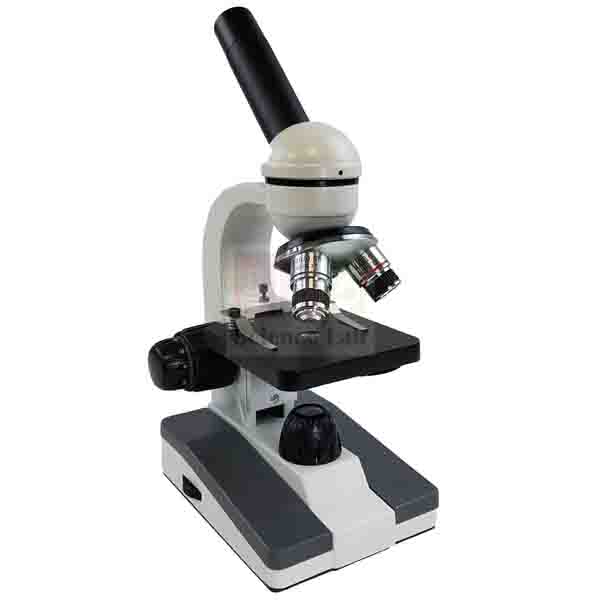
Monocular Biological Microscope 400x, LED
Monocular Biological Microscope 400x, LED (Product Code: SLE/M/01) is a starter compound microscope used to examine stained slides, cells and small organisms at 40x, 100x and 400x in school and college biology labs. Its LED light runs from the mains or from 3 AA batteries, so lessons can continue in rooms without a socket or during power cuts. This monocular microscope for Indian and overseas classrooms is supplied by Jain Scientific Equipments Pvt Ltd (ScienceLab), Ambala, India.
Specifications
| Parameter | Detail |
|---|---|
| Viewing head | Monocular, inclined at 45°, 360° rotatable |
| Eyepiece | Wide field 10x/18 mm |
| Objectives | Achromatic 4x, 10x, 40x |
| Magnification | 40x, 100x, 400x |
| Stage | Plain stage with slide clips, 90 x 90 mm |
| Condenser | Single lens with disc diaphragm |
| Focusing | Coaxial coarse and fine adjustment; fine focusing scale value 0.002 mm |
| Light source | 220 V / 1 W LED illumination |
| Power | Mains, or 3 AA batteries (batteries not included) |
| Included | Mains lead |
| Base | Four rubber feet for stability and to reduce vibration |
| Product code | SLE/M/01 |
| Supplied by | Jain Scientific Equipments Pvt Ltd (ScienceLab), Ambala, India |
What Is the Monocular LED Microscope Used For?
This is the microscope students usually meet first: onion peel and cheek-cell mounts, stomata on a leaf, pollen grains, pond-water protozoa and commercially prepared tissue slides. Start every observation with the 4x objective to find the specimen, centre it by hand under the slide clips, then rotate up to 10x and 40x, using the fine focus for the last touch. The disc diaphragm under the stage changes the light cone, which helps bring out detail in thin, unstained specimens.
Because the head turns through 360°, a teacher can swing the eyepiece towards a pupil across the bench without moving the slide, which is useful during school biology lab equipment demonstrations. Batteries are not supplied, so keep a set of AA cells in the prep room if the microscopes are used outdoors or where mains sockets are few.
What to Specify When Ordering
- The number of microscopes needed per class or lab bench
- Mains voltage at your site (the LED is listed as 220 V, and a mains lead is included)
- Whether you also need slides, cover glasses or storage covers in the same order
- Any preference for a mirror-lit model for rooms with no power at all
Supplier
Jain Scientific Equipments Private Limited, trading as ScienceLab, supplies this 400x LED microscope from Ambala, Haryana, as part of its educational microscope range. Schools, colleges, state education departments, dealers and importers in India and international markets buy it together with slides, stains and lab accessories so that a whole biology room is equipped in one order. See the ScienceLab company profile for more about the business.
Related Laboratory Equipment
Accessories and alternatives that students use with a 400x monocular microscope:
- Student-Grade Microscope Slides — plain glass slides for pupils' own mounts
- Cover Glasses — cover wet mounts before viewing at 40x
- Cell Division Slide Set of 9 — prepared mitosis slides suited to 400x study
- Carry Case for Microscopes — keeps the instrument dust-free between lessons
- Monocular Biological Microscope 400x — mirror-lit alternative for rooms without electricity
Compare other models in the Microscope category.
Frequently Asked Questions
What magnifications does the Monocular Biological Microscope 400x, LED give?
The Monocular Biological Microscope 400x, LED gives 40x, 100x and 400x. These come from a wide field 10x/18 mm eyepiece combined with achromatic 4x, 10x and 40x objectives, covering the usual school and junior college syllabus.
Can the Monocular Biological Microscope 400x, LED work on batteries?
Yes. The Monocular Biological Microscope 400x, LED runs from the mains or from 3 AA batteries. A mains lead is included, but the batteries are not, so buy them locally if you plan to use the microscope away from a socket.
Does the Monocular Biological Microscope 400x, LED have a mechanical stage?
No. The Monocular Biological Microscope 400x, LED has a plain 90 x 90 mm stage with slide clips, so the slide is moved by hand. Focusing is by coaxial coarse and fine knobs, with a fine focusing scale value of 0.002 mm.
Can the Monocular Biological Microscope 400x, LED be used to see bacteria?
The Monocular Biological Microscope 400x, LED stops at 400x and has no oil-immersion objective, so it is not intended for detailed bacterial study. For that work, choose a model with a 100x oil-immersion objective from the same microscope range.
Who supplies the Monocular Biological Microscope 400x, LED?
The Monocular Biological Microscope 400x, LED is supplied by Jain Scientific Equipments Pvt Ltd (ScienceLab), Ambala, Haryana, India, to schools, colleges, dealers and importers in India and international markets, singly or as classroom sets.
What should a school include when requesting a quote for the Monocular Biological Microscope 400x, LED?
When requesting a quote for the Monocular Biological Microscope 400x, LED, give the number of units, your mains voltage, the delivery address and any slides or accessories needed. This lets us prepare one complete quotation for the lab.
Request a Quote
For classroom sets or single units of the Monocular Biological Microscope 400x, LED, send your requirement through the contact page or add the item to the enquiry cart.
Last updated: 24 September 2026
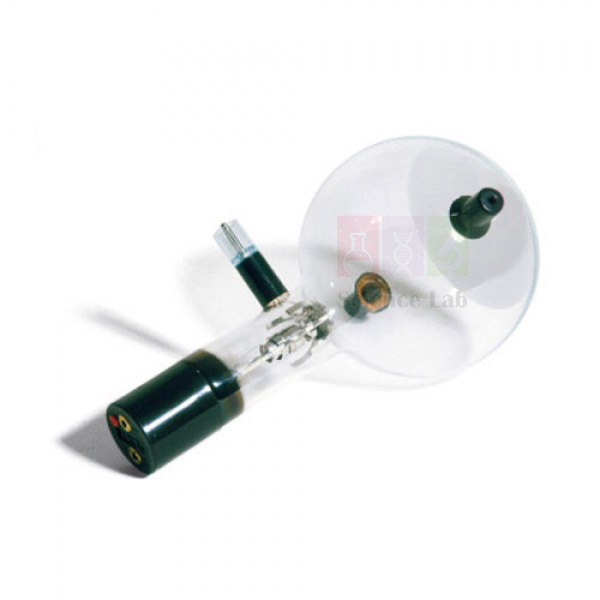
Teltron Electron Diffraction Tube D
Teltron Electron Diffraction Tube D (Product Code: SLE/PHY/46) is a highly evacuated electron tube used to demonstrate the wave nature of electrons by diffraction through a polycrystalline graphite lattice in physics laboratories. The resulting rings appear on a fluorescent screen, and from their radii students determine the electron wavelength as a function of anode voltage, confirming de Broglie's hypothesis. It is supplied by Jain Scientific Equipments Pvt Ltd (ScienceLab), Ambala, India.
Specifications
| Parameter | Detail |
|---|---|
| Tube type | Highly evacuated, with polycrystalline graphite lattice and fluorescent screen |
| Diffraction pattern | Debye–Scherrer rings |
| Max. filament voltage | 6.3 V AC |
| Max. anode voltage | 5 kV |
| Anode current | Approx. 0.1 mA at 4 kV |
| Graphite lattice constants | d10 = 0.213 nm; d11 = 0.123 nm |
| Documentation | Instructions included |
| Product code | SLE/PHY/46 |
| Supplied by | Jain Scientific Equipments Pvt Ltd (ScienceLab), Ambala, India |
What Is the Electron Diffraction Tube Used For?
The Teltron Electron Diffraction Tube D gives one of the most direct demonstrations of wave–particle duality. Electrons accelerated by the anode pass through polycrystalline graphite and interfere, forming concentric Debye–Scherrer rings on the screen; as the anode voltage rises, the electron wavelength shortens and the rings visibly shrink.
Students record the ring radii at a series of anode voltages, then use the graphite lattice plane spacings of 0.213 nm and 0.123 nm to calculate the wavelength and compare it with the de Broglie prediction. As physics lab equipment for undergraduate modern physics courses in India, the rings are easiest to read in a darkened room with a supply able to reach 5 kV.
Supplier
ScienceLab (Jain Scientific Equipments Private Limited) supplies the Teltron Electron Diffraction Tube D from Ambala, Haryana, India. Teltron is a third-party brand; the company sources the tube and can quote it together with a D-series holder and a suitable high-voltage supply. Learn more on our company profile.
Related Physics Lab Equipment
Items that complete or extend a diffraction practical with the Teltron Electron Diffraction Tube D:
- Teltron Tube Holder D — holder for the Teltron D-series tubes.
- EHT Power Supply — adjustable 5 kV output with an auxiliary heater output.
- Teltron Electron Deflection Tube D — shows the particle side of the electron through e/m measurement.
- Teltron Electron Diffraction Tube S — the S-series version of the same experiment.
- Planck's Constant Apparatus — photoelectric experiment for the same quantum physics unit.
See the full Physics Lab Equipment category.
Frequently Asked Questions
What does the Teltron Electron Diffraction Tube D demonstrate?
The Teltron Electron Diffraction Tube D demonstrates the wave nature of electrons. Electrons passing through polycrystalline graphite produce Debye–Scherrer diffraction rings on a fluorescent screen, which lets students confirm de Broglie's hypothesis experimentally.
Which values are needed to calculate the electron wavelength?
With the Teltron Electron Diffraction Tube D you measure the ring radii and use the graphite lattice constants d10 = 0.213 nm and d11 = 0.123 nm. Repeating the measurement at several anode voltages shows how the wavelength depends on voltage.
What power supply does the Teltron Electron Diffraction Tube D need?
The Teltron Electron Diffraction Tube D needs a filament supply of up to 6.3 V AC and an anode supply of up to 5 kV; the anode current is approx. 0.1 mA at 4 kV. Ask us to include a suitable supply in your quotation.
Are instructions included with the Teltron Electron Diffraction Tube D?
Yes, the Teltron Electron Diffraction Tube D is supplied with instructions. Read them before first use, paying particular attention to the voltage limits, and keep them with the tube for future classes.
How should the Teltron Electron Diffraction Tube D be stored?
Store the Teltron Electron Diffraction Tube D in padded packaging, away from knocks and heat, and carry it with both hands. Never operate an evacuated tube whose glass is cracked or chipped; set it aside and contact us for advice.
Who supplies the Teltron Electron Diffraction Tube D?
The Teltron Electron Diffraction Tube D is supplied by Jain Scientific Equipments Pvt Ltd (ScienceLab), Ambala, India. As Teltron is a third-party brand, the company sources the tube for colleges, universities and schools in India and international markets.
Request a Quote
Tell us how many Teltron Electron Diffraction Tube D units you need through the contact page, or add them with a holder and power supply to the enquiry cart.
Last updated: 24 September 2026