- Physics Lab Equipment
- Chemistry Lab Equipment
- Biology Lab Equipment
- Anatomical Lab Equipment
- Learning
- Educational Lab Equipment
- Magnets
- Agriculture
- Astronomy
- Earth Science
- Geography Lab Equipment
- Safety Lab Coat
- Laboratory
- Meteorological
- Electricity & Magnetism
- Heat
- School Lab Equipment
- Lab Glassware
- Science Lab Equipment
- Tvet Lab Equipment
- Robotics Kits Supplier and Manufacturer for Schools India
- Math Lab Equipment Manufacturers and Exporters in Ambala
- STEM Kits Manufacturers and Supplier India
- Engineering Lab Equipment
- Hospital Lab Equipment
- Water, Sanitation & Hygiene Supplies
- Cold Chain, Solar & Communication Equipment
- Nutrition
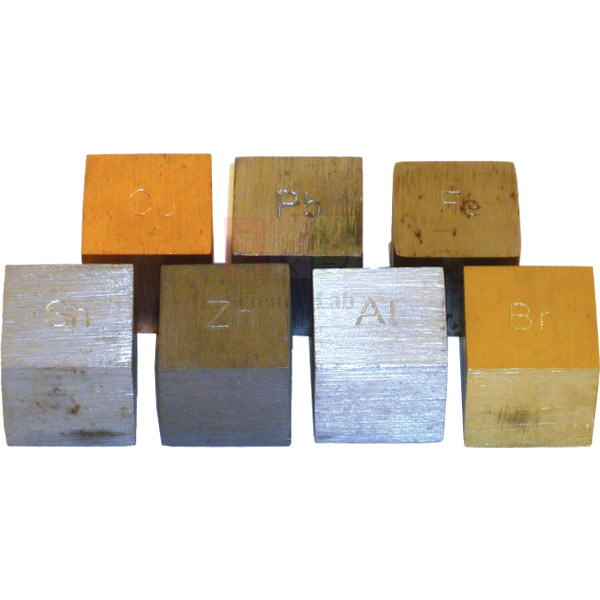
Metal Density Cube Set
Metal Density Cube Set (Product Code: SLE/PHY/59) is a set of seven 20 mm metal cubes used to investigate density and identify metals by measurement in physics, chemistry and materials classes. It covers brass, lead, steel, copper, aluminium, iron and tin, so learners can compare iron with steel as well as very light and very heavy metals in one physics experiment kit for school. It is made by Jain Scientific Equipments Pvt Ltd (ScienceLab), an OEM manufacturer, at its own factory in Ambala, India.
Specifications
| Parameter | Detail |
|---|---|
| Cubes in the set | 7 |
| Metals | Brass, lead, steel, copper, aluminium, iron and tin |
| Side of each cube | 20 mm |
| Product code | SLE/PHY/59 |
| Manufacturer | Jain Scientific Equipments Pvt Ltd (ScienceLab) — OEM |
| Country of origin | India (made in Ambala, Haryana) |
What Is a Metal Density Cube Set Used For?
A popular use is the “identify the metal” challenge: a group is handed one cube, measures its edges, weighs it, calculates density and matches the answer against data-book values. With a 20 mm edge the volume works out to 8 cm³, which keeps the arithmetic manageable for younger students while still rewarding careful weighing.
Including both iron and steel makes a useful teaching point: their densities are so close that density alone cannot always separate an element from its alloy, which opens a discussion about how alloys are told apart using other properties. Tin and lead, both soft metals, show that similar-feeling materials can still differ greatly in density. Students should wash their hands after handling the lead cube.
What to Specify When Ordering
- Seven-cube set (with steel and tin) or the six-cube set that includes zinc.
- Number of sets for your practical groups.
- Any balance, caliper or measuring cylinder to be quoted alongside.
OEM Manufacturer
ScienceLab is the trading name of Jain Scientific Equipments Private Limited (CIN U29309HR2020PTC087597), the OEM (original equipment manufacturer) behind this cube set. Production takes place at the company’s own licensed factory at 449, HSIIDC Industrial Area, Saha, Ambala, Haryana, India (Factory Licence AMB-ONLINE-CHD-J-414), and the sets go factory-direct to schools, colleges, dealers and importers. For repeat orders or a missing cube, ask the manufacturer directly; company details are on the ScienceLab profile.
Related Physics Lab Equipment
Apparatus that pairs with the cube set:
- Metal Density Cubes (Set of 6) — six-cube version that includes zinc.
- Caliper Vernier (Metal) — measures cube edges accurately before the volume is calculated.
- Double Beam Balance — finds the mass of each cube.
- Measuring Cylinder, Polypropylene — a plastic alternative to glass for checking volume by displacement.
- Cylinders, Metal (Set of 6) — density practice with cylindrical samples.
Explore the full Physics Lab Equipment range.
Frequently Asked Questions
Which metals are in the Metal Density Cube Set?
The Metal Density Cube Set contains seven cubes: brass, lead, steel, copper, aluminium, iron and tin. Having both iron and steel lets students compare a metal with a closely related alloy.
What is the size of the cubes in the Metal Density Cube Set?
Every cube in the Metal Density Cube Set has a 20 mm side, so each has a volume of 8 cm³ and density can be found from mass without a displacement measurement.
How is the Metal Density Cube Set different from the six-cube set?
The Metal Density Cube Set has seven 20 mm cubes and includes steel and tin. The Metal Density Cubes (Set of 6) has six 20 mm cubes and includes zinc instead.
Who manufactures the Metal Density Cube Set?
Jain Scientific Equipments Pvt Ltd (ScienceLab) manufactures the Metal Density Cube Set as the OEM at its own licensed factory at Saha, Ambala, Haryana, India, and quotes it directly to buyers.
Is the Metal Density Cube Set suitable for identifying unknown metals?
Yes. With the Metal Density Cube Set, students calculate density from mass and the 20 mm edge, then compare it with reference values to name the metal. Iron and steel may need an extra test.
What information should a quotation request for the Metal Density Cube Set include?
For the Metal Density Cube Set, state the number of sets, any balances or measuring cylinders required and the delivery location. Send the request through the contact page.
Request a Quote
Request pricing for the Metal Density Cube Set on the ScienceLab contact page or through the enquiry cart. You receive the quotation straight from the manufacturer, for delivery in India and international markets.
Last updated: 24 September 2026
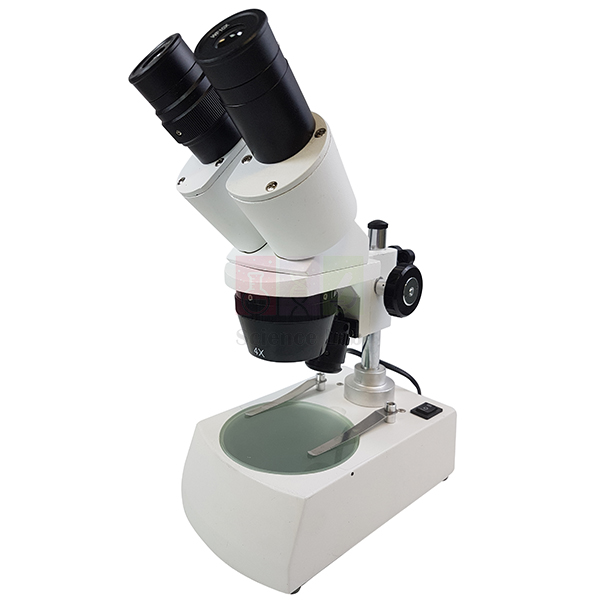
Stereo Binocular Microscope
Stereo Binocular Microscope (Product Code: SLE/M/06) is a low-power stereo microscope used to view whole, three-dimensional specimens such as insects, flowers, seeds, rocks and dissections at 20x and 40x in school, college and field-study labs. It pairs WF10x eyepieces with 2x and 4x objectives and lights the specimen from above and below with 1 W LED lamps. This stereo microscope for schools in India and overseas is supplied by Jain Scientific Equipments Pvt Ltd (ScienceLab), Ambala, India.
Specifications
| Parameter | Detail |
|---|---|
| Type | Stereo binocular microscope |
| Magnification | 20x to 40x |
| Eyepieces | WF10x |
| Objectives | 2x, 4x |
| Illumination | Top and bottom light, 1 W LED lamp |
| Working distance | 57 mm |
| Coarse adjustment range | 40 mm |
| Working stage | 90 mm frosted glass |
| Product code | SLE/M/06 |
| Supplied by | Jain Scientific Equipments Pvt Ltd (ScienceLab), Ambala, India |
What Is the Stereo Microscope Used For?
A stereo microscope shows an upright, three-dimensional view of objects too thick for a slide, so no specimen preparation is needed. Typical classroom tasks include sorting soil invertebrates, studying the mouthparts and legs of insects, examining flower parts and seed coats, checking mineral grains, and guiding fine work during a dissection. At 20x a whole specimen fits in view; switching to 40x reveals surface texture and small structures.
Use the top light for opaque objects such as beetles or rock chips, and the bottom light shining through the frosted glass stage for thin, translucent material like leaf fragments or small aquatic animals in a dish. The 57 mm working distance leaves room for forceps and mounted needles under the objectives, and the 40 mm coarse adjustment range accommodates specimens of different heights.
Supplier
Jain Scientific Equipments Private Limited, known by its trading name ScienceLab, supplies this stereo binocular microscope from Ambala, Haryana, alongside dissection tools and slide-based microscopes. Schools, colleges, agricultural and forestry training centres, dealers and importers in India and international markets can combine it with the rest of a biology lab list. Details about the company are on the ScienceLab company profile.
Related Laboratory Equipment
Tools that pair well with a stereo microscope:
- Dissection Pan, Pad & Cover — a working surface for dissections viewed under the microscope
- Forceps (Tweezers) — position small specimens on the stage
- Micrometer Disc Reticle — eyepiece scale for sizing specimens (confirm fit with us)
- Binocular Stereo Microscope, 40x — an alternative stereo model with cordless LED lighting
More stereo and compound models are in the Microscope category.
Frequently Asked Questions
What magnification does the Stereo Binocular Microscope provide?
The Stereo Binocular Microscope provides 20x and 40x. Its WF10x eyepieces combine with 2x and 4x objectives, giving low-power, three-dimensional views of whole specimens rather than the high magnification of a compound slide microscope.
How is the Stereo Binocular Microscope different from a compound microscope?
The Stereo Binocular Microscope gives an upright 3D image of solid objects at low power, with space to work under the lens. A compound microscope reaches higher magnifications but needs thin specimens mounted on glass slides.
What lighting does the Stereo Binocular Microscope have?
The Stereo Binocular Microscope has top and bottom illumination using 1 W LED lamps. Top light suits opaque specimens, while bottom light passes through the 90 mm frosted glass stage for translucent material.
How much working space is there under the Stereo Binocular Microscope?
The Stereo Binocular Microscope has a 57 mm working distance and a 40 mm coarse adjustment range. That leaves room for forceps or dissecting needles and allows specimens of varying thickness to be brought into focus.
Who supplies the Stereo Binocular Microscope?
The Stereo Binocular Microscope is supplied by Jain Scientific Equipments Pvt Ltd (ScienceLab), Ambala, Haryana, India. It is dispatched to schools, colleges, training institutes, dealers and importers in India and international markets.
What should I mention when requesting a quote for the Stereo Binocular Microscope?
For the Stereo Binocular Microscope, mention the number of units, your delivery location and mains supply, and any dissection tools or reticles you need. We will then prepare a single, complete quotation for your lab.
Request a Quote
Enquire about the Stereo Binocular Microscope through the contact page, or add it to the enquiry cart with dissection equipment for your biology or field-study lab.
Last updated: 24 September 2026
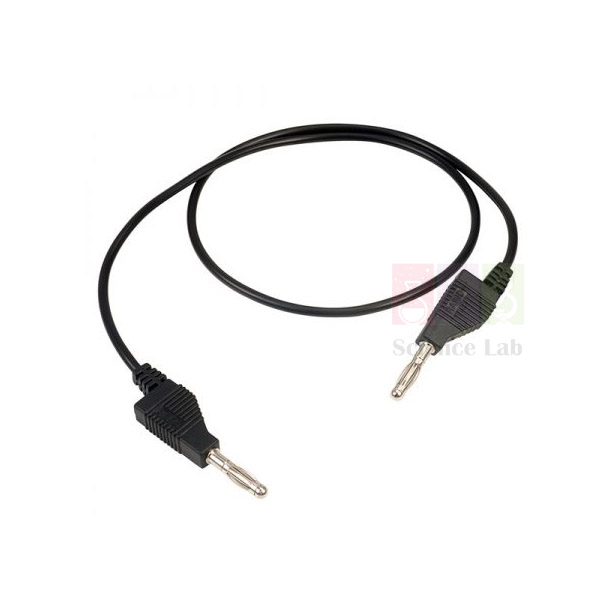
Stackable Leads
Stackable Leads (Product Code: SLE/PHY/60) are black 4 mm stackable connecting leads used to wire power supplies, meters and components together in physics and electronics practicals. Each lead is 500 mm long, and the stackable design lets another lead plug into the back of the first, so several connections can share one terminal — everyday physics lab equipment for schools. They are made by Jain Scientific Equipments Pvt Ltd (ScienceLab), an OEM manufacturer, at its own factory in Ambala, India.
Specifications
| Parameter | Detail |
|---|---|
| Type | 4 mm stackable lead |
| Length | 500 mm |
| Colour | Black |
| Product code | SLE/PHY/60 |
| Manufacturer | Jain Scientific Equipments Pvt Ltd (ScienceLab) — OEM |
| Country of origin | India (made in Ambala, Haryana) |
What Are Black Stackable Leads Used For?
By convention, black leads carry the negative, 0 V or common-return side of a circuit. Teaching students to take every black lead back to the supply’s negative terminal makes a circuit on the bench easy to check against its diagram, and it cuts down wiring mistakes when meters are added. That habit carries straight into an Ohm’s law experiment kit or any series-and-parallel investigation.
Stacking is what saves time: when two branches must meet at the same terminal, the second black lead plugs into the back of the first rather than needing an extra connector. Pull a lead out by its plug body, not the cable, and set aside any lead whose plug has become loose or whose insulation is damaged.
What to Specify When Ordering
- Colour: this listing is black; red and yellow stackable leads are listed separately.
- Quantity of each colour per bench or per student group.
- Length: each lead is 500 mm, so check that it spans your usual bench layout.
OEM Manufacturer
Jain Scientific Equipments Private Limited, known by its trading name ScienceLab, is the OEM (original equipment manufacturer) of these leads and makes them at its own licensed factory at Saha, Ambala, Haryana, India. Because the black, red and yellow versions come from the same maker, a school can order a matched colour set in one quotation and reorder any single colour later. See the ScienceLab company profile for more about the company.
Related Physics Lab Equipment
Leads and instruments often ordered together:
- Stackable Leads Red — the positive-side partner to the black lead.
- Stackable Leads Yellow — a third colour for marking a separate branch or meter link.
- Crocodile Clips & Leads — for connecting to components that have no 4 mm socket.
- Digital Multimeter — measures the current and voltage in circuits wired with these leads.
- Power Supply Variable — a bench supply to power the circuit.
More items are in Physics Lab Equipment.
Frequently Asked Questions
What length and plug size are the Stackable Leads?
The Stackable Leads are 4 mm stackable leads with a length of 500 mm. The 4 mm size is the common socket size on school power supplies, meters and component boards.
What colour are the Stackable Leads in this listing?
The Stackable Leads listed under SLE/PHY/60 are black. Red and yellow Stackable Leads are listed separately, so a lab can colour-code negative, positive and branch connections.
What does “stackable” mean on the Stackable Leads?
Stackable means another lead can plug into the back of a Stackable Leads plug, so two or more connections can share one terminal without an extra junction block or adapter.
What voltage and current are the Stackable Leads rated for?
The voltage and current rating of the Stackable Leads is not stated in this listing. Ask us through the contact page and we will confirm it before you use the leads for your application.
Who manufactures the Stackable Leads?
Jain Scientific Equipments Pvt Ltd (ScienceLab) manufactures the Stackable Leads as the OEM at its own licensed factory at Saha, Ambala, Haryana, India, and supplies them directly to schools, colleges and dealers.
Can Stackable Leads be ordered in bulk for a whole lab?
Yes. Stackable Leads can be quoted in class and lab quantities, mixed with the red and yellow versions, for buyers in India and international markets. Share quantities per colour when requesting a price.
Request a Quote
List the number of black, red and yellow leads you need on the ScienceLab contact page or add them to the enquiry cart. The quotation comes directly from the manufacturer.
Last updated: 24 September 2026
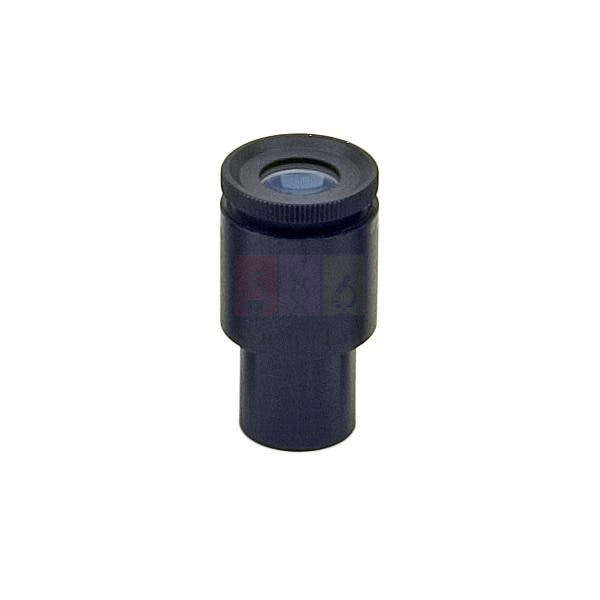
Eyepiece Micrometric
Eyepiece Micrometric (Product Code: SLE/M/07) is a 10x widefield microscope eyepiece with a built-in measuring scale, used together with a stage micrometer to measure the size of cells and other specimens and to calibrate a microscope. Biology students and lab staff fit it in place of a standard eyepiece; the scale is graduated in 0.01 mm divisions. The eyepiece is supplied by Jain Scientific Equipments Pvt Ltd (ScienceLab), Ambala, India, alongside other laboratory instruments in India for microscopy.
Specifications
| Parameter | Detail |
|---|---|
| Type | Widefield eyepiece with integral measuring scale |
| Magnification | 10x |
| Lens diameter | 18 mm |
| Graduations | 0.01 mm |
| Length | 50 mm |
| Use | With a stage micrometer, for specimen measurement and microscope calibration |
| Product code | SLE/M/07 |
| Supplied by | Jain Scientific Equipments Pvt Ltd (ScienceLab), Ambala, India |
What Is the Eyepiece Micrometer Used For?
An eyepiece scale lets students answer the question every practical report asks: how big is it? Typical tasks are measuring the diameter of onion or cheek cells, the length of stomata or pollen grains, and the size of protozoa in pond water, then comparing results between species or treatments. Because the scale sits in the eyepiece, it stays sharp and in view while the specimen is focused beneath it.
The scale must first be calibrated for each objective. Place a stage micrometer on the stage, line up its ruled divisions with the eyepiece scale, count how many eyepiece divisions match a known distance on the stage micrometer, and calculate the true length represented by one eyepiece division. Record this value separately for every objective you use, then replace the stage micrometer with the specimen slide and measure.
Supplier
Jain Scientific Equipments Private Limited trades as ScienceLab and supplies this measuring eyepiece from Ambala, Haryana, as part of its microscope accessory range. Schools, colleges, pathology-training institutes, dealers and importers in India and international markets often order it together with stage micrometer slides and microscopes. Read about the company on the ScienceLab profile page.
Related Laboratory Equipment
Items used with an eyepiece micrometer for measurement work:
- Micrometric Slide — the stage graticule slide used to calibrate the eyepiece scale
- Micrometer Disc Reticle — a scale disc that fits inside compatible eyepieces instead
- Haemocytometer — a counting chamber for cell counts alongside size measurements
- Binocular Biological Microscope — a binocular instrument with WF10X/18 mm eyepieces (confirm fit with us)
Find more accessories in the Microscope category.
Frequently Asked Questions
What is the Eyepiece Micrometric used for?
The Eyepiece Micrometric is used to measure the size of specimens under a microscope. After calibration against a stage micrometer, each division of its built-in scale represents a known distance at each objective, so cells and structures can be measured directly.
What are the specifications of the Eyepiece Micrometric?
The Eyepiece Micrometric is a 10x widefield eyepiece with an integral scale graduated in 0.01 mm divisions. Its lens diameter is 18 mm and its length is 50 mm, as listed in the product details.
Is a stage micrometer included with the Eyepiece Micrometric?
A stage micrometer is not listed as included with the Eyepiece Micrometric. You will need one for calibration; the Micrometric Slide in our range is a stage graticule slide intended for use with a micrometer eyepiece.
Will the Eyepiece Micrometric fit my microscope?
The eyepiece tube diameter of the Eyepiece Micrometric is not stated in the product details. Send us your microscope model or the outer diameter of your current eyepiece through the contact page, and we will confirm compatibility before you order.
Who supplies the Eyepiece Micrometric?
Jain Scientific Equipments Pvt Ltd (ScienceLab), Ambala, Haryana, India supplies the Eyepiece Micrometric. It is sent to schools, colleges, laboratories, dealers and importers in India and international markets, on its own or with microscopes and slides.
Is a calibration certificate available for the Eyepiece Micrometric?
No calibration certificate is listed for the Eyepiece Micrometric; users normally calibrate it themselves against a stage micrometer. If you need documentation for an audit or tender, contact us before ordering to discuss what can be provided.
Request a Quote
To price the Eyepiece Micrometric, send the quantity and your microscope details through the contact page, or add it to the enquiry cart together with stage micrometer slides.
Last updated: 24 September 2026
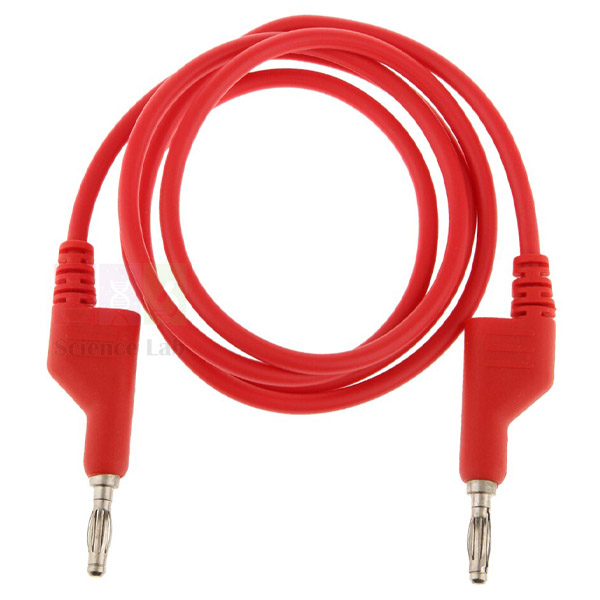
Stackable Leads Red
Stackable Leads Red (Product Code: SLE/PHY/61) is a red 4 mm stackable lead used to make the positive-side connections in laboratory circuits, from the supply’s positive terminal to switches, meters and components. It measures 500 mm, and its stackable plug accepts a second lead in its back, so one positive terminal can feed several branches of an AC DC circuits experiment. It is made by Jain Scientific Equipments Pvt Ltd (ScienceLab), an OEM manufacturer, at its own factory in Ambala, India.
Specifications
| Parameter | Detail |
|---|---|
| Lead type | 4 mm stackable |
| Colour | Red |
| Length | 500 mm |
| Product code | SLE/PHY/61 |
| Manufacturer | Jain Scientific Equipments Pvt Ltd (ScienceLab) — OEM |
| Country of origin | India (made in Ambala, Haryana) |
What Are Red Stackable Leads Used For?
Red is the conventional colour for the positive side of a DC circuit, so a red lead signals “this goes to plus” before anyone traces the wire. Polarity matters most when ammeters, voltmeters, diodes and electrolytic components are in the circuit; with all positive links in red, a teacher can glance along a bench and spot a reversed meter before it is switched on.
When a circuit has several parallel branches, the red leads for each branch can be stacked on the supply’s positive socket instead of being squeezed into a terminal. Keep red and black leads hung separately on a lead rack after the lesson, so the next class picks up correctly coloured pairs without sorting.
What to Specify When Ordering
- How many red leads are needed, usually matched one-for-one with black leads.
- Whether yellow leads are also required for branch or meter connections.
- Delivery location and whether the leads are part of a larger lab order.
OEM Manufacturer
ScienceLab is the trading name of Jain Scientific Equipments Private Limited, a registered MSME manufacturer (Udyam UDYAM-HR-01-0003714) and the OEM (original equipment manufacturer) of these red leads, made at its own licensed factory at Saha, Ambala, Haryana, India. Export consignments go out under Importer-Exporter Code AAECJ8618A (DGFT), so dealers and importers abroad buy from the same source as Indian schools. More is on the ScienceLab profile page.
Related Physics Lab Equipment
Items that complete a colour-coded circuit set:
- Stackable Leads — black 4 mm leads for the negative or return side.
- Stackable Leads Yellow — for picking out an extra branch.
- Banana/Alligator Cords — when one end must clip onto a bare wire or component leg.
- Dual Range Ammeter — a meter where correct red-to-positive wiring matters.
- Power Supply, Stepped — a bench supply for the circuit.
Browse Physics Lab Equipment for more.
Frequently Asked Questions
What are the specifications of the Stackable Leads Red?
The Stackable Leads Red is a 4 mm stackable lead in red, 500 mm long. It suits the 4 mm sockets found on most school power supplies, meters and circuit boards.
Why use red leads for positive connections?
Using Stackable Leads Red for every positive connection follows the usual colour convention, so students and teachers can check polarity at a glance, especially before switching on meters or polarity-sensitive components.
Can Stackable Leads Red be stacked on one socket?
Yes. The Stackable Leads Red has a stackable 4 mm plug, so another lead can be plugged into its back and several branches can be fed from a single positive terminal.
Who manufactures the Stackable Leads Red?
Jain Scientific Equipments Pvt Ltd (ScienceLab) is the OEM manufacturer of the Stackable Leads Red and makes it at its own licensed factory at Saha, Ambala, Haryana, India.
Is a current rating available for the Stackable Leads Red?
A current and voltage rating for the Stackable Leads Red is not given in this listing. Please ask through the contact page so we can confirm it for your intended use.
How do I order Stackable Leads Red with other colours?
Request Stackable Leads Red together with black and yellow stackable leads in one enquiry, giving quantities per colour; ScienceLab quotes all three directly as the manufacturer for India and international markets.
Request a Quote
Send the quantity of red leads, and any black or yellow leads, through the ScienceLab contact page or add them to the enquiry cart. Quotes come direct from the manufacturer.
Last updated: 24 September 2026
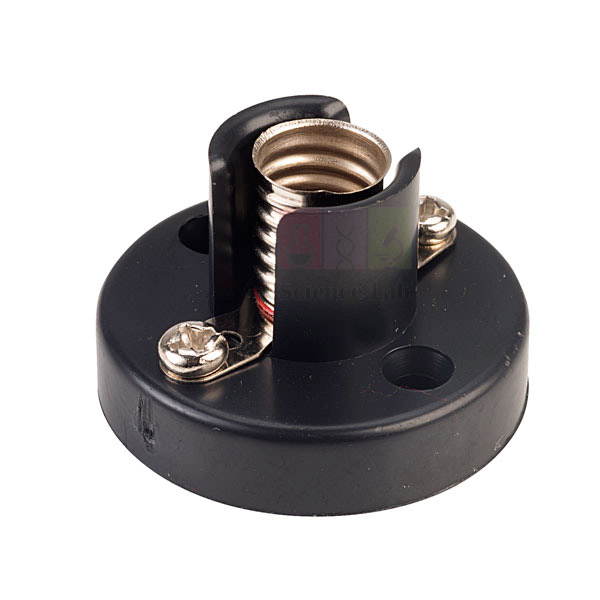
MES Bulb Holder
MES Bulb Holder (Product Code: SLE/PHY/62) is a lamp holder for MES (miniature Edison screw) lamps, used to add a small bulb to series and parallel circuits in school science laboratories. Its screw terminals let students attach wires quickly without soldering, and 10 mm fixing centres allow it to be screwed onto a board or base, which suits any electricity experiment kit for schools. It is made by Jain Scientific Equipments Pvt Ltd (ScienceLab), an OEM manufacturer, at its own factory in Ambala, India.
Specifications
| Parameter | Detail |
|---|---|
| Lamp type | MES (miniature Edison screw) lamps |
| Connections | Screw terminals, so wires are easily attached |
| Fixing centres | 10 mm |
| Product code | SLE/PHY/62 |
| Manufacturer | Jain Scientific Equipments Pvt Ltd (ScienceLab) — OEM |
| Country of origin | India (made in Ambala, Haryana) |
What Is an MES Bulb Holder Used For?
A bulb in a holder is often the first “output” young learners meet: close the circuit and the lamp lights, break it and the lamp goes out. With two or three MES holders on the bench, a class can compare bulb brightness in series and in parallel, see what happens when one bulb is unscrewed, and use a lamp as a simple continuity tester for conductors and insulators.
Because the holder has screw terminals, stripped wire ends or crocodile clips connect directly; tighten each terminal just enough to grip the wire. Match the lamp’s voltage marking to the cells or supply in use, screw bulbs in gently by hand, and let a lamp cool before changing it. For permanent teaching boards, the 10 mm fixing centres let the holder be screwed down neatly beside switches and cell holders.
OEM Manufacturer
ScienceLab is the brand under which Jain Scientific Equipments Private Limited trades, and the company is the OEM (original equipment manufacturer) of this bulb holder, made at its own licensed factory at Saha, Ambala, Haryana, India. Dealers and importers stocking basic electricity items can source the holder straight from the manufacturer along with the rest of their circuit range. Visit the ScienceLab profile to learn more.
Related Physics Lab Equipment
Other parts for a simple lamp circuit:
- Circuits Kit Bulb Holder — a bulb holder in the panel-mounted Circuits Kit format.
- Lamp Holder — an alternative holder for lamp circuits.
- Crocodile Clips & Leads — clip straight onto the screw terminals for fast wiring.
- Battery Holder, C — holds the cells that power the lamp.
- Knife Switch – Single Pole, Single Throw — switches the lamp on and off visibly.
Explore Physics Lab Equipment for more circuit parts.
Frequently Asked Questions
Which lamps fit the MES Bulb Holder?
The MES Bulb Holder takes MES (miniature Edison screw) type lamps, the small screw-in bulbs widely used in school circuit work. Choose a lamp voltage that matches your cells or power supply.
How are wires connected to the MES Bulb Holder?
The MES Bulb Holder has screw terminals, so stripped wire ends or crocodile clips can be attached directly. Loosen the screw, place the wire under it and tighten gently until it grips.
Can the MES Bulb Holder be fixed to a board?
Yes. The MES Bulb Holder has 10 mm fixing centres, so it can be screwed onto a wooden board or base to build a permanent demonstration or practice circuit.
Are bulbs included with the MES Bulb Holder?
This listing covers the MES Bulb Holder itself; lamps are not mentioned as included. If you need MES lamps with the holders, say so in your enquiry through the contact page.
Who manufactures the MES Bulb Holder?
Jain Scientific Equipments Pvt Ltd (ScienceLab) manufactures the MES Bulb Holder as the OEM at its own licensed factory at Saha, Ambala, Haryana, India, and supplies schools, dealers and importers directly.
What should I include when asking for an MES Bulb Holder quotation?
For an MES Bulb Holder quotation, give the number of holders, whether lamps, leads or switches are needed and the delivery location, so ScienceLab can quote the full circuit set in one reply.
Request a Quote
Ask for pricing on the MES Bulb Holder through the ScienceLab contact page or add it to the enquiry cart. Quotations are issued by the manufacturer for buyers in India and international markets.
Last updated: 24 September 2026
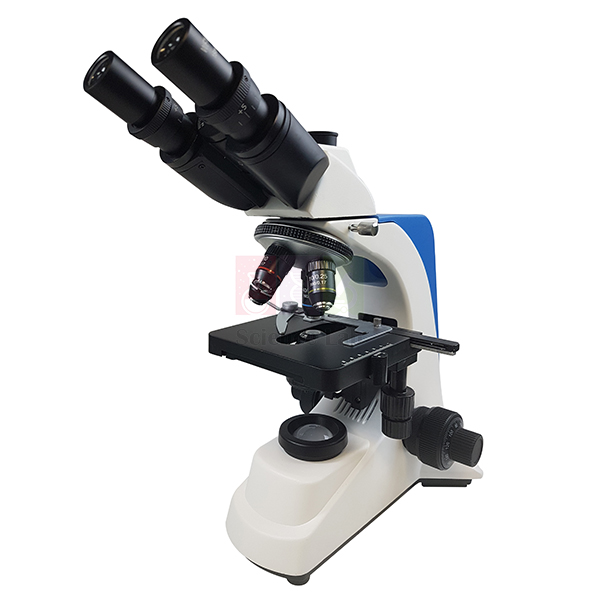
Binocular Biological Microscope
Binocular Biological Microscope (Product Code: SLE/M/08) is a 1000x LED-illuminated compound microscope used for A Level and higher-education biology, from tissue sections to oil-immersion work on stained smears. Its standout feature is a large 142 x 132 mm double-layer mechanical stage with a 75 x 50 mm moving range, which makes systematic scanning of a whole slide easy. This binocular microscope is supplied by Jain Scientific Equipments Pvt Ltd (ScienceLab), Ambala, India, to colleges and senior schools.
Specifications
| Parameter | Detail |
|---|---|
| Head | Binocular |
| Eyepiece | WF10X/18 mm |
| Nosepiece | Quadruple |
| Objectives | Achromatic 4x, 10x, 40x S, 100x S (oil) |
| Maximum magnification | 1000x |
| Condenser | Abbe condenser, N.A. 1.25, with diaphragm |
| Focusing | Coaxial coarse and fine adjustment; coarse stroke 36 mm |
| Stage | Double-layer mechanical stage, 142 x 132 mm |
| Stage moving range | 75 x 50 mm |
| Illumination | LED |
| Product code | SLE/M/08 |
| Supplied by | Jain Scientific Equipments Pvt Ltd (ScienceLab), Ambala, India |
What Is the Binocular Biological Microscope Used For?
This instrument is intended for advanced school and undergraduate practicals: identifying tissues in histology sections, following mitosis in root-tip preparations, performing differential counts on blood films and viewing bacteria under the 100x oil objective. As core cell biology equipment in India's colleges and training labs, it lets students keep both eyes open, which is more comfortable during long observation periods.
The 75 x 50 mm stage travel covers most of a standard slide, so a student can scan a smear in straight, overlapping rows without re-clipping it. Start at 4x to locate the area of interest, centre it, then move up through 10x and 40x before adding a drop of oil for the 100x objective. Close the condenser diaphragm slightly at lower powers for contrast and open it for oil work.
Supplier
ScienceLab is how Jain Scientific Equipments Private Limited of Ambala, Haryana, trades, and the company supplies this binocular biological microscope as part of its educational microscope range. Colleges, senior schools, nursing and paramedical institutes, dealers and importers in India and international markets order it with slides, immersion oil and maintenance kits. The ScienceLab company profile gives more background.
Related Laboratory Equipment
Items that support 1000x work on this microscope:
- Immersion Oil, 25ml — required for the 100x S oil objective
- Prepared Microscope Slide Set – Connective Tissues — histology slides for scanning on the large stage
- Microscope Maintenance & Servicing Kit — tools, lens fluid and grease for routine upkeep
- Microscope Digital Camera, 3MP — USB eyepiece camera for showing images on a PC (confirm fit with us)
More models are listed under Microscope.
Frequently Asked Questions
What magnification range does the Binocular Biological Microscope cover?
The Binocular Biological Microscope covers 40x up to 1000x. Its WF10X/18 mm eyepieces work with four achromatic objectives, 4x, 10x, 40x S and 100x S oil, mounted on a quadruple nosepiece.
How large is the stage on the Binocular Biological Microscope?
The Binocular Biological Microscope has a 142 x 132 mm double-layer mechanical stage with a 75 x 50 mm moving range. The long travel lets students scan most of a slide and place it precisely without moving it by hand.
What focusing system does the Binocular Biological Microscope use?
The Binocular Biological Microscope uses coaxial coarse and fine focusing knobs, with a coarse stroke of 36 mm. The coarse knob brings the specimen near focus quickly and the fine knob sharpens detail at high power.
Which condenser is fitted to the Binocular Biological Microscope?
The Binocular Biological Microscope has an Abbe condenser with a numerical aperture of 1.25 and a diaphragm. This aperture matches the needs of oil-immersion viewing with the 100x objective.
Who supplies the Binocular Biological Microscope?
The Binocular Biological Microscope is supplied by Jain Scientific Equipments Pvt Ltd (ScienceLab), Ambala, Haryana, India. It is shipped to colleges, schools, training institutes, dealers and importers in India and international markets.
What details should I give when requesting a quote for the Binocular Biological Microscope?
For the Binocular Biological Microscope, give the quantity, delivery location and mains voltage, and list any oil, slides or cameras required. Questions on after-sales parts can go in the same enquiry.
Request a Quote
Get a quotation for the Binocular Biological Microscope through our contact page, or add it to the enquiry cart with slides and immersion oil.
Last updated: 24 September 2026
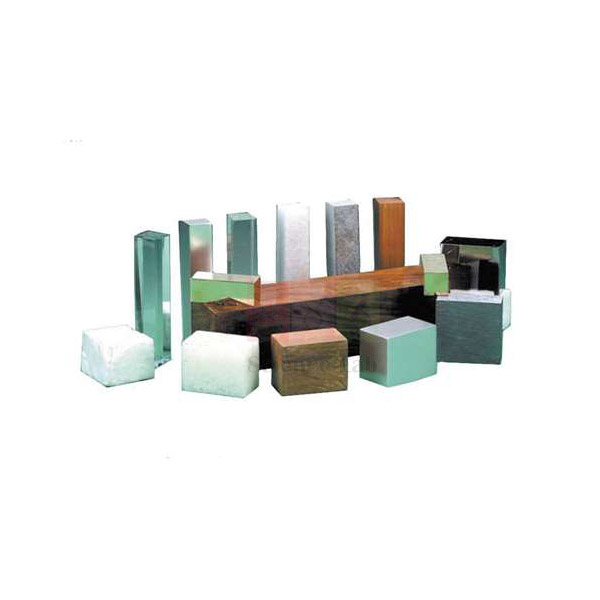
Materials Kit
A selection of materials in the form of rectangular blocks intended to familiarize the student with appearance, feel, texture, hardness and density of a range of common substances.