- Physics Lab Equipment
- Chemistry Lab Equipment
- Biology Lab Equipment
- Anatomical Lab Equipment
- Learning
- Educational Lab Equipment
- Magnets
- Agriculture
- Astronomy
- Earth Science
- Geography Lab Equipment
- Safety Lab Coat
- Laboratory
- Meteorological
- Electricity & Magnetism
- Heat
- School Lab Equipment
- Lab Glassware
- Science Lab Equipment
- Tvet Lab Equipment
- Robotics Kits Supplier and Manufacturer for Schools India
- Math Lab Equipment Manufacturers and Exporters in Ambala
- STEM Kits Manufacturers and Supplier India
- Engineering Lab Equipment
- Hospital Lab Equipment
- Water, Sanitation & Hygiene Supplies
- Cold Chain, Solar & Communication Equipment
- Nutrition
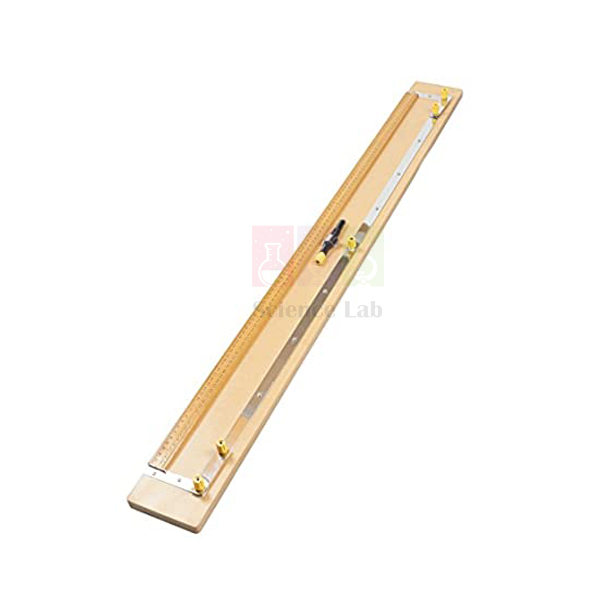
Wheatstone Bridge Four Gap
Wheatstone Bridge Four Gap (Product Code: SLE/PHY/75) is a metre-scale slide-wire bridge used to measure unknown resistances and compare resistors in school and college physics practicals. Broad, heavily plated brass strips with four gaps sit on a polished hardwood base, and 24 SWG constantan wire is stretched along the top of a metre scale marked in mm and cm. It is made by Jain Scientific Equipments Pvt Ltd (ScienceLab), an OEM manufacturer, at its own factory in Ambala, India.
Specifications
| Parameter | Detail |
|---|---|
| Bridge strips | Broad, heavily plated brass strips with four gaps |
| Resistance wire | 24 SWG constantan, stretched along the top of the scale |
| Scale | Metre scale marked in mm and cm |
| Terminals | Terminals with 4 mm sockets |
| Base | Polished hardwood |
| Included | Jockey |
| Dimensions | 1130 × 80 × 50 mm |
| Product code | SLE/PHY/75 |
| Manufacturer | Jain Scientific Equipments Pvt Ltd (ScienceLab) — OEM |
| Country of origin | India (made in Ambala, Haryana) |
What Is the Four-Gap Wheatstone Bridge Used For?
With a known resistance in one gap and the unknown in another, a galvanometer connected between the bridge and the jockey shows zero deflection at the balance point, and the two lengths of wire on either side give the ratio of the resistances. The extra gaps allow more elaborate set-ups, such as the Carey Foster arrangement for comparing two nearly equal resistances, in which the resistors are interchanged to cancel end errors.
Typical practicals include finding the resistance and specific resistance of a wire and checking the laws of resistors in series and parallel, which makes this a practical Wheatstone bridge experiment kit once a cell, key, galvanometer and resistance box are added. Tighten the terminals firmly, tap the jockey rather than sliding it along the wire, and repeat each balance with the resistors swapped for a more reliable mean.
OEM Manufacturer
Jain Scientific Equipments Private Limited, which trades as ScienceLab, is the OEM of this four-gap bridge and produces it at its own licensed factory at Saha, Ambala, Haryana, India. ScienceLab is the trading name of Jain Scientific Equipments Private Limited (CIN U29309HR2020PTC087597), and the factory at 449, HSIIDC Industrial Area, Saha operates under Factory Licence AMB-ONLINE-CHD-J-414. Laboratories and dealers deal with the manufacturer itself for quotations, repeat orders and spare jockeys — details are on the company profile.
Related Physics Lab Equipment
Items needed to complete a bridge experiment:
- Jockey with Insulated Handle (Single) — a spare jockey for the bridge wire
- Moving Coil Galvanometer — the balance detector across the bridge
- Resistance Box — supplies the known resistance in one gap
- Constantan Wire — sample wire for specific-resistance experiments
- Meter Bridge — an alternative bridge for resistance practicals
Browse the rest of Physics Lab Equipment.
Frequently Asked Questions
What is the Wheatstone Bridge Four Gap used to measure?
The Wheatstone Bridge Four Gap is used to measure an unknown resistance by balancing it against a known one, and to find the specific resistance of a wire. Its four gaps also allow comparison of two nearly equal resistances by the Carey Foster method.
What are the dimensions of the Wheatstone Bridge Four Gap?
The Wheatstone Bridge Four Gap measures 1130 × 80 × 50 mm. Its metre scale, marked in millimetres and centimetres, runs under the 24 SWG constantan wire, so allow a bench space of a little over a metre plus room for the other circuit items.
What comes with the Wheatstone Bridge Four Gap?
The Wheatstone Bridge Four Gap comes with a jockey, fitted with its plated brass strips, constantan wire, metre scale and 4 mm socket terminals on the hardwood base. The galvanometer, resistance box, cell, key and leads are ordered separately.
Who manufactures the Wheatstone Bridge Four Gap?
The Wheatstone Bridge Four Gap is manufactured by Jain Scientific Equipments Pvt Ltd (ScienceLab) as the OEM at its licensed factory in Saha, Ambala, Haryana, India, and is sold factory-direct to schools, colleges, dealers and importers in India and international markets.
How should the bridge wire be looked after?
On the Wheatstone Bridge Four Gap, tap the jockey onto the constantan wire and lift it before moving, because sliding it while pressed scratches the wire. Keep the brass strips and terminals clean and dry, and store the bridge flat so the wire stays taut.
Can we order Wheatstone bridges for a whole lab?
Yes, the Wheatstone Bridge Four Gap can be ordered in class quantities. Send the number of bridges, any matching galvanometers or resistance boxes, and your delivery location through the enquiry cart or contact page, and the manufacturer will quote the full set.
Request a Quote
Quotations for the Wheatstone Bridge Four Gap come straight from the manufacturer. Write to us through the contact page or add it to the enquiry cart.
Last updated: 24 September 2026
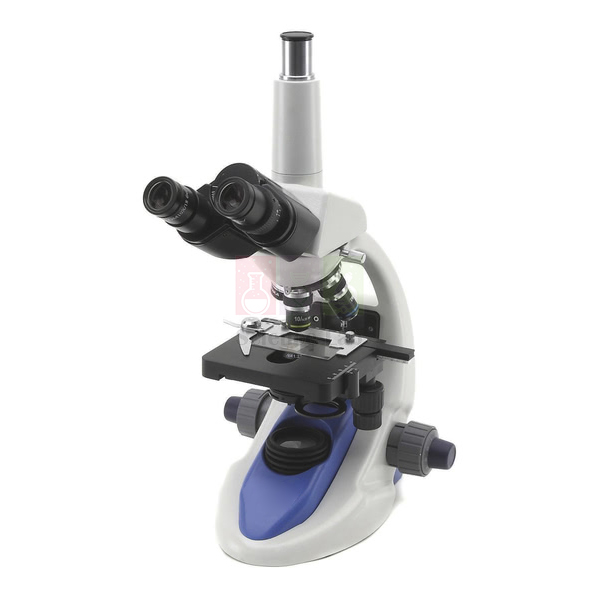
Trinocular Microscope, LED
Trinocular Microscope, LED (Product Code: SLE/M/14) is a compound light microscope with a camera port, used to examine stained slides at 40x to 1000x in college and school biology laboratories. Its 30° trinocular head rotates through 360°, so an instructor can view a slide while a camera on the third tube shares the same field with the class. It is supplied by Jain Scientific Equipments Pvt Ltd (ScienceLab), Ambala, India, as part of its compound microscope range.
Specifications
| Parameter | Detail |
|---|---|
| Observation head | Trinocular, inclined at 30°, rotating through 360° |
| Eyepieces | Wide field WF10x/18 mm |
| Objectives | Achromatic DIN 4x, 10x, 40x and 100x (oil immersion) |
| Total magnifications | 40x, 100x, 400x, 1000x |
| Condenser | Abbe, N.A. 1.25 |
| Illumination | LED with adjustable intensity |
| Focusing system | Coaxial coarse and fine |
| Stage | Double layer, 125 x 115 mm, X-Y moving range 70 x 30 mm |
| Product code | SLE/M/14 |
| Supplied by | Jain Scientific Equipments Pvt Ltd (ScienceLab), Ambala, India |
What Is the Trinocular LED Microscope Used For?
In teaching labs the Trinocular Microscope, LED is typically used for histology, botany and microbiology practicals where the whole group needs to see the same cell or tissue feature. The instructor focuses a prepared slide through the eyepieces, and a camera fitted to the third tube relays that image to a screen for discussion or for practical records. The 100x oil-immersion objective brings bacteria, blood cells and fine cell detail into view at 1000x total magnification.
Good practice: start every slide at 4x with the coaxial coarse knob, centre the specimen with the X-Y stage controls, then step up through 10x and 40x using the fine knob only. Keep the Abbe condenser raised for high power, turn the LED down at low power to avoid glare, and wipe immersion oil off the 100x lens after each session. In school biology lab equipment in India, one trinocular model like this often sits at the demonstration bench beside several monocular student microscopes.
What to Specify When Ordering
- Number of trinocular microscopes required for each laboratory.
- Whether you need a camera for the trinocular port, and which model, so the fit can be discussed before quotation.
- Immersion oil, slides and cover glasses you want added to the same order.
- Delivery city or country, for packing and freight.
Supplier
ScienceLab is the trading name of Jain Scientific Equipments Private Limited, Ambala, Haryana, which supplies this trinocular LED microscope to colleges, schools, training institutes, dealers and importers. Buyers can combine the microscope with slides, immersion oil and imaging accessories in one enquiry, which keeps institutional paperwork simple. More about the company is on the ScienceLab company profile.
Related Laboratory Equipment
Items commonly ordered with a trinocular microscope for imaging and slide work:
- Microscope Digital Camera, 5MP — a camera option for capturing slide images; ask us about fit with the trinocular tube.
- Immersion Oil, 25ml — needed every time the 100x oil objective is used.
- Microscope Glass Slides — blank slides for preparing your own mounts.
- Human Histology Slide Set of 25 — prepared tissue sections for class demonstration.
- Research Trinocular Microscope — a trinocular alternative with halogen illumination and a die-cast body.
See the full range on the Microscope category page.
Frequently Asked Questions
What magnifications does the Trinocular Microscope, LED give?
The Trinocular Microscope, LED gives 40x, 100x, 400x and 1000x total magnification. These come from WF10x/18 mm eyepieces combined with achromatic DIN objectives of 4x, 10x, 40x and 100x, the last one used with immersion oil.
Is a camera included with the Trinocular Microscope, LED?
No camera is listed in the specification of the Trinocular Microscope, LED, so plan on ordering one separately for the third tube. Tell us which camera you intend to use, or ask for a camera option from our range, and we can discuss the fit before quoting.
What stage does the Trinocular Microscope, LED have?
The Trinocular Microscope, LED has a double-layer stage measuring 125 x 115 mm with an X-Y moving range of 70 x 30 mm. The two-axis controls let users scan a slide smoothly at high power without pushing the glass by hand.
How should the 100x objective of the Trinocular Microscope, LED be used?
Use the 100x objective of the Trinocular Microscope, LED only with a drop of immersion oil between slide and lens. Focus first at 40x, add the oil, swing in the 100x objective, adjust with the fine knob, and clean the lens with lens tissue afterwards.
Who supplies the Trinocular Microscope, LED?
The Trinocular Microscope, LED is supplied by Jain Scientific Equipments Private Limited, which trades as ScienceLab and is based in Ambala, Haryana, India. The company quotes schools, colleges, laboratories, dealers and importers in India and international markets directly.
Can a calibration certificate be provided with the Trinocular Microscope, LED?
Documents such as a calibration certificate for the Trinocular Microscope, LED should be discussed before ordering. Describe what your institution or tender requires through the contact page, and we will tell you what can accompany the order.
What should a quotation request for the Trinocular Microscope, LED include?
A quotation request for the Trinocular Microscope, LED should state the quantity, the product code SLE/M/14, any camera or accessories needed, and the delivery city or country. With those details, packing and freight can be worked out in a single reply.
Request a Quote
To order the Trinocular Microscope, LED (SLE/M/14), send your requirement through the contact page or add it to the enquiry cart together with any slides and accessories from this page.
Last updated: 24 September 2026
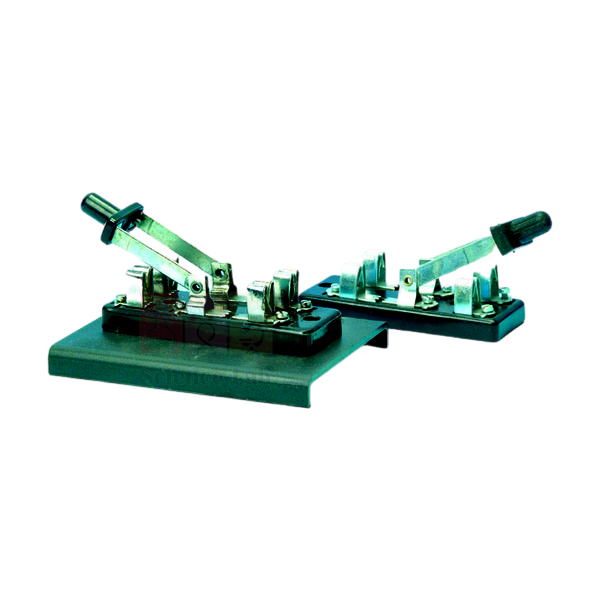
Knife Switch Double Pole
Knife Switch Double Pole (Product Code: SLE/PHY/76) is a double-pole, double-throw (DPDT) knife switch on a plastic base, used to open, close and change over circuits in school electricity experiments. Its poles and blades are made of brass for good electrical connections, and the lever position shows students at a glance whether a circuit is made or broken. It is supplied by Jain Scientific Equipments Pvt Ltd (ScienceLab), Ambala, India.
Key Details
| Parameter | Detail |
|---|---|
| Switch type | Knife switch, double pole, double throw (DPDT) |
| Base | Plastic |
| Poles and blades | Brass, for good electrical connections |
| Application | Electricity circuits in school and college labs |
| Current / voltage rating | Not stated in the listing — ask us before specialised use |
| Product code | SLE/PHY/76 |
| Supplied by | Jain Scientific Equipments Pvt Ltd (ScienceLab), Ambala, India |
What Is the Double Pole Knife Switch Used For?
A DPDT switch moves two separate contacts with one lever, so it can switch two circuits together or change a single load between two supplies. Its classic school use is as a reversing switch: with the outer terminals cross-connected, throwing the blades one way or the other reverses the current through a motor, coil or galvanometer. That makes it a handy part of any AC DC circuits experiment kit on the physics bench.
Teachers also like knife switches because the open blade is visible from the back of the room, unlike a sealed switch. Use it with cells or low-voltage supplies only, since the brass parts are exposed; close the blades firmly into their clips, and keep the brass clean so contact stays good.
What to Specify When Ordering
- Quantity of double-pole switches needed
- Whether you also need single-pole knife switches for simpler circuits
- Any current or voltage requirement, so we can confirm suitability
Supplier
Jain Scientific Equipments Private Limited, known by its trading name ScienceLab, supplies this double-pole knife switch as part of its range of switches, keys and circuit accessories for school laboratories. Buyers in India and international markets can combine it with other electricity items in one enquiry. Read more about the company on its profile page.
Related Physics Lab Equipment
Other switching and connection items for the same circuits:
- Knife Switch – Single Pole, Single Throw — for simple on/off control
- Knife Switch, Double Pole — another double-pole listing to compare
- Contact Key (Push Switch) — momentary switching for brief readings
- Demonstration Motor AC/DC — a motor whose direction a reversing switch can change
- Crocodile Clips & Leads — to wire the switch into a circuit
More items are in Physics Lab Equipment.
Frequently Asked Questions
What does double pole, double throw mean on this knife switch?
On the Knife Switch Double Pole, double pole means two separate circuits are switched by one lever, and double throw means each pole can connect to either of two contacts. Together they let the switch change over or reverse a circuit.
What is the Knife Switch Double Pole made of?
The Knife Switch Double Pole has poles and blades made of brass, chosen to ensure good electrical connections, mounted on a plastic base. Keeping the brass surfaces clean and dry helps the blades seat firmly in their clips each time.
What current and voltage can the knife switch handle?
The listing does not state a current or voltage rating for the Knife Switch Double Pole. It is intended for school electricity circuits run from cells or low-voltage supplies; contact us if you need a rating confirmed for a particular circuit.
How do I wire the Knife Switch Double Pole as a reversing switch?
To use the Knife Switch Double Pole as a reversing switch, connect the supply to the two centre terminals, cross-connect the two pairs of outer terminals, and take the load from one outer pair. Throwing the lever either way then reverses the current.
Who supplies the Knife Switch Double Pole?
The Knife Switch Double Pole is supplied by Jain Scientific Equipments Pvt Ltd (ScienceLab), Ambala, Haryana, India, to schools, colleges and dealers in India and international markets, together with keys, leads and other circuit accessories.
Can the Knife Switch Double Pole be ordered in class sets?
Yes, the Knife Switch Double Pole can be ordered in class quantities. Send the number of switches, any single-pole switches or leads you need, and your delivery location through the enquiry cart or contact page for a quotation.
Request a Quote
Request a price for the Knife Switch Double Pole on the contact page, or add it to the enquiry cart with the rest of your circuit items.
Last updated: 24 September 2026
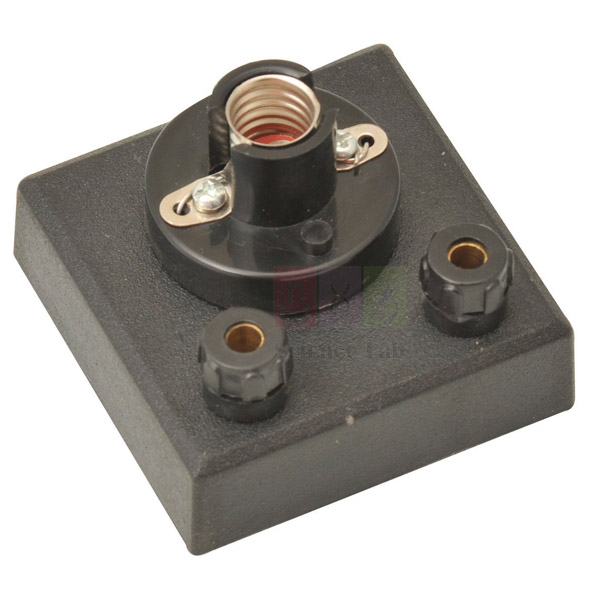
Lamp Holder
Lamp Holder (Product Code: SLE/PHY/77) is a bulb-holder unit used to connect a miniature screw lamp into circuits in school electricity lessons. It is fitted with an MES (miniature Edison screw) type bulb holder and terminals, so an MES bulb screws straight in and circuit leads attach to the terminals. It is supplied by Jain Scientific Equipments Pvt Ltd (ScienceLab), Ambala, India, as junior science lab equipment for primary and secondary classes.
Key Details
| Parameter | Detail |
|---|---|
| Bulb fitting | MES (miniature Edison screw) type bulb holder |
| Connections | Terminals for circuit leads |
| Bulb | Not listed as included — ask us if you need MES bulbs quoted |
| Product code | SLE/PHY/77 |
| Supplied by | Jain Scientific Equipments Pvt Ltd (ScienceLab), Ambala, India |
What Is the Lamp Holder Used For?
A small bulb is the simplest current indicator a class can use, and the lamp holder turns it into a part that connects cleanly into a circuit. Students use several holders to compare bulbs in series and in parallel, to build a continuity tester that sorts materials into conductors and insulators, and to show how a switch or a break in the wire stops the current.
Because the bulb screws in, a failed lamp can be replaced in seconds without rewiring, which keeps practical lessons moving. Screw the bulb in finger-tight only, match the bulb voltage to the cells in use, and tighten the leads under the terminals before switching on. It is everyday physics lab equipment in Indian school classrooms from the first circuits onwards.
What to Specify When Ordering
- Number of lamp holders per class or group
- Whether MES bulbs should be quoted with the holders, and at what voltage
- Leads or cell holders needed to complete each circuit
Supplier
ScienceLab is the trading name under which Jain Scientific Equipments Private Limited supplies this lamp holder, along with bulb holders, leads and other circuit parts, to schools and dealers from Ambala, Haryana. One enquiry can cover the holders and the accessories needed to use them. Company information is on the ScienceLab profile.
Related Physics Lab Equipment
Other holders and connectors used in the same bulb circuits:
- MES Bulb Holder — another MES holder listing for comparison
- Simple Circuit Module Lamp Holder — a lamp holder on a plug-together module board
- Lamp Holder (Economy Switch) — an economy option for large class sets
- Receptacle for Miniature Lamp — an alternative receptacle for small lamps
- Crocodile Clips & Leads — to connect the terminals into a circuit
The complete range is in Physics Lab Equipment.
Frequently Asked Questions
What bulb fits this Lamp Holder?
This Lamp Holder is fitted with an MES (miniature Edison screw) type bulb holder, so it takes MES screw-base bulbs. Choose a bulb voltage that matches the cells or supply used in the lesson so the lamp glows properly without burning out.
Is a bulb included with the Lamp Holder?
A bulb is not listed as part of the Lamp Holder, which is described as the holder with its MES fitting and terminals. If you want MES bulbs quoted along with the holders, state the quantity in your enquiry through the contact page.
How are wires connected to the Lamp Holder?
Wires connect to the Lamp Holder through its terminals. Fasten bare wire ends or leads under the terminals before switching on, and check the bulb is screwed fully into the MES holder so the circuit is complete.
Which experiments use the Lamp Holder?
The Lamp Holder is used in experiments on complete circuits, bulbs in series and parallel, conductors and insulators, and the effect of switches. Several holders on one bench let students compare bulb brightness directly as they change the circuit.
Who supplies the Lamp Holder?
The Lamp Holder is supplied by Jain Scientific Equipments Pvt Ltd (ScienceLab), Ambala, Haryana, India. It is sourced as a standard circuit part and can be supplied together with bulbs, leads and cell holders for school electricity lessons.
Can schools buy the Lamp Holder in bulk?
Yes, the Lamp Holder can be ordered in bulk for class sets and dealer stock, for delivery in India and international markets. Send the quantity and your location through the enquiry cart or contact page to receive a quotation.
Request a Quote
Ask for a Lamp Holder quotation through the contact page, or add it to the enquiry cart together with any bulbs and leads.
Last updated: 24 September 2026
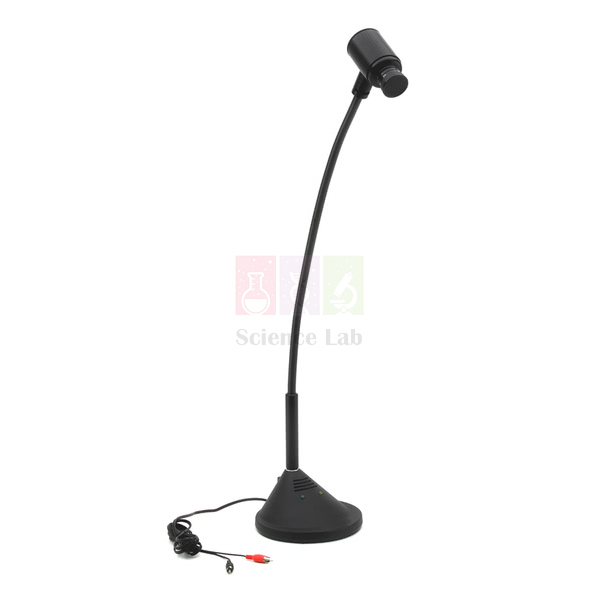
Video Camera
Video Camera (Product Code: SLE/M/15) is a CCD classroom camera on a flexible arm, used to show documents, small specimens and microscope images on a TV or monitor during school and college lessons. It works as an episcope, an enlarger for insects and minerals, and a video-microscopy camera, with a 1/4 inch CCD giving 330-line resolution. It is supplied by Jain Scientific Equipments Pvt Ltd (ScienceLab), Ambala, India, as educational laboratory equipment for India and international markets.
Specifications
| Parameter | Detail |
|---|---|
| Image sensor | CCD, 1/4 inch |
| Resolution | 330 lines |
| Total pixels | 270,000 |
| Sensitivity | 1.5 lux |
| Signal/noise ratio | Greater than 48 dB |
| Objective lens | 8 mm; focuses from 0.76 mm up to infinity |
| Working distance | Greater than 0.76 mm |
| Magnification | Greater than 90x |
| Video signal | PAL (NTSC optional) |
| Audio | Analogue signal; microphone can be switched off; high-sensitivity microphone on Multimedia models only |
| Power | 12 V DC; 220/12 V DC power adapter included |
| Flexible arm | 50 cm long, 12 mm diameter; head joint rotates without damaging the internal wires |
| Base | 17 cm diameter, approx. 2.7 kg |
| Weight | 3.3 kg |
| Display | Connects to a monitor or TV |
| Product code | SLE/M/15 |
| Supplied by | Jain Scientific Equipments Pvt Ltd (ScienceLab), Ambala, India |
What Is the Classroom Video Camera Used For?
The Video Camera replaces several separate projection tools in one classroom. Placed over a page it acts as an episcope for texts, documents and photographs; lowered over a specimen it enlarges insects, minerals and other small objects; aimed at a sketch it does the job of an overhead projector for drawings. It also serves as a camera for conferences, assemblies and meetings, and it can film a lesson when connected to a video recorder.
For video-microscopy, bring the camera head close to the microscope eyepiece and adjust until the field fills the screen, testing the set-up with your own microscope before the lesson. The CCD's high sensitivity keeps the picture clear in dim rooms, and the arm can be twisted to any position, even projecting beyond the base, without tipping the unit. Teachers building a digital corner in their biology lab equipment often pair it with a school microscope and a set of prepared slides.
What to Specify When Ordering
- Video signal: PAL, or NTSC if your TV or monitor needs it.
- Standard or Multimedia version, if you want the high-sensitivity microphone that picks up the teacher's voice.
- Whether you also need a monitor, TV or recorder, since only the camera and power adapter are listed.
- Number of cameras, for example one per classroom or lab.
Supplier
This classroom video camera is supplied by Jain Scientific Equipments Private Limited, the company behind the ScienceLab trading name in Ambala, Haryana. Schools, teacher-training colleges, dealers and importers can source it together with microscopes and slides under one enquiry. For vendor registration and export documents, the supplying company holds Importer-Exporter Code AAECJ8618A (DGFT) and GSTIN 06AAECJ8618A1ZT. Company details are on the ScienceLab profile page.
Related Laboratory Equipment
Other imaging items and teaching material that suit a classroom camera set-up:
- Flexible Camera — another arm-mounted camera option; compare the two before ordering.
- 2MP Digital USB-2 Colour Camera — a USB alternative when images should go to a computer rather than a TV.
- Monocular Biological Microscope 400x, LED — a school microscope for video-microscopy demonstrations; check the set-up with us.
- Basic Botany Slide (Set of 25) — prepared plant slides to show on the screen.
Browse all items on the Microscope category page.
Frequently Asked Questions
What can the Video Camera be connected to?
The Video Camera connects to a monitor or a TV and outputs a PAL video signal, with NTSC as an option, plus analogue audio. It can also feed a video recorder, so a lesson or demonstration can be filmed as well as shown live.
Does the Video Camera have a microphone?
Yes. The Video Camera's microphone can be switched off when not needed. The extra-sensitive microphone that captures the teacher's voice and surrounding sound, for playback through a TV or separate amplifier, is fitted only on Multimedia models, so state which version you need.
How close can the Video Camera focus?
The Video Camera's special 8 mm lens focuses from 0.76 mm up to infinity and gives more than 90x magnification. That range lets one camera show a whole printed page and then, moved in close, an insect wing or mineral grain.
Is the Video Camera stable when the arm is extended?
Yes. The Video Camera sits on a 17 cm base weighing approx. 2.7 kg, and its 12 mm flexible arm can be twisted to any position, even projecting beyond the base, without affecting stability. The complete unit weighs 3.3 kg.
What power supply does the Video Camera need?
The Video Camera runs on 12 V DC, and a 220/12 V DC power adapter is included. Buyers with a different mains supply should mention it in the enquiry so a suitable arrangement can be discussed.
Who supplies the Video Camera?
The Video Camera is supplied by Jain Scientific Equipments Private Limited, trading as ScienceLab, from Ambala, Haryana, India. The company quotes schools, colleges, dealers and importers in India and international markets, and can add microscopes or slides to the same quotation.
What should a quotation request for the Video Camera include?
A quotation request for the Video Camera should give the quantity, product code SLE/M/15, PAL or NTSC, standard or Multimedia version, and the delivery city or country. Send it via the contact page for a single consolidated reply.
Request a Quote
For the Video Camera (SLE/M/15), write to us through the contact page or place it in the enquiry cart along with any microscopes or slides you need.
Last updated: 24 September 2026
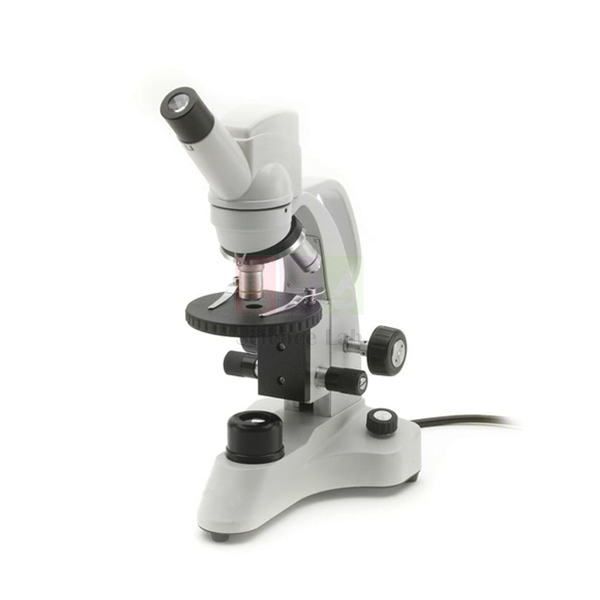
Digital Monocular Microscope, LED
Digital Monocular Microscope, LED (Product Code: SLE/M/16) is a single-eyepiece compound microscope with white LED illumination, used to examine prepared and freshly mounted slides at 40x, 100x and 400x in school science laboratories. Its 45° head and its round 90 mm stage both rotate through 360°, which makes it easy to share across a bench. It is supplied by Jain Scientific Equipments Pvt Ltd (ScienceLab), Ambala, India, to schools looking for a monocular microscope in India and abroad.
Specifications
| Parameter | Detail |
|---|---|
| Observation head | Monocular, inclined at 45°, rotating through 360° |
| Eyepiece | WF10x/16 mm |
| Objectives | Achromatic DIN 4x, 10x, 40x |
| Nosepiece | Triple |
| Magnifications | 40x, 100x, 400x |
| Focusing | Coarse and fine, on separate axes |
| Illumination | White LED, non-rechargeable, with intensity control |
| Stage | Round, 90 mm diameter, rotating through 360°, 5 mm range, with slide clips |
| Camera / screen | Not listed in the current specification – please confirm the digital output you need |
| Product code | SLE/M/16 |
| Supplied by | Jain Scientific Equipments Pvt Ltd (ScienceLab), Ambala, India |
What Is the Monocular LED Microscope Used For?
As a compound microscope, the Digital Monocular Microscope, LED is built for slide-mounted specimens: examining pre-mounted slides, making temporary mounts of onion peel, cheek cells or pond water, and looking at them under high power. Compound optics give a narrow field and a short working distance, so the specimen must be thin enough for light from below to pass through it.
Thick, unmounted material such as insects, plants, rocks and fossils, or micro-dissection work, calls for a stereo microscope instead, which offers low power, a wide field and a long working distance. Many schools keep a few of each. With this model, begin at 4x with the LED turned low, rotate the round stage to line up the specimen, and raise the intensity as you move to 40x.
What to Specify When Ordering
- The digital output you expect (camera, screen or software), since none is listed in the current specification.
- Number of microscopes needed for each class or lab.
- Slides, cover slips and slide boxes to add to the same consignment.
- Delivery city or country.
Supplier
Jain Scientific Equipments Private Limited supplies this monocular LED microscope under its ScienceLab trading name from Ambala, Haryana. Schools, tuition centres, science-kit distributors and importers in India and international markets buy it alongside slides and dissection items, so a whole biology bench can be quoted at once. See the company profile for background on ScienceLab.
Related Laboratory Equipment
Consumables and a stereo alternative for a school microscope bench:
- Microscope Slides Glass — plain slides for temporary mounts.
- Microscope Cover Slips — to cover wet mounts before viewing.
- Basic Botany Slide (Set of 25) — prepared plant sections that suit 40x to 400x viewing.
- Stereo Binocular Microscope — for insects, rocks and other thick specimens.
- Slide Box — keeps prepared slides sorted and dust-free.
More models are listed on the Microscope category page.
Frequently Asked Questions
What magnifications does the Digital Monocular Microscope, LED offer?
The Digital Monocular Microscope, LED offers 40x, 100x and 400x. A WF10x/16 mm eyepiece works with achromatic DIN 4x, 10x and 40x objectives on a triple nosepiece. There is no oil-immersion objective, so choose a model with a 100x oil objective for bacteria work.
Does the Digital Monocular Microscope, LED include a camera or screen?
The specification we hold for the Digital Monocular Microscope, LED lists its optics, LED lighting and stage, but no built-in camera, screen or software. Please tell us through the contact page which digital features you need, and we will confirm before you order.
Is the LED in the Digital Monocular Microscope, LED rechargeable?
No. The Digital Monocular Microscope, LED uses a white LED that is non-rechargeable, with an intensity control for adjusting brightness. If you need to know the power arrangement for your classroom, ask us when requesting the quotation.
How does the stage of the Digital Monocular Microscope, LED work?
The Digital Monocular Microscope, LED has a round 90 mm stage that rotates through 360°, with a 5 mm range and slide clips. Turning the stage re-orients the specimen under the objective without the student having to lift or slide the glass.
Can the Digital Monocular Microscope, LED be used for insects or rocks?
The Digital Monocular Microscope, LED is a compound microscope for thin, slide-mounted specimens. Insects, plants, rocks, fossils and dissection work are better viewed under a stereo microscope, which gives low power, a wide field and a long working distance.
Who supplies the Digital Monocular Microscope, LED?
The Digital Monocular Microscope, LED is supplied by Jain Scientific Equipments Private Limited, trading as ScienceLab, Ambala, Haryana, India. It quotes schools, colleges, distributors and importers in India and international markets, and can bundle slides and accessories into the same order.
What should a quotation request for the Digital Monocular Microscope, LED include?
Include the product code SLE/M/16, the number of Digital Monocular Microscope, LED units, any digital features you expect, the slides or accessories to add, and the delivery location. Those details allow one complete quotation instead of several follow-up emails.
Request a Quote
Ask for a quotation on the Digital Monocular Microscope, LED (SLE/M/16) through our contact page, or add it to the enquiry cart with the slides and cover slips you need.
Last updated: 24 September 2026

Pylons Kit
Pylons Kit (Product Code: SLE/PHY/78) is a card model pack used to build miniature electricity pylons for lessons and displays on power transmission in schools. The pack contains 5 thick card sheets, and once the parts are cut out they produce 5 pylons for a model power line. It is supplied by Jain Scientific Equipments Pvt Ltd (ScienceLab), Ambala, India, as a science model kit for school project work.
Key Details
| Parameter | Detail |
|---|---|
| Contents | 5 thick card sheets |
| Finished models | 5 pylons, once the sheets are cut out |
| Material | Thick card |
| Tools and adhesive | Not listed as included — have scissors and glue ready |
| Product code | SLE/PHY/78 |
| Supplied by | Jain Scientific Equipments Pvt Ltd (ScienceLab), Ambala, India |
What Is the Pylons Kit Used For?
Five model pylons in a row are enough to show how electricity travels from a power station to towns across the country. Students cut out and assemble the pylons, stand them along a baseboard and run thread or wire between them to represent overhead lines, then label the power station, step-up and step-down transformers and the homes at the end of the line.
The finished line works as a science fair project kit for India's middle-school classes, or as a classroom display while teaching why electricity is sent at high voltage. Score fold lines before bending the card, let glued joints dry fully, and supervise any use of sharp scissors with younger pupils.
What to Specify When Ordering
- Number of packs (each pack makes 5 pylons)
- Whether scissors, glue or thread should be quoted with the packs
- Whether you also need transformer apparatus for the same lesson
Supplier
The Pylons Kit is supplied by Jain Scientific Equipments Private Limited, which trades as ScienceLab from Ambala, Haryana, alongside its wider range of physics teaching aids. Schools and dealers can add the packs to a larger science order and receive one quotation. Learn more on the ScienceLab company profile.
Related Physics Lab Equipment
Useful additions when building and teaching with the pylon model:
- Scissors, All Purpose, Sharp, 180mm — for cutting out the card parts
- Glue, Classroom Use, BOT-170ml — to fix the folded tabs
- Cotton Thread Roll — to string model power lines between pylons
- Demountable Transformer Kit — to show how voltage is stepped up and down
- Electricity Economy Kit — bulbs and leads to light the model town
See more in Physics Lab Equipment.
Frequently Asked Questions
What is in the Pylons Kit?
The Pylons Kit contains 5 thick card sheets. Once the parts are cut out and assembled, the pack produces 5 model electricity pylons, enough for a short model power line across a classroom display or project board.
What else is needed to build the Pylons Kit?
Tools and adhesive are not listed as part of the Pylons Kit, so have scissors and glue ready for cutting out and fixing the card parts. Thread or thin wire is useful for representing the overhead lines between the finished pylons.
Which lessons use the Pylons Kit?
The Pylons Kit supports lessons on how electricity is generated, transmitted and distributed, including the role of transformers and why power lines run at high voltage. It also suits science exhibitions and project work on energy and the power grid.
How many packs does a class need?
Each Pylons Kit makes 5 pylons, so one pack gives one group a complete model line. For a class working in groups, order one pack per group, and add extra packs if students will build longer lines or keep a display model.
Who supplies the Pylons Kit?
The Pylons Kit is supplied by Jain Scientific Equipments Pvt Ltd (ScienceLab), Ambala, Haryana, India. The company provides it with other physics teaching aids for schools, dealers and education programmes in India and international markets.
Request a Quote
For a Pylons Kit quotation, send the number of packs through the contact page or add the kit to the enquiry cart.
Last updated: 24 September 2026
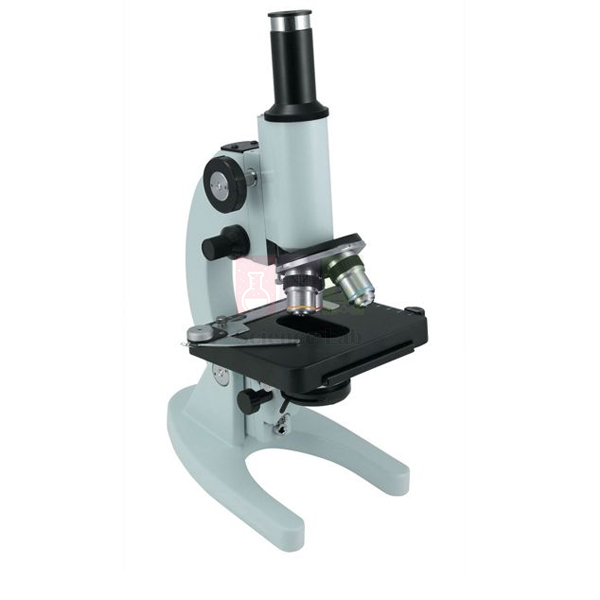
Student Microscope with Fixed Condenser
Student Microscope with Fixed Condenser (Product Code: SLE/M/17) is a mirror-illuminated compound microscope used to teach slide observation from 50x to 675x in school and junior-college biology practicals. Its fixed Abbe-type condenser with iris diaphragm, 10x and 15x eyepieces and all-metal stand that inclines up to 90° suit everyday class use, and mirror lighting needs no mains point at the bench. It is supplied by Jain Scientific Equipments Pvt Ltd (ScienceLab), Ambala, India, as school biology lab equipment.
Specifications
| Parameter | Detail |
|---|---|
| Magnification | 50x to 675x |
| Eyepieces | 10x and 15x |
| Objectives | 10x and 40/45x (S.L.), all achromatic |
| Nosepiece | Triple, revolving |
| Condenser | Fixed, Abbe type, with iris diaphragm |
| Illumination | Plano-concave mirror on gimbal mount |
| Stage | Full square stage, 112 x 112 mm, with stage clips |
| Stand | All-metal body, properly balanced; arm inclinable up to 90° for easy viewing |
| Focusing | Separate coarse and fine focusing knobs |
| Optical features | Parfocal, precentred, high numerical aperture, high resolution |
| Lens coating | Special coating described as unaffected by moisture, fungus, fogginess or other weather effects over time |
| Product code | SLE/M/17 |
| Supplied by | Jain Scientific Equipments Pvt Ltd (ScienceLab), Ambala, India |
What Is the Student Microscope with Fixed Condenser Used For?
This is the everyday instrument for class practicals on onion epidermis, cheek cells, leaf and stem sections and bought-in prepared slides. Students find the specimen with the 10x objective and 10x eyepiece, then swing in the 40/45x objective and change to the 15x eyepiece for detail up to 675x. Because the optics are parfocal, the image stays nearly in focus when the nosepiece turns, so only the fine knob is needed.
Lighting comes from the gimbal-mounted plano-concave mirror, which can be angled towards a window or a separate lamp; the flat face usually works best with the condenser, while the concave face helps when light is weak. Close the iris diaphragm a little to add contrast to unstained mounts, and open it for stained specimens at high power. Tilting the arm back makes long sessions more comfortable for seated students.
What to Specify When Ordering
- Number of microscopes for each practical batch.
- Fixed condenser (this model, SLE/M/17) or the movable-condenser version (SLE/M/18).
- Whether you need a separate light source, since the listed illumination is a mirror.
- Slides, cover glasses and slide storage to include in the same consignment.
Supplier
ScienceLab, the trading name of Jain Scientific Equipments Private Limited in Ambala, Haryana, supplies this fixed-condenser student microscope to schools, state and private education buyers, dealers and importers. It is often quoted as part of a complete biology practical set with slides and dissection tools. Company background is available on the ScienceLab profile.
Related Laboratory Equipment
Useful additions for a student microscope practical:
- Student Microscope with Movable Condenser — the companion model with an adjustable condenser.
- Microscope Glass Slides — for students' own temporary mounts.
- Glass Cover Slips, No. 1 — thin covers for wet mounts.
- Mitosis & Meiosis Set, Microscope Slides — prepared slides for the cell-division practical.
- Microscope Slide Case — safe storage for the class slide collection.
Compare other models on the Microscope category page.
Frequently Asked Questions
What magnification does the Student Microscope with Fixed Condenser give?
The Student Microscope with Fixed Condenser is listed at 50x to 675x. It carries 10x and 15x eyepieces and achromatic 10x and 40/45x (S.L.) objectives on a triple revolving nosepiece, which covers typical school cell and tissue practicals.
Does the Student Microscope with Fixed Condenser need electricity?
No mains connection is listed for the Student Microscope with Fixed Condenser. It is lit by a plano-concave mirror on a gimbal mount, which reflects daylight or light from a separate lamp up through the fixed Abbe condenser.
How is a fixed condenser different from a movable one?
On the Student Microscope with Fixed Condenser, the Abbe-type condenser stays at a set height and light is controlled with its iris diaphragm. A movable condenser can also be raised or lowered; that version is listed separately as SLE/M/18.
What size is the stage on the Student Microscope with Fixed Condenser?
The Student Microscope with Fixed Condenser has a full square stage measuring 112 x 112 mm, fitted with stage clips that hold a standard slide in place while students move it by hand.
Are the optics of the Student Microscope with Fixed Condenser protected against fungus?
The optics of the Student Microscope with Fixed Condenser carry a special coating described as unaffected by moisture, fungus, fogginess and other weather effects over time. Storing the instrument covered in a dry cupboard still helps keep the lenses clean.
Who supplies the Student Microscope with Fixed Condenser?
The Student Microscope with Fixed Condenser is supplied by Jain Scientific Equipments Private Limited, which trades as ScienceLab from Ambala, Haryana, India, to schools, colleges, dealers and importers in India and international markets.
What should a quotation request for the Student Microscope with Fixed Condenser include?
For the Student Microscope with Fixed Condenser, give the quantity, product code SLE/M/17, any slides or accessories to add, and the delivery city or country. Mention tender or institutional paperwork needs too, so they can be covered in the same reply.
Request a Quote
Request a quotation for the Student Microscope with Fixed Condenser (SLE/M/17) on our contact page, or list it in the enquiry cart with the slides and cover slips your class needs.
Last updated: 24 September 2026