- Physics Lab Equipment
- Chemistry Lab Equipment
- Biology Lab Equipment
- Anatomical Lab Equipment
- Learning
- Educational Lab Equipment
- Magnets
- Agriculture
- Astronomy
- Earth Science
- Geography Lab Equipment
- Safety Lab Coat
- Laboratory
- Meteorological
- Electricity & Magnetism
- Heat
- School Lab Equipment
- Lab Glassware
- Science Lab Equipment
- Tvet Lab Equipment
- Robotics Kits Supplier and Manufacturer for Schools India
- Math Lab Equipment Manufacturers and Exporters in Ambala
- STEM Kits Manufacturers and Supplier India
- Engineering Lab Equipment
- Hospital Lab Equipment
- Water, Sanitation & Hygiene Supplies
- Cold Chain, Solar & Communication Equipment
- Nutrition
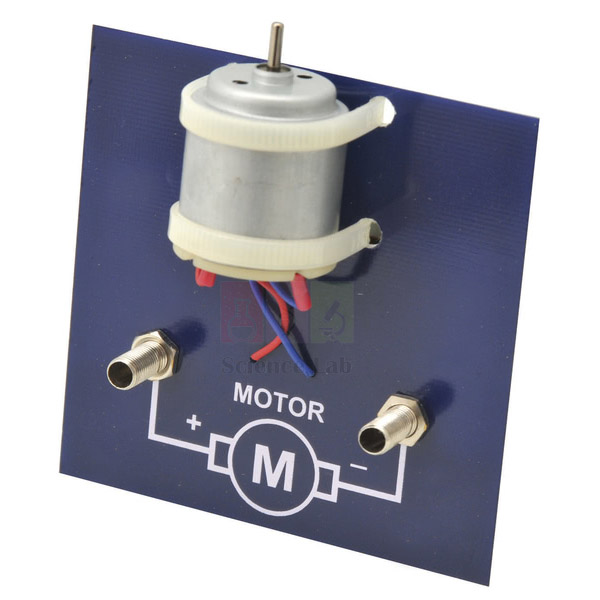
Simple Circuit Module Motor
Simple Circuit Module Motor (Product Code: SLE/PHY/69) is a low-voltage d.c. motor mounted on a base, used to show electrical energy turning into movement in simple circuit experiments at school. A series resistor is fitted to limit the motor’s current consumption, and the module belongs to the same Simple Circuit Modules range as the LED boards, so it combines with other modules in electricity experiment kits for schools. It is supplied by Jain Scientific Equipments Pvt Ltd (ScienceLab), Ambala, India.
Key Details
| Parameter | Detail |
|---|---|
| Range | Simple Circuit Modules |
| Component | Low-voltage d.c. motor |
| Current limiting | Series resistor fitted to limit current consumption |
| Mounting | On base |
| Product code | SLE/PHY/69 |
| Supplied by | Jain Scientific Equipments Pvt Ltd (ScienceLab), Ambala, India |
What Is the Simple Circuit Module Motor Used For?
A spinning motor is one of the most convincing ways to show that a circuit is complete. Students can compare the motor with a lamp or LED board as different “outputs”, add a switch module to control it, or reverse the supply connections to see the direction of rotation change — a quick introduction to how d.c. motors respond to polarity.
The fitted series resistor keeps current draw modest, which helps cells last through a lesson of beginners’ circuit building. A small paper flag or disc fixed to the shaft makes slow rotation easier to see from the back of the room. Keep the base on a flat surface while running and let the motor stop before changing connections.
What to Specify When Ordering
- Number of motor modules needed for your groups.
- Other Simple Circuit Modules to match, such as LED boards, push switch or LDR board.
- Whether you need a supply voltage recommendation for the module — ask us when enquiring.
Supplier
The Simple Circuit Module Motor is supplied by Jain Scientific Equipments Private Limited, trading as ScienceLab, from Ambala, Haryana, India, together with the other modules in the range. The company sources the motor module and quotes it for schools, colleges, dealers and importers in India and international markets. Institutional buyers who need vendor registration details can use the company’s GSTIN 06AAECJ8618A1ZT, and overseas consignments are handled under DGFT Importer-Exporter Code AAECJ8618A. Read more on the ScienceLab company profile.
Related Physics Lab Equipment
Modules and alternatives that work with the motor:
- Simple Circuit Module Push Switch — switches the motor on and off in the same module format.
- Simple Circuit Module LED Board Red — a light output to compare with the motor.
- Simple Circuit Module Light Dependent Resistor Board — for light-controlled circuit projects.
- Simple Circuit Module Lamp Holder — adds a lamp output to the module set.
- Mini Motor Unit — an alternative motor unit for classroom circuits.
Browse Physics Lab Equipment for the full range.
Frequently Asked Questions
What is the Simple Circuit Module Motor?
The Simple Circuit Module Motor is a low-voltage d.c. motor mounted on a base, with a series resistor to limit current consumption, designed to sit in school circuits alongside other Simple Circuit Modules.
Why does the Simple Circuit Module Motor have a series resistor?
The series resistor in the Simple Circuit Module Motor limits the current the motor draws, keeping consumption low in student circuits and reducing the load on the cells or supply.
What voltage should be used with the Simple Circuit Module Motor?
The Simple Circuit Module Motor is a low-voltage d.c. motor; an exact operating voltage is not stated in this listing, so ask us through the contact page before choosing cells or a supply.
Can the Simple Circuit Module Motor reverse direction?
Yes, as with most small d.c. motors, swapping the supply connections to the Simple Circuit Module Motor reverses its direction of rotation, a simple demonstration of polarity in class.
Who supplies the Simple Circuit Module Motor?
Jain Scientific Equipments Pvt Ltd (ScienceLab), Ambala, Haryana, India, supplies the Simple Circuit Module Motor. The company sources it together with the other Simple Circuit Modules and quotes it directly to schools, colleges and dealers in India and international markets.
What should I include in a quotation request for the Simple Circuit Module Motor?
For the Simple Circuit Module Motor, list the number of motor modules, any other Simple Circuit Modules required and the delivery location, so ScienceLab can quote the whole set in one reply.
Request a Quote
Request the Simple Circuit Module Motor through the ScienceLab contact page or add it to the enquiry cart. Quotations come directly from ScienceLab as the supplier for buyers in India and international markets.
Last updated: 24 September 2026
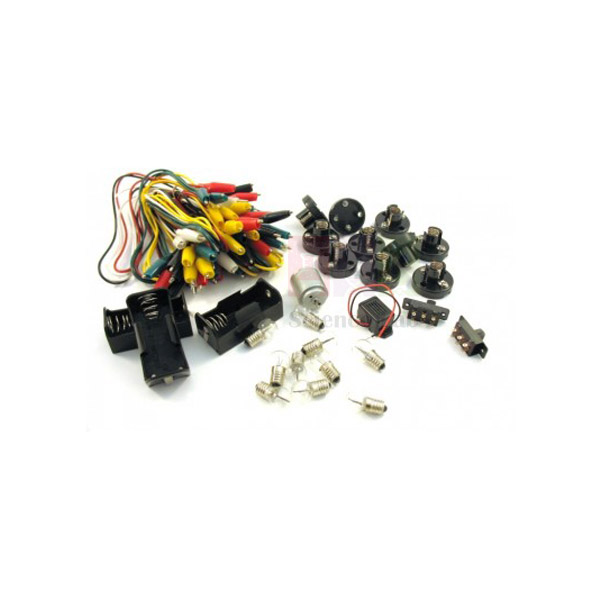
Electricity Economy Kit
Electricity Economy Kit (Product Code: SLE/PHY/70) is a basic assortment of circuit components used to build introductory electricity and electronics circuits in school science classrooms. Teachers running first lessons on current and circuits use it as an electricity experiment kit for school groups, with 10 crocodile leads, 10 MES bulbs, 10 MES lamp holders, five DPDT slide switches, a buzzer and a small motor in one pack. It is supplied by Jain Scientific Equipments Pvt Ltd (ScienceLab), Ambala, India.
Specifications
| Parameter | Detail |
|---|---|
| Kit type | Basic assortment of components for introductory electronics |
| Crocodile leads | 10 |
| Cell holders | 3, each for a 1.5 V cell |
| MES bulbs | 10 |
| MES lamp holders | 10 |
| Buzzer | 1, rated 6 V, with connecting leads |
| Electric motor | 1, rated 3–6 V |
| Switches | 5 DPDT slide switches |
| Cells | Not listed in the kit contents — ask us if you need them quoted |
| Product code | SLE/PHY/70 |
| Supplied by | Jain Scientific Equipments Pvt Ltd (ScienceLab), Ambala, India |
What Is the Electricity Economy Kit Used For?
Pupils use the kit to wire their first complete circuits. Cells placed in the three 1.5 V holders provide the supply, crocodile leads join the parts, and MES bulbs screwed into their holders light up when current flows. With ten bulbs and ten holders, a group can set up bulbs in series and in parallel side by side and compare how bright they glow.
The five DPDT slide switches add on/off control, and one can be wired to reverse the direction of the 3–6 V motor. The 6 V buzzer gives an audible output for simple alarm and doorbell circuits. Kept in good order, it serves as a reusable physics experiment kit for school benches: store bulbs where they cannot rattle and check lead clips for loose joints before each class.
What to Specify When Ordering
- Number of kits (for example, one per student pair or group)
- Whether cells for the three 1.5 V holders should be quoted with the kits
- Any extra crocodile leads or MES bulb holders you want alongside the standard contents
- Delivery location, within India or abroad
Supplier
Jain Scientific Equipments Private Limited trades as ScienceLab and supplies this Electricity Economy Kit from Ambala, Haryana, to schools, colleges, dealers and institutions in India and international markets. The kit is an assortment of standard components, so ask us to confirm the current make of motor, buzzer and switches when you request a quotation. More about the company is on the ScienceLab company profile.
Related Physics Lab Equipment
Classes that outgrow the economy kit usually add these items to their circuit work:
- Crocodile Clips & Leads — extra leads for larger group circuits
- MES Bulb Holder — more holders for longer series and parallel bulb arrays
- Electricity Circuits Kit — an alternative circuits kit for the same topics
- Electricity Kit Microscience — microscale kit for students working individually
- Standard Digital Multimeter — to measure cell voltage and circuit current
See the full range in Physics Lab Equipment.
Frequently Asked Questions
What is included in the Electricity Economy Kit?
The Electricity Economy Kit contains 10 crocodile leads, 3 holders for 1.5 V cells, 10 MES bulbs, 10 MES lamp holders, 1 buzzer rated 6 V with connecting leads, 1 electric motor rated 3–6 V and 5 DPDT slide switches.
Are cells included with the Electricity Economy Kit?
Cells are not listed among the Electricity Economy Kit contents; the kit provides three holders for 1.5 V cells. If you want cells quoted with the kits, mention it in your enquiry through the contact page and we will confirm what can be supplied.
What voltage do the motor and buzzer in the kit need?
In the Electricity Economy Kit, the electric motor is rated 3–6 V and the buzzer is rated 6 V. Cells from the kit's 1.5 V holders connected in series can run the motor within its range; check the buzzer's response before using it in a lesson.
How should the Electricity Economy Kit be stored between lessons?
Store the Electricity Economy Kit somewhere dry, keep the MES bulbs in a padded container so the glass does not break, and take cells out of the holders after each lesson. Check crocodile leads for loose clips before the next class.
Who supplies the Electricity Economy Kit?
The Electricity Economy Kit is supplied by Jain Scientific Equipments Pvt Ltd, which trades as ScienceLab from Ambala, Haryana, India. The kit is an assortment of standard components sourced for school electricity lessons, and quotations are issued by the company directly.
Can schools order the Electricity Economy Kit in bulk?
Yes, schools, dealers and education departments can order the Electricity Economy Kit in quantity for class sets, for delivery in India and international markets. Send the number of kits and the delivery location through the enquiry cart or contact page to receive a quotation.
Request a Quote
To order the Electricity Economy Kit, send the quantity and delivery address through the contact page or add it to the enquiry cart, and ScienceLab will reply with a quotation.
Last updated: 24 September 2026
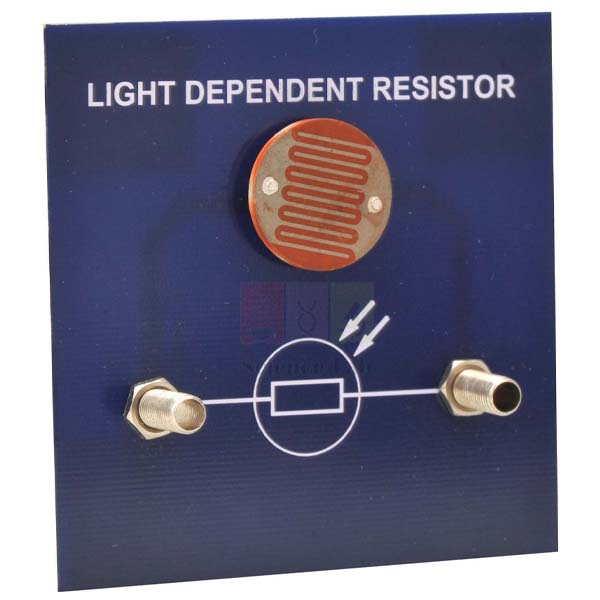
Light Dependent Resistor
Light Dependent Resistor (Product Code: SLE/PHY/71) is a cadmium sulphide (CdS) photoconductive cell used to sense light levels in school electronics circuits, physics practicals and student projects. Its resistance falls as more light reaches it, from a dark resistance of 1 MΩ, and its spectral response is similar to that of the human eye. It is supplied by Jain Scientific Equipments Pvt Ltd (ScienceLab), Ambala, India, as a component for school physics lab equipment in India and international markets.
Specifications
| Parameter | Detail |
|---|---|
| Type | Cadmium sulphide (CdS) photoconductive cell |
| Housing | Robust clear plastic package with clear end window; moisture-resistant coating |
| Top dimensions | 14.35 × 7 mm (diameter × depth) |
| Pin length | 9.53 mm |
| Dark resistance | 1 MΩ |
| Resistance at 1 ftc (foot-candle) | 5.4 kΩ min, 12.6 kΩ max |
| Maximum voltage | 250 V peak, AC or DC |
| Power dissipation | 250 mW max |
| Operating temperature | −60 °C to +75 °C |
| Spectral response | Similar to that of the human eye |
| Behaviour | Resistance reduces as the light falling on the LDR increases |
| Product code | SLE/PHY/71 |
| Supplied by | Jain Scientific Equipments Pvt Ltd (ScienceLab), Ambala, India |
What Is a Light Dependent Resistor Used For?
In class, the LDR is usually wired in series with a fixed resistor to form a voltage divider, so the output voltage changes with light level. That simple arrangement is the basis of automatic night lights, light meters and burglar-alarm circuits that students build in electronics lessons. It is a standard part in OPTO electronics experiment kit work alongside LEDs and phototransistors.
For a quick demonstration, connect the LDR to a multimeter on its resistance range and let students cover it, uncover it and move a lamp closer while they note the readings. Because its response is similar to the human eye, results relate well to how bright a room looks. Bend the pins gently near the body, and keep power dissipation well under the 250 mW limit.
What to Specify When Ordering
- Quantity of LDRs needed for the class or project
- Whether you want the bare component or the board-mounted Simple Circuit Module version
- Any meters or light sources to be quoted with them
Supplier
ScienceLab is the trading name of Jain Scientific Equipments Private Limited, which sources and supplies electronic components such as this light dependent resistor alongside its physics apparatus range. Schools, colleges and dealers can add LDRs to a wider laboratory order and receive a single quotation. Company details are on the ScienceLab profile page.
Related Physics Lab Equipment
These items are used with an LDR in light-sensing experiments:
- Simple Circuit Module Light Dependent Resistor Board — an LDR ready-mounted on a module board
- LED, 5 mm, White — a small light source for LDR response tests
- Standard Digital Multimeter — to read the LDR's resistance as light changes
- Crocodile Clips & Leads — to connect the LDR pins without soldering
- Light Energy Kit — for wider lessons on light as a form of energy
Browse more items in Physics Lab Equipment.
Frequently Asked Questions
What is the dark resistance of this Light Dependent Resistor?
The Light Dependent Resistor has a dark resistance of 1 MΩ, and at an illumination of 1 foot-candle its resistance lies between 5.4 kΩ and 12.6 kΩ. Brighter light lowers the resistance further, which is what makes it useful as a light sensor.
What are the maximum ratings of the Light Dependent Resistor?
The Light Dependent Resistor is rated for a maximum of 250 V peak AC or DC and 250 mW power dissipation, with an operating temperature range of −60 °C to +75 °C. School circuits normally run it far below these limits from low-voltage cells.
Is the LDR protected against moisture?
Yes, this Light Dependent Resistor is encapsulated in a moisture-resistant coating and enclosed in a robust clear plastic package with a clear end window. Keep it dry and wipe the window gently so dust does not reduce the light reaching the sensing surface.
What size is the Light Dependent Resistor?
The Light Dependent Resistor's top measures 14.35 × 7 mm (diameter × depth) and its pins are 9.53 mm long. The pins can be connected with crocodile leads for classroom circuits or soldered into a permanent project board.
Who supplies the Light Dependent Resistor?
The Light Dependent Resistor is supplied by Jain Scientific Equipments Pvt Ltd, trading as ScienceLab, from Ambala, Haryana, India. It is a sourced electronic component that the company adds to school and college orders together with circuit boards, meters and other physics items.
How do I get a quotation for LDRs?
To get a quotation for the Light Dependent Resistor, send the quantity you need and your delivery location through the contact page or the enquiry cart. Mention if you also want the board-mounted LDR module or meters, so everything can be quoted together.
Request a Quote
Ask for a price on the Light Dependent Resistor through the contact page, or add it to the enquiry cart with any other items for your lab.
Last updated: 24 September 2026
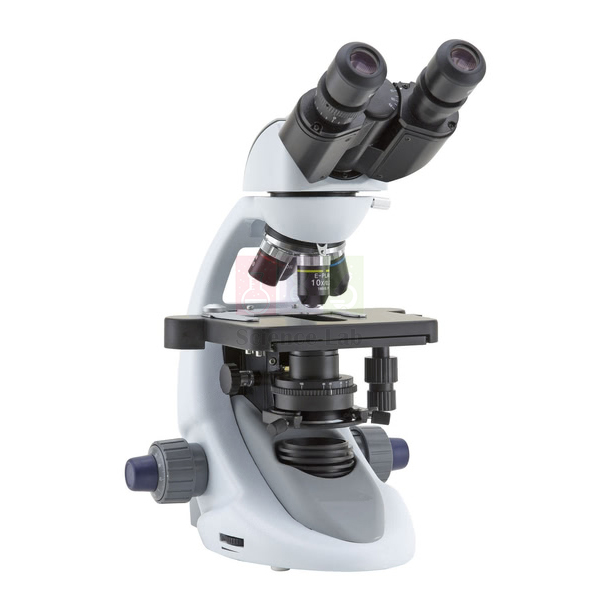
Binocular Microscope 1000x mag
Binocular Microscope 1000x mag (Product Code: SLE/M/12) is an infinity-corrected transmitted-light microscope used for routine educational and laboratory work from 40x to 1000x, including oil-immersion study of blood films and bacteria. It stands out for its E-Plan (IOS) objectives, wide WF10X/20 eyepieces, a centrable sliding Abbe condenser and a belt-drive mechanical stage on a stable die-cast frame. This binocular laboratory microscope is supplied by Jain Scientific Equipments Pvt Ltd (ScienceLab), Ambala, India.
Specifications
| Parameter | Detail |
|---|---|
| Observation | Brightfield, transmitted light |
| Frame | Die-cast, designed for stability and ergonomics |
| Head | Binocular, inclined 30°, rotatable 360°; diopter adjustment on left eyepiece; interpupillary adjustment 48–75 mm |
| Eyepieces | Wide field WF10X/20, field number 20 |
| Nosepiece | Quadruple revolving, rotation on ball bearings |
| Objective 4X | E-Plan IOS, N.A. 0.10, W.D. 16.8 mm |
| Objective 10X | E-Plan IOS, N.A. 0.25, W.D. 5.8 mm |
| Objective 40X | E-Plan IOS, N.A. 0.65, W.D. 0.43 mm |
| Objective 100X | E-Plan IOS, N.A. 1.25, W.D. 0.13 mm (oil immersion) |
| Objective notes | Infinity-corrected; all objectives anti-fungus treated |
| Magnification | 40x, 100x, 400x, 1000x |
| Condenser | Abbe, N.A. 1.25; sliding-in, centrable; up-down adjustment by rack and pinion |
| Focusing | Coaxial coarse and fine (graduated 0.002 mm) with upper stop; adjustable tension of coarse knob |
| Stage | Double-layer mechanical sliding stage, 150 x 139 mm; X-Y movement range 75 x 33 mm; belt drive in X direction |
| Stage scales | Vernier on X-Y axes, accuracy 0.1 mm; specimen holder for one slide |
| Illumination | White LED, 3.6 W (comparable to a 50 W halogen bulb); intensity knob on left side of frame |
| Colour temperature / LED life | 6300 K / approx. 50 000 hours average |
| Power supply | External, 100/240 V AC, 50/60 Hz; output 6 V DC, 1 A; max. required power 7 W |
| Product code | SLE/M/12 |
| Supplied by | Jain Scientific Equipments Pvt Ltd (ScienceLab), Ambala, India |
What Is the Infinity-Corrected Binocular Microscope Used For?
Plan objectives keep the image sharp from the centre to the edge of the field, which matters when students count cells across a whole field, measure structures or photograph specimens for reports. That makes this instrument well suited to undergraduate histology, haematology and microbiology practicals, to clinical-training labs and to lab equipment for research in India's colleges where routine examination is carried out daily.
For even illumination, focus a specimen at 10X, then centre the sliding condenser and set its height with the rack and pinion until the light across the field is uniform. The belt-drive X movement helps when scanning a smear row by row, and the vernier readings let you log field positions. Wipe oil from the 100X objective after each session.
What to Specify When Ordering
- The number of microscopes and whether a camera will be added for imaging
- Immersion oil and cleaning supplies to be included
- The destination country, so the power-supply plug type can be confirmed
- Any prepared slide sets for the course being taught
Supplier
Under the ScienceLab name, Jain Scientific Equipments Private Limited of Ambala, Haryana, supplies this infinity-corrected binocular microscope to institutions that need plan optics for daily routine work. Universities, medical and paramedical colleges, laboratories, dealers and importers in India and international markets can source it with slides, oil and cameras in one consignment. Company information is on the ScienceLab company profile.
Related Laboratory Equipment
Consumables and accessories for routine 1000x work:
- Immersion Oil, 25ml — for the 100X E-Plan oil-immersion objective
- Lens Tissue — for removing oil and dust from the optics
- Microscope Slide Warming Table — dries and warms slides during histology preparation
- Prepared Microscope Slide Set – Digestion (Liver, Pancreas And Tongue) — tissue sections for plan-optics study
- Microscope Digital Camera, 5MP — USB eyepiece camera for recording fields (confirm fit with us)
Other models are listed in the Microscope category.
Frequently Asked Questions
What objectives does the Binocular Microscope 1000x mag use?
The Binocular Microscope 1000x mag uses infinity-corrected E-Plan IOS objectives: 4X (N.A. 0.10), 10X (N.A. 0.25), 40X (N.A. 0.65) and 100X oil (N.A. 1.25). All are anti-fungus treated and give a flat, evenly sharp field.
What kind of condenser does the Binocular Microscope 1000x mag have?
The Binocular Microscope 1000x mag has an N.A. 1.25 Abbe condenser that slides in, can be centred, and is raised or lowered by rack and pinion. Centring it correctly gives even illumination at every magnification.
How does the stage of the Binocular Microscope 1000x mag work?
The Binocular Microscope 1000x mag has a 150 x 139 mm double-layer mechanical stage with 75 x 33 mm X-Y travel, a belt drive in the X direction, vernier scales reading to 0.1 mm and a holder for one slide.
What illumination and power does the Binocular Microscope 1000x mag use?
The Binocular Microscope 1000x mag uses a 3.6 W white LED, comparable to a 50 W halogen bulb, at 6300 K. Its external supply accepts 100/240 V AC, 50/60 Hz, outputs 6 V DC at 1 A and needs at most 7 W.
What field of view do the eyepieces of the Binocular Microscope 1000x mag give?
The Binocular Microscope 1000x mag has WF10X/20 wide field eyepieces with a field number of 20. A larger field number shows more of the specimen at once, which helps when scanning slides or counting cells.
Who supplies the Binocular Microscope 1000x mag?
Jain Scientific Equipments Pvt Ltd (ScienceLab), Ambala, Haryana, India supplies the Binocular Microscope 1000x mag to colleges, laboratories, training institutes, dealers and importers in India and international markets, singly or in lab quantities.
Request a Quote
For pricing on the Binocular Microscope 1000x mag, contact us through the contact page or add it to the enquiry cart with oil, slides and any camera you need.
Last updated: 24 September 2026
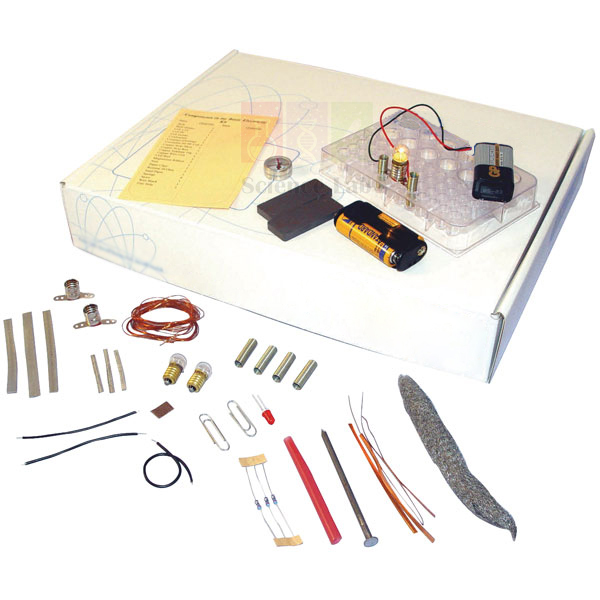
Electricity Kit Microscience
Electricity Kit Microscience (Product Code: SLE/PHY/72) is a microscale electricity kit used by students working on an individual basis to study the basic principles of electricity in school science lessons. Components clip into springs set in the wells of a combo plate, which acts as the circuit board, and the kit suits Key Stage 2 (Grade 4) and above. It is supplied by Jain Scientific Equipments Pvt Ltd (ScienceLab), Ambala, India, as a hands-on science kit for primary school and upper classes.
Key Details
| Parameter | Detail |
|---|---|
| Format | Individual student kit for the basic principles of electricity |
| Circuit board | Combo plate; components clip into springs inserted in the wells |
| Topics covered | Batteries & current flow; series & parallel circuits; magnetic effects & chemical reactions; circuits: direction; electricity in the home |
| Suitable for | Key Stage 2 (Grade 4) and above |
| Data logging | Listed as ideal for data-logging applications |
| Workbooks | Available — ask for them with your quotation |
| Product code | SLE/PHY/72 |
| Supplied by | Jain Scientific Equipments Pvt Ltd (ScienceLab), Ambala, India |
What Is the Microscience Electricity Kit Used For?
Each student builds circuits on a personal combo plate, so every learner handles the cells and components instead of watching a group demonstration. Lessons move from batteries and current flow to series and parallel circuits, then to the magnetic effects of a current and chemical reactions driven by electricity, and finish with how electricity is used in the home.
Because the parts are small and clip into place, the kit needs little bench space and packs away quickly at the end of a period. It works well as a science kit for students in India who follow activity-based syllabi, and the matching workbooks give teachers ready worksheets for each topic. Count the components back into the kit after each lesson so the next class starts complete.
What to Specify When Ordering
- Number of student kits (one per learner for individual work)
- Whether workbooks should be included, and how many
- Whether you plan data-logging work, and which logging system your school uses
- Any spare combo plates you want quoted separately
Supplier
ScienceLab, the trading name of Jain Scientific Equipments Private Limited, supplies the Electricity Kit Microscience together with related microscience items such as spare combo plates, so a school can source a complete microscale set-up in one order. For vendor registration, the supplying company holds GSTIN 06AAECJ8618A1ZT and Legal Entity Identifier (LEI) 3358004HRD1JIVXKYX49. Read more on the ScienceLab company profile.
Related Physics Lab Equipment
These items complement the kit in microscale and circuit lessons:
- Comboplate, Microscience — spare combo plates for the circuit board
- Basic Microscience Kit, Student — chemistry microscience kit for the same learners
- Microscience Work Station, Biology, Physics and Chemistry — a combined work station for several subjects
- Electricity Economy Kit — full-size component assortment for group circuits
- Electricity Circuits Kit — another option for circuit topics
More apparatus is listed under Physics Lab Equipment.
Frequently Asked Questions
What topics does the Electricity Kit Microscience cover?
The Electricity Kit Microscience covers batteries and current flow, series and parallel circuits, magnetic effects and chemical reactions, circuit direction, and electricity in the home. Together these take students from their first working circuit to everyday uses of electricity.
Which classes is the Electricity Kit Microscience suitable for?
The Electricity Kit Microscience is listed as suitable for Key Stage 2 (Grade 4) and above. It therefore fits upper-primary classes and remains useful in middle-school science, where students work individually on basic circuits.
How are components connected in the Microscience electricity kit?
In the Electricity Kit Microscience, the combo plate acts as the circuit board: springs are inserted in its wells and the components clip into those springs. This avoids loose wiring on the bench and lets students rebuild a circuit quickly.
Are workbooks available for the Electricity Kit Microscience?
Yes, workbooks are listed as available for the Electricity Kit Microscience. State how many workbooks you need, together with the number of kits, when you request a quotation, and we will confirm availability and include them in the quote.
Can the Electricity Kit Microscience be used for data logging?
The Electricity Kit Microscience is listed as ideal for data-logging applications, but the listing does not name a specific data logger or sensor. Tell us which logging system your school uses through the contact page and we will confirm what can be supplied.
Who supplies the Electricity Kit Microscience?
The Electricity Kit Microscience is supplied by Jain Scientific Equipments Pvt Ltd (ScienceLab) of Ambala, Haryana, India, to schools, dealers and education projects in India and international markets. Quotations can combine the kit with spare combo plates and workbooks.
Request a Quote
Send the number of Electricity Kit Microscience sets and workbooks you need through the contact page, or add the kit to the enquiry cart, and we will send a quotation.
Last updated: 24 September 2026
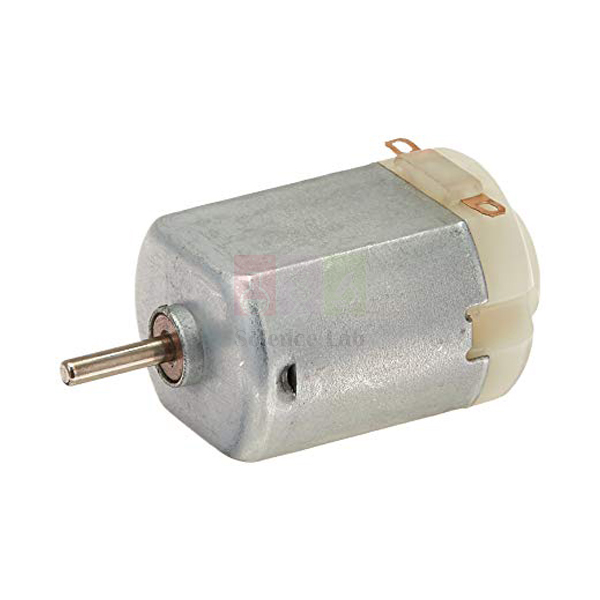
Electric Motor
Electric Motor (Product Code: SLE/PHY/73) is a miniature DC motor used to drive models, robotics projects and educational demonstration equipment in school and college labs. It runs on 1.5 to 4.5 V DC, has a 20 mm body with two flat sides for mounting on a PCB, and uses solder tag terminals. It is supplied by Jain Scientific Equipments Pvt Ltd (ScienceLab), Ambala, India, for STEM projects, science models and physics practicals.
Specifications
| Parameter | Detail |
|---|---|
| Type | Miniature DC motor |
| Operating voltage | 1.5 to 4.5 V DC |
| Body diameter | 20 mm |
| Width across flats | 15 mm |
| Shaft length | 9 mm |
| Shaft diameter | 2 mm |
| Weight | Approx. 17 g |
| Termination | Solder tags |
| Rotation | Counter-clockwise when viewed from the shaft end |
| Mounting | Two flat sides, suited to mounting on a PCB |
| Product code | SLE/PHY/73 |
| Supplied by | Jain Scientific Equipments Pvt Ltd (ScienceLab), Ambala, India |
What Is the Miniature Electric Motor Used For?
Connected to one, two or three 1.5 V cells, the motor shows electrical energy being turned into movement, and students can hear and see its speed rise as cells are added. In science model kit school project work it spins propellers, fan blades and wheels for model cars, windmills and simple robots, and it is a common part in STEM science kit builds.
Swapping the two supply connections reverses the rotation, a quick way to show that current direction affects motion. Solder leads to the tags quickly so the terminals do not overheat, or use crocodile leads for temporary circuits. The 2 mm shaft takes small push-fit pulleys and propellers, and the flat sides help it sit square on a board or panel.
What to Specify When Ordering
- Number of motors needed for the class or project batch
- Whether you prefer a loose motor or a mounted unit such as the Mini Motor Unit
- Cells, holders or leads to be quoted with the motors
Supplier
This miniature motor is a bought-in component that Jain Scientific Equipments Private Limited, trading as ScienceLab, supplies with its school physics range. Teachers and dealers can combine it with circuit parts and demonstration apparatus in one enquiry. See the company profile for background on ScienceLab in Ambala.
Related Physics Lab Equipment
Items that pair with the motor in energy and motion lessons:
- Simple Circuit Module Motor — a motor on a module board for plug-together circuits
- Mini Motor Unit — a mounted motor option for bench use
- Mounted Motor for Solar Cell — for solar energy demonstrations
- Demonstration, Electric Motor — shows the motor principle at teacher-demonstration scale
- Crocodile Clips & Leads — to connect the solder tags without soldering
Find more in Physics Lab Equipment.
Frequently Asked Questions
What voltage does the Electric Motor need?
The Electric Motor operates on 1.5 to 4.5 V DC, so it runs from a single 1.5 V cell up to three cells in series. Running it above 4.5 V is outside the listed operating range and can overheat the motor.
What are the dimensions of the Electric Motor?
The Electric Motor has a 20 mm body diameter, measures 15 mm across its two flats, has a 9 mm long shaft of 2 mm diameter and weighs approximately 17 g, which keeps it light enough for small models and robots.
Which way does the Electric Motor rotate?
Viewed from the shaft end, the Electric Motor rotates counter-clockwise as listed. As with other DC motors, swapping the two supply connections reverses the direction, which students can use to show how current direction changes the motion.
How is the Electric Motor connected and mounted?
The Electric Motor has solder tag terminals for wire connections and two flat sides that let it sit on a PCB or flat panel. Solder leads quickly to avoid heating the tags, or clip crocodile leads on for temporary classroom circuits.
Who supplies the Electric Motor?
The Electric Motor is supplied by Jain Scientific Equipments Pvt Ltd (ScienceLab), Ambala, Haryana, India. It is a sourced miniature DC motor that the company provides with its physics and STEM items for schools, colleges and dealers.
Can schools order the Electric Motor in quantity?
Yes, the Electric Motor can be ordered in quantity for class projects, workshops and dealer stock, for delivery in India and international markets. Send the number of motors and your location through the enquiry cart or contact page for a quotation.
Request a Quote
For a price on the Electric Motor, use the contact page or place it in the enquiry cart along with any cells and leads you need.
Last updated: 24 September 2026
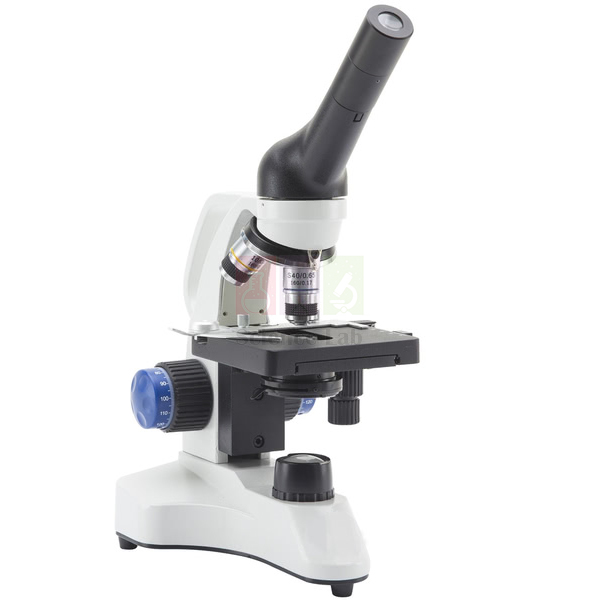
Monocular Microscope, 400x, With Coaxial Knobs
Monocular Microscope, 400x, With Coaxial Knobs (Product Code: SLE/M/13) is a cordless student microscope used for slide work up to 400x in school biology classes, field centres and labs with limited power points. It runs a 0.5 W LED from rechargeable batteries, and it also has a double-layer mechanical stage plus coaxial focusing knobs on both sides of the stand for left- and right-handed users. It is supplied by Jain Scientific Equipments Pvt Ltd (ScienceLab), Ambala, India, a school lab equipment supplier in India.
Specifications
| Parameter | Detail |
|---|---|
| Head | Monocular, inclined 45°, 360° rotation |
| Eyepiece | Wide field WF10x/18 mm |
| Nosepiece | Triple, reversed |
| Objectives | DIN achromatic 4x, 10x, 40x |
| Condenser | N.A. 0.65, fixed, with iris diaphragm |
| Illuminator | 0.5 W LED, manual adjustment, rechargeable batteries |
| Stage | Mechanical double-layer stage with specimen holder for one slide |
| Stage size | 105 x 95 mm |
| Stage moving range | 50 x 15 mm |
| Focusing | Coaxial coarse and fine control knobs on both sides of the stand |
| Product code | SLE/M/13 |
| Supplied by | Jain Scientific Equipments Pvt Ltd (ScienceLab), Ambala, India |
What Is the Cordless 400x Monocular Microscope Used For?
This microscope covers the standard secondary-school syllabus: plant and animal cells, leaf epidermis and stomata, root and stem sections, pollen, yeast and pond protozoa. Because the specimen holder and mechanical stage move the slide in small, controlled steps, pupils can follow a moving organism or scan a section methodically instead of pushing the slide by hand, which makes it a practical piece of laboratory equipment for schools in India that want students to learn proper stage technique early.
Charge the batteries before the lesson so the LED is ready wherever the microscope is set up, and use the manual brightness control together with the iris diaphragm to balance light and contrast. The reversed nosepiece places the objectives away from the user, leaving the stage area more open for changing slides. Knobs on both sides of the stand mean the microscope never has to be turned round for a left-handed student.
Supplier
Jain Scientific Equipments Private Limited, trading as ScienceLab in Ambala, Haryana, supplies this rechargeable 400x microscope as part of a student microscope range that also includes mirror-lit and mains-powered models. Schools, education departments, science centres, dealers and importers in India and international markets can mix these models in one order to suit different classrooms. More about the company is on the ScienceLab profile page.
Related Laboratory Equipment
Consumables and alternatives for a class using this microscope:
- Glass Cover Slips, No. 1 — thin covers for students' own wet mounts
- Microscope Slides Depression — hold drops of culture or pond water for live viewing
- Prepared Microscope Slide Set – Skin and Excretion — ready-made sections for 400x study
- Monocular Biological Microscope 400x, LED — a mains or AA-battery model with a plain stage
See every model in the Microscope category.
Frequently Asked Questions
How is the Monocular Microscope, 400x, With Coaxial Knobs powered?
The Monocular Microscope, 400x, With Coaxial Knobs lights its 0.5 W LED from rechargeable batteries, with manual brightness adjustment. Charger and charging-time details are not stated in the listing, so ask us to confirm them before ordering.
What magnification does the Monocular Microscope, 400x, With Coaxial Knobs reach?
The Monocular Microscope, 400x, With Coaxial Knobs reaches 400x. It combines a WF10x/18 mm eyepiece with DIN achromatic 4x, 10x and 40x objectives on a reversed triple nosepiece, covering typical school practicals.
Does the Monocular Microscope, 400x, With Coaxial Knobs have a mechanical stage?
Yes. The Monocular Microscope, 400x, With Coaxial Knobs has a 105 x 95 mm double-layer mechanical stage with a specimen holder for one slide and a moving range of 50 x 15 mm.
Is the Monocular Microscope, 400x, With Coaxial Knobs suitable for left-handed students?
Yes. The Monocular Microscope, 400x, With Coaxial Knobs has coaxial coarse and fine focusing knobs on both sides of the stand, so left- and right-handed students can focus comfortably without repositioning the microscope.
What condenser does the Monocular Microscope, 400x, With Coaxial Knobs use?
The Monocular Microscope, 400x, With Coaxial Knobs uses a fixed condenser with a numerical aperture of 0.65 and an iris diaphragm. Closing the iris increases contrast in pale, unstained specimens; opening it brightens the view at 40x.
Who supplies the Monocular Microscope, 400x, With Coaxial Knobs?
Jain Scientific Equipments Pvt Ltd (ScienceLab), Ambala, Haryana, India supplies the Monocular Microscope, 400x, With Coaxial Knobs to schools, colleges, dealers and importers in India and international markets, as single units or classroom sets.
Request a Quote
For classroom quantities of the Monocular Microscope, 400x, With Coaxial Knobs, write to us through the contact page or add the item to the enquiry cart with slides and cover slips.
Last updated: 24 September 2026
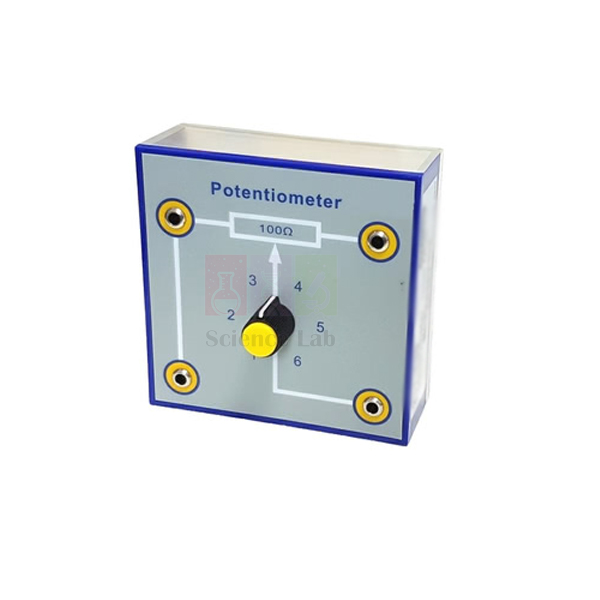
Potentiometer
Potentiometer (Product Code: SLE/PHY/74) is a slide-wire potentiometer used to compare the emf of cells and measure potential differences by the null method in school and college physics laboratories. A 24 SWG constantan wire runs along a metre scale divided in cm and mm between stout plated brass end plates, and a jockey is included. It is made by Jain Scientific Equipments Pvt Ltd (ScienceLab), an OEM manufacturer, at its own factory in Ambala, India.
Specifications
| Parameter | Detail |
|---|---|
| Resistance wire | 24 SWG constantan |
| Scale | Metre scale subdivided in cm and mm |
| End plates | Stout plated brass, with the wire clamped to them |
| Terminals | Heavy-duty 4 mm socket terminals on the terminating strips |
| Base | Polished hardwood baseboard |
| Included | Jockey |
| Overall size | Approx. 1.13 m × 80 mm × 50 mm |
| Product code | SLE/PHY/74 |
| Manufacturer | Jain Scientific Equipments Pvt Ltd (ScienceLab) — OEM |
| Country of origin | India (made in Ambala, Haryana) |
What Is the Slide-Wire Potentiometer Used For?
A steady driver cell connected across the wire sets up a uniform fall of potential along it. Students then use the jockey to find the balance point for a second cell or circuit, read the balancing length on the scale, and compare emfs, find the internal resistance of a cell or measure a small potential difference without drawing current at balance.
These experiments appear in most senior-secondary syllabi, which makes the potentiometer standard physics practical equipment for CBSE and state-board labs as well as first-year college courses. Press the jockey gently and lift it before moving along the wire; dragging it while pressed scratches the constantan and spoils the uniform resistance per centimetre. Keep the driver current low so the wire does not warm up during a reading.
OEM Manufacturer
ScienceLab is the trading name of Jain Scientific Equipments Private Limited, the OEM (original equipment manufacturer) of this potentiometer. The company makes it at its own licensed factory at Saha, Ambala, Haryana, India, rather than buying it in from a trader, and supplies it factory-direct to schools, colleges, dealers and importers. Replacement jockeys and other spares are handled by the manufacturer itself — ask us when you order. More background is on the ScienceLab company profile.
Related Physics Lab Equipment
A complete potentiometer circuit needs a few more items on the bench:
- Jockey with Insulated Handle (Single) — a spare or replacement jockey
- Moving Coil Galvanometer — the null detector for finding the balance point
- Rheostat — to set the driver current through the wire
- One Way Key — to switch the driver circuit on only while reading
- Potentiometer, 10 wire — a longer-wire model for finer balance lengths
See more apparatus in Physics Lab Equipment.
Frequently Asked Questions
What is included with the Potentiometer?
The Potentiometer comes mounted on a polished hardwood baseboard with its 24 SWG constantan wire, metre scale, plated brass end plates and 4 mm socket terminals, and a jockey is included. Cells, galvanometer, rheostat and connecting leads are ordered separately.
What wire does the Potentiometer use?
The Potentiometer uses 24 SWG constantan wire stretched along a metre scale divided in centimetres and millimetres. Constantan is chosen because its resistance changes very little with temperature, giving a steady potential gradient along the wire during an experiment.
How large is the Potentiometer?
The Potentiometer measures approximately 1.13 m × 80 mm × 50 mm, so it needs a bench length of just over a metre. Leave space beside it for the driver cell, galvanometer, rheostat and key used in the circuit.
Who manufactures the Potentiometer?
The Potentiometer is manufactured by Jain Scientific Equipments Pvt Ltd (ScienceLab) as the OEM at its own licensed factory in Saha, Ambala, Haryana, India. Schools, dealers and importers receive quotations and repeat-order support directly from the manufacturer.
Is a calibration certificate available for the Potentiometer?
The Potentiometer works by the null method, with results taken from balance lengths on its scale. If your institution needs a calibration certificate or test report for it, please discuss the requirement with us through the contact page before ordering.
What should a quotation request for the Potentiometer include?
A quotation request for the Potentiometer should give the quantity, the delivery location, and whether you also need spare jockeys, galvanometers, rheostats or keys. With those details the manufacturer can quote a complete set for your physics lab in one reply.
Request a Quote
Quotes for the Potentiometer come direct from the manufacturer. Send your requirement through the contact page or add the item to the enquiry cart.
Last updated: 24 September 2026