- Physics Lab Equipment
- Chemistry Lab Equipment
- Biology Lab Equipment
- Anatomical Lab Equipment
- Learning
- Educational Lab Equipment
- Magnets
- Agriculture
- Astronomy
- Earth Science
- Geography Lab Equipment
- Safety Lab Coat
- Laboratory
- Meteorological
- Electricity & Magnetism
- Heat
- School Lab Equipment
- Lab Glassware
- Science Lab Equipment
- Tvet Lab Equipment
- Robotics Kits Supplier and Manufacturer for Schools India
- Math Lab Equipment Manufacturers and Exporters in Ambala
- STEM Kits Manufacturers and Supplier India
- Engineering Lab Equipment
- Hospital Lab Equipment
- Water, Sanitation & Hygiene Supplies
- Cold Chain, Solar & Communication Equipment
- Nutrition
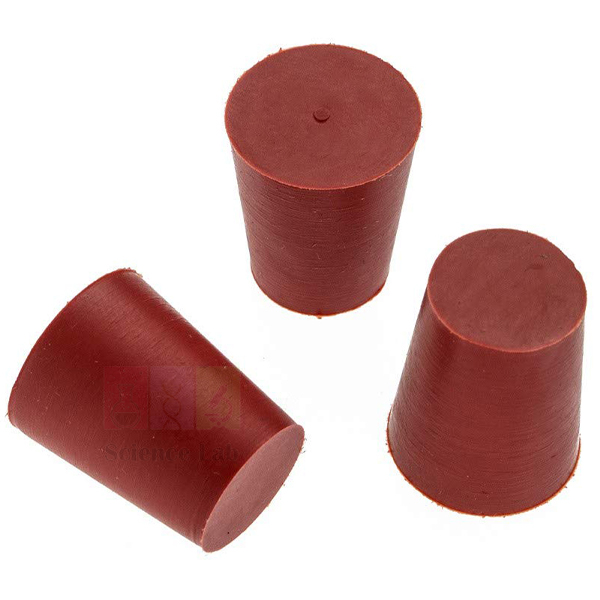
Rubber Cork
Rubber Cork (Product Code: SLE/CH/47) is a tapered stopper in soft, solid red rubber for closing test tubes, flasks and bottles and for carrying glass tubing into sealed apparatus. The rubber resists acid, alkali and ammonia, and the corks are offered with one hole or with two holes in a wide series of sizes. Chemistry teachers and lab technicians looking for a dependable rubber stopper for lab work in India use them to build gas generators, distillation set-ups and wash bottles. They are supplied by Jain Scientific Equipments Pvt Ltd (ScienceLab), Ambala.
Specifications
| Parameter | Detail |
|---|---|
| Material | Solid, soft rubber |
| Colour | Red |
| Resistance | Acid, alkali and ammonia |
| Bore options | With one hole; with two holes |
| Size range | Top diameter from 9.0 mm to 60.0 mm (full list below) |
Available sizes (all dimensions in mm):
| Top Dia (mm) | Bottom Dia (mm) | Height (mm) |
|---|---|---|
| 9.0 | 6.0 | 16.0 |
| 13.0 | 9.0 | 15.5 |
| 14.0 | 11.0 | 18.5 |
| 16.5 | 13.0 | 20.0 |
| 19.0 | 14.0 | 21.0 |
| 21.0 | 15.0 | 22.0 |
| 22.5 | 17.5 | 23.0 |
| 24.5 | 20.0 | 24.0 |
| 26.0 | 20.0 | 27.5 |
| 26.0 | 21.0 | 27.5 |
| 28.0 | 21.5 | 31.5 |
| 30.0 | 26.0 | 33.0 |
| 33.5 | 30.0 | 33.5 |
| 34.5 | 30.0 | 34.5 |
| 38.5 | 31.0 | 37.0 |
| 41.5 | 32.0 | 42.5 |
| 43.5 | 34.0 | 40.5 |
| 45.0 | 35.0 | 36.5 |
| 49.5 | 40.0 | 40.5 |
| 53.5 | 48.5 | 33.5 |
| 58.0 | 44.0 | 45.0 |
| 60.0 | 51.0 | 56.0 |
Typical Use
A one-hole cork holds a thermometer or a single delivery tube, for example when heating a solid in a boiling tube and leading the gas away to a trough. A two-hole cork lets you fit a thistle funnel and a delivery tube into a conical flask to make a simple gas generator, or build a wash bottle with a long and a short tube. The taper means one size seals a range of neck openings, so the cork should sit roughly one-third to one-half of its height inside the neck.
To choose a size, measure the inside diameter of the neck: it should fall between the bottom and top diameters listed above. Moisten glass tubing with water or glycerol and twist it gently through the hole while protecting your hand with a cloth; never force the glass. Rinse corks after use and keep them away from oils, solvents and direct sunlight, which can harden rubber over time.
Supplier
Jain Scientific Equipments Private Limited, trading as ScienceLab, is based in Ambala, Haryana. Besides the apparatus it manufactures, the company supplies consumables such as rubber corks so that schools, colleges and laboratories in India and international markets can complete their orders in one place. See the company profile for more.
Related Chemistry Lab Equipment
Items that are commonly fitted or used with rubber corks:
- Delivery Tube — glass tubes that pass through a bored cork to carry gas to a gas jar or trough.
- Conical Flask — a common vessel for two-hole cork gas generators.
- Boiling Tube — stoppered with a one-hole cork when heating solids to collect gas.
- Cork Borer Sharpener — keeps borer edges sharp if you enlarge or add holes yourself.
- Cork Stoppers — natural wood corks as an alternative where rubber is not needed.
Browse the Chemistry Lab Equipment category for more.
Frequently Asked Questions
Which sizes can I order?
The sizes in the table run from 9.0 mm to 60.0 mm top diameter, each with its bottom diameter and height. Quote the top and bottom diameter when ordering so we pick the right cork.
How do I find the right size for my flask?
Measure the inside diameter of the neck. Choose a cork whose bottom diameter is a little smaller and whose top diameter is a little larger than that measurement.
Are they available with holes?
Yes, with one hole or with two holes. If you need corks without any hole, please confirm availability through our contact page.
What chemicals do they resist?
The rubber is resistant to acid, alkali and ammonia. For organic solvents or oils, ask us before use, as rubber can swell in such liquids.
How should rubber corks be stored?
Keep them clean and dry in a closed box, away from heat, sunlight and oily materials, so they stay soft and seal well.
Can I order a mixed assortment of sizes?
List the sizes, the bore option and the quantity of each in your enquiry and we will prepare a quotation for the mixed lot.
Request a Quote
Share your size list and quantities through the contact page, or add Rubber Cork to the enquiry cart along with the flasks and tubing it will fit.
Last updated: 24 September 2026
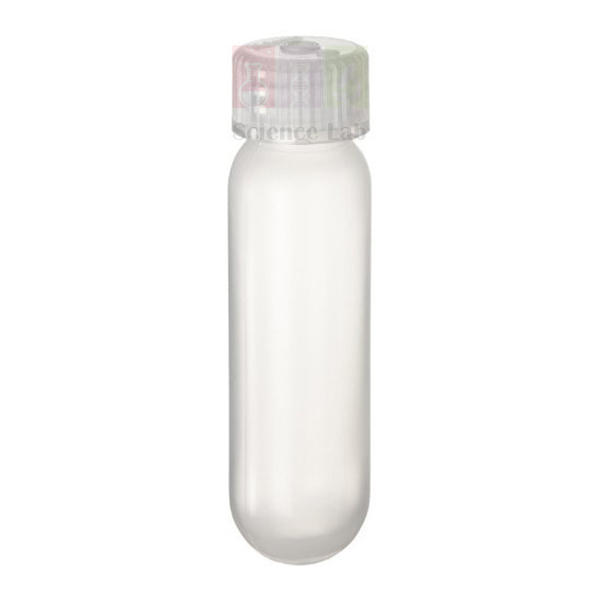
Oak Ridge Centrifuge Tubes
Oak Ridge Centrifuge Tubes (Product Code: SLE/CH/49) are screw-cap centrifuge tubes made of polypropylene, offered in 30 ml and 50 ml capacities. Their excellent contact clarity lets you see a pellet or phase boundary through the wall, and they can be used up to 50000 x G, which makes them suitable for high-speed separations in chemistry, biochemistry and life-science labs. College and research labs pair them with a suitable laboratory centrifuge in India to spin down precipitates, cells and suspensions. They are supplied by Jain Scientific Equipments Pvt Ltd (ScienceLab), Ambala.
Specifications
| Parameter | Detail |
|---|---|
| Type | Oak Ridge style centrifuge tube with screw cap |
| Material | Polypropylene |
| Clarity | Excellent contact clarity |
| Maximum rating | Up to 50000 x G |
| Capacity | 30 ml; 50 ml |
| Cap limitation | The screw cap should not be used below 4°C |
Typical Use
These tubes are used wherever a sample needs to be separated into a solid pellet and a clear supernatant: collecting a fine precipitate in analytical chemistry, pelleting bacteria or yeast from a culture, clarifying a cell lysate, or separating two liquid phases after an extraction. The clear polypropylene wall helps you judge when the supernatant can be decanted without disturbing the pellet.
Fill tubes to similar levels and place them opposite each other so the rotor stays balanced. The 50000 x G figure is the tube's own limit; the force actually applied depends on your centrifuge's rotor radius and speed, so always stay within the lower of the tube rating and the rotor rating. Because the screw cap should not be used below 4°C, check the temperature setting before a refrigerated run, and inspect tubes for cracks or crazing before each reuse.
Supplier
These tubes are supplied by ScienceLab, the trading name of Jain Scientific Equipments Private Limited, Ambala, Haryana. For vendor registration, buyers can use the supplying company's CIN U29309HR2020PTC087597 and GSTIN 06AAECJ8618A1ZT. The company serves laboratories in India and international markets; more is on the company profile.
Related Chemistry Lab Equipment
Equipment and alternatives used in the same centrifugation workflow:
- Centrifuge Machine — a microprocessor-controlled centrifuge; confirm its rotor accepts tubes of this size.
- Laboratory Centrifuge — a low-speed swing-out model for routine clinical and teaching work.
- Centrifuge Tubes — smaller graduated tubes when you do not need Oak Ridge volumes.
- Micro Centrifuge Tube, 1.5ml — for microlitre-scale samples in a micro centrifuge.
- Universal Tube Rack — an adjustable rack to hold tubes upright while filling and decanting.
Explore the wider Chemistry Lab Equipment category.
Frequently Asked Questions
What capacities are available?
Two: 30 ml and 50 ml. State the capacity and quantity for each in your enquiry.
How fast can these tubes be spun?
They can be used up to 50000 x G. The real limit in your lab is whichever is lower: that figure or the rating of the rotor you are using.
Can I use them in a refrigerated centrifuge?
Yes, as long as the run stays at or above 4°C, because the screw cap should not be used below 4°C.
Will they fit my centrifuge?
That depends on your rotor or bucket inserts. Send us the centrifuge make and rotor details through our contact page and we will help check compatibility.
Can the tubes be autoclaved or reused?
Autoclaving and chemical compatibility beyond the details above are not stated here, so please ask us before sterilising. Whenever tubes are reused, discard any that show cracks, crazing or a damaged thread.
What pack sizes do you supply?
Pack quantities are not listed on this page. Tell us how many tubes you need of each capacity and we will quote.
Do you ship to laboratories outside India?
Yes, we supply India and international markets; include your country so shipping can be quoted with the tubes.
Request a Quote
Send capacity, quantity and delivery details via our contact page, or add the tubes to the enquiry cart together with a centrifuge or tube racks.
Last updated: 24 September 2026
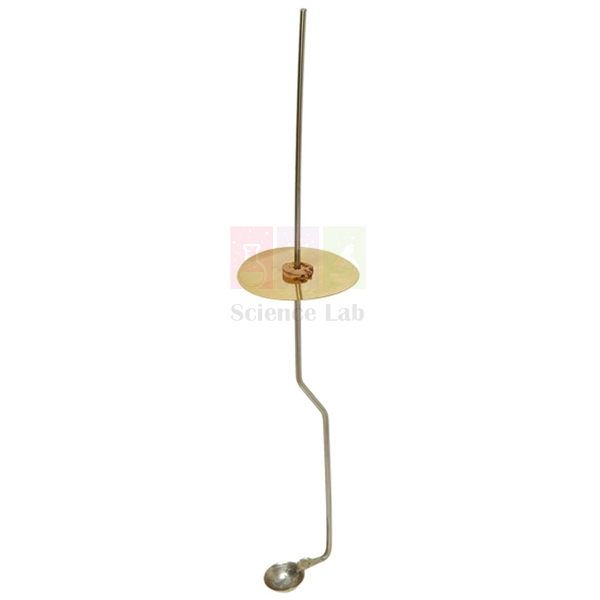
Deflagrating Spoon
Deflagrating Spoon (Product Code: SLE/CH/50) is a long-handled combustion spoon for burning small quantities of a substance inside a jar of gas. It has a brass cup of about 20 mm diameter on a chrome-plated iron wire of about 350 mm, and comes complete with a 75 mm sliding disc and a cork that hold the wire at any length. Chemistry teachers use it for classic demonstrations of combustion in oxygen, and students use it in supervised practicals on the properties of gases. It is made by Jain Scientific Equipments Pvt Ltd (ScienceLab), Ambala.
Specifications
| Parameter | Detail |
|---|---|
| Cup | Brass, about 20 mm diameter |
| Handle | Iron wire, about 350 mm long |
| Finish | Chrome plated |
| Sliding disc | 75 mm diameter |
| Supplied with | Sliding disc and cork for holding the wire at any length |
Typical Use
A typical lesson starts by collecting jars of oxygen over water. A small piece of sulphur or charcoal is placed in the brass cup, warmed in a Bunsen flame until it starts to burn, and then lowered into the jar so the class can compare how brightly it burns in air and in pure oxygen. The sliding disc rests across the mouth of the jar like a lid, slowing the escape of gas and fumes, while the cork fixes the wire so the cup hangs at the chosen depth. Afterwards a little water or indicator can be shaken in the jar to test whether the product is an acidic or basic oxide.
Use only small amounts, and carry out sulphur burning in a fume cupboard or a well-ventilated room, because the gas produced is irritating. Let the spoon cool before scraping out residue, and clean the cup after each use so deposits do not build up. This spoon forms part of any basic set of gas collection apparatus in India, alongside gas jars, a trough and a beehive shelf.
Manufacturer
ScienceLab is the trading name of Jain Scientific Equipments Private Limited, which makes chemistry, physics and biology teaching apparatus in Ambala, Haryana, for schools and colleges in India and international markets. Learn more on the company profile.
Related Chemistry Lab Equipment
Everything needed to prepare the gas and run the combustion test:
- Gas Jar, Glass — the jar that holds the collected gas while the spoon is lowered in.
- Gas Jar Cover — ground-glass cover to seal filled jars until the demonstration.
- Beehive Shelf, Porcelain — supports the gas jar in the trough while oxygen is collected.
- Pneumatic Trough — the water trough used for collecting gas over water.
- Bunsen Burner — to ignite the sample in the cup before it goes into the jar.
For more apparatus, visit our Chemistry Lab Equipment category.
Frequently Asked Questions
What is the sliding disc for?
The 75 mm disc sits over the mouth of the gas jar like a lid, limiting the loss of gas and fumes while the substance burns. Together with the cork it lets you set the wire at any length.
How large is the cup?
The brass cup is about 20 mm in diameter, which is enough for the small quantities used in school demonstrations.
Which substances are usually burned in it?
Common choices are sulphur, charcoal and similar small solids for oxygen demonstrations. Always follow your school's safety guidance on which substances and amounts are permitted.
Will the disc fit my gas jars?
It fits jars whose mouth is smaller than 75 mm across. If you are unsure, give us your jar size through the contact page.
How do I clean it?
Allow it to cool fully, scrape out the residue, wash the cup with water and dry it so the wire and plating stay in good condition.
What should I include when requesting a quotation?
The number of spoons, whether you also need gas jars, covers or a trough, and the delivery address. For orders outside India, add your country so shipping can be included.
Request a Quote
Ask for a price through our contact page, or add the Deflagrating Spoon to the enquiry cart with the gas jars and trough for your combustion experiments.
Last updated: 24 September 2026
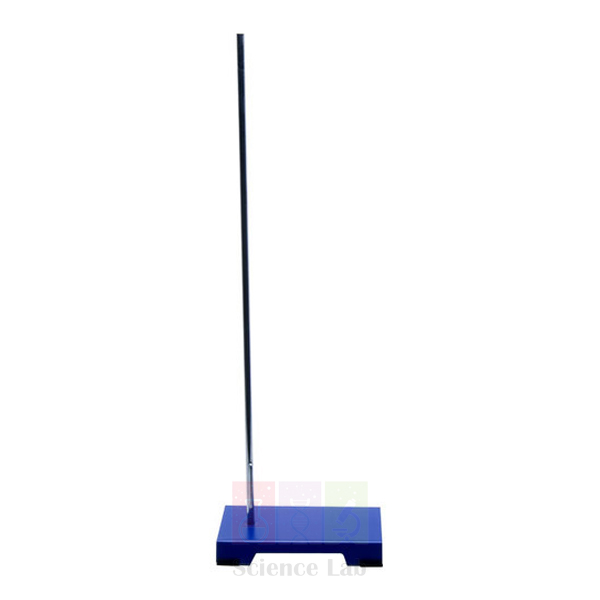
Retort Stand
Retort Stand (Product Code: SLE/CH/51) is the basic support stand of the chemistry bench: a cast iron rectangular base, finished in stove hammertone paint, carrying a 12.5 mm diameter chrome-plated M.S. rod. One end of the rod is half round and the other is machine threaded, fixing into the hole in the base with a washer and hexagonal nut. Schools, colleges and industrial training labs use it to hold clamps, rings and bosses for titration, filtration, heating and distillation. It is made by Jain Scientific Equipments Pvt Ltd (ScienceLab), Ambala, and offered in several base and rod sizes for any retort stand lab requirement in India.
Specifications
| Parameter | Detail |
|---|---|
| Base | Cast iron, rectangular, with hole for the rod |
| Base finish | Stove hammertone painted |
| Rod | M.S., 12.5 mm diameter, chrome plated |
| Rod ends | One end half round; other end machine threaded |
| Fixing | Washer and hexagonal nut |
Available sizes:
| Base Size (mm) | Rod Length (mm) | Approx. Weight of Base |
|---|---|---|
| 175 x 125 | 500 | Please confirm with us |
| 200 x 125 | 600 | 1.30 kg |
| 225 x 150 | 600 | 1.70 kg |
| 225 x 150 | 750 | 2.02 kg |
| 300 x 150 | 750 | 2.07 kg |
Typical Use
With a boss head and clamp, the stand holds a burette for titration, a flask over a burner, or a condenser during distillation; with a retort ring and wire gauze it becomes a heating support or a funnel holder for filtration. The shorter rods suit single-clamp jobs at a student bench, while the longer rods and larger bases are better for tall assemblies such as a distillation set-up where the flask, still head and condenser are clamped at different heights.
For stability, arrange the apparatus so its weight sits over the base rather than beyond it, and turn the base so the long side lies under the load. Check that the nut under the base is tight before loading the rod, and wipe spills off the painted base promptly. A class set of stands with matching clamps and bosses, the standard lab stand, clamp and boss head arrangement found across India, makes practical sessions quicker to set up.
Manufacturer
Jain Scientific Equipments Private Limited operates under the ScienceLab brand from Ambala, Haryana, making laboratory stands, clamps and teaching apparatus for institutions in India and international markets. Visit the company profile for background on the business.
Related Chemistry Lab Equipment
Fittings that turn this stand into a working set-up:
- Boss Head, With Detachable Attachment — connects clamps and rods to the stand rod at any height.
- Retort Clamp Three Finger — grips flasks, condensers and tubes on the stand.
- Burette Clamps — hold a burette straight for titration.
- Retort Rings — support gauze, basins or funnels on the rod.
- Gauze Wire — spreads the flame under glassware resting on a ring.
See the complete Chemistry Lab Equipment category.
Frequently Asked Questions
Which base and rod sizes are available?
Five combinations, from a 175 x 125 mm base with a 500 mm rod up to a 300 x 150 mm base with a 750 mm rod, as listed in the size table.
What diameter is the rod?
The rod is 12.5 mm in diameter. Check that your boss heads and clamps open wide enough for this size.
How is the rod fixed to the base?
The machine-threaded end passes into the hole in the cast iron base and is secured with a washer and hexagonal nut, so the rod can be removed for compact storage.
What does the smallest base weigh?
The weight for the 175 x 125 mm base is not confirmed on this page, so please ask through our contact page if it matters for your application. Approximate weights for the other sizes are given in the table.
Which size should a school choose?
Smaller bases with 500 mm or 600 mm rods suit everyday student work; the 750 mm rod with a larger base is the better choice for distillation or other tall assemblies.
Are clamps and boss heads included?
No, the stand is described as a base and rod. Add the clamps, bosses and rings you need to the same enquiry.
Can you supply stands in bulk for new labs or export?
Yes. We supply India and international markets; send the sizes and quantities and we will quote with packing and delivery.
Request a Quote
Tell us the sizes and number of stands on our contact page, or add the Retort Stand to the enquiry cart together with clamps and boss heads.
Last updated: 24 September 2026
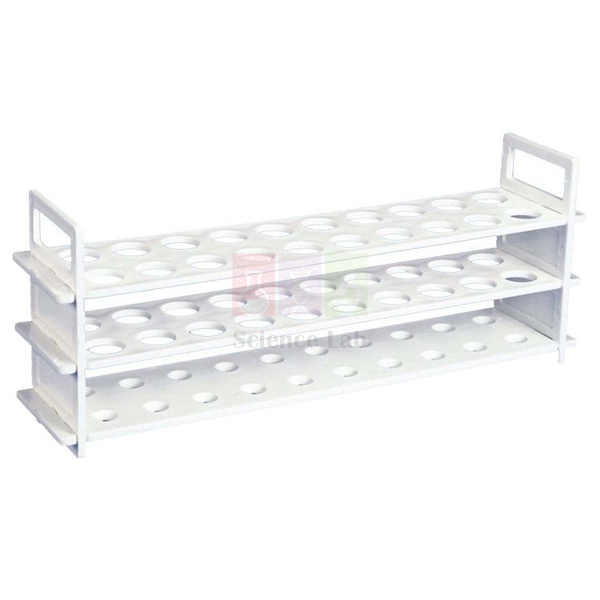
Test Tube Stand 3 Tier
Test Tube Stand 3 Tier (Product Code: SLE/CH/52) is a moulded polypropylene rack built in three tiers: tubes pass through the upper and middle plates and rest on the base, so they stand straight while their contents stay in view. The layout makes tubes easy to insert and remove, and the rack is autoclavable and can withstand sub-freezing temperatures, so it moves from the bench to the sterilizer or the freezer without a change of rack. It suits chemistry, microbiology and clinical labs in schools, colleges and hospitals, and is made by Jain Scientific Equipments Pvt Ltd (ScienceLab), Ambala, within its lab plastic ware range for India and overseas buyers.
Specifications
| Parameter | Detail |
|---|---|
| Design | 3-tier rack (upper, middle and base plates) |
| Material | Polypropylene (PP) |
| PP version appearance | Every part coloured and opaque |
| PC version appearance | Transparent upper and middle plates (please confirm availability) |
| Sterilisation | Autoclavable |
| Temperature | Withstands sub-freezing temperatures |
| Handling | Clear view of tube contents; convenient insertion and removal of tubes |
Typical Use
Because each tube is guided at two heights, it stays upright even when only a few places are filled, which is useful for colour-change tests, serial dilutions and precipitation reactions where students need to compare tubes side by side. In microbiology, a rack of culture tubes can go through the autoclave and then be stored cold without transferring the tubes. For sample storage, the rack's tolerance of sub-freezing temperatures means it can hold labelled tubes in a freezer.
Choose the coloured PP rack when you want to colour-code sets, for example one colour per class group or per test series. Wash the rack in warm detergent solution, rinse, and let it dry before autoclaving. Load tubes of a diameter that passes freely through the upper plate; forcing larger tubes can strain the plates.
Manufacturer
ScienceLab is the brand under which Jain Scientific Equipments Private Limited, Ambala, Haryana, makes and exports laboratory racks, stands and teaching apparatus for schools, colleges and laboratories in India and international markets. Details are on the company profile.
Related Chemistry Lab Equipment
Items used alongside this rack when working with test tubes:
- Test Tube — borosilicate tubes to stand in the rack.
- Test Tube Holder — for lifting and heating individual tubes safely.
- Brush Test Tube — for cleaning tubes before they return to the rack.
- Autoclave Basket — a stainless steel basket for carrying racks and tubes into the autoclave.
- Test Tube Stand (Wire Pattern) — a submersible alternative when tubes must sit in a water bath.
Browse the full Chemistry Lab Equipment range.
Frequently Asked Questions
What is the rack made of?
It is made of polypropylene. In the PP version every part is coloured and opaque.
Is there a version with see-through plates?
A PC (polycarbonate) rack with transparent upper and middle plates is also described. Please confirm its availability through our contact page.
Can it be autoclaved?
Yes, the rack is autoclavable. Clean off residues first and allow it to cool in the autoclave before handling.
Can I keep it in a freezer?
Yes. The rack can withstand sub-freezing temperatures, so it can hold tubes during cold storage.
How many tubes does it hold, and of what size?
The number of places and tube diameter are not listed on this page. Tell us the tubes you use and we will confirm the matching rack before quoting.
Can I order several colours for colour-coding?
Colour options are not specified here, so mention the colours you would like in your enquiry and we will confirm what can be supplied.
Do you supply these racks for export orders?
Yes. We serve buyers in India and international markets; include your country and quantity so freight can be quoted.
Request a Quote
Send your quantity, tube size and preferred version via the contact page, or add the Test Tube Stand 3 Tier to the enquiry cart with the tubes and brushes you need.
Last updated: 24 September 2026
706.jpg)
Test Tube Stand (Wire Pattern)
Test Tube Stand (Wire Pattern) (Product Code: SLE/CH/53) is a grid-style test tube rack that follows the open layout of a traditional wire rack but is moulded from a special blend of polypropylene. The blend makes the rack sink in a water bath and stay stable even in agitated water, so it is an economical substitute for wire racks in incubation and heating work. It is submersible, autoclavable, stackable when empty and easy to take apart for cleaning, and is offered in formats from 13 mm x 90 tubes to 30 mm x 21 tubes. The rack is made by Jain Scientific Equipments Pvt Ltd (ScienceLab), Ambala.
Specifications
| Parameter | Detail |
|---|---|
| Material | Polypropylene, special blend that sinks in a water bath |
| Stability | Stays stable even in agitated water |
| Construction | Grid base with square openings; fold-up sides and end bars that lock into the rack top |
| Sterilisation | Autoclavable |
| Storage | Stackable when empty; space saving |
| Cleaning | Easily disassembled |
| Colours | Available in different colours |
Formats (tube diameter x number of tubes):
- 13 mm x 90 tubes
- 16 mm x 60 tubes
- 20 mm x 40 tubes
- 25 mm x 24 tubes
- 30 mm x 21 tubes
Typical Use
Ordinary plastic racks tend to float and tip when placed in a water bath, spilling tubes. This rack is weighted by its material rather than by metal, so a full load of tubes can be incubated at a set temperature for enzyme experiments, serological tests, sugar tests with Benedict's reagent or culture work, and the rack stays put even if the bath is shaken. The open grid lets water circulate around every tube for even heating, and the rack can go straight from the bath into the autoclave.
Pick the format by tube diameter: the 13 mm and 16 mm versions suit small test tubes and culture tubes in large numbers, while the 25 mm and 30 mm versions take boiling tubes and larger vessels. Different colours help separate batches or classes, and when the session is over the racks stack together to save cupboard space. This makes it a practical piece of microbiology lab equipment in India for teaching and routine labs alike.
Manufacturer
ScienceLab is the trading name of Jain Scientific Equipments Private Limited, Ambala, Haryana, a registered MSME enterprise (Udyam UDYAM-HR-01-0003714) that makes teaching and laboratory apparatus. Export consignments are handled under Importer-Exporter Code AAECJ8618A issued by the DGFT. More on the company profile.
Related Chemistry Lab Equipment
Equipment used with this rack in water-bath and sterilisation work:
- Digital Unstirred Water Bath — a stable-temperature bath to hold the submerged rack.
- Test Tube — borosilicate tubes for the smaller rack formats.
- Float Rack — holds microcentrifuge tubes in the same bath.
- Autoclave Basket — for carrying loaded racks into the autoclave.
- Water Bath Stainless Steel Test Tube Rack — a metal alternative for water-bath use.
Find more in our Chemistry Lab Equipment category.
Frequently Asked Questions
Why is it called wire pattern if it is plastic?
It copies the open grid layout of a wire rack but is moulded in polypropylene, offering an economical substitute for wire racks that also sinks and stays stable in a water bath.
Which sizes are available?
Five formats: 13 mm x 90, 16 mm x 60, 20 mm x 40, 25 mm x 24 and 30 mm x 21 tubes. The first figure is the tube diameter, the second the number of places.
Will it float in the water bath?
No. The special polypropylene blend makes it sink, and it stays stable even in agitated water.
Can it be autoclaved and cleaned easily?
Yes. It is autoclavable, and it can be disassembled so that the grid, sides and end bars can be washed separately.
Will it fit my water bath?
Outer dimensions are not listed on this page. Send us your bath's internal size and the format you want through the contact page and we will check the fit.
Can I choose colours?
The rack is available in different colours. Mention your preferred colours and quantities per format when you enquire.
What should a tender or bulk enquiry include?
The format and quantity for each size, colour preferences and delivery location, whether in India or abroad. We can then quote the full order in one document.
Request a Quote
Request pricing through our contact page, or add the Test Tube Stand (Wire Pattern) to the enquiry cart with the water bath and tubes for your lab.
Last updated: 24 September 2026
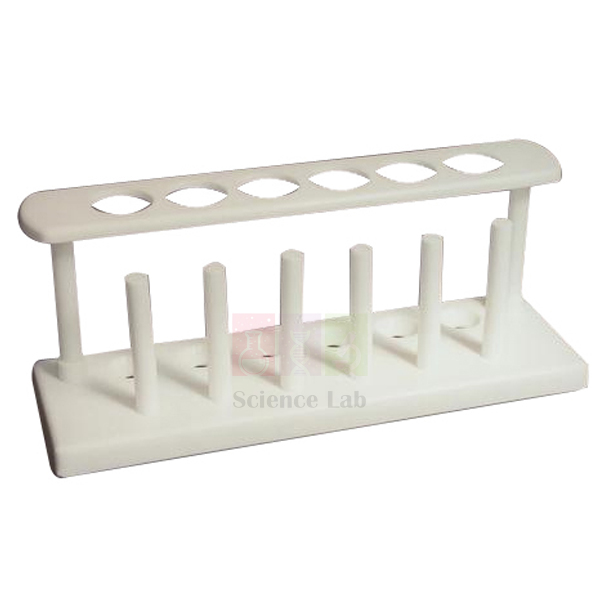
Test Tube Stand, Polythene
Test Tube Stand, Polythene (Product Code: SLE/CH/54) is a compact student rack in high-density polythene that holds 2 tubes of 25 mm diameter and 4 tubes of 16 mm diameter, with 6 vertical pegs along the rear edge of the base for drying washed tubes. Its 210 x 82 mm base gives the rack a steady footprint on a crowded bench. It is a natural choice for individual student places in school and college chemistry and biology labs, and is made by Jain Scientific Equipments Pvt Ltd (ScienceLab), Ambala, a school laboratory equipment supplier in India and abroad.
Specifications
| Parameter | Detail |
|---|---|
| Material | High-density polythene |
| Base size | 210 x 82 mm |
| Large tube places | 2 tubes of 25 mm diameter |
| Small tube places | 4 tubes of 16 mm diameter |
| Drying pegs | 6 vertical pegs at the rear edge of the base |
Typical Use
The mixed layout matches the way many school practicals are run: the four smaller places hold the test tubes for a set of reagent tests, while the two larger places take boiling tubes or wider tubes for heating, gas tests or larger volumes. A single rack therefore covers a typical student's needs for a qualitative analysis session, and the drying pegs mean washed tubes can be left upside down on the same rack at the end of the lesson.
High-density polythene does not rust and is easy to wipe clean after spills of dilute acids or salt solutions. Keep hot tubes in a holder or on a heatproof mat until they have cooled, rather than placing them straight into the plastic rack. With one rack per student, benches stay tidier and breakages from rolling tubes are reduced.
Manufacturer
Based in Ambala, Haryana, Jain Scientific Equipments Private Limited trades as ScienceLab and produces practical apparatus for science teaching, supplying schools, colleges and training institutes in India and international markets. See the company profile for more.
Related Chemistry Lab Equipment
What a student place usually needs alongside this rack:
- Test Tube — borosilicate tubes for the smaller places.
- Boiling Tube — for heating work; check its diameter against the larger places.
- Test Tube Holder — to hold tubes during heating before they return to the rack.
- Brush Test Tube — to clean tubes before hanging them on the drying pegs.
- Test Tube Rack With Drying Pegs — a larger wooden rack for demonstration benches.
More options are in the Chemistry Lab Equipment category.
Frequently Asked Questions
How many tubes does it hold?
Six in total: 2 tubes of 25 mm diameter and 4 tubes of 16 mm diameter, plus 6 pegs for drying.
What is the footprint?
The base measures 210 x 82 mm, which gives stability without taking much bench space.
What material is it made from?
High-density polythene, which is light, does not rust and is easy to clean.
Can I put hot tubes straight into it?
Let tubes cool first. The rack is plastic, so a tube straight from a flame can soften or mark it.
Can it be autoclaved?
Autoclave use is not stated for this rack. If you need to sterilise it, ask us through our contact page before ordering.
How should a school quotation request be worded?
Give the number of racks (often one per student place), any matching tubes or holders, and the delivery address in India or abroad.
Request a Quote
Send your quantity through the contact page, or add the Test Tube Stand, Polythene to the enquiry cart together with tubes and holders for each student place.
Last updated: 24 September 2026

Drying Rack
Drying Rack (Product Code: SLE/CH/55) is a peg board in ABS plastic with 18 pegs on which washed flasks, beakers and test tubes are hung upside down to drain and air-dry. Two holes are provided so the rack can be fixed to the wall above a sink, keeping wet glassware off the bench and letting water run straight away. School labs, college practical rooms and routine testing labs use it at their wash-up stations. It is made by Jain Scientific Equipments Pvt Ltd (ScienceLab), Ambala, as part of its chemistry lab equipment in India and for overseas buyers.
Specifications
| Parameter | Detail |
|---|---|
| Material | ABS plastic |
| Pegs | 18 |
| Suitable for | Drying flasks, beakers and test tubes |
| Mounting | Two holes for wall mounting |
Typical Use
After a practical, glassware is scrubbed, rinsed with tap water and given a final rinse with distilled water. Hanging each item neck-down on a peg lets the last of the water drain out and air circulate inside, so borosilicate laboratory glassware is dry and free of drip marks by the next lesson. Heavier items such as conical flasks are best placed on the lower pegs and light test tubes higher up, so that drips do not fall onto glass that is already dry.
Mount the rack on a wall above the sink or draining board, using screws suited to your wall through the two holes, and check that it is level. ABS is easy to wipe down, so clean the pegs occasionally to stop residue transferring to freshly washed glass. Do not hang glassware that is still hot from an oven or flame on the plastic pegs.
Manufacturer
Jain Scientific Equipments Private Limited, known by its trading name ScienceLab, is based in Ambala, Haryana, and makes laboratory fittings and teaching apparatus for institutions in India and international markets. The company profile has more information.
Related Chemistry Lab Equipment
Products that go with this rack at the wash-up station:
- Conical Flask — one of the most common items hung on the pegs to dry.
- Test Tube — small tubes that dry quickly on the upper pegs.
- Brush Test Tube — for scrubbing tubes before they go on the rack.
- Wash Bottle LDPE with Narrow Mouth — for the final distilled-water rinse before drying.
- Drying Rack Glass & Plastic Ware — a larger coated-wire rack if you need more capacity.
For other lab accessories, see the Chemistry Lab Equipment category.
Frequently Asked Questions
How many items can it hold?
It has 18 pegs, each holding one flask, beaker or test tube.
Can it be fixed to a wall?
Yes. Two holes are provided for wall mounting. Fixing screws and plugs are not listed, so use ones suited to your wall.
Can it stand on a bench instead?
It is designed with wall-mounting holes. If you need a free-standing unit, ask us about alternatives through the contact page.
What is ABS and why use it here?
ABS is a tough, rigid plastic that does not rust in a wet sink area and can be wiped clean easily.
Can I hang glassware straight from a drying oven?
No. Let hot glassware cool before placing it on the plastic pegs.
How many racks does a school lab need?
That depends on how much glassware is washed at once; many labs fit one rack per sink. Tell us your layout and we will suggest a quantity for the quotation, for delivery in India or abroad.
Request a Quote
Ask for a quotation on the contact page, or add the Drying Rack to the enquiry cart along with brushes and wash bottles for your wash-up area.
Last updated: 24 September 2026