- Physics Lab Equipment
- Chemistry Lab Equipment
- Biology Lab Equipment
- Anatomical Lab Equipment
- Learning
- Educational Lab Equipment
- Magnets
- Agriculture
- Astronomy
- Earth Science
- Geography Lab Equipment
- Safety Lab Coat
- Laboratory
- Meteorological
- Electricity & Magnetism
- Heat
- School Lab Equipment
- Lab Glassware
- Science Lab Equipment
- Tvet Lab Equipment
- Robotics Kits Supplier and Manufacturer for Schools India
- Math Lab Equipment Manufacturers and Exporters in Ambala
- STEM Kits Manufacturers and Supplier India
- Engineering Lab Equipment
- Hospital Lab Equipment
- Water, Sanitation & Hygiene Supplies
- Cold Chain, Solar & Communication Equipment
- Nutrition

Burette Clamps
Burette Clamps (Product Code: SLE/CH/64) hold a burette straight and steady on a stand rod throughout a titration. The clamp is die-pressed from thick M.S. sheet and chrome plated; each burette sits in a V-groove and is pressed in place by a spring-loaded jaw, and the bosshead takes rods up to 18 mm in diameter. Versions for a single or a double burette are made by Jain Scientific Equipments Pvt Ltd (ScienceLab), Ambala, for any burette clamp India lab requirement and for international markets.
Specifications
| Parameter | Detail |
|---|---|
| Type | Depressed burette clamp |
| Material | Thick M.S. (mild steel) sheet |
| Construction | Die-pressed symmetrically, non-breakable |
| Jaws | Two jaws with V-grooves; the burette rests in one and the other presses it by spring force |
| Finish | Well chrome plated |
| Bosshead | Accommodates rods up to 18 mm dia. |
| Versions | For single burette; for double burette |
Typical Use
A burette that leans gives parallax errors at the meniscus and drips down the side of the flask, so a clamp that holds it truly vertical is basic to accurate acid-base, redox and complexometric titrations. The spring-loaded jaw lets a student slide the burette in or out for filling and rinsing without loosening a screw, while the V-grooves keep it aligned each time it is replaced.
The double version holds two burettes side by side — useful for back-titrations, for running a blank next to the sample, or for sharing one stand between two students. Mount the clamp high enough for a conical flask to swirl freely under the jet. Schools assembling a titration kit for school practicals in India typically pair this clamp with a stand, burette and flask for each bench.
Manufacturer
The clamp is produced by Jain Scientific Equipments Private Limited, trading as ScienceLab, an Ambala, Haryana manufacturer of titration hardware and laboratory apparatus for education and industry. Further information is on our company profile page.
Related Chemistry Lab Equipment
Everything else needed on a titration bench:
- Burette — the graduated tube the clamp holds
- Burette Stand and Funnel Stand — a support for the burette and filling funnel
- Retort Stand — a general stand whose rod the bosshead grips
- Conical Flask — the titration flask placed under the jet
- Brush Burette — for cleaning the burette between runs
Find more titration and stand apparatus in our Chemistry Lab Equipment category.
Frequently Asked Questions
Should I choose the single or double clamp?
Single suits one burette per stand. Double holds two burettes side by side, which helps with blanks, back-titrations or two students sharing a stand.
What rod diameter does the bosshead take?
Rods up to 18 mm in diameter, which covers most laboratory stand rods.
How does the clamp hold the burette without a screw on the glass?
The burette rests in a V-groove and a second jaw presses it in by spring force, giving steady pressure without point loading from a screw.
Is it strong enough for daily student use?
Yes — it is die-pressed from thick M.S. sheet and is non-breakable in normal use, with a chrome-plated finish.
How should it be cleaned after titrations?
Wipe acid or alkali splashes off promptly with a damp cloth and dry the clamp, so the plating stays in good condition.
What warranty applies?
Warranty terms are included in our quotation; contact us if you need them before placing an order.
Can you supply complete lab quantities or export orders?
Yes. We supply schools, colleges and distributors across India and international markets.
Request a Quote
State whether you need single or double clamps, and how many, on our contact page; alternatively add them to the enquiry cart with your burettes and stands.
Last updated: 24 September 2026
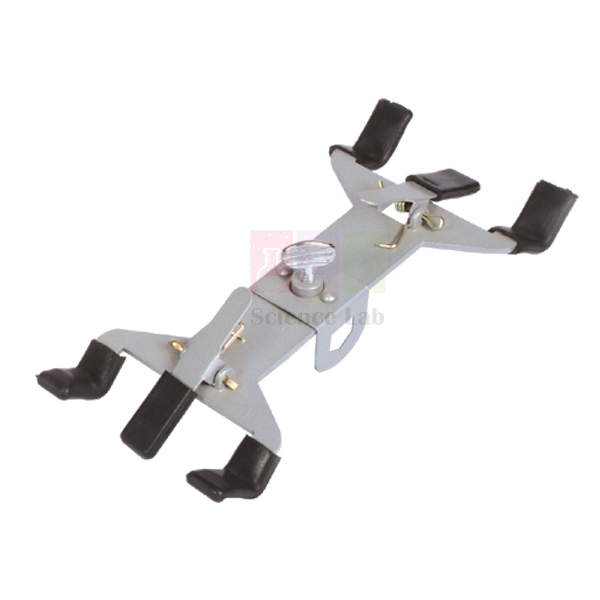
Burette Clamps Light Weight
Burette Clamps Light Weight (Product Code: SLE/CH/65) are aluminium burette clamps that combine a light body with the mechanical strength needed for daily titration classes. Rubber-covered, spring-action jaws give a positive grip and quick release, and a single thumb screw fixes the clamp to a rod of nominal 13 mm diameter. Made by Jain Scientific Equipments Pvt Ltd (ScienceLab), Ambala, they suit student benches where a light burette stand in an India lab is moved and reset often, and are also supplied to international markets.
Specifications
| Parameter | Detail |
|---|---|
| Body | Light-weight aluminium, mechanically strong |
| Jaws | Rubber covered, with spring action for a positive grip |
| Finish | Smooth enamel finish with rubber finger grippers |
| Fixing | Single thumb screw, for a rod of nominal 13 mm dia. |
| Holds | One or two burettes |
| Operation | Positive grip and release |
| Versions | Burette Clamp Single; Burette Clamp Double |
Typical Use
In a busy volumetric analysis class the clamp is opened and closed dozens of times a session as burettes are filled, read and rinsed. The spring-action jaws open with a squeeze of the rubber finger grippers and close again on their own, so students can change a burette with one hand while the other steadies the glass. The rubber covering protects the burette’s outer surface and graduations from metal contact.
Being aluminium, the clamp adds little weight at the top of a stand, which keeps lighter student stands stable when a full burette is fitted. It is a good match for teaching labs putting together a volumetric analysis kit for India schools and colleges, where the double version lets two burettes share one rod — for example one titrant and one blank.
Manufacturer
Jain Scientific Equipments Private Limited, trading as ScienceLab, is based in Ambala, Haryana and makes laboratory hardware and educational apparatus. It is registered as an MSME manufacturing enterprise (Udyam UDYAM-HR-01-0003714), and export consignments are shipped under Importer-Exporter Code AAECJ8618A issued by DGFT. Read our company profile for more.
Related Chemistry Lab Equipment
Items used with a lightweight burette clamp in titration practicals:
- Burette, Class-B, with PTFE Key Stopcock — a burette to mount in the jaws
- Burette Stand — a dedicated stand for titration set-ups
- Burette Clamps — the chrome-plated M.S. sheet version for rods up to 18 mm
- Conical Flask, Pyrex — receiving flask for the titration
- Burette Brush — keeps the burette bore clean between practicals
Our Chemistry Lab Equipment listing has more clamps, stands and titration accessories.
Frequently Asked Questions
How is this different from the standard Burette Clamps?
This model has a light aluminium body with rubber-covered spring jaws and fits rods of nominal 13 mm. The standard model is chrome-plated M.S. sheet with a bosshead that takes thicker stand rods.
Will it fit my stand rod?
It is designed for a rod of nominal 13 mm diameter. If your stands use a different rod, tell us the size before ordering.
Can it hold two burettes?
Yes, choose Burette Clamp Double. Burette Clamp Single holds one.
Does the metal touch the burette?
No — the jaws are rubber covered, so the glass sits against rubber rather than bare metal.
How should the enamel finish be cleaned?
Use a damp cloth and mild detergent, then dry. Avoid abrasive pads that could scratch the enamel.
Can you share MSME and export registration details for our records?
Yes. The Udyam and IEC numbers above can be included with the quotation for your vendor file.
Do you supply bulk orders?
Yes, for institutions and distributors in India and international markets — contact us with quantities.
Request a Quote
Ask for pricing on single or double lightweight clamps through our contact page, or collect the items you need in the enquiry cart and send one request.
Last updated: 24 September 2026
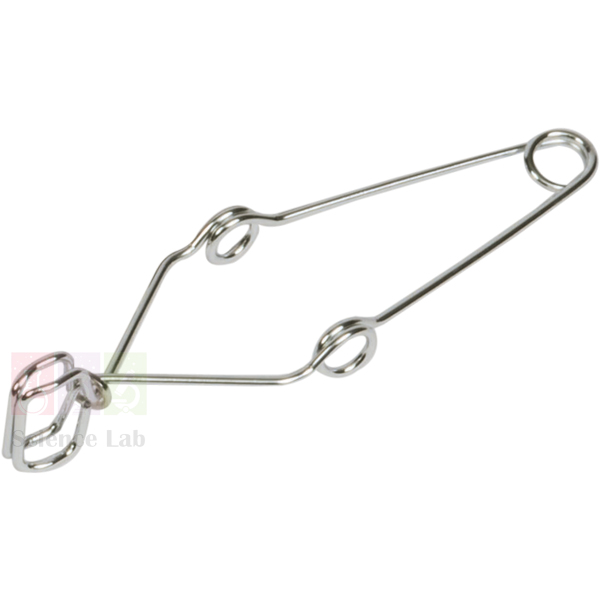
Test Tube Holder
Test Tube Holder (Product Code: SLE/CH/66) is a hand-held clip for gripping a test tube while it is heated, shaken or poured, keeping fingers well away from the flame and the contents. It is formed from chrome-plated spring steel wire with finger grips, measures 130 mm overall, and its jaws take tubes up to 38 mm in diameter. The holder is made by Jain Scientific Equipments Pvt Ltd (ScienceLab), Ambala, and is standard issue for every student carrying out a salt analysis practical in school, in India and international markets.
Specifications
| Parameter | Detail |
|---|---|
| Material | Spring steel wire, chrome plated |
| Tube capacity | Jaws accept tubes up to 38 mm diameter |
| Jaw alignment | Maintained by a wire collar |
| Handle | Finger grips |
| Overall length | 130 mm |
Typical Use
Dry-heating a salt, warming a solution to speed a reaction, and running preliminary tests for gases all involve holding a tube in or near a flame. Clip the holder near the mouth of the tube, keep the tube tilted and pointed away from yourself and others, and move it gently through the flame so the contents heat evenly and do not bump out. The wire collar keeps the two jaws lined up, so the tube does not twist loose as it is tilted.
The same holder is handy for dipping a tube into a hot water bath, or for carrying a warm tube back to the rack. In a flame test kit for school practicals in India, it is usually issued with a Bunsen burner or spirit lamp and a stand of clean tubes at each bench. After use, rest the holder on the bench rather than leaving it clipped to a hot tube.
Manufacturer
This holder is a product of Jain Scientific Equipments Private Limited of Ambala, Haryana, which uses the trading name ScienceLab for its laboratory apparatus and teaching equipment. Learn more on our company profile.
Related Chemistry Lab Equipment
Apparatus used alongside a test tube holder at the bench:
- Test Tube — the glassware the holder grips
- Bunsen Burner — the usual gas flame for heating tubes
- Glass Spirit Lamp — a flame source where gas is not available
- Test Tube Stand (Wire Pattern) — holds tubes upright before and after heating
- Brush Test Tube — for cleaning tubes after the practical
You can view other holders and racks in the Chemistry Lab Equipment range.
Frequently Asked Questions
What tube sizes does it hold?
The jaws accept tubes up to 38 mm in diameter, so standard school test tubes and wider boiling tubes are both covered.
Where on the tube should it be clipped?
Near the mouth, about a quarter of the way down, so most of the tube can be heated and your hand stays clear of the flame.
Does the handle get hot?
It is metal, so avoid holding it in the flame. The 130 mm length keeps the finger grips at a distance from the heated tube in normal use.
How do I keep it in good order?
Wipe off any chemical splashes, dry it after washing, and avoid prising the jaws wider than needed so the spring keeps its tension.
Can I order a set for a whole class?
Yes. Tell us the number of benches or students and we will quote a class quantity.
Do you ship outside India?
Yes, we supply institutions and distributors in India and international markets; contact us for export terms.
Request a Quote
Request a price for the Test Tube Holder through the contact page, or add it to the enquiry cart with your test tubes, stands and burners.
Last updated: 24 September 2026
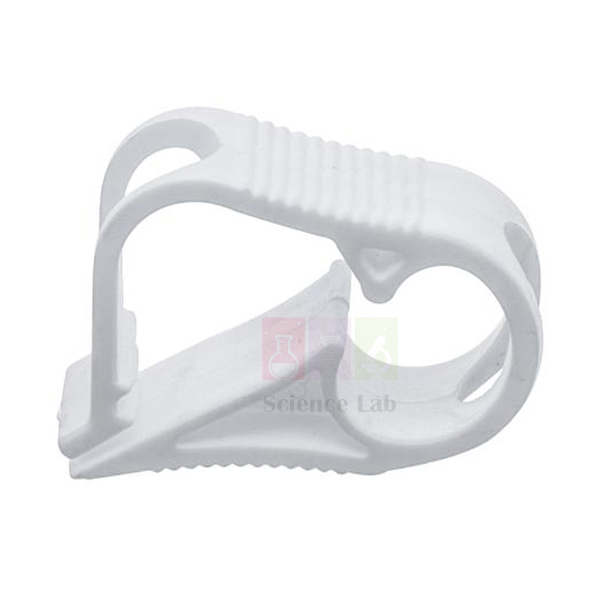
Pinch Clip
Pinch Clip (Product Code: SLE/CH/67) is a small clip that squeezes a length of flexible laboratory tubing flat, stopping the flow of liquid or gas through it until the clip is released. It works as a simple on/off valve on rubber or silicone tubing in burettes, siphons and gas apparatus. The clip is made by Jain Scientific Equipments Pvt Ltd (ScienceLab), Ambala, for school and college chemistry labs that build their own gas collection apparatus in India and international markets.
Key Details
| Parameter | Detail |
|---|---|
| Type | Clip for flexible laboratory tubing |
| Purpose | Closing off rubber or silicone tubing to stop liquid or gas flow |
| Suitable for | Burettes fitted with rubber tubing and a glass jet, siphons, gas delivery and collection set-ups |
| Supplied as | Individual clips; material, size and pack quantity confirmed on enquiry |
Typical Use
On a simple burette made from a glass tube, a short piece of rubber tubing and a jet, the pinch clip takes the place of a stopcock: pressing it opens the tubing and lets titrant run, releasing it shuts the flow. In gas preparation, a clip on the delivery tubing holds the gas back while a gas jar is positioned, and it can seal off a side arm or siphon line when the apparatus is being dismantled.
A pinch clip gives quick on/off control. Where a steady, adjustable drip is needed, a screw clip is the better choice. Fit the clip on a straight, undamaged section of tubing, and move it slightly now and then so the rubber does not take a permanent crease. These clips are small and easily lost, so labs usually keep spares with their chemistry lab equipment consumables.
Manufacturer
ScienceLab is the trading name of Jain Scientific Equipments Private Limited, a manufacturer of laboratory fittings and educational apparatus located in Ambala, Haryana. See our company profile for details of the company.
Related Chemistry Lab Equipment
Tubing and apparatus that a pinch clip is normally used on:
- Rubber Tubing — the flexible tubing the clip closes
- Silicone Tube — an alternative tubing that also takes the clip
- Hoffman Screw Clip — for gradual, adjustable flow control
- Delivery Tube — carries gas to the collecting vessel
- Gas Jar, Glass — collects the gas released through the tubing
Explore further clips and fittings under Chemistry Lab Equipment.
Frequently Asked Questions
What tubing size does the clip fit?
We do not list a tubing size on this page. Send us the outer diameter and wall thickness of your tubing through the contact page and we will confirm a suitable clip.
How is a pinch clip different from a Hoffman screw clip?
A pinch clip is an open/shut control. A Hoffman screw clip closes the tubing progressively with a screw, so the flow rate can be set.
Is tubing included?
No, the clip is supplied on its own. Rubber or silicone tubing can be added to the same order.
Can it replace a burette stopcock?
On a rubber-tube burette, yes — that is one of its classic uses. Glass burettes with a built-in stopcock do not need it.
What is it made of, and are colours available?
Material and finish options are confirmed at the time of quotation; please ask if you have a specific requirement.
Can you supply clips in larger quantities?
Yes. We supply schools, colleges and distributors in India and international markets.
Request a Quote
Share your tubing size and required quantity via our contact page, or add the Pinch Clip to the enquiry cart along with the tubing you need.
Last updated: 24 September 2026
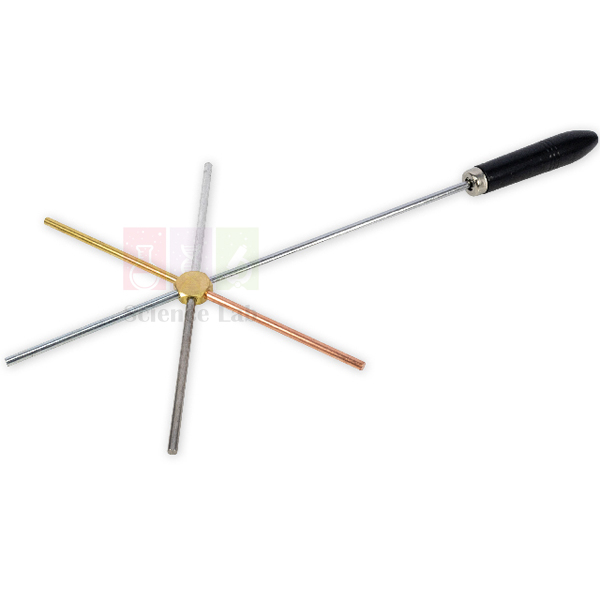
Heat Conductometer
Heat Conductometer (Product Code: SLE/CH/68) is a classroom demonstration set for comparing how well different metals conduct heat. Five metal rods — aluminium, brass, iron, copper and stainless steel — are fitted radially on a brass disk, so heat applied at the centre travels out along all five at the same time and students can see which rod passes it on fastest. It comes with a Teacher’s Guide and is made by Jain Scientific Equipments Pvt Ltd (ScienceLab), Ambala, as a compact heat energy science kit for schools in India and international markets.
Specifications
| Parameter | Detail |
|---|---|
| Purpose | Demonstrating and testing heat conductivity in a variety of metals |
| Metal rods | Five: aluminium, brass, iron, copper and stainless steel |
| Arrangement | Rods radially fitted on a brass disk |
| Rod size | 75 mm length x 5 mm dia. |
| Brass disk | 27 mm dia. |
| Included | Teacher’s Guide |
Typical Use
A common method is to fix a small, equal bead of wax to the outer tip of each rod, support the set so the rods are level, and heat the central brass disk gently with a burner or spirit lamp. As heat is conducted outwards, the wax beads soften and drop one after another; the order in which they fall ranks the five metals by conductivity. Because every rod has the same 75 mm length and 5 mm diameter, the comparison is fair and the only variable is the metal itself.
The set fits lessons introducing the properties of different elements as well as thermodynamics topics on conduction, and it works as a physics experiment kit for school classes as much as in chemistry. Students can extend the activity by reading the rod tips with an infra-red thermometer at fixed intervals. Let the disk and rods cool completely before handling them or removing wax.
Manufacturer
The Heat Conductometer is made by Jain Scientific Equipments Private Limited, known by its trading name ScienceLab, which designs and manufactures science demonstration apparatus in Ambala, Haryana. Our company profile has more about the company.
Related Laboratory Equipment
Useful additions for a lesson on heat conduction:
- Apparatus Heat/Thermal Conductivity — a further apparatus for conductivity experiments
- Heat Transfer Kit — extends the topic to other modes of heat transfer
- Bunsen Burner — a heat source for the central disk
- Thermometer, Infra Red, Hand Held — measures rod-tip temperatures without contact
- Wax — for the melting-bead method on the rod tips
More demonstration apparatus is listed in Chemistry Lab Equipment.
Frequently Asked Questions
Which metals are included?
Five rods: aluminium, brass, iron, copper and stainless steel, all fitted on one brass disk.
What comes in the set?
The rod-and-disk assembly and a Teacher’s Guide. A heat source and wax are not part of the listing and can be ordered separately.
What are the dimensions?
Each rod is 75 mm long and 5 mm in diameter; the brass disk is 27 mm in diameter.
Which rod should conduct heat fastest?
In general, copper conducts heat best of these metals and stainless steel least. Let students observe and record the order before telling them the answer.
How do I clean it after the practical?
Once cool, lift off wax residue with a cloth or warm water, then dry the rods fully.
Is it available for bulk or export orders?
Yes. We supply institutions and distributors in India and international markets; contact us with the number of sets required.
Request a Quote
Ask for a quotation on the Heat Conductometer through our contact page, or place it in the enquiry cart with any burners or accessories for the lesson.
Last updated: 24 September 2026
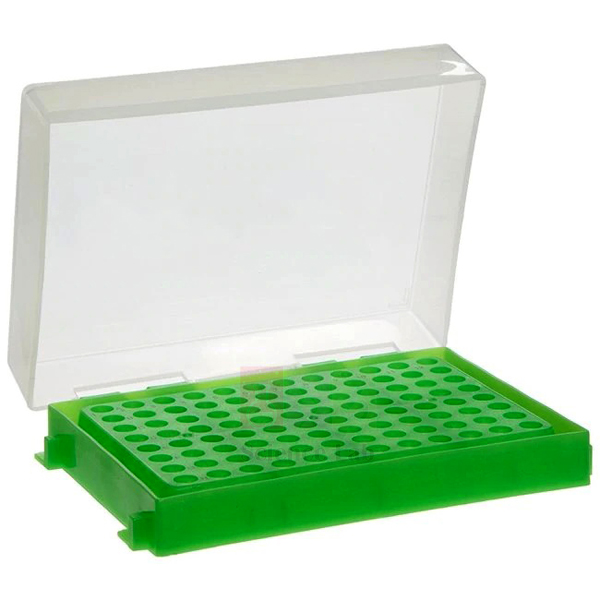
MCT Twin Rack
MCT Twin Rack (Product Code: SLE/CH/69) is a two-sided rack for microcentrifuge tubes (MCTs): one face holds 0.5 ml tubes and the other holds 1.5 ml tubes, with 108 holes on each side. An alphanumeric index on each face of the base identifies every position, and a transparent top gives a clear view while protecting the stored tubes. It is made by Jain Scientific Equipments Pvt Ltd (ScienceLab), Ambala, for molecular biology, biotechnology and clinical teaching labs that source from a lab plastic ware supplier in India, and for international markets.
Specifications
| Parameter | Detail |
|---|---|
| Capacity | Rack for 0.5 ml and 1.5 ml MCTs |
| Holes | 108 on each side — one side for 0.5 ml, the other for 1.5 ml MCTs |
| Design | Twin purpose rack |
| Position marking | Unique alphanumeric index on each face of the base |
| Cover | Transparent top, for viewing and protecting stored tubes |
Typical Use
During DNA extraction, enzyme digests or sample aliquoting, tubes move constantly between the bench, a laboratory centrifuge and the freezer. Keeping them in an indexed rack means each sample has a recorded address — for example a row letter and column number — so nothing is mixed up when the lids all look the same. When the day’s work switches from 1.5 ml tubes to smaller 0.5 ml tubes, simply turn the rack over instead of reaching for a second rack.
With the transparent top in place, tubes can be checked for labels and volumes without being lifted out, and they stay covered while waiting for the next step. Note the index position of each sample in the lab notebook before loading, and keep the rack level when moving it so open tubes do not spill.
Manufacturer
ScienceLab is the trading name of Jain Scientific Equipments Private Limited, an Ambala, Haryana manufacturer of laboratory plasticware, racks and teaching apparatus. For institutional buyers completing vendor forms, the company’s GSTIN is 06AAECJ8618A1ZT and its Legal Entity Identifier (LEI) is 3358004HRD1JIVXKYX49. See our company profile for more.
Related Laboratory Equipment
Items used with this rack in microcentrifuge-tube workflows:
- Micro Centrifuge Tube, 1.5ml — tubes for the 1.5 ml side of the rack
- Micro Centrifuge — spins the tubes between preparation steps
- Micropipette — for dispensing small volumes into the racked tubes
- Micropipette Tips — disposable tips for the pipette
- PCR Tube Rack — a stackable rack for PCR tube work
Other racks and holders are listed under Chemistry Lab Equipment.
Frequently Asked Questions
How many tubes can the rack hold?
There are 108 holes on each side: one side for 0.5 ml MCTs and the other for 1.5 ml MCTs.
Will 2 ml tubes fit?
The rack is specified for 0.5 ml and 1.5 ml MCTs only. For other tube sizes, contact us with your tube dimensions.
What is the transparent top for?
It lets you see the tubes and their labels while acting as a protective cover over them.
How does the indexing work?
Each face of the base carries its own alphanumeric index, so every hole on either side has a unique reference for record-keeping.
Can it be autoclaved?
The rack material is not stated on this page, so please confirm autoclave or disinfectant compatibility with us before sterilising. Wiping with mild detergent is safe for routine cleaning.
Can you quote for a university or hospital lab?
Yes. Include quantities and delivery address; our GSTIN and LEI can accompany the quotation for your vendor records.
Do you supply overseas?
Yes, to laboratories and distributors in international markets as well as across India.
Request a Quote
For pricing on the MCT Twin Rack, write to us through the contact page or add it to your enquiry cart together with tubes, tips and pipettes.
Last updated: 24 September 2026
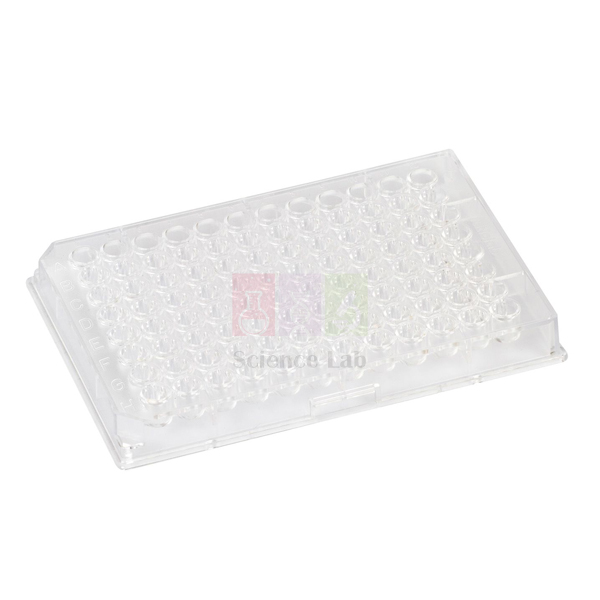
Micro Test Plates
Micro Test Plates (Product Code: SLE/CH/71) are multi-well plates used to run many small-volume tests side by side, most often ELISA (enzyme-linked immunosorbent assay) work in immunology, microbiology and biotechnology labs. They are offered in two formats — a Flat Bottom ELISA Plate and a U Bottom ELISA Plate — and are supplied by Jain Scientific Equipments Pvt Ltd (ScienceLab), Ambala, as part of its range for laboratories that need a lab consumables supplier in India and international markets.
Key Details
| Parameter | Detail |
|---|---|
| Type | Micro test plate for ELISA work |
| Formats | Flat Bottom ELISA Plate; U Bottom ELISA Plate |
| Suitable for | ELISA and other multi-sample, small-volume tests |
| Well count, material and pack size | Confirmed on enquiry |
Typical Use
The well shape decides which plate to pick. Flat bottom wells give an even liquid layer that a plate reader can measure optically, so they are the usual choice when colour development in an ELISA is read as absorbance. U bottom wells collect small volumes at the centre, which helps with mixing, dilution series, and tests where a settled button or even film is judged by eye.
In practice, samples and reagents are pipetted into the wells with a micropipette, the plate is incubated and washed between steps, and results are read well by well. Since fresh plates are normally used for each assay run, many labs keep them on the same reorder list as tips and other disposable lab equipment in India. Label the plate edge and record the well layout before starting, so every result can be traced back to its sample.
Supplier
Micro Test Plates are supplied by Jain Scientific Equipments Private Limited, which trades as ScienceLab from Ambala, Haryana, and also manufactures laboratory and teaching apparatus. Read more about the company on our company profile.
Related Laboratory Equipment
Instruments and accessories used in the same plate-based workflow:
- ELISA Reader 8 Channel — reads absorbance of the developed wells
- ELISA Washer 8 Channel — for the wash steps between reagents
- Micropipette — dispenses samples and reagents into each well
- Micropipette Tips — fresh tips between samples
- Micro Tip Box — keeps tips racked and ready at the bench
For more lab supplies, visit the Chemistry Lab Equipment category.
Frequently Asked Questions
Should I choose flat bottom or U bottom?
Choose flat bottom when results will be read in a plate reader; choose U bottom for mixing, dilutions and visual end-points in small volumes.
How many wells does each plate have?
The well count is not listed on this page. Contact us and we will confirm the format before you order.
Will the plates fit my ELISA reader?
Plate readers take plates of a set footprint. Send us your reader model and we will check compatibility.
Can the plates be reused?
ELISA plates are normally used once, because coated or stained wells are difficult to clean reliably. Ask us if you need guidance for a specific assay.
What pack sizes are available?
Pack quantities are given in the quotation. Tell us your monthly usage and we can suggest a sensible order size.
Do you supply laboratories outside India?
Yes. We supply institutions and distributors in India and international markets.
Request a Quote
Let us know the plate format and quantity through our contact page, or add Micro Test Plates to the enquiry cart alongside pipettes and tips.
Last updated: 24 September 2026
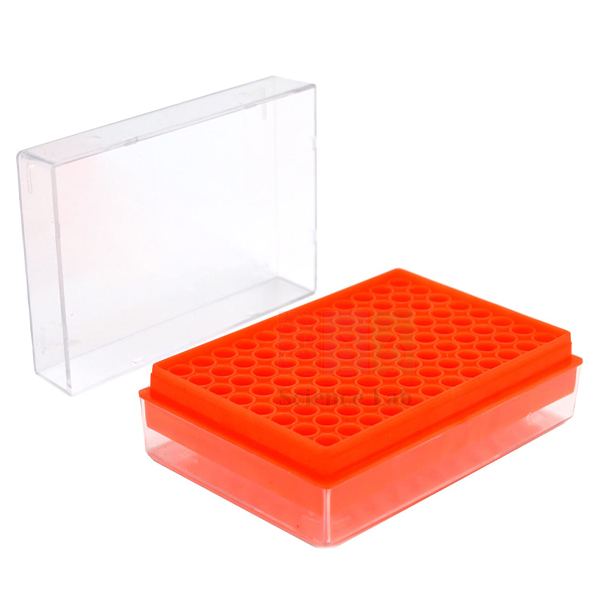
PCR Tube Rack
PCR Tube Rack (Product Code: SLE/CH/70) keeps PCR tubes upright and in order while reactions are set up, loaded and stored. Its top and base are made of tough, transparent polycarbonate with a polypropylene middle section, and the tube positions are spaced uniformly so a multipipette can fill a whole row at once. Several racks stack together to save shelf space. It is made by Jain Scientific Equipments Pvt Ltd (ScienceLab), Ambala, for teaching and research labs buying PCR equipment in India and international markets.
Specifications
| Parameter | Detail |
|---|---|
| Use | Keeping PCR tubes |
| Top and base | Tough, transparent polycarbonate |
| Middle portion | Polypropylene |
| Tube positions | Uniformly placed to facilitate multipipette use |
| Storage | A number of racks can be stacked together to save shelf space |
| Capacity (as listed) | Rack for 0.5 ml and 1.5 ml MCTs |
Typical Use
Setting up a PCR means adding master mix, primers and template to a row of small tubes in exactly the same way. Even spacing lets a multichannel pipette line up with a full row, which speeds up loading and cuts down on missed or doubled wells. The clear polycarbonate top and base let you see the tubes and their liquid levels from above and below, so a quick glance confirms every tube has been filled before it goes into the thermal cycler.
Between runs, stack the loaded or empty racks to keep the bench and cold-store shelves tidy. A rack per student group keeps samples separate in practical classes, and labs that source from a lab plastic ware supplier in India often order these racks with tubes and tips so each workstation is equipped the same way.
Manufacturer
The rack is made by Jain Scientific Equipments Private Limited, an Ambala, Haryana company that trades as ScienceLab and produces plasticware, racks and apparatus for education and research laboratories. More is available on our company profile.
Related Laboratory Equipment
Instruments and plasticware used in the same PCR workflow:
- Polymerase Chain Reaction (PCR) Machine — runs the thermal cycling for the racked tubes
- PCR Microplate — a plate format for larger sample batches
- Micropipette — for measuring reaction components
- MCT Twin Rack — holds 0.5 ml and 1.5 ml tubes for sample preparation
- Micro Centrifuge — brings liquid down to the tube bottom before cycling
Further racks appear in our Chemistry Lab Equipment range.
Frequently Asked Questions
Which tube sizes fit the rack?
Our listing gives the capacity as a rack for 0.5 ml and 1.5 ml MCTs. If you use smaller PCR tubes or strips, send us the tube format through the contact page so we can confirm the fit before you order.
Why is the rack made of two plastics?
The polycarbonate top and base are tough and transparent for visibility, while the middle section is polypropylene.
Can I use a multichannel pipette with it?
Yes — the tube positions are uniformly spaced for multipipette use.
Do the racks stack?
Yes. Several racks can be stacked together to save shelf space.
How should the rack be cleaned?
Wipe with water or a mild detergent and let it dry. Check with us before autoclaving or using strong solvents, as the two plastics behave differently.
What details should a lab include when requesting a quote?
The number of racks, the tube format you use, and the delivery location. We supply across India and international markets.
Request a Quote
Send your PCR Tube Rack requirement via the contact page, or list it in the enquiry cart with any pipettes and tubes you also need.
Last updated: 24 September 2026