- Physics Lab Equipment
- Chemistry Lab Equipment
- Biology Lab Equipment
- Anatomical Lab Equipment
- Learning
- Educational Lab Equipment
- Magnets
- Agriculture
- Astronomy
- Earth Science
- Geography Lab Equipment
- Safety Lab Coat
- Laboratory
- Meteorological
- Electricity & Magnetism
- Heat
- School Lab Equipment
- Lab Glassware
- Science Lab Equipment
- Tvet Lab Equipment
- Robotics Kits Supplier and Manufacturer for Schools India
- Math Lab Equipment Manufacturers and Exporters in Ambala
- STEM Kits Manufacturers and Supplier India
- Engineering Lab Equipment
- Hospital Lab Equipment
- Water, Sanitation & Hygiene Supplies
- Cold Chain, Solar & Communication Equipment
- Nutrition
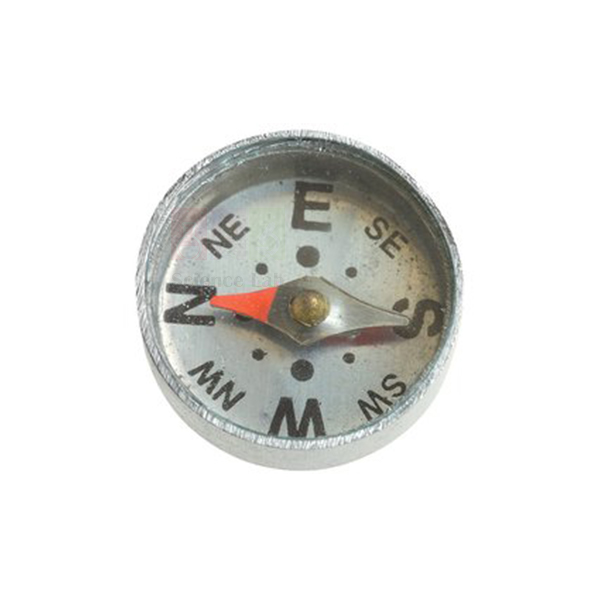
Plotting Compass, Single Glass Face
Plotting Compass, Single Glass Face (Product Code: SLE/PHY/267) is a small magnetic compass in an aluminium case, used to trace magnetic field lines around magnets and current-carrying wires in school physics practicals. Teachers order it in packs of 10 for group work; each compass is 16mm in diameter, glass-faced on one side, with a dial marked with the cardinal and ordinal points. It is made by Jain Scientific Equipments Pvt Ltd (ScienceLab), an OEM manufacturer, at its own factory in Ambala, India, and suits any magnetism experiment kit.
Specifications
| Parameter | Detail |
|---|---|
| Case | Aluminium |
| Face | Glass, on one side |
| Dial | Marked with the cardinal and ordinal points of the compass |
| Diameter | 16mm |
| Pack size | Pack of 10 |
| Product code | SLE/PHY/267 |
| Manufacturer | Jain Scientific Equipments Pvt Ltd (ScienceLab) — OEM |
| Country of origin | India (made in Ambala, Haryana) |
What Is a Plotting Compass Used For?
To map a field, place a bar magnet on a sheet of paper and set the compass near one pole. Mark a dot at each end of the needle, move the compass so its tail sits on the front dot, and repeat; joining the dots traces one field line, and starting from several points builds up the whole pattern. The same method locates neutral points between two magnets and shows the circular field around a straight current-carrying wire or the field of a coil. Because each compass is only 16mm across, plotted points sit close together and the lines come out smooth.
Before use, check that every needle settles in the same direction when the compasses are laid well away from magnets. Store the compasses in their pack, away from strong magnets that could weaken or reverse a needle, and handle them by the aluminium case to protect the glass face. Pair them with a bar magnet for school practicals, and with a current-carrying frame or coil for electromagnetism lessons.
What to Specify When Ordering
- The number of packs of 10 you need for your student groups
- Whether you want this glass-faced style or the Compass Plotting (Clear) version
- Magnets or electromagnetism apparatus to be quoted alongside, if required
OEM Manufacturer
Jain Scientific Equipments Private Limited, trading as ScienceLab, is the OEM (original equipment manufacturer) of the Plotting Compass, Single Glass Face. The compasses are made and packed at the company’s own licensed factory in Saha, Ambala, Haryana, India, and supplied factory-direct to schools, colleges, institutions, dealers and importers who need them in quantity.
Repeat packs for new classes can be ordered from the manufacturer at any time — just ask us. Company information is on the ScienceLab profile.
Related Physics Lab Equipment
Apparatus used with plotting compasses in magnetism lessons:
- Compass Plotting (Clear) — an alternative plotting compass style
- Bar Magnet (Plastic) — a bar magnet whose field students can plot
- Steel Horseshoe Magnet — for plotting the field between two close poles
- Oersted's Apparatus — shows the magnetic effect of a current that the compasses can map
- Magnetic Field Demonstrator — another way to visualise magnetic fields
See all items in Physics Lab Equipment.
Frequently Asked Questions
What size is the Plotting Compass, Single Glass Face?
The Plotting Compass, Single Glass Face is 16mm in diameter, housed in an aluminium case. The small size lets students plot points close together around a magnet, so the field lines they draw are smooth and detailed.
How many compasses are in a pack of the Plotting Compass, Single Glass Face?
The Plotting Compass, Single Glass Face is supplied as a pack of 10. One pack can be shared across several student groups, or each group can have its own pack so several field lines are plotted at the same time.
How do students plot field lines with the Plotting Compass, Single Glass Face?
With the Plotting Compass, Single Glass Face, students mark the needle’s two ends as dots, move the compass forward so its tail sits on the front dot, and repeat. Joining the dots gives one field line around the magnet.
What does “single glass face” mean on this plotting compass?
On the Plotting Compass, Single Glass Face, only one side is glass-faced; the rest is an aluminium case. Students view the needle and the dial of cardinal and ordinal points through the glass from above as they plot.
How should the Plotting Compass, Single Glass Face be stored?
Store the Plotting Compass, Single Glass Face in its pack, well away from strong magnets that could weaken or reverse the needle. Hold each compass by its aluminium case to keep fingerprints and knocks off the glass face.
Who manufactures the Plotting Compass, Single Glass Face?
The Plotting Compass, Single Glass Face is manufactured by Jain Scientific Equipments Pvt Ltd (ScienceLab), the OEM, at its own licensed factory in Saha, Ambala, Haryana, India, and supplied in packs to buyers in India and international markets.
What should I include in a quotation request for the Plotting Compass, Single Glass Face?
For a quotation on the Plotting Compass, Single Glass Face, state the product code SLE/PHY/267, the number of packs of 10, any magnets to be quoted with them, and your delivery location. Use the contact page or the enquiry cart.
Request a Quote
Quotes for the Plotting Compass, Single Glass Face come directly from the manufacturer. Add the pack to the enquiry cart or tell us the number of packs through the contact page.
Last updated: 24 September 2026
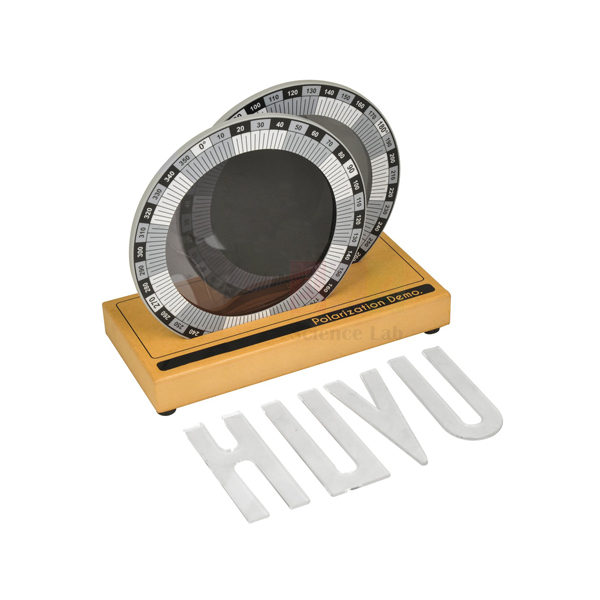
Polarizing Filter Stress Demonstrator
Polarizing Filter Stress Demonstrator (Product Code: SLE/PHY/268) is a large-scale optics demonstrator that uses polarising filters to reveal stress patterns in clear plastic pieces, used in physics and engineering classrooms. Its 5 inch polarising sheets are mounted on a graduated frame on a wooden stand, and it is supplied with clear acrylic pieces of different shapes to squeeze between the filters. It is made by Jain Scientific Equipments Pvt Ltd (ScienceLab), an OEM manufacturer, at its own factory in Ambala, India.
Specifications
| Parameter | Detail |
|---|---|
| Scale | Large-scale demonstrator |
| Filters | 5 inch polarising sheets |
| Mounting | Graduated frame placed on a wooden stand |
| Test pieces | Clear acrylic pieces of different shapes (supplied) |
| Demonstration | Clear pieces are placed between the filters and squeezed, and the stress patterns are observed |
| Product code | SLE/PHY/268 |
| Manufacturer | Jain Scientific Equipments Pvt Ltd (ScienceLab) — OEM |
| Country of origin | India (made in Ambala, Haryana) |
What Is the Polarizing Filter Stress Demonstrator Used For?
The demonstrator introduces photoelasticity. Clear acrylic becomes birefringent when it is stressed: polarised light passing through a loaded piece has its polarisation altered by different amounts wherever the stress differs, and viewing through the second filter turns those differences into coloured bands. The bands crowd together near corners, holes and the points where force is applied, so students can see where a shape is most highly stressed — the reason engineers round off corners in brackets and beams. It doubles as a physics demonstration kit for polarisation itself.
Stand the demonstrator in front of a bright, even light source such as a window or a lamp, and squeeze each acrylic piece slowly and steadily so the class sees the pattern grow; release it and the colours fade. Compare the different shapes one after another. Clean the acrylic and the polarising sheets with a soft cloth only, since scratches show up as marks in the pattern.
OEM Manufacturer
ScienceLab, the trading name of Jain Scientific Equipments Private Limited, is the OEM (original equipment manufacturer) of the Polarizing Filter Stress Demonstrator and builds it at its own licensed factory at Saha, Ambala, Haryana, India. Schools, colleges, institutions, dealers and importers receive it factory-direct, with quotations and any later requests for replacement acrylic pieces handled by the maker — ask us.
The company is a registered MSME enterprise (Udyam UDYAM-HR-01-0003714) and ships export orders under Importer-Exporter Code AAECJ8618A issued by the DGFT. Read more on the ScienceLab profile.
Related Physics Lab Equipment
Items that pair well with a lesson on polarisation and stress:
- Polaroid Slides — hand-held polarising slides for simpler polarisation activities
- Bending Stress In a Beam — a mechanical approach to stress in loaded beams
- Light Guide Demonstrator — another large-scale optics demonstration
- Raybox, 12V — a light source for optics demonstrations
More optics and mechanics items are in Physics Lab Equipment.
Frequently Asked Questions
What does the Polarizing Filter Stress Demonstrator show?
The Polarizing Filter Stress Demonstrator shows stress patterns in clear plastic. When an acrylic piece is squeezed between its polarising filters, coloured bands appear that reveal where the stress is concentrated, making invisible internal forces visible to a whole class.
What comes with the Polarizing Filter Stress Demonstrator?
The Polarizing Filter Stress Demonstrator comes with 5 inch polarising sheets mounted on a graduated frame, placed on a wooden stand, and is supplied with clear acrylic pieces of different shapes so that different stress patterns can be demonstrated.
Why do coloured patterns appear in the Polarizing Filter Stress Demonstrator?
Coloured patterns appear in the Polarizing Filter Stress Demonstrator because stressed acrylic changes the polarisation of light passing through it. The amount of change depends on the stress and on the wavelength, so the second filter shows the stress as bands of colour.
Is the Polarizing Filter Stress Demonstrator suitable for a whole class?
Yes, the Polarizing Filter Stress Demonstrator is a large-scale unit with 5 inch polarising sheets, designed for demonstration at the front of a class. Place it against a bright background so students across the room can watch the patterns change.
Who manufactures the Polarizing Filter Stress Demonstrator?
The Polarizing Filter Stress Demonstrator is manufactured by Jain Scientific Equipments Pvt Ltd (ScienceLab), the OEM, at its own licensed factory in Saha, Ambala, Haryana, India, and supplied direct to buyers in India and international markets.
How do I request a quotation for the Polarizing Filter Stress Demonstrator?
To request a quotation for the Polarizing Filter Stress Demonstrator, send the product code SLE/PHY/268, the number of units, any related optics items you want and your delivery location through the contact page or the enquiry cart.
Request a Quote
Pricing for the Polarizing Filter Stress Demonstrator comes straight from the manufacturer. Use the contact page or add it to the enquiry cart to start your order.
Last updated: 24 September 2026
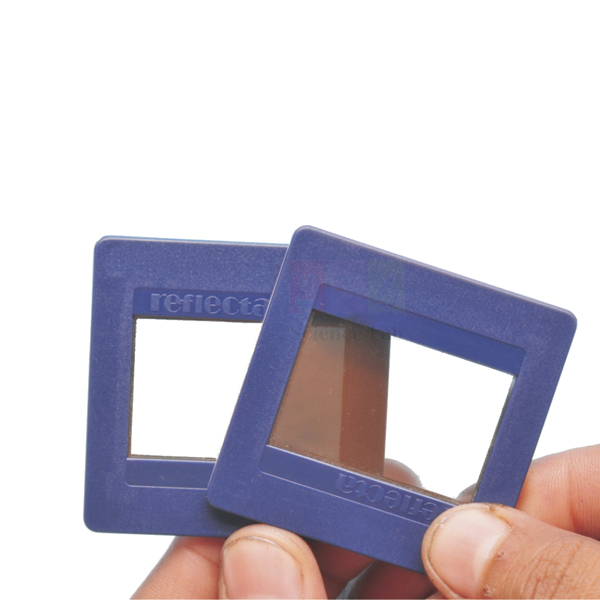
Polaroid Slides
Polaroid Slides (Product Code: SLE/PHY/269) are polarising sheets mounted in square plastic slides, used to demonstrate the polarisation of light in school and college optics lessons. Teachers use them in pairs — one as the polariser and one as the analyser — so students can watch light dim and almost disappear as one slide is turned against the other. They are supplied by Jain Scientific Equipments Pvt Ltd (ScienceLab), Ambala, India, for any optics experiment kit at school level.
Key Details
| Parameter | Detail |
|---|---|
| Polarising material | Polaroid sheet |
| Mounting | Square plastic slides |
| Intended use | Demonstration purposes — polarisation of light |
| Product code | SLE/PHY/269 |
| Supplied by | Jain Scientific Equipments Pvt Ltd (ScienceLab), Ambala, India |
What Are Polaroid Slides Used For?
Hold one slide up to a lamp and the light passing through is dimmed but still visible. Add a second slide in front and rotate it: the brightness rises and falls, and when the two are at right angles very little light gets through. This simple observation shows that light is a transverse wave and gives a qualitative introduction to Malus’s law before any measurements are taken.
The slides also let students explore polarisation in everyday life: look through one at glare reflected from water or a glass surface at an angle, at an LCD screen as the slide is turned, or at clear plastic objects such as rulers placed between two slides to reveal stress patterns. Hold the slides by their plastic mounts, keep them away from heat and solvents, and wipe the sheets gently with a soft, dry cloth.
Supplier
These Polaroid Slides are supplied by Jain Scientific Equipments Private Limited, which trades as ScienceLab and is based in Ambala, Haryana. Schools, colleges, teacher-training institutes and dealers in India and international markets can source them together with light sources, benches and other optics items. Find out more on the ScienceLab profile.
Related Physics Lab Equipment
Items that help build a complete polarisation lesson:
- Polarizing Filter Stress Demonstrator — a large-scale unit for showing stress patterns to a whole class
- Raybox, 12V — a light source to shine through the slides
- Optical Bench Set — a bench set for wider optics practicals
- Electromagnetic Spectrum Chart — places visible light among the electromagnetic waves
Explore Physics Lab Equipment for more.
Frequently Asked Questions
What are Polaroid Slides used for?
Polaroid Slides are used to demonstrate the polarisation of light. Each slide is a polarising sheet mounted in a square plastic frame; looking through two slides while turning one shows the light fading and returning, proving that light behaves as a transverse wave.
How many Polaroid Slides are needed for a demonstration?
A polarisation demonstration needs at least two Polaroid Slides, one acting as polariser and one as analyser. Tell us how many demonstration sets or student groups you are equipping, and we will confirm the pack quantity available.
What happens when two Polaroid Slides are crossed?
When two Polaroid Slides are crossed, with one turned at right angles to the other, very little light passes through and the view goes dark. Turning one slide back gradually restores the brightness, a clear demonstration of polarisation.
How should Polaroid Slides be cleaned and stored?
Clean Polaroid Slides with a soft, dry cloth, holding them by the plastic mount so the polarising sheet is not scratched or marked. Store them flat in a box away from heat, sunlight and solvents between lessons.
Who supplies Polaroid Slides?
Polaroid Slides are supplied by Jain Scientific Equipments Pvt Ltd (ScienceLab), Ambala, Haryana, India. The company handles orders from schools, colleges and dealers in India and international markets, often alongside other optics apparatus.
What should an enquiry for Polaroid Slides include?
An enquiry for Polaroid Slides should include the product code SLE/PHY/269, the number of slides or pairs needed, any light source or optics apparatus to be quoted with them, and the delivery location, sent via the contact page or enquiry cart.
Request a Quote
To buy Polaroid Slides, add them to the enquiry cart or send the number of slides you need through the contact page.
Last updated: 24 September 2026

Investigating Heat Poster
Investigating Heat Poster (Product Code: SLE/PHY/270) is a laminated wall poster used to explain the key concepts of heat in school physics and general science classrooms. It gives teachers and students an illustrated view of heat sources, the transfer of heat energy, heat absorption and the expansion and contraction of matter, making it a natural companion to a heat energy science kit. It is supplied by Jain Scientific Equipments Pvt Ltd (ScienceLab), Ambala, India.
Key Details
| Parameter | Detail |
|---|---|
| Type | Educational wall poster giving a graphic depiction of key heat concepts |
| Finish | Laminated |
| Topics illustrated | Sources of heat; transfer of heat energy; heat absorption; expansion and contraction of matter; further related heat concepts |
| Product code | SLE/PHY/270 |
| Supplied by | Jain Scientific Equipments Pvt Ltd (ScienceLab), Ambala, India |
What Is the Investigating Heat Poster Used For?
Teachers use the poster as a visual anchor when they introduce thermal physics. Before a practical, the illustrations of heat sources and heat transfer give the class a shared picture of what they are about to observe, and afterwards the same panels help students explain their results in their own words. The panel on expansion and contraction of matter can be linked to everyday examples students already know, such as a tight metal lid loosening under warm water.
Because it is laminated, the poster can be wiped clean and kept on display year after year in a busy laboratory or classroom. Mount it at eye level beside the bench where heat practicals take place, and point back to it during revision of radiation experiment kit work and heat-absorption comparisons.
Supplier
Jain Scientific Equipments Private Limited trades as ScienceLab and supplies the Investigating Heat Poster from Ambala, Haryana, India. The company sources the poster alongside the heat apparatus in its physics range, so a school can order the wall display together with the equipment used in the same lessons. Schools, colleges, dealers and importers can request it directly. See our company profile for more about ScienceLab.
Related Physics Lab Equipment
Apparatus that turns the poster’s topics into hands-on practicals:
- Apparatus Heat/Thermal Conductivity — compares how well different materials conduct heat.
- Apparatus Convection In Liquid — shows convection currents, one of the ways heat energy is transferred.
- Heat Absorption & Radiation Comparator — for practical work on heat absorption by different surfaces.
- Expansion Of Liquids Apparatus — demonstrates the expansion of matter when it is heated.
- Heat Transfer Kit — a set for investigating how heat energy moves.
Browse the full Physics Lab Equipment category for more heat apparatus.
Frequently Asked Questions
What topics does the Investigating Heat Poster cover?
The Investigating Heat Poster gives a graphic depiction of key heat concepts, including an illustrated view of the sources of heat, the transfer of heat energy, heat absorption and the expansion and contraction of matter, along with further related heat topics.
Is the Investigating Heat Poster laminated?
Yes. The Investigating Heat Poster is laminated, which protects the printed surface from handling and makes it easy to wipe clean, so it suits classrooms and laboratories where the same poster is used by several classes every year.
What size is the Investigating Heat Poster?
The dimensions of the Investigating Heat Poster are not stated in this listing. If wall space or a display frame limits the size you can use, ask through our contact page before ordering and we will confirm the details.
Which lessons is the Investigating Heat Poster suited to?
The Investigating Heat Poster suits lessons on thermal energy and heat transfer, heat absorption, and the expansion and contraction of matter. It also works well as a reference on the wall while students carry out practicals on conduction, convection and radiation.
Who supplies the Investigating Heat Poster?
The Investigating Heat Poster is supplied by Jain Scientific Equipments Pvt Ltd (ScienceLab), Ambala, Haryana, India. The company sources the poster and quotes it for schools, colleges, dealers and importers, on its own or with heat apparatus from the same physics range.
What should a quotation request for the Investigating Heat Poster include?
A quotation request for the Investigating Heat Poster should give the product code SLE/PHY/270, the number of posters, any heat apparatus to be quoted with them and the delivery location in India or abroad. Send it through the contact page or the enquiry cart.
Request a Quote
To order the Investigating Heat Poster, send the quantity and delivery details through our contact page or add it to the enquiry cart with the rest of your physics requirements.
Last updated: 24 September 2026
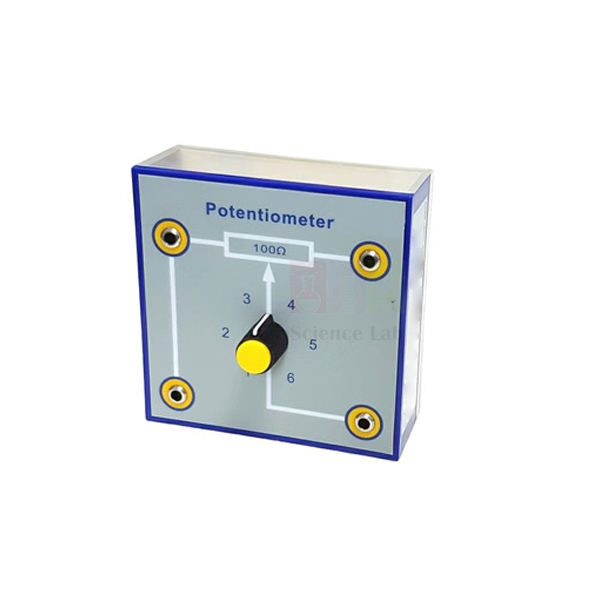
Potentiometer Module
Potentiometer Module (Product Code: SLE/PHY/271) is a rotary linear potentiometer mounted on a channel box, used as a variable resistor or voltage divider in student electricity practicals. This listing is the 100 Ω value, with connections made to 4 mm sockets and a fast-blow fuse that protects the module when students connect it wrongly. It is supplied by Jain Scientific Equipments Pvt Ltd (ScienceLab), Ambala, India.
Specifications
| Parameter | Detail |
|---|---|
| Component | Rotary linear potentiometer |
| Mounting | Channel box |
| Resistance value | 100 Ω (a choice of values is offered) |
| Connections | 4 mm sockets |
| Protection | Fast-blow fuse against wrong connection by students |
| Product code | SLE/PHY/271 |
| Supplied by | Jain Scientific Equipments Pvt Ltd (ScienceLab), Ambala, India |
What Is the Potentiometer Module Used For?
A potentiometer has a resistive track and a moving wiper. Connected across a supply, it works as a voltage divider that gives a smoothly adjustable output for lamp-brightness, motor-speed or diode-characteristic experiments; used with one end of the track and the wiper only, it becomes a simple variable resistor for setting the current in a series circuit. That flexibility makes the module a useful part of an Ohm law experiment kit.
The linear track means equal turns of the knob give roughly equal changes in resistance, which helps students plot tidy graphs. The 100 Ω value suits low-resistance circuits in which a larger current must flow; for finer control at lower currents, compare the 1 kΩ module. If the module stops responding after a wiring mistake, the fast-blow fuse is the first thing to check.
What to Specify When Ordering
- Resistance value: this listing is 100 Ω; the 1 kΩ Potentiometer Module is a separate item.
- Number of modules per bench or student group.
- 4 mm leads, meters or a power supply, if they should be quoted together.
Supplier
ScienceLab is the trading name of Jain Scientific Equipments Private Limited, which supplies the Potentiometer Module from Ambala, Haryana, India. The company sources this channel-box module with the rest of its electricity apparatus and quotes it to schools, colleges, dealers and importers in India and international markets. Follow-up orders for extra modules or a different resistance value can be requested from us directly. Read more on the ScienceLab profile page.
Related Physics Lab Equipment
Items that are wired up with the potentiometer module:
- Potentiometer Module, 1 Kohm — the higher-resistance version for finer current control.
- Stackable Leads — plug leads for the module’s 4 mm sockets.
- Power Supply, Stepped — a low-voltage source for voltage-divider circuits.
- Ammeter Voltmeter — reads the current and voltage the potentiometer sets.
- Standard Digital Multimeter — checks resistance between the terminals.
See the complete Physics Lab Equipment range for more circuit apparatus.
Frequently Asked Questions
What resistance value is the Potentiometer Module?
The Potentiometer Module listed here has a value of 100 Ω. The original listing notes that a choice of values is available, and a 1 kΩ Potentiometer Module is listed separately, so state the value you need when you ask for a quotation.
How is the Potentiometer Module connected into a circuit?
The Potentiometer Module is connected through 4 mm sockets on its channel box, so standard 4 mm plug leads push straight in. Students can add the potentiometer to a bench circuit quickly and remove it again cleanly at the end of the practical.
What protects the Potentiometer Module from wrong connections?
The Potentiometer Module has a fast-blow fuse that protects it against wrong connections by students. If a short circuit or excessive current occurs, the fuse opens the circuit quickly, helping to protect the potentiometer during a busy practical class.
Is the Potentiometer Module linear or logarithmic?
The Potentiometer Module uses a rotary linear potentiometer. On a linear track, resistance changes in proportion to how far the knob is turned, which makes readings easier to predict and graph than with a logarithmic, audio-taper potentiometer.
What current can the Potentiometer Module carry?
A power or current rating for the Potentiometer Module is not stated in this listing. Before using it in higher-current circuits, send your circuit details through our contact page and we will advise whether the 100 Ω module is suitable.
Who supplies the Potentiometer Module?
The Potentiometer Module is supplied by Jain Scientific Equipments Pvt Ltd (ScienceLab) from Ambala, Haryana, India. The company sources the module and quotes it for schools, colleges, dealers and importers, together with leads, meters and power supplies where needed.
Request a Quote
Send the resistance value, quantity and delivery location for the Potentiometer Module through our contact page, or add it to the enquiry cart with the leads and meters you need.
Last updated: 24 September 2026

Power Supply Variable
Power Supply Variable (Product Code: SLE/PHY/272) is a continuously variable AC/DC power supply unit for lab demonstrations and advanced-level student experiments in college and senior school physics. A rotary knob sets the output anywhere from 0 to 25 V at a combined current of up to 8.5 A, and the voltage is shown on a bright green 12.5 mm LED display. It is supplied by Jain Scientific Equipments Pvt Ltd (ScienceLab), Ambala, India.
Specifications
| Parameter | Detail |
|---|---|
| Output | Fine, smooth, continuously variable AC or DC voltage |
| Output voltage | 0 to 25 V, set by rotary knob |
| Current | 8.5 A combined maximum, continuously rated, AC or DC |
| DC smoothing | Internal 2200 µF capacitor |
| Display | Bright green 12.5 mm LED digital voltage display; AC or DC reading selected by toggle switch |
| Rectification | Heavy-duty 40 A Schottky barrier diodes |
| Transformer | High-performance toroidal transformer; no cooling fan needed |
| Primary protection | Slow-blow fuse |
| Transformer protection | Thermal fuse |
| Secondary protection | High-speed, resettable, microprocessor-controlled trip that distinguishes a real short circuit from a temporary current surge |
| Dimensions | 300 x 115 x 155 mm (W x D x H) |
| Weight | 5.5 kg |
| Product code | SLE/PHY/272 |
| Supplied by | Jain Scientific Equipments Pvt Ltd (ScienceLab), Ambala, India |
What Is the Variable Power Supply Used For?
Because the voltage can be wound up smoothly from zero, the unit suits experiments in which a quantity must change in small, even steps: current-voltage graphs for resistors, lamps and diodes, the heating effect of a current, or electromagnets and coils run at a controlled level. The combined 8.5 A rating leaves headroom for low-resistance loads such as heating elements, and the AC or DC output lets one unit serve both rectifier and transformer demonstrations.
Start each experiment with the knob at zero and raise the voltage while watching the display. If the protection trips, clear the fault and reset the unit rather than switching it on and off repeatedly; the microprocessor trip is designed to tell a brief surge, such as a cold lamp filament switching on, from a genuine short circuit. The fanless design also keeps the room quiet during a demonstration.
What to Specify When Ordering
- Number of units: for example one per demonstration bench or per student group in advanced-level practicals.
- Meters, leads or loads to be quoted with the power supply.
- The mains supply at your site, so we can confirm the unit matches it before dispatch.
Supplier
Jain Scientific Equipments Private Limited, trading as ScienceLab, supplies the Power Supply Variable from Ambala, Haryana, India. The company sources this bench power supply for its physics range and quotes it to colleges, schools, training institutes, dealers and importers in India and international markets. For tender and vendor registration, the supplying company’s details are GSTIN 06AAECJ8618A1ZT and LEI 3358004HRD1JIVXKYX49. More about the company is on our profile page.
Related Physics Lab Equipment
Equipment commonly used with a variable bench supply:
- Power Supply, Smoothed — a stepped supply with smoothed output for electronics circuits.
- Ammeter Voltmeter — reads current and voltage in the powered circuit.
- Stackable Leads — connecting leads for bench circuits.
- Potentiometer Module — a variable resistor module for current-control experiments.
- High Tension Power Supply — an alternative for experiments that need higher voltages.
Find more meters and supplies in the Physics Lab Equipment category.
Frequently Asked Questions
What voltage and current does the Power Supply Variable provide?
The Power Supply Variable gives a continuously variable output from 0 to 25 V, set with a rotary knob, at a continuously rated combined current of 8.5 A. The output can be AC or DC, and the DC is smoothed by an internal 2200 µF capacitor.
How is the output voltage of the Power Supply Variable displayed?
The Power Supply Variable shows its output voltage on a bright green 12.5 mm LED digital display. A toggle switch selects whether the display reads the AC or the DC voltage, so students can check the setting at a glance before connecting a load.
How is the Power Supply Variable protected against short circuits?
The Power Supply Variable has a high-speed, resettable, microprocessor-controlled trip on the secondary that tells a real short circuit from a temporary current surge. The primary is protected by a slow-blow fuse and the transformer by a thermal fuse.
Does the Power Supply Variable have a cooling fan?
No. The Power Supply Variable uses heavy-duty 40 A Schottky barrier diodes for rectification and a high-performance toroidal transformer, which reduce weight and wasted power and remove the need for a noisy cooling fan during lessons.
What are the size and weight of the Power Supply Variable?
The Power Supply Variable measures 300 x 115 x 155 mm (W x D x H) and weighs 5.5 kg, a bench-top size that fits beside demonstration apparatus or on a student workstation in an advanced-level physics laboratory.
Is a calibration certificate available for the Power Supply Variable?
Calibration-certificate availability for the Power Supply Variable should be discussed with us before ordering. Explain through the contact page what the display reading needs to be checked against and why, and we will tell you what can be provided.
Who supplies the Power Supply Variable?
The Power Supply Variable is supplied by Jain Scientific Equipments Pvt Ltd (ScienceLab), Ambala, Haryana, India. The company sources the unit and quotes it to colleges, schools, dealers and importers in India and international markets.
Request a Quote
Request a Power Supply Variable quotation through our contact page, or add it to the enquiry cart together with meters and leads. Include the quantity and delivery location so the quote covers everything you need.
Last updated: 24 September 2026
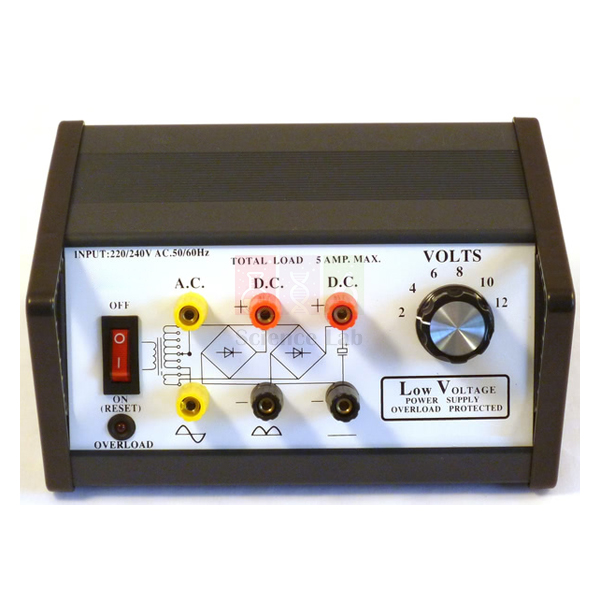
Power Supply, Smoothed
Power Supply, Smoothed (Product Code: SLE/PHY/273) is a stepped low-voltage bench supply with a specially smoothed output, used to power electronics circuits in school and college laboratories. It delivers 2 to 12 V AC or DC in 6 steps at 5 A from a 230 V AC, 50 Hz mains input, and it is the smoothed version of the Power Supply, Stepped. It is supplied by Jain Scientific Equipments Pvt Ltd (ScienceLab), Ambala, India.
Specifications
| Parameter | Detail |
|---|---|
| Type | Stepped power supply, specially smoothed for electronics applications |
| Output | 2-12 V AC/DC in 6 steps |
| Current | 5 A |
| Input | 230 V AC, 50 Hz |
| Dimensions | 220 x 110 x 145 mm (W x H x D) |
| Related model | Same as the Power Supply, Stepped, with a smoothed output |
| Product code | SLE/PHY/273 |
| Supplied by | Jain Scientific Equipments Pvt Ltd (ScienceLab), Ambala, India |
What Is the Smoothed Power Supply Used For?
Transistors, integrated circuits, LEDs and logic gates behave best on a steady DC voltage. A plain rectified supply carries ripple that can make an amplifier hum, upset a timer circuit or make meter readings drift, so this unit adds smoothing to the stepped design. That makes it a practical low-voltage source for electronics practicals such as transistor characteristics, rectifier circuits and simple amplifier work.
Choose the lowest step that will run the circuit, switch off before moving to a different step, and keep the total load within the 5 A rating. For general electricity work with lamps and motors, where ripple does not matter, the standard stepped supply is an alternative, so many laboratories keep both on the shelf.
What to Specify When Ordering
- Smoothed output (this item) or the standard Power Supply, Stepped.
- Number of units per bench or student group.
- Confirmation that your mains matches the 230 V AC, 50 Hz input.
- Leads, meters or components to be quoted with it.
Supplier
ScienceLab, the trading name of Jain Scientific Equipments Private Limited, supplies the Power Supply, Smoothed from Ambala, Haryana, India. The company sources both the smoothed and the standard stepped versions of this supply, so a laboratory can equip its electronics and general electricity benches from one quotation. Enquiries for additional units, or for matching an earlier supply, can be sent to us directly. The ScienceLab profile has more about the company.
Related Physics Lab Equipment
Supplies, meters and components used on an electronics bench:
- Power Supply, Stepped — the unsmoothed version for general electricity work.
- Power Supply Variable — a continuously variable alternative with a digital display.
- Standard Digital Multimeter — checks the output voltage and circuit readings.
- Stackable Leads — connecting leads for the bench circuit.
- NPN Transistor — a component for transistor experiments run from the supply.
Browse the Physics Lab Equipment category for more power supplies.
Frequently Asked Questions
What output does the Power Supply, Smoothed give?
The Power Supply, Smoothed gives 2 to 12 V AC or DC, selected in 6 steps, at a current of 5 A. Its output is specially smoothed, which makes it better suited to electronics circuits than an ordinary stepped supply.
How does the Power Supply, Smoothed differ from the Power Supply, Stepped?
The Power Supply, Smoothed is the same unit as the Power Supply, Stepped, but its output is specially smoothed for electronics applications. Choose the smoothed version for transistors and other sensitive circuits, and the stepped version for general electricity work.
What mains input does the Power Supply, Smoothed need?
The Power Supply, Smoothed runs from a 230 V AC, 50 Hz mains input. If your laboratory uses a different mains voltage or frequency, tell us through the contact page before ordering so we can confirm suitability.
What are the dimensions of the Power Supply, Smoothed?
The Power Supply, Smoothed measures 220 x 110 x 145 mm (W x H x D), a compact bench-top size that leaves room for circuit boards, components and meters on a student workstation.
Who supplies the Power Supply, Smoothed?
The Power Supply, Smoothed is supplied by Jain Scientific Equipments Pvt Ltd (ScienceLab), Ambala, Haryana, India. The company sources the unit and quotes it for schools, colleges, dealers and importers in India and international markets.
What should a quotation request for the Power Supply, Smoothed include?
A quotation request for the Power Supply, Smoothed should give the product code SLE/PHY/273, the number of units, your mains supply and any leads or meters needed with it. Send it through the contact page or the enquiry cart.
Request a Quote
Ask for a Power Supply, Smoothed quotation through our contact page or add it to the enquiry cart; mention whether you also need the standard stepped version so both can be quoted together.
Last updated: 24 September 2026

Prism – Acrylic, Set of 7
Prism – Acrylic, Set of 7 (Product Code: SLE/PHY/274) is a set of seven polished acrylic optical blocks used to study reflection, refraction and total internal reflection with a ray box in school and college optics lessons. Every block is 25 mm thick with all faces fully polished, and the shapes cover bi-convex, bi-concave, rectangular, semi-circular and three triangular prisms. It is made by Jain Scientific Equipments Pvt Ltd (ScienceLab), an OEM manufacturer, at its own factory in Ambala, India.
Specifications
| Parameter | Detail |
|---|---|
| Number of blocks | 7 |
| Material | Acrylic |
| Thickness | 25 mm (all blocks) |
| Finish | All faces fully polished |
| Bi-convex block | 75 mm long curved faces, 100 mm radius |
| Bi-concave block | 75 mm long curved faces, 100 mm radius |
| Rectangular block | 75 x 50 mm |
| Semi-circular block | 75 mm diameter |
| Equilateral triangle | 60° x 60° x 60°, 58 mm side |
| Right-angled isosceles triangle | 90° x 45° x 45°, 75 mm hypotenuse |
| 30-60-90 triangle | 90° x 60° x 30°, 75 mm hypotenuse |
| Product code | SLE/PHY/274 |
| Manufacturer | Jain Scientific Equipments Pvt Ltd (ScienceLab) — OEM |
| Country of origin | India (made in Ambala, Haryana) |
What Is the Acrylic Prism Set Used For?
Laid flat on paper in the path of a ray box beam, each block demonstrates a different part of the optics syllabus. The rectangular block shows lateral displacement and lets students work out refractive index from the angles of incidence and refraction; the semi-circular block is the standard shape for finding the critical angle and showing total internal reflection; and the bi-convex and bi-concave blocks make parallel rays converge or diverge like thin lenses drawn in two dimensions.
The 60° triangle disperses white light into a spectrum, while the two right-angled triangles show how a prism can turn a ray through a right angle or send it back the way it came by total internal reflection, the principle behind periscopes and binoculars. As a compact optics experiment kit for school benches, the set rewards careful handling: store the blocks so they do not rub together, and clean them with a soft cloth rather than solvents, which can craze acrylic.
What to Specify When Ordering
- Number of sets, usually one per student group for ray-optics practicals.
- Ray boxes and slit plates to be quoted with the blocks.
- Whether glass prisms or a glass rectangular block are also needed for comparison.
OEM Manufacturer
Jain Scientific Equipments Private Limited, which trades as ScienceLab, is the OEM (original equipment manufacturer) of this acrylic prism set and makes it at its own licensed factory at Saha, Ambala, Haryana, India. Buying from the manufacturer means schools, colleges, dealers and importers receive the complete seven-block set straight from the source rather than through a trader. Replacement blocks or additional sets for new laboratories can be requested from us directly. Our company profile has more about the business.
Related Physics Lab Equipment
Light sources and optical parts used with the blocks:
- Raybox, 12V — the light source that produces the rays the blocks refract.
- Raybox Slit Plates — split the light into single or multiple narrow rays.
- Prism, Clear Glass — a glass prism for comparing refraction with acrylic.
- Prism – Glass Rectangular Block — a glass block for refractive-index work.
- Lenses Cylindrical Glass, Biconvex — a cylindrical lens for converging-ray experiments.
More optics apparatus is listed in the Physics Lab Equipment category.
Frequently Asked Questions
Which shapes are in the Prism – Acrylic, Set of 7?
The Prism – Acrylic, Set of 7 contains a bi-convex block, a bi-concave block, a 75 x 50 mm rectangle, a 75 mm semi-circular block and three triangles: 60-60-60° with a 58 mm side, and 90-45-45° and 90-60-30° with 75 mm hypotenuses.
How thick are the blocks in the acrylic prism set?
Every block in the Prism – Acrylic, Set of 7 is 25 mm thick, and all faces are fully polished. That thickness gives a block that stands steadily on paper and a face tall enough to trace a ray box beam clearly.
What is the radius of the curved blocks in the set?
In the Prism – Acrylic, Set of 7, the bi-convex and bi-concave blocks both have 75 mm long curved faces with a 100 mm radius, so students can compare converging and diverging ray paths through matching curvatures.
Is acrylic suitable for refraction experiments?
Yes. For school ray-optics work, the Prism – Acrylic, Set of 7 shows refraction, total internal reflection and dispersion clearly, and acrylic is lighter and less likely to shatter than glass if a block is dropped. Glass prisms are listed separately if you prefer glass.
Who manufactures the Prism – Acrylic, Set of 7?
The Prism – Acrylic, Set of 7 is manufactured by Jain Scientific Equipments Pvt Ltd (ScienceLab), the OEM, at its own licensed factory at Saha, Ambala, Haryana, India, and is supplied factory-direct to schools, colleges, dealers and importers.
Can the acrylic prism set be ordered for a whole class?
Yes. The Prism – Acrylic, Set of 7 can be quoted in class quantities, usually one set per student group, together with ray boxes and slit plates. Send the number of sets and the delivery location in India or abroad through our contact page.
Request a Quote
Ask for a Prism – Acrylic, Set of 7 quotation through the contact page or add it to the enquiry cart. Quotations come straight from the manufacturer, so questions about class sets or matching ray boxes are answered in one reply.
Last updated: 24 September 2026