- Physics Lab Equipment
- Chemistry Lab Equipment
- Biology Lab Equipment
- Anatomical Lab Equipment
- Learning
- Educational Lab Equipment
- Magnets
- Agriculture
- Astronomy
- Earth Science
- Geography Lab Equipment
- Safety Lab Coat
- Laboratory
- Meteorological
- Electricity & Magnetism
- Heat
- School Lab Equipment
- Lab Glassware
- Science Lab Equipment
- Tvet Lab Equipment
- Robotics Kits Supplier and Manufacturer for Schools India
- Math Lab Equipment Manufacturers and Exporters in Ambala
- STEM Kits Manufacturers and Supplier India
- Engineering Lab Equipment
- Hospital Lab Equipment
- Water, Sanitation & Hygiene Supplies
- Cold Chain, Solar & Communication Equipment
- Nutrition
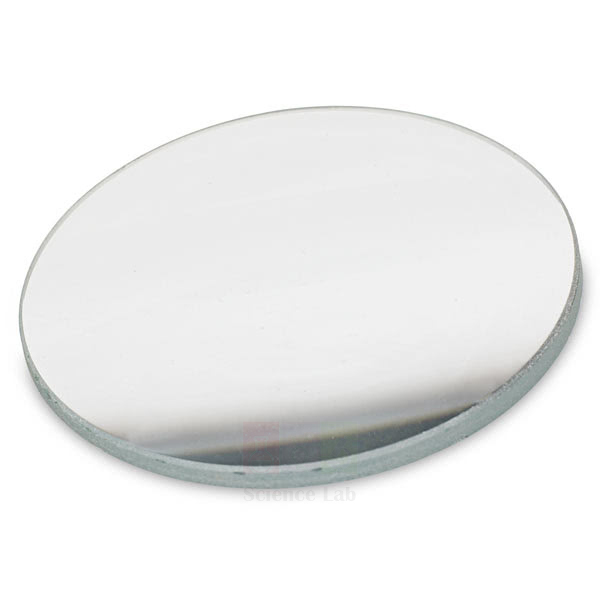
Mirror, Concave
Mirror, Concave (Product Code: SLE/PHY/252) is a 50 mm diameter glass concave mirror used to form real and virtual images and to find focal length in school and college optics practicals. Optically worked, with a 75 mm focal length and a silvered back under a protective coating, it comes in packs of 10 so a whole class can work at the same time. It is made by Jain Scientific Equipments Pvt Ltd (ScienceLab), an OEM manufacturer, at its own factory in Ambala, India.
Specifications
| Parameter | Detail |
|---|---|
| Mirror type | Concave |
| Material | Glass, optically worked |
| Diameter | 50 mm |
| Focal length | 75 mm |
| Backing | Silvered back with protective coating |
| Pack size | 10 mirrors |
| Product code | SLE/PHY/252 |
| Manufacturer | Jain Scientific Equipments Pvt Ltd (ScienceLab) — OEM |
| Country of origin | India (made in Ambala, Haryana) |
What Is a Concave Mirror Used For?
Students find the focal length quickly by focusing a distant window or lamp onto a screen and measuring the mirror-to-image distance, which should come out close to 75 mm. They then move an object, such as an illuminated pin, to different distances and watch the image change from real and inverted to virtual, upright and magnified once the object is inside the focal point — the principle behind shaving mirrors and torch reflectors.
For the u–v method, the mirror is set on an optical bench and pairs of object and image distances are recorded to calculate f from the mirror formula. Because the reflecting silver is on the back of the glass, clean the front gently with a soft cloth and take care not to scratch the protective coating. With ten mirrors per pack, this physics lab equipment lets every group in a school class run the practical together.
What to Specify When Ordering
- The number of packs required (each pack holds 10 mirrors).
- Whether mirror holders or an optical bench should be quoted, as the listing covers the mirrors only.
- Whether convex and plane mirrors are also needed for a complete reflection unit.
OEM Manufacturer
Jain Scientific Equipments Private Limited, the company behind the ScienceLab brand, is the OEM (original equipment manufacturer) of the Mirror, Concave, which is produced at its own licensed factory at Saha, Ambala, Haryana, India. Schools, colleges, dealers and importers receive the mirrors factory-direct instead of through a middleman, and repeat packs can be ordered from the same source. For replacements or larger quantities, ask us; the ScienceLab profile has more about the company.
Related Physics Lab Equipment
These items help run a complete curved-mirror practical:
- Mirror, Convex — the diverging counterpart for comparing image types.
- Mirror, Plane Glass — for introducing the laws of reflection first.
- Optical Bench Kit — supports the u–v method of finding focal length.
- Meter Stick, White — measures object and image distances on the bench.
- Concave Mirror — an alternative concave mirror listed separately.
More optics apparatus is listed in the Physics Lab Equipment category.
Frequently Asked Questions
What is the focal length of the Mirror, Concave?
The Mirror, Concave has a focal length of 75 mm and a diameter of 50 mm. The short focal length lets students find the focus on an ordinary bench and form real images of a distant object only a few centimetres in front of the mirror.
How many mirrors come in a pack of the Mirror, Concave?
The Mirror, Concave is supplied in packs of 10. One pack equips several student groups at once, so a whole class can carry out focal-length and image-formation practicals together rather than waiting to share a single mirror.
What is the Mirror, Concave made of?
The Mirror, Concave is made of optically worked glass with a silvered back protected by a coating. Light passes through the glass front to the silvered back, so keep both faces free of scratches and clean them only with a soft cloth.
How do students measure focal length with the Mirror, Concave?
To measure focal length with the Mirror, Concave, focus light from a distant object onto a screen and measure the distance from mirror to sharp image. For better accuracy, use the u–v method on an optical bench and calculate f from the mirror formula.
Who manufactures the Mirror, Concave?
The Mirror, Concave is manufactured by Jain Scientific Equipments Pvt Ltd (ScienceLab), an OEM manufacturer, at its own licensed factory at Saha, Ambala, Haryana, India. Buyers order packs direct from the manufacturer, which also handles repeat orders and quotations.
Is a holder included with the Mirror, Concave?
The listing for the Mirror, Concave describes the mirrors only and does not mention a holder or stand. If you need mirror holders or an optical bench for the practical, include them in your enquiry and ScienceLab will quote a complete set.
Request a Quote
Quotations for the Mirror, Concave (SLE/PHY/252) come direct from the manufacturer. Tell us how many packs you need through the ScienceLab contact page, or add the mirrors to the enquiry cart.
Last updated: 24 September 2026
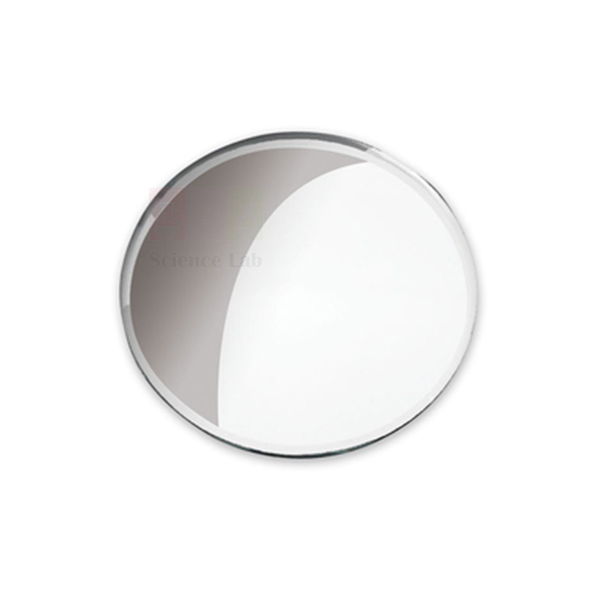
Mirror, Convex
Mirror, Convex (Product Code: SLE/PHY/253) is a 50 mm diameter glass convex mirror used to show how diverging mirrors form small, upright virtual images in school and college optics lessons. It has a 100 mm focal length, an optically worked surface and a silvered back with a protective coating, and it comes in packs of 10 for class sets. It is made by Jain Scientific Equipments Pvt Ltd (ScienceLab), an OEM manufacturer, at its own factory in Ambala, India.
Specifications
| Parameter | Detail |
|---|---|
| Mirror type | Convex |
| Material | Glass, optically worked |
| Diameter | 50 mm |
| Focal length | 100 mm |
| Backing | Silvered back with protective coating |
| Pack size | 10 mirrors |
| Product code | SLE/PHY/253 |
| Manufacturer | Jain Scientific Equipments Pvt Ltd (ScienceLab) — OEM |
| Country of origin | India (made in Ambala, Haryana) |
What Is a Convex Mirror Used For?
Whatever the object distance, a convex mirror gives an image that is virtual, upright and smaller than the object, and students can confirm this by viewing a pencil or their own face at different distances. Comparing its wide field of view with that of a plane mirror explains why convex mirrors are used as vehicle rear-view mirrors and at blind corners.
Finding the 100 mm focal length takes more care than with a concave mirror because the image cannot be caught on a screen; a common method uses a convex lens to form a real image first and then places the mirror in the converging beam so the light retraces its path. Mount the mirror securely, handle it by its edge and keep the protective backing free of scratches. Alongside concave and plane mirrors, it completes a set of optics lab equipment for the reflection topic.
What to Specify When Ordering
- The number of packs required (each pack holds 10 mirrors).
- Whether a convex lens and optical bench should be quoted for the focal-length method.
- Whether concave and plane mirrors are also needed so students can compare all three types.
OEM Manufacturer
The Mirror, Convex is manufactured by Jain Scientific Equipments Private Limited, which trades as ScienceLab and acts as the OEM (original equipment manufacturer) for this mirror. It is made at the company's own licensed factory in Saha, Ambala, Haryana, India, and schools, colleges, dealers and importers buy it factory-direct, with quotations from the maker. For buyers who need company details on file, Jain Scientific Equipments Private Limited is incorporated under CIN U29309HR2020PTC087597, and its Saha factory holds Factory Licence AMB-ONLINE-CHD-J-414. For repeat packs or replacements, ask us, and visit the ScienceLab profile for more about the company.
Related Physics Lab Equipment
These items are used with the convex mirror in reflection and image-formation lessons:
- Mirror, Concave — the converging counterpart for comparing real and virtual images.
- Mirror, Plane Glass — for comparing field of view with a flat mirror.
- Convex Lens — forms the real image used in the lens-and-mirror focal-length method.
- Optical Bench Set — holds lens, mirror and object in line for measurements.
- Convex Mirror — an alternative convex mirror listed separately.
Browse more optics apparatus in the Physics Lab Equipment category.
Frequently Asked Questions
What is the focal length of the Mirror, Convex?
The Mirror, Convex has a focal length of 100 mm and a diameter of 50 mm. Because a convex mirror diverges light, its focus is virtual and lies behind the mirror, so students measure it with an auxiliary convex lens rather than a simple screen.
What kind of image does the Mirror, Convex form?
The Mirror, Convex always forms a virtual, upright and diminished image, whatever the distance of the object. This property gives convex mirrors their wide field of view and links the lesson directly to vehicle and road-safety mirrors students see every day.
How many mirrors are in a pack of the Mirror, Convex?
The Mirror, Convex comes in packs of 10, enough for several student groups to compare convex, concave and plane mirrors in the same lesson. Order the number of packs that matches your class size and number of benches.
What is the Mirror, Convex made of?
The Mirror, Convex is optically worked glass with a silvered back and a protective coating over the silvering. Handle it by its edge, avoid placing it face-down on rough benches and wipe it only with a soft, clean cloth.
Who manufactures the Mirror, Convex?
The Mirror, Convex is manufactured by Jain Scientific Equipments Pvt Ltd (ScienceLab), an OEM manufacturer, at its own licensed factory in Saha, Ambala, Haryana, India. Schools, dealers and importers buy it direct from the manufacturer, which also issues quotations.
Can the Mirror, Convex be ordered in bulk?
Yes, the Mirror, Convex can be quoted in bulk packs for schools, colleges, dealers and importers in India and international markets. State the number of packs, any related optics items and your delivery location when you send an enquiry through the contact page.
Request a Quote
Request a manufacturer-direct quotation for the Mirror, Convex (SLE/PHY/253) through the ScienceLab contact page, or add the packs you need to the enquiry cart.
Last updated: 24 September 2026
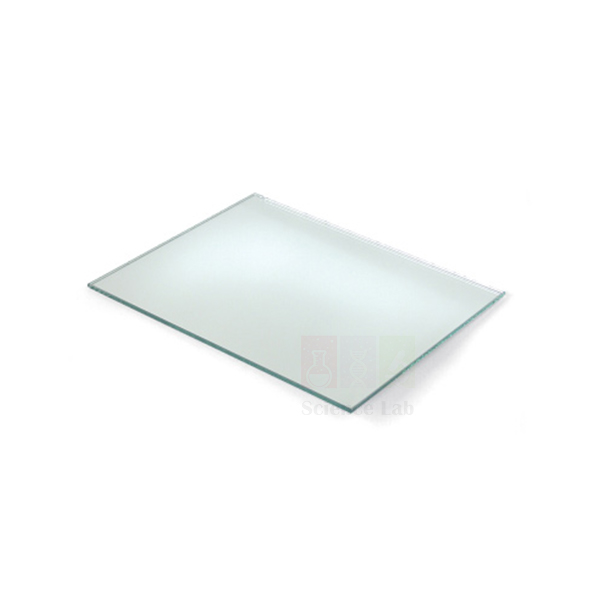
Mirror, Plane Glass
Mirror, Plane Glass (Product Code: SLE/PHY/254) is an unmounted 150 x 100 mm flat glass mirror used to study the laws of reflection and image formation in school and college physics laboratories. Made of optically worked glass, silver backed with a protective coating, it is sold in packs of 10 so each student group can have its own mirror. It is made by Jain Scientific Equipments Pvt Ltd (ScienceLab), an OEM manufacturer, at its own factory in Ambala, India.
Specifications
| Parameter | Detail |
|---|---|
| Mirror type | Plane, unmounted |
| Material | Optically worked glass |
| Size | 150 x 100 mm |
| Backing | Silver backed with protective coating |
| Pack size | 10 mirrors |
| Product code | SLE/PHY/254 |
| Manufacturer | Jain Scientific Equipments Pvt Ltd (ScienceLab) — OEM |
| Country of origin | India (made in Ambala, Haryana) |
What Is a Plane Glass Mirror Used For?
The classic ray-tracing practical stands the mirror upright on a sheet of paper and uses pins or a ray box to show that the angle of reflection equals the angle of incidence, and that the image lies as far behind the mirror as the object is in front. The 150 x 100 mm size gives a wide reflecting area for these drawings, and students can also study lateral inversion by reading text in the mirror.
Two mirrors placed at an angle produce multiple images, so students can test how the number of images depends on the angle between them, while a pair of mirrors in a tube makes a simple periscope. Because the mirrors are unmounted, support them with a block, clip or holder so they stand vertical, handle them carefully by the edges and keep the silvered back from being scratched. Packs of ten make this basic laboratory equipment for schools in India easy to issue to every bench.
What to Specify When Ordering
- The number of packs required (each pack holds 10 mirrors).
- Whether mirror holders or supports should be quoted, as the mirrors are supplied unmounted.
- Whether a ray box or curved mirrors are also needed for the full reflection topic.
OEM Manufacturer
Jain Scientific Equipments Private Limited makes the Mirror, Plane Glass under its ScienceLab name as the OEM (original equipment manufacturer), at the company's own licensed factory at Saha, Ambala, Haryana, India. Schools, colleges, dealers and importers therefore source class quantities directly from the manufacturer rather than from a trader, with quotations issued by the maker. Replacement mirrors and repeat packs can be requested straight from us, and the ScienceLab profile explains more about the company.
Related Physics Lab Equipment
These items are used with plane mirrors in reflection practicals:
- Raybox Mirrored with Accessories — produces light rays for tracing reflection angles.
- Laser Pen, Red — a bright single ray for teacher demonstrations (never aim it at eyes).
- Mirror, Concave — a converging mirror for the next stage of the topic.
- Mirror, Convex — a diverging mirror for comparing image types.
- Plane Mirror — an alternative plane mirror listed separately.
See the Physics Lab Equipment category for more optics apparatus.
Frequently Asked Questions
What size is the Mirror, Plane Glass?
The Mirror, Plane Glass measures 150 x 100 mm. That reflecting area is large enough for ray-tracing drawings with pins or a ray box, and for multiple-image and lateral-inversion activities, while still fitting easily on a student bench.
Is the Mirror, Plane Glass mounted?
No. The Mirror, Plane Glass is supplied unmounted, as a bare glass mirror. For ray-tracing practicals it needs a small block, clip or holder to keep it upright; include holders in your enquiry if your laboratory does not already have them.
How many mirrors are in a pack of the Mirror, Plane Glass?
The Mirror, Plane Glass is sold in packs of 10, so one pack can equip ten student pairs or groups. Order enough packs to cover every bench, plus a few spares to replace mirrors that become chipped or scratched.
What is the Mirror, Plane Glass made of?
The Mirror, Plane Glass is made of optically worked glass, silver backed and finished with a protective coating. Keep the backing unscratched and clean the front with a soft cloth so images stay clear for measuring object and image distances.
Who manufactures the Mirror, Plane Glass?
The Mirror, Plane Glass is manufactured by Jain Scientific Equipments Pvt Ltd (ScienceLab), an OEM manufacturer, at its own licensed factory at Saha, Ambala, Haryana, India. Schools and dealers buy packs direct from the manufacturer, which also handles repeat orders.
What should a quotation request for the Mirror, Plane Glass include?
A quotation request for the Mirror, Plane Glass should state the number of packs, whether mirror holders, a ray box or curved mirrors are also needed, and the delivery location, so the manufacturer can price the full optics order at once.
Request a Quote
For a quotation direct from the manufacturer on the Mirror, Plane Glass (SLE/PHY/254), write to us via the ScienceLab contact page or add the packs to the enquiry cart.
Last updated: 24 September 2026
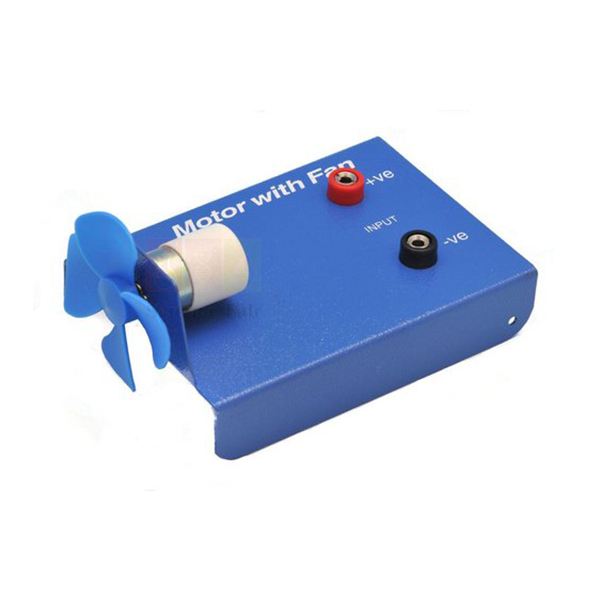
Mounted Motor for Solar Cell
Mounted Motor for Solar Cell (Product Code: SLE/PHY/255) is a small, low-consumption electric motor on a base, used to show light energy being converted into electrical and then mechanical energy in school physics lessons. Science teachers pair it with a solar cell because it runs directly from the cell’s output, and its spindle carries a 16mm diameter pulley that can raise a mass of at least 4g. It is supplied by Jain Scientific Equipments Pvt Ltd (ScienceLab), Ambala, India, with its other physics lab equipment for schools.
Specifications
| Parameter | Detail |
|---|---|
| Type | Small, low-consumption electric motor, mounted on a base |
| Power source | Designed to run directly from the output of a solar cell |
| Pulley | Simple pulley of 16mm diameter on the motor spindle |
| Lifting capability | Raises a mass of at least 4g when powered by the solar cell |
| Base size | 165mm x 100mm (the common base size of the Transfer Kit units) |
| Terminals | 4mm socket terminals, where appropriate |
| System | One of the separately available units of the Transfer Kit, which shows conversions of one form of energy to another |
| Product code | SLE/PHY/255 |
| Supplied by | Jain Scientific Equipments Pvt Ltd (ScienceLab), Ambala, India |
What Is the Solar Cell Motor Used For?
This motor completes an energy chain that starts with light: light falls on the solar cell, the cell produces an electric current, and the motor turns that current into motion. Because it is a low-consumption design, it can run from the modest output of a classroom solar cell with no battery or bench supply in the circuit, so students can see that the only energy input is light. It also works well as part of a physics demonstration kit on energy transfer.
For a lifting demonstration, tie a light thread to the 16mm pulley and hang a small mass (the motor can raise at least 4g); students then watch light energy end up as gravitational potential energy. Move the lamp closer or further away, or shade part of the cell, and the motor slows or stops, which links motor speed to light intensity. Strong sunlight or a bright lamp gives the clearest result.
What to Specify When Ordering
- Whether you need the motor alone or together with the Mounted Solar Cell that powers it
- Which other separately available Transfer Kit units you want, so the set matches your lesson plan
- The number of motor units per lab or per student group
- Connecting leads for the 4mm socket terminals, if your lab does not already have them
Supplier
ScienceLab is the trading name of Jain Scientific Equipments Private Limited, based in Ambala, Haryana. The company supplies the Mounted Motor for Solar Cell to schools, colleges, institutions and dealers in India and international markets, and it can be listed with other physics and energy-teaching items in a single enquiry. Company background is available on the ScienceLab company profile.
Related Physics Lab Equipment
These items support the same light-to-motion experiment:
- Mounted Solar Cell — the selenium photovoltaic unit this motor is designed to run from
- Crocodile Clips & Leads — for wiring the cell to the motor
- Mini Motor Unit — an alternative small motor for general circuit work
- Light Energy Kit — for further lessons on light as an energy source
- Solar Photovoltaic Basic — a kit for taking photovoltaic topics further
Browse the full range in Physics Lab Equipment.
Frequently Asked Questions
What does the Mounted Motor for Solar Cell demonstrate?
The Mounted Motor for Solar Cell demonstrates the direct conversion of light energy into electrical energy and then into mechanical energy. Powered only by a solar cell, it turns and can lift a small mass, so students see each stage of the energy chain.
How much mass can the Mounted Motor for Solar Cell lift?
The Mounted Motor for Solar Cell can raise a mass of at least 4g when powered by the solar cell, using the simple 16mm diameter pulley on its spindle. Performance depends on the light reaching the cell, so a bright lamp or direct sunlight gives the clearest result.
Does the Mounted Motor for Solar Cell need a battery?
No battery is needed: the Mounted Motor for Solar Cell is a low-consumption motor designed to run directly from the output of a solar cell. Connect it to the cell with leads, place the cell in strong light, and the motor starts turning.
Is the solar cell included with the Mounted Motor for Solar Cell?
The Mounted Motor for Solar Cell is one of the separately available units of the Transfer Kit, so the solar cell is listed as its own item, the Mounted Solar Cell. Mention both in your enquiry if you need a complete light-to-motion set.
What size is the Mounted Motor for Solar Cell?
The Mounted Motor for Solar Cell sits on a base measuring 165mm x 100mm, the base size shared by the Transfer Kit units, with 4mm socket terminals where appropriate. The matching footprint lets units stand neatly side by side on a bench.
Who supplies the Mounted Motor for Solar Cell?
The Mounted Motor for Solar Cell is supplied by Jain Scientific Equipments Pvt Ltd (ScienceLab) of Ambala, Haryana, India. The company handles enquiries from schools, colleges, dealers and institutional buyers across India and international markets for this and other physics teaching items.
What should a quotation request for the Mounted Motor for Solar Cell include?
For a quotation on the Mounted Motor for Solar Cell, state the product code SLE/PHY/255, the quantity, whether you also need the Mounted Solar Cell and other Transfer Kit units, and the delivery location. Send these details through the contact page or the enquiry cart.
Request a Quote
To order the Mounted Motor for Solar Cell, send your requirement through the ScienceLab contact page or add it to the enquiry cart with the quantity you need, and the team will reply with pricing and supply details.
Last updated: 24 September 2026
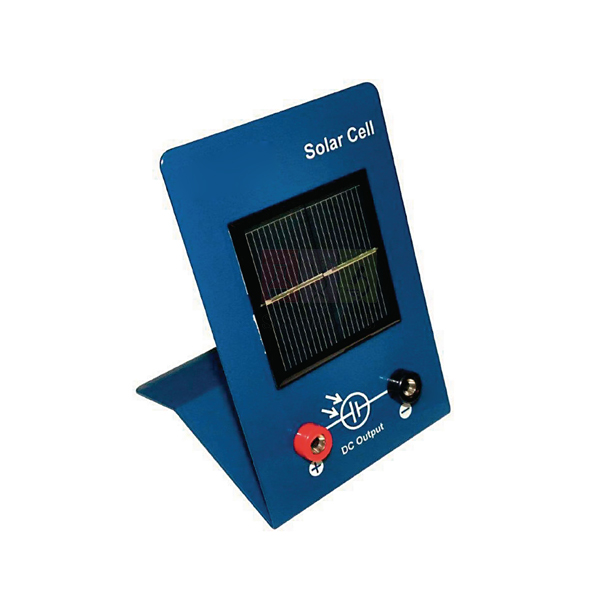
Mounted Solar Cell
Mounted Solar Cell (Product Code: SLE/PHY/256) is a selenium photovoltaic cell on a base, used to produce electrical energy directly from light energy in school physics demonstrations. Teachers pair it with the Mounted Motor for Solar Cell, and it shares the 165 x 100mm base and 4mm socket terminals used across the Energy Transfer Kit units. It is supplied by Jain Scientific Equipments Pvt Ltd (ScienceLab), Ambala, India, for schools putting together a physics experiment kit on energy.
Specifications
| Parameter | Detail |
|---|---|
| Cell type | Selenium photovoltaic cell |
| Function | Produces electrical energy directly from light energy |
| Intended use | With the motor unit, to demonstrate light-to-electrical energy conversion |
| Base size | 165 x 100mm |
| Terminals | 4mm socket terminals, where appropriate |
| System | Separately available unit of the Energy Transfer Kit |
| Product code | SLE/PHY/256 |
| Supplied by | Jain Scientific Equipments Pvt Ltd (ScienceLab), Ambala, India |
What Is the Mounted Solar Cell Used For?
The Mounted Solar Cell is the input stage of an energy-transfer demonstration. When light falls on the selenium cell it produces a small voltage and current, which can drive the matching motor unit or be read on a meter. It shows students that electrical energy can be produced without a battery, a generator or the mains.
Simple investigations work well with it: compare the output in daylight, under a desk lamp and with the cell partly covered, change the distance to the lamp, or tilt the cell away from the light. Adding a multimeter or galvanometer to the output turns a qualitative demonstration into a measurement exercise. Keep the cell face clean and free from scratches, and store it in a dry cupboard between lessons.
What to Specify When Ordering
- Whether you also need the Mounted Motor for Solar Cell as the load
- Any other Energy Transfer Kit units your lessons require
- The number of cells per lab or student group
- A meter for output readings, if your lab does not have one
Supplier
Jain Scientific Equipments Private Limited, which trades as ScienceLab from Ambala in Haryana, supplies the Mounted Solar Cell together with related energy-transfer units, meters and leads, so a school can source a complete demonstration from one vendor. Orders are handled for buyers in India and international markets. See the ScienceLab profile for more about the company.
Related Physics Lab Equipment
Items that complete or extend a solar-cell experiment:
- Mounted Motor for Solar Cell — the low-consumption motor designed to run from this cell
- Standard Digital Multimeter — to measure the voltage and current the cell produces
- Galvanometer, Centre Zero Universal Meter — to detect small currents from the cell
- LDR — a light-sensitive component whose resistance changes with light, for comparison
- Crocodile Clips & Leads — for connecting the cell to its load or meter
See more in the Physics Lab Equipment category.
Frequently Asked Questions
What type of cell is used in the Mounted Solar Cell?
The Mounted Solar Cell uses a selenium photo-voltaic cell, which generates electricity when light falls on its surface. It is mounted on a 165 x 100mm base so it can be placed on a bench and connected like the other Energy Transfer Kit units.
What can the Mounted Solar Cell power?
The Mounted Solar Cell is intended for use with the Mounted Motor for Solar Cell, to demonstrate electrical energy produced directly from light energy. If you plan to connect a different load, describe it in your enquiry and we will advise.
Can the Mounted Solar Cell be connected to a meter?
Yes, the Mounted Solar Cell can be connected to a multimeter or galvanometer through leads, letting students record how its output changes with light level. Readings depend on the brightness and angle of the light, so keep the set-up constant when comparing results.
Is the Mounted Solar Cell sold as part of a kit?
The Mounted Solar Cell is one of the separately available units of the Energy Transfer Kit, so it can be ordered on its own or with other units such as the motor. List every unit you need in your enquiry to receive a combined quotation.
Who supplies the Mounted Solar Cell?
The Mounted Solar Cell is supplied by Jain Scientific Equipments Pvt Ltd (ScienceLab), Ambala, Haryana, India. The company serves schools, colleges, science centres and dealers throughout India and international markets with physics demonstration equipment.
What details are needed to quote for the Mounted Solar Cell?
To quote for the Mounted Solar Cell, send the product code SLE/PHY/256, the number of cells, any matching units such as the motor or a meter, and the delivery address. The contact page or enquiry cart is the quickest route.
Request a Quote
Ready to add the Mounted Solar Cell to your lab? Place it in the enquiry cart or write to us through the contact page, and include the quantity and delivery location so we can prepare your quotation.
Last updated: 24 September 2026
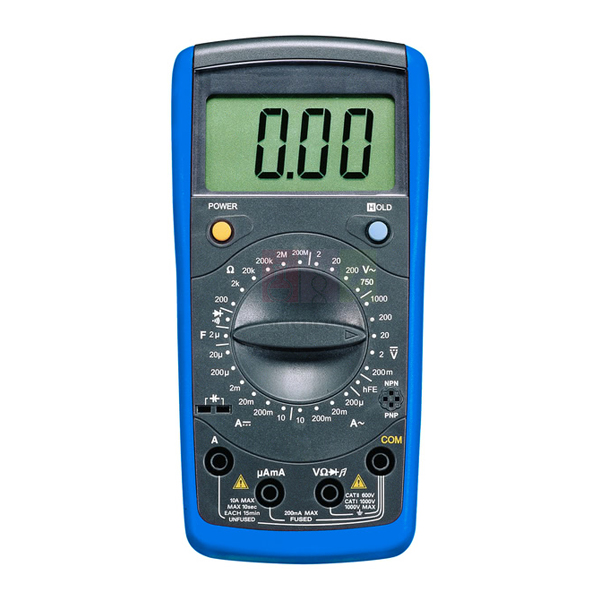
Advanced Digital Multimeter
Advanced Digital Multimeter (Product Code: SLE/PHY/257) is a portable digital multimeter used to measure DC and AC voltage, current, resistance and capacitance in physics and electronics labs. College and senior-school labs choose it for its 1000V DC and 750V AC ranges, a 2µF capacitance range, triode and diode tests and a 1999 maximum display. It is supplied by Jain Scientific Equipments Pvt Ltd (ScienceLab), Ambala, India, as one of the digital measuring instruments it offers in India and international markets.
Specifications
| Parameter | Detail |
|---|---|
| Type | Advanced portable digital multimeter |
| DC voltage | 200mV / 2V / 20V / 200V / 1000V; accuracy ±(0.5%+1) |
| AC voltage | 2V / 20V / 200V / 750V; accuracy ±(0.8%+3) |
| DC current | 20µA / 200µA, 2mA / 20mA, 200mA / 10A; accuracy ±(0.8%+1) |
| Additional current ranges | 200µA / 20mA, 200mA / 10A; accuracy ±(1%+3) — please confirm the function of these ranges with us when ordering |
| Resistance | 200Ω / 2kΩ / 20kΩ, 200kΩ / 2MΩ / 200MΩ; accuracy ±(0.8%+1) |
| Capacitance | 2µF; accuracy ±(4%+3) |
| Test functions | Diode test, triode test, on/off buzzer |
| Convenience features | Data hold, auto power off, low battery warning |
| Input resistance | ≥10MΩ |
| Maximum display | 1999 |
| Power supply | 9V (6F22) battery |
| Weight | 310 g |
| Dimensions (W × H × D) | 172 × 83 × 38 mm |
| Product code | SLE/PHY/257 |
| Supplied by | Jain Scientific Equipments Pvt Ltd (ScienceLab), Ambala, India |
What Is the Advanced Digital Multimeter Used For?
In a physics or electronics practical, the Advanced Digital Multimeter stands in for a separate voltmeter, ammeter and ohmmeter. Students can check the terminal voltage of a cell, the current through a resistor, the resistance of a length of wire or the value of a small capacitor with one handheld instrument. The diode and triode tests support semiconductor practicals, and the buzzer gives a quick continuity check on leads and circuit boards, which makes it a practical choice among electronic lab instruments for teaching labs.
Good practice is to select the function and the highest suitable range before connecting, then step down for a finer reading; use the 10A range only for larger currents, and never measure resistance in a live circuit. Data hold lets a student freeze a reading to write it down, while auto power off saves the 9V battery between experiments.
What to Specify When Ordering
- The number of meters needed per lab or per student group
- Whether you need this advanced model or the more basic Standard Digital Multimeter for routine class work
- Spare 9V (6F22) batteries, if required, and confirmation of what comes in the box
- Any calibration-certificate requirement, to be discussed before ordering
Supplier
ScienceLab is the trading name of Jain Scientific Equipments Private Limited, Ambala, which supplies the Advanced Digital Multimeter to schools, colleges, training institutes and dealers in India and international markets. For vendor registration and export paperwork, the supplying company’s details are Importer-Exporter Code AAECJ8618A (DGFT) and GSTIN 06AAECJ8618A1ZT. More about the company is on the ScienceLab profile page.
Related Physics Lab Equipment
Useful items for circuit practicals where this multimeter takes the readings:
- Standard Digital Multimeter — a more basic model for routine class measurements
- Power Supply Variable — an adjustable source for the circuits being measured
- Decade Resistance Box — known resistance values for checking readings
- Worcester Circuit Board — for building circuits to measure
- Crocodile Clips & Leads — quick connections to components
Explore more in Physics Lab Equipment.
Frequently Asked Questions
What can the Advanced Digital Multimeter measure?
The Advanced Digital Multimeter measures DC voltage up to 1000V, AC voltage up to 750V, DC current up to 10A, resistance up to 200MΩ and capacitance on a 2µF range. It also offers diode, triode and buzzer continuity tests.
How accurate is the Advanced Digital Multimeter?
The Advanced Digital Multimeter is specified at ±(0.5%+1) on DC voltage, ±(0.8%+3) on AC voltage, ±(0.8%+1) on DC current and resistance, and ±(4%+3) on capacitance. The second figure in each bracket is a number of counts in the last displayed digit.
What battery does the Advanced Digital Multimeter use?
The Advanced Digital Multimeter runs on a single 9V (6F22) battery. A low battery warning tells students when to replace it, and the auto power off function switches the meter off when it is left unused, which helps the battery last between practicals.
When should I choose the Advanced Digital Multimeter?
Choose the Advanced Digital Multimeter when your practicals need its capacitance range, triode test, 1000V DC and 750V AC ranges or its 200MΩ resistance range. For routine class work, compare it with the Standard Digital Multimeter page before ordering.
Does the Advanced Digital Multimeter come with a calibration certificate?
Calibration-certificate availability for the Advanced Digital Multimeter should be discussed with us before you order. Mention the requirement in your enquiry through the contact page so that it can be confirmed along with the quotation.
Who supplies the Advanced Digital Multimeter?
Jain Scientific Equipments Pvt Ltd (ScienceLab) of Ambala, Haryana, India supplies the Advanced Digital Multimeter. It handles orders from schools, colleges, polytechnics and dealers in India and international markets, often alongside other electrical teaching equipment.
What should I include when requesting a quote for the Advanced Digital Multimeter?
When requesting a quote for the Advanced Digital Multimeter, give the product code SLE/PHY/257, the quantity, any spare batteries or accessories wanted, any calibration-certificate need and the delivery location, so the offer can be prepared in one step.
Request a Quote
For pricing on the Advanced Digital Multimeter, use the contact page or add the item to the enquiry cart. Bulk orders for several labs can be quoted together.
Last updated: 24 September 2026
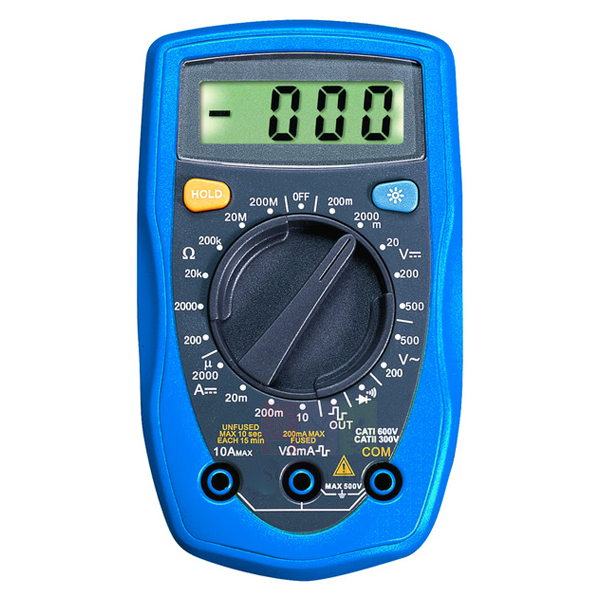
Standard Digital Multimeter
Standard Digital Multimeter (Product Code: SLE/PHY/258) is a portable digital multimeter used to measure DC and AC voltage, DC current and resistance in school and college electricity practicals. Students find it easy to handle because it weighs 156 g, and it adds a backlight, data hold and a square wave output to its 1999 maximum display. It is supplied by Jain Scientific Equipments Pvt Ltd (ScienceLab), Ambala, India, alongside its other physics lab instruments.
Specifications
| Parameter | Detail |
|---|---|
| Type | Standard portable digital multimeter |
| DC voltage | 200mV / 2000mV, 20V / 200V / 500V; accuracy ±(0.5%+2) |
| AC voltage | 200V / 500V; accuracy ±(1.2%+10) |
| DC current | 2000µA / 20mA, 200mA / 10A; accuracy ±(1%+2) |
| Resistance | 200Ω / 2kΩ / 20kΩ, 200kΩ / 20MΩ; accuracy ±(0.8%+2) |
| Input resistance | DCV ≥10MΩ, ACV ≥5MΩ |
| Maximum display | 1999 |
| Functions | Diode test, on/off buzzer, square wave output, data hold |
| Display and power features | Backlight, low battery warning |
| Power supply | 9V (6F22) battery |
| Weight | 156 g |
| Dimensions (W × H × D) | 130 × 73.5 × 35 mm |
| Product code | SLE/PHY/258 |
| Supplied by | Jain Scientific Equipments Pvt Ltd (ScienceLab), Ambala, India |
What Is the Standard Digital Multimeter Used For?
The Standard Digital Multimeter covers the everyday measurements of a school electricity syllabus: reading the voltage across and the current through a resistor for Ohm’s law, checking cells in series and parallel, and measuring the resistance of wires, resistors or a light dependent resistor in light and dark. It pairs naturally with an Ohm’s law experiment kit, giving each student group its own meter.
The square wave output provides a simple test signal for basic circuit checks, the backlight helps in a dim room, and data hold freezes a reading while students note it down. Start on the highest suitable range, keep the 10A range for larger currents only, and leave the AC voltage ranges to teacher-led work where higher voltages are involved.
What to Specify When Ordering
- How many meters you need per bench or student group
- Whether this model’s ranges suit your syllabus or the Advanced Digital Multimeter is needed
- Spare 9V (6F22) batteries, if required
- Confirmation of the accessories supplied with each meter
Supplier
Jain Scientific Equipments Private Limited trades under the ScienceLab name from Ambala, Haryana, and supplies the Standard Digital Multimeter to schools, coaching labs, colleges and distributors. Because the company also supplies circuit components and power sources, a full electricity bench can be quoted in one enquiry for delivery in India and international markets. Learn more on the company profile.
Related Physics Lab Equipment
Pair the meter with these items for complete circuit practicals:
- Advanced Digital Multimeter — the higher-specification model in the same range
- Power Supply, Stepped — a low-voltage source for student circuits
- Worcester Circuit Board Kit — components and board for building circuits to test
- LDR — its resistance changes with light, a classic multimeter exercise
- Crocodile Clips & Leads — for connecting the meter into a circuit
Find more in Physics Lab Equipment.
Frequently Asked Questions
What ranges does the Standard Digital Multimeter cover?
The Standard Digital Multimeter measures DC voltage from 200mV to 500V, AC voltage on 200V and 500V ranges, DC current from 2000µA to 10A and resistance from 200Ω to 20MΩ, with a maximum display of 1999.
Does the Standard Digital Multimeter have a backlight?
Yes, the Standard Digital Multimeter has a backlight for reading the display in poorly lit rooms, together with data hold to freeze a reading and a low battery warning that signals when its 9V (6F22) battery needs replacing.
What is the square wave output on the Standard Digital Multimeter for?
The square wave output on the Standard Digital Multimeter provides a simple test signal that can be fed into basic circuits during electronics practicals. For details of the signal, contact us before ordering so we can confirm it suits your intended experiment.
How accurate is the Standard Digital Multimeter?
The Standard Digital Multimeter is specified at ±(0.5%+2) on DC voltage, ±(1.2%+10) on AC voltage, ±(1%+2) on DC current and ±(0.8%+2) on resistance. Input resistance is at least 10MΩ on DC voltage and 5MΩ on AC voltage.
Is the Standard Digital Multimeter suitable for students?
The Standard Digital Multimeter suits student use: it weighs 156 g and measures 130 × 73.5 × 35 mm, so it is easy to hold. Measurements on higher AC voltages should always be carried out or supervised by a teacher.
Who supplies the Standard Digital Multimeter?
The Standard Digital Multimeter is supplied by Jain Scientific Equipments Pvt Ltd (ScienceLab), Ambala, Haryana, India. Schools, colleges and dealers in India and international markets can order it on its own or with other circuit and measurement items.
How do I get a quotation for the Standard Digital Multimeter?
To get a quotation for the Standard Digital Multimeter, send the product code SLE/PHY/258, the number of meters, any spare batteries needed and your delivery location through the contact page or the enquiry cart, and a reply will follow with pricing.
Request a Quote
Equipping several benches? Add the Standard Digital Multimeter to the enquiry cart with your quantity, or describe your full requirement on the contact page for a combined quotation.
Last updated: 24 September 2026
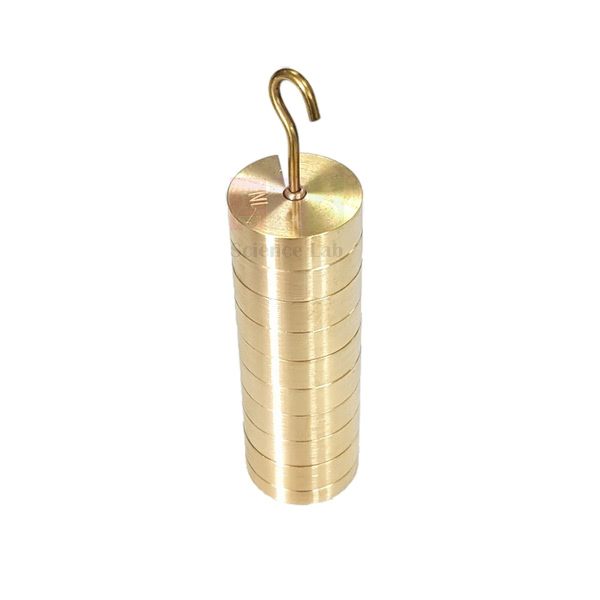
Newton Mass Set 10N Set
Newton Mass Set 10N Set (Product Code: SLE/PHY/259) is a set of slotted brass masses graded in newtons, used to apply known forces in school and college physics experiments. Physics teachers rely on it as core mechanics lab equipment: nine 1N slotted masses and a 1N hanger let loads be built up in 1N steps to a total of 10N. It is made by Jain Scientific Equipments Pvt Ltd (ScienceLab), an OEM manufacturer, at its own factory in Ambala, India.
Specifications
| Parameter | Detail |
|---|---|
| Material | Brass |
| Contents | 9 x 1N slotted brass masses and 1 x 1N hanger |
| Step size | 1N per slotted mass |
| Total load (hanger plus all masses) | 10N |
| Product code | SLE/PHY/259 |
| Manufacturer | Jain Scientific Equipments Pvt Ltd (ScienceLab) — OEM |
| Country of origin | India (made in Ambala, Haryana) |
What Is the Newton Mass Set 10N Used For?
Because every piece is marked in newtons rather than grams, students work directly with force (weight) and need no conversion during the experiment. Typical uses include Hooke’s law, where a spring is stretched 1N at a time and extension is plotted against load; the principle of moments on a metre rule; pulley and inclined plane experiments; tension in strings; and checking the scale of force meters and spring balances.
For safe handling, stagger the slots as the masses are added so they do not slide off the hanger, lower each load gently, and remove the masses once readings are taken so springs are not left overstretched. Wipe the brass clean and store the set dry. It suits physics practical work under CBSE and state board syllabuses where force is measured in newtons.
What to Specify When Ordering
- Whether this 10N set suits your springs and apparatus, or the smaller Newton Mass Set 1N Set is needed
- The number of sets per lab (often one per student group)
- Any additional hangers or loose masses you want to discuss with us
- Force meters or pulleys to be used with the set, if you also need them
OEM Manufacturer
Jain Scientific Equipments Private Limited, trading as ScienceLab, is the OEM (original equipment manufacturer) of the Newton Mass Set 10N Set. The company makes the set at its own licensed factory at Saha, Ambala, Haryana, India, rather than buying it in from a trader, and supplies it factory-direct to schools, colleges, institutions, dealers and importers.
If a piece goes missing or you need a repeat order of the same set, ask us — the manufacturer handles it directly. Read more about the company on the ScienceLab profile page.
Related Physics Lab Equipment
Items commonly used with newton masses in force and mechanics practicals:
- Newton Mass Set 1N Set — a lighter set for smaller forces
- Force Meter/Spring Balance — to compare readings against known loads
- Pulley, Bench Mounting, Ball Bearing — to run a string over the bench edge with the hanger attached
- Apparatus Newton’s Second Law — for experiments on force and acceleration
- Slotted Mass Hanger, 1kg — a heavier slotted mass hanger for larger loads
View the full Physics Lab Equipment range.
Frequently Asked Questions
What is included in the Newton Mass Set 10N Set?
The Newton Mass Set 10N Set contains nine 1N slotted brass masses and one 1N hanger. With every mass loaded onto the hanger the total is 10N, and the load can be changed in steps of 1N.
Why are the masses in the Newton Mass Set 10N Set marked in newtons?
The Newton Mass Set 10N Set is marked in newtons so students can read the applied force directly. This keeps Hooke’s law, moments and pulley experiments focused on force, without a separate step converting grams to newtons.
What material is the Newton Mass Set 10N Set made from?
The Newton Mass Set 10N Set is made of brass. Brass is dense, so each 1N piece stays compact on the hanger, and it resists corrosion in normal lab use; wipe the pieces clean and keep them dry after practicals.
Can the masses of the Newton Mass Set 10N Set be used without the hanger?
The slotted masses of the Newton Mass Set 10N Set are designed to stack on the 1N hanger. Remember that the hanger itself counts as 1N of the load, so include it when totalling the force applied.
Who manufactures the Newton Mass Set 10N Set?
The Newton Mass Set 10N Set is manufactured by Jain Scientific Equipments Pvt Ltd (ScienceLab), the OEM, at its own licensed factory at Saha, Ambala, Haryana, India. Quotations, repeat orders and replacement pieces are handled by the manufacturer itself.
Is a calibration certificate available for the Newton Mass Set 10N Set?
Calibration-certificate availability for the Newton Mass Set 10N Set should be discussed with us before ordering. State the requirement in your enquiry via the contact page so it can be addressed together with your quotation.
What should a quotation request for the Newton Mass Set 10N Set include?
A quotation request for the Newton Mass Set 10N Set should give the product code SLE/PHY/259, the number of sets, any extra hangers or matching apparatus, and the delivery location, whether that is within India or an export destination.
Request a Quote
Quotations for the Newton Mass Set 10N Set come direct from the manufacturer. Send your quantity through the contact page or add the set to the enquiry cart.
Last updated: 24 September 2026